

The DOI matches its DataCite record.
Information Closure Theory of Consciousness
Open accessAbstract
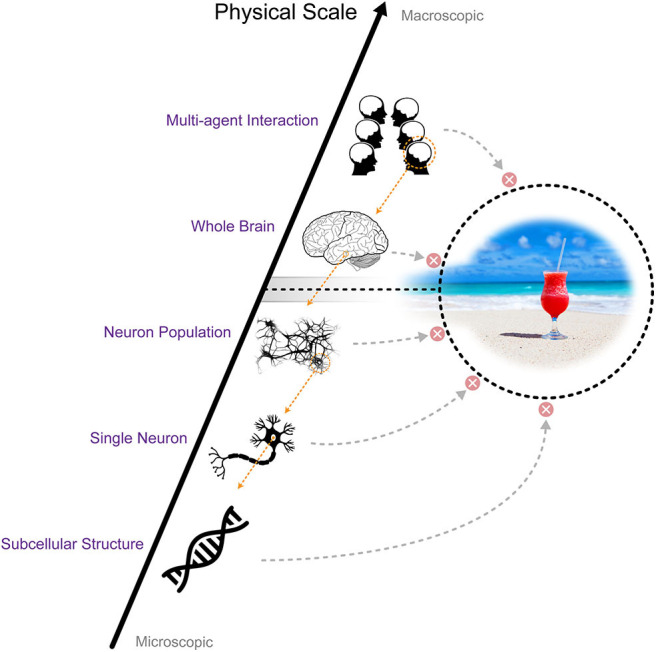
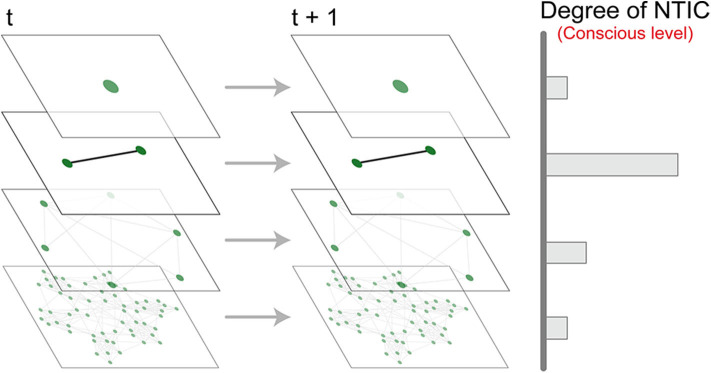
Information processing in neural systems can be described and analysed at multiple spatiotemporal scales. Generally, information at lower levels is more fine-grained and can be coarse-grained in higher levels. However, information processed only at specific levels seems to be available for conscious awareness. We do not have direct experience of information available at the level of individual neurons, which is noisy and highly stochastic. Neither do we have experience of more macro-level interactions such as interpersonal communications. Neurophysiological evidence suggests that conscious experiences co-vary with information encoded in coarse-grained neural states such as the firing pattern of a population of neurons. In this article, we introduce a new informational theory of consciousness: Information Closure Theory of Consciousness (ICT). We hypothesise that conscious processes are processes which form non-trivial informational closure (NTIC) with respect to the environment at certain coarse-grained levels. This hypothesis implies that conscious experience is confined due to informational closure from conscious processing to other coarse-grained levels. ICT proposes new quantitative definitions of both conscious content and conscious level. With the parsimonious definitions and a hypothesise, ICT provides explanations and predictions of various phenomena associated with consciousness. The implications of ICT naturally reconciles issues in many existing theories of consciousness and provides explanations for many of our intuitions about consciousness. Most importantly, ICT demonstrates that information can be the common language between consciousness and physical reality.
Overview
The claims and statistics of this paper haven’t been checked yet.
Run the check — free, no account needed. It reads the open-access text and checks the sources it cites.
Integrity signals
Registry
Cites
Statistics
Figures
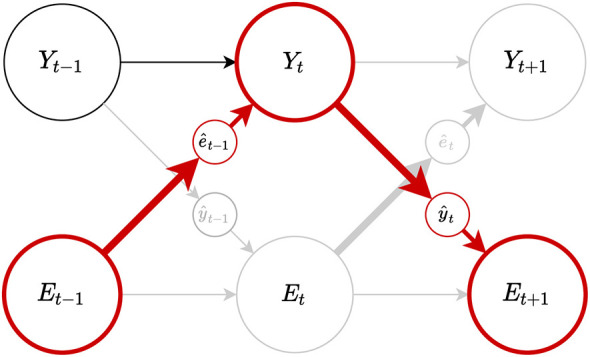
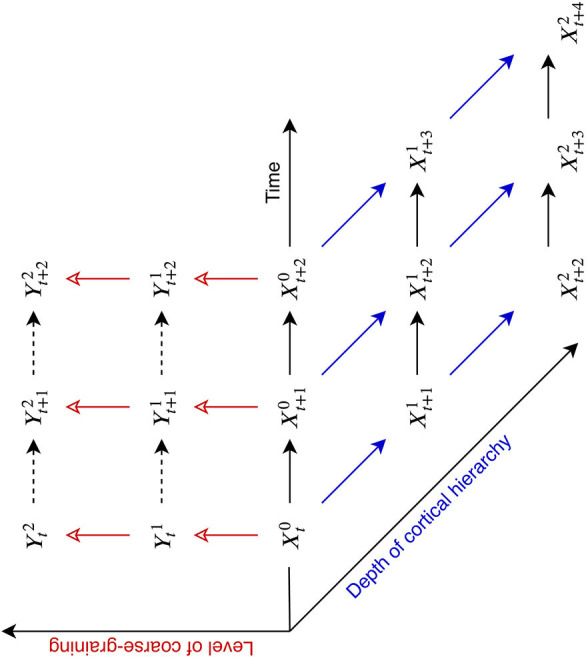
Verification
Claims the paper makes
The claims and statistics of this paper haven’t been checked yet.
Run the check — free, no account needed. It reads the open-access text and checks the sources it cites.
Claims other papers make about this one
Each is checked against this paper’s own text: does it say what the citing paper says it does?
The source backs part of the claim, not all of it — or backs it for a different population, condition or comparison.
In the citing paper
“This synchronization of micro-scale phenomena into larger groupings on meso- and macro-scales could be viewed as a kind of informational closure and coarse-graining (Hoel et al., 2016; Chang et al., 2019).”
From An Integrated World Modeling Theory (IWMT) of Consciousness (2020) · cites this paper as Chang et al., 2019
Experimental — accuracy not yet measuredThe source backs part of the claim, not all of it — or backs it for a different population, condition or comparison.
In the citing paper
“This proposal for updating IIT aligns with a recently-suggested theory of consciousness focusing on spatiotemporal scales at which functional closure is achieved (Chang et al., 2019), thus instantiating emergence and affording coarse-graining over lower levels of analysis.”
From An Integrated World Modeling Theory (IWMT) of Consciousness (2020) · cites this paper as Chang et al., 2019
Experimental — accuracy not yet measured
Self-check
Percentages, sums and reported differences re-computed from the paper’s own numbers.
The self-check needs the paper’s full text.
Citations
Cites
No references could be resolved yet.
Research works printed but not linked: 79
- Adrian, E. D. (1926). The impulses produced by sensory nerve endings. J. Physiol. 61, 49-72. doi: 10.1113/jphysiol.1926.sp002273 · DOI
- Ashby, F. G., Turner, B. O., and Horvitz, J. C. (2010). Cortical and basal ganglia contributions to habit learning and automaticity. Trends Cogn. Sci. 14, 208-215. doi: 10.1016/j.tics.2010.02.001 · DOI · Paper page
- Baars, B. J. (1988). A Cognitive Theory of Consciousness. New York, NY: Cambridge University Press.
- Baars, B. J. (1997). In the theatre of consciousness. global workspace theory, a rigorous scientific theory of consciousness. J. Conscious. Stud. 4, 292-309. doi: 10.1093/acprof:oso/9780195102659.001. · DOI
- Baars, B. J. (2002). The conscious access hypothesis: origins and recent evidence. Trends Cogn. Sci. 6, 47-52. doi: 10.1016/S1364-6613(00)01819-2 · DOI · Paper page
- Bayne, T., Hohwy, J., and Owen, A. M. (2016). Are there levels of consciousness? Trends Cogn. Sci. 20, 405-413. doi: 10.1016/j.tics.2016.03.009 · DOI · Paper page
- Bechtel, W., and Mundale, J. (1999). Multiple realizability revisited: Linking cognitive and neural states. Philos. Sci. 66, 175-207. doi: 10.1086/392683 · DOI · Paper page
- Bertschinger, N., Olbrich, E., Ay, N., and Jost, J. (2006). "Information and closure in systems theory, " in Explorations in the Complexity of Possible Life. Proceedings of the 7th German Workshop of Artificial Life, (Amsterdam) 9-21.
- Bialek, W., Nemenman, I., and Tishby, N. (2001). Predictability, complexity, and learning. Neural Comput. 13, 2409-2463. doi: 10.1162/089976601753195969 · DOI
- Binder, M. D., Hirokawa, N., and Windhorst, U. (2009). Encyclopedia of Neuroscience. Berlin; Heidelberg: Springer. doi: 10.1007/978-3-540-29678-2 · DOI · Paper page
- Casali, A. G., Gosseries, O., Rosanova, M., Boly, M., Sarasso, S., Casali, K. R., et al. (2013). A theoretically based index of consciousness independent of sensory processing and behavior. Sci. Transl. Med. 5:198ra105. doi: 10.1126/scitranslmed.3006294 · DOI · Paper page
- Chang, A. Y. C., Biehl, M., Yu, Y., and Kanai, R. (2019). Information closure theory of consciousness. arXiv preprint arXiv:1909.13045.
- Clark, A. (2013). Whatever next? predictive brains, situated agents, and the future of cognitive science. Behav. Brain Sci. 36, 181-204. doi: 10.1017/S0140525X12000477 · DOI · Paper page
- Dehaene, S., and Changeux, J.-P. (2011). Experimental and theoretical approaches to conscious processing. Neuron 70, 200-227. doi: 10.1016/j.neuron.2011.03.018 · DOI · Paper page
- Dehaene, S., Kerszberg, M., and Changeux, J.-P. (1998). A neuronal model of a global workspace in effortful cognitive tasks. Proc. Natl. Acad. Sci. U.S.A. 95, 14529-14534. doi: 10.1073/pnas.95.24.14529 · DOI · Paper page
- Dehaene, S., Lau, H., and Kouider, S. (2017). What is consciousness, and could machines have it? Science 358, 486-492. doi: 10.1126/science.aan8871 · DOI · Paper page
- Dehaene, S., and Naccache, L. (2001). Towards a cognitive neuroscience of consciousness: basic evidence and a workspace framework. Cognition 79, 1-37. doi: 10.1016/S0010-0277(00)00123-2 · DOI · Paper page
- Doyon, J., Bellec, P., Amsel, R., Penhune, V., Monchi, O., Carrier, J., et al. (2009). Contributions of the basal ganglia and functionally related brain structures to motor learning. Behav. Brain Res. 199, 61-75. doi: 10.1016/j.bbr.2008.11.012 · DOI · Paper page
- Faisal, A. A., Selen, L. P., and Wolpert, D. M. (2008). Noise in the nervous system. Nat. Rev. Neurosci. 9:292. doi: 10.1038/nrn2258 · DOI · Paper page
- Fazekas, P., and Overgaard, M. (2016). Multidimensional models of degrees and levels of consciousness. Trends Cogn. Sci. 20, 715-716. doi: 10.1016/j.tics.2016.06.011 · DOI · Paper page
- Fekete, T., and Edelman, S. (2011). Towards a computational theory of experience. Conscious. Cogn. 20, 807-827. doi: 10.1016/j.concog.2011.02.010 · DOI
- Fekete, T., and Edelman, S. (2012). "The (lack of) mental life of some machines, " in Being in Time: Dynamical Models of Phenomenal Experience, eds S. Edelman, T. Fekete, and N. Zach (Amsterdam: John Benjamins), 95-120. doi: 10.1075/aicr.88.05fek Fekete, T., van Leeuwen, C., and Edelman, S. (2016). System, subsystem, hive: boundary problems in computational theories of consciousness. Front. Psychol. 7:1041. doi: 10.3389/fpsyg.2016.01041 · DOI
- Gamez, D. (2016). Are information or data patterns correlated with consciousness? Topoi 35, 225-239. doi: 10.1007/s11245-014-9246-7 · DOI
- Gerstner, W., and Kistler, W. M. (2002). Spiking Neuron Models: Single Neurons, Populations, Plasticity. Cambridge: Cambridge University Press. doi: 10.1017/CBO9780511815706 · DOI
- Goldwyn, J. H., and Shea-Brown, E. (2011). The what and where of adding channel noise to the Hodgkin-Huxley equations. PLoS Comput. Biol. 7:e1002247. doi: 10.1371/journal.pcbi.1002247 · DOI
- Himmelbach, M., and Karnath, H.-O. (2005). Dorsal and ventral stream interaction: contributions from optic ataxia. J. Cogn. Neurosci. 17, 632-640. doi: 10.1162/0898929053467514 · DOI
- Hoel, E. P. (2018). Agent Above, Atom Below: How Agents Causally Emerge from Their Underlying Microphysics. Cham: Springer International Publishing. doi: 10.1007/978-3-319-75726-1_6 · DOI
- Hoel, E. P., Albantakis, L., Marshall, W., and Tononi, G. (2016). Can the macro beat the micro? integrated information across spatiotemporal scales. Neurosci. Conscious. 2016:niw012. doi: 10.1093/nc/niw012 · DOI · Paper page
- Hoel, E. P., Albantakis, L., and Tononi, G. (2013). Quantifying causal emergence shows that macro can beat micro. Proc. Natl. Acad. Sci. U.S.A. 110, 19790-19795. doi: 10.1073/pnas.1314922110 · DOI · Paper page
- Hohwy, J. (2013). The Predictive Mind. Oxford: Oxford University Press. doi: 10.1093/acprof:oso/9780199682737.001.0001 · DOI · Paper page
- Humphrey, N. (1999). A History of the Mind: Evolution and the Birth of Consciousness. London: Springer Science & Business Media.
- Humphrey, N. K. (1970). What the frog's eye tells the monkey's brain. Brain Behav. Evol. 3, 324-337. doi: 10.1159/000125480 · DOI
- Humphrey, N. K. (1974). Vision in a monkey without striate cortex: a case study. Perception 3, 241-255. doi: 10.1068/p030241 · DOI
- Jackendoff, R. (1987). Consciousness and the Computational Mind. Cambridge, MA: The MIT Press.
- James, T. W., Culham, J., Humphrey, G. K., Milner, A. D., and Goodale, M. A. (2003). Ventral occipital lesions impair object recognition but not object-directed grasping: an fMRI study. Brain 126, 2463-2475. doi: 10.1093/brain/awg248 · DOI
- Kanai, R., Chang, A., Yu, Y., de Abril, I. M., Biehl, M., and Guttenberg, N. (2019). Information generation as a functional basis of consciousness. doi: 10.31219/osf.io/7ywjh · DOI
- Kandel, E. R., Schwartz, J. H., Jessell, T. M., Siegelbaum, S., and Hudspeth, A. (2000). Principles of Neural Science, Vol. 4. New York, NY: McGraw-Hill.
- Klein, B., and Hoel, E. (2019). Uncertainty and causal emergence in complex networks. arXiv preprint arXiv:1907.03902. · arXiv
- Kohn, A., Coen-Cagli, R., Kanitscheider, I., and Pouget, A. (2016). Correlations and neuronal population information. Annu. Rev. Neurosci. 39, 237-256. doi: 10.1146/annurev-neuro-070815-013851 · DOI
- Krakauer, D., Bertschinger, N., Olbrich, E., Flack, J. C., and Ay, N. (2020). The information theory of individuality. Theory Biosci. 139, 209-23. doi: 10.1007/s12064-020-00313-7 · DOI
- Kristan, W. B. Jr., and Shaw, B. K. (1997). Population coding and behavioral choice. Curr. Opin. Neurobiol. 7, 826-831. doi: 10.1016/S0959-4388(97) 80142-0 · DOI
- Lamme, V. A. (2006). Towards a true neural stance on consciousness. Trends Cogn. Sci. 10, 494-501. doi: 10.1016/j.tics.2006.09.001 · DOI · Paper page
- Laureys, S. (2005). The neural correlate of (un) awareness: lessons from the vegetative state. Trends Cogn. Sci. 9, 556-559. doi: 10.1016/j.tics.2005.10.010 · DOI · Paper page
- Lemon, R., and Edgley, S. (2010). Life without a cerebellum. Brain 133, 652-654. doi: 10.1093/brain/awq030 · DOI · Paper page
- Maass, W., and Bishop, C. M. (2001). Pulsed Neural Networks. Cambridge, MA: MIT Press.
- Mathis, D. W., and Mozer, M. C. (1995). "On the computational utility of consciousness, " in Advances in Neural Information Processing Systems, eds D. Tesauro and D. S. Touretzky. (Cambridge: MIT Press) 10-18.
- Maturana, H. R., and Varela, F. J. (1991). Autopoiesis and Cognition: The Realization of the Living, Vol. 42. Boston, MA: Springer Science & Business Media.
- Mazzi, C., Bagattini, C., and Savazzi, S. (2016). Blind-sight vs. degraded- sight: different measures tell a different story. Front. Psychol. 7:901. doi: 10.3389/fpsyg.2016.00901 · DOI
- Milner, A., Paulignan, Y., Dijkerman, H., Michel, F., and Jeannerod, M. (1999). A paradoxical improvement of misreaching in optic ataxia: new evidence for two separate neural systems for visual localization. Proc. R. Soc. Lond. Ser. B Biol. Sci. 266, 2225-2229. doi: 10.1098/rspb.1999.0912 · DOI
- Näätänen, R., Paavilainen, P., Rinne, T., and Alho, K. (2007). The mismatch negativity (MMN) in basic research of central auditory processing: a review. Clin. Neurophysiol. 118, 2544-2590. doi: 10.1016/j.clinph.2007. 04.026 · DOI · Paper page
- Nagel, T. (1974). What is it like to be a bat? Philos. Rev. 83, 435-450. doi: 10.2307/2183914 · DOI · Paper page
- Oizumi, M., Albantakis, L., and Tononi, G. (2014). From the phenomenology to the mechanisms of consciousness: integrated information theory 3.0. PLoS Comput. Biol. 10:e1003588. doi: 10.1371/journal.pcbi.1003588 · DOI · Paper page
- O'Regan, J. K., and Noë, A. (2001). A sensorimotor account of vision and visual consciousness. Behav. Brain Sci. 24, 939-973. doi: 10.1017/S0140525X010 00115 · DOI · Paper page
- Overgaard, M. (2011). Visual experience and blindsight: a methodological review. Exp. Brain Res. 209, 473-479. doi: 10.1007/s00221-011-2578-2 · DOI · Paper page
- Overgaard, M., and Overgaard, R. (2010). Neural correlates of contents and levels of consciousness. Front. Psychol. 1:164. doi: 10.3389/fpsyg.2010.00164 · DOI
- Palmer, S. E., Marre, O., Berry, M. J., and Bialek, W. (2015). Predictive information in a sensory population. Proc. Natl. Acad. Sci. U.S.A. 112, 6908-6913. doi: 10.1073/pnas.1506855112 · DOI · Paper page
- Panzeri, S., Macke, J. H., Gross, J., and Kayser, C. (2015). Neural population coding: combining insights from microscopic and mass signals. Trends Cogn. Sci. 19, 162-172. doi: 10.1016/j.tics.2015.01.002 · DOI
- Pennartz, C. M. (2015). The Brain's Representational Power: On Consciousness and the Integration of Modalities. Cambridge, MA: MIT Press. doi: 10.7551/mitpress/9780262029315.001.0001 · DOI · Paper page
- Pennartz, C. M. (2018). Consciousness, representation, action: the importance of being goal-directed. Trends Cogn. Sci. 22, 137-153. doi: 10.1016/j.tics.2017.10.006 · DOI · Paper page
- Pfante, O., Bertschinger, N., Olbrich, E., Ay, N., and Jost, J. (2014a). Comparison between different methods of level identification. Adv. Complex Syst. 17:1450007. doi: 10.1142/S0219525914500076 · DOI
- Pfante, O., Olbrich, E., Bertschinger, N., Ay, N., and Jost, J. (2014b). Closure measures for coarse-graining of the tent map. Chaos 24:013136. doi: 10.1063/1.4869075 · DOI
- Pouget, A., Dayan, P., and Zemel, R. (2000). Information processing with population codes. Nat. Rev. Neurosci. 1:125. doi: 10.1038/35039062 · DOI
- Price, H., and Corry, R. (2007). Causation, Physics, and the Constitution of Reality: Russell's Republic Revisited. Oxford: Oxford University Press.
- Prinz, J. (2007). "The intermediate level theory of consciousness, " in The Blackwell Companion to Consciousness, eds M. Velmans and S. Schneider. 257-271. doi: 10.1002/9780470751466. · DOI
- ch20 · DOI
- Quian Quiroga, R., and Panzeri, S. (2009). Extracting information from neuronal populations: information theory and decoding approaches. Nat. Rev. Neurosci. 10, 173-185. doi: 10.1038/nrn2578 · DOI
- Raymont, P., and Brook, A. (2006). "Unity of consciousness, " in The Oxford Handbook of Philosophy of Mind, eds A. Beckermann and B. P. McLaughlin (Oxford: Oxford University Press), 565-577.
- Revol, P., Rossetti, Y., Vighetto, A., Rode, G., Boisson, D., and Pisella, L. (2003). Pointing errors in immediate and delayed conditions in unilateral optic ataxia. Spatial Vis. 16, 347-364. doi: 10.1163/156856803322467572 · DOI
- Revonsuo, A. (2006). Inner Presence: Consciousness as a Biological Phenomenon. Cambridge, MA: MIT Press.
- Rosen, R. (1991). Life Itself: A Comprehensive Inquiry into the Nature, Origin, and Fabrication of Life. New York, NY: Columbia University Press.
- Sederberg, A. J., MacLean, J. N., and Palmer, S. E. (2018). Learning to make external sensory stimulus predictions using internal correlations in populations of neurons. Proc. Natl. Acad. Sci. U.S.A. doi: 10.1073/pnas.1710779115 · DOI
- Seth, A. K. (2014). A predictive processing theory of sensorimotor contingencies: explaining the puzzle of perceptual presence and its absence in synesthesia. Cogn. Neurosci. 5, 97-118. doi: 10.1080/17588928.2013.877880 · DOI · Paper page
- Seth, A. K. (2015). Presence, objecthood, and the phenomenology of predictive perception. Cogn. Neurosci. 6, 111-117. doi: 10.1080/17588928.2015.1026888 · DOI
- Stein, R. B., Gossen, E. R., and Jones, K. E. (2005). Neuronal variability: noise or part of the signal? Nat. Rev. Neurosci. 6:389. doi: 10.1038/nrn1668 · DOI
- Tononi, G., Boly, M., Massimini, M., and Koch, C. (2016). Integrated information theory: from consciousness to its physical substrate. Nat. Rev. Neurosci. 17:450. doi: 10.1038/nrn.2016. · DOI · Paper page
- Ann. N. Y. Acad. Sci. 1124, 239-261. doi: 10.1196/annals.1440.004 · DOI · Paper page
- White, J. A., Rubinstein, J. T., and Kay, A. R. (2000). Channel noise in neurons. Trends Neurosci. 23, 131-137. doi: 10.1016/S0166-2236(99)01521-0 · DOI · Paper page
- Whitwell, R. L., Milner, A. D., and Goodale, M. A. (2014). The two visual systems hypothesis: new challenges and insights from visual form agnosic patient DF. Front. Neurol. 5:255. doi: 10.3389/fneur.2014.00255 · DOI
- Woodward, J. (2007). "Causation with a human face, " in Causation, Physics, and the Constitution of Reality: Russell's Republic Revisited, eds H. Price and R. Corry (Oxford: Oxford University Press) 66-105
Cited by
Sorted by citations
Safron, A. (2020) · Frontiers in Artificial Intelligence · doi:10.3389/frai.2020.00030 · Cited by 133
Metadata
- Authors
- Chang, A. Y. C., Biehl, M., Yu, Y., & Kanai, R.
- Affiliations
- Araya Inc. (Japan) (JP)
- Corresponding author
- Chang, Acer Y. C.
- Venue
- arXiv
- Publisher
- arXiv
- Published
- 2019
- Volume
- 11
- Pages
- 1504-1504
- ISSN
- 1664-1078 (ISSN-L)
- arXiv
- 1909.13045
- PMC
- PMC7374725
- OpenAlex
- W3043137967
- Cited by
- 63
- References
- 0
- Citations by year
- 2026: 9 · 2025: 6 · 2024: 8 · 2023: 12 · 2022: 8 · 2021: 12 · 2020: 7 · 2019: 1
- FWCI
- 9.40
- Type
- journal article
- Language
- en
- Open access
- gold
- doi.org
- Locations
- Frontiers in Psychology (publishedVersion, cc-by)
- PubMed Central (publishedVersion, cc-by)
- PubMed (publishedVersion)
- arXiv (Cornell University) (submittedVersion)
- DOAJ (DOAJ: Directory of Open Access Journals) (submittedVersion, cc-by-sa)
- arXiv (Cornell University)
- Funders
- Templeton World Charity Foundation
- Japan Science and Technology Agency (CREST)
- Core Research for Evolutional Science and Technology
- Topics
- Social Sciences › Arts and Humanities › Philosophy › Philosophy and Theoretical Science
- Life Sciences › Neuroscience › Cognitive Neuroscience › Embodied and Extended Cognition
- Life Sciences › Neuroscience › Cognitive Neuroscience › Neural dynamics and brain function
- Keywords
- informational closure, consciousness, coarse-graining, spatial and temporal scales, conscious content, neural information processing
About these checks
Registry, retraction, Cites and statistics results are computed, not judged, with one exception: a printed reference that no index lists is read once by a model before it counts as a citation error. Claims are extracted by a model and kept only when their quote appears verbatim in the text; each cited source is then checked, with a model’s help, for whether it says what the claim relies on. Those verdicts can be wrong — read the claim’s quote and the cited source before relying on one.
Statistics and arithmetic are recomputed, not judged.
Confidence bands are shown only for fields calibrated on our annotated test set. None is calibrated yet, so no band is shown.
What counts as a claim ›How we measure confidence ›How we check this ›
Are you an author, or do you see a problem with this page? Request a review
