

Reversal of type 2 diabetes: normalisation of beta cell function in association with decreased pancreas and liver triacylglycerol
Open accessThe DOI matches its Crossref record; 52 of the 52 references it cites were found in a registry or an index.
Abstract
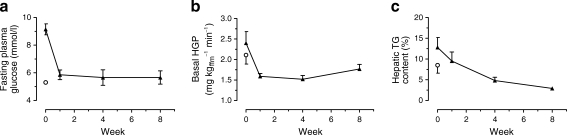
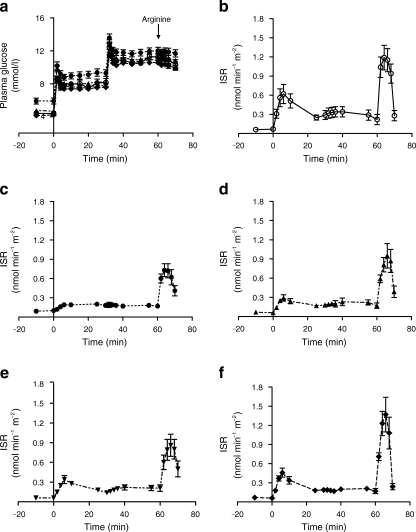
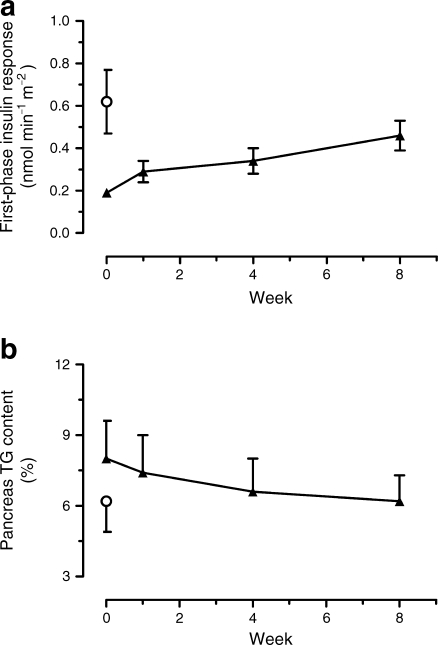
AIMS/HYPOTHESIS: Type 2 diabetes is regarded as inevitably progressive, with irreversible beta cell failure. The hypothesis was tested that both beta cell failure and insulin resistance can be reversed by dietary restriction of energy intake. METHODS: Eleven people with type 2 diabetes (49.5 ± 2.5 years, BMI 33.6 ± 1.2 kg/m(2), nine male and two female) were studied before and after 1, 4 and 8 weeks of a 2.5 MJ (600 kcal)/day diet. Basal hepatic glucose output, hepatic and peripheral insulin sensitivity and beta cell function were measured. Pancreas and liver triacylglycerol content was measured using three-point Dixon magnetic resonance imaging. An age-, sex- and weight-matched group of eight non-diabetic participants was studied. RESULTS: After 1 week of restricted energy intake, fasting plasma glucose normalised in the diabetic group (from 9.2 ± 0.4 to 5.9 ± 0.4 mmol/l; p = 0.003). Insulin suppression of hepatic glucose output improved from 43 ± 4% to 74 ± 5% (p = 0.003 vs baseline; controls 68 ± 5%). Hepatic triacylglycerol content fell from 12.8 ± 2.4% in the diabetic group to 2.9 ± 0.2% by week 8 (p = 0.003). The first-phase insulin response increased during the study period (0.19 ± 0.02 to 0.46 ± 0.07 nmol min(-1) m(-2); p < 0.001) and approached control values (0.62 ± 0.15 nmol min(-1) m(-2); p = 0.42). Maximal insulin response became supranormal at 8 weeks (1.37 ± 0.27 vs controls 1.15 ± 0.18 nmol min(-1) m(-2)). Pancreatic triacylglycerol decreased from 8.0 ± 1.6% to 6.2 ± 1.1% (p = 0.03). CONCLUSIONS/INTERPRETATION: Normalisation of both beta cell function and hepatic insulin sensitivity in type 2 diabetes was achieved by dietary energy restriction alone. This was associated with decreased pancreatic and liver triacylglycerol stores. The abnormalities underlying type 2 diabetes are reversible by reducing dietary energy intake.
Overview
The claims and statistics of this paper haven’t been checked yet.
Free: it reads the open-access text and checks the first 5 claims that cite a source we can check. Create a free account to check every claim.
Integrity signals
Registry
Cites
Statistics
Figures
Verification
Claims the paper makes
The claims and statistics of this paper haven’t been checked yet.
Free: it reads the open-access text and checks the first 5 claims that cite a source we can check. Create a free account to check every claim.
Claims other papers make about this one
Each is checked against this paper’s own text: does it say what the citing paper says it does?
The source backs part of the claim, not all of it — or backs it for a different population, condition or comparison.
In the citing paper
“Previously considered permanent and demanding life-long drug treat ment, type 2 diabetes is now recognised to be a potentially reversible consequence of excessive or abnormal accumulation of body fat (ie, the disease process of obesity). 5”
From 5-year follow-up of the randomised Diabetes Remission Clinical Trial (DiRECT) of continued support for weight loss maintenance in the UK: an extension study (2024) · cites this paper as [5]
Experimental — accuracy not yet measuredThe source backs part of the claim, not all of it — or backs it for a different population, condition or comparison.
In the citing paper
“During an intensive weight loss programme, or early after bariatric surgery, there are already significant improvements in hepatic and muscle insulin sensitivity, and pancreatic first-phase insulin secretion, with rapid loss of ectopic fat from skeletal muscle and liver [2, 3, 6].”
From Diets for weight management in adults with type 2 diabetes: an umbrella review of published meta-analyses and systematic review of trials of diets for diabetes remission (2022) · cites this paper as [6]
Experimental — accuracy not yet measuredThe source backs part of the claim, not all of it — or backs it for a different population, condition or comparison.
In the citing paper
“the twin cycle mechanism, driven by a damaging but reversible accumulation of ectopic fat within the liver and pancreas in susceptible individuals, has now been consistently observed. 6-8”
From Durability of a primary care-led weight-management intervention for remission of type 2 diabetes: 2-year results of the DiRECT open-label, cluster-randomised trial (2019) · cites this paper as [6]
Experimental — accuracy not yet measuredThe source backs part of the claim, not all of it — or backs it for a different population, condition or comparison.
In the citing paper
“Type 2 diabetes is strongly related to weight gain in adult life and accumulation of excess fat within the liver and pancreas.”
From Primary care-led weight management for remission of type 2 diabetes (DiRECT): an open-label, cluster-randomised trial (2018) · cites this paper as [4]
Experimental — accuracy not yet measuredThe cited source says what the claim attributes to it.
In the citing paper
“Although lifestyle interventions393 and weight loss394 reverse T2DM in early stages, when insulin is still secreted, T2DM patients may become dependent on anti-diabetic drugs in later stages.”
From Pancreatic regulation of glucose homeostasis. (2016) · cites this paper as [394]
9 more claims about this paper
Create a free account to see every claim other papers make about this one.
Self-check
Percentages, sums and reported differences re-computed from the paper’s own numbers.
The self-check needs the paper’s full text.
Citations
Cites
The metabolic phenotype in obesity: Fat mass, body fat distribution, and adipose tissue function
Goossens, G. H. (2017) · Obesity Facts · doi:10.1159/000471488 · Cited by 8,481
Turner, R. C., Fox, C., Matthews, McElroy, H. H., Cull, C. A., Holman, R. R., Neil, P., Hadden, D. R., Wright, D., Manley, E., et al. (1998) · The Lancet · Cited by 8,419
Glucose clamp technique: a method for quantifying insulin secretion and resistance.
DeFronzo, R. A., Tobin, J. D., & Andres, R. (1979) · American Journal of Physiology-Endocrinology and Metabolism · doi:10.1152/ajpendo.1979.237.3.e214 · Cited by 7,425 · cited 2×
“An isoglycaemic–hyperinsulinaemic clamp (insulin infusion rate 40 mU m min) was initiated at 0 min [14].”
Methodβ-Cell Deficit and Increased β-Cell Apoptosis in Humans With Type 2 Diabetes
Butler, A. E., Janson, J., Bonner-Weir, S., Ritzel, R., Rizza, R. A., & Butler, P. C. (2003) · Diabetes · doi:10.2337/diabetes.52.1.102 · Cited by 4,011 · cited 1×
“The underlying changes in beta cell function have been well described [3, 4], and beta-cell mass decreases steadily during the course of type 2 diabetes [5, 6].”
BackgroundGupta, A., & Uribarri, J. (2016) · Hormone Research in Paediatrics · doi:10.1159/000444053 · Cited by 4,006
Kahn, S. E. (2003) · Diabetologia · doi:10.1007/s00125-002-1009-0 · Cited by 2,166 · cited 1×
“The underlying changes in beta cell function have been well described [3, 4], and beta-cell mass decreases steadily during the course of type 2 diabetes [5, 6].”
BackgroundWeyer, C., Bogardus, C., Mott, D. M., & Pratley, R. E. (1999) · Journal of Clinical Investigation · doi:10.1172/jci7231 · Cited by 1,940 · cited 2×
“Absence of rapid insulin secretion in response to a rise in plasma glucose is the hallmark of type 2 diabetes [3, 21], and the decline in beta cell function determines the progression towards a need for insulin therapy [2].”
BackgroundU.K. Prospective Diabetes Study Group (1995) · Diabetes · doi:10.2337/diab.44.11.1249 · Cited by 1,923
Szczepaniak, L. S., Nurenberg, P., Leonard, D., Browning, J. D., Reingold, J. S., Grundy, S., Hobbs, H. H., & Dobbins, R. L. (2005) · American Journal of Physiology-Endocrinology and Metabolism · doi:10.1152/ajpendo.00064.2004 · Cited by 1,562 · cited 1×
“It continued to decline throughout the intervention period to reach the normal range for non-obese individuals [20] (2.”
Background
Cited by
Items 701–800 of 1,001
Ethical Perspectives in Biogerontology
Sethe, S. C., & de Magalhães, J. P. (2012) · Ethics and health policy · doi:10.1007/978-94-007-3870-6_13 · Cited by 14
Miras, A. D., Herring, R. A., Vusirikala, A., Shojaee‐Moradie, F., Jackson, N. C., Chandaria, S. A., Jackson, S. N., Goldstone, A. P., Hakim, N., Patel, A. G., et al. (2016) · Obesity Science & Practice · doi:10.1002/osp4.76 · Cited by 6
“However, even in the absence of any intestinal interventions, caloric restriction per se also improves glucose homeostasis and hepatic insulin sensitivity (6), and the human DJBL studies did not control for this important confounder.”
Gaffney, C. J., Mansell, P., Stephens, F. B., Macdonald, I. A., & Tsintzas, K. (2017) · Journal of Diabetes Research · doi:10.1155/2017/8248725 · Cited by 7
“Around 90% of adults with type 2 diabetes (T2D) are overweight or obese [1], and a previous research has shown that glycaemic control can be improved in these individuals by weight loss through a structured exercise program or a nutritional intervention [2, 3].”
BackgroundDurrer, C. G., McKelvey, S., Singer, J., Batterham, A. M., Johnson, J. D., Wortman, J., & Little, J. P. (2019) · Trials · doi:10.1186/s13063-019-3873-7 · Cited by 6
Ware, W. R. (2010) · Cited by 6
London, A., Schaufuss, A., Považan, M., Dichman, M.-L., Merhout, J., Dirksen, C., Madsbad, S., Siebner, H. R., Lundsgaard, A., Fritzen, A. M., et al. (2025) · The Journal of Clinical Endocrinology & Metabolism · doi:10.1210/clinem/dgaf382 · Cited by 5
Gudas-Cantin, C., Dionne, V., Latour, É., Lamoureux, K., Chevrefils, L., Gariepy, C., Morissette, M.-H., Mokdad, L., Morin, J., Martin, S.-M., et al. (2025) · Canadian Journal of Diabetes · doi:10.1016/j.jcjd.2025.07.004 · Cited by 6
Cheng, J., Li, J., Xin, Y., & Zhang, D. (2025) · Frontiers in Endocrinology · doi:10.3389/fendo.2025.1602796 · Cited by 5
“Moreover, the Counterpoint Study (27) and The Scandinavian Obesity Study (28) con fi rmed that as the duration of diabetes increases, an irreversible ‘ turning point ’ would be passed with beta-cells underwent irreversible damage.”
Gastric Submucosal Fat Accumulation Is Associated with Insulin Resistance in Patients with Obesity
Lu, T., Kan, J., He, X., Zou, J., Sheng, D., Xue, Y., Wang, Y., & Xu, L. (2024) · Obesity Surgery · doi:10.1007/s11695-023-07014-2 · Cited by 5
The Effect of Bariatric Surgery on PAI-1 Levels: A Systematic Review and Meta-analysis
Jamialahamdi, T., Mirhadi, E., Almahmeed, W. A., Sukhorukov, V. N., Eid, A. H., Salehabadi, S., & Sahebkar, A. (2024) · Obesity Surgery · doi:10.1007/s11695-024-07473-1 · Cited by 6
Schuppelius, B., Lalama, E., Zhang, J., Rüther, K. J. A., Csanalosi, M., Kabisch, S., Christ, A., Latz, E., Kraenkel, N., Pivovarova‐Ramich, O., et al. (2026) · Diabetes Research and Clinical Practice · doi:10.1016/j.diabres.2026.113159 · Cited by 6
Non-Alcoholic Fatty Pancreas Disease: The Unsung Disease
Sevim, B. C., Chela, H. K., Ertugrul, H., Malik, L. S., Malik, S., Başar, Ö., Daglilar, E. S., Samiullah, S., Gaballah, A. H., & Tahan, V. (2022) · Endocrine Metabolic & Immune Disorders - Drug Targets · doi:10.2174/1871530322666220929142905 · Cited by 6
Mo, H., Liu, Y., Zhang, M., Qiu, Z., Li, Y., Zhang, Z., Li, Y., & Xu, G. (2022) · Genes · doi:10.3390/genes14010005 · Cited by 5
VISENTIN, R., Brodersen, K., Richelsen, B., Møller, N., Man, C. D., Pedersen, A. K., Abrahamsen, J., Holst, J. J., & Nielsen, M. F. (2023) · Journal of Diabetes Research · doi:10.1155/2023/7127426 · Cited by 6
“Short-term caloric restriction in patients with T2D improves hepatic insulin sensitivity independently of weight loss [45, 46] and is associated with reduction in liver fat content [47, 48].”
BackgroundTang, Y., Wei, Z., Li, N., Jiang, C. P., Chen, L., Sun, L., Tian, L., Jin, Z., Wu, Z., & Sun, H. (2024) · Diabetes Metabolic Syndrome and Obesity · doi:10.2147/dmso.s455966 · Cited by 5
Impact of Obesity on Cardiovascular Disease
Ferguson, L. D., & Sattar, N. A. (2017) · Endocrinology · doi:10.1007/978-3-319-47685-8_25-1 · Cited by 6
Baldry, E. L., Davies, M. J., Khunti, K., & Webb, D. R. (2020) · Diabetic Medicine · doi:10.1111/dme.14265 · Cited by 5
Continuous Glucose Monitoring of Glycemic Variability During Fasting Post-Sleeve Gastrectomy
Al‐Ozairi, E., Samad, A. E., Kandari, J. A., Taghadom, E., Adam, S., le Roux, C. W., & Syed, A. A. (2020) · Obesity Surgery · doi:10.1007/s11695-020-04505-4 · Cited by 6
Al-Mrabeh, A. H., Peters, C. N., Hollingsworth, K. G., & Taylor, R. (2021) · STAR Protocols · doi:10.1016/j.xpro.2021.100355 · Cited by 5
Self-citationNovel Approaches to Restore Pancreatic Beta-Cell Mass and Function
Welters, A., & Lammert, E. (2021) · Handbook of experimental pharmacology · doi:10.1007/164_2021_474 · Cited by 5
Elmajnoun, H. K., Faris, M. E., Uday, S., Gorman, S., Greening, J. E., Haris, P. I., & Abu-Median, A.-B. (2021) · Frontiers in Nutrition · doi:10.3389/fnut.2021.756413 · Cited by 6
“Therefore, in the case of insulin resistance and based on the above theory, T2D could be cured/reversed by just modulating diet such as by consuming fewer carbohydrates, and this has been already proved in some studies (115, 116, 126).”
ResultKautzky, A., Heneis, K., Stengg, K., Fröhlich, S., & Kautzky‐Willer, A. (2021) · Journal of Personalized Medicine · doi:10.3390/jpm11111096 · Cited by 7
Abubakari, B. B., Ibrahim, M. M., Mutawakilu, I., Maury, C. P., Álvarez, V. R., Triana, M. H., & Pianesi, M. (2014) · Internal Medicine Inside · doi:10.7243/2052-6954-2-3 · Cited by 5
Chansela, P., Potip, B., Weerachayaphorn, J., Kangwanrangsan, N., Chukijrungroat, N., & Saengsirisuwan, V. (2022) · Histochemistry and Cell Biology · doi:10.1007/s00418-021-02062-0 · Cited by 8
E-health relationships diabetes: 50 weeks evaluation
Feenstra, R., Snel, M., Bizino, M. B., Lamb, H. J., Gerritsen, B., van Ommen, B., Simons, L. P. A., Pijl, H., Jonker, C. M., & Verhoef, J. (2022) · International Journal of Biomedical Engineering and Technology · doi:10.1504/ijbet.2022.10045074 · Cited by 6
Krishnan, D., Manasa, V. S., Gayathri, R., Shobana, S., & Mohan, V. (2021) · Journal of Diabetology · doi:10.4103/jod.jod_50_21 · Cited by 5
Popular diets: are they effective for people with type 2 diabetes?
Dyson, P. A. (2014) · Practical Diabetes · doi:10.1002/pdi.1863 · Cited by 5
Treatment of obesity: bariatric surgery
Neff, K., Ferrannini, E., & le Roux, C. W. (2015) · Wiley eBooks · doi:10.1002/9781118387658.ch34 · Cited by 5
Firneisz, G., & Somogyi, A. (2012) · Translational research · doi:10.1016/j.trsl.2012.01.016 · Cited by 5
VLCD for weight loss and remission of type 2 diabetes? – Authors' reply
Taylor, R., Adamson, A., Sattar, N. A., Lean, M. E. J., & Mathers, J. C. (2018) · The Lancet · doi:10.1016/s0140-6736(18)31892-0 · Cited by 6
Self-citationNot all very-low-carbohydrate diets are created equal
Conte, C., Camajani, E., Lai, A., & Caprio, M. (2023) · Diabetologia · doi:10.1007/s00125-023-05961-0 · Cited by 5
Thomas, N. D., & Shamanna, S. B. (2019) · International Journal of Diabetes in Developing Countries · doi:10.1007/s13410-018-0706-2 · Cited by 4
Kratuloek, K., Kumam, P., Nikam, V., Gopal, D., & Seangwattana, T. (2025) · Mathematical and Computer Modelling of Dynamical Systems · doi:10.1080/13873954.2025.2488182 · Cited by 5
“According to studies conducted by Lim et al. (2011), diabetes may be reversible by restoring beta cell activity and consuming less energy from meals.”
Kuang, T., Wang, R., Sun, Y., Gao, P., Cai, H., Li, Y., Wang, X., Cai, Y., Zhou, J., Peng, B., et al. (2026) · International Journal of Surgery · doi:10.1097/js9.0000000000004008 · Cited by 6
Lee, M. M., Khoo, H. S., Krishnasamy, C., Loo, M. E., Wong, S., Cheng, S. C., Bei, Y. T. E., Tan, S. Y., Xie, P., Lee, E. S., et al. (2024) · BMJ Open · doi:10.1136/bmjopen-2023-079082 · Cited by 6
Wilmington, R., Ardavani, A., Hasan, N. E., Alhindi, Y. A., Ramzan, I., Anyiam, O., & IDRIS, I. R. (2025) · Obesities · doi:10.3390/obesities5010014 · Cited by 4
Park, S., Kim, M. K., Kim, J., Choi, J., Song, Y., & Kwon, H. (2025) · Nutrients · doi:10.3390/nu17091530 · Cited by 6
“These mechanisms collectively contribute to better glucose control and can potentially help adults with type 2 diabetes achieve normal glucose levels [12,13].”
Liu, Y., Gang, X., Gao, Y., Wang, Y., & Wang, G. (2025) · Medicine · doi:10.1097/md.0000000000042257 · Cited by 5
“[38] Furthermore, Steven et al found that a sustainable weight-loss program resulted in continued diabetes remission for at least 6 months in 40% of respondents who were able to lower their fasting plasma glucose level to below 7 mmol/L through a VLCD. [39] Lean et al conducted an RCT [40] that…”
Cao, Z., Li, H., Cai, Q., Chen, L., Liu, L., Tang, Y., Zhu, Z., & Yao, P. (2025) · Nutrients · doi:10.3390/nu17233746 · Cited by 4
“Thus, the synthesis and secretion of insulin may be hindered, resulting in pancreatic β -cell hypersteatosis, eventually leading to an increase in blood glucose levels [7].”
Cai, Y., Zhao, N., Mi, J., Du, H., Wan, Z., Liu, Z., Pan, Y., Yan, X., Fan, Z., Li, J., et al. (2026) · Insights into Imaging · doi:10.1186/s13244-026-02206-7 · Cited by 4
“Energy restriction can normalize β -cell function by reducing IPFD [32].”
Clinical Profile of Patients with Diabetes Mellitus in Gusau, Northwestern, Nigeria
Sada, K. B., Sabir, A. A., Sakajiki, A. M., Umar, M. T., Abdullahi, U., & Sikiru, Y. A. (2021) · Annals of African Medicine · doi:10.4103/aam.aam_16_20 · Cited by 7
“[4,5] Poor adherence to medications among patients with DM has been reported to range from 38 to 93% and is a major cause of poor glycemic control which leads to complications.”
Sequeira, I. R., Yip, W. C. Y., Lu, L. W., Jiang, Y., Murphy, R., Plank, L. D., Cooper, G. J. S., Peters, C. N., Aribsala, B. S., Hollingsworth, K. G., et al. (2022) · PLoS ONE · doi:10.1371/journal.pone.0279085 · Cited by 4
Self-citationErnährungstherapie des Typ-2-Diabetes
Hauner, H. (2013) · Der Diabetologe · doi:10.1007/s11428-013-1085-4 · Cited by 7
Is there really a link between diabetes and the ingestion of fructose?
Livesey, G. (2013) · Nutrition Bulletin · doi:10.1111/nbu.12045 · Cited by 4
“Similarly, NAFLD is reversed by moderate energy intake and bodyweight reduction in the majority of cases (Eriksson et al. 2009; Musso et al. 2010; Sullivan 2010; Lim et al. 2011).”
BackgroundUncovering Factors Related to Pancreatic Beta-Cell Function
Curran, A. M., Ryan, M. F., Drummond, E. M., Gibney, E. R., Gibney, M. J., Roche, H. M., & Brennan, L. (2016) · PLoS ONE · doi:10.1371/journal.pone.0161350 · Cited by 5
Oatmeal interventions in severe insulin resistance on the intensive care unit: A case report
Storz, M. A., & Helle, P. (2019) · Complementary Therapies in Medicine · doi:10.1016/j.ctim.2019.07.019 · Cited by 4
Mohammed, E. D., Abdel‐Naim, A. B., Jin, K., Jiang, R., Wei, J., & Sun, B. (2020) · Life Sciences · doi:10.1016/j.lfs.2020.118615 · Cited by 4
Gupta, R., & Kumar, S. (2021) · International Journal of Applied and Computational Mathematics · doi:10.1007/s40819-021-01001-w · Cited by 4
Chacko, E. (2022) · Clinical Diabetes · doi:10.2337/cd22-0076 · Cited by 4
Warrilow, A., Pumpa, K. L., Somerset, S. M., & Naumovski, N. (2023) · Diabetology · doi:10.3390/diabetology4010008 · Cited by 5
“6 mmol/L) [4] and β-cell functioning can be restored by weight loss [5] utilising a low calorie diet and/or physical exercise.”
BackgroundSuits, A., Gudoor, R., & Shubrook, J. H. (2023) · Diabetology · doi:10.3390/diabetology4010011 · Cited by 5
“developed a practical and durable dietary modification plan to achieve T2DM remission [30,31].”
BackgroundType 2 Diabetes Mellitus in Tanzania. A Narrative Review of Epidemiology and Disease Trend
Chillo, O., Mzokolo, I. C., Peter, E. G., MALINDISA, E. K., Haji, H. T., Tungu, A. M., Njelekela, M. A., & Balandya, E. (2024) · Current Diabetes Reviews · doi:10.2174/0115733998267513231208100124 · Cited by 5
Very low calorie diets and total diet replacement in type 2 diabetes: where are we now?
Taylor, R. (2024) · Drug and Therapeutics Bulletin · doi:10.1136/dtb.2022.000055 · Cited by 4
Self-citationIntermittent fasting and its influence on health
Uher, I., Kůchelová, Z., Cimboláková, I., & Pivovarník, J. (2016) · Physical Activity Review · doi:10.16926/par.2016.04.23 · Cited by 4
The future of diabetes education
Wake, D. J. (2019) · Practical Diabetes · doi:10.1002/pdi.2245 · Cited by 5
Newman, G. (2021) · Elsevier eBooks · doi:10.1016/b978-0-12-821573-9.00022-9 · Cited by 5
Djafari, F., Eslahi, M., Zandi, N., Pazoki, B., Amini, M. R., & Shab‐Bidar, S. (2021) · International Journal of Clinical Practice · doi:10.1111/ijcp.14718 · Cited by 4
Akoko, S., Siminialayi, I., & Chinenye, S. (2022) · International Journal of Health Sciences · doi:10.53730/ijhs.v6ns9.13541 · Cited by 4
Bariatric Surgery versus Intensive Medical Weight Management for Type 2 Diabetes
Sethi, M., & Parikh, M. (2015) · Advances in Surgery · doi:10.1016/j.yasu.2015.04.004 · Cited by 4
Progressive β Cell Failure in Type 2 Diabetes Mellitus: Microvascular Pancreatic Isletopathy?
Kabadi, U. M., Kabadi, M. U., Weber, S., Bubolz, A. H., & Finnerty, E. P. (2015) · Journal of Diabetes Mellitus · doi:10.4236/jdm.2015.51003 · Cited by 4
Glycemic Control: A Combination of Lifestyle Management and the Use of Drugs
Standl, E., Erbach, M., & Schnell, O. (2012) · Cardiology and Therapy · doi:10.1007/s40119-012-0007-7 · Cited by 5
“A stringent 600 kcal/day diet is able to ‘‘cure’’ new onset type 2 diabetes [17].”
BackgroundTargeting abdominal obesity in diabetes
Min, T., & Stephens, J. W. (2015) · Diabetes Management · doi:10.2217/dmt.15.14 · Cited by 6
Can Diabetes Heal?- From Observations to Perspectives
Blasi, C. (2016) · Current Diabetes Reviews · doi:10.2174/1573399811666150702125702 · Cited by 4
A 5-dimension patient education program targeting type 2 diabetes remission
Lagger, G., Correia, J. C., Fernandes, P., Sittarame, F., & Golay, A. (2018) · Education thérapeutique du patient - Therapeutic patient education · doi:10.1051/tpe/2018018 · Cited by 5
“Taylor et al. , in particular, have observed short-term glycemia normalization after two months caloric restriction of about 600 Kcal per day [15].”
Clinical Presentations of Diabetes
Lim, E. L., & Taylor, R. (2010) · Wiley eBooks · doi:10.1002/9781444324808.ch19 · Cited by 4
Self-citationThe poor patient with diabetes ‘should live like a saint’
Sheth, H. J., Sheth, J. J., Sheth, F. J., & Burn, J. (2015) · Diabetic Medicine · doi:10.1111/dme.12826 · Cited by 4
Pouwer, F. (2015) · Diabetologia · doi:10.1007/s00125-015-3560-5 · Cited by 4
“Dietary energy restriction and subsequent weight loss can lead to strong improvements of both beta cell function and insulin sensitivity in type 2 diabetes [3] and thus to a decreased need for glucose-lowering drugs.”
BackgroundBegovatz, P., Bierwagen, A., Lundbom, J., & Roden, M. (2015) · Diabetologia · doi:10.1007/s00125-015-3770-x · Cited by 4
“Thus, it is misleading for Hollingsworth et al to claim that we suggest that there is no fat within the pancreatic parenchymal tissue.”
BackgroundMethodInfluentialShestakova, M. V., Sklyanik, I. A., & Dedov, I. I. (2017) · Terapevticheskii arkhiv · doi:10.17116/terarkh201789104-11 · Cited by 5
Chen, C., Liu, L., Lo, K. K.-H., Huang, J., Yu, Y., Huang, Y., & Feng, Y. (2020) · Research Square · doi:10.21203/rs.3.rs-73493/v1 · Cited by 5
Registered clinical trials targeting type 2 diabetes remission with pharmacological interventions
Shoung, N., Carette, C., Rassy, N., Phan, A., Greenfield, J. R., Hu, F. B., Rives‐Lange, C., & Czernichow, S. (2025) · Scientific Reports · doi:10.1038/s41598-025-00080-9 · Cited by 5
Otten, J., Tellström, A., Schien, C., Chninou, Y., Lindholm, L. H., Winkvist, A., Liv, P., & Stomby, A. (2025) · BMJ Open · doi:10.1136/bmjopen-2024-095100 · Cited by 3
Knufinke, M., Lebbing, M., & Mesnage, R. (2025) · Frontiers in Clinical Diabetes and Healthcare · doi:10.3389/fcdhc.2025.1572245 · Cited by 4
Type 2 diabetes mellitus: Isn’t it time to update the terminology?
Raveendran, A. V. (2025) · World Journal of Diabetes · doi:10.4239/wjd.v16.i9.107517 · Cited by 4
Oosterman, J. E., Smid, D. J., Kamstra, R. J. M., de Hoogh, I. M., Huizing, A., Caspers, M. P. M., van den Broek, T. J., Kleemann, R., van Empelen, P., ter Beek, J., et al. (2025) · Scientific Reports · doi:10.1038/s41598-025-27899-6 · Cited by 5
“Activity tracker data (not shown) within the intervention group showed increased physically active behaviour especially in the month before start of the SLIMMER intervention, which was not maintained in the six months of the intervention itself 36 .”
Sul, H. H., Ahmad, S., Danpanichkul, P., Mantovani, A., de Souza, M. H. G., & Petrov, M. S. (2026) · Current Obesity Reports · doi:10.1007/s13679-026-00718-3 · Cited by 6
“Interventional studies (randomized or non-randomized) were excluded, as these predominantly assess changes in IPFD rather than baseline burden and may therefore confound evaluation of the natu - ral IPFD burden [19 –21 , 24 , 25 ].”
Ahmad, S., Sul, H. H., Danpanichkul, P., de Souza, M. H. G., Petrov, M. S., & The Global Intrapancreatic FaT (GIFT) Alliance (2026) · Current Obesity Reports · doi:10.1007/s13679-026-00737-0 · Cited by 5
Health Consequences–Obesity Associated Comorbidities
Emmanuel, J. J., & Coppack, S. W. (2015) · Springer eBooks · doi:10.1007/978-3-319-04343-2_4 · Cited by 4
Jin, H., Kim, S. H., Chung, Y., Park, D. G., & Kim, Y. J. (2020) · Journal of Metabolic and Bariatric Surgery · doi:10.17476/jmbs.2020.9.2.52 · Cited by 3
“Caloric restriction leads to a reduced requirement of fast-acting insulin before meals and improves hepatic insulin sensitivity, resulting in a reduced basal insulin demand [22].”
BackgroundLean, M. E. J. (2021) · Diabetic Medicine · doi:10.1111/dme.14643 · Cited by 3
Reed, J., Higginbotham, V., Bain, S. C., & Kanamarlapudi, V. (2024) · International Journal of Molecular Sciences · doi:10.3390/ijms25126331 · Cited by 3
“INS-1E cells were provided by Pierre Maechler (University of Geneva, Switzerland) [20].”
MethodQuantification of Insulin Action in Human Subjects
Krentz, A. J., Weyer, C., & Hompesch, M. (2019) · Springer eBooks · doi:10.1007/978-3-030-11748-1_1 · Cited by 6
Remission of type 2 diabetes by weight loss in a non-white population
Taylor, R. (2020) · The Lancet Diabetes & Endocrinology · doi:10.1016/s2213-8587(20)30147-9 · Cited by 3
Self-citationHopkins, M., Andrews, R. C., Salem, V., Taylor, R., le Roux, C. W., Robertson, E., & Burns, E. (2020) · Diabetic Medicine · doi:10.1111/dme.14358 · Cited by 4
Self-citationHaas, S., Löfgren, P., Stal, P. I., & Hoffstedt, J. (2020) · Experimental and Clinical Endocrinology & Diabetes · doi:10.1055/a-1220-6160 · Cited by 5
Fujita, T., Daimon, M., Mizushiri, S., Nishiya, Y., Murakami, H., Tanabe, J., Matsuhashi, Y., Yanagimachi, M., Tokuda, I., Sawada, K., et al. (2020) · Scientific Reports · doi:10.1038/s41598-020-72894-8 · Cited by 3
Resveratrol as Anti-Obesity and Anticancer Agent
Gupta, V. K., Sonker, P., & Kumar, A. (2021) · Springer eBooks · doi:10.1007/978-981-16-1846-8_10 · Cited by 3
Leal, A. A. V., G., L. G. F., Perez, E. N., & Leal, A. V. V. (2021) · Revista de la Facultad de Medicina Humana · doi:10.25176/rfmh.v22i1.4139 · Cited by 3
Deshpande, N., Mamata, A. H., Parmaj, R., Agarwal, S., Sarda, A. L., Bhatt, A., Shilpa, J., & Kapoor, N. (2023) · Clinical Epidemiology and Global Health · doi:10.1016/j.cegh.2023.101397 · Cited by 4
Aktuelles zur Adipositastherapie
Hamann, A. (2012) · Der Diabetologe · doi:10.1007/s11428-011-0857-y · Cited by 3
Ball, J., & McAnulty, G. (2014) · Anaesthesia · doi:10.1111/anae.12599 · Cited by 3
“Obese patients undergoing profound caloric restriction [42] and bariatric surgery [43] rapidly normalise plasma glucose concentrations, and in both groups this is sustained, effectively reversing type-2 diabetes.”
BackgroundMir, P. S., Mao Long, H. E., Travis, G. R., Entz, T., McAllister, T. A., Marchand, S., Schaefer, A. L., Meadus, W. J., Lepage, P., Okine, E. K., et al. (2012) · Nutrition & Metabolism · doi:10.1186/1743-7075-9-10 · Cited by 3
“It can be further hypothesized that periodic FW may produce comparable effects as severe calorie restriction [35] or bariatric surgery [36], where fasting glucose levels declined significantly in type 2 diabetics prior to significant weight loss and eventually leading to reversal of type-2-diabetes.”
BackgroundEffects of Experimental Diabetes and Gliclazide on Pregnant Albino Rats and Their Pups
El‐Sayyad, H. I., El-Shershaby, E. M., & Saleh, D. F. (2013) · Journal of internal medicine research · doi:10.12966/jimr.5.4.2013 · Cited by 3
Pancreatic Disorders in Cancer, Diabetes, and Obesity
Nauli, A. M. (2012) · Pancreatic Disorders and Therapy · doi:10.4172/2165-7092.1000e126 · Cited by 3
Behandlung der Adipositas bei Diabetes mellitus
Kulzer, B. (2015) · Springer eBooks · doi:10.1007/978-3-642-54573-3_72 · Cited by 3
An Endocrinologist's Perspective
Lebovitz, H. E. (2013) · Cited by 3
Dalgaard, J. Z. (2017) · Medical Hypotheses · doi:10.1016/j.mehy.2017.06.011 · Cited by 3
Type 2 diabetes remission: latest evidence for health care professionals
Taylor, R. (2020) · Practical Diabetes · doi:10.1002/pdi.2297 · Cited by 3
“Practical Diabetes 2020; 37(5): 177–182”
Self-citationBai, L., Ma, M., Lin, M., Cai, S., Mo, X., Liu, G., & Luo, L. (2023) · Journal of Radiation Research and Applied Sciences · doi:10.1016/j.jrras.2023.100609 · Cited by 5
Metadata
- Authors
- Lim, E. L., Hollingsworth, K. G., Aribisala, B. S., Chen, M. J., Mathers, J. C., & Taylor, R.
- Affiliations
- Newcastle University (GB)
- Corresponding author
- Taylor, R.
- Venue
- Diabetologia
- Published
- 2011-06-09
- Volume
- 54
- Issue
- 10
- Pages
- 2506-2514
- ISSN
- 0012-186X (ISSN-L)
- 1432-0428
- PMC
- PMC3168743
- OpenAlex
- W2127283831
- Cited by
- 1,164
- References
- 51
- Citations by year
- 2026: 46 · 2025: 60 · 2024: 65 · 2023: 77 · 2022: 109 · 2021: 102 · 2020: 81 · 2019: 77 · 2018: 86 · 2017: 90 · 2016: 77 · 2015: 82 · 2014: 60 · 2013: 77 · 2012: 64
- FWCI
- 68.35
- Type
- journal article
- Language
- en
- Open access
- hybrid
- doi.org
- Licence
- cc-by-nc
- Locations
- Diabetologia (publishedVersion, cc-by-nc)
- Europe PMC (PubMed Central) (publishedVersion, cc-by-nc)
- PubMed Central (publishedVersion, cc-by-nc)
- PubMed (publishedVersion)
- IRIS Research product catalog (Sapienza University of Rome) (submittedVersion)
- Edinburgh Research Explorer (University of Edinburgh) (submittedVersion, other-oa)
- Newcastle University ePrints (Newcastle Univesity) (cc-by-nc)
- Topics
- Health Sciences › Medicine › Endocrinology, Diabetes and Metabolism › Pancreatic function and diabetes
- Health Sciences › Medicine › Endocrinology, Diabetes and Metabolism › Diabetes Treatment and Management
- Health Sciences › Medicine › Endocrinology, Diabetes and Metabolism › Diabetes, Cardiovascular Risks, and Lipoproteins
- Keywords
- type 2 diabetes remission, beta-cell function, caloric restriction, dietary restriction, hepatic insulin sensitivity, hepatic glucose production, liver triacylglycerol, first-phase insulin response, insulin resistance, fasting blood glucose, pancreatic fat content, hepatic fat content, weight loss interventions
- MeSH terms
- Adult, Aged, Blood Glucose, Body Composition, Body Weight, Diabetes Mellitus, Type 2, Female, Glycated Hemoglobin, Humans, Liver, Male, Middle Aged, Pancreas, Triglycerides, Insulin-Secreting Cells
About these checks
Registry, retraction, Cites and statistics results are computed, not judged, with one exception: a printed reference that no index lists is read once by a model before it counts as a citation error. Claims are extracted by a model and kept only when their quote appears verbatim in the text; each cited source is then checked, with a model’s help, for whether it says what the claim relies on. Those verdicts can be wrong — read the claim’s quote and the cited source before relying on one.
Statistics and arithmetic are recomputed, not judged.
Confidence bands are shown only for fields calibrated on our annotated test set. None is calibrated yet, so no band is shown.
What counts as a claim ›How we measure confidence ›How we check this ›
Are you an author, or do you see a problem with this page? Request a review
Data sources
Bibliographic data: Semantic Scholar, OpenAlex, Crossref.
Contains information from the Semantic Scholar Academic Graph Datasets, made available under the ODC Attribution License (ODC-BY 1.0).
Semantic Scholar’s data is described in: Kinney, R., et al. (2023). The Semantic Scholar Open Data Platform. arXiv:2301.10140.
