

Reversal of type 2 diabetes: normalisation of beta cell function in association with decreased pancreas and liver triacylglycerol
Open accessThe DOI matches its Crossref record; 52 of the 52 references it cites were found in a registry or an index.
Abstract
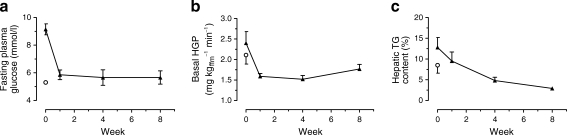
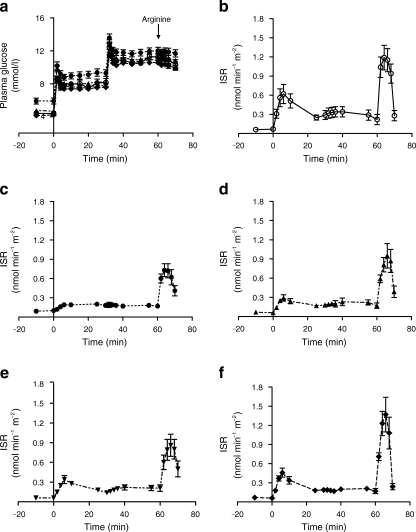
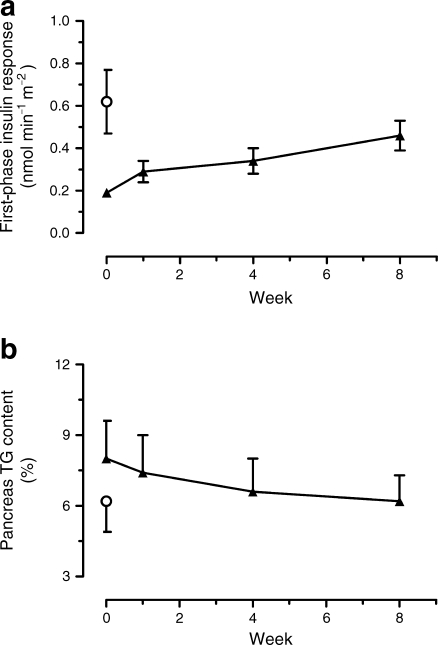
AIMS/HYPOTHESIS: Type 2 diabetes is regarded as inevitably progressive, with irreversible beta cell failure. The hypothesis was tested that both beta cell failure and insulin resistance can be reversed by dietary restriction of energy intake. METHODS: Eleven people with type 2 diabetes (49.5 ± 2.5 years, BMI 33.6 ± 1.2 kg/m(2), nine male and two female) were studied before and after 1, 4 and 8 weeks of a 2.5 MJ (600 kcal)/day diet. Basal hepatic glucose output, hepatic and peripheral insulin sensitivity and beta cell function were measured. Pancreas and liver triacylglycerol content was measured using three-point Dixon magnetic resonance imaging. An age-, sex- and weight-matched group of eight non-diabetic participants was studied. RESULTS: After 1 week of restricted energy intake, fasting plasma glucose normalised in the diabetic group (from 9.2 ± 0.4 to 5.9 ± 0.4 mmol/l; p = 0.003). Insulin suppression of hepatic glucose output improved from 43 ± 4% to 74 ± 5% (p = 0.003 vs baseline; controls 68 ± 5%). Hepatic triacylglycerol content fell from 12.8 ± 2.4% in the diabetic group to 2.9 ± 0.2% by week 8 (p = 0.003). The first-phase insulin response increased during the study period (0.19 ± 0.02 to 0.46 ± 0.07 nmol min(-1) m(-2); p < 0.001) and approached control values (0.62 ± 0.15 nmol min(-1) m(-2); p = 0.42). Maximal insulin response became supranormal at 8 weeks (1.37 ± 0.27 vs controls 1.15 ± 0.18 nmol min(-1) m(-2)). Pancreatic triacylglycerol decreased from 8.0 ± 1.6% to 6.2 ± 1.1% (p = 0.03). CONCLUSIONS/INTERPRETATION: Normalisation of both beta cell function and hepatic insulin sensitivity in type 2 diabetes was achieved by dietary energy restriction alone. This was associated with decreased pancreatic and liver triacylglycerol stores. The abnormalities underlying type 2 diabetes are reversible by reducing dietary energy intake.
Overview
The claims and statistics of this paper haven’t been checked yet.
Free: it reads the open-access text and checks the first 5 claims that cite a source we can check. Create a free account to check every claim.
Integrity signals
Registry
Cites
Statistics
Figures
Verification
Claims the paper makes
The claims and statistics of this paper haven’t been checked yet.
Free: it reads the open-access text and checks the first 5 claims that cite a source we can check. Create a free account to check every claim.
Claims other papers make about this one
Each is checked against this paper’s own text: does it say what the citing paper says it does?
The source backs part of the claim, not all of it — or backs it for a different population, condition or comparison.
In the citing paper
“Previously considered permanent and demanding life-long drug treat ment, type 2 diabetes is now recognised to be a potentially reversible consequence of excessive or abnormal accumulation of body fat (ie, the disease process of obesity). 5”
From 5-year follow-up of the randomised Diabetes Remission Clinical Trial (DiRECT) of continued support for weight loss maintenance in the UK: an extension study (2024) · cites this paper as [5]
Experimental — accuracy not yet measuredThe source backs part of the claim, not all of it — or backs it for a different population, condition or comparison.
In the citing paper
“During an intensive weight loss programme, or early after bariatric surgery, there are already significant improvements in hepatic and muscle insulin sensitivity, and pancreatic first-phase insulin secretion, with rapid loss of ectopic fat from skeletal muscle and liver [2, 3, 6].”
From Diets for weight management in adults with type 2 diabetes: an umbrella review of published meta-analyses and systematic review of trials of diets for diabetes remission (2022) · cites this paper as [6]
Experimental — accuracy not yet measuredThe source backs part of the claim, not all of it — or backs it for a different population, condition or comparison.
In the citing paper
“the twin cycle mechanism, driven by a damaging but reversible accumulation of ectopic fat within the liver and pancreas in susceptible individuals, has now been consistently observed. 6-8”
From Durability of a primary care-led weight-management intervention for remission of type 2 diabetes: 2-year results of the DiRECT open-label, cluster-randomised trial (2019) · cites this paper as [6]
Experimental — accuracy not yet measuredThe source backs part of the claim, not all of it — or backs it for a different population, condition or comparison.
In the citing paper
“Type 2 diabetes is strongly related to weight gain in adult life and accumulation of excess fat within the liver and pancreas.”
From Primary care-led weight management for remission of type 2 diabetes (DiRECT): an open-label, cluster-randomised trial (2018) · cites this paper as [4]
Experimental — accuracy not yet measuredThe cited source says what the claim attributes to it.
In the citing paper
“Although lifestyle interventions393 and weight loss394 reverse T2DM in early stages, when insulin is still secreted, T2DM patients may become dependent on anti-diabetic drugs in later stages.”
From Pancreatic regulation of glucose homeostasis. (2016) · cites this paper as [394]
9 more claims about this paper
Create a free account to see every claim other papers make about this one.
Self-check
Percentages, sums and reported differences re-computed from the paper’s own numbers.
The self-check needs the paper’s full text.
Citations
Cites
The metabolic phenotype in obesity: Fat mass, body fat distribution, and adipose tissue function
Goossens, G. H. (2017) · Obesity Facts · doi:10.1159/000471488 · Cited by 8,481
Turner, R. C., Fox, C., Matthews, McElroy, H. H., Cull, C. A., Holman, R. R., Neil, P., Hadden, D. R., Wright, D., Manley, E., et al. (1998) · The Lancet · Cited by 8,419
Glucose clamp technique: a method for quantifying insulin secretion and resistance.
DeFronzo, R. A., Tobin, J. D., & Andres, R. (1979) · American Journal of Physiology-Endocrinology and Metabolism · doi:10.1152/ajpendo.1979.237.3.e214 · Cited by 7,425 · cited 2×
“An isoglycaemic–hyperinsulinaemic clamp (insulin infusion rate 40 mU m min) was initiated at 0 min [14].”
Methodβ-Cell Deficit and Increased β-Cell Apoptosis in Humans With Type 2 Diabetes
Butler, A. E., Janson, J., Bonner-Weir, S., Ritzel, R., Rizza, R. A., & Butler, P. C. (2003) · Diabetes · doi:10.2337/diabetes.52.1.102 · Cited by 4,011 · cited 1×
“The underlying changes in beta cell function have been well described [3, 4], and beta-cell mass decreases steadily during the course of type 2 diabetes [5, 6].”
BackgroundGupta, A., & Uribarri, J. (2016) · Hormone Research in Paediatrics · doi:10.1159/000444053 · Cited by 4,006
Kahn, S. E. (2003) · Diabetologia · doi:10.1007/s00125-002-1009-0 · Cited by 2,166 · cited 1×
“The underlying changes in beta cell function have been well described [3, 4], and beta-cell mass decreases steadily during the course of type 2 diabetes [5, 6].”
BackgroundWeyer, C., Bogardus, C., Mott, D. M., & Pratley, R. E. (1999) · Journal of Clinical Investigation · doi:10.1172/jci7231 · Cited by 1,940 · cited 2×
“Absence of rapid insulin secretion in response to a rise in plasma glucose is the hallmark of type 2 diabetes [3, 21], and the decline in beta cell function determines the progression towards a need for insulin therapy [2].”
BackgroundU.K. Prospective Diabetes Study Group (1995) · Diabetes · doi:10.2337/diab.44.11.1249 · Cited by 1,923
Szczepaniak, L. S., Nurenberg, P., Leonard, D., Browning, J. D., Reingold, J. S., Grundy, S., Hobbs, H. H., & Dobbins, R. L. (2005) · American Journal of Physiology-Endocrinology and Metabolism · doi:10.1152/ajpendo.00064.2004 · Cited by 1,562 · cited 1×
“It continued to decline throughout the intervention period to reach the normal range for non-obese individuals [20] (2.”
Background
Cited by
DeFronzo, R. A., Ferrannini, E., Groop, L., Henry, R. R., Herman, W. H., Holst, J. J., Hu, F. B., Kahn, C. R., Raz, I., Shulman, G. I., et al. (2015) · Nature Reviews Disease Primers · doi:10.1038/nrdp.2015.19 · Cited by 2,611
Mechanisms for Insulin Resistance: Common Threads and Missing Links
Samuel, V. T., & Shulman, G. I. (2012) · Cell · doi:10.1016/j.cell.2012.02.017 · Cited by 2,294
“But enforced dietary caloric restriction can still rapidly reduce hepatic steatosis in obese patients (Lim et al., 2011; Petersen et al., 2005).”
Lean, M. E., Leslie, W. S., Barnes, A. C., Brosnahan, N., Thom, G., McCombie, L., Peters, C., Zhyzhneuskaya, S., Al-Mrabeh, A., Hollingsworth, K. G., et al. (2018) · The Lancet · doi:10.1016/s0140-6736(17)33102-1 · Cited by 2,095
Self-citationThe pathogenesis of insulin resistance: integrating signaling pathways and substrate flux
Samuel, V. T., & Shulman, G. I. (2016) · Journal of Clinical Investigation · doi:10.1172/jci77812 · Cited by 1,484
“Proof-of-concept studies in rodent models of NALFD and T2D demonstrate that mildly increasing hepatic mitochondrial inefficiency can safely reverse hypertriglyceridemia, ectopic lipid-induced (DAG/nPKC) liver and muscle insulin resistance, steatohepatitis, liver fibrosis, and diabetes, offering a novel therapeutic tar…”
BackgroundInfluentialTimmers, S., Konings, E., Bilet, L., Houtkooper, R. H., van de Weijer, T., Goossens, G. H., Hoeks, J., van der Krieken, S., Ryu, D., Kersten, S., et al. (2011) · Cell Metabolism · doi:10.1016/j.cmet.2011.10.002 · Cited by 1,320
“, 2006), improving insulin sensitivity (Larson-Meyer et al., 2006; Lim et al., 2011), and reducing cardiovascular risk factors (Lefevre et al.”
BackgroundInfluentialType 2 Diabetes and its Impact on the Immune System
Berbudi, A., Rahmadika, N., Tjahjadi, A. I., & Ruslami, R. (2020) · Current Diabetes Reviews · doi:10.2174/1573399815666191024085838 · Cited by 1,143
The role of hepatic lipids in hepatic insulin resistance and type 2 diabetes
Perry, R. J., Samuel, V. T., Petersen, K. F., & Shulman, G. I. (2014) · Nature · doi:10.1038/nature13478 · Cited by 1,136
Ectopic Fat in Insulin Resistance, Dyslipidemia, and Cardiometabolic Disease
Shulman, G. I. (2014) · New England Journal of Medicine · doi:10.1056/nejmra1011035 · Cited by 1,126
Pancreatic regulation of glucose homeostasis.
Röder, P. V., Wu, B., Liu, Y., & Han, W. (2016) · Experimental & Molecular Medicine · doi:10.1038/emm.2016.6 · Cited by 985
Lean, M. E. J., Leslie, W. S., Barnes, A. C., Brosnahan, N., Thom, G., McCombie, L., Peters, C., Zhyzhneuskaya, S., Al-Mrabeh, A., Hollingsworth, K. G., et al. (2019) · The Lancet Diabetes & Endocrinology · doi:10.1016/s2213-8587(19)30068-3 · Cited by 1,017
Self-citationWhy does obesity cause diabetes?
Klein, S., Gastaldelli, A., Yki-Järvinen, H., & Scherer, P. E. (2022) · Cell Metabolism · doi:10.1016/j.cmet.2021.12.012 · Cited by 939
“Weight loss has potent effects on insulin action, and even 5% weight loss improves multiorgan (adipose tissue, liver, and skeletal muscle) insulin sensitivity (Lim et al., 2011; Magkos et al., 2016).”
BackgroundDiabetes Mellitus and the β Cell: The Last Ten Years
Ashcroft, F. M., & Rorsman, P. (2012) · Cell · doi:10.1016/j.cell.2012.02.010 · Cited by 902
Differentiation of diabetes by pathophysiology, natural history, and prognosis
Skyler, J. S., Bakris, G. L., Bonifacio, E., Darsow, T., Eckel, R. H., Groop, L., Groop, P.-H., Handelsman, Y., Insel, R. A., Mathieu, C., et al. (2017) · Diabetes · doi:10.2337/db16-0806 · Cited by 823
“Weight loss improves insulin sensitivity in liver and skeletal muscle (63) and may also reduce pancreatic fat accumulation (64).”
BackgroundPancreatic β-Cell Electrical Activity and Insulin Secretion: Of Mice and Men
Rorsman, P., & Ashcroft, F. M. (2018) · Physiological Reviews · doi:10.1152/physrev.00008.2017 · Cited by 793
Nonalcoholic fatty liver disease as a nexus of metabolic and hepatic diseases
Samuel, V. T., & Shulman, G. I. (2018) · Cell Metabolism · doi:10.1016/j.cmet.2017.08.002 · Cited by 745
“These results have been replicated by other hypocaloric feeding studies (Lazo et al., 2010; Lim et al., 2011).”
Environmental/lifestyle factors in the pathogenesis and prevention of type 2 diabetes
Kolb, H., & Martin, S. (2017) · BMC Medicine · doi:10.1186/s12916-017-0901-x · Cited by 717
“After Roux-en-Y gastric bypass several rapid changes have been noted aside from the lower insulin and plasma glucose levels, including lower blood levels of leptin and branched amino acids, higher concentrations of adiponectin and bile acids, and stronger post prandial increases of GLP-1 and of the satiety peptide YY…”
BackgroundInfluentialEnteroendocrine Cells: Chemosensors in the Intestinal Epithelium
Gribble, F. M., & Reimann, F. (2016) · Annual Review of Physiology · doi:10.1146/annurev-physiol-021115-105439 · Cited by 683
Function and mechanisms of enteroendocrine cells and gut hormones in metabolism
Gribble, F. M., & Reimann, F. (2019) · Nature Reviews Endocrinology · doi:10.1038/s41574-019-0168-8 · Cited by 670
The Subtle Balance between Lipolysis and Lipogenesis: A Critical Point in Metabolic Homeostasis
Saponaro, C., Gaggini, M., Carli, F., & Gastaldelli, A. (2015) · Nutrients · doi:10.3390/nu7115475 · Cited by 529
“Hence excess TG in the liver results in hepatic steatosis, fibrosis and non-alcoholic steatohepatitis (NASH) [3,4]; fat in the pancreas is associated with impaired insulin secretion, β-cell dysfunction and apoptosis [5,6]; excess intramyocardial fat leads to cardiomyopathy, coronary heart disease and sudden death [7,8…”
BackgroundDietary and nutritional approaches for prevention and management of type 2 diabetes
Forouhi, N. G., Misra, A., Mohan, V., Taylor, R., & Yancy, W. (2018) · BMJ · doi:10.1136/bmj.k2234 · Cited by 472
Self-citationChen, C., Cohrs, C. M., Stertmann, J., Bozsak, R., & Speier, S. (2017) · Molecular Metabolism · doi:10.1016/j.molmet.2017.06.019 · Cited by 489
“A similar rapid recovery of beta cell function regarding glucose responsiveness and first phase secretion can also be observed during short-term caloric restriction of T2D patients [107,108].”
BackgroundDiet and exercise in the prevention and treatment of type 2 diabetes mellitus
Magkos, F., Hjorth, M. F., & Astrup, A. (2020) · Nature Reviews Endocrinology · doi:10.1038/s41574-020-0381-5 · Cited by 469
Taylor, R. (2013) · Diabetes Care · doi:10.2337/dc12-1805 · Cited by 485
“Although a causeand-effect relationship between raised intraorgan fat levels and metabolic effect has not yet been proven, the time course data following the dietary intervention study are highly suggestive of a causal link (21).”
InfluentialSelf-citationConsensus report: definition and interpretation of remission in type 2 diabetes
Riddle, M. C., Cefalu, W. T., Evans, P. H., Gerstein, H. C., Nauck, M. A., Oh, W. K., Rothberg, A. E., le Roux, C. W., Rubino, F., Schauer, P., et al. (2021) · Diabetes Care · doi:10.2337/dci21-0034 · Cited by 464
Self-citationTaylor, R., Al-Mrabeh, A., Zhyzhneuskaya, S., Peters, C., Barnes, A. C., Aribisala, B. S., Hollingsworth, K. G., Mathers, J. C., Sattar, N., & Lean, M. E. J. (2018) · Cell Metabolism · doi:10.1016/j.cmet.2018.07.003 · Cited by 450
Self-citationReed, J., Bain, S., & Kanamarlapudi, V. (2021) · Diabetes, Metabolic Syndrome and Obesity: Targets and Therapy · doi:10.2147/dmso.s319895 · Cited by 441
Steven, S., Hollingsworth, K. G., Al-Mrabeh, A., Avery, L., Aribisala, B., Caslake, M., & Taylor, R. (2016) · Diabetes Care · doi:10.2337/dc15-1942 · Cited by 418
“The group size was determined by our previous observations (11) to achieve the specific aims of the study, to examine whether those who achieve nondiabetic fasting blood glucose after VLCD would remain normoglycemic during weight stability, and to determine underlying mechanisms.”
InfluentialSelf-citationRecent Insights Into Mechanisms of β-Cell Lipo- and Glucolipotoxicity in Type 2 Diabetes
Lytrivi, M., Castell, A.-L., Poitout, V., & Cnop, M. (2020) · Journal of Molecular Biology · doi:10.1016/j.jmb.2019.09.016 · Cited by 408
“In a smaller, earlier study of acute weight loss with a very low-calorie diet, recovery of the first-phase insulin secretion was associated with a decrease in pancreatic fat [194].”
BackgroundInsulin Resistance and Type 2 Diabetes
Taylor, R. (2012) · Diabetes · doi:10.2337/db12-0073 · Cited by 387
Self-citationThiazolidinediones: the forgotten diabetes medications
Lebovitz, H. E. (2019) · Current Diabetes Reports · doi:10.1007/s11892-019-1270-y · Cited by 388
Mechanisms of diabetes improvement following bariatric/metabolic surgery
Batterham, R. L., & Cummings, D. E. (2016) · Diabetes Care · doi:10.2337/dc16-0145 · Cited by 376
“with improved hepatic insulin sensitivity and normalization of fasting plasma glucose levels within 7 days (29).”
BackgroundMethodResultInfluentialEctopic fat and insulin resistance: pathophysiology and effect of diet and lifestyle interventions.
Snel, M., Jonker, J. T., Schoones, J., Lamb, H., de Roos, A., Pijl, H., Smit, J. W. A., Meinders, A. E., & Jazet, I. M. (2012) · International Journal of Endocrinology · doi:10.1155/2012/983814 · Cited by 368
“Hindawi Publishing Corporation International Journal of Endocrinology Volume 2012, Article ID 983814, 18 pages doi:10.1155/2012/983814”
BackgroundInfluentialα-Glucosidase inhibition by luteolin: Kinetics, interaction and molecular docking
Yan, J., Zhang, G., Pan, J., & Wang, Y. (2014) · International Journal of Biological Macromolecules · doi:10.1016/j.ijbiomac.2013.12.007 · Cited by 341
A plant-based diet for the prevention and treatment of type 2 diabetes.
(2017) · Europe PMC (PubMed Central) · doi:10.11909/j.issn.1671-5411.2017.05.009 · Cited by 320
Pathophysiologic Approach to Therapy in Patients With Newly Diagnosed Type 2 Diabetes
DeFronzo, R. A., Eldor, R., & Abdul-Ghani, M. (2013) · Diabetes Care · doi:10.2337/dcs13-2011 · Cited by 314
“Although weight loss has the potential to improve both the defects in insulin sensitivity and insulin secretion (77), two meta-analyses involving 46 published studies demonstrated that the ability to maintain the initial weight loss is difficult (78,79).”
BackgroundDiacylglycerol Activation of Protein Kinase Cε and Hepatic Insulin Resistance
Jornayvaz, F. R., & Shulman, G. I. (2012) · Cell Metabolism · doi:10.1016/j.cmet.2012.03.005 · Cited by 317
The importance of weight management in type 2 diabetes mellitus
Wilding, J. P. H. (2014) · International Journal of Clinical Practice · doi:10.1111/ijcp.12384 · Cited by 314
Jørgensen, N. B., Jacobsen, S. H., Dirksen, C., Bojsen-Møller, K. N., Naver, L., Hvolris, L., Clausen, T. R., Wulff, B. S., Worm, D., Lindqvist Hansen, D., et al. (2012) · American Journal of Physiology-Endocrinology and Metabolism · doi:10.1152/ajpendo.00073.2012 · Cited by 313
“9 mM within 1 wk, first-phase insulin response to an intravenous glucose challenge did not significantly increase in the same time interval, reflecting an unchanged -cell function (26).”
BackgroundUnderstanding the mechanisms of reversal of type 2 diabetes
Taylor, R., Al-Mrabeh, A., & Sattar, N. (2019) · The Lancet Diabetes & Endocrinology · doi:10.1016/s2213-8587(19)30076-2 · Cited by 299
Self-citationMechanisms of changes in glucose metabolism and bodyweight after bariatric surgery
Madsbad, S., Dirksen, C., & Holst, J. J. (2014) · The Lancet Diabetes & Endocrinology · doi:10.1016/s2213-8587(13)70218-3 · Cited by 298
Bariatric surgery for type 2 diabetes
Dixon, J. B., le Roux, C. W., Rubino, F., & Zimmet, P. (2012) · The Lancet · doi:10.1016/s0140-6736(12)60401-2 · Cited by 296
Muscogiuri, G., El Ghoch, M., Colao, A., Hassapidou, M., Yumuk, V., Busetto, L., & Obesity Management Task Force (OMTF) of the European Association for the Study of Obesity (EASO) (2021) · Obesity Facts · doi:10.1159/000515381 · Cited by 289
Metabolic Effects of Bariatric Surgery in Patients With Moderate Obesity and Type 2 Diabetes
Kashyap, S. R., Bhatt, D. L., Wolski, K., Watanabe, R. M., Abdul-Ghani, M., Abood, B., Pothier, C. E., Brethauer, S., Nissen, S., Gupta, M., et al. (2013) · Diabetes Care · doi:10.2337/dc12-1596 · Cited by 286
Caprio, M., Infante, M., Moriconi, E., Armani, A., Fabbri, A., Mantovani, G., Mariani, S., Lubrano, C., Poggiogalle, E., Migliaccio, S., et al. (2019) · Journal of Endocrinological Investigation · doi:10.1007/s40618-019-01061-2 · Cited by 283
Hocking, S., Samocha-Bonet, D., Milner, K.-L., Greenfield, J. R., & Chisholm, D. J. (2013) · Endocrine Reviews · doi:10.1210/er.2012-1041 · Cited by 276
Jørgensen, N. B., Dirksen, C., Bojsen-Møller, K. N., Jacobsen, S. H., Worm, D., Hansen, D. L., Kristiansen, V. B., Naver, L., Madsbad, S., & Holst, J. J. (2013) · Diabetes · doi:10.2337/db13-0022 · Cited by 288
“This was accomplished by pharmacologically blocking the GLP-1 receptor (GLP-1R) during a liquid meal tolerance test before and after surgery using exendin(9-39) (Ex-9; Bachem AG, Bubendorf, Switzerland), a specific GLP-1R antagonist (16).”
BackgroundMethodThe effect of bariatric surgery on gastrointestinal and pancreatic peptide hormones
Meek, C. L., Lewis, H. B., Reimann, F., Gribble, F. M., & Park, A. J. (2016) · Peptides · doi:10.1016/j.peptides.2015.08.013 · Cited by 269
Jackness, C., Karmally, W., Febres, G., Conwell, I. M., Ahmed, L., Bessler, M., McMahon, D. J., & Korner, J. (2013) · Diabetes · doi:10.2337/db12-1762 · Cited by 267
“(27) studied patients with T2DM and restricted caloric intake to 600 kcal/day for 8 weeks and demonstrated not just improvement but normalization of both b-cell function and hepatic insulin sensitivity.”
BackgroundMathus-Vliegen, E. M. H., Basdevant, A., Finer, N., Hainer, V., Hauner, H., Micic, D., Maislos, M., Roman, G., Schutz, Y., Tsigos, C., et al. (2012) · Obesity Facts · doi:10.1159/000341193 · Cited by 261
Loomis, A. K., Kabadi, S., Preiss, D., Hyde, C., Bonato, V., St. Louis, M., Desai, J., Gill, J. M. R., Welsh, P., Waterworth, D., et al. (2016) · The Journal of Clinical Endocrinology & Metabolism · doi:10.1210/jc.2015-3444 · Cited by 256
Reversible changes in pancreatic islet structure and function produced by elevated blood glucose
Brereton, M. F., Iberl, M., Shimomura, K., Zhang, Q., Adriaenssens, A. E., Proks, P., Spiliotis, I. I., Dace, W., Mattis, K. K., Ramracheya, R., et al. (2014) · Nature Communications · doi:10.1038/ncomms5639 · Cited by 259
Goday, A., Bellido, D., Sajoux, I., Crujeiras, A. B., Burguera, B., García-Luna, P. P., Oleaga, A., Moreno, B., & Casanueva, F. F. (2016) · Nutrition & Diabetes · doi:10.1038/nutd.2016.36 · Cited by 258
Oxidative and endoplasmic reticulum stress in β-cell dysfunction in diabetes
Hasnain, S. Z., Prins, J. B., & McGuckin, M. A. (2016) · Journal of Molecular Endocrinology · doi:10.1530/jme-15-0232 · Cited by 253
“…half the pancreas has a modest effect on glycaemic control (Menge et al. 2009); and bariatric surgery (Saliba et al. 2009), intense calorie restriction (Lim et al. 2011, Jackness et al. 2013) and administration of GLP1R agonists (Samson & Garber 2013) restore glycaemic control and b-cell function.”
BackgroundLuukkonen, P. K., Dufour, S., Lyu, K., Zhang, X.-M., Hakkarainen, A., Lehtimäki, T. E., Cline, G. W., Petersen, K. F., Shulman, G. I., & Yki-Järvinen, H. (2020) · Proceedings of the National Academy of Sciences · doi:10.1073/pnas.1922344117 · Cited by 249
Bojsen-Møller, K. N., Dirksen, C., Jørgensen, N. B., Jacobsen, S. H., Serup, A. K., Albers, P. H., Hansen, D. L., Worm, D., Naver, L., Kristiansen, V. B., et al. (2014) · Diabetes · doi:10.2337/db13-1307 · Cited by 254
“05) based on data from patients with T2D (30).”
BackgroundMethodEffects of diet versus gastric bypass on metabolic function in diabetes
Yoshino, M., Kayser, B. D., Yoshino, J., Stein, R. I., Reeds, D., Eagon, J. C., Eckhouse, S. R., Watrous, J. D., Jain, M., Knight, R., et al. (2020) · New England Journal of Medicine · doi:10.1056/nejmoa2003697 · Cited by 246
Cefalu, W. T., Bray, G. A., Home, P. D., Garvey, W. T., Klein, S., Pi-Sunyer, F. X., Hu, F. B., Raz, I., Van Gaal, L., Wolfe, B. M., et al. (2015) · Diabetes Care · doi:10.2337/dc15-1081 · Cited by 243
“The mechanisms explaining postsurgical remission of diabetes are not fully understood, although it does not appear to be caused by weight loss alone; in most cases, remission begins directly after surgery and before significant weight loss has occurred (186).”
BackgroundAmerican Diabetes Association Professional Practice Committee (2022) · Diabetes Care · doi:10.2337/dc22-s008 · Cited by 244
ElSayed, N. A., Aleppo, G., Aroda, V. R., Bannuru, R. R., Brown, F. M., Bruemmer, D., Collins, B. S., Hilliard, M. E., Isaacs, D., Johnson, E. L., et al. (2023) · Diabetes Care · doi:10.2337/dc23-s008 · Cited by 244
Cassidy, S., Thoma, C., Houghton, D., & Trenell, M. I. (2017) · Diabetologia · doi:10.1007/s00125-016-4106-1 · Cited by 239
Role of Reduced β-Cell Mass Versus Impaired β-Cell Function in the Pathogenesis of Type 2 Diabetes
Meier, J. J., & Bonadonna, R. C. (2013) · Diabetes Care · doi:10.2337/dcs13-2008 · Cited by 242
Mechanisms of improved glycaemic control after Roux-en-Y gastric bypass
Dirksen, C., Jørgensen, N. B., Bojsen-Møller, K. N., Jacobsen, S. H., Hansen, D. L., Worm, D., Holst, J. J., & Madsbad, S. (2012) · Diabetologia · doi:10.1007/s00125-012-2556-7 · Cited by 239
Pillon, N. J., Loos, R. J. F., Marshall, S. M., & Zierath, J. R. (2021) · Cell · doi:10.1016/j.cell.2021.02.012 · Cited by 234
The Spectrum of Achalasia: Lessons From Studies of Pathophysiology and High-Resolution Manometry
Kahrilas, P. J., & Boeckxstaens, G. (2013) · Gastroenterology · doi:10.1053/j.gastro.2013.08.038 · Cited by 235
Diabetes and Nonalcoholic Fatty Liver Disease: A Pathogenic Duo
Williams, K. H., Shackel, N. A., Gorrell, M. D., McLennan, S. V., & Twigg, S. M. (2013) · Endocrine Reviews · doi:10.1210/er.2012-1009 · Cited by 233
Nonalcoholic fatty liver disease in adults: current concepts in etiology, outcomes, and management
Marjot, T., Moolla, A., Cobbold, J. F., Hodson, L., & Tomlinson, J. W. (2020) · Endocrine Reviews · doi:10.1210/endrev/bnz009 · Cited by 228
Cuthbertson, D. J., Irwin, A., Gardner, C. J., Daousi, C., Purewal, T., Furlong, N., Goenka, N., Thomas, E. L., Adams, V. L., Pushpakom, S. P., et al. (2012) · PLoS ONE · doi:10.1371/journal.pone.0050117 · Cited by 226
“dietary intervention consisting of a 600 kcal diet, liver fat reduced by a total of 7065% [35].”
BackgroundType 2 diabetes as a disease of ectopic fat?
Sattar, N., & Gill, J. M. (2014) · BMC Medicine · doi:10.1186/s12916-014-0123-4 · Cited by 220
Cassidy, S., Chau, J. Y., Catt, M., Bauman, A., & Trenell, M. I. (2016) · BMJ Open · doi:10.1136/bmjopen-2015-010038 · Cited by 229
“26 Dietary advice remains the pillar of national guidelines for the management of type 2 diabetes, with evidence reporting that dietary changes can significantly improve glycemic control,(27) and even reverse type 2 diabetes.(28) 29 Analysis of the self-report diet behaviour from the UK Biobank cohort suggests that na…”
BackgroundMathus-Vliegen, E. M. (2012) · Journal of Clinical Gastroenterology · doi:10.1097/mcg.0b013e31825692ce · Cited by 222
Brown, E., Wilding, J. P. H., Barber, T. M., Alam, U., & Cuthbertson, D. J. (2019) · Obesity Reviews · doi:10.1111/obr.12841 · Cited by 222
“The dramatic and rapid metabolic improvement preceding any significant weight loss is explained by mobilization of liver fat (reducing hepatic glucose output with enhanced hepatic insulin resistance) and mobilization of pancreatic fat (restoring first phase of insulin secretory response).(7) Longer‐term results from i…”
BackgroundCorley, B. T., Carroll, R. W., Hall, R. M., Weatherall, M., Parry‐Strong, A., & Krebs, J. D. (2018) · Diabetic Medicine · doi:10.1111/dme.13595 · Cited by 217
Cassidy, S., Thoma, C., Hallsworth, K., Parikh, J., Hollingsworth, K. G., Taylor, R., Jakovljevic, D. G., & Trenell, M. I. (2016) · Diabetologia · doi:10.1007/s00125-015-3741-2 · Cited by 212
Self-citationAmerican Diabetes Association Professional Practice Committee, ElSayed, N. A., Aleppo, G., Bannuru, R. R., Bruemmer, D., Collins, B. S., Ekhlaspour, L., Hilliard, M. E., Johnson, E. L., Khunti, K., et al. (2024) · Diabetes Care · doi:10.2337/dc24-s008 · Cited by 213
Intra-pancreatic fat deposition: bringing hidden fat to the fore
Petrov, M. S., & Taylor, R. (2022) · Nature Reviews Gastroenterology & Hepatology · doi:10.1038/s41575-021-00551-0 · Cited by 195
Self-citationHoughton, D., Thoma, C., Hallsworth, K., Cassidy, S., Hardy, T., Burt, A. D., Tiniakos, D., Hollingsworth, K. G., Taylor, R., Day, C. P., et al. (2017) · Clinical Gastroenterology and Hepatology · doi:10.1016/j.cgh.2016.07.031 · Cited by 209
Self-citationChuruangsuk, C., Hall, J., Reynolds, A., Griffin, S. J., Combet, E., & Lean, M. E. J. (2022) · Diabetologia · doi:10.1007/s00125-021-05577-2 · Cited by 204
“During an intensive weight loss programme, or early after bariatric surgery, there are already significant improvements in hepatic and muscle insulin sensitivity, and pancreatic first-phase insulin secretion, with rapid loss of ectopic fat from skeletal muscle and liver [2, 3, 6].”
BackgroundHallsworth, K., Thoma, C., Hollingsworth, K. G., Cassidy, S., Anstee, Q. M., Day, C. P., & Trenell, M. I. (2015) · Clinical Science · doi:10.1042/cs20150308 · Cited by 201
Self-citationAdult obesity complications: challenges and clinical impact
Ansari, S., Haboubi, H., & Haboubi, N. (2020) · Therapeutic Advances in Endocrinology and Metabolism · doi:10.1177/2042018820934955 · Cited by 184
Beta-cell failure in type 2 diabetes: mechanisms, markers, and clinical implications
Wysham, C., & Shubrook, J. (2020) · Postgraduate Medicine · doi:10.1080/00325481.2020.1771047 · Cited by 193
Metabolic implications of pancreatic fat accumulation
Wagner, R., Eckstein, S. S., Yamazaki, H., Gerst, F., Machann, J., Jaghutriz, B. A., Schürmann, A., Solimena, M., Singer, S., Königsrainer, A., et al. (2022) · Nature Reviews Endocrinology · doi:10.1038/s41574-021-00573-3 · Cited by 185
Sarcopenic obesity and endocrinal adaptation with age
Sakuma, K., & Yamaguchi, A. (2013) · International Journal of Endocrinology · doi:10.1155/2013/204164 · Cited by 189
Normal weight individuals who develop Type 2 diabetes: the personal fat threshold
Taylor, R., & Holman, R. R. (2015) · Clinical Science · doi:10.1042/cs20140553 · Cited by 190
Self-citationLean, M. E., Leslie, W. S., Barnes, A. C., Brosnahan, N., Thom, G., McCombie, L., Kelly, T., Irvine, K., Peters, C., Zhyzhneuskaya, S., et al. (2024) · The Lancet Diabetes & Endocrinology · doi:10.1016/s2213-8587(23)00385-6 · Cited by 186
Self-citationThe Management of Very Low-Calorie Ketogenic Diet in Obesity Outpatient Clinic: A Practical Guide
Muscogiuri, G., Barrea, L., Laudisio, D., Pugliese, G., Salzano, C., Savastano, S., & Colao, A. (2019) · Journal of Translational Medicine · doi:10.1186/s12967-019-2104-z · Cited by 180
Harvie, M., & Howell, A. (2017) · Behavioral Sciences · doi:10.3390/bs7010004 · Cited by 174
“[43] reported a 30% reduction in hepatic fat after seven days of a 60%–70% CER in subjects with type 2 diabetes (nine men and two women), which normalised hepatic insulin sensitivity.”
BackgroundType 2 Diabetes: The Pathologic Basis of Reversible β-Cell Dysfunction
White, M. G., Shaw, J. A. M., & Taylor, R. (2016) · Diabetes Care · doi:10.2337/dc16-0619 · Cited by 174
“The slow normalization of the first-phase insulin response over 8 weeks was mirrored by a slow normalization of total intrapancreatic fat (36).”
BackgroundSelf-citationTsatsoulis, A., Mantzaris, M. D., Bellou, S., & Andrikoula, M. (2013) · Metabolism · doi:10.1016/j.metabol.2012.11.004 · Cited by 174
“This dietary intervention led to normalization of both hepatic insulin sensitivity and βcell function and was associated with decreased hepatic and pancreatic lipid stores [107].”
BackgroundSteven (2016) · doi:10.2337/dc15-0750 · Cited by 171
Reversing Type 2 Diabetes: A Narrative Review of the Evidence
Hallberg, S. J., Gershuni, V. M., Hazbun, T. L., & Athinarayanan, S. J. (2019) · Nutrients · doi:10.3390/nu11040766 · Cited by 170
“An initial 2011 diabetes reversal study by Taylor and colleagues showed that a very low-calorie diet of 600 Kcal/day not only normalized glucose, HbA1c, and hepatic insulin sensitivity levels within a week, but also led to decreased hepatic and pancreatic triacylglycerol content and normalization of the insulin respon…”
BackgroundWhole body fat: Content and distribution
Thomas, E. L., Fitzpatrick, J. A., Malik, S. J., Taylor-Robinson, S. D., & Bell, J. D. (2013) · Progress in Nuclear Magnetic Resonance Spectroscopy · doi:10.1016/j.pnmrs.2013.04.001 · Cited by 168
“Furthermore, it has been shown that pancreatic fat can be reduced following a period of dietary restriction, which also resulted in normalisation of b-cell function [225].”
BackgroundThe role of triglyceride glucose index in development of Type 2 diabetes mellitus
Low, S., Khoo, K. C. J., Irwan, B., Sum, C. F., Subramaniam, T., Lim, S. C., & Wong, T. K. M. (2018) · Diabetes Research and Clinical Practice · doi:10.1016/j.diabres.2018.06.006 · Cited by 172
The role of bariatric surgery to treat diabetes: current challenges and perspectives
Koliaki, C., Liatis, S., le Roux, C. W., & Kokkinos, A. (2017) · BMC Endocrine Disorders · doi:10.1186/s12902-017-0202-6 · Cited by 167
“In favor of the first hypothesis, a study in 11 patients with T2DM who underwent caloric restriction similar to that immediately after bariatric surgery, showed beta cell function normalization, increased insulin sensitivity, restoration of first-phase insulin secretion, and, ultimately, diabetes reversal [20].”
ResultDietary Glycemic Index and Load and the Risk of Type 2 Diabetes: Assessment of Causal Relations
Livesey, G., Taylor, R., Livesey, H. F., Buyken, A. E., Jenkins, D. J. A., Augustin, L. S. A., Sievenpiper, J. L., Barclay, A. W., Liu, S., Wolever, T. M. S., et al. (2019) · Nutrients · doi:10.3390/nu11061436 · Cited by 163
“Reduction of central obesity is accompanied by normalization of insulin secretion and hepatic insulin sensitivity [80], thereby reversing the underlying biochemistry of pre-diabetes.”
Self-citationHepatic Lipoprotein Export and Remission of Human Type 2 Diabetes after Weight Loss
Al-Mrabeh, A., Zhyzhneuskaya, S. V., Peters, C., Barnes, A. C., Melhem, S., Jesuthasan, A., Aribisala, B., Hollingsworth, K. G., Lietz, G., Mathers, J. C., et al. (2020) · Cell Metabolism · doi:10.1016/j.cmet.2019.11.018 · Cited by 162
“We previously demonstrated that this occurs within 7 days of commencing a hypocaloric diet (Lim et al., 2011).”
BackgroundResultInfluentialSelf-citationImproving prevention strategies for cardiometabolic disease
Sattar, N., Gill, J. M. R., & Alazawi, W. (2020) · Nature Medicine · doi:10.1038/s41591-020-0786-7 · Cited by 159
Kempf, K., Altpeter, B., Berger, J., Reuß, O., Fuchs, M., Schneider, M., Gärtner, B., Niedermeier, K., & Martin, S. (2017) · Diabetes Care · doi:10.2337/dc17-0303 · Cited by 159
Yang, T., Liu, Y., Li, L., Zheng, Y., Wang, Y., Su, J., Yang, R., Luo, M., & Yu, C. (2022) · Cardiovascular Diabetology · doi:10.1186/s12933-022-01531-7 · Cited by 174
American Diabetes Association (2021) · Diabetes Care · doi:10.2337/dc21-s008 · Cited by 158
Wigger, L., Barovic, M., Brunner, A.-D., Marzetta, F., Schöniger, E., Mehl, F., Kipke, N., Friedland, D., Burdet, F., Kessler, C., et al. (2021) · Nature Metabolism · doi:10.1038/s42255-021-00420-9 · Cited by 161
Metadata
- Authors
- Lim, E. L., Hollingsworth, K. G., Aribisala, B. S., Chen, M. J., Mathers, J. C., & Taylor, R.
- Affiliations
- Newcastle University (GB)
- Corresponding author
- Taylor, R.
- Venue
- Diabetologia
- Published
- 2011-06-09
- Volume
- 54
- Issue
- 10
- Pages
- 2506-2514
- ISSN
- 0012-186X (ISSN-L)
- 1432-0428
- PMC
- PMC3168743
- OpenAlex
- W2127283831
- Cited by
- 1,164
- References
- 51
- Citations by year
- 2026: 46 · 2025: 60 · 2024: 65 · 2023: 77 · 2022: 109 · 2021: 102 · 2020: 81 · 2019: 77 · 2018: 86 · 2017: 90 · 2016: 77 · 2015: 82 · 2014: 60 · 2013: 77 · 2012: 64
- FWCI
- 68.35
- Type
- journal article
- Language
- en
- Open access
- hybrid
- doi.org
- Licence
- cc-by-nc
- Locations
- Diabetologia (publishedVersion, cc-by-nc)
- Europe PMC (PubMed Central) (publishedVersion, cc-by-nc)
- PubMed Central (publishedVersion, cc-by-nc)
- PubMed (publishedVersion)
- IRIS Research product catalog (Sapienza University of Rome) (submittedVersion)
- Edinburgh Research Explorer (University of Edinburgh) (submittedVersion, other-oa)
- Newcastle University ePrints (Newcastle Univesity) (cc-by-nc)
- Topics
- Health Sciences › Medicine › Endocrinology, Diabetes and Metabolism › Pancreatic function and diabetes
- Health Sciences › Medicine › Endocrinology, Diabetes and Metabolism › Diabetes Treatment and Management
- Health Sciences › Medicine › Endocrinology, Diabetes and Metabolism › Diabetes, Cardiovascular Risks, and Lipoproteins
- Keywords
- type 2 diabetes remission, beta-cell function, caloric restriction, dietary restriction, hepatic insulin sensitivity, hepatic glucose production, liver triacylglycerol, first-phase insulin response, insulin resistance, fasting blood glucose, pancreatic fat content, hepatic fat content, weight loss interventions
- MeSH terms
- Adult, Aged, Blood Glucose, Body Composition, Body Weight, Diabetes Mellitus, Type 2, Female, Glycated Hemoglobin, Humans, Liver, Male, Middle Aged, Pancreas, Triglycerides, Insulin-Secreting Cells
About these checks
Registry, retraction, Cites and statistics results are computed, not judged, with one exception: a printed reference that no index lists is read once by a model before it counts as a citation error. Claims are extracted by a model and kept only when their quote appears verbatim in the text; each cited source is then checked, with a model’s help, for whether it says what the claim relies on. Those verdicts can be wrong — read the claim’s quote and the cited source before relying on one.
Statistics and arithmetic are recomputed, not judged.
Confidence bands are shown only for fields calibrated on our annotated test set. None is calibrated yet, so no band is shown.
What counts as a claim ›How we measure confidence ›How we check this ›
Are you an author, or do you see a problem with this page? Request a review
Data sources
Bibliographic data: Semantic Scholar, OpenAlex, Crossref.
Contains information from the Semantic Scholar Academic Graph Datasets, made available under the ODC Attribution License (ODC-BY 1.0).
Semantic Scholar’s data is described in: Kinney, R., et al. (2023). The Semantic Scholar Open Data Platform. arXiv:2301.10140.
