

Reversal of type 2 diabetes: normalisation of beta cell function in association with decreased pancreas and liver triacylglycerol
Open accessThe DOI matches its Crossref record; 52 of the 52 references it cites were found in a registry or an index.
Abstract
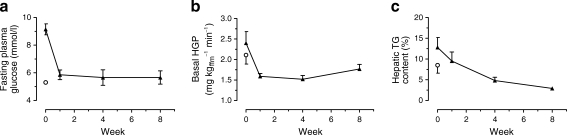
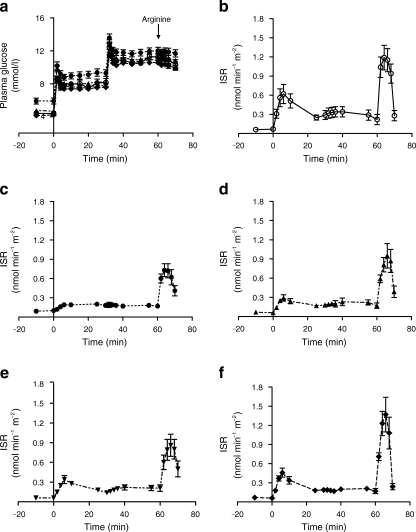
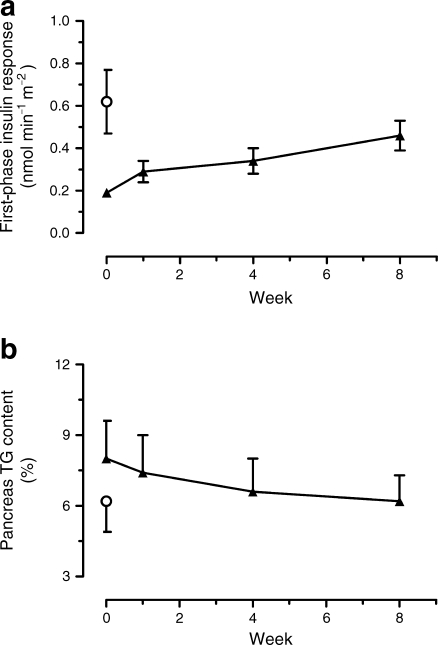
AIMS/HYPOTHESIS: Type 2 diabetes is regarded as inevitably progressive, with irreversible beta cell failure. The hypothesis was tested that both beta cell failure and insulin resistance can be reversed by dietary restriction of energy intake. METHODS: Eleven people with type 2 diabetes (49.5 ± 2.5 years, BMI 33.6 ± 1.2 kg/m(2), nine male and two female) were studied before and after 1, 4 and 8 weeks of a 2.5 MJ (600 kcal)/day diet. Basal hepatic glucose output, hepatic and peripheral insulin sensitivity and beta cell function were measured. Pancreas and liver triacylglycerol content was measured using three-point Dixon magnetic resonance imaging. An age-, sex- and weight-matched group of eight non-diabetic participants was studied. RESULTS: After 1 week of restricted energy intake, fasting plasma glucose normalised in the diabetic group (from 9.2 ± 0.4 to 5.9 ± 0.4 mmol/l; p = 0.003). Insulin suppression of hepatic glucose output improved from 43 ± 4% to 74 ± 5% (p = 0.003 vs baseline; controls 68 ± 5%). Hepatic triacylglycerol content fell from 12.8 ± 2.4% in the diabetic group to 2.9 ± 0.2% by week 8 (p = 0.003). The first-phase insulin response increased during the study period (0.19 ± 0.02 to 0.46 ± 0.07 nmol min(-1) m(-2); p < 0.001) and approached control values (0.62 ± 0.15 nmol min(-1) m(-2); p = 0.42). Maximal insulin response became supranormal at 8 weeks (1.37 ± 0.27 vs controls 1.15 ± 0.18 nmol min(-1) m(-2)). Pancreatic triacylglycerol decreased from 8.0 ± 1.6% to 6.2 ± 1.1% (p = 0.03). CONCLUSIONS/INTERPRETATION: Normalisation of both beta cell function and hepatic insulin sensitivity in type 2 diabetes was achieved by dietary energy restriction alone. This was associated with decreased pancreatic and liver triacylglycerol stores. The abnormalities underlying type 2 diabetes are reversible by reducing dietary energy intake.
Overview
The claims and statistics of this paper haven’t been checked yet.
Free: it reads the open-access text and checks the first 5 claims that cite a source we can check. Create a free account to check every claim.
Integrity signals
Registry
Cites
Statistics
Figures
Verification
Claims the paper makes
The claims and statistics of this paper haven’t been checked yet.
Free: it reads the open-access text and checks the first 5 claims that cite a source we can check. Create a free account to check every claim.
Claims other papers make about this one
Each is checked against this paper’s own text: does it say what the citing paper says it does?
The source backs part of the claim, not all of it — or backs it for a different population, condition or comparison.
In the citing paper
“Previously considered permanent and demanding life-long drug treat ment, type 2 diabetes is now recognised to be a potentially reversible consequence of excessive or abnormal accumulation of body fat (ie, the disease process of obesity). 5”
From 5-year follow-up of the randomised Diabetes Remission Clinical Trial (DiRECT) of continued support for weight loss maintenance in the UK: an extension study (2024) · cites this paper as [5]
Experimental — accuracy not yet measuredThe source backs part of the claim, not all of it — or backs it for a different population, condition or comparison.
In the citing paper
“During an intensive weight loss programme, or early after bariatric surgery, there are already significant improvements in hepatic and muscle insulin sensitivity, and pancreatic first-phase insulin secretion, with rapid loss of ectopic fat from skeletal muscle and liver [2, 3, 6].”
From Diets for weight management in adults with type 2 diabetes: an umbrella review of published meta-analyses and systematic review of trials of diets for diabetes remission (2022) · cites this paper as [6]
Experimental — accuracy not yet measuredThe source backs part of the claim, not all of it — or backs it for a different population, condition or comparison.
In the citing paper
“the twin cycle mechanism, driven by a damaging but reversible accumulation of ectopic fat within the liver and pancreas in susceptible individuals, has now been consistently observed. 6-8”
From Durability of a primary care-led weight-management intervention for remission of type 2 diabetes: 2-year results of the DiRECT open-label, cluster-randomised trial (2019) · cites this paper as [6]
Experimental — accuracy not yet measuredThe source backs part of the claim, not all of it — or backs it for a different population, condition or comparison.
In the citing paper
“Type 2 diabetes is strongly related to weight gain in adult life and accumulation of excess fat within the liver and pancreas.”
From Primary care-led weight management for remission of type 2 diabetes (DiRECT): an open-label, cluster-randomised trial (2018) · cites this paper as [4]
Experimental — accuracy not yet measuredThe cited source says what the claim attributes to it.
In the citing paper
“Although lifestyle interventions393 and weight loss394 reverse T2DM in early stages, when insulin is still secreted, T2DM patients may become dependent on anti-diabetic drugs in later stages.”
From Pancreatic regulation of glucose homeostasis. (2016) · cites this paper as [394]
9 more claims about this paper
Create a free account to see every claim other papers make about this one.
Self-check
Percentages, sums and reported differences re-computed from the paper’s own numbers.
The self-check needs the paper’s full text.
Citations
Cites
The metabolic phenotype in obesity: Fat mass, body fat distribution, and adipose tissue function
Goossens, G. H. (2017) · Obesity Facts · doi:10.1159/000471488 · Cited by 8,481
Turner, R. C., Fox, C., Matthews, McElroy, H. H., Cull, C. A., Holman, R. R., Neil, P., Hadden, D. R., Wright, D., Manley, E., et al. (1998) · The Lancet · Cited by 8,419
Glucose clamp technique: a method for quantifying insulin secretion and resistance.
DeFronzo, R. A., Tobin, J. D., & Andres, R. (1979) · American Journal of Physiology-Endocrinology and Metabolism · doi:10.1152/ajpendo.1979.237.3.e214 · Cited by 7,425 · cited 2×
“An isoglycaemic–hyperinsulinaemic clamp (insulin infusion rate 40 mU m min) was initiated at 0 min [14].”
Methodβ-Cell Deficit and Increased β-Cell Apoptosis in Humans With Type 2 Diabetes
Butler, A. E., Janson, J., Bonner-Weir, S., Ritzel, R., Rizza, R. A., & Butler, P. C. (2003) · Diabetes · doi:10.2337/diabetes.52.1.102 · Cited by 4,011 · cited 1×
“The underlying changes in beta cell function have been well described [3, 4], and beta-cell mass decreases steadily during the course of type 2 diabetes [5, 6].”
BackgroundGupta, A., & Uribarri, J. (2016) · Hormone Research in Paediatrics · doi:10.1159/000444053 · Cited by 4,006
Kahn, S. E. (2003) · Diabetologia · doi:10.1007/s00125-002-1009-0 · Cited by 2,166 · cited 1×
“The underlying changes in beta cell function have been well described [3, 4], and beta-cell mass decreases steadily during the course of type 2 diabetes [5, 6].”
BackgroundWeyer, C., Bogardus, C., Mott, D. M., & Pratley, R. E. (1999) · Journal of Clinical Investigation · doi:10.1172/jci7231 · Cited by 1,940 · cited 2×
“Absence of rapid insulin secretion in response to a rise in plasma glucose is the hallmark of type 2 diabetes [3, 21], and the decline in beta cell function determines the progression towards a need for insulin therapy [2].”
BackgroundU.K. Prospective Diabetes Study Group (1995) · Diabetes · doi:10.2337/diab.44.11.1249 · Cited by 1,923
Szczepaniak, L. S., Nurenberg, P., Leonard, D., Browning, J. D., Reingold, J. S., Grundy, S., Hobbs, H. H., & Dobbins, R. L. (2005) · American Journal of Physiology-Endocrinology and Metabolism · doi:10.1152/ajpendo.00064.2004 · Cited by 1,562 · cited 1×
“It continued to decline throughout the intervention period to reach the normal range for non-obese individuals [20] (2.”
Background
Cited by
Items 401–500 of 1,001
Kloecker, D. E., Zaccardi, F., Baldry, E., Davies, M. J., Khunti, K., & Webb, D. R. (2019) · Diabetes, Obesity and Metabolism · doi:10.1111/dom.13727 · Cited by 25
“The mean (range) number of participants was 78 (6-2597) for arms reporting body weight and 25 (6-192) when excluding the UK Prospective Diabetes Study 7 (UKPDS7),(43) which had 2597 participants with information only for body weight (Table 1 and Figure S2); for BMI, it was 25 (5-192).”
BackgroundMethodMedical nutrition therapy for the management of type 2 diabetes mellitus
Barrea, L., Verde, L., Colao, A., Mandarino, L. J., & Muscogiuri, G. (2025) · Nature Reviews Endocrinology · doi:10.1038/s41574-025-01161-5 · Cited by 33
van den Burg, E. L., Schoonakker, M. P., van Peet, P. G., Marle, M. E. V. D. A., van Dijk, K. W., Longo, V. D., Lamb, H. J., Numans, M. E., & Pijl, H. (2020) · BMC Endocrine Disorders · doi:10.1186/s12902-020-00576-7 · Cited by 28
Sferra, R., Pompili, S., Cappariello, A., Gaudio, E., Latella, G., & Vetuschi, A. (2021) · International Journal of Molecular Sciences · doi:10.3390/ijms22147280 · Cited by 26
“Moreover, the accumulation of TGs in skeletal muscle leads to insulin resistance and a reduction of glucose uptake [10,19], while accumulation in the myocardium results in cardiomyopathy [9,11].”
BackgroundLiu, Z., Suo, C., Zhao, R., Yuan, H., Li, J., Zhang, T., & Chen, X. (2021) · Digestive and Liver Disease · doi:10.1016/j.dld.2021.07.009 · Cited by 28
Yoshino, M., Yoshino, J., Smith, G. I., Stein, R. I., Bittel, A. J., Bittel, D. C., Reeds, D. N., Sinacore, D. R., Cade, W. T., Patterson, B. W., et al. (2022) · Cell Metabolism · doi:10.1016/j.cmet.2022.08.012 · Cited by 28
Wagner, R. J., Heni, M., Kantartzis, K., Sandforth, A., Machann, J., Schick, F., Peter, A., Fritsche, L., Szendrödi, J., Pfeiffer, A. F. H., et al. (2022) · Diabetes · doi:10.2337/db22-0441 · Cited by 25
“An improvement of b-cell function paralleling liver fat reduction has already been shown in patients with diabetes (11), but has not yet been reported in prediabetes (12).”
BackgroundJanssens, L. P., Takahashi, H., Nagayama, H., Nugen, F., Bamlet, W. R., Oberg, A. L., Fuemmeler, E. G., Goenka, A. H., Erickson, B. J., Takahashi, N., et al. (2023) · Pancreatology · doi:10.1016/j.pan.2023.04.008 · Cited by 26
Rocha, V. C. A., de Arvelos, L. R., Felix, G. P., de Souza, D. N. P., Neto, M. B., Resende, E. S., & Penha‐Silva, N. (2012) · PubMed · doi:10.3305/nh.2012.27.4.5812 · Cited by 30
Metabolic Surgery for Type 2 Diabetes with BMI <35 kg/m2: An Endocrinologist’s Perspective
Lebovitz, H. E. (2013) · Obesity Surgery · doi:10.1007/s11695-013-0907-1 · Cited by 29
Tene, L., Shelef, I., Schwarzfuchs, D., Gepner, Y., Meir, A. Y., Tsaban, G., Zelicha, H., Bilitzky, A., Komy, O., Cohen, N., et al. (2018) · Clinical Nutrition ESPEN · doi:10.1016/j.clnesp.2018.01.008 · Cited by 27
Karolina, D. S., Armugam, A., Sepramaniam, S., & Jeyaseelan, K. (2012) · Expert Review of Endocrinology & Metabolism · doi:10.1586/eem.12.21 · Cited by 31
Treatment of type 2 diabetes, lifestyle, GLP1 agonists and DPP4 inhibitors
Tomkin, G. H. (2014) · World Journal of Diabetes · doi:10.4239/wjd.v5.i5.636 · Cited by 24
Wu, H., Yang, A., Lau, E. S. H., Zhang, X., Fan, B., Ma, R. C. W., Kong, A. P. S., Chow, E., So, W.-Y., Chan, J. C. N., et al. (2024) · PLOS Medicine · doi:10.1371/journal.pmed.1004327 · Cited by 24
Metabolic bariatric surgery and type 2 diabetes mellitus: an endocrinologist’ s perspective
Sonali, G., Hong, C., Phong, C., & Tham, K. W. (2015) · Journal of Biomedical Research · doi:10.7555/jbr.29.20140127 · Cited by 26
“Even in the absence of surgery, improved beta cell function with increased post-prandial insulin release, can be seen as early as 1 week after acute caloric restriction [26-28] .”
BackgroundFood restriction promotes damage reduction in rat models of type 2 diabetes mellitus
da Rosa, C. V. D., de Campos, J. M., de Sá‐Nakanishi, A. B., Comar, J. F., Martins, I. P., Mathias, P. C. D. F., Pedrosa, M. M. D., de Godoi, V. A. F., & Natali, M. R. M. (2018) · PLoS ONE · doi:10.1371/journal.pone.0199479 · Cited by 25
Gulsin, G. S., Brady, E. M., Swarbrick, D. J., Athithan, L., Henson, J. J., Baldry, E. L., McAdam, J., Marsh, A.-M., Parke, K. S., Wormleighton, J. V., et al. (2019) · BMJ Open · doi:10.1136/bmjopen-2018-023207 · Cited by 26
“A proof-of-concept study showed that just 8 weeks of 510kcal/day diet via this approach resulted in normalisation of fasting glucose, hepatic glucose production and hepatic triglyceride content with substantial improvements in glucose disposal rates.(29) 30 In a larger (n=298) recent trial of a low-energy total diet r…”
InfluentialQuantitative pancreatic MRI: a pathology-based review
Chouhan, M. D., Firmin, L., Read, S., Amin, Z., & Taylor, S. A. (2019) · British Journal of Radiology · doi:10.1259/bjr.20180941 · Cited by 24
Utility of Fatty Liver Index to predict reversion to normoglycemia in people with prediabetes
Busquets-Cortés, C., Bennasar‐Veny, M., López‐González, Á. A., Fresneda, S., Abbate, M., & Yáñez, A. M. (2021) · PLoS ONE · doi:10.1371/journal.pone.0249221 · Cited by 28
Ko, J., Sequeira, I. R., Skudder‐Hill, L., Cho, J., Poppitt, S. D., & Petrov, M. S. (2022) · Diabetologia · doi:10.1007/s00125-022-05793-4 · Cited by 33
A combined continuous and interval aerobic training improves metabolic syndrome risk factors in men
Naderali, E. K., Sari-Sarraf, V., Aliasgarzadeh, A., Naderali, M.-M., & Esmaeili, H. R. (2015) · International Journal of General Medicine · doi:10.2147/ijgm.s81938 · Cited by 33
“27,28 31 In this study, 16-week lifestyle intervention (combined continuous and interval aerobic training program) significantly improved risk factor markers for T2DM (fasting plasma glucose and insulin levels, HOMA-IR, and QUICKI) and cardiovascular risk factors (adiposity, BP, and lipid profile)…”
Strategies of Unloading the Failing Heart from Metabolic Stress
Koutroumpakis, E., Jozwik, B., Aguilar, D. A., & Taegtmeyer, H. (2019) · The American Journal of Medicine · doi:10.1016/j.amjmed.2019.08.035 · Cited by 26
“Caloric restriction in individuals with type 2 diabetes results in reduced pancreatic and liver triglyceride content and to normalization of both beta cell function and hepatic insulin sensitivity (39).”
BackgroundCurrenti, W., Losavio, F., Quiete, S., Alanazi, A. M., Messina, G., Polito, R., Ciolli, F., Zappalà, R. S., Galvano, F., & Cincione, R. I. (2023) · Nutrients · doi:10.3390/nu16010095 · Cited by 23
Liu, T. C., Liu, Y., Wei, E.-X., & Fanghui, L. (2012) · International Journal of Photoenergy · doi:10.1155/2012/628649 · Cited by 25
“found that normalisation of both beta cell function and hepatic insulin sensitivity in type 2 diabetes was achieved by dietary energy restriction alone [67].”
Bairy, S., Kumar, A. M. V., Raju, M., Achanta, S., Naik, B., Tripathy, J. P., & Zachariah, R. (2016) · BMC Complementary and Alternative Medicine · doi:10.1186/s12906-016-1264-0 · Cited by 28
“Some studies have associated low-fat vegan diets to reduction of intra myocelluar lipids, pancreatic and hepatic triacyl glycerols thus reversing insulin resistance and restoring beta cell function [9, 18, 19].”
BackgroundKempf, K., Röhling, M., Banzer, W. B., Braumann, K. M., Halle, M., McCarthy, H. D., Predel, H. G., Schenkenberger, I., Tan, S., Toplak, H., et al. (2021) · Nutrients · doi:10.3390/nu13051433 · Cited by 25
“Especially in studies demonstrating remission, an energy-restricted diet led to a rapid drop in insulin levels and restoration of biphasic glucose-induced insulin release [11].”
BackgroundInfluentialNicholas, A. P., Soto-Mota, A., Lambert, H., & Collins, A. L. (2021) · Journal of Nutritional Science · doi:10.1017/jns.2021.67 · Cited by 26
McInnes, N., Hall, S., HRAMIAK, I. M., Sigal, R. J., Goldenberg, R., Gupta, N., RABASA-LHORET, R. P. R., Braga, M., Woo, V. C., Sultan, F., et al. (2021) · Diabetes Care · doi:10.2337/dc21-0278 · Cited by 25
Bariatric surgery and T2DM improvement mechanisms: a mathematical model
Toghaw, P., Matone, A., Lenbury, Y., & Gaetano, A. D. (2012) · Theoretical Biology and Medical Modelling · doi:10.1186/1742-4682-9-16 · Cited by 28
“Further, it is not really clear whether the improvement in insulin resistance is immediate [6] or delayed by a few months [9], and whether it could as well be obtained by a very strict dietary regimen [10].”
BackgroundCalorie restriction and reversal of type 2 diabetes
Taylor, R. (2016) · Expert Review of Endocrinology & Metabolism · doi:10.1080/17446651.2016.1239525 · Cited by 25
“This is supported by the observations using a precise method of measuring intrapancreatic fat in people with type 2 diabetes [13,19].”
BackgroundMethodInfluentialSelf-citationGilliland, T., Dufour, S., Shulman, G. I., Petersen, K. F., & Emre, S. (2016) · Pediatric Transplantation · doi:10.1111/petr.12819 · Cited by 23
Adipositas und chronische Inflammation bei phlebologischen und lymphologischen Erkrankungen
Faerber, G. (2018) · Phlebologie · doi:10.12687/phleb2413-2-2018 · Cited by 31
Hakim, O., Bonadonna, R. C., Mohandas, C., Billoo, Z., Sunderland, A., Boselli, L., Alberti, K. G. M. M., Peacock, J. L., Umpleby, A. M., Charles‐Edwards, G., et al. (2018) · The Journal of Clinical Endocrinology & Metabolism · doi:10.1210/jc.2018-01809 · Cited by 25
“Like visceral adipose tissue (VAT) and intrahepatic lipids (IHL), IPL has been found to be elevated in individuals with type 2 diabetes (8,9), and in studies investigating reversal of type 2 diabetes, mobilization of IPL appears to be a key component of achieving normalization of glycaemia (10).”
BackgroundKrämer, A. L., Riederer, A., Fracassi, F., Boretti, F. S., Sieber‐Ruckstuhl, N. S., Lutz, T. A., Contiero, B., Zini, E., & Reusch, C. E. (2020) · Journal of Veterinary Internal Medicine · doi:10.1111/jvim.15915 · Cited by 27
Long-term remission of type 2 diabetes after very-low-calorie restriction and related predictors
Wei, J., Chen, J., Wei, X., Xiang, X., Cheng, Q., Xu, J., Xu, S., Chen, G., & Liu, C. (2022) · Frontiers in Endocrinology · doi:10.3389/fendo.2022.968239 · Cited by 26
“have demonstrated that VLCR can reverse the acute insulin secretion by b-cells to normal in T2DM (25).”
BackgroundDepression status and insulin resistance in adults with obesity: A cross-sectional study
He, Y., Li, T., Guo, F., Zhao, S., Zhang, J., Guo, X., Tao, Y., Lin, X., & Jin, L. (2022) · Journal of Psychosomatic Research · doi:10.1016/j.jpsychores.2022.111049 · Cited by 22
Shiwa, M., Yoneda, M., Okubo, H., Ohno, H., Kobuke, K., Monzen, Y., Kishimoto, R., Nakatsu, Y., Asano, T., & Kohno, N. (2015) · PLoS ONE · doi:10.1371/journal.pone.0135554 · Cited by 24
“These findings suggest that intracellular lipids in the liver and skeletal muscle are associated with insulin resistance and that diet modification reduces intrahepatic lipid levels 1-2 weeks before a decrease in body weight or intramyocellular lipid level are detected [12,13].”
BackgroundDirksen, C., Jacobsen, S. H., Bojsen-Møller, K. N., Jørgensen, N. B., Naver, L., Hvolris, L., Worm, D., Madsbad, S., Holst, J. J., & Hansen, D. L. (2012) · Obesity Research & Clinical Practice · doi:10.1016/j.orcp.2012.01.002 · Cited by 22
Newer antidiabetic drugs and calorie restriction mimicry
Jacob, J. J., Kalra, S., & Gupta, Y. (2015) · Indian Journal of Endocrinology and Metabolism · doi:10.4103/2230-8210.172242 · Cited by 23
“A decrease in pancreatic fat content was noted in the same period and a hypothesis that improvements in insulin secretion mirror decrease in pancreatic/islet fat has been suggested.[7]”
BackgroundInvestigating a Liver Fat: Arterial Stiffening Pathway in Adult and Childhood Obesity
Rider, O. J., Banerjee, R., Rayner, J. J., Shah, R. V., Murthy, V. L., Robson, M. D., & Neubauer, S. (2015) · Arteriosclerosis Thrombosis and Vascular Biology · doi:10.1161/atvbaha.115.306561 · Cited by 24
Favre, L., Marino, L., Roth, A., Acierno, J. S., Hans, D. B., Demartines, N., Pitteloud, N., Suter, M., & Collet, T. (2018) · Obesity Surgery · doi:10.1007/s11695-018-3455-x · Cited by 25
Effects of Low-Intensity Laser Irradiation on Wound Healing in Diabetic Rats
Ma, H., Li, Y., Chen, H., Kang, M., & Liu, T. C. (2012) · International Journal of Photoenergy · doi:10.1155/2012/838496 · Cited by 22
The Effect of Gastrointestinal Surgery on Insulin Resistance and Insulin Secretion
Castagneto, M., & Mingrone, G. (2012) · Current Atherosclerosis Reports · doi:10.1007/s11883-012-0284-6 · Cited by 23
Malcomson, F. C., & Mathers, J. C. (2018) · Sub-cellular biochemistry/Subcellular biochemistry · doi:10.1007/978-981-13-2835-0_13 · Cited by 26
Self-citationMetabolomic Characteristics of Fatty Pancreas
Jaghutriz, B. A., Wagner, R. J., Heni, M., Lehmann, R., Machann, J., Stefan, N., Häring, H., & Fritsche, A. (2019) · Experimental and Clinical Endocrinology & Diabetes · doi:10.1055/a-0896-8671 · Cited by 21
Hnilicová, P., Kantorová, E., Šutovský, S., Grofik, M., Zeleňák, K., Kurča, E., Žilka, N., Parvanovova, P., & Kolísek, M. (2023) · International Journal of Molecular Sciences · doi:10.3390/ijms24043325 · Cited by 24
“Further, increased levels of fatty acids have been demonstrated to cause pancreatic beta cell de-differentiation, a mechanism underlying the development and onset of DM type-2 [166,168].”
BackgroundObesity and type 2 diabetes: can we find a compromised treatment solution?
Galstyan, G. R., Shestakova, E. A., & Sklyanik, I. A. (2017) · Diabetes Mellitus · doi:10.14341/dm8726 · Cited by 26
“В нескольких небольших исследованиях пациентам с СД2 и ожирением удалось снизить уровень HbA1c до 6,5% на фоне только изменения образа жизни и низкокалорийной диеты, без фармакологического вмешательства [16].”
The Effect of Burn Trauma on Lipid and Glucose Metabolism: Implications for Insulin Sensitivity
Clayton, R. P., Herndon, D. N., Abate, N. I., & Porter, C. C. (2017) · Journal of Burn Care & Research · doi:10.1093/jbcr/irx047 · Cited by 22
Davé, R., Davis, R., & Davies, J. S. (2019) · Obesity Medicine · doi:10.1016/j.obmed.2019.01.005 · Cited by 24
de Hoogh, I. M., Oosterman, J. E., Otten, W., Krijger, A.-M., Berbée, S., Pasman, W. J., van Ommen, B., Pijl, H., & Wopereis, S. (2021) · Nutrients · doi:10.3390/nu13072193 · Cited by 27
“With an average weight loss of ~11 kg and an average decrease in waist circumference of ~12 cm in our study population, the improvements in glucose metabolism are probably at least partly driven by weight loss [21].”
BackgroundPerioperative Glycemic Management of Patients Undergoing Bariatric Surgery
Rometo, D. A., & Korytkowski, M. T. (2016) · Current Diabetes Reports · doi:10.1007/s11892-016-0718-6 · Cited by 24
Sinclair, A. J., & Abdelhafiz, A. H. (2025) · Metabolites · doi:10.3390/metabo15010049 · Cited by 23
“Weight loss improves insulin sensitivity in internal organs such as the liver and the skeletal muscles and reduces fat deposition in the pancreas, which enhances β -cells insulin secretion [49,50].”
Souto, M., Gonçalves, T. C., & Cotter, J. B. (2025) · Nutrients · doi:10.3390/nu17142310 · Cited by 26
“Caloric restriction and Mediterranean-style diets reduce systemic inflammation, improve lipid profiles, and reduce ectopic fat deposition, including in the pancreas [99–102].”
Hurren, K. M., & Dunham, M. W. (2018) · Expert Opinion on Pharmacotherapy · doi:10.1080/14656566.2018.1494727 · Cited by 20
“sensitivity can be normalized by caloric restriction alone [11].”
BackgroundAnyiam, O., Rashid, R. S. A., Bhatti, A. I., Khan-Madni, S., Ogunyemi, O., Ardavani, A., & IDRIS, I. R. (2024) · Nutrients · doi:10.3390/nu16193328 · Cited by 24
“However, it was only more recently when the potential for a VLCD to induce remission of T2DM was realised [14].”
Samaras, K., Viardot, A., Botelho, N. K., Jenkins, A. J., & Lord, R. V. (2013) · Diabetologia · doi:10.1007/s00125-013-3033-7 · Cited by 22
“and post-challenge glucose levels in obesity-associ ated type 2 diabetes at 2 and 12 weeks after gastric banding, as has been observed for other bar iatric interventions, including gastric bypass [32, 33] or biliopancreatic diversion [34], but also with energy intake restriction by diet [35].”
BackgroundLower Glycemic Fluctuations Early After Bariatric Surgery Partially Explained by Caloric Restriction
Yip, S., Signal, M., Smith, G., Beban, G. R., Booth, M., Babor, R., Chase, J. G., & Murphy, R. (2013) · Obesity Surgery · doi:10.1007/s11695-013-1043-7 · Cited by 25
Gestational diabetes mellitus—right person, right treatment, right time?
Lindsay, R. S., Mackin, S. T., & Nelson, S. M. (2017) · BMC Medicine · doi:10.1186/s12916-017-0925-2 · Cited by 27
Taheri, S., Chagoury, O. L., Zaghloul, H. B., Elhadad, S. M., Ahmed, S. H., Omar, O., Payra, S., Ahmed, S. H., Khatib, N. E., Amona, R. A., et al. (2018) · Trials · doi:10.1186/s13063-018-2660-1 · Cited by 21
McParlin, C., Hodson, K. K., Barnes, A. C., Taylor, R., Robson, S. C., & Araújo‐Soares, V. (2018) · Diabetic Medicine · doi:10.1111/dme.13788 · Cited by 22
Self-citationGow, M. L., Pham-Short, A., Jebeile, H., Varley, B. J., & Craig, M. E. (2021) · Diabetes Metabolic Syndrome and Obesity · doi:10.2147/dmso.s238419 · Cited by 24
Optimised Skeletal Muscle Mass as a Key Strategy for Obesity Management
Barber, T. M., Kabisch, S., Pfeiffer, A. F. H., & Weickert, M. O. (2025) · Metabolites · doi:10.3390/metabo15020085 · Cited by 19
“In addition to the SM, there is also a strong interplay between the AT and IR [22].”
Very low‐calorie ketogenic diet rapidly augments testosterone levels in non‐diabetic obese subjects
Cignarelli, A., Santi, D., Genchi, V. A., Conte, E., Giordano, F., Di Leo, S., Natalicchio, A., Laviola, L., Giorgino, F., & Perrini, S. (2023) · Andrology · doi:10.1111/andr.13357 · Cited by 19
Clinical considerations for the management of residual diabetes following bariatric surgery
Kashyap, S. R., & Schauer, P. R. (2012) · Diabetes Obesity and Metabolism · doi:10.1111/j.1463-1326.2012.01577.x · Cited by 20
“A very low calorie diet (not surgically induced) for as little as 1 week resulted in biochemical reversal of type 2 diabetes in humans that was associated with normalization of β-cell function, reduction in hepatic glucose production and was linked to diminished pancreatic and liver triacylglycerol [11].”
BackgroundDerderian, S. C., Patten, L. W., Kaizer, A. M., Moore, J. M., Ogle, S. B., Jenkins, T. M., Michalsky, M. P., Mitchell, J. E., Bjornstad, P., Dixon, J. B., et al. (2020) · Obesity · doi:10.1002/oby.23038 · Cited by 21
“Limiting energy intake to 600 kcal/d resulted in normalization of hepatic insulin sensitivity and pancreatic beta-cell function in adults with type 2 diabetes (34).”
BackgroundAcute Effects of Sleeve Gastrectomy on Glucose Variability, Glucose Metabolism, and Ghrelin Response
Wang, L., Shi, C., Yan, H., Xia, M., Zhu, X., Sun, X., Yang, X., Jiao, H., Wu, H., Lou, W., et al. (2021) · Obesity Surgery · doi:10.1007/s11695-021-05534-3 · Cited by 24
“This hypothesis is supported by the finding that reduction in intrahepatic lipid induced by energy restriction was linked to the normalization of hepatic insulin sensitivity [3].”
ResultBariatric Surgery in Adolescents with Obesity: Long-Term Perspectives and Potential Alternatives
Halloun, R., & Weiss, R. (2021) · Hormone Research in Paediatrics · doi:10.1159/000520810 · Cited by 21
Sequeira, I. R., Yip, W. C. Y., Lu, L. W., Jiang, Y., Murphy, R., Plank, L. D., Cooper, G. J. S., Peters, C. N., Lu, J., Hollingsworth, K. G., et al. (2022) · Frontiers in Physiology · doi:10.3389/fphys.2022.819606 · Cited by 20
Self-citationBeudeker, B. J. B., Guha, R., Stoyanova, K., IJzermans, J. N. M., de Man, R. A., Sprengers, D., & Boonstra, A. (2024) · Scientific Reports · doi:10.1038/s41598-024-52884-w · Cited by 21
Metabolic imaging in obesity: underlying mechanisms and consequences in the whole body
Iozzo, P. (2015) · Annals of the New York Academy of Sciences · doi:10.1111/nyas.12880 · Cited by 21
Pitfalls in using BMI as a selection criterion for bariatric surgery
Livingston, E. H. (2012) · Current Opinion in Endocrinology Diabetes and Obesity · doi:10.1097/med.0b013e328357f0b8 · Cited by 20
Ma, B., Tong, J., Zhou, G., Mo, Q., He, J., & Wang, Y. (2016) · Journal of Functional Foods · doi:10.1016/j.jff.2015.12.021 · Cited by 19
Hildebrandt, T., Bode, L., & Ng, J. S. C. (2019) · BMJ Open · doi:10.1136/bmjopen-2019-029747 · Cited by 24
“worldviews.[63] Likewise, what we might be seeing in our study is the dominance of pre-”
BackgroundHuang, Y., Zheng, Q., Yang, H., Fu, X., Zhang, X., Xia, C., Zhu, Z., Liu, Y., & Liu, W. J. (2020) · Journal of Diabetes Research · doi:10.1155/2020/4851671 · Cited by 19
“Several prospective studies have demonstrated that weight loss induced decreases in pancreatic and liver TG levels in T2DM, which was associated with the recovery of insulin secretory function [6, 49].”
BackgroundMelhem, S., Steven, S., Taylor, R., & Al-Mrabeh, A. H. (2021) · Nutrients · doi:10.3390/nu13051465 · Cited by 20
“We have previously shown that muscle insulin resistance does not change during the first 6 months of weight loss although hepatic insulin sensitivity completely normalizes [4,22].”
BackgroundMethodInfluentialSelf-citationThe effect of very low-calorie diets on renal and hepatic outcomes: a systematic review
Rolland, C., Mavroeidi, A., Johnston, K. L., & Broom, J. I. (2013) · Diabetes Metabolic Syndrome and Obesity · doi:10.2147/dmso.s51151 · Cited by 20
“Furthermore, a recent study by Lim et al 13 reported that in patients with type 2 diabetes mellitus who followed a VLCD, the resulting acute negative energy balance reversed the type 2 diabetes mellitus by normalizing both insulin sensitivity and beta cell function.”
Luthra, T., Agarwal, R., Mamidala, E., Adepally, U., & Sen, S. (2017) · Scientific Reports · doi:10.1038/s41598-017-13798-y · Cited by 32
Targeting beta-cell preservation in the management of type 2 diabetes
Boughton, C. K., Munro, N. M., & Whyte, M. (2017) · British Journal of Diabetes · doi:10.15277/bjd.2017.148 · Cited by 24
Targeted intestinal delivery of incretin secretagogues—towards new diabetes and obesity therapies
Gribble, F. M., Meek, C. L., & Reimann, F. (2018) · Peptides · doi:10.1016/j.peptides.2017.11.008 · Cited by 21
“RYGB and sleeve gastrectomy have a number of physiological consequences that might contribute to weight loss and enhanced insulin secretion, including changes in the enteroendocrine axis [12,13], increased plasma bile acids [14] and calorie restriction [15].”
BackgroundTriglycerides, Glucose Metabolism, and Type 2 Diabetes
Wang, Y. (2025) · International Journal of Molecular Sciences · doi:10.3390/ijms26209910 · Cited by 28
“Adapted from [59] which was published under the terms of the Creative Commons Attribution Noncommercial License (https://creativecommons.org/licenses/by-nc/4.0/, accessed on 1 July 2025) and from [49] with permission (copyright year, 2013, with permission from John Wiley and Sons).”
InfluentialMichaud, A., Grenier–Larouche, T., Caron‐Dorval, D., Marceau, S., Biertho, L. D., Simard, S., Richard, D., Tchernof, A., & Carpentier, A. C. (2017) · Metabolism · doi:10.1016/j.metabol.2017.06.005 · Cited by 20
“Indeed, previous studies reported improvements in hepatic insulin sensitivity after a short-term very-low calorie diet due to reduced intrahepatic triglyceride content [38,39].”
BackgroundLi, M., Zheng, Q., Miller, J. D., Zuo, P., Yuan, X., Feng, J., Liu, C., Bao, S., & Lou, Q. (2021) · Diabetes/Metabolism Research and Reviews · doi:10.1002/dmrr.3516 · Cited by 20
“also reported that the decrease in total pancreatic fat was associated with a return of β‐cell function.(30) Pancreatic fat accumulation may cause β‐cell dysfunction due to mechanisms, including the local free fatty acid (FFA) release, generation of reactive oxygen species, and oxidative stress, all of which promote β…”
BackgroundPathophysiology, Diagnostic Criteria, and Approaches to Type 2 Diabetes Remission
Khamis, A. M. (2023) · Cureus · doi:10.7759/cureus.33908 · Cited by 24
Obesity associated pancreatic ductal adenocarcinoma: Therapeutic challenges
Srilatha, M., Malla, R. R., Adem, M. P., Foote, J. B., & Nagaraju, G. P. (2023) · Seminars in Cancer Biology · doi:10.1016/j.semcancer.2023.11.002 · Cited by 21
Treat Obesity to Treat Type 2 Diabetes Mellitus
Sulu, C., & Yumuk, V. (2024) · Diabetes Therapy · doi:10.1007/s13300-024-01536-3 · Cited by 24
Next-Generation Biomarkers of Health
van Ommen, B., & Wopereis, S. (2016) · Nestlé Nutrition Institute Workshop series · doi:10.1159/000436949 · Cited by 18
Shankar, S. S., Mixson, L. A., Chakravarthy, M. V., Chisholm, R., Acton, A. J., Jones, R., Mattar, S. G., Miller, D. L., Petry, L., Beals, C. R., et al. (2017) · BMC Obesity · doi:10.1186/s40608-017-0149-1 · Cited by 21
“Several studies suggest that the improvement in hepatic metabolism is primarily due to the caloric restriction rather than the surgery per se [27, 30, 31].”
BackgroundOquendo, M. B., Siegel-Axel, D. I., Gerst, F., Lorza‐Gil, E., Moller, A., Wagner, R. J., Machann, J., Fend, F., Königsrainer, A., Heni, M., et al. (2021) · American Journal of Physiology-Cell Physiology · doi:10.1152/ajpcell.00595.2020 · Cited by 18
Noakes, T. D. (2021) · Open Heart · doi:10.1136/openhrt-2021-001680 · Cited by 19
Prevention of Post-Transplant Diabetes Mellitus: Towards a Personalized Approach
Ducloux, D., & Courivaud, C. (2022) · Journal of Personalized Medicine · doi:10.3390/jpm12010116 · Cited by 20
“Furthermore, caloric restriction in newly diagnosed type 2 diabetes patients restores beta-cell function and normalizes glycemic control [72,73].”
BackgroundDietary Recommendations for the Prevention of Type 2 diabetes: What Are They Based on?
Carter, P., Khunti, K., & Davies, M. J. (2012) · Journal of Nutrition and Metabolism · doi:10.1155/2012/847202 · Cited by 18
Pancreatic Lipid Content Is Not Associated with Beta Cell Dysfunction in Youth-Onset Type 2 Diabetes
Wicklow, B. A., Griffith, A. T., Dumontet, J. N., Venugopal, N., Ryner, L. N., & McGavock, J. (2015) · Canadian Journal of Diabetes · doi:10.1016/j.jcjd.2015.04.001 · Cited by 20
Intermittent energy restriction in type 2 diabetes: A short discussion of medication management
Carter, S., Clifton, P. M., & Keogh, J. B. (2016) · World Journal of Diabetes · doi:10.4239/wjd.v7.i20.627 · Cited by 21
Edwards‐Hampton, S. A., & Ard, J. (2024) · Diabetes, Obesity and Metabolism · doi:10.1111/dom.15819 · Cited by 17
“Even though the baseline ASCVD risk was low, there was a significant reduction in the ASCVD score for those on MR.”
InfluentialRe-evaluating the concept of remission in type 2 diabetes: a call for patient-centric approaches
Khunti, K., Papamargaritis, D., Aroda, V. R., Anjana, R. M., & Kashyap, S. R. (2025) · The Lancet Diabetes & Endocrinology · doi:10.1016/s2213-8587(25)00134-2 · Cited by 22
Behary, P., Cegla, J., Tan, T., & Bloom, S. R. (2015) · Postgraduate Medicine · doi:10.1080/00325481.2015.1048181 · Cited by 21
“In fact, “reversal” of type 2 diabetes is possible following a short-term very low calorie diet of 600 kcal (2511 KJ) a day [17].”
BackgroundNutritional strategies for intervention of diabetes and improvement of β-cell function
Wei, S., Li, C., Wang, Z., & Chen, Y. (2023) · Bioscience Reports · doi:10.1042/bsr20222151 · Cited by 19
Msane, S., Khathi, A., & Sosibo, A. M. (2024) · Nutrients · doi:10.3390/nu16162692 · Cited by 22
“A (600 kcal)/day diet has been demonstrated to yield significant improvements in beta cell function and hepatic insulin sensitivity, potentially leading to a reversal of T2DM [118].”
BackgroundThomas, F., Smith, G. C., Lu, J., Babor, R., Booth, M., Beban, G. R., Chase, J. G., & Murphy, R. (2016) · Obesity Surgery · doi:10.1007/s11695-015-2038-3 · Cited by 17
“However, short term exposure to very low calorie diet has been shown to increase plasma NEFA [9, 21, 22].”
BackgroundGodoy‐Matos, A. F., Valério, C. M., Moreira, R. O., Momesso, D., & Bittencourt, L. K. (2018) · Diabetology & Metabolic Syndrome · doi:10.1186/s13098-018-0375-9 · Cited by 17
“[22] demonstrated that after 8 weeks of a very low-calorie diet, the reversal of type 2 diabetes and complete beta-cell function recovery were temporarily coincident with a marked reduction in liver and pancreatic fat.”
Background
Metadata
- Authors
- Lim, E. L., Hollingsworth, K. G., Aribisala, B. S., Chen, M. J., Mathers, J. C., & Taylor, R.
- Affiliations
- Newcastle University (GB)
- Corresponding author
- Taylor, R.
- Venue
- Diabetologia
- Published
- 2011-06-09
- Volume
- 54
- Issue
- 10
- Pages
- 2506-2514
- ISSN
- 0012-186X (ISSN-L)
- 1432-0428
- PMC
- PMC3168743
- OpenAlex
- W2127283831
- Cited by
- 1,164
- References
- 51
- Citations by year
- 2026: 46 · 2025: 60 · 2024: 65 · 2023: 77 · 2022: 109 · 2021: 102 · 2020: 81 · 2019: 77 · 2018: 86 · 2017: 90 · 2016: 77 · 2015: 82 · 2014: 60 · 2013: 77 · 2012: 64
- FWCI
- 68.35
- Type
- journal article
- Language
- en
- Open access
- hybrid
- doi.org
- Licence
- cc-by-nc
- Locations
- Diabetologia (publishedVersion, cc-by-nc)
- Europe PMC (PubMed Central) (publishedVersion, cc-by-nc)
- PubMed Central (publishedVersion, cc-by-nc)
- PubMed (publishedVersion)
- IRIS Research product catalog (Sapienza University of Rome) (submittedVersion)
- Edinburgh Research Explorer (University of Edinburgh) (submittedVersion, other-oa)
- Newcastle University ePrints (Newcastle Univesity) (cc-by-nc)
- Topics
- Health Sciences › Medicine › Endocrinology, Diabetes and Metabolism › Pancreatic function and diabetes
- Health Sciences › Medicine › Endocrinology, Diabetes and Metabolism › Diabetes Treatment and Management
- Health Sciences › Medicine › Endocrinology, Diabetes and Metabolism › Diabetes, Cardiovascular Risks, and Lipoproteins
- Keywords
- type 2 diabetes remission, beta-cell function, caloric restriction, dietary restriction, hepatic insulin sensitivity, hepatic glucose production, liver triacylglycerol, first-phase insulin response, insulin resistance, fasting blood glucose, pancreatic fat content, hepatic fat content, weight loss interventions
- MeSH terms
- Adult, Aged, Blood Glucose, Body Composition, Body Weight, Diabetes Mellitus, Type 2, Female, Glycated Hemoglobin, Humans, Liver, Male, Middle Aged, Pancreas, Triglycerides, Insulin-Secreting Cells
About these checks
Registry, retraction, Cites and statistics results are computed, not judged, with one exception: a printed reference that no index lists is read once by a model before it counts as a citation error. Claims are extracted by a model and kept only when their quote appears verbatim in the text; each cited source is then checked, with a model’s help, for whether it says what the claim relies on. Those verdicts can be wrong — read the claim’s quote and the cited source before relying on one.
Statistics and arithmetic are recomputed, not judged.
Confidence bands are shown only for fields calibrated on our annotated test set. None is calibrated yet, so no band is shown.
What counts as a claim ›How we measure confidence ›How we check this ›
Are you an author, or do you see a problem with this page? Request a review
Data sources
Bibliographic data: Semantic Scholar, OpenAlex, Crossref.
Contains information from the Semantic Scholar Academic Graph Datasets, made available under the ODC Attribution License (ODC-BY 1.0).
Semantic Scholar’s data is described in: Kinney, R., et al. (2023). The Semantic Scholar Open Data Platform. arXiv:2301.10140.
