

Outcomes for Implementation Research: Conceptual Distinctions, Measurement Challenges, and Research Agenda
Open accessThe DOI matches its Crossref record; 72 of the 72 references it cites were found in a registry or an index.
Abstract
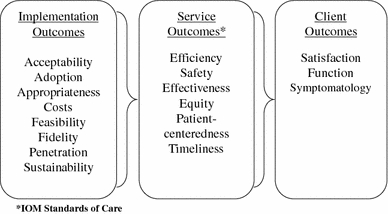
An unresolved issue in the field of implementation research is how to conceptualize and evaluate successful implementation. This paper advances the concept of "implementation outcomes" distinct from service system and clinical treatment outcomes. This paper proposes a heuristic, working "taxonomy" of eight conceptually distinct implementation outcomes-acceptability, adoption, appropriateness, feasibility, fidelity, implementation cost, penetration, and sustainability-along with their nominal definitions. We propose a two-pronged agenda for research on implementation outcomes. Conceptualizing and measuring implementation outcomes will advance understanding of implementation processes, enhance efficiency in implementation research, and pave the way for studies of the comparative effectiveness of implementation strategies.
Overview
The claims and statistics of this paper haven’t been checked yet.
Free: it reads the open-access text and checks the first 5 claims that cite a source we can check. Create a free account to check every claim.
Integrity signals
Registry
Cites
Statistics
Figures
Verification
Claims the paper makes
The claims and statistics of this paper haven’t been checked yet.
Free: it reads the open-access text and checks the first 5 claims that cite a source we can check. Create a free account to check every claim.
Claims other papers make about this one
Each is checked against this paper’s own text: does it say what the citing paper says it does?
The source backs part of the claim, not all of it — or backs it for a different population, condition or comparison.
In the citing paper
“the failure of most implementation processes to incorporate ongoing, iterative intervention development increases the risk that local users will find new technologies to be low on key implementation outcomes such as acceptability, feasibility, and appropriateness (Proctor et al., 2011) and may limit effectiveness (Chambers et al., 2013)”
From User‐centered design for psychosocial intervention development and implementation. (2016) · cites this paper as Proctor et al., 2011
Experimental — accuracy not yet measuredThe source backs part of the claim, not all of it — or backs it for a different population, condition or comparison.
In the citing paper
“Increasing use of implementation frameworks may offer a more systematic evaluation of newborn care packages while clarifying equitable service delivery in vulnerable populations often present in LMIC settings (35, 36).”
From Born too soon in a resource-limited setting: A 10-year mixed methods review of a special care baby unit for refugees and migrants on the Myanmar-Thailand border (2023) · cites this paper as [36]
Experimental — accuracy not yet measuredThe source backs part of the claim, not all of it — or backs it for a different population, condition or comparison.
In the citing paper
“While reporting systems like those by Proctor [1] or Pinnock [75] would optimize learning across studies, few manuscripts specify strategies as recommended [76, 77].”
From A systematic review of experimentally tested implementation strategies across health and human service settings: evidence from 2010-2022 (2024) · cites this paper as [76]
Experimental — accuracy not yet measuredThe source backs part of the claim, not all of it — or backs it for a different population, condition or comparison.
In the citing paper
“implementation outcomes are influenced by a complex interaction of contextual, organizational, workforce, policy, and system-level factors [12,13,14].”
From A Scoping Review of Implemented Innovations in Cancer Care: Implications for Pan-Canadian Scaling (2026) · cites this paper as [14]
Experimental — accuracy not yet measuredThe source backs part of the claim, not all of it — or backs it for a different population, condition or comparison.
In the citing paper
“These factors align closely with established implementation science frameworks that emphasize the importance of organizational readiness, implementation climate, leadership engagement, and continuous learning systems [11,13,14].”
From A Scoping Review of Implemented Innovations in Cancer Care: Implications for Pan-Canadian Scaling (2026) · cites this paper as [14]
Experimental — accuracy not yet measured
39 more claims about this paper
Create a free account to see every claim other papers make about this one.
Self-check
Percentages, sums and reported differences re-computed from the paper’s own numbers.
The self-check needs the paper’s full text.
Citations
Cites
Rogers, E. M., Singhal, A., & Quinlan, M. M. (2019) · An Integrated Approach to Communication Theory and Research · doi:10.4324/9780203710753-35 · Cited by 37,322
Crossing the Quality Chasm: A New Health System for the 21st Century
Baker, A. (2001) · BMJ · doi:10.1136/bmj.323.7322.1192 · Cited by 10,736
Crossing the Quality Chasm: A New Health System for the 21st Century
Committee on Quality of Health Care in America (2002) · Journal For Healthcare Quality · doi:10.1111/j.1945-1474.2002.tb00463.x · Cited by 8,483
Evaluating the public health impact of health promotion interventions: the RE-AIM framework.
Glasgow, R. E., Vogt, T. M., & Boles, S. M. (1999) · American Journal of Public Health · doi:10.2105/ajph.89.9.1322 · Cited by 7,217 · cited 2×
“The literature reflects quite varied uses of the term ‘‘sustainability,’’ but our proposed definition incorporates aspects of those offered by Johnson et al. (2004), Turner and Sanders (2006), Glasgow et al. (1999) , Goodman et al. (1993), and Rabin et al. (2008).”
Background(2005) · Cited by 3,748
Crossing the Quality Chasm: A New Health System for the 21st Century
Bloom, B. S. (2002) · JAMA: The Journal of the American Medical Association · doi:10.1001/jama.287.5.646-a · Cited by 3,726
Making psychological theory useful for implementing evidence based practice: a consensus approach
Michie, S. (2005) · Quality and Safety in Health Care · doi:10.1136/qshc.2004.011155 · Cited by 3,440
Gluesing, J. C. (2012) · Leadership in Science and Technology: A Reference Handbook · doi:10.4135/9781412994231.n14 · Cited by 3,210
Davis, F. D. (1993) · International Journal of Man-Machine Studies · doi:10.1006/imms.1993.1022 · Cited by 2,964 · cited 1×
“Lack of acceptability has long been noted as a challenge in implementation (Davis 1993).”
BackgroundAldenderfer, M. S., & Blashfield, R. K. (1984) · Cited by 2,358
Research works printed but not linked: 6
- 5. Bates, D. M., & Sarkar, D. (2007). lme4: Linear mixed-effects models using S4 classes. R Package Version, 0, 99875-99876.
- 18. Glasgow, R. E. (2007b). The RE-AIM model for planning, evaluation and reporting on implementation and dissemination research. Paper presented at the NIH Conference on Building the Science of Dissemination and Implementation in the Service of Public Health: Bethesda, MD.
- 24. Hayes, S. C. (1998). President's message: Dissemination research now. The Behavior Therapist, 21(9), 166-169.
- Institute of Medicine Committee on Crossing the Quality Chasm. (2006). Adaption to mental health and addictive disorder: Improving the quality of health care for mental and substance-use conditions. Washington, DC: Institute of Medicine, National Academies Press.
- 33. Jones, K. (1997). Mission drift in qualitative research, or moving toward a systematic review of qualitative studies. The Qualita- tive Report, 9(1), 95-112.
- 45. Mihalic, S. (2004). The importance of implementation fidelity. Emotional and Behavioral Disorders in Youth, 4, 83-86.
Cited by
Items 901–1,000 of 1,109
Best, S., Fehlberg, Z., Richards, C., Quinn, M. C. J., Lunke, S., Spurdle, A. B., Kassahn, K. S., Patel, C., Vears, D. F., Goranitis, I., et al. (2024) · European Journal of Human Genetics · doi:10.1038/s41431-024-01633-8 · Cited by 39
MacPherson, H. A., Leffler, J. M., & Fristad, M. A. (2013) · Journal of Marital and Family Therapy · doi:10.1111/jmft.12013 · Cited by 36
“If a treatment fails when conducted in the community, it is important to determine if the failure occurred because the intervention was ineffective in the practice setting, indicating an intervention failure, or if an effective intervention was conducted poorly, indicating an implementation failure (Proctor et al., 20…”
BackgroundMethodInfluentialGreif, R., Becker, C. B., & Hildebrandt, T. (2015) · International Journal of Eating Disorders · doi:10.1002/eat.22442 · Cited by 41
“Proctor et al.(36) note that there are multiple levels of outcomes that can be explored in dissemination/implementation research, and”
BackgroundGarner, B. R., Hunter, S. B., Funk, R. R., Griffin, B. A., & Godley, S. H. (2016) · Journal of Substance Abuse Treatment · doi:10.1016/j.jsat.2016.04.006 · Cited by 36
“Indeed, Proctor et al. (2011) noted that “Once researchers have advanced consistent, valid, and efficient measures for implementation outcomes, the field will be equipped to conduct important research treating these constructs as dependent variables, in order to identify correlates or predictors of…”
InfluentialBroder‐Fingert, S., Walls, M., Augustyn, M. C., Beidas, R. S., Mandell, D. S., Stirman, S. W., Silverstein, M., & Feinberg, E. (2018) · BMC Psychiatry · doi:10.1186/s12888-018-1661-7 · Cited by 35
Neal, J. W., & Neal, Z. P. (2019) · Implementation Science · doi:10.1186/s13012-019-0860-z · Cited by 38
Implementation Science and Nutrition Education and Behavior: Opportunities for Integration
Swindle, T., Curran, G. M., & Johnson, S. L. (2019) · Journal of Nutrition Education and Behavior · doi:10.1016/j.jneb.2019.03.001 · Cited by 44
Lindow, J. C., Hughes, J. L., South, C. C., Gutierrez, L., Bannister, E., Trivedi, M. H., & Byerly, M. (2019) · Archives of Suicide Research · doi:10.1080/13811118.2019.1624667 · Cited by 40
“Optimal delivery requires rigorous intervention fidelity monitoring (Proctor et al., 2011).”
BackgroundInfluentialParhiala, P., Ranta, K., Gergov, V., Kontunen, J., Law, R., Greca, A. M. L., Torppa, M., & MARTTUNEN, M. J. (2019) · School Mental Health · doi:10.1007/s12310-019-09346-w · Cited by 48
Implementation of e‐mental health for depression and anxiety: A critical scoping review
Ellis, L. A., Augustsson, H., Grødahl, A. I., Pomare, C., Churruca, K., Long, J. C., Ludlow, K., Zurynski, Y. A., & Braithwaite, J. (2020) · Journal of Community Psychology · doi:10.1002/jcop.22309 · Cited by 41
McKinnon, B., Sall, M., Vandermorris, A., Traoré, M., Lamesse‐Diedhiou, F., McLaughlin, K., & Bassani, D. G. (2020) · Health Policy and Planning · doi:10.1093/heapol/czz178 · Cited by 39
Stockdale, S. E., Hamilton, A. B., Bergman, A. A., Rose, D. E., Giannitrapani, K. F., Dresselhaus, T. R., Yano, E. M., & Rubenstein, L. V. (2020) · Implementation Science · doi:10.1186/s13012-020-0979-y · Cited by 38
Eisman, A. B., Kilbourne, A. M., Greene, D., Walton, M. A., & Cunningham, R. M. (2020) · Prevention Science · doi:10.1007/s11121-020-01120-8 · Cited by 34
“Although widely adopted, with 91% of high school teachers using MMH, only 31% meet state-identified standards of fidelity; these standards are specified using dose-delivered, a dimension of fidelity, specifically delivering 80% or more of the curriculum (Proctor et al. 2011; Rockhill 2017).”
BackgroundMethodInfluentialPunnett, L., Nobrega, S., Zhang, Y., Rice, S., Gore, R. J., & Kurowski, A. (2020) · BMC Public Health · doi:10.1186/s12889-020-09551-2 · Cited by 36
Implementation of early psychosis services in Latin America: A scoping review
Aceituno, D., Mena, C., Juan, N. V. S., González‐Valderrama, A., Gadelha, A., Diniz, E., Crossley, N. A., Pennington, M., & Prina, M. A. (2020) · Early Intervention in Psychiatry · doi:10.1111/eip.13060 · Cited by 37
“For instance, Proctor et al (Proctor et al., 2011) propose a taxonomy of these outcomes for mental health, where the acceptability, adoption, appropriateness, feasibility, fidelity, penetration and sustainability of interventions are considered as relevant as symptoms reduction (Peters, Tran, Adam,,, & World Health Or…”
BackgroundMethodInfluentialCreed, T. A., Kuo, P. B., Oziel, R., Reich, D., Thomas, M. L., O’Connor, S., Imel, Z. E., Hirsch, T., Narayanan, S. S., & Atkins, D. C. (2021) · Administration and Policy in Mental Health and Mental Health Services Research · doi:10.1007/s10488-021-01167-x · Cited by 45
“With-out performance-based feedback or quality monitoring, the impact of costly dissemination efforts is often not sustained (Proctor et al., 2011; Schwalbe et al., 2014); conversely, when therapists are provided with regular feedback, patient outcomes improve (Anker et al., 2009; Lambert et al.,…”
BackgroundAyieko, J., Petersen, M. L., Kabami, J., Mwangwa, F., Opel, F., Nyabuti, M., Charlebois, E. D., Peng, J., Koss, C. A., Balzer, L. B., et al. (2021) · Journal of the International AIDS Society · doi:10.1002/jia2.25670 · Cited by 33
“We applied a modified version of the implementation evaluation framework proposed by Proctor et al. [].”
MethodMarket viability: a neglected concept in implementation science
Proctor, E. K., Toker, E., Tabak, R. G., McKay, V., Hooley, C., & Evanoff, B. (2021) · Implementation Science · doi:10.1186/s13012-021-01168-2 · Cited by 35
“Increase emphasis on adoption markets Adoption is a widely used term and a key concept in implementation science, constituting a key goal of implementation processes and hence a key implementation outcome [4, 38].”
BackgroundSelf-citationEdmunds, S. R., Frost, K. M., Sheldrick, R. C., Bravo, A., Straiton, D., Pickard, K. E., Grim, V., Drahota, A., Kuhn, J., Azad, G. F., et al. (2022) · Autism · doi:10.1177/13623613211064431 · Cited by 36
Malhotra, A., Thompson, R. R., Kagoya, F., Masiye, F., Mbewe, P., Mosepele, M., Phiri, J., Sambo, J., Barker, A. R., Cameron, D., et al. (2022) · Implementation Science · doi:10.1186/s13012-022-01248-x · Cited by 35
Using Implementation Science in Nursing Research
Roberts, N. A., Young, A., & Duff, J. S. (2023) · Seminars in Oncology Nursing · doi:10.1016/j.soncn.2023.151399 · Cited by 41
Filáková, K., Janíková, A., Felšőci, M., Dosbaba, F., Su, J. J., Pepera, G., & Baťalík, L. (2023) · BMC Sports Science Medicine and Rehabilitation · doi:10.1186/s13102-023-00650-2 · Cited by 36
Andersen, B. L., & Dorfman, C. S. (2015) · Psycho-Oncology · doi:10.1002/pon.3864 · Cited by 34
“Large organizations are particularly interested in the external indicators of successful change, such as evidence of internal penetration [58,64] or external market share [57].”
BackgroundRisk factors for attrition from an evidence-based parenting program: Findings from the Netherlands
Abrahamse, M. E., Niec, L. N., Junger, M., Boer, F., & Lindauer, R. (2016) · Children and Youth Services Review · doi:10.1016/j.childyouth.2016.02.025 · Cited by 38
The REFINEMENT Glossary of Terms: An International Terminology for Mental Health Systems Assessment
Montagni, I., Salvador‐Carulla, L., McDaid, D., Straßmayr, C., Endel, F., Näätänen, P., Kalseth, J., Kalseth, B., Matosevic, T., Donisi, V., et al. (2017) · Administration and Policy in Mental Health and Mental Health Services Research · doi:10.1007/s10488-017-0826-x · Cited by 34
“The definition of concepts and terms in mental health care is highly complex and changes over time (Proctor et al. 2011), and needs substantial timely feedback and consensus by experts (European Community Treaty 1998).”
BackgroundOmotayo, M. O., Martin, S., Stoltzfus, R. J., Ortolano, S. E., Mwanga, E., & Dickin, K. L. (2017) · Maternal and Child Nutrition · doi:10.1111/mcn.12521 · Cited by 33
“For this study, we adapted the definitions of Proctor and co‐authors for adoption and acceptability (Proctor et al., 2011).”
MethodBaker-Ericzén, M. J., Brookman-Frazee, L. I., & Brodkin, E. S. (2018) · Autism · doi:10.1177/1362361317738646 · Cited by 49
Urquhart, R., Kendell, C., Cornelissen, E., Powell, B. J., Madden, L. L., Kissmann, G., Richmond, S. A., & Bender, J. L. (2021) · BMJ Open · doi:10.1136/bmjopen-2020-042503 · Cited by 32
van der Westhuizen, C., Myers, B., Malan, M., Naledi, T., Roelofse, M., Stein, D. J., Lahri, S., & Sorsdahl, K. (2019) · PLOS ONE · doi:10.1371/journal.pone.0224951 · Cited by 32
“We coded the data according to the following implementation outcomes [53]: acceptability, appropriateness and adoption.”
MethodGordon, K., Dainty, K. N., Gray, C. S., DeLacy, J., Shah, A., Resnick, M., & Seto, E. (2020) · JMIR Nursing · doi:10.2196/22118 · Cited by 37
“The degree to which the intervention was delivered as intended is defined as intervention fidelity [41].”
BackgroundMethodInfluentialArapovic-Johansson, B., Jensen, I. B., Wåhlin, C., Björklund, C., & Kwak, L. (2020) · International Journal of Environmental Research and Public Health · doi:10.3390/ijerph17197285 · Cited by 37
“Fidelity and Adaptations: Fidelity is the degree to which the intervention components were delivered in accordance with the prescribed manual [23].”
MethodAn introduction to implementation evaluation of school-based interventions
Schultes, M.-T. (2021) · European Journal of Developmental Psychology · doi:10.1080/17405629.2021.1976633 · Cited by 45
“Implementation outcomes are defined as ‘the effects of deliberate and purposive actions to implement new treatments, practices and services’ (Proctor et al., 2011, p. 65).”
BackgroundThe Pathways to Prevention program: nutrition as prevention for improved cancer outcomes
Hiatt, R. A., Clayton, M. F., Collins, K. K., Gold, H. T., Laiyemo, A. O., Truesdale, K. P., & Ritzwoller, D. P. (2023) · JNCI Journal of the National Cancer Institute · doi:10.1093/jnci/djad079 · Cited by 33
“The value and cost effectiveness of nutritional interventions delivered in outpatient settings may be key to implementation and adoption of effective strategies to address nutritional status in patients treated for cancer (48-50).”
BackgroundZiam, S., Lanoue, S., Sween-Cadieux, E. M., Gervais, M.-J., Lane, J., Gaid, D., Chouinard, L. J., Dagenais, C., Ridde, V., Jean, E., et al. (2024) · Health Research Policy and Systems · doi:10.1186/s12961-023-01090-7 · Cited by 50
Gustafson, P. E., Lambert, M. V., Bartholomew, K., Ratima, M. M., Aziz, Y. H. A., Kremer, L. J., Fusheini, A., Carswell, P., BROWN, R. M. A., Priest, P. C., et al. (2024) · International Journal for Equity in Health · doi:10.1186/s12939-023-02087-y · Cited by 41
Tong, H. L., Alnasser, A., Alshahrani, N. Z., Bawaked, R. A., AlAhmed, R. S., Alsukait, R. F., Rakić, S., Çetinkaya, V., Al-Hazzaa, H. M., & Alqahtani, S. A. (2024) · Journal of Medical Internet Research · doi:10.2196/53651 · Cited by 40
“Notably, few of the included experimental studies ( [74-76] to enable evidence synthesis and assess engagement metrics consistently to allow for future evaluation of the right “dose” of use of these mobile technologies for effectiveness.”
Parsons, C. S., Zuiderwijk, A., Orchard, N. A., Oosterhoff, J. H. F., & de Reuver, M. (2025) · BMC Medical Informatics and Decision Making · doi:10.1186/s12911-025-03237-8 · Cited by 41
“Implementation science has already emphasised the need for a comprehensive systems perspective that considers multiple dimensions - such as acceptability, feasibility, and fidelity - which collectively determine an intervention’s impact [7].”
Acceptability of treatments and services for individuals with hoarding behaviors
Rodríguez, C. I., Levinson, A. R., Patel, S. R., Rottier, K. A., Zwerling, J., Essock, S. M., Shuer, L. J., Frost, R. O., & Simpson, H. B. (2016) · Journal of Obsessive-Compulsive and Related Disorders · doi:10.1016/j.jocrd.2016.07.001 · Cited by 34
“Research on acceptability of mental health treatments is a burgeoning field, and further research is need to provide evidencebased, patient-centered care (Carter, 2007; Elliott, 1988; Proctor et al., 2011).”
BackgroundImplementation of a Clinical Pathway for Chest Pain in a Pediatric Emergency Department
Mohan, S., Nandi, D., Stephens, P., M’Farrej, M., Vogel, R. L., & Bonafide, C. P. (2016) · Pediatric Emergency Care · doi:10.1097/pec.0000000000000861 · Cited by 32
Chaisson, L. H., Duong, D., Cattamanchi, A., Roemer, M., Handley, M. A., Schillinger, D., Sur, M., Pham, P., Lin, M. A., Goldman, L., et al. (2018) · JAMA Internal Medicine · doi:10.1001/jamainternmed.2018.3638 · Cited by 32
Wright, N. J., Abantanga, F. A., Amoah, M., Appeadu‐Mensah, W., Bokhary, Z. M., Bvulani, B., Davies, J. I., Miti, S., Nandi, B., Nimako, B., et al. (2019) · Wellcome Open Research · doi:10.12688/wellcomeopenres.15113.1 · Cited by 36
Rye, M., Rognmo, K., Aarons, G. A., & Skre, I. (2019) · Administration and Policy in Mental Health and Mental Health Services Research · doi:10.1007/s10488-019-00968-5 · Cited by 40
Self-citationAnderson, D. M., Cronk, R., Best, L. L., Radin, M., Schram, H., Tracy, J. W., & Bartram, J. (2020) · International Journal of Environmental Research and Public Health · doi:10.3390/ijerph17062075 · Cited by 35
“Measures of cost are important for measuring and achieving successful implementation [87].”
BackgroundApplegate, J. A., Ahmed, S., Harrison, M., Callaghan‐Koru, J. A., Mousumi, M., Begum, N., Moin, M. I., Joarder, T., Ahmed, S., George, J., et al. (2020) · PLoS ONE · doi:10.1371/journal.pone.0231490 · Cited by 37
“It has been suggested by Proctor, that providers’ ability to adapt an intervention for local use may increase its acceptability [34, 60].”
BackgroundInfluentialBattaglia, T. A., Freund, K. M., Haas, J. S., Casanova, N. L., Bak, S. M., Cabral, H., Freedman, R. A., White, K. B., & Lemon, S. C. (2020) · Contemporary Clinical Trials · doi:10.1016/j.cct.2020.106007 · Cited by 36
Facilitating Guideline Implementation in Primary Health Care Practices
Peters, S., Bussières, A., Depreitere, B., Vanholle, S., Cristens, J., Vermandere, M., & Thomas, A. (2020) · Journal of Primary Care & Community Health · doi:10.1177/2150132720916263 · Cited by 42
“The lists by Flottorp et al 10 as well as Proctor et al 66 provided an array of possible quality indicators: structural, process, and outcome indicators (eg, sys-tem or organizational level, practice level, and individual level, including health care provider and patient health outcomes).”
BackgroundFoster, M., Presseau, J., McCleary, N., Carroll, K. A., McIntyre, L., Hutton, B., & Brehaut, J. (2020) · Implementation Science · doi:10.1186/s13012-020-00981-5 · Cited by 35
“, acceptability, adoption, feasibility) [84].”
Changing Behavior Using the Health Belief Model and Protection Motivation Theory
Orbell, S., Zahid, H., & Henderson, C. J. (2020) · Cambridge University Press eBooks · doi:10.1017/9781108677318.004 · Cited by 41
Henriksson, H., Alexandrou, C., Henriksson, P., Henström, M., Bendtsen, M., Thomas, K., Müssener, U., Nilsén, P., & Löf, M. (2020) · BMC Public Health · doi:10.1186/s12889-020-09808-w · Cited by 46
Management Strategies to Promote Follow-Up Care for Incidental Findings: A Scoping Review
Crable, E. L., Feeney, T., Harvey, J., Grim, V., Drainoni, M., Walkey, A. J., Steiling, K. A., & Drake, F. T. (2020) · Journal of the American College of Radiology · doi:10.1016/j.jacr.2020.11.006 · Cited by 32
Interventions that address institutional child maltreatment: An evidence and gap map
Finch, M., Featherston, R., Chakraborty, S., Bjørndal, L. D., Mildon, R. L., Albers, B., Fiennes, C., Taylor, D., Schachtman, R., Yang, T., et al. (2021) · Campbell Systematic Reviews · doi:10.1002/cl2.1139 · Cited by 41
Acceptability of childhood screening: a systematic narrative review
Carlton, J., Griffiths, H., Horwood, A. M., Mazzone, P., Walker, R., & Simonsz, H. J. (2021) · Public Health · doi:10.1016/j.puhe.2021.02.005 · Cited by 32
“Determining how a parent or guardian feels about screening could be considered as an important first step when considering implementing new (or refining existing) childhood screening programs.(59,60) If parents' views are such that they feel W ai sb re n et al .”
BackgroundAhuja, S., Peiffer‐Smadja, N., Peven, K., White, M. C., Leather, A. J. M., Singh, S. K., Mendelson, M., Holmes, A. H., Birgand, G., & Sevdalis, N. (2021) · Annals of Surgery · doi:10.1097/sla.0000000000004909 · Cited by 40
“The current ‘‘gold standard’’ framework for implementation outcomes used in healthcare includes the following 8 outcomes: acceptability, adoption, appropriateness, feasibility, fidelity, cost, penetration, and sustainability of an evidenced intervention.(15) We applied this framework to the retrieved studies, alongsid…”
MethodSteel, T. L., Afshar, M., Edwards, S., Jolley, S. E., Timko, C., Clark, B. J., Douglas, I. S., Dzierba, A. L., Gershengorn, H. B., Gilpin, N. W., et al. (2021) · American Journal of Respiratory and Critical Care Medicine · doi:10.1164/rccm.202108-1845st · Cited by 38
“In the coming era of research to improve the management of SAWS, implementation frameworks such as Reach, Effectiveness, Adoption, Implementation, and Maintenance and outcomes such as those proposed by Proctor and colleagues (309) (i.”
BackgroundTaddio, A., Gudzak, V., Jantzi, M., Logeman, C., Bucci, L. M., MacDonald, N. E., & Moineddin, R. (2022) · Vaccine · doi:10.1016/j.vaccine.2022.02.069 · Cited by 38
Becker‐Haimes, E. M., Marcus, S. C., Klein, M. R., Schoenwald, S. K., Fugo, P. B., McLeod, B. D., Dorsey, S., Williams, N. J., Mandell, D. S., & Beidas, R. S. (2022) · Behavior Therapy · doi:10.1016/j.beth.2022.06.001 · Cited by 35
McGrath, A., Murphy, N. M., Egan, T., & Richardson, N. (2022) · BMC Public Health · doi:10.1186/s12889-022-13964-6 · Cited by 35
Hull, L., Boulton, R., Jones, F., Boaz, A., & Sevdalis, N. (2022) · Translational Behavioral Medicine · doi:10.1093/tbm/ibac064 · Cited by 38
“In the context of this review, we defined implementation outcomes “as the effects of deliberate and purposive actions to implement new treatments, practices, and services” [22] and implementation determinants as “factors believed or empirically shown to influence implementation outcomes” [23].”
BackgroundWolfensberger, A., Clack, L., von Felten, S., Hesse, M. F., Saleschus, D., Meier, M.-T., Kusejko, K., Kouyos, R. D., Held, L., & Sax, H. (2023) · The Lancet Infectious Diseases · doi:10.1016/s1473-3099(22)00812-x · Cited by 36
Edmunds, J. M., Read, K. L., Ringle, V. A., Brodman, D. M., Kendall, P. C., & Beidas, R. S. (2014) · Implementation Science · doi:10.1186/s13012-014-0089-9 · Cited by 31
“No clinical outcomes directly pertaining to treated youth (e.g., diagnostic and/or symptom change) were gathered given our emphasis on implementation outcomes in the primary study (see Beidas et al., 2012; Proctor et al., 2010) [5] [6].”
Guy, L. S., Nelson, R. J., Fusco, S. L., & Vincent, G. M. (2014) · International Journal of Forensic Mental Health · doi:10.1080/14999013.2014.939789 · Cited by 39
“Literature focusing on implementation science applied within behavioral health domains has been accruing for several years (e.g., Powell et al., 2012; Proctor & Rosen, 2008; Proctor et al., 2011; Proctor et al., 2009).”
BackgroundMartin, S., Omotayo, M. O., Chapleau, G. M., Stoltzfus, R. J., Birhanu, Z., Ortolano, S. E., Pelto, G. H., & Dickin, K. L. (2016) · Maternal and Child Nutrition · doi:10.1111/mcn.12331 · Cited by 40
Lewis, E. M., Feely, M., Seay, K. D., Fedoravicis, N., & Kohl, P. L. (2016) · Journal of Child and Family Studies · doi:10.1007/s10826-016-0526-2 · Cited by 42
“An EBI can only truly be successful when those in need also display the following: 1) Satisfaction with program content and delivery, 2) Perception that the program is relevant to their needs, and 3) Active participation (Proctor et al., 2009; Proctor et al., 2011).”
Afulani, P. A., Buback, L., McNally, B., Mbuyita, S., Mwanyika‐Sando, M., & Peca, E. (2020) · Global Health Science and Practice · doi:10.9745/ghsp-d-19-00323 · Cited by 38
“…acceptability, adoption, appropriateness, feasibility, fidelity, implementation cost, penetration, and sustainability of efforts related to RMC. 47,48 Applicability of the indicators may differ for locally driven compared to globally driven programs, and these need to be considered in the…”
BackgroundJacobson, N. A., Horst, J., Wilcox-Warren, L., Toy, A., Knudsen, H. K., Brown, R., Haram, E., Madden, L. M., & Molfenter, T. D. (2020) · The Journal of Behavioral Health Services & Research · doi:10.1007/s11414-020-09706-4 · Cited by 32
Implementation Science in Suicide Prevention
Reifels, L., Krishnamoorthy, S., Kõlves, K., & Francis, J. (2022) · Crisis · doi:10.1027/0227-5910/a000846 · Cited by 40
Yapa, H. M., De Neve, J.-W., Chetty, T., Herbst, C., Post, F. A., Jiamsakul, A., Geldsetzer, P., Harling, G., Dhlomo-Mphatswe, W., Moshabela, M., et al. (2020) · PLOS Medicine · doi:10.1371/journal.pmed.1003150 · Cited by 31
“Implementation science, however, focuses on the improvement of processes whose intermediate outcomes, such as testing coverage, can be directly influenced by changes to health services and are known to be strong determinants of health outcomes [17].”
on behalf of the CRADLE Trial Collaborative Group, Vousden, N., Lawley, E., Seed, P. T., Gidiri, M. F., Charantimath, U., Makonyola, G., Brown, A., Yadeta, L., Best, R., et al. (2019) · Implementation Science · doi:10.1186/s13012-019-0885-3 · Cited by 31
“2, informed by the RE-AIM framework [15, 18, 41].”
Nishi, D., Imamura, K., Watanabe, K., Obikane, E., Sasaki, N., Yasuma, N., Sekiya, Y., Matsuyama, Y., & Kawakami, N. (2020) · BMJ Open · doi:10.1136/bmjopen-2019-036482 · Cited by 31
Dickson, K. S., Lind, T., Jobin, A., Kinnear, M., Lok, H., & Brookman-Frazee, L. I. (2021) · Administration and Policy in Mental Health and Mental Health Services Research · doi:10.1007/s10488-021-01133-7 · Cited by 34
Triece, P., Massazza, A., & Fuhr, D. C. (2022) · Social Psychiatry and Psychiatric Epidemiology · doi:10.1007/s00127-022-02294-y · Cited by 30
“This review aimed to identify, critically appraise, and summarize implementation outcomes [17] and overall effectiveness of PC-led interventions targeting common mental disorders for adults living in LMICs.”
BackgroundMethodResultInfluentialCarruthers, S., Mleczko, N., Page, S., Ahuja, S., Ellis, C., Howlin, P., Leadbitter, K., Taylor, L. J., Slonims, V., & Charman, T. (2022) · Autism · doi:10.1177/13623613221125630 · Cited by 36
“We could, therefore, not link our findings to implementation outcomes (Proctor et al., 2011).”
ResultProactive Referral to Behavioral Smoking Cessation Programs by Healthcare Staff: A Systematic Review
van Westen-Lagerweij, N. A., Walters, B. H., Potyka, F., Croes, E. A., & Willemsen, M. C. (2022) · Nicotine & Tobacco Research · doi:10.1093/ntr/ntac262 · Cited by 35
Zhu, E. M., Buljac‐Samardžić, M., Ahaus, K., Sevdalis, N., & Huijsman, R. (2023) · Implementation Science · doi:10.1186/s13012-023-01314-y · Cited by 33
Feeling safe in the context of digitalization in healthcare: a scoping review
Minartz, P., Aumann, C. M., Vondeberg, C., & Kuske, S. (2024) · Systematic Reviews · doi:10.1186/s13643-024-02465-9 · Cited by 37
“Accordingly, acceptability can be an important factor in the successful implementation of an intervention for both healthcare recipients and providers [24].”
BackgroundWhitsel, L. P., Honeycutt, S., Radcliffe, R., Johnson, J. C., Chase, P. J., & Noyes, P. (2024) · Health Research Policy and Systems · doi:10.1186/s12961-024-01110-0 · Cited by 42
“Policies T a b l e 1 A r e a s o f p o l i c y i m p l e m e n t a t i o n a n d o u t c o m e e v a l u a t i o n a ss e ss m e n t [ 11 , 19 – 21 ] I s t h e r e e q u i t y i n w h e r e t h e p o l i c y w a s p a ss e d ?”
Kirvalidze, M., Boström, A., Liljas, A. E. M., Doheny, M., Hendry, A., McCormack, B. G., Fratiglioni, L., Ali, S., Ebrahimi, Z., Elmståhl, S., et al. (2024) · Journal of Internal Medicine · doi:10.1111/joim.13784 · Cited by 35
“All types of study designs were considered, as well as articles examining implementation outcomes, according to Proctor et al.’s framework [19].”
BackgroundMethodInfluentialThe first AI ‐based Chatbot to promote HIV self‐management: A mixed methods usability study
Ma, Y., Achiche, S., Tu, G., Vicente, S., Lessard, D., Engler, K., Lemire, B., Laymouna, M. A., de Pokomandy, A., Cox, J., et al. (2024) · HIV Medicine · doi:10.1111/hiv.13720 · Cited by 35
“Three of these subconstructs are analogous to the ISO-defined aspects of usability (i.e. effectiveness = perceived usefulness, efficiency = perceived ease of use, satisfaction = attitude towards use) [61], whereas behavioural intention to use denotes actual system use [62, 63].”
Hasson, H., Brisson, C., Guérin, S., Gilbert‐Ouimet, M., Baril-Gingras, G., Vézina, M., & Bourbonnais, R. (2014) · Work & Stress · doi:10.1080/02678373.2014.907370 · Cited by 45
“In addition, these are key intermediate outcomes in relation to employee well-being and health outcomes (Proctor et al., 2011).”
BackgroundFulop, N., Ramsay, A. I. G., Hunter, R. M., McKevitt, C., Perry, C., Turner, S., Boaden, R., Papachristou, I., Rudd, A. G., Tyrrell, P. J., et al. (2019) · Health Services and Delivery Research · doi:10.3310/hsdr07070 · Cited by 38
Onakomaiya, D. O., Gyamfi, J., Iwelunmor, J., Opeyemi, J., Oluwasanmi, M., Obiezu‐Umeh, C., Dalton, M., Nwaozuru, U., Ojo, T., Vieira, D. L., et al. (2019) · BMJ Open · doi:10.1136/bmjopen-2018-026517 · Cited by 37
“Proctor et al define implementation outcomes as deliberate and purposive actions to implement new treatments, practices and services.(11) We adopted the following definitions for implementation science outcomes by Proctor et al(11): Appropriateness is the ‘perceived fit, relevance, or compatibility of the innovation o…”
InfluentialBarnett, M. L., Miranda, J. M., Kia‐Keating, M., Saldana, L., Landsverk, J. A., & Lau, A. S. (2019) · BMJ Open · doi:10.1136/bmjopen-2019-028988 · Cited by 33
Donenberg, G. R., Cohen, M. H., Ingabire, C., Fabri, M. R., Emerson, E. M., Kendall, A. D., Remera, E., Manzi, O., & Nsanzimana, S. (2019) · JAIDS Journal of Acquired Immune Deficiency Syndromes · doi:10.1097/qai.0000000000002204 · Cited by 35
Esponda, G. M., Bohm-Levine, N., Rodríguez-Cuevas, F. G., Cohen, A., & Kakuma, R. (2020) · International Journal of Mental Health Systems · doi:10.1186/s13033-020-00346-x · Cited by 35
“We used pre-established definitions of implementation outcomes [19] to develop the analytical framework.”
MethodBarden, C., Bekker, S., Brown, J. C., Stokes, K., & McKay, C. D. (2020) · International Journal of Sports Medicine · doi:10.1055/a-1212-0649 · Cited by 40
Changing Behavior Using the Transtheoretical Model
DiClemente, C. C., & Graydon, M. M. (2020) · Cambridge University Press eBooks · doi:10.1017/9781108677318.010 · Cited by 39
Salisbury, T. T., Kohrt, B. A., Bakolis, I., Jordans, M. J. D., Hull, L., Luitel, N. P., McCrone, P., Sevdalis, N., Pokhrel, P., Carswell, K., et al. (2021) · JMIR Research Protocols · doi:10.2196/24115 · Cited by 39
“conducted to evaluate and compare the implementation outcomes [32] and clinical outcomes of the adapted e-mhGAP-IG v2.”
MethodLuoto, J., García, I. L., Aboud, F. E., Singla, D. R., Zhu, R., Otieno, R., & Alu, E. (2021) · Frontiers in Public Health · doi:10.3389/fpubh.2021.653106 · Cited by 34
Jones, C. M., Gautier, L., & Ridde, V. (2021) · Health Policy and Planning · doi:10.1093/heapol/czaa173 · Cited by 38
Aschbrenner, K. A., Mueller, N., Banerjee, S., & Bartels, S. J. (2021) · Implementation Research and Practice · doi:10.1177/26334895211017252 · Cited by 33
“Implementation outcomes (e.g., program fidelity), service outcomes (e.g., program participation), and participant outcomes (e.g., health outcomes) (Proctor et al., 2011) can be impacted by social and economic disadvantages experienced by the patient population served.”
BackgroundSwindle, T., Poosala, A. B., Zeng, N., Børsheim, E., Andres, A., & Bellows, L. L. (2022) · Journal of Medical Internet Research · doi:10.2196/28230 · Cited by 40
Sasaki, N., Obikane, E., Vedanthan, R., Imamura, K., Cuijpers, P. J., Shimazu, T., Kamada, M., Kawakami, N., & Nishi, D. (2021) · JMIR Formative Research · doi:10.2196/24332 · Cited by 31
Broutet, N. J. N., Jerónimo, J., Kumar, S., Almonte, M., Murillo, R., Huy, N. V. Q., Denny, L. E., Kapambwe, S. K., Bhatla, N., Sebitloane, M., et al. (2021) · Preventive Medicine · doi:10.1016/j.ypmed.2021.106906 · Cited by 39
Chung, O. S., Johnson, A. M., Dowling, N. L., Robinson, T., Ng, C. H., Yücel, M., & Segrave, R. A. (2022) · Frontiers in Psychiatry · doi:10.3389/fpsyt.2022.792663 · Cited by 33
Nathan, A., Adams, E., Trost, S. G., CROSS, D. S., Schipperijn, J., McLaughlin, M. J., Thornton, A., Trapp, G., Lester, L., George, P., et al. (2022) · BMC Public Health · doi:10.1186/s12889-022-12729-5 · Cited by 34
“Process outcomes To understand the mechanisms by which policy implementation support strategies did or didn’t work, process evaluation outcomes will be measured post-intervention for intervention service directors and educators [37, 38].”
BackgroundGuidebook on Best Practices in Public Health
OECD (2022) · OECD eBooks · doi:10.1787/4f4913dd-en · Cited by 34
Cocreating injury prevention training for youth team handball: bridging theory and practice
Ageberg, E., Brodin, E. M., Linnéll, J., Moesch, K., Donaldson, A., Adébo, E., Benjaminse, A., Ekengren, J., Granér, S., Johnson, U., et al. (2022) · BMJ Open Sport & Exercise Medicine · doi:10.1136/bmjsem-2021-001263 · Cited by 37
“Finally, in group discussions with coaches and players, respectively, they were asked their perceptions about usability, 28 to ensure their perspectives and suggested revisions were considered.”
BackgroundBaucom, K. J. W., Bauman, T., Chavez, M. G., Nemirovsky, Y., Aguirre, M. C., Ramos, C., Asnaani, A., Gutner, C. A., Ritchie, N. D., & Shah, M. K. (2022) · Translational Behavioral Medicine · doi:10.1093/tbm/ibac032 · Cited by 32
“…individual demographics and training, characteristics of the organization/NDPP where they deliver the intervention, barriers to NDPP participation and lifestyle change among their participants, strategies for recruitment and engagement, and implementation outcomes based on Proctor’s taxonomy [20].”
MethodReporting quality of randomized controlled trials in prehabilitation: a scoping review
Engel, D. A., Testa, G. D., McIsaac, D. I., Carli, F., Mina, D. S., Baldini, G., Scheede‐Bergdahl, C., Chevalier, S., Edgar, L., Beilstein, C. M., et al. (2023) · Perioperative Medicine · doi:10.1186/s13741-023-00338-8 · Cited by 36
Implementation Science Research in Pediatric Critical Care Medicine
Woods-Hill, C. Z., Wolfe, H. A., Malone, S. M., Steffen, K. M., Agulnik, A., Flaherty, B. F., Barbaro, R. P., Dewan, M. L., Kudchadkar, S. R., & and the Excellence in Pediatric Implementation Science (ECLIPSE) for the Pediatric Acute Lung Injury and Sepsis Investigators (PALISI) Network (2023) · Pediatric Critical Care Medicine · doi:10.1097/pcc.0000000000003335 · Cited by 32
“IS also focuses on outcomes that are distinct from those encountered in typical clinical research, including acceptability, feasibility, and fidelity (21) ( Table 2 ).”
Background
Metadata
- Authors
- Proctor, E., Silmere, H., Raghavan, R., Hovmand, P., Aarons, G., Bunger, A., Griffey, R., & Hensley, M.
- Affiliations
- Washington University in St. Louis (US)
- Roberts Wesleyan College (US)
- Corresponding author
- Proctor, Enola
- Venue
- Administration and Policy in Mental Health and Mental Health Services Research
- Published
- 2010-10-19
- Volume
- 38
- Issue
- 2
- Pages
- 65-76
- ISSN
- 0894-587X (ISSN-L)
- 1573-3289
- PMC
- PMC3068522
- OpenAlex
- W2140092196
- Semantic Scholar
- 3c7cf782e4094a7d66d8ad5da80a8083a8e72307
- Cited by
- 8,721
- References
- 71
- Citations by year
- 2026: 1487 · 2025: 1144 · 2024: 1303 · 2023: 1041 · 2022: 950 · 2021: 893 · 2020: 669 · 2019: 391 · 2018: 253 · 2017: 162 · 2016: 122 · 2015: 116 · 2014: 83 · 2013: 57 · 2012: 28
- FWCI
- 56.95
- Type
- journal article
- Language
- en
- Open access
- hybrid
- doi.org
- Licence
- cc-by-nc
- Locations
- Administration and Policy in Mental Health and Mental Health Services Research (publishedVersion, cc-by-nc)
- Europe PMC (PubMed Central) (publishedVersion, cc-by-nc)
- PubMed Central (publishedVersion, cc-by-nc)
- PubMed (publishedVersion)
- Funders
- National Institutes of Health (5p30mh068579-05)
- National Institute of Mental Health (P30-MH-068579, T32MH019960)
- National Center for Research Resources (UL1RR024992)
- Topics
- Health Sciences › Health Professions › General Health Professions › Health Policy Implementation Science
- Health Sciences › Health Professions › General Health Professions › Health Sciences Research and Education
- Health Sciences › Health Professions › General Health Professions › Mental Health and Patient Involvement
- Keywords
- implementation outcomes, implementation research, acceptability, adoption, appropriateness, feasibility, fidelity, implementation costs, penetration, sustainability, implementation strategies, mental health services
- MeSH terms
- Diffusion of Innovation, Humans, Mental Health Services, Outcome and Process Assessment, Health Care, Biomedical Research
About these checks
Registry, retraction, Cites and statistics results are computed, not judged, with one exception: a printed reference that no index lists is read once by a model before it counts as a citation error. Claims are extracted by a model and kept only when their quote appears verbatim in the text; each cited source is then checked, with a model’s help, for whether it says what the claim relies on. Those verdicts can be wrong — read the claim’s quote and the cited source before relying on one.
Statistics and arithmetic are recomputed, not judged.
Confidence bands are shown only for fields calibrated on our annotated test set. None is calibrated yet, so no band is shown.
What counts as a claim ›How we measure confidence ›How we check this ›
Are you an author, or do you see a problem with this page? Request a review
Data sources
Bibliographic data: Semantic Scholar, OpenAlex, Crossref.
Contains information from the Semantic Scholar Academic Graph Datasets, made available under the ODC Attribution License (ODC-BY 1.0).
Semantic Scholar’s data is described in: Kinney, R., et al. (2023). The Semantic Scholar Open Data Platform. arXiv:2301.10140.
