

Outcomes for Implementation Research: Conceptual Distinctions, Measurement Challenges, and Research Agenda
Open accessThe DOI matches its Crossref record; 72 of the 72 references it cites were found in a registry or an index.
Abstract
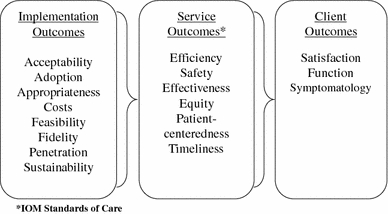
An unresolved issue in the field of implementation research is how to conceptualize and evaluate successful implementation. This paper advances the concept of "implementation outcomes" distinct from service system and clinical treatment outcomes. This paper proposes a heuristic, working "taxonomy" of eight conceptually distinct implementation outcomes-acceptability, adoption, appropriateness, feasibility, fidelity, implementation cost, penetration, and sustainability-along with their nominal definitions. We propose a two-pronged agenda for research on implementation outcomes. Conceptualizing and measuring implementation outcomes will advance understanding of implementation processes, enhance efficiency in implementation research, and pave the way for studies of the comparative effectiveness of implementation strategies.
Overview
The claims and statistics of this paper haven’t been checked yet.
Free: it reads the open-access text and checks the first 5 claims that cite a source we can check. Create a free account to check every claim.
Integrity signals
Registry
Cites
Statistics
Figures
Verification
Claims the paper makes
The claims and statistics of this paper haven’t been checked yet.
Free: it reads the open-access text and checks the first 5 claims that cite a source we can check. Create a free account to check every claim.
Claims other papers make about this one
Each is checked against this paper’s own text: does it say what the citing paper says it does?
The source backs part of the claim, not all of it — or backs it for a different population, condition or comparison.
In the citing paper
“the failure of most implementation processes to incorporate ongoing, iterative intervention development increases the risk that local users will find new technologies to be low on key implementation outcomes such as acceptability, feasibility, and appropriateness (Proctor et al., 2011) and may limit effectiveness (Chambers et al., 2013)”
From User‐centered design for psychosocial intervention development and implementation. (2016) · cites this paper as Proctor et al., 2011
Experimental — accuracy not yet measuredThe source backs part of the claim, not all of it — or backs it for a different population, condition or comparison.
In the citing paper
“Increasing use of implementation frameworks may offer a more systematic evaluation of newborn care packages while clarifying equitable service delivery in vulnerable populations often present in LMIC settings (35, 36).”
From Born too soon in a resource-limited setting: A 10-year mixed methods review of a special care baby unit for refugees and migrants on the Myanmar-Thailand border (2023) · cites this paper as [36]
Experimental — accuracy not yet measuredThe source backs part of the claim, not all of it — or backs it for a different population, condition or comparison.
In the citing paper
“While reporting systems like those by Proctor [1] or Pinnock [75] would optimize learning across studies, few manuscripts specify strategies as recommended [76, 77].”
From A systematic review of experimentally tested implementation strategies across health and human service settings: evidence from 2010-2022 (2024) · cites this paper as [76]
Experimental — accuracy not yet measuredThe source backs part of the claim, not all of it — or backs it for a different population, condition or comparison.
In the citing paper
“implementation outcomes are influenced by a complex interaction of contextual, organizational, workforce, policy, and system-level factors [12,13,14].”
From A Scoping Review of Implemented Innovations in Cancer Care: Implications for Pan-Canadian Scaling (2026) · cites this paper as [14]
Experimental — accuracy not yet measuredThe source backs part of the claim, not all of it — or backs it for a different population, condition or comparison.
In the citing paper
“These factors align closely with established implementation science frameworks that emphasize the importance of organizational readiness, implementation climate, leadership engagement, and continuous learning systems [11,13,14].”
From A Scoping Review of Implemented Innovations in Cancer Care: Implications for Pan-Canadian Scaling (2026) · cites this paper as [14]
Experimental — accuracy not yet measured
39 more claims about this paper
Create a free account to see every claim other papers make about this one.
Self-check
Percentages, sums and reported differences re-computed from the paper’s own numbers.
The self-check needs the paper’s full text.
Citations
Cites
Rogers, E. M., Singhal, A., & Quinlan, M. M. (2019) · An Integrated Approach to Communication Theory and Research · doi:10.4324/9780203710753-35 · Cited by 37,322
Crossing the Quality Chasm: A New Health System for the 21st Century
Baker, A. (2001) · BMJ · doi:10.1136/bmj.323.7322.1192 · Cited by 10,736
Crossing the Quality Chasm: A New Health System for the 21st Century
Committee on Quality of Health Care in America (2002) · Journal For Healthcare Quality · doi:10.1111/j.1945-1474.2002.tb00463.x · Cited by 8,483
Evaluating the public health impact of health promotion interventions: the RE-AIM framework.
Glasgow, R. E., Vogt, T. M., & Boles, S. M. (1999) · American Journal of Public Health · doi:10.2105/ajph.89.9.1322 · Cited by 7,217 · cited 2×
“The literature reflects quite varied uses of the term ‘‘sustainability,’’ but our proposed definition incorporates aspects of those offered by Johnson et al. (2004), Turner and Sanders (2006), Glasgow et al. (1999) , Goodman et al. (1993), and Rabin et al. (2008).”
Background(2005) · Cited by 3,748
Crossing the Quality Chasm: A New Health System for the 21st Century
Bloom, B. S. (2002) · JAMA: The Journal of the American Medical Association · doi:10.1001/jama.287.5.646-a · Cited by 3,726
Making psychological theory useful for implementing evidence based practice: a consensus approach
Michie, S. (2005) · Quality and Safety in Health Care · doi:10.1136/qshc.2004.011155 · Cited by 3,440
Gluesing, J. C. (2012) · Leadership in Science and Technology: A Reference Handbook · doi:10.4135/9781412994231.n14 · Cited by 3,210
Davis, F. D. (1993) · International Journal of Man-Machine Studies · doi:10.1006/imms.1993.1022 · Cited by 2,964 · cited 1×
“Lack of acceptability has long been noted as a challenge in implementation (Davis 1993).”
BackgroundAldenderfer, M. S., & Blashfield, R. K. (1984) · Cited by 2,358
Research works printed but not linked: 6
- 5. Bates, D. M., & Sarkar, D. (2007). lme4: Linear mixed-effects models using S4 classes. R Package Version, 0, 99875-99876.
- 18. Glasgow, R. E. (2007b). The RE-AIM model for planning, evaluation and reporting on implementation and dissemination research. Paper presented at the NIH Conference on Building the Science of Dissemination and Implementation in the Service of Public Health: Bethesda, MD.
- 24. Hayes, S. C. (1998). President's message: Dissemination research now. The Behavior Therapist, 21(9), 166-169.
- Institute of Medicine Committee on Crossing the Quality Chasm. (2006). Adaption to mental health and addictive disorder: Improving the quality of health care for mental and substance-use conditions. Washington, DC: Institute of Medicine, National Academies Press.
- 33. Jones, K. (1997). Mission drift in qualitative research, or moving toward a systematic review of qualitative studies. The Qualita- tive Report, 9(1), 95-112.
- 45. Mihalic, S. (2004). The importance of implementation fidelity. Emotional and Behavioral Disorders in Youth, 4, 83-86.
Cited by
Items 101–200 of 1,109
Rapley, T., Girling, M., Mair, F. S., Murray, E., Treweek, S., McColl, E., Steen, I. N., May, C. R., & Finch, T. L. (2018) · BMC Medical Research Methodology · doi:10.1186/s12874-018-0590-y · Cited by 193
Lyon, A. R., & Bruns, E. J. (2019) · School Mental Health · doi:10.1007/s12310-018-09306-w · Cited by 191
Bullock, H. L., Lavis, J. N., Wilson, M. G., Mulvale, G., & Miatello, A. (2021) · Implementation Science · doi:10.1186/s13012-021-01082-7 · Cited by 166
Lyon, A. R., Munson, S. A., Renn, B. N., Atkins, D. C., Pullmann, M. D., Friedman, E., & Areán, P. A. (2019) · JMIR Research Protocols · doi:10.2196/14990 · Cited by 187
“The emphasis of this testing phase is on user experience, satisfaction with the end design, reported benefit over alternative or existing processes, and implementation outcomes [43].”
BackgroundReprint of: An introduction to effectiveness-implementation hybrid designs
Landes, S. J., McBain, S. A., & Curran, G. M. (2020) · Psychiatry Research · doi:10.1016/j.psychres.2019.112630 · Cited by 190
Autism spectrum disorder in sub‐saharan africa: A comprehensive scoping review
Franz, L., Chambers, N., von Isenburg, M., & de Vries, P. J. (2017) · Autism Research · doi:10.1002/aur.1766 · Cited by 189
Saldana, L. (2014) · Implementation Science · doi:10.1186/1748-5908-9-43 · Cited by 188
Goldstein, E., Chokshi, B., Melendez-Torres, G., Rios, A., Jelley, M., & Lewis-O’Connor, A. (2024) · The Permanente Journal · doi:10.7812/tpp/23.127 · Cited by 161
“13,14 There is an urgent need to provide guidance to service systems about how they can beneficially address the health care needs of everyone, especially those with adverse life experiences, and respond in therapeutic and healing ways to avoid retraumatization.”
BackgroundNadeem, E., Gleacher, A., & Beidas, R. S. (2013) · Administration and Policy in Mental Health and Mental Health Services Research · doi:10.1007/s10488-013-0502-8 · Cited by 185
“Potentially salient variables include: acceptability, adoption, appropriateness, costs, feasibility, fidelity, innovation penetration, and innovation sustainability (Proctor et al. 2011).”
BackgroundPeriodic reflections: a method of guided discussions for documenting implementation phenomena
Finley, E. P., Huynh, A. K., Farmer, M. M., Bean-Mayberry, B., Moin, T., Oishi, S. M., Moreau, J. L., Dyer, K. E., Lanham, H. J., Leykum, L., et al. (2018) · BMC Medical Research Methodology · doi:10.1186/s12874-018-0610-y · Cited by 177
“, adoption, acceptability, feasibility, satisfaction, and penetration/reach) [55], from the perspectives of key stakeholders including leadership, providers, and patients; (3) provide data to evaluate implementation and patient outcomes associated with each project; and (4) inform development of intervention packages,…”
BackgroundYoong, S. L., Hall, A., Stacey, F., Grady, A., Sutherland, R., Wyse, R., Anderson, A., Nathan, N., & Wolfenden, L. (2020) · Implementation Science · doi:10.1186/s13012-020-01011-0 · Cited by 180
Vis, C., Mol, M., Kleiboer, A., Bührmann, L., Finch, T., Smit, J., & Riper, H. (2018) · JMIR Mental Health · doi:10.2196/mental.9769 · Cited by 183
“Added: deliberate and purposive actions to implement eMHa [31] (Clinical) interventions’ fidelity and (implementation) costs Implementation”
Background(2018) · doi:10.2196/preprints.9769 · Cited by 183
Black, M. M., Pérez-Escamilla, R., & Fernandez Rao, S. (2015) · Advances in Nutrition · doi:10.3945/an.115.010348 · Cited by 169
“Cost analyses can be complex and difficult to conduct, partly because estimations depend on the phase of implementation and are often not incorporated into program planning or budgeting (43).”
BackgroundPredictors of Community Therapists’ Use of Therapy Techniques in a Large Public Mental Health System
Beidas, R. S., Marcus, S., Aarons, G. A., Hoagwood, K. E., Schoenwald, S., Evans, A. C., Hurford, M. O., Hadley, T., Barg, F. K., Walsh, L. M., et al. (2015) · JAMA Pediatrics · doi:10.1001/jamapediatrics.2014.3736 · Cited by 177
“Age, mean, y (n = 122 therapists) 35 (29-47)”
Self-citationCook, C. R., Frye, M., Slemrod, T., Lyon, A. R., Renshaw, T. L., & Zhang, Y. (2015) · School Psychology Quarterly · doi:10.1037/spq0000102 · Cited by 168
Saldana, L., Chamberlain, P., Bradford, W. D., Campbell, M., & Landsverk, J. (2014) · Children and Youth Services Review · doi:10.1016/j.childyouth.2013.10.006 · Cited by 175
Davis, R., & D’Lima, D. (2020) · Implementation Science · doi:10.1186/s13012-020-01051-6 · Cited by 170
“implementation outcomes [71], implementation strategies [152, 154], theories, models and frameworks [155]), but we are still a long way off being able to establish a more comprehensive taxonomy of common terms and methods.”
BackgroundA pragmatic method for costing implementation strategies using time-driven activity-based costing
Cidav, Z., Mandell, D., Pyne, J., Beidas, R., Curran, G., & Marcus, S. (2020) · Implementation Science · doi:10.1186/s13012-020-00993-1 · Cited by 174
“In keeping with the fact that a clear understanding of implementation costs is important for determining the feasibility and achieving buy-in from stakeholders, many implementation frameworks highlight cost as an important factor to consider when evaluating implementation approaches and outcomes [3, 4].”
BackgroundMcKay, V. R., Morshed, A. B., Brownson, R. C., Proctor, E. K., & Prusaczyk, B. (2018) · American Journal of Community Psychology · doi:10.1002/ajcp.12258 · Cited by 169
“Demonstrating the benefit of deimplementing interventions in terms of improved service quality, cost-effectiveness, and population benefit is paramount (Proctor et al., 2011).”
BackgroundSelf-citationShow Me, Don’t Tell Me: Behavioral Rehearsal as a Training and Analogue Fidelity Tool
Beidas, R. S., Cross, W., & Dorsey, S. (2014) · Cognitive and Behavioral Practice · doi:10.1016/j.cbpra.2013.04.002 · Cited by 171
“BR methodology can also address a major challenge in the IS literature (Schoenwald, 2011) because it may allow a feasible analague for capturing fidelity, a frequently measured outcome in implementation trials (Proctor et al., 2011).”
BackgroundOsteoarthritis: Models for appropriate care across the disease continuum
Allen, K. D., Choong, P. F., Davis, A. M., Dowsey, M. M., Dziedzic, K. S., Emery, C., Hunter, D. J., Losina, E., Page, A. E., Roos, E. M., et al. (2016) · Best Practice & Research Clinical Rheumatology · doi:10.1016/j.berh.2016.09.003 · Cited by 170
Writing implementation research grant proposals: ten key ingredients
Proctor, E. K., Powell, B. J., Baumann, A. A., Hamilton, A. M., & Santens, R. L. (2012) · Implementation Science · doi:10.1186/1748-5908-7-96 · Cited by 169
“Yet, crafting the study approach section is complicated by the current lack of consensus on methodological approaches to the study of implementation processes, measuring implementation context and outcomes, and testing implementation strategies [112,113].”
BackgroundSelf-citationMcKay, H., Naylor, P.-J., Lau, E., Gray, S. M., Wolfenden, L., Milat, A., Bauman, A., Race, D., Nettlefold, L., & Sims-Gould, J. (2019) · International Journal of Behavioral Nutrition and Physical Activity · doi:10.1186/s12966-019-0868-4 · Cited by 169
Kilbourne, A. M., Goodrich, D. E., Miake-Lye, I., Braganza, M. Z., & Bowersox, N. W. (2019) · Medical Care · doi:10.1097/mlr.0000000000001144 · Cited by 167
“Each phase is organized around 3 questions regarding activities necessary to: (1) support uptake of the EBP; (2) activate stakeholders and delivery capability; and (3) optimize the use of data and measures to assess progress.”
BackgroundBuilding trusting relationships to support implementation: A proposed theoretical model
Metz, A. J. R., Jensen, T. M., Farley, A. B., Boaz, A., Bartley, L., & Villodas, M. L. (2022) · Frontiers in Health Services · doi:10.3389/frhs.2022.894599 · Cited by 210
Outcomes of a Rapid Adolescent Telehealth Scale-Up During the COVID-19 Pandemic
Wood, S. M., White, K., Peebles, R., Pickel, J., Alausa, M., Mehringer, J., & Dowshen, N. (2020) · Journal of Adolescent Health · doi:10.1016/j.jadohealth.2020.05.025 · Cited by 164
Williams, N. J. (2016) · Administration and Policy in Mental Health and Mental Health Services Research · doi:10.1007/s10488-015-0693-2 · Cited by 164
“…is inconsistent with conceptual models that depict a linear relationship between implementation strategies, implementation outcomes, and clinical outcomes (Proctor et al. 2011) and suggests other factors may be activated by implementation strategies that contribute to improved client well-being.”
InfluentialQuantitative measures of health policy implementation determinants and outcomes: a systematic review
Allen, P., Pilar, M., Walsh-Bailey, C., Hooley, C., Mazzucca, S., Lewis, C. C., Mettert, K. D., Dorsey, C. N., Purtle, J., Kepper, M. M., et al. (2020) · Implementation Science · doi:10.1186/s13012-020-01007-w · Cited by 164
“[25], CFIR construct labels and definitions [9, 33], and additional D&I research and search term sources [28, 36–38] (Table 1).”
BackgroundMethodInfluentialWijma, E. M., Veerbeek, M. A., Prins, M., Pot, A. M., & Willemse, B. M. (2018) · Aging & Mental Health · doi:10.1080/13607863.2017.1348470 · Cited by 164
“TDL ’ s acceptability was assessed with questions about the content, duration and credibility of the movie, and about the content, duration, clarity and dif fi culty of the e-course (Proctor et al., 2011).”
BackgroundMethodMeasuring implementation outcomes: An updated systematic review of measures’ psychometric properties
Mettert, K., Lewis, C., Dorsey, C., Halko, H., & Weiner, B. (2020) · Implementation Research and Practice · doi:10.1177/2633489520936644 · Cited by 162
“Trained research specialists (C.D., K.M.) mapped measures and/or their scales to one or more of the eight aforementioned implementation outcomes (Proctor et al., 2011).”
BackgroundMethodLinking Sustainability Research to Intervention Types
Scheirer, M. A. (2013) · American Journal of Public Health · doi:10.2105/ajph.2012.300976 · Cited by 161
Roberts, S. L. E., Healey, A., & Sevdalis, N. (2019) · Implementation Science · doi:10.1186/s13012-019-0901-7 · Cited by 161
Yamada, J., Shorkey, A., Barwick, M., Widger, K., & Stevens, B. J. (2015) · BMJ Open · doi:10.1136/bmjopen-2014-006808 · Cited by 161
Slaughter, S. E., Hill, J. N., & Snelgrove-Clarke, E. (2015) · Implementation Science · doi:10.1186/s13012-015-0320-3 · Cited by 160
“The concept of fidelity is not a new one; however, measurement of fidelity is limited and there is no consensus on how to do it [4, 11]; we found several examples of systematic reviews measuring fidelity of the evidence-informed intervention.”
BackgroundInfluentialHull, L., Athanasiou, T., & Russ, S. (2017) · Annals of Surgery · doi:10.1097/sla.0000000000002013 · Cited by 158
“To facilitate surgical researchers encouraged to integrate implementation science into future studies, implementation factors that ought to be considered when designing, conducting, and reporting an implementation study, together with key references to guide decision making, are presented in Box 1.(7,23,25,26,30,33,34…”
InfluentialReprint of: Qualitative methods in implementation research: An introduction
Hamilton, A. B., & Finley, E. P. (2019) · Psychiatry Research · doi:10.1016/j.psychres.2019.112629 · Cited by 242
Rudd, B. N., Davis, M., & Beidas, R. S. (2020) · Implementation Science · doi:10.1186/s13012-020-01060-5 · Cited by 157
Serper, M., & Volk, M. L. (2018) · Clinical Gastroenterology and Hepatology · doi:10.1016/j.cgh.2017.10.004 · Cited by 179
Patient navigation services for cancer care in low-and middle-income countries: A scoping review
Dalton, M., Holzman, E., Erwin, E., Michelen, S., Rositch, A. F., Kumar, S., Vanderpuye, V. D. N. K., Yeates, K., Liebermann, E., & Ginsburg, O. (2019) · PLoS ONE · doi:10.1371/journal.pone.0223537 · Cited by 163
Elwy, A. R., Wasan, A. D., Gillman, A. G., Johnston, K. L., Dodds, N. E., McFarland, C. E., & Greco, C. M. (2019) · Psychiatry Research · doi:10.1016/j.psychres.2019.112532 · Cited by 185
Cost data in implementation science: categories and approaches to costing
Gold, H. T., McDermott, C., Hoomans, T., & Wagner, T. H. (2022) · Implementation Science · doi:10.1186/s13012-021-01172-6 · Cited by 152
“Background Costs have been identified as a key outcome in implementation research [1, 2], yet there is little guidance on how to measure costs as distinct from more traditional cost-effectiveness analyses.”
BackgroundPsychological treatments for eating disorders
Kass, A. E., Kolko, R. P., & Wilfley, D. E. (2013) · Current Opinion in Psychiatry · doi:10.1097/yco.0b013e328365a30e · Cited by 152
“Partnering with stakeholders to evaluate the uptake, cost-effectiveness, and sustainability of evidence-based treatments is critical (59) as well as building capacity among existing frontline service providers to deliver early ED screening and treatment (58, 60).”
Lyon, A. R., Brewer, S. K., & Areán, P. A. (2020) · American Psychologist · doi:10.1037/amp0000652 · Cited by 152
“Implementation Outcomes and Mechanisms Implementation outcomes are defined as the effects of deliberate actions to implement new treatments, practices, and services (Proctor et al., 2011).”
BackgroundHermes, E. D., Lyon, A. R., Schueller, S. M., & Glass, J. E. (2019) · Journal of Medical Internet Research · doi:10.2196/11752 · Cited by 149
“Proctor et al distinguished 3 constructs for the measurement of sustainability: passage, niche saturation, and inclusion in cycles or routines [23].”
InfluentialMoschonis, G., Siopis, G., Jung, J., Eweka, E., Willems, R., Kwasnicka, D., Asare, B. Y.-A., Kodithuwakku, V., Verhaeghe, N., Vedanthan, R., et al. (2023) · The Lancet Digital Health · doi:10.1016/s2589-7500(22)00233-3 · Cited by 149
Looking Forward: The Promise of Widespread Implementation of Parent Training Programs
Forgatch, M. S., Patterson, G. R., & Gewirtz, A. H. (2013) · Perspectives on Psychological Science · doi:10.1177/1745691613503478 · Cited by 147
“Another test of a training program assesses the percentage of candidates who complete training with certification and subsequently conduct community practice with method fidelity (Durlak & DuPre, 2008; Proctor et al., 2011) In Norway, 83% of the 36 trainees who began training in 1999 were certified; in Michigan, 89% o…”
BackgroundMethodInfluentialVarsi, C., Solberg Nes, L., Kristjansdottir, O. B., Kelders, S. M., Stenberg, U., Zangi, H. A., Børøsund, E., Weiss, K. E., Stubhaug, A., Asbjørnsen, R. A., et al. (2019) · Journal of Medical Internet Research · doi:10.2196/14255 · Cited by 148
“Proctor and colleagues [37] have defined and sorted implementation outcomes into the implementation outcome framework consisting of the following terms: (1) acceptability, (2) adoption, (3) appropriateness, (4) costs, (5) feasibility, (6) fidelity, (7) penetration, and (8) sustainability.”
BackgroundMethodInfluentialChanging Behavior Using the Model of Action Phases
Keller, L., Gollwitzer, P. M., & Sheeran, P. (2020) · The Handbook of Behavior Change · doi:10.1017/9781108677318.006 · Cited by 147
Implementation of Clinical Practice Guidelines in the Health Care Setting: A Concept Analysis
Beauchemin, M., Cohn, E. G., & Shelton, R. C. (2019) · Advances in Nursing Science · doi:10.1097/ans.0000000000000263 · Cited by 174
A Review of Telepresence, Virtual Reality, and Augmented Reality Applied to Clinical Care
Hilty, D. M., Randhawa, K., Maheu, M. M., McKean, A. J. S., Pantera, R. L., Mishkind, M. C., & Rizzo, A. (2020) · Journal of Technology in Behavioral Science · doi:10.1007/s41347-020-00126-x · Cited by 170
“Implementation science involves assessment of acceptability, adoption, appropriateness, feasibility, fidelity, implementation cost, penetration, and sustainability (Proctor et al. 2010).”
BackgroundPowell, B. J., Stanick, C. F., Halko, H. M., Dorsey, C. N., Weiner, B. J., Barwick, M. A., Damschroder, L. J., Wensing, M., Wolfenden, L., & Lewis, C. C. (2017) · Implementation Science · doi:10.1186/s13012-017-0649-x · Cited by 144
“Ultimately, the rating criteria will be applied to implementation-related measures of constructs associated with the Consolidated Framework for Implementation Research [8] and the Implementation Outcomes Framework [4] in Aim 3 of our study [3].”
Lane-Fall, M. B., Curran, G. M., & Beidas, R. S. (2019) · BMC Medical Research Methodology · doi:10.1186/s12874-019-0783-z · Cited by 143
Machine learning in the clinical microbiology laboratory: has the time come for routine practice?
Peiffer-Smadja, N., Dellière, S., Rodriguez, C., Birgand, G., Lescure, F.-X., Fourati, S., & Ruppé, E. (2020) · Clinical Microbiology and Infection · doi:10.1016/j.cmi.2020.02.006 · Cited by 131
Shelton, R. C., Lee, M., Brotzman, L., Wolfenden, L., Nathan, N., & Wainberg, M. L. (2020) · International Journal of Behavioral Medicine · doi:10.1007/s12529-020-09848-x · Cited by 163
“While there has been great progress made as a field, evidenced by an increasing number of established frameworks [33] and recognized implementation outcomes [34], important gaps and opportunities remain.”
BackgroundMethodInfluentialBeets, M. W., Weaver, R. G., Ioannidis, J. P. A., Geraci, M., Brazendale, K., Decker, L., Okely, A. D., Lubans, D., van Sluijs, E., Jago, R., et al. (2020) · International Journal of Behavioral Nutrition and Physical Activity · doi:10.1186/s12966-020-0918-y · Cited by 138
Richter, A., Sjunnestrand, M., Strandh, M. R., & Hasson, H. (2022) · International Journal of Environmental Research and Public Health · doi:10.3390/ijerph19063489 · Cited by 198
“Fidelity has been an important factor in intervention implementation and is often studied as an implementation outcome [84].”
BackgroundRosen, C. S., Matthieu, M. M., Stirman, S. W., Cook, J. M., Landes, S. J., Bernardy, N. C., Chard, K. M., Crowley, J. J., Eftekhari, A., Finley, E. P., et al. (2016) · Administration and Policy in Mental Health and Mental Health Services Research · doi:10.1007/s10488-016-0755-0 · Cited by 153
“The types of studies included in this review were topically implementation science focused, that is, studies that assessed implementation outcomes (Proctor et al. 2011) or factors related to implementation.”
BackgroundLewis, C. C., Klasnja, P., Lyon, A. R., Powell, B. J., Lengnick-Hall, R., Buchanan, G., Meza, R. D., Chan, M. C., Boynton, M. H., & Weiner, B. J. (2022) · Implementation Science Communications · doi:10.1186/s43058-022-00358-3 · Cited by 132
“Discussion Despite advances in implementation barriers [51], models and frameworks [52, 53], outcomes [54], and in evaluating the general effectiveness of strategies [55], implementation mechanisms are underdeveloped and understudied [9].”
BackgroundReducing Work-Related Stress Through Soft-Skills Training Intervention in the Mining Industry
Molek-Winiarska, D., & Kawka, T. (2022) · Human Factors The Journal of the Human Factors and Ergonomics Society · doi:10.1177/00187208221139020 · Cited by 143
“Additionally, the group was very small (about 2% of the miners), which limits the possibilities when extrapolating these results to the whole sector or population (Proctor et al., 2011).”
BackgroundMiller, C. J., Wiltsey‐Stirman, S., & Baumann, A. A. (2020) · Journal of Community Psychology · doi:10.1002/jcop.22279 · Cited by 138
“Finally, it is possible to view adaptation as an implementation outcome, similar to the way that fidelity has been conceptualized (Proctor et al., 2011).”
ResultKemp, C. G., Jarrett, B. A., Kwon, C.-S., Song, L., Jetté, N., Sapag, J. C., Bass, J., Murray, L., Rao, D., & Baral, S. (2019) · BMC Medicine · doi:10.1186/s12916-018-1237-x · Cited by 138
“At the study level, we collected research questions, methods and study types, implementation research frameworks used, years of data collection, study populations, implementation outcomes reported [24], stigma, Fig.”
BackgroundMethodWang, D. Y., Wong, E. L., Nilsén, P., Chung, V. C., Tian, Y., & Yeoh, E. (2023) · Implementation Science · doi:10.1186/s13012-023-01296-x · Cited by 175
Importance and feasibility of an adapted set of implementation strategies in schools
Lyon, A. R., Cook, C. R., Locke, J., Davis, C., Powell, B. J., & Waltz, T. J. (2019) · Journal of School Psychology · doi:10.1016/j.jsp.2019.07.014 · Cited by 135
“, 2014) with the goal of bringing about favorable implementation outcomes (e.g., acceptability, appropriateness, adoption, cost, feasibility, fidelity, penetration, sustainment; Proctor et al., 2011).”
Backgroundvon Thiele Schwarz, U., Aarons, G. A., & Hasson, H. (2019) · BMC Health Services Research · doi:10.1186/s12913-019-4668-y · Cited by 134
“In implementation studies, EBI fidelity is often a primary implementation outcome for determining if the methods used to promote uptake were successful [9].”
BackgroundMethodSelf-citationRye, M., Torres, E. M., Friborg, O., Skre, I., & Aarons, G. A. (2017) · Implementation Science · doi:10.1186/s13012-017-0573-0 · Cited by 133
“And seventh, the measure is clearly related to theory including theories of links between attitudes and behaviors [41] and as identified in multiple implementation frameworks [10, 14, 42].”
BackgroundSelf-citationReyes, A. D. L., Cook, C. R., Gresham, F. M., Makol, B. A., & Wang, M. (2019) · Journal of School Psychology · doi:10.1016/j.jsp.2019.05.005 · Cited by 151
Lewis-Fernández, R., Aggarwal, N. K., Lam, P. C., Galfalvy, H., Weiss, M. G., Kirmayer, L. J., Paralikar, V., Deshpande, S. N., Díaz, E., Nicasio, A. V., et al. (2017) · British Journal of Psychiatry · doi:10.1192/bjp.bp.116.193862 · Cited by 130
“20,22 The same content was included in each instrument, with wording adapted for each stakeholder group.”
InfluentialAtkins, D. C., Steyvers, M., Imel, Z. E., & Smyth, P. (2014) · Implementation Science · doi:10.1186/1748-5908-9-49 · Cited by 127
“The implementation field has noted a primary challenge associated with assessing provider fidelity to behavioral interventions—the requirement of direct human observation and judgment [6].”
BackgroundTram, K. H., Saeed, S., Bradley, C., Fox, B., Eshun‐Wilson, I., Mody, A., & Geng, E. (2021) · Clinical Infectious Diseases · doi:10.1093/cid/ciab633 · Cited by 152
“Yet the arrival of new vaccines must confront an old problem: efficacious interventions—even when affordable and available—may have limited uptake despite proven benefit [4, 5].”
BackgroundDigital Health Interventions to Enhance Prevention in Primary Care: Scoping Review
Willis, V. C., Thomas Craig, K. J., Jabbarpour, Y., Scheufele, E. L., Arriaga, Y. E., Ajinkya, M., Rhee, K. B., & Bazemore, A. (2022) · JMIR Medical Informatics · doi:10.2196/33518 · Cited by 118
“Outcomes of interest included health (eg, individualor population-level outcomes), health care performance (eg, as per the Agency for Healthcare Research and Quality [AHRQ]: access, quality, utilization, and efficiency, with measures categorized as structural, process, or outcomes including clinical/physiological, sur…”
BackgroundHagermoser Sanetti, L. M., & Collier-Meek, M. A. (2019) · Journal of School Psychology · doi:10.1016/j.jsp.2019.07.008 · Cited by 129
Subedi, N., Rawstorn, J. C., Gao, L., Koorts, H., & Maddison, R. (2020) · JMIR mhealth and uhealth · doi:10.2196/17957 · Cited by 145
“…studies were those that assessed constructs defined in a taxonomy of key constructs related to the effective implementation of evidence-based interventions, including acceptability, adoption, appropriateness, feasibility, fidelity, implementation cost, penetration, and sustainability [54].”
BackgroundMethodInfluentialKoh, W. Q., Felding, S. A., Budak, K. B., Toomey, E. C., & Casey, D. (2021) · BMC Geriatrics · doi:10.1186/s12877-021-02277-9 · Cited by 148
“[36] to define the constructs of interest and implementation search terms.”
BackgroundProctor, E. K., Landsverk, J., Baumann, A. A., Mittman, B. S., Aarons, G. A., Brownson, R. C., Glisson, C., & Chambers, D. (2013) · Implementation Science · doi:10.1186/1748-5908-8-105 · Cited by 126
“Other papers published by core faculty include a critical analysis of the concept of implementation outcomes [21], a compilation of strategies for implementation research [22] a review of the dissemination and implementation theories and frameworks [14], a review of research methods relevant to implementation science…”
Self-citationUgalde, A., Gaskin, C. J., Rankin, N. M., Schofield, P., Boltong, A., Aranda, S., Chambers, S., Krishnasamy, M., & Livingston, P. M. (2019) · Psycho-Oncology · doi:10.1002/pon.5018 · Cited by 126
The Lancet Psychiatry Commission: transforming mental health implementation research
McGinty, E. E., Alegria, M. M., Beidas, R. S., Braithwaite, J., Kola, L., LESLIE, D. L., Moise, N., Mueller, B., Pincus, H. A., Shidhaye, R. R., et al. (2024) · The Lancet Psychiatry · doi:10.1016/s2215-0366(24)00040-3 · Cited by 148
Eisman, A. B., Quanbeck, A., Bounthavong, M., Panattoni, L., & Glasgow, R. E. (2021) · Implementation Science · doi:10.1186/s13012-021-01143-x · Cited by 126
Bond, G. R., & Drake, R. E. (2019) · Administration and Policy in Mental Health and Mental Health Services Research · doi:10.1007/s10488-019-00991-6 · Cited by 147
Implementation support practitioners – a proposal for consolidating a diverse evidence base
Albers, B., Metz, A., & Burke, K. (2020) · BMC Health Services Research · doi:10.1186/s12913-020-05145-1 · Cited by 123
“greater acceptability and appropriateness of an intervention, improved fidelity assessments or an extended penetration rate – linking to the Outcomes for Implementation Research framework [70] and its inherent pathway towards better service and client outcomes.”
BackgroundGreen, A. E., & Aarons, G. A. (2011) · Implementation Science · doi:10.1186/1748-5908-6-104 · Cited by 126
“The model notes that different priorities might be more or less relevant for different groups, and that if a collaborative process in which multiple stakeholder needs are addressed is employed, implementation decisions and planning will be more likely to result in positive implementation outcomes [46].”
BackgroundSelf-citationMurray, L. K., Tol, W., Jordans, M., Sabir, G., Amin, A. M., Bolton, P., Bass, J., Bonilla-Escobar, F. J., & Thornicroft, G. (2014) · Intervention · doi:10.1097/wtf.0000000000000070 · Cited by 118
The student voice in well-being: a case study of participatory action research in positive education
Halliday, A. J., Kern, M. L., Garrett, D. K., & Turnbull, D. A. (2019) · Educational Action Research · doi:10.1080/09650792.2018.1436079 · Cited by 115
“Second, the involvement of young people can help to make an intervention more effective through appropriate fit (Proctor et al. 2011) and student buy-in Levin (2000).”
BackgroundMukred, M., Yusof, Z. M., Alotaibi, F. M., Mokhtar, U. A., & Fauzi, F. (2019) · IEEE Access · doi:10.1109/access.2019.2904617 · Cited by 109
Birken, S. A., Haines, E. R., Hwang, S., Chambers, D. A., Bunger, A. C., & Nilsen, P. (2020) · Implementation Science · doi:10.1186/s13012-020-01040-9 · Cited by 122
Self-citationCrable, E. L., Lengnick‐Hall, R., Stadnick, N. A., Moullin, J. C., & Aarons, G. A. (2022) · Implementation Science · doi:10.1186/s13012-022-01256-x · Cited by 143
“, acceptability, adoption, appropriateness, feasibility, fidelity, implementation cost, penetration, and sustainability) [56].”
Self-citationHull, L., Goulding, L., Khadjesari, Z., Davis, R. E., Healey, A., Bakolis, I., & Sevdalis, N. (2019) · Implementation Science · doi:10.1186/s13012-019-0897-z · Cited by 139
“ImpRes domain: Implementation outcomes Implementation outcomes have been defined as ‘the effects of deliberate and purposive actions to implement new treatments, practices, and services and are distinct from service and client (patient) outcomes’ Proctor et al., 2011 [34].”
BackgroundEvidence-Based Psychosocial Treatments for Child and Adolescent Bipolar Spectrum Disorders
Fristad, M. A., & MacPherson, H. A. (2014) · Journal of Clinical Child & Adolescent Psychology · doi:10.1080/15374416.2013.822309 · Cited by 119
“Other implementation outcomes (outlined by Proctor et al., 2011), were also demonstrated descriptively, including adoption, appropriateness, feasibility, provider penetration, manageable costs, and sustainability.”
BackgroundZimmerman, L., Lounsbury, D. W., Rosen, C. S., Kimerling, R. E., Trafton, J. A., & Lindley, S. E. (2016) · Administration and Policy in Mental Health and Mental Health Services Research · doi:10.1007/s10488-016-0754-1 · Cited by 134
“The new scheduling policy may have had a different impact in another setting, but in this setting, fixing a service delivery problem (scheduling psychotherapy appointments) was only one component of achieving the desired implementation outcome (EBP reach) (Proctor et al. 2011).”
BackgroundDopp, A. R., Parisi, K. E., Munson, S. A., & Lyon, A. R. (2019) · Health Research Policy and Systems · doi:10.1186/s12961-018-0403-0 · Cited by 123
Lengnick-Hall, R., Stadnick, N. A., Dickson, K. S., Moullin, J. C., & Aarons, G. A. (2021) · Implementation Science · doi:10.1186/s13012-021-01099-y · Cited by 119
“’s taxonomy as a starting point to evaluate the impact of bridging factors [70].”
BackgroundSelf-citationDubad, M., Winsper, C., Meyer, C., Livanou, M., & Marwaha, S. (2018) · Psychological Medicine · doi:10.1017/s0033291717001659 · Cited by 117
“This highlights the need for more careful delineation and measurement of implementation outcomes in future work (Proctor et al. 2011).”
Chen, E. S., Neta, G. I., & Roberts, M. C. (2020) · Translational Behavioral Medicine · doi:10.1093/tbm/ibaa079 · Cited by 137
“[6] identified 73 implementation strategies in their Expert Recommendations for Implementing Change study, of which many involve stakeholder engagement, such as conducting educational meetings, clinical reminders, and conducting local needs assessments to improve implementation outcomes, such as acceptability, adoptio…”
BackgroundMethodInfluentialBecan, J. E., Bartkowski, J. P., Knight, D. K., Wiley, T. R. A., DiClemente, R., Ducharme, L., Welsh, W. N., Bowser, D., McCollister, K., Hiller, M., et al. (2018) · Health & Justice · doi:10.1186/s40352-018-0068-3 · Cited by 119
“EPIS is based on a comprehensive review of relevant literature, and builds on several of its predecessors (Damschroder et al., 2009; Proctor et al., 2011; Proctor et al., 2009; Simpson & Flynn, 2007).”
BackgroundMethodInfluentialSelf-citationWeir, N., Newham, R., Dunlop, E., & Bennie, M. (2019) · Implementation Science · doi:10.1186/s13012-019-0867-5 · Cited by 136
An updated protocol for a systematic review of implementation-related measures
Lewis, C. C., Mettert, K. D., Dorsey, C. N., Martinez, R. G., Weiner, B. J., Nolen, E., Stanick, C., Halko, H., & Powell, B. J. (2018) · Systematic Reviews · doi:10.1186/s13643-018-0728-3 · Cited by 118
“In this protocol, we will identify whether the measure demonstrates predictive validity for each of the eight IOF outcomes [17] (acceptability, feasibility, appropriateness, adoption, penetration, cost, fidelity, sustainability).”
BackgroundMethodArshad, U., Farhat‐ul‐Ain, Gauntlett, J., Husain, N., Chaudhry, N., & Taylor, P. J. (2020) · Suicide and Life-Threatening Behavior · doi:10.1111/sltb.12583 · Cited by 104
“…(2) the acceptability of these interventions, operationalized in terms of participant feedback on the experience of using the intervention (e.g., Proctor et al., 2011); and (3) the feasibility of these interventions, operationalized in terms of rates of engagement with the intervention (Proctor…”
BackgroundDamschroder, L. J., Reardon, C. M., Sperber, N., Robinson, C. H., Fickel, J. J., & Oddone, E. Z. (2017) · Translational Behavioral Medicine · doi:10.1007/s13142-016-0424-6 · Cited by 117
“define measures of implementation outcomes that are distinct from patientlevel outcomes typically assessed in intervention trials [34].”
BackgroundStanick, C. F., Halko, H. M., Nolen, E. A., Powell, B. J., Dorsey, C. N., Mettert, K. D., Weiner, B. J., Barwick, M., Wolfenden, L., Damschroder, L. J., et al. (2021) · Translational Behavioral Medicine · doi:10.1093/tbm/ibz164 · Cited by 117
“For the present pilot study, we applied the pragmatic rating criteria to 10 randomly selected measures from those two frameworks from the following six domains (CFIR; IOF; 60 measures total): (a) Outer setting; (b) Inner setting, (c) Characteristics of Individuals, (d) Intervention Characteristics, (e) Process, and (f…”
Grande, S. W., Faber, M. J., Durand, M., Thompson, R., & Elwyn, G. J. (2014) · Patient Education and Counseling · doi:10.1016/j.pec.2014.01.016 · Cited by 132
“, acceptability) in routine clinical practice [29], and how successful the method may be when used within a specific context or setting [30].”
Method
Metadata
- Authors
- Proctor, E., Silmere, H., Raghavan, R., Hovmand, P., Aarons, G., Bunger, A., Griffey, R., & Hensley, M.
- Affiliations
- Washington University in St. Louis (US)
- Roberts Wesleyan College (US)
- Corresponding author
- Proctor, Enola
- Venue
- Administration and Policy in Mental Health and Mental Health Services Research
- Published
- 2010-10-19
- Volume
- 38
- Issue
- 2
- Pages
- 65-76
- ISSN
- 0894-587X (ISSN-L)
- 1573-3289
- PMC
- PMC3068522
- OpenAlex
- W2140092196
- Semantic Scholar
- 3c7cf782e4094a7d66d8ad5da80a8083a8e72307
- Cited by
- 8,721
- References
- 71
- Citations by year
- 2026: 1487 · 2025: 1144 · 2024: 1303 · 2023: 1041 · 2022: 950 · 2021: 893 · 2020: 669 · 2019: 391 · 2018: 253 · 2017: 162 · 2016: 122 · 2015: 116 · 2014: 83 · 2013: 57 · 2012: 28
- FWCI
- 56.95
- Type
- journal article
- Language
- en
- Open access
- hybrid
- doi.org
- Licence
- cc-by-nc
- Locations
- Administration and Policy in Mental Health and Mental Health Services Research (publishedVersion, cc-by-nc)
- Europe PMC (PubMed Central) (publishedVersion, cc-by-nc)
- PubMed Central (publishedVersion, cc-by-nc)
- PubMed (publishedVersion)
- Funders
- National Institutes of Health (5p30mh068579-05)
- National Institute of Mental Health (P30-MH-068579, T32MH019960)
- National Center for Research Resources (UL1RR024992)
- Topics
- Health Sciences › Health Professions › General Health Professions › Health Policy Implementation Science
- Health Sciences › Health Professions › General Health Professions › Health Sciences Research and Education
- Health Sciences › Health Professions › General Health Professions › Mental Health and Patient Involvement
- Keywords
- implementation outcomes, implementation research, acceptability, adoption, appropriateness, feasibility, fidelity, implementation costs, penetration, sustainability, implementation strategies, mental health services
- MeSH terms
- Diffusion of Innovation, Humans, Mental Health Services, Outcome and Process Assessment, Health Care, Biomedical Research
About these checks
Registry, retraction, Cites and statistics results are computed, not judged, with one exception: a printed reference that no index lists is read once by a model before it counts as a citation error. Claims are extracted by a model and kept only when their quote appears verbatim in the text; each cited source is then checked, with a model’s help, for whether it says what the claim relies on. Those verdicts can be wrong — read the claim’s quote and the cited source before relying on one.
Statistics and arithmetic are recomputed, not judged.
Confidence bands are shown only for fields calibrated on our annotated test set. None is calibrated yet, so no band is shown.
What counts as a claim ›How we measure confidence ›How we check this ›
Are you an author, or do you see a problem with this page? Request a review
Data sources
Bibliographic data: Semantic Scholar, OpenAlex, Crossref.
Contains information from the Semantic Scholar Academic Graph Datasets, made available under the ODC Attribution License (ODC-BY 1.0).
Semantic Scholar’s data is described in: Kinney, R., et al. (2023). The Semantic Scholar Open Data Platform. arXiv:2301.10140.
