

Outcomes for Implementation Research: Conceptual Distinctions, Measurement Challenges, and Research Agenda
Open accessThe DOI matches its Crossref record; 72 of the 72 references it cites were found in a registry or an index.
Abstract
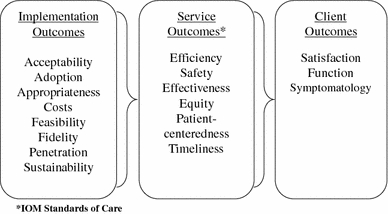
An unresolved issue in the field of implementation research is how to conceptualize and evaluate successful implementation. This paper advances the concept of "implementation outcomes" distinct from service system and clinical treatment outcomes. This paper proposes a heuristic, working "taxonomy" of eight conceptually distinct implementation outcomes-acceptability, adoption, appropriateness, feasibility, fidelity, implementation cost, penetration, and sustainability-along with their nominal definitions. We propose a two-pronged agenda for research on implementation outcomes. Conceptualizing and measuring implementation outcomes will advance understanding of implementation processes, enhance efficiency in implementation research, and pave the way for studies of the comparative effectiveness of implementation strategies.
Overview
The claims and statistics of this paper haven’t been checked yet.
Free: it reads the open-access text and checks the first 5 claims that cite a source we can check. Create a free account to check every claim.
Integrity signals
Registry
Cites
Statistics
Figures
Verification
Claims the paper makes
The claims and statistics of this paper haven’t been checked yet.
Free: it reads the open-access text and checks the first 5 claims that cite a source we can check. Create a free account to check every claim.
Claims other papers make about this one
Each is checked against this paper’s own text: does it say what the citing paper says it does?
The source backs part of the claim, not all of it — or backs it for a different population, condition or comparison.
In the citing paper
“the failure of most implementation processes to incorporate ongoing, iterative intervention development increases the risk that local users will find new technologies to be low on key implementation outcomes such as acceptability, feasibility, and appropriateness (Proctor et al., 2011) and may limit effectiveness (Chambers et al., 2013)”
From User‐centered design for psychosocial intervention development and implementation. (2016) · cites this paper as Proctor et al., 2011
Experimental — accuracy not yet measuredThe source backs part of the claim, not all of it — or backs it for a different population, condition or comparison.
In the citing paper
“Increasing use of implementation frameworks may offer a more systematic evaluation of newborn care packages while clarifying equitable service delivery in vulnerable populations often present in LMIC settings (35, 36).”
From Born too soon in a resource-limited setting: A 10-year mixed methods review of a special care baby unit for refugees and migrants on the Myanmar-Thailand border (2023) · cites this paper as [36]
Experimental — accuracy not yet measuredThe source backs part of the claim, not all of it — or backs it for a different population, condition or comparison.
In the citing paper
“While reporting systems like those by Proctor [1] or Pinnock [75] would optimize learning across studies, few manuscripts specify strategies as recommended [76, 77].”
From A systematic review of experimentally tested implementation strategies across health and human service settings: evidence from 2010-2022 (2024) · cites this paper as [76]
Experimental — accuracy not yet measuredThe source backs part of the claim, not all of it — or backs it for a different population, condition or comparison.
In the citing paper
“implementation outcomes are influenced by a complex interaction of contextual, organizational, workforce, policy, and system-level factors [12,13,14].”
From A Scoping Review of Implemented Innovations in Cancer Care: Implications for Pan-Canadian Scaling (2026) · cites this paper as [14]
Experimental — accuracy not yet measuredThe source backs part of the claim, not all of it — or backs it for a different population, condition or comparison.
In the citing paper
“These factors align closely with established implementation science frameworks that emphasize the importance of organizational readiness, implementation climate, leadership engagement, and continuous learning systems [11,13,14].”
From A Scoping Review of Implemented Innovations in Cancer Care: Implications for Pan-Canadian Scaling (2026) · cites this paper as [14]
Experimental — accuracy not yet measured
39 more claims about this paper
Create a free account to see every claim other papers make about this one.
Self-check
Percentages, sums and reported differences re-computed from the paper’s own numbers.
The self-check needs the paper’s full text.
Citations
Cites
Rogers, E. M., Singhal, A., & Quinlan, M. M. (2019) · An Integrated Approach to Communication Theory and Research · doi:10.4324/9780203710753-35 · Cited by 37,322
Crossing the Quality Chasm: A New Health System for the 21st Century
Baker, A. (2001) · BMJ · doi:10.1136/bmj.323.7322.1192 · Cited by 10,736
Crossing the Quality Chasm: A New Health System for the 21st Century
Committee on Quality of Health Care in America (2002) · Journal For Healthcare Quality · doi:10.1111/j.1945-1474.2002.tb00463.x · Cited by 8,483
Evaluating the public health impact of health promotion interventions: the RE-AIM framework.
Glasgow, R. E., Vogt, T. M., & Boles, S. M. (1999) · American Journal of Public Health · doi:10.2105/ajph.89.9.1322 · Cited by 7,217 · cited 2×
“The literature reflects quite varied uses of the term ‘‘sustainability,’’ but our proposed definition incorporates aspects of those offered by Johnson et al. (2004), Turner and Sanders (2006), Glasgow et al. (1999) , Goodman et al. (1993), and Rabin et al. (2008).”
Background(2005) · Cited by 3,748
Crossing the Quality Chasm: A New Health System for the 21st Century
Bloom, B. S. (2002) · JAMA: The Journal of the American Medical Association · doi:10.1001/jama.287.5.646-a · Cited by 3,726
Making psychological theory useful for implementing evidence based practice: a consensus approach
Michie, S. (2005) · Quality and Safety in Health Care · doi:10.1136/qshc.2004.011155 · Cited by 3,440
Gluesing, J. C. (2012) · Leadership in Science and Technology: A Reference Handbook · doi:10.4135/9781412994231.n14 · Cited by 3,210
Davis, F. D. (1993) · International Journal of Man-Machine Studies · doi:10.1006/imms.1993.1022 · Cited by 2,964 · cited 1×
“Lack of acceptability has long been noted as a challenge in implementation (Davis 1993).”
BackgroundAldenderfer, M. S., & Blashfield, R. K. (1984) · Cited by 2,358
Research works printed but not linked: 6
- 5. Bates, D. M., & Sarkar, D. (2007). lme4: Linear mixed-effects models using S4 classes. R Package Version, 0, 99875-99876.
- 18. Glasgow, R. E. (2007b). The RE-AIM model for planning, evaluation and reporting on implementation and dissemination research. Paper presented at the NIH Conference on Building the Science of Dissemination and Implementation in the Service of Public Health: Bethesda, MD.
- 24. Hayes, S. C. (1998). President's message: Dissemination research now. The Behavior Therapist, 21(9), 166-169.
- Institute of Medicine Committee on Crossing the Quality Chasm. (2006). Adaption to mental health and addictive disorder: Improving the quality of health care for mental and substance-use conditions. Washington, DC: Institute of Medicine, National Academies Press.
- 33. Jones, K. (1997). Mission drift in qualitative research, or moving toward a systematic review of qualitative studies. The Qualita- tive Report, 9(1), 95-112.
- 45. Mihalic, S. (2004). The importance of implementation fidelity. Emotional and Behavioral Disorders in Youth, 4, 83-86.
Cited by
Items 801–900 of 1,109
Rogers, L. Q., Goncalves, L., Martin, M. Y., Pisu, M., Smith, T., Hessong, D., Oster, R. A., Qu, H., Shewchuk, R. M., Iqbal, F., et al. (2019) · Journal of Cancer Survivorship · doi:10.1007/s11764-019-00773-x · Cited by 40
Mukred, M., Yusof, Z. M., & Alotaibi, F. M. (2019) · IEEE Access · doi:10.1109/access.2019.2927614 · Cited by 44
“[28] as the initial decision and intention towards using an innovation.”
BackgroundRoberts, D. A., Tan, N., Limaye, N., Irungu, E., & Barnabas, R. V. (2019) · JAIDS Journal of Acquired Immune Deficiency Syndromes · doi:10.1097/qai.0000000000002195 · Cited by 42
Practical Guide to Implementation Science
Neuman, H. B., Kaji, A. H., & Haut, E. R. (2020) · JAMA Surgery · doi:10.1001/jamasurg.2019.5149 · Cited by 37
Findlay, M., Rankin, N. M., Bauer, J. D., Collett, G. K., Shaw, T. J., & White, K. (2020) · Supportive Care in Cancer · doi:10.1007/s00520-020-05386-0 · Cited by 39
Tarrant, M., Haslam, C., Carter, M., Calitri, R., & Haslam, S. A. (2020) · Cambridge University Press eBooks · doi:10.1017/9781108677318.044 · Cited by 43
Mansell, P., Philbin, S. P., & Konstantinou, E. (2020) · Administrative Sciences · doi:10.3390/admsci10030055 · Cited by 51
“At the same time, the challenge of measuring project outcomes against SDG goals, targets and indicators within existing project business models is not a new phenomenon, since the difficulty of measuring sustainability outcomes is a well-researched area (Proctor et al. 2011; Boswell et al. 2015).”
BackgroundMueller, K. L., Naganathan, S., & Griffey, R. T. (2020) · Western Journal of Emergency Medicine · doi:10.5811/westjem.2020.5.46952 · Cited by 40
“Two patients had their disposition changed after CALM-ED: one patient received a Patient characteristics n (95% CI) Age in years (mean, IQR) 38 (27-51) Gender Male 102 (0.”
Self-citationPsychometric properties of leadership scales for health professionals: a systematic review
Carlson, M. A., Morris, S., Day, F. L., Dadich, A., Ryan, A., Fradgley, E. A., & Paul, C. L. (2021) · Implementation Science · doi:10.1186/s13012-021-01141-z · Cited by 44
“Given the importance of identifying validated leadership scales in implementation science [45], and the key role of acceptability, feasibility, and cost (including time and resources) in assessing implementation outcomes [105], this represents a significant gap in the literature.”
BackgroundKukhareva, P., Weir, C. R., Fiol, G. D., Aarons, G. A., Taft, T., Schlechter, C. R., Reese, T. J., Curran, R. L., Nanjo, C. J., Borbolla, D. A., et al. (2022) · Journal of Biomedical Informatics · doi:10.1016/j.jbi.2022.104014 · Cited by 53
Self-citationOrtblad, K. F., Mogere, P., Omollo, V., Kuo, A. P., Asewe, M., Gakuo, S., Roche, S., Mugambi, M., Mugambi, M. L., Stergachis, A., et al. (2023) · Journal of the International AIDS Society · doi:10.1002/jia2.26131 · Cited by 38
“Acceptability—the perception an intervention is agreeable, palatable or satisfactory [36]—was measured using four statements that assess different component constructs of the Theoretical Framework of Acceptability (e.”
MethodChapman, A., Rankin, N. M., Jongebloed, H., Yoong, S. L., White, V., Livingston, P. M., Hutchinson, A. M., & Ugalde, A. (2023) · Systematic Reviews · doi:10.1186/s13643-023-02285-3 · Cited by 36
“Challenge 5: variability in defining implementation ‘success’ Numerous evaluation frameworks exist within implementation science that can assist authors of primary implementation research to specify and define implementation outcomes (e.g. Proctor et al.’s Implementation Outcomes Framework [20] and The RE-AIM framewor…”
BackgroundInfluentialIannella, S., Smith, A., Post, D., & Haren, M. T. (2015) · Rural and Remote Health · doi:10.22605/rrh3529 · Cited by 41
The question of the question: impactful implementation science to address the HIV epidemic
Geng, E., Nash, D., Phanuphak, N., Green, K., Solomon, S. S., Grimsrud, A., Sohn, A. H., Mayer, K. H., Bärnighausen, T., & Bekker, L. (2022) · Journal of the International AIDS Society · doi:10.1002/jia2.25898 · Cited by 38
“One of the major contributions of implementation science is putting forth the concept of implementation outcomes that represent the effects of all implementation strategies, no matter how different from one another they are [28].”
BackgroundBalis, L. E., Houghtaling, B., Clausen, W., Lane, H., Wende, M. E., Pereira, E. L., McLoughlin, G. M., & Harden, S. M. (2024) · International Journal of Behavioral Nutrition and Physical Activity · doi:10.1186/s12966-024-01685-5 · Cited by 39
“…practitioners to name, define, specify (e.g., the actor, action, target, timing, frequency, implementation outcome, and justification of strategies), track, and evaluate ISAC strategies over time in response to overcoming barriers of EBIs is needed to move the state of the science forward [9, 91].”
Can, D., Georgiou, P., Atkins, D. C., & Narayanan, S. S. (2012) · Interspeech (USB) · doi:10.21437/interspeech.2012-134 · Cited by 41
“However, this approach does not scale up to real-world use [4].”
BackgroundMethodInfluentialMcMillen, J. C., Hawley, K. M., & Proctor, E. K. (2015) · Administration and Policy in Mental Health and Mental Health Services Research · doi:10.1007/s10488-015-0645-x · Cited by 40
Self-citationZakumumpa, H., Bennett, S., & Ssengooba, F. (2016) · BMC Health Services Research · doi:10.1186/s12913-016-1833-4 · Cited by 39
“They define sustainability as ‘the extent to which a newly implemented treatment is maintained or institutionalized within a service setting’s ongoing, stable operations’ (emphasis ours) [25].”
BackgroundPalinkas, L. A., Um, M. Y., Jeong, C. H., Chor, K. H. B., Olin, S., Horwitz, S. M., & Hoagwood, K. E. (2017) · Health Research Policy and Systems · doi:10.1186/s12961-017-0190-z · Cited by 36
Li, D. H., Brown, C. H., Gallo, C. G., Morgan, E., Sullivan, P. S., Young, S. D., & Mustanski, B. S. (2019) · Current HIV/AIDS Reports · doi:10.1007/s11904-019-00455-4 · Cited by 40
“Of the three, the first receives the most attention because acceptability and usability of an intervention by its target population are major factors in effectiveness and successful implementation [3, 95].”
BackgroundPaloma, V., de la Morena, I., & López‐Torres, C. (2019) · Health & Social Care in the Community · doi:10.1111/hsc.12847 · Cited by 39
Implementing Advance Care Planning in Acute Hospitals: Leading the Transformation of Norms
Tan, W. S., Car, J., Lall, P., Low, C. K., & Ho, A. H. Y. (2019) · Journal of the American Geriatrics Society · doi:10.1111/jgs.15857 · Cited by 38
“The semistructured questionnaire was designed on the basis of the conceptual taxonomy of implementation outcomes of Proctor et al.(28) Each focus group discussion lasted approximately 120 minutes.”
MethodGraham, A. K., Greene, C. J., Powell, T., Lieponis, P., Lunsford, A., Peralta, C. D., Orr, L. C., Kaiser, S. M., Alam, N., Berhane, H., et al. (2020) · Translational Behavioral Medicine · doi:10.1093/tbm/ibz140 · Cited by 36
Can minimal intervention dentistry help in tackling the global burden of untreated dental caries?
Bernabé, E., & Marcenes, W. S. (2020) · BDJ · doi:10.1038/s41415-020-2155-9 · Cited by 42
Smith, M. J., Smith, J. D., Jordan, N., Sherwood, K. L., McRobert, E., Ross, B., Oulvey, E. A., & Atkins, M. S. (2020) · Journal of Special Education Technology · doi:10.1177/0162643420960093 · Cited by 37
“Our implementation evaluation involved measuring core determinants, processes, and outcomes germane to hybrid Type 3 effectiveness-implementation trials within the Proctor et al. (2011) implementation research outcome domains taxonomy.”
MethodRyan, G. K., Bauer, A., Endale, T., Qureshi, O., Doukani, A., Pashoja, A. C., Brar, S. K., Eaton, J., & Bass, J. (2021) · Conflict and Health · doi:10.1186/s13031-021-00363-8 · Cited by 41
“(2011) [61], as described in our review protocol.”
MethodHahn‐Goldberg, S., Huynh, T., Chaput, A., Krahn, M. D., Rac, V. E., TOMLINSON, G. A., Matelski, J. J., Abrams, H. B., Bell, C. M., Madho, C., et al. (2021) · BMC Health Services Research · doi:10.1186/s12913-021-06374-8 · Cited by 39
“[24], implementation was measured using implementation outcomes of acceptability, penetration, and fidelity and effectiveness was measured by assessing whether there were improvements in both service (process) and client (patient, family, and provider) outcomes (see Table 2).”
MethodLivet, M., Levitt, J. M., Lee, A., & Easter, J. C. (2021) · Exploratory Research in Clinical and Social Pharmacy · doi:10.1016/j.rcsop.2021.100032 · Cited by 36
“Feasibility was broadly defined as the extent to which a particular service or service component can be conveniently and successfully carried out in real-world settings.(8) The CMM telepharmacy service was already being offered by a pharmacist to patients with uncontrolled diabetes in four North Carolina (NC) primary…”
BackgroundBohren, M. A., Lorencatto, F., Coomarasamy, A., Althabe, F., Devall, A., Evans, C. L., Oladapo, O. T., Lissauer, D. M., Akter, S., Forbes, G., et al. (2021) · Reproductive Health · doi:10.1186/s12978-021-01162-3 · Cited by 37
Quality improvement studies in nursing homes: a scoping review
Toles, M., Colon-Emeric, C. S., Moreton, E., Frey, L., & Leeman, J. (2021) · BMC Health Services Research · doi:10.1186/s12913-021-06803-8 · Cited by 44
“Perceptions of the solution and/or QI strategies Perceptions among stakeholders that solutions and/or QI strategies were acceptable, appropriate, and/or feasible [28]”
BackgroundMethodInfluentialChampions for improved adherence to guidelines in long-term care homes: a systematic review
Hall, A. M., Flodgren, G., Richmond, H., Welsh, S. M., Thompson, J., Furlong, B., & Sherriff, A. (2021) · Implementation Science Communications · doi:10.1186/s43058-021-00185-y · Cited by 41
“Adherence to the guidelines or intervention protocol must be also be considered in terms of implementation outcomes since the extent to which guidelines or interventions work is directly impacted by whether or not they were implemented as intended [8].”
BackgroundWakelin, E. (2021) · Educational Action Research · doi:10.1080/09650792.2021.2013912 · Cited by 48
“The main reason for involving students is that any intervention should be more effective if those impacted by the issue are involved in creating the solution to the problem (Proctor et al. 2011).”
BackgroundA scoping review examining the integration of exercise services in clinical oncology settings
Ezenwankwo, E. F., Nnate, D. A., Usoro, G. D., Onyeso, C. P., Anieto, I. B., Ibeneme, S. C., Albertus, Y., Lambert, V. E., Ezeukwu, A. O., Abaraogu, U. O., et al. (2022) · BMC Health Services Research · doi:10.1186/s12913-022-07598-y · Cited by 38
“First, we reviewed varieties of constructs as considered in the Implementation Outcome Framework of Proctor and Colleagues [24], Bowen’s framework [25], and the Reach, Effectiveness, Adoption, Implementation, and Maintenance (RE-AIM) framework of Glasgow and colleagues [26], Next, we adapted a list of priority outcome…”
MethodBaumgardt, J., Schwarz, J., Bechdolf, A., Nikolaidis, K., Heinze, M., Hamann, J., Holzke, M., Längle, G., Richter, J., Brieger, P., et al. (2021) · BMC Psychiatry · doi:10.1186/s12888-021-03163-9 · Cited by 41
Linnansaari, A., Ollila, H., Pisinger, C. H., Scheffels, J., Kinnunen, J. M., & Rimpelä, A. (2022) · Scandinavian Journal of Public Health · doi:10.1177/14034948221106867 · Cited by 45
“However, differentiating implementation outcomes (i.e. adoption, feasibility and fidelity) from health outcomes makes visible what is required from the implementation to reach the targeted health outcomes [10].”
BackgroundMethodMetz, A. J. R., Kainz, K., & Boaz, A. (2023) · Frontiers in Health Services · doi:10.3389/frhs.2022.959386 · Cited by 45
“The success of any implementation strategy is related to its alignment with causal pathways that lead to desired outcomes (15) and capacity to address known barriers and enablers to implementation (16, 17).”
BackgroundBergström, H., Haggård, U., Norman, Å., Sundblom, E., Elinder, L. S., & Nyberg, G. (2015) · BMC Public Health · doi:10.1186/s12889-015-1896-x · Cited by 46
“This indicated a high feasibility and possibilities for successful integration of this component in the school setting [32].”
BackgroundDugan, A. G., Farr, D., Namazi, S., Henning, R. A., Wallace, K. N., Ghaziri, M. E., Punnett, L., Dussetschleger, J., & Cherniack, M. G. (2016) · American Journal of Industrial Medicine · doi:10.1002/ajim.22593 · Cited by 41
“We used Proctor et al. [2011] definitions.”
Standardizing an approach to the evaluation of implementation science proposals
Crable, E. L., Biancarelli, D. L., Walkey, A. J., Allen, C. G., Proctor, E. K., & Drainoni, M. (2018) · Implementation Science · doi:10.1186/s13012-018-0770-5 · Cited by 39
“Similarly, proposals that only sought to study effectiveness and did not assess any implementation outcomes [13] (e.”
BackgroundSelf-citationKoh, S., Lee, M., Brotzman, L., & Shelton, R. C. (2018) · Translational Behavioral Medicine · doi:10.1093/tbm/iby095 · Cited by 45
Zabaleta‐del‐Olmo, E., Bolíbar, B., García‐Ortiz, L., García‐Campayo, J., Llobera, J., Bellón, J. Á., & Ramos, R. (2015) · Preventive Medicine · doi:10.1016/j.ypmed.2015.03.011 · Cited by 43
Gray, S. M., McKay, H. A., Nettlefold, L., Race, D., Macdonald, H. M., Naylor, P.-J., & Sims-Gould, J. (2021) · British Journal of Sports Medicine · doi:10.1136/bjsports-2020-102465 · Cited by 35
Wiltsey Stirman, S., Finley, E. P., Shields, N., Cook, J., Haine-Schlagel, R., Burgess, J. F., Dimeff, L., Koerner, K., Suvak, M., Gutner, C. A., et al. (2017) · Implementation Science · doi:10.1186/s13012-017-0544-5 · Cited by 35
Jenniches, I., Lemmen, C., Cwik, J. C., Kusch, M., Labouvie, H., Scholten, N., Gerlach, A. L., Stock, S., Samel, C., Hagemeier, A., et al. (2020) · BMJ Open · doi:10.1136/bmjopen-2019-034141 · Cited by 38
Pérez, M. C., Chandra, D., Koné, G. K., Singh, R. M., Ridde, V., Sylvestre, M., Seth, A., & Johri, M. (2020) · Implementation Science Communications · doi:10.1186/s43058-020-00077-7 · Cited by 42
“Given the complexity of public health interventions, this study reinforces the value of using mixed methods to assess the fidelity of implementation [47, 75, 76].”
MethodCardenas, A., Esser, K., Wright, E., Netten, K., Edwards, A., Rose, J., Vigod, S. N., Cohen, E., & Orkin, J. (2022) · Academic Pediatrics · doi:10.1016/j.acap.2022.06.001 · Cited by 38
Qu, L., Chen, H., Miller, H. L., Miller, A. L., Colombi, C., Chen, W., & Ulrich, D. A. (2022) · Frontiers in Psychology · doi:10.3389/fpsyg.2022.859145 · Cited by 38
Implementation considerations of deprescribing interventions: A scoping review
Wang, J., Shen, J. Y., Conwell, Y., Podsiadly, E. J., Caprio, T. V., Nathan, K., Yu, F., Ramsdale, E. E., Fick, D. M., Mixon, A. S., et al. (2022) · Journal of Internal Medicine · doi:10.1111/joim.13599 · Cited by 45
Kanwal, F., Bril, F., Wong, V. W., Adams, L. A., Pfotenhauer, K. M., SKOLNIK, N., Wright, E. E., Eckel, R. H., Noureddin, M., Loomba, R. S., et al. (2026) · Gastroenterology · doi:10.1053/j.gastro.2026.01.047 · Cited by 47
Locke, J., Wolk, C. B., Harker, C., Olsen, A., Shingledecker, T., Barg, F., Mandell, D., & Beidas, R. (2017) · Autism · doi:10.1177/1362361316664474 · Cited by 35
“Numerous frameworks have emerged in the field of implementation science to conceptualize and understand the factors related to implementation outcomes within these settings (e.g. Damschroder et al., 2009; Domitrovich et al., 2008; Fixsen et al., 2005, 2013; Odom et al., 2013; Proctor et al., 2011).”
BackgroundMAP-IT: A Practical Tool for Planning Complex Behavior Modification Interventions
Hansen, S., Kanning, M. K., Lauer, R., Steinacker, J. M., & Schlicht, W. M. (2017) · Health Promotion Practice · doi:10.1177/1524839917710454 · Cited by 51
Kien, C., Schultes, M.-T., Szeląg, M., Schoberberger, R., & Gartlehner, G. (2018) · Implementation Science · doi:10.1186/s13012-018-0837-3 · Cited by 40
Oftedal, S., Burrows, T. L., Fenton, S., Murawski, B., Rayward, A. T., & Duncan, M. J. (2019) · International Journal of Environmental Research and Public Health · doi:10.3390/ijerph16203810 · Cited by 37
Winters, A. M., Collins‐Camargo, C., Antle, B. F., & Verbist, A. N. (2019) · Children and Youth Services Review · doi:10.1016/j.childyouth.2019.104580 · Cited by 37
“Proctor et al. (2011) found that data system accessibility and technology supports can facilitate intervention fidelity by helping workers believe it to be acceptable, appropriate and feasible.”
BackgroundKennedy, M. A., Bayes, S. J., Newton, R. U., Zissiadis, Y., Spry, N. A., Taaffe, D. R., Hart, N. H., Davis, M., Eiszele, A., & Galvao, D. A. (2020) · International Journal of Behavioral Nutrition and Physical Activity · doi:10.1186/s12966-020-01032-4 · Cited by 39
“allow systemic changes that will impact their delivery of service, and potentially key business outcomes [33].”
BackgroundMcLoughlin, G. M., Allen, P. M., Walsh‐Bailey, C., & Brownson, R. C. (2021) · Implementation Science Communications · doi:10.1186/s43058-021-00169-y · Cited by 46
Acceptability of Computerized Cognitive Behavioral Therapy for Adults: Umbrella Review
Treanor, C., Kouvonen, A. M., Lallukka, T. M., & Donnelly, M. (2021) · JMIR Mental Health · doi:10.2196/23091 · Cited by 44
“This review also captured service users’ and therapists’ or clinicians’ views of cCBT [19].”
BackgroundDunlop, K. L. A., Rankin, N. M., Smit, A. K., Salgado, Z., Newson, A. J., Keogh, L. A., & Cust, A. E. (2021) · Health Expectations · doi:10.1111/hex.13267 · Cited by 35
Anderson, D. M., Gupta, A. K., Birken, S. A., Sakas, Z., & Freeman, M. C. (2021) · International Journal of Hygiene and Environmental Health · doi:10.1016/j.ijheh.2021.113792 · Cited by 44
“In turn, these approaches, challenges, and sources of support influenced perceived program quality, as assessed using self-reported implementation and intervention outcomes (Proctor et al., 2011).”
BackgroundLiu, X., Wang, T., Tan, J.-Y. B., Stewart, S., Chan, R. J., Eliseeva, S., Polotan, M. J., & Zhao, I. (2022) · BMC Family Practice · doi:10.1186/s12875-022-01641-x · Cited by 42
“, cancer medication use and education) [13], and outcomes related to the implementation process (e.”
BackgroundLeenen, J. P. L., Rasing, H. J. M., van Dijk, J. D., Kalkman, C. J., Schoonhoven, L., & Patijn, G. A. (2022) · PLoS ONE · doi:10.1371/journal.pone.0265435 · Cited by 35
“Fidelity was defined as the quality of technically delivery and adherence to the protocol by the nurses [33].”
Magidson, J. F., Kleinman, M. B., Bradley, V. D., Anvari, M. S., Abidogun, T. M., Belcher, A. M., Greenblatt, A. D., Dean, D., Hines, A. C., Seitz‐Brown, C. J., et al. (2022) · International Journal of Drug Policy · doi:10.1016/j.drugpo.2022.103813 · Cited by 36
Precision medicine in Australia: now is the time to get it right
O’Shea, R., Ma, A. S., Jamieson, R. V., & Rankin, N. M. (2022) · The Medical Journal of Australia · doi:10.5694/mja2.51777 · Cited by 39
Harris, K. R., Kim, Y.-S., Yim, S., Camping, A., & Graham, S. (2023) · Contemporary Educational Psychology · doi:10.1016/j.cedpsych.2023.102150 · Cited by 44
Binarelli, G., Duivon, M., Joly, F., Ahmed-Lecheheb, D., & Lange, M. (2023) · Expert Review of Neurotherapeutics · doi:10.1080/14737175.2023.2187288 · Cited by 35
Brownson, R. C., Colditz, G. A., Dobbins, M., Emmons, K. M., Kerner, J. F., Padek, M. M., Proctor, E. K., & Stange, K. C. (2015) · Clinical and Translational Science · doi:10.1111/cts.12356 · Cited by 39
Self-citationKuschner, E. S., Morton, H. E., Maddox, B. B., de Marchena, A. B., Anthony, L. G., & Reaven, J. (2017) · Clinical Child and Family Psychology Review · doi:10.1007/s10567-017-0236-3 · Cited by 46
“BUFFET is certainly several steps away from communitybased implementation; however, ‘‘lessons learned’’ from this trial may lay the groundwork for successful effectiveness evaluation and implementation (Bowen et al. 2009; Proctor et al. 2011).”
BackgroundHerman, K. C., Reinke, W. M., Thompson, A. M., Hawley, K. M., Wallis, K., Stormont, M. A., & Peters, C. (2021) · School Psychology Review · doi:10.1080/2372966x.2020.1827682 · Cited by 41
“Additionally, solutions will need to be rooted in an implementation science framework that effectively and sustainably bridges the science to practice gap (Proctor et al., 2011).”
BackgroundMcGuier, E. A., Kolko, D. J., Stadnick, N. A., Brookman-Frazee, L., Wolk, C. B., Yuan, C. T., Burke, C. S., & Aarons, G. A. (2023) · Implementation Research and Practice · doi:10.1177/26334895231190855 · Cited by 34
“For example, a team may increase organizational pro fi ts, produce innovative products, or attain effective implementation or service outcomes (e.g., reach, fi delity, and safety; Proctor et al., 2011).”
BackgroundSelf-citationCoaching in Surgical Education: A Systematic Review
Louridas, M., Sachdeva, A. K., Yuen, A., Blair, P., & MacRae, H. (2022) · Annals of Surgery · doi:10.1097/sla.0000000000004910 · Cited by 34
Substance abuse treatment implementation research
McGovern, M. P., Saunders, E. C., & Kim, E. (2013) · Journal of Substance Abuse Treatment · doi:10.1016/j.jsat.2012.09.006 · Cited by 34
“Although Proctor et al. (2011) provide a comprehensive list of potential implementation outcomes, including some familiar to treatment researchers, further specification and precision are necessary.”
BackgroundDadzie, S. K. N., Ndebugri, J., Inkoom, E. W., & Akuamoah-Boateng, S. (2022) · Agriculture & Food Security · doi:10.1186/s40066-022-00376-3 · Cited by 45
Chung, V. C., Ho, F. F., Lao, L., Liu, J., Lee, M. S., Chan, K. W., & Nilsen, P. (2022) · Phytomedicine · doi:10.1016/j.phymed.2022.154591 · Cited by 43
Ryan, A., Prieto, E., Miller, A. A., & Gore, J. M. (2024) · Educational Research Review · doi:10.1016/j.edurev.2024.100620 · Cited by 50
Pyrooz, D. C., Sánchez, J. A., & Weltman, E. (2025) · Criminology · doi:10.1111/1745-9125.70002 · Cited by 37
“With these data, we captured program differentiation, participant responsiveness and, to a lesser extent, dosage, which together tap dimensions of fidelity (Cross & West, 2011; Proctor et al., 2011; Steckler & Linnan, 2002).”
Durbin, J., Selick, A., Casson, I., Green, L., Spassiani, N. A., Perry, A., & Lunsky, Y. (2016) · Intellectual and developmental disabilities · doi:10.1352/1934-9556-54.2.136 · Cited by 34
Auslander, W., McGinnis, H., Tlapek, S., Smith, P., Foster, A., Edmond, T., & Dunn, J. (2017) · American Journal of Orthopsychiatry · doi:10.1037/ort0000233 · Cited by 34
“Feasibility was defined as the extent to which a practice can be successfully used or carried out within a given setting (Karsh, 2004; Proctor et al., 2011).”
Brookman-Frazee, L. I., Zhan, C., Stadnick, N. A., Sommerfeld, D. H., Roesch, S. C., Aarons, G. A., Innes-Gomberg, D., Bando, L., & Lau, A. S. (2018) · Frontiers in Public Health · doi:10.3389/fpubh.2018.00054 · Cited by 37
“(13), these costs are dependent on the complexity, strategy, and setting of an intervention.”
BackgroundSelf-citationBirken, S. A., Urquhart, R., Munoz‐Plaza, C. E., Zizzi, A. R., Haines, E. R., Stover, A. M., Mayer, D. K., & Hahn, E. E. (2018) · Journal of Cancer Survivorship · doi:10.1007/s11764-018-0688-6 · Cited by 38
Sævareid, T. J. L., Lillemoen, L., Thoresen, L., Førde, R., Gjerberg, E., & Pedersen, R. (2018) · BMC Geriatrics · doi:10.1186/s12877-018-0869-1 · Cited by 39
Carey, J. M., Studnek, J. R., Browne, L. R., Ostermayer, D. G., Grawey, T., Schroter, S., Lerner, E. B., & Shah, M. I. (2019) · Prehospital Emergency Care · doi:10.1080/10903127.2019.1595234 · Cited by 37
“An implementation framework has been described that defines components of implementation that can be measured and intervened upon, including acceptability, adoption, appropriateness, cost, feasibility, fidelity, penetration, and sustainability (37).”
Heeren, P., Devriendt, E., Fieuws, S., Wellens, N. I. H., Deschodt, M., Flamaing, J., Sabbe, M. B., & Milisen, K. (2019) · BMC Geriatrics · doi:10.1186/s12877-019-1233-9 · Cited by 42
Interrupting providers with clinical decision support to improve care for heart failure
Blecker, S., Austrian, J. S., Horwitz, L. I., Kuperman, G. J., Shelley, D., Ferrauiola, M., & Katz, S. D. (2019) · International Journal of Medical Informatics · doi:10.1016/j.ijmedinf.2019.103956 · Cited by 39
Ziemann, A., Brown, L., Sadler, E., Ocloo, J. E., Boaz, A., & Sandall, J. (2019) · Systematic Reviews · doi:10.1186/s13643-019-1180-8 · Cited by 40
Lau, A. S., Lind, T., Crawley, M., Rodríguez, A., Smith, A. M., & Brookman-Frazee, L. I. (2019) · Administration and Policy in Mental Health and Mental Health Services Research · doi:10.1007/s10488-019-00987-2 · Cited by 38
Dutta, O., Lall, P., Patinadan, P. V., Car, J., Low, C. K., Tan, W. S., & Ho, A. H. Y. (2019) · Palliative & Supportive Care · doi:10.1017/s1478951519000865 · Cited by 39
“The focus of the inquiry of each FGD was the conceptual taxonomy of implementation outcomes (Proctor et al., 2011).”
BackgroundPeven, K., Bick, D., Purssell, E., Rotevatn, T. A., Nielsen, J. H., & Taylor, C. (2020) · Health Policy and Planning · doi:10.1093/heapol/czaa122 · Cited by 39
Adelson, P. L., Yates, R., Fleet, J., & McKellar, L. V. (2021) · BMC Health Services Research · doi:10.1186/s12913-021-06373-9 · Cited by 41
“The Y&N model of care is a two-year pilot program with an independent evaluation utilizing the Proctor framework [15] to assess the implementation of the program.”
MethodImplementation of Unobtrusive Sensing Systems for Older Adult Care: Scoping Review
Sharma, N., Brinke, J. K., van Gemert‐Pijnen, J. E. W. C., & Braakman‐Jansen, A. (2021) · JMIR Aging · doi:10.2196/27862 · Cited by 46
“• Meaning: the intention, initial decision, or action to try to use a new intervention [37,91].”
BackgroundMethodInfluentialGuerin, R. J., Harden, S. M., Rabin, B. A., Rohlman, D. S., Cunningham, T. R., TePoel, M. R. W., Parish, M., & Glasgow, R. E. (2021) · International Journal of Environmental Research and Public Health · doi:10.3390/ijerph182111050 · Cited by 41
“The logic model displays both proximal outcomes, such as adoption and fidelity [37,48], and more distal outcomes and impacts, such as reduced occupational morbidity and mortality, enhanced well-being, and occupational health equity.”
BackgroundGeorge, E. R., Sabin, L., Elliott, P. A., Wolff, J. A., Osani, M. C., Hong, J. M., & Berry, W. R. (2022) · Implementation Research and Practice · doi:10.1177/26334895221077880 · Cited by 44
“” Implementation outcomes serve as indicators of implementation success, are proximal indicators of implementation processes, and serve as key intermediate outcomes (Proctor et al., 2011).”
BackgroundInfluentialSalvati, Z. M., Rahm, A. K., Williams, M. S., Ladd, I., Schlieder, V., Atondo, J., Schneider, J. L., Epstein, M. M., Lu, C. Y., Pawloski, P. A., et al. (2023) · Implementation Science Communications · doi:10.1186/s43058-023-00424-4 · Cited by 41
“[11] Another example of using data matrices in implementation science is the “rapidcycle evaluation approach to improving implementation” [12] where matrices helped organize data and support a cross-case analysis of patterns with barriers and facilitators.”
BackgroundMethodSBIRT Implementation for Adolescents in Urban Federally Qualified Health Centers
Mitchell, S. G., Schwartz, R. P., Kirk, A. S., Dušek, K., Oros, M. T., Hosler, C., Gryczynski, J., Barbosa, C., Dunlap, L. J., Lounsbury, D. W., et al. (2015) · Journal of Substance Abuse Treatment · doi:10.1016/j.jsat.2015.06.011 · Cited by 36
Cross, W., West, J., Wyman, P. A., Schmeelk-Cone, K., Xia, Y., Tu, X., Teisl, M., Brown, C. H., & Forgatch, M. (2015) · Prevention Science · doi:10.1007/s11121-014-0488-9 · Cited by 34
“Observation There is general agreement that implementation quality has an impact on intervention outcomes (Aarons et al. 2010; Brownson et al. 2012; Durlak and DuPre 2008; Fixsen et al. 2005; Glasgow et al. 2012; Proctor et al. 2011).”
Selove, R., Foster, M., Mack, R., Sanderson, M., & Hull, P. C. (2016) · Journal of Public Health Management and Practice · doi:10.1097/phh.0000000000000367 · Cited by 36
Baumann, A. A., Mejía, A., Lachman, J. M., Parra‐Cardona, J. R., López‐Zerón, G., Buenabad, N. G. A., Contreras, E. V., & Rodríguez, M. M. D. (2018) · Global Social Welfare · doi:10.1007/s40609-018-0121-0 · Cited by 39
The Intersection of Implementation Science and Pharmacy Practice Transformation
Smith, M., Blanchard, C., & Vuernick, E. L. (2019) · Annals of Pharmacotherapy · doi:10.1177/1060028019867253 · Cited by 35
“Finally, the outcomes are the effects of intervention or service being tested.(1,35,36) This IS logic model can be useful at the beginning of a project to develop meaningful process indicators for tracking progress as well as communicating an implementation effort to stakeholders in one visual picture.”
BackgroundAdvancing implementation frameworks with a mixed methods case study in child behavioral health
Barwick, M., Barac, R., Kimber, M., Akrong, L., Johnson, S. N., Cunningham, C. E., Bennett, K., Ashbourne, G., & Godden, T. (2020) · Translational Behavioral Medicine · doi:10.1093/tbm/ibz005 · Cited by 33
Dopp, A. R., Coen, A. S., Smith, A. B., Reno, J., Bernstein, D. H., Kerns, S. E. U., & Altschul, D. (2018) · Behavior Therapy · doi:10.1016/j.beth.2017.12.003 · Cited by 33
Deinse, T. B. V., Zielinski, M. J., Holliday, S. B., Rudd, B. N., & Crable, E. L. (2023) · Implementation Science Communications · doi:10.1186/s43058-023-00521-4 · Cited by 37
“For example, in some cases, the Proctor et al. [9] taxonomy was used to inform the researchers’ decisions about what implementation outcomes (e.g., acceptability, appropriateness) to select for a study and how to operationalize them (e.g., [45]).”
BackgroundMethodInfluential
Metadata
- Authors
- Proctor, E., Silmere, H., Raghavan, R., Hovmand, P., Aarons, G., Bunger, A., Griffey, R., & Hensley, M.
- Affiliations
- Washington University in St. Louis (US)
- Roberts Wesleyan College (US)
- Corresponding author
- Proctor, Enola
- Venue
- Administration and Policy in Mental Health and Mental Health Services Research
- Published
- 2010-10-19
- Volume
- 38
- Issue
- 2
- Pages
- 65-76
- ISSN
- 0894-587X (ISSN-L)
- 1573-3289
- PMC
- PMC3068522
- OpenAlex
- W2140092196
- Semantic Scholar
- 3c7cf782e4094a7d66d8ad5da80a8083a8e72307
- Cited by
- 8,721
- References
- 71
- Citations by year
- 2026: 1487 · 2025: 1144 · 2024: 1303 · 2023: 1041 · 2022: 950 · 2021: 893 · 2020: 669 · 2019: 391 · 2018: 253 · 2017: 162 · 2016: 122 · 2015: 116 · 2014: 83 · 2013: 57 · 2012: 28
- FWCI
- 56.95
- Type
- journal article
- Language
- en
- Open access
- hybrid
- doi.org
- Licence
- cc-by-nc
- Locations
- Administration and Policy in Mental Health and Mental Health Services Research (publishedVersion, cc-by-nc)
- Europe PMC (PubMed Central) (publishedVersion, cc-by-nc)
- PubMed Central (publishedVersion, cc-by-nc)
- PubMed (publishedVersion)
- Funders
- National Institutes of Health (5p30mh068579-05)
- National Institute of Mental Health (P30-MH-068579, T32MH019960)
- National Center for Research Resources (UL1RR024992)
- Topics
- Health Sciences › Health Professions › General Health Professions › Health Policy Implementation Science
- Health Sciences › Health Professions › General Health Professions › Health Sciences Research and Education
- Health Sciences › Health Professions › General Health Professions › Mental Health and Patient Involvement
- Keywords
- implementation outcomes, implementation research, acceptability, adoption, appropriateness, feasibility, fidelity, implementation costs, penetration, sustainability, implementation strategies, mental health services
- MeSH terms
- Diffusion of Innovation, Humans, Mental Health Services, Outcome and Process Assessment, Health Care, Biomedical Research
About these checks
Registry, retraction, Cites and statistics results are computed, not judged, with one exception: a printed reference that no index lists is read once by a model before it counts as a citation error. Claims are extracted by a model and kept only when their quote appears verbatim in the text; each cited source is then checked, with a model’s help, for whether it says what the claim relies on. Those verdicts can be wrong — read the claim’s quote and the cited source before relying on one.
Statistics and arithmetic are recomputed, not judged.
Confidence bands are shown only for fields calibrated on our annotated test set. None is calibrated yet, so no band is shown.
What counts as a claim ›How we measure confidence ›How we check this ›
Are you an author, or do you see a problem with this page? Request a review
Data sources
Bibliographic data: Semantic Scholar, OpenAlex, Crossref.
Contains information from the Semantic Scholar Academic Graph Datasets, made available under the ODC Attribution License (ODC-BY 1.0).
Semantic Scholar’s data is described in: Kinney, R., et al. (2023). The Semantic Scholar Open Data Platform. arXiv:2301.10140.
