

Outcomes for Implementation Research: Conceptual Distinctions, Measurement Challenges, and Research Agenda
Open accessThe DOI matches its Crossref record; 72 of the 72 references it cites were found in a registry or an index.
Abstract
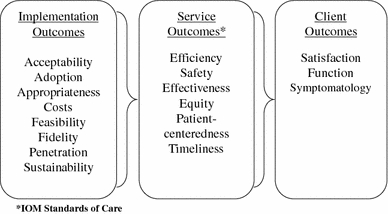
An unresolved issue in the field of implementation research is how to conceptualize and evaluate successful implementation. This paper advances the concept of "implementation outcomes" distinct from service system and clinical treatment outcomes. This paper proposes a heuristic, working "taxonomy" of eight conceptually distinct implementation outcomes-acceptability, adoption, appropriateness, feasibility, fidelity, implementation cost, penetration, and sustainability-along with their nominal definitions. We propose a two-pronged agenda for research on implementation outcomes. Conceptualizing and measuring implementation outcomes will advance understanding of implementation processes, enhance efficiency in implementation research, and pave the way for studies of the comparative effectiveness of implementation strategies.
Overview
The claims and statistics of this paper haven’t been checked yet.
Free: it reads the open-access text and checks the first 5 claims that cite a source we can check. Create a free account to check every claim.
Integrity signals
Registry
Cites
Statistics
Figures
Verification
Claims the paper makes
The claims and statistics of this paper haven’t been checked yet.
Free: it reads the open-access text and checks the first 5 claims that cite a source we can check. Create a free account to check every claim.
Claims other papers make about this one
Each is checked against this paper’s own text: does it say what the citing paper says it does?
The source backs part of the claim, not all of it — or backs it for a different population, condition or comparison.
In the citing paper
“the failure of most implementation processes to incorporate ongoing, iterative intervention development increases the risk that local users will find new technologies to be low on key implementation outcomes such as acceptability, feasibility, and appropriateness (Proctor et al., 2011) and may limit effectiveness (Chambers et al., 2013)”
From User‐centered design for psychosocial intervention development and implementation. (2016) · cites this paper as Proctor et al., 2011
Experimental — accuracy not yet measuredThe source backs part of the claim, not all of it — or backs it for a different population, condition or comparison.
In the citing paper
“Increasing use of implementation frameworks may offer a more systematic evaluation of newborn care packages while clarifying equitable service delivery in vulnerable populations often present in LMIC settings (35, 36).”
From Born too soon in a resource-limited setting: A 10-year mixed methods review of a special care baby unit for refugees and migrants on the Myanmar-Thailand border (2023) · cites this paper as [36]
Experimental — accuracy not yet measuredThe source backs part of the claim, not all of it — or backs it for a different population, condition or comparison.
In the citing paper
“While reporting systems like those by Proctor [1] or Pinnock [75] would optimize learning across studies, few manuscripts specify strategies as recommended [76, 77].”
From A systematic review of experimentally tested implementation strategies across health and human service settings: evidence from 2010-2022 (2024) · cites this paper as [76]
Experimental — accuracy not yet measuredThe source backs part of the claim, not all of it — or backs it for a different population, condition or comparison.
In the citing paper
“implementation outcomes are influenced by a complex interaction of contextual, organizational, workforce, policy, and system-level factors [12,13,14].”
From A Scoping Review of Implemented Innovations in Cancer Care: Implications for Pan-Canadian Scaling (2026) · cites this paper as [14]
Experimental — accuracy not yet measuredThe source backs part of the claim, not all of it — or backs it for a different population, condition or comparison.
In the citing paper
“These factors align closely with established implementation science frameworks that emphasize the importance of organizational readiness, implementation climate, leadership engagement, and continuous learning systems [11,13,14].”
From A Scoping Review of Implemented Innovations in Cancer Care: Implications for Pan-Canadian Scaling (2026) · cites this paper as [14]
Experimental — accuracy not yet measured
39 more claims about this paper
Create a free account to see every claim other papers make about this one.
Self-check
Percentages, sums and reported differences re-computed from the paper’s own numbers.
The self-check needs the paper’s full text.
Citations
Cites
Rogers, E. M., Singhal, A., & Quinlan, M. M. (2019) · An Integrated Approach to Communication Theory and Research · doi:10.4324/9780203710753-35 · Cited by 37,322
Crossing the Quality Chasm: A New Health System for the 21st Century
Baker, A. (2001) · BMJ · doi:10.1136/bmj.323.7322.1192 · Cited by 10,736
Crossing the Quality Chasm: A New Health System for the 21st Century
Committee on Quality of Health Care in America (2002) · Journal For Healthcare Quality · doi:10.1111/j.1945-1474.2002.tb00463.x · Cited by 8,483
Evaluating the public health impact of health promotion interventions: the RE-AIM framework.
Glasgow, R. E., Vogt, T. M., & Boles, S. M. (1999) · American Journal of Public Health · doi:10.2105/ajph.89.9.1322 · Cited by 7,217 · cited 2×
“The literature reflects quite varied uses of the term ‘‘sustainability,’’ but our proposed definition incorporates aspects of those offered by Johnson et al. (2004), Turner and Sanders (2006), Glasgow et al. (1999) , Goodman et al. (1993), and Rabin et al. (2008).”
Background(2005) · Cited by 3,748
Crossing the Quality Chasm: A New Health System for the 21st Century
Bloom, B. S. (2002) · JAMA: The Journal of the American Medical Association · doi:10.1001/jama.287.5.646-a · Cited by 3,726
Making psychological theory useful for implementing evidence based practice: a consensus approach
Michie, S. (2005) · Quality and Safety in Health Care · doi:10.1136/qshc.2004.011155 · Cited by 3,440
Gluesing, J. C. (2012) · Leadership in Science and Technology: A Reference Handbook · doi:10.4135/9781412994231.n14 · Cited by 3,210
Davis, F. D. (1993) · International Journal of Man-Machine Studies · doi:10.1006/imms.1993.1022 · Cited by 2,964 · cited 1×
“Lack of acceptability has long been noted as a challenge in implementation (Davis 1993).”
BackgroundAldenderfer, M. S., & Blashfield, R. K. (1984) · Cited by 2,358
Research works printed but not linked: 6
- 5. Bates, D. M., & Sarkar, D. (2007). lme4: Linear mixed-effects models using S4 classes. R Package Version, 0, 99875-99876.
- 18. Glasgow, R. E. (2007b). The RE-AIM model for planning, evaluation and reporting on implementation and dissemination research. Paper presented at the NIH Conference on Building the Science of Dissemination and Implementation in the Service of Public Health: Bethesda, MD.
- 24. Hayes, S. C. (1998). President's message: Dissemination research now. The Behavior Therapist, 21(9), 166-169.
- Institute of Medicine Committee on Crossing the Quality Chasm. (2006). Adaption to mental health and addictive disorder: Improving the quality of health care for mental and substance-use conditions. Washington, DC: Institute of Medicine, National Academies Press.
- 33. Jones, K. (1997). Mission drift in qualitative research, or moving toward a systematic review of qualitative studies. The Qualita- tive Report, 9(1), 95-112.
- 45. Mihalic, S. (2004). The importance of implementation fidelity. Emotional and Behavioral Disorders in Youth, 4, 83-86.
Cited by
The updated consolidated framework for implementation research based on user feedback
Damschroder, L. J., Reardon, C. M., Widerquist, M. A. O., & Lowery, J. (2022) · Implementation Science · doi:10.1186/s13012-022-01245-0 · Cited by 4,452
“The CFIR Outcomes Addendum provides high-level guidance for identifying implementation outcomes by drawing on other frameworks [81, 82].”
BackgroundMaking sense of implementation theories, models and frameworks
Nilsen, P. (2015) · Implementation Science · doi:10.1186/s13012-015-0242-0 · Cited by 4,447
Advancing a Conceptual Model of Evidence-Based Practice Implementation in Public Service Sectors
Aarons, G. A., Hurlburt, M., & Horwitz, S. M. (2011) · Administration and Policy in Mental Health and Mental Health Services Research · doi:10.1007/s10488-010-0327-7 · Cited by 3,240
Self-citationPsychometric assessment of three newly developed implementation outcome measures
Weiner, B. J., Lewis, C. C., Stanick, C., Powell, B. J., Dorsey, C. N., Clary, A. S., Boynton, M. H., & Halko, H. (2017) · Implementation Science · doi:10.1186/s13012-017-0635-3 · Cited by 2,819
“This study contributes to the literature by developing valid and reliable measures of important implementation outcomes [1].”
BackgroundMethodInfluentialImplementation strategies: recommendations for specifying and reporting
Proctor, E. K., Powell, B. J., & McMillen, J. C. (2013) · Implementation Science · doi:10.1186/1748-5908-8-139 · Cited by 2,585
“[47,49,50], and we direct readers to the dissemination and implementation section of the Grid Enabled Measurement Initiative and the Seattle Implementation Research Collaborative’s measures project for repositories of implementation outcomes [82,83].”
BackgroundMethodSelf-citationRE-AIM Planning and Evaluation Framework: Adapting to New Science and Practice With a 20-Year Review
Glasgow, R. E., Harden, S. M., Gaglio, B., Rabin, B., Smith, M. L., Porter, G. C., Ory, M. G., & Estabrooks, P. A. (2019) · Frontiers in Public Health · doi:10.3389/fpubh.2019.00064 · Cited by 2,528
“First, there have been recent calls to more explicitly describe strategies and context (80, 81) as well as test mediating relationships between implementation strategies and implementation outcomes (82).”
BackgroundA systematic review of the use of the Consolidated Framework for Implementation Research
Kirk, M. A., Kelley, C., Yankey, N., Birken, S. A., Abadie, B., & Damschroder, L. (2015) · Implementation Science · doi:10.1186/s13012-016-0437-z · Cited by 1,496
“[25]), (2) provide clearer linkage of CFIR constructs with outcomes, and (3) provide clearer specification of which CFIR constructs were used to investigate outcomes.”
BackgroundQualitative methods in implementation research: An introduction
Hamilton, A. B., & Finley, E. P. (2019) · Psychiatry Research · doi:10.1016/j.psychres.2019.112516 · Cited by 1,315
Waltz, T. J., Powell, B. J., Fernández, M. E., Abadie, B., & Damschroder, L. J. (2019) · Implementation Science · doi:10.1186/s13012-019-0892-4 · Cited by 1,136
Peters, D. H., Adam, T., Alonge, O., Agyepong, I. A., & Tran, N. (2014) · British Journal of Sports Medicine · doi:10.1136/bmj.f6753 · Cited by 1,109
Nilsen, P., & Bernhardsson, S. (2019) · BMC Health Services Research · doi:10.1186/s12913-019-4015-3 · Cited by 1,014
Methods to Improve the Selection and Tailoring of Implementation Strategies
Powell, B. J., Beidas, R. S., Lewis, C. C., Aarons, G. A., McMillen, J. C., Proctor, E. K., & Mandell, D. S. (2017) · The Journal of Behavioral Health Services & Research · doi:10.1007/s11414-015-9475-6 · Cited by 967
“Finally, it will be essential to assess the cost-effectiveness of these approaches.(89,90) Several ongoing studies will contribute to the evidence-base for selecting and tailoring implementation strategies to context-specific factors, including the Tailored Implementation for Chronic Disease research program(34) and a…”
Self-citationImplementation Mapping: Using Intervention Mapping to Develop Implementation Strategies
Fernandez, M. E., ten Hoor, G. A., van Lieshout, S., Rodriguez, S. A., Beidas, R. S., Parcel, G., Ruiter, R. A. C., Markham, C. M., & Kok, G. (2019) · Frontiers in Public Health · doi:10.3389/fpubh.2019.00158 · Cited by 914
Lattie, E. G., Adkins, E. C., Winquist, N., Stiles-Shields, C., Wafford, Q. E., & Graham, A. K. (2019) · Journal of Medical Internet Research · doi:10.2196/12869 · Cited by 843
“Thus, uptake and adoption outcomes were primarily metrics on the number of downloads and uses and were intended to be described alongside the number of users relative to the population of potential users when available (to determine the rates of service penetration [35]).”
The Sustainability of Evidence-Based Interventions and Practices in Public Health and Health Care
Shelton, R. C., Cooper, B. R., & Stirman, S. W. (2018) · Annual Review of Public Health · doi:10.1146/annurev-publhealth-040617-014731 · Cited by 806
Chaudoir, S. R., Dugan, A. G., & Barr, C. H. (2013) · Implementation Science · doi:10.1186/1748-5908-8-22 · Cited by 800
“For example, fidelity, or ‘the degree to which an intervention was implemented as it was prescribed in the original protocol or as it was intended by the program developers’ [6], necessarily involves and is affected by patient-level factors.”
BackgroundMethodInfluentialDamschroder, L. J., Reardon, C. M., Opra Widerquist, M. A., & Lowery, J. (2022) · Implementation Science · doi:10.1186/s13012-021-01181-5 · Cited by 784
“Proctor et al.’s Implementation Outcomes Framework (IOF) defines Adoption as “the intention, initial decision, or action to try or employ an innovation” [13].”
BackgroundMethodInfluentialSmith, J. D., Li, D. H., & Rafferty, M. R. (2020) · Implementation Science · doi:10.1186/s13012-020-01041-8 · Cited by 706
“Implementation outcomes are the effects of deliberate and purposive actions to implement new treatments, practices, and services [21].”
BackgroundMethodInfluentialLewis, C. C., Klasnja, P., Powell, B. J., Lyon, A. R., Tuzzio, L., Jones, S., Walsh-Bailey, C., & Weiner, B. (2018) · Frontiers in Public Health · doi:10.3389/fpubh.2018.00136 · Cited by 588
“strategy and the latter being one of eight implementation outcomes (1).”
BackgroundMethodInfluentialImplementing genomic medicine in the clinic: the future is here
Manolio, T. A., Chisholm, R. L., Ozenberger, B., Roden, D. M., Williams, M. S., Wilson, R., Bick, D., Bottinger, E. P., Brilliant, M. H., Eng, C., et al. (2013) · Genetics in Medicine · doi:10.1038/gim.2012.157 · Cited by 566
Implementation science should give higher priority to health equity
Brownson, R. C., Kumanyika, S. K., Kreuter, M. W., & Haire-Joshu, D. (2021) · Implementation Science · doi:10.1186/s13012-021-01097-0 · Cited by 551
“, acceptability, adoption, appropriateness, feasibility, fidelity, implementation cost, penetration, and sustainability) [92].”
Aarons, G. A., Ehrhart, M. G., & Farahnak, L. R. (2014) · Implementation Science · doi:10.1186/1748-5908-9-45 · Cited by 559
Self-citationLeeman, J., Birken, S. A., Powell, B. J., Rohweder, C., & Shea, C. M. (2017) · Implementation Science · doi:10.1186/s13012-017-0657-x · Cited by 544
“, fidelity, penetration, feasibility) [37].”
BackgroundAn introduction to effectiveness-implementation hybrid designs
Landes, S. J., McBain, S. A., & Curran, G. M. (2019) · Psychiatry Research · doi:10.1016/j.psychres.2019.112513 · Cited by 516
Geerligs, L., Rankin, N. M., Shepherd, H. L., & Butow, P. (2018) · Implementation Science · doi:10.1186/s13012-018-0726-9 · Cited by 480
“[19], would assist researchers to generate findings that can be more easily evaluated.”
BackgroundThe FRAME-IS: a framework for documenting modifications to implementation strategies in healthcare
Miller, C. J., Barnett, M. L., Baumann, A. A., Gutner, C. A., & Wiltsey-Stirman, S. (2021) · Implementation Science · doi:10.1186/s13012-021-01105-3 · Cited by 490
“First, regarding the goal of the modification, we have derived answer options in part from the Reach – Effectiveness – Adoption – Implementation – Maintenance ((RE-AIM) Framework [35] and Proctor’s implementation outcomes [15], plus one option related to health equity.”
MethodTen recommendations for using implementation frameworks in research and practice
Moullin, J. C., Dickson, K. S., Stadnick, N. A., Albers, B., Nilsen, P., Broder-Fingert, S., Mukasa, B., & Aarons, G. A. (2020) · Implementation Science Communications · doi:10.1186/s43058-020-00023-7 · Cited by 488
Self-citationUser‐centered design for psychosocial intervention development and implementation.
Lyon, A. R., & Koerner, K. (2016) · Clinical Psychology: Science and Practice · doi:10.1111/cpsp.12154 · Cited by 478
“implementation outcomes such as acceptability, feasibility, and appropriateness (Proctor et al., 2011) and may limit effectiveness (Chambers et al.”
InfluentialGuidance for conducting feasibility and pilot studies for implementation trials
Pearson, N., Naylor, P.-J., Ashe, M. C., Fernandez, M., Yoong, S. L., & Wolfenden, L. (2020) · Pilot and Feasibility Studies · doi:10.1186/s40814-020-00634-w · Cited by 475
Aarons, G. A., Ehrhart, M. G., Farahnak, L. R., & Sklar, M. (2014) · Annual Review of Public Health · doi:10.1146/annurev-publhealth-032013-182447 · Cited by 474
Self-citationMohr, D. C., Lyon, A. R., Lattie, E. G., Reddy, M., & Schueller, S. M. (2017) · Journal of Medical Internet Research · doi:10.2196/jmir.7725 · Cited by 432
“The OEI Hybrid trial builds on Curran’s work and is similar to the Type 2 trial in which effectiveness and implementation outcomes are tested simultaneously [42], with effectiveness components focusing on patient-level clinical outcomes and implementation focusing on contextual and organizational factors such as adopt…”
MethodLewis, C. C., Fischer, S., Weiner, B. J., Stanick, C., Kim, M., & Martinez, R. G. (2015) · Implementation Science · doi:10.1186/s13012-015-0342-x · Cited by 430
“Appropriateness (N = 7) is the perceived fit, relevance, or compatibility of the innovation or evidence based practice for a given practice setting, provider, or consumer; and/or perceived fit of the innovation to address a particular issue or problem [6].”
InfluentialProctor, E., Luke, D., Calhoun, A., McMillen, C., Brownson, R., McCrary, S., & Padek, M. (2015) · Implementation Science · doi:10.1186/s13012-015-0274-5 · Cited by 429
“Sustainability is a key implementation outcome [3] and a priority topic in implementation science [4].”
BackgroundSelf-citationTen years of implementation outcomes research: a scoping review
Proctor, E. K., Bunger, A. C., Lengnick-Hall, R., Gerke, D. R., Martin, J. K., Phillips, R. J., & Swanson, J. C. (2023) · Implementation Science · doi:10.1186/s13012-023-01286-z · Cited by 424
Self-citationWriting Usable Qualitative Health Research Findings
Sandelowski, M., & Leeman, J. (2012) · Qualitative Health Research · doi:10.1177/1049732312450368 · Cited by 418
“…contexts interact with interventions and implementation processes to influence provider-, setting-, and system-level adoption, use, and maintenance of interventions (Damschroder et al., 2009; Glasgow & Emmons, 2007; Glasgow, Lichtenstein, & Marcus, 2003; Proctor et al., 2011; Rycroft-Malone, 2004).”
BackgroundClarity out of chaos: Use of theory in implementation research
Damschroder, L. J. (2020) · Psychiatry Research · doi:10.1016/j.psychres.2019.06.036 · Cited by 422
The Handbook of Behavior Change
(2020) · Cambridge University Press eBooks · doi:10.1017/9781108677318 · Cited by 407
Means, A. R., Kemp, C. G., Gwayi-Chore, M.-C., Gimbel, S., Soi, C., Sherr, K., Wagenaar, B. H., Wasserheit, J. N., & Weiner, B. J. (2020) · Implementation Science · doi:10.1186/s13012-020-0977-0 · Cited by 418
“Sustainability is a key implementation outcome, and definitions of sustainability vary in the implementation literature [51, 52].”
BackgroundKlaic, M., Kapp, S., Hudson, P., Chapman, W., Denehy, L., Story, D., & Francis, J. J. (2022) · Implementation Science · doi:10.1186/s13012-021-01171-7 · Cited by 394
“Other rigorous frameworks, such as RE-AIM and the Implementation Outcomes Framework, propose that sustainable adoption and implementation of healthcare interventions require consideration of many like concepts such as acceptability, reach, effectiveness, adoption, implementation and maintenance [99, 100].”
Method“Scaling-out” evidence-based interventions to new populations or new health care delivery systems
Aarons, G. A., Sklar, M., Mustanski, B., Benbow, N., & Brown, C. H. (2017) · Implementation Science · doi:10.1186/s13012-017-0640-6 · Cited by 399
“Typically, a more limited evaluation would collect a small amount of—or even no—health outcome data, but a substantial amount of implementation process and output data, what others have called implementation outcomes [10].”
BackgroundSelf-citationGlasgow, R. E. (2013) · Health Education & Behavior · doi:10.1177/1090198113486805 · Cited by 397
“Assessing outcomes that are important to key stakeholders is part of the answer to increasing research relevance (Proctor et al., 2011).”
BackgroundA systematic review of adaptations of evidence-based public health interventions globally
Escoffery, C., Lebow-Skelley, E., Haardoerfer, R., Boing, E., Udelson, H., Wood, R., Hartman, M., Fernandez, M. E., & Mullen, P. D. (2018) · Implementation Science · doi:10.1186/s13012-018-0815-9 · Cited by 386
Experimental and quasi-experimental designs in implementation research
Miller, C. J., Smith, S. N., & Pugatch, M. (2020) · Psychiatry Research · doi:10.1016/j.psychres.2019.06.027 · Cited by 373
“Second, as a corollary of this point, implementation RCTs typically feature different outcome measures than efficacy or effectiveness RCTs, with an emphasis on the extent to which a health intervention was successfully implemented rather than an evaluation of the health effects of that intervention (Proctor et al., 20…”
BackgroundTelehealth and Autism: Treating Challenging Behavior at Lower Cost
Lindgren, S., Wacker, D., Suess, A., Schieltz, K., Pelzel, K., Kopelman, T., Lee, J., Romani, P., & Waldron, D. (2016) · Pediatrics · doi:10.1542/peds.2015-2851o · Cited by 368
A systematic review of empirical studies examining mechanisms of implementation in health
Lewis, C. C., Boyd, M. R., Walsh-Bailey, C., Lyon, A. R., Beidas, R., Mittman, B., Aarons, G. A., Weiner, B. J., & Chambers, D. A. (2020) · Implementation Science · doi:10.1186/s13012-020-00983-3 · Cited by 363
“We conceptualize distal outcomes as the eight implementation outcomes articulated by Proctor and colleagues [129].”
MethodSelf-citationEtzelmueller, A., Vis, C., Karyotaki, E., Baumeister, H., Titov, N., Berking, M., Cuijpers, P., Riper, H., & Ebert, D. D. (2020) · Journal of Medical Internet Research · doi:10.2196/18100 · Cited by 356
“Proctor et al [176] suggested a list of outcomes for implementation-related research, and Hermes et al [177] recently made suggestions on how to build upon these ideas to establish a measurement system for the implementation of behavioral intervention technologies.”
BackgroundMaking Sense of Implementation Theories, Models, and Frameworks
Nilsen, P. (2020) · Implementation Science 3.0 · doi:10.1007/978-3-030-03874-8_3 · Cited by 322
Standards for Reporting Implementation Studies (StaRI): explanation and elaboration document
Pinnock, H., Barwick, M., Carpenter, C. R., Eldridge, S., Grandes, G., Griffiths, C. J., Rycroft-Malone, J., Meissner, P., Murray, E., Patel, A., et al. (2017) · BMJ Open · doi:10.1136/bmjopen-2016-013318 · Cited by 342
Keynejad, R. C., Dua, T., Barbui, C., & Thornicroft, G. (2018) · Evidence Based Mental Health · doi:10.1136/eb-2017-102750 · Cited by 341
Finch, T. L., Girling, M., May, C. R., Mair, F. S., Murray, E., Treweek, S., McColl, E., Steen, I. N., Cook, C., Vernazza, C. R., et al. (2018) · BMC Medical Research Methodology · doi:10.1186/s12874-018-0591-x · Cited by 337
Koorts, H., Eakin, E., Estabrooks, P., Timperio, A., Salmon, J., & Bauman, A. (2018) · International Journal of Behavioral Nutrition and Physical Activity · doi:10.1186/s12966-018-0678-0 · Cited by 335
Kouijzer, M. M. T. E., Kip, H., Bouman, Y. H. A., & Kelders, S. M. (2023) · Implementation Science Communications · doi:10.1186/s43058-023-00442-2 · Cited by 307
Aarons, G. A., & Sommerfeld, D. H. (2012) · Journal of the American Academy of Child & Adolescent Psychiatry · doi:10.1016/j.jaac.2012.01.018 · Cited by 318
Self-citationPrehabilitation, enhanced recovery after surgery, or both? A narrative review
Gillis, C., Ljungqvist, O., & Carli, F. (2022) · British Journal of Anaesthesia · doi:10.1016/j.bja.2021.12.007 · Cited by 308
Technology Acceptance in Mobile Health: Scoping Review of Definitions, Models, and Measurement
Nadal, C., Sas, C., & Doherty, G. (2020) · Journal of Medical Internet Research · doi:10.2196/17256 · Cited by 320
“In the same line, Proctor et al [17] define acceptability as “the perception among implementation stakeholders that a given treatment, service, practice, or innovation is agreeable, palatable, or satisfactory.””
BackgroundInfluentialCassar, S., Salmon, J., Timperio, A., Naylor, P.-J., van Nassau, F., Contardo Ayala, A. M., & Koorts, H. (2019) · International Journal of Behavioral Nutrition and Physical Activity · doi:10.1186/s12966-019-0876-4 · Cited by 304
Stover, A. M., Haverman, L., van Oers, H. A., Greenhalgh, J., Potter, C. M., On behalf of the ISOQOL PROMs/PREMs in Clinical Practice Implementation Science Work Group, Ahmed, S., Greenhalgh, J., Gibbons, E., Haverman, L., et al. (2021) · Quality of Life Research · doi:10.1007/s11136-020-02564-9 · Cited by 308
Breimaier, H. E., Heckemann, B., Halfens, R. J. G., & Lohrmann, C. (2015) · BMC Nursing · doi:10.1186/s12912-015-0088-4 · Cited by 309
“The project concentrated on the implementation and service outcomes [10].”
BackgroundA scoping study of frameworks for adapting public health evidence-based interventions
Escoffery, C., Lebow-Skelley, E., Udelson, H., Böing, E. A., Wood, R., Fernandez, M. E., & Mullen, P. D. (2019) · Translational Behavioral Medicine · doi:10.1093/tbm/ibx067 · Cited by 307
Implementation science made too simple: a teaching tool
Curran, G. M. (2020) · Implementation Science Communications · doi:10.1186/s43058-020-00001-z · Cited by 285
Designing and undertaking randomised implementation trials: guide for researchers
Wolfenden, L., Foy, R., Presseau, J., Grimshaw, J. M., Ivers, N. M., Powell, B. J., Taljaard, M., Wiggers, J., Sutherland, R., Nathan, N., et al. (2021) · BMJ · doi:10.1136/bmj.m3721 · Cited by 270
“Adapted from Proctor et al, 2011, with permission101 Measures Description Acceptability Perception among implementation stakeholders that an evidence based intervention (or implementation strategy) is agreeable, palatable, or satisfactory Adoption Intention, initial decision, or action to try or…”
A glossary of user-centered design strategies for implementation experts
Dopp, A. R., Parisi, K. E., Munson, S. A., & Lyon, A. R. (2019) · Translational Behavioral Medicine · doi:10.1093/tbm/iby119 · Cited by 271
“In turn, EBPs’ design characteristics strongly influence their acceptability, appropriateness, and feasibility in health care settings [8].”
BackgroundNovins, D. K., Green, A. E., Legha, R. K., & Aarons, G. A. (2013) · Journal of the American Academy of Child & Adolescent Psychiatry · doi:10.1016/j.jaac.2013.07.012 · Cited by 270
Self-citationA Systematic Review of Strategies for Implementing Empirically Supported Mental Health Interventions
Powell, B. J., Proctor, E. K., & Glass, J. E. (2014) · Research on Social Work Practice · doi:10.1177/1049731513505778 · Cited by 268
“…differentiates between implementation outcomes such as acceptability, cost, fidelity, penetration, and sustainability (Proctor & Brownson, 2012; Proctor et al., 2011); service outcomes such as efficiency, safety, and timeliness (Institute of Medicine, 2001); and client outcomes such as symptom…”
BackgroundInfluentialSelf-citationLawal, A. K., Rotter, T., Kinsman, L., Machotta, A., Ronellenfitsch, U., Scott, S. D., Goodridge, D., Plishka, C., & Groot, G. (2016) · BMC Medicine · doi:10.1186/s12916-016-0580-z · Cited by 267
“There are several challenges to CPW research, similar to other complex health service implementation efforts such as conceptualization, implementation, evaluation, and sustainability [8, 12].”
Baumann, A. A., Powell, B. J., Kohl, P. L., Tabak, R. G., Penalba, V., Proctor, E. K., Domenech-Rodriguez, M. M., & Cabassa, L. J. (2015) · Children and Youth Services Review · doi:10.1016/j.childyouth.2015.03.025 · Cited by 267
“Proctor and colleagues (Proctor et al., 2011; Proctor & Brownson, 2012) have suggested a taxonomy of implementation outcomes, including acceptability, adoption, appropriateness, cost, feasibility, fidelity, penetration, and sustainability.”
BackgroundSelf-citationChanging Behavior Using the Theory of Planned Behavior
Ajzen, I., & Schmidt, P. (2020) · The Handbook of Behavior Change · doi:10.1017/9781108677318.002 · Cited by 266
Digital health and telehealth in cancer care: A scoping review of reviews
Shaffer, K. M., Turner, K. L., Siwik, C., Gonzalez, B. D., Upasani, R., Glazer, J. V., Ferguson, R. J., Joshua, C., & Low, C. A. (2023) · The Lancet Digital Health · doi:10.1016/s2589-7500(23)00049-3 · Cited by 263
Chamberlain, P., Brown, C. H., & Saldana, L. (2011) · Implementation Science · doi:10.1186/1748-5908-6-116 · Cited by 262
“[3] identified eight implementation outcomes, including acceptability, adoption, appropriateness, feasibility, fidelity, cost, penetration, and sustainability.”
Kirk, M. A., Moore, J. E., Wiltsey Stirman, S., & Birken, S. A. (2020) · Implementation Science · doi:10.1186/s13012-020-01021-y · Cited by 254
Planning for Implementation Success Using RE-AIM and CFIR Frameworks: A Qualitative Study
King, D. K., Shoup, J. A., Raebel, M. A., Anderson, C. B., Wagner, N. M., Ritzwoller, D. P., & Bender, B. G. (2020) · Frontiers in Public Health · doi:10.3389/fpubh.2020.00059 · Cited by 247
“, leaders, stakeholders, or champions may be the same or different people, depending on their role in implementation), what or who to measure would need to be defined for the specific setting and intervention (43).”
BackgroundPart II: a qualitative study of social risk screening acceptability in patients and caregivers
Byhoff, E., De Marchis, E. H., Hessler, D., Fichtenberg, C., Adler, N., Cohen, A. J., Doran, K. M., Ettinger de Cuba, S., Fleegler, E. W., Gavin, N., et al. (2019) · American Journal of Preventive Medicine · doi:10.1016/j.amepre.2019.07.016 · Cited by 255
Bach-Mortensen, A. M., Lange, B. C. L., & Montgomery, P. (2018) · Implementation Science · doi:10.1186/s13012-018-0789-7 · Cited by 253
Reliability and Validity of Assessing User Satisfaction With Web-Based Health Interventions
Boß, L., Lehr, D., Reis, D., Vis, C., Riper, H., Berking, M., & Ebert, D. D. (2016) · Journal of Medical Internet Research · doi:10.2196/jmir.5952 · Cited by 251
“Third, studying satisfaction can help to successfully implement and disseminate clinically effective Web-based interventions as a part of routine health care [17,18].”
BackgroundImplementation Science in School Mental Health: Key Constructs in a Developing Research Agenda
Owens, J. S., Lyon, A. R., Brandt, N. E., Masia Warner, C., Nadeem, E., Spiel, C., & Wagner, M. (2014) · School Mental Health · doi:10.1007/s12310-013-9115-3 · Cited by 247
“These interactions are referred to as the intervention-setting fit, compatibility, or appropriateness (Proctor et al., 2011; Rogers, 2003).”
Instrumentation issues in implementation science
Martinez, R. G., Lewis, C. C., & Weiner, B. J. (2014) · Implementation Science · doi:10.1186/s13012-014-0118-8 · Cited by 243
“, adoption, penetration, fidelity, sustainability; [17]) may require independent observation for accurate assessment.”
BackgroundMethodInfluentialDesigning for Dissemination and Sustainability to Promote Equitable Impacts on Health
Kwan, B. M., Brownson, R. C., Glasgow, R. E., Morrato, E. H., & Luke, D. A. (2022) · Annual Review of Public Health · doi:10.1146/annurev-publhealth-052220-112457 · Cited by 234
Pérez, D., Van der Stuyft, P., Zabala, M. D. C., Castro, M., & Lefèvre, P. (2015) · Implementation Science · doi:10.1186/s13012-016-0457-8 · Cited by 237
“When translation efforts fail, it helps to determine if the failure occurred because the intervention was ineffective (intervention failure) or whether it was deployed incorrectly (implementation failure) [7].”
BackgroundLe, P. D., Eschliman, E. L., Grivel, M. M., Tang, J., Cho, Y. G., Yang, X., Tay, C., Li, T., Bass, J., & Yang, L. H. (2022) · Implementation Science · doi:10.1186/s13012-021-01179-z · Cited by 233
“adjustments to implementation strategies that can optimize the intervention effects [18, 19].”
BackgroundWilliams, N. J., & Beidas, R. S. (2019) · Journal of Child Psychology and Psychiatry · doi:10.1111/jcpp.12960 · Cited by 233
“Skill, also described as competence, has been described as an integral component to fidelity, a frequently measured implementation outcome (Proctor et al., 2011).”
BackgroundInfluentialThe primary care behavioral health (PCBH) model: an overview and operational definition
Reiter, J. T., Dobmeyer, A. C., & Hunter, C. L. (2018) · Journal of Clinical Psychology in Medical Settings · doi:10.1007/s10880-017-9531-x · Cited by 231
Genomic newborn screening for rare diseases
Stark, Z., & Scott, R. H. (2023) · Nature Reviews Genetics · doi:10.1038/s41576-023-00621-w · Cited by 223
“These large-scale studies present the opportunity to comprehensively evaluate a broad range of outcomes, including short-term and long-term patient and family outcomes as well as service-level and implementation outcomes such as cost-effectiveness, feasibility and acceptability 132 .”
BackgroundBeidas, R. S., Dorsey, S., Lewis, C. C., Lyon, A. R., Powell, B. J., Purtle, J., Saldana, L., Shelton, R. C., Stirman, S. W., & Lane-Fall, M. B. (2022) · Implementation Science · doi:10.1186/s13012-022-01226-3 · Cited by 230
Reardon, C. M., Damschroder, L. J., Ashcraft, L. E., Kerins, C., Bachrach, R. L., Nevedal, A. L., Domlyn, A. M., Dodge, J., Chinman, M., & Rogal, S. (2025) · Implementation Science · doi:10.1186/s13012-025-01450-7 · Cited by 172
“Additional guidance and a mapping of implementation outcomes across RE-AIM [67] and the Implementation Outcomes Framework [68] is available in the CFIR outcomes addendum [6].”
Wolfenden, L., Jones, J., Williams, C. M., Finch, M., Wyse, R. J., Kingsland, M., Tzelepis, F., Wiggers, J., Williams, A. J., Seward, K., et al. (2016) · Cochrane Database of Systematic Reviews · doi:10.1002/14651858.cd011779.pub2 · Cited by 220
Bridging the Gap Between Research and Practice: Implementation Science
Olswang, L. B., & Prelock, P. A. (2015) · Journal of Speech, Language, and Hearing Research · doi:10.1044/2015_jslhr-l-14-0305 · Cited by 217
“Adoption, also termed usability, refers to the practitioners’ readiness to try the intervention (Proctor et al., 2011) and was measured by the Evidence-Based Practitioner Attitude Scale (Aarons, 2004).”
BackgroundMethodInfluentialShoesmith, A., Hall, A., Wolfenden, L., Shelton, R. C., Powell, B. J., Brown, H., McCrabb, S., Sutherland, R., Yoong, S., Lane, C., et al. (2021) · Implementation Science · doi:10.1186/s13012-021-01134-y · Cited by 209
“’s Implementation Outcomes Framework [69]; Enabling Conditions Framework [24]; and Durlak and DuPre’s Implementation Framework [22].”
BackgroundInfluentialEisman, A. B., Kilbourne, A. M., Dopp, A. R., Saldana, L., & Eisenberg, D. (2020) · Psychiatry Research · doi:10.1016/j.psychres.2019.06.008 · Cited by 210
Tracking implementation strategies: a description of a practical approach and early findings
Bunger, A. C., Powell, B. J., Robertson, H. A., MacDowell, H., Birken, S. A., & Shea, C. (2017) · Health Research Policy and Systems · doi:10.1186/s12961-017-0175-y · Cited by 208
“adoption, fidelity, penetration, sustainability) [11], particularly for complex interventions, will require that multiple discrete strategies be selected and tailored to address the multilevel determinants (i.”
BackgroundSelf-citationSustainability of public health interventions: where are the gaps?
Walugembe, D. R., Sibbald, S., Le Ber, M. J., & Kothari, A. (2019) · Health Research Policy and Systems · doi:10.1186/s12961-018-0405-y · Cited by 204
A Framework for Enhancing the Value of Research for Dissemination and Implementation
Neta, G., Glasgow, R. E., Carpenter, C. R., Grimshaw, J. M., Rabin, B. A., Fernandez, M. E., & Brownson, R. C. (2015) · American Journal of Public Health · doi:10.2105/ajph.2014.302206 · Cited by 205
Stahmer, A. C., Rieth, S., Lee, E., Reisinger, E. M., Mandell, D. S., & Connell, J. E. (2015) · Psychology in the Schools · doi:10.1002/pits.21815 · Cited by 193
“A major indication of the quality of the implementation of any evidence-based practices is treatment fidelity, also known as implementation fidelity (Gersten et al., 2005; Horner et al., 2005; Noell, Duhon, Gatti, & Connell, 2002; Noell et al., 2005; Proctor et al., 2011; Schoenwald et al., 2011).”
BackgroundAppleton, R., Williams, J., Vera San Juan, N., Needle, J. J., Schlief, M., Jordan, H., Sheridan Rains, L., Goulding, L., Badhan, M., Roxburgh, E., et al. (2021) · Journal of Medical Internet Research · doi:10.2196/31746 · Cited by 196
“Outcomes of the implementation of telemental health have been summarized below using Proctor et al’s [37] taxonomy of implementation outcomes.”
MethodInfluentialLyon, A. R., Cook, C. R., Brown, E. C., Locke, J., Davis, C., Ehrhart, M., & Aarons, G. A. (2018) · Implementation Science · doi:10.1186/s13012-017-0705-6 · Cited by 199
“Furthermore, ILS, ICS, and ICBS scores were not directly linked to implementation [81] or service recipient outcomes.”
BackgroundSelf-citationAarons, G. A., Fettes, D. L., Sommerfeld, D. H., & Palinkas, L. A. (2012) · Child Maltreatment · doi:10.1177/1077559511426908 · Cited by 194
“This is an important area for future research and for the development of strategies to improve staff retention and the implementation effectiveness (Klein, Conn, & Sorra, 2001; Proctor et al., 2011).”
Self-citationEstabrooks, P. A., Brownson, R. C., & Pronk, N. P. (2018) · Preventing Chronic Disease · doi:10.5888/pcd15.180525 · Cited by 187
How is implementation research applied to advance health in low-income and middle-income countries?
Alonge, O., Rodriguez, D. C., Brandes, N., Geng, E., Reveiz, L., & Peters, D. H. (2019) · BMJ Global Health · doi:10.1136/bmjgh-2018-001257 · Cited by 199
“Fourteen articles measured changes in implementation outcome variables,(19) 20 22–28 30 31 37 38 46 including acceptability (perception among stakeholders that an intervention is agreeable), fidelity (extent to which an intervention was implemented as described), uptake (intention, decision or action to use an interve…”
BackgroundMethodResultInfluentialPsychology's Replication Crisis and Clinical Psychological Science
Tackett, J. L., Brandes, C. M., King, K. M., & Markon, K. E. (2019) · Annual Review of Clinical Psychology · doi:10.1146/annurev-clinpsy-050718-095710 · Cited by 198
Wolfenden, L., Barnes, C., Jones, J., Finch, M., Wyse, R. J., Kingsland, M., Tzelepis, F., Grady, A., Hodder, R. K., Booth, D., et al. (2020) · Cochrane Database of Systematic Reviews · doi:10.1002/14651858.cd011779.pub3 · Cited by 190
Part I: a quantitative study of social risk screening acceptability in patients and caregivers
De Marchis, E. H., Hessler, D., Fichtenberg, C., Adler, N., Byhoff, E., Cohen, A. J., Doran, K. M., Ettinger de Cuba, S., Fleegler, E. W., Lewis, C. C., et al. (2019) · American Journal of Preventive Medicine · doi:10.1016/j.amepre.2019.07.010 · Cited by 194
“Patient acceptability has important implications for implementation of healthcare-based social risk interventions, including for the adoption and sustainability of social risk screening.(25) Successful screening implementation in select settings may suggest that patients do not object to screening, though some clinici…”
Metadata
- Authors
- Proctor, E., Silmere, H., Raghavan, R., Hovmand, P., Aarons, G., Bunger, A., Griffey, R., & Hensley, M.
- Affiliations
- Washington University in St. Louis (US)
- Roberts Wesleyan College (US)
- Corresponding author
- Proctor, Enola
- Venue
- Administration and Policy in Mental Health and Mental Health Services Research
- Published
- 2010-10-19
- Volume
- 38
- Issue
- 2
- Pages
- 65-76
- ISSN
- 0894-587X (ISSN-L)
- 1573-3289
- PMC
- PMC3068522
- OpenAlex
- W2140092196
- Semantic Scholar
- 3c7cf782e4094a7d66d8ad5da80a8083a8e72307
- Cited by
- 8,721
- References
- 71
- Citations by year
- 2026: 1487 · 2025: 1144 · 2024: 1303 · 2023: 1041 · 2022: 950 · 2021: 893 · 2020: 669 · 2019: 391 · 2018: 253 · 2017: 162 · 2016: 122 · 2015: 116 · 2014: 83 · 2013: 57 · 2012: 28
- FWCI
- 56.95
- Type
- journal article
- Language
- en
- Open access
- hybrid
- doi.org
- Licence
- cc-by-nc
- Locations
- Administration and Policy in Mental Health and Mental Health Services Research (publishedVersion, cc-by-nc)
- Europe PMC (PubMed Central) (publishedVersion, cc-by-nc)
- PubMed Central (publishedVersion, cc-by-nc)
- PubMed (publishedVersion)
- Funders
- National Institutes of Health (5p30mh068579-05)
- National Institute of Mental Health (P30-MH-068579, T32MH019960)
- National Center for Research Resources (UL1RR024992)
- Topics
- Health Sciences › Health Professions › General Health Professions › Health Policy Implementation Science
- Health Sciences › Health Professions › General Health Professions › Health Sciences Research and Education
- Health Sciences › Health Professions › General Health Professions › Mental Health and Patient Involvement
- Keywords
- implementation outcomes, implementation research, acceptability, adoption, appropriateness, feasibility, fidelity, implementation costs, penetration, sustainability, implementation strategies, mental health services
- MeSH terms
- Diffusion of Innovation, Humans, Mental Health Services, Outcome and Process Assessment, Health Care, Biomedical Research
About these checks
Registry, retraction, Cites and statistics results are computed, not judged, with one exception: a printed reference that no index lists is read once by a model before it counts as a citation error. Claims are extracted by a model and kept only when their quote appears verbatim in the text; each cited source is then checked, with a model’s help, for whether it says what the claim relies on. Those verdicts can be wrong — read the claim’s quote and the cited source before relying on one.
Statistics and arithmetic are recomputed, not judged.
Confidence bands are shown only for fields calibrated on our annotated test set. None is calibrated yet, so no band is shown.
What counts as a claim ›How we measure confidence ›How we check this ›
Are you an author, or do you see a problem with this page? Request a review
Data sources
Bibliographic data: Semantic Scholar, OpenAlex, Crossref.
Contains information from the Semantic Scholar Academic Graph Datasets, made available under the ODC Attribution License (ODC-BY 1.0).
Semantic Scholar’s data is described in: Kinney, R., et al. (2023). The Semantic Scholar Open Data Platform. arXiv:2301.10140.
