

Outcomes for Implementation Research: Conceptual Distinctions, Measurement Challenges, and Research Agenda
Open accessThe DOI matches its Crossref record; 72 of the 72 references it cites were found in a registry or an index.
Abstract
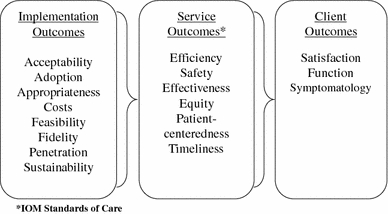
An unresolved issue in the field of implementation research is how to conceptualize and evaluate successful implementation. This paper advances the concept of "implementation outcomes" distinct from service system and clinical treatment outcomes. This paper proposes a heuristic, working "taxonomy" of eight conceptually distinct implementation outcomes-acceptability, adoption, appropriateness, feasibility, fidelity, implementation cost, penetration, and sustainability-along with their nominal definitions. We propose a two-pronged agenda for research on implementation outcomes. Conceptualizing and measuring implementation outcomes will advance understanding of implementation processes, enhance efficiency in implementation research, and pave the way for studies of the comparative effectiveness of implementation strategies.
Overview
The claims and statistics of this paper haven’t been checked yet.
Free: it reads the open-access text and checks the first 5 claims that cite a source we can check. Create a free account to check every claim.
Integrity signals
Registry
Cites
Statistics
Figures
Verification
Claims the paper makes
The claims and statistics of this paper haven’t been checked yet.
Free: it reads the open-access text and checks the first 5 claims that cite a source we can check. Create a free account to check every claim.
Claims other papers make about this one
Each is checked against this paper’s own text: does it say what the citing paper says it does?
The source backs part of the claim, not all of it — or backs it for a different population, condition or comparison.
In the citing paper
“the failure of most implementation processes to incorporate ongoing, iterative intervention development increases the risk that local users will find new technologies to be low on key implementation outcomes such as acceptability, feasibility, and appropriateness (Proctor et al., 2011) and may limit effectiveness (Chambers et al., 2013)”
From User‐centered design for psychosocial intervention development and implementation. (2016) · cites this paper as Proctor et al., 2011
Experimental — accuracy not yet measuredThe source backs part of the claim, not all of it — or backs it for a different population, condition or comparison.
In the citing paper
“Increasing use of implementation frameworks may offer a more systematic evaluation of newborn care packages while clarifying equitable service delivery in vulnerable populations often present in LMIC settings (35, 36).”
From Born too soon in a resource-limited setting: A 10-year mixed methods review of a special care baby unit for refugees and migrants on the Myanmar-Thailand border (2023) · cites this paper as [36]
Experimental — accuracy not yet measuredThe source backs part of the claim, not all of it — or backs it for a different population, condition or comparison.
In the citing paper
“While reporting systems like those by Proctor [1] or Pinnock [75] would optimize learning across studies, few manuscripts specify strategies as recommended [76, 77].”
From A systematic review of experimentally tested implementation strategies across health and human service settings: evidence from 2010-2022 (2024) · cites this paper as [76]
Experimental — accuracy not yet measuredThe source backs part of the claim, not all of it — or backs it for a different population, condition or comparison.
In the citing paper
“implementation outcomes are influenced by a complex interaction of contextual, organizational, workforce, policy, and system-level factors [12,13,14].”
From A Scoping Review of Implemented Innovations in Cancer Care: Implications for Pan-Canadian Scaling (2026) · cites this paper as [14]
Experimental — accuracy not yet measuredThe source backs part of the claim, not all of it — or backs it for a different population, condition or comparison.
In the citing paper
“These factors align closely with established implementation science frameworks that emphasize the importance of organizational readiness, implementation climate, leadership engagement, and continuous learning systems [11,13,14].”
From A Scoping Review of Implemented Innovations in Cancer Care: Implications for Pan-Canadian Scaling (2026) · cites this paper as [14]
Experimental — accuracy not yet measured
39 more claims about this paper
Create a free account to see every claim other papers make about this one.
Self-check
Percentages, sums and reported differences re-computed from the paper’s own numbers.
The self-check needs the paper’s full text.
Citations
Cites
Rogers, E. M., Singhal, A., & Quinlan, M. M. (2019) · An Integrated Approach to Communication Theory and Research · doi:10.4324/9780203710753-35 · Cited by 37,322
Crossing the Quality Chasm: A New Health System for the 21st Century
Baker, A. (2001) · BMJ · doi:10.1136/bmj.323.7322.1192 · Cited by 10,736
Crossing the Quality Chasm: A New Health System for the 21st Century
Committee on Quality of Health Care in America (2002) · Journal For Healthcare Quality · doi:10.1111/j.1945-1474.2002.tb00463.x · Cited by 8,483
Evaluating the public health impact of health promotion interventions: the RE-AIM framework.
Glasgow, R. E., Vogt, T. M., & Boles, S. M. (1999) · American Journal of Public Health · doi:10.2105/ajph.89.9.1322 · Cited by 7,217 · cited 2×
“The literature reflects quite varied uses of the term ‘‘sustainability,’’ but our proposed definition incorporates aspects of those offered by Johnson et al. (2004), Turner and Sanders (2006), Glasgow et al. (1999) , Goodman et al. (1993), and Rabin et al. (2008).”
Background(2005) · Cited by 3,748
Crossing the Quality Chasm: A New Health System for the 21st Century
Bloom, B. S. (2002) · JAMA: The Journal of the American Medical Association · doi:10.1001/jama.287.5.646-a · Cited by 3,726
Making psychological theory useful for implementing evidence based practice: a consensus approach
Michie, S. (2005) · Quality and Safety in Health Care · doi:10.1136/qshc.2004.011155 · Cited by 3,440
Gluesing, J. C. (2012) · Leadership in Science and Technology: A Reference Handbook · doi:10.4135/9781412994231.n14 · Cited by 3,210
Davis, F. D. (1993) · International Journal of Man-Machine Studies · doi:10.1006/imms.1993.1022 · Cited by 2,964 · cited 1×
“Lack of acceptability has long been noted as a challenge in implementation (Davis 1993).”
BackgroundAldenderfer, M. S., & Blashfield, R. K. (1984) · Cited by 2,358
Research works printed but not linked: 6
- 5. Bates, D. M., & Sarkar, D. (2007). lme4: Linear mixed-effects models using S4 classes. R Package Version, 0, 99875-99876.
- 18. Glasgow, R. E. (2007b). The RE-AIM model for planning, evaluation and reporting on implementation and dissemination research. Paper presented at the NIH Conference on Building the Science of Dissemination and Implementation in the Service of Public Health: Bethesda, MD.
- 24. Hayes, S. C. (1998). President's message: Dissemination research now. The Behavior Therapist, 21(9), 166-169.
- Institute of Medicine Committee on Crossing the Quality Chasm. (2006). Adaption to mental health and addictive disorder: Improving the quality of health care for mental and substance-use conditions. Washington, DC: Institute of Medicine, National Academies Press.
- 33. Jones, K. (1997). Mission drift in qualitative research, or moving toward a systematic review of qualitative studies. The Qualita- tive Report, 9(1), 95-112.
- 45. Mihalic, S. (2004). The importance of implementation fidelity. Emotional and Behavioral Disorders in Youth, 4, 83-86.
Cited by
Items 601–700 of 1,109
Kotte, A., Hill, K. A., Mah, A. C., Korathu-Larson, P. A., Au, J. R., Izmirian, S. C., Keir, S. S., Nakamura, B. J., & Higa-McMillan, C. K. (2016) · Administration and Policy in Mental Health and Mental Health Services Research · doi:10.1007/s10488-016-0729-2 · Cited by 55
“Similarly, the taxonomy of implementation outcomes (Proctor et al. 2011) highlights a number of conceptually distinct implementation outcomes (i.”
BackgroundLorthios-Guilledroit, A., Richard, L., & Filiatrault, J. (2018) · Evaluation and Program Planning · doi:10.1016/j.evalprogplan.2018.01.008 · Cited by 50
Grootven, B. V., McNicoll, L., Mendelson, D. A., Friedman, S. M., Fagard, K., Milisen, K., Flamaing, J., & Deschodt, M. (2018) · BMJ Open · doi:10.1136/bmjopen-2017-020617 · Cited by 56
Wolfenden, L., Reilly, K., Kingsland, M., Grady, A., Williams, C. M., Nathan, N., Sutherland, R., Wiggers, J., Jones, J. Z., Hodder, R. K., et al. (2018) · Preventive Medicine · doi:10.1016/j.ypmed.2018.11.014 · Cited by 51
Implementing pharmacy-located HPV vaccination: findings from pilot projects in five U.S. states
Calo, W. A., Shah, P. D., Gilkey, M. B., Vanderpool, R. C., Barden, S., Doucette, W. R., & Brewer, N. T. (2019) · Human Vaccines & Immunotherapeutics · doi:10.1080/21645515.2019.1602433 · Cited by 46
“These implementation constructs are commonly used in the literature to appraise how well an evidence-based practice, like HPV vaccination, was implemented into a service setting.(24) We provided a definition for each individual construct alongside an example on how the constructs were evaluated from pilot projects in…”
BackgroundMethodNarrowing the Gap: An Implementation Science Research Agenda for the Occupational Therapy Profession
Juckett, L., Robinson, M. L., & Wengerd, L. R. (2019) · American Journal of Occupational Therapy · doi:10.5014/ajot.2019.033902 · Cited by 51
“…to examine speci fi c barriers, facilitators, and strategies that in fl uence how evidence is implemented in practice (Damschroder et al., 2009; Proctor et al., 2011) Although occupational therapy stakeholders have acknowledged the value of implementing EBPs in the clinical setting, less is…”
InfluentialDoherty, E. L., Wiggers, J., Wolfenden, L., Anderson, A., Crooks, K., Tsang, T. W., Elliott, E. J., Dunlop, A. J., Attia, J. R., Dray, J., et al. (2019) · BMC Pregnancy and Childbirth · doi:10.1186/s12884-019-2436-y · Cited by 47
Naef, R., Kläusler-Troxler, M., Ernst, J., Huber, S., Dinten-Schmid, B., Karen, T., & Petry, H. (2019) · International Journal of Nursing Studies · doi:10.1016/j.ijnurstu.2019.103448 · Cited by 54
The Ethiopia healthcare quality initiative: design and initial lessons learned
Magge, H., Kiflie, A., Nimako, K. T., Brooks, K., Sodzi-Tettey, S., Mobisson-Etuk, N., Mulissa, Z., Bitewulign, B., Abate, M., Biadgo, A., et al. (2019) · International Journal for Quality in Health Care · doi:10.1093/intqhc/mzz127 · Cited by 49
Danilovich, N., Kitto, S. C., Price, D. W., Campbell, C. B., Hodgson, A., & HENDRY, P. J. (2021) · Family Medicine · doi:10.22454/fammed.2021.453158 · Cited by 59
Agarwal, P., Mukerji, G., Laur, C. V., Chandra, S., Pimlott, N., Heisey, R., Stovel, R., Goulbourne, E., Bhatia, R. S., Bhattacharyya, O. K., et al. (2021) · CMAJ Open · doi:10.9778/cmajo.20200174 · Cited by 52
Nwaozuru, U., Obiezu‐Umeh, C., Shato, T., Uzoaru, F., Mason, S., Carter, V., Manu, S., Modi, K., Parker, J., Ezechi, O., et al. (2021) · Implementation Science Communications · doi:10.1186/s43058-021-00230-w · Cited by 51
Who accepts nudges? nudge acceptability from a self-regulation perspective
van Gestel, L. C., Adriaanse, M. A., & de Ridder, D. T. D. (2021) · PLoS ONE · doi:10.1371/journal.pone.0260531 · Cited by 51
The next phase in professional services research: From implementation to sustainability
Crespo-Gonzalez, C., Garcia-Cardenas, V., & Benrimoj, S. I. (2017) · Research in Social and Administrative Pharmacy · doi:10.1016/j.sapharm.2017.05.020 · Cited by 45
Trinkley, K. E., Ho, P. M., Glasgow, R. E., & Huebschmann, A. G. (2022) · Academic Medicine · doi:10.1097/acm.0000000000004801 · Cited by 48
Redlinger‐Grosse, K., Veach, P. M., Cohen, S. A., LeRoy, B. S., MacFarlane, I. M., & Zierhut, H. A. (2015) · Journal of Genetic Counseling · doi:10.1007/s10897-015-9864-2 · Cited by 45
“Proctor et al. (2011) discusses these types of outcomes as Bimplementation outcomes^ or outcomes defined as Bthe effects of deliberate and purposive actions to implement new treatments, practices, and services^ with an important function of being Bkey intermediate outcomes^ (p. 65).”
BackgroundScholl, I., Hahlweg, P., Lindig, A., Bokemeyer, C., Coym, A., Hanken, H., Müller, V., Smeets, R., Witzel, I., Kriston, L., et al. (2018) · Implementation Science · doi:10.1186/s13012-018-0740-y · Cited by 44
“, the extent to which SDM is maintained or institutionalized within a service setting’s on-going, stable operations) [61].”
BackgroundMethodWambiya, E. O. A., Atela, M., Eboreime, E., & Ibisomi, L. (2018) · BMJ Open · doi:10.1136/bmjopen-2018-024286 · Cited by 50
Implementation in rehabilitation: a roadmap for practitioners and researchers
Morris, J. H., Bernhardsson, S., Bird, M., Connell, L., Lynch, E. A., Jarvis, K. A., Kayes, N. M., Miller, K., Mudge, S., & Fisher, R. J. (2019) · Disability and Rehabilitation · doi:10.1080/09638288.2019.1587013 · Cited by 56
“define specific implementation outcomes, which include acceptability, adoption, appropriateness, costs, feasibility, fidelity, penetration and sustainability of the implementation strategy [61].”
BackgroundNudging healthcare professionals towards evidence-based medicine: A systematic scoping review
Nagtegaal, R., Tummers, L., Noordegraaf, M., & Bekkers, V. (2019) · Journal of Behavioral Public Administration · doi:10.30636/jbpa.22.71 · Cited by 45
“We focused on encouraging decisions that are seen as appropriate, that is, in accordance with evidence (Proctor et al., 2011).”
BackgroundDonnelly, K. Z., Baker, K. A., Pierce, R., Ivany, A. S., Barr, P. J., & BRUCE, M. L. (2019) · Disability and Rehabilitation · doi:10.1080/09638288.2019.1672109 · Cited by 47
“, content, complexity, or comfort) are agreeable or satisfactory [49].”
BackgroundVibert, B., Dufek, S., Klein, C. B., Choi, Y. B., Winter, J., Lord, C., & Kim, S. H. (2020) · Journal of Autism and Developmental Disorders · doi:10.1007/s10803-019-04342-0 · Cited by 54
Mobile Health and Cultural Competencies as a Foundation for Telehealth Care: Scoping Review
Hilty, D. M., Crawford, A. S., Teshima, J., Nasatir-Hilty, S. E., Luo, J. S., Chisler, L. S. M., Hilty, Y. S. M. G., Servis, M. E., Godbout, R., Lim, R. F., et al. (2021) · Journal of Technology in Behavioral Science · doi:10.1007/s41347-020-00180-5 · Cited by 47
Rogers, L., Brún, A. D., Birken, S. A., Davies, C., & McAuliffe, É. (2021) · Journal of Health Organization and Management · doi:10.1108/jhom-07-2020-0296 · Cited by 51
“Although the CFIR domains and the implementation outcomes of Proctor et al. (2011) informed data collection, the authors chose not to use this as a framework for coding the data, instead favouring an inductive approach to allow for a broader range of codes to emerge from the data.”
BackgroundMethodInfluentialNevedal, A. L., Reardon, C. M., Jackson, G. L., Cutrona, S. L., White, B., Gifford, A. L., Orvek, E., DeLaughter, K., White, L., King, H. A., et al. (2020) · Implementation Science Communications · doi:10.1186/s43058-020-00053-1 · Cited by 44
Peng, M. L., Wickersham, J. A., Altice, F. L., Shrestha, R., Azwa, I., Zhou, X., Halim, M. A. A., Ikhtiaruddin, W. M., Tee, V., Kamarulzaman, A., et al. (2022) · JMIR Formative Research · doi:10.2196/42055 · Cited by 44
“Acceptability is a widely assessed implementation outcome, defined as the perception among implementation stakeholders that a given treatment, service, practice, or innovation is agreeable or satisfactory [46].”
BackgroundMethodThoele, K., Moffat, L., Konicek, S., Lam-Chi, M., Newkirk, E., Fulton, J., & Newhouse, R. (2021) · Substance Abuse Treatment, Prevention, and Policy · doi:10.1186/s13011-021-00380-z · Cited by 44
“While there are several different measures to determine the outcomes associated with implementation [27], the outcomes in this review include reach (i.”
BackgroundFlores, E. J., Mull, N. K., Lavenberg, J. G., Mitchell, M. D., Leas, B. F., Williams, A. D., Brennan, P. J., & Umscheid, C. A. (2018) · BMJ Quality & Safety · doi:10.1136/bmjqs-2018-008454 · Cited by 48
Mosson, R., Augustsson, H., Bäck, A., Åhström, M., Schwarz, U. V. T., Richter, A., Gunnarsson, M., & Hasson, H. (2019) · BMC Health Services Research · doi:10.1186/s12913-019-4086-1 · Cited by 57
Blakeney, E. A., Chu, F., White, A. A., Smith, G. R., Woodward, K. F., Lavallee, D. C., Salas, R. M. E., Beaird, G., Willgerodt, M. A., Dang, D., et al. (2021) · Journal of Interprofessional Care · doi:10.1080/13561820.2021.1980379 · Cited by 49
“Fidelity is “the degree to which an intervention is delivered as intended” (Proctor et al., 2011, p. 69).”
BackgroundTriplett, N. S., Woodard, G. S., Johnson, C. M., Nguyen, J. K., AlRasheed, R., Song, F., Stoddard, S., Mugisha, J. C., Sievert, K., & Dorsey, S. (2022) · Implementation Science Communications · doi:10.1186/s43058-022-00327-w · Cited by 50
“Implementation frameworks emphasize that challenges to EBT implementation may occur with multiple stakeholders across phases of the EBT implementation process [12, 13].”
BackgroundMethodDambi, J. M., Norman, C., Doukani, A., Potgieter, S., Turner, J., Musesengwa, R., Verhey, R., & Chibanda, D. (2022) · JMIR Mental Health · doi:10.2196/37968 · Cited by 46
“We used the Consolidated Framework for Implementation Research (CFIR) [24] to identify and conceptualize the implementation parameters.”
Implementation costs of hospital-based computerised decision support systems: a systematic review
Donovan, T., Abell, B., Fernando, M., McPhail, S., & Carter, H. E. (2023) · Implementation Science · doi:10.1186/s13012-023-01261-8 · Cited by 55
“In evaluating implementation, cost is understood to be a necessary element for success and sustainability [6].”
BackgroundStandardizing and Improving Care for Pediatric Agitation Management in the Emergency Department
Hoffmann, J. A., Pergjika, A., Liu, L., Janssen, A. C., Walkup, J. T., Johnson, J. K., Alpern, E. R., & Corboy, J. B. (2023) · PEDIATRICS · doi:10.1542/peds.2022-059586 · Cited by 46
Implementation of Food is Medicine Programs in Healthcare Settings: A Narrative Review
Houghtaling, B., Short, E., Shanks, C. B., STOTZ, S. A., Yaroch, A. L., Seligman, H. K., Marriott, J. P., Eastman, J., & Long, C. R. (2024) · Journal of General Internal Medicine · doi:10.1007/s11606-024-08768-w · Cited by 47
“23,27 Given the noted importance of available or modified EMR technology systems to support screening, referrals, data accessibility, and closed-loop communication, technology-specific implementation science frameworks may be helpful to improve the technological capacity of healthcare organizations…”
BackgroundMethodInfluentialImplementing group based parenting programs: A narrative review
Olofsson, V., Skoog, T., & Tillfors, M. (2016) · Children and Youth Services Review · doi:10.1016/j.childyouth.2016.07.004 · Cited by 50
Mirzoev, T., Etiaba, E., Ebenso, B., Uzochukwu, B., Manzano, A., Onwujekwe, O., Huss, R., Ezumah, N., Hicks, J. P., Newell, J., et al. (2015) · Implementation Science · doi:10.1186/s13012-016-0443-1 · Cited by 44
“acceptability, adoption, appropriateness, feasibility, fidelity, implementation cost, penetration and sustainability of the interventions [37], which often influence the progression from inputs to processes, outputs and outcomes within health programmes.”
BackgroundMufson, L. H., Rynn, M. A., Yanes-Lukin, P. K., Choo, T. H., Soren, K., Stewart, E., & Wall, M. M. (2017) · Administration and Policy in Mental Health and Mental Health Services Research · doi:10.1007/s10488-017-0836-8 · Cited by 51
“Feasibility is defined as the extent to which a new treatment can be successfully carried out within a given setting, and fidelity refers to the degree to which it is implemented as prescribed in a protocol or as intended (Proctor et al. 2011).”
BackgroundKoorts, H., Salmon, J., Timperio, A. F., Ball, K., Macfarlane, S., Lai, S. K., Brown, H. L., Chappel, S. E., Lewis, M., & Ridgers, N. D. (2020) · Journal of Medical Internet Research · doi:10.2196/13573 · Cited by 52
“A total of 5 evaluation indicators were identified based on recommended outcomes for process evaluation and implementation-related research [25,26]: (1) acceptability (eg, adolescent enjoyment, ease of understanding and Fitbit use, and teacher-perceived barriers to uptake), (2) engagement (eg, frequency of adolescent…”
MethodClemson, L. M., Laver, K., Rahja, M., Culph, J., Scanlan, J. N., Day, S., Comans, T. A., Jeon, Y., Low, L., Crotty, M., et al. (2020) · The Gerontologist · doi:10.1093/geront/gnaa105 · Cited by 49
An implementation science primer for psycho-oncology: translating robust evidence into practice
Rankin, N. M., Butow, P. N., Hack, T. F., Shaw, J., Shepherd, H. L., Ugalde, A., & Sales, A. E. (2019) · Journal of Psychosocial Oncology Research and Practice · doi:10.1097/or9.0000000000000014 · Cited by 51
Sarkies, M., Francis‐Auton, E., Long, J. C., Partington, A., Pomare, C., Nguyen, H. M., Wu, W., Westbrook, J. I., Day, R. O., Lévesque, J., et al. (2020) · BMJ Open · doi:10.1136/bmjopen-2020-044049 · Cited by 49
Henriksen, L., Ribisl, K. M., Rogers, T., Moreland-Russell, S., Barker, D. M., Sarris Esquivel, N., Loomis, B., Crew, E., & Combs, T. (2016) · Tobacco Control · doi:10.1136/tobaccocontrol-2016-053076 · Cited by 43
Howard, A., Aston, S., Gerada, A., Reza, N., Bincalar, J., Mwandumba, H. C., Butterworth, T., Hope, W. W., & Buchan, I. E. (2023) · The Lancet Digital Health · doi:10.1016/s2589-7500(23)00221-2 · Cited by 54
Morrato, E. H., Rabin, B. A., Proctor, J., Cicutto, L. C., Battaglia, C. T., Lambert‐Kerzner, A., Leeman-Castillo, B. A., Prahl-Wretling, M., Nuechterlein, B. M., Glasgow, R. E., et al. (2015) · Implementation Science · doi:10.1186/s13012-015-0281-6 · Cited by 45
“Resources on pragmatic measures [62], a conceptual framework for outcomes for implementation research [63], and cost measures to enhance translation [64] were discussed in the workshop.”
BackgroundBarrenger, S., & Draine, J. (2013) · American Journal of Psychiatric Rehabilitation · doi:10.1080/15487768.2013.789709 · Cited by 44
“…Hurlburt, & McCue Horwitz, 2010) or focus on implementation outcomes such as acceptability, adoption, appropriateness, costs, feasibility, fidelity, penetration, and sustainability (Proctor et al., 2010), but it is not clear what role, if any, the risk environment plays within these frameworks.”
BackgroundImplementation fidelity of Multidimensional Family Therapy in an international trial
Rowe, C. L., Rigter, H., Henderson, C. E., Gantner, A., Mos, K., Nielsen, P., & Phan, O. (2012) · Journal of Substance Abuse Treatment · doi:10.1016/j.jsat.2012.08.225 · Cited by 48
“Several indicators of implementation fidelity were monitored and evaluated, consistent with expert guidelines (Dusenbury et al., 2003; Proctor et al., 2011), including: (1) adherence to intervention protocols, (2) dose/intensity, or amount of intervention delivered, and (3) program differentiation,…”
BackgroundMethodKikuchi, K., Ansah, E., Okawa, S., Shibanuma, A., Gyapong, M., Owusu-Agyei, S., Oduro, A., Quansah-Asare, G., Hodgson, A., Jimba, M., et al. (2015) · Trials · doi:10.1186/s13063-014-0539-3 · Cited by 44
“The implementation outcomes will be measured by five outcomes: 1) intervention coverage of target population, 2) adoption and 3) fidelity in CoC card utilization or PNC within 48 hours by mothers’ retention at health facility or by home visit, 4) implementation cost, and 5) sustainability [64,78,79].”
MethodThe path from big data to precision medicine
Huang, B. E., Mulyasasmita, W., & Rajagopal, G. (2016) · Expert Review of Precision Medicine and Drug Development · doi:10.1080/23808993.2016.1157686 · Cited by 49
“Numerous foundational requirements are vital to the success of precision medicine implementation [11], which ultimately will be driven by the practical ‘ value ’ it provides to clinicians and patients, which in turn determines adoption and sustainability [12].”
BackgroundLewis, C. C., Darnell, D. A., Kerns, S. E. U., Monroe‐DeVita, M., Landes, S. J., Lyon, A. R., Stanick, C., Dorsey, S., Locke, J. J., Marriott, B. R., et al. (2016) · Implementation Science · doi:10.1186/s13012-016-0428-0 · Cited by 49
Self-citationChui, M. A., Stone, J. A., & Holden, R. J. (2017) · Research in Social and Administrative Pharmacy · doi:10.1016/j.sapharm.2016.11.006 · Cited by 46
Beidas, R. S., Skriner, L. C., Adams, D. R., Wolk, C. B., Stewart, R. E., Becker‐Haimes, E. M., Williams, N. J., Maddox, B. B., Rubin, R. M., Weaver, S., et al. (2017) · Behaviour Research and Therapy · doi:10.1016/j.brat.2017.08.011 · Cited by 46
“All rights reserved. strategies targeting consumers, clinicians, and organizations are needed to routinize the use of EBP in usual care (Proctor et al., 2011).”
BackgroundMcLeod, B., Southam-Gerow, M., Jensen-Doss, A., Hogue, A., Kendall, P., & Weisz, J. (2017) · Journal of Clinical Child & Adolescent Psychology · doi:10.1080/15374416.2017.1381914 · Cited by 42
“These integrity components may also reflect the degree to which training and supervision impact therapist behavior (Proctor et al., 2011; Schoenwald et al., 2011), and thus predict EBT effectiveness (e.g., Hogue et al., 2008; Robbins et al., 2011).”
Okamura, K. H., Wolk, C. B., Kang‐Yi, C. D., Stewart, R. E., Rubin, R. M., Weaver, S., Evans, A. C., Cidav, Z., Beidas, R. S., & Mandell, D. S. (2018) · Frontiers in Public Health · doi:10.3389/fpubh.2017.00356 · Cited by 47
What’s known about implementing co-located paediatric integrated care: a scoping review
Platt, R. E., Spencer, A. E., Burkey, M. D., Vidal, C., Polk, S., Bettencourt, A. F., Jain, S., Stratton, J., & Wissow, L. S. (2018) · International Review of Psychiatry · doi:10.1080/09540261.2018.1563530 · Cited by 49
Understanding quality improvement collaboratives through an implementation science lens
Rohweder, C. L., Wangen, M., Black, M., Dolinger, H., Wolf, M., O'Reilly, C., Brandt, H. M., & Leeman, J. (2019) · Preventive Medicine · doi:10.1016/j.ypmed.2019.105859 · Cited by 45
“[PubMed: 25889199] Proctor E, Silmere H, Raghavan R, et al. , 2011.”
BackgroundMethodInfluentialScholl, I., Hahlweg, P., Lindig, A., Frerichs, W., Zill, J. M., Cords, H., Bokemeyer, C., Coym, A., Schmalfeldt, B., Smeets, R., et al. (2021) · Implementation Science · doi:10.1186/s13012-021-01174-4 · Cited by 43
“Outcome evaluation Measures and outcomes Implementation outcomes [39] were collected from four sources: a standardized survey of patients, a standardized survey of HCPs, rating of audio-recorded clinical encounters, and systematic observation of MDMTs.”
MethodMeshkovska, B., Scheller, D. A., Wendt, J., Jilani, H. S., Scheidmeir, M., Stratil, J. M., & Lien, N. (2022) · International Journal of Behavioral Nutrition and Physical Activity · doi:10.1186/s12966-022-01246-8 · Cited by 48
“However, the construct, although widely present in implementation science research, is primarily conceptualized as an implementation outcome rather than a determinant [62] and seems too narrow to include perceptions of value and perceptions of behavior change.”
BackgroundMental Health Services in Colombia: A National Implementation Study
Agudelo‐Hernández, F., & Andrade, R. M. R. (2023) · International Journal of Social Determinants of Health and Health Services · doi:10.1177/27551938231156023 · Cited by 48
“12 Despite theoretical and methodological advances, great problems have been described in the implementation of these strategies in Colombia.”
BackgroundGuidi, J. L., Clark, K., Upton, M. T., Faust, H., Umscheid, C. A., Lane-Fall, M. B., Mikkelsen, M. E., Schweickert, W. D., Vanzandbergen, C. A., Betesh, J., et al. (2015) · Annals of the American Thoracic Society · doi:10.1513/annalsats.201503-129oc · Cited by 43
Assessing Implementation Strategy Reporting in the Mental Health Literature: A Narrative Review
Hooley, C., Amano, T., Markovitz, L., Yaeger, L., & Proctor, E. (2020) · Administration and Policy in Mental Health and Mental Health Services Research · doi:10.1007/s10488-019-00965-8 · Cited by 42
Self-citationImplementation of Electronic Medical Records in Mental Health Settings: Scoping Review
Zurynski, Y. A., Ellis, L. A., Tong, H. L., Laranjo, L., Clay‐Williams, R., Testa, L., Meulenbroeks, I., Turton, C., & Sara, G. E. (2021) · JMIR Mental Health · doi:10.2196/30564 · Cited by 53
Marshall, K. H., Pincus, H. A., Tesson, S., Lingam, R., Woolfenden, S. R., & Kasparian, N. A. (2022) · Psychology and Health · doi:10.1080/08870446.2022.2072843 · Cited by 52
Ortblad, K. F., Sekhon, M., Wang, L., Roth, S., van der Straten, A., Simoni, J. M., & Velloza, J. (2022) · AIDS and Behavior · doi:10.1007/s10461-022-03796-1 · Cited by 47
“In this review, we also found that a number of selfdescribed acceptability studies actually assessed implementation science constructs related to, but conceptually distinct, from acceptability, including satisfaction (a state of being content or fulfilled with an intervention or with a general service-delivery experie…”
BackgroundInfluentialMa, A. S., O’Shea, R., Wedd, L., Wong, C. M. Y., Jamieson, R. V., & Rankin, N. M. (2024) · European Journal of Human Genetics · doi:10.1038/s41431-024-01555-5 · Cited by 50
School mental health prevention and intervention strategies in China: a scoping review
Qu, D., Wen, X., Cheng, X., Zhu, A., Wu, Z., Che, L., & Chen, R. (2024) · The Lancet Regional Health - Western Pacific · doi:10.1016/j.lanwpc.2024.101243 · Cited by 53
“…checks to ensure delivery quality, and addressing other dimensions of implementation science, including acceptability, adoption, appropriateness, feasibility, penetration, sustainability, cost instruments, and fi delity, 47 which are also key to transitioning these programs into real-world settings.”
Stamatakis, K. A., McQueen, A., Filler, C., Boland, E., Dreisinger, M., Brownson, R. C., & Luke, D. A. (2012) · Implementation Science · doi:10.1186/1748-5908-7-65 · Cited by 42
Docherty, M., Shaw, K., Goulding, L., Parke, H., Eassom, E., Ali, F., & Thornicroft, G. (2017) · International Journal of Mental Health Systems · doi:10.1186/s13033-016-0115-1 · Cited by 41
Implementation Science in Perioperative Care
Lane-Fall, M. B., Cobb, B. T., Cené, C. W., & Beidas, R. S. (2018) · Anesthesiology Clinics · doi:10.1016/j.anclin.2017.10.004 · Cited by 42
“Examples of implementation outcomes include acceptability, adoption, feasibility, and fidelity.(10) We explain implementation outcomes in more detail later.”
BackgroundNathan, N., Wiggers, J., Bauman, A. E., Rissel, C. E., Searles, A., Reeves, P., Oldmeadow, C. J., Naylor, P., Cradock, A. L. I., Sutherland, R., et al. (2019) · BMC Public Health · doi:10.1186/s12889-019-6492-z · Cited by 46
“[41] of implementation outcomes will also be assessed.”
BackgroundShepherd, H. L., Geerligs, L., Butow, P. N., Masya, L. M., Shaw, J., Price, M. A., Dhillon, H. M., Hack, T. F., Girgis, A., Luckett, T., et al. (2019) · Frontiers in Public Health · doi:10.3389/fpubh.2019.00293 · Cited by 42
“In line with the StaRI checklist (10), we differentiated between adoption of the ADAPT CP and the intervention components, noting that the distinction between these dual strands is not always clear cut but can aid in clarity of study design and reporting (11).”
BackgroundMethodInfluentialAifah, A. A., Okeke, N. L., Rentrope, C. R., Schexnayder, J. K., Bloomfield, G. S., Bosworth, H. B., Grover, K. K., Hileman, C. O., Muiruri, C., Oakes, M. M., et al. (2020) · Progress in Cardiovascular Diseases · doi:10.1016/j.pcad.2020.02.013 · Cited by 47
“Acceptability testing is a useful tool that may be applied at any stage of implementation and focuses primarily on gathering feedback from key stakeholders at particular stages of the intervention to assess a particular practice, technology, service, or intervention (20).”
MethodJibb, L., Khan, J. S., Seth, P., Lalloo, C., Mulrooney, L., Nicholson, K., Nowak, D. A., Kaur, H., Chee-A-Tow, A., Foster, J., et al. (2020) · Journal of Medical Internet Research · doi:10.2196/16480 · Cited by 51
Czosnek, L., Richards, J. A., Zopf, E. M., Cormie, P., Rosenbaum, S., & Rankin, N. M. (2021) · BMC Cancer · doi:10.1186/s12885-021-08196-7 · Cited by 55
“Evaluating the outcomes of implementation efforts can also reduce the risk of incorrectly concluding that an intervention is ineffective, when in fact, poor implementation may be the most significant contributor to failure [30, 31].”
BackgroundMethodInfluentialLiaw, S. Y., Ooi, S. L., Mildon, R. L., Ang, E. N. K., Lau, T. C., & Chua, W. L. (2022) · Nurse Education Today · doi:10.1016/j.nedt.2021.105262 · Cited by 42
Stirman, S. W., Pontoski, K., Creed, T., Xhezo, R., Evans, A. C., Beck, A. T., & Crits-Christoph, P. (2017) · Administration and Policy in Mental Health and Mental Health Services Research · doi:10.1007/s10488-015-0700-7 · Cited by 42
Measuring Costs to Community-Based Agencies for Implementation of an Evidence-Based Practice
Lang, J. M., & Connell, C. M. (2017) · The Journal of Behavioral Health Services & Research · doi:10.1007/s11414-016-9541-8 · Cited by 41
Lyon, A. R., Corbin, C. M., Brown, E. C., Ehrhart, M. G., Locke, J., Davis, C., Picozzi, E., Aarons, G. A., & Cook, C. R. (2022) · Implementation Science · doi:10.1186/s13012-022-01222-7 · Cited by 41
Self-citationReadiness as a precursor of early implementation outcomes: an exploratory study in specialty clinics
Livet, M., Blanchard, C., & Richard, C. (2022) · Implementation Science Communications · doi:10.1186/s43058-022-00336-9 · Cited by 41
“Although the concept of fit has been identified as critical to implementation success [19, 30], few implementation frameworks make a conceptual distinction between fit and readiness [31].”
BackgroundBeehler, G. P., Funderburk, J. S., Possemato, K., & Vair, C. L. (2013) · Implementation Science · doi:10.1186/1748-5908-8-19 · Cited by 41
“The PPAQ was also developed to focus only on the adherence of BHPs to the C CC model and does not assess fidelity at a system- or patient-level [29].”
BackgroundKinney, A. R., Stearns‐Yoder, K. A., Hoffberg, A. S., Middleton, A., Weaver, J., Roseen, E. J., Juckett, L., & Brenner, L. A. (2023) · Archives of Physical Medicine and Rehabilitation · doi:10.1016/j.apmr.2023.03.005 · Cited by 47
Shen, Y., Cong, Z., Ge, Q., Huang, H., Wei, W., Wang, C., Jiang, Z., & Wu, Y.-H. (2024) · Cancer Medicine · doi:10.1002/cam4.70023 · Cited by 49
“54 Third, including patient-oriented results such as nutrition-associated complications and functional capacity, a major determinant of surgical prognosis, 55 is vital.”
BackgroundKip, H., Jong, N. B.-D., van Gemert‐Pijnen, J. E. W. C., & Kelders, S. M. (2025) · Journal of Medical Internet Research · doi:10.2196/59601 · Cited by 62
“While there is no step-by-step approach to do this, specific implementation outcomes can be determined to steer and evaluate the process, related to, for example, acceptability, cost, and sustainability [84].”
The policy context and change for families living with parental mental illness
Nicholson, J., Reupert, A., Grant, A., Lees, R., Maybery, D. J., Mordoch, E., Skogøy, B. E., Stavnes, K. A., & Diggins, M. (2015) · Cambridge University Press eBooks · doi:10.1017/cbo9781107707559.034 · Cited by 41
Locke, J. J., Shih, W., Kang‐Yi, C. D., Caramanico, J., Shingledecker, T., Gibson, J., Frederick, L., & Mandell, D. S. (2018) · Autism · doi:10.1177/1362361318787802 · Cited by 48
“In a separate study, Locke et al. (2015) noted that school personnel could implement some components of RR successfully, but overall implementation fidelity—the degree to which the intervention was implemented as designed (Proctor et al., 2011)—was low.”
BackgroundSami, S., Amsalu, R., Dimiti, A., Jackson, D., Kenyi, S., Meyers, J., Mullany, L. C., Scudder, E., Tomczyk, B., & Kerber, K. (2018) · BMC Pregnancy and Childbirth · doi:10.1186/s12884-018-1953-4 · Cited by 38
Zullig, L. L., Deschodt, M., Liška, J., Bosworth, H. B., & Geest, S. D. (2018) · The Annual Review of Pharmacology and Toxicology · doi:10.1146/annurev-pharmtox-010818-021348 · Cited by 52
Bacci, J. L., Bigham, K. A., Dillon‐Sumner, L., Ferreri, S. P., Frail, C. K., Hamada, C. Y., Lantaff, W. M., McGivney, M. S., Renner, H. M., Snyder, M. E., et al. (2019) · JACCP JOURNAL OF THE AMERICAN COLLEGE OF CLINICAL PHARMACY · doi:10.1002/jac5.1136 · Cited by 49
Walling, A. M., Sudore, R. L., Bell, D. S., Tseng, C., Ritchie, C. S., Hays, R. D., Gibbs, L., Rahimi, M., Sanz, J., & Wenger, N. S. (2019) · Journal of Palliative Medicine · doi:10.1089/jpm.2019.0142 · Cited by 43
“Reach, Efficacy, Adoption, Implementation, and Maintenance (RE-AIM 36,37 ) of the interventions will be evaluated over time and across clinics and sites using the measures and sources listed in Table 3.”
Sharplin, G. R., Adelson, P. L., Kennedy, K. J., Williams, N., Hewlett, R., Wood, J., Bonner, R., Dabars, E., & Eckert, M. C. (2019) · Healthcare · doi:10.3390/healthcare7040142 · Cited by 50
“The evaluation design was structured to align to the evaluation framework for implementation outcomes developed by Proctor and colleagues [23,24].”
BackgroundMethodEvans-Paulson, R., Widman, L. M., Stokes, M. N., Javidi, H., Hope, E. C., & Brasileiro, J. (2020) · Archives of Pediatrics and Adolescent Medicine · doi:10.1001/jamapediatrics.2020.0382 · Cited by 49
Findlay, M., Rankin, N. M., Shaw, T. J., White, K., Boyer, M. J., Milross, C., Lourenço, R. D. A., Brown, C. S. B., Collett, G. K., Beale, P. J., et al. (2020) · Nutrients · doi:10.3390/nu12051465 · Cited by 44
“’s implementation outcomes framework [34].”
Magidson, J. F., Joska, J. A., Myers, B., Belus, J. M., Regenauer, K. S., Andersen, L. S., Majokweni, S., O’Cleirigh, C., & Safren, S. A. (2020) · Implementation Science Communications · doi:10.1186/s43058-020-00004-w · Cited by 41
“Acceptability, defined as the tolerability or satisfaction of the approach [30], is assessed using two quantitative assessment measures: (1) a 15-item subscale of a pragmatic, quantitative assessment based on RE-AIM [31] developed by the Applied Mental Health Research group (AMHR) at Johns Hopkins University [31] and…”
InfluentialPlanning and Implementation Intention Interventions
Rhodes, R. E., Grant, S. J., & de Bruijn, G. (2020) · Cambridge University Press eBooks · doi:10.1017/9781108677318.039 · Cited by 49
Holmes, J. A., Logan, P., Morris, R. P. G., & Radford, K. (2020) · Systematic Reviews · doi:10.1186/s13643-020-01508-1 · Cited by 44
Koo, M. M., Unger‐Saldaña, K., Mwaka, A. D., Corbex, M. A., Ginsburg, O., Walter, F. M., Calanzani, N., Moodley, J., Rubin, G. P., & Lyratzopoulos, G. (2021) · JCO Global Oncology · doi:10.1200/go.20.00310 · Cited by 43
“Incorporating implementation science can help identify mechanisms that enable change or lead to improved outcomes; it also helps to understand the role of contextual influencers.(127,128) The use of implementation science while also embracing complexity and systems thinking can help to tackle the gap between evidence…”
BackgroundYip, O., Huber, E., Stenz, S., Zullig, L. L., Zeller, A., Geest, S. D., & Deschodt, M. (2021) · International Journal of Integrated Care · doi:10.5334/ijic.5607 · Cited by 48
The Building Blocks of Implementation Frameworks and Models in Primary Care: A Narrative Review
Huybrechts, I., Declercq, A., Verté, E., Raeymaeckers, P., & Anthierens, S. (2021) · Frontiers in Public Health · doi:10.3389/fpubh.2021.675171 · Cited by 53
Laurens, K. R., Graham, L. J., Dix, K., Harris, F. A. J., Tzoumakis, S., Williams, K. E., Schofield, J., Prendergast, T., Waddy, N., Taiwo, M., et al. (2021) · School Mental Health · doi:10.1007/s12310-021-09482-2 · Cited by 52
(2020) · doi:10.2196/16906 · Cited by 41
“Implementation outcomes and their definitions, adapted from Proctor et al [21].”
BackgroundMethod
Metadata
- Authors
- Proctor, E., Silmere, H., Raghavan, R., Hovmand, P., Aarons, G., Bunger, A., Griffey, R., & Hensley, M.
- Affiliations
- Washington University in St. Louis (US)
- Roberts Wesleyan College (US)
- Corresponding author
- Proctor, Enola
- Venue
- Administration and Policy in Mental Health and Mental Health Services Research
- Published
- 2010-10-19
- Volume
- 38
- Issue
- 2
- Pages
- 65-76
- ISSN
- 0894-587X (ISSN-L)
- 1573-3289
- PMC
- PMC3068522
- OpenAlex
- W2140092196
- Semantic Scholar
- 3c7cf782e4094a7d66d8ad5da80a8083a8e72307
- Cited by
- 8,721
- References
- 71
- Citations by year
- 2026: 1487 · 2025: 1144 · 2024: 1303 · 2023: 1041 · 2022: 950 · 2021: 893 · 2020: 669 · 2019: 391 · 2018: 253 · 2017: 162 · 2016: 122 · 2015: 116 · 2014: 83 · 2013: 57 · 2012: 28
- FWCI
- 56.95
- Type
- journal article
- Language
- en
- Open access
- hybrid
- doi.org
- Licence
- cc-by-nc
- Locations
- Administration and Policy in Mental Health and Mental Health Services Research (publishedVersion, cc-by-nc)
- Europe PMC (PubMed Central) (publishedVersion, cc-by-nc)
- PubMed Central (publishedVersion, cc-by-nc)
- PubMed (publishedVersion)
- Funders
- National Institutes of Health (5p30mh068579-05)
- National Institute of Mental Health (P30-MH-068579, T32MH019960)
- National Center for Research Resources (UL1RR024992)
- Topics
- Health Sciences › Health Professions › General Health Professions › Health Policy Implementation Science
- Health Sciences › Health Professions › General Health Professions › Health Sciences Research and Education
- Health Sciences › Health Professions › General Health Professions › Mental Health and Patient Involvement
- Keywords
- implementation outcomes, implementation research, acceptability, adoption, appropriateness, feasibility, fidelity, implementation costs, penetration, sustainability, implementation strategies, mental health services
- MeSH terms
- Diffusion of Innovation, Humans, Mental Health Services, Outcome and Process Assessment, Health Care, Biomedical Research
About these checks
Registry, retraction, Cites and statistics results are computed, not judged, with one exception: a printed reference that no index lists is read once by a model before it counts as a citation error. Claims are extracted by a model and kept only when their quote appears verbatim in the text; each cited source is then checked, with a model’s help, for whether it says what the claim relies on. Those verdicts can be wrong — read the claim’s quote and the cited source before relying on one.
Statistics and arithmetic are recomputed, not judged.
Confidence bands are shown only for fields calibrated on our annotated test set. None is calibrated yet, so no band is shown.
What counts as a claim ›How we measure confidence ›How we check this ›
Are you an author, or do you see a problem with this page? Request a review
Data sources
Bibliographic data: Semantic Scholar, OpenAlex, Crossref.
Contains information from the Semantic Scholar Academic Graph Datasets, made available under the ODC Attribution License (ODC-BY 1.0).
Semantic Scholar’s data is described in: Kinney, R., et al. (2023). The Semantic Scholar Open Data Platform. arXiv:2301.10140.
