

Outcomes for Implementation Research: Conceptual Distinctions, Measurement Challenges, and Research Agenda
Open accessThe DOI matches its Crossref record; 72 of the 72 references it cites were found in a registry or an index.
Abstract
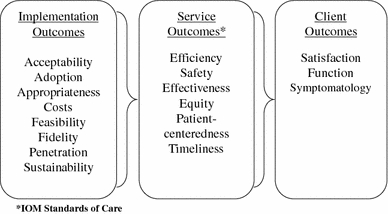
An unresolved issue in the field of implementation research is how to conceptualize and evaluate successful implementation. This paper advances the concept of "implementation outcomes" distinct from service system and clinical treatment outcomes. This paper proposes a heuristic, working "taxonomy" of eight conceptually distinct implementation outcomes-acceptability, adoption, appropriateness, feasibility, fidelity, implementation cost, penetration, and sustainability-along with their nominal definitions. We propose a two-pronged agenda for research on implementation outcomes. Conceptualizing and measuring implementation outcomes will advance understanding of implementation processes, enhance efficiency in implementation research, and pave the way for studies of the comparative effectiveness of implementation strategies.
Overview
The claims and statistics of this paper haven’t been checked yet.
Free: it reads the open-access text and checks the first 5 claims that cite a source we can check. Create a free account to check every claim.
Integrity signals
Registry
Cites
Statistics
Figures
Verification
Claims the paper makes
The claims and statistics of this paper haven’t been checked yet.
Free: it reads the open-access text and checks the first 5 claims that cite a source we can check. Create a free account to check every claim.
Claims other papers make about this one
Each is checked against this paper’s own text: does it say what the citing paper says it does?
The source backs part of the claim, not all of it — or backs it for a different population, condition or comparison.
In the citing paper
“the failure of most implementation processes to incorporate ongoing, iterative intervention development increases the risk that local users will find new technologies to be low on key implementation outcomes such as acceptability, feasibility, and appropriateness (Proctor et al., 2011) and may limit effectiveness (Chambers et al., 2013)”
From User‐centered design for psychosocial intervention development and implementation. (2016) · cites this paper as Proctor et al., 2011
Experimental — accuracy not yet measuredThe source backs part of the claim, not all of it — or backs it for a different population, condition or comparison.
In the citing paper
“Increasing use of implementation frameworks may offer a more systematic evaluation of newborn care packages while clarifying equitable service delivery in vulnerable populations often present in LMIC settings (35, 36).”
From Born too soon in a resource-limited setting: A 10-year mixed methods review of a special care baby unit for refugees and migrants on the Myanmar-Thailand border (2023) · cites this paper as [36]
Experimental — accuracy not yet measuredThe source backs part of the claim, not all of it — or backs it for a different population, condition or comparison.
In the citing paper
“While reporting systems like those by Proctor [1] or Pinnock [75] would optimize learning across studies, few manuscripts specify strategies as recommended [76, 77].”
From A systematic review of experimentally tested implementation strategies across health and human service settings: evidence from 2010-2022 (2024) · cites this paper as [76]
Experimental — accuracy not yet measuredThe source backs part of the claim, not all of it — or backs it for a different population, condition or comparison.
In the citing paper
“implementation outcomes are influenced by a complex interaction of contextual, organizational, workforce, policy, and system-level factors [12,13,14].”
From A Scoping Review of Implemented Innovations in Cancer Care: Implications for Pan-Canadian Scaling (2026) · cites this paper as [14]
Experimental — accuracy not yet measuredThe source backs part of the claim, not all of it — or backs it for a different population, condition or comparison.
In the citing paper
“These factors align closely with established implementation science frameworks that emphasize the importance of organizational readiness, implementation climate, leadership engagement, and continuous learning systems [11,13,14].”
From A Scoping Review of Implemented Innovations in Cancer Care: Implications for Pan-Canadian Scaling (2026) · cites this paper as [14]
Experimental — accuracy not yet measured
39 more claims about this paper
Create a free account to see every claim other papers make about this one.
Self-check
Percentages, sums and reported differences re-computed from the paper’s own numbers.
The self-check needs the paper’s full text.
Citations
Cites
Rogers, E. M., Singhal, A., & Quinlan, M. M. (2019) · An Integrated Approach to Communication Theory and Research · doi:10.4324/9780203710753-35 · Cited by 37,322
Crossing the Quality Chasm: A New Health System for the 21st Century
Baker, A. (2001) · BMJ · doi:10.1136/bmj.323.7322.1192 · Cited by 10,736
Crossing the Quality Chasm: A New Health System for the 21st Century
Committee on Quality of Health Care in America (2002) · Journal For Healthcare Quality · doi:10.1111/j.1945-1474.2002.tb00463.x · Cited by 8,483
Evaluating the public health impact of health promotion interventions: the RE-AIM framework.
Glasgow, R. E., Vogt, T. M., & Boles, S. M. (1999) · American Journal of Public Health · doi:10.2105/ajph.89.9.1322 · Cited by 7,217 · cited 2×
“The literature reflects quite varied uses of the term ‘‘sustainability,’’ but our proposed definition incorporates aspects of those offered by Johnson et al. (2004), Turner and Sanders (2006), Glasgow et al. (1999) , Goodman et al. (1993), and Rabin et al. (2008).”
Background(2005) · Cited by 3,748
Crossing the Quality Chasm: A New Health System for the 21st Century
Bloom, B. S. (2002) · JAMA: The Journal of the American Medical Association · doi:10.1001/jama.287.5.646-a · Cited by 3,726
Making psychological theory useful for implementing evidence based practice: a consensus approach
Michie, S. (2005) · Quality and Safety in Health Care · doi:10.1136/qshc.2004.011155 · Cited by 3,440
Gluesing, J. C. (2012) · Leadership in Science and Technology: A Reference Handbook · doi:10.4135/9781412994231.n14 · Cited by 3,210
Davis, F. D. (1993) · International Journal of Man-Machine Studies · doi:10.1006/imms.1993.1022 · Cited by 2,964 · cited 1×
“Lack of acceptability has long been noted as a challenge in implementation (Davis 1993).”
BackgroundAldenderfer, M. S., & Blashfield, R. K. (1984) · Cited by 2,358
Research works printed but not linked: 6
- 5. Bates, D. M., & Sarkar, D. (2007). lme4: Linear mixed-effects models using S4 classes. R Package Version, 0, 99875-99876.
- 18. Glasgow, R. E. (2007b). The RE-AIM model for planning, evaluation and reporting on implementation and dissemination research. Paper presented at the NIH Conference on Building the Science of Dissemination and Implementation in the Service of Public Health: Bethesda, MD.
- 24. Hayes, S. C. (1998). President's message: Dissemination research now. The Behavior Therapist, 21(9), 166-169.
- Institute of Medicine Committee on Crossing the Quality Chasm. (2006). Adaption to mental health and addictive disorder: Improving the quality of health care for mental and substance-use conditions. Washington, DC: Institute of Medicine, National Academies Press.
- 33. Jones, K. (1997). Mission drift in qualitative research, or moving toward a systematic review of qualitative studies. The Qualita- tive Report, 9(1), 95-112.
- 45. Mihalic, S. (2004). The importance of implementation fidelity. Emotional and Behavioral Disorders in Youth, 4, 83-86.
Cited by
Items 501–600 of 1,109
Ulla, T., & Poom‐Valickis, K. (2023) · Frontiers in Education · doi:10.3389/feduc.2022.965538 · Cited by 76
“For example, in implementation science “fidelity” is used as an umbrella term for implementation quality, and “adherence” is used to indicate a measure of delivering program components (e.g., Century et al., 2010; Proctor et al., 2011), whereas in other areas, such as SEL program implementation, for example, fidelity…”
BackgroundMethodFlynn, R., Cassidy, C. E., Dobson, L., Al-Rassi, J., Langley, J. E., Swindle, J., Graham, I. D., & Scott, S. D. (2023) · Implementation Science · doi:10.1186/s13012-023-01320-0 · Cited by 61
“” [39] Sustainability outcomes “The subsequent impact (healthcare improvement or public health outcomes) of sustained intervention use” [41]”
BackgroundDissemination and Implementation Research for Occupational Safety and Health
Dugan, A. G., & Punnett, L. (2017) · Occupational Health Science · doi:10.1007/s41542-017-0006-0 · Cited by 56
“The framework also shows the five implementation outcomes – adoption, fidelity, cost, penetration, and sustainability – which are indicators of implementation success, as originally compiled and defined by Proctor et al. (2011).”
Warner, L. M., & French, D. (2020) · Cambridge University Press eBooks · doi:10.1017/9781108677318.032 · Cited by 79
Implementing Implementation Science: An Approach for HIV Prevention, Care and Treatment Programs
Lambdin, B. H., Cheng, B., PETER, T. F., Mbwambo, J., Apollo, T., Dunbar, M. S., Udoh, I. C., Cattamanchi, A., Geng, E., & Volberding, P. A. (2015) · Current HIV Research · doi:10.2174/1570162x1303150506185423 · Cited by 53
“Theoretical frameworks, mentioned in earlier stages, can inform which implementation outcomes are appropriate to advance our understanding of the implementation process, leading to an improved understanding of the contextual factors, such as internal and external environment, provider attitudes and site characteristic…”
BackgroundSoutham‐Gerow, M. A., & Dorsey, S. (2014) · Journal of Clinical Child & Adolescent Psychology · doi:10.1080/15374416.2014.930690 · Cited by 71
Hamdani, S. U., Akhtar, P., Zill-e-Huma, Nazir, H., Minhas, F. A., Sikander, S., Wang, D., Servilli, C., & Rahman, A. (2017) · Global Mental Health · doi:10.1017/gmh.2017.7 · Cited by 54
“Qualitative and quantitative methods to answer research questions 3 and 4 The updated implementation research framework by Proctor et al. (2011) have identified eight key constructs of implementation research.”
MethodWillmeroth, T., Wesselborg, B., & Kuske, S. (2019) · INQUIRY: The Journal of Health Care Organization, Provision, and Financing · doi:10.1177/0046958019861257 · Cited by 53
“Several authors14,36,37 have already applied or discussed the Conceptional Framework for Implementation Research of Proctor et al.5 Throughout the last few years, they have all concluded that there is still a need for the development of an implementation framework including its related measures.14,36,37 The Context an…”
BackgroundMethodInfluentialTelemedicine and Orthopaedic Surgery: The COVID-19 Pandemic and Our New Normal
Lanham, N. S., Bockelman, K., & McCriskin, B. J. (2020) · JBJS Reviews · doi:10.2106/jbjs.rvw.20.00083 · Cited by 58
The Impact of the COVID-19 Pandemic on Genitourinary Cancer Care: Re-envisioning the Future
Wallis, C. J. D., Catto, J. W. F., Finelli, A., Glaser, A., Gore, J. L., Loeb, S., Morgan, T. M., Morgans, A. K., Mottet, N., Neal, R. D., et al. (2020) · European Urology · doi:10.1016/j.eururo.2020.08.030 · Cited by 54
“For cancer patients, including those within bench research, clinical trials, observational studies, realworld effectiveness of agents, and randomised trials, support is derived from research staff and well-being from knowledge that you are helping other patients [110].”
BackgroundSoicher, R. N., Becker‐Blease, K. A., & Bostwick, K. C. P. (2020) · Cognitive Research Principles and Implications · doi:10.1186/s41235-020-00255-0 · Cited by 70
Wilson, P. M., & Kislov, R. (2022) · Cambridge University Press eBooks · doi:10.1017/9781009237055 · Cited by 74
Analysing interventions designed to reduce tuberculosis-related stigma: A scoping review
Foster, I., Galloway, M., Human, W., Anthony, M. G., Myburgh, H., Vanqa, N., Wademan, D. T., Makanda, G., Tisile, P., Schoeman, I., et al. (2022) · PLOS Global Public Health · doi:10.1371/journal.pgph.0000989 · Cited by 63
“Assessment of implementation outcomes included the following measures: acceptability, adoption, appropriateness, cost, feasibility, fidelity, penetration and sustainability [20].”
BackgroundMethodImplementation of digital health interventions in rehabilitation: A scoping review
Pearce, L. M. N., Costa, N., Sherrington, C., & Hassett, L. M. (2023) · Clinical Rehabilitation · doi:10.1177/02692155231172299 · Cited by 57
Harvey, G., Rycroft‐Malone, J., Seers, K., Wilson, P. M., Cassidy, C. E., Embrett, M. G., Hu, J., Pearson, M., Semenic, S. E., Zhao, J., et al. (2023) · Frontiers in Health Services · doi:10.3389/frhs.2023.1162762 · Cited by 70
“Furthermore, when considering implementation studies, there are likely to be broader questions of interest than simply the effectiveness of an implementation intervention, including recognized implementation outcomes such as acceptability, appropriateness, affordability, practicability, unintended consequences, equity…”
BackgroundEight characteristics of rigorous multilevel implementation research: a step-by-step guide
Lengnick‐Hall, R., Williams, N. J., Ehrhart, M. G., Willging, C. E., Bunger, A. C., Beidas, R. S., & Aarons, G. A. (2023) · Implementation Science · doi:10.1186/s13012-023-01302-2 · Cited by 54
“Constructs may include implementation determinants [22, 23], implementation strategies [10, 24], variables that are part of a mediation chain [25], variables that modify the effects of other antecedents (i.e., moderator, effect modifier), or implementation or clinical effectiveness outcomes [26].”
BackgroundSelf-citationAnderson, M., van Kessel, R., Wood, E., Stokes, A., Fistein, J., Porter, I. H., Mossialos, E. A., & Valderas, J. M. (2024) · Quality of Life Research · doi:10.1007/s11136-024-03728-7 · Cited by 72
Almuqrin, A., Hammoud, R., Terbagou, I., Tognin, S., & Mechelli, A. (2025) · BMJ Open · doi:10.1136/bmjopen-2024-093932 · Cited by 61
Who's on board? Child welfare worker reports of buy-in and readiness for organizational change
McCrae, J. S., Scannapieco, M., Leake, R., Potter, C. C., & Menefee, D. (2013) · Children and Youth Services Review · doi:10.1016/j.childyouth.2013.12.001 · Cited by 63
“In 2010, a set of outcomeswas proposed to distinguish implementation outcomes in human services from service and client-level outcomes (Proctor et al., 2010).”
BackgroundInfluentialZatzick, D., Russo, J. E., Darnell, D. A., Chambers, D., Palinkas, L. A., Eaton, E. G. V., Wang, J., Ingraham, L. M., Guiney, R., Heagerty, P. J., et al. (2015) · Implementation Science · doi:10.1186/s13012-016-0424-4 · Cited by 54
“The TSOS assessment approach incorporates both effectiveness and implementation outcome evaluations [80].”
MethodJames, S., Thompson, R. W., & Ringle, J. L. (2017) · Journal of Emotional and Behavioral Disorders · doi:10.1177/1063426616687083 · Cited by 68
“This is convergent with findings from prior work (Proctor et al., 2011.).”
BackgroundMethodResultInfluentialCaron, V., Bérubé, A., & Paquet, A. (2017) · Evaluation and Program Planning · doi:10.1016/j.evalprogplan.2017.01.004 · Cited by 64
Magidson, J. F., Andersen, L. S., Satinsky, E. N., MYERS, B. J., Kagee, A., Anvari, M. S., & Joska, J. A. (2020) · Psychotherapy · doi:10.1037/pst0000257 · Cited by 59
“Acceptability, defined as the perceived satisfaction with various aspects of the therapy such as content and delivery (Proctor et al., 2011), was assessed as participants’ interest in participating in the approach (or perceptions of their patients’ interest) and querying for additional…”
BackgroundMethodInfluentialMukred, M., Yusof, Z. M., Mokhtar, U. A., Sadiq, A. S., Hawash, B., & Ahmed, W. A. (2021) · KSII Transactions on Internet and Information Systems · doi:10.3837/tiis.2021.01.006 · Cited by 71
“In a related study, [44] explained that regardless of the importance of recordkeeping to good governance, studies focused on the topic are still scarce.”
BackgroundAdvancing pharmacy practice through implementation science
Curran, G. M., & Shoemaker, S. J. (2017) · Research in Social and Administrative Pharmacy · doi:10.1016/j.sapharm.2017.05.018 · Cited by 57
Cheek, C., Bridgman, H., Fleming, T., Cummings, E., Ellis, L., Lucassen, M. F., Shepherd, M., & Skinner, T. (2014) · JMIR Serious Games · doi:10.2196/games.3183 · Cited by 51
“Traditional approaches to translating evidence-based interventions into practice have failed to substantially close the gaps in service quality or reduce disparities [16-18].”
Century, J., Cassata, A., Rudnick, M., & Freeman, C. (2012) · The Journal of Behavioral Health Services & Research · doi:10.1007/s11414-012-9287-x · Cited by 51
Acceptability of Digital Mental Health Interventions for Depression and Anxiety: Systematic Review
Lau, C. K. Y., Saad, A., Camara, B., Rahman, D., & Bolea-Alamanac, B. (2024) · Journal of Medical Internet Research · doi:10.2196/52609 · Cited by 51
“By contrast, Proctor and colleagues [17] define acceptability as the patient’s perception of the intervention as satisfactory or tolerable.”
A guide to systems-level, participatory, theory-informed implementation research in global health
Seward, N., Hanlon, C., Hinrichs, S., Lund, C., Murdoch, J., Salisbury, T. T., Verhey, R., Shidhaye, R. R., Thornicroft, G., Araya, R., et al. (2021) · BMJ Global Health · doi:10.1136/bmjgh-2021-005365 · Cited by 68
Chung, O. S., Robinson, T., Johnson, A. M., Dowling, N. L., Ng, C. H., Yücel, M., & Segrave, R. A. (2022) · Frontiers in Psychiatry · doi:10.3389/fpsyt.2021.791123 · Cited by 57
Guerin, R. J., Glasgow, R. E., Tyler, A. N., Rabin, B. A., & Huebschmann, A. G. (2022) · Safety Science · doi:10.1016/j.ssci.2022.105763 · Cited by 63
“Colloquially referred to as “ how ” an evidence-based program is implemented (Proctor et al., 2013), implementation strategies are the methods used to enhance program implementation outcomes (e.g., adoption, fidelity, and sustainability, see section 3.3 below) (Proctor et al., 2011).”
MethodInfluentialArmstrong, M., Lun, J., Groner, J. I., Thakkar, R. K., Fabia, R. B., Noffsinger, D. L., Ni, A., Keesari, R., & Xiang, H. (2022) · Pilot and Feasibility Studies · doi:10.1186/s40814-022-01150-9 · Cited by 56
“Feasibility can be “defined as the extent to which a new treatment, or an innovation, can be successfully used or carried out within a given agency or setting,” while acceptability is defined as “perception among implementation stakeholders that a given treatment, service, practice, or innovation is agreeable, palatab…”
BackgroundKrist, A. H., Phillips, S. M., Sabo, R. T., Balasubramanian, B. A., Heurtin‐Roberts, S., Ory, M. G., Johnson, S. B., Sheinfeld-Gorin, S. N., Estabrooks, P. A., Ritzwoller, D. P., et al. (2014) · The Annals of Family Medicine · doi:10.1370/afm.1710 · Cited by 58
Franz, L., Adewumi, K., Chambers, N. J., Viljoen, M., Baumgartner, J. N., & de Vries, P. J. (2018) · Journal of Child and Adolescent Mental Health · doi:10.2989/17280583.2018.1525386 · Cited by 65
“The domains of inquiry were informed by three implementation research outcome categories described by Proctor et al. (2011), including appropriateness, feasibility, and sustainability of early detection and intervention approaches.”
MethodKim, B., Sullivan, J. L., Ritchie, M. J., Connolly, S. L., Drummond, K. L., Miller, C. J., Greenan, M. A., & Bauer, M. S. (2019) · Psychiatry Research · doi:10.1016/j.psychres.2019.112520 · Cited by 65
Smith, J. D., Li, D. H., Hirschhorn, L. R., Gallo, C. G., McNulty, M., Phillips, G., Birkett, M. A., Rafferty, M. R., Rao, A., Villamar, J. A., et al. (2019) · AIDS and Behavior · doi:10.1007/s10461-019-02764-6 · Cited by 54
Changing Behavior Using Ecological Models
Salmon, J., Hesketh, K. D., Arundell, L., Downing, K. L., & Biddle, S. (2020) · Cambridge University Press eBooks · doi:10.1017/9781108677318.017 · Cited by 91
Sutherland, R., Brown, A., Nathan, N., Yoong, S., Janssen, L. M., Chooi, A., Hudson, N., Wiggers, J., Kerr, N., Evans, N., et al. (2021) · Journal of Medical Internet Research · doi:10.2196/25256 · Cited by 51
“Other registered outcomes related to implementation processes, including intervention acceptability, appropriateness and feasibility [26,27], cost-effectiveness of the intervention, and impact on mean daily nutrient consumption, will be reported separately.”
McNett, M., Masciola, R. L., Sievert, D., & Tucker, S. (2021) · Worldviews on Evidence-Based Nursing · doi:10.1111/wvn.12496 · Cited by 60
Beidas, R. S., Maclean, J. C., Fishman, J., Dorsey, S., Schoenwald, S. K., Mandell, D. S., Shea, J. A., McLeod, B. D., French, M. T., Hogue, A., et al. (2016) · BMC Psychiatry · doi:10.1186/s12888-016-1034-z · Cited by 50
“Although use of these economic evaluation methods is widespread in medicine [29], they are rarely utilized in implementation studies [5].”
BackgroundMethodWalsh, E. H., Herring, M. P., & McMahon, J. (2023) · Prevention Science · doi:10.1007/s11121-022-01449-2 · Cited by 50
“, 2011) and implementation (Proctor et al., 2011), and their investigation should be prioritised, particularly when adolescents engage with PSSP in groups as part of classrooms and are subsequently more susceptible to peer social influence (Prinstein & Dodge, 2008).”
BackgroundWozney, L., McGrath, P. J., Gehring, N. D., Bennett, K., Huguet, A., Hartling, L., Dyson, M. P., Soleimani, A., & Newton, A. S. (2018) · JMIR Mental Health · doi:10.2196/mental.9655 · Cited by 50
“The 8 outcomes of interest were drawn from Proctor and colleagues’ implementation framework [31].”
BackgroundMethodInfluentialStadnick, N. A., Lau, A. S., Barnett, M. L., Regan, J., Aarons, G. A., & Brookman-Frazee, L. I. (2017) · Administration and Policy in Mental Health and Mental Health Services Research · doi:10.1007/s10488-017-0835-9 · Cited by 50
Self-citationPsychometric Testing of the German Versions of Three Implementation Outcome Measures
Kien, C., Griebler, U., Schultes, M.-T., Thaler, K. J., & Stamm, T. (2021) · Global Implementation Research and Applications · doi:10.1007/s43477-021-00019-y · Cited by 56
Hategeka, C., Adu, P., Desloge, A., Marten, R., Shao, R., Tian, M., Wei, T., & Kruk, M. E. (2022) · PLoS Medicine · doi:10.1371/journal.pmed.1004055 · Cited by 61
“Outcome Implementation outcomes as defined by Proctor and colleagues and Glasgow and colleagues [20,21] • Acceptability • Adoption • Appropriateness • Feasibility • Fidelity • Penetration • Sustainability • Implementation costs • Reach • Implementation • Maintenance Outcomes other than those specified in the inclusion…”
BackgroundMethodMukred, M., Mokhtar, U. A., Hawash, B., AlSalman, H., & Zohaib, M. (2024) · Heliyon · doi:10.1016/j.heliyon.2024.e26315 · Cited by 73
“Another definition was provided by Proctor, Silmere [29], who described it as the adopter ’ s initial intention and decision towards innovation use, while Rogers [30] indicated that it is the full use of creation as the most viable course of action to be made.”
BackgroundGriffin, T. L., Pallan, M. J., Clarke, J. L., Lancashire, E. R., Lyon, A., Parry, J. M., & Adab, P. (2014) · International Journal of Behavioral Nutrition and Physical Activity · doi:10.1186/s12966-014-0112-1 · Cited by 56
“Whilst there is some overlap between process evaluation frameworks seen in the literature [7,9-11], there are also distinct elements within each framework.”
BackgroundAcceptance of lean redesigns in primary care: A contextual analysis
Hung, D. Y., Gray, C. P., Martinez, M. C., Schmittdiel, J. A., & Harrison, M. I. (2016) · Health Care Management Review · doi:10.1097/hmr.0000000000000106 · Cited by 61
“The measures of implementation domain includes constructs such as the acceptance, adoption/abandonment, cost, fidelity, reach, and sustainability of new interventions (Proctor et al., 2011).”
BackgroundPowell, B. J., Haley, A. D., Patel, S. V., Amaya-Jackson, L., Glienke, B., Blythe, M., Lengnick-Hall, R., McCrary, S., Beidas, R. S., Lewis, C. C., et al. (2020) · Implementation Science Communications · doi:10.1186/s43058-020-00009-5 · Cited by 51
“Finally, the Implementation Outcome Framework [44], which specifies eight distinct outcomes, will guide the conceptualization and measurement of implementation outcomes.”
Self-citationZielinski, M. J., Allison, M. K., Brinkley‐Rubinstein, L., Curran, G. M., Zaller, N. D., & Kirchner, J. A. E. (2020) · Health & Justice · doi:10.1186/s40352-020-00122-6 · Cited by 56
“Implementation science can also help CJ settings evaluate the success of implementation strategies that aim to increase access to quality mental health care by providing guidance about appropriate outcomes to examine (e.g., Proctor et al., 2011).”
BackgroundDetails matter: predicting when nudging clinicians will succeed or fail
Fox, C. R., Doctor, J. N., Goldstein, N. J., Meeker, D., Persell, S. D., & Linder, J. A. (2020) · BMJ · doi:10.1136/bmj.m3256 · Cited by 55
Eisman, A. B., Hutton, D. W., Prosser, L. A., Smith, S. N., & Kilbourne, A. M. (2020) · Implementation Science · doi:10.1186/s13012-020-01069-w · Cited by 51
“Organizations bene t from evidence that supports (or refutes) investment in speci c strategies as an e cient use of resources, and this can help prioritize implementation efforts(18,20,22).”
BackgroundThomas, A., & Bussières, A. (2021) · Advances in Health Sciences Education · doi:10.1007/s10459-020-10021-y · Cited by 62
Implementation Research: An Efficient and Effective Tool to Accelerate Universal Health Coverage
Binagwaho, A., Frisch, M. F., Udoh, K., Drown, L., Ntawukuriryayo, J. T., Nkurunziza, D., Donahoe, K. B., & Hirschhorn, L. R. (2019) · International Journal of Health Policy and Management · doi:10.15171/ijhpm.2019.125 · Cited by 57
Broese, J. M., de Heij, A. H., Janssen, D. J. A., Skora, J. A., Kerstjens, H. A. M., Chavannes, N. H., Engels, Y., & van der Kleij, R. (2020) · Palliative Medicine · doi:10.1177/0269216320981294 · Cited by 60
Exercise training in patients after kidney transplantation
Smet, S. D., & Craenenbroeck, A. H. V. (2021) · Clinical Kidney Journal · doi:10.1093/ckj/sfab022 · Cited by 53
Ailabouni, N. J., Reeve, E., Helfrich, C. D., Hilmer, S. N., & Wagenaar, B. H. (2021) · Research in Social and Administrative Pharmacy · doi:10.1016/j.sapharm.2021.05.018 · Cited by 53
Patfield, S., Gore, J. M., & Harris, J. (2021) · Journal of Educational Change · doi:10.1007/s10833-021-09446-y · Cited by 92
Hyland, C. J., Guo, R., Dhawan, R., Kaur, M. N., Bain, P. A., Edelen, M. O., & Pusic, A. L. (2022) · Journal of Patient-Reported Outcomes · doi:10.1186/s41687-022-00428-z · Cited by 53
“Implementation outcomes were categorized according to previously defined conceptual distinctions for implementation research: acceptability, adoption, appropriateness, costs, feasibility, fidelity, penetration, and sustainability [32].”
BackgroundMethodCreed, T. A., Salama, L., Slevin, R., Tanana, M., Imel, Z. E., Narayanan, S. S., & Atkins, D. C. (2022) · BMC Health Services Research · doi:10.1186/s12913-022-08519-9 · Cited by 59
“Proctor et al. concluded that “The foremost challenge [to disseminating EBPs] may be measuring implementation fidelity quickly and efficiently ” ([13], p. 70; italics added).”
BackgroundMethodHaynes, A. S., & Loblay, V. (2024) · Qualitative Health Research · doi:10.1177/10497323241230890 · Cited by 64
Lane-Fall, M. B., Beidas, R. S., L., J. L. P., Collard, M. L., Peifer, H. G., Chavez, T. J., Barry, M. E., Gutsche, J. T., Halpern, S. D., Fleisher, L. A., et al. (2014) · BMC Surgery · doi:10.1186/1471-2482-14-96 · Cited by 52
“There is a precedent for using qualitative data to characterize implementation outcomes, [25] but we understand that numerical representations of these concepts are more readily understood.”
BackgroundMethodInfluentialDoes the Delivery of CBT for Youth Anxiety Differ Across Research and Practice Settings?
Smith, M. M., McLeod, B. D., Southam-Gerow, M. A., Jensen-Doss, A., Kendall, P. C., & Weisz, J. R. (2017) · Behavior Therapy · doi:10.1016/j.beth.2016.07.004 · Cited by 49
“For this reason, treatment delivery is considered an important outcome domain in implementation research, a field focused on the process and outcome of transporting EBTs from research to practice settings (Proctor et al., 2011).”
BackgroundJalali, M. S., Rahmandad, H., Bullock, S. L., Lee, S. H., Gittelsohn, J., & Ammerman, A. S. (2018) · Social Science & Medicine · doi:10.1016/j.socscimed.2018.12.021 · Cited by 60
“- 22 occurred because the intervention was not successfully implemented or if it was ineffective [113].”
The ADAPT Program Group, Butow, P., Shaw, J., Shepherd, H. L., Price, M., Masya, L., Kelly, B., Rankin, N. M., Girgis, A., Hack, T. F., et al. (2018) · BMC Cancer · doi:10.1186/s12885-018-4962-9 · Cited by 50
“ADAPT CP secondary outcomes will address the following domains: acceptability, adoption, appropriateness, feasibility, fidelity, cost and penetration, and sustainability of the ADAPT CP, defined in large part by the Proctor framework of implementation outcomes [33] (see detail below and in Table 1).”
BackgroundSabben, G., Mudhune, V., Ondenge, K., Odero, I. A., Ndivo, R., Akelo, V., & Winskell, K. (2019) · JMIR mhealth and uhealth · doi:10.2196/13049 · Cited by 58
“…intervention resulted in this study’s definition of acceptability drawing on Davis’s TAM framework [18], in addition to Proctor’s definitions of acceptability [17], to account for the game’s perceived usefulness to and ease of use for participants, both of which affect its overall likeability.”
InfluentialChanging Behavior Using Self-Determination Theory
Hagger, M. S., Hankonen, N. E., Chatzisarantis, N. L. D., & Ryan, R. M. (2020) · Cambridge University Press eBooks · doi:10.1017/9781108677318.008 · Cited by 90
Chard, A., & Freeman, M. (2018) · International Journal of Environmental Research and Public Health · doi:10.3390/ijerph15040570 · Cited by 49
“Lastly, given the quantitative design of the study, we were unable to take into account some dimensions of project delivery and adherence, specifically the dose of hygiene education received and participant responsiveness to the project [22,23].”
BackgroundMethodDevelopment of an integrative coding framework for evaluating context within implementation science
Rogers, L., De Brún, A., & McAuliffe, E. (2020) · BMC Medical Research Methodology · doi:10.1186/s12874-020-01044-5 · Cited by 48
“’s [62] implementation outcomes during the next phase of analysis to advance researcher knowledge”
BackgroundHaque, S. S., & Freeman, M. C. (2021) · Environmental Health Perspectives · doi:10.1289/ehp7762 · Cited by 48
“, RE-AIM, (Proctor et al. 2011)] can improve systematic assessment of program fidelity to report implementation success.”
BackgroundInfluentialSutherland, R., Campbell, E. M., Nathan, N., Wolfenden, L., Lubans, D. R., Morgan, P. J., Gillham, K. E., Oldmeadow, C. J., Searles, A., Reeves, P., et al. (2019) · BMC Public Health · doi:10.1186/s12889-019-6965-0 · Cited by 51
“2011 [61] including appropriateness, acceptability, adoption, feasibility, fidelity, penetration (reach) and sustainability.”
MethodInfluentialA Scoping Review of Implementation Science in Adult Critical Care Settings
McNett, M., O’Mathúna, D. P., Tucker, S., Roberts, H., Mion, L. C., & Balas, M. C. (2020) · Critical Care Explorations · doi:10.1097/cce.0000000000000301 · Cited by 63
“Outcomes evaluated across the IS studies included implementation and clinical outcomes as described by Proctor et al (97).”
BackgroundMethodInfluentialAldridge, L. R., Kemp, C. G., Bass, J., Danforth, K., Kane, J. C., Hamdani, S. U., Marsch, L. A., Uribe-Restrepo, J. M., Nguyen, A. J., Bolton, P. A., et al. (2022) · Implementation Science Communications · doi:10.1186/s43058-022-00301-6 · Cited by 51
“[9, 10]: acceptability, adoption, appropriateness, feasibility, fidelity, reach, organizational climate, and leadership.”
Sustaining Use of an Evidence-Based Parenting Intervention: Practitioner Perspectives
Shapiro, C. J., Prinz, R. J., & Sanders, M. R. (2014) · Journal of Child and Family Studies · doi:10.1007/s10826-014-9965-9 · Cited by 63
“From an implementation outcomes perspective (Proctor et al. 2011), several important themes emerged.”
BackgroundInfluentialLeonard, C., Lawrence, E. C., McCreight, M. S., Lippmann, B., Kelley, L. R., Mayberry, A., Ladebue, A. C., Gilmartin, H., Côté, M. J., Jones, J., et al. (2017) · Implementation Science · doi:10.1186/s13012-017-0653-1 · Cited by 51
“We will assess both intervention outcomes and implementation outcomes [27, 28].”
MethodNeelakantan, L., Hetrick, S. E., & Michelson, D. (2018) · European Child & Adolescent Psychiatry · doi:10.1007/s00787-018-1150-z · Cited by 55
Yang, J. P., Simoni, J. M., Dorsey, S., Lin, Z., Sun, M., Bao, M., & Lu, H. (2018) · AIDS Care · doi:10.1080/09540121.2018.1497768 · Cited by 47
“…the intervention; feasibility, assessed at the individual provider/stakeholder level refers to suitability or practicability of the intervention; and appropriateness, assessed at the individual consumer and provider level refers to perceived fit, relevance, and suitability (Proctor et al., 2011).”
BackgroundBarrera-Cancedda, A. E., Connell, K. A., Shinnick, J. E., & Buttenheim, A. M. (2019) · Implementation Science · doi:10.1186/s13012-019-0958-3 · Cited by 64
Overview of theories, models and frameworks in implementation science
Nilsen, P. (2020) · Edward Elgar Publishing eBooks · doi:10.4337/9781788975995.00008 · Cited by 76
Louie, E., Barrett, E. L., Baillie, A., Haber, P., & Morley, K. C. (2021) · Implementation Science · doi:10.1186/s13012-021-01090-7 · Cited by 59
“Primary study outcomes were adapted from previous studies [9, 33], and included implementation, service system or clinical practice.”
MethodA Review of PROM Implementation in Surgical Practice
Sokas, C., Hu, F., Edelen, M. O., Sisodia, R., Pusic, A. L., & Cooper, Z. R. (2021) · Annals of Surgery · doi:10.1097/sla.0000000000005029 · Cited by 52
“These include acceptability, adoption, appropriateness, feasibility, fidelity, cost, penetration, and sustainability (Table 1).(22) Acceptability represents an individual provider or consumer’s satisfaction with a product (in this case, a PROM).”
BackgroundMethodVranceanu, A., Bakhshaie, J., Reichman, M., Doorley, J. D., Mace, R. A., Jacobs, C. A., Harris, M. B., Archer, K. R., Ring, D., & Elwy, A. R. (2021) · Implementation Science Communications · doi:10.1186/s43058-021-00208-8 · Cited by 56
“Integration of these two frameworks provides a novel approach to comprehensively characterize the barriers and facilitators among implementation determinants (CFIR) that could directly impact the specific implementation outcomes (Proctor) that would be used to determine the success of the implementation process, befor…”
BackgroundMethodInfluentialUgalde, A., WHITE, V. M., Rankin, N. M., Paul, C. L., Segan, C., Aranda, S. K., Shee, A. W., Hutchinson, A. M., & Livingston, P. M. (2021) · CA A Cancer Journal for Clinicians · doi:10.3322/caac.21709 · Cited by 63
Merle, J. L., Thayer, A. J., Larson, M. F., Pauling, S., Cook, C. R., Rios, J. A., McGinnis, J. L., & Sullivan, M. M. (2021) · Journal of School Psychology · doi:10.1016/j.jsp.2021.11.005 · Cited by 63
Wheeler, S. B., Biddell, C. B., Manning, M. L., Gellin, M., Padilla, N. R., Spees, L. P., Rogers, C. D., Rodriguez-O’Donnell, J., Samuel, C. A., Birken, S. A., et al. (2022) · Trials · doi:10.1186/s13063-022-06745-4 · Cited by 51
“Implementation outcomes The quality of implementation assessment will be guided by Proctor and colleagues’ implementation outcomes framework and include analysis of fidelity, uptake, acceptability, costs, and perceived sustainability [30].”
MethodRobinson, C., & Damschroder, L. J. (2023) · Implementation Science Communications · doi:10.1186/s43058-022-00380-5 · Cited by 60
Kirvalidze, M., Abbadi, A., Dahlberg, L., Sacco, L., Morin, L., & Calderón‐Larrañaga, A. (2023) · BMJ Open · doi:10.1136/bmjopen-2022-068646 · Cited by 55
Implementation of Parenting Programs in Real-World Community Settings: A Scoping Review
Pinto, R., Canário, C., Leijten, P. H. O., López, M. J. R., & Cruz, O. (2023) · Clinical Child and Family Psychology Review · doi:10.1007/s10567-023-00465-0 · Cited by 61
“There is an increasing recognition that discriminating the intervention outcomes from the implementation outcomes is critical (Fixsen et al., 2009; Proctor et al., 2011).”
InfluentialPrado, G. J., Lightfoot, M. A., & Brown, C. H. (2013) · American Psychologist · doi:10.1037/a0032917 · Cited by 49
“Certainly, the changing of organizational systems through industrial organizational principles is one of the most active areas of work in the emerging interdisciplinary field of implementation science (Aarons, Ehrhart, Fahranak, & Hurlburt, 2013; Proctor et al., 2011).”
BackgroundPelletier, D. L., Porter, C., Aarons, G. A., Wuehler, S. E., & Neufeld, L. M. (2013) · Advances in Nutrition · doi:10.3945/an.112.003160 · Cited by 57
“A second framework distinguishes implementation outcomes (such as fit, feasibility, cost, quality, penetration, coverage, and sustainability) from client/consumer outcomes (258).”
BackgroundSelf-citationStorholm, E. D., Ober, A. J., Hunter, S. B., Becker, K. M., Iyiewuare, P. O., Pham, C., & Watkins, K. E. (2017) · Journal of Substance Abuse Treatment · doi:10.1016/j.jsat.2017.09.015 · Cited by 53
“These are implementation outcomes recommended by Proctor et al. (2011) that, based on organizational change theories, are thought to be critical precursors of the adoption of newpractices (Bandura, 1977).”
BackgroundHickey, G., McGilloway, S., O'Brien, M., Leckey, Y., Devlin, M., & Donnelly, M. (2018) · Children and Youth Services Review · doi:10.1016/j.childyouth.2018.06.008 · Cited by 63
King, J. C., Hibbs, R., Saville, C. W. N., & Swales, M. A. (2018) · BMC Psychiatry · doi:10.1186/s12888-018-1876-7 · Cited by 46
Learning from scaling up ultra-rapid genomic testing for critically ill children to a national level
Best, S., Brown, H. L., Lunke, S., Patel, C., Pinner, J. R., Barnett, C., Wilson, M., Sandaradura, S. A., McClaren, B., Brett, G. R., et al. (2021) · npj Genomic Medicine · doi:10.1038/s41525-020-00168-3 · Cited by 48
Anderson, J., Martin, S. A., Gadomski, A., Krupa, N. L., Mullin, D. J., Cahill, A., & Jenkins, P. (2021) · Substance Abuse · doi:10.1080/08897077.2021.1931633 · Cited by 48
“This study measures both “implementation outcomes” and “clinical outcomes” in order to describe the impact of Project ECHO on these outcomes.(50) The study period includes patients who initiated treatment during the year-long ECHO or within the 18months following completion of the ECHO.”
MethodGlobal dissemination and implementation of behavioural activation
Kanter, J. W., & Puspitasari, A. J. (2016) · The Lancet · doi:10.1016/s0140-6736(16)31131-x · Cited by 47
Sutherland, R., Campbell, E. M., McLaughlin, M. J., Nathan, N., Wolfenden, L., Lubans, D. R., Morgan, P. J., Gillham, K. E., Oldmeadow, C. J., Searles, A., et al. (2020) · International Journal of Behavioral Nutrition and Physical Activity · doi:10.1186/s12966-020-01000-y · Cited by 52
“Reach was operationalised as the percentage of uptake of the implementation support strategies by schools [16, 17, 30] (see footnote Table 2).”
BackgroundMethodApplying implementation frameworks to the clinical trial context
Stensland, K. D., Sales, A. E., Damschroder, L. J., & Skolarus, T. A. (2022) · Implementation Science Communications · doi:10.1186/s43058-022-00355-6 · Cited by 52
Williams, N. J., Marcus, S. C., Ehrhart, M. G., Sklar, M., Esp, S. M., Carandang, K. M., Vega, N. R., Gomes, A. E., Brookman-Frazee, L. I., & Aarons, G. A. (2023) · Journal of the American Academy of Child & Adolescent Psychiatry · doi:10.1016/j.jaac.2023.11.010 · Cited by 49
Self-citationSmith, J. D., Li, D. H., Merle, J. L., Keiser, B., Mustanski, B. S., & Benbow, N. (2024) · Implementation Science · doi:10.1186/s13012-024-01345-z · Cited by 53
“…on their intended functions is critical to accurately attributing the effects of each component on its respective health or implementation outcome [4] and to ultimately understand success or failure in achieving desired results [5]; yet, the distinction remains a source of debate and confusion in…”
Background
Metadata
- Authors
- Proctor, E., Silmere, H., Raghavan, R., Hovmand, P., Aarons, G., Bunger, A., Griffey, R., & Hensley, M.
- Affiliations
- Washington University in St. Louis (US)
- Roberts Wesleyan College (US)
- Corresponding author
- Proctor, Enola
- Venue
- Administration and Policy in Mental Health and Mental Health Services Research
- Published
- 2010-10-19
- Volume
- 38
- Issue
- 2
- Pages
- 65-76
- ISSN
- 0894-587X (ISSN-L)
- 1573-3289
- PMC
- PMC3068522
- OpenAlex
- W2140092196
- Semantic Scholar
- 3c7cf782e4094a7d66d8ad5da80a8083a8e72307
- Cited by
- 8,721
- References
- 71
- Citations by year
- 2026: 1487 · 2025: 1144 · 2024: 1303 · 2023: 1041 · 2022: 950 · 2021: 893 · 2020: 669 · 2019: 391 · 2018: 253 · 2017: 162 · 2016: 122 · 2015: 116 · 2014: 83 · 2013: 57 · 2012: 28
- FWCI
- 56.95
- Type
- journal article
- Language
- en
- Open access
- hybrid
- doi.org
- Licence
- cc-by-nc
- Locations
- Administration and Policy in Mental Health and Mental Health Services Research (publishedVersion, cc-by-nc)
- Europe PMC (PubMed Central) (publishedVersion, cc-by-nc)
- PubMed Central (publishedVersion, cc-by-nc)
- PubMed (publishedVersion)
- Funders
- National Institutes of Health (5p30mh068579-05)
- National Institute of Mental Health (P30-MH-068579, T32MH019960)
- National Center for Research Resources (UL1RR024992)
- Topics
- Health Sciences › Health Professions › General Health Professions › Health Policy Implementation Science
- Health Sciences › Health Professions › General Health Professions › Health Sciences Research and Education
- Health Sciences › Health Professions › General Health Professions › Mental Health and Patient Involvement
- Keywords
- implementation outcomes, implementation research, acceptability, adoption, appropriateness, feasibility, fidelity, implementation costs, penetration, sustainability, implementation strategies, mental health services
- MeSH terms
- Diffusion of Innovation, Humans, Mental Health Services, Outcome and Process Assessment, Health Care, Biomedical Research
About these checks
Registry, retraction, Cites and statistics results are computed, not judged, with one exception: a printed reference that no index lists is read once by a model before it counts as a citation error. Claims are extracted by a model and kept only when their quote appears verbatim in the text; each cited source is then checked, with a model’s help, for whether it says what the claim relies on. Those verdicts can be wrong — read the claim’s quote and the cited source before relying on one.
Statistics and arithmetic are recomputed, not judged.
Confidence bands are shown only for fields calibrated on our annotated test set. None is calibrated yet, so no band is shown.
What counts as a claim ›How we measure confidence ›How we check this ›
Are you an author, or do you see a problem with this page? Request a review
Data sources
Bibliographic data: Semantic Scholar, OpenAlex, Crossref.
Contains information from the Semantic Scholar Academic Graph Datasets, made available under the ODC Attribution License (ODC-BY 1.0).
Semantic Scholar’s data is described in: Kinney, R., et al. (2023). The Semantic Scholar Open Data Platform. arXiv:2301.10140.
