

Outcomes for Implementation Research: Conceptual Distinctions, Measurement Challenges, and Research Agenda
Open accessThe DOI matches its Crossref record; 72 of the 72 references it cites were found in a registry or an index.
Abstract
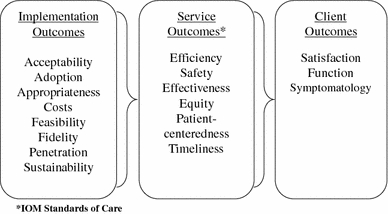
An unresolved issue in the field of implementation research is how to conceptualize and evaluate successful implementation. This paper advances the concept of "implementation outcomes" distinct from service system and clinical treatment outcomes. This paper proposes a heuristic, working "taxonomy" of eight conceptually distinct implementation outcomes-acceptability, adoption, appropriateness, feasibility, fidelity, implementation cost, penetration, and sustainability-along with their nominal definitions. We propose a two-pronged agenda for research on implementation outcomes. Conceptualizing and measuring implementation outcomes will advance understanding of implementation processes, enhance efficiency in implementation research, and pave the way for studies of the comparative effectiveness of implementation strategies.
Overview
The claims and statistics of this paper haven’t been checked yet.
Free: it reads the open-access text and checks the first 5 claims that cite a source we can check. Create a free account to check every claim.
Integrity signals
Registry
Cites
Statistics
Figures
Verification
Claims the paper makes
The claims and statistics of this paper haven’t been checked yet.
Free: it reads the open-access text and checks the first 5 claims that cite a source we can check. Create a free account to check every claim.
Claims other papers make about this one
Each is checked against this paper’s own text: does it say what the citing paper says it does?
The source backs part of the claim, not all of it — or backs it for a different population, condition or comparison.
In the citing paper
“the failure of most implementation processes to incorporate ongoing, iterative intervention development increases the risk that local users will find new technologies to be low on key implementation outcomes such as acceptability, feasibility, and appropriateness (Proctor et al., 2011) and may limit effectiveness (Chambers et al., 2013)”
From User‐centered design for psychosocial intervention development and implementation. (2016) · cites this paper as Proctor et al., 2011
Experimental — accuracy not yet measuredThe source backs part of the claim, not all of it — or backs it for a different population, condition or comparison.
In the citing paper
“Increasing use of implementation frameworks may offer a more systematic evaluation of newborn care packages while clarifying equitable service delivery in vulnerable populations often present in LMIC settings (35, 36).”
From Born too soon in a resource-limited setting: A 10-year mixed methods review of a special care baby unit for refugees and migrants on the Myanmar-Thailand border (2023) · cites this paper as [36]
Experimental — accuracy not yet measuredThe source backs part of the claim, not all of it — or backs it for a different population, condition or comparison.
In the citing paper
“While reporting systems like those by Proctor [1] or Pinnock [75] would optimize learning across studies, few manuscripts specify strategies as recommended [76, 77].”
From A systematic review of experimentally tested implementation strategies across health and human service settings: evidence from 2010-2022 (2024) · cites this paper as [76]
Experimental — accuracy not yet measuredThe source backs part of the claim, not all of it — or backs it for a different population, condition or comparison.
In the citing paper
“implementation outcomes are influenced by a complex interaction of contextual, organizational, workforce, policy, and system-level factors [12,13,14].”
From A Scoping Review of Implemented Innovations in Cancer Care: Implications for Pan-Canadian Scaling (2026) · cites this paper as [14]
Experimental — accuracy not yet measuredThe source backs part of the claim, not all of it — or backs it for a different population, condition or comparison.
In the citing paper
“These factors align closely with established implementation science frameworks that emphasize the importance of organizational readiness, implementation climate, leadership engagement, and continuous learning systems [11,13,14].”
From A Scoping Review of Implemented Innovations in Cancer Care: Implications for Pan-Canadian Scaling (2026) · cites this paper as [14]
Experimental — accuracy not yet measured
39 more claims about this paper
Create a free account to see every claim other papers make about this one.
Self-check
Percentages, sums and reported differences re-computed from the paper’s own numbers.
The self-check needs the paper’s full text.
Citations
Cites
Rogers, E. M., Singhal, A., & Quinlan, M. M. (2019) · An Integrated Approach to Communication Theory and Research · doi:10.4324/9780203710753-35 · Cited by 37,322
Crossing the Quality Chasm: A New Health System for the 21st Century
Baker, A. (2001) · BMJ · doi:10.1136/bmj.323.7322.1192 · Cited by 10,736
Crossing the Quality Chasm: A New Health System for the 21st Century
Committee on Quality of Health Care in America (2002) · Journal For Healthcare Quality · doi:10.1111/j.1945-1474.2002.tb00463.x · Cited by 8,483
Evaluating the public health impact of health promotion interventions: the RE-AIM framework.
Glasgow, R. E., Vogt, T. M., & Boles, S. M. (1999) · American Journal of Public Health · doi:10.2105/ajph.89.9.1322 · Cited by 7,217 · cited 2×
“The literature reflects quite varied uses of the term ‘‘sustainability,’’ but our proposed definition incorporates aspects of those offered by Johnson et al. (2004), Turner and Sanders (2006), Glasgow et al. (1999) , Goodman et al. (1993), and Rabin et al. (2008).”
Background(2005) · Cited by 3,748
Crossing the Quality Chasm: A New Health System for the 21st Century
Bloom, B. S. (2002) · JAMA: The Journal of the American Medical Association · doi:10.1001/jama.287.5.646-a · Cited by 3,726
Making psychological theory useful for implementing evidence based practice: a consensus approach
Michie, S. (2005) · Quality and Safety in Health Care · doi:10.1136/qshc.2004.011155 · Cited by 3,440
Gluesing, J. C. (2012) · Leadership in Science and Technology: A Reference Handbook · doi:10.4135/9781412994231.n14 · Cited by 3,210
Davis, F. D. (1993) · International Journal of Man-Machine Studies · doi:10.1006/imms.1993.1022 · Cited by 2,964 · cited 1×
“Lack of acceptability has long been noted as a challenge in implementation (Davis 1993).”
BackgroundAldenderfer, M. S., & Blashfield, R. K. (1984) · Cited by 2,358
Research works printed but not linked: 6
- 5. Bates, D. M., & Sarkar, D. (2007). lme4: Linear mixed-effects models using S4 classes. R Package Version, 0, 99875-99876.
- 18. Glasgow, R. E. (2007b). The RE-AIM model for planning, evaluation and reporting on implementation and dissemination research. Paper presented at the NIH Conference on Building the Science of Dissemination and Implementation in the Service of Public Health: Bethesda, MD.
- 24. Hayes, S. C. (1998). President's message: Dissemination research now. The Behavior Therapist, 21(9), 166-169.
- Institute of Medicine Committee on Crossing the Quality Chasm. (2006). Adaption to mental health and addictive disorder: Improving the quality of health care for mental and substance-use conditions. Washington, DC: Institute of Medicine, National Academies Press.
- 33. Jones, K. (1997). Mission drift in qualitative research, or moving toward a systematic review of qualitative studies. The Qualita- tive Report, 9(1), 95-112.
- 45. Mihalic, S. (2004). The importance of implementation fidelity. Emotional and Behavioral Disorders in Youth, 4, 83-86.
Cited by
Items 701–800 of 1,109
Ramírez Stege, A. M., & Yarris, K. E. (2017) · Transcultural Psychiatry · doi:10.1177/1363461517716051 · Cited by 40
“of stakeholders’’—here, patients and providers—that the intervention (here, the CFI) is agreeable or satisfactory (Proctor et al., 2011).”
BackgroundSmith, S. N., Almirall, D., Prenovost, K., Liebrecht, C., Kyle, J., Eisenberg, D., Bauer, M. S., & Kilbourne, A. M. (2019) · Medical Care · doi:10.1097/mlr.0000000000001138 · Cited by 40
“During the run-in phase, a key component of REP was to support provider identification of patients from current caseloads who met criteria for LG: (1) aged 21 and over; (2) primary diagnosis of either depression or bipolar disorder; (3) not currently enrolled in intensive mental health treatment; (4) no terminal illne…”
Tönnies, J., Hartmann, M., Wensing, M., Szecsenyi, J., Peters-Klimm, F., Brinster, R., Weber, D., Vomhof, M., Icks, A., Friederich, H.-C., et al. (2021) · JMIR Mental Health · doi:10.2196/22569 · Cited by 40
“Outcomes The main outcome was feasibility of a mental health care model integrating mental health specialist video consultations and primary care, which we operationalized applying early-stage implementation outcomes[37]: Recruitment strategy and recruitment rate (efficiency of recruitment strategies) Intervention…”
MethodTechnology-Based Alcohol Interventions in Primary Care: Systematic Review
Ramsey, A. T., Satterfield, J. M., Gerke, D. R., & Proctor, E. K. (2019) · Journal of Medical Internet Research · doi:10.2196/10859 · Cited by 40
Self-citationImplementation strategies for telemental health: a systematic review
Appleton, R., Barnett, P., Juan, N. V. S., Tuudah, E., Lyons, N., Parker, J., Roxburgh, E., Spyridonidis, S., Tamworth, M., Worden, M., et al. (2023) · BMC Health Services Research · doi:10.1186/s12913-022-08993-1 · Cited by 56
Dissemination of public health research to prevent non-communicable diseases: a scoping review
Turon, H., Wolfenden, L., Finch, M., McCrabb, S., Naughton, S., O'Connor, S. R., Renda, A., Webb, E., Doherty, E. L., Howse, E., et al. (2023) · BMC Public Health · doi:10.1186/s12889-023-15622-x · Cited by 45
“There is a significant opportunity for the science of dissemination outcome measurement to be improved, through more frequent measurement of key dissemination outcomes such as attitudes and knowledge [36], as well as the development of a measurement taxonomy, such as that developed for implementation research by Proct…”
BackgroundEmbedding implementation science in the research pipeline
Zullig, L. L., Drake, C., Check, D. K., Brunkert, T., Deschodt, M., Olson, M. S., & Geest, S. D. (2023) · Translational Behavioral Medicine · doi:10.1093/tbm/ibad050 · Cited by 47
Smith, J. D., Norton, W. E., Mitchell, S. A., Cronin, C. M., Hassett, M. J., Ridgeway, J. L., Garcia, S. F., Osarogiagbon, R. U., Dizon, D. S., Austin, J. D., et al. (2023) · Implementation Science Communications · doi:10.1186/s43058-023-00529-w · Cited by 42
“We used the Proctor et al. [20] taxonomy of implementation outcomes to provide standardized definitions for acceptability, adoption, appropriateness, cost, feasibility, fidelity, penetration/reach, and sustainability/sustainment.”
MethodAdsul, P., Shelton, R. C., Oh, A., Moise, N., Iwelunmor, J., & Griffith, D. M. (2024) · Annual Review of Public Health · doi:10.1146/annurev-publhealth-060922-034822 · Cited by 44
Reaven, J., Blakeley-Smith, A., Beattie, T. L., Sullivan, A., Moody, E. J., Stern, J. A., Hepburn, S. L., & Smith, I. M. (2015) · Autism · doi:10.1177/1362361313518124 · Cited by 38
“Factors such as participant recruitment, attendance, and treatment completion may also help determine feasibility of an intervention (Proctor et al., 2011).”
BackgroundMalaria control in rural Malawi: implementing peer health education for behaviour change
Malenga, T., Kabaghe, A. N., Manda‐Taylor, L., Kadama, A., McCann, R. S., Phiri, K. S., van Vugt, M., & van den Berg, H. (2017) · Globalization and Health · doi:10.1186/s12992-017-0309-6 · Cited by 43
“[16] to report feasibility, acceptability, appropriateness, and fidelity of community workshops on malaria.”
BackgroundInfluentialOpen-Access Physical Activity Programs for Older Adults: A Pragmatic and Systematic Review
Balis, L. E., Strayer, T. E., Ramalingam, N., Wilson, M. L., & Harden, S. M. (2018) · The Gerontologist · doi:10.1093/geront/gnx195 · Cited by 43
Young, N., Taegtmeyer, M., Aol, G., Bigogo, G., Phillips‐Howard, P. A., Hill, J., Laserson, K. F., ter Kuile, F. O., & Desai, M. R. (2018) · PLoS ONE · doi:10.1371/journal.pone.0198784 · Cited by 46
Fidelity monitoring in complex interventions: a case study of the WISE intervention
Swindle, T., Selig, J. P., Rutledge, J. M., Whiteside-Mansell, L., & Curran, G. M. (2018) · Archives of Public Health · doi:10.1186/s13690-018-0292-2 · Cited by 49
Implementation of eHealth Interventions Across the HIV Care Cascade: a Review of Recent Research
Kemp, C. G., & Velloza, J. (2018) · Current HIV/AIDS Reports · doi:10.1007/s11904-018-0415-y · Cited by 44
Ojo, T., Lester, L. A., Iwelunmor, J., Gyamfi, J., Obiezu‐Umeh, C., Onakomaiya, D. O., Aifah, A. A., Nagendra, S., Opeyemi, J., Oluwasanmi, M., et al. (2019) · PLoS ONE · doi:10.1371/journal.pone.0212296 · Cited by 41
Drug consumption rooms: A systematic review of evaluation methodologies
Běláčková, V., Salmon, A. M., Day, C., Ritter, A. J., Shanahan, M., Hedrich, D., Kerr, T. H., & JAUNCEY, M. E. (2019) · Drug and Alcohol Review · doi:10.1111/dar.12919 · Cited by 51
“Also, avenues for implementation research across multiple dimensions exist [250].”
BackgroundWilson, K. P., & Landa, R. J. (2019) · Frontiers in Education · doi:10.3389/feduc.2019.00027 · Cited by 54
“Two priorities must be addressed: (1) empirically researched interventions must be translated for feasible implementation by community practitioners; and (2) such efforts must identify and propose solutions to the specific barriers to implementation of evidence-based ASD interventions in community settings to promote…”
BackgroundKing, E. S., Moore, C. J., Wilson, H. K., Harden, S. M., Davis, M. A., & Berg, A. C. (2019) · BMC Public Health · doi:10.1186/s12889-019-7315-y · Cited by 40
Fahim, C., Acai, A., McConnell, M., Wright, F. C., Sonnadara, R., & Simunovic, M. R. I. (2020) · BMC Health Services Research · doi:10.1186/s12913-020-05255-w · Cited by 48
Attitudes and Persuasive Communication Interventions
Hamilton, K., & Johnson, B. T. (2020) · Cambridge University Press eBooks · doi:10.1017/9781108677318.031 · Cited by 61
Mustanski, B. S., Moskowitz, D., Moran, K., Newcomb, M. E., Macapagal, K. R., Rodríguez-Díaz, C. E., Rendina, H. J., Laber, E. B., Li, D. H., Matson, M., et al. (2020) · JMIR Research Protocols · doi:10.2196/19701 · Cited by 48
“These data can provide convincing information for decision makers about how to implement SMART once effectiveness testing ends [9,60].”
Pelletier, C., Pousette, A., Ward, K., Keahey, R., Fox, G., Allison, S., Rasali, D. P., & Faulkner, G. (2020) · INQUIRY The Journal of Health Care Organization Provision and Financing · doi:10.1177/0046958020935662 · Cited by 53
Layman, D. M., Kammer, J., Leckman‐Westin, E., Hogan, M., Grumet, J. G., Labouliere, C. D., Stanley, B., Carruthers, J. W., & Finnerty, M. T. (2021) · Psychiatric Services · doi:10.1176/appi.ps.202000525 · Cited by 41
Quinn, A., Williams, K. N., Thompson, L. M., Harvey, S. A., Piedrahita, R., Wang, J., Quinn, C. W., Pillarisetti, A., McCracken, J. P., Rosenthal, J. P., et al. (2021) · International Journal of Environmental Research and Public Health · doi:10.3390/ijerph182312592 · Cited by 44
“In HAP trials, as in other implementation trials, fidelity (the extent to which an intervention was delivered as intended [9,10]) and adherence (the extent to which it was adopted by participants) are therefore necessary components of trial evaluation that can identify contextual factors that may underlie effectivenes…”
BackgroundRates of sustainment in the Universal Stages of Implementation Completion
Wong, D. R., Schaper, H., & Saldana, L. (2022) · Implementation Science Communications · doi:10.1186/s43058-021-00250-6 · Cited by 44
“Sustainment is the desired outcome of implementation, typically involving the goal of maintenance of the practice within the service setting [4, 5].”
BackgroundKey recommendations from the 2021 “inclusion of older adults in clinical research” workshop
Petrovsky, D., Ðoàn, L. N., Loizos, M., O’Conor, R. M., Prochaska, M. T., Tsang, M., Hopman, R. J., Klinedinst, T. C., Mathur, A., Bandeen‐Roche, K., et al. (2022) · Journal of Clinical and Translational Science · doi:10.1017/cts.2022.1 · Cited by 45
“In addition, implementation outcomes can be incorporated into study design to evaluate intervention success [26,27].”
Becker, K. D., & Stirman, S. W. (2011) · Administration and Policy in Mental Health and Mental Health Services Research · doi:10.1007/s10488-011-0361-0 · Cited by 40
“As training models and strategies are being developed and tested, multilevel assessment is critical to understanding their success (Proctor et al. 2011).”
InfluentialImplementation of a virtual ward as a response to the COVID-19 pandemic
Schultz, K., Vickery, H., Campbell, K., Wheeldon, M., Barrett-Beck, L., & Rushbrook, E. (2021) · Australian Health Review · doi:10.1071/ah20240 · Cited by 39
Implementing post diagnostic dementia care in primary care: a mixed-methods systematic review
Frost, R., Rait, G., Aw, S., Brunskill, G., Wilcock, J., Robinson, L., Knapp, M., Hogan, N., Harrison Dening, K., Allan, L., et al. (2021) · Aging & Mental Health · doi:10.1080/13607863.2020.1818182 · Cited by 39
“…(‘substantially involved’ defined as active participation in decisions regarding one or more aspects of the person’s care) Studies providing process data on any implementation dimension, as defined by Proctor et al. (2011) after delivering a service in a trial or real-world situation (see Table 1).”
BackgroundMethodInfluentialGreene, M. C., Huang, T. T. ‐., Giusto, A. M., Lovero, K. L., Stockton, M. A., Shelton, R. C., dos Santos, P., Saúte, F., & Wainberg, M. L. (2021) · Harvard Review of Psychiatry · doi:10.1097/hrp.0000000000000306 · Cited by 48
Mielke, J., Brunkert, T., Zúñiga, F., Simon, M., Zullig, L. L., & Geest, S. D. (2022) · BMC Medical Research Methodology · doi:10.1186/s12874-022-01772-w · Cited by 57
Guzman, K. J., Crowder, R., Leddy, A. M., Maraba, N., Jennings, L., Ahmed, S., Sultana, S., Onjare, B., Shilugu, L. L., Alacapa, J., et al. (2023) · PLOS Digital Health · doi:10.1371/journal.pdig.0000322 · Cited by 46
Mustanski, B. S., Queiroz, A. A. F. L. N., Merle, J. L., Zamantakis, A., Zapata, J. P., Li, D. H., Benbow, N., Pyra, M. N., & Smith, J. D. (2023) · Annual Review of Psychology · doi:10.1146/annurev-psych-032620-035725 · Cited by 42
Lutz, D., van den Berg, C. A., Räisänen, A. M., Shill, I., Kim, J., Vaandering, K., Hayden, A., Pasanen, K., Schneider, K., Emery, C. A., et al. (2024) · British Journal of Sports Medicine · doi:10.1136/bjsports-2023-106906 · Cited by 59
Fontaine, G., Mooney, M., Porat‐Dahlerbruch, J., Cahir, K., Ellen, M., Spinewine, A., Taylor, N., Laritz, R., Bourbeau-Allard, È., & Grimshaw, J. (2025) · Implementation Science · doi:10.1186/s13012-025-01436-5 · Cited by 56
“…frameworks such as the Reach, Effectiveness, Adoption, Implementation and Maintenance (RE-AIM) [82] and Proctor’s Taxonomy of Implementation Outcomes [83] are highlighted for defining “how to assess implementation processes or specify which implementation outcomes should be measured” [65].”
Kalolo, A., Radermacher, R., Stoermer, M., Meshack, M., & Allegri, M. D. (2015) · Global Health Action · doi:10.3402/gha.v8.29648 · Cited by 42
“because process evaluation helps to determine the strength or weakness in implementation that could help to differentiate implementation failure and design failure when determining the impact of a given intervention (33, 35, 45, 47).”
BackgroundInfluentialByrnes, A., Young, A., Mudge, A., Banks, M., Clark, D. A., & Bauer, J. D. (2018) · Nutrition & Dietetics · doi:10.1111/1747-0080.12464 · Cited by 43
Ahlers, K. P., Gabrielsen, T. P., Ellzey, A., Brady, A. M., Litchford, A., Fox, J. C., Nguyen, Q., & Carbone, P. S. (2018) · Journal of Developmental & Behavioral Pediatrics · doi:10.1097/dbp.0000000000000621 · Cited by 41
Sarkies, M., Skinner, E. H., Bowles, K., Morris, M. E., Williams, C., O’Brien, L., Bardoel, A., Martin, J., Holland, A. E., Carey, L. M., et al. (2019) · Implementation Science · doi:10.1186/s13012-019-0896-0 · Cited by 45
“In addition, a number of process measures and implementation-specific outcomes can be considered [41].”
BackgroundPyatak, E. A., King, M. M., Vigen, C. L. P., Salazar, E., Díaz, J., Niemiec, S. L. S., Blanchard, J., Jordan, K., Banerjee, J., & Shukla, J. (2019) · American Journal of Occupational Therapy · doi:10.5014/ajot.2019.037317 · Cited by 49
Adoption of PBIS within school districts
Kittelman, A., McIntosh, K., & Hoselton, R. (2019) · Journal of School Psychology · doi:10.1016/j.jsp.2019.03.007 · Cited by 38
Paniagua-Ávila, A., Fort, M. P., Glasgow, R. E., Gulayin, P., Hernández-Galdamez, D. R., Mansilla, K., Palacios, E., Peralta-García, A., Roche, D., Rubinstein, A., et al. (2020) · Trials · doi:10.1186/s13063-020-04345-8 · Cited by 40
“Using a mixed-methods approach, we will evaluate the following implementation outcomes: acceptability, adoption, feasibility, fidelity, adaptation, reach, sustainability, and cost effectiveness [26].”
MethodChanging Behavior: A Theory- and Evidence-Based Approach
Hagger, M. S., Cameron, L. D., Hamilton, K., Hankonen, N. E., & Lintunen, T. (2020) · Cambridge University Press eBooks · doi:10.1017/9781108677318.001 · Cited by 63
Changing Behavior Using Integrated Theories
Hagger, M. S., & Hamilton, K. (2020) · Cambridge University Press eBooks · doi:10.1017/9781108677318.015 · Cited by 51
Changing Behavior Using Habit Theory
Orbell, S., & Verplanken, B. (2020) · Cambridge University Press eBooks · doi:10.1017/9781108677318.013 · Cited by 64
Implementing and sustaining family care programs in real-world settings: Barriers and facilitators
Hodgson, N., & Gitlin, L. N. (2021) · Bridging the Family Care Gap · doi:10.1016/b978-0-12-813898-4.00006-3 · Cited by 35
Krebs, E., & Nosyk, B. (2021) · Current HIV/AIDS Reports · doi:10.1007/s11904-021-00550-5 · Cited by 46
Using Kern’s 6-Step Approach to Integrate Health Systems Science Curricula Into Medical Education
Singh, M. K., Gullett, H., & Thomas, P. A. (2021) · Academic Medicine · doi:10.1097/acm.0000000000004141 · Cited by 42
Vax, S., Farkas, M. D., Russinova, Z. L., Mueser, K. T., & Drainoni, M. (2021) · Implementation Science · doi:10.1186/s13012-021-01132-0 · Cited by 54
“ORI significantly impacts the adoption rates of evidence-based practices [6–12], which lead to improved health and rehabilitation services [13].”
BackgroundSustaining implementation facilitation: a model for facilitator resilience
Olmos‐Ochoa, T. T., Ganz, D. A., Barnard, J. M., Penney, L., Finley, E. P., Hamilton, A. B., & Chawla, N. (2021) · Implementation Science Communications · doi:10.1186/s43058-021-00171-4 · Cited by 44
“To what extent an innovation is integrated into the host organization and its subsystems (penetration) and maintained over time (sustainability) is an important marker of implementation success [40].”
BackgroundMichel, D. E., Tonna, A. P., Dartsch, D. C., & Weidmann, A. E. (2021) · Research in Social and Administrative Pharmacy · doi:10.1016/j.sapharm.2021.07.017 · Cited by 44
Morrow, A., Chan, P., Tucker, K., & Taylor, N. J. (2021) · Genetics in Medicine · doi:10.1038/s41436-021-01272-0 · Cited by 47
García, A. M., Cross, J., Fitchett, E. J. A., Kawaza, K., Okomo, U. A., Spotswood, N. E., Chiume, M., Ezeaka, V. C., Irimu, G., Salim, N., et al. (2022) · EClinicalMedicine · doi:10.1016/j.eclinm.2021.101259 · Cited by 47
Davies, J. F., Ikin, B., Francis, J., & McGain, F. (2023) · British Journal of Anaesthesia · doi:10.1016/j.bja.2023.05.017 · Cited by 49
Hodge, L. M., Turner, K. M. T., Sanders, M. R., & Filus, A. (2017) · The Journal of Behavioral Health Services & Research · doi:10.1007/s11414-016-9505-z · Cited by 38
Lewis, C. C., Mettert, K., & Lyon, A. R. (2021) · Implementation Research and Practice · doi:10.1177/2633489521994197 · Cited by 38
“Trained research specialists mapped measures and/or their scales to one or more of the eight aforementioned intervention characteristics (Proctor et al., 2011).”
BackgroundClinical decision support for therapeutic decision-making in cancer: a systematic review
Beauchemin, M., Murray, M. T., Sung, L., Hershman, D. L., Weng, C., & Schnall, R. (2019) · International Journal of Medical Informatics · doi:10.1016/j.ijmedinf.2019.07.019 · Cited by 38
Arnold, T. L., Whiteley, L., Elwy, A. R., Ward, L. M., Konkle‐Parker, D. J., Brock, J. B., Giorlando, K. K., Barnett, A. P., Sims-Gomillia, C. E., Craker, L. K., et al. (2022) · Journal of Racial and Ethnic Health Disparities · doi:10.1007/s40615-022-01452-x · Cited by 43
“Below we recognize the facilitators and barriers to PrEP uptake for cisgender Black women in MS by implementation outcome (acceptability, adoption, feasibility, and fidelity) [36] and by each i-PARIHS model component (innovation, recipient, context) [35].”
BackgroundMethodInfluentialEkwunife, O. I., Ejie, I. L., Okelu, V., Mita, C., Durosinmi-Eti, O., Powell, A., & Franke, M. F. (2022) · BMJ Global Health · doi:10.1136/bmjgh-2022-009474 · Cited by 43
Evidence on Scaling in Health and Social Care: An Umbrella Review
Corôa, R. D. C., Gogovor, A., Charif, A. B., Hassine, A. B., Zomahoun, H. T. V., McLean, R. K. D., Milat, A., Plourde, K. V., Rhéault, N., Wolfenden, L., et al. (2023) · Milbank Quarterly · doi:10.1111/1468-0009.12649 · Cited by 43
Rutten, L. J. F., Ridgeway, J. L., & Griffin, J. M. (2024) · Mayo Clinic Proceedings · doi:10.1016/j.mayocp.2023.02.005 · Cited by 48
Fischer, R. D., Bailey, Y., Shankar, M., Safaeinili, N., Karl, J. A., Daly, A., Johnson, F. N., Winter, T. J., Arahanga‐Doyle, H., Fox, R., et al. (2024) · Clinical Psychology Review · doi:10.1016/j.cpr.2024.102425 · Cited by 50
de Mello, N. F., Silva, S. N., Gomes, D. F., Girardi, J. D. M., & Barreto, J. O. M. (2024) · Implementation Science · doi:10.1186/s13012-024-01389-1 · Cited by 45
“All these concepts align with the definitions of Proctor et al. (2011), although we decided to separate "fidelity" and "sustainability" as independent domains similar to Nilsen [26, 28].”
BackgroundZandberg, L. J., & Wilson, G. T. (2013) · European Eating Disorders Review · doi:10.1002/erv.2210 · Cited by 38
“These nonclinical outcomes are particularly critical to implementation research (Proctor et al., 2011), as acceptability provides a proxy for conditions that may support the uptake and adoption of treatment Several factors may have contributed to the level of organizational acceptability observed in the current study.”
BackgroundValentine, S. E., Borba, C. P. C., Dixon, L., Vaewsorn, A. S., Gallegos-Guajardo, J., Resick, P. A., Stirman, S. W., & Marques, L. M. (2016) · Journal of Clinical Psychology · doi:10.1002/jclp.22337 · Cited by 41
“, agreeable, palatable, or satisfactory) to implement in their clinic (Proctor et al., 2011).”
BackgroundSaluja, S., Silverstein, A., Mukhopadhyay, S., Lin, Y., Raykar, N., Keshavjee, S., Samad, L., & Meara, J. G. (2017) · BMJ Global Health · doi:10.1136/bmjgh-2016-000269 · Cited by 39
“These methods can be characterised along a spectrum of complexity (eg, discrete vs multifaceted), can have varied actors and targets, and can occur at differing organisational levels.(3) 4 Our intervention, put succinctly, is to incorporate surgical care into broader public health planning.”
BackgroundOber, A. J., Watkins, K. E., Hunter, S. B., Ewing, B. A., Lamp, K., Lind, M., Becker, K. M., Heinzerling, K. G., Osilla, K. C., Diamant, A. L., et al. (2017) · BMC Family Practice · doi:10.1186/s12875-017-0673-6 · Cited by 44
“Acceptability refers to satisfaction with the complexity or ease of use of a new practice and its effectiveness, or credibility [50].”
BackgroundMethodInfluentialKingsland, M., Doherty, E. L., Anderson, A., Crooks, K., Tully, B., Tremain, D., Tsang, T. W., Attia, J. R., Wolfenden, L., Dunlop, A. J., et al. (2018) · Implementation Science · doi:10.1186/s13012-018-0806-x · Cited by 41
Fentanyl behind bars: The implications of synthetic opiates for prisoners and correctional officers
Bucerius, S. M., & Haggerty, K. D. (2019) · International Journal of Drug Policy · doi:10.1016/j.drugpo.2019.05.018 · Cited by 43
Implementation of Off-Site Integrated Care for Children: A Scoping Review
Spencer, A. E., Platt, R. E., Bettencourt, A. F., Serhal, E., Burkey, M. D., Sikov, J., Vidal, C., Stratton, J., Polk, S., Jain, S., et al. (2019) · Harvard Review of Psychiatry · doi:10.1097/hrp.0000000000000239 · Cited by 39
Comparative case studies in integrated care implementation from across the globe: a quest for action
Stadnick, N. A., Sadler, E., Sandall, J., Turienzo, C. F., Bennett, I. M., Borkan, J., Oladeji, B. D., Gureje, O., Aarons, G. A., & Sklar, M. (2019) · BMC Health Services Research · doi:10.1186/s12913-019-4661-5 · Cited by 43
Self-citationDykens, J. A., Smith, J. S., Demment, M. M., Marshall, E., Schuh, T. L., Peters, K., Irwin, T. E., McIntosh, S. E., Sy, A. U., & Dye, T. (2020) · Cancer Causes & Control · doi:10.1007/s10552-020-01290-4 · Cited by 51
Augustsson, H., Churruca, K., & Braithwaite, J. (2020) · BMC Health Services Research · doi:10.1186/s12913-020-05929-5 · Cited by 47
Chonde, D. B., Pourvaziri, A., Williams, J., McGowan, J., Moskos, M., Alvarez, C., Narayan, A. K., Daye, D., Flores, E. J., & Succi, M. D. (2021) · Journal of the American College of Radiology · doi:10.1016/j.jacr.2021.01.013 · Cited by 40
“Using the standard lexicon for implementation science put forth by Proctor et al [12], defined in Table 1, these five domains can be further characterized as eight outcomes: acceptability, adoption, appropriateness, feasibility, fidelity, cost, penetration, and sustainability.”
InfluentialO’Malley, G., Beima‐Sofie, K., Roche, S. D., Rousseau, E., Travill, D., Omollo, V. O., Delany‐Moretlwe, S., Bekker, L., Bukusi, E. A., Kinuthia, J., et al. (2021) · Frontiers in Reproductive Health · doi:10.3389/frph.2021.668672 · Cited by 45
Smit, A. K., Sharman, A. R., Espinoza, D., Wallingford, C. K., Young, M., Dunlop, K. L. A., Tiller, J. M., Newson, A. J., Meiser, B., Cust, A. E., et al. (2021) · Clinical Genetics · doi:10.1111/cge.14025 · Cited by 40
Beidas, R. S., Ahmedani, B. K., Linn, K. A., Marcus, S. C., Johnson, C., Maye, M. P., Westphal, J. A., Wright, L., Beck, A. L., Buttenheim, A. M., et al. (2021) · Implementation Science · doi:10.1186/s13012-021-01154-8 · Cited by 41
“Aim 1 will examine the effects of Nudge+ relative to Nudge on parent-reported clinician fidelity, reach, cable lock distribution, acceptability, and implementation cost [55, 79].”
BackgroundRyan, N., Vieira, D. L., Gyamfi, J., Ojo, T., Shelley, D., Ogedegbe, O., Iwelunmor, J., & Peprah, E. K. (2022) · Implementation Science Communications · doi:10.1186/s43058-021-00236-4 · Cited by 49
“It allows us to conceptualize and evaluate successful implementation of interventions, particularly via assessment of implementation outcomes, which are the effects of implementation strategies, or deliberate and purposive actions to implement a new treatment, practice, or service [8].”
BackgroundMethodGray, S. M., Franke, T., Sims‐Gould, J., & McKay, H. A. (2022) · BMC Public Health · doi:10.1186/s12889-022-13547-5 · Cited by 45
“Acceptability (determinant): perceptions among the delivery team that a given intervention is agreeable, palatable, or satisfactory [54]”
BackgroundInfluentialNurses' evaluations of the CPOT use at 12‐month post‐implementation in the intensive care unit
Gélinas, C., Ross, M., Boitor, M., Desjardins, S., Vaillant, F., & Michaud, C. (2014) · Nursing in Critical Care · doi:10.1111/nicc.12084 · Cited by 47
Dauber, S. E., John, T., Hogue, A., Nugent, J., & Hernández, G. (2017) · Children and Youth Services Review · doi:10.1016/j.childyouth.2017.07.021 · Cited by 43
“Interviews were designed based on published guidelines for assessing feasibility and acceptability of new interventions in field settings and existing research that has used similar procedures for assessing provider and administrator perspectives on incorporating evidencebased practices into child mental health and ch…”
MethodJeon, Y., Simpson, J. M., Low, L., Woods, B. T., Norman, R., Mowszowski, L., Clemson, L. M., Naismith, S. L., Brodaty, H., Hilmer, S. N., et al. (2019) · BMC Geriatrics · doi:10.1186/s12877-019-1216-x · Cited by 45
“[33, 34] In addition, we are exploring further research questions at both the individual and organisational levels, guided by a realist approach [35].”
BackgroundLyon, A. R., & Lewis, C. C. (2016) · Administration and Policy in Mental Health and Mental Health Services Research · doi:10.1007/s10488-015-0704-3 · Cited by 39
“…implementation science frameworks have identified key variables and outcomes related to the introduction of innovations into novel contexts (e.g., Aarons et al. 2011; Damschroder et al. 2009; Proctor et al. 2011), they have only recently begun to be applied to the domain of MFS technologies.”
BackgroundDirect-to-consumer marketing of psychological treatments: A randomized controlled trial.
Gallo, K. P., Comer, J. S., Barlow, D. H., Clarke, R. N., & Antony, M. M. (2015) · Journal of Consulting and Clinical Psychology · doi:10.1037/a0039470 · Cited by 37
“Dissemination and implementation efforts should involve many stakeholders, including consumers, who have their own goals and priorities for mental health services (Proctor et al., 2011).”
BackgroundSami, S., Kerber, K., Tomczyk, B., Amsalu, R., Jackson, D., Scudder, E., Dimiti, A., Meyers, J., Kenneth, K., Kenyi, S., et al. (2017) · Reproductive Health Matters · doi:10.1080/09688080.2017.1405677 · Cited by 37
“Proctor et al define acceptability as “the perception among implementation stakeholders that a given treatment, service, practice or innovation is agreeable, palatable or satisfactory”.(11) Specifically, among health workers, adoption of new or existing practices is based on attitudes influenced by provider characteri…”
BackgroundMethodD'Adamo, L., Paraboschi, L., Claire Grammer, A., Fennig, M., Graham, A. K., Yaeger, L. H., Newman, M. G., Wilfley, D. E., Barr Taylor, C., Eisenberg, D., et al. (2023) · Journal of Behavioral and Cognitive Therapy · doi:10.1016/j.jbct.2023.05.002 · Cited by 37
Cheung, D. S. K., Ho, L. Y. W., Chan, L. C. K., Kwok, R. K. H., & Lai, C. K. Y. (2022) · Clinical Interventions in Aging · doi:10.2147/cia.s370661 · Cited by 40
Transition models of care for type 1 diabetes: a systematic review
Zurynski, Y., Carrigan, A., Meulenbroeks, I., Sarkies, M. N., Dammery, G., Halim, N., Lake, R., Davis, E., Jones, T. W., & Braithwaite, J. (2023) · BMC Health Services Research · doi:10.1186/s12913-023-09644-9 · Cited by 39
Shenoy, S., Sharma, P., Rao, A., Aparna, N., Adenikinju, D., Iloegbu, C., Patena, J. V., Vieira, D. L., Gyamfi, J., & Peprah, E. K. (2023) · Frontiers in Health Services · doi:10.3389/frhs.2023.1155928 · Cited by 47
Lindig, A., Mielke, K., Frerichs, W., Cöllen, K., Kriston, L., Härter, M. C., & Scholl, I. (2024) · BMC Nursing · doi:10.1186/s12912-023-01660-8 · Cited by 37
“We will use the CFIR [19] as well as implementation outcomes defined by Proctor et al. [48] to guide the process evaluation.”
MethodFirm, yet flexible: a fidelity debate paper with two case examples
Albers, B., Verweij, L., Blum, K., Oesch, S., Schultes, M.-T., Clack, L., & Naef, R. (2024) · Implementation Science · doi:10.1186/s13012-024-01406-3 · Cited by 37
“…and patient outcomes – and in particular, the relationship between implementation strategies and implementation outcomes, i.e., the degree to which a complex intervention is perceived as feasible, acceptable, appropriate and can be adopted, achieve penetration and be implemented as intended [4].”
Human-Centered Design to Enhance Implementation and Impact in Health
Lyon, A. R., Aung, T., Bruzios, K. E., & Munson, S. A. (2024) · Annual Review of Public Health · doi:10.1146/annurev-publhealth-071823-122337 · Cited by 55
Conducting Rapid, Relevant Research
Glasgow, R. E., Kessler, R. S., Ory, M. G., Roby, D., Gorin, S. S., & Krist, A. (2014) · American Journal of Preventive Medicine · doi:10.1016/j.amepre.2014.03.007 · Cited by 37
Structured Risk Assessment Instruments: A Systematic Review of Implementation Determinants
Levin, S. K., Nilsén, P., Bendtsen, P., & Bülow, P. (2015) · Psychiatry Psychology and Law · doi:10.1080/13218719.2015.1084661 · Cited by 41
“Specific measures of implementation outcome or output are not included (Proctor et al., 2011).”
BackgroundLyon, A. R., Connors, E. H., Jensen‐Doss, A., Landes, S. J., Lewis, C. C., McLeod, B. D., Rutt, C., Stanick, C., & Weiner, B. J. (2017) · Translational Behavioral Medicine · doi:10.1007/s13142-017-0464-6 · Cited by 45
“, feasibility, fidelity, sustainment, cost; [4, 29, 30]) acrossmultiple levels.”
BackgroundSwindle, T., Johnson, S. L., Whiteside-Mansell, L., & Curran, G. M. (2017) · Implementation Science · doi:10.1186/s13012-017-0624-6 · Cited by 39
“and feasibility [39] will be assessed through semistructured interviews at two time points: (1) between the”
BackgroundAdapting improvements to context: when, why and how?
Øvretveit, J., Dolan-Branton, L., Marx, M., Reid, A., Reed, J. E., & Agins, B. (2018) · International Journal for Quality in Health Care · doi:10.1093/intqhc/mzy013 · Cited by 46
Taylor, N. J., Best, S., Martyn, M. M., Long, J. C., North, K. N., Braithwaite, J., & Gaff, C. (2019) · BMJ Open · doi:10.1136/bmjopen-2018-024681 · Cited by 41
Sævareid, T. J. L., Thoresen, L., Gjerberg, E., Lillemoen, L., & Pedersen, R. (2019) · Patient Education and Counseling · doi:10.1016/j.pec.2019.06.001 · Cited by 39
Metadata
- Authors
- Proctor, E., Silmere, H., Raghavan, R., Hovmand, P., Aarons, G., Bunger, A., Griffey, R., & Hensley, M.
- Affiliations
- Washington University in St. Louis (US)
- Roberts Wesleyan College (US)
- Corresponding author
- Proctor, Enola
- Venue
- Administration and Policy in Mental Health and Mental Health Services Research
- Published
- 2010-10-19
- Volume
- 38
- Issue
- 2
- Pages
- 65-76
- ISSN
- 0894-587X (ISSN-L)
- 1573-3289
- PMC
- PMC3068522
- OpenAlex
- W2140092196
- Semantic Scholar
- 3c7cf782e4094a7d66d8ad5da80a8083a8e72307
- Cited by
- 8,721
- References
- 71
- Citations by year
- 2026: 1487 · 2025: 1144 · 2024: 1303 · 2023: 1041 · 2022: 950 · 2021: 893 · 2020: 669 · 2019: 391 · 2018: 253 · 2017: 162 · 2016: 122 · 2015: 116 · 2014: 83 · 2013: 57 · 2012: 28
- FWCI
- 56.95
- Type
- journal article
- Language
- en
- Open access
- hybrid
- doi.org
- Licence
- cc-by-nc
- Locations
- Administration and Policy in Mental Health and Mental Health Services Research (publishedVersion, cc-by-nc)
- Europe PMC (PubMed Central) (publishedVersion, cc-by-nc)
- PubMed Central (publishedVersion, cc-by-nc)
- PubMed (publishedVersion)
- Funders
- National Institutes of Health (5p30mh068579-05)
- National Institute of Mental Health (P30-MH-068579, T32MH019960)
- National Center for Research Resources (UL1RR024992)
- Topics
- Health Sciences › Health Professions › General Health Professions › Health Policy Implementation Science
- Health Sciences › Health Professions › General Health Professions › Health Sciences Research and Education
- Health Sciences › Health Professions › General Health Professions › Mental Health and Patient Involvement
- Keywords
- implementation outcomes, implementation research, acceptability, adoption, appropriateness, feasibility, fidelity, implementation costs, penetration, sustainability, implementation strategies, mental health services
- MeSH terms
- Diffusion of Innovation, Humans, Mental Health Services, Outcome and Process Assessment, Health Care, Biomedical Research
About these checks
Registry, retraction, Cites and statistics results are computed, not judged, with one exception: a printed reference that no index lists is read once by a model before it counts as a citation error. Claims are extracted by a model and kept only when their quote appears verbatim in the text; each cited source is then checked, with a model’s help, for whether it says what the claim relies on. Those verdicts can be wrong — read the claim’s quote and the cited source before relying on one.
Statistics and arithmetic are recomputed, not judged.
Confidence bands are shown only for fields calibrated on our annotated test set. None is calibrated yet, so no band is shown.
What counts as a claim ›How we measure confidence ›How we check this ›
Are you an author, or do you see a problem with this page? Request a review
Data sources
Bibliographic data: Semantic Scholar, OpenAlex, Crossref.
Contains information from the Semantic Scholar Academic Graph Datasets, made available under the ODC Attribution License (ODC-BY 1.0).
Semantic Scholar’s data is described in: Kinney, R., et al. (2023). The Semantic Scholar Open Data Platform. arXiv:2301.10140.
