

Outcomes for Implementation Research: Conceptual Distinctions, Measurement Challenges, and Research Agenda
Open accessThe DOI matches its Crossref record; 72 of the 72 references it cites were found in a registry or an index.
Abstract
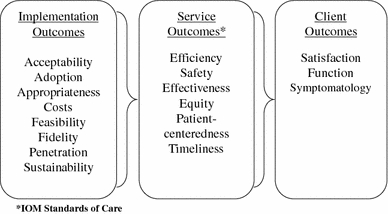
An unresolved issue in the field of implementation research is how to conceptualize and evaluate successful implementation. This paper advances the concept of "implementation outcomes" distinct from service system and clinical treatment outcomes. This paper proposes a heuristic, working "taxonomy" of eight conceptually distinct implementation outcomes-acceptability, adoption, appropriateness, feasibility, fidelity, implementation cost, penetration, and sustainability-along with their nominal definitions. We propose a two-pronged agenda for research on implementation outcomes. Conceptualizing and measuring implementation outcomes will advance understanding of implementation processes, enhance efficiency in implementation research, and pave the way for studies of the comparative effectiveness of implementation strategies.
Overview
The claims and statistics of this paper haven’t been checked yet.
Free: it reads the open-access text and checks the first 5 claims that cite a source we can check. Create a free account to check every claim.
Integrity signals
Registry
Cites
Statistics
Figures
Verification
Claims the paper makes
The claims and statistics of this paper haven’t been checked yet.
Free: it reads the open-access text and checks the first 5 claims that cite a source we can check. Create a free account to check every claim.
Claims other papers make about this one
Each is checked against this paper’s own text: does it say what the citing paper says it does?
The source backs part of the claim, not all of it — or backs it for a different population, condition or comparison.
In the citing paper
“the failure of most implementation processes to incorporate ongoing, iterative intervention development increases the risk that local users will find new technologies to be low on key implementation outcomes such as acceptability, feasibility, and appropriateness (Proctor et al., 2011) and may limit effectiveness (Chambers et al., 2013)”
From User‐centered design for psychosocial intervention development and implementation. (2016) · cites this paper as Proctor et al., 2011
Experimental — accuracy not yet measuredThe source backs part of the claim, not all of it — or backs it for a different population, condition or comparison.
In the citing paper
“Increasing use of implementation frameworks may offer a more systematic evaluation of newborn care packages while clarifying equitable service delivery in vulnerable populations often present in LMIC settings (35, 36).”
From Born too soon in a resource-limited setting: A 10-year mixed methods review of a special care baby unit for refugees and migrants on the Myanmar-Thailand border (2023) · cites this paper as [36]
Experimental — accuracy not yet measuredThe source backs part of the claim, not all of it — or backs it for a different population, condition or comparison.
In the citing paper
“While reporting systems like those by Proctor [1] or Pinnock [75] would optimize learning across studies, few manuscripts specify strategies as recommended [76, 77].”
From A systematic review of experimentally tested implementation strategies across health and human service settings: evidence from 2010-2022 (2024) · cites this paper as [76]
Experimental — accuracy not yet measuredThe source backs part of the claim, not all of it — or backs it for a different population, condition or comparison.
In the citing paper
“implementation outcomes are influenced by a complex interaction of contextual, organizational, workforce, policy, and system-level factors [12,13,14].”
From A Scoping Review of Implemented Innovations in Cancer Care: Implications for Pan-Canadian Scaling (2026) · cites this paper as [14]
Experimental — accuracy not yet measuredThe source backs part of the claim, not all of it — or backs it for a different population, condition or comparison.
In the citing paper
“These factors align closely with established implementation science frameworks that emphasize the importance of organizational readiness, implementation climate, leadership engagement, and continuous learning systems [11,13,14].”
From A Scoping Review of Implemented Innovations in Cancer Care: Implications for Pan-Canadian Scaling (2026) · cites this paper as [14]
Experimental — accuracy not yet measured
39 more claims about this paper
Create a free account to see every claim other papers make about this one.
Self-check
Percentages, sums and reported differences re-computed from the paper’s own numbers.
The self-check needs the paper’s full text.
Citations
Cites
Rogers, E. M., Singhal, A., & Quinlan, M. M. (2019) · An Integrated Approach to Communication Theory and Research · doi:10.4324/9780203710753-35 · Cited by 37,322
Crossing the Quality Chasm: A New Health System for the 21st Century
Baker, A. (2001) · BMJ · doi:10.1136/bmj.323.7322.1192 · Cited by 10,736
Crossing the Quality Chasm: A New Health System for the 21st Century
Committee on Quality of Health Care in America (2002) · Journal For Healthcare Quality · doi:10.1111/j.1945-1474.2002.tb00463.x · Cited by 8,483
Evaluating the public health impact of health promotion interventions: the RE-AIM framework.
Glasgow, R. E., Vogt, T. M., & Boles, S. M. (1999) · American Journal of Public Health · doi:10.2105/ajph.89.9.1322 · Cited by 7,217 · cited 2×
“The literature reflects quite varied uses of the term ‘‘sustainability,’’ but our proposed definition incorporates aspects of those offered by Johnson et al. (2004), Turner and Sanders (2006), Glasgow et al. (1999) , Goodman et al. (1993), and Rabin et al. (2008).”
Background(2005) · Cited by 3,748
Crossing the Quality Chasm: A New Health System for the 21st Century
Bloom, B. S. (2002) · JAMA: The Journal of the American Medical Association · doi:10.1001/jama.287.5.646-a · Cited by 3,726
Making psychological theory useful for implementing evidence based practice: a consensus approach
Michie, S. (2005) · Quality and Safety in Health Care · doi:10.1136/qshc.2004.011155 · Cited by 3,440
Gluesing, J. C. (2012) · Leadership in Science and Technology: A Reference Handbook · doi:10.4135/9781412994231.n14 · Cited by 3,210
Davis, F. D. (1993) · International Journal of Man-Machine Studies · doi:10.1006/imms.1993.1022 · Cited by 2,964 · cited 1×
“Lack of acceptability has long been noted as a challenge in implementation (Davis 1993).”
BackgroundAldenderfer, M. S., & Blashfield, R. K. (1984) · Cited by 2,358
Research works printed but not linked: 6
- 5. Bates, D. M., & Sarkar, D. (2007). lme4: Linear mixed-effects models using S4 classes. R Package Version, 0, 99875-99876.
- 18. Glasgow, R. E. (2007b). The RE-AIM model for planning, evaluation and reporting on implementation and dissemination research. Paper presented at the NIH Conference on Building the Science of Dissemination and Implementation in the Service of Public Health: Bethesda, MD.
- 24. Hayes, S. C. (1998). President's message: Dissemination research now. The Behavior Therapist, 21(9), 166-169.
- Institute of Medicine Committee on Crossing the Quality Chasm. (2006). Adaption to mental health and addictive disorder: Improving the quality of health care for mental and substance-use conditions. Washington, DC: Institute of Medicine, National Academies Press.
- 33. Jones, K. (1997). Mission drift in qualitative research, or moving toward a systematic review of qualitative studies. The Qualita- tive Report, 9(1), 95-112.
- 45. Mihalic, S. (2004). The importance of implementation fidelity. Emotional and Behavioral Disorders in Youth, 4, 83-86.
Cited by
Items 1,001–1,100 of 1,110
Egeland, K. M., Ruud, T., Ogden, T., Färdig, R., Lindstrøm, J. C., & Heiervang, K. S. (2017) · International Journal of Mental Health Systems · doi:10.1186/s13033-017-0120-z · Cited by 30
“, the degree to which the interventions were implemented as intended in the original programme) [4].”
BackgroundInfluentialTriplett, N. S., Munson, S., Mbwayo, A., Mutavi, T., Weiner, B. J., Collins, P., Amanya, C., & Dorsey, S. (2021) · Implementation Science Communications · doi:10.1186/s43058-020-00102-9 · Cited by 30
Scheirer, M. A., Santos, S. L. Z., Tagai, E. K., Bowie, J., Slade, J., Carter, R., & Holt, C. L. (2017) · Implementation Science · doi:10.1186/s13012-017-0576-x · Cited by 29
“Although one implementation framework included “sustainability” as one outcome within a taxonomy of eight implementation outcomes [2], the data from Project HEAL has shown that sustainability is itself a multifaceted construct.”
BackgroundVan der Wees, P. J., Friedberg, M. W., Guzman, E. A., Ayanian, J. Z., & Rodriguez, H. P. (2014) · BMC Health Services Research · doi:10.1186/s12913-014-0608-z · Cited by 29
“Implementation fidelity is the degree to which programs are implemented as intended by the program developers [33,34].”
BackgroundLyon, A. R., Liu, F. F., Connors, E. H., King, K. M., Coifman, J. I., Cook, H., McRee, E., Ludwig, K., Law, A., Dorsey, S., et al. (2022) · Implementation Science Communications · doi:10.1186/s43058-022-00325-y · Cited by 28
“Current study The current study was designed to better understand the impact of a brief online training (BOLT) and posttraining consultation (PTC) on putative implementation mechanisms as well as MBC penetration, an indicator of the number of service recipients receiving MBC out of the total number possible [66].”
BackgroundBeidas, R. S., Volpp, K. G., Buttenheim, A. N., Marcus, S. C., Olfson, M., Pellecchia, M., Stewart, R. E., Williams, N. J., Becker-Haimes, E. M., Candon, M., et al. (2019) · JMIR Research Protocols · doi:10.2196/12121 · Cited by 28
“A major frontier for mental health services research is to develop effective and cost-effective strategies that increase the use of evidence-based assessment, prevention, and treatment approaches in community settings [7].”
BackgroundBu, S., Smith, A. ‘., Janssen, A., Donnelly, C., Dadich, A., Mackenzie, L. J., Smith, A. L., Young, A. L., Wu, V. S., Smith, S. J., et al. (2022) · Critical Reviews in Oncology/Hematology · doi:10.1016/j.critrevonc.2022.103869 · Cited by 27
Howard, B. N., Van Dorn, R., Myers, B. J., Zule, W. A., Browne, F. A., Carney, T., & Wechsberg, W. M. (2017) · BMC Health Services Research · doi:10.1186/s12913-017-2669-2 · Cited by 27
“conceptualization of implementation outcomes [31].”
BackgroundRocque, G. B., Dionne-Odom, J. N., Stover, A. M., Daniel, C. L., Azuero, A., Huang, C.-H. S., Ingram, S. A., Franks, J. A., Caston, N. E., Dent, D. A. N., et al. (2022) · BMC Health Services Research · doi:10.1186/s12913-022-07914-6 · Cited by 27
“Proctor’s Implementation Outcome Framework [42] will be used in assessment of implementation outcomes, providing a guide to practical implementation outcomes for both ongoing quality monitoring as well as to inform future practice on expected implementation.”
MethodGehring, N. D., McGrath, P., Wozney, L., Soleimani, A., Bennett, K., Hartling, L., Huguet, A., Dyson, M. P., & Newton, A. S. (2017) · Implementation Science · doi:10.1186/s13012-017-0608-6 · Cited by 26
“integrated within a service setting’s ongoing, stable operations [23].”
BackgroundMethodInfluentialMohr, D. C., Rosen, C. S., Schnurr, P. P., Orazem, R. J., Noorbaloochi, S., Clothier, B. A., Eftekhari, A., Bernardy, N. C., Chard, K. M., Crowley, J. J., et al. (2018) · Psychiatric Services · doi:10.1176/appi.ps.201700432 · Cited by 26
Principles for Real-World Implementation of Bedside Predictive Analytics Monitoring
Moorman, L. P. (2021) · Applied Clinical Informatics · doi:10.1055/s-0041-1735183 · Cited by 26
“14 1 .”
Advancing Understanding of Inequities in Rare Disease Genomics
Serrano, J. G., O'Leary, M., VanNoy, G. E., Mangilog, B. E., Holm, I. A., Fraiman, Y. S., Rehm, H. L., O'Donnell-Luria, A., & Wojcik, M. H. (2023) · Clinical Therapeutics · doi:10.1016/j.clinthera.2023.06.010 · Cited by 25
Moretto, N., Comans, T. A., Chang, A. T., O’Leary, S. P., Osborne, S., Carter, H. E., Smith, D., Cavanagh, T., Blond, D., & Raymer, M. (2019) · Implementation Science · doi:10.1186/s13012-019-0923-1 · Cited by 25
“the effectiveness of implementation strategies to be compared across studies [37].”
BackgroundMethodLund, K., Hultqvist, J., Bejerholm, U., Argentzell, E., & Eklund, M. (2020) · Scandinavian Journal of Occupational Therapy · doi:10.1080/11038128.2018.1551419 · Cited by 25
Stirman, S. W., Gutner, C. A., Gamarra, J., Suvak, M. K., Vogt, D., Johnson, C., Wachen, J. S., Dondanville, K. A., Yarvis, J. S., Mintz, J., et al. (2021) · Behavior Therapy · doi:10.1016/j.beth.2020.08.005 · Cited by 24
Kleiber, B. V., Felder, J. N., Ashby, B., Scott, S., Dean, J., & Dimidjian, S. (2017) · Cognitive and Behavioral Practice · doi:10.1016/j.cbpra.2016.12.002 · Cited by 24
Bonell, C., Prost, A., Melendez-Torres, G. J., Davey, C., & Hargreaves, J. R. (2021) · Journal of Epidemiology and Community Health · doi:10.1136/jech-2020-214287 · Cited by 24
“Ideally, evaluations will 20 In the case of social and emotional learning, for example, there is evidence that implementation is feasible and acceptable and achieves reach, and evidence that implementation is enabled by the involvement of school leaders championing the intervention, the…”
McGuier, E. A., Aarons, G. A., Byrne, K. A., Campbell, K. A., Keeshin, B., Rothenberger, S. D., Weingart, L. R., Salas, E., & Kolko, D. J. (2023) · Implementation Science Communications · doi:10.1186/s43058-023-00393-8 · Cited by 23
“Implementation outcomes include adoption and reach [53, 54].”
Self-citationFramework for Research on Implementation of Process Redesigns
Ashok, M., Hung, D., Rojas-Smith, L., Halpern, M. T., & Harrison, M. (2018) · Quality Management in Health Care · doi:10.1097/qmh.0000000000000158 · Cited by 23
Johnson, K., Collins, D., Shamblen, S., Kenworthy, T., & Wandersman, A. (2017) · Prevention Science · doi:10.1007/s11121-017-0784-2 · Cited by 23
Sinclair, K. A., Zamora-Kapoor, A., Townsend-Ing, C., McElfish, P. A., & Kaholokula, J. K. (2020) · BMC Public Health · doi:10.1186/s12889-020-09690-6 · Cited by 23
Haun, J. N., Alman, A. C., Melillo, C., Standifer, M., McMahon-Grenz, J., Shin, M., Lapcevic, W. A., Patel, N., & Elwy, A. R. (2020) · JMIR Medical Informatics · doi:10.2196/15609 · Cited by 22
“Interview notes were analyzed using a directed content analysis approach [30], through inductive open coding [31] to identify themes related to our a priori framework of acceptability, appropriateness, and feasibility [24] that arose through the interviews.”
MethodSeda, V., Moles, R. J., Carter, S. R., & Schneider, C. R. (2022) · Research in Social and Administrative Pharmacy · doi:10.1016/j.sapharm.2022.03.019 · Cited by 22
Arnold, K. T., Pollack Porter, K. M., Frattaroli, S., Durham, R. E., Mmari, K., Clary, L. K., & Mendelson, T. (2020) · Prevention Science · doi:10.1007/s11121-020-01144-0 · Cited by 21
Tiderington, E., Ikeda, J., & Lovell, A. (2020) · The Journal of Behavioral Health Services & Research · doi:10.1007/s11414-019-09680-6 · Cited by 21
Mushi, D., Francis, J. M., Moshiro, C., Hanlon, C., & Teferra, S. (2022) · Frontiers in Psychiatry · doi:10.3389/fpsyt.2022.822791 · Cited by 21
Kirk, J. W., Nilsen, P., Andersen, O., Stefánsdóttir, N. T., Grønfeldt, B., Brødsgaard, R., Pedersen, B. S., Bandholm, T., Tjørnhøj-Thomsen, T., & Pedersen, M. M. (2021) · BMC Health Services Research · doi:10.1186/s12913-021-07142-4 · Cited by 21
“[59] also suggest feasibility as a relevant outcome in the early implementation phase.”
BackgroundMethodInfluentialUnderstanding the implementation of the parenting program: Findings from a mixed methods pilot study
Czymoniewicz-Klippel, M. T., Chesnut, R. P., DiNallo, J. M., & Perkins, D. F. (2017) · Children and Youth Services Review · doi:10.1016/j.childyouth.2017.09.016 · Cited by 20
Keating, R., Ahern, S., Bisgood, L., Mernagh, K., Nicolson, G. H., & Barrett, E. M. (2022) · Journal of American College Health · doi:10.1080/07448481.2020.1847119 · Cited by 20
“Defined by Proctor et al.(29) as “the perception among implementation stakeholders that a given treatment, service, practice, or innovation is agreeable, palatable, or satisfactory,” perceived acceptability amongst participants was”
BackgroundVivas-Fernandez, M., Garcia-Lopez, L.-J., Piqueras, J. A., Muela-Martinez, J.-A., Canals-Sans, J., Espinosa-Fernandez, L., Jimenez-Vazquez, D., Diaz-Castela, M. D. M., Morales-Hidalgo, P., Rivera, M., et al. (2023) · Child and Adolescent Psychiatry and Mental Health · doi:10.1186/s13034-023-00616-9 · Cited by 20
“In addition to the effectiveness of interventions, findings are aligned with recommendations proposed by some authors when implementing an evidence-based treatment into practice in terms of acceptability, appropriateness, feasibility, and fidelity [67, 77].”
Nguyen, M. X. B., Chu, A. V., Powell, B. J., Tran, H. V., Nguyen, L. H., Dao, A. T. M., Pham, M. D., Vo, S. H., Bui, N. H., Dowdy, D. W., et al. (2020) · Implementation Science · doi:10.1186/s13012-020-01020-z · Cited by 19
“1 Conceptual framework (adapted from Proctor’s framework [44]) Nguyen et al.”
BackgroundMethodMyers, B., Sorsdahl, K., Morojele, N. K., Kekwaletswe, C., Shuper, P. A., & Parry, C. D. H. (2017) · AIDS Care · doi:10.1080/09540121.2016.1211242 · Cited by 19
“From an implementation perspective, understanding the acceptability of an intervention is critical as interventions with low patient acceptability are unlikely to be effective (Proctor et al., 2011).”
BackgroundSnowden, R. J., Holt, J., Simkiss, N., Smith, A., Webb, D., & Gray, N. S. (2019) · The Journal of Mental Health Training, Education and Practice · doi:10.1108/jmhtep-03-2019-0016 · Cited by 19
Jaguga, F., Kwobah, E. K., Giusto, A., Apondi, E., Barasa, J., Korir, M., Rono, W., Kosgei, G., Puffer, E., & Ott, M. (2023) · BMC Public Health · doi:10.1186/s12889-023-17146-w · Cited by 18
“The tools were developed based on the implementation science outcomes of Adoption, Accept-ability, Appropriateness, Feasibility, and Reach/Pen-etration by Proctor and colleagues [31].”
MethodArora, P. G., Connors, E. H., George, M. W., Lyon, A. R., Wolk, C. B., & Weist, M. D. (2016) · Clinical Child and Family Psychology Review · doi:10.1007/s10567-016-0217-y · Cited by 17
Vaccaro, L., Shaw, J., Sethi, S., Kirsten, L., Beatty, L., Mitchell, G., Kissane, D., Kelly, B., & Turner, J. (2019) · Psycho-Oncology · doi:10.1002/pon.5165 · Cited by 17
Randall, C. L. (2023) · Community Dentistry and Oral Epidemiology · doi:10.1111/cdoe.12841 · Cited by 17
Hadjistavropoulos, H. D., Gullickson, K. M., Schneider, L. H., Dear, B. F., & Titov, N. (2019) · Internet Interventions · doi:10.1016/j.invent.2019.100255 · Cited by 17
“This provides evidence of treatment quality, an important facet of treatment integrity (Hermes et al., 2019; Proctor et al., 2011).”
BackgroundInfluentialCreagh, N. S., Boyd, L. A. P., Bavor, C., Zammit, C., Saunders, T., Oommen, A. M., Rankin, N. M., Brotherton, J. M. L., & Nightingale, C. E. (2023) · JCO Global Oncology · doi:10.1200/go.22.00297 · Cited by 17
“context of this review, using the outcomes for implementation research framework by Proctor et al.(16)”
MethodFeasibility and acceptability of virtually coaching residents on communication skills: a pilot study
Sasnal, M., Miller-Kuhlmann, R., Merrell, S. B., Beres, S., Kipp, L., Lee, S., Threlkeld, Z., Nassar, A. K., & Gold, C. A. (2021) · BMC Medical Education · doi:10.1186/s12909-021-02936-w · Cited by 16
“encounters and to explore how those encounters occur [31].”
BackgroundLiaw, S. Y., Rusli, K. D. B., Tan, J. Z., Wee, Y. H. C., Neo, N. W. S., & Chua, W. L. (2025) · Nurse Education in Practice · doi:10.1016/j.nepr.2025.104462 · Cited by 17
Fuchs, C. H., Haradhvala, N., Evans, D. R., Nash, J. M., Weisberg, R. B., & Uebelacker, L. A. (2016) · Families, Systems, & Health · doi:10.1037/fsh0000237 · Cited by 15
Hickey, G., McGilloway, S., Leckey, Y., Stokes, A., Bywater, T., & Donnelly, M. (2021) · Prevention Science · doi:10.1007/s11121-020-01170-y · Cited by 15
“The use of established implementation frameworks and recommended construct terminology (e.g. Damschroder et al. 2009; Proctor et al. 2011) in this study helped to frame the analysis within the broader implementation science literature, thereby enabling comparisons with other intervention studies.”
BackgroundResultInfluentialDorsey, C. N., Mettert, K. D., Puspitasari, A. J., Damschroder, L. J., & Lewis, C. C. (2021) · Implementation Research and Practice · doi:10.1177/26334895211002474 · Cited by 15
“…defined by the Exploration, Adoption/Preparation, Implementation, Sustainment (EPIS) model (Aarons et al., 2011); and (9) if any implementation outcomes were assessed (i.e., acceptability, appropriateness, adoption, cost, feasibility, fidelity, penetration, sustainability; (Proctor et al., 2011).”
Czaja, S. J., Valente, T. W., Nair, S. N., Villamar, J. A., & Brown, C. H. (2015) · Implementation Science · doi:10.1186/s13012-016-0433-3 · Cited by 15
“of implementation science is still in its infancy [17].”
Background(2022) · doi:10.1186/s40814-022-01018-y · Cited by 15
“’s [41] taxonomy of implementation outcomes (acceptability, adoption, appropriateness, feasibility, fidelity, implementation cost, coverage and sustainability—see Table 3).”
BackgroundAdvancing the science of integrity measurement in school mental health research
Sutherland, K. S., & McLeod, B. D. (2022) · School Mental Health · doi:10.1007/s12310-021-09468-0 · Cited by 14
Ten years of implementation outcome research: a scoping review protocol
Lengnick-Hall, R., Proctor, E. K., Bunger, A. C., & Gerke, D. R. (2021) · BMJ Open · doi:10.1136/bmjopen-2021-049339 · Cited by 14
Self-citationSathananthan, N., Morris, E., Gillanders, D., das Nair, R., Knox, L., & Wong, D. (2025) · Neuropsychological Rehabilitation · doi:10.1080/09602011.2024.2359992 · Cited by 14
“This could also include exploration of facilita-tor’s experiences of delivering VaLiANT and the influence of participant ethnicity and socioeconomic status given that these factors impact treatment engagement and outcomes (Proctor et al., 2011; Williams et al., 2016).”
Lowell, A. F., Suchman, N. E., Byatt, N., Feinberg, E., Friedmann, P. D., & Peacock‐Chambers, E. (2023) · Infant Mental Health Journal · doi:10.1002/imhj.22041 · Cited by 14
Gichane, M. W., Wechsberg, W. M., Ndirangu, J., Browne, F. A., Bonner, C. P., Grimwood, A., Shaikh, N., Howard, B., & Zule, W. A. (2020) · Drug and Alcohol Dependence · doi:10.1016/j.drugalcdep.2020.108206 · Cited by 14
“Proctor’s taxonomy of implementation outcomes is an evaluation framework (Nilsen, 2015) which outlines eight outcomes—acceptability, adoption, appropriateness, feasibility, fidelity, cost, penetration, and sustainability—that serve as indicators of implementation success, processes, and intermediate outcomes of patien…”
BackgroundRoadmap for implementing a multi-tiered system of supports framework to improve school attendance.
Graczyk, P. A., & Kearney, C. A. (2024) · Current Psychology · doi:10.1007/s12144-023-05478-0 · Cited by 14
“…or impede implementation, strategies to support implementation, implementation processes, implementation outcomes, and the development of theories, models, and frameworks to guide this work (Cook et al., 2019; Lyon & Bruns, 2019; Lyon et al., 2019; Proctor et al., 2011; Williams & Beidas, 2019).”
InfluentialQuinn, K., Leiser Ransom, S., O'Connell, C., Muramatsu, N., Marquez, D. X., & Chin, J. (2024) · Journal of Medical Internet Research · doi:10.2196/54800 · Cited by 13
“Five criteria in particular are recommended for evaluation from the perspectives of the participant or consumer and providers or researchers [7,44]: 1.”
InfluentialRichardson, P. A., Parker, D. M., Chavez, K., Birnie, K. A., Krane, E. J., Simons, L. E., Cunningham, N. R., & Bhandari, R. P. (2021) · Children · doi:10.3390/children8090764 · Cited by 13
“Telehealth implementation outcomes, as guided by Proctor and colleagues [8], were obtained from the following three data sources (duration of data collection): (1) chart review via EHR (January 2018 to April 2020); (2) a clinical health registry, Peds-CHOIR (January 2018 to December 2019); and (3) mixed-method patient…”
BackgroundMethodInfluentialKeynejad, R. C., Bitew, T., Sorsdahl, K., Myers, B., Honikman, S., Medhin, G., Deyessa, N., Mulushoa, A., Fekadu, E., Howard, L. M., et al. (2023) · PLOS Global Public Health · doi:10.1371/journal.pgph.0002054 · Cited by 12
“The need to determine the feasibility of research methods [33,34] and explore other implementation outcomes [35,36], before conducting fully-powered RCTs is increasingly recognised.”
BackgroundMethodMcIntyre, T.-L., Elkonin, D., de Kooker, M., & Magidson, J. F. (2018) · Mindfulness · doi:10.1007/s12671-017-0827-6 · Cited by 12
“Regarding participant attendance, used as a primary indicator of feasibility and acceptability (Proctor et al. 2011), 70% of individuals who initiated treatment completed all eight sessions of the MBSR course (n = 7).”
LaMontagne, L. G., Doty, J. L., Diehl, D. C., Nesbit, T. S., Gage, N. A., Kumbkarni, N., & Leon, S. P. (2024) · Journal of Affective Disorders · doi:10.1016/j.jad.2024.09.014 · Cited by 13
Regenauer, K. S., Rose, A. L., Belus, J. M., Johnson, K., Ciya, N., Ndamase, S., Jacobs, Y., Staniland, L., Sibeko, G., Bassett, I. V., et al. (2024) · PLOS Global Public Health · doi:10.1371/journal.pgph.0002657 · Cited by 12
“…examined the training’s preliminary effectiveness in reducing stigma related to SU and depression and in increasing clinical competency, and early implementation outcomes (i.e., acceptability, appropriateness, feasibility, and intent to adopt using both quantitative and qualitative feedback) [29].”
BackgroundWatkins, E. R., Warren, F. C., Newbold, A., Hulme, C., Cranston, T., Aas, B., Bear, H., Botella, C., Burkhardt, F., Ehring, T., et al. (2024) · The Lancet Digital Health · doi:10.1016/s2589-7500(24)00149-3 · Cited by 12
Myers, B., Regenauer, K. S., Rose, A., Johnson, K., Ndamase, S., Ciya, N., Brown, I., Joska, J., Bassett, I. V., Belus, J. M., et al. (2024) · Implementation Science Communications · doi:10.1186/s43058-023-00537-w · Cited by 11
“Interview guides will be developed using open-ended questions and structured probes based on Proctor’s definitions of acceptability, feasibility, and fidelity [47] and the Consolidated Framework for Implementation Research [48].”
MethodMusyoka, C. M., Mbwayo, A., Donovan, D. M., & Mathai, M. (2023) · PLOS Digital Health · doi:10.1371/journal.pdig.0000177 · Cited by 11
“The Implementation outcome measures are essential for monitoring and evaluating the success of implementation efforts [31], they are based on the Technology Acceptance Model Fig 5.”
MethodFreund, J., Buntrock, C., Braun, L., Thielecke, J., Baumeister, H., Berking, M., Ebert, D. D., & Titzler, I. (2022) · Internet Interventions · doi:10.1016/j.invent.2022.100566 · Cited by 11
Dutta, O., Tan-Ho, G., Low, X. C., Tan, T. H. B., Ganapathy, S., Car, J., Ho, R. M.-H., Miao, C. Y., & Ho, A. H. Y. (2022) · BMC Palliative Care · doi:10.1186/s12904-022-00945-0 · Cited by 11
“The framework analysis was guided by Proctor’s Taxonomy of Outcomes for Implementation Research [43], which posits that actions undertaken to implement new interventions and the impact of such actions can be examined through eight conceptually unique outcomes.”
MethodBriggs, S. M., Lipoff, J. B., & Collier, S. M. (2022) · JMIR Dermatology · doi:10.2196/33833 · Cited by 11
“In this study, we focused on evaluating the acceptability and feasibility of teledermatology, which are defined, respectively, as follows: (1) “the perception among implementation stakeholders that a given treatment, service, practice, or innovation is agreeable, palatable, or satisfactory” and (2) “the extent to whic…”
BackgroundCarper, M. M., McHugh, R. K., Murray, H. W., & Barlow, D. H. (2014) · Administration and Policy in Mental Health and Mental Health Services Research · doi:10.1007/s10488-012-0440-x · Cited by 11
“Accordingly, there is an increasing emphasis on the use of dissemination and implementation science (DIS) to guide efforts to improve access to EBTs (e.g., Proctor et al. 2011; Stirman et al. 2004).”
BackgroundPaul, C. L., Warren, G., Vinod, S., Meiser, B., Stone, E., Barker, D., White, K., McLennan, J., Day, F., McCarter, K., et al. (2021) · Implementation Science · doi:10.1186/s13012-021-01092-5 · Cited by 10
Thielecke, J., Buntrock, C., Freund, J., Braun, L., Ebert, D. D., Berking, M., Baumeister, H., & Titzler, I. (2023) · Internet Interventions · doi:10.1016/j.invent.2023.100671 · Cited by 10
Mirzadegan, I. A., Lewis, E. M., Cole, S. L., & Meyer, A. (2025) · Journal of Pediatric Psychology · doi:10.1093/jpepsy/jsae040 · Cited by 10
López-del-Hoyo, Y., Fernández-Martínez, S., Pérez-Aranda, A., Barceló-Soler, A., Guzman-Parra, J., Varela-Moreno, E., Campos, D., Monreal-Bartolomé, A., Beltrán-Ruiz, M., Moreno-Küstner, B., et al. (2022) · BMC Nursing · doi:10.1186/s12912-022-01089-5 · Cited by 9
“Implementation analysis In order to perform the analysis related to the implementation process of the intervention, different outcomes will be considered according to the adopted model [64, 65].”
BackgroundMethodMalham, S. A., Smithman, M.-A., Touati, N., Brousselle, A., Loignon, C., Dubois, C.-A., Nour, K., Boivin, A., & Breton, M. (2019) · Journal of Health Organization and Management · doi:10.1108/jhom-10-2018-0303 · Cited by 9
“The success or failure of implementation is often associated with context (Proctor et al., 2011), which encompasses, according to Pfadenhauer et al. (2017), “not only the physical structure but also the dynamic roles, interactions and relationships, within which the innovation unfolds and interacts…”
BackgroundTseng, R. M. W. W., Ong, L. C., Goh, J. H. L., Chen, Y., Chen, T., Lum, E., & Tham, Y.-C. (2026) · npj Digital Medicine · doi:10.1038/s41746-026-02358-2 · Cited by 9
“Beyondthe choice of study design, we recommend incorporating a core set of implementation outcomes based on the Proctor ’ s Outcomes in Implementation Research Framework 14 (Fig.”
InfluentialLau, N., Palermo, T. M., Zhou, C., Badillo, I., Hong, S., Aalfs, H., Yi-Frazier, J. P., McCauley, E., Chow, E. J., Weiner, B. J., et al. (2024) · JMIR Research Protocols · doi:10.2196/57950 · Cited by 9
“Outcome domains will be assessed with Proctor’s framework [47] to determine implementation success (Table 1).”
MethodRidout, A. E., Moses, F. L., Herm-Singh, S., Turienzo, C. F., Seed, P. T., Goodhart, V., Vousden, N., Sam, B., Momoh, M., Kamara, D., et al. (2023) · Trials · doi:10.1186/s13063-023-07587-4 · Cited by 8
Kuo, C. C., Sibeko, G., Akande, M., Allie, S., Tisaker, N., Stein, D. J., & Becker, S. J. (2021) · Addiction Science & Clinical Practice · doi:10.1186/s13722-021-00236-8 · Cited by 8
“Answering this question requires comprehensive assessment of implementation outcomes [33], which are fundamentally distinct from traditional clinical outcomes.”
BackgroundLozada-Tequeanes, A. L., Théodore, F. L., Kim-Herrera, E., García-Guerra, A., Quezada-Sánchez, A. D., Alvarado-Casas, R., & Bonvecchio, A. (2024) · JMIR mHealth and uHealth · doi:10.2196/55509 · Cited by 8
“The first 2 implementation indicators were proposed by Proctor and colleagues [29], while the last one was by Peters and colleagues [30].”
Background(2023) · doi:10.2196/preprints.55509 · Cited by 8
Dopp, A. R., Perrine, C. M., Iovan, S., & Lantz, P. M. (2019) · Administration and Policy in Mental Health and Mental Health Services Research · doi:10.1007/s10488-019-00940-3 · Cited by 7
Implementation Research Is Underdeveloped in Oral Health: Bridging the Gap
Tay, J. R. H., Bosworth, H. B., Fox, C. H., Gallagher, J. E., Jakubovics, N. S., Schwendicke, F., & Nascimento, G. G. (2026) · Journal of Dental Research · doi:10.1177/00220345251410462 · Cited by 7
“These strategies can then be linked to implementation outcomes such as acceptability, feasibility, adoption, or sustainability (Proctor et al 2011).”
Ametaj, A. A., Wilner Tirpak, J., Cassiello-Robbins, C., Snow, R., Rassaby, M. M., Beer, K., & Sauer-Zavala, S. (2021) · Administration and Policy in Mental Health and Mental Health Services Research · doi:10.1007/s10488-020-01101-7 · Cited by 7
“However, workshops alone are not likely a sufficient strategy to lead to high rates of implementation, also referred to as intervention penetration (Proctor et al., 2011), or for providers to implement EBPTs with fidelity (i.”
BackgroundMalone, S., Newland, J., Kudchadkar, S. R., Prewitt, K., McKay, V., Prusaczyk, B., Proctor, E., Brownson, R. C., & Luke, D. A. (2022) · Frontiers in Health Services · doi:10.3389/frhs.2022.1005802 · Cited by 6
“One important research opportunity is identifying the determinants of sustainment of evidence-based interventions (8, 9).”
BackgroundSelf-citationContextual Influences and Strategies for Dissemination and Implementation in Mental Health
Benjamin Wolk, C., Powell, B. J., & Beidas, R. S. (2015) · Oxford Handbook Topics in Psychology · doi:10.1093/oxfordhb/9780199935291.013.12 · Cited by 6
“Implementation outcomes can serve as: (a) indicators of implementation success, (b) proximal indicators of implementation processes, and (c) key intermediate outcomes in relation to service system or clinical outcomes in treatment effectiveness and quality of care research (Proctor et al., 2011).”
BackgroundInfluentialJeppesen, L. S., Damsgaard, L., Stolpe, M. N., Melcher, J. N. S., Wienecke, J., Nielsen, G., Smedegaard, S., Henriksen, A. H., Hansen, R. A., Hillman, C. H., et al. (2024) · BMC Pediatrics · doi:10.1186/s12887-024-04647-9 · Cited by 6
“Finally, the process evaluation guided by the well-documented and comprehensive RE-AIM framework is considered a strength of the study ensuring assessments of relevant implementation outcomes, advancing the knowledge gained in the study [58, 67, 68].”
Methodvan Olmen, J., Absetz, P., Mayega, R. W., Timm, L., Delobelle, P., Alvesson, H. M., Naggayi, G., Kasujja, F., Hassen, M., de Man, J., et al. (2022) · BMJ Open Diabetes Research & Care · doi:10.1136/bmjdrc-2022-002902 · Cited by 5
“This was further discussed and clarified within country teams and in two cross-country meetings.”
Olthuis, J. V., Watt, M. C., DeWolfe, C. E. J., Connell, E., Wright, E. N., & Sevigny, L. (2020) · Women in Sport and Physical Activity Journal · doi:10.1123/wspaj.2020-0004 · Cited by 5
Yen, S., Suazo, N., Doerr, J., Macrynikola, N., Villarreal, L. S., Sodano, S., O’Brien, K. H. M., Wolff, J. C., Breault, C., Gibb, B. E., et al. (2023) · PLoS ONE · doi:10.1371/journal.pone.0287285 · Cited by 5
Sideman, A. B., Nguyen, H. Q., Langer-Gould, A., Lee, E. A., Borson, S., Shen, E., Tsoy, E., Macias, M., Goode, C., Rankin, K., et al. (2024) · BMC Primary Care · doi:10.1186/s12875-024-02544-9 · Cited by 4
“Implementation outcomes follow the Proctor et al. [26] framework (Table 1 and Supplemental Table 1) and include: (1) Acceptability, Appropriateness, and Feasibility: Primary and specialty care stakeholders will be satisfied with the intervention and its fit to their practices based on their pre-and…”
BackgroundBarriers and Facilitators to the Implementation of a Peer Support Intervention in Universities
Maillé, S., Beaulieu, F., Lachance, L., & Grégoire, S. (2025) · Journal of College Student Mental Health · doi:10.1080/28367138.2024.2325437 · Cited by 4
“It is what Proctor et al. (2011) called “appropriateness,” also referred to as the acceptability of the intervention by the target population.”
Zhang, Y., Bellafronte, N. T., Najafitirehshabankareh, G., Jimenez, M. H., Jaeger-McEnroe, E., Plourde, H., Hendrickson, M., & Gillis, C. (2024) · European Journal of Surgical Oncology · doi:10.1016/j.ejso.2024.108743 · Cited by 4
Hashmi, A., Darakamon, M. C., Aung, K. K., Mu, M., Misa, P., Jittamala, P., Chu, C., Phyo, A. P., Turner, C., Nosten, F., et al. (2023) · Frontiers in Public Health · doi:10.3389/fpubh.2023.1144642 · Cited by 4
“AH applied the Implementation Outcomes framework (Table 2) (36) and, where aligned, the EquIR framework (35) to the identified themes.”
BackgroundMethodInfluentialChen, J., Cutrona, S. L., Dharod, A., Bunch, S. C., Foley, K. L., Ostasiewski, B., Hale, E. R., Bridges, A., Moses, A., Donny, E. C., et al. (2023) · JMIR Medical Informatics · doi:10.2196/43097 · Cited by 4
“Monitoring (ie, continual evaluation) of the impact of these tools is important for program evaluation and may ultimately contribute to implementation success [7,8].”
BackgroundWakida, E. K., Rukundo, G., Atuhaire, C., Karungi, C. K., Kumakech, E., Haberer, J. E., Talib, Z. M., & Obua, C. (2022) · Advances in Medical Education and Practice · doi:10.2147/amep.s359777 · Cited by 4
Iheanacho, T., Chu, C., Aguocha, C. M., Nwefoh, E., & Dike, C. (2024) · Cambridge Prisms Global Mental Health · doi:10.1017/gmh.2024.4 · Cited by 3
“Using the HAPPINESS project implementation checklists, guided by Proctor et al. ’ s implementation outcomes framework (Proctor et al., 2011) and chart review, data were abstracted from training reports, PHC monthly reports (prepared by the nurses as part of their routine PHC reports), clinic…”
MethodBerner, M., Vazquez, A., & Mcdougall, M. E. (2019) · Public Administration Quarterly · doi:10.1177/073491491904300402 · Cited by 3
“Through a two-phase qualitative approach (Proctor et al., 2011), we wish to understand local partner participation in summer meal programs.”
BackgroundChen, J., Cutrona, S. L., Dharod, A., Moses, A., Bridges, A., Ostasiewski, B., Foley, K. L., Houston, T. K., iDAPT (Implementation & Informatics Developing Adaptable Processes and Technologies for Cancer Control) Implementation Science Center for Cancer Control, Chen, J., et al. (2025) · JAMIA Open · doi:10.1093/jamiaopen/ooaf050 · Cited by 5
“14,15 19 Studies objectively measuring the time spent using CDS tools or their impact on workflow and workload (eg, consultation duration) are limited, often relying on small-scale simulations with direct observation.”
Magidson, J. F., Regenauer, K. S., Johnson, K., Ma, T., Belus, J. M., Rose, A. L., Brown, I., Ciya, N., Ndamase, S., Sacko, C., et al. (2025) · Journal of substance use and addiction treatment · doi:10.1016/j.josat.2025.209634 · Cited by 2
Green, F., Preece, C., Allen, K., Manzi, S., Mannes, J., Callaghan, L., Berry, V., de Lima, E. S., Woodburn, A., Hobbs, T., et al. (2026) · Journal of Prevention · doi:10.1007/s10935-025-00888-1 · Cited by 2
“…(Lansing & Rapoport, 2016 ; Heller et al., 2013 , 2017 ), frameworks for group therapy (Yalom & Leszcz, 2005 ), psychotherapy (Jung, 1969 ), youth development research (Nagaoka et al., 2015 ; Bonell et al., 2016 ) and implementation science models (Moore et al., 2015 ; Proctor et al., 2011 ).”
Robinson, E., Dickins, M., Lad, L., Beard, S., McGill, D., Hayes, J., Fabri, A. M., Wade, H., Meyer, C., & Lowthian, J. A. (2024) · The Gerontologist · doi:10.1093/geront/gnae034 · Cited by 2
Gibbons, R. E., Hokien, D., Hutson, B. L., & Maness, H. T. D. (2025) · Intersection: A Journal at the Intersection of Assessment and Learning · doi:10.61669/001c.129036 · Cited by 5
“To fully understand the impact of implementation fidelity, researchers should conduct longitudinal studies to examine how fidelity changes over time and its effect on sustained use of exam wrappers (Proctor et al., 2011).”
Bomfim, R. A., & Arriola-Pacheco, F. (2025) · Community Dental Health · doi:10.1177/0265539x251355214 · Cited by 2
Metadata
- Authors
- Proctor, E., Silmere, H., Raghavan, R., Hovmand, P., Aarons, G., Bunger, A., Griffey, R., & Hensley, M.
- Affiliations
- Washington University in St. Louis (US)
- Roberts Wesleyan College (US)
- Corresponding author
- Proctor, Enola
- Venue
- Administration and Policy in Mental Health and Mental Health Services Research
- Published
- 2010-10-19
- Volume
- 38
- Issue
- 2
- Pages
- 65-76
- ISSN
- 0894-587X (ISSN-L)
- 1573-3289
- PMC
- PMC3068522
- OpenAlex
- W2140092196
- Semantic Scholar
- 3c7cf782e4094a7d66d8ad5da80a8083a8e72307
- Cited by
- 8,721
- References
- 71
- Citations by year
- 2026: 1487 · 2025: 1144 · 2024: 1303 · 2023: 1041 · 2022: 950 · 2021: 893 · 2020: 669 · 2019: 391 · 2018: 253 · 2017: 162 · 2016: 122 · 2015: 116 · 2014: 83 · 2013: 57 · 2012: 28
- FWCI
- 56.95
- Type
- journal article
- Language
- en
- Open access
- hybrid
- doi.org
- Licence
- cc-by-nc
- Locations
- Administration and Policy in Mental Health and Mental Health Services Research (publishedVersion, cc-by-nc)
- Europe PMC (PubMed Central) (publishedVersion, cc-by-nc)
- PubMed Central (publishedVersion, cc-by-nc)
- PubMed (publishedVersion)
- Funders
- National Institutes of Health (5p30mh068579-05)
- National Institute of Mental Health (P30-MH-068579, T32MH019960)
- National Center for Research Resources (UL1RR024992)
- Topics
- Health Sciences › Health Professions › General Health Professions › Health Policy Implementation Science
- Health Sciences › Health Professions › General Health Professions › Health Sciences Research and Education
- Health Sciences › Health Professions › General Health Professions › Mental Health and Patient Involvement
- Keywords
- implementation outcomes, implementation research, acceptability, adoption, appropriateness, feasibility, fidelity, implementation costs, penetration, sustainability, implementation strategies, mental health services
- MeSH terms
- Diffusion of Innovation, Humans, Mental Health Services, Outcome and Process Assessment, Health Care, Biomedical Research
About these checks
Registry, retraction, Cites and statistics results are computed, not judged, with one exception: a printed reference that no index lists is read once by a model before it counts as a citation error. Claims are extracted by a model and kept only when their quote appears verbatim in the text; each cited source is then checked, with a model’s help, for whether it says what the claim relies on. Those verdicts can be wrong — read the claim’s quote and the cited source before relying on one.
Statistics and arithmetic are recomputed, not judged.
Confidence bands are shown only for fields calibrated on our annotated test set. None is calibrated yet, so no band is shown.
What counts as a claim ›How we measure confidence ›How we check this ›
Are you an author, or do you see a problem with this page? Request a review
Data sources
Bibliographic data: Semantic Scholar, OpenAlex, Crossref.
Contains information from the Semantic Scholar Academic Graph Datasets, made available under the ODC Attribution License (ODC-BY 1.0).
Semantic Scholar’s data is described in: Kinney, R., et al. (2023). The Semantic Scholar Open Data Platform. arXiv:2301.10140.
