

Outcomes for Implementation Research: Conceptual Distinctions, Measurement Challenges, and Research Agenda
Open accessThe DOI matches its Crossref record; 72 of the 72 references it cites were found in a registry or an index.
Abstract
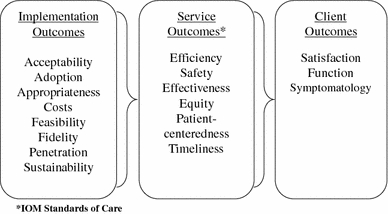
An unresolved issue in the field of implementation research is how to conceptualize and evaluate successful implementation. This paper advances the concept of "implementation outcomes" distinct from service system and clinical treatment outcomes. This paper proposes a heuristic, working "taxonomy" of eight conceptually distinct implementation outcomes-acceptability, adoption, appropriateness, feasibility, fidelity, implementation cost, penetration, and sustainability-along with their nominal definitions. We propose a two-pronged agenda for research on implementation outcomes. Conceptualizing and measuring implementation outcomes will advance understanding of implementation processes, enhance efficiency in implementation research, and pave the way for studies of the comparative effectiveness of implementation strategies.
Overview
The claims and statistics of this paper haven’t been checked yet.
Free: it reads the open-access text and checks the first 5 claims that cite a source we can check. Create a free account to check every claim.
Integrity signals
Registry
Cites
Statistics
Figures
Verification
Claims the paper makes
The claims and statistics of this paper haven’t been checked yet.
Free: it reads the open-access text and checks the first 5 claims that cite a source we can check. Create a free account to check every claim.
Claims other papers make about this one
Each is checked against this paper’s own text: does it say what the citing paper says it does?
The source backs part of the claim, not all of it — or backs it for a different population, condition or comparison.
In the citing paper
“the failure of most implementation processes to incorporate ongoing, iterative intervention development increases the risk that local users will find new technologies to be low on key implementation outcomes such as acceptability, feasibility, and appropriateness (Proctor et al., 2011) and may limit effectiveness (Chambers et al., 2013)”
From User‐centered design for psychosocial intervention development and implementation. (2016) · cites this paper as Proctor et al., 2011
Experimental — accuracy not yet measuredThe source backs part of the claim, not all of it — or backs it for a different population, condition or comparison.
In the citing paper
“Increasing use of implementation frameworks may offer a more systematic evaluation of newborn care packages while clarifying equitable service delivery in vulnerable populations often present in LMIC settings (35, 36).”
From Born too soon in a resource-limited setting: A 10-year mixed methods review of a special care baby unit for refugees and migrants on the Myanmar-Thailand border (2023) · cites this paper as [36]
Experimental — accuracy not yet measuredThe source backs part of the claim, not all of it — or backs it for a different population, condition or comparison.
In the citing paper
“While reporting systems like those by Proctor [1] or Pinnock [75] would optimize learning across studies, few manuscripts specify strategies as recommended [76, 77].”
From A systematic review of experimentally tested implementation strategies across health and human service settings: evidence from 2010-2022 (2024) · cites this paper as [76]
Experimental — accuracy not yet measuredThe source backs part of the claim, not all of it — or backs it for a different population, condition or comparison.
In the citing paper
“implementation outcomes are influenced by a complex interaction of contextual, organizational, workforce, policy, and system-level factors [12,13,14].”
From A Scoping Review of Implemented Innovations in Cancer Care: Implications for Pan-Canadian Scaling (2026) · cites this paper as [14]
Experimental — accuracy not yet measuredThe source backs part of the claim, not all of it — or backs it for a different population, condition or comparison.
In the citing paper
“These factors align closely with established implementation science frameworks that emphasize the importance of organizational readiness, implementation climate, leadership engagement, and continuous learning systems [11,13,14].”
From A Scoping Review of Implemented Innovations in Cancer Care: Implications for Pan-Canadian Scaling (2026) · cites this paper as [14]
Experimental — accuracy not yet measured
39 more claims about this paper
Create a free account to see every claim other papers make about this one.
Self-check
Percentages, sums and reported differences re-computed from the paper’s own numbers.
The self-check needs the paper’s full text.
Citations
Cites
Rogers, E. M., Singhal, A., & Quinlan, M. M. (2019) · An Integrated Approach to Communication Theory and Research · doi:10.4324/9780203710753-35 · Cited by 37,322
Crossing the Quality Chasm: A New Health System for the 21st Century
Baker, A. (2001) · BMJ · doi:10.1136/bmj.323.7322.1192 · Cited by 10,736
Crossing the Quality Chasm: A New Health System for the 21st Century
Committee on Quality of Health Care in America (2002) · Journal For Healthcare Quality · doi:10.1111/j.1945-1474.2002.tb00463.x · Cited by 8,483
Evaluating the public health impact of health promotion interventions: the RE-AIM framework.
Glasgow, R. E., Vogt, T. M., & Boles, S. M. (1999) · American Journal of Public Health · doi:10.2105/ajph.89.9.1322 · Cited by 7,217 · cited 2×
“The literature reflects quite varied uses of the term ‘‘sustainability,’’ but our proposed definition incorporates aspects of those offered by Johnson et al. (2004), Turner and Sanders (2006), Glasgow et al. (1999) , Goodman et al. (1993), and Rabin et al. (2008).”
Background(2005) · Cited by 3,748
Crossing the Quality Chasm: A New Health System for the 21st Century
Bloom, B. S. (2002) · JAMA: The Journal of the American Medical Association · doi:10.1001/jama.287.5.646-a · Cited by 3,726
Making psychological theory useful for implementing evidence based practice: a consensus approach
Michie, S. (2005) · Quality and Safety in Health Care · doi:10.1136/qshc.2004.011155 · Cited by 3,440
Gluesing, J. C. (2012) · Leadership in Science and Technology: A Reference Handbook · doi:10.4135/9781412994231.n14 · Cited by 3,210
Davis, F. D. (1993) · International Journal of Man-Machine Studies · doi:10.1006/imms.1993.1022 · Cited by 2,964 · cited 1×
“Lack of acceptability has long been noted as a challenge in implementation (Davis 1993).”
BackgroundAldenderfer, M. S., & Blashfield, R. K. (1984) · Cited by 2,358
Research works printed but not linked: 6
- 5. Bates, D. M., & Sarkar, D. (2007). lme4: Linear mixed-effects models using S4 classes. R Package Version, 0, 99875-99876.
- 18. Glasgow, R. E. (2007b). The RE-AIM model for planning, evaluation and reporting on implementation and dissemination research. Paper presented at the NIH Conference on Building the Science of Dissemination and Implementation in the Service of Public Health: Bethesda, MD.
- 24. Hayes, S. C. (1998). President's message: Dissemination research now. The Behavior Therapist, 21(9), 166-169.
- Institute of Medicine Committee on Crossing the Quality Chasm. (2006). Adaption to mental health and addictive disorder: Improving the quality of health care for mental and substance-use conditions. Washington, DC: Institute of Medicine, National Academies Press.
- 33. Jones, K. (1997). Mission drift in qualitative research, or moving toward a systematic review of qualitative studies. The Qualita- tive Report, 9(1), 95-112.
- 45. Mihalic, S. (2004). The importance of implementation fidelity. Emotional and Behavioral Disorders in Youth, 4, 83-86.
Cited by
Items 201–300 of 1,109
Bergström, H., Hagströmer, M., Hagberg, J., & Elinder, L. S. (2013) · Research in Developmental Disabilities · doi:10.1016/j.ridd.2013.07.019 · Cited by 119
Clinton-McHarg, T., Yoong, S. L., Tzelepis, F., Regan, T., Fielding, A., Skelton, E., Kingsland, M., Ooi, J. Y., & Wolfenden, L. (2016) · Implementation Science · doi:10.1186/s13012-016-0512-5 · Cited by 116
“The outcomes of interest in the SIRC review are taken from Proctor and colleagues’ Implementation Outcomes Framework (IOF) and focus on the appropriateness, acceptability, feasibility, adoption, penetration, cost, fidelity, and sustainability of the intervention itself [18].”
BackgroundMethodLeveraging Implementation Science to Improve Cancer Care Delivery and Patient Outcomes
Mitchell, S. A., & Chambers, D. (2017) · Journal of Oncology Practice · doi:10.1200/jop.2017.024729 · Cited by 122
“psychometric testing, and given overlap in the constructs measured, their construct validity may be underdeveloped.(36) Some key constructs for implementation have had insufficient implementation outcome measure development.”
BackgroundDeshields, T. L., Gregorio, S. W., Flowers, S. R., Irwin, K. E., Nipp, R. D., Padgett, L. S., & Zebrack, B. (2021) · CA A Cancer Journal for Clinicians · doi:10.3322/caac.21672 · Cited by 159
Advancing implementation science through measure development and evaluation: a study protocol
Lewis, C. C., Weiner, B. J., Stanick, C., & Fischer, S. M. (2015) · Implementation Science · doi:10.1186/s13012-015-0287-0 · Cited by 115
Quantitative approaches for the evaluation of implementation research studies
Smith, J. D., & Hasan, M. M. (2019) · Psychiatry Research · doi:10.1016/j.psychres.2019.112521 · Cited by 174
Welch, V., Ghogomu, E. T., Barbeau, V. I., Dowling, S., Doyle, R., Beveridge, E., Boulton, E., Desai, P., Huang, J., Elmestekawy, N., et al. (2023) · Campbell Systematic Reviews · doi:10.1002/cl2.1369 · Cited by 100
Mark, D., Hrapcak, S., Ameyan, W., Lovich, R., Ronan, A., Schmitz, K., & Hatane, L. (2019) · Current HIV/AIDS Reports · doi:10.1007/s11904-019-00470-5 · Cited by 128
Rabin, B. A., Cakici, J. A., Golden, C. A., Estabrooks, P. A., Glasgow, R. E., & Gaglio, B. (2022) · Implementation Science · doi:10.1186/s13012-022-01234-3 · Cited by 129
Improving practice in community-based settings: a randomized trial of supervision – study protocol
Dorsey, S., Pullmann, M. D., Deblinger, E., Berliner, L., Kerns, S. E., Thompson, K., Unützer, J., Weisz, J. R., & Garland, A. F. (2013) · Implementation Science · doi:10.1186/1748-5908-8-89 · Cited by 113
“Fidelity is defined as ‘the degree to which an intervention was implemented as it was prescribed in the original protocol as it was intended by the program developers’ [28].”
BackgroundPrusaczyk, B., Swindle, T., & Curran, G. M. (2020) · Implementation Science Communications · doi:10.1186/s43058-020-00035-3 · Cited by 124
“In 2011, Proctor and colleagues published a taxonomy of implementation outcomes that has become widely used across the field [13].”
BackgroundMethodInfluentialExpanding Implementation Research to Prevent Chronic Diseases in Community Settings
Mazzucca, S., Arredondo, E. M., Hoelscher, D. M., Haire-Joshu, D. L., Tabak, R. G., Kumanyika, S., & Brownson, R. C. (2021) · Annual Review of Public Health · doi:10.1146/annurev-publhealth-090419-102547 · Cited by 129
Miller, C. J., Adjognon, O. L., Brady, J. E., Dichter, M. E., & Iverson, K. M. (2021) · Implementation Research and Practice · doi:10.1177/26334895211039894 · Cited by 138
“Thus, in this systematic review we focused on 59 studies of IPV screening conducted by frontline clinical personnel, and collected information on clinical effectiveness and implementation outcomes informed by two widely used implementation frameworks (Glasgow et al., 1999; Proctor et al., 2011).”
BackgroundMethodInfluentialTabak, R. G., Sinclair, K. A., Baumann, A. A., Racette, S. B., Sebert Kuhlmann, A., Johnson-Jennings, M. D., & Brownson, R. C. (2015) · Translational Behavioral Medicine · doi:10.1007/s13142-015-0341-0 · Cited by 110
“For the implementation outcomes, we relied on Proctor and colleagues’ taxonomy that includes acceptability, adoption, appropriateness, cost, feasibility, fidelity, penetration, and sustainability [42].”
MethodHunter, C., Funderburk, J., Polaha, J., Bauman, D., Goodie, J., & Hunter, C. (2018) · Journal of clinical psychology in medical settings · doi:10.1007/s10880-017-9512-0 · Cited by 104
“They state “implementation” outcomes (acceptability, adoption, Table 1 Implementation Outcome variables a Definitions taken from Proctor et al. (2011) Implementation outcomes Definition a”
BackgroundMethodInfluentialReid, R. J., Wodchis, W. P., Kuluski, K., Lee-Foon, N. K., Lavis, J. N., Rosella, L. C., & Desveaux, L. (2024) · SSM - Health Systems · doi:10.1016/j.ssmhs.2024.100010 · Cited by 144
Moullin, J. C., Sabater-Hernández, D., & Benrimoj, S. I. (2016) · BMC Health Services Research · doi:10.1186/s12913-016-1689-7 · Cited by 108
“Specifically those wishing to implement should consider the factors that are influencing the implementation effort (also termed determinants of practice or barriers and facilitators) [27–30], which strategies may assist (including implementation interventions) [30–35] and what evaluations should be conducted (encompas…”
Illness Management and Recovery: A Review of the Literature
McGuire, A. B., Kukla, M., Green, A., Gilbride, D. J., Mueser, K. T., & Salyers, M. P. (2013) · Psychiatric Services · doi:10.1176/appi.ps.201200274 · Cited by 125
“Penetration, or “the integration of a practice within a service setting,”(40) can be measured in terms of the number of eligible consumers receiving a”
Aarons, G. A., Green, A. E., Willging, C. E., Ehrhart, M. G., Roesch, S. C., Hecht, D. B., & Chaffin, M. J. (2014) · Implementation Science · doi:10.1186/s13012-014-0183-z · Cited by 107
“Provider fidelity is a critical sustainment outcome [15] that impacts clinical outcomes [83].”
BackgroundSelf-citationJuckett, L., Wengerd, L. R., Faieta, J. M., & Griffin, C. E. (2019) · American Journal of Occupational Therapy · doi:10.5014/ajot.2020.035485 · Cited by 128
Changing Behavior Using the Health Action Process Approach
Schwarzer, R., & Hamilton, K. (2020) · The Handbook of Behavior Change · doi:10.1017/9781108677318.007 · Cited by 102
Orthogeriatrics: The Management of Older Patients with Fragility Fractures
Falaschi, P., & Marsh, D. (2020) · Practical issues in geriatrics · doi:10.1007/978-3-030-48126-1 · Cited by 133
Using Participatory Implementation Science to Advance Health Equity
Ramanadhan, S., Alemán, R., Bradley, C., Cruz, J. L., Safaeinili, N., Simonds, V. W., & Aveling, E. (2023) · Annual Review of Public Health · doi:10.1146/annurev-publhealth-060722-024251 · Cited by 125
Evaluation of Pragmatic Telehealth Physical Therapy Implementation During the COVID-19 Pandemic
Miller, M. J., Pak, S. S., Keller, D. R., & Barnes, D. E. (2021) · Physical Therapy · doi:10.1093/ptj/pzaa193 · Cited by 106
“18 In general, patients were more than satisfied, and 92% of patients reported willingness to participate in another telehealth session.”
InfluentialAdvancing the application, quality and harmonization of implementation science measures
Rabin, B. A., Purcell, P., Naveed, S., Moser, R. P., Henton, M. D., Proctor, E. K., Brownson, R. C., & Glasgow, R. E. (2012) · Implementation Science · doi:10.1186/1748-5908-7-119 · Cited by 106
“[20] and to rate these measures using an expert panel approach focused on the degree of empirical validation (Personal communication with Cara C.”
MethodSelf-citationImplementation science: Relevance in the real world without sacrificing rigor
Geng, E. H., Peiris, D., & Kruk, M. E. (2017) · PLOS Medicine · doi:10.1371/journal.pmed.1002288 · Cited by 106
“Attention to these outcomes sheds light on how interventions were used and how they were adapted (or maladapted) in a particular context [14] and also informs interpretation of effectiveness.”
BackgroundHilty, D. M., Armstrong, C. M., Edwards‐Stewart, A., Gentry, M. T., Luxton, D. D., & Krupinski, E. A. (2021) · Journal of Technology in Behavioral Science · doi:10.1007/s41347-020-00190-3 · Cited by 141
Rapport, F., Smith, J. A., Hutchinson, K., Clay‐Williams, R., Churruca, K., Bierbaum, M., & Braithwaite, J. (2021) · Journal of Evaluation in Clinical Practice · doi:10.1111/jep.13600 · Cited by 124
Nadarzynski, T., Knights, N., Husbands, D., Graham, C. A., Llewellyn, C. D., Buchanan, T., Montgomery, I., & Ridge, D. (2024) · PLOS Digital Health · doi:10.1371/journal.pdig.0000492 · Cited by 117
“Several frameworks exist for evaluating and implementing new technologies in healthcare settings, including the Proctor model [13], the Consolidated Framework for Implementation Research (CFIR) [14], and the Reach, Effectiveness, Adoption, Implementation, and Maintenance (RE-AIM) framework [15].”
MethodValenstein-Mah, H., Greer, N., McKenzie, L., Hansen, L., Strom, T. Q., Wiltsey Stirman, S., Wilt, T. J., & Kehle-Forbes, S. M. (2020) · Implementation Science · doi:10.1186/s13012-020-00998-w · Cited by 104
Kemp, C. G., Weiner, B. J., Sherr, K. H., Kupfer, L. E., Cherutich, P. K., Wilson, D., Geng, E. H., & Wasserheit, J. N. (2018) · AIDS · doi:10.1097/qad.0000000000001897 · Cited by 103
Automated evaluation of psychotherapy skills using speech and language technologies
Flemotomos, N., Martinez, V. R., Chen, Z., Singla, K., Ardulov, V., Peri, R., Caperton, D. D., Gibson, J., Tanana, M. J., Georgiou, P., et al. (2021) · Behavior Research Methods · doi:10.3758/s13428-021-01623-4 · Cited by 98
Social determinants of health and US cancer screening interventions: A systematic review
Korn, A. R., Walsh‐Bailey, C., Correa-Méndez, M., DelNero, P. F., Pilar, M. R., Sandler, B., Brownson, R. C., Emmons, K. M., & Oh, A. (2023) · CA A Cancer Journal for Clinicians · doi:10.3322/caac.21801 · Cited by 138
Stirman, S. W., Gutner, C. A., Langdon, K., & Graham, J. R. (2016) · Behavior Therapy · doi:10.1016/j.beth.2015.12.001 · Cited by 103
Reilly, K. L., Kennedy, S., Porter, G., & Estabrooks, P. (2020) · Frontiers in Public Health · doi:10.3389/fpubh.2020.00430 · Cited by 102
Ringle, V. A., Read, K. L., Edmunds, J. M., Brodman, D. M., Kendall, P. C., Barg, F., & Beidas, R. S. (2015) · Psychiatric Services · doi:10.1176/appi.ps.201400134 · Cited by 102
“Preliminary evidence suggests that provider-level and organizational barriers and facilitators may be predictors of implementation outcomes (14).”
BackgroundGelkopf, M., Mazor, Y., & Roe, D. (2021) · International Journal for Quality in Health Care · doi:10.1093/intqhc/mzz133 · Cited by 127
Person-Centered Cultural Assessment Can Improve Child Mental Health Service Engagement and Outcomes
Sanchez, A. L., Jent, J. F., Aggarwal, N. K., Chavira, D. A., Coxe, S. J., Garcia, D., Roche, M. J. L., & Comer, J. S. (2021) · Journal of Clinical Child & Adolescent Psychology · doi:10.1080/15374416.2021.1981340 · Cited by 111
“…examined equity-informed implementation outcomes – i.e., CFI fidelity, clinical utility, caregiver feeling understood and satisfaction – which can inform broader CFI use, sustainability, and ultimate effects on inequities (Eccles & Mittman, 2006; Proctor et al., 2011; Woodward et al., 2019).”
BackgroundMoise, N., Cené, C. W., Tabak, R. G., Young, D. R., Mills, K. T., Essien, U. R., Anderson, C. A. M., & López-Jiménez, F. A. (2022) · Circulation · doi:10.1161/cir.0000000000001096 · Cited by 112
Johnson, L. G., Armstrong, A., Joyce, C. M., Teitelman, A. M., & Buttenheim, A. M. (2018) · Implementation Science · doi:10.1186/s13012-018-0718-9 · Cited by 115
Hilty, D. M., Chan, S. R., Torous, J. B., Luo, J. S., & BOLAND, R. J. (2020) · JMIR mhealth and uhealth · doi:10.2196/12229 · Cited by 116
“Implementation involves assessment of acceptability, adoption, appropriateness, feasibility, fidelity, implementation cost, penetration, and sustainability [36].”
Factors influencing the delivery of telerehabilitation for stroke: A systematic review
Stephenson, A., Howes, S. C., Murphy, P., Deutsch, J. E., Stokes, M. J., Pedlow, K., & McDonough, S. (2022) · PLoS ONE · doi:10.1371/journal.pone.0265828 · Cited by 119
“Research on the usability and acceptability of telerehabilitation is essential to enhance uptake and sustainability of service delivery [16, 80, 81].”
BackgroundCooperative, T. J.-T., Knight, D. K., Belenko, S., Wiley, T., Robertson, A. A., Arrigona, N., Dennis, M., Bartkowski, J. P., McReynolds, L. S., Becan, J. E., et al. (2015) · Implementation Science · doi:10.1186/s13012-016-0423-5 · Cited by 100
“This approach to fidelity aims to address the domains described by Proctor and colleagues [67] with regard to protocol adherence, dose/exposure, and quality.”
BackgroundHuynh, A. K., Hamilton, A. B., Farmer, M. M., Bean-Mayberry, B., Stirman, S. W., Moin, T., & Finley, E. P. (2018) · Frontiers in Public Health · doi:10.3389/fpubh.2018.00134 · Cited by 100
“We are therefore collecting qualitative data regarding patients’ and providers’ experiences of and engagement with CV Toolkit implementation, including adoption, acceptability, feasibility, engagement, and satisfaction (32).”
MethodCurrent Implementation of Digital Health in Chronic Disease Management: Scoping Review
Pong, C. Y., Tseng, R. M. W. W., Tham, Y. C., & Lum, E. (2024) · Journal of Medical Internet Research · doi:10.2196/53576 · Cited by 126
“Outcome measures used to evaluate the implementation and effectiveness of digital health innovations were sorted into 3 categories, following Proctor et al [21]”
InfluentialKumm, A. J., Viljoen, M., & de Vries, P. J. (2021) · Journal of Autism and Developmental Disorders · doi:10.1007/s10803-021-05084-8 · Cited by 116
Glasgow, R. E., Battaglia, C., McCreight, M., Ayele, R., Maw, A. M., Fort, M. P., Holtrop, J. S., Gomes, R. N., & Rabin, B. A. (2022) · Frontiers in Health Services · doi:10.3389/frhs.2022.959565 · Cited by 90
“Implementation science theories and frameworks have been widely used to plan and tailor interventions and implementation strategies (8–10), and some models such as the Implementation Outcomes Framework (IOF) (11) and the Reach, Effectiveness, Adoption, Implementation, and Maintenance (RE-AIM) (12) framework to guide o…”
MethodAggarwal, N. K., Desilva, R., Nicasio, A. V., Boiler, M., & Lewis-Fernández, R. (2015) · Ethnicity & Health · doi:10.1080/13557858.2013.857762 · Cited by 98
“This framework distinguishes eight implementation outcomes with definitions for feasibility, acceptability, and clinical utility to measure how interventions are introduced in clinical settings (Proctor et al. 2011).”
BackgroundDesigns and methods for implementation research: Advancing the mission of the CTSA program
Hwang, S., Birken, S. A., Melvin, C. L., Rohweder, C. L., & Smith, J. D. (2020) · Journal of Clinical and Translational Science · doi:10.1017/cts.2020.16 · Cited by 109
“” In contrast to effectiveness research, which seeks to assess the influence of interventions on patient outcomes, implementation research evaluates outcomes such as rates of EBI adoption, reach, acceptability, fidelity, cost, and sustainment [5].”
Research Note: Thematic analysis in qualitative research
Ayre, J., & McCaffery, K. J. (2021) · Journal of physiotherapy · doi:10.1016/j.jphys.2021.11.002 · Cited by 184
Deschodt, M., Laurent, G., Cornelissen, L., Yip, O., Zúñiga, F., Denhaerynck, K., Briel, M., Karabegović, A., & Geest, S. D. (2020) · International Journal of Nursing Studies · doi:10.1016/j.ijnurstu.2020.103552 · Cited by 108
Gertner, A. K., Franklin, J., Roth, I., Cruden, G., Haley, A. D., Finley, E. P., Hamilton, A. B., Palinkas, L. A., & Powell, B. J. (2021) · Implementation Research and Practice · doi:10.1177/2633489521992743 · Cited by 114
Advancing the science and practice of precision education to enhance student outcomes
Cook, C. R., Kilgus, S. P., & Burns, M. K. (2017) · Journal of School Psychology · doi:10.1016/j.jsp.2017.11.004 · Cited by 108
Hilty, D. M., Gentry, M. T., McKean, A. J. S., Cowan, K. E., Lim, R. F., & Lu, F. G. (2020) · mHealth · doi:10.21037/mhealth.2019.10.04 · Cited by 108
“A conceptual framework for cultural interventions (80) is needed to assess acceptability, appropriateness, feasibility, fidelity, cost, penetration, and sustainability (112).”
BackgroundBeidas, R. S., Edmunds, J., Ditty, M., Watkins, J., Walsh, L., Marcus, S., & Kendall, P. (2014) · Administration and Policy in Mental Health and Mental Health Services Research · doi:10.1007/s10488-013-0529-x · Cited by 95
Wolfenden, L., Nathan, N., Janssen, L. M., Wiggers, J., Reilly, K., Delaney, T., Williams, C. M., Bell, C., Wyse, R., Sutherland, R., et al. (2017) · Implementation Science · doi:10.1186/s13012-016-0537-9 · Cited by 93
“Proctor and colleagues suggest that the inclusion of a broader range of implementation outcomes including acceptability, adoption, appropriateness, feasibility, penetration and sustainability may offer a more in-depth assessment of implementation processes and impact [41].”
BackgroundModeling with Stakeholders for Transformative Change
van Bruggen, A. R., Nikolić, I., & Kwakkel, J. H. (2019) · Sustainability · doi:10.3390/su11030825 · Cited by 126
“However, this only enables the monitoring of shifts in individual belief, not those of the group as a whole [92].”
BackgroundOrganizational Interventions for Health and Well-being: A Handbook for Evidence-Based Practice
Martin, A., & LaMontagne, A. (2018) · Routledge eBooks · doi:10.4324/9781315410494 · Cited by 105
Werfalli, M., Raubenheimer, P. J., Engel, M. E., Musekiwa, A., Bobrow, K., Peer, N., Hoegfeldt, C. A., Kalula, S., Kengne, A. P., & Levitt, N. S. (2020) · Systematic Reviews · doi:10.1186/s13643-020-01377-8 · Cited by 117
Measurement resources for dissemination and implementation research in health
Rabin, B. A., Lewis, C. C., Norton, W. E., Neta, G., Chambers, D., Tobin, J. N., Brownson, R. C., & Glasgow, R. E. (2015) · Implementation Science · doi:10.1186/s13012-016-0401-y · Cited by 92
“For example, the SIRC Instrument Review Project provides expert-informed rating of measures organized along the CFIR [9] and the Implementation Outcomes Framework [8] making the identification of scientifically sound D&I measurement convenient [2].”
BackgroundMethodImplementation outcome instruments for use in physical healthcare settings: a systematic review
Khadjesari, Z., Boufkhed, S., Vitoratou, S., Schatte, L., Ziemann, A., Daskalopoulou, C., Uglik-Marucha, E., Sevdalis, N., & Hull, L. (2020) · Implementation Science · doi:10.1186/s13012-020-01027-6 · Cited by 92
“Implementation outcomes are defined as ‘the effects of deliberate and purposive actions to implement new treatments, practices, and services’ [10].”
BackgroundA conceptual model to guide research on the activities and effects of innovation champions
Shea, C. M. (2021) · Implementation Research and Practice · doi:10.1177/2633489521990443 · Cited by 113
“Assuming, of course, that the innovation is still desirable from an outcomes perspective and not a candidate for de-implementation (Prasad & Ioannidis, 2014), potential outcomes for the sustainment phase include longitudinal measures of penetration, fidelity, and cost (Proctor et al., 2011).”
InfluentialMetz, A. J. R., Albers, B., Burke, K., Bartley, L., Louison, L., Ward, C. S., & Farley, A. B. (2021) · Human Services Organizations Management Leadership & Governance · doi:10.1080/23303131.2021.1895401 · Cited by 118
The Science of Learning Health Systems: Scoping Review of Empirical Research
Ellis, L. A., Sarkies, M., Churruca, K., Dammery, G., Meulenbroeks, I., Smith, C. L., Pomare, C., Mahmoud, Z., Zurynski, Y. A., & Braithwaite, J. (2022) · JMIR Medical Informatics · doi:10.2196/34907 · Cited by 103
“The implementation outcomes taxonomy by Proctor et al [23] was used as a systematic framework for examining implementation-focused LHS studies (ie, acceptability, adoption, appropriateness, feasibility, fidelity, implementation cost, penetration, and sustainability), distinguishing these from service and patient outco…”
MethodInfluentialCasey, M. M., Harvey, J. T., Telford, A., Eime, R. M., Mooney, A., & Payne, W. R. (2014) · BMC Public Health · doi:10.1186/1471-2458-14-649 · Cited by 91
Blaine, R. E., Franckle, R. L., Ganter, C., Falbe, J., Giles, C., Criss, S., Kwass, J.-A., Land, T., Gortmaker, S. L., Chuang, E., et al. (2017) · Preventing Chronic Disease · doi:10.5888/pcd14.160381 · Cited by 90
“This study describes the implementation of a school-based obesity prevention intervention within the Massachusetts CORD project (MA-CORD) in 2 low-income school districts (8).”
Feely, M., Seay, K. D., Lanier, P., Auslander, W., & Kohl, P. L. (2017) · Child and Adolescent Social Work Journal · doi:10.1007/s10560-017-0512-6 · Cited by 105
Salloum, R. G., Shenkman, E. A., Louviere, J. J., & Chambers, D. A. (2017) · Implementation Science · doi:10.1186/s13012-017-0675-8 · Cited by 87
“The implementation outcomes were derived from Proctor’s Conceptual Framework for Implementation Outcomes [3, 4] and include acceptability, adoption, appropriateness, feasibility, fidelity, implementation cost, penetration, and sustainability.”
BackgroundInfluentialMeasuring implementation fidelity of school-based obesity prevention programmes: a systematic review
Schaap, R., Bessems, K. M. H. H., Otten, R. H. J., Kremers, S., & van Nassau, F. (2018) · International Journal of Behavioral Nutrition and Physical Activity · doi:10.1186/s12966-018-0709-x · Cited by 113
Rogers, L., Brún, A. D., Birken, S. A., Davies, C., & McAuliffe, É. (2020) · BMC Health Services Research · doi:10.1186/s12913-020-05905-z · Cited by 102
“When translating evidence into real-life contexts, it is crucial to understand whether an intervention’s failure is due to an ineffective intervention or whether a potentially effective intervention was deployed incorrectly [43].”
BackgroundMethodInfluentialAshcraft, L. E., Goodrich, D. E., Hero, J., Phares, A., Bachrach, R. L., Quinn, D. A., Qureshi, N., Ernecoff, N. C., Lederer, L. G., Scheunemann, L. P., et al. (2024) · Implementation Science · doi:10.1186/s13012-024-01369-5 · Cited by 89
“While reporting systems like those by Proctor [1] or Pinnock [75] would optimize learning across studies, few manuscripts specify strategies as recommended [76, 77].”
BackgroundLivet, M., Haines, S. T., Curran, G. M., Seaton, T., Ward, C. S., Sorensen, T. D., & McClurg, M. R. (2018) · Pharmacotherapy The Journal of Human Pharmacology and Drug Therapy · doi:10.1002/phar.2114 · Cited by 91
Lee, S. Y., Fisher, J. M., Wand, A. P. F., Milisen, K., Detroyer, E., Sockalingam, S., Agar, M. R., Hosie, A., & Teodorczuk, A. (2020) · European Geriatric Medicine · doi:10.1007/s41999-019-00278-x · Cited by 108
Zakumumpa, H., Rujumba, J., Kwiringira, J. N., Katureebe, C., & Spicer, N. (2020) · BMC Health Services Research · doi:10.1186/s12913-020-5069-y · Cited by 102
Increasing New Teachers’ Specific Praise Using a Within-School Consultation Intervention
Briere, D. E., Simonsen, B. M., Sugai, G. M., & Myers, D. M. (2013) · Journal of Positive Behavior Interventions · doi:10.1177/1098300713497098 · Cited by 89
“The choice to focus on teachers’ specific praise rates is consistent with the focus on implementation outcomes advanced in the implementation science literature (e.g., Proctor et al., 2011).”
ResultRisks, Outcomes, and Evidence-Based Interventions for Girls in the US Juvenile Justice System
Leve, L. D., Chamberlain, P., & Kim, H. K. (2015) · Clinical Child and Family Psychology Review · doi:10.1007/s10567-015-0186-6 · Cited by 107
“However, there are known implementation barriers to broad-scale uptake of these EBPs (Proctor et al. 2011), and it is not known how widely these programs are being implemented with girls and how to successfully increase uptake.”
Lorenzetti, L., Dinh, N., van der Straten, A., Fonner, V., Ridgeway, K., Rodolph, M., Schaefer, R., Schmidt, H. A., & Baggaley, R. (2023) · Journal of the International AIDS Society · doi:10.1002/jia2.26107 · Cited by 89
“Barriers and facilitators of injectable PrEP use aFeasibility is defined as “the extent to which a new treatment, or an innovation, can be successfully used or carried out within a given agency or setting” [23, 24].”
BackgroundChambers, C. T. (2018) · Pain · doi:10.1097/j.pain.0000000000001327 · Cited by 87
“For example, an implementation study of a new pain management intervention would not focus on clinical outcomes alone (eg, reduced pain) but rather would focus on implementation outcomes, such as acceptability, adoption, appropriateness, cost, feasibility, fidelity, penetration, and sustainability (Table 2).(86)”
BackgroundImplementing Routine Health Literacy Assessment in Hospital and Primary Care Patients
Cawthon, C. R., Mion, L. C., Willens, D. E., Roumie, C. L., & Kripalani, S. B. (2014) · The Joint Commission Journal on Quality and Patient Safety · doi:10.1016/s1553-7250(14)40008-4 · Cited by 92
Howell, D., Rosberger, Z., Mayer, C., Faria, R., Hamel, M., Snider, A., Lukosius, D. B., Montgomery, N., Mozuraitis, M., Li, M., et al. (2020) · Journal of Patient-Reported Outcomes · doi:10.1186/s41687-020-00212-x · Cited by 86
“bedding of PROs for guiding healthcare decisionmaking and patient management requires use of implementation strategies to facilitate practice change and redesign of care processes and workflow if improved health outcomes are to be acheived [65].”
MethodRyan, T., Baik, C., & Larcombe, W. (2021) · Higher Education Research & Development · doi:10.1080/07294360.2021.1874886 · Cited by 108
“…the doctoral education experience (Piper & Emmanuel, 2019), and interventions designed to enhance their wellbeing are more likely to be endorsed by HDRs if their perspective is recognised in the development of strategies and key priorities (Flynn, 2015; Halliday et al., 2019; Proctor et al., 2011).”
BackgroundSix practical recommendations for improved implementation outcomes reporting
Lengnick-Hall, R., Gerke, D. R., Proctor, E. K., Bunger, A. C., Phillips, R. J., Martin, J. K., & Swanson, J. C. (2022) · Implementation Science · doi:10.1186/s13012-021-01183-3 · Cited by 86
“Appropriateness is the perceived fit, relevance, or compatibility of an innovation or evidencebased practice for a given practice setting, provider, or consumer; and/or perceived fit of the innovation to address a particular issue or problem [3].”
BackgroundMethodInfluentialSelf-citationAlley, Z. M., Chapman, J. E., Schaper, H., & Saldana, L. (2023) · Implementation Science · doi:10.1186/s13012-023-01285-0 · Cited by 86
“Such measurement may be a critical consideration for reducing the well-known gap between knowledge and practice [9].”
BackgroundGlasgow, R. E., Fisher, L., Strycker, L. A., Hessler, D., Toobert, D. J., King, D. K., & Jacobs, T. (2014) · Translational Behavioral Medicine · doi:10.1007/s13142-013-0232-1 · Cited by 87
“Because of known relationships between intervention cost, complexity, and demand, with reduced adoption by settings, reach (participation among individuals), implementation, and sustainability [15], these implementation outcomes [38] may be the areas in which MINCs show their strongest effects.”
BackgroundInterventions to Improve Oral Chemotherapy Safety and Quality: A Systematic Review
Zerillo, J. A., Goldenberg, B. A., Kotecha, R. R., Tewari, A. K., Jacobson, J. O., & Krzyzanowska, M. K. (2017) · JAMA Oncology · doi:10.1001/jamaoncol.2017.0625 · Cited by 97
“Furthermore, studies should report both implementation and process metrics as well as impact on clinical outcomes.(67) Understanding both implementa-”
Koczwara, B., Stover, A. M., Davies, L., Davis, M. M., Fleisher, L. G., Ramanadhan, S., Schroeck, F. R., Zullig, L. L., Chambers, D., & Proctor, E. K. (2018) · Journal of Oncology Practice · doi:10.1200/jop.17.00083 · Cited by 90
“implementation success, but more recently, it has recognized that treatment outcomes are distinct from implementation outcomes.(6) Both fields are now calling for, in their own settings, a clearer definition and emphasis of ideas, such as acceptability to and effect on stakeholders, adoption/uptake, appropriateness fo…”
BackgroundSelf-citationMeasures for Predictors of Innovation Adoption
Chor, K. H. B., Wisdom, J. P., Olin, S.-C. S., Hoagwood, K. E., & Horwitz, S. M. (2015) · Administration and Policy in Mental Health and Mental Health Services Research · doi:10.1007/s10488-014-0551-7 · Cited by 85
“In health and behavioral health, adoption is a key implementation outcome (Proctor et al. 2011; Proctor & Brownson 2012) because the latter cannot occur without the former, and implementation does not necessarily follow the contemplation, decision, and commitment to adopt an innovation suchas anevidence-based practice…”
BackgroundWare, P., Ross, H. J., Cafazzo, J. A., Laporte, A., Gordon, K., & Seto, E. (2018) · JMIR mHealth and uHealth · doi:10.2196/10768 · Cited by 85
“7 | e10768 | p. 3http://mhealth.jmir.org/2018/7/e10768/ (page number not for citation purposes) XSL•FO RenderX 12 months4 monthsImplementation outcomea and indicator Adoption 83Number of clinicians having decided to use Medly to monitor patients Penetration 8938Percentage of clinicians using Medly over the total numbe…”
BackgroundMethodInfluentialWilliams, N. J., Glisson, C., Hemmelgarn, A., & Green, P. (2017) · Administration and Policy in Mental Health and Mental Health Services Research · doi:10.1007/s10488-016-0742-5 · Cited by 86
“Guided by the taxonomy of implementation outcomes proposed by Proctor et al. (2010) EBP adoption was conceptualized in this study as any action to try or employ an EBP including a clinician’s initial implementation of an EBP.”
InfluentialPrecision pharmacotherapy: Integrating pharmacogenomics into clinical pharmacy practice
Hicks, J. K., Aquilante, C. L., Dunnenberger, H. M., Gammal, R. S., Funk, R. S., Aitken, S. L., Bright, D. R., Coons, J. C., Dotson, K. M., Elder, C. T., et al. (2019) · JACCP JOURNAL OF THE AMERICAN COLLEGE OF CLINICAL PHARMACY · doi:10.1002/jac5.1118 · Cited by 97
“Along the same lines, there is an increased need for rigorous qualitative research studies to evaluate patient and provider perspectives about the clinical usefulness of pharmacogenomic testing.(81) The current era of precision medicine extends beyond genomics and seeks to integrate patient health data (eg, kidney and…”
BackgroundVis, C., Ruwaard, J., Finch, T. L., Rapley, T., Beurs, D. P. D., van Stel, H. F., van Lettow, B., Mol, M., Kleiboer, A. M., Riper, H. M., et al. (2019) · Journal of Medical Internet Research · doi:10.2196/12376 · Cited by 91
“However, measuring implementation outcomes reliably remains a challenge [11,12].”
Health Literacy Interventions in Cancer: a Systematic Review
Housten, A. J., Gunn, C. M., Paasche‐Orlow, M. K., & Basen‐Engquist, K. (2020) · Journal of Cancer Education · doi:10.1007/s13187-020-01915-x · Cited by 87
Opportunities for Epidemiologists in Implementation Science: A Primer
Neta, G. I., Brownson, R. C., & Chambers, D. (2017) · American Journal of Epidemiology · doi:10.1093/aje/kwx323 · Cited by 100
Integrative review of clinical decision support for registered nurses in acute care settings
Dunn Lopez, K., Gephart, S. M., Raszewski, R., Sousa, V., Shehorn, L. E., & Abraham, J. (2017) · Journal of the American Medical Informatics Association · doi:10.1093/jamia/ocw084 · Cited by 83
“Moreover, using adapted instruments without carefully attending to the appropriate steps of instrument development/assessment and reporting psychometrics may compromise the real-world impact of the findings.(62) The use of lab settings for assessing usability was limited to 9 studies.”
MethodLakerveld, J., Woods, C. B., Hebestreit, A., Brenner, H., Flechtner‐Mors, M., Harrington, J. M., Kamphuis, C. B. M., Laxy, M., Łuszczyńska, A., Mazzocchi, M., et al. (2020) · Food Policy · doi:10.1016/j.foodpol.2020.101873 · Cited by 98
Magidson, J. F., Joska, J. A., Belus, J. M., Andersen, L. S., Regenauer, K. S., Rose, A. L., Myers, B., Majokweni, S., O’Cleirigh, C., & Safren, S. A. (2021) · Journal of the International AIDS Society · doi:10.1002/jia2.25720 · Cited by 82
“Implementation outcomes were guided by Proctor’s model [40], including feasibility, acceptability, appropriateness and fidelity.”
MethodContextual factors related to implementation of classroom physical activity breaks
Carlson, J., Engelberg, J. K., Cain, K. L., Conway, T. L., Geremia, C. M., Bonilla, E. A., Kerner, J. F., & Sallis, J. F. (2017) · Translational Behavioral Medicine · doi:10.1007/s13142-017-0509-x · Cited by 94
“, fidelity, reach/penetration) [24], few have investigated implementation contextual factors in real-world settings (i.”
Hoskins, K., Ulrich, C. M., Shinnick, J. E., & Buttenheim, A. M. (2019) · Preventive Medicine · doi:10.1016/j.ypmed.2019.105762 · Cited by 89
Lewis, C. C., Powell, B. J., Brewer, S. K., Nguyen, A. M., Schriger, S. H., Vejnoska, S. F., Walsh-Bailey, C., Aarons, G. A., Beidas, R. S., Lyon, A. R., et al. (2021) · BMJ Open · doi:10.1136/bmjopen-2021-053474 · Cited by 83
Self-citationWike, T. L., Bledsoe, S. E., Manuel, J. I., Despard, M., Johnson, L. V., Bellamy, J. L., & Killian-Farrell, C. (2014) · Clinical Social Work Journal · doi:10.1007/s10615-014-0492-3 · Cited by 105
“Much of this perception can be attributed to the difficulty in distinguishing between implementation effectiveness and treatment effectiveness (Proctor et al. 2011).”
Metadata
- Authors
- Proctor, E., Silmere, H., Raghavan, R., Hovmand, P., Aarons, G., Bunger, A., Griffey, R., & Hensley, M.
- Affiliations
- Washington University in St. Louis (US)
- Roberts Wesleyan College (US)
- Corresponding author
- Proctor, Enola
- Venue
- Administration and Policy in Mental Health and Mental Health Services Research
- Published
- 2010-10-19
- Volume
- 38
- Issue
- 2
- Pages
- 65-76
- ISSN
- 0894-587X (ISSN-L)
- 1573-3289
- PMC
- PMC3068522
- OpenAlex
- W2140092196
- Semantic Scholar
- 3c7cf782e4094a7d66d8ad5da80a8083a8e72307
- Cited by
- 8,721
- References
- 71
- Citations by year
- 2026: 1487 · 2025: 1144 · 2024: 1303 · 2023: 1041 · 2022: 950 · 2021: 893 · 2020: 669 · 2019: 391 · 2018: 253 · 2017: 162 · 2016: 122 · 2015: 116 · 2014: 83 · 2013: 57 · 2012: 28
- FWCI
- 56.95
- Type
- journal article
- Language
- en
- Open access
- hybrid
- doi.org
- Licence
- cc-by-nc
- Locations
- Administration and Policy in Mental Health and Mental Health Services Research (publishedVersion, cc-by-nc)
- Europe PMC (PubMed Central) (publishedVersion, cc-by-nc)
- PubMed Central (publishedVersion, cc-by-nc)
- PubMed (publishedVersion)
- Funders
- National Institutes of Health (5p30mh068579-05)
- National Institute of Mental Health (P30-MH-068579, T32MH019960)
- National Center for Research Resources (UL1RR024992)
- Topics
- Health Sciences › Health Professions › General Health Professions › Health Policy Implementation Science
- Health Sciences › Health Professions › General Health Professions › Health Sciences Research and Education
- Health Sciences › Health Professions › General Health Professions › Mental Health and Patient Involvement
- Keywords
- implementation outcomes, implementation research, acceptability, adoption, appropriateness, feasibility, fidelity, implementation costs, penetration, sustainability, implementation strategies, mental health services
- MeSH terms
- Diffusion of Innovation, Humans, Mental Health Services, Outcome and Process Assessment, Health Care, Biomedical Research
About these checks
Registry, retraction, Cites and statistics results are computed, not judged, with one exception: a printed reference that no index lists is read once by a model before it counts as a citation error. Claims are extracted by a model and kept only when their quote appears verbatim in the text; each cited source is then checked, with a model’s help, for whether it says what the claim relies on. Those verdicts can be wrong — read the claim’s quote and the cited source before relying on one.
Statistics and arithmetic are recomputed, not judged.
Confidence bands are shown only for fields calibrated on our annotated test set. None is calibrated yet, so no band is shown.
What counts as a claim ›How we measure confidence ›How we check this ›
Are you an author, or do you see a problem with this page? Request a review
Data sources
Bibliographic data: Semantic Scholar, OpenAlex, Crossref.
Contains information from the Semantic Scholar Academic Graph Datasets, made available under the ODC Attribution License (ODC-BY 1.0).
Semantic Scholar’s data is described in: Kinney, R., et al. (2023). The Semantic Scholar Open Data Platform. arXiv:2301.10140.
