

Outcomes for Implementation Research: Conceptual Distinctions, Measurement Challenges, and Research Agenda
Open accessThe DOI matches its Crossref record; 72 of the 72 references it cites were found in a registry or an index.
Abstract
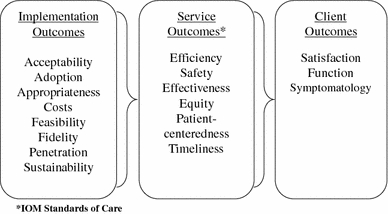
An unresolved issue in the field of implementation research is how to conceptualize and evaluate successful implementation. This paper advances the concept of "implementation outcomes" distinct from service system and clinical treatment outcomes. This paper proposes a heuristic, working "taxonomy" of eight conceptually distinct implementation outcomes-acceptability, adoption, appropriateness, feasibility, fidelity, implementation cost, penetration, and sustainability-along with their nominal definitions. We propose a two-pronged agenda for research on implementation outcomes. Conceptualizing and measuring implementation outcomes will advance understanding of implementation processes, enhance efficiency in implementation research, and pave the way for studies of the comparative effectiveness of implementation strategies.
Overview
The claims and statistics of this paper haven’t been checked yet.
Free: it reads the open-access text and checks the first 5 claims that cite a source we can check. Create a free account to check every claim.
Integrity signals
Registry
Cites
Statistics
Figures
Verification
Claims the paper makes
The claims and statistics of this paper haven’t been checked yet.
Free: it reads the open-access text and checks the first 5 claims that cite a source we can check. Create a free account to check every claim.
Claims other papers make about this one
Each is checked against this paper’s own text: does it say what the citing paper says it does?
The source backs part of the claim, not all of it — or backs it for a different population, condition or comparison.
In the citing paper
“the failure of most implementation processes to incorporate ongoing, iterative intervention development increases the risk that local users will find new technologies to be low on key implementation outcomes such as acceptability, feasibility, and appropriateness (Proctor et al., 2011) and may limit effectiveness (Chambers et al., 2013)”
From User‐centered design for psychosocial intervention development and implementation. (2016) · cites this paper as Proctor et al., 2011
Experimental — accuracy not yet measuredThe source backs part of the claim, not all of it — or backs it for a different population, condition or comparison.
In the citing paper
“Increasing use of implementation frameworks may offer a more systematic evaluation of newborn care packages while clarifying equitable service delivery in vulnerable populations often present in LMIC settings (35, 36).”
From Born too soon in a resource-limited setting: A 10-year mixed methods review of a special care baby unit for refugees and migrants on the Myanmar-Thailand border (2023) · cites this paper as [36]
Experimental — accuracy not yet measuredThe source backs part of the claim, not all of it — or backs it for a different population, condition or comparison.
In the citing paper
“While reporting systems like those by Proctor [1] or Pinnock [75] would optimize learning across studies, few manuscripts specify strategies as recommended [76, 77].”
From A systematic review of experimentally tested implementation strategies across health and human service settings: evidence from 2010-2022 (2024) · cites this paper as [76]
Experimental — accuracy not yet measuredThe source backs part of the claim, not all of it — or backs it for a different population, condition or comparison.
In the citing paper
“implementation outcomes are influenced by a complex interaction of contextual, organizational, workforce, policy, and system-level factors [12,13,14].”
From A Scoping Review of Implemented Innovations in Cancer Care: Implications for Pan-Canadian Scaling (2026) · cites this paper as [14]
Experimental — accuracy not yet measuredThe source backs part of the claim, not all of it — or backs it for a different population, condition or comparison.
In the citing paper
“These factors align closely with established implementation science frameworks that emphasize the importance of organizational readiness, implementation climate, leadership engagement, and continuous learning systems [11,13,14].”
From A Scoping Review of Implemented Innovations in Cancer Care: Implications for Pan-Canadian Scaling (2026) · cites this paper as [14]
Experimental — accuracy not yet measured
39 more claims about this paper
Create a free account to see every claim other papers make about this one.
Self-check
Percentages, sums and reported differences re-computed from the paper’s own numbers.
The self-check needs the paper’s full text.
Citations
Cites
Rogers, E. M., Singhal, A., & Quinlan, M. M. (2019) · An Integrated Approach to Communication Theory and Research · doi:10.4324/9780203710753-35 · Cited by 37,322
Crossing the Quality Chasm: A New Health System for the 21st Century
Baker, A. (2001) · BMJ · doi:10.1136/bmj.323.7322.1192 · Cited by 10,736
Crossing the Quality Chasm: A New Health System for the 21st Century
Committee on Quality of Health Care in America (2002) · Journal For Healthcare Quality · doi:10.1111/j.1945-1474.2002.tb00463.x · Cited by 8,483
Evaluating the public health impact of health promotion interventions: the RE-AIM framework.
Glasgow, R. E., Vogt, T. M., & Boles, S. M. (1999) · American Journal of Public Health · doi:10.2105/ajph.89.9.1322 · Cited by 7,217 · cited 2×
“The literature reflects quite varied uses of the term ‘‘sustainability,’’ but our proposed definition incorporates aspects of those offered by Johnson et al. (2004), Turner and Sanders (2006), Glasgow et al. (1999) , Goodman et al. (1993), and Rabin et al. (2008).”
Background(2005) · Cited by 3,748
Crossing the Quality Chasm: A New Health System for the 21st Century
Bloom, B. S. (2002) · JAMA: The Journal of the American Medical Association · doi:10.1001/jama.287.5.646-a · Cited by 3,726
Making psychological theory useful for implementing evidence based practice: a consensus approach
Michie, S. (2005) · Quality and Safety in Health Care · doi:10.1136/qshc.2004.011155 · Cited by 3,440
Gluesing, J. C. (2012) · Leadership in Science and Technology: A Reference Handbook · doi:10.4135/9781412994231.n14 · Cited by 3,210
Davis, F. D. (1993) · International Journal of Man-Machine Studies · doi:10.1006/imms.1993.1022 · Cited by 2,964 · cited 1×
“Lack of acceptability has long been noted as a challenge in implementation (Davis 1993).”
BackgroundAldenderfer, M. S., & Blashfield, R. K. (1984) · Cited by 2,358
Research works printed but not linked: 6
- 5. Bates, D. M., & Sarkar, D. (2007). lme4: Linear mixed-effects models using S4 classes. R Package Version, 0, 99875-99876.
- 18. Glasgow, R. E. (2007b). The RE-AIM model for planning, evaluation and reporting on implementation and dissemination research. Paper presented at the NIH Conference on Building the Science of Dissemination and Implementation in the Service of Public Health: Bethesda, MD.
- 24. Hayes, S. C. (1998). President's message: Dissemination research now. The Behavior Therapist, 21(9), 166-169.
- Institute of Medicine Committee on Crossing the Quality Chasm. (2006). Adaption to mental health and addictive disorder: Improving the quality of health care for mental and substance-use conditions. Washington, DC: Institute of Medicine, National Academies Press.
- 33. Jones, K. (1997). Mission drift in qualitative research, or moving toward a systematic review of qualitative studies. The Qualita- tive Report, 9(1), 95-112.
- 45. Mihalic, S. (2004). The importance of implementation fidelity. Emotional and Behavioral Disorders in Youth, 4, 83-86.
Cited by
Items 301–400 of 1,109
Chard, A. N., Garn, J. V., Chang, H. H., Clasen, T., & Freeman, M. C. (2019) · Journal of Global Health · doi:10.7189/jogh.09.020402 · Cited by 81
Hilty, D. M., Torous, J., Parish, M. B., Chan, S. R., Xiong, G., Scher, L., & Yellowlees, P. M. (2021) · Telemedicine and e-Health · doi:10.1089/tmj.2020.0054 · Cited by 81
“92,93 This could tackle other significant challenges related to asynchronous technology research that have been largely overlooked—clarity/ definition of terminology, interventions, and feasibility.”
Al-Omary, H., Soltani, A., Stewart, D. C., & Nazar, Z. J. (2024) · BMC Medical Education · doi:10.1186/s12909-024-06016-7 · Cited by 109
“Other implementation frameworks include the Proctor taxonomy of implementation outcomes [74] and RE-AIM [75], and have also been applied to the health domain to evaluation implementation.”
MethodChild Welfare Caseworkers as Service Brokers for Youth in Foster Care
Dorsey, S., Kerns, S. E. U., Trupin, E. W., Conover, K. L., & Berliner, L. (2012) · Child Maltreatment · doi:10.1177/1077559511429593 · Cited by 81
“Feasibility testing involved both a small pilot trial with one office and examining key early stage implementation outcomes (Proctor et al., 2010) of Project Focus for the two intervention offices involved in the randomized trial.”
MethodNelson, G. B., Stefančić, A., Rae, J., Townley, G., Tsemberis, S. J., Macnaughton, E., Aubry, T., Distasio, J., Hurtubise, R., Patterson, M., et al. (2013) · Evaluation and Program Planning · doi:10.1016/j.evalprogplan.2013.10.004 · Cited by 98
“Proctor et al. (2011) have conceptualized fidelity as one important implementation outcome.”
BackgroundDomitrovich, C. E., Li, Y., Mathis, E. T., & Greenberg, M. T. (2019) · Journal of School Psychology · doi:10.1016/j.jsp.2019.07.015 · Cited by 80
Model for the evaluation of implementation programs and professional pharmacy services
Moullin, J. C., Sabater‐Hernández, D., & Benrimoj, S. I. (2015) · Research in Social and Administrative Pharmacy · doi:10.1016/j.sapharm.2015.08.003 · Cited by 100
Comparative use of the Ages and Stages Questionnaires in low‐ and middle‐income countries
Small, J. W., Hix‐Small, H., Vargas-Barón, E., & Marks, K. P. (2018) · Developmental Medicine & Child Neurology · doi:10.1111/dmcn.13938 · Cited by 82
“Feasibility studies assess ‘the extent to which a new treatment, or innovation, can be successfully used or carried out within a given agency or setting’.(30) In general, feasibility studies involved smaller samples than psychometric studies; involved examination of fewer ASQ age intervals; utilized convenience sample…”
BackgroundGhate, D. (2018) · Palgrave Communications · doi:10.1057/s41599-018-0139-z · Cited by 80
Cohen, F., & Yaeger, L. (2021) · Implementation Research and Practice · doi:10.1177/2633489521998790 · Cited by 88
“Frameworks such as RE-AIM, CFIR (Consolidated Framework for Implementation Research), and various others are useful to guide the development and rigorous evaluation of interventions (Powell et al., 2015; Proctor et al., 2011, 2013).”
Menhadji, P., Patel, R., Asimakopoulou, K. G., Quinn, B. F. A., Khoshkhounejad, G., Pasha, P., García-Sánchez, R., Ide, M., Kalsi, P., & Nibali, L. (2021) · Journal of Dentistry · doi:10.1016/j.jdent.2021.103782 · Cited by 80
“The current literature on the value of tele-dentistry is limited to care providers [6–8] and assessing outcomes at the patient and dentist level, may be helpful in evaluating successful implementation of new procedures, such as video consultations into dental service [9].”
Juckett, L., Bunger, A. C., McNett, M., Robinson, M. L., & Tucker, S. (2022) · Implementation Science · doi:10.1186/s13012-022-01216-5 · Cited by 92
“Because many initiatives are often designed with the long-term goal of improving implementation in real-world settings, additional implementation outcomes that might be especially relevant to practitioners may include adoption, fidelity, penetration, and sustainability [45].”
BackgroundSelf-citationShire, S. Y., Goods, K. S., Shih, W., DiStefano, C., Kaiser, A. P., Wright, C., Mathy, P., Landa, R. J., & Kasari, C. L. (2014) · Journal of Autism and Developmental Disorders · doi:10.1007/s10803-014-2329-x · Cited by 104
Policy to implementation: evidence-based practice in community mental health – study protocol
Beidas, R. S., Aarons, G., Barg, F., Evans, A., Hadley, T., Hoagwood, K., Marcus, S., Schoenwald, S., Walsh, L., & Mandell, D. S. (2013) · Implementation Science · doi:10.1186/1748-5908-8-38 · Cited by 81
“We selected fidelity, ‘the degree to which an intervention was implemented as it was prescribed’ [18], as the primary implementation outcome given its documented association with youth outcomes [19].”
BackgroundSelf-citationSilumbwe, A., Zulu, J. M., Halwiindi, H., Jacobs, C. N., Zgambo, J., Dambe, R., Chola, M., Chongwe, G., & Michelo, C. (2017) · BMC Public Health · doi:10.1186/s12889-017-4414-5 · Cited by 99
“Studies were included if they assessed the following implementation outcomes; (i) Treatment coverage/compliance, defined as the proportion of individuals, expressed as percentage of the target population who received and swallowed a drug or combination of drugs [26]; (ii) Program sustainability, referred to the proces…”
BackgroundIt’s time to close the research to practice gap in autism: The need for implementation science
Boyd, B. A., Stahmer, A. C., Odom, S. L., Wallisch, A. M., & Matheis, M. (2021) · Autism · doi:10.1177/13623613211064422 · Cited by 88
Dopp, A. R., Narcisse, M.-R., Mundey, P., Silovsky, J. F., Smith, A. B., Mandell, D., Funderburk, B. W., Powell, B. J., Schmidt, S., Edwards, D., et al. (2020) · Implementation Research and Practice · doi:10.1177/2633489520939980 · Cited by 79
“We grounded our figure in three key outcomes that the implementation strategies influence: EBP acceptability, appropriateness, and feasibility (Proctor et al., 2011).”
BackgroundMethodPowell, B. J., Mettert, K. D., Dorsey, C. N., Weiner, B. J., Stanick, C. F., Lengnick-Hall, R., Ehrhart, M. G., Aarons, G. A., Barwick, M. A., Damschroder, L. J., et al. (2021) · Implementation Research and Practice · doi:10.1177/26334895211018862 · Cited by 79
“…by the U.S. National Institute of Mental Health, which included multiple systematic reviews that identified implementation determinant (Damschroder et al., 2009) and outcome (Proctor et al., 2011) measures that were used within implementation studies in behavioral health (Lewis et al., 2018).”
BackgroundMethodSelf-citationThe MOHR Study Group, Krist, A. H., Glenn, B. A., Glasgow, R. E., Balasubramanian, B. A., Chambers, D. A., Fernandez, M. E., Heurtin-Roberts, S., Kessler, R., Ory, M. G., et al. (2013) · Implementation Science · doi:10.1186/1748-5908-8-73 · Cited by 78
“The primary outcomes for this study are implementation measures [15].”
BackgroundLau, A. S., & Brookman-Frazee, L. (2015) · Implementation Science · doi:10.1186/s13012-016-0388-4 · Cited by 80
“It can be measured as the number of eligible individuals who use/deliver a treatment, divided by the number of eligible individuals [17].”
BackgroundInfluentialClack, L., Zingg, W., Saint, S. K., Casillas, A., Touveneau, S., Jantarada, F. D. L., Willi, U., van der Kooi, T. I. I., Damschroder, L. J., Forman, J. H., et al. (2018) · BMJ Quality & Safety · doi:10.1136/bmjqs-2017-007675 · Cited by 91
“Extent of ‘intervention fidelity’, or the extent to which the intervention was implemented as specified by the PROHIBIT study protocol 23 26 was assessed by interviews and triangulated based on field notes.”
BackgroundMethodCompetences for implementation science: what trainees need to learn and where they learn it
Schultes, M.-T., Aijaz, M., Klug, J., & Fixsen, D. L. (2020) · Advances in Health Sciences Education · doi:10.1007/s10459-020-09969-8 · Cited by 94
Peryer, G., Kelly, S., Blake, J., Burton, J. K., Irvine, L., Cowan, A., Akdur, G., Killett, A., Brand, S. L., Musa, M. K., et al. (2022) · Age and Ageing · doi:10.1093/ageing/afac014 · Cited by 96
“Process evaluations explore the relationship, similarities and differences between an intervention as planned and implemented [23, 33–37], taking account of contextual factors and their potential influence on study outcomes [20, 22, 23, 38–40].”
BackgroundSaldana, L., Ritzwoller, D. P., Campbell, M. R., & Block, E. P. (2022) · Implementation Science Communications · doi:10.1186/s43058-022-00295-1 · Cited by 86
“Conversely, implementation studies often focus on organizational outcomes such as adoption, feasibility, fidelity, penetration, reach, and sustainability [19].”
BackgroundPeters‐Corbett, A., Parke, S., Bear, H. A., & Clarke, T. (2023) · Child and Adolescent Mental Health · doi:10.1111/camh.12672 · Cited by 101
Thompson-Brenner, H., Boswell, J. F., Espel-Huynh, H., Brooks, G., & Lowe, M. R. (2019) · Psychotherapy Research · doi:10.1080/10503307.2018.1446563 · Cited by 80
“This study aimed to investigate key implementation and patient outcomes (Proctor et al., 2011) in the context of a comprehensive psychotherapy implementation effort in residential ED treatment settings.”
BackgroundAbelson, J., Tripp, L., Kandasamy, S., Burrows, K. E., & on behalf of the PPEET Implementation Study Team (2019) · Health Expectations · doi:10.1111/hex.12949 · Cited by 83
Deenik, J., Czosnek, L., Teasdale, S. B., Stubbs, B., Firth, J., Schuch, F. B., Tenback, D. E., van Harten, P. N., Tak, E. C. P. M., Lederman, O., et al. (2020) · Translational Behavioral Medicine · doi:10.1093/tbm/ibz067 · Cited by 77
“Such studies should assess measures of acceptability, adoption, fidelity, implementation costs, and sustainability in addition to clinical markers [46] (Fig.”
BackgroundSerhal, E., Arena, A., Sockalingam, S., Mohri, L., & Crawford, A. S. (2018) · Journal of Continuing Education in the Health Professions · doi:10.1097/ceh.0000000000000195 · Cited by 84
“ensuring implementation success.(7,8) Similarly, we selected this framework, as it provided us with a comprehensive list of implementation outcomes by aggregating common taxonomy proposed through important implementation outcome evaluation frameworks (eg, Roger’s Theory of Diffusion of Innovation(26) and the RE-AIM Fr…”
MethodResultInfluentialCook, C. R., Duong, M. T., McIntosh, K., Fiat, A. E., Larson, M., Pullmann, M. D., & McGinnis, J. (2018) · School Psychology Review · doi:10.17105/spr-2017-0026.v47-2 · Cited by 77
“Feasibility refers to suitability and relative ease for everyday use (Proctor et al., 2011), while likely effectiveness refers to the solution’s potential to produce desired changes in outcomes when implemented with fidelity.”
BackgroundWilfley, D. E., Hayes, J. F., Balantekin, K. N., Buren, D. J. V., & Epstein, L. H. (2018) · American Psychologist · doi:10.1037/amp0000293 · Cited by 93
“Primary outcomes for this type of research are often different from those typically considered in RCTs and include treatment acceptability, adoption, appropriateness, feasibility, fidelity, implementation cost, penetration, and sustainability (Proctor et al., 2011).”
Ramsey, A., Lord, S., Torrey, J., Marsch, L., & Lardiere, M. (2016) · The Journal of Behavioral Health Services & Research · doi:10.1007/s11414-014-9436-5 · Cited by 77
Ghate, D. (2016) · Journal of Clinical Child & Adolescent Psychology · doi:10.1080/15374416.2015.1077449 · Cited by 76
“The construct of implementation outcomes has also been brought into sharper focus by means of implementation theory, as distinct from treatment or intervention outcomes (Proctor et al., 2011).”
BackgroundBruns, E. J., Duong, M. T., Lyon, A. R., Pullmann, M. D., Cook, C. R., Cheney, D., & McCauley, E. (2016) · American Journal of Orthopsychiatry · doi:10.1037/ort0000083 · Cited by 77
“As a result, intervention-setting appropriateness – defined as “the perceived fit, relevance, or compatibility of the innovation or evidence-based practice for a given practice setting, provider, or consumer” (Proctor et al., 2011, p. 69) – is often suboptimal.”
BackgroundMeza, R. D., Triplett, N. S., Woodard, G. S., Martin, P., Khairuzzaman, A. N., Jamora, G., & Dorsey, S. (2021) · Implementation Science · doi:10.1186/s13012-021-01104-4 · Cited by 76
“Studies failed to examine implementation outcomes reflecting provider perceptions; however, these are likely related to the behavioral implementation outcomes [63].”
BackgroundMethodInfluentialBuilding capacity for dissemination and implementation research: one university’s experience
Brownson, R. C., Proctor, E. K., Luke, D. A., Baumann, A. A., Staub, M., Brown, M. T., & Johnson, M. O. (2017) · Implementation Science · doi:10.1186/s13012-017-0634-4 · Cited by 84
“These efforts have resulted in advances across numerous areas of D&I science including: models and frameworks [44, 45], D&I strategies [53 – 55], D&I outcomes [46], sustainability [56, 57], systems science [23, 58], dissemination planning [59 – 61], and the scholarship of training [5, 41, 43].”
Self-citationMalo, T. L., Hall, M. E., Brewer, N. T., Lathren, C., & Gilkey, M. B. (2018) · Implementation Science · doi:10.1186/s13012-018-0743-8 · Cited by 76
“The implications of our findings are that TPB constructs may not be sufficient for understanding intervention impact and likely need to be considered in the context of implementation outcomes, such as acceptability [29].”
BackgroundImplementation Science Training and Resources for Nurses and Nurse Scientists
Boehm, L. M., Stolldorf, D. P., & Jeffery, A. D. (2019) · Journal of Nursing Scholarship · doi:10.1111/jnu.12510 · Cited by 81
“, safe, effective, equitable, timely) (Proctor et al., 2011).”
BackgroundDigital Storytelling for Health-Related Outcomes in Older Adults: Systematic Review
Stargatt, J., Bhar, S. S., Bhowmik, J., & Mahmud, A. A. (2022) · Journal of Medical Internet Research · doi:10.2196/28113 · Cited by 91
“We operationalized the implementation characteristics detailed by Peters et al [42] based on the framework by Proctor et al [43].”
MethodChaparro, J. D., Beus, J. M., Dziorny, A. C., Hagedorn, P. A., Hernandez, S., Kandaswamy, S., Kirkendall, E. S., McCoy, A. B., Muthu, N., & Orenstein, E. W. (2022) · Applied Clinical Informatics · doi:10.1055/s-0042-1748856 · Cited by 76
Parvez, S. M., Azad, R., Rahman, M., Unicomb, L., Ram, P. K., Naser, A. M., Stewart, C. P., Jannat, K., Rahman, M. J., Leontsini, E., et al. (2018) · Trials · doi:10.1186/s13063-018-2710-8 · Cited by 77
To warrant clinical adoption AI models require a multi-faceted implementation evaluation
van de Sande, D., Chung, E. F. F., Oosterhoff, J., van Bommel, J., Gommers, D., & van Genderen, M. E. (2024) · npj Digital Medicine · doi:10.1038/s41746-024-01064-1 · Cited by 76
“Therefore,weanalyzedtheRCTsidenti fi ed inthe twolargestsystematic reviews on AI-based RCTs to date 5,6 and categorized their outcomes according to a well-established taxonomy of implementation outcomes developed by Proctor et al. 11 .”
Smith, J. D., Berkel, C., Jordan, N., Atkins, D. C., Narayanan, S. S., Gallo, C. G., Grimm, K. J., Dishion, T. J., Mauricio, A. M., Rudo‐Stern, J., et al. (2018) · Implementation Science · doi:10.1186/s13012-017-0697-2 · Cited by 82
“’s [51, 52] taxonomy, we will evaluate the process of implementing the FCU4Health to inform, taking the program to scale.”
MethodRositch, A. F., Unger‐Saldaña, K., DeBoer, R. J., Ng’ang’a, A., & Weiner, B. J. (2020) · Cancer · doi:10.1002/cncr.32877 · Cited by 87
“The 8 implementation outcomes are: 1) acceptability; 2) adoption; 3) appropriateness; 4) cost; 5) feasibility; 6) fidelity; 7) penetration; and 8) sustainability (see Table 4 for definitions and examples).(55,56) These outcomes are important in their own right because they indicate how well an implementation strategy…”
BackgroundImplementation Science: Why It Matters for the Future of Social Work
Cabassa, L. J. (2016) · Journal of Social Work Education · doi:10.1080/10437797.2016.1174648 · Cited by 99
“Moreover, attention to implementation outcomes, such as feasibility, acceptability, appropriateness, cost, and sustainability, can also be considered in the early stages of intervention development (Proctor et al., 2011).”
BackgroundSoi, C., Gimbel, S., Chilundo, B., Muchanga, V., Matsinhe, L., & Sherr, K. (2018) · Implementation Science · doi:10.1186/s13012-018-0846-2 · Cited by 81
Iowa Implementation for Sustainability Framework
Cullen, L., Hanrahan, K., Edmonds, S. W., Reisinger, H. S., & Wagner, M. (2022) · Implementation Science · doi:10.1186/s13012-021-01157-5 · Cited by 100
“Unlike implementation research frameworks for specifying outcome measures (e.g., RE-AIM) [31, 35, 81], the unique KABOB framework (i.e., Knowledge, Attitude, Behavior, Outcome, and Balancing Measures) for evaluation offers direct guidance from local assessment to select matching implementation strategies [39].”
BackgroundCreed, T. A., Frankel, S. A., German, R. E., Green, K. L., Jager-Hyman, S., Taylor, K. P., Adler, A. D., Wolk, C. B., Stirman, S. W., Waltman, S. H., et al. (2016) · Journal of Consulting and Clinical Psychology · doi:10.1037/ccp0000105 · Cited by 73
“Given the economic and pragmatic challenges of fidelity monitoring in implementation research (Proctor et al., 2009, 2011), the feasibility and potential benefit of retaining EBP-trained therapists may allay some concerns about the return on the investment, both economically and for the outcomes of…”
BackgroundDrmic, I., Aljunied, M., & Reaven, J. (2017) · Journal of Autism and Developmental Disorders · doi:10.1007/s10803-016-3007-y · Cited by 87
Garne-Dalgaard, A., Mann, S., Bredahl, T. V. G., & Stochkendahl, M. J. (2019) · Chiropractic & Manual Therapies · doi:10.1186/s12998-019-0268-5 · Cited by 94
Wagenaar, B. H., Hammett, W. H., Jackson, C., Atkins, D. L., Belus, J. M., & Kemp, C. G. (2020) · Global Mental Health · doi:10.1017/gmh.2020.1 · Cited by 71
“Thus, the current review included all studies conducted in an LMIC that reported an implementation outcome (Proctor et al., 2011) tied to an intervention [a program, practice, principle, procedure, product, pill, or policy (Brown et al., 2017)] addressing depression as at least one of the primary…”
BackgroundMethodInfluentialPharmacy practice research – A call to action
García‐Cárdenas, V., Rossing, C., Fernández-Llimós, F., Schulz, M., Tsuyuki, R. T., Bugnon, O., Tonin, F. S., & Benrimoj, S. I. (2020) · Research in Social and Administrative Pharmacy · doi:10.1016/j.sapharm.2020.07.031 · Cited by 81
Current Landscape of Nutrition Within Prehabilitation Oncology Research: A Scoping Review
Gillis, C., Davies, S. J., Carli, F., Wischmeyer, P. E., Wootton, S. A., Jackson, A. A., Riedel, B., Marino, L. V., Levett, D. Z. H., & West, M. A. (2021) · Frontiers in Nutrition · doi:10.3389/fnut.2021.644723 · Cited by 83
Training School Mental Health Providers to Deliver Cognitive-Behavioral Therapy
Beidas, R. S., Mychailyszyn, M. P., Edmunds, J. M., Khanna, M. S., Downey, M. M., & Kendall, P. C. (2012) · School Mental Health · doi:10.1007/s12310-012-9074-0 · Cited by 89
Lamichhane, J. R., Aubertot, J., Begg, G. S., Birch, A. N., Boonekamp, P. M., Dachbrodt‐Saaydeh, S., Hansen, J. G., Hovmøller, M. S., Jensen, J. E., Jørgensen, L. N., et al. (2016) · Crop Protection · doi:10.1016/j.cropro.2016.07.011 · Cited by 90
Advancing the pragmatic measurement of sustainment: a narrative review of measures
Moullin, J. C., Sklar, M., Green, A., Dickson, K. S., Stadnick, N. A., Reeder, K., & Aarons, G. A. (2020) · Implementation Science Communications · doi:10.1186/s43058-020-00068-8 · Cited by 72
Self-citationLyon, A. R., Ludwig, K., Romano, E., Koltracht, J., Vander Stoep, A., & McCauley, E. (2014) · Journal of Clinical Child & Adolescent Psychology · doi:10.1080/15374416.2013.843460 · Cited by 73
“Acceptability can be defined as ‘‘the perception among implementation stakeholders that a given treatment, service, practice, or innovation is agreeable, palatable, or satisfactory’’ (Proctor et al., 2011, p. 67).”
BackgroundInfluentialObiezu‐Umeh, C., Nwaozuru, U., Mason, S., Gbaja-Biamila, T. A., Oladele, D. A., Ezechi, O., & Iwelunmor, J. (2021) · Frontiers in Reproductive Health · doi:10.3389/frph.2021.684081 · Cited by 86
Carroll, J. J., Mackin, S., Schmidt, C., McKenzie, M., & Green, T. C. (2022) · Harm Reduction Journal · doi:10.1186/s12954-022-00590-z · Cited by 78
Loeckx, M., Rabinovich, R., Demeyer, H., Louvaris, Z., Tanner, R., Rubio, N., Frei, A. L., de Jong, C., Gimeno‐Santos, E., Rodrigues, F. M. M., et al. (2018) · JMIR mhealth and uhealth · doi:10.2196/mhealth.9774 · Cited by 82
“Feasibility is defined as “the extent to which a new treatment, or an innovation, can be successfully used or carried out within a given agency or setting” [15,16].”
BackgroundPowell, B. J., Proctor, E. K., Glisson, C. A., Kohl, P. L., Raghavan, R., Brownson, R. C., Stoner, B. P., Carpenter, C. R., & Palinkas, L. A. (2013) · Implementation Science · doi:10.1186/1748-5908-8-92 · Cited by 71
Self-citationVis, C., Kleiboer, A., Prior, R., Bønes, E., Cavallo, M., Clark, S. A., Dozeman, E., Ebert, D., Etzelmueller, A., Favaretto, G., et al. (2015) · Internet Interventions · doi:10.1016/j.invent.2015.10.002 · Cited by 71
Changing Behavior Using Social Cognitive Theory
Łuszczyńska, A., & Schwarzer, R. (2020) · Cambridge University Press eBooks · doi:10.1017/9781108677318.003 · Cited by 104
Taylor, S. P., Bundy, H. E., Smith, W. M., Skavroneck, S., Taylor, B., & Kowalkowski, M. A. (2020) · Annals of the American Thoracic Society · doi:10.1513/annalsats.202009-1164oc · Cited by 79
Fulop, N., Ramsay, A. I. G., Perry, C., Boaden, R., McKevitt, C., Rudd, A. G., Turner, S., Tyrrell, P. J., Wolfe, C. D. A., & Morris, S. (2015) · Implementation Science · doi:10.1186/s13012-016-0445-z · Cited by 82
“By analysing centralisation of acute stroke care in two regions, distinguishing between implementation outcomes and intervention outcomes (following Proctor [4]), we make a significant contribution to understanding of major system change [8], specifically in terms of the factors influencing outcomes [14].”
BackgroundInfluentialvon Thiele Schwarz, U., Lundmark, R., & Hasson, H. (2016) · Stress and Health · doi:10.1002/smi.2701 · Cited by 73
“In fields like implementation science (Damschroder et al., 2009; Proctor et al., 2011), measuring implementation outcomes is well established.”
BackgroundImplementation and evaluation of nationwide scale-up of the Surgical Safety Checklist
White, M. C., Randall, K., Capo‐Chichi, N., Sodogas, F., Quenum, S., Wright, K., Close, K. L., Russ, S. J., Sevdalis, N., & Leather, A. J. M. (2019) · British journal of surgery · doi:10.1002/bjs.11034 · Cited by 77
Glasgow, R. E., Trinkley, K. E., Ford, B., & Rabin, B. A. (2024) · Global Implementation Research and Applications · doi:10.1007/s43477-024-00134-6 · Cited by 70
“…(and sometimes context and interventions) (Chambers & Norton, 2016; Moore et al., 2021; Nilsen & Bernhardsson, 2019); and (3) there are important processes and implementation outcomes that lead to multiple service and client/patient outcomes (Proctor et al., 2011) that should be measured.”
Haroz, E. E., Bolton, P., Nguyen, A. J., Lee, C., Bogdanov, S., Bass, J., Singh, N. S., Doty, B., & Murray, L. (2019) · BMC Health Services Research · doi:10.1186/s12913-019-4097-y · Cited by 70
“Consumers are often included in the major theoretical frameworks that guide current D&I research [1, 14, 16], and are considered key stakeholders in the implementation process [36, 37].”
BackgroundMethodInfluentialMcGuier, E. A., Kolko, D. J., Aarons, G. A., Schachter, A., Klem, M. L., Diabes, M. A., Weingart, L. R., Salas, E., & Wolk, C. B. (2024) · Implementation Science · doi:10.1186/s13012-024-01381-9 · Cited by 70
“Lastly, future research should follow recommendations for improving measurement and reporting of implementation outcomes [29, 108] and consider the multilevel context of teams in theory, measurement, analysis, and interpretation of results [109].”
BackgroundSelf-citationAlexandrou, C., Henriksson, H., Henström, M., Henriksson, P., Nyström, C. D., Bendtsen, M., & Löf, M. (2023) · International Journal of Behavioral Nutrition and Physical Activity · doi:10.1186/s12966-023-01405-5 · Cited by 97
“These results will be reported separately and will provide a valuable complement to the present study results as intervention effectiveness alone does not ensure future implementation success and adoption within the intended setting [53, 54].”
BackgroundResultOrganizational readiness for change: A systematic review of the healthcare literature
Caci, L., Nyantakyi, E., Blum, K., Sonpar, A., Schultes, M.-T., Albers, B., & Clack, L. (2025) · Implementation Research and Practice · doi:10.1177/26334895251334536 · Cited by 95
“Further implementation effectiveness outcomes can be added to the TORC-CFIR framework as needed (e.g., acceptability, appropriateness, feasibility; Proctor et al., 2011) Note.”
Kabongo, L., Gass, J. D., Kivondo, B., Kara, N., Semrau, K. E. A., & Hirschhorn, L. R. (2017) · BMJ Open Quality · doi:10.1136/bmjoq-2017-000145 · Cited by 70
Wieman, D. A., Camacho-Gonsalves, T., Huckshorn, K. A., & Leff, S. (2014) · Psychiatric Services · doi:10.1176/appi.ps.201300210 · Cited by 70
Smith, M. E., Vitous, C. A., Hughes, T. M., Shubeck, S. P., Jagsi, R., & Dossett, L. A. (2020) · Annals of Surgical Oncology · doi:10.1245/s10434-020-08285-0 · Cited by 75
Gardner, B., Rebar, A. L., & Lally, P. J. (2020) · Cambridge University Press eBooks · doi:10.1017/9781108677318.041 · Cited by 85
The SBIRT program matrix: a conceptual framework for program implementation and evaluation
Del Boca, F. K., McRee, B., Vendetti, J., & Damon, D. (2017) · Addiction · doi:10.1111/add.13656 · Cited by 68
“effectiveness of implementation strategies’) ([13], p.”
InfluentialAggarwal, N. K., Jarvis, G. E., Gómez-Carrillo, A., Kirmayer, L. J., & Lewis‐Fernández, R. (2020) · Transcultural Psychiatry · doi:10.1177/1363461520940481 · Cited by 76
“…patient, clinician, and relative perspectives of feasibility, acceptability, and clinical utility, the DSM-5 CFI field trial (Lewis-Fernández et al., 2017) drew explicitly on constructs from implementation science to consider outcomes pertinent to early-stage applications (Proctor et al., 2011).”
BackgroundHilty, D. M., Armstrong, C. M., Luxton, D. D., Gentry, M. T., & Krupinski, E. A. (2021) · Journal of Technology in Behavioral Science · doi:10.1007/s41347-021-00199-2 · Cited by 81
Martin, S., McCann, J. K., Gascoigne, E., Allotey, D., Fundira, D., & Dickin, K. L. (2021) · Maternal and Child Nutrition · doi:10.1111/mcn.13158 · Cited by 90
Breast cancer screening in Primary Health Care in Brazil: a systematic review
Sala, D. C. P., Okuno, M. F. P., Taminato, M., de Castro, C. P., Louvison, M. C. P., & Tanaka, O. Y. (2021) · Revista Brasileira de Enfermagem · doi:10.1590/0034-7167-2020-0995 · Cited by 65
Ackerhans, S., Huynh, T. V., Kaiser, C., & Schultz, C. (2024) · Implementation Science · doi:10.1186/s13012-024-01339-x · Cited by 85
“We identified three key dimensions of professional identity threat and enhancement perceptions among health care professionals impacting CDSS implementation along different implementation phases [197].”
BackgroundCan Learning Collaboratives Support Implementation by Rewiring Professional Networks?
Bunger, A. C., Hanson, R. F., Doogan, N. J., Powell, B. J., Cao, Y., & Dunn, J. (2016) · Administration and Policy in Mental Health and Mental Health Services Research · doi:10.1007/s10488-014-0621-x · Cited by 69
“…to promote the adoption, spread (penetration) and sustainment of TF-CBT within participating agencies by targeting implementation team members’ knowledge and skills, access to clinical expertise within and across agencies, and organizational support for implementation (Proctor et al. 2011).”
Self-citationAarons, G. A., Ehrhart, M. G., Torres, E. M., Finn, N. K., & Beidas, R. S. (2017) · Psychiatric Services · doi:10.1176/appi.ps.201600062 · Cited by 68
“Future studies of implementation leadership should examine additional outcomes such as implementation effectiveness, innovation effectiveness, and patient outcomes (55, 56).”
BackgroundSelf-citationForman‐Hoffman, V. L., Middleton, J. C., McKeeman, J. L., Stambaugh, L. F., Christian, R. B., Gaynes, B. N., Kane, H., Kahwati, L. C., Lohr, K. N., & Viswanathan, M. (2017) · Implementation Science · doi:10.1186/s13012-017-0626-4 · Cited by 98
“As noted earlier, the choice of outcomes in the review was based on existing evidence and theory [31], feedback from key informants, and input from the public.”
BackgroundImplementing Improvements: Opportunities to Integrate Quality Improvement and Implementation Science
Tyler, A. N., & Glasgow, R. E. (2021) · Hospital Pediatrics · doi:10.1542/hpeds.2020-002246 · Cited by 76
Dennett, A. M., Harding, K. E., Reimert, J., Morris, R., Parente, P., & Taylor, N. F. (2021) · JMIR Cancer · doi:10.2196/33130 · Cited by 75
“The Proctor model for implementation research provided an evaluation framework comprising a taxonomy of three categories (service, implementation, client) of which this study focused on eight key outcomes: safety, acceptability, adoption, feasibility, fidelity, cost, satisfaction, and quality of life [22].”
Brookman-Frazee, L., Chlebowski, C., Suhrheinrich, J., Finn, N., Dickson, K. S., Aarons, G. A., & Stahmer, A. (2020) · Administration and Policy in Mental Health and Mental Health Services Research · doi:10.1007/s10488-019-00931-4 · Cited by 64
Self-citationWillging, C. E., Green, A. E., Gunderson, L., Chaffin, M., & Aarons, G. A. (2015) · Child Maltreatment · doi:10.1177/1077559514547384 · Cited by 66
“…the outercontext factors that influence the capacity of systems and organizations to successfully implement and sustain EBPs (Aarons et al., 2011; Greenhalgh, Robert, MacFarlane, Bate, & Kyriakidou, 2004; Proctor et al., 2011), few studies have systematically examined them (Novins et al., 2013).”
BackgroundSelf-citationDisseminating hypnosis to health care settings: Applying the RE-AIM framework.
Yeh, V. M., Schnur, J. B., & Montgomery, G. H. (2014) · Psychology of Consciousness Theory Research and Practice · doi:10.1037/cns0000012 · Cited by 72
“…from the recent advancements in implementation research which have specified organizing frameworks to maximize the utility of study results in advancing implementation strategies (Curran, Bauer, Mittman, Pyne, & Stetler, 2012; Peters, Adam, Alonge, Agyepong, & Tran, 2013; Proctor et al., 2011).”
BackgroundNadeem, E., Saldana, L., Chapman, J. E., & Schaper, H. (2017) · Behavior Therapy · doi:10.1016/j.beth.2017.12.004 · Cited by 81
Grounding implementation science in health equity for cancer prevention and control
Adsul, P., Chambers, D., Brandt, H. M., Fernández, M. E., Ramanadhan, S., Torres, E., Leeman, J., Baquero, B. I., Fleisher, L. G., Escoffery, C., et al. (2022) · Implementation Science Communications · doi:10.1186/s43058-022-00311-4 · Cited by 72
Baffsky, R., Ivers, R., Cullen, P., Wang, J., McGillivray, L., & Torok, M. (2023) · Prevention Science · doi:10.1007/s11121-022-01434-9 · Cited by 60
Emerging Methods in Family Research
McHale, S. M., Amato, P. R., & BOOTH, A. R. (2013) · National symposium on family issues · doi:10.1007/978-3-319-01562-0 · Cited by 73
Kia‐Keating, M., Barnett, M. L., Liu, S. R., Sims, G. M., & Ruth, A. B. (2019) · American Journal of Community Psychology · doi:10.1002/ajcp.12366 · Cited by 75
“Acceptability of ACEs screening was further investigated using qualitative interviews with a range of stakeholders, in order to take into account patient and provider attitudes which can bear heavily on successful implementation (Finkelhor, 2018; Kerker et al., 2016; Proctor et al., 2011).”
MethodParenting Interventions in Pediatric Primary Care: A Systematic Review
Smith, J. D., Cruden, G., Rojas, L. M., Ryzin, M. J. V., Fu, E. S., Davis, M. M., Landsverk, J. A., & Brown, C. H. (2020) · PEDIATRICS · doi:10.1542/peds.2019-3548 · Cited by 80
“It is unclear which of these care delivery models for parenting interventions are more common in primary care and which result in better implementation outcomes, which are defined as the effects of deliberate and purposive actions to implement new programs, practices, and services(31) and include such common metrics a…”
BackgroundKemp, C. G., Wagenaar, B. H., & Haroz, E. E. (2019) · Frontiers in Public Health · doi:10.3389/fpubh.2019.00325 · Cited by 63
“I/is studies would distinguish themselves from traditional effectiveness (I) studies by including complete specification of the implementation strategies used to introduce and deliver the intervention (3), and by measuring at least one implementation outcome linked to the implementation strategy (8).”
BackgroundMethodToward the data-driven dissemination of findings from psychological science.
Purtle, J., Marzalik, J. S., Halfond, R. W., Bufka, L. F., Teachman, B. A., & Aarons, G. A. (2020) · American Psychologist · doi:10.1037/amp0000721 · Cited by 70
“…constructs of complexity and compatibility, which are akin to the implementation outcomes of acceptability and appropriateness, respectively (Proctor et al., 2011)—their measurement in a formative dissemination studies produces data about how dissemination materials can reduce attitudinal…”
Self-citationHenrich, D., Glombiewski, J. A., & Scholten, S. (2023) · Clinical Psychology Review · doi:10.1016/j.cpr.2023.102266 · Cited by 80
Consolidated guidance for behavioral intervention pilot and feasibility studies
Pfledderer, C. D., von Klinggraeff, L., Burkart, S. A., Bandeira, A. D. S., Lubans, D. R., Jago, R., Okely, A. D., van Sluijs, E. M. F., Ioannidis, J. P. A., Thrasher, J. F., et al. (2024) · Pilot and Feasibility Studies · doi:10.1186/s40814-024-01485-5 · Cited by 74
“Definition Costs and resources refer to the investments and assets required to develop, implement, and sustain an intervention [12, 179].”
Background
Metadata
- Authors
- Proctor, E., Silmere, H., Raghavan, R., Hovmand, P., Aarons, G., Bunger, A., Griffey, R., & Hensley, M.
- Affiliations
- Washington University in St. Louis (US)
- Roberts Wesleyan College (US)
- Corresponding author
- Proctor, Enola
- Venue
- Administration and Policy in Mental Health and Mental Health Services Research
- Published
- 2010-10-19
- Volume
- 38
- Issue
- 2
- Pages
- 65-76
- ISSN
- 0894-587X (ISSN-L)
- 1573-3289
- PMC
- PMC3068522
- OpenAlex
- W2140092196
- Semantic Scholar
- 3c7cf782e4094a7d66d8ad5da80a8083a8e72307
- Cited by
- 8,721
- References
- 71
- Citations by year
- 2026: 1487 · 2025: 1144 · 2024: 1303 · 2023: 1041 · 2022: 950 · 2021: 893 · 2020: 669 · 2019: 391 · 2018: 253 · 2017: 162 · 2016: 122 · 2015: 116 · 2014: 83 · 2013: 57 · 2012: 28
- FWCI
- 56.95
- Type
- journal article
- Language
- en
- Open access
- hybrid
- doi.org
- Licence
- cc-by-nc
- Locations
- Administration and Policy in Mental Health and Mental Health Services Research (publishedVersion, cc-by-nc)
- Europe PMC (PubMed Central) (publishedVersion, cc-by-nc)
- PubMed Central (publishedVersion, cc-by-nc)
- PubMed (publishedVersion)
- Funders
- National Institutes of Health (5p30mh068579-05)
- National Institute of Mental Health (P30-MH-068579, T32MH019960)
- National Center for Research Resources (UL1RR024992)
- Topics
- Health Sciences › Health Professions › General Health Professions › Health Policy Implementation Science
- Health Sciences › Health Professions › General Health Professions › Health Sciences Research and Education
- Health Sciences › Health Professions › General Health Professions › Mental Health and Patient Involvement
- Keywords
- implementation outcomes, implementation research, acceptability, adoption, appropriateness, feasibility, fidelity, implementation costs, penetration, sustainability, implementation strategies, mental health services
- MeSH terms
- Diffusion of Innovation, Humans, Mental Health Services, Outcome and Process Assessment, Health Care, Biomedical Research
About these checks
Registry, retraction, Cites and statistics results are computed, not judged, with one exception: a printed reference that no index lists is read once by a model before it counts as a citation error. Claims are extracted by a model and kept only when their quote appears verbatim in the text; each cited source is then checked, with a model’s help, for whether it says what the claim relies on. Those verdicts can be wrong — read the claim’s quote and the cited source before relying on one.
Statistics and arithmetic are recomputed, not judged.
Confidence bands are shown only for fields calibrated on our annotated test set. None is calibrated yet, so no band is shown.
What counts as a claim ›How we measure confidence ›How we check this ›
Are you an author, or do you see a problem with this page? Request a review
Data sources
Bibliographic data: Semantic Scholar, OpenAlex, Crossref.
Contains information from the Semantic Scholar Academic Graph Datasets, made available under the ODC Attribution License (ODC-BY 1.0).
Semantic Scholar’s data is described in: Kinney, R., et al. (2023). The Semantic Scholar Open Data Platform. arXiv:2301.10140.
