

Outcomes for Implementation Research: Conceptual Distinctions, Measurement Challenges, and Research Agenda
Open accessThe DOI matches its Crossref record; 72 of the 72 references it cites were found in a registry or an index.
Abstract
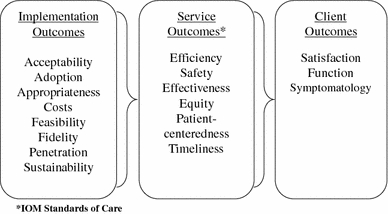
An unresolved issue in the field of implementation research is how to conceptualize and evaluate successful implementation. This paper advances the concept of "implementation outcomes" distinct from service system and clinical treatment outcomes. This paper proposes a heuristic, working "taxonomy" of eight conceptually distinct implementation outcomes-acceptability, adoption, appropriateness, feasibility, fidelity, implementation cost, penetration, and sustainability-along with their nominal definitions. We propose a two-pronged agenda for research on implementation outcomes. Conceptualizing and measuring implementation outcomes will advance understanding of implementation processes, enhance efficiency in implementation research, and pave the way for studies of the comparative effectiveness of implementation strategies.
Overview
The claims and statistics of this paper haven’t been checked yet.
Free: it reads the open-access text and checks the first 5 claims that cite a source we can check. Create a free account to check every claim.
Integrity signals
Registry
Cites
Statistics
Figures
Verification
Claims the paper makes
The claims and statistics of this paper haven’t been checked yet.
Free: it reads the open-access text and checks the first 5 claims that cite a source we can check. Create a free account to check every claim.
Claims other papers make about this one
Each is checked against this paper’s own text: does it say what the citing paper says it does?
The source backs part of the claim, not all of it — or backs it for a different population, condition or comparison.
In the citing paper
“the failure of most implementation processes to incorporate ongoing, iterative intervention development increases the risk that local users will find new technologies to be low on key implementation outcomes such as acceptability, feasibility, and appropriateness (Proctor et al., 2011) and may limit effectiveness (Chambers et al., 2013)”
From User‐centered design for psychosocial intervention development and implementation. (2016) · cites this paper as Proctor et al., 2011
Experimental — accuracy not yet measuredThe source backs part of the claim, not all of it — or backs it for a different population, condition or comparison.
In the citing paper
“Increasing use of implementation frameworks may offer a more systematic evaluation of newborn care packages while clarifying equitable service delivery in vulnerable populations often present in LMIC settings (35, 36).”
From Born too soon in a resource-limited setting: A 10-year mixed methods review of a special care baby unit for refugees and migrants on the Myanmar-Thailand border (2023) · cites this paper as [36]
Experimental — accuracy not yet measuredThe source backs part of the claim, not all of it — or backs it for a different population, condition or comparison.
In the citing paper
“While reporting systems like those by Proctor [1] or Pinnock [75] would optimize learning across studies, few manuscripts specify strategies as recommended [76, 77].”
From A systematic review of experimentally tested implementation strategies across health and human service settings: evidence from 2010-2022 (2024) · cites this paper as [76]
Experimental — accuracy not yet measuredThe source backs part of the claim, not all of it — or backs it for a different population, condition or comparison.
In the citing paper
“implementation outcomes are influenced by a complex interaction of contextual, organizational, workforce, policy, and system-level factors [12,13,14].”
From A Scoping Review of Implemented Innovations in Cancer Care: Implications for Pan-Canadian Scaling (2026) · cites this paper as [14]
Experimental — accuracy not yet measuredThe source backs part of the claim, not all of it — or backs it for a different population, condition or comparison.
In the citing paper
“These factors align closely with established implementation science frameworks that emphasize the importance of organizational readiness, implementation climate, leadership engagement, and continuous learning systems [11,13,14].”
From A Scoping Review of Implemented Innovations in Cancer Care: Implications for Pan-Canadian Scaling (2026) · cites this paper as [14]
Experimental — accuracy not yet measured
39 more claims about this paper
Create a free account to see every claim other papers make about this one.
Self-check
Percentages, sums and reported differences re-computed from the paper’s own numbers.
The self-check needs the paper’s full text.
Citations
Cites
Rogers, E. M., Singhal, A., & Quinlan, M. M. (2019) · An Integrated Approach to Communication Theory and Research · doi:10.4324/9780203710753-35 · Cited by 37,322
Crossing the Quality Chasm: A New Health System for the 21st Century
Baker, A. (2001) · BMJ · doi:10.1136/bmj.323.7322.1192 · Cited by 10,736
Crossing the Quality Chasm: A New Health System for the 21st Century
Committee on Quality of Health Care in America (2002) · Journal For Healthcare Quality · doi:10.1111/j.1945-1474.2002.tb00463.x · Cited by 8,483
Evaluating the public health impact of health promotion interventions: the RE-AIM framework.
Glasgow, R. E., Vogt, T. M., & Boles, S. M. (1999) · American Journal of Public Health · doi:10.2105/ajph.89.9.1322 · Cited by 7,217 · cited 2×
“The literature reflects quite varied uses of the term ‘‘sustainability,’’ but our proposed definition incorporates aspects of those offered by Johnson et al. (2004), Turner and Sanders (2006), Glasgow et al. (1999) , Goodman et al. (1993), and Rabin et al. (2008).”
Background(2005) · Cited by 3,748
Crossing the Quality Chasm: A New Health System for the 21st Century
Bloom, B. S. (2002) · JAMA: The Journal of the American Medical Association · doi:10.1001/jama.287.5.646-a · Cited by 3,726
Making psychological theory useful for implementing evidence based practice: a consensus approach
Michie, S. (2005) · Quality and Safety in Health Care · doi:10.1136/qshc.2004.011155 · Cited by 3,440
Gluesing, J. C. (2012) · Leadership in Science and Technology: A Reference Handbook · doi:10.4135/9781412994231.n14 · Cited by 3,210
Davis, F. D. (1993) · International Journal of Man-Machine Studies · doi:10.1006/imms.1993.1022 · Cited by 2,964 · cited 1×
“Lack of acceptability has long been noted as a challenge in implementation (Davis 1993).”
BackgroundAldenderfer, M. S., & Blashfield, R. K. (1984) · Cited by 2,358
Research works printed but not linked: 6
- 5. Bates, D. M., & Sarkar, D. (2007). lme4: Linear mixed-effects models using S4 classes. R Package Version, 0, 99875-99876.
- 18. Glasgow, R. E. (2007b). The RE-AIM model for planning, evaluation and reporting on implementation and dissemination research. Paper presented at the NIH Conference on Building the Science of Dissemination and Implementation in the Service of Public Health: Bethesda, MD.
- 24. Hayes, S. C. (1998). President's message: Dissemination research now. The Behavior Therapist, 21(9), 166-169.
- Institute of Medicine Committee on Crossing the Quality Chasm. (2006). Adaption to mental health and addictive disorder: Improving the quality of health care for mental and substance-use conditions. Washington, DC: Institute of Medicine, National Academies Press.
- 33. Jones, K. (1997). Mission drift in qualitative research, or moving toward a systematic review of qualitative studies. The Qualita- tive Report, 9(1), 95-112.
- 45. Mihalic, S. (2004). The importance of implementation fidelity. Emotional and Behavioral Disorders in Youth, 4, 83-86.
Cited by
Items 401–500 of 1,109
The use of mobile phones for the prevention and control of arboviral diseases: a scoping review
Carrillo, M. A., Kroeger, A., Cardenas Sanchez, R., Diaz Monsalve, S., & Runge-Ranzinger, S. (2021) · BMC Public Health · doi:10.1186/s12889-020-10126-4 · Cited by 64
Moussa, L., García‐Cárdenas, V., & Benrimoj, S. I. (2019) · Journal of Change Management · doi:10.1080/14697017.2019.1602552 · Cited by 76
“Innovation adoption-related outcomes were those related to the intention, initial decision, or action of an attempt to employ an innovation or evidence-based practice (Proctor et al., 2011).”
BackgroundVirtual Reality-Based Music Therapy in Palliative Care: A Pilot Implementation Trial
Brungardt, A., Wibben, A., Tompkins, A., Shanbhag, P., Coats, H., LaGasse, A. B., Boeldt, D. L., Youngwerth, J. M., Kutner, J. S., & Lum, H. D. (2020) · Journal of Palliative Medicine · doi:10.1089/jpm.2020.0403 · Cited by 73
“14 We aimed to capture user experience to inform an iterative user-centered design process.”
Haines, E. R., Dopp, A. R., Lyon, A. R., Witteman, H. O., Bender, M., Vaisson, G., Hitch, D., & Birken, S. A. (2021) · Implementation Science Communications · doi:10.1186/s43058-021-00147-4 · Cited by 71
“When combined with Proctor’s framework [32], this framework suggests UCD’s potential to improve an EBPs’ service and patient outcomes.”
MethodImplementation Science Research in Communication Sciences and Disorders: A Scoping Review
Douglas, N., Feuerstein, J. L., Oshita, J. Y., Schliep, M. E., & Danowski, M. (2022) · American Journal of Speech-Language Pathology · doi:10.1044/2021_ajslp-21-00126 · Cited by 69
Bear, H. A., Ayala‐Nunes, L., Ramos, G., Manchanda, T., Fernandes, B., Chabursky, S., Walper, S., Watkins, E. R., & Fazel, M. S. (2024) · Journal of Medical Internet Research · doi:10.2196/48964 · Cited by 79
“Interviews followed a semistructured schedule based on a taxonomy of implementation constructs [26].”
Balis, L. E., Houghtaling, B., & Harden, S. M. (2022) · Translational Behavioral Medicine · doi:10.1093/tbm/ibac061 · Cited by 63
Verhey, I. J., Ryan, G. K., Scherer, N., & Magidson, J. F. (2020) · International Journal of Mental Health Systems · doi:10.1186/s13033-020-00372-9 · Cited by 63
“The definitions of the implementation outcomes were based on Proctor’s model [37] (see Table 4 for definitions); however, these outcomes were assessed using a variety of methods.”
BackgroundMethodInfluentialLyon, A. R., Wasse, J. K., Ludwig, K., Zachry, M., Bruns, E. J., Unützer, J., & McCauley, E. (2016) · Administration and Policy in Mental Health and Mental Health Services Research · doi:10.1007/s10488-015-0637-x · Cited by 63
“Appropriateness is defined as ‘‘the perceived fit, relevance, or compatibility of the innovation or evidence-based practice for a given practice setting, provider, or consumer; and/or perceived fit of the innovation to address a particular issue or problem’’ (Proctor et al. 2011, p. 69).”
Forrester, J. A., Starr, N. E., Mammo, T. N., Schaps, D., Adem, M. I., Alemu, S. G., Amenu, D., Gebeyehu, N., Habteyohannes, T., Jiru, F., et al. (2020) · British journal of surgery · doi:10.1002/bjs.11997 · Cited by 68
“It leverages current concepts in implementation science, such as discrete implementation strategies, while also ensuring that specific implementation outcomes, such as acceptability and sustainability, are considered as the programme is adapted 9,10 .”
BackgroundEvidence-based practice implementation in healthcare in China: a living scoping review
Zhao, J., Bai, W., Zhang, Q., Su, Y., Wang, J., Xiao-ning, D., Zhou, Y., Kong, C., Qing, Y., Gong, S., et al. (2022) · The Lancet Regional Health - Western Pacific · doi:10.1016/j.lanwpc.2021.100355 · Cited by 81
Chriqui, J. F., Asada, Y., Smith, N., Kroll‐Desrosiers, A., & Lemon, S. C. (2023) · Translational Behavioral Medicine · doi:10.1093/tbm/ibad034 · Cited by 77
“The field has evolved to develop numerous theories, models, and frameworks (TMFs), such as the Consolidated Framework for Implementation Research (CFIR) [5], that guide studies of determinants of implementation, as well as frameworks such as RE-AIM [6] and Proctor’s Implementation Outcomes Framework (IOF) [7] to guide…”
MethodHiggins, K. S., Tutelman, P. R., Chambers, C. T., Witteman, H. O., Barwick, M., Corkum, P., Grant, D., Stinson, J. N., Lalloo, C., Robins, S., et al. (2018) · PAIN Reports · doi:10.1097/pr9.0000000000000686 · Cited by 65
Powell, B. J., Patel, S. V., Haley, A. D., Haines, E. R., Knocke, K., Chandler, S., Katz, C. C., Seifert, H. T. P., Ake, G. S., Amaya-Jackson, L. M., et al. (2019) · Administration and Policy in Mental Health and Mental Health Services Research · doi:10.1007/s10488-019-01003-3 · Cited by 69
Self-citationRocque, G. B., Dent, D. N., Ingram, S. A., Caston, N. E., Thigpen, H. B., Lalor, F. R., Jamy, O. H., Giri, S., Azuero, A., Young Pierce, J., et al. (2022) · JCO Oncology Practice · doi:10.1200/op.22.00360 · Cited by 62
“Quantitative evaluation conducted during pilot studies (phase I and phase II) included review of patient demographics and implementation outcomes.(14) These outcomes included service penetrance (% of patients agreeing to participate in the pilot studies), compliance (% of surveys completed), completion (% of questions…”
MethodLocke, J., Beidas, R. S., Marcus, S., Stahmer, A., Aarons, G. A., Lyon, A. R., Cannuscio, C., Barg, F., Dorsey, S., & Mandell, D. S. (2016) · Implementation Science · doi:10.1186/s13012-016-0501-8 · Cited by 62
“, adherence, dose, and competence) will be measured using an observer-rated fidelity checklist that examines four behavioral intervention strategies: discrete trial training, pivotal response training, functional routines, and positive reinforcement [43].”
MethodSelf-citationNathan, N., Hall, A. E., McCarthy, N., Sutherland, R., Wiggers, J., Bauman, A. E., Rissel, C. E., Naylor, P. J., Cradock, A. L. I., Lane, C., et al. (2021) · British Journal of Sports Medicine · doi:10.1136/bjsports-2020-103764 · Cited by 67
Nilsén, P., Svedberg, P., Nygren, J., Frideros, M., Johansson, J., & Schueller, S. M. (2022) · Implementation Research and Practice · doi:10.1177/26334895221112033 · Cited by 79
Fernandes, L. G., Oliveira, R. F. F., Marinelli, P., Fagundes, F. R. C., Soares, R. J., & Saragiotto, B. T. (2022) · Brazilian Journal of Physical Therapy · doi:10.1016/j.bjpt.2022.100464 · Cited by 72
“The available evidence on implementation research reinforces the possibility of measuring acceptability tailored to the context and setting.(67,68)”
Hartzler, B., Jackson, T. R., Jones, B. E., Beadnell, B., & Calsyn, D. A. (2014) · Journal of Substance Abuse Treatment · doi:10.1016/j.jsat.2013.12.007 · Cited by 62
“Its design was informed by a widely-cited implementation framework (Proctor et al., 2011), both in terms of a breadth of staff- and clinic-level indices as well as evaluation of intervention effectiveness once implemented.”
InfluentialMazzucca, S., Tabak, R. G., Pilar, M., Ramsey, A. T., Baumann, A. A., Kryzer, E., Lewis, E. M., Padek, M., Powell, B. J., & Brownson, R. C. (2018) · Frontiers in Public Health · doi:10.3389/fpubh.2018.00032 · Cited by 63
“D&I study outcomes are distinct from those in efficacy and effectiveness trials, which are related to changes in the target behaviors of end users or determinants of those behaviors (3).”
BackgroundBowser, D. M., Henry, B. F., & McCollister, K. E. (2021) · Implementation Science · doi:10.1186/s13012-021-01094-3 · Cited by 61
“specifically called for implementation research to include costs as an outcome [4].”
BackgroundOluwoye, O., Kriegel, L., Alcover, K. C., McPherson, S., McDonell, M. G., & Roll, J. M. (2020) · Psychology of Addictive Behaviors · doi:10.1037/adb0000487 · Cited by 61
Young, N., Achieng, F., Desai, M. R., Phillips‐Howard, P. A., Hill, J., Aol, G., Bigogo, G., Laserson, K., ter Kuile, F. O., & Taegtmeyer, M. (2019) · BMC Health Services Research · doi:10.1186/s12913-018-3844-9 · Cited by 68
“Data from elsewhere suggest that innovations are more likely to be adopted and implemented if they are easy to use, appropriate to the practice setting and accompanied by training and feedback support [56, 59, 61].”
BackgroundLeenen, J. P. L., Dijkman, E. M., van Dijk, J. D., van Westreenen, H. L., Kalkman, C. J., Schoonhoven, L., & Patijn, G. A. (2021) · BMJ Open · doi:10.1136/bmjopen-2020-042735 · Cited by 71
Ojo, T., Kabasele, L., Boyd, B., Enechukwu, S., Ryan, N., Gyamfi, J., & Peprah, E. K. (2021) · Health Services Insights · doi:10.1177/1178632921999652 · Cited by 77
The case for prioritizing implementation strategy fidelity measurement: benefits and challenges
Akiba, C. F., Powell, B. J., Pence, B. W., Nguyen, M. X. B., Golin, C., & Go, V. (2022) · Translational Behavioral Medicine · doi:10.1093/tbm/ibab138 · Cited by 59
Strategies to adapt and implement health system guidelines and recommendations: a scoping review
Breneol, S., Curran, J., Marten, R., Minocha, K., Johnson, C., Wong, H., Langlois, É. V., Wozney, L., Vélez, C. M., Cassidy, C. E., et al. (2022) · Health Research Policy and Systems · doi:10.1186/s12961-022-00865-8 · Cited by 78
Massazza, A., Teyton, A., Charlson, F., Benmarhnia, T., & Augustinavicius, J. (2022) · The Lancet Planetary Health · doi:10.1016/s2542-5196(22)00120-6 · Cited by 92
Why it is hard to use PROMs and PREMs in routine health and care
Benson, T. (2023) · BMJ Open Quality · doi:10.1136/bmjoq-2023-002516 · Cited by 89
Mapping Theories, Models, and Frameworks to Evaluate Digital Health Interventions: Scoping Review
Rouleau, G., Wu, K., Ramamoorthi, K., Boxall, C., Liu, R. H., Maloney, S., Zelmer, J., Scott, T., Larsen, D., Wijeysundera, H. C., et al. (2024) · Journal of Medical Internet Research · doi:10.2196/51098 · Cited by 71
“For instance, it is appropriate to evaluate the feasibility of DHIs by focusing on implementation outcomes such as reach, adoption, practicability, and acceptability, as well as to determine the impacts of DHIs components on the expected outcomes [10,15].”
Costs to Community Mental Health Agencies to Sustain an Evidence-Based Practice
Roundfield, K. D., & Lang, J. M. (2017) · Psychiatric Services · doi:10.1176/appi.ps.201600193 · Cited by 60
“Costs are one of eight implementation outcomes relevant for evaluating EBP dissemination, yet there has been less research of implementation costs than of any other EBP implementation outcome (7).”
BackgroundPeterson, A. E., Bond, G. R., Drake, R. E., McHugo, G. J., Jones, A. M., & Williams, J. R. (2014) · The Journal of Behavioral Health Services & Research · doi:10.1007/s11414-013-9347-x · Cited by 60
“, fidelity) or client-level outcomes.(13)”
Mindfulness-Based Blood Pressure Reduction (MB-BP): Stage 1 single-arm clinical trial
Loucks, E. B., Nardi, W. R., Gutman, R., Kronish, I. M., Saadeh, F. B., Li, Y., Wentz, A. E., Webb, J., Vago, D. R., Harrison, A., et al. (2019) · PLOS ONE · doi:10.1371/journal.pone.0223095 · Cited by 60
Murrell, J. E., Pisegna, J. L., & Juckett, L. A. (2021) · Implementation Science · doi:10.1186/s13012-021-01178-0 · Cited by 60
“In the IOF, Proctor et al. de ned implementation outcomes as “the effects of deliberate and purposive actions to implement new treatments, practices, and services (28).””
BackgroundMethodInfluentialApplying mobile technologies to mental health service delivery in South Asia
Aggarwal, N. K. (2012) · Asian Journal of Psychiatry · doi:10.1016/j.ajp.2011.12.009 · Cited by 60
To Utility and Beyond! Specifying and Advancing the Utility of Measurement-Based Care for Youth
McLeod, B. D., Jensen‐Doss, A., Lyon, A. R., Douglas, S. R., & Beidas, R. S. (2022) · Journal of Clinical Child & Adolescent Psychology · doi:10.1080/15374416.2022.2042698 · Cited by 64
“Still, it is possible that an MBC approach might be found acceptable by stakeholders but viewed as inappropriate to their specific setting (E. Proctor et al., 2011).”
BackgroundInfluentialNielsen, K. M., Angelis, M. D., Innstrand, S. T., & Mazzetti, G. (2022) · Work & Stress · doi:10.1080/02678373.2022.2080775 · Cited by 75
“…et al., 2005), the Model for Continuous Improvement Participatory Ergonomic Programs (12; Haims & Carayon, 1998), Implementation Outcomes (12; Proctor et al., 2011), Multi-level Framework Predicting Implementation Outcomes (12; Chaudoir et al., 2013), and the Multifaceted Approach to…”
BackgroundKamran, R., Jackman, L., Chan, C. S. Y., Suk, Y., Jacklin, C., Deck, E., Wietek, N. C., Stepney, M., Harrison, C. J., Jain, A., et al. (2023) · JAMA Network Open · doi:10.1001/jamanetworkopen.2023.6425 · Cited by 64
Kolko, D. J., Baumann, B. L., Herschell, A. D., Hart, J. A., Holden, E. A., & Wisniewski, S. R. (2012) · Child Maltreatment · doi:10.1177/1077559511427346 · Cited by 60
“Furthermore, the study included a small set of outcomes from among several recently recommended implementation outcomes, including facilitators of and obstacles to the implementation of AF-CBT (Proctor et al., 2011).”
BackgroundEshun‐Wilson, I., Awotiwon, A., Germann, A., Amankwaa, S. A., Ford, N. P., Schwartz, S., Baral, S., & Geng, E. (2021) · PLoS Medicine · doi:10.1371/journal.pmed.1003646 · Cited by 67
Chlebowski, C., Hurwich‐Reiss, E., Wright, B., & Brookman-Frazee, L. I. (2019) · Journal of Community Psychology · doi:10.1002/jcop.22296 · Cited by 66
“Relatedly, the acceptability of the intervention, which indexes whether one finds an intervention agreeable or satisfactory, may inform adaptations and is commonly measured via qualitative methods (Proctor et al., 2011).”
BackgroundMethodInfluentialBleyel, C., Hoffmann, M., Wensing, M., Hartmann, M., Friederich, H., & Haun, M. W. (2020) · Journal of Medical Internet Research · doi:10.2196/17330 · Cited by 71
“However, with respect to crucial outcomes applied in implementation science [31], studies on the applicability of and prerequisites for rolling out mental health specialist video consultations in primary care services from the perspective of the actual stakeholders involved are rare.”
BackgroundAhmed, S., Zidarov, D., Eilayyan, O., & Visca, R. (2020) · Quality of Life Research · doi:10.1007/s11136-020-02600-8 · Cited by 66
Owoeye, O. B. A., Rauvola, R. S., & Brownson, R. C. (2020) · BMJ Open Sport & Exercise Medicine · doi:10.1136/bmjsem-2020-000974 · Cited by 71
“Based on D&I literature, we conceptualise attrition and adaptation as co-existing variables alongside adherence 29 39 77 and maintenance as the continued use of an EBI — an extension of adherence, 37 38 78 for example, over 6 months.”
Mokaya, M., Kyallo, F., Vangoitsenhoven, R., & Matthys, C. (2022) · International Journal of Behavioral Nutrition and Physical Activity · doi:10.1186/s12966-021-01238-0 · Cited by 71
“As such, distinguishing treatment effectiveness or clinical outcomes from implementation effectiveness is important for transferring interventions from experimental settings to the community [38, 39].”
BackgroundThe Conceptualization, Integration, and Support of Evidence-Based Interventions in the Schools
Becker, K. D., & Domitrovich, C. E. (2011) · School Psychology Review · doi:10.1080/02796015.2011.12087531 · Cited by 68
“, attendance, academic achievement, office referrals, suspensions), symptomatology, and satisfaction (Proctor et al., 2011).”
BackgroundInfluentialThe 4 youth by youth HIV self-testing crowdsourcing contest: A qualitative evaluation
Iwelunmor, J., Ezechi, O., Obiezu‐Umeh, C., Gbaja-Biamila, T. A., Nwaozuru, U., Oladele, D. A., Musa, A. Z., Idigbe, I. E., Uzoaru, F., Airhihenbuwa, C. O., et al. (2020) · PLoS ONE · doi:10.1371/journal.pone.0233698 · Cited by 60
“One major benefit of crowdsourcing is that the solutions are often appropriate and highly relevant to the intended audience or key stakeholders who themselves are directly involved in creating and/or implementing the proposed solutions [28, 31, 32].”
BackgroundWeiner, B. J., Mettert, K. D., Dorsey, C. N., Nolen, E. A., Stanick, C., Powell, B. J., & Lewis, C. C. (2020) · Implementation Research and Practice · doi:10.1177/2633489520933896 · Cited by 58
“These variables included construct definition, number of scales in the measure, number of items in the measure, number of uses of the measure in mental or behavioral health care, country of origin, target setting, target respondent, target problem, and implementation outcome assessed (Proctor et al., 2011).”
BackgroundBalis, L. E., & Houghtaling, B. (2023) · Implementation Science Communications · doi:10.1186/s43058-023-00532-1 · Cited by 61
“This has resulted in valuable contributions to the field, including the establishment of taxonomies of implementation strategies and guidance on implementation outcomes [5, 7].”
BackgroundFreire, M. L., Noronha, B. P., Cota, G., & Silva, S. N. (2025) · BMC Health Services Research · doi:10.1186/s12913-025-13117-6 · Cited by 53
“In this review, we observed a clear difficulty in classifying the outcomes presented in the studies analyzed according to the definitions of Proctor et al. [18].”
InfluentialHusebo, B. S., Flo, E., Aarsland, D., Selbæk, G., Testad, I., Gulla, C., Aasmul, I., & Ballard, C. G. (2015) · Implementation Science · doi:10.1186/s13012-015-0310-5 · Cited by 64
“In other words, it is necessary not only to evaluate the intervention effect but also to evaluate implementation fidelity and sustainability [40].”
BackgroundMethodDefinitions of implementation science in HIV/AIDS
Odeny, T., PADIAN, N. S., Doherty, M. C., Baral, S., Beyrer, C., Ford, N. P., & Geng, E. (2015) · The Lancet HIV · doi:10.1016/s2352-3018(15)00061-2 · Cited by 63
A multi-level qualitative analysis of Telehomecare in Ontario: challenges and opportunities
Hunting, G., Shahid, N., Sahakyan, Y., Fan, I., Moneypenny, C. R., Stanimirovic, A., North, T., Petrosyan, Y., Krahn, M. D., & Rac, V. E. (2015) · BMC Health Services Research · doi:10.1186/s12913-015-1196-2 · Cited by 57
“Adoption is considered to be the “intention, initial decision, or action to try or employ an innovation or evidence-based practice” and can also be referred to as “uptake” [30].”
Backgroundvan Oers, H. A., Teela, L., Schepers, S. A., Grootenhuis, M. A., & Haverman, L. (2020) · Quality of Life Research · doi:10.1007/s11136-020-02586-3 · Cited by 63
Aarons, G. A., Ehrhart, M. G., Torres, E. M., Finn, N. K., & Roesch, S. C. (2016) · Journal of Substance Abuse Treatment · doi:10.1016/j.jsat.2016.05.004 · Cited by 57
“…models examining the predictive power of implementation leadership are needed, including subsequent affects on implementation climate (Ehrhart, Aarons, & Farahnak, 2014), implementation citizenship behavior (Ehrhart, Aarons, & Farahnak, 2015), and implementation outcomes (Proctor et al., 2011).”
BackgroundSelf-citationCabassa, L. J., Stefancic, A., O’Hara, K., El-Bassel, N., Lewis-Fernández, R., Luchsinger, J. A., Gates, L., Younge, R., Wall, M., Weinstein, L., et al. (2015) · Trials · doi:10.1186/s13063-015-0902-z · Cited by 57
“Fidelity is an implementation outcome that captures the degree to which an intervention is delivered as prescribed [59, 62].”
BackgroundKanuri, N., Arora, P., Talluru, S., Colaco, B., Dutta, R., Rawat, A., Taylor, B. C., Manjula, M., & Newman, M. G. (2020) · International Journal of Psychology · doi:10.1002/ijop.12640 · Cited by 55
“Acceptability, or the perception among stakeholders that a given treatment is satisfactory, and feasibility, or the extent to which a new treatment can be successfully carried out within a given setting, have been highlighted as key variables to consider when developing and implementing interventions (Proctor et al.,…”
BackgroundNewton, A. S., Bagnell, A. L., Rosychuk, R. J., Duguay, J., Wozney, L., Huguet, A., Henderson, J. L., & Curran, J. (2020) · JMIR mhealth and uhealth · doi:10.2196/18439 · Cited by 69
“…therapy, important implementation outcomes include fidelity (the degree to which an app was implemented during CBT as intended), penetration (the extent of app use within a treatment setting), and sustainability (the extent to which an app’s use was maintained in a treatment setting) [31].”
The Coming of Age of Implementation Science and Research in Critical Care Medicine
Barr, J., Paulson, S. S., Kamdar, B. B., Ervin, J. N., Lane-Fall, M. B., Liu, V. X., & Kleinpell, R. M. (2021) · Critical Care Medicine · doi:10.1097/ccm.0000000000005131 · Cited by 67
Zipfel, N., Horreh, B., Hulshof, C. T. J., de Boer, A. G. E. M., & van der Burg-Vermeulen, S. J. (2022) · BMJ Open · doi:10.1136/bmjopen-2021-058630 · Cited by 74
Implementing early mobilisation in the intensive care unit: An integrative review
Phelan, S., Lin, F. F., Mitchell, M. L., & Chaboyer, W. P. (2017) · International Journal of Nursing Studies · doi:10.1016/j.ijnurstu.2017.09.019 · Cited by 67
Aasmul, I., Husebo, B. S., & Flo, E. (2018) · BMC Geriatrics · doi:10.1186/s12877-018-0713-7 · Cited by 71
“A train-the-trainer focus [32] involving the whole nursing staff in the unit was employed to ensure that the ACP implementation was sustainable [33].”
MethodIverson, K. M., Adjognon, O. L., Grillo, A. R., Dichter, M. E., Gutner, C. A., Hamilton, A. B., Stirman, S. W., & Gerber, M. R. (2019) · Journal of General Internal Medicine · doi:10.1007/s11606-019-05240-y · Cited by 65
Hunter, S. B., Han, B., Slaughter, M. E., Godley, S. H., & Garner, B. R. (2017) · Implementation Science · doi:10.1186/s13012-017-0606-8 · Cited by 56
“, [31, 32]) in that they included measurement of treatment dose, quality (as measured by staff knowledge, certification, access to highquality training, and supervision), and penetration (i.”
BackgroundSarkies, M., Long, J. C., Pomare, C., Wu, W., Clay‐Williams, R., Nguyen, H. M., Francis‐Auton, E., Westbrook, J. I., Lévesque, J., Watson, D. E., et al. (2020) · Implementation Science · doi:10.1186/s13012-020-01049-0 · Cited by 68
“Implementation outcomes include the extent of an intervention’s adoption, penetration into the healthcare system, perceived acceptability and appropriateness among stakeholders, cost, and the fidelity to intended practice [27, 28].”
BackgroundRoberts, N. A., Janda, M., Stover, A. M., Alexander, K. E., Wyld, D., & Mudge, A. (2020) · Quality of Life Research · doi:10.1007/s11136-020-02669-1 · Cited by 68
Kennedy, S. G., Sanders, T., Estabrooks, P. A., Smith, J. J., Lonsdale, C., Foster, C. E., & Lubans, D. R. (2021) · Obesity Reviews · doi:10.1111/obr.13184 · Cited by 66
Shayo, E. H., Kivuyo, S. L., Seeley, J., Bukenya, D., Karoli, P., Mfinanga, S., Jaffar, S. S., & Hout, M. C. V. (2022) · BMC Health Services Research · doi:10.1186/s12913-022-08065-4 · Cited by 56
Conceptual tensions and practical trade-offs in tailoring implementation interventions
McHugh, S., Riordan, F., Curran, G. M., Lewis, C. C., Wolfenden, L., Presseau, J., Lengnick‐Hall, R., & Powell, B. J. (2022) · Frontiers in Health Services · doi:10.3389/frhs.2022.974095 · Cited by 69
“The use of more pragmatic (and interim) measures like acceptability, feasibility, compatibility with existing workflows and perceived usefulness has also come to the fore (59, 60).”
Backgroundvan den Broek, M., Gandhi, Y., Sureshkumar, D. S., Prina, M. A., Bhatia, U., Patel, V., Singla, D. R., Velleman, R. D. B., Weiss, H. A., Garg, A., et al. (2023) · PLOS Global Public Health · doi:10.1371/journal.pgph.0002302 · Cited by 71
“Secondary outcomes of interest included hypothesised or studied mediators affecting help-seeking, implementation outcomes as defined by Proctor et al. [29] and, process indicators such as quality of training, session attendance, etc.”
Bridges and Mechanisms: Integrating Systems Science Thinking into Implementation Research
Luke, D. A., Powell, B. J., & Paniagua-Ávila, A. (2023) · Annual Review of Public Health · doi:10.1146/annurev-publhealth-060922-040205 · Cited by 61
Herschell, A. D., Kolko, D. J., Scudder, A. T., Taber-Thomas, S., Schaffner, K. F., Hiegel, S. A., Iyengar, S., Chaffin, M. J., & Mrozowski, S. J. (2015) · Implementation Science · doi:10.1186/s13012-015-0324-z · Cited by 57
“[87], data will be collected on acceptability, adoption, appropriateness, feasibility, fidelity, penetration, and sustainability.”
BackgroundMeasuring Sustainment of Multiple Practices Fiscally Mandated in Children’s Mental Health Services
Brookman-Frazee, L. I., Stadnick, N. A., Roesch, S. C., Regan, J., Barnett, M. L., Bando, L., Innes-Gomberg, D., & Lau, A. S. (2016) · Administration and Policy in Mental Health and Mental Health Services Research · doi:10.1007/s10488-016-0731-8 · Cited by 61
“…refers to the integration of a practice within a service setting and can be measured at multiple levels (e.g., units of service, clients, providers, agencies) as the number of eligible individuals who use/deliver a treatment, divided by the number of eligible individuals (Proctor et al. 2011).”
BackgroundGurung, R., Jha, A. K., Pyakurel, S., Gurung, A., Litorp, H., Wrammert, J., Jha, B. K., Paudel, P., Rahman, S. M., Malla, H., et al. (2019) · Implementation Science · doi:10.1186/s13012-019-0917-z · Cited by 57
Selecting and tailoring implementation interventions: a concept mapping approach
Kwok, E. Y. L., Moodie, S., Cunningham, B. J., & Cardy, J. O. (2020) · BMC Health Services Research · doi:10.1186/s12913-020-05270-x · Cited by 67
Closing the Science–Practice Gap in Implementation Before It Widens
Lyon, A. R., Comtois, K. A., Kerns, S. E. U., Landes, S. J., & Lewis, C. C. (2020) · Springer eBooks · doi:10.1007/978-3-030-03874-8_12 · Cited by 63
Lee, E. S., Vedanthan, R., Jeemon, P., Kamano, J. H., Kudesia, P., Rajan, V., Engelgau, M. M., & Moran, A. E. (2016) · PLoS ONE · doi:10.1371/journal.pone.0157036 · Cited by 64
Proposing a mechanistic model of clinician training and consultation.
McLeod, B. D., Cox, J. R., Jensen‐Doss, A., Herschell, A. D., Ehrenreich, J. T., & Wood, J. J. (2018) · Clinical Psychology Science and Practice · doi:10.1111/cpsp.12260 · Cited by 60
“Researchers thus suggested that identifying ways to train clinicians more effectively might help boost treatment integrity in community settings (Powell et al., 2012; Proctor et al., 2011; Wood, McLeod, Klebanoff, & Brookman-Frazee, 2015).”
BackgroundPinto, C., Bristowe, K., Witt, J., Davies, J. M., de Wolf‐Linder, S., Dawkins, M., Guo, P., Higginson, I. J., Daveson, B. A., & Murtagh, F. E. (2018) · Annals of Palliative Medicine · doi:10.21037/apm.2018.09.02 · Cited by 65
Roe, D., Mazor, Y., & Gelkopf, M. (2021) · International Journal for Quality in Health Care · doi:10.1093/intqhc/mzz084 · Cited by 60
Sturke, R., Vorkoper, S., Bekker, L., Ameyan, W., Luo, C., Allison, S. M., Walker, D., Kapogiannis, B. G., & Guay, L. A. (2020) · Journal of the International AIDS Society · doi:10.1002/jia2.25572 · Cited by 54
“To help build implementation science capacity, AHISA in collaboration with the University of North Carolina and Wits University hosted a three-day training to provide alliance members with an indepth overview of the theory, operational and evaluation approaches to implementation science; methods to assess barriers in…”
MethodKirk, J. W., Bandholm, T., Andersen, O., Husted, R. S., Tjørnhøj‐Thomsen, T., Nilsén, P., & Pedersen, M. M. (2021) · Journal of Health Organization and Management · doi:10.1108/jhom-02-2020-0049 · Cited by 60
Duby, Z., Bunce, B., Fowler, C., Jonas, K., Bergh, K., Govindasamy, D., Wagner, C., & Mathews, C. (2022) · AIDS and Behavior · doi:10.1007/s10461-022-03750-1 · Cited by 55
Bear, H. A., Ayala Nunes, L., DeJesus, J., Liverpool, S., Moltrecht, B., Neelakantan, L., Harriss, E., Watkins, E., & Fazel, M. (2022) · Journal of Medical Internet Research · doi:10.2196/40347 · Cited by 51
“Although conceptually distinct constructs, the implementation variables listed above are dynamically interrelated and sequentially contingent on one another [24,27].”
BackgroundMethodWainer, A., & Ingersoll, B. R. (2013) · Clinical Psychology Science and Practice · doi:10.1111/cpsp.12045 · Cited by 68
“, functioning, symptomatology), with the ultimate goal of better understanding those factors that can support the validity and success of interventions in practice settings (Proctor et al., 2011).”
BackgroundInfluentialStamatakis, K. A., Norton, W. E., Stirman, S. W., Melvin, C. L., & Brownson, R. C. (2013) · Implementation Science · doi:10.1186/1748-5908-8-29 · Cited by 56
“As an emerging field built upon a transdisciplinary blend of sciences and oriented toward the application of research into practice settings, D&I research faces several challenges in designing formal training programs and guidance for career development: the evidence-base is small, though growing, with measures and me…”
BackgroundA Qualitative Study of Mental Health Problems Among Orphaned Children and Adolescents in Tanzania
Dorsey, S., Lucid, L., Murray, L. K., Bolton, P. A., Itemba, D., Manongi, R. N., & Whetten, K. (2015) · The Journal of Nervous and Mental Disease · doi:10.1097/nmd.0000000000000388 · Cited by 62
“These responses suggest that a counseling intervention for these problems may be acceptable, with acceptability an important aspect of intervention implementation efforts (Proctor et al., 2011).”
BackgroundAssessing the Feasibility of a Virtual Tumor Board Program: A Case Study
Shea, C. M., Haynes‐Maslow, L., McIntyre, M., Weiner, B. J., Wheeler, S. B., Jacobs, S., Mayer, D. K., Young, M., & Shea, T. C. (2014) · Journal of Healthcare Management · doi:10.1097/00115514-201405000-00005 · Cited by 54
“A few of the UNC physicians who were interviewed indicated some uncertainty about of the innovation (Proctor et al., 2011).”
BackgroundGarcía‐Cárdenas, V., Benrimoj, S. I., Ocampo, C. C. C., Goyenechea, E., Martínez‐Martínez, F., & Gastelurrutia, M. Á. (2016) · Research in Social and Administrative Pharmacy · doi:10.1016/j.sapharm.2016.05.048 · Cited by 63
“However, in most initiatives to translate evidence-based interventions into real practice, implementation success is assessed exclusively using data on clinical outcomes.(9) In Spain, medication review with follow-up (MRF) has been identified as one of the main professional services to be provided by community pharmac…”
BackgroundPrescribing an App? Oncology Providers’ Views on Mobile Health Apps for Cancer Care
Berkowitz, C. M., Zullig, L. L., Koontz, B. F., & Smith, S. K. (2017) · JCO Clinical Cancer Informatics · doi:10.1200/cci.17.00107 · Cited by 56
Nelligan, R. K., Hinman, R. S., Teo, P. L., & Bennell, K. L. (2020) · JMIR Rehabilitation and Assistive Technologies · doi:10.2196/18860 · Cited by 58
“In addition, as patient acceptability is a key component to successful intervention implementation [29], qualitative enquiry is also needed to understand if the eHealth intervention is accepted by people with knee OA to facilitate self-directed exercise.”
BackgroundImplementation outcomes of HIV self-testing in low- and middle- income countries: A scoping review
Rivera, A. S., Hernandez, R., Mag-Usara, R. C. Q., Sy, K. N., Ulitin, A., O’Dwyer, L., McHugh, M., Jordan, N., & Hirschhorn, L. R. (2021) · PLoS ONE · doi:10.1371/journal.pone.0250434 · Cited by 57
“Appropriateness is defined as “the perceived fit, relevance, or compatibility of the innovation or evidence-based practice for a given practice setting, provider, or consumer; and/or perceived fit of the innovation to address a particular issue or problem” [6].”
BackgroundMethodResultInfluentialMusicaro, R. M., Spinazzola, J., Arvidson, J., Swaroop, S. R., Goldblatt Grace, L., Yarrow, A., Suvak, M. K., & Ford, J. D. (2019) · Trauma, Violence, & Abuse · doi:10.1177/1524838017692365 · Cited by 53
The Transformation of Behavioral Healthcare in New Mexico
Willging, C. E., Lamphere, L., & Rylko‐Bauer, B. (2014) · Administration and Policy in Mental Health and Mental Health Services Research · doi:10.1007/s10488-014-0574-0 · Cited by 54
“zations to successfully implement and sustain service innovations (Greenhalgh et al. 2004; Mendel et al. 2008; Proctor et al. 2011).”
BackgroundBrown‐Johnson, C. G., Safaeinili, N., Zionts, D. L., Holdsworth, L. M., Shaw, J. G., Asch, S. M., Mahoney, M. R., & Winget, M. (2019) · Learning Health Systems · doi:10.1002/lrh2.10210 · Cited by 59
“We create draft data collection protocols (ie, for interview, focus group, and/or observation) based on implementation outcomes of interest for each project.(12) For example, in the life-sustaining 2 of 11 BROWN-JOHNSON ET AL.”
MethodWhite, M. C., Peven, K., Clancy, O., Okonkwo, I., Bakolis, I., Russ, S. J., Leather, A. J. M., & Sevdalis, N. (2020) · Annals of Surgery · doi:10.1097/sla.0000000000003944 · Cited by 64
Rapid Implementation of Video Visits in Neurology During COVID-19: Mixed Methods Evaluation
Saliba‐Gustafsson, E. A., Miller-Kuhlmann, R. K., Kling, S. M. R., Garvert, D. W., Brown‐Johnson, C. G., Lessios, A. S., Verano, M.-R., Yang, L., Falco-Walter, J. J., Shaw, J. G., et al. (2020) · Journal of Medical Internet Research · doi:10.2196/24328 · Cited by 57
“Deductive codes were derived from the implementation outcomes of interest [30].”
BackgroundMethodInfluentialHollis, J., Kocanda, L., Seward, K., Collins, C. E., Tully, B., Hunter, M., Foureur, M. J., Lawrence, W. T., MacDonald‐Wicks, L. K., & Schumacher, T. L. (2021) · BMC Health Services Research · doi:10.1186/s12913-021-06893-4 · Cited by 63
Advancing climate change health adaptation through implementation science
Neta, G. I., Pan, W., Ebi, K. L., Buss, D. F., Castranio, T., Lowe, R., Ryan, S. J., Ibarra, A. M. S., Hapairai, L. K., Sehgal, M., et al. (2022) · The Lancet Planetary Health · doi:10.1016/s2542-5196(22)00199-1 · Cited by 64
Metadata
- Authors
- Proctor, E., Silmere, H., Raghavan, R., Hovmand, P., Aarons, G., Bunger, A., Griffey, R., & Hensley, M.
- Affiliations
- Washington University in St. Louis (US)
- Roberts Wesleyan College (US)
- Corresponding author
- Proctor, Enola
- Venue
- Administration and Policy in Mental Health and Mental Health Services Research
- Published
- 2010-10-19
- Volume
- 38
- Issue
- 2
- Pages
- 65-76
- ISSN
- 0894-587X (ISSN-L)
- 1573-3289
- PMC
- PMC3068522
- OpenAlex
- W2140092196
- Semantic Scholar
- 3c7cf782e4094a7d66d8ad5da80a8083a8e72307
- Cited by
- 8,721
- References
- 71
- Citations by year
- 2026: 1487 · 2025: 1144 · 2024: 1303 · 2023: 1041 · 2022: 950 · 2021: 893 · 2020: 669 · 2019: 391 · 2018: 253 · 2017: 162 · 2016: 122 · 2015: 116 · 2014: 83 · 2013: 57 · 2012: 28
- FWCI
- 56.95
- Type
- journal article
- Language
- en
- Open access
- hybrid
- doi.org
- Licence
- cc-by-nc
- Locations
- Administration and Policy in Mental Health and Mental Health Services Research (publishedVersion, cc-by-nc)
- Europe PMC (PubMed Central) (publishedVersion, cc-by-nc)
- PubMed Central (publishedVersion, cc-by-nc)
- PubMed (publishedVersion)
- Funders
- National Institutes of Health (5p30mh068579-05)
- National Institute of Mental Health (P30-MH-068579, T32MH019960)
- National Center for Research Resources (UL1RR024992)
- Topics
- Health Sciences › Health Professions › General Health Professions › Health Policy Implementation Science
- Health Sciences › Health Professions › General Health Professions › Health Sciences Research and Education
- Health Sciences › Health Professions › General Health Professions › Mental Health and Patient Involvement
- Keywords
- implementation outcomes, implementation research, acceptability, adoption, appropriateness, feasibility, fidelity, implementation costs, penetration, sustainability, implementation strategies, mental health services
- MeSH terms
- Diffusion of Innovation, Humans, Mental Health Services, Outcome and Process Assessment, Health Care, Biomedical Research
About these checks
Registry, retraction, Cites and statistics results are computed, not judged, with one exception: a printed reference that no index lists is read once by a model before it counts as a citation error. Claims are extracted by a model and kept only when their quote appears verbatim in the text; each cited source is then checked, with a model’s help, for whether it says what the claim relies on. Those verdicts can be wrong — read the claim’s quote and the cited source before relying on one.
Statistics and arithmetic are recomputed, not judged.
Confidence bands are shown only for fields calibrated on our annotated test set. None is calibrated yet, so no band is shown.
What counts as a claim ›How we measure confidence ›How we check this ›
Are you an author, or do you see a problem with this page? Request a review
Data sources
Bibliographic data: Semantic Scholar, OpenAlex, Crossref.
Contains information from the Semantic Scholar Academic Graph Datasets, made available under the ODC Attribution License (ODC-BY 1.0).
Semantic Scholar’s data is described in: Kinney, R., et al. (2023). The Semantic Scholar Open Data Platform. arXiv:2301.10140.
