

The Self-Regulation-View in Writing-to-Learn: Using Journal Writing to Optimize Cognitive Load in Self-Regulated Learning
Open accessThe DOI matches its Crossref record; 117 of the 117 references it cites were found in a registry or an index.
Abstract
We propose the self-regulation view in writing-to-learn as a promising theoretical perspective that draws on models of self-regulated learning theory and cognitive load theory. According to this theoretical perspective, writing has the potential to scaffold self-regulated learning due to the cognitive offloading written text generally offers as an external representation and memory aid, and due to the offloading, that specifically results from the genre-free principle in journal writing. However, to enable learners to optimally exploit this learning opportunity, the journal writing needs to be instructionally supported. Accordingly, we have set up a research program—the Freiburg Self-Regulated-Journal-Writing Approach—in which we developed and tested different instructional support methods to foster learning outcomes by optimizing cognitive load during self-regulated learning by journal writing. We will highlight the main insights of our research program which are synthesized from 16 experimental and 4 correlative studies published in 16 original papers. Accordingly, we present results on (1) the effects of prompting germane processing in journal writing, (2) the effects of providing worked examples and metacognitive information to support students in effectively exploiting prompted journal writing for self-regulated learning, (3) the effects of adapting and fading guidance in line with learners’ expertise in self-regulated learning, and (4) the effects of journal writing on learning motivation and motivation to write. The article closes with a discussion of several avenues of how the Freiburg Self-Regulated-Journal-Writing Approach can be developed further to advance research that integrates self-regulated learning with cognitive load theory.
Overview
The claims and statistics of this paper haven’t been checked yet.
Free: it reads the open-access text and checks the first 5 claims that cite a source we can check. Create a free account to check every claim.
Integrity signals
Registry
Cites
Statistics
Figures
Verification
Claims the paper makes
The claims and statistics of this paper haven’t been checked yet.
Free: it reads the open-access text and checks the first 5 claims that cite a source we can check. Create a free account to check every claim.
Claims other papers make about this one
Each is checked against this paper’s own text: does it say what the citing paper says it does?
The source backs part of the claim, not all of it — or backs it for a different population, condition or comparison.
In the citing paper
“Reliance on AI can interfere with these processes and create difficulties for students in distinguishing between their own understanding and AI-generated text.”
From Generative AI and Cognitive Offloading in Higher Education: Implications for Learning, Knowledge Production, and Academic Thinking (2026) · cites this paper as [12]
Experimental — accuracy not yet measured
Self-check
Percentages, sums and reported differences re-computed from the paper’s own numbers.
The self-check needs the paper’s full text.
Citations
Cites
Statistical Power Analysis for the Behavioral Sciences (2nd ed.).
Lachenbruch, P. A., & Cohen, J. (1989) · Journal of the American Statistical Association · doi:10.2307/2290095 · Cited by 37,395
Knowledge and teaching: Foundations of the new reform
Shulman, L. (1987) · Harvard Educational Review · doi:10.17763/haer.57.1.j463w79r56455411 · Cited by 16,787 · cited 2×
“…texts providing content knowledge (here: on geography), pedagogical content knowledge (here: on geography education), and pedagogical knowledge (see Shulman 1987).3 For this purpose, the prompts used by Hübner et al. (2010) were modified so that they also encouraged the learners (except for those…”
BackgroundMethodMayer, R. E. (2009) · doi:10.1017/cbo9780511811678 · Cited by 7,800
Mayer, R. (2020) · doi:10.1017/9781316941355 · Cited by 7,777
Toulmin, S. E. (2003) · doi:10.1017/cbo9780511840005 · Cited by 7,101 · cited 1×
“…during planning, a writer selects specific knowledge elements from the content problem space and attempts to translate them into written text by drawing on rhetorical schemata such as metaphor (Ortony 1993) or Toulmin’s schema of argument (consisting of claim, data, and warrant, see Toulmin 1958).”
BackgroundCognitive Architecture and Instructional Design
Sweller, J., van Merrienboer, J. J. G., & Paas, F. G. W. C. (1998) · Educational Psychology Review · doi:10.1023/a:1022193728205 · Cited by 6,023 · cited 5×
“1 In the present paper, we refer to the concept of germane load as introduced by Sweller et al. (1998).”
BackgroundInfluentialReciprocal Teaching of Comprehension-Fostering and Comprehension-Monitoring Activities
Palinscar, A. S., & Brown, A. L. (1984) · Cognition and Instruction · doi:10.1207/s1532690xci0102_1 · Cited by 5,186 · cited 1×
“The approach of allocating specific cognitive and metacognitive processes to different roles learners may adopt during the learning process has successfully been established, for example, in reciprocal teaching (e.g., Palincsar and Brown 1984).”
Zimmerman, B. J. (2008) · American Educational Research Journal · doi:10.3102/0002831207312909 · Cited by 3,735 · cited 3×
“In the present paper, we have introduced the self-regulation view in writing-to-learn as a promising theoretical perspective that draws on models of self-regulated learning (e.g., Zimmerman 2008) and cognitive load theory (e.g., Sweller et al. 2011a, 2011b, 2019).”
BackgroundMethodThe Psychology of Written Composition
Cumming, A., Bereiter, C., & Scardamalia, M. (1989) · The Modern Language Journal · doi:10.2307/327270 · Cited by 2,807
The teaching of learning strategies
Weinste, N. (1986) · Medical Entomology and Zoology · Cited by 2,528
Cognitive Architecture and Instructional Design: 20 Years Later
Sweller, J., van Merriënboer, J. J. G., & Paas, F. (2019) · Educational Psychology Review · doi:10.1007/s10648-019-09465-5 · Cited by 2,337 · cited 4×
“We suggest that the genre-free principle in journal writing can be considered, at least on a more general level, as a particular variant of the goal-free effect in cognitive load theory (e.g., Paas andKirschner 2012; Sweller et al. 2019).”
BackgroundMethodInfluentialInstructional Design Theories and Models
(1983) · doi:10.4324/9780203824283 · Cited by 2,192 · cited 1×
“We conceive of prompts as strategy activators following Reigeluth and Stein (1983).”
MethodOrtony, A. (1979) · Cited by 2,159
When and where do we apply what we learn?: A taxonomy for far transfer
Barnett, S. M., & Ceci, S. J. (2002) · Psychological Bulletin · doi:10.1037/0033-2909.128.4.612 · Cited by 2,076 · cited 1×
“Overall, the available evidence suggests that self-explaining worked examples is a sensible instructional procedure to prepare the learners for journal writing, in particular, as transfer effects were repeatedly found, which is usually hard to achieve (e.g., Barnett and Ceci 2002).”
BackgroundKalyuga, S., Ayres, P., Chandler, P., & Sweller, J. (2003) · Educational Psychologist · doi:10.1207/s15326985ep3801_4 · Cited by 1,927
Cairns, H. S., & Gernsbacher, M. A. (1996) · Language · doi:10.2307/416113 · Cited by 1,920
Zimmerman, B. J., & Martinez-Pons, M. (1990) · Journal of Educational Psychology · doi:10.1037/0022-0663.82.1.51 · Cited by 1,825 · cited 1×
“Thus, the younger the students, the more it is likely that they are unfamiliar with certain learning strategies (Zimmerman and Martinez-Pons 1990).”
BackgroundQuantifying Qualitative Analyses of Verbal Data: A Practical Guide
Chi, M. T. H. (1997) · Journal of the Learning Sciences · doi:10.1207/s15327809jls0603_1 · Cited by 1,764 · cited 1×
“Generally, we measured the quantity of cognitive and metacognitive strategies in learning journals by a coding scheme, differentiating between rehearsal, elaboration, organization, monitoring, and remedial (regulation) strategies (Chi 1997).”
MethodSelf‐Explanations: How Students Study and Use Examples in Learning to Solve Problems
Chi, M. T. H., Bassok, M., Lewis, M. W., Reimann, P., & Glaser, R. (1989) · Cognitive Science · doi:10.1207/s15516709cog1302_1 · Cited by 1,714
Studying as Self-Regulated Learning
(1998) · Metacognition in Educational Theory and Practice · doi:10.4324/9781410602350-19 · Cited by 1,589 · cited 1×
“Based on learning strategy research (e.g., Mayer 2002; Weinstein and Mayer 1986) and models of self-regulated learning (e.g., Winne and Hadwin 1998; Zimmerman 2008), several core cognitive and metacognitive learning strategies can be distinguished whose application in journal writing should result…”
MethodParis, S. G., Lipson, M. Y., & Wixson, K. K. (1983) · Contemporary Educational Psychology · doi:10.1016/0361-476x(83)90018-8 · Cited by 1,352 · cited 3×
“…received further instructional support in addition to the prompts (e.g., a worked-out example journal entry or meta-strategic information in relation to the prompted strategies, i.e., information about how, when, and why to use the prompted strategies, see Paris et al. 1983; Zohar and Peled 2008).”
BackgroundPromoting General Metacognitive Awareness
Schraw, G. (2001) · Neuropsychology and Cognition · doi:10.1007/978-94-017-2243-8_1 · Cited by 1,245 · cited 1×
“Defining goals for later problem solving basically is planning, and planning is viewed (besides monitoring and evaluation) as an essential component of people’s metacognitive competence to regulate cognition (Nückles et al. 2009; Schraw 1998).”
BackgroundThe Use of Worked Examples as a Substitute for Problem Solving in Learning Algebra
Sweller, J., & Cooper, G. A. (1985) · Cognition and Instruction · doi:10.1207/s1532690xci0201_3 · Cited by 1,214 · cited 1×
“The worked example effect is a classical cognitive load theory effect (e.g., Sweller and Cooper 1985; Sweller et al. 1998).”
BackgroundMultimedia Learning: SUBJECT INDEX
Mayer, R. E. (2001) · Cited by 1,175
The Teaching of Learning Strategies.
Weinstein, C. E., & Mayer, R. E. (1983) · Cited by 1,163
Promoting general metacognitive awareness
Schraw, G. (1998) · Instructional Science · doi:10.1023/a:1003044231033 · Cited by 1,088
Toward a rational and mechanistic account of mental effort
Shenhav, A., Musslick, S., Lieder, F., Kool, W., Griffiths, T. L., Cohen, J. D., & Botvinick, M. M. (2017) · Annual Review of Neuroscience · doi:10.1146/annurev-neuro-072116-031526 · Cited by 1,077 · cited 2×
“…suggest that learners spontaneously tend to keep their invested mental effort at a minimum during journal writing (see also Feldon et al. 2019; Shenhav et al. 2017) and thus do not sufficiently engage in germane processes of self-regulated learning such as elaboration, organization,…”
BackgroundMini Meta‐Analysis of Your Own Studies: Some Arguments on Why and a Primer on How
Goh, J. X., Hall, J. A., & Rosenthal, R. (2016) · Social and Personality Psychology Compass · doi:10.1111/spc3.12267 · Cited by 994 · cited 1×
“To foreshadow the effects of prompted journal writing on learning outcomes, a mini meta-analysis following Goh et al. (2016) showed a medium-to-large effect size in favor of instructionally supported journal writing by prompts versus unsupported journal writing, Hedges’s g of 0.78, SE = 0.14, p <…”
BackgroundInfluential(2006) · Elsevier eBooks · doi:10.1016/b978-0-12-369374-7.x5000-7 · Cited by 961
Emig, J. (2020) · Landmark Essays · doi:10.4324/9781003059219-10 · Cited by 854
(1987) · Cited by 829
Accuracy of metacognitive monitoring affects learning of texts.
Thiede, K. W., Anderson, M. C. M., & Therriault, D. (2003) · Journal of Educational Psychology · doi:10.1037//0022-0663.95.1.66 · Cited by 826 · cited 2×
“…this possibility could be promising because several effective methods to enhance monitoring accuracy, such as asking learners to generate keywords (Thiede et al. 2003) or to complete a diagram (van de Pol et al. 2019), this issue; Prinz et al. 2020), similarly engage learners in writing down…”
MethodThe Effects of School-Based Writing-to-Learn Interventions on Academic Achievement: A Meta-Analysis
Bangert-Drowns, R. L., Hurley, M. M., & Wilkinson, B. (2004) · Review of Educational Research · doi:10.3102/00346543074001029 · Cited by 802 · cited 5×
“…assignments, which included different types of “informational” writing such as writing summaries, reports, or descriptions of scientific processes, Bangert-Drowns et al. (2004) obtained an average effect size of 0.26 standard deviations, which can be regarded as a small to medium effect (Cohen…”
BackgroundMethodInfluentialEmig, J. A. (1977) · College Composition and Communication · doi:10.2307/356095 · Cited by 753 · cited 2×
“This idea of writing as a learning tool (see also Tynjälä et al. 2012) was first suggested by the educational reform movement “writing across the curriculum” in the UK and soon spread over to many high schools and universities in the USA (Britton et al. 1975; Emig 1977).”
BackgroundWhy Investigate Metacognition?
Nelson, T. O., & Narens, L. (1994) · Metacognition · doi:10.7551/mitpress/4561.003.0003 · Cited by 750 · cited 2×
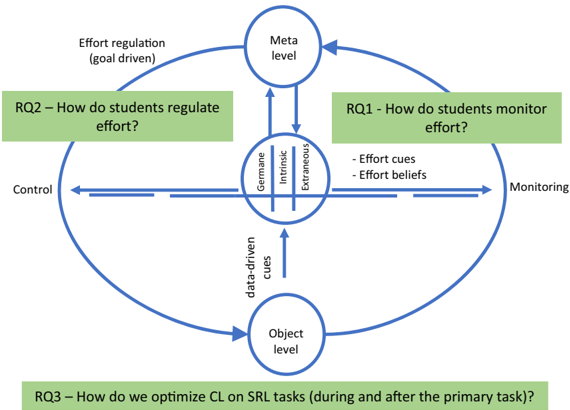
“The framework builds on the model of Nelson and Narens (1994) that distinguishes between an object level and a meta-level of cognitive processing.”
BackgroundMethodKincaid, J. P., Robert, P. F. L., Richard, L. R., & Brad, S. (1975) · Cited by 739
(2011) · Cited by 725
(1993) · Cambridge University Press eBooks · doi:10.1017/cbo9781139173865 · Cited by 721 · cited 1×
“…during planning, a writer selects specific knowledge elements from the content problem space and attempts to translate them into written text by drawing on rhetorical schemata such as metaphor (Ortony 1993) or Toulmin’s schema of argument (consisting of claim, data, and warrant, see Toulmin 1958).”
BackgroundThe Dynamics of Composing : Making Plans and Juggling Constraints
Flower (1980) · Medical Entomology and Zoology · Cited by 687
The role of self-regulation and transcription skills in writing and writing development
Graham, S., & R. Harris, K. (2000) · Educational Psychologist · doi:10.1207/s15326985ep3501_2 · Cited by 671 · cited 2×
“For this reason, we focused on students who could be assumed to have already some mastery of the mechanics of writing (see Graham and Harris 2000).”
BackgroundIntentional Learning as a Goal of Instruction
Bereiter, C., & Scardamalia, M. (2018) · Knowing, Learning, and Instruction · doi:10.4324/9781315044408-12 · Cited by 631
Writing research and the writer.
Hayes, J. R., & Flower, L. S. (1986) · American Psychologist · doi:10.1037//0003-066x.41.10.1106 · Cited by 603 · cited 2×
“Building on Hayes and Flower (1986), Bereiter and Scardamalia (1987) proposed a theory of how writing may contribute to learning which is diametrically opposed to the romantic view sketched above.”
BackgroundSemantic Cognition: A Parallel Distributed Processing Approach
Rogers, T. T., & McClelland, J. L. (2004) · The MIT Press eBooks · doi:10.7551/mitpress/6161.001.0001 · Cited by 536 · cited 1×
“Galbraith (1992, 2009) has described this dynamic interaction between the writer and the emerging text using connectionist modeling (see Rogers and McClelland 2004) and termed it as the implicit knowledge-constituting process in writing.”
BackgroundToward an Instructionally Oriented Theory of Example‐Based Learning
Renkl, A. (2014) · Cognitive Science · doi:10.1111/cogs.12086 · Cited by 509 · cited 3×
“It describes the advantage of studying worked examples as compared to learning by doing (e.g., problem solving, exploring) for the initial acquisition of cognitive skills (e.g., solving certain types of mathematical problems or engaging in effective learning strategies; e.g., Renkl 2014a, b).”
BackgroundResultSelf-citationExpectancy-Value-Cost Model of Motivation
Barron, K. E., & Hulleman, C. S. (2015) · International Encyclopedia of the Social & Behavioral Sciences · doi:10.1016/b978-0-08-097086-8.26099-6 · Cited by 393 · cited 1×
“…as a third important core component that determines learners’ motivation in expectancy-value theories, in addition to expectancy (i.e., the extent to which learners believe they can succeed in a task) and value (i.e., that the respective task is important; see, e.g., Barron and Hulleman 2015).”
BackgroundReopening Inquiry into Cognitive Processes in Writing-To-Learn
Klein, P. D. (1999) · Educational Psychology Review · doi:10.1023/a:1021913217147 · Cited by 343 · cited 4×
“With regard to summary/synthesis writing and argumentative writing, the available empirical evidence is quite mixed (see Klein 1999, and Klein et al. 2019, for summaries) and difficult to compare to the Freiburg research program on journal writing.”
BackgroundMethodInfluentialBerthold, K., Nückles, M., & Renkl, A. (2007) · Learning and Instruction · doi:10.1016/j.learninstruc.2007.09.007 · Cited by 322 · cited 10×
“Berthold et al. (2007) found that undergraduate students who received cognitive, or a combination of cognitive and metacognitive prompts learned more than students without prompts.”
BackgroundMethodResultInfluentialSelf-citationThe worked example effect and human cognition
Sweller, J. (2006) · Learning and Instruction · doi:10.1016/j.learninstruc.2006.02.005 · Cited by 299 · cited 1×
“Having additionally to self-explain examples on an additional topic (i.e., physics in the case of Hübner et al. 2010) and to relate these examples to the new topic might be very demanding and potentially lead to cognitive overload in some students (see, e.g., Sweller 2006).”
BackgroundTowards a Theory of When and How Problem Solving Followed by Instruction Supports Learning
Loibl, K., Roll, I., & Rummel, N. (2017) · Educational Psychology Review · doi:10.1007/s10648-016-9379-x · Cited by 281 · cited 2×
“As a consequence, they invested more effort in subsequent organization (and elaboration) processes (see the preparation-to-learn effect of knowledge gap experiences, Glogger-Frey et al. 2015; Loibl et al. 2017).”
Promoting Argument-Counterargument Integration in Students' Writing
Nussbaum, E. M., & Schraw, G. (2007) · The Journal of Experimental Education · doi:10.3200/jexe.76.1.59-92 · Cited by 279 · cited 1×
“…of the rhetorical genre in question (i.e., what makes a good summary or a good argumentation?) was the main focus in those studies and learning goals such as deep comprehension and long-term retention of subject matter were rather secondary (see, e.g., Klein et al. 2017; Nussbaum and Schraw 2007).”
BackgroundThe dynamics of composing : Making plans and juggling constraints
Flower, L. S. (1980) · Medical Entomology and Zoology · Cited by 269
Enhancing self-regulated learning by writing learning protocols
Nückles, M., Hübner, S., & Renkl, A. (2009) · Learning and Instruction · doi:10.1016/j.learninstruc.2008.05.002 · Cited by 252 · cited 12×
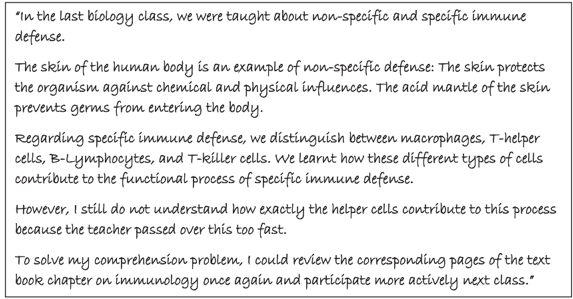
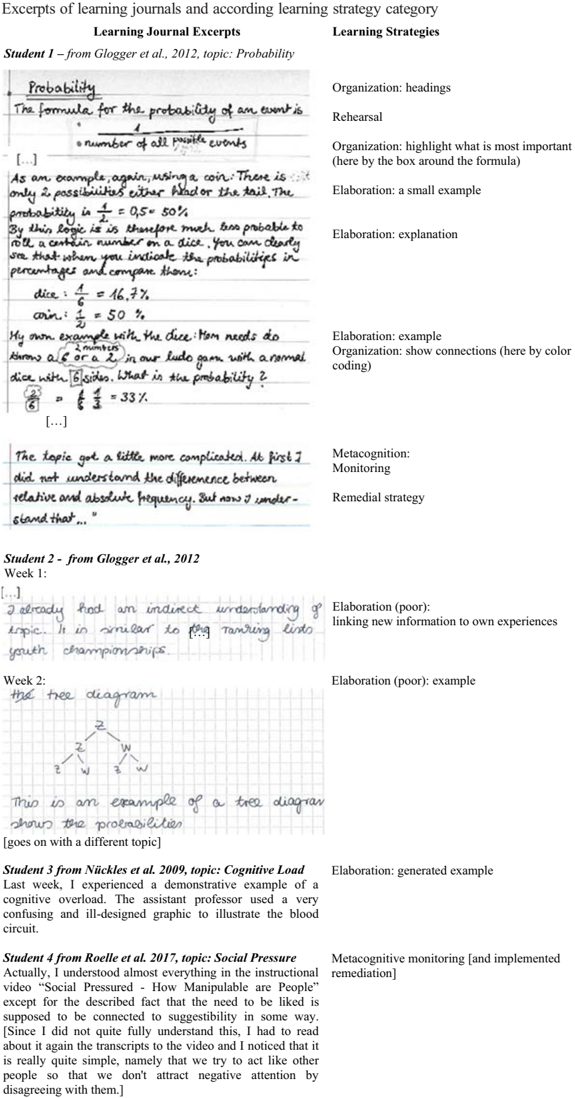
“…color coding) Metacognition: Monitoring Remedial strategy Elaboration (poor): linking new information to own experiences […] Week 2: [goes on with a different topic] Student 3 from Nückles et al. 2009, topic: Cognitive Load Last week, I experienced a demonstrative example of a cognitive overload.”
BackgroundMethodResultInfluentialSelf-citationZheng, L. (2016) · Asia Pacific Education Review · doi:10.1007/s12564-016-9426-9 · Cited by 248 · cited 1×
“Prompts are hints or questions that induce productive learning processes (Bannert and Reimann 2012; Zheng 2016).”
BackgroundZinsser, W. (1988) · Medical Entomology and Zoology · Cited by 224
The impact of learning journals on metacognitive and cognitive processes and learning performance
McCrindle, A. R., & Christensen, C. A. (1995) · Learning and Instruction · doi:10.1016/0959-4752(95)00010-z · Cited by 224 · cited 1×
“In a related experimental study, McCrindle and Christensen (1995) contrasted journal writing with writing a conventional scientific report in a first-year biology course at university.”
BackgroundCognitive Load as Motivational Cost
Feldon, D. F., Callan, G., Juth, S., & Jeong, S. (2019) · Educational Psychology Review · doi:10.1007/s10648-019-09464-6 · Cited by 218 · cited 5×
“It is possible that learners perceived the cognitive load that they had to invest in the prompted strategies as a substantial motivational cost (Feldon et al. 2019) given that learners are generally inclined to keep their invested mental effort as minimal as possible (Shenhav et al. 2017).”
BackgroundInfluentialThe Worked-Out Examples Principle in Multimedia Learning
Renkl, A. (2005) · The Cambridge Handbook of Multimedia Learning · doi:10.1017/cbo9780511816819.016 · Cited by 218
Self-citationSupporting self-regulated hypermedia learning through prompts
Bannert, M., & Reimann, P. (2012) · Instructional Science · doi:10.1007/s11251-011-9167-4 · Cited by 213 · cited 1×
“Prompts are hints or questions that induce productive learning processes (Bannert and Reimann 2012; Zheng 2016).”
BackgroundThe effects of explicit teaching of metastrategic knowledge on low- and high-achieving students
Zohar, A., & Peled, B. (2008) · Learning and Instruction · doi:10.1016/j.learninstruc.2007.07.001 · Cited by 205 · cited 1×
“…received further instructional support in addition to the prompts (e.g., a worked-out example journal entry or meta-strategic information in relation to the prompted strategies, i.e., information about how, when, and why to use the prompted strategies, see Paris et al. 1983; Zohar and Peled 2008).”
BackgroundSynthesizing Cognitive Load and Self-regulation Theory: a Theoretical Framework and Research Agenda
de Bruin, A. B. H., Roelle, J., Carpenter, S. K., Baars, M., & EFG-MRE (2020) · Educational Psychology Review · doi:10.1007/s10648-020-09576-4 · Cited by 196
Self-citationPromoting Self-Regulated Learning Through Prompts
Bannert, M. (2009) · Zeitschrift für Pädagogische Psychologie · doi:10.1024/1010-0652.23.2.139 · Cited by 187 · cited 1×
“That is, we assume that learners are, in principle, capable of using learning strategies, but do not spontaneously use them, at least not to a satisfactory degree (e.g., Bannert 2009; Nückles et al. 2004).”
BackgroundExample-Based Learning in Heuristic Domains: A Cognitive Load Theory Account
Renkl, A., Hilbert, T. S., & Schworm, S. (2008) · Educational Psychology Review · doi:10.1007/s10648-008-9093-4 · Cited by 180 · cited 2×
“…knowledge on the object level (e.g., physics or social psychology; see Hübner et al. 2010) but on the meta-level, that is, knowledge about how to best exploit the learning opportunity of journal writing (for an extensive discussion of different levels in worked examples see Renkl et al. 2009).”
BackgroundSelf-citationFocusing on Learning Styles and Strategies: A Diary Study in an Immersion Setting
Carson, J. G., & Longhini, A. (2002) · Language Learning · doi:10.1111/0023-8333.00188 · Cited by 178 · cited 1×
“…and has mainly been published in the form of case studies presenting anecdotal evidence from applications of journal writing in higher education (e.g., Burke and Dunn 2006; Creme 2005) and as part of classroom instruction in secondary education (Carson and Longhini 2002; Swafford and Bryan 2000).”
BackgroundWriting as a learning tool: integrating theory and practice
Tynjälä, P., Masón, L., & Lonka, K. (2001) · Cited by 165
Writing learning journals: Instructional support to overcome learning-strategy deficits
Hübner, S., Nückles, M., & Renkl, A. (2010) · Learning and Instruction · doi:10.1016/j.learninstruc.2008.12.001 · Cited by 165 · cited 9×
“Hübner et al. (2010) had their participating high school students read a general introduction into journal writing.”
BackgroundMethodResultInfluentialSelf-citationGlogger, I., Schwonke, R., Holzäpfel, L., Nückles, M., & Renkl, A. (2012) · Journal of Educational Psychology · doi:10.1037/a0026683 · Cited by 157 · cited 9×
“In addition, in some studies, we rated the quality of the strategies (e.g., Glogger et al. 2012; Roelle et al. 2017).”
BackgroundMethodInfluentialSelf-citationGlogger-Frey, I., Fleischer, C., Grüny, L., Kappich, J., & Renkl, A. (2015) · Learning and Instruction · doi:10.1016/j.learninstruc.2015.05.001 · Cited by 151 · cited 2×
“As a consequence, they invested more effort in subsequent organization (and elaboration) processes (see the preparation-to-learn effect of knowledge gap experiences, Glogger-Frey et al. 2015; Loibl et al. 2017).”
BackgroundSelf-citationEvens, M., Elen, J., Larmuseau, C., & Depaepe, F. (2018) · Teaching and Teacher Education · doi:10.1016/j.tate.2018.07.001 · Cited by 139 · cited 1×
“3 In the teacher education literature, there is great consensus that content knowledge, pedagogical content knowledge, and pedagogical knowledge are regarded as the most important types of knowledge for effective teaching (e.g., Shulman 1987; Evens et al. 2018).”
BackgroundPhillips, L. M., & Norris, S. P. (2009) · Research in Science Education · doi:10.1007/s11165-008-9111-z · Cited by 126 · cited 1×
“Worked examples * Matthias Nückles matthias.nueckles@ezw.uni–freiburg.de Extended author information available on the last page of the article Writing, just as reading, is basic to academic learning both in school and at the university (Phillips and Norris 2009).”
BackgroundShould student learning journals be assessed?
Creme, P. (2005) · Assessment & Evaluation in Higher Education · doi:10.1080/02602930500063850 · Cited by 119 · cited 1×
“…and has mainly been published in the form of case studies presenting anecdotal evidence from applications of journal writing in higher education (e.g., Burke and Dunn 2006; Creme 2005) and as part of classroom instruction in secondary education (Carson and Longhini 2002; Swafford and Bryan 2000).”
BackgroundExpertise reversal effects in writing-to-learn
Nückles, M., Hübner, S., Dümer, S., & Renkl, A. (2010) · Instructional Science · doi:10.1007/s11251-009-9106-9 · Cited by 107 · cited 12×
“…color coding) Metacognition: Monitoring Remedial strategy Elaboration (poor): linking new information to own experiences […] Week 2: [goes on with a different topic] Student 3 from Nückles et al. 2009, topic: Cognitive Load Last week, I experienced a demonstrative example of a cognitive overload.”
BackgroundMethodResultInfluentialSelf-citationEitel, A., Endres, T., & Renkl, A. (2020) · Educational Psychology Review · doi:10.1007/s10648-020-09559-5 · Cited by 95
Self-citationConditions for discovery through writing
Galbraith, D. (1992) · Instructional Science · doi:10.1007/bf00119655 · Cited by 93 · cited 5×
“From another prominent perspective on writing, the so-called classic view (Galbraith 1992), in contrast, writing does not at all appear as a natural learning medium, in particular when regarded through the lens of cognitive load theory.”
BackgroundInfluentialThe promise of educational psychology (vol II): Teaching for meaningful learning
Mayer, R. E., & Clark, R. S. (2003) · Performance Improvement Journal · doi:10.1002/pfi.4930420410 · Cited by 87
The use of public learning diaries in blended learning
Nückles *, M., Schwonke, R., Berthold, K., & Renkl, A. (2004) · Journal of Educational Media · doi:10.1080/1358165042000186271 · Cited by 83
Self-citationManaging One's Own Cognitive Load when Evidence of Split Attention is Present
Roodenrys, K., Agostinho, S., Roodenrys, S., & Chandler, P. (2012) · Applied Cognitive Psychology · doi:10.1002/acp.2889 · Cited by 70 · cited 1×
“Note that the students usually get very detailed instruction on how to proceed (i.e., little self-regulation) so that they can compensate for splitattention effects (e.g., Roodenrys et al. 2012).”
BackgroundTeaching for meaningful learning
Mayer, R. E. (2002) · Merrill eBooks · Cited by 70
Galbraith, D. (2009) · British Psychological Society eBooks · doi:10.1348/978185409x421129 · Cited by 69 · cited 1×
“Galbraith (1992, 2009) has described this dynamic interaction between the writer and the emerging text using connectionist modeling (see Rogers and McClelland 2004) and termed it as the implicit knowledge-constituting process in writing.”
BackgroundDo cognitive and metacognitive processes set the stage for each other?
Roelle, J., Nowitzki, C., & Berthold, K. (2016) · Learning and Instruction · doi:10.1016/j.learninstruc.2016.11.009 · Cited by 68
Self-citationMartínez, I., Mateos, M., Martín, E., & Rijlaarsdam, G. (2015) · Journal of Writing Research · doi:10.17239/jowr-2015.07.02.03 · Cited by 68 · cited 1×
“…writing is that researchers investigating summary/synthesis or argumentative writing typically implemented and evaluated complex and time-intensive writing trainings including phases of modeling and writing exercises often lasting over several weeks (e.g., Gelati et al. 2014; Martínez et al. 2015).”
BackgroundRoelle, J., & Nückles, M. (2019) · Journal of Educational Psychology · doi:10.1037/edu0000345 · Cited by 68 · cited 2×
“In a field study, Roelle et al. (2011) provided learners writing learning journals over the course of 14 weeks with elaborated Educational Psychology Review (2020) 32:1089–1126 1109”
BackgroundResultSelf-citationvan de Pol, J., de Bruin, A. B. H., van Loon, M. H., & van Gog, T. (2019) · Contemporary Educational Psychology · doi:10.1016/j.cedpsych.2019.02.001 · Cited by 66 · cited 3×
“…because several effective methods to enhance monitoring accuracy, such as asking learners to generate keywords (Thiede et al. 2003) or to complete a diagram (van de Pol et al. 2019), this issue; Prinz et al. 2020), similarly engage learners in writing down their responses to the respective prompts.”
MethodEnhancing computer-supported writing of learning protocols by adaptive prompts
Schwonke, R., Hauser, S., Nückles, M., & Renkl, A. (2005) · Computers in Human Behavior · doi:10.1016/j.chb.2005.01.002 · Cited by 61 · cited 4×
“Further evidence that the extent to which prompts contribute to germane processing in journal writing can be optimized by adapting the prompts to learners’ learning strategy expertise stems from an experiment of Schwonke et al. (2006).”
BackgroundInfluentialSelf-citationRenkl, A. (2015) · Handbook of Research on Learning and Instruction · doi:10.4324/9780203839089.ch14 · Cited by 58
Self-citationThe E-rater® Automated Essay Scoring System
Burstein, J., Tetreault, J., & Madnani, N. (2015) · Handbook of Automated Essay Evaluation · doi:10.4324/9780203122761.ch4 · Cited by 57 · cited 1×
“Techniques for coding complex student-generated texts (automated essay scoring) have already been developed (e.g., Seifried et al. 2012; Burstein et al. 2013).”
BackgroundPrinz, A., Golke, S., & Wittwer, J. (2020) · Educational Psychology Review · doi:10.1007/s10648-020-09558-6 · Cited by 57 · cited 1×
“…because several effective methods to enhance monitoring accuracy, such as asking learners to generate keywords (Thiede et al. 2003) or to complete a diagram (van de Pol et al. 2019), this issue; Prinz et al. 2020), similarly engage learners in writing down their responses to the respective prompts.”
MethodEXPLORING THE EFFECTIVENESS OF JOURNAL WRITING ON LEARNING SOCIAL STUDIES: A COMPARATIVE STUDY
R. Jeffrey Cantrell, J. A. F. (2000) · Reading Psychology · doi:10.1080/027027100278310 · Cited by 53 · cited 1×
“In one of the few published quasiexperimental studies, Cantrell et al. (2000) contrasted prompted journal writing with summary writing to support reading comprehension.”
Activation of Learning Strategies in Writing Learning Journals: The Specificity of Prompts Matters
Glogger, I., Holzäpfel, L., Schwonke, R., Nückles, M., & Renkl, A. (2009) · Zeitschrift für Pädagogische Psychologie · doi:10.1024/1010-0652.23.2.95 · Cited by 48 · cited 8×
“This explanation is underpinned by a second finding of Glogger et al. (2009).”
BackgroundMethodInfluentialSelf-citationvan de Pol, J., van Loon, M., van Gog, T., Braumann, S., & de Bruin, A. (2020) · Educational Psychology Review · doi:10.1007/s10648-020-09560-y · Cited by 45
How Best to Utilize a Deficiency
Miller, P. H. (2000) · Child Development · doi:10.1111/1467-8624.00205 · Cited by 44 · cited 2×
“However, the results of Nückles et al. (2004) suggest that learners spontaneously tend to keep their invested mental effort at a minimum during journal writing (see also Feldon et al.”
BackgroundResultThe Worked Examples Principle in Multimedia Learning
Renkl, A. (2014) · The Cambridge Handbook of Multimedia Learning · doi:10.1017/cbo9781139547369.020 · Cited by 43
Self-citationSchmidt, K., Maier, J., & Nückles, M. (2012) · Education Research International · doi:10.1155/2012/319463 · Cited by 41 · cited 1×
“…of the prompting germane processing principle on journal writing motivation without decreasing the beneficial effect on contentrelated motivation, Schmidt et al. (2012) investigated the effects of prompting learners to reflect on the personal relevance of the learning content in addition to…”
BackgroundSelf-citationMind the gap! Automated concept map feedback supports students in writing cohesive explanations.
Lachner, A., Burkhart, C., & Nückles, M. (2017) · Journal of Experimental Psychology: Applied · doi:10.1037/xap0000111 · Cited by 41 · cited 1×
“Thus, in terms of classic linguistic criteria such as text cohesion (Lachner et al. 2017), audience design (Traxler and Gernsbacher 2011), or readability (e.g., Kincaid et al. 1975), a learning journal entry may appear as rather imperfect and idiosyncratic from a reader’s perspective, but may…”
BackgroundSelf-citationSelf-Explaining: Learning About Principles and Their Application
Renkl, A., & Eitel, A. (2019) · Cambridge University Press eBooks · doi:10.1017/9781108235631.022 · Cited by 37 · cited 1×
“…is usually optimized if the learners not only (superficially) read through the examples but are nudged to self-explain the principles (e.g., mathematical theorems, strategy guidelines) applied in the examples (self-explanation effect; e.g., Chi et al. 1989; Renkl 2017, Renkl and Eitel 2019).”
BackgroundSelf-citationWäschle, K., Lehmann, T., Brauch, N., & Nückles, M. (2015) · Peabody Journal of Education · doi:10.1080/0161956x.2015.1068084 · Cited by 35 · cited 6×
“…to consolidate the results found, for example, for the positive motivational effects of journal writing (i.e., raised interest subject matter, see Wäschle et al. 2015a) or for the positive effect of feedback on the quality of the enacted learning strategies in the learning journals (see Roelle…”
BackgroundMethodInfluentialSelf-citationThe keyword effect: A conceptual replication, effects on bias, and an optimization
Waldeyer, J., & Roelle, J. (2020) · Metacognition and Learning · doi:10.1007/s11409-020-09235-7 · Cited by 35 · cited 1×
“…which gives the learner ample freedom to determine the focus of the comprehension monitoring, will prove to be similarly effective as the more directive methods applied in current research on monitoring accuracy (e.g., Thiede et al. 2003; van de Pol et al. 2019; see also Waldeyer and Roelle 2020).”
MethodSelf-citationSelf-regulated learning by writing learning protocols: Do goal structures matter?
Moning, J., & Roelle, J. (2021) · Learning and Instruction · doi:10.1016/j.learninstruc.2021.101486 · Cited by 35
Self-citationJournal writing in science: Effects on comprehension, interest, and critical reflection
Wäschle, K., Gebhard, A., Oberbusch, E.-M., & Nückles, M. (2015) · Journal of Writing Research · doi:10.17239/jowr-2015.07.01.03 · Cited by 33
Self-citationEffects of Feedback on Learning Strategies in Learning Journals: Learner-Expertise Matters
Roelle, J., Berthold, K., & Fries, S. (2011) · International Journal of Cyber Behavior Psychology and Learning · doi:10.4018/ijcbpl.2011040102 · Cited by 32 · cited 4×
“Note that examples of journal entries were also used in other studies on the Freiburg SelfRegulated-Journal-Writing Approach to prepare the learners for their writing task (e.g., Glogger et al. 2009, Roelle et al. 2011, Roelle et al. 2017, see Table 2).”
BackgroundMethodInfluentialSelf-citationRoelle, J., & Berthold, K. (2016) · Instructional Science · doi:10.1007/s11251-016-9368-y · Cited by 29 · cited 1×
“Thus, they should be able to organize the main content in a more coherent manner and elaborate on the main content more deeply (cognitive processing) than before (e.g., Glogger-Frey et al. 2015; Mayer 2009; Roelle and Berthold 2016).”
BackgroundSelf-citationINSTRUCTIONAL STRATEGIES FOR PROMOTING CONCEPTUAL CHANGE: SUPPORTING MIDDLE SCHOOL STUDENTS
Swafford, J. K. B. J. (2000) · Reading & Writing Quarterly · doi:10.1080/105735600278006 · Cited by 28 · cited 1×
“…and has mainly been published in the form of case studies presenting anecdotal evidence from applications of journal writing in higher education (e.g., Burke and Dunn 2006; Creme 2005) and as part of classroom instruction in secondary education (Carson and Longhini 2002; Swafford and Bryan 2000).”
BackgroundSweller, J., Ayres, P., & Kalyuga, S. (2011) · Springer eBooks · doi:10.1007/978-1-4419-8126-4_13 · Cited by 27 · cited 4×
“In the present paper, we have introduced the self-regulation view in writing-to-learn as a promising theoretical perspective that draws on models of self-regulated learning (e.g., Zimmerman 2008) and cognitive load theory (e.g., Sweller et al. 2011a, 2011b, 2019).”
BackgroundMethodInfluentialRoelle, J., Krüger, S., Jansen, C., & Berthold, K. (2012) · Education Research International · doi:10.1155/2012/751625 · Cited by 27
Self-citationGlogger‐Frey, I., Schwonke, R., Holzäpfel, L., Nückles, M., & Renkl, A. (2008) · Springer eBooks · doi:10.1007/978-1-4020-8827-8_28 · Cited by 22 · cited 8×
“This explanation is underpinned by a second finding of Glogger et al. (2009).”
BackgroundMethodInfluentialSelf-citationCommunicating science: exploring reflexive pedagogical approaches
Burke, P. J., & Dunn, S. (2006) · Teaching in Higher Education · doi:10.1080/13562510500527743 · Cited by 21 · cited 5×
“, Burke and Dunn 2006; Creme 2005) and as part of classroom instruction in secondary education (Carson and Longhini 2002; Swafford and Bryan 2000). In one of the few published quasiexperimental studies, Cantrell et al. (2000) contrasted prompted journal writing with summary writing to support reading comprehension. In…”
BackgroundResultInfluentialThe Effects of Rhetorical and Content Subgoals on Writing and Learning
Klein, P. D., Haug, K. N., & Arcon, N. (2016) · The Journal of Experimental Education · doi:10.1080/00220973.2016.1143795 · Cited by 19 · cited 1×
“…of the rhetorical genre in question (i.e., what makes a good summary or a good argumentation?) was the main focus in those studies and learning goals such as deep comprehension and long-term retention of subject matter were rather secondary (see, e.g., Klein et al. 2017; Nussbaum and Schraw 2007).”
BackgroundPAAS, F. G. W. C., & Kirschner, F. (2012) · Springer eBooks · doi:10.1007/978-1-4419-1428-6_299 · Cited by 19
Traxler, M. J., & Gernsbacher, M. A. (2006) · Cited by 18
Graichen, M., Wegner, E., & Nückles, M. (2019) · Unterrichtswissenschaft · doi:10.1007/s42010-019-00042-x · Cited by 15 · cited 2×
“Graichen et al. (2019) tried to conceptually replicate the effects of examples on the quality of learning journals and learning outcomes in the context of teacher education.”
BackgroundSelf-citationSweller, J., Ayres, P., & Kalyuga, S. (2011) · Cognitive Load Theory · doi:10.1007/978-1-4419-8126-4_7 · Cited by 14 · cited 4×
“In the present paper, we have introduced the self-regulation view in writing-to-learn as a promising theoretical perspective that draws on models of self-regulated learning (e.g., Zimmerman 2008) and cognitive load theory (e.g., Sweller et al. 2011a, 2011b, 2019).”
BackgroundMethodInfluentialOn the Reliability and Validity of Human and Lsa-Based Evaluations of Complex Student-Authored Texts
Seifried, E., Lenhard, W., Baier, H., & Spinath, B. (2012) · Journal of Educational Computing Research · doi:10.2190/ec.47.1.d · Cited by 14 · cited 1×
“Techniques for coding complex student-generated texts (automated essay scoring) have already been developed (e.g., Seifried et al. 2012; Burstein et al. 2013).”
BackgroundWechselseitiges Kommentieren und Bewerten von Lernprotokollen in einem Blended Learning Arrangement
Nückles, M., Renkl, A., & Fries, S. (2005) · Pedocs (German Institute for International Educational Research) · doi:10.25656/01:5795 · Cited by 12
Self-citation(2018) · Current clinical psychiatry · doi:10.1007/978-3-319-98643-2 · Cited by 11
Self-management of cognitive load
Mirza, F., Agostinho, S., Tindall-Ford, S. K., Paas, F., & Chandler, P. (2019) · Advances in Cognitive Load Theory · doi:10.4324/9780429283895-13 · Cited by 10 · cited 5×
“, inducing not only germane load)? Nückles et al. (2009) replicated the experiment of Berthold et al.”
BackgroundResultInfluentialEitel, A., Bender, L., & Renkl, A. (2019) · Routledge eBooks · doi:10.4324/9780429283895-14 · Cited by 9
Self-citationGelati, C., Galvan, N., & Boscolo, P. (2014) · BRILL eBooks · doi:10.1163/9789004265011_010 · Cited by 8 · cited 1×
“…writing is that researchers investigating summary/synthesis or argumentative writing typically implemented and evaluated complex and time-intensive writing trainings including phases of modeling and writing exercises often lasting over several weeks (e.g., Gelati et al. 2014; Martínez et al. 2015).”
BackgroundPAAS, F. G. W. C., & Kirschner, F. (2012) · Research Online (University of Wollongong) · Cited by 7
Research works printed but not linked: 10
- Britton, J. (1980). Shaping at the point of utterance. In A. Freedman & I. Pringle (Eds.), Reinventing the rhetorical tradition (p. 61e66). L & S Books for the Canadian Council of Teachers of English.
- Gallin, P., & Ruf, U. (1998). Sprache und Mathematik [Language and mathematics]. New York: Kallmeyer. *
- Glogger-Frey, I., Bürgermeister, A., & Saalbach, H. (2019). Supporting formative peer-feedback on learning- strategy use by a digital tool. In Paper presented in the Invited SIG11 symposium at the 18th Biennial Conference of the European Association for Research on Learning and Instruction. Aachen.
- Nückles, T. (2019). Effects of expert-feedback on journal writing in physics education: a field intervention study. Unpublished thesis in the teacher education program. Freiburg: University of Education.
- Nückles, M., & Schuba, C. (2019). Teachers as Informed Pragmatists : Ein theoretisches Modell und empirische Befunde zur Förderung didaktischer Argumentationskompetenz von angehenden Lehrkräften. [Teachers as informed pragmatists: a theoretical model and empirical results on how to support future teachers’ didactic argumentations skills]. In J. Kilian, T. Kleickmann, M. Köller, & I. Parchmann (Eds.), Profilbildung im Lehramtsstudium. Beiträge der Qualitätsoffensive Lehrerbildung zur individuellen Orientierung, curricularen Entwicklung und institutionellen Verankerung (pp. 134–143). Federal Ministry of Education and Research.
- Pieper, M., Roelle, J., vom Hofe, R., Salle, A. & Berthold, K. (2019). Unterstützen Leitfragen und Expertenfeedback im Lerntagebuch das Reflektieren im Praxissemester? [Do prompts and expert feedback support teacher students in reflecting by journal writing on their teaching experiences during their practical training?] In
- Renkl, A. (2011). Instruction based on examples. In R. E. Mayer & P. A. Alexander (Eds.), Handbook of research on learning and instruction (pp. 272-295). Routledge.
- Scardamalia, M., & Bereiter, C. (1991). Literate expertise. In K. A. Ericsson & J. Smith (Eds.), Toward a general theory of expertise: prospects and limits (pp. 172-194). Cambridge University Press.
- Sweller, J., Ayres, P., & Kalyuga, S. (2011b). The guidance fading effect. In J. Sweller, P. Ayres, & S. Kalyuga (Eds.), Cognitive load theory (pp. 171-182). Springer. https://doi.org/10.1007/978-1-4419-8126-4_13. · DOI
- Winter-Hölzl, A., Watermann, R., Wittwer, J., & Nückles, M. (2016). Warum schreiben Promovierende bessere abstracts als Studierende? Genrewissen schlägt Textverständnis und Forschungskompetenz [Why are PhD students able to write better abstracts than undergraduates? Genre knowledge beats text comprehension and research literacy]. Unterrichtswissenschaft, 44, 7-24.
Cited by
The Metacognitive Demands and Opportunities of Generative AI
Tankelevitch, L., Kewenig, V., Simkute, A., Scott, A. E., Sarkar, A., Sellen, A., & Rintel, S. (2024) · Proceedings of the CHI Conference on Human Factors in Computing Systems · doi:10.1145/3613904.3642902 · Cited by 493
“…perspective of metacognition, when considered with the unique features of GenAI—model flexibility, generality, and originality—presents an opportunity to realize what Alan Kay proposed as a “grand collaboration” with “agents: computer processes that act as guide, as coach, and as amanuensis” [88].”
BackgroundYilmaz, R., & Karaoglan Yilmaz, F. G. (2023) · Computers in Human Behavior: Artificial Humans · doi:10.1016/j.chbah.2023.100005 · Cited by 344
Gkintoni, E., Antonopoulou, H., Sortwell, A., & Halkiopoulos, C. (2025) · Brain Sciences · doi:10.3390/brainsci15020203 · Cited by 309
Synthesizing Cognitive Load and Self-regulation Theory: a Theoretical Framework and Research Agenda
de Bruin, A. B. H., Roelle, J., Carpenter, S. K., Baars, M., & EFG-MRE (2020) · Educational Psychology Review · doi:10.1007/s10648-020-09576-4 · Cited by 196
Self-citationLai, Y., Saab, N., & Admiraal, W. (2022) · Education and Information Technologies · doi:10.1007/s10639-022-10945-5 · Cited by 151
“These metacognitive strategies are proved beneficial in learning success (Nückles et al., 2020).”
Background
Metadata
- Authors
- Nückles, M., Roelle, J., Glogger-Frey, I., Waldeyer, J., & Renkl, A.
- Affiliations
- University of Freiburg (DE)
- Ruhr University Bochum (DE)
- Corresponding author
- Nückles, Matthias
- Venue
- Educational Psychology Review
- Published
- 2020-07-25
- Volume
- 32
- Issue
- 4
- Pages
- 1089-1126
- ISSN
- 1040-726X (ISSN-L)
- 1573-336X
- OpenAlex
- W3044862824
- Cited by
- 213
- References
- 117
- Citations by year
- 2026: 23 · 2025: 38 · 2024: 44 · 2023: 40 · 2022: 35 · 2021: 22 · 2020: 11
- FWCI
- 40.78
- Type
- journal article
- Language
- en
- Open access
- hybrid
- doi.org
- Licence
- cc-by
- creativecommons.org/licenses/by/4.0 (tdm)
- creativecommons.org/licenses/by/4.0 (vor)
- Locations
- Educational Psychology Review (publishedVersion, cc-by)
- Funders
- Albert-Ludwigs-Universität Freiburg im Breisgau
- Topics
- Social Sciences › Psychology › Developmental and Educational Psychology › Innovative Teaching and Learning Methods
- Social Sciences › Psychology › Experimental and Cognitive Psychology › Visual and Cognitive Learning Processes
- Social Sciences › Education › Reflective Practices in Education
- Keywords
- writing to learn, journaling, student self-regulation, cognitive load theory, cognitive offloading, external representations, metacognition, worked examples, student motivation, writing motivation
About these checks
Registry, retraction, Cites and statistics results are computed, not judged, with one exception: a printed reference that no index lists is read once by a model before it counts as a citation error. Claims are extracted by a model and kept only when their quote appears verbatim in the text; each cited source is then checked, with a model’s help, for whether it says what the claim relies on. Those verdicts can be wrong — read the claim’s quote and the cited source before relying on one.
Statistics and arithmetic are recomputed, not judged.
Confidence bands are shown only for fields calibrated on our annotated test set. None is calibrated yet, so no band is shown.
What counts as a claim ›How we measure confidence ›How we check this ›
Are you an author, or do you see a problem with this page? Request a review
Data sources
Bibliographic data: Semantic Scholar, OpenAlex, Crossref.
Contains information from the Semantic Scholar Academic Graph Datasets, made available under the ODC Attribution License (ODC-BY 1.0).
Semantic Scholar’s data is described in: Kinney, R., et al. (2023). The Semantic Scholar Open Data Platform. arXiv:2301.10140.
