

Factors influencing the levothyroxine dose in the hormone replacement therapy of primary hypothyroidism in adults
Open accessThe DOI matches its Crossref record; 163 of the 165 references it cites were found in a registry or an index; 9 of the 132 sources its claims cite were checked for support.
Abstract
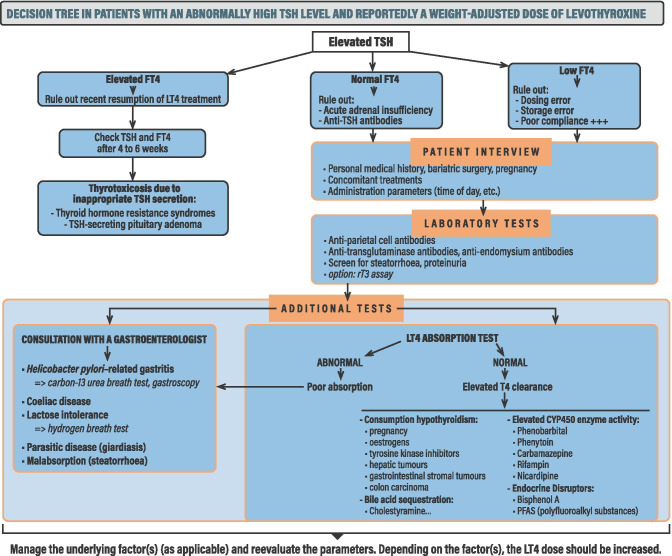
Levothyroxine (LT4) is a safe, effective means of hormone replacement therapy for hypothyroidism. Here, we review the pharmaceutical, pathophysiological and behavioural factors influencing the absorption, distribution, metabolism and excretion of LT4. Any factor that alters the state of the epithelium in the stomach or small intestine will reduce and/or slow absorption of LT4; these include ulcerative colitis, coeliac disease, bariatric surgery, Helicobacter pylori infection, food intolerance, gastritis, mineral supplements, dietary fibre, resins, and various drugs. Once in the circulation, LT4 is almost fully bound to plasma proteins. Although free T4 (FT4) and liothyronine concentrations are extensively buffered, it is possible that drug- or disorder-induced changes in plasma proteins levels can modify free hormone levels. The data on the clinical significance of genetic variants in deiodinase genes are contradictory, and wide-scale genotyping of hypothyroid patients is not currently justified. We developed a decision tree for the physician faced with an abnormally high thyroid-stimulating hormone (TSH) level in a patient reporting adequate compliance with the recommended LT4 dose. The physician should review medications, the medical history and the serum FT4 level and check for acute adrenal insufficiency, heterophilic anti-TSH antibodies, antibodies against gastric and intestinal components (gastric parietal cells, endomysium, and tissue transglutaminase 2), and Helicobacter pylori infection. The next step is an LT4 pharmacodynamic absorption test; poor LT4 absorption should prompt a consultation with a gastroenterologist and (depending on the findings) an increase in the LT4 dose level. An in-depth etiological investigation can reveal visceral disorders and, especially, digestive tract disorders.
Overview
CoChat Summary
## TL;DR
This review maps pharmaceutical, pathophysiological, and behavioural factors that alter levothyroxine (LT4) absorption, distribution, metabolism, and excretion, with most effects occurring at the absorption stage. It also gives a practical workup for patients with unexpectedly high TSH on apparently adequate LT4 dosing, emphasizing food/drug interactions, gastrointestinal disease, and LT4 absorption testing.
## Key findings
- The literature search identified 741 potentially relevant publications; 140 were retrieved and 97 were reviewed.
- Around 30% of patients fail to stably achieve the recommended TSH 0.4–4.0 mIU/L with a standard starting LT4 dose, typically 1.5–1.7 µg/kg/day in patients with residual thyroid function.
- In the reviewed studies, the largest and most consistent effects were on absorption: food in the stomach, calcium/iron supplements, PPIs, bile acid sequestrants, sucralfate, fibre, and some gastrointestinal disorders were all reported to reduce LT4 absorption or increase LT4 dose needs.
- Some interventions improved biochemical control or reduced dose requirements, including liquid LT4 in several settings and vitamin C, which in one study lowered TSH by about 70% at the same LT4 dose.
## Methods
- Narrative review based on a PubMed search from January 1, 2000 to April 30, 2021, using combinations of LT4-/thyroid-related terms plus pharmacokinetic terms; only English-language publications and humans-focused clinical study filters were used.
- Abstracts were screened for relevance; full texts were reviewed for eligible studies, and case reports, reviews, and editorials were excluded.
- The authors classified influences on LT4 effectiveness into pharmaceutical, pathophysiological, and behavioural factors, and organized the discussion around ADME: absorption, distribution, metabolism, and excretion.
## Limitations
- The paper states it searched only PubMed and screened only English-language publications.
- Because this is a review, the evidence base is heterogeneous; the text repeatedly notes that findings are inconsistent for some factors, especially time of day of dosing, PPIs, and bariatric surgery.
- Evident from the text: the review relies on studies with varied designs, small samples in some cases, and non-standardized LT4 absorption-test protocols, which limits direct comparison across studies.
Model-written summary. Check it against the paper before relying on it.
Integrity signals
Registry
Cites
Statistics
Figures

Verification
Claims the paper makes
4 Valid · 2 Not valid · 87 Not checked · 19 Own results and interpretations
Some cited sources support this claim and some don’t — read each source’s verdict below.
In the paper
“Other reports from both retrospective and prospective observational studies indicate that orally administered liquid and soft-gel formulations of LT4 are associated with higher serum FT4 levels and lower TSH levels than tablet formulations, even when the overall LT4 dose level is the same – perhaps due to the absence of gastric disintegration [ 38 – 44 ].”
What the sources say
- Partly supportedcites [38] Benvenga S, Capodicasa G, Perelli S. l-Thyroxine in an oral liquid or softgel formulation ensures more normal serum levels of free T4 in patients with central hypothyroidism. Front Endocrinol (Lausanne). 2017;8:321. https://doi.org/10.3389/fendo.2017.00321. sourceExperimental — accuracy not yet measured
The Abstract Conclusion (p. n/a) and Results/Figure 4 support the direction and the 'same dose' qualifier: switching CH patients to liquid or softgel l-T4 at the identical daily dose raised serum FT4 by ~20–25% and lowered TSH (0.58±0.26 → 0.17±0.15 mU/l, P=0.0039; 0.62±0.22 → 0.21±0.22 mU/l, P=0.012), described as 'the mirror image of FT4 levels'. What this source does not carry is the claim's unqualified generality: our copy is a 7-patient open prospective case series restricted to central hypothyroidism in patients whose FT4 was consistently below the midnormal range on tablets, chosen because tablet performance was poor, and TSH was only a backing assay behind the fundamental FT4 measurements (Introduction; Patients and Methods). It is neither a retrospective nor a population-wide comparison, so the general association across all hypothyroid patients rests on the other citations in the 38–44 cluster rather than on this paper. (LLM, conf=0.72)
- Not checked yetcites [39] Benvenga S, Di Bari F, Vita R. Undertreated hypothyroidism due to calcium or iron supplementation corrected by oral liquid levothyroxine. Endocrine. 2017;56(1):138–45. https://doi.org/10.1007/s12020-017-1244-2. source
- Disputedcites [40] Fallahi P, Ferrari SM, Antonelli A. Oral L-thyroxine liquid versus tablet in patients with hypothyroidism without malabsorption: A prospective study. Endocrine. 2016;52(3):597–601. https://doi.org/10.1007/s12020-015-0836-y. sourceExperimental — accuracy not yet measured
Fallahi et al. (2016) support only half of the attributed claim: after switching hypothyroid patients without malabsorption from L-T4 tablets to liquid L-T4 'at the same dosage', TSH fell significantly (Abstract, p. 2; Results, p. 5; Fig. 1 legend, p. 14). However, the same passages state the contrary on the FT4 component — 'FT4 and FT3 levels were not significantly changed' (Results, p. 5; Abstract, p. 2) — so this study does not show higher serum FT4 with the liquid formulation. Our copy also limits the comparison to liquid L-T4 (Tirosint fiala monouso, Patients and methods, p. 4); soft-gel is mentioned only as an available formulation in the Introduction (p. 3) and was not studied, and the Discussion (p. 6) attributes the TSH decline to hypothesized increased absorption whose 'involved mechanisms need to be further studied'. (LLM, conf=0.75)
Checked by a reasoning model — may be wrong.
- Not checked yetcites [41] Brancato D, et al. Comparison of TSH levels with liquid formulation versus tablet formulations of levothyroxine in the treatment of adult hypothyroidism. Endocr Pract. 2014;20(7):657–62. https://doi.org/10.4158/EP13418.OR. source
- Partly supportedcites [42] Trimboli P, et al. Thyroxine treatment with softgel capsule formulation: Usefulness in hypothyroid patients without malabsorption. Front Endocrinol (Lausanne). 2018;9:118. https://doi.org/10.3389/fendo.2018.00118. sourceExperimental — accuracy not yet measured
Trimboli et al. (2018) support the TSH half of the claim: switching hypothyroid patients without malabsorption from tablet to softgel LT4 at unchanged dose significantly lowered TSH (median 1.90 vs 3.33 mIU/L, p = 0.0039; Abstract Results, Results p. n/a), and the Introduction (p. n/a) notes a meta-analysis showing lower serum TSH when switching to liquid LT4 at unchanged dose. However, the 'higher serum FT4 levels' part is not supported by this paper: the Background states TSH was used as the proxy of LT4 bioavailability, and the Discussion limitations state that 'free-T4 and free-T3 values were not available for all patients because of the use of reflex TSH in clinical practice,' with FT4 merely reported as within the normal range. Thus the FT4 component of the attributed claim, and the joint liquid-plus-softgel framing, exceed what this source reports. (LLM, conf=0.85)
- Not checked yetcites [43] Ribichini D, et al. Tablet and oral liquid L-thyroxine formulation in the treatment of naive hypothyroid patients with Helicobacter pylori infection. Endocrine. 2017;57(3):394–401. https://doi.org/10.1007/s12020-016-1167-3. source
- Not checked yetcites [44] Ferrara R, et al. Treatment pattern and frequency of serum TSH measurement in users of different levothyroxine formulations: A population-based study during the years 2009–2015. Endocrine. 2017;58(1):143–52. https://doi.org/10.1007/s12020-017-1242-4. source
hedgedstates an association- Asserted: passes — The authors put it forward as true.
- Checkable: passes — It can be checked against evidence.
- Load-bearing: passes — The paper’s conclusions depend on it.
- Based: passes — The paper gives a reason why it holds.
- Partly supported
The cited sources support only part of this claim — read each source’s verdict below.
In the paper
“Bach-Huynh et al. three-period crossover study of 65 LT4-treated stable hypothyroid patients found that non-fasting LT4 administration was associated with higher and more variable serum TSH concentrations [ 33 ].”
What the sources say
- Partly supportedcites [33] Bach-Huynh TG, et al. Timing of levothyroxine administration affects serum thyrotropin concentration. J Clin Endocrinol Metab. 2009;94(10):3905–12. https://doi.org/10.1210/jc.2009-0860. sourceExperimental — accuracy not yet measured
The Abstract describes a three-period crossover study, and the Discussion reports higher and more variable TSH under nonfasting regimens. However, the Results (Participant characteristics) say that of the 65 patients who completed the study, 42 had hypothyroidism and 23 had thyroid cancer; the source does not describe all 65 as hypothyroid patients. (LLM, conf=0.88)
plainstates an associationn = 65- Asserted: passes — The authors put it forward as true.
- Checkable: passes — It can be checked against evidence.
- Load-bearing: passes — The paper’s conclusions depend on it.
- Based: passes — The paper gives a reason why it holds.
- Partly supported
The cited sources support only part of this claim — read each source’s verdict below.
In the paper
“around 30% of patients fail to stably achieve the recommended serum level of thyroid-stimulating hormone (TSH; between 0.4 and 4.0 mIU/L, according to the American Thyroid Association guidelines) with a standard, body-weight-based starting dose of LT4 (typically 1.5 to 1.7 µg/kg/day in patients with residual endogenous thyroid function, such as those with auto-immune thyroiditis) [ 2 , 10 – 12 ].”
What the sources say
- Partly supportedcites [2] Jonklaas J, et al. Guidelines for the treatment of hypothyroidism: Prepared by the American Thyroid Association task force on thyroid hormone replacement. Thyroid. 2014;24(12):1670–751. https://doi.org/10.1089/thy.2014.0028. sourceExperimental — accuracy not yet measured
The Discussion of the clinical literature (page not available in our copy) supports normalizing TSH and considering body weight and residual thyroid function when determining LT4 dose. It gives 1.6–1.8 μg/kg for patients with minimal endogenous thyroid function, not the claimed 1.5–1.7 μg/kg for patients with residual function. The passages found do not establish the 30% failure rate or specify a universal TSH target of 0.4–4.0 mIU/L; they discuss reference ranges and age-specific targets instead. (LLM, conf=0.86)
- Not checked yetcites [10] Okosieme OE, et al. Adequacy of thyroid hormone replacement in a general population. QJM. 2011;104(5):395–401. https://doi.org/10.1093/qjmed/hcq222. source
- Not checked yetcites [11] Zaborek NA, et al. The optimal dosing scheme for levothyroxine after thyroidectomy: A comprehensive comparison and evaluation. Surgery. 2019;165(1):92–8. https://doi.org/10.1016/j.surg.2018.04.097. source
- Partly supportedcites [12] Virili C, et al. Gastrointestinal malabsorption of thyroxine. Endocr Rev. 2019;40(1):118–36. https://doi.org/10.1210/er.2018-00168. sourceExperimental — accuracy not yet measured
The Introduction reports that 20%–50% of patients do not achieve a complete biochemical and/or clinical response to a reference thyroxine dose, and gives a consensus dose of 1.6–1.8 µg/kg/day. It does not specify that around 30% fail to stably maintain TSH at 0.4–4.0 mIU/L. The section “How oral thyroxine is ingested” describes the 1.6–1.8 µg/kg/day recommendation for adults with minimal, rather than residual, endogenous thyroid function. (LLM, conf=0.88)
plain- Asserted: passes — The authors put it forward as true.
- Checkable: passes — It can be checked against evidence.
- Load-bearing: passes — The paper’s conclusions depend on it.
- Based: passes — The paper gives a reason why it holds.
- Partly supported
Every source the paper cites for this claim was checked and supports it.
In the paper
“Taking LT4 with grapefruit juice was associated with statistically significant decreases (of around 10%) in the peak T4 concentration and the AUC for T4.”
What the sources say
- Supportedcites [82] Lilja JJ, Laitinen K, Neuvonen PJ. Effects of grapefruit juice on the absorption of levothyroxine. Br J Clin Pharmacol. 2005;60(3):337–41. https://doi.org/10.1111/j.1365-2125.2005.02433.x. source
The Results report an 11% decrease in the maximal increase in T4 concentration (P < 0.01) and a 13% decrease in the incremental T4 AUC over 0–4 hours (P < 0.05). The 0–6-hour AUC also decreased by 9%, but that result was not statistically significant; the claim is supported by the 0–4-hour measure. (LLM, conf=0.90)
plainstates an association- Asserted: passes — The authors put it forward as true.
- Checkable: passes — It can be checked against evidence.
- Load-bearing: unclear — It is unclear whether the paper’s conclusions depend on it.
- Based: passes — The paper gives a reason why it holds.
- Supported
The cited sources support only part of this claim — read each source’s verdict below.
In the paper
“Furthermore, a high proportion of LT4-treated patients ingest medications, foodstuffs and food supplements that selectively or specifically reduce the intestinal absorption of LT4.”
What the sources say
- Supportedcites [48] McMillan M, et al. Comorbidities, concomitant medications, and diet as factors affecting levothyroxine therapy: Results of the CONTROL surveillance project. Drugs R D. 2016;16(1):53–68. https://doi.org/10.1007/s40268-015-0116-6. source
The Results section reports that 51.8% of levothyroxine-treated patients frequently took supplements known to cause malabsorption, and 68.0% frequently consumed foods or beverages known to do so. It also reports substantial use of medications that could adversely affect levothyroxine absorption. These findings support the claim that a high proportion ingest such products. (LLM, conf=0.91)
- Partly supportedcites [61] Benvenga S, et al. A minimum of two years of undertreated primary hypothyroidism, as a result of drug-induced malabsorption of l-thyroxine, may have metabolic and cardiovascular consequences. J Clin Transl Endocrinol. 2019;16: 100189. https://doi.org/10.1016/j.jcte.2019.100189. sourceExperimental — accuracy not yet measured
The Patients section reports that 391 of 730 tablet LT4 users had taken drugs known to inhibit LT4 intestinal absorption; the Discussion describes this as approximately one in two. The paper supports the claim about medications, but the cited passages do not establish a high proportion ingesting interfering foodstuffs or food supplements. (LLM, conf=0.88)
- Not checked yetcites [62] Abu Hashim H, Foda O, Ghayaty E. Lactoferrin or ferrous salts for iron deficiency anemia in pregnancy: A meta-analysis of randomized trials. Eur J Obstet Gynecol Reprod Biol. 2017;219:45–52. https://doi.org/10.1016/j.ejogrb.2017.10.003. source
- Not checked yetcites [63] Trifiro G, et al. Drug interactions with levothyroxine therapy in patients with hypothyroidism: Observational study in general practice. Clin Drug Investig. 2015;35(3):187–95. https://doi.org/10.1007/s40261-015-0271-0. source
plainstates a cause- Asserted: passes — The authors put it forward as true.
- Checkable: passes — It can be checked against evidence.
- Load-bearing: passes — The paper’s conclusions depend on it.
- Based: passes — The paper gives a reason why it holds.
- Supported
51 more claims
Create a free account to see all 112 claims and to verify the 123 references still open.
- Probably not a substantial claim. 34
- It may state two separate claims as one. 41
Claims other papers make about this one
Each is checked against this paper’s own text: does it say what the citing paper says it does?
The cited source doesn’t support the claim as written.
In the citing paper
“Natural juices are instead believed to increase pH in the stomach and reduce LT4 bioavailability (51).”
From ETA guidelines for the use of levothyroxine sodium preparations in monotherapy to optimize the treatment of hypothyroidism (2025) · cites this paper as [51]
Checked by a reasoning model — may be wrong.
Experimental — accuracy not yet measuredThe source backs part of the claim, not all of it — or backs it for a different population, condition or comparison.
In the citing paper
“Several different variations of thyroid pathophysiology have been described in the elderly (92, 93). Reduced lean body mass, reduced T4 absorption and outer ring deiodination as well as the presence of comorbidities and the use of drugs are among them (14, 42, 51).”
From ETA guidelines for the use of levothyroxine sodium preparations in monotherapy to optimize the treatment of hypothyroidism (2025) · cites this paper as [51]
Experimental — accuracy not yet measuredIn the citing paper
“Crohn's disease might potentially elevate LT4 requirements; however, there is limited evidence regarding this.66”
From Refractory hypothyroidism: unraveling the complexities of diagnosis and management (2023) · cites this paper as [66]
Self-check
Percentages, sums and reported differences re-computed from the paper’s own numbers.
Each contradiction between two passages listed here was confirmed by an independent check.
Rated minor: it would not touch a result — a value no result rests on, a p-value that stays on the same side of the significance level, or a conflict that is clerical, resolved elsewhere in the paper, or outside its own findings.
In the paper
“Our literature search did not identify any publications on interactions between bacterial or viral infections and the effectiveness of LT4.”
“the administration of a liquid LT4 formulation in patients with hypothyroidism and an ongoing Helicobacter pylori infection was associated with a significantly greater fall in TSH levels, relative to administration of a tablet formulation [ 43 ].”
Citations
Cites
Hollowell, J. G., Staehling, N. W., Flanders, W. D., Hannon, W. H., Gunter, E. W., Spencer, C. A., & Braverman, L. E. (2002) · The Journal of Clinical Endocrinology & Metabolism · doi:10.1210/jc.87.2.489 · Cited by 4,279
Jonklaas, J., Bianco, A. C., Bauer, A. J., Burman, K. D., Cappola, A. R., Celi, F. S., Cooper, D. S., Kim, B. W., Peeters, R. P., Rosenthal, M. S., et al. (2014) · Thyroid® · doi:10.1089/thy.2014.0028 · Cited by 1,928
Bianco, A. C., Salvatore, D., Gereben, B., Berry, M. J., & Larsen, P. R. (2002) · Endocrine Reviews · doi:10.1210/edrv.23.1.0455 · Cited by 1,853 · cited 1×
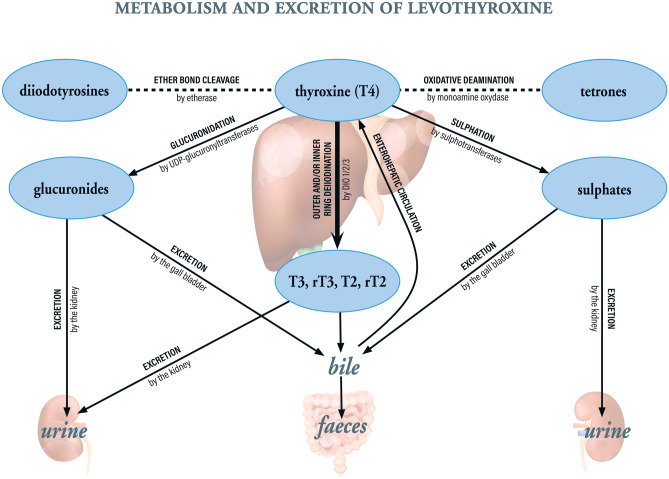
“Primarily, deiodination of T4’s outer ring by type 2 deiodinase (DIO2) gives liothyronine (L-tri-iodothyronine or T3, the main biologically active metabolite), and deiodination of the inner ring by type 1 or type 3 deiodinases (DIO1 or DIO3) gives the biologically inactive reverse T3 (rT3) [21].”
BackgroundThe Incidence and Prevalence of Thyroid Dysfunction in Europe: A Meta-Analysis
Garmendia Madariaga, A., Santos Palacios, S., Guillén-Grima, F., & Galofré, J. C. (2014) · The Journal of Clinical Endocrinology & Metabolism · doi:10.1210/jc.2013-2409 · Cited by 800
Oxidative Stress in Cardiovascular Diseases
Dubois-Deruy, E., Peugnet, V., Turkieh, A., & Pinet, F. (2020) · Antioxidants · doi:10.3390/antiox9090864 · Cited by 646
Alexander, E. K., Marqusee, E., Lawrence, J., Jarolim, P., Fischer, G. A., & Larsen, P. R. (2004) · New England Journal of Medicine · doi:10.1056/nejmoa040079 · Cited by 633
Intestinal Drug Transporter Expression and the Impact of Grapefruit Juice in Humans
Glaeser, H., Bailey, D. G., Dresser, G. K., Gregor, J. C., Schwarz, U. I., McGrath, J. S., Jolicoeur, E., Lee, W., Leake, B. F., Tirona, R. G., et al. (2007) · Clinical Pharmacology & Therapeutics · doi:10.1038/sj.clpt.6100056 · Cited by 407 · cited 1×
“1 3 juice effect” on the absorption of some drugs is due to inhibition of the organic anion transporting polypeptide 1A2 (OATP1A2) transporter in the intestinal mucosa, as has also been suggested for the drug ciprofloxacin [83, 84].”
BackgroundAoki, Y., Belin, R. M., Clickner, R., Jeffries, R., Phillips, L., & Mahaffey, K. R. (2007) · Thyroid · doi:10.1089/thy.2006.0235 · Cited by 390
Lenti, M. V., Rugge, M., Lahner, E., Miceli, E., Toh, B.-H., Genta, R. M., De Block, C., Hershko, C., & Di Sabatino, A. (2020) · Nature Reviews Disease Primers · doi:10.1038/s41572-020-0187-8 · Cited by 350
Thyroid hormone replacement for subclinical hypothyroidism
Villar, H. C. C. E., Saconato, H., Valente, O., & Atallah, Á. N. (2007) · Cochrane Database of Systematic Reviews · doi:10.1002/14651858.cd003419.pub2 · Cited by 329
Thyroxine in Goiter, Helicobacter pylori Infection, and Chronic Gastritis
Centanni, M., Gargano, L., Canettieri, G., Viceconti, N., Franchi, A., Fave, G. D., & Annibale, B. (2006) · New England Journal of Medicine · doi:10.1056/nejmoa043903 · Cited by 329 · cited 1×
“There is a large body of evidence (from general practice patient databases, electronic medical record reviews, and clinical trials) to indicate that PPIs are prominent interfering substances that raise TSH levels and/or the LT4 dose requirement [63, 72, 73].”
BackgroundPanicker, V., Saravanan, P., Vaidya, B., Evans, J., Hattersley, A. T., Frayling, T. M., & Dayan, C. M. (2009) · The Journal of Clinical Endocrinology & Metabolism · doi:10.1210/jc.2008-1301 · Cited by 327 · cited 1×
“suggested that the DIO1 rs2235544 C allele was correlated with elevated FT3 and low FT4 levels in both LT4-treated patients and in the general population [93].”
BackgroundIncreased need for thyroxine in women with hypothyroidism during estrogen therapy
Arafah, B. M. (2001) · New England Journal of Medicine · doi:10.1056/nejm200106073442302 · Cited by 267 · cited 1×
“In postmenopausal women taking LT4, the initiation of oestrogen therapy was associated with increases in serum TBG, TT4 and TSH, and a decrease in the serum FT4 concentration [89].”
BackgroundThe Effect of Hepatic Enzyme-Inducing Drugs on Thyroid Hormones and the Thyroid Gland*
CURRAN, P. G., & DEGROOT, L. J. (1991) · Endocrine Reviews · doi:10.1210/edrv-12-2-135 · Cited by 226 · cited 2×
“As mentioned above, treatments with phenobarbital, phenytoin, carbamazepine, and rifampin induce an increase in the levels of the enzyme responsible for the glucuronidation of LT4, and thus will modify (albeit indirectly) the latter’s excretion [116, 117].”
BackgroundParving, H.-H., Hansen, J. M., Nielsen, S. L., Rossing, N., Munck, O., & Lassen, N. A. (1979) · New England Journal of Medicine · doi:10.1056/nejm197908303010902 · Cited by 226 · cited 2×
“The mean distribution volume of LT4 is 11–12 L in euthyroid subjects and (due to fluid retention) up to 15 L in hypothyroid patients [18, 19].”
BackgroundEffect of calcium carbonate on the absorption of levothyroxine
Singh, N. (2000) · JAMA · doi:10.1001/jama.283.21.2822 · Cited by 219
Timing of levothyroxine administration affects serum thyrotropin concentration
Bach-Huynh, T.-G., Nayak, B., Loh, J., Soldin, S., & Jonklaas, J. (2009) · The Journal of Clinical Endocrinology & Metabolism · doi:10.1210/jc.2009-0860 · Cited by 198 · cited 1×
“three-period crossover study of 65 LT4-treated stable hypothyroid patients found that nonfasting LT4 administration was associated with higher and more variable serum TSH concentrations [33].”
BackgroundPoppe, K., Bisschop, P., Fugazzola, L., Minziori, G., Unuane, D., & Weghofer, A. (2020) · European Thyroid Journal · doi:10.1159/000512790 · Cited by 196
Altered intestinal absorption of L-thyroxine caused by coffee
Benvenga, S., Bartolone, L., Pappalardo, M. A., Russo, A., Lapa, D., Giorgianni, G., Saraceno, G., & Trimarchi, F. (2008) · Thyroid · doi:10.1089/thy.2007.0222 · Cited by 191
A review of the pharmacokinetics of levothyroxine for the treatment of hypothyroidism
Colucci, P., Yue, C. S., Ducharme, M., Benvenga, S., Principal Scientist, L. A. C. I., Principal Scientist, L. A. C. I. A. P. C., President and CEO, L. A. C. I., & Professor of Medicine, D. (2010) · European Endocrinology · doi:10.17925/ee.2013.09.01.40 · Cited by 167 · cited 1×
“The half-life of T4 is reportedly 6–7 days in euthyroid subjects and 7–8 days in hypothyroid patients [22].”
BackgroundGastrointestinal malabsorption of thyroxine
Virili, C., Antonelli, A., Santaguida, M. G., Benvenga, S., & Centanni, M. (2019) · Endocrine Reviews · doi:10.1210/er.2018-00168 · Cited by 164
Burch, H. B. (2019) · New England Journal of Medicine · doi:10.1056/nejmra1901214 · Cited by 164 · cited 4×
“Conversely, exposure to glucocorticoids, niacin, and androgens leads to a fall in TBG levels and thus a decrease in the LT4 requirement [88, 92].”
BackgroundInfluentialImatinib induces hypothyroidism in patients receiving levothyroxine
DEGROOT, J., ZONNENBERG, B., PLUKKER, J., VANDERGRAAF, W., & LINKS, T. (2005) · Clinical Pharmacology & Therapeutics · doi:10.1016/j.clpt.2005.06.010 · Cited by 159 · cited 1×
“More generally, thyroid dysfunction is a well-known adverse effect of TKIs in euthyroid individuals – although not necessarily by modifying the metabolism of LT4 –and so may increase the requirement for LT4 in individuals with hypothyroidism [114, 115].”
BackgroundAspects of the absorption of oral L-thyroxine in normal man
Wenzel, K. W., & Kirschsieper, H. E. (1977) · Metabolism · doi:10.1016/0026-0495(77)90121-4 · Cited by 151
DIO2 Thr92Ala Reduces Deiodinase-2 Activity and Serum-T3 Levels in Thyroid-Deficient Patients
Castagna, M. G., Dentice, M., Cantara, S., Ambrosio, R., Maino, F., Porcelli, T., Marzocchi, C., Garbi, C., Pacini, F., & Salvatore, D. (2017) · The Journal of Clinical Endocrinology & Metabolism · doi:10.1210/jc.2016-2587 · Cited by 151 · cited 1×
“reported that heterozygosity and homozygosity for the DIO2 Thr92Ala polymorphism were significantly associated with low FT3 levels—thus suggesting a rationale for LT4 + LT3 combination therapy [100].”
BackgroundThe influence of cholestyramine on thyroxine absorption
Northcutt, R. C. (1969) · JAMA: The Journal of the American Medical Association · doi:10.1001/jama.1969.03160100047012 · Cited by 144 · cited 1×
“The bile acid sequestrants cholestyramine, colestipol and colesevelam decrease the T4 concentration – probably via the augmented enterohepatic recycling of T4 [120, 121], although cholestyramine additionally forms a complex with T4 in the stomach and thus increases the amount of T4 excreted in the feces [122].”
BackgroundBisphenol A interferes with thyroid specific gene expression
Gentilcore, D., Porreca, I., Rizzo, F. M., Ganbaatar, E., Carchia, E., Mallardo, M., Felice, M. D., & Ambrosino, C. (2012) · Toxicology · doi:10.1016/j.tox.2012.12.001 · Cited by 139
Localization of human thyroxine absorption
HAYS, M. T. (1991) · Thyroid · doi:10.1089/thy.1991.1.241 · Cited by 138 · cited 1×
“Oral LT4 (typically formulated as the sodium salt) dissolves in the stomach at low pH but is absorbed mainly in the small intestine (the jejunum and ilium) within three hours of ingestion [14, 15].”
BackgroundOxidative stress in hypothyroid patients and the role of antioxidant supplementation
Chakrabarti, S., Ghosh, S., Banerjee, S., Mukherjee, S., & Chowdhury, S. (2016) · Indian Journal of Endocrinology and Metabolism · doi:10.4103/2230-8210.190555 · Cited by 131 · cited 1×
“found that serum malondialdehyde levels (a marker of oxidative stress) fell during treatment with LT4 [111].”
BackgroundThe Role of Zinc in Thyroid Hormones Metabolism
Severo, J. S., Morais, J. B. S., de Freitas, T. E. C., Andrade, A. L. P., Feitosa, M. M., Fontenelle, L. C., de Oliveira, A. R. S., Cruz, K. J. C., & Marreiro, D. D. N. (2019) · International Journal for Vitamin and Nutrition Research · doi:10.1024/0300-9831/a000262 · Cited by 130 · cited 1×
“Although Zn is known to interact with thyroid hormone systems in a complex manner, it is not clear whether Zn supplementation influences deiodinase levels or activity [136].”
BackgroundLiel, Y., Harman-Boehm, I., & Shany, S. (1996) · The Journal of Clinical Endocrinology & Metabolism · doi:10.1210/jcem.81.2.8636317 · Cited by 129 · cited 1×
“withdrawal of fibre (mainly wholewheat and fibre-enriched bread) was associated with marked reductions in TSH levels and the LT4 dose requirement [68].”
BackgroundEffects of Evening vs Morning Levothyroxine Intake: A Randomized Double-blind Crossover Trial
Bolk, N. (2010) · Archives of Internal Medicine · doi:10.1001/archinternmed.2010.436 · Cited by 128 · cited 2×
“Although circadian rhythms may influence LT4 administration [35], we conclude the main variability factor in the time of day is whether or not the stomach contains food or other ingested substances when oral LT4 is administered.”
BackgroundThyroid hormone therapy for hypothyroidism
Biondi, B., & Cooper, D. S. (2019) · Endocrine · doi:10.1007/s12020-019-02023-7 · Cited by 119
Bisphenols as Environmental Triggers of Thyroid Dysfunction: Clues and Evidence
Gorini, F., Bustaffa, E., Coi, A., Iervasi, G., & Bianchi, F. (2020) · International Journal of Environmental Research and Public Health · doi:10.3390/ijerph17082654 · Cited by 119 · cited 1×
“In fact, the endocrine disruptors bisphenol A (2,2-bis(4hydroxyphenyl)propane) and other bisphenols (such as bisphenol B) are structurally similar to T4 and T3 and now known to have several effects on the thyroid hormone system [154, 155].”
BackgroundSachmechi, I., Reich, D. M., Aninyei, M., Wibowo, F., Gupta, G., & Kim, P. J. (2007) · Endocrine Practice · doi:10.4158/ep.13.4.345 · Cited by 112 · cited 1×
“There is a large body of evidence (from general practice patient databases, electronic medical record reviews, and clinical trials) to indicate that PPIs are prominent interfering substances that raise TSH levels and/or the LT4 dose requirement [63, 72, 73].”
BackgroundSorafenib-Induced Hypothyroidism Is Associated with Increased Type 3 Deiodination
Abdulrahman, R. M., Verloop, H., Hoftijzer, H., Verburg, E., Hovens, G. C., Corssmit, E. P., Reiners, C., Gelderblom, H., Pereira, A. M., Kapiteijn, E., et al. (2010) · The Journal of Clinical Endocrinology & Metabolism · doi:10.1210/jc.2009-2507 · Cited by 112 · cited 1×
“found that 26 weeks of sorafenib treatment in 21 LT4-treated patients with progressive non-medullary thyroid carcinoma was associate with falls in serum FT4 and FT3 levels and the T3/T4 and T3/rT3 ratios [113].”
BackgroundSurks, M. (1996) · JAMA · doi:10.1001/jama.275.19.1495 · Cited by 110
Soy formula complicates management of congenital hypothyroidism
Conrad, S. C. (2004) · Archives of Disease in Childhood · doi:10.1136/adc.2002.009365 · Cited by 107 · cited 1×
“However, in a patient population (infants with congenital hypothyroidism), intake of soy formula milk was associated with TSH elevation and a longer time to TSH normalization [81].”
BackgroundOutcomes of Patients With Hypothyroidism and COVID-19: A Retrospective Cohort Study
van Gerwen, M. A. G., Alsen, M., Little, C. C., Barlow, J., Naymagon, L., Tremblay, D. A., Sinclair, C. F., & Genden, E. M. (2020) · Frontiers in Endocrinology · doi:10.3389/fendo.2020.00565 · Cited by 105 · cited 1×
“Nevertheless, it has been suggested that thyroid status should be reassessed in euthyroid pregnant women infected by SARSCoV-2 in their first trimester of pregnancy, notably if they are at high risk of thyroid dysfunction or have a history of thyroid autoimmune disease [162, 163].”
BackgroundWouters, H. J. C. M., van Loon, H. C. M., van der Klauw, M. M., Elderson, M. F., Slagter, S. N., Kobold, A. M., Kema, I. P., Links, T. P., van Vliet-Ostaptchouk, J. V., & Wolffenbuttel, B. H. R. (2017) · Thyroid® · doi:10.1089/thy.2016.0199 · Cited by 97
Adequacy of thyroid hormone replacement in a general population
Okosieme, O. E., Belludi, G., Spittle, K., Kadiyala, R., & Richards, J. (2011) · QJM · doi:10.1093/qjmed/hcq222 · Cited by 96
Jetten, A. M. (2018) · Cellular and Molecular Life Sciences · doi:10.1007/s00018-018-2841-9 · Cited by 95 · cited 1×
“Lastly, patients with congenital hypothyroidism (due to GLIS3 mutations, for example) can acquire resistance to the action of thyroid hormones [145].”
BackgroundHays, M. T. (1988) · Endocrine Research · doi:10.3109/07435808809032986 · Cited by 94 · cited 1×
“Oral LT4 (typically formulated as the sodium salt) dissolves in the stomach at low pH but is absorbed mainly in the small intestine (the jejunum and ilium) within three hours of ingestion [14, 15].”
BackgroundIsidro, M. L., Penín, M. A., Nemiña, R., & Cordido, F. (2007) · Endocrine · doi:10.1007/s12020-007-9012-3 · Cited by 93 · cited 1×
“The mean FT4 level was slightly but not significantly higher [125].”
BackgroundCarlé, A., Faber, J., Steffensen, R., Laurberg, P., & Nygaard, B. (2017) · European Thyroid Journal · doi:10.1159/000469709 · Cited by 93 · cited 1×
“(for the rs225014 polymorphism in DIO2 and the rs17606253 polymorphism in MCT10/SLC16A10) [103].”
BackgroundLevothyroxine Dose Adjustment to Optimise Therapy Throughout a Patient’s Lifetime
Duntas, L. H., & Jonklaas, J. (2019) · Advances in Therapy · doi:10.1007/s12325-019-01078-2 · Cited by 93 · cited 1×
“Several equations have been developed to calculate the dose requirement [13].”
BackgroundSelf-citationTorlontano, M., Durante, C., Torrente, I., Crocetti, U., Augello, G., Ronga, G., Montesano, T., Travascio, L., Verrienti, A., Bruno, R., et al. (2008) · The Journal of Clinical Endocrinology & Metabolism · doi:10.1210/jc.2007-1067 · Cited by 92 · cited 1×
“(for the DIO2 rs225014 Ala/Ala variant) [102], Arici et al.”
Vita, R., Saraceno, G., Trimarchi, F., & Benvenga, S. (2013) · Endocrine · doi:10.1007/s12020-012-9772-2 · Cited by 91 · cited 1×
“In contrast, an acute loading test in two patients found that coffee did not modify the pharmacokinetics of LT4 [78].”
BackgroundAppelhof, B. C., Peeters, R. P., Wiersinga, W. M., Visser, T. J., Wekking, E. M., Huyser, J., Schene, A. H., Tijssen, J. G. P., Hoogendijk, W. J. G., & Fliers, E. (2005) · The Journal of Clinical Endocrinology & Metabolism · doi:10.1210/jc.2005-0451 · Cited by 91 · cited 1×
“L-tri-iodothyronine (LT3) + LT4 combination therapy [96].”
l-Thyroxine Requirement in Patients with Autoimmune Hypothyroidism and Parietal Cell Antibodies
Checchi, S., Montanaro, A., Pasqui, L., Ciuoli, C., De Palo, V., Chiappetta, M. C., & Pacini, F. (2008) · The Journal of Clinical Endocrinology & Metabolism · doi:10.1210/jc.2007-1544 · Cited by 89
Shifren, J. L., Desindes, S., McIlwain, M., Doros, G., & Mazer, N. A. (2007) · Menopause · doi:10.1097/gme.0b013e31803867a · Cited by 89 · cited 2×
“reported that transdermal oestrogen therapy (as opposed to oral administration) exerts minimal effects on the binding proteins and then on TT4 and FT4 [90].”
BackgroundThyreotropin levels in diabetic patients on metformin treatment
Cappelli, C., Rotondi, M., Pirola, I., Agosti, B., Formenti, A., Zarra, E., Valentini, U., Leporati, P., Chiovato, L., & Castellano, M. (2012) · European Journal of Endocrinology · doi:10.1530/eje-12-0225 · Cited by 88 · cited 1×
“Metformin treatment has a TSH-lowering effect in patients with LT4-treated or untreated polycystic ovary syndrome or in LT4-treated patients with diabetes mellitus [126, 127].”
BackgroundDiagnosis and treatment of levothyroxine pseudomalabsorption.
Lips, D. J., Reisen, M. V., Voigt, V., & Venekamp, W. J. R. R. (2004) · PubMed · Cited by 87
Adjunctive cholestyramine therapy for thyrotoxicosis*
Solomon, B. L., Wartofsky, L., & Burman, K. D. (1993) · Clinical Endocrinology · doi:10.1111/j.1365-2265.1993.tb00970.x · Cited by 83 · cited 1×
“The bile acid sequestrants cholestyramine, colestipol and colesevelam decrease the T4 concentration – probably via the augmented enterohepatic recycling of T4 [120, 121], although cholestyramine additionally forms a complex with T4 in the stomach and thus increases the amount of T4 excreted in the feces [122].”
BackgroundNew medications which decrease levothyroxine absorption
John-Kalarickal, J., Pearlman, G., & Carlson, H. E. (2007) · Thyroid · doi:10.1089/thy.2007.0060 · Cited by 82 · cited 1×
“Likewise, concomitant intake of the phosphate binder sevelamer hydrochloride significantly decreased the area under the serum TT4 concentration curve [70].”
BackgroundHoermann, R., Midgley, J. E. M., Giacobino, A., Eckl, W. A., Wahl, H. G., Dietrich, J. W., & Larisch, R. (2014) · Clinical Endocrinology · doi:10.1111/cen.12527 · Cited by 82 · cited 1×
“1 3 healthy, euthyroid individuals, and the distribution, metabolism and excretion of exogenous LT4 differ from those of endogenous T4 [23].”
BackgroundYue, C., Scarsi, C., & Ducharme, M. (2012) · Arzneimittelforschung · doi:10.1055/s-0032-1329951 · Cited by 81
Fallahi, P., Ferrari, S. M., Camastra, S., Politti, U., Ruffilli, I., Vita, R., Navarra, G., Benvenga, S., & Antonelli, A. (2017) · Obesity Surgery · doi:10.1007/s11695-016-2247-4 · Cited by 81 · cited 2×
“reported that hypothyroid patients show higher TSH levels after Roux-en-Y gastric bypass or a biliary pancreatic diversion – presumably due to poor LT4 absorption [60].”
BackgroundMahmoodianfard, S., Vafa, M., Golgiri, F., Khoshniat, M., Gohari, M. R., Solati, Z., & Djalali, M. (2015) · Journal of the American College of Nutrition · doi:10.1080/07315724.2014.926161 · Cited by 81 · cited 1×
“Interestingly, supplementation with Zn (alone or combined with Se) for 12 weeks was associated with a significant increase in serum FT3 levels but had no significant effects on TT3, FT4, TT4 or TSH levels [135].”
BackgroundLoPresti, J. S., Eigen, A., Kaptein, E., Anderson, K. P., Spencer, C. A., & Nicoloff, J. T. (1989) · Journal of Clinical Investigation · doi:10.1172/jci114343 · Cited by 80 · cited 1×
“An abnormally high level of rT3 (an analyte not assayed on a routine bases) suggests that conversion of T4 to rT3 by DIO3 is favored over the production of T3 in the context of consumptive hypothyroidism [148].”
BackgroundCappelli, C., Pirola, I., Daffini, L., Formenti, A., Iacobello, C., Cristiano, A., Gandossi, E., Agabiti Rosei, E., & Castellano, M. (2016) · Thyroid · doi:10.1089/thy.2015.0422 · Cited by 80
Selenium and antioxidant defenses as major mediators in the development of chronic heart failure
de Lorgeril, M., & Salen, P. (2006) · Heart Failure Reviews · doi:10.1007/s10741-006-9188-2 · Cited by 80
Olker, J. H., Korte, J. J., Denny, J. S., Hartig, P. C., Cardon, M. C., Knutsen, C. N., Kent, P. M., Christensen, J. P., Degitz, S. J., & Hornung, M. W. (2019) · Toxicological Sciences · doi:10.1093/toxsci/kfy302 · Cited by 78 · cited 1×
“5%) inhibited a DIO by at least 50% [112].”
BackgroundAbsorption of Levothyroxine When Coadministered with Various Calcium Formulations
Zamfirescu, I., & Carlson, H. E. (2011) · Thyroid · doi:10.1089/thy.2010.0296 · Cited by 76
Effects of grapefruit juice on the absorption of levothyroxine
Lilja, J. J., Laitinen, K., & Neuvonen, P. J. (2005) · British Journal of Clinical Pharmacology · doi:10.1111/j.1365-2125.2005.02433.x · Cited by 74 · cited 1×
“However, TSH levels did not appear to be affected, and the investigators considered that concomitant grapefruit juice and LT4 intake did not have a clinically relevant effect [82].”
BackgroundArafah, B. M. (1994) · Annals of Internal Medicine · doi:10.7326/0003-4819-121-4-199408150-00002 · Cited by 71 · cited 1×
“Conversely, exposure to glucocorticoids, niacin, and androgens leads to a fall in TBG levels and thus a decrease in the LT4 requirement [88, 92].”
BackgroundRotondi, M., Cappelli, C., Magri, F., Botta, R., Dionisio, R., Iacobello, C., De Cata, P., Nappi, R. E., Castellano, M., & Chiovato, L. (2011) · Clinical Endocrinology · doi:10.1111/j.1365-2265.2011.04042.x · Cited by 69 · cited 1×
“Metformin treatment has a TSH-lowering effect in patients with LT4-treated or untreated polycystic ovary syndrome or in LT4-treated patients with diabetes mellitus [126, 127].”
BackgroundThe emergence of levothyroxine as a treatment for hypothyroidism
Hennessey, J. V. (2017) · Endocrine · doi:10.1007/s12020-016-1199-8 · Cited by 66
National trends in prescription drug expenditures and projections for 2020
Tichy, E. M., Schumock, G. T., Hoffman, J. M., Suda, K. J., Rim, M. H., Tadrous, M., Stubbings, J., Cuellar, S., Clark, J. S., Wiest, M. D., et al. (2020) · American Journal of Health-System Pharmacy · doi:10.1093/ajhp/zxaa116 · Cited by 65
McMillan, M., Rotenberg, K. S., Vora, K., Sterman, A. B., Thevathasan, L., Ryan, M. F., Mehra, M., & Sandulli, W. (2016) · Drugs in R&D · doi:10.1007/s40268-015-0116-6 · Cited by 64 · cited 2×
“) that can reduce the intestinal absorption of LT4 [24, 48].”
BackgroundSerum Thyrotropin Levels Following Levothyroxine Administration at Breakfast
Perez, C. L. S., Araki, F. S., Graf, H., & de Carvalho, G. A. (2013) · Thyroid · doi:10.1089/thy.2012.0435 · Cited by 63
Wiig, H., Reed, R. K., & Tenstad, O. (2000) · American Journal of Physiology-Heart and Circulatory Physiology · doi:10.1152/ajpheart.2000.278.5.h1627 · Cited by 62 · cited 2×
“The mean distribution volume of LT4 is 11–12 L in euthyroid subjects and (due to fluid retention) up to 15 L in hypothyroid patients [18, 19].”
BackgroundThyroid dysfunctions induced by tyrosine kinase inhibitors
Fallahi, P., Ferrari, S. M., Vita, R., Di Domenicantonio, A., Corrado, A., Benvenga, S., & Antonelli, A. (2014) · Expert Opinion on Drug Safety · doi:10.1517/14740338.2014.913021 · Cited by 60 · cited 1×
“More generally, thyroid dysfunction is a well-known adverse effect of TKIs in euthyroid individuals – although not necessarily by modifying the metabolism of LT4 –and so may increase the requirement for LT4 in individuals with hypothyroidism [114, 115].”
BackgroundBrix, T. H., Hegedűs, L. D., Hallas, J., & Lund, L. C. (2020) · The Lancet Diabetes & Endocrinology · doi:10.1016/s2213-8587(21)00028-0 · Cited by 59 · cited 1×
“The initial data collected during the pandemic of coronavirus 2019 disease suggest that treated hypothyroidism is neither a risk factor nor a severity factor for infection by severe acute respiratory syndrome coronavirus 2 (SARS-CoV-2) [161].”
BackgroundRubio, I. G. S., Galrão, A. L., Santo, M. A., Zanini, A. C., & Medeiros-Neto, G. (2012) · Obesity Surgery · doi:10.1007/s11695-011-0452-8 · Cited by 58 · cited 1×
“did not see a decrease (only a slight delay) in the amount of LT4 absorption after Roux-en-Y gastric bypass surgery [59].”
BackgroundAnticancer Drug-induced Thyroid Dysfunction
Bhattacharya, S., Goyal, A., Kaur, P., Medanta, T. M., Singh, R. K., & Kalra, S. (2020) · touchREVIEWS in Endocrinology · doi:10.17925/ee.2020.16.1.32 · Cited by 58 · cited 1×
“by cholestyramine), (ii) an increase in DIO3 activity, (iv) the effects of medications (such as phenytoin, phenobarbital, rifampin, and nicardipine), or (v) possible consequences of endocrine disruptors (bisphenol A, and per/polyfluoroalkyl compounds) [153].”
Backgroundde Carvalho, G. A., Bahls, S.-C., Boeving, A., & Graf, H. (2009) · Thyroid · doi:10.1089/thy.2008.0261 · Cited by 57 · cited 1×
“Sertraline had similar but weaker effects [129].”
Guglielmi, R., Grimaldi, F., Negro, R., Frasoldati, A., Misischi, I., Graziano, F., Cipri, C., Guastamacchia, E., Triggiani, V., & Papini, E. (2018) · Endocrine, Metabolic & Immune Disorders - Drug Targets · doi:10.2174/1871530318666180125155348 · Cited by 57 · cited 2×
“01) improvements in three of the seven subscores in the Underactive Thyroid Treatment Satisfaction Questionnaire [26].”
BackgroundInfluentialThyroxine and treatment of hypothyroidism: seven decades of experience
Mateo, R. C. I., & Hennessey, J. V. (2019) · Endocrine · doi:10.1007/s12020-019-02006-8 · Cited by 57
Management of overt hypothyroidism during pregnancy
Li, S. W., & Chan, S. (2020) · Best Practice & Research Clinical Endocrinology & Metabolism · doi:10.1016/j.beem.2020.101439 · Cited by 56 · cited 2×
“1 3 Women with hypothyroidism are generally advised to increase the dose of LT4 by 30 to 50% (depending on the residual endogenous thyroid function) because of weight gain, a larger T4 pool (an elevated TBG level), transfer to the foetus, and increased clearance of T4 (due to placental DIO3 activity) [137].”
BackgroundCeliac disease and hypothyroidism
Collins, D., Wilcox, R., Nathan, M., & Zubarik, R. (2012) · The American Journal of Medicine · doi:10.1016/j.amjmed.2011.09.003 · Cited by 54 · cited 1×
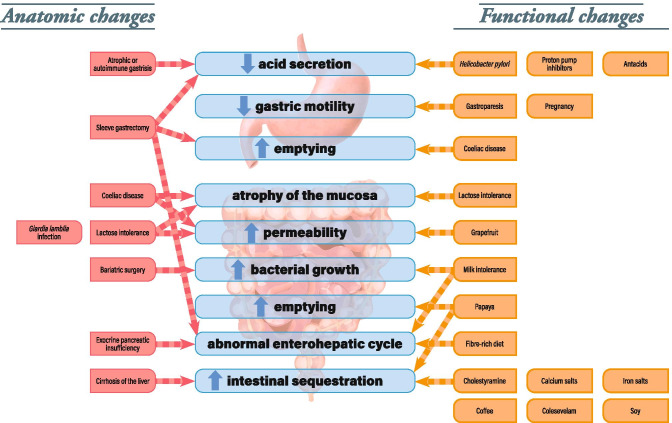
“To reach an equivalent TSH level, the LT4 dose must be higher if the patient’s intestinal tract is affected by ulcerative colitis [49], coeliac disease [50], lactose intolerance [51], and gastritis (especially Helicobacter pylori–related gastritis and autoimmune gastritis) [43, 52–54], and infections with Giardia lamb…”
BackgroundLactose intolerance revealed by severe resistance to treatment with levothyroxine
Muñoz-Torres, M., Varsavsky, M., & Alonso, G. (2006) · Thyroid · doi:10.1089/thy.2006.16.1171 · Cited by 54 · cited 1×
“To reach an equivalent TSH level, the LT4 dose must be higher if the patient’s intestinal tract is affected by ulcerative colitis [49], coeliac disease [50], lactose intolerance [51], and gastritis (especially Helicobacter pylori–related gastritis and autoimmune gastritis) [43, 52–54], and infections with Giardia lamb…”
BackgroundFallahi, P., Ferrari, S. M., & Antonelli, A. (2016) · Endocrine · doi:10.1007/s12020-015-0836-y · Cited by 53
Inhibition of Type 1 Iodothyronine Deiodinase by Bisphenol A
da Silva, M. M., Gonçalves, C. F. L., Miranda‐Alves, L., Fortunato, R. S., de Carvalho, D. P., & Ferreira, A. C. F. (2019) · Hormone and Metabolic Research · doi:10.1055/a-0919-3879 · Cited by 52 · cited 2×
“Serum T4 levels were abnormally high in rats treated with bisphenol A, while T3 remained unchanged [157].”
BackgroundHeemstra, K. A., Hoftijzer, H. C., Van Der Deure, W. M., Peeters, R. P., Fliers, E., Appelhof, B. C., Wiersinga, W. M., Corssmit, E. P. M., Visser, T. J., & Smit, J. W. A. (2009) · Clinical Endocrinology · doi:10.1111/j.1365-2265.2008.03474.x · Cited by 51
Fierabracci, P., Martinelli, S., Tamberi, A., Piaggi, P., Basolo, A., Pelosini, C., Ricco, I., Magno, S., Querci, G., Ceccarini, G., et al. (2016) · Thyroid · doi:10.1089/thy.2015.0473 · Cited by 51 · cited 1×
“reported a drop in BMI and a significant downward adjustment in the mean total dose of LT4 after surgery [56], and Richou et al.”
BackgroundBenvenga, S., Di Bari, F., & Vita, R. (2017) · Endocrine · doi:10.1007/s12020-017-1244-2 · Cited by 51 · cited 1×
“Again, liquid formulations of LT4 may be less subject to interference by calcium and iron supplements [39].”
BackgroundKudo, Y., Yamauchi, K., Fukazawa, H., & Terao, Y. (2006) · Toxicological Sciences · doi:10.1093/toxsci/kfj204 · Cited by 51 · cited 1×
“Although hydroxylated and halogenated bisphenols bind competitively to thyroid hormone transport proteins like TBG and transthyretin [158], the low binding constants (relative to T3 and T4) and low bisphenol concentrations in vivo might not have a major influence on transport in LT4-treated patients [159].”
BackgroundHashim, H. A., Foda, O., & Ghayaty, E. (2017) · European Journal of Obstetrics & Gynecology and Reproductive Biology · doi:10.1016/j.ejogrb.2017.10.003 · Cited by 51
In vitro fluorescence displacement investigation of thyroxine transport disruption by bisphenol A
Cao, J., Guo, L., Wan, B., & Wei, Y. (2011) · Journal of Environmental Sciences · doi:10.1016/s1001-0742(10)60408-1 · Cited by 49 · cited 1×
“Although hydroxylated and halogenated bisphenols bind competitively to thyroid hormone transport proteins like TBG and transthyretin [158], the low binding constants (relative to T3 and T4) and low bisphenol concentrations in vivo might not have a major influence on transport in LT4-treated patients [159].”
BackgroundArakawa, H., Shirasaka, Y., Haga, M., Nakanishi, T., & Tamai, I. (2012) · Biopharmaceutics & Drug Disposition · doi:10.1002/bdd.1809 · Cited by 48 · cited 1×
“1 3 juice effect” on the absorption of some drugs is due to inhibition of the organic anion transporting polypeptide 1A2 (OATP1A2) transporter in the intestinal mucosa, as has also been suggested for the drug ciprofloxacin [83, 84].”
BackgroundFallahi, P., Ferrari, S. M., Ruffilli, I., Ragusa, F., Biricotti, M., Materazzi, G., Miccoli, P., & Antonelli, A. (2017) · Expert Opinion on Drug Delivery · doi:10.1080/17425247.2016.1227782 · Cited by 48 · cited 1×
“The pharmaceutical formulation of LT4 can interact with factors that modulate the drug’s absorption [36].”
BackgroundThe levothyroxine absorption test: a four-year experience (2015-2018) at the Mayo Clinic
Gonzales, K. M., Stan, M. N., Morris, J. C., Bernet, V., & Castro, M. R. (2019) · Thyroid · doi:10.1089/thy.2019.0256 · Cited by 46
The Use of Bile Acid Sequestrants to Lower Serum Thyroid Hormones in Iatrogenic Hyperthyroidism
Shakir, K. M. M., Michaels, R. D., Hays, J. H., & Potter, B. B. (1993) · Annals of Internal Medicine · doi:10.7326/0003-4819-118-2-199301150-00006 · Cited by 45 · cited 1×
“The bile acid sequestrants cholestyramine, colestipol and colesevelam decrease the T4 concentration – probably via the augmented enterohepatic recycling of T4 [120, 121], although cholestyramine additionally forms a complex with T4 in the stomach and thus increases the amount of T4 excreted in the feces [122].”
BackgroundEffect of vitamin C on the absorption of levothyroxine in patients with hypothyroidism and gastritis
Jubiz, W., & Ramirez, M. (2014) · The Journal of Clinical Endocrinology & Metabolism · doi:10.1210/jc.2013-4360 · Cited by 45 · cited 2×
“The researchers suggested that vitamin C might increase the solubility of LT4 in the stomach [142].”
BackgroundBrancato, D., Scorsone, A., Saura, G., Ferrara, L., Di Noto, A., Aiello, V., Fleres, M., & Provenzano, V. (2014) · Endocrine Practice · doi:10.4158/ep13418.or · Cited by 44
Absorption Kinetics of Levothyroxine Is Not Altered by Proton-pump Inhibitor Therapy
Dietrich, J. W., Gieselbrecht, K., Holl, R. W., & Boehm, B. O. (2006) · Hormone and Metabolic Research · doi:10.1055/s-2006-924980 · Cited by 44 · cited 1×
“In contrast, various clinical studies of one week of treatment with pantoprazole [74], 3 months of treatment with omeprazole [75], and a week’s treatment with esomeprazole [76] did not find significant intergroup differences in the TSH or thyroid hormone levels.”
ResultBugdaci, M. S., Zuhur, S. S., Sokmen, M., Toksoy, B., Albayrak, B., & Altuntas, Y. (2011) · Helicobacter · doi:10.1111/j.1523-5378.2011.00830.x · Cited by 41
Oral liquid levothyroxine treatment at breakfast: a mistake?
Cappelli, C., Pirola, I., Gandossi, E., Formenti, A., & Castellano, M. (2014) · European Journal of Endocrinology · doi:10.1530/eje-13-0693 · Cited by 41 · cited 1×
“reported that a move to taking the LT4 30 min before breakfast for 3 and 6 months did not significantly modify the serum TSH level [79].”
BackgroundZaborek, N. A., Cheng, A., Imbus, J. R., Long, K. L., Pitt, S. C., Sippel, R. S., & Schneider, D. F. (2019) · Surgery · doi:10.1016/j.surg.2018.04.097 · Cited by 41
Castellana, M., Castellana, C., Giovanella, L., & Trimboli, P. (2020) · Endocrine · doi:10.1007/s12020-019-02185-4 · Cited by 41 · cited 1×
“To reach an equivalent TSH level, the LT4 dose must be higher if the patient’s intestinal tract is affected by ulcerative colitis [49], coeliac disease [50], lactose intolerance [51], and gastritis (especially Helicobacter pylori–related gastritis and autoimmune gastritis) [43, 52–54], and infections with Giardia lamb…”
BackgroundMaglio, M., & Troncone, R. (2020) · Frontiers in Nutrition · doi:10.3389/fnut.2020.00073 · Cited by 41 · cited 1×
“circulating IgGs against parietal cells [54] and intestinal antibodies against endomysium or tissue transglutaminase 2 as specific markers of coeliac disease [147]) and for Helicobacter pylori infection.”
BackgroundTrifirò, G., Parrino, F., Sultana, J., Giorgianni, F., Ferrajolo, C., Bianchini, E., Medea, G., Benvenga, S., Cricelli, I., Cricelli, C., et al. (2015) · Clinical Drug Investigation · doi:10.1007/s40261-015-0271-0 · Cited by 40 · cited 1×
“There is a large body of evidence (from general practice patient databases, electronic medical record reviews, and clinical trials) to indicate that PPIs are prominent interfering substances that raise TSH levels and/or the LT4 dose requirement [63, 72, 73].”
BackgroundThe Effect of Infertility Medication on Thyroid Function in Hypothyroid Women Who Conceive
Davis, L. B., Lathi, R. B., & Dahan, M. H. (2007) · Thyroid · doi:10.1089/thy.2007.0065 · Cited by 39 · cited 1×
“The researchers concluded that fertility treatment did not require additional LT4, relative to that recommended for natural pregnancy [137, 139].”
BackgroundLevothyroxine absorption test to differentiate pseudomalabsorption from true malabsorption
Ghosh, S., Pramanik, S., Biswas, K., Bhattacharjee, K., Sarkar, R., Chowdhury, S., & Mukhopadhyay, P. (2020) · European Thyroid Journal · doi:10.1159/000504218 · Cited by 39
The Effect of Famotidine, Esomeprazole, and Ezetimibe on Levothyroxine Absorption
Ananthakrishnan, S., Braverman, L. E., Levin, R. M., Magnani, B., & Pearce, E. N. (2008) · Thyroid · doi:10.1089/thy.2007.0381 · Cited by 38 · cited 2×
“In contrast, various clinical studies of one week of treatment with pantoprazole [74], 3 months of treatment with omeprazole [75], and a week’s treatment with esomeprazole [76] did not find significant intergroup differences in the TSH or thyroid hormone levels.”
BackgroundResultCampi, I., Covelli, D., Moran, C., Fugazzola, L., Cacciatore, C., Orlandi, F., Gallone, G., Chatterjee, K., Beck-Peccoz, P., & Persani, L. (2020) · Frontiers in Endocrinology · doi:10.3389/fendo.2020.00432 · Cited by 38 · cited 1×
“Autonomous TSH secretion by a TSH-secreting pituitary adenoma can also be considered [144].”
BackgroundSelf-citationEvaluation of the Potential for Drug Interactions With Patiromer in Healthy Volunteers
Lesko, L. J., Offman, E. M., Brew, C. T., Garza, D., Benton, W. W., Mayo, M. R., Romero, A., Mond, C. D., & Weir, M. R. (2017) · Journal of Cardiovascular Pharmacology and Therapeutics · doi:10.1177/1074248417691135 · Cited by 38 · cited 1×
“The interaction was avoided by delaying the patiromer administration by 4 h [69].”
BackgroundBenvenga, S., Vita, R., Di Bari, F., Fallahi, P., & Antonelli, A. (2015) · European Thyroid Journal · doi:10.1159/000381310 · Cited by 37 · cited 1×
“Hence, the LT4 requirement would increase in this context [118, 119].”
BackgroundSyndromes of Resistance to Thyroid Hormone Action
Persani, L., & Campi, I. (2019) · Experientia supplementum · doi:10.1007/978-3-030-25905-1_5 · Cited by 36 · cited 1×
“Thyroid hormone resistance syndromes are rare but can be considered once the patient’s endocrine profile is well documented; to gain a fuller clinical picture and rule out hereditary factors, it may be worth measuring TSH and FT4 levels in the patient’s family members [143].”
BackgroundSelf-citationColesevelam hydrochloride and lanthanum carbonate interfere with the absorption of levothyroxine
Weitzman, S. P., Ginsburg, K. C., & Carlson, H. E. (2009) · Thyroid · doi:10.1089/thy.2008.0312 · Cited by 35 · cited 1×
“1 3 lanthanum, respectively, relative to LT4 taken alone [123].”
BackgroundRibichini, D., Fiorini, G., Repaci, A., Castelli, V., Gatta, L., Vaira, D., & Pasquali, R. (2017) · Endocrine · doi:10.1007/s12020-016-1167-3 · Cited by 35 · cited 1×
“For example, the administration of a liquid LT4 formulation in patients with hypothyroidism and an ongoing Helicobacter pylori infection was associated with a significantly greater fall in TSH levels, relative to administration of a tablet formulation [43].”
BackgroundConcurrent milk ingestion decreases absorption of levothyroxine
Chon, D. A., Reisman, T., Weinreb, J. E., Hershman, J. M., & Leung, A. M. (2018) · Thyroid · doi:10.1089/thy.2017.0428 · Cited by 34 · cited 1×
“pharmacokinetic study of cold or hot milk (another beverage frequently consumed at breakfast), coadministration of LT4 and 2% milk by healthy euthyroid subjects was associated with a significantly lower peak concentration (by around 8%) and a significantly lower area under the curve for TT4 (10%) [80].”
BackgroundSantoro, A. B., Vargens, D. D., Barros Filho, M. D. C., Bulzico, D. A., Kowalski, L. P., Meirelles, R. M. R., Paula, D. P., Neves, R. R. S., Pessoa, C. N., Struchine, C. J., et al. (2014) · British Journal of Clinical Pharmacology · doi:10.1111/bcp.12437 · Cited by 32 · cited 2×
“1 3 group of LT4-treated patients having undergone total thyroidectomy and radioiodine therapy [94].”
BackgroundSkelin, M., Lucijanić, T., Liberati-Čizmek, A.-M., Klobučar, S. M., Lucijanić, M., Jakupović, L., Bakula, M., Lončar, J. V., Marušić, S., Matić, T., et al. (2018) · Endocrine · doi:10.1007/s12020-018-1686-1 · Cited by 31 · cited 1×
“1 3 least 120 min after an evening meal) for LT4 tablets [27], and Pirola et al.”
BackgroundRoef, G. L., Rietzschel, E. R., Meyer, T. D., Bekaert, S., Buyzere, M. D., daele, C. M. V., Toye, K. R. C., Kaufman, J., & Taes, Y. (2013) · Clinica Chimica Acta · doi:10.1016/j.cca.2013.08.017 · Cited by 30 · cited 1×
“Similarly, the rs6647476 (T/C) polymorphism in MCT8 was inversely associated with FT3 levels but again only in men [105].”
BackgroundTiming of breakfast does not influence therapeutic efficacy of liquid levothyroxine formulation
Morelli, S., Reboldi, G., Moretti, S., Menicali, E., Avenia, N., & Puxeddu, E. (2016) · Endocrine · doi:10.1007/s12020-015-0788-2 · Cited by 30
Bornschein, A., Paz-Filho, G., Graf, H., & Carvalho, G. A. D. (2012) · Arquivos Brasileiros de Endocrinologia & Metabologia · doi:10.1590/s0004-27302012000400006 · Cited by 29 · cited 1×
“There were no thyrotoxic symptoms or signs of cardiac problems [47].”
BackgroundMeyer zu Schwabedissen, H. E., Ferreira, C., Schaefer, A. M., Oufir, M., Seibert, I., Hamburger, M., & Tirona, R. G. (2018) · Molecular Pharmacology · doi:10.1124/mol.117.111161 · Cited by 28 · cited 2×
“sought to determine whether the organic anion transporting polypeptide 2B1 (OATP2B1) was involved in the intestinal absorption of thyroid hormones [85].”
BackgroundMilczarek-Banach, J., Rachoń, D., Bednarczuk, T., Myśliwiec-Czajka, K., Wasik, A., & Miśkiewicz, P. (2021) · Frontiers in Endocrinology · doi:10.3389/fendo.2020.587252 · Cited by 28 · cited 1×
“In fact, the endocrine disruptors bisphenol A (2,2-bis(4hydroxyphenyl)propane) and other bisphenols (such as bisphenol B) are structurally similar to T4 and T3 and now known to have several effects on the thyroid hormone system [154, 155].”
BackgroundThe clinical utility of free thyroxine in oral levothyroxine absorption testing
Ching Sun, G. E., Pantalone, K. M., Faiman, C., Gupta, M., Olansky, L., & Hatipoglu, B. (2014) · Endocrine Practice · doi:10.4158/ep13487.or · Cited by 27
Pedro, J. M. P., Cunha, F. M., Souteiro, P., Neves, J. S., Guerreiro, V. A., Magalhães, D. M. D. S., Bettencourt‐Silva, R., Oliveira, S. C., Costa, M. M., Queirós, J. C., et al. (2018) · Obesity Surgery · doi:10.1007/s11695-018-3388-4 · Cited by 27 · cited 1×
“1 3 (Roux-en-Y gastric bypass) [58], and Rubio et al.”
BackgroundCiprofloxacin and Rifampin have opposite effects on levothyroxine absorption
Goldberg, A. S., Tirona, R. G., Asher, L. J., Kim, R. B., & Van Uum, S. H. M. (2013) · Thyroid · doi:10.1089/thy.2013.0014 · Cited by 25 · cited 2×
“pharmacokinetic study, for example, the concomitant administration of rifampin and LT4 was associated with a significantly higher area under the plasma T4 concentration–time curve [71].”
BackgroundHasselström, K., Siersbæk-Nielsen, K., Lumholtz, L. B., Faber, J., Kirkegaard, C., & Friis, T. (1985) · Acta Endocrinologica · doi:10.1530/acta.0.1100483 · Cited by 25 · cited 1×
“The bioavailability of LT4 is 65–80% in fasting euthyroid subjects and hypothyroid patients [16, 17].”
BackgroundFerrara, R., Ientile, V., Arcoraci, V., Ferrajolo, C., Piccinni, C., Fontana, A., Benvenga, S., & Trifirò, G. (2017) · Endocrine · doi:10.1007/s12020-017-1242-4 · Cited by 23
Antúnez, P., & Licht, S. (2011) · Revista Argentina de Endocrinología y Metabolismo · Cited by 21
Pirola, I., Gandossi, E., Brancato, D., Marini, F., Cristiano, A., Delbarba, A., Agosti, B., Castellano, M., & Cappelli, C. (2018) · Journal of Endocrinological Investigation · doi:10.1007/s40618-018-0867-3 · Cited by 21 · cited 1×
“study of 4 hypothyroid patients treated with liquid LT4 did not find any significant differences in the serum TSH level according to whether the LT4 was taken 30 min before breakfast or at breakfast [28].”
BackgroundTrimboli, P., Virili, C., Centanni, M., & Giovanella, L. (2018) · Frontiers in Endocrinology · doi:10.3389/fendo.2018.00118 · Cited by 21
Thyroxine replacement dose in patients with Hashimoto disease: A potential role for interleukin-6
Papanas, N., Papazoglou, D., Papatheodorou, K., Antonoglou, C., Kotsiou, S., & Maltezos, E. S. (2006) · Cytokine · doi:10.1016/j.cyto.2006.07.017 · Cited by 21 · cited 1×
“found that the serum interleukin (IL)-6 level was significantly and positively correlated with the LT4 dose, the LT4 dose per kg body weight, and the serum tumour necrosis factor alpha level but was significantly and negatively correlated with the serum TT3 level and the serum T3/T4 ratio [104]—suggesting that IL-6 in…”
BackgroundGuglielmi, V., Bellia, A., Bianchini, E., Medea, G., Cricelli, I., Sbraccia, P., Lauro, D., Cricelli, C. A., & Lapi, F. (2017) · Endocrine · doi:10.1007/s12020-017-1412-4 · Cited by 20
Ulcerative colitis as a novel cause of increased need for levothyroxine
Virili, C., Stramazzo, I., Santaguida, M. G., Bruno, G., Brusca, N., Capriello, S., Cellini, M., Severi, C., Gargano, L., & Centanni, M. (2019) · Frontiers in Endocrinology · doi:10.3389/fendo.2019.00233 · Cited by 20 · cited 1×
“To reach an equivalent TSH level, the LT4 dose must be higher if the patient’s intestinal tract is affected by ulcerative colitis [49], coeliac disease [50], lactose intolerance [51], and gastritis (especially Helicobacter pylori–related gastritis and autoimmune gastritis) [43, 52–54], and infections with Giardia lamb…”
BackgroundMetformin affects thyroid function in male rats
Hu, X., Liu, Y., Wang, C., Hou, L., Zheng, X., Xu, Y., Ding, L., & Pang, S. (2017) · Oncotarget · doi:10.18632/oncotarget.22536 · Cited by 19 · cited 1×
“Animal studies have also shown that the low TSH levels are not due to a metformin-induced increase in LT4 absorption [128].”
BackgroundAssociation between genetic polymorphism and levothyroxine bioavailability in hypothyroid patients
Arici, M., Öztaş, E., Yanar, F., Aksakal, N., Özçınar, B., & Özhan, G. (2018) · Endocrine Journal · doi:10.1507/endocrj.ej17-0162 · Cited by 19 · cited 1×
“(for the rs225014 TT and rs225015 GG genotypes) [95] and Carlé et al.”
BackgroundSeverity of Proteinuria Is Directly Associated With Risk of Hypothyroidism in Adults
Kwong, N., Medici, M., Marqusee, E., & Wassner, A. J. (2020) · The Journal of Clinical Endocrinology & Metabolism · doi:10.1210/clinem/dgaa872 · Cited by 19 · cited 1×
“Hence, the LT4 requirement would increase in this context [118, 119].”
BackgroundBenvenga, S., Capodicasa, G., & Perelli, S. (2017) · Frontiers in Endocrinology · doi:10.3389/fendo.2017.00321 · Cited by 18
Hu, S., BELCARO, G. V., Dugall, M., Peterzan, P., Hosoi, M., Ledda, A., Riva, A., Giacomelli, L., Togni, S., Eggenhöffner, R., et al. (2018) · PubMed · doi:10.26355/eurrev_201808_15647 · Cited by 18 · cited 1×
“Other substrates that do not appear to influence the rate and extent of LT4 absorption and its effects include soy isoflavones [130], the antacid famotidine, the lipid-lowering compound ezetimibe [76], the anticoagulant warfarin [131], a curcumin supplement for osteoarthritis [132], the osteoporosis drug alendronate […”
BackgroundLevothyroxine dose adjustment in hypothyroid patients following gastric sleeve surgery
Richou, M., Gilly, O., Taillard, V., Brauwere, D. P. D., Donici, I., & Guedj, A. M. (2020) · Annales d Endocrinologie · doi:10.1016/j.ando.2020.04.011 · Cited by 18 · cited 1×
“observed a fall in the LT4 dose required to achieve the target TSH level after sleeve gastrectomy [57].”
BackgroundMarina, M., Ceda, G. P., Aloe, R., Gnocchi, C., & Ceresini, G. (2016) · PubMed Central · Cited by 17
Abi-Abib, R. D. C., & Vaisman, M. (2014) · Arquivos Brasileiros de Endocrinologia & Metabologia · doi:10.1590/0004-2730000002997 · Cited by 17 · cited 1×
“In contrast, various clinical studies of one week of treatment with pantoprazole [74], 3 months of treatment with omeprazole [75], and a week’s treatment with esomeprazole [76] did not find significant intergroup differences in the TSH or thyroid hormone levels.”
ResultEffect of Rifampin on Thyroid Function Test in Patients on Levothyroxine Medication
Kim, H. I., Kim, T. H., Kim, H., Kim, Y. N., Jang, H. W., Chung, J. H., Moon, S. M., Jhun, B. W., Lee, H., Koh, W.-J., et al. (2017) · PLoS ONE · doi:10.1371/journal.pone.0169775 · Cited by 16 · cited 2×
“As mentioned above, treatments with phenobarbital, phenytoin, carbamazepine, and rifampin induce an increase in the levels of the enzyme responsible for the glucuronidation of LT4, and thus will modify (albeit indirectly) the latter’s excretion [116, 117].”
BackgroundLevothyroxine absorption test results in patients with TSH elevation resistant to treatment
Yildirim Simsir, I., Soyaltin, U. E., & Ozgen, A. G. (2019) · Endocrine · doi:10.1007/s12020-019-01889-x · Cited by 16
Al-Azzam, S. I., Alkhateeb, A. M., AlAzzeh, O., Alzoubi, K. H., & Khabour, O. F. (2013) · Experimental and Clinical Endocrinology & Diabetes · doi:10.1055/s-0032-1331695 · Cited by 15
Persiani, S., Sala, F., Manzotti, C., Colovic, M., Zangarini, M., Donazzolo, Y., Barbetta, B., Vitalini, C., Giacovelli, G., Benvenuti, C., et al. (2015) · Drug Research · doi:10.1055/s-0035-1555784 · Cited by 14 · cited 1×
“Other substrates that do not appear to influence the rate and extent of LT4 absorption and its effects include soy isoflavones [130], the antacid famotidine, the lipid-lowering compound ezetimibe [76], the anticoagulant warfarin [131], a curcumin supplement for osteoarthritis [132], the osteoporosis drug alendronate […”
BackgroundEMPATHY: A New Tool for Identifying the Most Suitable Thyroxine Formulation in Hypothyroid Patients
Bellastella, G., Caputo, M., Maiorino, M. I., Longo, M., Scappaticcio, L., Giugliano, D., & Esposito, K. (2019) · Thyroid · doi:10.1089/thy.2018.0493 · Cited by 14 · cited 1×
“recently developed and tested a seven-question “Evaluation of Malabsorption in Patients with Hypothyroidism” (EMPATHY) questionnaire [165].”
MethodBenvenga, S., Pantano, R., Saraceno, G., Lipari, L., Alibrando, A., Inferrera, S., Pantano, G., Simone, G., Tamà, S., Scoglio, R., et al. (2019) · Journal of Clinical & Translational Endocrinology · doi:10.1016/j.jcte.2019.100189 · Cited by 14
Identifying predictors of prolonged levothyroxine dose adjustment after thyroidectomy
Atruktsang, T. S., Zaborek, N. A., Imbus, J. R., Long, K., Pitt, S. C., Sippel, R. S., & Schneider, D. F. (2019) · Journal of Surgical Research · doi:10.1016/j.jss.2019.03.049 · Cited by 13 · cited 1×
“After total or completion thyroidectomy for benign disease, the time needed to achieve euthyroid status (usually 3–4 months) was considerably longer and required more dose adjustments in patients taking calcium supplements [64].”
BackgroundMorini, E., Catalano, A., Lasco, A., Morabito, N., & Benvenga, S. (2019) · Endocrine · doi:10.1007/s12020-019-01908-x · Cited by 12
Variants in MCT10 protein do not affect FT3 levels in athyreotic patients
Cantara, S., Ricci, C., Maino, F., Marzocchi, C., Pacini, F., & Castagna, M. G. (2019) · Endocrine · doi:10.1007/s12020-019-02001-z · Cited by 12 · cited 1×
“reported that patients homozygous or heterozygous for the rs17606253 polymorphism in SLC16A10 had significantly lower FT3 levels than other individuals [101].”
BackgroundHaddow, J. E., Neveux, L. M., Palomaki, G. E., Lambert-Messerlian, G. M., Malone, F. D., & D’Alton, M. E. (2015) · Thyroid · doi:10.1089/thy.2015.0085 · Cited by 12 · cited 1×
“found that FT4 levels were higher in pregnant women treated for hypothyroidism than in pregnant euthyroid women with equivalent TSH levels, as is also the case when comparing non-pregnant women treated for hypothyroidism and non-pregnant euthyroid women with equivalent TSH levels; hence, pregnancy per se did not chang…”
ResultKharrazian, D., Herbert, M. R., & Vojdani, A. (2017) · Journal of Thyroid Research · doi:10.1155/2017/4354723 · Cited by 12 · cited 1×
“found that dozens of raw or cooked food products showed immune cross-reactivity with thyroid hormones and enzymes; however, the putative effect of anti-hormone antibodies on T4 levels remains to be determined [86].”
BackgroundKocic, I., Homšek, I., Dačević, M., Cvijić, S., Parojčić, J., Vučićević, K. M., Prostran, M. S., & Miljković, B. (2012) · Biopharmaceutics & Drug Disposition · doi:10.1002/bdd.1780 · Cited by 10 · cited 1×
“Perspectives for further research include the broader application of in silico simulations of oral drug absorption and the effect of drug interactions [164].”
BackgroundSrivastava, S., Sharma, G., Rathore, M., Chaturvedi, A., Keswani, P., Saxena, G. N., Singh, A., & Sharma, R. M. (2018) · PubMed · Cited by 10
Frączek-Jucha, M. M., Szlósarczyk, B., Kabat, M., Czubek, U., Nessler, J., & Gackowski, A. (2019) · PubMed · Cited by 10
An evaluation of the potential drug interaction between warfarin and levothyroxine
Wood, M., Delate, T., Clark, M., Clark, N. P., Horn, J. R., & Witt, D. M. (2014) · Journal of Thrombosis and Haemostasis · doi:10.1111/jth.12626 · Cited by 8 · cited 1×
“Other substrates that do not appear to influence the rate and extent of LT4 absorption and its effects include soy isoflavones [130], the antacid famotidine, the lipid-lowering compound ezetimibe [76], the anticoagulant warfarin [131], a curcumin supplement for osteoarthritis [132], the osteoporosis drug alendronate […”
BackgroundIntestinal absorption and buccal absorption of liquid levothyroxine
Benvenga, S., & Di Bari, F. (2017) · Endocrine · doi:10.1007/s12020-017-1250-4 · Cited by 8
Surks, M. I. (1996) · JAMA · doi:10.1001/jama.1996.03530430039036 · Cited by 8
Bone, H. G., Walter, M., Hurley, M. E., & Epstein, S. (2017) · Osteoporosis International · doi:10.1007/s00198-017-3941-3 · Cited by 8 · cited 1×
“Other substrates that do not appear to influence the rate and extent of LT4 absorption and its effects include soy isoflavones [130], the antacid famotidine, the lipid-lowering compound ezetimibe [76], the anticoagulant warfarin [131], a curcumin supplement for osteoarthritis [132], the osteoporosis drug alendronate […”
BackgroundAbbasinazari, M., Nakhjavani, M., & Gogani, S. (2011) · PubMed Central · Cited by 7
A dose of paracetamol for the levothyroxine absorption test
Thynne, T., & Doogue, M. P. (2013) · Clinical Endocrinology · doi:10.1111/cen.12211 · Cited by 5 · cited 1×
“The paracetamol absorption test has also been used as control; given that paracetamol and LT4 differ in their physicochemical properties and absorption mechanisms, malabsorption of both will only be caused by severe dysfunction of the gastrointestinal tract, and so an abnormal LT4 absorption test and a normal paraceta…”
MethodChanges in thyroxine requirements in patients with hypothyroidism undergoing renal transplantation
Thomas, M. C., Mathew, T. H., & Russ, G. R. (2002) · American Journal of Kidney Diseases · doi:10.1053/ajkd.2002.30556 · Cited by 5 · cited 1×
“Lastly, factors that reportedly modulate the effectiveness of LT4 but whose mechanisms are unknown are listed in Table 4 [124].”
BackgroundLewandowski, K. C., Dąbrowska, K., Basińska-Lewandowska, M., Bolanowski, M., Ruchała, M. A., & Lewiñski, A. (2020) · Thyroid Research · doi:10.1186/s13044-020-00079-6 · Cited by 5
Comparison of Levothyroxine Dosing in Patients with and without Heart Failure
Yang, T., Ruegger, M. C., Colavecchia, A. C., Sadhu, A., Patham, B., & Tatara, A. W. (2019) · Endocrine Research · doi:10.1080/07435800.2019.1645165 · Cited by 1
Sarahian, N., Naz, M. S. G., & Tehrani, F. R. (2021) · Endocrine · doi:10.1007/s12020-021-02678-1 · Cited by 1
Research works printed but not linked: 1
- Medicines optimisation: The safe and effective use of medicines to enable the best possible outcomes. Accessed at 2015. Available from: https://www.ncbi.nlm.nih.gov/pubmed/26180890.
Cited by
Diagnostic and therapeutic value of human serpin family proteins
Janciauskiene, S. M., Lechowicz, U., Pelc, M., Olejnicka, B. T., & Chorostowska‐Wynimko, J. (2024) · Biomedicine & Pharmacotherapy · doi:10.1016/j.biopha.2024.116618 · Cited by 48
Centanni, M., Duntas, L., Feldt-Rasmussen, U., Koehrle, J., Peeters, R. P., Razvi, S., Trimboli, P., & Virili, C. (2025) · European Thyroid Journal · doi:10.1530/etj-25-0123 · Cited by 38
“Reduced lean body mass, reduced T4 absorption and outer ring deiodination as well as the presence of comorbidities and the use of drugs are among them (14, 42, 51).”
InfluentialSelf-citationThe impact of weight loss interventions on thyroid function: a systematic review and meta-analysis
Nayak, S. S., Hashemi, S. M., Patel, M., Shafi, N., Biswas, P., Javankiani, S., Jaladi, P., Patil, S. B., Rashid, R., Amini‐Salehi, E., et al. (2025) · Annals of Medicine and Surgery · doi:10.1097/ms9.0000000000003428 · Cited by 21
“Conversely, weight loss might require a reduction in dosage to avoid symptoms of hyperthyroidism [ 15 ] .”
Ouyang, Q., Xu, Y., Ban, Y., Li, J., Cai, Y., Wu, B., Hao, Y., Sun, Z., Zhang, M., Wang, M., et al. (2023) · Probiotics and Antimicrobial Proteins · doi:10.1007/s12602-023-10068-4 · Cited by 21
The use of levothyroxine absorption tests in clinical practice
Caron, P., & Declèves, X. (2023) · The Journal of Clinical Endocrinology & Metabolism · doi:10.1210/clinem/dgad132 · Cited by 18
Self-citation
Metadata
- Authors
- Caron, P., Grunenwald, S., Persani, L., Borson-Chazot, F., Leroy, R., & Duntas, L.
- Affiliations
- Centre Hospitalier Universitaire de Toulouse (FR)
- University of Milan (IT)
- National and Kapodistrian University of Athens (GR)
- Corresponding author
- Caron, Philippe
- Venue
- Reviews in Endocrine and Metabolic Disorders
- Published
- 2021-10-20
- Volume
- 23
- Issue
- 3
- Pages
- 463-483
- ISSN
- 1389-9155 (ISSN-L)
- 1573-2606
- PMC
- PMC8528480
- OpenAlex
- W3206952166
- Semantic Scholar
- bc412550566c6d61ad827b8188167400dcbe0438
- Cited by
- 53
- References
- 165
- Citations by year
- 2026: 12 · 2025: 14 · 2024: 12 · 2023: 12 · 2022: 3
- FWCI
- 1.04
- Type
- journal article
- Language
- en
- Open access
- hybrid
- doi.org
- Licence
- cc-by
- creativecommons.org/licenses/by/4.0 (tdm)
- creativecommons.org/licenses/by/4.0 (vor)
- Locations
- Reviews in Endocrine and Metabolic Disorders (publishedVersion, cc-by)
- PubMed Central (publishedVersion, cc-by)
- PubMed (publishedVersion)
- Archivio Istituzionale della Ricerca (Universita Degli Studi Di Milano) (submittedVersion, cc-by)
- Funders
- merck kgaa
- Topics
- Health Sciences › Medicine › Endocrinology, Diabetes and Metabolism › Thyroid Disorders and Treatments
- Health Sciences › Medicine › Surgery › Thyroid and Parathyroid Surgery
- Health Sciences › Medicine › Endocrinology, Diabetes and Metabolism › Adrenal Hormones and Disorders
- Keywords
- levothyroxine, primary hypothyroidism, hormone replacement therapy, levothyroxine dose, drug interactions, gastrointestinal diseases, gastric acid secretion, intestinal absorption, free thyroxine, thyroid-stimulating hormone, Helicobacter pylori infection, celiac disease, bariatric surgery, pharmacokinetics, pharmacodynamics
- MeSH terms
- Adult, Humans, Hypothyroidism, Thyrotropin, Thyroxine, Helicobacter pylori, Helicobacter Infections, Hormone Replacement Therapy
About these checks
Registry, retraction, Cites and statistics results are computed, not judged, with one exception: a printed reference that no index lists is read once by a model before it counts as a citation error. Claims are extracted by a model and kept only when their quote appears verbatim in the text; each cited source is then checked, with a model’s help, for whether it says what the claim relies on. Those verdicts can be wrong — read the claim’s quote and the cited source before relying on one.
The claim verdicts this report counts are experimental: their accuracy is not yet measured.
A language model drew the claims from the paper on 2026-10-11, under version 3 of the claim definition (model deepseek-v4.1-flash, prompt extract-v3).
A second model labelled each claim on 2026-10-11 (model jev-1.13-20260917, definition revision gold-guideline-v0.2).
Cited sources are checked with a language model’s help (qwen3.8-omni-flash and gpt-6-sol).
Statistics and arithmetic are recomputed, not judged.
Confidence bands are shown only for fields calibrated on our annotated test set. None is calibrated yet, so no band is shown.
What counts as a claim ›How we measure confidence ›How we check this ›
Are you an author, or do you see a problem with this page? Request a review
Data sources
Bibliographic data: Semantic Scholar, OpenAlex, Crossref.
Contains information from the Semantic Scholar Academic Graph Datasets, made available under the ODC Attribution License (ODC-BY 1.0).
Semantic Scholar’s data is described in: Kinney, R., et al. (2023). The Semantic Scholar Open Data Platform. arXiv:2301.10140.
