

Sleep, testosterone and cortisol balance, and ageing men
Open accessThe DOI matches its Crossref record; 137 of the 138 references it cites were found in a registry or an index; 85 of the 155 sources its claims cite were checked for support.
Abstract
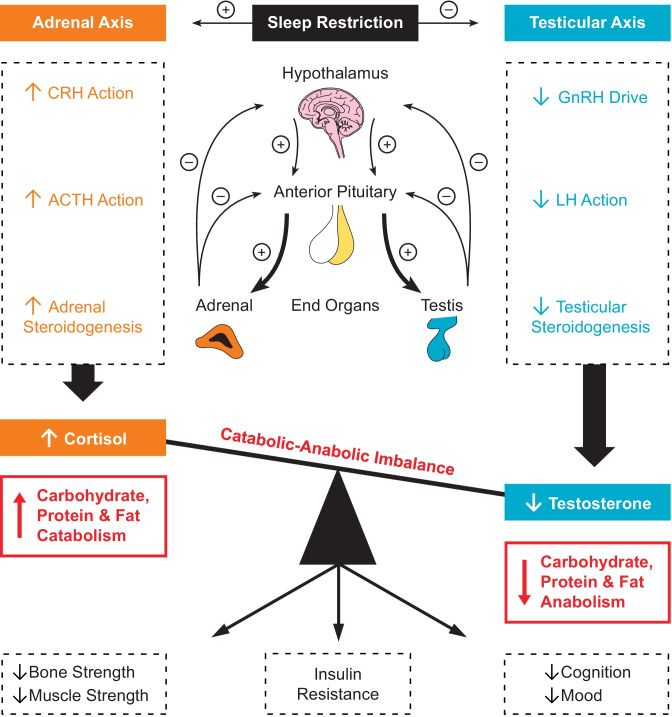
Sleep serves important biological functions, and influences health and longevity through endocrine and metabolic related systems. Sleep debt, circadian misalignment and sleep disruption from obstructive sleep apnea is widespread in modern society and accumulates with life because recovery sleep is not completely restorative. Accumulated disordered sleep throughout life impacts the ageing process and the development of age-related diseases. When epidemiological and interventional studies are considered collectively, sleep loss and lower sleep duration are associated with lower morning, afternoon and 24-h testosterone; as well as higher afternoon, but not morning or 24-h cortisol. These reciprocal changes imbalances anabolic-catabolic signaling because testosterone and cortisol are respectively the main anabolic and catabolic signals in man. Fixing testosterone-cortisol balance by means of a novel dual-hormone clamp mitigates the induction of insulin resistance by sleep restriction and provided the first proof-of-concept that the metabolic harm from sleep loss can be ameliorated by approaches that do not require sleeping more. Obstructive sleep apnea is associated with lower testosterone, even after controlling for age and obesity whereas the conclusion that continuous positive airway pressure therapy has no effect on testosterone is premature because available studies are underpowered and better-quality studies suggest otherwise. High dose testosterone therapy induces OSA, but more physiological dosing may not; and this effect may be transient or may dissipate with longer term therapy. Studies investigating the origin of the diurnal testosterone rhythm, the effect of circadian misalignment on testosterone-cortisol balance, and methods to mitigate metabolic harm, are required.
Overview
CoChat Summary
## TL;DR
This review argues that insufficient, misaligned, and disrupted sleep can alter testosterone and cortisol in men, especially older men, and thereby contribute to insulin resistance and age-related disease. It also highlights evidence that sleep restriction lowers testosterone and raises late-afternoon/early-evening cortisol, while a dual-hormone clamp mitigated sleep-loss-induced metabolic harm by at least 50% for insulin resistance and hyperinsulinemia.
## Key findings
- Across in-laboratory studies, sleep restriction decreases testosterone; in the older-men study, 24 h, morning, and afternoon testosterone all decreased in both older and younger men, but testosterone pulse frequency and pulsatile secretion decreased only in older men.
- For cortisol, the review concludes that sleep restriction increases afternoon cortisol: among 12 in-laboratory 24-h studies, 6 reported increased afternoon cortisol, 3 no change, and none reported a decrease; 7 studies reported no change in 24-h cortisol, 3 reported an increase, and none reported a decrease.
- In a randomized crossover study of 34 healthy young mostly overweight men, fixing testosterone-cortisol balance with a dual hormonal clamp during 4 consecutive nights of 4 h/night sleep opportunity reduced the development of insulin resistance and hyperinsulinemia by at least 50%, though it did not prevent hyperglycemia.
- For obstructive sleep apnea (OSA), a meta-analysis of 18 studies involving 1823 men found a significant inverse relationship between OSA and testosterone, persisting after adjustment for age and obesity; the paper states that lower testosterone was only observed in men with severe OSA.
## Methods
- Narrative review synthesizing epidemiological studies, in-laboratory sleep restriction experiments, randomized controlled trials, meta-analyses, and cohort studies on sleep, testosterone, cortisol, ageing, and OSA.
- The review emphasizes studies with 24-h hormone sampling, actigraphy or polysomnography for sleep, and mathematical deconvolution in the few studies with sufficiently frequent blood sampling.
- Main analytic approach is qualitative integration of findings across study types, with numerical comparisons drawn from the underlying studies and meta-analyses reported in the text.
## Limitations
- The paper states that many studies measured testosterone only in the morning, and that only 3 studies examined 24-h testosterone; one of those was confounded by strenuous exercise.
- It also states that few studies have examined relevant testosterone and cortisol pulse characteristics, longitudinal studies are unavailable or inconclusive, and the evidence on circadian misalignment and testosterone is lacking.
- Evident from the text: this is a review, so its conclusions depend on the quality and completeness of the underlying studies, many of which are described as underpowered, cross-sectional, or using insensitive OSA detection methods.
Model-written summary. Check it against the paper before relying on it.
Integrity signals
Registry
Cites
Statistics
Figures
Verification
Claims the paper makes
48 Valid · 10 Not valid · 20 Not checked · 37 Own results and interpretations
Some cited sources support this claim and some don’t — read each source’s verdict below.
In the paper
“An important consideration in determining accumulated sleep debt is that sleep need itself decreases with older age.”
- Also stated in: § Sleep, sleep architecture, and ageing · plain
“This is because sleep need decreases with age, but only up to 60 years, after which sleep need remains stable.”
§ Sleep, testosterone and cortisol balance, and ageing men > Introduction
What the sources say
- Disputedcites [17] Consensus Conference Panel, Watson NF, Badr MS, Belenky G, Bliwise DL, Buxton OM, et al. Joint consensus statement of the american academy of sleep medicine and sleep research society on the recommended amount of sleep for a healthy adult: Methodology and discussion. J Clin Sleep Med. 2015;11(8):931–52. 10.5664/jcsm.4950. PMC4513271 26235159 sourceExperimental — accuracy not yet measured
Section 2.3 (page not available) reports no substantial decline in sleep duration after age 60 and says adults aged 18–60 had shorter sleep durations than older adults. Those findings run counter to the claimed age-related decrease, although the passage measures sleep obtained rather than sleep need directly. (LLM, conf=0.76)
Checked by a reasoning model — may be wrong.
- Partly supportedcites [18] Li J Vitiello MV Gooneratne NS Sleep in normal aging Sleep Med Clin 2018 13 1 1 11 10.1016/j.jsmc.2017.09.001 29412976 PMC5841578 sourceExperimental — accuracy not yet measured
The Sleep duration section reports that total sleep time generally decreases with age, but says the decline tends to plateau after about age 60. Changes in sleep homeostasis reports reduced sleep pressure with aging. Neither section establishes that sleep need itself decreases; sleeping less is not necessarily needing less sleep. (LLM, conf=0.84)
plainstates a cause- Asserted: passes — The authors put it forward as true.
- Checkable: passes — It can be checked against evidence.
- Load-bearing: unclear — It is unclear whether the paper’s conclusions depend on it.
- Based: passes — The paper gives a reason why it holds.
- Also stated in: § Sleep, sleep architecture, and ageing · plain
Some cited sources support this claim and some don’t — read each source’s verdict below.
In the paper
“All studies when collectively examined show that sleep restriction decreases testosterone.”
§ Sleep, testosterone and cortisol balance, and ageing men > The inter-relationships between sleep duration, testosterone and ageing > Sleep duration, testosterone, and aging
What the sources say
- Disputedcites [40] Liu PY, Takahashi PY, Yang RJ, Iranmanesh A, Veldhuis JD. Age and time-of-day differences in the hypothalamo-pituitary-testicular, and adrenal, response to total overnight sleep deprivation. Sleep. 2020;43(7):zsaa008. 10.1093/sleep/zsaa008. PMC7355405 31993665 sourceExperimental — accuracy not yet measured
The Discussion (page unavailable) says this study and one other found decreased overall 24-hour testosterone, but contrasts them with three studies that did not. It therefore does not say that all studies show a decrease. (LLM, conf=0.88)
Checked by a reasoning model — may be wrong.
- Partly supportedcites [41] Leproult R Van Cauter E Effect of 1 week of sleep restriction on testosterone levels in young healthy men J Am Med Assoc 2011 305 21 2173 2174 10.1001/jama.2011.710 PMC4445839 21632481 sourceExperimental — accuracy not yet measured
The Results report lower daytime testosterone after one week of laboratory sleep restriction in 10 healthy young men. This supports the direction of the effect in this study, but the paper does not collectively examine all in-laboratory studies or establish that all studies show a decrease. (LLM, conf=0.88)
- Not checked — no full text of the sourcecites [42] Dattilo M Antunes HKM Nunes-Galbes NM Monico-Neto M Souza HS Quaresma M Effects of sleep deprivation on the acute skeletal muscle recovery after exercise Med Sci Sports Exerc 2020 52 2 507 514 10.1249/MSS.0000000000002137 31469710 source
- Not checked — no full text of the sourcecites [43] Schmid SM Hallschmid M Jauch-Chara K Lehnert H Schultes B Sleep timing may modulate the effect of sleep loss on testosterone Clin Endocrinol (Oxf) 2012 77 5 749 754 10.1111/j.1365-2265.2012.04419.x 22568763 source
- Partly supportedcites [44] Reynolds AC Dorrian J Liu PY Van Dongen HPA Wittert GA Harmer LJ Impact of five nights of sleep restriction on glucose metabolism, leptin and testosterone in young adult men PLoS One 2012 7 7 e41218 10.1371/journal.pone.0041218 22844441 PMC3402517 sourceExperimental — accuracy not yet measured
The Introduction reports that an earlier laboratory study found decreased testosterone after sleep restriction. But this paper’s Results and Discussion report no significant testosterone decrease in its own experiment, only a downward trend, so the categorical claim about all studies overstates the evidence. (LLM, conf=0.86)
- Partly supportedcites [45] Lamon S Morabito A Arentson-Lantz E Knowles O Vincent GE Condo D The effect of acute sleep deprivation on skeletal muscle protein synthesis and the hormonal environment Physiol Rep 2021 9 1 e14660 10.14814/phy2.14660 33400856 PMC7785053 sourceExperimental — accuracy not yet measured
The Results (Plasma testosterone levels; page unavailable) report a 24% decrease in testosterone area under the curve after one night of total sleep deprivation. But the Discussion (Acute sleep deprivation promotes a less anabolic hormonal environment; page unavailable) says evidence is limited and cites an earlier study that found no change in 24-hour testosterone area under the curve. This paper therefore does not support the claim that all studies show a decrease with sleep restriction. (LLM, conf=0.87)
- Not checked — no full text of the sourcecites [46] Arnal PJ Drogou C Sauvet F Regnauld J Dispersyn G Faraut B Effect of sleep extension on the subsequent testosterone, cortisol and prolactin responses to total sleep deprivation and recovery J Neuroendocrinol 2016 28 2 12346 10.1111/jne.12346 26647769 source
- Not checked — no full text of the sourcecites [47] Sauvet F Arnal PJ Tardo-Dino PE Drogou C Van Beers P Bougard C Protective effects of exercise training on endothelial dysfunction induced by total sleep deprivation in healthy subjects Int J Cardiol 2017 232 76 85 10.1016/j.ijcard.2017.01.049 28089456 source
- Partly supportedcites [48] Carter JR Durocher JJ Larson RA DellaValla JP Yang H Sympathetic neural responses to 24-hour sleep deprivation in humans: Sex differences Am J Physiol Heart Circ Physiol 2012 302 10 H1991 H1997 10.1152/ajpheart.01132.2011 22408018 PMC3362107 sourceExperimental — accuracy not yet measured
The Discussion of Carter et al. (2012) states that 'TSD has repeatedly been shown to significantly decrease testosterone levels in male rats and humans (3, 13, 36)', and their own Results report that 'TSD significantly reduced testosterone in men, but not women' (Table 1: 589 ± 67 → 480 ± 54 ng/dl in men; 46 ± 2 → 44 ± 4 ng/dl in women, NS). So the source supports a collective decrease in testosterone after total sleep deprivation, but bounded to males — the claim's unqualified 'all studies ... sleep restriction decreases testosterone' drops the sex qualifier and generalizes 24-h in-laboratory total sleep deprivation to 'sleep restriction'. The unsupported part is the extension to women/both sexes and to sleep-restriction paradigms beyond acute TSD. (LLM, conf=0.78)
- Partly supportedcites [49] Akerstedt T Palmblad J de la Torre B Marana R Gillberg M Adrenocortical and gonadal steroids during sleep deprivation Sleep 1980 3 1 23 30 10.1093/sleep/3.1.23 6781027 sourceExperimental — accuracy not yet measured
The Results report that testosterone decreased after 48 hours of sleep deprivation in the study’s 12 healthy men. But this paper reports one study, not a collective examination of all studies; its introduction says no previous data were available on sleep deprivation and gonadal hormone levels in humans. It therefore does not support the claim about all studies. (LLM, conf=0.90)
plainstates a cause- Asserted: passes — The authors put it forward as true.
- Checkable: passes — It can be checked against evidence.
- Load-bearing: passes — The paper’s conclusions depend on it.
- Based: passes — The paper gives a reason why it holds.
- Disputed
The cited sources support only part of this claim — read each source’s verdict below.
In the paper
“Sleep debt, circadian misalignment and sleep disruption from obstructive sleep apnea is widespread in modern society and accumulates with life because recovery sleep is not completely restorative.”
- Also stated in: § Introduction · hedged
“This accumulation occurs because intermittent recovery or “catch-up” sleep does not seem to completely reverse the adverse effects of sleep debt on multiple physiological processes including psychomotor performance [1, 5], metabolism [6, 7], blood pressure regulation [8] and immune/adrenal response [9].”
§ Sleep, testosterone and cortisol balance, and ageing men > Abstract
What the sources say
- Not checked — no full text of the sourcecites [1] Banks S Van Dongen HP Maislin G Dinges DF Neurobehavioral dynamics following chronic sleep restriction: Dose-response effects of one night for recovery Sleep 2010 33 8 1013 1026 10.1093/sleep/33.8.1013 20815182 PMC2910531 source
- Not checked — no full text of the sourcecites [5] Van Dongen HP Maislin G Mullington JM Dinges DF The cumulative cost of additional wakefulness: Dose-response effects on neurobehavioral functions and sleep physiology from chronic sleep restriction and total sleep deprivation Sleep 2003 26 2 117 126 10.1093/sleep/26.2.117 12683469 source
- Partly supportedcites [6] Depner CM Melanson EL Eckel RH Snell-Bergeon JK Perreault L Bergman BC Ad libitum weekend recovery sleep fails to prevent metabolic dysregulation during a repeating pattern of insufficient sleep and weekend recovery sleep Curr Biol 2019 29 6 957 967 10.1016/j.cub.2019.01.069 30827911 PMC12798825 sourceExperimental — accuracy not yet measured
In Results and Discussion, under “Ad Libitum Weekend Recovery Sleep Does Not Fully Repay Workweek Sleep Loss,” the paper reports that weekend recovery sleep did not fully repay workweek sleep loss and that some sleep debt carried into a second workweek. It does not establish that sleep debt accumulates over a lifetime, or that circadian misalignment and sleep-apnea-related disruption accumulate because recovery sleep is incomplete. (LLM, conf=0.86)
- Partly supportedcites [7] Depner CM, Melanson EL, Eckel RH, Higgins JA, Bergman BC, Perreault L, et al. Effects of ad libitum food intake, insufficient sleep and weekend recovery sleep on energy balance. Sleep. 2021;44(11):zsab136. 10.1093/sleep/zsab136. PMC8598190 34059916 sourceExperimental — accuracy not yet measured
Our copy supports only the 'recovery sleep is not completely restorative' half, and only in energy-balance/metabolic terms over an 8-day protocol: the Results state that 'ad libitum weekend recovery sleep did not prevent increased EI, weight-gain, or reduced insulin sensitivity upon return to insufficient sleep during workweek-2' (a finding reported previously as ref [16], Depner et al. 2019, Curr Biol), and the EI/EE/EB discussion adds that 'positive EB was sustained through the full experimental protocol segment, regardless of sleep duration or weekend recovery sleep.' Nothing in our copy attributes a lifetime accumulation of sleep debt to this work; the paper is a 10-day in-laboratory randomized trial in 36 healthy young adults, and its Conclusion explicitly calls for future studies 'translating our laboratory-based findings into "real-world" settings, that track individual trajectories over a longer timeframe.' So the 'accumulates with life' portion of the claim, and the generalization beyond energy balance, are not supported by this source. (LLM, conf=0.72)
- Partly supportedcites [8] Yang H Haack M Gautam S Meier-Ewert HK Mullington JM Repetitive exposure to shortened sleep leads to blunted sleep-associated blood pressure dipping J Hypertens 2017 35 6 1187 1194 10.1097/HJH.0000000000001284 28169885 PMC6052859 sourceExperimental — accuracy not yet measured
The Introduction (page unavailable) describes repeated short sleep followed by insufficient recovery sleep, and the Results (Hemodynamic Parameters; page unavailable) report blunted blood-pressure dipping during each restriction block. The paper does not establish that sleep debt accumulates over a lifetime or that recovery sleep is generally not restorative; the Introduction says whether recovery sleep compensates for adverse effects on blood-pressure dipping is unknown. (LLM, conf=0.85)
plainstates a cause- Asserted: passes — The authors put it forward as true.
- Checkable: passes — It can be checked against evidence.
- Load-bearing: passes — The paper’s conclusions depend on it.
- Based: passes — The paper gives a reason why it holds.
- Also stated in: § Introduction · hedged
Every source the paper cites for this claim was checked and supports it.
In the paper
“This is because the hypothalamo-pituitary testicular and hypothalamo-pituitary adrenal axes that respectively control testosterone, the major anabolic hormone in men (but not women) and cortisol, a key catabolic signal, are intertwined in their regulation and sleep restriction imbalances both their signaling [4].”
§ Sleep, testosterone and cortisol balance, and ageing men > Introduction
What the sources say
- Supportedcites [4] Liu PY A clinical perspective of sleep and andrological health: Assessment, treatment considerations and future research J Clin Endocrinol Metab 2019 104 10 4398 4417 10.1210/jc.2019-00683 31042277 PMC6735730 source
In “Circadian physiology relevant to endocrinologists” (page not provided), the paper explicitly describes coupling between the hypothalamic-pituitary-adrenal and hypothalamic-pituitary-testicular axes and gives examples of their reciprocal regulation. (LLM, conf=0.94)
plainstates an association- Asserted: passes — The authors put it forward as true.
- Checkable: passes — It can be checked against evidence.
- Load-bearing: passes — The paper’s conclusions depend on it.
- Based: passes — The paper gives a reason why it holds.
- Supported
The cited sources support only part of this claim — read each source’s verdict below.
In the paper
“When epidemiological and interventional studies are considered collectively, sleep loss and lower sleep duration are associated with lower morning, afternoon and 24-h testosterone; as well as higher afternoon, but not morning or 24-h cortisol.”
- Also stated in: § Sleep duration, testosterone, and aging · plain
“All studies when collectively examined show that sleep restriction decreases testosterone.”
§ Sleep, testosterone and cortisol balance, and ageing men > Abstract
What the sources say
- Supportedcites [40] Liu PY, Takahashi PY, Yang RJ, Iranmanesh A, Veldhuis JD. Age and time-of-day differences in the hypothalamo-pituitary-testicular, and adrenal, response to total overnight sleep deprivation. Sleep. 2020;43(7):zsaa008. 10.1093/sleep/zsaa008. PMC7355405 31993665 source
The Abstract reports that overnight sleep deprivation reduced 24-hour testosterone and testosterone measured in the morning and afternoon. The Other analyses section likewise reports reductions at 6–9 am, 9 am–3 pm, and 3–6 pm. The study compared a night of complete wakefulness with a night of sleep in healthy men; page numbers are not provided in our copy. (LLM, conf=0.90)
- Partly supportedcites [41] Leproult R Van Cauter E Effect of 1 week of sleep restriction on testosterone levels in young healthy men J Am Med Assoc 2011 305 21 2173 2174 10.1001/jama.2011.710 PMC4445839 21632481 sourceExperimental — accuracy not yet measured
The Results (page unavailable) report lower testosterone during waking hours after sleep restriction, particularly from 2 PM to 10 PM. The paper also notes an association between sleep time and morning testosterone in older men, but it does not report a lower 24-hour testosterone level; collecting samples over 24 hours does not establish that result. (LLM, conf=0.87)
- Not checked — no full text of the sourcecites [42] Dattilo M Antunes HKM Nunes-Galbes NM Monico-Neto M Souza HS Quaresma M Effects of sleep deprivation on the acute skeletal muscle recovery after exercise Med Sci Sports Exerc 2020 52 2 507 514 10.1249/MSS.0000000000002137 31469710 source
- Not checked — no full text of the sourcecites [43] Schmid SM Hallschmid M Jauch-Chara K Lehnert H Schultes B Sleep timing may modulate the effect of sleep loss on testosterone Clin Endocrinol (Oxf) 2012 77 5 749 754 10.1111/j.1365-2265.2012.04419.x 22568763 source
- Partly supportedcites [44] Reynolds AC Dorrian J Liu PY Van Dongen HPA Wittert GA Harmer LJ Impact of five nights of sleep restriction on glucose metabolism, leptin and testosterone in young adult men PLoS One 2012 7 7 e41218 10.1371/journal.pone.0041218 22844441 PMC3402517 sourceExperimental — accuracy not yet measured
The Introduction reports reduced afternoon and evening testosterone in an earlier sleep-restriction study, and the Discussion notes a relationship between total sleep time and morning testosterone. But this paper found no significant testosterone change after five nights of restriction (Results, Testosterone and SHBG), and its sampling did not cover 24 hours. The claim’s 24-hour component is therefore unsupported by this source. (LLM, conf=0.87)
- Partly supportedcites [45] Lamon S Morabito A Arentson-Lantz E Knowles O Vincent GE Condo D The effect of acute sleep deprivation on skeletal muscle protein synthesis and the hormonal environment Physiol Rep 2021 9 1 e14660 10.14814/phy2.14660 33400856 PMC7785053 sourceExperimental — accuracy not yet measured
The Results (Plasma testosterone levels; page unavailable) report a 24% lower testosterone area under the curve after one night of sleep deprivation. But the Methods (Hormone measures; page unavailable) say blood was sampled only from 07:00 to 17:00, so this is not a 24-hour measure; the Results also do not establish separate morning and afternoon reductions. The study tested complete sleep deprivation rather than an association across shorter sleep durations. (LLM, conf=0.88)
- Not checked — no full text of the sourcecites [46] Arnal PJ Drogou C Sauvet F Regnauld J Dispersyn G Faraut B Effect of sleep extension on the subsequent testosterone, cortisol and prolactin responses to total sleep deprivation and recovery J Neuroendocrinol 2016 28 2 12346 10.1111/jne.12346 26647769 source
- Not checked — no full text of the sourcecites [47] Sauvet F Arnal PJ Tardo-Dino PE Drogou C Van Beers P Bougard C Protective effects of exercise training on endothelial dysfunction induced by total sleep deprivation in healthy subjects Int J Cardiol 2017 232 76 85 10.1016/j.ijcard.2017.01.049 28089456 source
- Partly supportedcites [48] Carter JR Durocher JJ Larson RA DellaValla JP Yang H Sympathetic neural responses to 24-hour sleep deprivation in humans: Sex differences Am J Physiol Heart Circ Physiol 2012 302 10 H1991 H1997 10.1152/ajpheart.01132.2011 22408018 PMC3362107 sourceExperimental — accuracy not yet measured
Our copy supports only the morning-testosterone component, and only for men: METHODS (blood sampled at 7:30 AM after each NS and TSD visit) and RESULTS/Table 1 report 'TSD significantly reduced testosterone in men, but not women' (589±67 to 480±54 ng/dl, condition × sex P = 0.01), echoed in the Abstract and DISCUSSION. The single pre-instrumentation morning draw means no afternoon or 24-h testosterone measurement exists in this paper, and no passage (searched: cortisol, aldosterone/adrenal hormone sampling, 24-h testosterone, habitual sleep duration) reports cortisol at all or an association with usual/short sleep duration — the study is an acute 24-h total sleep deprivation crossover in 28 healthy young subjects, not an epidemiological analysis. Thus the afternoon and 24-h testosterone and the cortisol contrast attributed here are not from this source. (LLM, conf=0.80)
- Partly supportedcites [49] Akerstedt T Palmblad J de la Torre B Marana R Gillberg M Adrenocortical and gonadal steroids during sleep deprivation Sleep 1980 3 1 23 30 10.1093/sleep/3.1.23 6781027 sourceExperimental — accuracy not yet measured
The Results report that testosterone decreased after 48 hours of sleep deprivation. Subjects and Design states that all blood samples were drawn at 08:00, so this paper supports the morning finding but does not establish lower afternoon or 24-hour testosterone, or an association with shorter habitual sleep duration. Page numbers were not available in our copy. (LLM, conf=0.90)
plainstates an association- Asserted: passes — The authors put it forward as true.
- Checkable: passes — It can be checked against evidence.
- Load-bearing: passes — The paper’s conclusions depend on it.
- Based: passes — The paper gives a reason why it holds.
- Also stated in: § Sleep duration, testosterone, and aging · plain
74 more claims · 32 with their cited sources checked
Create a free account to see all 115 claims and to verify the 8 references still open.
- It may state two separate claims as one. 31
- Probably not a substantial claim. 6
- The quote only partly states this claim. 1
Citations
Cites
Increased Prevalence of Sleep-Disordered Breathing in Adults
Peppard, P. E., Young, T., Barnet, J. H., Palta, M., Hagen, E. W., & Hla, K. M. (2013) · American Journal of Epidemiology · doi:10.1093/aje/kws342 · Cited by 4,618 · cited 2×
“It is a male-preponderant disease that is more prevalent with advanced age, particularly in the presence of obesity [12, 102].”
BackgroundCoordination of circadian timing in mammals
Reppert, S. M., & Weaver, D. R. (2002) · Nature · doi:10.1038/nature00965 · Cited by 4,379 · cited 1×
“clocks throughout the body to coordinate bodily processes with the environment [58, 59].”
BackgroundVan Dongen, H. P. A., Maislin, G., Mullington, J. M., & Dinges, D. F. (2003) · Sleep · doi:10.1093/sleep/26.2.117 · Cited by 3,173
Mechanisms for Insulin Resistance: Common Threads and Missing Links
Samuel, V. T., & Shulman, G. I. (2012) · Cell · doi:10.1016/j.cell.2012.02.017 · Cited by 2,294
Central and Peripheral Circadian Clocks in Mammals
Mohawk, J. A., Green, C. B., & Takahashi, J. S. (2012) · Annual Review of Neuroscience · doi:10.1146/annurev-neuro-060909-153128 · Cited by 2,265 · cited 2×
“Resetting of the peripheral clock occurs through well-defined molecular mechanisms that involve direct interaction of glucocorticoids, glucocorticoid response elements and the regulatory regions of core clock genes Bmal1, Cry1, Per1 and Per2 [63, 64].”
BackgroundFeldman, H. A., Longcope, C., Derby, C. A., Johannes, C. B., Araujo, A. B., Coviello, A. D., Bremner, W. J., & McKinlay, J. B. (2002) · The Journal of Clinical Endocrinology & Metabolism · doi:10.1210/jcem.87.2.8201 · Cited by 1,861 · cited 1×
“This is because declines in testosterone per year of age is 2–threefold greater with longitudinal compared with cross-sectional analysis of the same cohort [35, 36].”
Testosterone Therapy in Men With Hypogonadism: An Endocrine Society Clinical Practice Guideline.
Bhasin, S., Brito, J. P., Cunningham, G. R., Hayes, F. J., Hodis, H. N., Matsumoto, A. M., Snyder, P. J., Swerdloff, R. S., Wu, F. C., & Yialamas, M. A. (2018) · The Journal of Clinical Endocrinology & Metabolism · doi:10.1210/jc.2018-00229 · Cited by 1,736 · cited 2×
“Until such data are available, expert opinion will appropriately continue to caution against the use testosterone therapy in men with untreated severe OSA [123].”
BackgroundIdentification of late-onset hypogonadism in middle-aged and elderly men
Wu, F. C. W., Tajar, A., Beynon, J. M., Pye, S. R., Silman, A. J., Finn, J. D., O'Neill, T. W., Bartfai, G., Casanueva, F. F., Forti, G., et al. (2010) · New England Journal of Medicine · doi:10.1056/nejmoa0911101 · Cited by 1,544 · cited 1×
“A syndrome of late-onset hypogonadism has since been objectively defined as requiring three sexual symptoms (decreased sexual interest, fewer morning erections and erectile dysfunction) in conjunction with a total testosterone below 11 nmol/liter and free testosterone below 220 pmol/liter [23] and is now widely accept…”
BackgroundAdverse Effects of Modest Sleep Restriction on Sleepiness, Performance, and Inflammatory Cytokines
Vgontzas, A. N., Zoumakis, E., Bixler, E. O., Lin, H.-M., Follett, H., Kales, A., & Chrousos, G. P. (2004) · The Journal of Clinical Endocrinology & Metabolism · doi:10.1210/jc.2003-031562 · Cited by 1,050 · cited 1×
“Whereas 6 studies reported increased afternoon cortisol with sleep restriction [40, 57, 78, 79, 83, 84], only 3 studies reported no change [9, 80, 81], and none reported a decrease.”
BackgroundEffects of gender and age on the levels and circadian rhythmicity of plasma cortisol
Van Cauter, E. (1996) · Journal of Clinical Endocrinology & Metabolism · doi:10.1210/jc.81.7.2468 · Cited by 951 · cited 4×
“Only two such studies, of 143 and 177 healthy men and women aged 20 to 80 years, respectively, are available [65, 66].”
BackgroundResultInfluential
Cited by
You, Y., Chen, Y., Liu, R., Zhang, Y., Wang, M., Yang, Z., Liu, J., & Ma, X. (2024) · Scientific Reports · doi:10.1038/s41598-024-56316-7 · Cited by 119
Zhang, X., He, X., Pan, D., Shi, L., Wu, Y., Yang, Y., Zhu, Y., Wang, Y., Wang, H., Pu, L., et al. (2023) · Journal of Hazardous Materials · doi:10.1016/j.jhazmat.2023.132800 · Cited by 54
Global Perspectives on Sleep Health: Definitions, Disparities, and Implications for Public Health
DelRosso, L. M. (2025) · Brain Sciences · doi:10.3390/brainsci15030304 · Cited by 70
“Research highlights how sleep disruptions in women often correlate with reproductive milestones (menstruation, pregnancy, and menopause) [39–41], whereas men may experience a higher prevalence of sleep-disordered breathing and shorter sleep duration [42].”
Rhythms in cortisol mediate sleep and circadian impacts on health
Liu, P. Y. (2024) · SLEEP · doi:10.1093/sleep/zsae151 · Cited by 43
“Ultradian (i.e. pulsatile) rhythms in cortisol also exist, and these pulses allow for rapid responses that fine-tune the body’s reaction to unpredictable external and internal insults [7, 19, 20].”
BackgroundInfluentialSelf-citationThe Role of Cortisol and Dehydroepiandrosterone in Obesity, Pain, and Aging
Erceg, N., Mićić, M., Forouzan, E., & Knežević, N. N. (2025) · Diseases · doi:10.3390/diseases13020042 · Cited by 50
“Age-related changes in cortisol profiles and the HPA axis may lead to an increased risk of developing age-related diseases such as osteoporosis, neurocognitive deficits, Alzheimer’s disease, insulin resistance, and many others [17,78].”
Jiao, Y., Butoyi, C., Zhang, Q., Adotey, S. A. A. I., Chen, M., Shen, W., Wang, D., Yuan, G., & Jia, J. (2025) · Diabetology & Metabolic Syndrome · doi:10.1186/s13098-025-01871-w · Cited by 57
“REM sleep plays a crucial role in memory consolidation and dream generation [3, 13, 14].”
Zhang, Y., Yu, B., Qi, Q., Azarbarzin, A., Chen, H., Shah, N. A., Ramos, A. R., Zee, P. C., Cai, J., Daviglus, M. L., et al. (2024) · Nature Communications · doi:10.1038/s41467-024-46019-y · Cited by 33
“…SD increase of SDB PC2 MRS was associated with a 28% (IRR: 1.28 95% CI: 1.12 – 1.46, p =0.0004) higher incidence rate of hypertension and a 30% (IRR: 1.30 95% CI: 1.12 – 1.51, p = 0.0005) higher incidence rate of diabetes, adjusted for demographic and lifestyle covariates (Supplementary Data 14).”
InfluentialSelf-citationPan, X., Zhang, X., Wu, X., Zhao, Y., Li, Y., Chen, Z., Hu, Y., & Cao, X. (2024) · Lipids in Health and Disease · doi:10.1186/s12944-024-02195-w · Cited by 29
“Symptoms of OSA include excessive daily sleepiness, neurocognitive impairment [2], diminished quantity of life, as well as endocrine, metabolic [3], and cardiovascular-related changes.”
BackgroundMechanistic insights and biomarker discovery in immune cell aging and age-associated diseases
Upadhyay, P., Suhail, A., Khanal, P., & Kumar, S. (2025) · Frontiers in Immunology · doi:10.3389/fimmu.2025.1637191 · Cited by 32
Zheng, Y., Bao, J., Tang, L., Chen, C., Guo, W., Li, K., Zhang, R., & Wu, J. (2024) · Sleep Medicine · doi:10.1016/j.sleep.2024.04.012 · Cited by 26
Yap, Y., Tung, N. Y. C., Shen, L., Bei, B., Phillips, A. J. K., & Wiley, J. F. (2024) · SLEEP · doi:10.1093/sleep/zsae087 · Cited by 28
“These findings are supported by a recent review on the effects of sleep on 24-hour cortisol in men, showing that experimental sleep restrictions (i.e. from one night of total sleep deprivation to 4–14 days of 4–6 hours of sleep opportunities) can increase evening cortisol levels [26].”
BackgroundLi, W., Huo, S., Yin, F., Wu, Z., Zhang, X., Wang, Z., & Cao, J. (2024) · BMC Public Health · doi:10.1186/s12889-024-21161-w · Cited by 33
Insomnia Disorder: Gender Issues Over the Lifespan
Baldi, E., Cerolini, S., Meneo, D., Baglioni, C., & Palagini, L. (2025) · Journal of Sleep Research · doi:10.1111/jsr.70110 · Cited by 25
Sex, hormones, and lung health
Silveyra, P., Babayev, M., & Ekpruke, C. D. (2025) · Physiological Reviews · doi:10.1152/physrev.00026.2024 · Cited by 28
Best practices for including sex as a variable in appetite research
Geary, N., Asarian, L., & Leeners, B. (2025) · Appetite · doi:10.1016/j.appet.2024.107840 · Cited by 18
Liu, C., Zhang, Q., Liu, C., Liu, T., Song, M., Zhang, Q., Xie, H., Lin, S., Ren, J., Chen, Y., et al. (2024) · JMIR Public Health and Surveillance · doi:10.2196/50836 · Cited by 15
“Studies have shown a significant correlation between decreased testosterone levels and shortened sleep duration and increased sleep fragmentation in older adults [31].”
Jayasena, C. N., de Silva, N. L., O’Reilly, M., MacKenzie, F., Marrington, R., Jones, H. T., Livingston, M. A., Downie, P., Hackett, G. I., Ramachandran, S., et al. (2023) · Annals of Clinical Biochemistry International Journal of Laboratory Medicine · doi:10.1177/00045632231179022 · Cited by 15
Sex differences in ketogenic diet: are men more likely than women to lose weight?
Jiao, Y., Chen, X., Liu, L., Lu, Y., Gao, M., Wang, Q., Chi, X., & Mo, Y. (2025) · Frontiers in Nutrition · doi:10.3389/fnut.2025.1600927 · Cited by 16
“Metabolic shifts driven by testosterone in adipocytes lead to a reduction in the production of free fatty acids (FFA), subsequently mitigating insulin resistance (58).”
Graziani, A., Grande, G., & Ferlin, A. (2023) · Frontiers in Reproductive Health · doi:10.3389/frph.2023.1219239 · Cited by 17
“…with a signi fi cant change in total testosterone concentrations, suggesting against the hypothesis of a direct interaction between OSAS and testosterone, albeit the conclusion that cPAP has no effect on testosterone concentrations is highly premature due to the low-quality available studies (54).”
BackgroundHuang, Y., Zhao, D., Yang, Z., Wei, C., & Qiu, X. (2025) · BMC Psychiatry · doi:10.1186/s12888-025-06631-8 · Cited by 15
“Emerging evidence indicates that sleep duration may mediate the relationship between visceral obesity and depression via mechanical and biochemical pathways, yet few studies have examined these interactions comprehensively[45, 53, 54].”
Association between weekend catch-up sleep and depression in US adults
Le, L., Lan, Z., & Chen, C. (2025) · BMC Public Health · doi:10.1186/s12889-025-21551-8 · Cited by 11
“Moderate WCS may help mitigate depressive symptoms in hypertensive individuals by stabilizing the sympathetic nervous system, reducing cortisol levels, and alleviating systemic inflammation [31].”
Association of sleep traits with male fertility: a two-sample Mendelian randomization study
Lu, S., Ma, Z., Zhou, W., Zeng, H., Ma, J., Deng, H., & Zhang, P. (2024) · Frontiers in Genetics · doi:10.3389/fgene.2024.1353438 · Cited by 11
Cellular iron depletion enhances behavioral rhythm by limiting brain Per1 expression in mice
Wu, Q., Ren, Q., Wang, X., Bai, H., Tian, D., Gao, G., Wang, F., Yu, P., & Chang, Y. (2024) · CNS Neuroscience & Therapeutics · doi:10.1111/cns.14592 · Cited by 11
“2,3 Additionally, aging-related neurodegenerative diseases, which are usually accompanied by cognitive impairment, can also disrupt rhythmic oscillations.”
BackgroundXiong, J., Hu, H., Huang, Y., Zhang, J., & He, J. (2023) · Medicine · doi:10.1097/md.0000000000036531 · Cited by 15
“[8,9] Being a primary hormone, thyroid hormones contribute immensely to metabolism, development, and growth.”
BackgroundLi, Y., Liang, C., Cui, W., & Nan, Z. (2024) · Frontiers in Medicine · doi:10.3389/fmed.2024.1337492 · Cited by 16
Muhammad, T., Das, M., Jana, A., & Lee, S. (2024) · Nature and Science of Sleep · doi:10.2147/nss.s456025 · Cited by 8
“35 These hormonal influences, along with physiological, and psychosocial factors, underscore the necessity of sex-specific analyses in examining the relationships between chronic diseases and insomnia symptoms.”
BackgroundJayasena, C. N., de Silva, N. L., O’Reilly, M., MacKenzie, F., Marrington, R., Jones, H. T., Livingston, M. A., Downie, P., Hackett, G. I., Ramachandran, S., et al. (2023) · Clinical Endocrinology · doi:10.1111/cen.14929 · Cited by 11
“6 Since testosterone levels decrease after meals and with restricted sleep, 7 clinicians and laboratory staff should generally advise patients to obtain morning ‐ fasting samples after a good night's rest.”
Li, C., Luo, S.-X., Liang, T.-W., Song, D., & Fu, J. (2025) · Frontiers in Cardiovascular Medicine · doi:10.3389/fcvm.2025.1452006 · Cited by 11
“While sleep restriction decreases testosterone levels, this reduced androgenic state might partially protect against coronary atherosclerosis through unknown mechanisms (62, 63).”
Fraile‐Μartinez, O., Ortega, M. A., & Montero, C. G. (2026) · International Journal of Molecular Sciences · doi:10.3390/ijms27020692 · Cited by 13
Huang, L., He, X., Zuo, Y., Yang, H., & Zhang, L. (2024) · Frontiers in Public Health · doi:10.3389/fpubh.2024.1493533 · Cited by 11
Association of male sleep quality with semen parameters and pregnancy outcomes in infertile couple
Zhou, R., Zhang, M., Ge, C., Xiong, Y., Mei, W., Wu, K., & Zhang, Y. (2025) · Basic and Clinical Andrology · doi:10.1186/s12610-025-00287-w · Cited by 9
“Studies have shown that chronic sleep deprivation or irregular sleep patterns significantly reduce testosterone levels, thereby affecting male sexual function and fertility [24, 25].”
The interplay between metabolic health factors and stroke incidence in aging populations
Zhang, C., Xiong, T., Ren, K., Wu, H., Cai, S., & Wang, L. (2025) · Frontiers in Endocrinology · doi:10.3389/fendo.2025.1646643 · Cited by 7
“Testosterone levels have been associated with insulin resistance, potentially explaining the elevated diabetes risk in men (23).”
Zhang, Y., Zhang, M., Cai, M., Shao, X., Dilimulati, D., Lu, J., Zhu, C., Chen, H., Li, C., Qu, S., et al. (2025) · Journal of Ovarian Research · doi:10.1186/s13048-025-01730-2 · Cited by 5
Testosterone in long-term sedentary aging males: Effect of antiaging strategies
Abdel-Sater, K. A. (2025) · Physiology International · doi:10.1556/2060.2024.00486 · Cited by 5
Sleep pathology and use of anabolic androgen steroids among male weightlifters in Norway
Klonteig, S., Scarth, M., & Bjørnebekk, A. (2024) · BMC Psychiatry · doi:10.1186/s12888-024-05516-6 · Cited by 7
“The relationship between sex hormones and sleep is likely complex, involving interactions with other hormones such as cortisol and inflammatory markers [31].”
BackgroundThe cardiometabolic index as a predictor of sleep disorders and mortality: A cross-sectional study
Xu, Z., Qian, X., & Xu, J. (2025) · Medicine · doi:10.1097/md.0000000000042029 · Cited by 4
Oliveira, R. L., de Freitas, R. L., Duarte, Y. A. O., Santos, J. L. F., & de Andrade, F. B. (2024) · Public Health · doi:10.1016/j.puhe.2024.06.029 · Cited by 5
Zhang, Y., Jiang, Z., Shang, G., Song, Z., Mao, K., Chen, S., & Liu, H. (2024) · Calcified Tissue International · doi:10.1007/s00223-024-01207-2 · Cited by 5
“Previous studies have confirmed that there is a 24-h rhythm in the secretion of testosterone, and the rhythm may be specifically driven by central circadian pacemakers [30].”
Hormonal changes during aging and their effects on quality of life
Coggins, C., Patel, S., Nigam, S., & Rai, V. (2025) · Exploration of Endocrine and Metabolic Diseases · doi:10.37349/eemd.2025.101447 · Cited by 7
Zhai, L., & Gao, X. (2025) · Sleep And Breathing · doi:10.1007/s11325-025-03350-y · Cited by 5
Gao, J. X., Wang, L. H., Li, W., & Liu, W. (2026) · Annals of Medicine · doi:10.1080/07853890.2026.2624183 · Cited by 3
“…also synchronizes clock-gene expression within the testes and coordinates diurnal rhythms in the interstitial compartment, providing a mechanistic basis for the adverse effects of sleep disruption or nocturnal light exposure—which suppresses melatonin production—on testosterone synthesis [105].”
Li, G., Deng, M., He, G., Jiang, Y., Wang, Z., Zhou, C., Xu, W., Feng, T., Zeng, W., Peng, J., et al. (2026) · Frontiers in Psychiatry · doi:10.3389/fpsyt.2025.1597820 · Cited by 2
“Symptoms of OSA encompass excessive diurnal somnolence, neurocognitive de fi cits, reduced quality of life, along with endocrine, metabolic, and cardiovascular alterations (1, 3, 4).”
InfluentialProgress in understanding how clock genes regulate aging and associated metabolic processes
Su, Y., Wang, M., Chen, J., Bao, Y., Wen, R., Ren, H., & Luan, Z. (2025) · Frontiers in Physiology · doi:10.3389/fphys.2025.1654369 · Cited by 5
Lifestyle in flux: urbanization, dietary shifts, and endocrine health in emerging adulthood
Joshi, O. V., Savale, R. R., Nalage, D. N., Biradar, A., & Sontakke, T. (2025) · Reproductive Biology and Endocrinology · doi:10.1186/s12958-025-01442-8 · Cited by 5
Faquih, T. O., Potts, K. S., Nagarajan, P., Yu, B., Kaplan, R. C., Isasi, C. R., Qi, Q., Taylor, K. D., Liu, P. Y., Strausz, S. J., et al. (2025) · EBioMedicine · doi:10.1016/j.ebiom.2025.105881 · Cited by 5
“42 The role of the adrenal gland with EDS is further supported by reported associations between androstenedione, which partakes in circadian regulation in the adrenal gland, with ESS in men.”
Self-citationPrabahar, K., Ravikumar, A., Jeyabalan, A. P., Ravi, B., Ravikumar, C., PannirukaiSelvan, N., Alqifari, S. F., Sivaraman, V., Shanmugasundaram, N., & Sankar, K. (2025) · Pharmacology Biochemistry and Behavior · doi:10.1016/j.pbb.2025.174003 · Cited by 2
Biomarkers of cognitive impairment in obstructive sleep apnea
Wang, Z., Li, Z., Pei, G., Wang, M., Xie, Y., Wang, X., Wang, J., & Chen, R. (2025) · Sleep research. · doi:10.1002/slp2.70000 · Cited by 2
Sleep apnoea — a current view of the problem
Smolyanina, Y. A., Sysolyatin, S. P., & Mokhirev, M. A. (2024) · Russian Rhinology · doi:10.17116/rosrino20243201153 · Cited by 2
Lee, J., & Park, H.-J. (2026) · American Journal of Men s Health · doi:10.1177/15579883251412966 · Cited by 1
“Although statistically significant mediation pathways were identified, these results should be interpreted cautiously, given the evidence of reciprocal influences among the variables (Liu & Reddy, 2022; Yap et al., 2020).”
InfluentialYafi, F. A., Dewitte, M. D., Elterman, D., Hammad, M. A. M., Lotti, F., Manfredi, C., Son, H., Warner, J. N., Welliver, C., & Corona, G. (2025) · Sexual Medicine Reviews · doi:10.1093/sxmrev/qeaf071 · Cited by 3
Huang, X., Hu, L., Liu, R., Li, J., & Xue, T. (2025) · PLoS ONE · doi:10.1371/journal.pone.0326663 · Cited by 1
Luo, C. L., Zhang, F., Shen, D., Sun, J. Y., Zhang, Y., Xie, Z., & Yu, X. (2025) · Frontiers in Neuroscience · doi:10.3389/fnins.2025.1436116 · Cited by 2
“There is a strong correlation between nocturnal sleep and the regulation of cortisol in humans (Liu and Reddy, 2022).”
Kawakami, S., Ninomiya, R., & Maeda, Y. (2024) · International Journal of Molecular Sciences · doi:10.3390/ijms25126332 · Cited by 3
Minari, T. P., Vilela-Martin, J. F., & Pisani, L. P. (2026) · Clocks & Sleep · doi:10.3390/clockssleep8040058
Liu, P., Gao, S., Chen, X.-R., Chai, L.-Y., Yang, R.-Y., Kong, Y., Jiang, C.-L., Li, X.-E., Zhang, Y., & Dong, Q. (2026) · European Archives of Psychiatry and Clinical Neuroscience · doi:10.1007/s00406-026-02329-4
Self-citationNezhadrekabi, N., Aghaei, M., Isanazr, A., Hassanipour, S., Naghipour, M., Yeganeh, S., Joukar, F., & Mansour‐Ghanaei, F. (2026) · Health Science Reports · doi:10.1002/hsr2.73182
“In addition, most previous studies have focused primarily on sleep duration, whereas other sleep dimensions, including bedtime, daytime sleeping, and napping, have received comparatively less attention despite their potential contributions to metabolic health [14, 15, 17].”
Gordilho, R. M. V., Barreto, N. J. C. L., Silva, F. P. E. A., et al. (2026) · Sleep and Biological Rhythms · doi:10.1007/s41105-026-00674-4
Andersen, M. L., SANCHES, J. B., Alvarenga, T. A., Toricelli, M., Vasco, M. B., & Tufik, S. E. R. (2026) · Journal of Endocrinological Investigation · doi:10.1007/s40618-026-02981-6
Zhu, X., Zhang, X., Xiang, J., & Jiang, C. (2026) · Steroids · doi:10.1016/j.steroids.2026.109804
Ji, Y., Hua, P., Gao, H., Liang, Q., Wu, J., Peng, L., & Wang, J. (2026) · Sexual Medicine · doi:10.1093/sexmed/qfag042
“5 , 13-15 Recent National Health and Nutrition Examination Sur vey (NHANES)- based studies have attempted to clarify this link but suffer from notable methodological limitations.”
Hallajzadeh, J., Tanha, P. Y., Azadnia, A., Wong, A., & Moradi, S. (2026) · Sleep And Breathing · doi:10.1007/s11325-026-03688-x
“…high UPFs consumption leading to more pronounced postprandial glycemic fluctuations in men, potentially compounded by age-related testosterone decline [49]. we assessed caffeine intake, we did not capture the timing of caffeine consumption (afternoon/evening intake may have stronger sleep effects).”
Ma, L., Gao, Y., Xu, M., Liu, Z., Li, Y., & Zhang, F. (2026) · Talanta Open · doi:10.1016/j.talo.2026.100647
Zhao, W., Tan, H., Yan, Y., & Zhang, J. (2026) · Scientific Reports · doi:10.1038/s41598-026-36674-0
Sleep apnea, heart health and testosterone: unravelling the triad of well-being
Andersen, M. L., Alvarenga, T. A., Glauser, V. A., Vasco, M. B., Drager, L. F., & Tufik, S. B. (2026) · EBioMedicine · doi:10.1016/j.ebiom.2026.106157 · Cited by 1
“49 Age-related Age-related declines in testosterone are related with clinical manifestations, including decreased muscle mass, reduced bone density, and diminished sexual function.”
Sleep, Circadian Rhythms, and Male Reproduction
Liu, P. Y. (2026) · Endocrinology · doi:10.1007/978-3-319-29456-8_64-1
Self-citationThe Circadian Rhythm of Male Reproductive Function
姜, 晓. (2026) · Nursing Science · doi:10.12677/ns.2026.156206
Li, C., Zhang, Y.-X., Yang, X., Wang, Y., Zhao, H., & Feng, J. (2025) · BMC Biotechnology · doi:10.1186/s12896-025-01067-0
“Aging is a complex biological process characterized by a progressive decline in cellular and physiological functions, thereby increasing susceptibility to diseases [6, 7].”
Zhang, Z., Liu, Y., Zhao, J., Chen, W., & Wang, G. (2025) · Trends in Food Science & Technology · doi:10.1016/j.tifs.2025.105416
Liu, S., Matthews, T. A., Guardiano, M., Mayeda, E. R., & Li, J. (2025) · International Journal of Behavioral Medicine · doi:10.1007/s12529-025-10370-1
“Moreover, physiological changes in midlife, such as early signs of aging or hormonal shifts, may make this group more susceptible to sleep disturbances in response to chronic stressors like discrimination [8, 9].”
Sleep disorders and testosterone deficiency in men
Khripun, I., & Beliaeva, E. V. (2025) · Urology Herald · doi:10.21886/2308-6424-2024-12-6-52-58
Leydig Cells, Testosterone, Sleep, and Andrological Health
Liu, P. Y. (2025) · Springer eBooks · doi:10.1007/978-3-031-96376-6_35 · Cited by 2
Self-citationThe role of anti-aging approaches in managing hypogonadism in sedentary older males
Abdel-Sater, K. A. (2024) · Frontiers in Aging · doi:10.3389/fragi.2024.1514438 · Cited by 2
Chen, Y., Yu, Y., Yang, D., & Chen, X. (2024) · Research Square · doi:10.21203/rs.3.rs-4927688/v1
Faquih, T. O., Potts, K. S., Yu, B., Kaplan, R. C., Isasi, C. R., Qi, Q., Taylor, K. D., Liu, P. Y., Tracy, R. P., Johnson, C. W., et al. (2024) · medRxiv · doi:10.1101/2024.09.12.24313561
“Insufficient sleep duration has been reported to disrupt the hormonal balance, leading to decreased testosterone and increased cortisol levels (46).”
BackgroundSelf-citationSofer, T., Zhang, Y., Yu, B., Qi, Q., Azarbarzin, A., Chen, H., Shah, N. A., Ramos, A., Zee, P., Cai, J., et al. (2023) · Research Square · doi:10.21203/rs.3.rs-3171622/v1
Self-citationLiu, C., Zhang, Q., Liu, C., et al. (2023) · doi:10.2196/preprints.50836
Shyshkan-Shyshova, К. О. (2023) · Clinical endocrinology and endocrine surgery · doi:10.30978/cees-2023-2-11
Sleep pathology and use of anabolic androgen steroids among male weightlifters in NorwayPreprint
Klonteig, S., Scarth, M., & Bjørnebekk, A. (2023) · doi:10.31234/osf.io/ntdsu
Metadata
- Authors
- Liu, P. Y., & Reddy, R. T.
- Affiliations
- University of California, Los Angeles (US)
- The Lundquist Institute (US)
- Corresponding author
- Liu, Peter Y.
- ORCID
- Liu, Peter Y.
- Venue
- Reviews in Endocrine and Metabolic Disorders
- Published
- 2022-09-24
- Volume
- 23
- Issue
- 6
- Pages
- 1323-1339
- ISSN
- 1389-9155 (ISSN-L)
- 1573-2606
- PMC
- PMC9510302
- OpenAlex
- W4297458987
- Semantic Scholar
- 9e6448824dc0b321a6c72a6c49074d6d87be1106
- Cited by
- 80
- References
- 138
- Citations by year
- 2026: 20 · 2025: 31 · 2024: 22 · 2023: 7
- FWCI
- 2.13
- Type
- journal article
- Language
- en
- Open access
- hybrid
- doi.org
- Licence
- cc-by
- creativecommons.org/licenses/by/4.0 (tdm)
- creativecommons.org/licenses/by/4.0 (vor)
- Locations
- Reviews in Endocrine and Metabolic Disorders (publishedVersion, cc-by)
- PubMed Central (publishedVersion, cc-by)
- PubMed (publishedVersion)
- Funders
- National Heart, Lung, and Blood Institute (K24 HL138632)
- Topics
- Health Sciences › Medicine › Endocrinology, Diabetes and Metabolism › Hormonal and reproductive studies
- Life Sciences › Neuroscience › Endocrine and Autonomic Systems › Circadian rhythm and melatonin
- Social Sciences › Psychology › Experimental and Cognitive Psychology › Sleep and Work-Related Fatigue
- Keywords
- sleep, testosterone, cortisol, older men, sleep restriction, sleep duration, obstructive sleep apnea, continuous positive airway pressure, testosterone replacement therapy, insulin resistance, circadian misalignment, age-related diseases
- MeSH terms
- Aging, Humans, Hydrocortisone, Male, Sleep, Testosterone, Sleep Apnea, Obstructive
About these checks
Registry, retraction, Cites and statistics results are computed, not judged, with one exception: a printed reference that no index lists is read once by a model before it counts as a citation error. Claims are extracted by a model and kept only when their quote appears verbatim in the text; each cited source is then checked, with a model’s help, for whether it says what the claim relies on. Those verdicts can be wrong — read the claim’s quote and the cited source before relying on one.
The claim verdicts this report counts are experimental: their accuracy is not yet measured.
A language model drew the claims from the paper on 2026-10-10, under version 3 of the claim definition (model deepseek-v4.1-flash, prompt extract-v3).
A second model labelled each claim on 2026-10-10 (model jev-1.13-20260917, definition revision gold-guideline-v0.2).
Cited sources are checked with a language model’s help (gpt-6-sol and qwen3.8-omni-flash).
Statistics and arithmetic are recomputed, not judged.
Confidence bands are shown only for fields calibrated on our annotated test set. None is calibrated yet, so no band is shown.
What counts as a claim ›How we measure confidence ›How we check this ›
Are you an author, or do you see a problem with this page? Request a review
Data sources
Bibliographic data: Semantic Scholar, OpenAlex, Crossref.
Contains information from the Semantic Scholar Academic Graph Datasets, made available under the ODC Attribution License (ODC-BY 1.0).
Semantic Scholar’s data is described in: Kinney, R., et al. (2023). The Semantic Scholar Open Data Platform. arXiv:2301.10140.
