

Sleep, testosterone and cortisol balance, and ageing men
Open accessThe DOI matches its Crossref record; 137 of the 138 references it cites were found in a registry or an index; 85 of the 155 sources its claims cite were checked for support.
Abstract
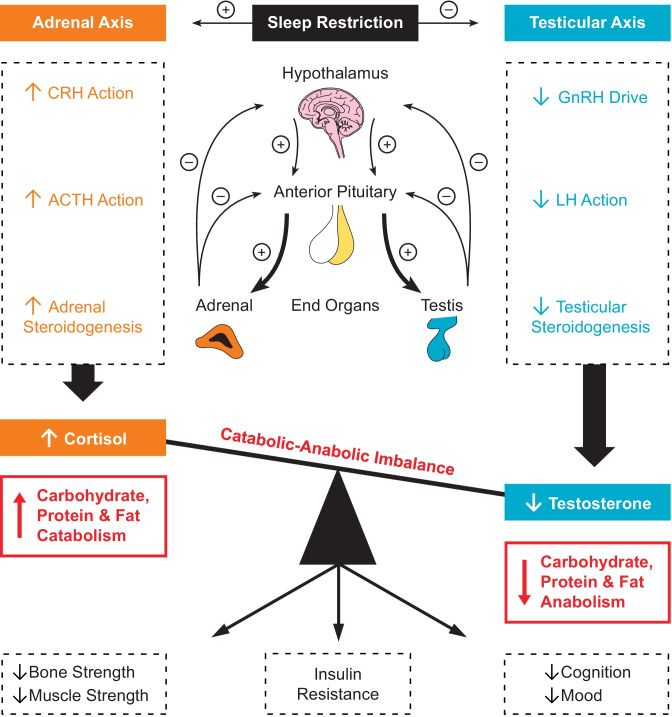
Sleep serves important biological functions, and influences health and longevity through endocrine and metabolic related systems. Sleep debt, circadian misalignment and sleep disruption from obstructive sleep apnea is widespread in modern society and accumulates with life because recovery sleep is not completely restorative. Accumulated disordered sleep throughout life impacts the ageing process and the development of age-related diseases. When epidemiological and interventional studies are considered collectively, sleep loss and lower sleep duration are associated with lower morning, afternoon and 24-h testosterone; as well as higher afternoon, but not morning or 24-h cortisol. These reciprocal changes imbalances anabolic-catabolic signaling because testosterone and cortisol are respectively the main anabolic and catabolic signals in man. Fixing testosterone-cortisol balance by means of a novel dual-hormone clamp mitigates the induction of insulin resistance by sleep restriction and provided the first proof-of-concept that the metabolic harm from sleep loss can be ameliorated by approaches that do not require sleeping more. Obstructive sleep apnea is associated with lower testosterone, even after controlling for age and obesity whereas the conclusion that continuous positive airway pressure therapy has no effect on testosterone is premature because available studies are underpowered and better-quality studies suggest otherwise. High dose testosterone therapy induces OSA, but more physiological dosing may not; and this effect may be transient or may dissipate with longer term therapy. Studies investigating the origin of the diurnal testosterone rhythm, the effect of circadian misalignment on testosterone-cortisol balance, and methods to mitigate metabolic harm, are required.
Overview
CoChat Summary
## TL;DR
This review argues that insufficient, misaligned, and disrupted sleep can alter testosterone and cortisol in men, especially older men, and thereby contribute to insulin resistance and age-related disease. It also highlights evidence that sleep restriction lowers testosterone and raises late-afternoon/early-evening cortisol, while a dual-hormone clamp mitigated sleep-loss-induced metabolic harm by at least 50% for insulin resistance and hyperinsulinemia.
## Key findings
- Across in-laboratory studies, sleep restriction decreases testosterone; in the older-men study, 24 h, morning, and afternoon testosterone all decreased in both older and younger men, but testosterone pulse frequency and pulsatile secretion decreased only in older men.
- For cortisol, the review concludes that sleep restriction increases afternoon cortisol: among 12 in-laboratory 24-h studies, 6 reported increased afternoon cortisol, 3 no change, and none reported a decrease; 7 studies reported no change in 24-h cortisol, 3 reported an increase, and none reported a decrease.
- In a randomized crossover study of 34 healthy young mostly overweight men, fixing testosterone-cortisol balance with a dual hormonal clamp during 4 consecutive nights of 4 h/night sleep opportunity reduced the development of insulin resistance and hyperinsulinemia by at least 50%, though it did not prevent hyperglycemia.
- For obstructive sleep apnea (OSA), a meta-analysis of 18 studies involving 1823 men found a significant inverse relationship between OSA and testosterone, persisting after adjustment for age and obesity; the paper states that lower testosterone was only observed in men with severe OSA.
## Methods
- Narrative review synthesizing epidemiological studies, in-laboratory sleep restriction experiments, randomized controlled trials, meta-analyses, and cohort studies on sleep, testosterone, cortisol, ageing, and OSA.
- The review emphasizes studies with 24-h hormone sampling, actigraphy or polysomnography for sleep, and mathematical deconvolution in the few studies with sufficiently frequent blood sampling.
- Main analytic approach is qualitative integration of findings across study types, with numerical comparisons drawn from the underlying studies and meta-analyses reported in the text.
## Limitations
- The paper states that many studies measured testosterone only in the morning, and that only 3 studies examined 24-h testosterone; one of those was confounded by strenuous exercise.
- It also states that few studies have examined relevant testosterone and cortisol pulse characteristics, longitudinal studies are unavailable or inconclusive, and the evidence on circadian misalignment and testosterone is lacking.
- Evident from the text: this is a review, so its conclusions depend on the quality and completeness of the underlying studies, many of which are described as underpowered, cross-sectional, or using insensitive OSA detection methods.
Model-written summary. Check it against the paper before relying on it.
Integrity signals
Registry
Cites
Statistics
Figures
Verification
Claims the paper makes
48 Valid · 10 Not valid · 20 Not checked · 37 Own results and interpretations
Some cited sources support this claim and some don’t — read each source’s verdict below.
In the paper
“An important consideration in determining accumulated sleep debt is that sleep need itself decreases with older age.”
- Also stated in: § Sleep, sleep architecture, and ageing · plain
“This is because sleep need decreases with age, but only up to 60 years, after which sleep need remains stable.”
§ Sleep, testosterone and cortisol balance, and ageing men > Introduction
What the sources say
- Disputedcites [17] Consensus Conference Panel, Watson NF, Badr MS, Belenky G, Bliwise DL, Buxton OM, et al. Joint consensus statement of the american academy of sleep medicine and sleep research society on the recommended amount of sleep for a healthy adult: Methodology and discussion. J Clin Sleep Med. 2015;11(8):931–52. 10.5664/jcsm.4950. PMC4513271 26235159 sourceExperimental — accuracy not yet measured
Section 2.3 (page not available) reports no substantial decline in sleep duration after age 60 and says adults aged 18–60 had shorter sleep durations than older adults. Those findings run counter to the claimed age-related decrease, although the passage measures sleep obtained rather than sleep need directly. (LLM, conf=0.76)
Checked by a reasoning model — may be wrong.
- Partly supportedcites [18] Li J Vitiello MV Gooneratne NS Sleep in normal aging Sleep Med Clin 2018 13 1 1 11 10.1016/j.jsmc.2017.09.001 29412976 PMC5841578 sourceExperimental — accuracy not yet measured
The Sleep duration section reports that total sleep time generally decreases with age, but says the decline tends to plateau after about age 60. Changes in sleep homeostasis reports reduced sleep pressure with aging. Neither section establishes that sleep need itself decreases; sleeping less is not necessarily needing less sleep. (LLM, conf=0.84)
plainstates a cause- Asserted: passes — The authors put it forward as true.
- Checkable: passes — It can be checked against evidence.
- Load-bearing: unclear — It is unclear whether the paper’s conclusions depend on it.
- Based: passes — The paper gives a reason why it holds.
- Also stated in: § Sleep, sleep architecture, and ageing · plain
Some cited sources support this claim and some don’t — read each source’s verdict below.
In the paper
“All studies when collectively examined show that sleep restriction decreases testosterone.”
§ Sleep, testosterone and cortisol balance, and ageing men > The inter-relationships between sleep duration, testosterone and ageing > Sleep duration, testosterone, and aging
What the sources say
- Disputedcites [40] Liu PY, Takahashi PY, Yang RJ, Iranmanesh A, Veldhuis JD. Age and time-of-day differences in the hypothalamo-pituitary-testicular, and adrenal, response to total overnight sleep deprivation. Sleep. 2020;43(7):zsaa008. 10.1093/sleep/zsaa008. PMC7355405 31993665 sourceExperimental — accuracy not yet measured
The Discussion (page unavailable) says this study and one other found decreased overall 24-hour testosterone, but contrasts them with three studies that did not. It therefore does not say that all studies show a decrease. (LLM, conf=0.88)
Checked by a reasoning model — may be wrong.
- Partly supportedcites [41] Leproult R Van Cauter E Effect of 1 week of sleep restriction on testosterone levels in young healthy men J Am Med Assoc 2011 305 21 2173 2174 10.1001/jama.2011.710 PMC4445839 21632481 sourceExperimental — accuracy not yet measured
The Results report lower daytime testosterone after one week of laboratory sleep restriction in 10 healthy young men. This supports the direction of the effect in this study, but the paper does not collectively examine all in-laboratory studies or establish that all studies show a decrease. (LLM, conf=0.88)
- Not checked — no full text of the sourcecites [42] Dattilo M Antunes HKM Nunes-Galbes NM Monico-Neto M Souza HS Quaresma M Effects of sleep deprivation on the acute skeletal muscle recovery after exercise Med Sci Sports Exerc 2020 52 2 507 514 10.1249/MSS.0000000000002137 31469710 source
- Not checked — no full text of the sourcecites [43] Schmid SM Hallschmid M Jauch-Chara K Lehnert H Schultes B Sleep timing may modulate the effect of sleep loss on testosterone Clin Endocrinol (Oxf) 2012 77 5 749 754 10.1111/j.1365-2265.2012.04419.x 22568763 source
- Partly supportedcites [44] Reynolds AC Dorrian J Liu PY Van Dongen HPA Wittert GA Harmer LJ Impact of five nights of sleep restriction on glucose metabolism, leptin and testosterone in young adult men PLoS One 2012 7 7 e41218 10.1371/journal.pone.0041218 22844441 PMC3402517 sourceExperimental — accuracy not yet measured
The Introduction reports that an earlier laboratory study found decreased testosterone after sleep restriction. But this paper’s Results and Discussion report no significant testosterone decrease in its own experiment, only a downward trend, so the categorical claim about all studies overstates the evidence. (LLM, conf=0.86)
- Partly supportedcites [45] Lamon S Morabito A Arentson-Lantz E Knowles O Vincent GE Condo D The effect of acute sleep deprivation on skeletal muscle protein synthesis and the hormonal environment Physiol Rep 2021 9 1 e14660 10.14814/phy2.14660 33400856 PMC7785053 sourceExperimental — accuracy not yet measured
The Results (Plasma testosterone levels; page unavailable) report a 24% decrease in testosterone area under the curve after one night of total sleep deprivation. But the Discussion (Acute sleep deprivation promotes a less anabolic hormonal environment; page unavailable) says evidence is limited and cites an earlier study that found no change in 24-hour testosterone area under the curve. This paper therefore does not support the claim that all studies show a decrease with sleep restriction. (LLM, conf=0.87)
- Not checked — no full text of the sourcecites [46] Arnal PJ Drogou C Sauvet F Regnauld J Dispersyn G Faraut B Effect of sleep extension on the subsequent testosterone, cortisol and prolactin responses to total sleep deprivation and recovery J Neuroendocrinol 2016 28 2 12346 10.1111/jne.12346 26647769 source
- Not checked — no full text of the sourcecites [47] Sauvet F Arnal PJ Tardo-Dino PE Drogou C Van Beers P Bougard C Protective effects of exercise training on endothelial dysfunction induced by total sleep deprivation in healthy subjects Int J Cardiol 2017 232 76 85 10.1016/j.ijcard.2017.01.049 28089456 source
- Partly supportedcites [48] Carter JR Durocher JJ Larson RA DellaValla JP Yang H Sympathetic neural responses to 24-hour sleep deprivation in humans: Sex differences Am J Physiol Heart Circ Physiol 2012 302 10 H1991 H1997 10.1152/ajpheart.01132.2011 22408018 PMC3362107 sourceExperimental — accuracy not yet measured
The Discussion of Carter et al. (2012) states that 'TSD has repeatedly been shown to significantly decrease testosterone levels in male rats and humans (3, 13, 36)', and their own Results report that 'TSD significantly reduced testosterone in men, but not women' (Table 1: 589 ± 67 → 480 ± 54 ng/dl in men; 46 ± 2 → 44 ± 4 ng/dl in women, NS). So the source supports a collective decrease in testosterone after total sleep deprivation, but bounded to males — the claim's unqualified 'all studies ... sleep restriction decreases testosterone' drops the sex qualifier and generalizes 24-h in-laboratory total sleep deprivation to 'sleep restriction'. The unsupported part is the extension to women/both sexes and to sleep-restriction paradigms beyond acute TSD. (LLM, conf=0.78)
- Partly supportedcites [49] Akerstedt T Palmblad J de la Torre B Marana R Gillberg M Adrenocortical and gonadal steroids during sleep deprivation Sleep 1980 3 1 23 30 10.1093/sleep/3.1.23 6781027 sourceExperimental — accuracy not yet measured
The Results report that testosterone decreased after 48 hours of sleep deprivation in the study’s 12 healthy men. But this paper reports one study, not a collective examination of all studies; its introduction says no previous data were available on sleep deprivation and gonadal hormone levels in humans. It therefore does not support the claim about all studies. (LLM, conf=0.90)
plainstates a cause- Asserted: passes — The authors put it forward as true.
- Checkable: passes — It can be checked against evidence.
- Load-bearing: passes — The paper’s conclusions depend on it.
- Based: passes — The paper gives a reason why it holds.
- Disputed
The cited sources support only part of this claim — read each source’s verdict below.
In the paper
“Sleep debt, circadian misalignment and sleep disruption from obstructive sleep apnea is widespread in modern society and accumulates with life because recovery sleep is not completely restorative.”
- Also stated in: § Introduction · hedged
“This accumulation occurs because intermittent recovery or “catch-up” sleep does not seem to completely reverse the adverse effects of sleep debt on multiple physiological processes including psychomotor performance [1, 5], metabolism [6, 7], blood pressure regulation [8] and immune/adrenal response [9].”
§ Sleep, testosterone and cortisol balance, and ageing men > Abstract
What the sources say
- Not checked — no full text of the sourcecites [1] Banks S Van Dongen HP Maislin G Dinges DF Neurobehavioral dynamics following chronic sleep restriction: Dose-response effects of one night for recovery Sleep 2010 33 8 1013 1026 10.1093/sleep/33.8.1013 20815182 PMC2910531 source
- Not checked — no full text of the sourcecites [5] Van Dongen HP Maislin G Mullington JM Dinges DF The cumulative cost of additional wakefulness: Dose-response effects on neurobehavioral functions and sleep physiology from chronic sleep restriction and total sleep deprivation Sleep 2003 26 2 117 126 10.1093/sleep/26.2.117 12683469 source
- Partly supportedcites [6] Depner CM Melanson EL Eckel RH Snell-Bergeon JK Perreault L Bergman BC Ad libitum weekend recovery sleep fails to prevent metabolic dysregulation during a repeating pattern of insufficient sleep and weekend recovery sleep Curr Biol 2019 29 6 957 967 10.1016/j.cub.2019.01.069 30827911 PMC12798825 sourceExperimental — accuracy not yet measured
In Results and Discussion, under “Ad Libitum Weekend Recovery Sleep Does Not Fully Repay Workweek Sleep Loss,” the paper reports that weekend recovery sleep did not fully repay workweek sleep loss and that some sleep debt carried into a second workweek. It does not establish that sleep debt accumulates over a lifetime, or that circadian misalignment and sleep-apnea-related disruption accumulate because recovery sleep is incomplete. (LLM, conf=0.86)
- Partly supportedcites [7] Depner CM, Melanson EL, Eckel RH, Higgins JA, Bergman BC, Perreault L, et al. Effects of ad libitum food intake, insufficient sleep and weekend recovery sleep on energy balance. Sleep. 2021;44(11):zsab136. 10.1093/sleep/zsab136. PMC8598190 34059916 sourceExperimental — accuracy not yet measured
Our copy supports only the 'recovery sleep is not completely restorative' half, and only in energy-balance/metabolic terms over an 8-day protocol: the Results state that 'ad libitum weekend recovery sleep did not prevent increased EI, weight-gain, or reduced insulin sensitivity upon return to insufficient sleep during workweek-2' (a finding reported previously as ref [16], Depner et al. 2019, Curr Biol), and the EI/EE/EB discussion adds that 'positive EB was sustained through the full experimental protocol segment, regardless of sleep duration or weekend recovery sleep.' Nothing in our copy attributes a lifetime accumulation of sleep debt to this work; the paper is a 10-day in-laboratory randomized trial in 36 healthy young adults, and its Conclusion explicitly calls for future studies 'translating our laboratory-based findings into "real-world" settings, that track individual trajectories over a longer timeframe.' So the 'accumulates with life' portion of the claim, and the generalization beyond energy balance, are not supported by this source. (LLM, conf=0.72)
- Partly supportedcites [8] Yang H Haack M Gautam S Meier-Ewert HK Mullington JM Repetitive exposure to shortened sleep leads to blunted sleep-associated blood pressure dipping J Hypertens 2017 35 6 1187 1194 10.1097/HJH.0000000000001284 28169885 PMC6052859 sourceExperimental — accuracy not yet measured
The Introduction (page unavailable) describes repeated short sleep followed by insufficient recovery sleep, and the Results (Hemodynamic Parameters; page unavailable) report blunted blood-pressure dipping during each restriction block. The paper does not establish that sleep debt accumulates over a lifetime or that recovery sleep is generally not restorative; the Introduction says whether recovery sleep compensates for adverse effects on blood-pressure dipping is unknown. (LLM, conf=0.85)
plainstates a cause- Asserted: passes — The authors put it forward as true.
- Checkable: passes — It can be checked against evidence.
- Load-bearing: passes — The paper’s conclusions depend on it.
- Based: passes — The paper gives a reason why it holds.
- Also stated in: § Introduction · hedged
Every source the paper cites for this claim was checked and supports it.
In the paper
“This is because the hypothalamo-pituitary testicular and hypothalamo-pituitary adrenal axes that respectively control testosterone, the major anabolic hormone in men (but not women) and cortisol, a key catabolic signal, are intertwined in their regulation and sleep restriction imbalances both their signaling [4].”
§ Sleep, testosterone and cortisol balance, and ageing men > Introduction
What the sources say
- Supportedcites [4] Liu PY A clinical perspective of sleep and andrological health: Assessment, treatment considerations and future research J Clin Endocrinol Metab 2019 104 10 4398 4417 10.1210/jc.2019-00683 31042277 PMC6735730 source
In “Circadian physiology relevant to endocrinologists” (page not provided), the paper explicitly describes coupling between the hypothalamic-pituitary-adrenal and hypothalamic-pituitary-testicular axes and gives examples of their reciprocal regulation. (LLM, conf=0.94)
plainstates an association- Asserted: passes — The authors put it forward as true.
- Checkable: passes — It can be checked against evidence.
- Load-bearing: passes — The paper’s conclusions depend on it.
- Based: passes — The paper gives a reason why it holds.
- Supported
The cited sources support only part of this claim — read each source’s verdict below.
In the paper
“When epidemiological and interventional studies are considered collectively, sleep loss and lower sleep duration are associated with lower morning, afternoon and 24-h testosterone; as well as higher afternoon, but not morning or 24-h cortisol.”
- Also stated in: § Sleep duration, testosterone, and aging · plain
“All studies when collectively examined show that sleep restriction decreases testosterone.”
§ Sleep, testosterone and cortisol balance, and ageing men > Abstract
What the sources say
- Supportedcites [40] Liu PY, Takahashi PY, Yang RJ, Iranmanesh A, Veldhuis JD. Age and time-of-day differences in the hypothalamo-pituitary-testicular, and adrenal, response to total overnight sleep deprivation. Sleep. 2020;43(7):zsaa008. 10.1093/sleep/zsaa008. PMC7355405 31993665 source
The Abstract reports that overnight sleep deprivation reduced 24-hour testosterone and testosterone measured in the morning and afternoon. The Other analyses section likewise reports reductions at 6–9 am, 9 am–3 pm, and 3–6 pm. The study compared a night of complete wakefulness with a night of sleep in healthy men; page numbers are not provided in our copy. (LLM, conf=0.90)
- Partly supportedcites [41] Leproult R Van Cauter E Effect of 1 week of sleep restriction on testosterone levels in young healthy men J Am Med Assoc 2011 305 21 2173 2174 10.1001/jama.2011.710 PMC4445839 21632481 sourceExperimental — accuracy not yet measured
The Results (page unavailable) report lower testosterone during waking hours after sleep restriction, particularly from 2 PM to 10 PM. The paper also notes an association between sleep time and morning testosterone in older men, but it does not report a lower 24-hour testosterone level; collecting samples over 24 hours does not establish that result. (LLM, conf=0.87)
- Not checked — no full text of the sourcecites [42] Dattilo M Antunes HKM Nunes-Galbes NM Monico-Neto M Souza HS Quaresma M Effects of sleep deprivation on the acute skeletal muscle recovery after exercise Med Sci Sports Exerc 2020 52 2 507 514 10.1249/MSS.0000000000002137 31469710 source
- Not checked — no full text of the sourcecites [43] Schmid SM Hallschmid M Jauch-Chara K Lehnert H Schultes B Sleep timing may modulate the effect of sleep loss on testosterone Clin Endocrinol (Oxf) 2012 77 5 749 754 10.1111/j.1365-2265.2012.04419.x 22568763 source
- Partly supportedcites [44] Reynolds AC Dorrian J Liu PY Van Dongen HPA Wittert GA Harmer LJ Impact of five nights of sleep restriction on glucose metabolism, leptin and testosterone in young adult men PLoS One 2012 7 7 e41218 10.1371/journal.pone.0041218 22844441 PMC3402517 sourceExperimental — accuracy not yet measured
The Introduction reports reduced afternoon and evening testosterone in an earlier sleep-restriction study, and the Discussion notes a relationship between total sleep time and morning testosterone. But this paper found no significant testosterone change after five nights of restriction (Results, Testosterone and SHBG), and its sampling did not cover 24 hours. The claim’s 24-hour component is therefore unsupported by this source. (LLM, conf=0.87)
- Partly supportedcites [45] Lamon S Morabito A Arentson-Lantz E Knowles O Vincent GE Condo D The effect of acute sleep deprivation on skeletal muscle protein synthesis and the hormonal environment Physiol Rep 2021 9 1 e14660 10.14814/phy2.14660 33400856 PMC7785053 sourceExperimental — accuracy not yet measured
The Results (Plasma testosterone levels; page unavailable) report a 24% lower testosterone area under the curve after one night of sleep deprivation. But the Methods (Hormone measures; page unavailable) say blood was sampled only from 07:00 to 17:00, so this is not a 24-hour measure; the Results also do not establish separate morning and afternoon reductions. The study tested complete sleep deprivation rather than an association across shorter sleep durations. (LLM, conf=0.88)
- Not checked — no full text of the sourcecites [46] Arnal PJ Drogou C Sauvet F Regnauld J Dispersyn G Faraut B Effect of sleep extension on the subsequent testosterone, cortisol and prolactin responses to total sleep deprivation and recovery J Neuroendocrinol 2016 28 2 12346 10.1111/jne.12346 26647769 source
- Not checked — no full text of the sourcecites [47] Sauvet F Arnal PJ Tardo-Dino PE Drogou C Van Beers P Bougard C Protective effects of exercise training on endothelial dysfunction induced by total sleep deprivation in healthy subjects Int J Cardiol 2017 232 76 85 10.1016/j.ijcard.2017.01.049 28089456 source
- Partly supportedcites [48] Carter JR Durocher JJ Larson RA DellaValla JP Yang H Sympathetic neural responses to 24-hour sleep deprivation in humans: Sex differences Am J Physiol Heart Circ Physiol 2012 302 10 H1991 H1997 10.1152/ajpheart.01132.2011 22408018 PMC3362107 sourceExperimental — accuracy not yet measured
Our copy supports only the morning-testosterone component, and only for men: METHODS (blood sampled at 7:30 AM after each NS and TSD visit) and RESULTS/Table 1 report 'TSD significantly reduced testosterone in men, but not women' (589±67 to 480±54 ng/dl, condition × sex P = 0.01), echoed in the Abstract and DISCUSSION. The single pre-instrumentation morning draw means no afternoon or 24-h testosterone measurement exists in this paper, and no passage (searched: cortisol, aldosterone/adrenal hormone sampling, 24-h testosterone, habitual sleep duration) reports cortisol at all or an association with usual/short sleep duration — the study is an acute 24-h total sleep deprivation crossover in 28 healthy young subjects, not an epidemiological analysis. Thus the afternoon and 24-h testosterone and the cortisol contrast attributed here are not from this source. (LLM, conf=0.80)
- Partly supportedcites [49] Akerstedt T Palmblad J de la Torre B Marana R Gillberg M Adrenocortical and gonadal steroids during sleep deprivation Sleep 1980 3 1 23 30 10.1093/sleep/3.1.23 6781027 sourceExperimental — accuracy not yet measured
The Results report that testosterone decreased after 48 hours of sleep deprivation. Subjects and Design states that all blood samples were drawn at 08:00, so this paper supports the morning finding but does not establish lower afternoon or 24-hour testosterone, or an association with shorter habitual sleep duration. Page numbers were not available in our copy. (LLM, conf=0.90)
plainstates an association- Asserted: passes — The authors put it forward as true.
- Checkable: passes — It can be checked against evidence.
- Load-bearing: passes — The paper’s conclusions depend on it.
- Based: passes — The paper gives a reason why it holds.
- Also stated in: § Sleep duration, testosterone, and aging · plain
74 more claims · 32 with their cited sources checked
Create a free account to see all 115 claims and to verify the 8 references still open.
- It may state two separate claims as one. 31
- Probably not a substantial claim. 6
- The quote only partly states this claim. 1
Citations
Cites
Increased Prevalence of Sleep-Disordered Breathing in Adults
Peppard, P. E., Young, T., Barnet, J. H., Palta, M., Hagen, E. W., & Hla, K. M. (2013) · American Journal of Epidemiology · doi:10.1093/aje/kws342 · Cited by 4,618 · cited 2×
“It is a male-preponderant disease that is more prevalent with advanced age, particularly in the presence of obesity [12, 102].”
BackgroundCoordination of circadian timing in mammals
Reppert, S. M., & Weaver, D. R. (2002) · Nature · doi:10.1038/nature00965 · Cited by 4,379 · cited 1×
“clocks throughout the body to coordinate bodily processes with the environment [58, 59].”
BackgroundVan Dongen, H. P. A., Maislin, G., Mullington, J. M., & Dinges, D. F. (2003) · Sleep · doi:10.1093/sleep/26.2.117 · Cited by 3,173
Mechanisms for Insulin Resistance: Common Threads and Missing Links
Samuel, V. T., & Shulman, G. I. (2012) · Cell · doi:10.1016/j.cell.2012.02.017 · Cited by 2,294
Central and Peripheral Circadian Clocks in Mammals
Mohawk, J. A., Green, C. B., & Takahashi, J. S. (2012) · Annual Review of Neuroscience · doi:10.1146/annurev-neuro-060909-153128 · Cited by 2,265 · cited 2×
“Resetting of the peripheral clock occurs through well-defined molecular mechanisms that involve direct interaction of glucocorticoids, glucocorticoid response elements and the regulatory regions of core clock genes Bmal1, Cry1, Per1 and Per2 [63, 64].”
BackgroundFeldman, H. A., Longcope, C., Derby, C. A., Johannes, C. B., Araujo, A. B., Coviello, A. D., Bremner, W. J., & McKinlay, J. B. (2002) · The Journal of Clinical Endocrinology & Metabolism · doi:10.1210/jcem.87.2.8201 · Cited by 1,861 · cited 1×
“This is because declines in testosterone per year of age is 2–threefold greater with longitudinal compared with cross-sectional analysis of the same cohort [35, 36].”
Testosterone Therapy in Men With Hypogonadism: An Endocrine Society Clinical Practice Guideline.
Bhasin, S., Brito, J. P., Cunningham, G. R., Hayes, F. J., Hodis, H. N., Matsumoto, A. M., Snyder, P. J., Swerdloff, R. S., Wu, F. C., & Yialamas, M. A. (2018) · The Journal of Clinical Endocrinology & Metabolism · doi:10.1210/jc.2018-00229 · Cited by 1,736 · cited 2×
“Until such data are available, expert opinion will appropriately continue to caution against the use testosterone therapy in men with untreated severe OSA [123].”
BackgroundIdentification of late-onset hypogonadism in middle-aged and elderly men
Wu, F. C. W., Tajar, A., Beynon, J. M., Pye, S. R., Silman, A. J., Finn, J. D., O'Neill, T. W., Bartfai, G., Casanueva, F. F., Forti, G., et al. (2010) · New England Journal of Medicine · doi:10.1056/nejmoa0911101 · Cited by 1,544 · cited 1×
“A syndrome of late-onset hypogonadism has since been objectively defined as requiring three sexual symptoms (decreased sexual interest, fewer morning erections and erectile dysfunction) in conjunction with a total testosterone below 11 nmol/liter and free testosterone below 220 pmol/liter [23] and is now widely accept…”
BackgroundAdverse Effects of Modest Sleep Restriction on Sleepiness, Performance, and Inflammatory Cytokines
Vgontzas, A. N., Zoumakis, E., Bixler, E. O., Lin, H.-M., Follett, H., Kales, A., & Chrousos, G. P. (2004) · The Journal of Clinical Endocrinology & Metabolism · doi:10.1210/jc.2003-031562 · Cited by 1,050 · cited 1×
“Whereas 6 studies reported increased afternoon cortisol with sleep restriction [40, 57, 78, 79, 83, 84], only 3 studies reported no change [9, 80, 81], and none reported a decrease.”
BackgroundEffects of gender and age on the levels and circadian rhythmicity of plasma cortisol
Van Cauter, E. (1996) · Journal of Clinical Endocrinology & Metabolism · doi:10.1210/jc.81.7.2468 · Cited by 951 · cited 4×
“Only two such studies, of 143 and 177 healthy men and women aged 20 to 80 years, respectively, are available [65, 66].”
BackgroundResultInfluentialTime for food: the intimate interplay between nutrition, metabolism, and the circadian clock
Asher, G., & Sassone-Corsi, P. (2015) · Cell · doi:10.1016/j.cell.2015.03.015 · Cited by 844
Feast and Famine: Critical Role of Glucocorticoids with Insulin in Daily Energy Flow
Dallman, M. F., Strack, A. M., Akana, S. F., Bradbury, M. J., Hanson, E. S., Scribner, K. A., & Smith, M. (1993) · Frontiers in Neuroendocrinology · doi:10.1006/frne.1993.1010 · Cited by 796 · cited 3×
“These findings are highly relevant because hypercortisolemia during the late-afternoon and early-evening is harmful, and is believed to cause the insulin resistance observed with advanced age [60, 69, 70], impair physical performance [71] and trigger neurocognitive deficits [72].”
BackgroundSleep Loss Results in an Elevation of Cortisol Levels the Next Evening
(1997) · Sleep · doi:10.1093/sleep/20.10.865 · Cited by 745 · cited 1×
“from 1800 to 2100), then increases in cortisol levels with sleep deprivation might have been detected, as it has been in other studies [85].”
ResultLi, J., Vitiello, M. V., & Gooneratne, N. S. (2018) · Sleep Medicine Clinics · doi:10.1016/j.jsmc.2017.09.001 · Cited by 742
RIZZA, R. A., MANDARINO, L. J., & GERICH, J. E. (1982) · The Journal of Clinical Endocrinology & Metabolism · doi:10.1210/jcem-54-1-131 · Cited by 696
Watson, N. F., Badr, M. S., Belenky, G., Bliwise, D. L., Buxton, O. M., Buysse, D., Dinges, D. F., Gangwisch, J., Grandner, M. A., Kushida, C., et al. (2015) · Journal of Clinical Sleep Medicine · doi:10.5664/jcsm.4950 · Cited by 568
Wright, K. P., Drake, A. L., Frey, D. J., Fleshner, M., Desouza, C. A., Gronfier, C., & Czeisler, C. A. (2015) · Brain, Behavior, and Immunity · doi:10.1016/j.bbi.2015.01.004 · Cited by 567
The Functional and Clinical Significance of the 24-Hour Rhythm of Circulating Glucocorticoids
Oster, H., Challet, E., Ott, V., Arvat, E., de Kloet, E. R., Dijk, D.-J., Lightman, S., Vgontzas, A., & Van Cauter, E. (2017) · Endocrine Reviews · doi:10.1210/er.2015-1080 · Cited by 548 · cited 1×
“These findings are highly relevant because hypercortisolemia during the late-afternoon and early-evening is harmful, and is believed to cause the insulin resistance observed with advanced age [60, 69, 70], impair physical performance [71] and trigger neurocognitive deficits [72].”
BackgroundJones, T. H., Arver, S., Behre, H. M., Buvat, J., Meuleman, E., Moncada, I., Morales, A. M., Volterrani, M., Yellowlees, A., Howell, J. D., et al. (2011) · Diabetes Care · doi:10.2337/dc10-1233 · Cited by 548 · cited 3×
“Vol.:(0123456789) Keywords Androgen · Glucocorticoid · Cardiometabolic health · Circadian · Sleep disordered breathing Abbreviations CPAP Continuous positive airway pressure GnRH Gonadotropin-releasing hormone LH Luteinizing hormone NREM Non-rapid eye movement OSA Obstructive sleep apnea REM Rapid eye movement SD Stan…”
BackgroundPhenotypic approaches to obstructive sleep apnoea – New pathways for targeted therapy
Eckert, D. J. (2018) · Sleep Medicine Reviews · doi:10.1016/j.smrv.2016.12.003 · Cited by 545 · cited 1×
“It is a male-preponderant disease that is more prevalent with advanced age, particularly in the presence of obesity [12, 102].”
BackgroundThe circadian clock and pathology of the ageing brain
Kondratova, A. A., & Kondratov, R. V. (2012) · Nature Reviews Neuroscience · doi:10.1038/nrn3208 · Cited by 482 · cited 1×
“Future research to understand the molecular underpinnings of these findings (for example in circadian clocks [135]) is needed to develop countermeasures to reduce the impact of insufficient sleep, disrupted sleep, or circadian misalignment on cardiometabolic health.”
BackgroundEffect of Testosterone Treatment on Bone Mineral Density in Men Over 65 Years of Age
Snyder, P. J. (1999) · Journal of Clinical Endocrinology & Metabolism · doi:10.1210/jc.84.6.1966 · Cited by 460 · cited 2×
“Two other randomized, placebo controlled, parallel group studies have partly addressed this uncertainty [128, 129].”
BackgroundMethodSleep function: Toward elucidating an enigma
Krueger, J. M., Frank, M. G., Wisor, J. P., & Roy, S. (2016) · Sleep Medicine Reviews · doi:10.1016/j.smrv.2015.08.005 · Cited by 440 · cited 1×
“Sleep restores neurobehavioral performance [1], improves immune function [2], and conserves whole body energy expenditure through metabolic processes that also restore brain energy stores and are important for neuronal plasticity and connectivity [3].”
BackgroundDynamics of ACTH and Cortisol Secretion and Implications for Disease
Lightman, S. L., Birnie, M. T., & Conway-Campbell, B. L. (2020) · Endocrine Reviews · doi:10.1210/endrev/bnaa002 · Cited by 439 · cited 2×
“This is because endocrine networks evolved to regulate whole-body metabolism, including catabolism and anabolism, in a diurnally appropriate manner, and to simultaneously allow dynamic responses to external environmental insults and internal stress through the ultradian (also known as pulsatile) nature of hormone secr…”
BackgroundGlucocorticoid regulation of the circadian clock modulates glucose homeostasis
So, A. Y.-L., Bernal, T. U., Pillsbury, M. L., Yamamoto, K. R., & Feldman, B. J. (2009) · Proceedings of the National Academy of Sciences · doi:10.1073/pnas.0909733106 · Cited by 431 · cited 2×
“Resetting of the peripheral clock occurs through well-defined molecular mechanisms that involve direct interaction of glucocorticoids, glucocorticoid response elements and the regulatory regions of core clock genes Bmal1, Cry1, Per1 and Per2 [63, 64].”
BackgroundCorona, G., Goulis, D. G., Huhtaniemi, I., Zitzmann, M., Toppari, J., Forti, G., Vanderschueren, D., & Wu, F. C. (2020) · Andrology · doi:10.1111/andr.12770 · Cited by 431
Getting Through to Circadian Oscillators: Why Use Constant Routines?
Duffy, J. F., & Dijk, D.-J. (2002) · Journal of Biological Rhythms · doi:10.1177/074873002129002294 · Cited by 368 · cited 1×
“Showing that the 24-h pattern of testosterone is driven specifically by the central circadian pacemaker, free of external influences, requires the use of the constant routine protocol as the gold standard method to remove or uniformly distribute these external influences so that only the endogenous rhythm is expressed…”
BackgroundWittert, G., Bracken, K., Robledo, K. P., Grossmann, M., Yeap, B. B., Handelsman, D. J., Stuckey, B., Conway, A., Inder, W., McLachlan, R., et al. (2021) · The Lancet Diabetes & Endocrinology · doi:10.1016/s2213-8587(20)30367-3 · Cited by 362 · cited 3×
“Vol.:(0123456789) Keywords Androgen · Glucocorticoid · Cardiometabolic health · Circadian · Sleep disordered breathing Abbreviations CPAP Continuous positive airway pressure GnRH Gonadotropin-releasing hormone LH Luteinizing hormone NREM Non-rapid eye movement OSA Obstructive sleep apnea REM Rapid eye movement SD Stan…”
BackgroundDiver, M. J., Imtiaz, K. E., Ahmad, A. M., Vora, J. P., & Fraser, W. D. (2003) · Clinical Endocrinology · doi:10.1046/j.1365-2265.2003.01772.x · Cited by 338
Jahrami, H. A., Alhaj, O. A., Humood, A. M., Alenezi, A. F., Fekih-Romdhane, F., AlRasheed, M. M., Saif, Z. Q., Bragazzi, N. L., Pandi-Perumal, S. R., BaHammam, A. S., et al. (2022) · Sleep Medicine Reviews · doi:10.1016/j.smrv.2022.101591 · Cited by 335 · cited 1×
“Another consideration is that the COVID-19 pandemic increased the global prevalence of sleep disturbances particularly in younger individuals infected with the disease, but whether this trend will persist is not yet known [13].”
BackgroundNedeltcheva, A. V., Kessler, L., Imperial, J., & Penev, P. D. (2009) · The Journal of Clinical Endocrinology & Metabolism · doi:10.1210/jc.2009-0483 · Cited by 323 · cited 4×
“5 h/night or less [40, 57, 78, 79, 83, 84] reported that sleep restriction increased afternoon cortisol.”
BackgroundInfluentialNeuroendocrine Dysfunction in Sleep Apnea: Reversal by Continuous Positive Airways Pressure Therapy*
GRUNSTEIN, R. R., HANDELSMAN, D. J., LAWRENCE, S. J., BLACKWELL, C., CATERSON, I. D., & SULLIVAN, C. E. (1989) · The Journal of Clinical Endocrinology & Metabolism · doi:10.1210/jcem-68-2-352 · Cited by 302
Effect of 1 Week of Sleep Restriction on Testosterone Levels in Young Healthy Men
Leproult, R. (2011) · JAMA · doi:10.1001/jama.2011.710 · Cited by 296
Banks, S., Van Dongen, H. P. A., Maislin, G., & Dinges, D. F. (2010) · Sleep · doi:10.1093/sleep/33.8.1013 · Cited by 295 · cited 2×
“Sleep restores neurobehavioral performance [1], improves immune function [2], and conserves whole body energy expenditure through metabolic processes that also restore brain energy stores and are important for neuronal plasticity and connectivity [3].”
BackgroundAdaptation to abrupt time shifts of the oscillator(s) controlling human circadian rhythms.
Mills, J. N., Minors, D. S., & Waterhouse, J. M. (1978) · The Journal of Physiology · doi:10.1113/jphysiol.1978.sp012582 · Cited by 285 · cited 1×
“Showing that the 24-h pattern of testosterone is driven specifically by the central circadian pacemaker, free of external influences, requires the use of the constant routine protocol as the gold standard method to remove or uniformly distribute these external influences so that only the endogenous rhythm is expressed…”
BackgroundLessons From the Testosterone Trials
Snyder, P. J., Bhasin, S., Cunningham, G. R., Matsumoto, A. M., Stephens-Shields, A. J., Cauley, J. A., Gill, T. M., Barrett-Connor, E., Swerdloff, R. S., Wang, C., et al. (2018) · Endocrine Reviews · doi:10.1210/er.2017-00234 · Cited by 280
The Short-Term Effects of High-Dose Testosterone on Sleep, Breathing, and Function in Older Men
Liu, P. Y., Yee, B., Wishart, S. M., Jimenez, M., Jung, D. G., Grunstein, R. R., & Handelsman, D. J. (2003) · The Journal of Clinical Endocrinology & Metabolism · doi:10.1210/jc.2003-030236 · Cited by 275 · cited 2×
“The issue of testosterone effects on OSA should not be ignored because two randomized controlled trials show that testosterone therapy can acutely (within 2–3 weeks) induce sleep-disordered breathing [126, 127].”
BackgroundSelf-citationHypothalamic-pituitary-adrenocortical axis regulation
Jacobson, L. (2005) · Endocrinology and Metabolism Clinics of North America · doi:10.1016/j.ecl.2005.01.003 · Cited by 248 · cited 2×
“Administration of glucocorticoids to bolster cortisol levels in the late afternoon and early evening also induces insulin resistance [69, 73, 74] through post-receptor mechanisms [90–92].”
BackgroundAcute sleep deprivation reduces energy expenditure in healthy men
Benedict, C., Hallschmid, M., Lassen, A., Mahnke, C., Schultes, B., Schiöth, H. B., Born, J., & Lange, T. (2011) · The American Journal of Clinical Nutrition · doi:10.3945/ajcn.110.006460 · Cited by 243 · cited 3×
“5 h/night or less [40, 57, 78, 79, 83, 84] reported that sleep restriction increased afternoon cortisol.”
BackgroundReynolds, A. C., Dorrian, J., Liu, P. Y., Van Dongen, H. P. A., Wittert, G. A., Harmer, L. J., & Banks, S. (2012) · PLoS ONE · doi:10.1371/journal.pone.0041218 · Cited by 231
Self-citationPlat, L., Leproult, R., L’Hermite-Baleriaux, M., Fery, F., Mockel, J., Polonsky, K. S., & Van Cauter, E. (1999) · The Journal of Clinical Endocrinology & Metabolism · doi:10.1210/jcem.84.9.5978 · Cited by 225 · cited 2×
“Administration of glucocorticoids to bolster cortisol levels in the late afternoon and early evening also induces insulin resistance [69, 73, 74] through post-receptor mechanisms [90–92].”
BackgroundMotivations and Methods for Analyzing Pulsatile Hormone Secretion
Veldhuis, J. D., Keenan, D. M., & Pincus, S. M. (2008) · Endocrine Reviews · doi:10.1210/er.2008-0005 · Cited by 223 · cited 2×
“This is because endocrine networks evolved to regulate whole-body metabolism, including catabolism and anabolism, in a diurnally appropriate manner, and to simultaneously allow dynamic responses to external environmental insults and internal stress through the ultradian (also known as pulsatile) nature of hormone secr…”
BackgroundDepner, C. M., Melanson, E. L., Eckel, R. H., Snell-Bergeon, J. K., Perreault, L., Bergman, B. C., Higgins, J. A., Guerin, M. K., Stothard, E. R., Morton, S. J., et al. (2019) · Current Biology · doi:10.1016/j.cub.2019.01.069 · Cited by 203 · cited 1×
“1 3 debt on multiple physiological processes including psychomotor performance [1, 5], metabolism [6, 7], blood pressure regulation [8] and immune/adrenal response [9].”
BackgroundPurnell, J. Q., Brandon, D. D., Isabelle, L. M., Loriaux, D. L., & Samuels, M. H. (2004) · The Journal of Clinical Endocrinology & Metabolism · doi:10.1210/jc.2003-030440 · Cited by 199
Tenover, J. S., Matsumoto, A. M., Clifton, D. K., & Bremner, W. J. (1988) · Journal of Gerontology · doi:10.1093/geronj/43.6.m163 · Cited by 185
Influence of testosterone on breathing during sleep
Schneider, B. K., Pickett, C. K., Zwillich, C. W., Weil, J. V., McDermott, M. T., Santen, R. J., Varano, L. A., & White, D. P. (1986) · Journal of Applied Physiology · doi:10.1152/jappl.1986.61.2.618 · Cited by 179 · cited 2×
“The issue of testosterone effects on OSA should not be ignored because two randomized controlled trials show that testosterone therapy can acutely (within 2–3 weeks) induce sleep-disordered breathing [126, 127].”
BackgroundPlat, L. (1999) · Journal of Clinical Endocrinology & Metabolism · doi:10.1210/jc.84.9.3082 · Cited by 177
Effects of Acutely Displaced Sleep on Testosterone
Axelsson, J., Ingre, M., Åkerstedt, T., & Holmbäck, U. (2005) · The Journal of Clinical Endocrinology & Metabolism · doi:10.1210/jc.2005-0520 · Cited by 171
Bratel, T., Wennlund, A., & Carlström, K. (1999) · Respiratory Medicine · doi:10.1016/s0954-6111(99)90068-9 · Cited by 168
Pejovic, S., Basta, M., Vgontzas, A. N., Kritikou, I., Shaffer, M. L., Tsaoussoglou, M., Stiffler, D., Stefanakis, Z., Bixler, E. O., & Chrousos, G. P. (2013) · American Journal of Physiology-Endocrinology and Metabolism · doi:10.1152/ajpendo.00301.2013 · Cited by 166 · cited 1×
“Whereas 6 studies reported increased afternoon cortisol with sleep restriction [40, 57, 78, 79, 83, 84], only 3 studies reported no change [9, 80, 81], and none reported a decrease.”
BackgroundMeston, N., Davies, R. J. O., Mullins, R., Jenkinson, C., Wass, J. A. H., & Stradling, J. R. (2003) · Journal of Internal Medicine · doi:10.1046/j.1365-2796.2003.01212.x · Cited by 163 · cited 1×
“Of these studies, only one is a randomized sham-controlled trial, and this study actually reported that CPAP improved testosterone compared with sham – although this was due to a reduction in testosterone in the sham group rather than an increase in testosterone in the treated group [112].”
BackgroundBarrett-Connor, E., Dam, T.-T., Stone, K., Harrison, S. L., Redline, S., Orwoll, E., & for the Osteoporotic Fractures in Men Study Group (2008) · The Journal of Clinical Endocrinology & Metabolism · doi:10.1210/jc.2007-2622 · Cited by 158 · cited 2×
“A consistent relationship between sleep duration and testosterone has not been apparent in large cross-sectional studies of healthy community-dwelling older [37, 38] and young and older [39] men when divided according to studies that objectively measured sleep by actigraphy (a method to infer sleep from wrist-worn dev…”
BackgroundMethodSleep restriction increases free fatty acids in healthy men
Broussard, J. L., Chapotot, F., Abraham, V., Day, A., Delebecque, F., Whitmore, H. R., & Tasali, E. (2015) · Diabetologia · doi:10.1007/s00125-015-3500-4 · Cited by 156 · cited 4×
“5 h/night or less [40, 57, 78, 79, 83, 84] reported that sleep restriction increased afternoon cortisol.”
BackgroundInfluentialSympathetic neural responses to 24-hour sleep deprivation in humans: sex differences
Carter, J. R., Durocher, J. J., Larson, R. A., DellaValla, J. P., & Yang, H. (2012) · American Journal of Physiology-Heart and Circulatory Physiology · doi:10.1152/ajpheart.01132.2011 · Cited by 153
Society for Endocrinology guidelines for testosterone replacement therapy in male hypogonadism
Jayasena, C. N., Anderson, R. A., Llahana, S., Barth, J. H., MacKenzie, F., Wilkes, S., Smith, N., Sooriakumaran, P., Minhas, S., Wu, F. C. W., et al. (2022) · Clinical Endocrinology · doi:10.1111/cen.14633 · Cited by 147 · cited 1×
“Surprisingly, other national guidelines from the United Kingdom make no mention of OSA at all [125].”
BackgroundHoyos, C. M., Yee, B. J., Phillips, C. L., Machan, E. A., Grunstein, R. R., & Liu, P. Y. (2012) · European Journal of Endocrinology · doi:10.1530/eje-12-0525 · Cited by 145 · cited 4×
“Vol.:(0123456789) Keywords Androgen · Glucocorticoid · Cardiometabolic health · Circadian · Sleep disordered breathing Abbreviations CPAP Continuous positive airway pressure GnRH Gonadotropin-releasing hormone LH Luteinizing hormone NREM Non-rapid eye movement OSA Obstructive sleep apnea REM Rapid eye movement SD Stan…”
BackgroundInfluentialSelf-citationSleep and circadian regulation of cortisol: A short review
O'Byrne, N. A., Yuen, F., Butt, W. Z., & Liu, P. Y. (2021) · Current Opinion in Endocrine and Metabolic Research · doi:10.1016/j.coemr.2021.03.011 · Cited by 145
Self-citationEffect of testosterone on the apneic threshold in women during NREM sleep
Zhou, X. S., Rowley, J. A., Demirovic, F., Diamond, M. P., & Badr, M. S. (2003) · Journal of Applied Physiology · doi:10.1152/japplphysiol.00264.2002 · Cited by 144
Liu, P. Y., Swerdloff, R. S., & Veldhuis, J. D. (2004) · The Journal of Clinical Endocrinology & Metabolism · doi:10.1210/jc.2004-0807 · Cited by 143
Self-citationREVERSIBLE REPRODUCTIVE DYSFUNCTION IN MEN WITH OBSTRUCTIVE SLEEP APNOEA
SANTAMARIA, J. D., PRIOR, J. C., & FLEETHAM, J. A. (1988) · Clinical Endocrinology · doi:10.1111/j.1365-2265.1988.tb03680.x · Cited by 136
Testosterone and Regional Fat Distribution
Mårin, P. (1995) · Obesity Research · doi:10.1002/j.1550-8528.1995.tb00233.x · Cited by 129 · cited 3×
“Vol.:(0123456789) Keywords Androgen · Glucocorticoid · Cardiometabolic health · Circadian · Sleep disordered breathing Abbreviations CPAP Continuous positive airway pressure GnRH Gonadotropin-releasing hormone LH Luteinizing hormone NREM Non-rapid eye movement OSA Obstructive sleep apnea REM Rapid eye movement SD Stan…”
BackgroundWu, T., Yang, L., Jiang, J., Ni, Y., Zhu, J., Zheng, X., Wang, Q., Lu, X., & Fu, Z. (2018) · Life Sciences · doi:10.1016/j.lfs.2017.11.049 · Cited by 126
Hoyos, C. M., Killick, R., Yee, B. J., Grunstein, R. R., & Liu, P. Y. (2012) · Clinical Endocrinology · doi:10.1111/j.1365-2265.2012.04413.x · Cited by 118
Self-citationEffect of sleep deprivation on rhythms of clock gene expression and melatonin in humans
Ackermann, K., Plomp, R., Lao, O., Middleton, B., Revell, V. L., Skene, D. J., & Kayser, M. (2013) · Chronobiology International · doi:10.3109/07420528.2013.784773 · Cited by 116
Gambineri, A., Pelusi, C., & Pasquali, R. (2003) · Journal of Endocrinological Investigation · doi:10.1007/bf03345209 · Cited by 113
Lamon, S., Morabito, A., Arentson‐Lantz, E., Knowles, O., Vincent, G. E., Condo, D., Alexander, S. E., Garnham, A., Paddon‐Jones, D., & Aisbett, B. (2021) · Physiological Reports · doi:10.14814/phy2.14660 · Cited by 110
Age-Dependent and Gender-Dependent Regulation of Hypothalamic-Adrenocorticotropic-Adrenal Axis
Veldhuis, J. D., Sharma, A., & Roelfsema, F. (2013) · Endocrinology and Metabolism Clinics of North America · doi:10.1016/j.ecl.2013.02.002 · Cited by 110
Abell, J. G., Shipley, M. J., Ferrie, J. E., Kivimäki, M., & Kumari, M. (2016) · Psychoneuroendocrinology · doi:10.1016/j.psyneuen.2016.02.021 · Cited by 106
Auyeung, T. W., Kwok, T., Leung, J., Lee, J. S. W., Ohlsson, C., Vandenput, L., Wing, Y. K., & Woo, J. (2015) · Journal of the American Medical Directors Association · doi:10.1016/j.jamda.2015.04.006 · Cited by 105 · cited 1×
“A consistent relationship between sleep duration and testosterone has not been apparent in large cross-sectional studies of healthy community-dwelling older [37, 38] and young and older [39] men when divided according to studies that objectively measured sleep by actigraphy (a method to infer sleep from wrist-worn dev…”
MethodInfluence of testosterone on ventilation and chemosensitivity in male subjects
White, D. P., Schneider, B. K., Santen, R. J., McDermott, M., Pickett, C. K., Zwillich, C. W., & Weil, J. V. (1985) · Journal of Applied Physiology · doi:10.1152/jappl.1985.59.5.1452 · Cited by 104
Sleep timing may modulate the effect of sleep loss on testosterone
Schmid, S. M., Hallschmid, M., Jauch‐Chara, K., Lehnert, H., & Schultes, B. (2012) · Clinical Endocrinology · doi:10.1111/j.1365-2265.2012.04419.x · Cited by 104
Axelsson, J., Rehman, J.-U., Akerstedt, T., Ekman, R., Miller, G. E., Höglund, C. O., & Lekander, M. (2013) · PLoS ONE · doi:10.1371/journal.pone.0082291 · Cited by 103 · cited 2×
“5 h/night or less [40, 57, 78, 79, 83, 84] reported that sleep restriction increased afternoon cortisol.”
BackgroundThe aging male hypothalamic–pituitary–gonadal axis: Pulsatility and feedback
Veldhuis, J. D., Keenan, D. M., Liu, P. Y., Iranmanesh, A., Takahashi, P. Y., & Nehra, A. X. (2009) · Molecular and Cellular Endocrinology · doi:10.1016/j.mce.2008.09.005 · Cited by 102
Self-citationImpact of age, sex and body mass index on cortisol secretion in 143 healthy adults
Roelfsema, F., van Heemst, D., Iranmanesh, A., Takahashi, P., Yang, R., & Veldhuis, J. D. (2017) · Endocrine Connections · doi:10.1530/ec-17-0160 · Cited by 100 · cited 6×
“These [65, 66] and other [67] studies are consistent in showing that age is associated with higher late-afternoon and early-evening cortisol, and an advance in the timing (i.”
BackgroundResultInfluentialHoekema, A., Stel, A.-L., Stegenga, B., Van Der Hoeven, J. H., Wijkstra, P. J., Van Driel, M. F., & De Bont, L. G. M. (2007) · The Journal of Sexual Medicine · doi:10.1111/j.1743-6109.2006.00341.x · Cited by 97
Adrenocortical and Gonadal Steroids During Sleep Deprivation
Åkerstedt, T., Palmblad, J., de la Torre, B., Marana, R., & Gillberg, M. (1980) · Sleep · doi:10.1093/sleep/3.1.23 · Cited by 94
Sensitivity and specificity of pulse detection using a new deconvolution method
Liu, P. Y., Keenan, D. M., Kok, P., Padmanabhan, V., O'Byrne, K. T., & Veldhuis, J. D. (2009) · American Journal of Physiology-Endocrinology and Metabolism · doi:10.1152/ajpendo.00071.2009 · Cited by 90
Self-citationRepeating patterns of sleep restriction and recovery: Do we get used to it?
Simpson, N. S., Diolombi, M., Scott-Sutherland, J., Yang, H., Bhatt, V., Gautam, S., Mullington, J., & Haack, M. (2016) · Brain, Behavior, and Immunity · doi:10.1016/j.bbi.2016.06.001 · Cited by 88
Changes in Cortisol and Growth Hormone Secretion During Nocturnal Sleep in the Course of Aging
Kern, W., Dodt, C., Born, J., & Fehm, H. L. (1996) · The Journals of Gerontology Series A: Biological Sciences and Medical Sciences · doi:10.1093/gerona/51a.1.m3 · Cited by 81 · cited 1×
“These findings are highly relevant because hypercortisolemia during the late-afternoon and early-evening is harmful, and is believed to cause the insulin resistance observed with advanced age [60, 69, 70], impair physical performance [71] and trigger neurocognitive deficits [72].”
BackgroundThe effect of cortisol on glucose/glucose-6-phosphate cycle activity and insulin action.
Rooney, D. P., Neely, R. D., Cullen, C., Ennis, C. N., Sheridan, B., Atkinson, A. B., Trimble, E. R., & Bell, P. M. (1993) · The Journal of Clinical Endocrinology & Metabolism · doi:10.1210/jcem.77.5.8077310 · Cited by 76
Effects of Sleep Deprivation on Acute Skeletal Muscle Recovery after Exercise
DÁTTILO, M., ANTUNES, H. K. M., GALBES, N. M. N., MÔNICO-NETO, M., DE SÁ SOUZA, H., DOS SANTOS QUARESMA, M. V. L., LEE, K. S., UGRINOWITSCH, C., TUFIK, S., & DE MELLO, M. T. (2020) · Medicine & Science in Sports & Exercise · doi:10.1249/mss.0000000000002137 · Cited by 75 · cited 2×
“Seven studies reported no change in 24-h cortisol with sleep restriction [40, 41, 79–82, 84], 3 reported an increase [42, 57, 83] and none reported a decrease.”
BackgroundKillick, R., Wang, D., Hoyos, C. M., Yee, B. J., Grunstein, R. R., & Liu, P. Y. (2013) · Journal of Sleep Research · doi:10.1111/jsr.12027 · Cited by 74
Self-citationGardner, M. P., Lightman, S., Sayer, A. A., Cooper, C., Cooper, R., Deeg, D., Ebrahim, S., Gallacher, J., Kivimaki, M., Kumari, M., et al. (2013) · Psychoneuroendocrinology · doi:10.1016/j.psyneuen.2012.04.016 · Cited by 72
Keenan, D. M., Alexander, S., Irvine, C. H. G., Clarke, I., Scott, C., Turner, A., Tilbrook, A. J., Canny, B. J., & Veldhuis, J. D. (2004) · Proceedings of the National Academy of Sciences · doi:10.1073/pnas.0300619101 · Cited by 70
Repetitive exposure to shortened sleep leads to blunted sleep-associated blood pressure dipping
Yang, H., Haack, M., Gautam, S., Meier-Ewert, H. K., & Mullington, J. M. (2017) · Journal of Hypertension · doi:10.1097/hjh.0000000000001284 · Cited by 69 · cited 1×
“1 3 debt on multiple physiological processes including psychomotor performance [1, 5], metabolism [6, 7], blood pressure regulation [8] and immune/adrenal response [9].”
BackgroundYeap, B. B., Marriott, R. J., Antonio, L., Chan, Y. X., Raj, S., Dwivedi, G., Reid, C. M., Anawalt, B. D., Bhasin, S., Dobs, A. S., et al. (2021) · The Journal of Clinical Endocrinology & Metabolism · doi:10.1210/clinem/dgaa743 · Cited by 67 · cited 1×
“Here, lower circulating testosterone concentrations were associated with higher future all-cause and cancer-related mortality [21].”
BackgroundZhang, X., Lin, Q.-C., Zeng, H., Jiang, X.-T., Chen, B., & Chen, X. (2015) · Archives of Sexual Behavior · doi:10.1007/s10508-015-0593-2 · Cited by 67
Luboshitzky, R., Lavie, L., Shen‐Orr, Z., & Lavie, P. (2003) · PubMed · Cited by 67
An Ensemble Model of the Male Gonadal Axis: Illustrative Application in Aging Men
Keenan, D. M., Takahashi, P. Y., Liu, P. Y., Roebuck, P. D., Nehra, A. X., Iranmanesh, A., & Veldhuis, J. D. (2006) · Endocrinology · doi:10.1210/en.2005-1356 · Cited by 65 · cited 2×
“This ensemble model reconstructs ageing-related adaptations among all three interlinked signals simultaneously, rather than appraising any one signal in isolation [30].”
BackgroundSelf-citationVeldhuis, J., Yang, R., Roelfsema, F., & Takahashi, P. (2016) · The Journal of Clinical Endocrinology & Metabolism · doi:10.1210/jc.2015-3611 · Cited by 65 · cited 1×
“A possible unifying mechanism that could underpin these diverse associations is that specific proinflammatory cytokines could induce androgen depletion simultaneously through enhanced inhibition of GnRH and/or LH secretion as well as direct Leydig cell effects [33, 34].”
BackgroundD’Andrea, S., Spaggiari, G., Barbonetti, A., & Santi, D. (2020) · Journal of Endocrinological Investigation · doi:10.1007/s40618-020-01251-3 · Cited by 63 · cited 1×
“Another limitation is that only 3 studies have examined 24-h testosterone, and of these, one [42] was confounded by strenuous exercise, which is known to increase testosterone [52].”
BackgroundYen and Jaffe's Reproductive Endocrinology: Physiology, Pathophysiology, and Clinical Management
Rodger, F. (2005) · Journal of Family Planning and Reproductive Health Care · doi:10.1783/1471189054483843 · Cited by 63
Sleep Apnea, Reproductive Hormones and Quality of Sexual Life in Severely Obese Men
Hammoud, A. O., Walker, J. M., Gibson, M., Cloward, T. V., Hunt, S. C., Kolotkin, R. L., Adams, T. D., & Meikle, A. W. (2011) · Obesity · doi:10.1038/oby.2010.344 · Cited by 62
Macrea, M. M., Martin, T. J., & Zăgrean, L. (2010) · Sleep And Breathing · doi:10.1007/s11325-010-0373-0 · Cited by 59
Arnal, P. J., Drogou, C., Sauvet, F., Regnauld, J., Dispersyn, G., Faraut, B., Millet, G. Y., Leger, D., Gomez‐Merino, D., & Chennaoui, M. (2016) · Journal of Neuroendocrinology · doi:10.1111/jne.12346 · Cited by 55
Liu, P. Y. (2019) · The Journal of Clinical Endocrinology & Metabolism · doi:10.1210/jc.2019-00683 · Cited by 55 · cited 7×
“This is because the hypothalamo-pituitary testicular and hypothalamo-pituitary adrenal axes that respectively control testosterone, the major anabolic hormone in men (but not women) and cortisol, a key catabolic signal, are intertwined in their regulation and sleep restriction imbalances both their signaling [4].”
BackgroundInfluentialSelf-citationAging and androgens: Physiology and clinical implications
Anawalt, B. D., & Matsumoto, A. M. (2022) · Reviews in Endocrine and Metabolic Disorders · doi:10.1007/s11154-022-09765-2 · Cited by 55 · cited 1×
“This is because declines in testosterone per year of age is 2–threefold greater with longitudinal compared with cross-sectional analysis of the same cohort [35, 36].”
Shift Work Sleep Disorder and Night Shift Work Significantly Impair Erectile Function
Rodriguez, K. M., Kohn, T. P., Kohn, J. R., Sigalos, J. T., Kirby, E. W., Pickett, S. M., Pastuszak, A. W., & Lipshultz, L. I. (2020) · The Journal of Sexual Medicine · doi:10.1016/j.jsxm.2020.06.009 · Cited by 54
Sleep Characteristics and Daytime Cortisol Levels in Older Adults
Morgan, E., Schumm, L. P., McClintock, M., Waite, L., & Lauderdale, D. S. (2017) · Sleep · doi:10.1093/sleep/zsx043 · Cited by 52 · cited 3×
“Testosterone therapy is widely believed to induce or worsen sleep apnea, and recent European and North American societal guidelines recommend vigilance in the detection of new OSA, and/or avoiding testosterone therapy in those with severe OSA [123, 124].”
BackgroundSarchielli, E., Comeglio, P., Squecco, R., Ballerini, L., Mello, T., Guarnieri, G., Idrizaj, E., Mazzanti, B., Vignozzi, L., Gallina, P., et al. (2016) · The Journal of Clinical Endocrinology & Metabolism · doi:10.1210/jc.2016-2115 · Cited by 50
Li, Z., Tang, T., Wu, W., Gu, L., Du, J., Zhao, T., Zhou, X., Wu, H., & Qin, G. (2016) · Respiratory Medicine · doi:10.1016/j.rmed.2016.09.001 · Cited by 50
Veldhuis, J. D., Liu, P. Y., Keenan, D. M., & Takahashi, P. Y. (2012) · American Journal of Physiology-Endocrinology and Metabolism · doi:10.1152/ajpendo.00450.2011 · Cited by 48
Self-citationSleep, Sex Steroid Hormones, Sexual Activities, and Aging in Asian Men
Goh, V. H. ‐., & Tong, T. Y. ‐. (2010) · Journal of Andrology · doi:10.2164/jandrol.109.007856 · Cited by 47 · cited 1×
“A consistent relationship between sleep duration and testosterone has not been apparent in large cross-sectional studies of healthy community-dwelling older [37, 38] and young and older [39] men when divided according to studies that objectively measured sleep by actigraphy (a method to infer sleep from wrist-worn dev…”
MethodDemirkol, M. K., Yıldırım, A., Gıca, Ş., Doğan, N. T., & Resim, S. (2021) · Andrologia · doi:10.1111/and.14116 · Cited by 44
Androgens, Obesity, and Sleep-Disordered Breathing in Men
Liu, P. Y., Caterson, I. D., Grunstein, R. R., & Handelsman, D. J. (2007) · Endocrinology and Metabolism Clinics of North America · doi:10.1016/j.ecl.2007.03.002 · Cited by 43 · cited 1×
“Accordingly, low testosterone concentrations, OSA and obesity are known to frequently occur together, but the mechanisms that underpin these inter-relationships are not well established [103].”
BackgroundSelf-citationDivergent gonadotropin-gonadal dose-responsive coupling in healthy young and aging men
Keenan, D. M., & Veldhuis, J. D. (2004) · American Journal of Physiology-Regulatory, Integrative and Comparative Physiology · doi:10.1152/ajpregu.00376.2003 · Cited by 43 · cited 1×
“According to this ensemble model, the most parsimonious explanation of available data in humans is that ageing (1) diminishes hypothalamic GnRH outflow, (2) impairs testicular responsiveness to LH pulses and (3) decreases androgenic negative feedback [30, 31].”
BackgroundKnapp, A., Myhill, P. C., Davis, W. A., Peters, K. E., Hillman, D., Hamilton, E. J., Lim, E. M., & Davis, T. M. E. (2014) · Clinical Endocrinology · doi:10.1111/cen.12401 · Cited by 39
Cignarelli, A., Castellana, M., Castellana, G., Perrini, S., Brescia, F., Natalicchio, A., Garruti, G., Laviola, L., Resta, O., & Giorgino, F. (2019) · Frontiers in Endocrinology · doi:10.3389/fendo.2019.00551 · Cited by 37 · cited 1×
“However, the two available meta-analyses have not concluded that CPAP therapy increases testosterone in men with OSA, but have instead concluded that CPAP has no effect on testosterone [108, 109].”
BackgroundCelec, P., Mucska, I., Ostatníková, D., & Hodosy, J. (2014) · Journal of Endocrinological Investigation · doi:10.1007/s40618-013-0003-3 · Cited by 35
Okoro, C. A., Courtney-Long, E., Cyrus, A. C., Zhao, G., & Wheaton, A. G. (2020) · Disability and Health Journal · doi:10.1016/j.dhjo.2020.100887 · Cited by 34 · cited 1×
“Furthermore, the accumulation of sleep debt is widespread in modern society: approximately one in three sleep insufficiently (< 7 h per night) [10], up to 20% are shiftworkers with work schedules that misalign sleep [11], and 10% of men (3% of women) aged 30–49 years and 17% of men (9% of women) aged 50–70 years have…”
BackgroundJauch-Chara, K., Schmid, S. M., Hallschmid, M., Oltmanns, K. M., & Schultes, B. (2013) · PLoS ONE · doi:10.1371/journal.pone.0054209 · Cited by 33
Night shift schedule alters endogenous regulation of circulating cytokines
Liu, P. Y., Irwin, M. R., Krueger, J. M., Gaddameedhi, S., & Van Dongen, H. P. A. (2021) · Neurobiology of Sleep and Circadian Rhythms · doi:10.1016/j.nbscr.2021.100063 · Cited by 33 · cited 1×
“Sleep restores neurobehavioral performance [1], improves immune function [2], and conserves whole body energy expenditure through metabolic processes that also restore brain energy stores and are important for neuronal plasticity and connectivity [3].”
BackgroundSelf-citationSauvet, F., Arnal, P. J., Tardo-Dino, P. E., Drogou, C., Van Beers, P., Bougard, C., Rabat, A., Dispersyn, G., Malgoyre, A., Leger, D., et al. (2017) · International Journal of Cardiology · doi:10.1016/j.ijcard.2017.01.049 · Cited by 32
Testosterone replacement in aging men: an evidence-based patient-centric perspective
Bhasin, S. (2021) · Journal of Clinical Investigation · doi:10.1172/jci146607 · Cited by 32 · cited 1×
“A syndrome of late-onset hypogonadism has since been objectively defined as requiring three sexual symptoms (decreased sexual interest, fewer morning erections and erectile dysfunction) in conjunction with a total testosterone below 11 nmol/liter and free testosterone below 220 pmol/liter [23] and is now widely accept…”
BackgroundIncreased Risk of Hypogonadal Symptoms in Shift Workers With Shift Work Sleep Disorder
Balasubramanian, A., Kohn, T. P., Santiago, J. E., Sigalos, J. T., Kirby, E. W., Hockenberry, M. S., Pickett, S. M., Pastuszak, A. W., & Lipshultz, L. I. (2020) · Urology · doi:10.1016/j.urology.2019.10.040 · Cited by 31
Ageing male (part I): Pathophysiology and diagnosis of functional hypogonadism
Huhtaniemi, I. T., & Wu, F. C. W. (2022) · Best Practice & Research Clinical Endocrinology & Metabolism · doi:10.1016/j.beem.2022.101622 · Cited by 31 · cited 2×
“1 3 unequivocally shown that testosterone declines with age in men [20].”
BackgroundChattopadhyay, S., Keenan, D., & Veldhuis, J. (2008) · Quarterly of Applied Mathematics · doi:10.1090/s0033-569x-08-01024-4 · Cited by 30
Preliminary Longitudinal Assessment of Sleep in the Elderly
Phoha, R. L., Dickel, M. J., & Mosko, S. S. (1990) · Sleep · doi:10.1093/sleep/13.5.425 · Cited by 30 · cited 1×
“For example, one such study of 11 community dwelling seniors (8 women and 3 men) aged 60 to 72 years showed no changes in sleep architecture 3 years later, other than a small increase in the number of sleep stage transitions [19].”
BackgroundSmith, I., Salazar, I., RoyChoudhury, A., & St‐Onge, M. (2019) · Sleep Health · doi:10.1016/j.sleh.2019.07.003 · Cited by 30
Hypothalamo-Pituitary Unit, Testis, and Male Accessory Organs
Liu, P. Y., & Veldhuis, J. D. (2019) · Yen and Jaffe's Reproductive Endocrinology · doi:10.1016/b978-0-323-47912-7.00012-3 · Cited by 29 · cited 1×
“These pulse characteristics contain information that is crucial for signaling between endocrine glands [15, 16, 53].”
BackgroundSelf-citationLiu, P. Y., Lawrence-Sidebottom, D., Piotrowska, K., Zhang, W., Iranmanesh, A., Auchus, R. J., Veldhuis, J. D., & Van Dongen, H. P. A. (2021) · The Journal of Clinical Endocrinology & Metabolism · doi:10.1210/clinem/dgab375 · Cited by 28 · cited 3×
“Nevertheless, direct substantiation of the role of testosterone-cortisol balance in the induction of insulin resistance from sleep restriction has only recently become available in a study that utilized a novel dual hormonal clamp [93].”
BackgroundInfluentialSelf-citationSu, L., Meng, Y., Zhang, S., Cao, Y., Zhu, J., Qu, H., & Jiao, Y. (2022) · Andrology · doi:10.1111/andr.13111 · Cited by 28 · cited 1×
“A recent meta-analysis of 18 studies involving 1823 men with or without OSA also found a significant inverse relationship between OSA and testosterone concentrations – a relationship which remained after controlling for age and obesity [107].”
BackgroundAn Ensemble Perspective of Aging-Related Hypoandrogenemia in Men
Liu, P. Y., Takahashi, P. Y., & Veldhuis, J. D. (2017) · Springer eBooks · doi:10.1007/978-3-319-53298-1_16 · Cited by 27
Self-citationZhang, X.-B., Jiang, X.-T., Du, Y.-P., Yuan, Y.-T., & Chen, B. (2014) · PLoS ONE · doi:10.1371/journal.pone.0115033 · Cited by 26 · cited 1×
“However, the two available meta-analyses have not concluded that CPAP therapy increases testosterone in men with OSA, but have instead concluded that CPAP has no effect on testosterone [108, 109].”
BackgroundMelehan, K. L., Hoyos, C. M., Yee, B. J., Wong, K. K., Buchanan, P. R., Grunstein, R. R., & Liu, P. Y. (2016) · Andrology · doi:10.1111/andr.12132 · Cited by 26
Self-citationTwenty‐four hour profiles of four hormones under constant routine
UCHIYAMA, M., ISHIBASHI, K., ENOMOTO, T., NAKAJIMA, T., SHIBUI, K., HIROKAWA, G., & OKAWA, M. (1998) · Psychiatry and Clinical Neurosciences · doi:10.1111/j.1440-1819.1998.tb01053.x · Cited by 23 · cited 2×
“The 24-h rhythm of cortisol expressed in humans is driven by the central circadian pacemaker located in the suprachiasmatic nucleus [56, 57], which entrains all other peripheral”
BackgroundKen‐Dror, G., Fry, C. H., Murray, P., Fluck, D. S., & Han, T. S. (2021) · Clinical Endocrinology · doi:10.1111/cen.14573 · Cited by 22 · cited 1×
“By comparison, a meta-analysis of 22 studies (of which 6 were randomized controlled trials) was sufficiently powered to conclude that CPAP decreases cortisol [122].”
ResultLiu, P. Y., Takahashi, P. Y., Yang, R. J., Iranmanesh, A., & Veldhuis, J. D. (2020) · SLEEP · doi:10.1093/sleep/zsaa008 · Cited by 22
Self-citationGilpin, H., Whitcomb, D., & Cho, K. (2008) · Molecular Brain · doi:10.1186/1756-6606-1-4 · Cited by 20 · cited 1×
“These findings are highly relevant because hypercortisolemia during the late-afternoon and early-evening is harmful, and is believed to cause the insulin resistance observed with advanced age [60, 69, 70], impair physical performance [71] and trigger neurocognitive deficits [72].”
BackgroundRoelfsema, F., Liu, P. Y., Takahashi, P. Y., Yang, R. J., & Veldhuis, J. D. (2020) · The Journal of Clinical Endocrinology & Metabolism · doi:10.1210/clinem/dgz246 · Cited by 20 · cited 2×
“Each individual underwent sequential testing in random order of hypothalamic GnRH outflow by administering a submaximal dose of ganirelix (a GnRH antagonist), hypothalamopituitary feedback by steroidogenic blockade with ketoconazole, and testicular responsivity with repeated pulsatile infusions of recombinant human LH…”
BackgroundMethodSelf-citationMP91-06 INCREASED RISK OF HYPOGONADAL SYMPTOMS IN SHIFT WORKERS WITH SHIFT WORK SLEEP DISORDER
Kirby, W., Balasubramanian, A., Santiago, J. E., Hockenberry, M. S., Skutt, D., Kohn, T. P., Pickett, S. M., Hasan, A. S., Pastuszak, A., & Lipshultz, L. I. (2017) · The Journal of Urology · doi:10.1016/j.juro.2017.02.2846 · Cited by 17
Association between Sleep Duration and 24-Hour Urine Free Cortisol in the MrOS Sleep Study
Rao, M. N., Blackwell, T., Redline, S., Punjabi, N. M., Barrett-Connor, E., Neylan, T. C., Stone, K. L., & Osteoporotic Fractures in Men (MrOS) Study Group (2013) · PLoS ONE · doi:10.1371/journal.pone.0075205 · Cited by 15 · cited 1×
“This is consistent with another study of 325 community-dwelling men aged 65 years or more that reported no significant association between actigraphally-measured sleep duration and 24-h urinary free cortisol [76].”
ResultEffects of ad libitum food intake, insufficient sleep and weekend recovery sleep on energy balance
Depner, C. M., Melanson, E. L., Eckel, R. H., Higgins, J. A., Bergman, B. C., Perreault, L., Knauer, O. A., Birks, B. R., & Wright, K. P. (2021) · Sleep · doi:10.1093/sleep/zsab136 · Cited by 14 · cited 1×
“1 3 debt on multiple physiological processes including psychomotor performance [1, 5], metabolism [6, 7], blood pressure regulation [8] and immune/adrenal response [9].”
BackgroundVlková, B., Mucska, I., Hodosy, J., & Celec, P. (2013) · Andrologia · doi:10.1111/and.12092 · Cited by 12
Neuroendocrine Aging: Pituitary–Gonadal Axis in Males
Liu, P. Y., Takahashi, P. Y., Nehra, A. X., Pincus, S. M., Keenan, D. M., & Veldhuis, J. D. (2009) · Elsevier eBooks · doi:10.1016/b978-008045046-9.00114-5 · Cited by 5
Self-citationCarroll, J. E., & Liu, P. Y. (2021) · Current Opinion in Endocrine and Metabolic Research · doi:10.1016/j.coemr.2021.04.004 · Cited by 4 · cited 1×
“Sleep may influence health and longevity through endocrine and metabolic systems [14].”
BackgroundSelf-citationМихайловна, М. И., Berdina, O. N., Semenova, N. V., Madaev, V. V., Нерисович, Г. И., & Колесникова, Л. И. (2017) · Urologiia · doi:10.18565/urol.2017.2.93-99 · Cited by 2
Cited by
You, Y., Chen, Y., Liu, R., Zhang, Y., Wang, M., Yang, Z., Liu, J., & Ma, X. (2024) · Scientific Reports · doi:10.1038/s41598-024-56316-7 · Cited by 119
Zhang, X., He, X., Pan, D., Shi, L., Wu, Y., Yang, Y., Zhu, Y., Wang, Y., Wang, H., Pu, L., et al. (2023) · Journal of Hazardous Materials · doi:10.1016/j.jhazmat.2023.132800 · Cited by 54
Global Perspectives on Sleep Health: Definitions, Disparities, and Implications for Public Health
DelRosso, L. M. (2025) · Brain Sciences · doi:10.3390/brainsci15030304 · Cited by 70
“Research highlights how sleep disruptions in women often correlate with reproductive milestones (menstruation, pregnancy, and menopause) [39–41], whereas men may experience a higher prevalence of sleep-disordered breathing and shorter sleep duration [42].”
Rhythms in cortisol mediate sleep and circadian impacts on health
Liu, P. Y. (2024) · SLEEP · doi:10.1093/sleep/zsae151 · Cited by 43
“Ultradian (i.e. pulsatile) rhythms in cortisol also exist, and these pulses allow for rapid responses that fine-tune the body’s reaction to unpredictable external and internal insults [7, 19, 20].”
BackgroundInfluentialSelf-citationThe Role of Cortisol and Dehydroepiandrosterone in Obesity, Pain, and Aging
Erceg, N., Mićić, M., Forouzan, E., & Knežević, N. N. (2025) · Diseases · doi:10.3390/diseases13020042 · Cited by 50
“Age-related changes in cortisol profiles and the HPA axis may lead to an increased risk of developing age-related diseases such as osteoporosis, neurocognitive deficits, Alzheimer’s disease, insulin resistance, and many others [17,78].”
Metadata
- Authors
- Liu, P. Y., & Reddy, R. T.
- Affiliations
- University of California, Los Angeles (US)
- The Lundquist Institute (US)
- Corresponding author
- Liu, Peter Y.
- ORCID
- Liu, Peter Y.
- Venue
- Reviews in Endocrine and Metabolic Disorders
- Published
- 2022-09-24
- Volume
- 23
- Issue
- 6
- Pages
- 1323-1339
- ISSN
- 1389-9155 (ISSN-L)
- 1573-2606
- PMC
- PMC9510302
- OpenAlex
- W4297458987
- Semantic Scholar
- 9e6448824dc0b321a6c72a6c49074d6d87be1106
- Cited by
- 80
- References
- 138
- Citations by year
- 2026: 20 · 2025: 31 · 2024: 22 · 2023: 7
- FWCI
- 2.13
- Type
- journal article
- Language
- en
- Open access
- hybrid
- doi.org
- Licence
- cc-by
- creativecommons.org/licenses/by/4.0 (tdm)
- creativecommons.org/licenses/by/4.0 (vor)
- Locations
- Reviews in Endocrine and Metabolic Disorders (publishedVersion, cc-by)
- PubMed Central (publishedVersion, cc-by)
- PubMed (publishedVersion)
- Funders
- National Heart, Lung, and Blood Institute (K24 HL138632)
- Topics
- Health Sciences › Medicine › Endocrinology, Diabetes and Metabolism › Hormonal and reproductive studies
- Life Sciences › Neuroscience › Endocrine and Autonomic Systems › Circadian rhythm and melatonin
- Social Sciences › Psychology › Experimental and Cognitive Psychology › Sleep and Work-Related Fatigue
- Keywords
- sleep, testosterone, cortisol, older men, sleep restriction, sleep duration, obstructive sleep apnea, continuous positive airway pressure, testosterone replacement therapy, insulin resistance, circadian misalignment, age-related diseases
- MeSH terms
- Aging, Humans, Hydrocortisone, Male, Sleep, Testosterone, Sleep Apnea, Obstructive
About these checks
Registry, retraction, Cites and statistics results are computed, not judged, with one exception: a printed reference that no index lists is read once by a model before it counts as a citation error. Claims are extracted by a model and kept only when their quote appears verbatim in the text; each cited source is then checked, with a model’s help, for whether it says what the claim relies on. Those verdicts can be wrong — read the claim’s quote and the cited source before relying on one.
The claim verdicts this report counts are experimental: their accuracy is not yet measured.
A language model drew the claims from the paper on 2026-10-10, under version 3 of the claim definition (model deepseek-v4.1-flash, prompt extract-v3).
A second model labelled each claim on 2026-10-10 (model jev-1.13-20260917, definition revision gold-guideline-v0.2).
Cited sources are checked with a language model’s help (gpt-6-sol and qwen3.8-omni-flash).
Statistics and arithmetic are recomputed, not judged.
Confidence bands are shown only for fields calibrated on our annotated test set. None is calibrated yet, so no band is shown.
What counts as a claim ›How we measure confidence ›How we check this ›
Are you an author, or do you see a problem with this page? Request a review
Data sources
Bibliographic data: Semantic Scholar, OpenAlex, Crossref.
Contains information from the Semantic Scholar Academic Graph Datasets, made available under the ODC Attribution License (ODC-BY 1.0).
Semantic Scholar’s data is described in: Kinney, R., et al. (2023). The Semantic Scholar Open Data Platform. arXiv:2301.10140.
