

A Database and Evaluation Methodology for Optical Flow
Open accessThe DOI matches its Crossref record; 110 of the 112 references it cites were found in a registry or an index; 2 of the 68 sources its claims cite were checked for support.
Abstract
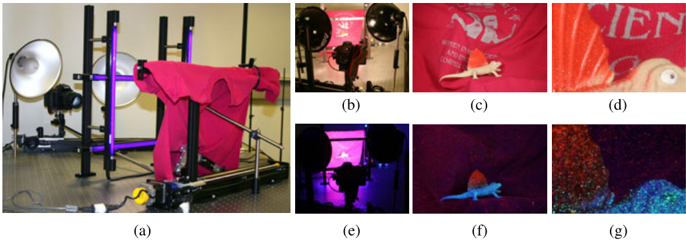
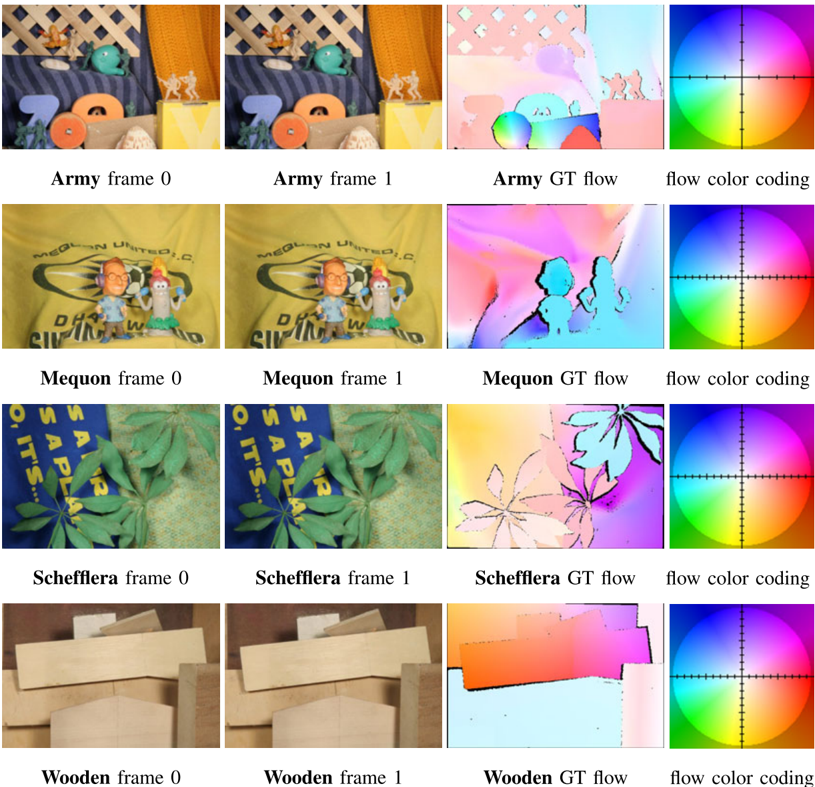
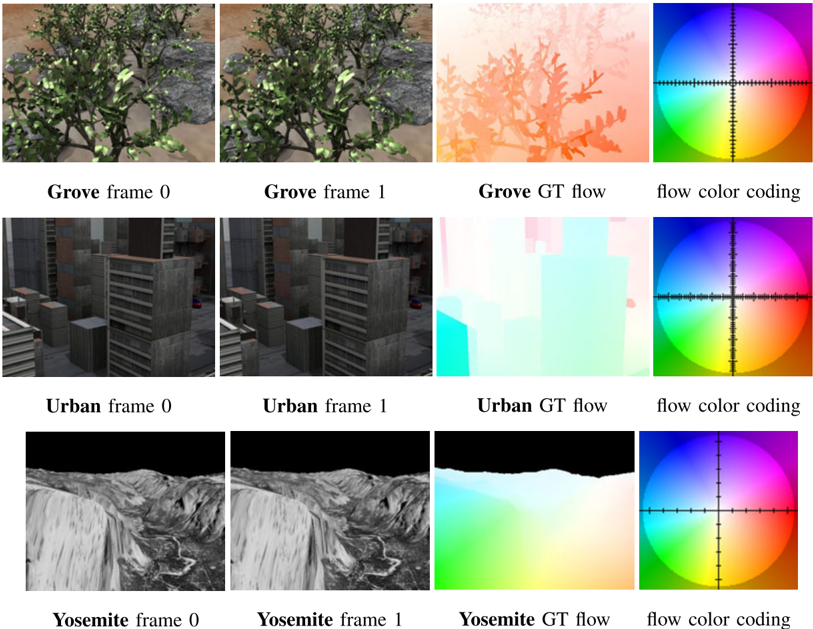
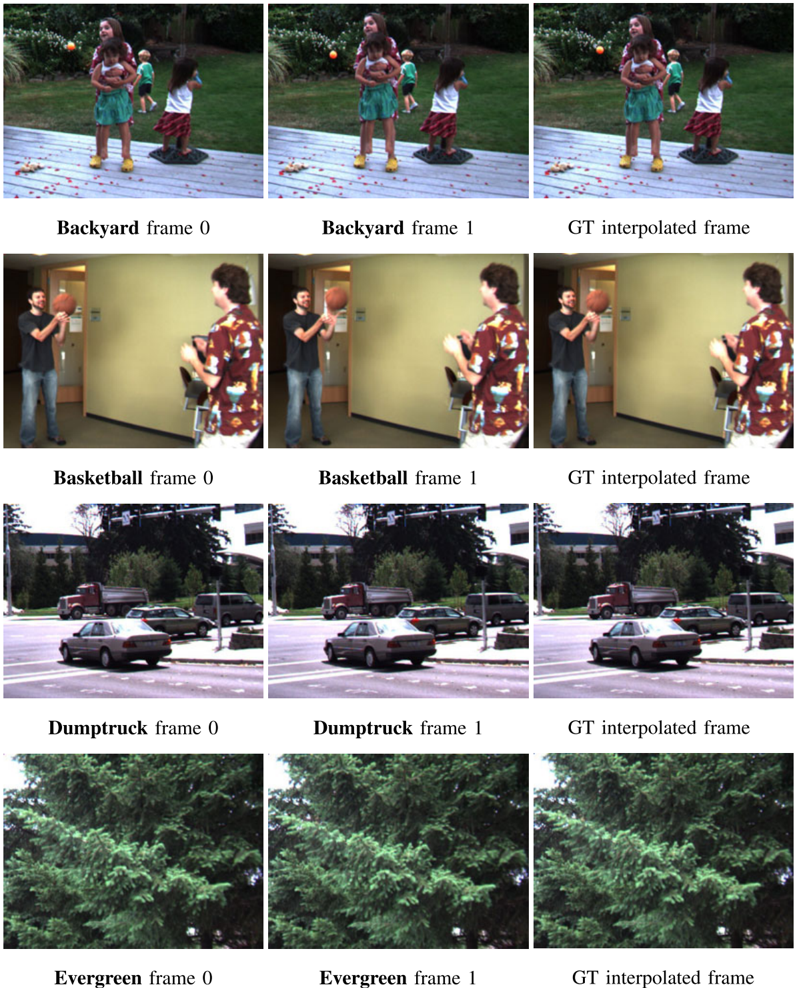
The quantitative evaluation of optical flow algorithms by Barron et al. (1994) led to significant advances in performance. The challenges for optical flow algorithms today go beyond the datasets and evaluation methods proposed in that paper. Instead, they center on problems associated with complex natural scenes, including nonrigid motion, real sensor noise, and motion discontinuities. We propose a new set of benchmarks and evaluation methods for the next generation of optical flow algorithms. To that end, we contribute four types of data to test different aspects of optical flow algorithms: (1) sequences with nonrigid motion where the ground-truth flow is determined by tracking hidden fluorescent texture, (2) realistic synthetic sequences, (3) high frame-rate video used to study interpolation error, and (4) modified stereo sequences of static scenes. In addition to the average angular error used by Barron et al., we compute the absolute flow endpoint error, measures for frame interpolation error, improved statistics, and results at motion discontinuities and in textureless regions.
Overview
CoChat Summary
TL;DR
The paper introduces a new optical flow benchmark of four data types (hidden fluorescent texture, realistic synthetic, high-speed interpolation, and modified stereo) plus an extended evaluation methodology with endpoint error, interpolation error, robustness/accuracy statistics, and region masks. It reports that performance improved substantially over the preliminary 2007 study, but motion discontinuities and diverse datasets remain difficult, and top flow methods still lag top stereo methods on the modified Teddy stereo data.
Key findings
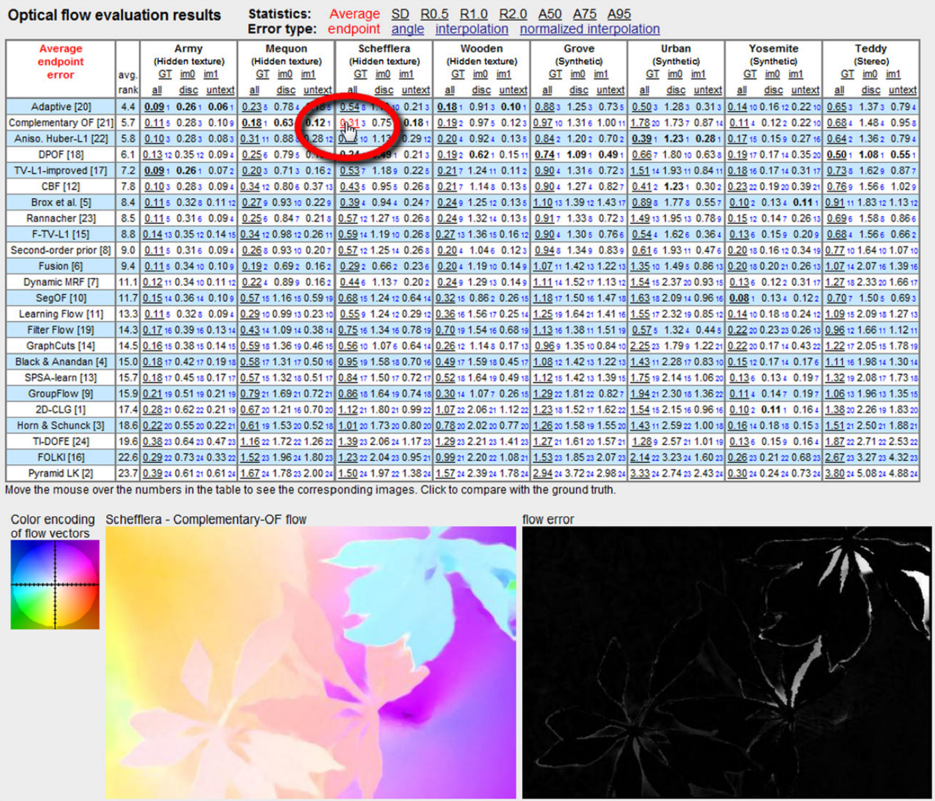
- The benchmark contains 12 training and 12 test sequences; test ground truth is withheld except for Yosemite. As of December 2009 the online evaluation contained results for 24 published methods, all using only 2 input frames and 10 using color.
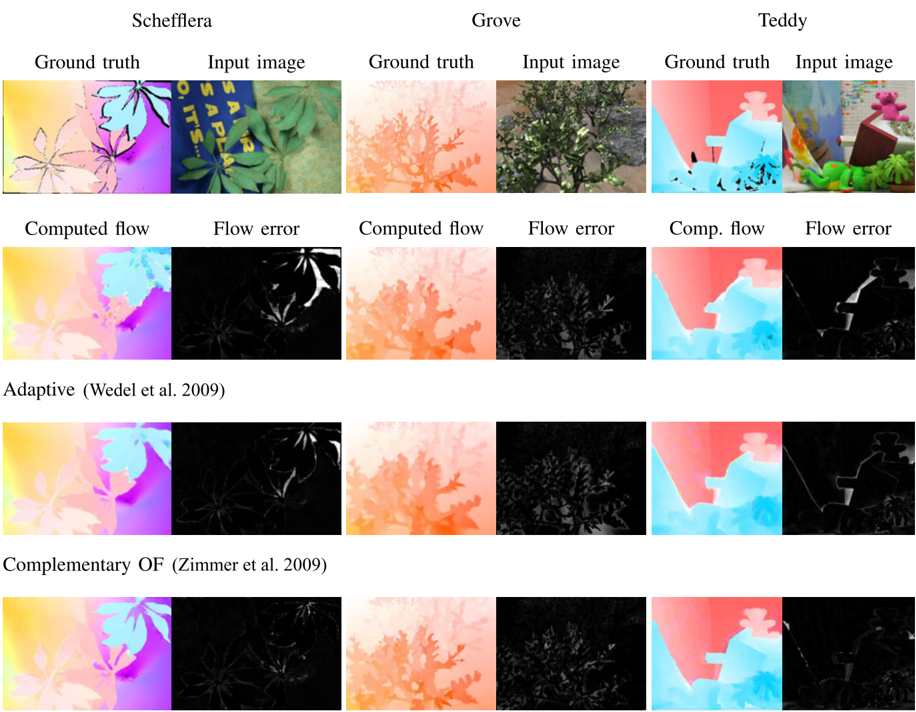
- Best average endpoint error (Avg. EE) improved dramatically over 2D-CLG (Bruhn et al. 2005): Army 0.28→0.09, Mequon 0.67→0.18, Schefflera 1.12→0.24, Wooden 1.07→0.18, Grove 1.23→0.74, Urban 1.54→0.39, Yosemite 0.10→0.08, Teddy 1.38→0.50. Best Avg. EE was below 0.2 pixels on four datasets (Yosemite, Army, Mequon, Wooden).
- Endpoint error (EE) and angular error (AE) rankings were highly correlated (r = 0.989), but the paper argues EE should be preferred: Complementary OF on Urban had Avg. AE 4.64° (rank 6) but Avg. EE 1.78 pixels (rank 20), because AE downweights large motions.
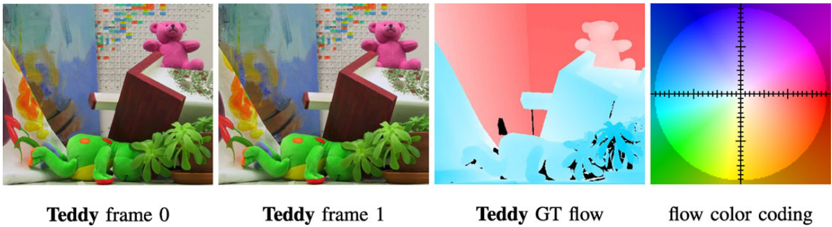
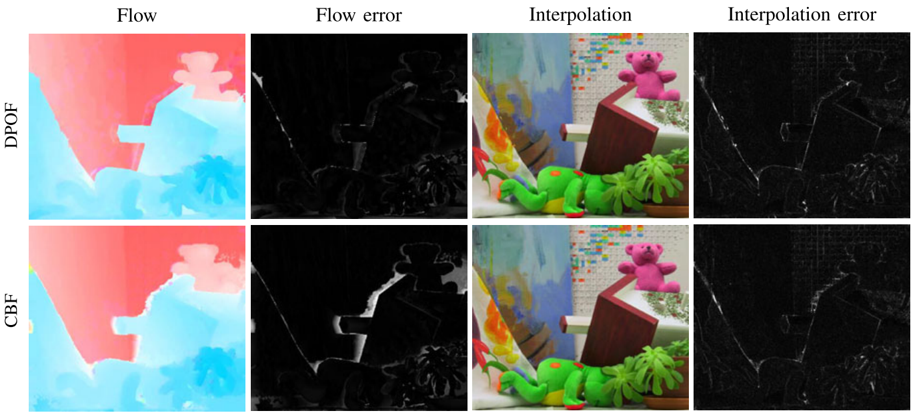
- Motion discontinuity (Disc) regions were the hardest; textureless (Untext) regions were typically easiest. Dataset results were less correlated, with Yosemite poorly or negatively correlated with others. Flow and interpolation errors were only moderately correlated (Avg4 EE vs Avg4 IE r = 0.763). On Teddy, top stereo methods outperformed top flow methods: median lowest-five R1.0 was 9.9 for flow vs 6.5 for stereo in All regions (34% reduction), and 27.6 vs 10.0 in Disc regions (64% reduction).
Methods
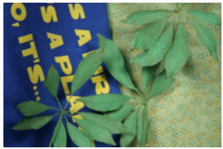
- Four data types were collected: (1) real nonrigid scenes with dense ground truth from hidden fluorescent texture, captured with a Canon EOS 20D at 3504×2336, downsampled every 40th visible-light frame by factor 6 to 584×388, with SSD tracking (15×15 windows), forward/backward crosschecking, and Lucas-Kanade subpixel refinement; (2) realistic synthetic scenes rendered with 3Delight at 640×480, with ground truth from a custom shader and dominant-cluster flow selection; (3) high-speed video for frame interpolation captured with a PointGrey Dragonfly Express at 60 fps, providing every other frame and retaining intermediate frames as ground truth; and (4) modified stereo data (Teddy) from structured light, cropped to make the disparity range roughly symmetric.
- Evaluation metrics include average angular error (AE), absolute flow endpoint error (EE), interpolation error (IE), and gradient-normalized interpolation error (NE). Statistics include averages, robustness measures R_X, and percentile accuracy measures A_X, computed over All, Disc, and Untext region masks.
- Analysis used the online evaluation at http://vision.middlebury.edu/flow/, comparing 24 published methods across metrics, statistics, masks, and datasets, with Pearson correlations between rankings and comparisons to state-of-the-art stereo methods on Teddy.
Limitations
- The paper states that the hidden fluorescent texture scenes are laboratory scenes, not real-world scenes, and have no motion blur due to stop-motion capture; ground truth is unavailable where cross-checking failed, especially occluded regions, and the measured ground truth is not perfect, though significant errors are limited to a small fraction of pixels. Synthetic sequences were generated without motion blur. The modified stereo ground truth is only accurate to 0.25 pixels, and algorithms may exploit the knowledge that motions are horizontal; overfitting to rigid data should be visible across the 12 evaluation images. Interpolation ground truth is an intermediate image, not a flow field, so the flow definition is apparent motion.
- The paper also states that no single method yet achieves strong performance across a wide variety of datatypes, that any dataset has a limited lifespan, and that future studies should include more challenging realistic synthetic data, longer sequences, and more difficult materials, illumination changes, atmospheric effects, and transparency.
- Evident from the text: the online tables do not provide an overall ranking among methods; runtimes are not normalized for programming environment, CPU speed, cores, or hardware acceleration; algorithms are required to produce dense flow and cannot submit confidence maps or sparse/incomplete fields; all 24 published methods used only 2 frames despite 8-frame sequences being available; and the paper cannot definitively answer whether temporal smoothing is less suited to the more challenging sequences.
Model-written summary. Check it against the paper before relying on it.
Integrity signals
Registry
Cites
Statistics
Figures

Verification
Claims the paper makes
2 Valid · 16 Not valid · 58 Not checked · 185 Own results and interpretations
A result the paper states — it cites no source for it, so there is none to check. The quote shows it is in the paper.
In the paper
“Rather than collecting a single type of data (with its inherent limitations) we instead collected four different types of data, each satisfying a different subset of desirable properties.”
plain- Asserted: passes — The authors put it forward as true.
- Checkable: passes — It can be checked against evidence.
- Load-bearing: passes — The paper’s conclusions depend on it.
- Based: passes — The paper gives a reason why it holds.
A result the paper states — it cites no source for it, so there is none to check. The quote shows it is in the paper.
In the paper
“Using the combination of fluorescent paint, downsampling high-resolution images, and sequential tracking of small motions, we are able to obtain dense, subpixel accurate ground truth for a nonrigid scene.”
plainstates a cause- Asserted: passes — The authors put it forward as true.
- Checkable: passes — It can be checked against evidence.
- Load-bearing: passes — The paper’s conclusions depend on it.
- Based: passes — The paper gives a reason why it holds.
A result the paper reports from its own data — it cites no other source for it, so there is none to check. The quote shows it is in the paper.
In the paper
“To allow for measures that predict performance on such tasks, we collected a variety of data suitable for frame interpolation.”
plainstates a cause- Asserted: passes — The authors put it forward as true.
- Checkable: passes — It can be checked against evidence.
- Load-bearing: passes — The paper’s conclusions depend on it.
- Based: passes — The paper gives a reason why it holds.
A result the paper reports from its own data — it cites no other source for it, so there is none to check. The quote shows it is in the paper.
In the paper
“We have developed a technique for capturing imagery of nonrigid scenes with ground-truth optical flow.”
plain- Asserted: passes — The authors put it forward as true.
- Checkable: passes — It can be checked against evidence.
- Load-bearing: passes — The paper’s conclusions depend on it.
- Based: passes — The paper gives a reason why it holds.
A result the paper states — it cites no source for it, so there is none to check. The quote shows it is in the paper.
In the paper
“To go beyond previous synthetic ground truth (e.g., the Yosemite sequence), we generated two types of fairly complex synthetic outdoor scenes.”
plain- Asserted: passes — The authors put it forward as true.
- Checkable: passes — It can be checked against evidence.
- Load-bearing: passes — The paper’s conclusions depend on it.
- Based: passes — The paper gives a reason why it holds.
96 more claims
Create a free account to see all 261 claims and every source verdict.
- Probably not a substantial claim. 114
- It may state two separate claims as one. 76
- The quote only partly states this claim. 6
Claims other papers make about this one
Each is checked against this paper’s own text: does it say what the citing paper says it does?
The source backs part of the claim, not all of it — or backs it for a different population, condition or comparison.
In the citing paper
“Notable works include the Middlebury dataset (Baker et al, 2011) and the KITTI datasets (Geiger et al, 2012; Menze and Geiger, 2015), but due to the difficulty of computing accurate ground truth, these have been restricted to 8 and 2 · 200 pairs of frames, respectively (the latter are also limited by the special driving setting).”
From What Makes Good Synthetic Training Data for Learning Disparity and Optical Flow Estimation? (2018) · cites this paper as Baker et al, 2011
Experimental — accuracy not yet measured
Citations
Cites
The pascal visual object classes (VOC) challenge
Everingham, M., Van Gool, L., Williams, C. K. I., Winn, J., & Zisserman, A. (2010) · International Journal of Computer Vision · doi:10.1007/s11263-009-0275-4 · Cited by 19,599
Proceedings of IEEE Conference on Computer Vision and Pattern Recognition
(1993) · doi:10.1109/cvpr.1993 · Cited by 17,667
Proceedings of IEEE International Conference on Computer Vision
(1995) · Proceedings of IEEE International Conference on Computer Vision · doi:10.1109/iccv.1995.466933 · Cited by 12,860
(1981) · Cited by 11,963
Horn, B. K. P., & Schunck, B. G. (1981) · Artificial Intelligence · doi:10.1016/0004-3702(81)90024-2 · Cited by 10,312
Horn, B. K., & Schunck, B. G. (1981) · SPIE Proceedings · doi:10.1117/12.965761 · Cited by 7,394 · cited 2×
“A baseline approach is to use an L2 norm as in the Horn and Schunck algorithm (Horn and Schunck 1981):”
BackgroundMethodFast approximate energy minimization via graph cuts
Boykov, Y., Veksler, O., & Zabih, R. (2001) · IEEE Transactions on Pattern Analysis and Machine Intelligence · doi:10.1109/34.969114 · Cited by 6,988
A Taxonomy and Evaluation of Dense Two-Frame Stereo Correspondence Algorithms
Scharstein, D., & Szeliski, R. (2002) · International Journal of Computer Vision · doi:10.1023/a:1014573219977 · Cited by 6,740 · cited 10×
“Many areas of computer vision, such as stereo [63], face recognition [28, 55, 68], and object recognition [23, 24], have challenging datasets to track the progress made by leading algorithms and to stimulate new ideas.”
BackgroundMethodResultInfluentialSelf-citationProceedings European Conference on Computer Vision 2002
Heyden, A., Sparr, G., Nielsen, M., & Johansen, P. (2002) · Lund University Publications (Lund University) · Cited by 5,153
From few to many: illumination cone models for face recognition under variable lighting and pose
Georghiades, A. S., Belhumeur, P. N., & Kriegman, D. J. (2001) · IEEE Transactions on Pattern Analysis and Machine Intelligence · doi:10.1109/34.927464 · Cited by 4,912 · cited 1×
“Many areas of computer vision, such as stereo (Scharstein and Szeliski 2002), face recognition (Philips et al. 2005; Sim et al. 2003; Gross et al. 2008; Georghiades et al. 2001), and object recognition (Fei-Fei et al.”
Background
Research works printed but not linked: 4
- Anandan, P., & Weiss, R. (1985). Introducing smoothness constraint in a matching approach for the computation of displacement fields. In Proceedings of the DARPA image understanding workshop (pp. 186-196).
- Bleyer, M., & Chambon, S. (2010). Does color really help in dense stereo matching? In Proceedings of the international symposium 3D data processing, visualization and transmission .
- Lempitsky, V., Roth, S., & Rother, C. (2008). Fusion flow: discretecontinuous optimization for optical flow estimation. In Proceedings of the IEEE conference on computer vision and pattern recognition .
- Rannacher, J. (2009). Realtime 3D motion estimation on graphics hardware . Undergraduate thesis, Heidelberg University.
Cited by
Items 901–1,000 of 2,273
Robust Hand Tracking in Realtime Using a Single Head-Mounted RGB Camera
Hammer, J. H., & Beyerer, J. (2013) · Lecture notes in computer science · doi:10.1007/978-3-642-39330-3_27 · Cited by 12
“We estimate motion by computing the optical flow between two images using the FlowLib [22] producing much more precise optical flow [3].”
BackgroundMethodBMBC:Bilateral Motion Estimation with Bilateral Cost Volume for Video InterpolationPreprint
Park, J., Ko, K., Lee, C., et al. (2020) · arXiv (Cornell University) · doi:10.48550/arxiv.2007.12622 · Cited by 12
“Also, after we train the bilateral motion network with the bilateral cost volume, we can use the shared weights to estimate the bilateral motions at an arbitrary t ∈ [0, 1].”
MethodInfluentialVideo Interpolation via Generalized Deformable ConvolutionPreprint
Shi, Z., Liu, X., Shi, K., et al. (2020) · arXiv (Cornell University) · Cited by 12
Optical flow on evolving surfaces with an application to the analysis of 4D microscopy dataPreprint
Kirisits, C., Lang, L. F., & Scherzer, O. (2013) · Cited by 12
Learning to Rank Onset-Occurring-Offset Representations for Micro-Expression Recognition
Zhu, J., Zong, Y., Shi, J., Lu, C., Chang, H., & Zheng, W. (2025) · IEEE Transactions on Affective Computing · doi:10.1109/taffc.2025.3566113 · Cited by 25
“InFig.3(a),thefirst OF-baseddescriptor,denotedasOF#1,involvesconvertingthe resultingtwo-channeltensors,whichconsistofhorizontaland verticalOFcomponentscorrespondingtotheOnset-Occurring andOccurring-Offset,intothree-channelpseudo-colorimages usingtheMiddleburyopticalflowcolorcoding[42].”
Video Frame Interpolation with Densely Queried Bilateral Correlation
Zhou, C., Liu, J., Tang, J., & Wu, G. (2023) · International Joint Conference on Artificial Intelligence · doi:10.24963/ijcai.2023/198 · Cited by 20
Pagnanelli, G., Ciotti, S., Lepora, N. F., Bicchi, A., & Bianchi, M. (2023) · IEEE Robotics and Automation Letters · doi:10.1109/lra.2023.3309576 · Cited by 11
“In robotics, the optical flow has found numerous applications in fields such as navigation, image segmentation, motion detection, collision avoidance, time-to-contact estimation, and stereoimage disparity evaluation [32], [33], [34].”
MethodGenerative Inbetweening through Frame-wise Conditions-Driven Video Generation
Zhu, T., Ren, D., Wang, Q., Wu, X., & Zuo, W. (2025) · IEEE Computer Society Conference on Computer Vision and Pattern Recognition/Proceedings - IEEE Computer Society Conference on Computer Vision and Pattern Recognition/Proceedings · doi:10.1109/cvpr52734.2025.02604 · Cited by 35
“In pioneering video interpolation methods [2, 19, 25], the linear assumption is commonly adopted, which may not truly align with ground-truth temporal consistency but can lead to temporally stable videos for most scenes.”
An Anchor Patch Based Optimization Framework for Reducing Optical Flow Drift in Long Image Sequences
Li, W., Cosker, D. P., & Brown, M. (2013) · Lecture notes in computer science · doi:10.1007/978-3-642-37431-9_9 · Cited by 14
“We evaluate APO with a range of 6 popular optical flow estimation methods which are publicly available from the Middlebury Evaluation System [13].”
MethodOnline Motion Segmentation Using Dynamic Label Propagation
Elqursh, A., & Elgammal, A. (2013) · IEEE International Conference on Computer Vision (ICCV) · doi:10.1109/iccv.2013.251 · Cited by 11
Synthesizing Real World Stereo Challenges
Haeusler, R., & Kondermann, D. (2013) · Lecture notes in computer science · doi:10.1007/978-3-642-40602-7_17 · Cited by 13
Diffeomorphic Multi-Frame Non-Rigid Registration of Cell Nuclei in 2D and 3D Live Cell Images
Tektonidis, M., & Rohr, K. (2017) · IEEE Transactions on Image Processing · doi:10.1109/tip.2017.2653360 · Cited by 11
“For each time point we determined the mean endpoint error E Emean over all computed vectors of a cell nucleus.”
MethodKey frames assisted hybrid encoding for high-quality compressive video sensing
Huang, H., Teng, J., Liang, Y., Hu, C., Chen, M., Yang, S., & Chen, H. (2022) · Optics Express · doi:10.1364/oe.471754 · Cited by 12
“To overcome this problem, we incorporate the optical flow [38] into the model, which is able to reveal the moving velocity and direction of each pixel between two frames.”
MethodInfluentialA Perturbation-Constrained Adversarial Attack for Evaluating the Robustness of Optical Flow
Schmalfuß, J., Scholze, P., & Bruhn, A. (2022) · Lecture notes in computer science · doi:10.1007/978-3-031-20047-2_11 · Cited by 26
SVFI: Spiking-Based Video Frame Interpolation for High-Speed Motion
Xia, L., Zhao, J. H., Xiong, R., & Huang, T. (2023) · Proceedings of the AAAI Conference on Artificial Intelligence · doi:10.1609/aaai.v37i3.25393 · Cited by 14
“Middlebury(Baker et al. 2011) 1 frame skip 3 frames skip”
FLAVR: flow-free architecture for fast video frame interpolation
Kalluri, T., Pathak, D., Chandraker, M. K., & Tran, D. (2023) · Machine Vision and Applications · doi:10.1007/s00138-023-01433-y · Cited by 11
“However, since Middleburry has few test samples with only two input frames, while FLAVR requires 4-frame inputs.”
MethodInfluentialBosma, L. S., Ries, M. G., de Senneville, B. D., et al. (2023) · Physics and Imaging in Radiation Oncology · doi:10.1016/j.phro.2023.100483 · Cited by 11
Four DoF gesture recognition with an event-based image sensor
Lee, K., Ryu, H., Park, S., et al. (2012) · doi:10.1109/gcce.2012.6379606 · Cited by 11
“In the proposed algorithm, a pseudo optical flow (POF) is generated from event time stamps while the conventional optical flow algorithms uses two or more still image frames [1, 2].”
MethodDecomposition of optical flow on the sphere
Kirisits, C., Lang, L. F., & Scherzer, O. (2014) · GEM - International Journal on Geomathematics · doi:10.1007/s13137-013-0055-8 · Cited by 11
“We refer to Aubert and Kornprobst (2006) for a gentle introduction to optical flow, to Weickert et al. (2006) for an overview of different optical flow functionals and to Baker et al. (2011) for a recent survey and benchmark.”
BackgroundMethodInfluentialPhase-correlation guided area matching for realtime vision and video encoding
Alba, A., Arce-Santana, E., Aguilar‐Ponce, R. M., & Campos-Delgado, D. U. (2012) · Journal of Real-Time Image Processing · doi:10.1007/s11554-012-0243-z · Cited by 11
Data-driven simulation methods in computer graphics: cloth, tissue and faces
Otaduy, M. Á., Bickel, B., Bradley, D., & Wang, H. (2012) · ACM SIGGRAPH Courses · doi:10.1145/2343483.2343495 · Cited by 11
Fast Segmentation of Sparse 3D Point Trajectories Using Group Theoretical Invariants
Zografos, V., Lenz, R., Ringaby, E., Felsberg, M., & Nordberg, K. (2015) · Lecture notes in computer science · doi:10.1007/978-3-319-16817-3_44 · Cited by 12
“We have pre-processed the data in the following ways: first we have used the cross-checking scheme by [28] to only retain complete trajectories and reject those with gross tracking errors.”
MethodKumar, P., & Kumar, S. (2016) · AEU - International Journal of Electronics and Communications · doi:10.1016/j.aeue.2015.12.002 · Cited by 13
Zhao, Y., Jia, D., Sha, X., Zhang, G., & Li, W. J. (2018) · Micromachines · doi:10.3390/mi9030118 · Cited by 12
“This database was published by Baker for optical flow algorithm evaluation [35].”
MethodDepth Image Super Resolution Based on Edge-Guided Method
Zhou, D., Wang, R., Lü, J., et al. (2018) · Applied Sciences · doi:10.3390/app8020298 · Cited by 11
“Test images were from the Middlebury Stereo database [30,31].”
MethodArchitecting a Stochastic Computing Unit with Molecular Optical Devices
Zhang, X., Bashizade, R., LaBoda, C. D., et al. (2018) · ACM/IEEE International Symposium on Computer Architecture (ISCA) · doi:10.1109/isca.2018.00034 · Cited by 11
“We use Middlebury motion estimation benchmarks [32] and randomly pick 3 datasets (Venus, RubberWhale, and Dimetrodon) that can fit in our search window.”
MethodVisual Quality Assessment for Motion Compensated Frame Interpolation
Men, H., Lin, H., Hosu, V., Maurer, D., Bruhn, A., & Saupe, D. (2019) · International Conference on Quality of Multimedia Experience (QoMEX) · doi:10.1109/qomex.2019.8743221 · Cited by 9
“However, currently, there is only one optical flow benchmark that offers the assessment of interpolated frames: the Middlebury benchmark [5].”
BackgroundVideo interpolation using optical flow and Laplacian smoothness
Li, W., & Cosker, D. P. (2016) · Neurocomputing · doi:10.1016/j.neucom.2016.04.064 · Cited by 14
“Global smoothness terms are widely used in optical flow formulation [30].”
BackgroundMethodResultInfluentialTrigonometric Polynomial Interpolation of Images
Briand, T. (2019) · Image Processing On Line · doi:10.5201/ipol.2019.273 · Cited by 11
“This is the grayscale version of the RubberWhale image from the Middlebury database [2].”
MethodSkelton, P. S. M., Finn, A., & Brinkworth, R. S. A. (2019) · Image and Vision Computing · doi:10.1016/j.imavis.2019.09.005 · Cited by 12
Measuring Crowd Collectiveness via Global Motion Correlation
Mei, L., Lai, J., Chen, Z., & Xie, X. (2019) · IEEE International Conference on Computer Vision Workshops · doi:10.1109/iccvw.2019.00155 · Cited by 12
“2, optical flow can precisely extract the motion boundaries both in the cases of small-displacement (Middlebury Dataset [4], see Fig.”
BackgroundInfluentialHe, L., Jiang, Z., Chen, Z., Gui, W., & Xie, Y. (2020) · IEEE Sensors Journal · doi:10.1109/jsen.2020.2997862 · Cited by 11
“, [22] and [23]), there is no image sequence that studies the effects of the texture or intensity offset.”
BackgroundBangla language textual image description by hybrid neural network model
Jishan, M. A., Mahmud, K. R., Azad, A. K. A., Rashid, M. R. A., Paul, B., & Alam, M. S. (2021) · Indonesian Journal of Electrical Engineering and Computer Science · doi:10.11591/ijeecs.v21.i2.pp757-767 · Cited by 12
“The production of ground truth stereo and optical stream datasets [19, 20] animated a surge of enthusiasm for these territories.”
BackgroundPennSyn2Real: Training Object Recognition Models Without Human Labeling
Nguyen, T., Miller, I. D., Cohen, A., Thakur, D., Guru, A., Prasad, S., Taylor, C. J., Chaudhari, P., & Kumar, V. (2021) · IEEE Robotics and Automation Letters · doi:10.1109/lra.2021.3070249 · Cited by 13
“(Middlebury) [16], [17] are among modern works on using animated movies to generate massive amounts of labeled images to train CNNs for low-level computer vision problems: optical flow estimation, and stereo correspondence estimation.”
BackgroundVideo Synthesis via Transform-Based Tensor Neural Network
Zhang, Y., Liu, X.-Y., Wu, B., & Walid, A. (2020) · ACM International Conference on Multimedia (ACM MM) · doi:10.1145/3394171.3413527 · Cited by 17
“Optical flow can be used for estimating the velocity vectors between adjacent video frames, and the optical flow based method requires an accurate model of the optical flow pattern to achieve high-quality video frame synthesis [2].”
MethodHigh-quality Frame Interpolation via Tridirectional Inference
Choi, J., Park, J., & Kweon, I. S. (2021) · IEEE Winter Conference on Applications of Computer Vision · doi:10.1109/wacv48630.2021.00064 · Cited by 15
“L f [16] 33.45 0.9509 31.81 0.9309 TOFlow [24] 33.73 0.9515 30.54 0.9190 IM-Net [18] 33.50 0.9473 33.11 0.9436 Ours 33.67 0.9533 33.12 0.9428 datasets including the Middlebury [1], Sintel [3], KITTI [5], UCF101 [21], and DAVIS [19], these datasets are mostly in low-resolution or fit to particular domains (e.g. driving…”
MethodInfluentialFlow-aware synthesis: A generic motion model for video frame interpolation
Xing, J., Hu, W., Zhang, Y., & Wong, T. (2021) · Computational Visual Media · doi:10.1007/s41095-021-0208-x · Cited by 13
NOVA: Rendering Virtual Worlds with Humans for Computer Vision Tasks
Kerim, A., Aslan, C., Çelikcan, U., Erdem, E., & Erdem, A. (2021) · Computer Graphics Forum · doi:10.1111/cgf.14271 · Cited by 14
Online shearer-onboard personnel detection method for the intelligent fully mechanized mining face
Wei, D., Wang, Z., Si, L., Tan, C., & Lu, X. (2021) · Proceedings of the Institution of Mechanical Engineers Part C Journal of Mechanical Engineering Science · doi:10.1177/09544062211030973 · Cited by 12
“~ ap0 1⁄4 l ~ G�X;r1ðpÞ � l ~ G;r1ðpÞlX;r1ðpÞ r(2)~ G;r1 ðp0Þ þ k C ~ G ðp0Þ (29)”
Jones, W. K., Christensen, M. W., & Stier, P. (2023) · Atmospheric measurement techniques · doi:10.5194/amt-16-1043-2023 · Cited by 19
An Implementation of Combined Local-Global Optical Flow
de la Jara, J. J., Cerda, M., Delpiano, J. F., & Härtel, S. (2015) · Image Processing On Line · doi:10.5201/ipol.2015.44 · Cited by 15
“[4], shown in Figure 6, and from the Middlebury database [1], shown in Figure 7.”
BackgroundMethodA Tensor Voting Approach for Multi-view 3D Scene Flow Estimation and Refinement
Park, J., Oh, T.-H., Jung, J., et al. (2012) · Lecture notes in computer science · doi:10.1007/978-3-642-33765-9_21 · Cited by 11
“In optical flow estimation, recent algorithms such as [14] have demonstrated less than 1 pixel average end-point error and less than 5 degree average angular error in the standard middlebury optical flow dataset [15].”
MethodOptical Analysis of Strength Tests Based on Block‐Matching Techniques
Rodríguez, Á., Rabuñal, J. R., Pérez-Ordóñez, J. L., & Martínez‐Abella, F. (2011) · Computer-Aided Civil and Infrastructure Engineering · doi:10.1111/j.1467-8667.2011.00743.x · Cited by 13
“This test was performed analyzing the motion be-tween consecutive frames, selecting full image region, calculating the error statistics according to the true ground data, and using the metrics and methodologies published by Scharstein et al. (2007).”
MethodA Variational Model for Gradient-Based Video Editing
Sadek, R., Facciolo, G., Arias, P., & Caselles, V. (2012) · International Journal of Computer Vision · doi:10.1007/s11263-012-0597-5 · Cited by 14
“The brightness constancy assumption has been used extensively for the computation of optical flow (Baker et al. 2011; Weickert et al. 2006), and recently for video interpolation given an optical flow (Bugeau et al.”
BackgroundSuper-pixel based crowd flow segmentation in H.264 compressed videos
Biswas, S., Praveen, R. G., & Babu, R. V. (2014) · Proceedings - International Conference on Image Processing · doi:10.1109/icip.2014.7025470 · Cited by 11
“The resultant motion vectors obtained from the previous step are transformed to color space as mentioned in [16] and the color coded map is smoothed in order to avoid the blocky effect due to the”
MethodFrezza-Buet, H. (2014) · Neural Networks · doi:10.1016/j.neunet.2014.08.014 · Cited by 11
Approximationorder of the lap optical flow algorithm
Blu, T., Moulin, P., & Gilliam, C. (2015) · Proceedings - International Conference on Image Processing · doi:10.1109/icip.2015.7350757 · Cited by 11
“Index Terms— Optical flow, all-pass filtering, approxi- mation, Padé approximant.”
MethodPIZZARO: Forensic analysis and restoration of image and video data
Kamenický, J., Bartoš, M., Flusser, J., Mahdian, B., Kotera, J., Novozámský, A., Saic, S., Šroubek, F., Šorel, M., Zita, A., et al. (2016) · Forensic Science International · doi:10.1016/j.forsciint.2016.04.027 · Cited by 13
“There is a vast number of OF algorithms and several benchmarks that compare their performance [48].”
BackgroundMoving Object Detection Based on Improved ViBe Algorithm
Bo, G., Kefeng, S., Dao-yin, Q., et al. (2015) · International Journal of Smart Home · doi:10.14257/ijsh.2015.9.12.23 · Cited by 11
“However, the computation of optical flow method is huge, and it is very sensitive to noise interference [8-9].”
BackgroundSD-SEM: sparse-dense correspondence for 3D reconstruction of microscopic samples
Baghaie, A., Tafti, A. P., Owen, H. A., D’Souza, R. M., & Yu, Z. (2017) · Micron · doi:10.1016/j.micron.2017.03.009 · Cited by 14
NRSfM-Flow: Recovering Non-Rigid Scene Flow from Monocular Image Sequences
Golyanik, V., Mathur, A., & Stricker, D. (2016) · British Machine Vision Conference (BMVC) · doi:10.5244/c.30.41 · Cited by 11
“We follow colour schemes for optical and scene flow fields proposed in [4] and [29] respectively.”
BackgroundMethodSherina, E., Krainz, L., Hubmer, S., Drexler, W., & Scherzer, O. (2020) · Inverse Problems · doi:10.1088/1361-6420/abaf65 · Cited by 16
Semantic Segmentation for Pedestrian Detection from Motion in Temporal Domain
Cheng, G., & Zheng, J. Y. (2021) · Proceedings - International Conference on Pattern Recognition/Proceedings/International Conference on Pattern Recognition · doi:10.1109/icpr48806.2021.9411958 · Cited by 13
Becker, F., Petra, S., & Schnörr, C. (2015) · Springer eBooks · doi:10.1007/978-1-4939-0790-8_38 · Cited by 19
“The Middlebury database [14] further accelerated this trend by introducing an online ranking system and defining challenging data sets, which specifically address different aspects of flow estimation such as large displacements or occlusion.”
BackgroundMethodActor-Action Semantic Segmentation with Region MasksPreprint
Dang, K., Zhou, C., Tu, Z., Hoy, M., Dauwels, J., & Yuan, J. (2018) · arXiv (Cornell University) · doi:10.48550/arxiv.1807.08430 · Cited by 9
Motion measurement system of compliant mechanisms using computer micro-vision
Yao, S., Li, H., Pang, S., Yu, L., Fatikow, S., & Zhang, X. (2021) · Optics Express · doi:10.1364/oe.415097 · Cited by 10
An Optical Flow Approach to Tracking Ship Track Behavior Using GOES-R Satellite Imagery
Larson, K. M., Shand, L., Staid, A., Gray, S., Roesler, E. L., & Lyons, D. (2022) · IEEE Journal of Selected Topics in Applied Earth Observations and Remote Sensing · doi:10.1109/jstars.2022.3193024 · Cited by 15
“Although dense optical flow methods, like those in [31]–[33], [41], may also apply to this problem, the sparse, pyramidal LK algorithm was selected due to its simplicity, efficiency, and the”
MethodYun, K., Kim, H., Bae, K., & Moon, J. (2023) · ETRI Journal · doi:10.4218/etrij.2023-0115 · Cited by 9
“To convert this motion vector into an image, the optical flow is visualized [54]; this corresponds to the direction of the optical flow vector, where the magnitude is encoded as the color intensity, as shown in Figure 5D.”
MethodReparo: QoE-Aware Live Video Streaming in Low-Rate Networks by Intelligent Frame Recovery
Wang, F., Li, Q., Shi, W., Tyson, G., Jiang, Y., Ma, L., Zhang, P., Lan, Y., & Li, Z. (2023) · ACM International Conference on Multimedia (ACM MM) · doi:10.1145/3581783.3613441 · Cited by 13
“Given that the state-of-the-art convolutional neural network-based single-frame VFI-DNN, AdaCoF [27], has achieved an SSIM value of 0.97 on two widely-used datasets for video frame interpolation tasks (Middlebury [3] and UCF101 [43]), we set an SSIM threshold of 0.97.”
MethodInfluentialSingle target tracking in high-resolution satellite videos: a comprehensive review
Huang, X., Wang, D., Zhu, Q., Zheng, Y. F., & Guan, Q. (2024) · Geo-spatial Information Science · doi:10.1080/10095020.2024.2305912 · Cited by 15
“For small targets with few appearance features in complex scenarios, the optical flow method, one of the representative GMs, indicates the apparent motion of targets by the relative motion between a scene and an observer (Baker et al. 2011).”
Motion-aware Latent Diffusion Models for Video Frame Interpolation
Huang, Z., Yu, Y., Yang, L., Qin, C., Zheng, B., Zheng, X., Zhou, Z., Wang, Y., & Yang, W. (2024) · ACM International Conference on Multimedia (ACM MM) · doi:10.1145/3664647.3680846 · Cited by 30
“For evaluation, MADiff is validated on four widely recognized VFI benchmarks, including Middlebury [1], UCF-101 [62], DAVIS [52] and SNU-FILM [10].”
Pagnanelli, G., Zinelli, L., Lepora, N. F., Catalano, M. G., Bicchi, A., & Bianchi, M. (2024) · IEEE Transactions on Robotics · doi:10.1109/tro.2024.3522149 · Cited by 12
“Representing the distribution of apparent velocities of brightness patterns in an image [27], [28], it significantly contributes to locomotion control, perceiving movement, and distance, in various domains, including robotics [29], [30], [31].”
Direct visual tracking under extreme illumination variations using the sum of conditional variance
Richa, R., de Souza, M. M., Scandaroli, G. G., Comunello, E., & von Wangenheim, A. (2014) · Proceedings - International Conference on Image Processing · doi:10.1109/icip.2014.7025074 · Cited by 10
“Direct visual tracking methods (also called template-based or regionbased tracking methods) are fundamental elements in many highlevel computer vision applications [1, 2].”
MethodNonrigid Optical Flow Ground Truth for Real-World Scenes With Time-Varying Shading Effects
Li, W., Cosker, D. P., Lv, Z., & Brown, M. (2016) · IEEE Robotics and Automation Letters · doi:10.1109/lra.2016.2592513 · Cited by 16
“, Standard Deviations (SD), RX and AX [7] where RX presents the percentage of pixels that have an error reading above X; And AX is for the accuracy of the error reading at the Xth percentile, after sorting the errors from low to high.”
BackgroundMethodDense Motion Estimation for Smoke
Chen, D., Li, W., & Hall, P. M. (2017) · Lecture notes in computer science · doi:10.1007/978-3-319-54190-7_14 · Cited by 10
“Given a ground truth benchmark [40,12], the motion estimation algorithms are commonly evaluated using quantitative metrics i.”
MethodAccelerating multi-modal image registration using a supervoxel-based variational framework
Lafitte, L., Zachiu, C., Kerkmeijer, L. G. W., Ries, M. G., & de Senneville, B. D. (2018) · Physics in Medicine and Biology · doi:10.1088/1361-6560/aaebc2 · Cited by 10
“The quality of the estimated motion was thus assessed using the voxel-wise error in flow endpoint (FEP) computed as follows (Baker et al 2011): Concerning study # 2 , the gold standard is a set of coordinates providing the location of manually positioned anatomical landmarks.”
MethodGao, Y., & Koch, R. (2018) · IEEE International Conference on Multimedia & Expo Workshops (ICMEW) · doi:10.1109/icmew.2018.8551583 · Cited by 10
Painting Many Pasts: Synthesizing Time Lapse Videos of Paintings
Zhao, A. T., Balakrishnan, G., Lewis, K. M., Durand, F., Guttag, J. V., & Dalca, A. V. (2020) · IEEE Computer Society Conference on Computer Vision and Pattern Recognition/Proceedings - IEEE Computer Society Conference on Computer Vision and Pattern Recognition/Proceedings · doi:10.1109/cvpr42600.2020.00846 · Cited by 19
“Classical approaches focus on natural videos, and estimate dense flow fields [4, 58, 65] or phase [39] to guide interpolation.”
BackgroundOvercome the Brightness and Jitter Noises in Video Inter-Frame Tampering Detection
Pu, H., Huang, T., Weng, B., Ye, F., & Zhao, C. (2021) · Sensors · doi:10.3390/s21123953 · Cited by 10
“Experimental Setup To evaluate the enhanced OF algorithm of the proposed detection framework, we perform experiments on the benchmark dataset [29].”
MethodAn Event-based Vision Dataset for Visual Navigation Tasks in Agricultural Environments
Zujevs, A., Pudžs, M., Osadčuks, V., Ardavs, A., Galauskis, M., & Grundspeņķis, J. (2021) · Proceedings - IEEE International Conference on Robotics and Automation/Proceedings · doi:10.1109/icra48506.2021.9561741 · Cited by 22
“There are classical datasets available for researchers: KITTI [11], Middlebury [12], MPI Sintel [13], CMU dataset2, TUM dataset [14].”
MethodCoarse-to-fine SVD-GAN based framework for enhanced frame synthesis
Kas, M., Kajo, I., & Ruichek, Y. (2022) · Engineering Applications of Artificial Intelligence · doi:10.1016/j.engappai.2022.104699 · Cited by 11
Shi, R., Wüthrich, D., & Chanson, H. (2022) · International Journal of Multiphase Flow · doi:10.1016/j.ijmultiphaseflow.2022.104338 · Cited by 10
Video Frame Interpolation With Many-to-Many Splatting and Spatial Selective Refinement
Hu, P., Niklaus, S., Zhang, L., Sclaroff, S., & Saenko, K. (2023) · IEEE Transactions on Pattern Analysis and Machine Intelligence · doi:10.1109/tpami.2023.3327092 · Cited by 13
“V IDEO frame interpolation (VFI) aims to increase frame rates of videos by synthesizing intermediate frames in between the original ones [1], [2].”
BackgroundInfluentialBVI-VFI: A Video Quality Database for Video Frame Interpolation
Danier, D., Zhang, F., & Bull, D. (2023) · IEEE Transactions on Image Processing · doi:10.1109/tip.2023.3327912 · Cited by 19
Computational Methods for Analysis of Dynamic Events in Cell Migration
Castañeda, V., Cerda, M., Santibáñez-Leal, F. A., de la Jara, J. J., Pulgar, E., Palma, K., Lemus, C. G., Osorio-Reich, M., Concha, M. L., & Härtel, S. (2014) · Current Molecular Medicine · doi:10.2174/1566524014666140128113952 · Cited by 11
Demarcq, G., Mascarilla, L., & Courtellemont, P. (2009) · Proceedings - International Conference on Image Processing · doi:10.1109/icip.2009.5414353 · Cited by 13
Is Crowdsourcing for Optical Flow Ground Truth Generation Feasible?
Donath, A., & Kondermann, D. (2013) · Lecture notes in computer science · doi:10.1007/978-3-642-39402-7_20 · Cited by 10
“As the accuracy of the KITTI dataset is well below the accuracy we expected to achieve with our approach, we opted for more accurate ground truth known from real and synthetic scenes from the Middlebury dataset [6] and synthetic images from the newly proposed Sintel dataset [2].”
BackgroundMethodInfluentialA general form of illumination-invariant descriptors in variational optical flow estimation
Trink, D.-H., Blondel, W., & Daul, C. (2017) · Proceedings - International Conference on Image Processing · doi:10.1109/icip.2017.8296739 · Cited by 10
“Experiments are performed on three data types: 1) images of the Middlebury data set [21] with weak illumination changes, 2) images with strong and simulated illumination changes, and 3) gastroscopic images with strong and real changes.”
Compensating anisotropy in histological serial sections with optical flow-based interpolation
Lobachev, O., Steiniger, B. S., & Guthe, M. (2017) · Spring Conference on Computer Graphics · doi:10.1145/3154353.3154366 · Cited by 9
“Baker et al. [2011] present a nice overview of optical flow methods and their evaluation.”
A Hardware-Friendly Optical Flow-Based Time-to-Collision Estimation Algorithm
Shi, C., Dong, Z., Pundlik, S. J., & Luo, G. (2019) · Sensors · doi:10.3390/s19040807 · Cited by 11
Motion Feedback Design for Video Frame Interpolation
Hu, M., Liao, L., Xiao, J., Gu, L., & Satoh, S. (2020) · IEEE International Conference on Acoustics Speech and Signal Processing · doi:10.1109/icassp40776.2020.9053223 · Cited by 11
“We test on Vimeo90K dataset contains 3782 triplets with image resolution of 448 × 256, UCF101 dataset contains 379 triplets with image resolution of 256 × 256 [16], the Middle-bury dataset contains 8 triplets with resolution of 640 × 480 [17].”
MethodResource-Efficient and High-Throughput VLSI Design of Global Optical Flow Method for Mobile Systems
Jang, S., & Kyung, C. (2020) · IEEE Transactions on Very Large Scale Integration (VLSI) Systems · doi:10.1109/tvlsi.2020.2984822 · Cited by 10
“We adopted the throughput-per-watt as a metric to compare the performance among the designs fairly, and the Yosemite [38] and Grove2 [22] sequences were used for the comparison of the AAE, as in state-of-the-art designs.”
MethodA non-local propagation filtering scheme for edge-preserving in variational optical flow computation
Dong, C., Wang, Z., Han, J., Xing, C., & Tang, S. (2021) · Signal Processing Image Communication · doi:10.1016/j.image.2021.116143 · Cited by 11
Multi-Scale Attention-Guided Non-Local Network for HDR Image Reconstruction
Yoon, H., Uddin, S. M. N., & Jung, Y. J. (2022) · Sensors · doi:10.3390/s22187044 · Cited by 11
Optical flow algorithms optimized for speed, energy and accuracy on embedded GPUs
Romera, T., Petreto, A., Lemaitre, F., Bouyer, M., Meunier, Q., Lacassagne, L., & Etiemble, D. (2023) · Journal of Real-Time Image Processing · doi:10.1007/s11554-023-01288-6 · Cited by 10
“For this series of benchmarks, the fastest F32 and F16 pipelined implementations are tested on the public Middlebury optical flow dataset collection [4] and the MPI Sintel flow dataset [8].”
BackgroundMethodInfluentialMotion Estimation for Dynamic Texture Videos Based on Locally and Globally Varying Models
Sakaino, H. (2015) · IEEE Transactions on Image Processing · doi:10.1109/tip.2015.2447738 · Cited by 10
“In this paper, we have conducted various experiments and evaluations using fluid-like/dynamic texture (DT) videos, and public databases [5], [55].”
BackgroundMethodInfluentialReconstructing Optical Flow Fields by Motion Inpainting
Berkels, B., Kondermann, C., Garbe, C. S., & Rumpf, M. (2009) · Lecture notes in computer science · doi:10.1007/978-3-642-03641-5_29 · Cited by 13
“Let us now consider real world examples and reconstruct the motion field of a sequence taken from the Middlebury dataset [30].”
BackgroundRevisiting Horn and Schunck: Interpretation as Gauss-Newton Optimisation
Zikic, D., Kamen, A., & Navab, N. (2010) · British Machine Vision Conference (BMVC) · doi:10.5244/c.24.113 · Cited by 11
“Figure 1: In (a)-(d) we demonstrate on the whale data set from [4] with a given ground truth, the effect of the following schemes on the structure of updates h (1st iteration, original resolution) by visualising the color-coded updates: (b) incremental HS; (c) semi-implicit scheme from (25); (d) the PD variation from…”
MethodVideo inpainting detection and localization using inconsistencies in optical flow
Saxena, S., Subramanyam, A. V., & Ravi, H. (2016) · IEEE Region 10 Conference (TENCON) · doi:10.1109/tencon.2016.7848236 · Cited by 10
Quantitative Analysis of Intracellular Motility Based on Optical Flow Model
Huang, Y., Hao, L., Li, H., et al. (2017) · Journal of Healthcare Engineering · doi:10.1155/2017/1848314 · Cited by 10
An Investigation of Smooth TV-Like Regularization in the Context of the Optical Flow Problem
Kalmoun, E. M. (2018) · Journal of Imaging · doi:10.3390/jimaging4020031 · Cited by 13
“Optical flow estimates with best parameters using Charbonnier, Huber and Green TV regularizations for the Middlebury images [24] ordered as in Table 2.”
MethodBlock-Based Motion Estimation Speedup for Dynamic Voxelized Point Clouds
Dórea, C. C., & de Queiroz, R. L. (2018) · Proceedings - International Conference on Image Processing · doi:10.1109/icip.2018.8451647 · Cited by 10
“5: Motion vector field errors [15], with respect to full search ME, as a function of speedup using size-based occupancy maps for various sequences.”
MethodDeep Optical Flow Estimation Via Multi-Scale Correspondence Structure Learning
Zhao, S., Li, X., & Bourahla, O. E. F. (2017) · International Joint Conference on Artificial Intelligence · doi:10.24963/ijcai.2017/488 · Cited by 12
“Middlebury [3] is a very small dataset, containing only 8 image pairs for training.”
BackgroundA Methodology for Evaluating Illumination Artifact Removal for Corresponding Images
Vaudrey, T., Wedel, A., & Klette, R. (2009) · Lecture notes in computer science · doi:10.1007/978-3-642-03767-2_135 · Cited by 10
“One of the most influential evaluations of optical flow in recent years is from Middlbury Vision Group [3].”
MethodIm2Flow: Motion Hallucination from Static Images for Action RecognitionPreprint
Gao, R., Xiong, B., & Grauman, K. (2017) · arXiv (Cornell University) · doi:10.48550/arxiv.1712.04109 · Cited by 10
“Another approach is to encode the flow as an RGB image designed for visualization [1, 33], but this mapping is not reversible to obtain the motion vectors.”
BackgroundDeep Video Super-Resolution using HR Optical Flow EstimationPreprint
Wang, L., Guo, Y., Liu, L., Lin, Z., Deng, X., & An, W. (2020) · arXiv (Cornell University) · doi:10.48550/arxiv.2001.02129 · Cited by 10
“We further compare the super-resolved optical flows and upsampled optical flows to the groundtruth on the Sintel [51], Middlebury [52], KITTI 2012 [53] and KITTI 2015 [54] datasets.”
MethodDecomposition of Optical Flow on the SpherePreprint
Kirisits, C., Lang, L. F., & Scherzer, O. (2014) · Cited by 10
Winkler, J. R. (2024) · Electronics · doi:10.3390/electronics13050812 · Cited by 12
“Comparisons of the different methods for the computation of optical flow are in [1,10].”
BackgroundMethodOptical Flow for Spike Camera with Hierarchical Spatial-Temporal Spike Fusion
Zhao, R., Xiong, R., Zhang, J., Zhang, X., Yu, Z., & Huang, T. (2024) · Proceedings of the AAAI Conference on Artificial Intelligence · doi:10.1609/aaai.v38i7.28581 · Cited by 27
Yang, Q., Gao, W., Li, C., Wang, H., Dai, W., Zou, J., Xiong, H., & Frossard, P. (2024) · IEEE Transactions on Circuits and Systems for Video Technology · doi:10.1109/tcsvt.2024.3407685 · Cited by 17
“Since the OmniFlowNet dataset provides ground-truth optical flows, we adopt two commonly used objective metrics [68], the average angle error (AE) and the average endpoint error (EE), respectively, to evaluate the estimation accuracy.”
Method
Metadata
- Authors
- Baker, S., Scharstein, D., Lewis, J. P., Roth, S., Black, M. J., & Szeliski, R.
- Affiliations
- Microsoft (United States) (US)
- Middlebury College (US)
- Technische Universität Darmstadt (DE)
- Brown University (US)
- Corresponding author
- Scharstein, Daniel
- Venue
- International Journal of Computer Vision
- Published
- 2010-11-30
- Volume
- 92
- Issue
- 1
- Pages
- 1-31
- ISSN
- 0920-5691 (ISSN-L)
- 1573-1405
- OpenAlex
- W2147253850
- Semantic Scholar
- 804836b8ad86ef8042e3dcbd45442a52f031ee03
- Cited by
- 2,205
- References
- 112
- Citations by year
- 2026: 49 · 2025: 81 · 2024: 82 · 2023: 117 · 2022: 129 · 2021: 152 · 2020: 174 · 2019: 163 · 2018: 144 · 2017: 156 · 2016: 187 · 2015: 180 · 2014: 154 · 2013: 129 · 2012: 118
- FWCI
- 146.62
- Type
- journal article
- Language
- en
- Open access
- hybrid
- doi.org
- Licence
- cc-by-nc
- Locations
- International Journal of Computer Vision (publishedVersion, cc-by-nc)
- Publikationsdatenbank der Fraunhofer-Gesellschaft (Fraunhofer-Gesellschaft) (publishedVersion)
- Max Planck Institute for Plasma Physics (submittedVersion)
- Fraunhofer-Publica (Fraunhofer-Gesellschaft) (submittedVersion)
- Funders
- National Science Foundation (0534858, 0535075, 0413169)
- Intel Corporation
- Topics
- Physical Sciences › Computer Science › Computer Vision and Pattern Recognition › Advanced Vision and Imaging
- Physical Sciences › Computer Science › Computer Vision and Pattern Recognition › Video Surveillance and Tracking Methods
- Physical Sciences › Computer Science › Signal Processing › Video Coding and Compression Technologies
- Keywords
- optical flow, benchmark dataset, evaluation methodology, non-rigid motion, motion discontinuities, textureless regions, sensor noise
About these checks
Registry, retraction, Cites and statistics results are computed, not judged, with one exception: a printed reference that no index lists is read once by a model before it counts as a citation error. Claims are extracted by a model and kept only when their quote appears verbatim in the text; each cited source is then checked, with a model’s help, for whether it says what the claim relies on. Those verdicts can be wrong — read the claim’s quote and the cited source before relying on one.
The claim verdicts this report counts are experimental: their accuracy is not yet measured.
A language model drew the claims from the paper on 2026-10-01, under version 3 of the claim definition (model deepseek-v4.1-flash, prompt extract-v3).
A second model labelled each claim on 2026-10-01 (model jev-1.13-20260917, definition revision gold-guideline-v0.2).
Statistics and arithmetic are recomputed, not judged.
Confidence bands are shown only for fields calibrated on our annotated test set. None is calibrated yet, so no band is shown.
What counts as a claim ›How we measure confidence ›How we check this ›
Are you an author, or do you see a problem with this page? Request a review
Data sources
Bibliographic data: Semantic Scholar, OpenAlex, Crossref.
Contains information from the Semantic Scholar Academic Graph Datasets, made available under the ODC Attribution License (ODC-BY 1.0).
Semantic Scholar’s data is described in: Kinney, R., et al. (2023). The Semantic Scholar Open Data Platform. arXiv:2301.10140.
