

A Database and Evaluation Methodology for Optical Flow
Open accessThe DOI matches its Crossref record; 110 of the 112 references it cites were found in a registry or an index; 2 of the 68 sources its claims cite were checked for support.
Abstract
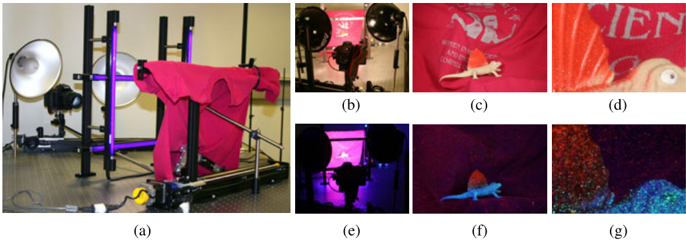
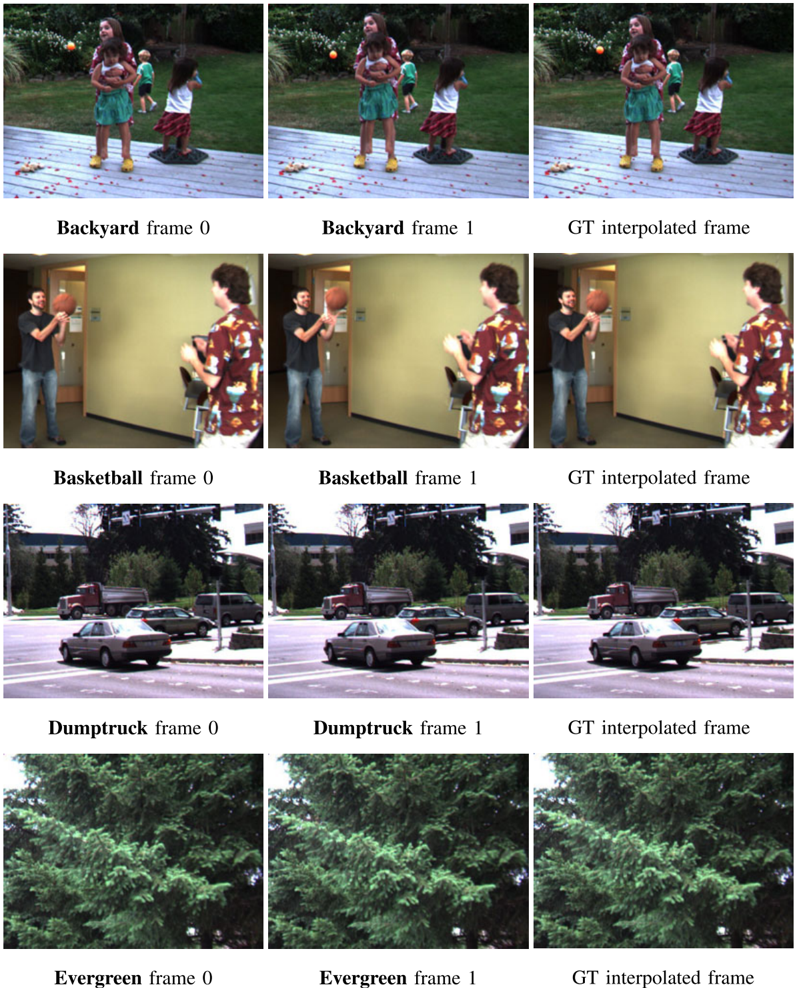
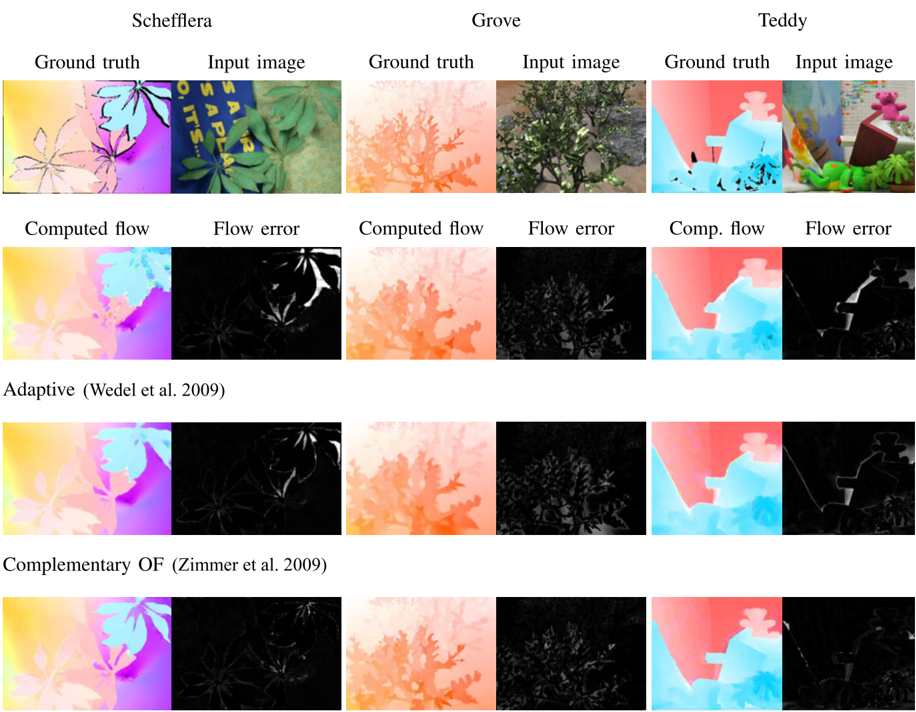
The quantitative evaluation of optical flow algorithms by Barron et al. (1994) led to significant advances in performance. The challenges for optical flow algorithms today go beyond the datasets and evaluation methods proposed in that paper. Instead, they center on problems associated with complex natural scenes, including nonrigid motion, real sensor noise, and motion discontinuities. We propose a new set of benchmarks and evaluation methods for the next generation of optical flow algorithms. To that end, we contribute four types of data to test different aspects of optical flow algorithms: (1) sequences with nonrigid motion where the ground-truth flow is determined by tracking hidden fluorescent texture, (2) realistic synthetic sequences, (3) high frame-rate video used to study interpolation error, and (4) modified stereo sequences of static scenes. In addition to the average angular error used by Barron et al., we compute the absolute flow endpoint error, measures for frame interpolation error, improved statistics, and results at motion discontinuities and in textureless regions.
Overview
CoChat Summary
TL;DR
The paper introduces a new optical flow benchmark of four data types (hidden fluorescent texture, realistic synthetic, high-speed interpolation, and modified stereo) plus an extended evaluation methodology with endpoint error, interpolation error, robustness/accuracy statistics, and region masks. It reports that performance improved substantially over the preliminary 2007 study, but motion discontinuities and diverse datasets remain difficult, and top flow methods still lag top stereo methods on the modified Teddy stereo data.
Key findings
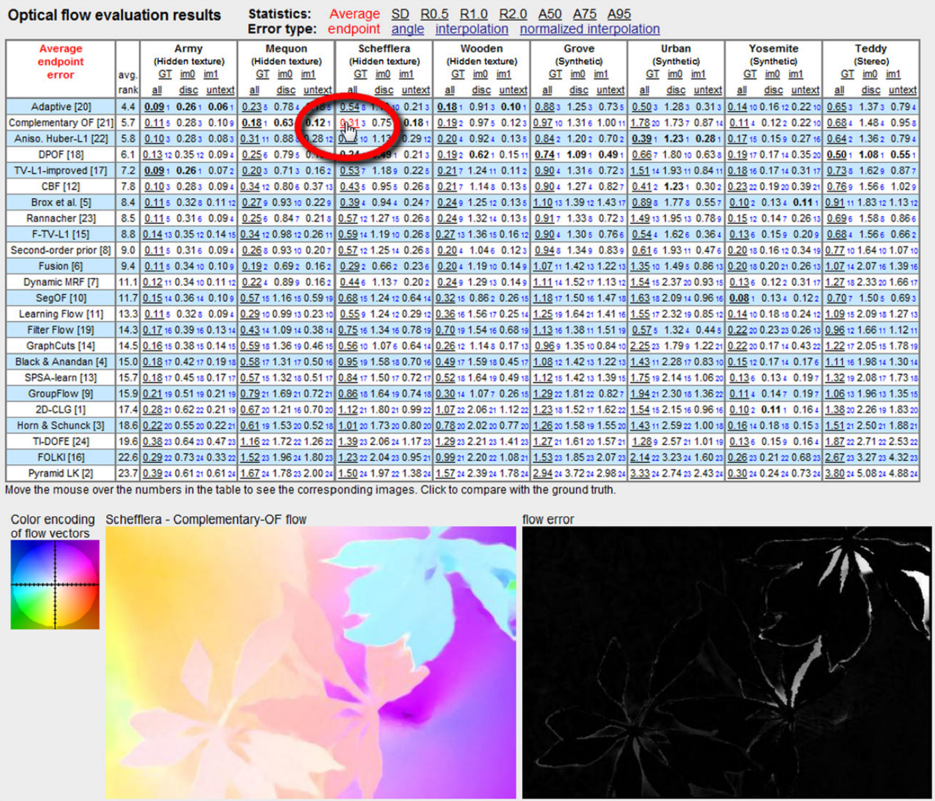
- The benchmark contains 12 training and 12 test sequences; test ground truth is withheld except for Yosemite. As of December 2009 the online evaluation contained results for 24 published methods, all using only 2 input frames and 10 using color.
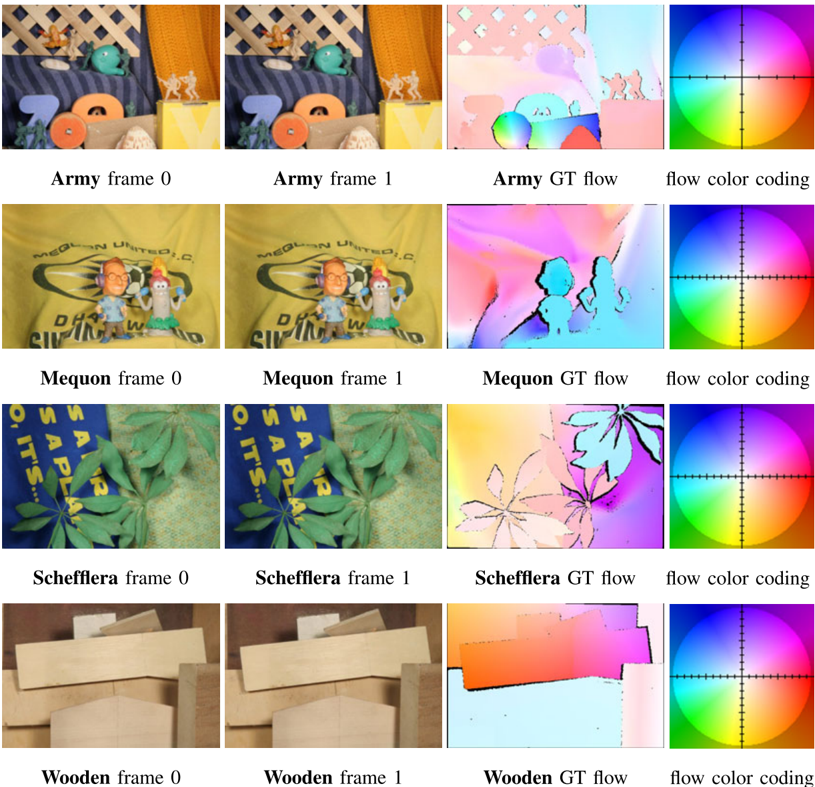
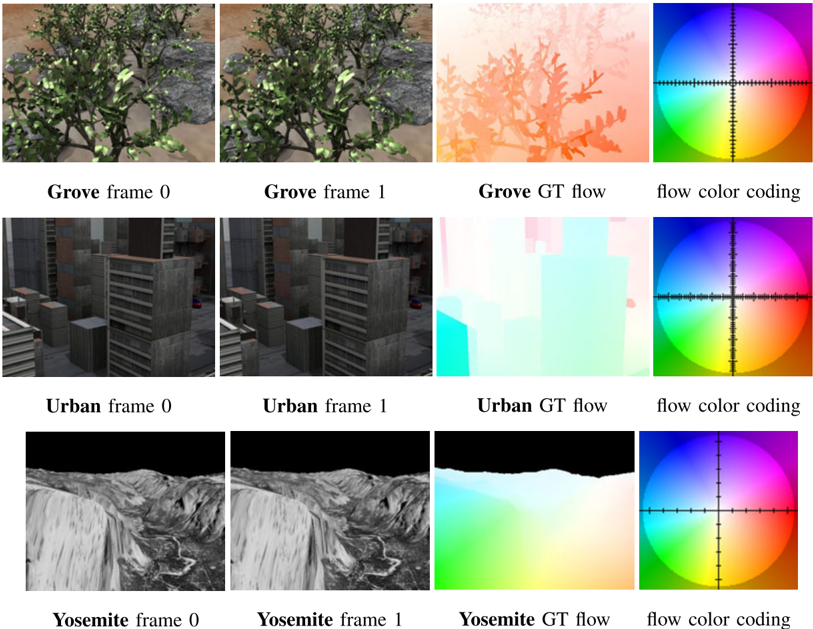
- Best average endpoint error (Avg. EE) improved dramatically over 2D-CLG (Bruhn et al. 2005): Army 0.28→0.09, Mequon 0.67→0.18, Schefflera 1.12→0.24, Wooden 1.07→0.18, Grove 1.23→0.74, Urban 1.54→0.39, Yosemite 0.10→0.08, Teddy 1.38→0.50. Best Avg. EE was below 0.2 pixels on four datasets (Yosemite, Army, Mequon, Wooden).
- Endpoint error (EE) and angular error (AE) rankings were highly correlated (r = 0.989), but the paper argues EE should be preferred: Complementary OF on Urban had Avg. AE 4.64° (rank 6) but Avg. EE 1.78 pixels (rank 20), because AE downweights large motions.
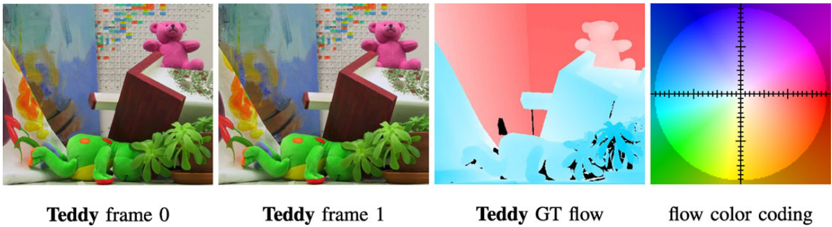
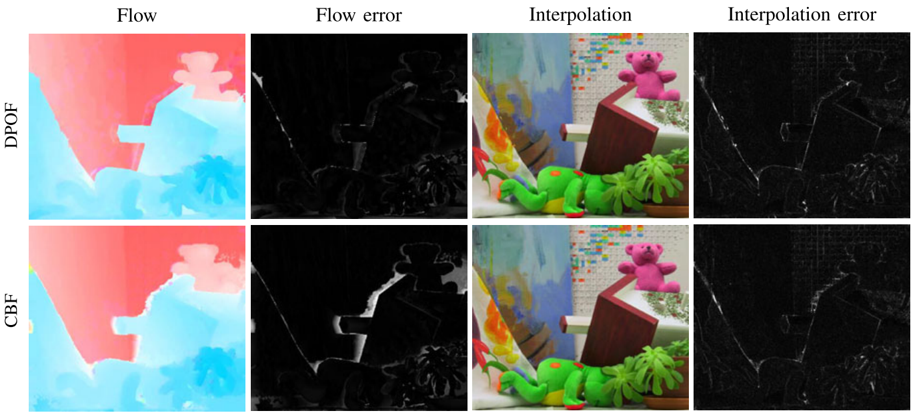
- Motion discontinuity (Disc) regions were the hardest; textureless (Untext) regions were typically easiest. Dataset results were less correlated, with Yosemite poorly or negatively correlated with others. Flow and interpolation errors were only moderately correlated (Avg4 EE vs Avg4 IE r = 0.763). On Teddy, top stereo methods outperformed top flow methods: median lowest-five R1.0 was 9.9 for flow vs 6.5 for stereo in All regions (34% reduction), and 27.6 vs 10.0 in Disc regions (64% reduction).
Methods
- Four data types were collected: (1) real nonrigid scenes with dense ground truth from hidden fluorescent texture, captured with a Canon EOS 20D at 3504×2336, downsampled every 40th visible-light frame by factor 6 to 584×388, with SSD tracking (15×15 windows), forward/backward crosschecking, and Lucas-Kanade subpixel refinement; (2) realistic synthetic scenes rendered with 3Delight at 640×480, with ground truth from a custom shader and dominant-cluster flow selection; (3) high-speed video for frame interpolation captured with a PointGrey Dragonfly Express at 60 fps, providing every other frame and retaining intermediate frames as ground truth; and (4) modified stereo data (Teddy) from structured light, cropped to make the disparity range roughly symmetric.
- Evaluation metrics include average angular error (AE), absolute flow endpoint error (EE), interpolation error (IE), and gradient-normalized interpolation error (NE). Statistics include averages, robustness measures R_X, and percentile accuracy measures A_X, computed over All, Disc, and Untext region masks.
- Analysis used the online evaluation at http://vision.middlebury.edu/flow/, comparing 24 published methods across metrics, statistics, masks, and datasets, with Pearson correlations between rankings and comparisons to state-of-the-art stereo methods on Teddy.
Limitations
- The paper states that the hidden fluorescent texture scenes are laboratory scenes, not real-world scenes, and have no motion blur due to stop-motion capture; ground truth is unavailable where cross-checking failed, especially occluded regions, and the measured ground truth is not perfect, though significant errors are limited to a small fraction of pixels. Synthetic sequences were generated without motion blur. The modified stereo ground truth is only accurate to 0.25 pixels, and algorithms may exploit the knowledge that motions are horizontal; overfitting to rigid data should be visible across the 12 evaluation images. Interpolation ground truth is an intermediate image, not a flow field, so the flow definition is apparent motion.
- The paper also states that no single method yet achieves strong performance across a wide variety of datatypes, that any dataset has a limited lifespan, and that future studies should include more challenging realistic synthetic data, longer sequences, and more difficult materials, illumination changes, atmospheric effects, and transparency.
- Evident from the text: the online tables do not provide an overall ranking among methods; runtimes are not normalized for programming environment, CPU speed, cores, or hardware acceleration; algorithms are required to produce dense flow and cannot submit confidence maps or sparse/incomplete fields; all 24 published methods used only 2 frames despite 8-frame sequences being available; and the paper cannot definitively answer whether temporal smoothing is less suited to the more challenging sequences.
Model-written summary. Check it against the paper before relying on it.
Integrity signals
Registry
Cites
Statistics
Figures

Verification
Claims the paper makes
2 Valid · 16 Not valid · 58 Not checked · 185 Own results and interpretations
A result the paper states — it cites no source for it, so there is none to check. The quote shows it is in the paper.
In the paper
“Rather than collecting a single type of data (with its inherent limitations) we instead collected four different types of data, each satisfying a different subset of desirable properties.”
plain- Asserted: passes — The authors put it forward as true.
- Checkable: passes — It can be checked against evidence.
- Load-bearing: passes — The paper’s conclusions depend on it.
- Based: passes — The paper gives a reason why it holds.
A result the paper states — it cites no source for it, so there is none to check. The quote shows it is in the paper.
In the paper
“Using the combination of fluorescent paint, downsampling high-resolution images, and sequential tracking of small motions, we are able to obtain dense, subpixel accurate ground truth for a nonrigid scene.”
plainstates a cause- Asserted: passes — The authors put it forward as true.
- Checkable: passes — It can be checked against evidence.
- Load-bearing: passes — The paper’s conclusions depend on it.
- Based: passes — The paper gives a reason why it holds.
A result the paper reports from its own data — it cites no other source for it, so there is none to check. The quote shows it is in the paper.
In the paper
“To allow for measures that predict performance on such tasks, we collected a variety of data suitable for frame interpolation.”
plainstates a cause- Asserted: passes — The authors put it forward as true.
- Checkable: passes — It can be checked against evidence.
- Load-bearing: passes — The paper’s conclusions depend on it.
- Based: passes — The paper gives a reason why it holds.
A result the paper reports from its own data — it cites no other source for it, so there is none to check. The quote shows it is in the paper.
In the paper
“We have developed a technique for capturing imagery of nonrigid scenes with ground-truth optical flow.”
plain- Asserted: passes — The authors put it forward as true.
- Checkable: passes — It can be checked against evidence.
- Load-bearing: passes — The paper’s conclusions depend on it.
- Based: passes — The paper gives a reason why it holds.
A result the paper states — it cites no source for it, so there is none to check. The quote shows it is in the paper.
In the paper
“To go beyond previous synthetic ground truth (e.g., the Yosemite sequence), we generated two types of fairly complex synthetic outdoor scenes.”
plain- Asserted: passes — The authors put it forward as true.
- Checkable: passes — It can be checked against evidence.
- Load-bearing: passes — The paper’s conclusions depend on it.
- Based: passes — The paper gives a reason why it holds.
96 more claims
Create a free account to see all 261 claims and every source verdict.
- Probably not a substantial claim. 114
- It may state two separate claims as one. 76
- The quote only partly states this claim. 6
Claims other papers make about this one
Each is checked against this paper’s own text: does it say what the citing paper says it does?
The source backs part of the claim, not all of it — or backs it for a different population, condition or comparison.
In the citing paper
“Notable works include the Middlebury dataset (Baker et al, 2011) and the KITTI datasets (Geiger et al, 2012; Menze and Geiger, 2015), but due to the difficulty of computing accurate ground truth, these have been restricted to 8 and 2 · 200 pairs of frames, respectively (the latter are also limited by the special driving setting).”
From What Makes Good Synthetic Training Data for Learning Disparity and Optical Flow Estimation? (2018) · cites this paper as Baker et al, 2011
Experimental — accuracy not yet measured
Citations
Cites
The pascal visual object classes (VOC) challenge
Everingham, M., Van Gool, L., Williams, C. K. I., Winn, J., & Zisserman, A. (2010) · International Journal of Computer Vision · doi:10.1007/s11263-009-0275-4 · Cited by 19,599
Proceedings of IEEE Conference on Computer Vision and Pattern Recognition
(1993) · doi:10.1109/cvpr.1993 · Cited by 17,667
Proceedings of IEEE International Conference on Computer Vision
(1995) · Proceedings of IEEE International Conference on Computer Vision · doi:10.1109/iccv.1995.466933 · Cited by 12,860
(1981) · Cited by 11,963
Horn, B. K. P., & Schunck, B. G. (1981) · Artificial Intelligence · doi:10.1016/0004-3702(81)90024-2 · Cited by 10,312
Horn, B. K., & Schunck, B. G. (1981) · SPIE Proceedings · doi:10.1117/12.965761 · Cited by 7,394 · cited 2×
“A baseline approach is to use an L2 norm as in the Horn and Schunck algorithm (Horn and Schunck 1981):”
BackgroundMethodFast approximate energy minimization via graph cuts
Boykov, Y., Veksler, O., & Zabih, R. (2001) · IEEE Transactions on Pattern Analysis and Machine Intelligence · doi:10.1109/34.969114 · Cited by 6,988
A Taxonomy and Evaluation of Dense Two-Frame Stereo Correspondence Algorithms
Scharstein, D., & Szeliski, R. (2002) · International Journal of Computer Vision · doi:10.1023/a:1014573219977 · Cited by 6,740 · cited 10×
“Many areas of computer vision, such as stereo [63], face recognition [28, 55, 68], and object recognition [23, 24], have challenging datasets to track the progress made by leading algorithms and to stimulate new ideas.”
BackgroundMethodResultInfluentialSelf-citationProceedings European Conference on Computer Vision 2002
Heyden, A., Sparr, G., Nielsen, M., & Johansen, P. (2002) · Lund University Publications (Lund University) · Cited by 5,153
From few to many: illumination cone models for face recognition under variable lighting and pose
Georghiades, A. S., Belhumeur, P. N., & Kriegman, D. J. (2001) · IEEE Transactions on Pattern Analysis and Machine Intelligence · doi:10.1109/34.927464 · Cited by 4,912 · cited 1×
“Many areas of computer vision, such as stereo (Scharstein and Szeliski 2002), face recognition (Philips et al. 2005; Sim et al. 2003; Gross et al. 2008; Georghiades et al. 2001), and object recognition (Fei-Fei et al.”
Background
Research works printed but not linked: 4
- Anandan, P., & Weiss, R. (1985). Introducing smoothness constraint in a matching approach for the computation of displacement fields. In Proceedings of the DARPA image understanding workshop (pp. 186-196).
- Bleyer, M., & Chambon, S. (2010). Does color really help in dense stereo matching? In Proceedings of the international symposium 3D data processing, visualization and transmission .
- Lempitsky, V., Roth, S., & Rother, C. (2008). Fusion flow: discretecontinuous optimization for optical flow estimation. In Proceedings of the IEEE conference on computer vision and pattern recognition .
- Rannacher, J. (2009). Realtime 3D motion estimation on graphics hardware . Undergraduate thesis, Heidelberg University.
Cited by
Items 1,101–1,200 of 2,273
Principles of Object Tracking and Mapping
Rambach, J. R., Pagani, A., & Stricker, D. (2023) · Springer handbooks · doi:10.1007/978-3-030-67822-7_3 · Cited by 7
Psychophysical measurement of perceived motion flow of naturalistic scenes
Yang, Y., Fukiage, T., Sun, Z., & Nishida, S. (2023) · iScience · doi:10.1016/j.isci.2023.108307 · Cited by 15
Khan, M., Mahala, N. K., & Kumar, P. (2023) · Sadhana · doi:10.1007/s12046-023-02318-6 · Cited by 10
“The complete details regarding these datasets are available in [65–72].”
EdiTor: Edge-guided Transformer for Ghost-free High Dynamic Range Imaging
Guan, Y., Xu, R., Yao, M., Huang, J., & Xiong, Z. (2024) · ACM Transactions on Multimedia Computing Communications and Applications · doi:10.1145/3657293 · Cited by 9
“Khan et al. [20] align the input LDR images via optical flow algorithms [1] before merging.”
Improved Color Patch Similarity Measure Based Weighted Median Filter
Tu, Z., van Gemeren, C., & Veltkamp, R. C. (2015) · Lecture notes in computer science · doi:10.1007/978-3-319-16814-2_27 · Cited by 8
“One of the most successful techniques that address this problem is the variational optical flow method [2,3,9], and it has been widely used for various visual tasks, such as tracking, object segmentation and recognition, and super-resolution reconstruction.”
Optical Flow on Evolving Surfaces with an Application to the Analysis of 4D Microscopy Data
Kirisits, C., Lang, L. F., & Scherzer, O. (2013) · Lecture notes in computer science · doi:10.1007/978-3-642-38267-3_21 · Cited by 7
“For demonstration purpose we make use of the standard flow colour-coding [1], which maps (normalised) flow vectors to a colour space defined inside the unit circle.”
MethodMotion Estimation—A Video Coding Viewpoint
Pesquet‐Popescu, B., Cagnazzo, M., & Dufaux, F. (2014) · Academic press library in signal processing · doi:10.1016/b978-0-12-420149-1.00002-8 · Cited by 12
Overview of image processing tools to extract physical information from JET videos
Craciunescu, T., Murari, A., Gelfusa, M., Tiseanu, I., Zoita, V., & Contributors, J. E. (2014) · Plasma Physics and Controlled Fusion · doi:10.1088/0741-3335/56/11/114006 · Cited by 8
Liang, M., Du, J.-P., & Liu, H.-G. (2013) · Mathematical Problems in Engineering · doi:10.1155/2013/745752 · Cited by 8
GPU implementation of an anisotropic Huber-L1 dense optical flow algorithm using OpenCL
Büyükaydın, D., & Akgün, T. (2015) · International Conference on Embedded Computer Systems: Architectures, Modeling, and Simulation · doi:10.1109/samos.2015.7363693 · Cited by 7
“For the RubberWhale test sample, the average endpoint errors [8] were measured as 0.”
MethodCustom processor design for efficient, yet flexible Lucas-Kanade optical flow
Smets, S., Goedemé, T., & Verhelst, M. (2016) · Conference on Design and Architectures for Signal and Image Processing · doi:10.1109/dasip.2016.7853810 · Cited by 7
“Notice that, even though the two-scale flow image is not as accurate as its four-scale counterpart, it gives a good indication of the flow field and may be sufficient for embedded applications.”
BackgroundChessa, M., & Solari, F. (2018) · International Journal of Neural Systems · doi:10.1142/s0129065718500296 · Cited by 7
Robust optical flow estimation involving exponential fractional-order derivatives
Lavín-Delgado, J. E., Solís-Pérez, J. E., Gómez-Aguilar, J. F., & Escobar-Jiménez, R. F. (2019) · Optik · doi:10.1016/j.ijleo.2019.163642 · Cited by 9
Video frame interpolation using deep cascaded network structure
Yang, Y., & Oh, B. T. (2020) · Signal Processing Image Communication · doi:10.1016/j.image.2020.115982 · Cited by 7
Intrinsic Dynamic Shape Prior for Dense Non-Rigid Structure from Motion
Golyanik, V., Jonas, A., Stricker, D., & Theobalt, C. (2020) · International Conference on 3D Vision (3DV) · doi:10.1109/3dv50981.2020.00079 · Cited by 8
“The new incoming frames and calculated flow fields visualised with Middlebury colour scheme [6] are given underneath.”
MethodConsistent Semantic Attacks on Optical Flow
Koren, T., Talker, L., Dinerstein, M., & Vitek, R. (2023) · Lecture notes in computer science · doi:10.1007/978-3-031-26293-7_30 · Cited by 8
“The bottom row presents two attacked flows (encoded using Mid-dlebury [4] color-wheel): consistent and non-consistent.”
MethodZhu, S., Zhang, J., Yue, M., Tang, Y., Yue, W., Qu, Z., Wang, X., Chen, L., Gui, Y., & Feng, X. (2021) · Ceramics International · doi:10.1016/j.ceramint.2021.11.273 · Cited by 8
Implementations Impact on Iterative Image Processing for Embedded GPU
Romera, T., Petreto, A., Lemaitre, F., Bouyer, M., Meunier, Q., & Lacassagne, L. (2021) · European Signal Processing Conference (EUSIPCO) · doi:10.23919/eusipco54536.2021.9615947 · Cited by 7
“Most of them are indexed and evaluated in the Middlebury database [9].”
BackgroundOptical Flow Computation for Video Under the Dynamic Illumination
Chen, J., Duan, H., Song, Y., Cai, Z., & Yang, G. (2022) · IEEE Transactions on Multimedia · doi:10.1109/tmm.2022.3207583 · Cited by 8
“In this section, we evaluate our method on the Middlebury dataset [37], MPI-Sintel dataset [35], and Kitti dataset [36].”
MethodNguyen, T. X. B., Rosser, K., Perera, A. G., Moss, P., & Chahl, J. (2023) · Journal of Field Robotics · doi:10.1002/rob.22219 · Cited by 7
“So far, researchers have relied on synthetic data such as Middlebury (Baker et al., 2011), KITTI (Geiger et al.”
MethodMSEConv: A Unified Warping Framework for Video Frame Interpolation
Ding, X., Huang, P., Zhang, D., Liang, W., Li, F., Yang, G., Liao, X., & Li, Y. (2024) · ACM Transactions on Asian and Low-Resource Language Information Processing · doi:10.1145/3648364 · Cited by 12
Two-Frame Optical Flow Formulation in an Unwarping Multiresolution Scheme
Cassisa, C., Simoëns, S., & Prinet, V. (2009) · Lecture notes in computer science · doi:10.1007/978-3-642-10268-4_93 · Cited by 12
“The second line of Fig.1 illustrates the three masks used to compute AAE for all image domain, motion discontinuity area and textureless regions.”
InfluentialAn annotation-free method for evaluating privacy protection techniques in videos
Nawaz, T. H., & Ferryman, J. M. (2015) · IEEE International Conference on Advanced Video and Signal Based Surveillance (AVSS) · doi:10.1109/avss.2015.7301800 · Cited by 8
“While evaluation criteria exist for assessing methods in other areas of computer vision including optical flow estimation [6], stereo correspondence estimation [22] and video tracking [15, 17], there is an absence of an established method for the performance evaluation of different aspects of privacy protection method…”
Generalised residual images’ effect on illumination artifact removal for correspondence algorithms
Vaudrey, T., Morales, S., Wedel, A., & Klette, R. (2010) · Pattern Recognition · doi:10.1016/j.patcog.2010.05.036 · Cited by 10
“A recent paper is [13] that evaluates optical flow in relatively simple situations.”
BackgroundMethodInfluentialHigh accuracy optical flow estimation based on PDE decomposition
Mahraz, M. A., Riffi, J., & Tairi, H. (2013) · Signal Image and Video Processing · doi:10.1007/s11760-013-0594-3 · Cited by 8
Coalescence analysis for evolving foamsviaoptical flow computation on projection image sequences
Myagotin, A., Ershov, A., Helfen, L., et al. (2012) · Journal of Synchrotron Radiation · doi:10.1107/s0909049512015099 · Cited by 7
“Recent achievements in the field of optical flow computations allow one to estimate a vector field u in an image sequence with high accuracy and in real time, even in the presence of motion discontinuities and noise (Bruhn & Weickert, 2005; Zimmer et al., 2011; Baker et al., 2011).”
BackgroundMorphologically Invariant Matching of Structures with the Complete Rank Transform
Demetz, O., Hafner, D., & Weickert, J. (2015) · International Journal of Computer Vision · doi:10.1007/s11263-015-0800-6 · Cited by 8
Quantification of Smoothing Requirement for 3D Optic Flow Calculation of Volumetric Images
Bab-Hadiashar, A., Tennakoon, R., & de Bruijne, M. (2013) · IEEE Transactions on Image Processing · doi:10.1109/tip.2013.2246174 · Cited by 8
Raudies, F., Ringbauer, S., & Neumann, H. (2013) · Neural Computation · doi:10.1162/neco_a_00479 · Cited by 7
“For the computation of velocity gradients in nonrigid scenes, we chose the three image sequences Army, Wooden, and Mequon from the Middlebury benchmark (Baker et al., 2011).”
MethodEncoding brain network response to free viewing of videos
Han, J., Zhao, S., Hu, X., Guo, L., & Liu, T. (2014) · Cognitive Neurodynamics · doi:10.1007/s11571-014-9291-3 · Cited by 8
“Histogram of Oriented Optical Flow (Nayak et al. 2011) is a popular and effective scale-invariant global feature to represent the motion in an entire frame using optical flow (Baker et al. 2011) in computer vision community.”
Fu, Y., Liu, Y., & Dai, Q. (2011) · International Conference on 3D Imaging, Modeling, Processing, Visualization & Transmission · doi:10.1109/3dimpvt.2011.12 · Cited by 7
“Optical flow estimation Optical flow estimation and motion compensation [6, 7] have been investigated in many fields, including frame rate up-conversion [8], stereo reconstruction [9], etc.”
MethodHardware implementation of real-time multiple frame super-resolution
Seyid, K., Blanc, S., & Leblebici, Y. (2015) · IFIP/IEEE International Conference on Very Large Scale Integration · doi:10.1109/vlsi-soc.2015.7314419 · Cited by 8
“Optical flow based algorithms [17] provide superior motion vector quality over block matching based algorithms [18].”
Exploiting High Level Scene Cues in Stereo Reconstruction
Hadfield, S., & Bowden, R. (2015) · IEEE/CVF International Conference on Computer Vision (ICCV) · doi:10.1109/iccv.2015.96 · Cited by 7
“The descriptors used for feature point matching are computed with a pre-trained (using correspondences from the Middlebury07 dataset [1]) deep network including 6 convolutional layers, each of which is followed by maxpooling, subsampling and rectification layers [35].”
MethodFluorescence microscopic imaging and image analysis of the cytoskeleton
Herberich, G., Würflinger, T., Sechi, A. S., Windoffer, R., Leube, R. E., & Aach, T. (2010) · Asilomar Conference on Signals, Systems and Computers (ACSSC) · doi:10.1109/acssc.2010.5757755 · Cited by 12
“In optical flow evaluation [19] it is common to compute the mean magnitude of this difference vector.”
BackgroundApproxEye: Enabling approximate computation reuse for microrobotic computer vision
He, X. J., Yan, G., Sun, F. G., et al. (2017) · Asia and South Pacific Design Automation Conference (ASP-DAC) · doi:10.1109/aspdac.2017.7858356 · Cited by 7
“The input datasets are published by Microsoft Research, Redmond [21].”
MethodLearn to model blurry motion via directional similarity and filtering
Li, W., Chen, D., Lv, Z., Yan, Y., & Cosker, D. P. (2017) · Pattern Recognition · doi:10.1016/j.patcog.2017.04.020 · Cited by 6
Zhang, C.-C., & Liu, Z. (2017) · Journal of Computer Science and Technology · doi:10.1007/s11390-017-1741-z · Cited by 7
An FPGA-Based Real-Time Moving Object Tracking Approach
Chen, W., Ma, Y., Chai, Z., Chen, M., & He, D. (2017) · Lecture notes in computer science · doi:10.1007/978-3-319-65482-9_5 · Cited by 7
Huang, X., Yang, C., Ranka, S., & Rangarajan, A. (2018) · IPSJ Transactions on Computer Vision and Applications · doi:10.1186/s41074-018-0045-8 · Cited by 11
“We used color coding in [60] for optical flow in order to aid visualization.”
MethodLi, Z., Xiang, J., Gong, L., Blaauw, D. T., Chakrabarti, C., & Kim, H.-S. (2018) · IEEE Transactions on Circuits and Systems for Video Technology · doi:10.1109/tcsvt.2018.2854284 · Cited by 7
Quantitative Contact-Less Estimation of Energy Expenditure from Video and 3D Imagery
Koporec, G., Vučković, G., Milić, R., & Perš, J. (2018) · Sensors · doi:10.3390/s18082435 · Cited by 10
“[41].”
Pyramidal Normal Map Integration for Real-time Photometric Stereo
Nozick, V. (2010) · HAL · Cited by 9
Marginal Inference in Continuous Markov Random Fields Using Mixtures
Guo, Y., Xiong, H., & Ruozzi, N. (2019) · Proceedings of the AAAI Conference on Artificial Intelligence · doi:10.1609/aaai.v33i01.33017834 · Cited by 7
“Consider Hydrangea from the Middlebury Optical Flow data set (Baker et al. 2011).”
MethodOnline Audio-Visual Source Association for Chamber Music Performances
Li, B., Dinesh, K., Xu, C., Gaurav Sharma, A., & Duan, Z. (2019) · Transactions of the International Society for Music Information Retrieval · doi:10.5334/tismir.25 · Cited by 6
Movement Detection and Moving Object Distinction Based on Optical Flow for a Surveillance System
Mendes, P. A. S., & Coimbra, A. P. (2020) · Springer eBooks · doi:10.1007/978-981-15-8273-8_12 · Cited by 8
Low-level feature extraction (including edge detection)
Nixon, M. S., & Aguado, A. S. (2019) · Elsevier eBooks · doi:10.1016/b978-0-12-814976-8.00004-x · Cited by 8
Robust dense correspondence using deep convolutional features
Liu, Y., Pan, J., Su, Z., & Tang, K. (2019) · The Visual Computer · doi:10.1007/s00371-019-01656-z · Cited by 7
“[1] propose a new set of benchmarks and several quantitative evaluation approaches for the next generation of optical flow algorithms as to favor continued progress.”
BackgroundAdaptive Regularization in Convex Composite Optimization for Variational Imaging Problems
Hong, B., Koo, J., Dirks, H., & Burger, M. (2017) · Lecture notes in computer science · doi:10.1007/978-3-319-66709-6_22 · Cited by 8
“The Dimetrodon (solid), Grove2 (dotted) and Hydrangea (dashed) datasets from [2] were used to generate these graphs.”
MethodThe Structure of Multiplicative Motions in Natural Imagery
Derpanis, K. G., & Wildes, R. P. (2010) · IEEE Transactions on Pattern Analysis and Machine Intelligence · doi:10.1109/tpami.2010.64 · Cited by 8
“Ç”
Unsupervised Learning of EdgesPreprint
Li, Y., Paluri, M., Rehg, J. M., et al. (2015) · arXiv (Cornell University) · doi:10.48550/arxiv.1511.04166 · Cited by 7
“The standard colorcoding scheme for optical flow maps 2D flow vectors into a 3D color space by encoding flow orientation via hue and magnitude via saturation [4].”
MethodPezzementi, Z. A., Tabor, T., Hu, P., Chang, J., Ramanan, D., Wellington, C., Babu, B. P. W., & Herman, H. (2017) · arXiv (Cornell University) · doi:10.48550/arxiv.1707.07169 · Cited by 7
“Benchmarks also play vital roles in low-level vision, including stereo (Scharstein and Szeliski, 2002; Seitz et al., 2006), optical-flow (Baker et al., 2011), and boundary detection (Martin et al., 2001).”
BackgroundReHAR: Robust and Efficient Human Activity RecognitionPreprint
Li, X., & Chuah, M. C. (2018) · arXiv (Cornell University) · doi:10.48550/arxiv.1802.09745 · Cited by 7
“Then, we use the method described in [31] 1 to visualize the optical flow information into a col-orful image (3 channels), namely optical flow image.”
MethodUnsupervised Learning of Particle Image VelocimetryPreprint
Zhang, M., & Piggott, M. D. (2020) · arXiv (Cornell University) · doi:10.48550/arxiv.2007.14487 · Cited by 7
“The flow field colour is coded in HSV [18].”
BackgroundGOCor: Bringing Globally Optimized Correspondence Volumes into Your Neural Network
Truong, P., Danelljan, M., Gool, L. V., & Timofte, R. (2020) · neural information processing systems · doi:10.3929/ethz-b-000455564 · Cited by 91
ADNet: Attention-guided Deformable Convolutional Network for High Dynamic Range ImagingPreprint
Liu, Z., Lin, W., Li, X., et al. (2021) · arXiv (Cornell University) · doi:10.48550/arxiv.2105.10697 · Cited by 7
“Existing explicit image alignment methods mainly consists of three categories: global alignment with homography [10], middle-level alignment with meshflow [19], and pixel-level alignment with optical flow [1].”
MethodBaghbaderani, R. K., Li, Y., Wang, S., & Qi, H. (2024) · IEEE Winter Conference on Applications of Computer Vision · doi:10.1109/wacv57701.2024.00074 · Cited by 14
“It has been used for video frame interpolation [1,4,17,19,29,43], motion detection [48], robust optical flow estimation [24, 25, 36, 39, 57], and object detection [67].”
MethodInvestigating Synthetic-to-Real Transfer Robustness for Stereo Matching and Optical Flow Estimation
Zhang, J., Li, J., Huang, L., Luo, H., Yu, X., Gu, L., Zheng, J., & Bai, X. P. (2025) · IEEE Transactions on Pattern Analysis and Machine Intelligence · doi:10.1109/tpami.2025.3584847 · Cited by 21
“[80], Middlebury [91], Sintel [92], [93], and Spring [94] datasets.”
Ghoul, A., Paulson, P. C., Lingg, A., Krumm, P., Hammernik, K., Rueckert, D., Gatidis, S., & Küstner, T. (2025) · Magnetic Resonance in Medicine · doi:10.1002/mrm.70137 · Cited by 8
“Finally, we qualitatively examined the impact of acceleration by visualizing color-coded [53] motion estimates and quiver plots overlaid on the fully sampled moving image.”
Optical flow estimation on image sequences with differently exposed frames
Bengtsson, T., McKelvey, T., & Lindström, K. (2015) · Optical Engineering · doi:10.1117/1.oe.54.9.093103 · Cited by 6
“Experiment 1, which is separated into 1a and 1b due to similar experiments but on different datasets, is performed on altered data from the Middlebury18 and MPI Sintel19 training sets (using the “Final” render pass for the MPI Sintel sequences17).”
BackgroundMethodInfluentialAli, S., Daul, C., & Blondel, W. (2014) · International Conference on Image Processing Theory, Tools and Applications (IPTA) · doi:10.1109/ipta.2014.7001947 · Cited by 6
“Results on Middlebury OF benchmark dataset [5] is shown in Table 1 for some well-known TV-L(1) methods [12], [9], [10], [17].”
MethodDancing with Still Images: Video Distillation via Static-Dynamic Disentanglement
Wang, Z., Xu, Y., Lu, C., & Li, Y. (2024) · IEEE Computer Society Conference on Computer Vision and Pattern Recognition/Proceedings - IEEE Computer Society Conference on Computer Vision and Pattern Recognition/Proceedings · doi:10.1109/cvpr52733.2024.00602 · Cited by 30
Deep Learning‐Based Optical Flow in Fine‐Scale Deformation Mapping of Sea Ice Dynamics
Uusinoka, M., Haapala, J. J., & Polojärvi, A. (2025) · Geophysical Research Letters · doi:10.1029/2024gl112000 · Cited by 6
“AEPE is a commonly used evaluation metric for this purpose and it is defined for a given time step t as (Baker et al., 2011; Otte & Nagel, 1994) where u eij ( t ) and u ( t ) are, respectively, the estimated and ground truth displacement vectors of data point ij at time t , and the sum is over all…”
Panoramic 3D Reconstruction with Three Catadioptric Cameras
Schönbein, M., Rapp, H., & Lauer, M. (2012) · Advances in intelligent systems and computing · doi:10.1007/978-3-642-33926-4_32 · Cited by 8
Jones, G. (2013) · British Machine Vision Conference (BMVC) · doi:10.5244/c.27.75 · Cited by 6
“Where the goal is to recover a 3D displacement field given a possibly moving scene with independently moving objects (or even a single non-rigid object), this per-pixel constraint can be embedded in a global energy functional which penalises pixel motions which do not satisfy the local range flow constraints and which…”
BackgroundA learning-based approach for highly accurate measurements of turbulent fluid flows
Stapf, J., & Garbe, C. S. (2014) · Experiments in Fluids · doi:10.1007/s00348-014-1799-0 · Cited by 6
“A more recent review and performance analysis can be found in Baker et al. (2011). In the field of fluid dynamics, Heitz et al. (2010) give a comprehensive overview over fluid flow estimation schemes based on optical flow techniques.”
BackgroundInfluentialCross based robust local optical flow
Senst, T., Borgmann, T., Keller, I., & Sikora, T. (2014) · Proceedings - International Conference on Image Processing · doi:10.1109/icip.2014.7025394 · Cited by 9
Non-causal Temporal Prior for Video Deblocking
Sun, D., & Liu, C. (2012) · Lecture notes in computer science · doi:10.1007/978-3-642-33715-4_37 · Cited by 6
“Correspondence on one pair of the “yuna” sequence established by the MPEG2’s block matching method (white blocks are usually “intra” blocks that do not have motion vectors and the alternating vertical lines in some blocks result from the field DCT coding by MPEG2) and by our optical flow-based system, color encoded as…”
MethodA continuous-time framework for least squares parameter estimation
Riachy, S. (2014) · Automatica · doi:10.1016/j.automatica.2014.10.055 · Cited by 6
Lobachev, O. (2020) · IEEE Access · doi:10.1109/access.2020.2965885 · Cited by 5
“We use dense optical flow [88] (see [89] for a review), Jaccard measure [90], and SSIM [91] to visually quantify the quality of our healing (Section III-A).”
MethodA Stacked Deep MEMC Network for Frame Rate Up Conversion and its Application to HEVC
Thang, N. V., Lee, K., & Lee, H. (2020) · IEEE Access · doi:10.1109/access.2020.2982039 · Cited by 6
“To synthesize interpolated frames from the computed optical flows, the same algorithm in [13] is used.”
BackgroundMethodInfluentialFID: Frame Interpolation and DCT-based Video Compression
Jalalpour, Y., Wang, L., Feng, W., et al. (2020) · IEEE International Symposium on Multimedia (ISM) · doi:10.1109/ism.2020.00045 · Cited by 6
“First, this method achieves stateof-the-art interpolation results and is currently ranked #1 in the world for the Middlebury benchmark [7].”
MethodTexture-aware Video Frame Interpolation
Danier, D., & Bull, D. (2021) · Picture Coding Symposium · doi:10.1109/pcs50896.2021.9477504 · Cited by 6
“Conventionally, VFI has been addressed by estimating optical flow and warping two adjacent frames using the flow map [3].”
MethodPoggi, M., Aleotti, F., & Mattoccia, S. (2021) · IEEE/CVF International Conference on Computer Vision (ICCV) · doi:10.1109/iccv48922.2021.00781 · Cited by 7
“The Middlebury Flow benchmark [3] is a collection of 4 synthetic and 4 real images with groundtruth optical flow maps.”
BackgroundVideo Abnormal Event Detection Based on One‐Class Neural Network
Xia, X., & Gao, Y. (2021) · Computational Intelligence and Neuroscience · doi:10.1155/2021/1955116 · Cited by 7
“For the two datasets, each frame is adjusted to a size of 420 × 280, and the moving image is calculated by the optical flow method provided in [24].”
MethodAn Intelligent Video Processing Architecture for Edge-cloud Video Streaming
Gao, C., Wang, Y., Chen, W., & Zhang, L. (2021) · ACM/IEEE Design Automation Conference (DAC) · doi:10.1109/dac18074.2021.9586328 · Cited by 7
IVP: An Intelligent Video Processing Architecture for Video Streaming
Gao, C., Wang, Y., Han, Y., Chen, W., & Zhang, L. (2022) · IEEE Transactions on Computers · doi:10.1109/tc.2022.3155950 · Cited by 8
“4) We implement the IVP on FPGA, and evaluate it on dataset MPI-Sintel [13] and Middlebury flow dataset [14].”
BackgroundMethodInfluentialNon-parametric scene parsing: Label transfer methods and datasets
Bhowmick, A., Saharia, S., & Hazarika, S. M. (2022) · Computer Vision and Image Understanding · doi:10.1016/j.cviu.2022.103418 · Cited by 7
(2022) · International Journal of Computer Assisted Radiology and Surgery · doi:10.1007/s11548-022-02635-x · Cited by 6
Respiratory motion management using a single rapid MRI scan for a 0.35 T MRI‐Linac system
Chen, S., Eldeniz, C., Fraum, T. J., Ludwig, D. R., Gan, W., Liu, J., Kamilov, U. S., Yang, D., Gach, H. M., & An, H. (2023) · Medical Physics · doi:10.1002/mp.16469 · Cited by 8
Physics-Based Optical Flow Estimation Under Varying Illumination Conditions
Liao, X., Cai, Z., Chen, J., Liu, T., & Lai, J. (2022) · Signal Processing Image Communication · doi:10.1016/j.image.2023.117007 · Cited by 10
Decomposed Multilateral Filtering for Accelerating Filtering with Multiple Guidance Images
Nogami, H., Kanetaka, Y., Naganawa, Y., Maeda, Y., & Fukushima, N. (2024) · Sensors · doi:10.3390/s24020633 · Cited by 6
“Various applications use the filters, including flash/no-flash photography [16,17], up-sampling/super resolution [18], compression noise removal [19], alpha matting [20], haze removing [21], rain removing [22], depth refinement [23,24], stereo matching [25,26], and optical flow estimation [27].”
MethodWang, R., Tan, G., & Liu, X. (2024) · Computer Methods and Programs in Biomedicine · doi:10.1016/j.cmpb.2024.108109 · Cited by 7
A Rotation-Invariant Regularization Term for Optical Flow Related Problems
Palomares, R. P., Haro, G., & Ballester, C. (2015) · Lecture notes in computer science · doi:10.1007/978-3-319-16814-2_20 · Cited by 6
“For testing both regularization terms we use the RubberWhale sequence from the Middelbury dataset [22] because it contains almost a pure rotation.”
MethodFrom sample selection to model update: A robust online visual tracking algorithm against drifting
Zhu, T., Wang, T., Liu, F., Kang, D., Lang, C., & Feng, S. (2015) · Neurocomputing · doi:10.1016/j.neucom.2015.08.080 · Cited by 6
“represented by intensity [13], color [14], optical flow [15,16], edges [17], texture [18,19], Haar-like features [20–22], and context”
BackgroundLocally Oriented Optical Flow Computation
Niu, Y., Dick, A., & Brooks, M. J. (2011) · IEEE Transactions on Image Processing · doi:10.1109/tip.2011.2177847 · Cited by 6
Determination of Displacement From an Image Sequence Based on Time-Reversal Invariance
Chen, W. (2013) · IEEE Transactions on Geoscience and Remote Sensing · doi:10.1109/tgrs.2013.2263387 · Cited by 6
“Middlebury database [32], which includes a classical Yosemite data set, is one such data set recently introduced in computer vision.”
BackgroundA Neural Field Model for Motion Estimation
Tlapale, É., Kornprobst, P., Masson, G. S., & Faugeras, O. D. (2011) · Springer proceedings in mathematics · doi:10.1007/978-3-642-19604-1_9 · Cited by 8
Simulating nailfold capillaroscopy sequences to evaluate algorithms for blood flow estimation
Tresadern, P., Berks, M., Murray, A. K., Dinsdale, G., Taylor, C., & Herrick, A. L. (2013) · Annual International Conference of the IEEE Engineering in Medicine and Biology Society (EMBC) · doi:10.1109/embc.2013.6610081 · Cited by 6
“All can be evaluated using synthetic sequences [14] or real data, captured under highly controlled conditions with nearperfect ground truth [15].”
BackgroundReducindo, I., Mejia-Rodriguez, A. R., Arce-Santana, E., Campos-Delgado, D. U., Vigueras-Gómez, F., Scalco, E., Bianchi, A. M., Cattaneo, G. M., & Rizzo, G. (2014) · IET Image Processing · doi:10.1049/iet-ipr.2013.0705 · Cited by 6
“Note that (2) describes a discrete version of the classical Horn – Schunck method [25], which is the basis of most OF algorithms proposed in the literature [26, 35].”
BackgroundEstimating Nonrigid Shape Deformation Using Moments
Liu, W., & Ribeiro, E. (2010) · Proceedings - International Conference on Pattern Recognition/Proceedings/International Conference on Pattern Recognition · doi:10.1109/icpr.2010.54 · Cited by 6
“To measure the reconstruction quality quantitatively, we used the concept of Average End-Point Error (APE) from optical flow [3].”
Conejo, B., Komodakis, N., Leprince, S., Conejo, B., Leprince, S., & Hal, H. I. (2014) · CaltechAUTHORS (California Institute of Technology) · Cited by 9
An indirect method to estimate the force output of triceps surae muscle
Li, J., Zhou, Y., & Zheng, Y. (2014) · Annual International Conference of the IEEE Engineering in Medicine and Biology Society (EMBC) · doi:10.1109/embc.2014.6944954 · Cited by 5
Motion segmentation and appearance change detection based 2D hand tracking
Hammer, J. H., Voit, M., & Beyerer, J. (2016) · Fraunhofer-Publica (Fraunhofer-Gesellschaft) · Cited by 6
Learning pedestrian dynamics with kriging
Kawamoto, K., Tomura, Y., & Okamoto, K. (2016) · IEEE/ACIS International Conference on Computer and Information Science (ICIS) · doi:10.1109/icis.2016.7550877 · Cited by 6
“2, the predicted speeds and directions are expressed in the HSV color space using the color coding technique for visualizing optical flows in images [16].”
MethodDetecting Abnormal Behavior in Examination Surveillance Video with 3D Convolutional Neural Networks
Cai, X., Hu, F., & Ding, L. (2016) · International Conference on Digital Home (ICDH) · doi:10.1109/icdh.2016.014 · Cited by 6
“Ng[12] proposed the first method and Baker[13] came up with the second method.”
MethodSpecial issue: terrestrial remote sensing for areal deformation monitoring
Capra, A., Scaioni, M., & Wieser, A. (2015) · Applied Geomatics · doi:10.1007/s12518-015-0159-y · Cited by 6
“Such methods are based on processing of the images captured by digital cameras thanks to photogrammetric (Luhmann et al. 2013) and Computer Vision techniques (Hartley and Zissermann 2006; Baker et al. 2011).”
MethodWhat’s Wrong with Computer Vision?
Gori, M. (2018) · Lecture notes in computer science · doi:10.1007/978-3-319-99978-4_1 · Cited by 5
Adaptive dual fractional‐order variational optical flow model for motion estimation
Zhu, B., Tian, L., Du, Q., Wu, Q., Farisi, Z., & Yeboah, Y. (2018) · IET Computer Vision · doi:10.1049/iet-cvi.2018.5285 · Cited by 6
“In this section, we compare the performance of our approach with the existing state-of-the-art methods on the Middlebury benchmark [40], MPI Sintel benchmark [41], KITTI benchmark [6] and two outdoor real scene videos.”
MethodSong, S., Du, C., Liu, X., et al. (2018) · Physics in Medicine and Biology · doi:10.1088/1361-6560/aafa06 · Cited by 6
Measurement model and observability analysis for optical flow-aided inertial navigation
Deng, J., Wu, S., Zhao, H., & Cai, D. (2019) · Optical Engineering · doi:10.1117/1.oe.58.8.083102 · Cited by 7
“LðξÞ 1⁄4 P1⁄2IOðp1Þ; IOðp2Þ · · · IOðpNÞjζ 1⁄4 Π n k1⁄41 P1⁄2IOðpkÞjζ 1⁄4 Πn k1⁄41 C · exp − fIOðpkÞ − IC1⁄2ωðpk; ζÞ g2 2σ(2) ; (11)”
Metadata
- Authors
- Baker, S., Scharstein, D., Lewis, J. P., Roth, S., Black, M. J., & Szeliski, R.
- Affiliations
- Microsoft (United States) (US)
- Middlebury College (US)
- Technische Universität Darmstadt (DE)
- Brown University (US)
- Corresponding author
- Scharstein, Daniel
- Venue
- International Journal of Computer Vision
- Published
- 2010-11-30
- Volume
- 92
- Issue
- 1
- Pages
- 1-31
- ISSN
- 0920-5691 (ISSN-L)
- 1573-1405
- OpenAlex
- W2147253850
- Semantic Scholar
- 804836b8ad86ef8042e3dcbd45442a52f031ee03
- Cited by
- 2,205
- References
- 112
- Citations by year
- 2026: 49 · 2025: 81 · 2024: 82 · 2023: 117 · 2022: 129 · 2021: 152 · 2020: 174 · 2019: 163 · 2018: 144 · 2017: 156 · 2016: 187 · 2015: 180 · 2014: 154 · 2013: 129 · 2012: 118
- FWCI
- 146.62
- Type
- journal article
- Language
- en
- Open access
- hybrid
- doi.org
- Licence
- cc-by-nc
- Locations
- International Journal of Computer Vision (publishedVersion, cc-by-nc)
- Publikationsdatenbank der Fraunhofer-Gesellschaft (Fraunhofer-Gesellschaft) (publishedVersion)
- Max Planck Institute for Plasma Physics (submittedVersion)
- Fraunhofer-Publica (Fraunhofer-Gesellschaft) (submittedVersion)
- Funders
- National Science Foundation (0534858, 0535075, 0413169)
- Intel Corporation
- Topics
- Physical Sciences › Computer Science › Computer Vision and Pattern Recognition › Advanced Vision and Imaging
- Physical Sciences › Computer Science › Computer Vision and Pattern Recognition › Video Surveillance and Tracking Methods
- Physical Sciences › Computer Science › Signal Processing › Video Coding and Compression Technologies
- Keywords
- optical flow, benchmark dataset, evaluation methodology, non-rigid motion, motion discontinuities, textureless regions, sensor noise
About these checks
Registry, retraction, Cites and statistics results are computed, not judged, with one exception: a printed reference that no index lists is read once by a model before it counts as a citation error. Claims are extracted by a model and kept only when their quote appears verbatim in the text; each cited source is then checked, with a model’s help, for whether it says what the claim relies on. Those verdicts can be wrong — read the claim’s quote and the cited source before relying on one.
The claim verdicts this report counts are experimental: their accuracy is not yet measured.
A language model drew the claims from the paper on 2026-10-01, under version 3 of the claim definition (model deepseek-v4.1-flash, prompt extract-v3).
A second model labelled each claim on 2026-10-01 (model jev-1.13-20260917, definition revision gold-guideline-v0.2).
Statistics and arithmetic are recomputed, not judged.
Confidence bands are shown only for fields calibrated on our annotated test set. None is calibrated yet, so no band is shown.
What counts as a claim ›How we measure confidence ›How we check this ›
Are you an author, or do you see a problem with this page? Request a review
Data sources
Bibliographic data: Semantic Scholar, OpenAlex, Crossref.
Contains information from the Semantic Scholar Academic Graph Datasets, made available under the ODC Attribution License (ODC-BY 1.0).
Semantic Scholar’s data is described in: Kinney, R., et al. (2023). The Semantic Scholar Open Data Platform. arXiv:2301.10140.
