

A Database and Evaluation Methodology for Optical Flow
Open accessThe DOI matches its Crossref record; 110 of the 112 references it cites were found in a registry or an index; 2 of the 68 sources its claims cite were checked for support.
Abstract
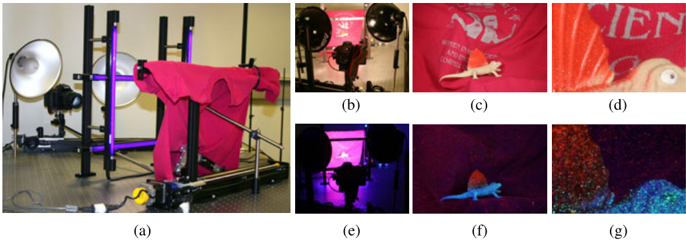
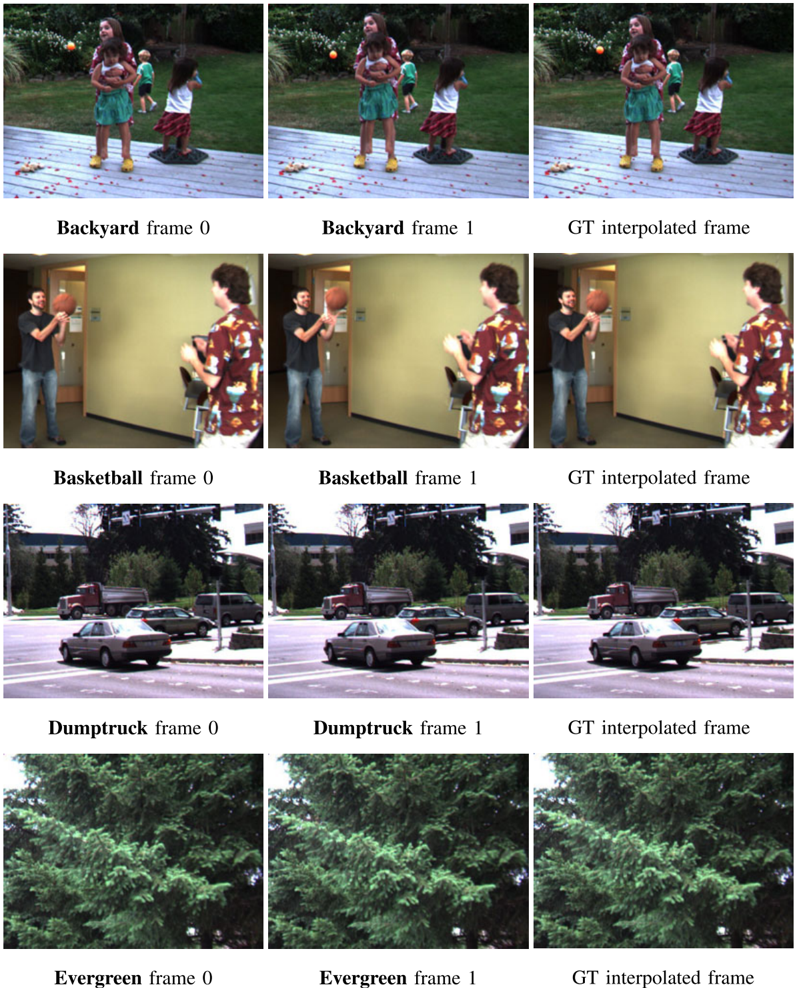
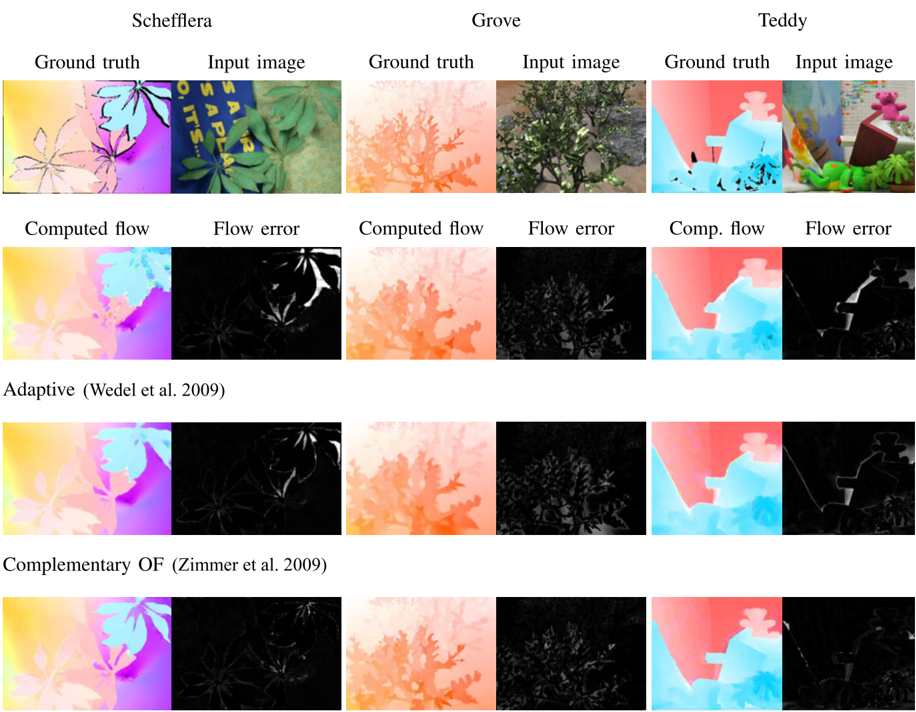
The quantitative evaluation of optical flow algorithms by Barron et al. (1994) led to significant advances in performance. The challenges for optical flow algorithms today go beyond the datasets and evaluation methods proposed in that paper. Instead, they center on problems associated with complex natural scenes, including nonrigid motion, real sensor noise, and motion discontinuities. We propose a new set of benchmarks and evaluation methods for the next generation of optical flow algorithms. To that end, we contribute four types of data to test different aspects of optical flow algorithms: (1) sequences with nonrigid motion where the ground-truth flow is determined by tracking hidden fluorescent texture, (2) realistic synthetic sequences, (3) high frame-rate video used to study interpolation error, and (4) modified stereo sequences of static scenes. In addition to the average angular error used by Barron et al., we compute the absolute flow endpoint error, measures for frame interpolation error, improved statistics, and results at motion discontinuities and in textureless regions.
Overview
CoChat Summary
TL;DR
The paper introduces a new optical flow benchmark of four data types (hidden fluorescent texture, realistic synthetic, high-speed interpolation, and modified stereo) plus an extended evaluation methodology with endpoint error, interpolation error, robustness/accuracy statistics, and region masks. It reports that performance improved substantially over the preliminary 2007 study, but motion discontinuities and diverse datasets remain difficult, and top flow methods still lag top stereo methods on the modified Teddy stereo data.
Key findings
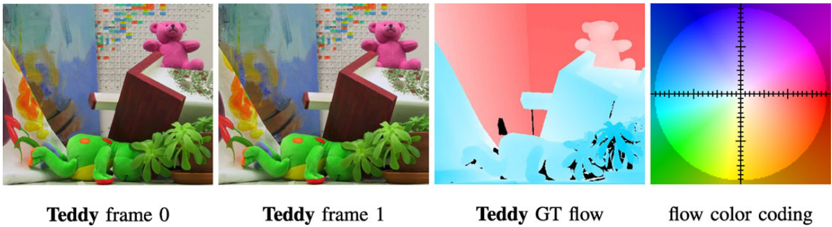
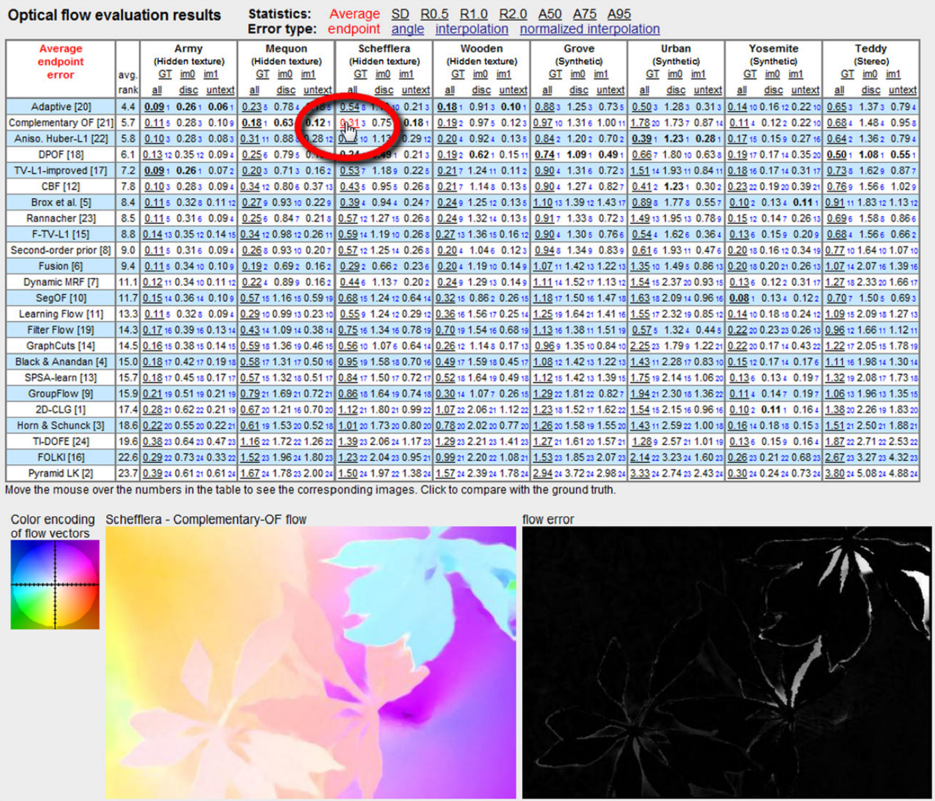
- The benchmark contains 12 training and 12 test sequences; test ground truth is withheld except for Yosemite. As of December 2009 the online evaluation contained results for 24 published methods, all using only 2 input frames and 10 using color.
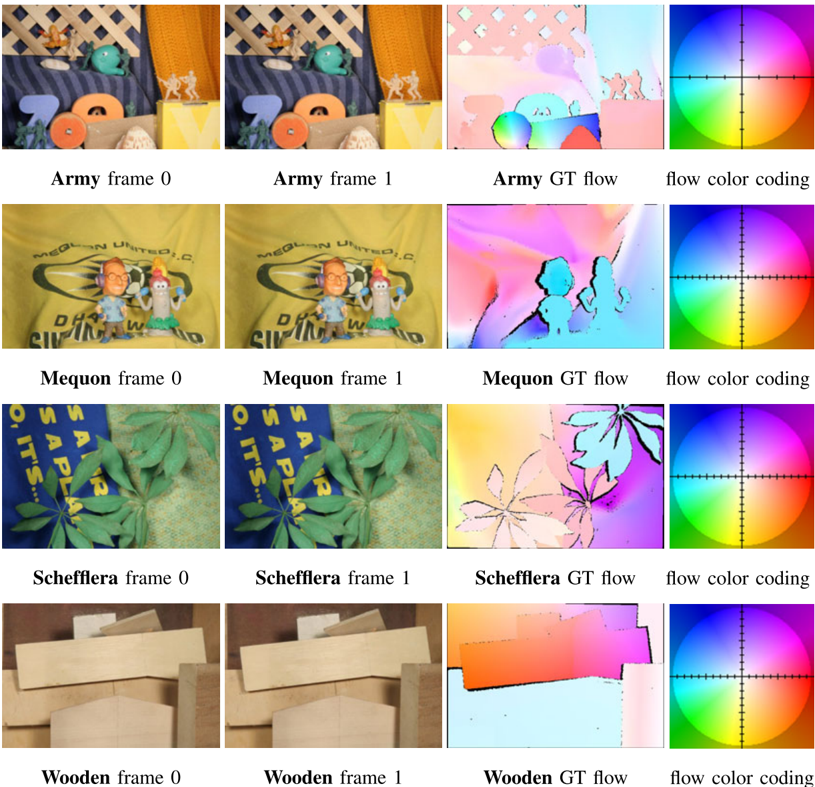
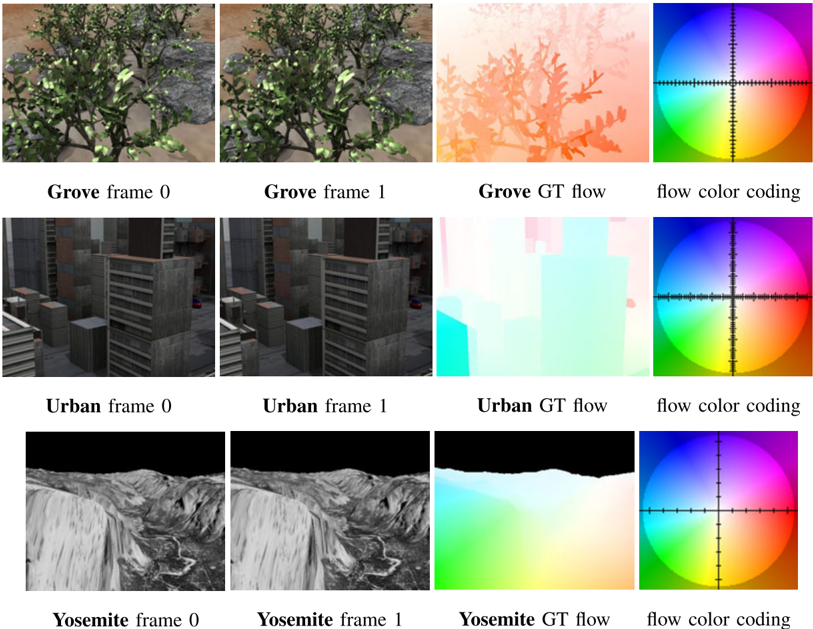
- Best average endpoint error (Avg. EE) improved dramatically over 2D-CLG (Bruhn et al. 2005): Army 0.28→0.09, Mequon 0.67→0.18, Schefflera 1.12→0.24, Wooden 1.07→0.18, Grove 1.23→0.74, Urban 1.54→0.39, Yosemite 0.10→0.08, Teddy 1.38→0.50. Best Avg. EE was below 0.2 pixels on four datasets (Yosemite, Army, Mequon, Wooden).
- Endpoint error (EE) and angular error (AE) rankings were highly correlated (r = 0.989), but the paper argues EE should be preferred: Complementary OF on Urban had Avg. AE 4.64° (rank 6) but Avg. EE 1.78 pixels (rank 20), because AE downweights large motions.
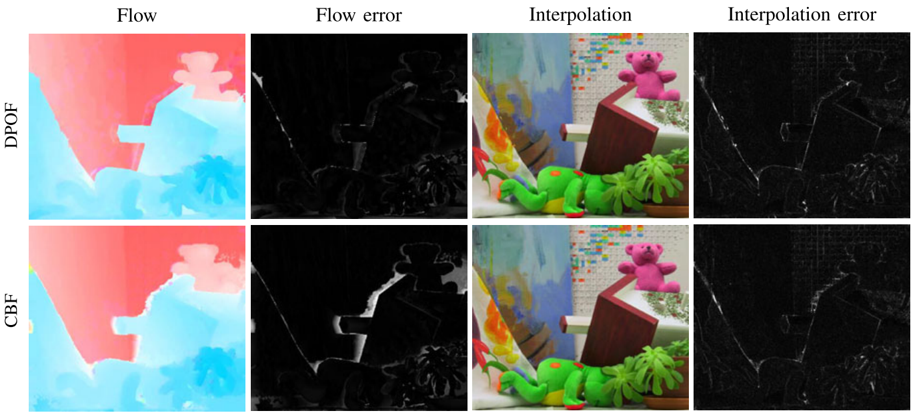
- Motion discontinuity (Disc) regions were the hardest; textureless (Untext) regions were typically easiest. Dataset results were less correlated, with Yosemite poorly or negatively correlated with others. Flow and interpolation errors were only moderately correlated (Avg4 EE vs Avg4 IE r = 0.763). On Teddy, top stereo methods outperformed top flow methods: median lowest-five R1.0 was 9.9 for flow vs 6.5 for stereo in All regions (34% reduction), and 27.6 vs 10.0 in Disc regions (64% reduction).
Methods
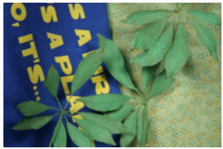
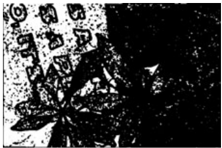
- Four data types were collected: (1) real nonrigid scenes with dense ground truth from hidden fluorescent texture, captured with a Canon EOS 20D at 3504×2336, downsampled every 40th visible-light frame by factor 6 to 584×388, with SSD tracking (15×15 windows), forward/backward crosschecking, and Lucas-Kanade subpixel refinement; (2) realistic synthetic scenes rendered with 3Delight at 640×480, with ground truth from a custom shader and dominant-cluster flow selection; (3) high-speed video for frame interpolation captured with a PointGrey Dragonfly Express at 60 fps, providing every other frame and retaining intermediate frames as ground truth; and (4) modified stereo data (Teddy) from structured light, cropped to make the disparity range roughly symmetric.
- Evaluation metrics include average angular error (AE), absolute flow endpoint error (EE), interpolation error (IE), and gradient-normalized interpolation error (NE). Statistics include averages, robustness measures R_X, and percentile accuracy measures A_X, computed over All, Disc, and Untext region masks.
- Analysis used the online evaluation at http://vision.middlebury.edu/flow/, comparing 24 published methods across metrics, statistics, masks, and datasets, with Pearson correlations between rankings and comparisons to state-of-the-art stereo methods on Teddy.
Limitations
- The paper states that the hidden fluorescent texture scenes are laboratory scenes, not real-world scenes, and have no motion blur due to stop-motion capture; ground truth is unavailable where cross-checking failed, especially occluded regions, and the measured ground truth is not perfect, though significant errors are limited to a small fraction of pixels. Synthetic sequences were generated without motion blur. The modified stereo ground truth is only accurate to 0.25 pixels, and algorithms may exploit the knowledge that motions are horizontal; overfitting to rigid data should be visible across the 12 evaluation images. Interpolation ground truth is an intermediate image, not a flow field, so the flow definition is apparent motion.
- The paper also states that no single method yet achieves strong performance across a wide variety of datatypes, that any dataset has a limited lifespan, and that future studies should include more challenging realistic synthetic data, longer sequences, and more difficult materials, illumination changes, atmospheric effects, and transparency.
- Evident from the text: the online tables do not provide an overall ranking among methods; runtimes are not normalized for programming environment, CPU speed, cores, or hardware acceleration; algorithms are required to produce dense flow and cannot submit confidence maps or sparse/incomplete fields; all 24 published methods used only 2 frames despite 8-frame sequences being available; and the paper cannot definitively answer whether temporal smoothing is less suited to the more challenging sequences.
Model-written summary. Check it against the paper before relying on it.
Integrity signals
Registry
Cites
Statistics
Figures

Verification
Claims the paper makes
2 Valid · 16 Not valid · 58 Not checked · 185 Own results and interpretations
A result the paper states — it cites no source for it, so there is none to check. The quote shows it is in the paper.
In the paper
“Rather than collecting a single type of data (with its inherent limitations) we instead collected four different types of data, each satisfying a different subset of desirable properties.”
plain- Asserted: passes — The authors put it forward as true.
- Checkable: passes — It can be checked against evidence.
- Load-bearing: passes — The paper’s conclusions depend on it.
- Based: passes — The paper gives a reason why it holds.
A result the paper states — it cites no source for it, so there is none to check. The quote shows it is in the paper.
In the paper
“Using the combination of fluorescent paint, downsampling high-resolution images, and sequential tracking of small motions, we are able to obtain dense, subpixel accurate ground truth for a nonrigid scene.”
plainstates a cause- Asserted: passes — The authors put it forward as true.
- Checkable: passes — It can be checked against evidence.
- Load-bearing: passes — The paper’s conclusions depend on it.
- Based: passes — The paper gives a reason why it holds.
A result the paper reports from its own data — it cites no other source for it, so there is none to check. The quote shows it is in the paper.
In the paper
“To allow for measures that predict performance on such tasks, we collected a variety of data suitable for frame interpolation.”
plainstates a cause- Asserted: passes — The authors put it forward as true.
- Checkable: passes — It can be checked against evidence.
- Load-bearing: passes — The paper’s conclusions depend on it.
- Based: passes — The paper gives a reason why it holds.
A result the paper reports from its own data — it cites no other source for it, so there is none to check. The quote shows it is in the paper.
In the paper
“We have developed a technique for capturing imagery of nonrigid scenes with ground-truth optical flow.”
plain- Asserted: passes — The authors put it forward as true.
- Checkable: passes — It can be checked against evidence.
- Load-bearing: passes — The paper’s conclusions depend on it.
- Based: passes — The paper gives a reason why it holds.
A result the paper states — it cites no source for it, so there is none to check. The quote shows it is in the paper.
In the paper
“To go beyond previous synthetic ground truth (e.g., the Yosemite sequence), we generated two types of fairly complex synthetic outdoor scenes.”
plain- Asserted: passes — The authors put it forward as true.
- Checkable: passes — It can be checked against evidence.
- Load-bearing: passes — The paper’s conclusions depend on it.
- Based: passes — The paper gives a reason why it holds.
96 more claims
Create a free account to see all 261 claims and every source verdict.
- Probably not a substantial claim. 114
- It may state two separate claims as one. 76
- The quote only partly states this claim. 6
Claims other papers make about this one
Each is checked against this paper’s own text: does it say what the citing paper says it does?
The source backs part of the claim, not all of it — or backs it for a different population, condition or comparison.
In the citing paper
“Notable works include the Middlebury dataset (Baker et al, 2011) and the KITTI datasets (Geiger et al, 2012; Menze and Geiger, 2015), but due to the difficulty of computing accurate ground truth, these have been restricted to 8 and 2 · 200 pairs of frames, respectively (the latter are also limited by the special driving setting).”
From What Makes Good Synthetic Training Data for Learning Disparity and Optical Flow Estimation? (2018) · cites this paper as Baker et al, 2011
Experimental — accuracy not yet measured
Citations
Cites
The pascal visual object classes (VOC) challenge
Everingham, M., Van Gool, L., Williams, C. K. I., Winn, J., & Zisserman, A. (2010) · International Journal of Computer Vision · doi:10.1007/s11263-009-0275-4 · Cited by 19,599
Proceedings of IEEE Conference on Computer Vision and Pattern Recognition
(1993) · doi:10.1109/cvpr.1993 · Cited by 17,667
Proceedings of IEEE International Conference on Computer Vision
(1995) · Proceedings of IEEE International Conference on Computer Vision · doi:10.1109/iccv.1995.466933 · Cited by 12,860
(1981) · Cited by 11,963
Horn, B. K. P., & Schunck, B. G. (1981) · Artificial Intelligence · doi:10.1016/0004-3702(81)90024-2 · Cited by 10,312
Horn, B. K., & Schunck, B. G. (1981) · SPIE Proceedings · doi:10.1117/12.965761 · Cited by 7,394 · cited 2×
“A baseline approach is to use an L2 norm as in the Horn and Schunck algorithm (Horn and Schunck 1981):”
BackgroundMethodFast approximate energy minimization via graph cuts
Boykov, Y., Veksler, O., & Zabih, R. (2001) · IEEE Transactions on Pattern Analysis and Machine Intelligence · doi:10.1109/34.969114 · Cited by 6,988
A Taxonomy and Evaluation of Dense Two-Frame Stereo Correspondence Algorithms
Scharstein, D., & Szeliski, R. (2002) · International Journal of Computer Vision · doi:10.1023/a:1014573219977 · Cited by 6,740 · cited 10×
“Many areas of computer vision, such as stereo [63], face recognition [28, 55, 68], and object recognition [23, 24], have challenging datasets to track the progress made by leading algorithms and to stimulate new ideas.”
BackgroundMethodResultInfluentialSelf-citationProceedings European Conference on Computer Vision 2002
Heyden, A., Sparr, G., Nielsen, M., & Johansen, P. (2002) · Lund University Publications (Lund University) · Cited by 5,153
From few to many: illumination cone models for face recognition under variable lighting and pose
Georghiades, A. S., Belhumeur, P. N., & Kriegman, D. J. (2001) · IEEE Transactions on Pattern Analysis and Machine Intelligence · doi:10.1109/34.927464 · Cited by 4,912 · cited 1×
“Many areas of computer vision, such as stereo (Scharstein and Szeliski 2002), face recognition (Philips et al. 2005; Sim et al. 2003; Gross et al. 2008; Georghiades et al. 2001), and object recognition (Fei-Fei et al.”
Background
Research works printed but not linked: 4
- Anandan, P., & Weiss, R. (1985). Introducing smoothness constraint in a matching approach for the computation of displacement fields. In Proceedings of the DARPA image understanding workshop (pp. 186-196).
- Bleyer, M., & Chambon, S. (2010). Does color really help in dense stereo matching? In Proceedings of the international symposium 3D data processing, visualization and transmission .
- Lempitsky, V., Roth, S., & Rother, C. (2008). Fusion flow: discretecontinuous optimization for optical flow estimation. In Proceedings of the IEEE conference on computer vision and pattern recognition .
- Rannacher, J. (2009). Realtime 3D motion estimation on graphics hardware . Undergraduate thesis, Heidelberg University.
Cited by
Items 601–700 of 2,273
Transport-based analysis, modeling, and learning from signal and data distributionsPreprint
Kolouri, S., Park, S., Thorpe, M., Slepčev, D., & Rohde, G. K. (2016) · arXiv (Cornell University) · doi:10.48550/arxiv.1609.04767 · Cited by 28
“The pervasive success of these, as well as other techniques such as optical flow [10], level-set methods [33], deep neural networks [142], for example, have thus taught us that 1) nonlinearity and 2) modeling the location of pixel intensities are essential concepts to keep in mind when solving modern regression proble…”
BackgroundScene Flow Estimation: A SurveyPreprint
Yan, Z., & Xiang, X. (2016) · arXiv (Cornell University) · doi:10.48550/arxiv.1612.02590 · Cited by 27
“In the optical flow field, additional assumptions such as gradient constancy and some more complicated constraints have been added to make it more robust to the illumination changes [13].”
BackgroundMethodMonitoring of Earth Surface Motion and Geomorphologic Processes by Optical Image Correlation
Stumpf, A., Malet, J., Puissant, A., & Travelletti, J. (2016) · Elsevier eBooks · doi:10.1016/b978-1-78548-105-5.50005-0 · Cited by 25
Multiframe Scene Flow with Piecewise Rigid Motion
Golyanik, V., Kim, K., Maier, R. L., NieBner, M., Stricker, D., & Kautz, J. (2017) · International Conference on 3D Vision (3DV) · doi:10.1109/3dv.2017.00039 · Cited by 20
“Projection of the scene flow and optical flow are visualised with the Middlebury color code [3].”
MethodInfluentialDiverseNet: When One Right Answer is not Enough
Firman, M., Campbell, N. D. F., Agapito, L., & Brostow, G. (2018) · IEEE Computer Society Conference on Computer Vision and Pattern Recognition/Proceedings - IEEE Computer Society Conference on Computer Vision and Pattern Recognition/Proceedings · doi:10.1109/cvpr.2018.00587 · Cited by 29
“To evaluate, we use the average endpoint error, as advocated by [2].”
MethodExploring temporal consistency for human pose estimation in videos
Li, Y., Li, K., Wang, X., et al. (2020) · Pattern Recognition · doi:10.1016/j.patcog.2020.107258 · Cited by 22
PyTrx: A Python-Based Monoscopic Terrestrial Photogrammetry Toolset for Glaciology
How, P. R., Hulton, N. R. J., Buie, L., et al. (2020) · Frontiers in Earth Science · doi:10.3389/feart.2020.00021 · Cited by 22
Video frame interpolation via optical flow estimation with image inpainting
Liu, X., Liu, H., & Lin, Y. (2020) · International Journal of Intelligent Systems · doi:10.1002/int.22285 · Cited by 32
“5,6 However, it is difficult to guarantee the pixel between original adjacent frames one ‐ to ‐ one correspondence, which results in the hole and occlusion problems in interpolated frames.”
BackgroundMRDFlow: Unsupervised Optical Flow Estimation Network With Multi-Scale Recurrent Decoder
Zhao, R. Q., Xiong, R., Ding, Z., Fan, X., Zhang, J., & Huang, T. (2021) · IEEE Transactions on Circuits and Systems for Video Technology · doi:10.1109/tcsvt.2021.3135440 · Cited by 30
“However, traditional optical flow data sets, such as Middlebury [35], KITTI [36] and Sintel [58] cannot offer”
BackgroundMethodKrig, S. (2016) · Springer eBooks · doi:10.1007/978-3-319-33762-3_2 · Cited by 32
An efficient real-time accelerator for high-accuracy DNN-based optical flow estimation in FPGA
Yan, Y., Ling, Y., Huang, K., & Chen, G. (2022) · Journal of Systems Architecture · doi:10.1016/j.sysarc.2022.102818 · Cited by 25
DefCor-Net: Physics-aware ultrasound deformation correction
Jiang, Z., Zhou, Y., Cao, D., & Navab, N. (2023) · Medical Image Analysis · doi:10.1016/j.media.2023.102923 · Cited by 28
“applied different colors to represent pixel displacement vectors (Baker et al., 2011).”
Dynamic-Guided Spatiotemporal Attention for Echocardiography Video Segmentation
Lin, J., Xie, W., Li, K., & Wu, H. (2024) · IEEE Transactions on Medical Imaging · doi:10.1109/tmi.2024.3403687 · Cited by 33
Optical flow estimation in cardiac CT images using the steered Hermite transform
Moya-Albor, E., Ramírez, B. E., & Vallejo, E. (2012) · Signal Processing Image Communication · doi:10.1016/j.image.2012.11.005 · Cited by 22
“As a performance measure we calculate the angular error ( AE ) proposed in [3].”
MethodInfrared‐visible video fusion based on motion‐compensated wavelet transforms
Xu, L., Du, J., & Zhang, Z. (2014) · IET Image Processing · doi:10.1049/iet-ipr.2014.0245 · Cited by 23
Where is photogrammetry heading to? State of the art and trends
Forlani, G., Roncella, R., & Nardinocchi, C. (2015) · RENDICONTI LINCEI · doi:10.1007/s12210-015-0381-x · Cited by 27
“The last three decades witnessed an almost continuous development of image matching techniques: such a large number of implementations makes it hard to identify a completely satisfactory taxonomy of the different techniques, even if very good overviews can be found in literature (see for instance Barron et al. 1994; S…”
BackgroundComparison of Deghosting Algorithms for Multi-exposure High Dynamic Range Imaging
Hadziabdic, K. K., Telalović, J. H., & Mantiuk, R. (2013) · Spring Conference on Computer Graphics · doi:10.1145/2508244.2508247 · Cited by 22
“The statistical significance for the comprehensively chosen scenes based on Middlebury [Baker et al. 2011] benchmark was based on sample size of 30 subjects.”
MethodInfluentialMulti-frame super-resolution algorithm for complex motion patterns
Kanaev, A. V., & Miller, C. W. (2013) · Optics Express · doi:10.1364/oe.21.019850 · Cited by 23
A Fast Joint Bioinspired Algorithm for Optic Flow and Two-Dimensional Disparity Estimation
Chessa, M., Sabatini, S. P., & Solari, F. (2009) · Lecture notes in computer science · doi:10.1007/978-3-642-04667-4_19 · Cited by 25
“For what concerns the accuracy, the quantitative evaluation of optical flow and disparity algorithm is performed by comparing the results for selected test sequences, for which the ground truth data are available [1][2] (Fig.”
BackgroundMethodGlobal minimization of Markov random fields with applications to optical flow
Goldstein, T., Bresson, X., & Osher, S. (2012) · Inverse Problems and Imaging · doi:10.3934/ipi.2012.6.623 · Cited by 26
“We will consider synthetic examples, as well as stereo and object tracking examples from the Middlebury optical flow evaluation dataset [3].”
MethodLetelier, J. A., Herrera, P., Mujica, N., & Ortega, J. H. (2016) · Experiments in Fluids · doi:10.1007/s00348-015-2109-1 · Cited by 25
“The OpFlow method has been extensively evaluated against other optical flow methods (Barron et al. 1994; Baker et al. 2011) using the average end-point error over some images of the Middlebury database, obtaining better results in comparison with Lucas–Kanade, Horn–Schunck, and Brox algorithms…”
BackgroundMethodInfluentialWang, L., Xiao, H. B., Luo, S., Zhang, J., & Liu, X. (2019) · Signal Processing Image Communication · doi:10.1016/j.image.2019.07.011 · Cited by 22
AIM 2019 Challenge on Video Temporal Super-Resolution: Methods and Results
Nah, S., Son, S., Timofte, R., Lee, K. M., Li, S., Pan, Z., Xu, X., Sun, W., Choi, M., Kim, H., et al. (2019) · IEEE International Conference on Computer Vision Workshops · doi:10.1109/iccvw.2019.00421 · Cited by 21
“Classical image interpolation techniques mostly include motion modeling via optical flow [1] or phase shift [8, 50].”
BackgroundInfluentialAlia, A., Maree, M., & Chraibi, M. (2022) · Sensors · doi:10.3390/s22114040 · Cited by 24
“For this purpose, recurrent all-pairs field transforms (RAFT) [27] (one of the newest and most promising deep optical flow methods) and the wheel visualization method [28,29] are combined; (2) The pushing patch annotation adapts the EfficientNet-B0-based CNN architecture (the EfficientNet-B0-based CNN [30] is an effec…”
MethodImproved Reconstruction of Deforming Surfaces by Cancelling Ambient Occlusion
Beeler, T., Bradley, D., Zimmer, H., & Groß, M. H. (2012) · Lecture notes in computer science · doi:10.1007/978-3-642-33718-5_3 · Cited by 23
“The goal of these systems is to reconstruct both the time-varying shape as well as the motion for each point on the surface, typically utilizing tools such as multi-view 3D reconstruction [7] and image-based tracking via dense optical flow [8].”
BackgroundMethodInfluentialOptical Flow Estimation Using Laplacian Mesh Energy
Li, W., Cosker, D. P., Brown, M., & Tang, R. (2013) · IEEE Computer Society Conference on Computer Vision and Pattern Recognition/Proceedings - IEEE Computer Society Conference on Computer Vision and Pattern Recognition/Proceedings · doi:10.1109/cvpr.2013.315 · Cited by 25
“We evaluate our approach on the widely recognizedMiddlebury dataset [2] as well as the publicly available nonrigid data set proposed by Garg et al.”
MethodInfluentialCorrelation estimation from compressed images
Thirumalai, V., & Frossard, P. (2012) · Journal of Visual Communication and Image Representation · doi:10.1016/j.jvcir.2011.12.004 · Cited by 21
“Classically, the accuracy of the motion values is evaluated with the original images [25] and the data cost is typically given as eEdðMÞ 1⁄4XN1 k1⁄41 XN2”
BackgroundJeon, S., Min, D., Kim, S., Choe, J., & Sohn, K. (2020) · Lecture notes in computer science · doi:10.1007/978-3-030-58604-1_38 · Cited by 27
Optical Flow Based on Lucas-Kanade Method for Motion Estimation
Yedjour, H. (2020) · Lecture notes in networks and systems · doi:10.1007/978-3-030-63846-7_92 · Cited by 21
Ma, Y., Shen, J. G., Zhao, Z., Liang, H., Tan, Y., Liu, Z., Qian, K., Yang, M., & Hu, B. (2023) · IEEE Transactions on Neural Systems and Rehabilitation Engineering · doi:10.1109/tnsre.2023.3305351 · Cited by 24
“OP [39], [40] extracts and evaluates targeted object’s magnitude and direction on the pixel level, which could effectively measure spatio-temporal intensity changes of facial landmarks or extracted ROIs.”
Exploring Motion Ambiguity and Alignment for High-Quality Video Frame Interpolation
Zhou, K., Li, W., Han, X., & Lu, J. (2023) · IEEE Computer Society Conference on Computer Vision and Pattern Recognition/Proceedings - IEEE Computer Society Conference on Computer Vision and Pattern Recognition/Proceedings · doi:10.1109/cvpr52729.2023.02123 · Cited by 35
“(c) Quantitative evaluation of the two methods with/without TCL loss on Vimeo-Triplets [47] and Middlebury [2] benchmarks. parison of SepConv [33] and our model with/without TCL 1 in Fig.”
BackgroundMethodInfluentialRadar Range–Doppler Flow: A Radar Signal Processing Technique to Enhance Radar Target Classification
Wen, Q., & Cao, S. (2023) · IEEE Transactions on Aerospace and Electronic Systems · doi:10.1109/taes.2023.3337757 · Cited by 21
“Our approach differs from the previous work for estimating radial accelerations [29], [30], by applying the concept and techniques of the optical flow, which has been well-established in the computervisionfieldinthelastfourdecades[31],[32],[33], [34],[35],[36],tothefieldofradar.”
MethodImage-based deformation measurement
Scaioni, M., Feng, T., Barazzetti, L., Previtali, M., & Roncella, R. (2014) · Applied Geomatics · doi:10.1007/s12518-014-0152-x · Cited by 23
“Owing to such large number of different implementations, it is quite hard to identify a completely satisfactory taxonomy of the different algorithms, even if very good overviews can be found in the literature (see, e.g., Scharstein et al. 2002 and Baker et al. 2011).”
Wireless Capsule Endoscopy Video Reduction Based on Camera Motion Estimation
Liu, H., Pan, N., Lu, H., Song, E., Wang, Q., & Hung, C. (2012) · Journal of Imaging Informatics in Medicine · doi:10.1007/s10278-012-9519-x · Cited by 21
“SIFT-flow displacement field is a visualization of pixel displacements using the color-coding scheme of [23] J Digit Imaging (2013) 26:287–301 295”
MethodAdaptive Integration of Feature Matches into Variational Optical Flow Methods
Stoll, M., Volz, S., & Bruhn, A. (2013) · Lecture notes in computer science · doi:10.1007/978-3-642-37431-9_1 · Cited by 27
“[6, 20, 23, 24]) to steadily improve the quality of the results (see also [2]).”
BackgroundMethodUnmanned Aircraft System Navigation in the Urban Environment: A Systems Analysis
Rufa, J. R., & Atkins, E. M. (2016) · Journal of Aerospace Information Systems · doi:10.2514/1.i010280 · Cited by 21
Feature Learning and Deep Learning Architecture Survey
Krig, S. (2016) · Springer eBooks · doi:10.1007/978-3-319-33762-3_10 · Cited by 25
Depth Map Estimation Using Defocus and Motion Cues
Kumar, H., Yadav, A. S., Gupta, S., & Venkatesh, K. S. (2018) · IEEE Transactions on Circuits and Systems for Video Technology · doi:10.1109/tcsvt.2018.2832086 · Cited by 23
“We considered ‘Grove’, ‘Urban’ and ‘Cartoon’ video sequences from Middlebury video sequences [36] (Rows 1, 2 and 4 of Figure (16)).”
BackgroundTime-lapse optical flow regularization for geophysical complex phenomena monitoring
Hadhri, H., Vernier, F., Atto, A. M., & Trouvé, E. (2019) · ISPRS Journal of Photogrammetry and Remote Sensing · doi:10.1016/j.isprsjprs.2019.02.007 · Cited by 22
3D Motion Decomposition for RGBD Future Dynamic Scene Synthesis
Qi, X., Liu, Z., Chen, Q., & Jia, J. (2019) · IEEE Computer Society Conference on Computer Vision and Pattern Recognition/Proceedings - IEEE Computer Society Conference on Computer Vision and Pattern Recognition/Proceedings · doi:10.1109/cvpr.2019.00786 · Cited by 28
“Compared with Pred2D, our method achieves a much lower EPE, i.e. 3.65 vs 7.56.”
MethodInfluentialYe, Z., Xu, Y., Chen, H., et al. (2020) · Remote Sensing · doi:10.3390/rs12040696 · Cited by 21
“For instance, the major adopted subpixel methods for solving optical flow problems are based on continuous optimization [3], while the major ones for stereoscopic digital elevation model generation are semi-global matching with similarity fitting [25] or least-squares matching (LSM) [26].”
BackgroundMethodShen, B., Wang, R., Law, A. C. C., Kamath, R. R., Choo, H., & Kong, Z. (2021) · Technometrics · doi:10.1080/00401706.2021.1905074 · Cited by 23
“Classical image interpolation techniques mostly include motion modeling via optical flow (Baker et al. 2011) or phase shift (Didyk et al. 2013).”
Close-Range Photogrammetric Techniques for Deformation Measurement: Applications to Landslides
Scaioni, M., Feng, T., Lü, P., Qiao, G., Tong, X., Li, R., Barazzetti, L., Previtali, M., & Roncella, R. (2015) · Springer eBooks · doi:10.1007/978-3-662-45931-7_2 · Cited by 24
Shape Tracking with Occlusions via Coarse-to-Fine Region-Based Sobolev Descent
Yang, Y., & Sundaramoorthi, G. (2014) · IEEE Transactions on Pattern Analysis and Machine Intelligence · doi:10.1109/tpami.2014.2360380 · Cited by 19
“…between two time instances τ i and τ i +1 , that is, d τ i ,τ i +1 ( x ) = φ τ i ◦ φ − 1 τ i +1 ( x ) − x , is is shown in optical flow code [48] (the color indicates direction and darkness indicates magnitude; magnitude should not be compared across images as they are re-scaled in each…”
Oriented Light-Field Windows for Scene Flow
Srinivasan, P. P., Tao, M. W., Ng, R., et al. (2015) · IEEE International Conference on Computer Vision (ICCV) · doi:10.1109/iccv.2015.399 · Cited by 20
“In our implementation, we use λ = 0.002 and γ = 0.1.”
MethodInfluentialA nonlinear modeling of fractional order based variational model in optical flow estimation
Khan, M., & Kumar, P. (2022) · Optik · doi:10.1016/j.ijleo.2022.169136 · Cited by 21
A Cloud-Based Deep Learning Framework for Early Detection of Pushing at Crowded Event Entrances
Alia, A., Maree, M., Chraibi, M., Toma, A., & Seyfried, A. (2023) · IEEE Access · doi:10.1109/access.2023.3273770 · Cited by 24
“An illustration of two keyframes (experiment Entrance_2 [33], two ROI keyframes, color wheel schema [21], MIM, 2 × 4 MIM-patches, annotation mask, annotated ROI keyframe and annotated frame.”
MethodBidirectionally Deformable Motion Modulation For Video-based Human Pose Transfer
Yu, W.-Y., Po, L.-M., Cheung, R. C. C., Zhao, Y., Xue, Y., & Li, K. (2023) · IEEE/CVF International Conference on Computer Vision (ICCV) · doi:10.1109/iccv51070.2023.00690 · Cited by 41
Local All-Pass filters for optical flow estimation
Gilliam, C., & Blu, T. (2015) · IEEE International Conference on Acoustics Speech and Signal Processing · doi:10.1109/icassp.2015.7178227 · Cited by 23
“noisy conditions): the Dimetrodon image pair and RubberWhale image pair from the Middlebury website [6].”
BackgroundMethodResultInfluentialSparse Camera Network for Visual Surveillance -- A Comprehensive SurveyPreprint
Song, M., Tao, D., & Maybank, S. J. (2013) · BIROn (Birkbeck, University of London) · doi:10.48550/arxiv.1302.0446 · Cited by 30
“Unfortunately, optical flow-based methods have a high time complexity and a low tolerance to noise [61].”
BackgroundHorn–Schunck optical flow applied to deformation measurement of a birdlike airfoil
Gong, X., & Bansmer, S. E. (2015) · Chinese Journal of Aeronautics · doi:10.1016/j.cja.2015.07.005 · Cited by 23
Key characteristics of specular stereo
Muryy, A., Fleming, R. W., & Welchman, A. E. (2014) · Journal of Vision · doi:10.1167/14.14.14 · Cited by 21
Understanding trust in privacy-aware video surveillance systems
Rashwan, H. A., Solanas, A., Puig, D., & Martínez-Ballesté, A. (2015) · International Journal of Information Security · doi:10.1007/s10207-015-0286-9 · Cited by 21
“Moreover, they are the most widely used techniques [17].”
MethodVelocity Estimation for Autonomous Vehicles Based on Image Analysis
Lins, R. G., Givigi, S. N., & Kurka, P. R. G. (2015) · IEEE Transactions on Instrumentation and Measurement · doi:10.1109/tim.2015.2477160 · Cited by 20
“To compute the motion from 2-D images, usually the algorithm makes the assumption that the optical flow equals the motion of the vehicle [19].”
MethodOptical flow with fractional order regularization: Variational model and solution method
Bardeji, S. G., Figueiredo, I. N., & Sousa, E. (2016) · Applied Numerical Mathematics · doi:10.1016/j.apnum.2016.04.011 · Cited by 20
“The effectiveness of the new model and numerical approach is shown by presenting experimental results that use the test sequences available in the Middlebury benchmark database designed by [2].”
BackgroundMethodAGORASET: a dataset for crowd video analysis
Allain, P., Courty, N., & Corpetti, T. (2012) · HAL · Cited by 39
Local Stereo Matching Based on Support Weight With Motion Flow for Dynamic Scene
Yang, J., Wang, H., Ding, Z., et al. (2016) · IEEE Access · doi:10.1109/access.2016.2601069 · Cited by 20
“As such, ED becomes the preferred measure of flow accuracy [24].”
BackgroundMethodRobust local optical flow: Long-range motions and varying illuminations
Senst, T., Geistert, J., & Sikora, T. (2016) · Proceedings - International Conference on Image Processing · doi:10.1109/icip.2016.7533207 · Cited by 23
“The experiments have been performed on the training sequences of the Middlebury [3], KITTI [21] and Sintel [24] optical flow datasets.”
MethodMonocular Outlier Detection for Visual Odometry
Buczko, M., & Willert, V. (2017) · IEEE Intelligent Vehicles Symposium · doi:10.1109/ivs.2017.7995805 · Cited by 22
“Thus, in [2] it is stated that the endpoint error ||xt−1 n − x̃t−1 n ||2 between two flow vectors proposed by Otte and Nagel is probably better suited.”
BackgroundMethodInfluentialPrativadibhayankaram, S. V., Luong, H. V., Le, T. H., & Kaup, A. (2018) · Journal of Imaging · doi:10.3390/jimaging4070090 · Cited by 21
Quality-Oriented Perceptual HEVC Based on the Spatiotemporal Saliency Detection Model
Jiang, X., Song, T., Zhu, D., Katayama, T., & Wang, L. (2019) · Entropy · doi:10.3390/e21020165 · Cited by 22
“MVx(x, y) and MVy(x, y) are represented as the horizontal and vertical motion vector by using the Lucas–Kanade (LK) algorithm [17].”
MethodA systematic analysis of a V1–MT neural model for motion estimation
Chessa, M., Sabatini, S. P., & Solari, F. (2015) · Neurocomputing · doi:10.1016/j.neucom.2015.08.091 · Cited by 47
AniCAP: An Animated 3D CAPTCHA Scheme Based on Motion Parallax
Chow, Y.-W., & Susilo, W. (2011) · Lecture notes in computer science · doi:10.1007/978-3-642-25513-7_18 · Cited by 19
Xu, L., Dai, Z., & Jia, J. (2012) · Lecture notes in computer science · doi:10.1007/978-3-642-33709-3_28 · Cited by 22
“Flow vectors are visualized with the color coding of [9].”
MethodII-LK – A Real-Time Implementation for Sparse Optical Flow
Senst, T., Eiselein, V., & Sikora, T. (2010) · Lecture notes in computer science · doi:10.1007/978-3-642-13772-3_25 · Cited by 22
“Evaluation results: color code scheme proposed in [2] shows the visual performance of the algorithms.”
MethodOptical Flow Estimation using a Spatial Pyramid NetworkPreprint
Ranjan, A., & Black, M. J. (2016) · arXiv (Cornell University) · doi:10.48550/arxiv.1611.00850 · Cited by 75
“We report similar performance as FlowNet on Flying Chairs and Sintel [11] but are significantly more accurate than FlowNet on Middlebury [4] and KITTI [18] after fine tuning.”
MethodSelf-citationDeep Graph Matching via Blackbox Differentiation of Combinatorial Solvers
Rolínek, M., Swoboda, P., Zietlow, D., Paulus, A., Musil, V., & Martius, G. (2020) · Lecture notes in computer science · doi:10.1007/978-3-030-58604-1_25 · Cited by 131
A Perceptual Quality Metric for Video Frame Interpolation
Hou, Q., Ghildyal, A., & Liu, F. (2022) · Lecture notes in computer science · doi:10.1007/978-3-031-19784-0_14 · Cited by 37
Rolling Shutter Camera: Modeling, Optimization and Learning
Fan, B., Dai, Y., & He, M. (2023) · Machine Intelligence Research · doi:10.1007/s11633-022-1399-z · Cited by 22
Unsupervised Multimodal Remote Sensing Image Registration via Domain Adaptation
Shi, L., Zhao, R., Pan, B., Zou, Z., & Shi, Z. (2023) · IEEE Transactions on Geoscience and Remote Sensing · doi:10.1109/tgrs.2023.3333889 · Cited by 23
“Moreover, the generated registration fields during the registration process were further visualized using the standard optical-flow visualization [41], as depicted in Fig.”
Method3D Implicit Transporter for Temporally Consistent Keypoint Discovery
Zhong, C., Zheng, Y., Zheng, Y., Zhao, H., Yi, L., Mu, X., Wang, L., Li, P., Zhou, G., Yang, C., et al. (2023) · IEEE/CVF International Conference on Computer Vision (ICCV) · doi:10.1109/iccv51070.2023.00358 · Cited by 34
“Meanwhile, establishing dense correspondences from image sequences (i.e., optical flow) [5, 6, 9, 13, 54, 55, 53] is also one of the oldest computer vision topics, dating back to the birth of this discipline [19].”
BackgroundTV-L 1 Optical Flow for Vector Valued Images
Rakêt, L. L., Roholm, L., Nielsen, M., & Lauze, F. (2011) · Lecture notes in computer science · doi:10.1007/978-3-642-23094-3_24 · Cited by 19
“This additional information improves the quality of the flow, compared to only using intensity values, but we will also show that simple and clean implementations of the presented algorithms, in a number of cases even surpass the more sophisticated TV-L(1)-improved algorithm [9] on training data from the Middlebury op…”
MethodBlind motion deblurring using optical flow
Xu, Y., Hu, X., & Peng, S. (2014) · Optik · doi:10.1016/j.ijleo.2014.08.139 · Cited by 18
Digital ira and beyond: creating real-time photoreal digital actors
von der Pahlen, J., Jiménez, J., Danvoye, É., Debevec, P. E., Fyffe, G., & Alexander, O. (2014) · ACM SIGGRAPH Courses · doi:10.1145/2614028.2615407 · Cited by 21
“Finally, as our framework is agnostic to the particular method employed for estimating 2D correspondences, we would like to try more recent optical .ow algorithms such as the top performers on the Middlebury benchmark [Baker et al. 2011].”
MethodEvaluating Superpixels in Video: Metrics Beyond Figure-Ground Segmentation
Neubert, P., & Protzel, P. (2013) · British Machine Vision Conference (BMVC) · doi:10.5244/c.27.54 · Cited by 19
“Motion direction is coded by hue, saturations codes the motion magnitude, see [3] for details.”
BackgroundMethodFast superpixels for video analysis
Drucker, F., & MacCormick, J. (2009) · IEEE Workshop on Motion and Video Computing · doi:10.1109/wmvc.2009.5399239 · Cited by 21
“Video files accompanying this submission show the entire sequence, and another sequence with a moving camera from the Middlebury optic flow data set [2].”
MethodValidation Of A New Full Reference Metric For Quality Assessment Of Mobile 3Dtv Content
Boev, A., Egiazarian, K., Gotchev, A. P., & Jin, L. (2011) · Zenodo (CERN European Organization for Nuclear Research) · doi:10.5281/zenodo.42622 · Cited by 20
“The results of the proposed approach are compared with several state-of-art quality metrics: PSNR, MSSIM [19], SSIM [7], UQI [20], NRMSE [21], PSNR-HVS [16], PSNR-HVSM [22], which are all 2D metrics and the 3D metric from [8].”
MethodInfluentialAction recognition by saliency-based dense sampling
Xu, Z., Hu, R., Chen, J., Chen, C., Chen, H., Li, H., & Sun, Q. (2016) · Neurocomputing · doi:10.1016/j.neucom.2016.09.106 · Cited by 19
“For performance measures of optical fl ow, Baker et al. [69] extended the sum-of-squared-di ff erence (SSD) to compute frame interpolation.”
Hierarchical Improvement of Foreground Segmentation Masks in Background Subtraction
Ortego, D., SanMiguel, J. C., & Martínez, J. M. (2018) · IEEE Transactions on Circuits and Systems for Video Technology · doi:10.1109/tcsvt.2018.2851440 · Cited by 22
A Fast 4K Video Frame Interpolation Using a Hybrid Task-Based Convolutional Neural Network
Ahn, H., Jeong, J., & Kim, J. W. (2019) · Symmetry · doi:10.3390/sym11050619 · Cited by 21
“Most video-frame interpolation studies [14–16] report and compare the performance of their methods on Middleburry optical flow benchmark [35].”
BackgroundA New Adaptive Video Super-Resolution Algorithm With Improved Robustness to Innovations
Borsoi, R. A., Costa, G. H., & Bermudez, J. C. M. (2018) · IEEE Transactions on Image Processing · doi:10.1109/tip.2018.2866181 · Cited by 20
“…for instance from specular surfaces. η ( t ) can be modeled as a low power high frequency noise. d ( t ) represents large magnitude changes (outliers) arising due to occlusions or due to objects suddenly appearing in the scene (such as image borders). d ( t ) is usually sparse and compact [34] 2 .”
BackgroundMulti-Frame Pyramid Refinement Network for Video Frame Interpolation
Zhang, H., Wang, R., & Zhao, Y. (2019) · IEEE Access · doi:10.1109/access.2019.2940510 · Cited by 20
Deep Space-Time Video Upsampling Networks
Kang, J., Jo, Y., Oh, S. W., Vajda, P., & Kim, S. J. (2020) · Lecture notes in computer science · doi:10.1007/978-3-030-58607-2_41 · Cited by 23
“For this pretraining, we use 7 frames Y[0,1,2,3,4,5,6] in the training dataset and 128× 128 patches are cropped.”
BackgroundMethodInfluentialLearned Dual-View Reflection Removal
Niklaus, S., Zhang, X. C., Barron, J. T., Wadhwa, N., Garg, R. D., Liu, F., & Xue, T. (2021) · IEEE Winter Conference on Applications of Computer Vision · doi:10.1109/wacv48630.2021.00376 · Cited by 31
“However, acquiring ground truth flow is a challenging problem with previous work having exploited hidden fluorescent textures, computer graphics, and high frame-rate videos [2, 5, 14].”
BackgroundMethodOptical flow estimation for motion-compensated compression
Chen, W., & Mied, R. P. (2013) · Image and Vision Computing · doi:10.1016/j.imavis.2013.01.002 · Cited by 19
“Several test datasets are available [40,41].”
MethodResultInfluentialFull Flow: Optical Flow Estimation By Global Optimization over Regular GridsPreprint
Chen, Q., & Koltun, V. (2016) · arXiv (Cornell University) · doi:10.48550/arxiv.1604.03513 · Cited by 19
“While this local refinement approach can be accurate when displacements are small [3, 39], it does not optimize the objective globally over the full space of flows and is prone to local minima.”
BackgroundTorontoCity: Seeing the World with a Million EyesPreprint
Wang, S., Bai, M., Máttyus, G., et al. (2016) · arXiv (Cornell University) · doi:10.48550/arxiv.1612.00423 · Cited by 19
“A popular alternative is to use synthetic data to generate large scale benchmarks [4, 6, 27, 30, 32, 14, 7, 29].”
Health & Gait: a dataset for gait-based analysis
Zafra-Palma, J., Marín‐Jiménez, N., Castro‐Piñero, J., Cuenca‐García, M., Muñoz‐Salinas, R., & Marín-Jiménez, M. J. (2025) · Scientific Data · doi:10.1038/s41597-024-04327-4 · Cited by 36
3D optical flow for large CT data of materials microstructures
Nogatz, T., Redenbach, C., & Schladitz, K. (2022) · Strain · doi:10.1111/str.12412 · Cited by 18
DyNCA: Real-Time Dynamic Texture Synthesis Using Neural Cellular Automata
Pajouheshgar, E., Xu, Y., Zhang, T., & Susstrunk, S. E. (2023) · IEEE Computer Society Conference on Computer Vision and Pattern Recognition/Proceedings - IEEE Computer Society Conference on Computer Vision and Pattern Recognition/Proceedings · doi:10.1109/cvpr52729.2023.01987 · Cited by 18
Model-Aware Pre-Training for Radial Distortion Rectification
Wang, W., Feng, H., Zhou, W., Liao, Z., & Li, H. (2023) · IEEE Transactions on Image Processing · doi:10.1109/tip.2023.3321459 · Cited by 22
“Besides, End-Point-Error (EPE) [81] is introduced for our ablation experiments, which is defined as the Euclidean distance between the predicted backward warping flow and the ground truth averaged over all pixels.”
BackgroundAttention-Aware Non-Rigid Image Registration for Accelerated MR Imaging
Ghoul, A., Pan, J., Lingg, A., Kübler, J., Krumm, P., Hammernik, K., Rueckert, D., Gatidis, S., & Küstner, T. (2024) · IEEE Transactions on Medical Imaging · doi:10.1109/tmi.2024.3385024 · Cited by 29
“To demonstrate the estimated motion direction and amplitude, motion estimations are color-encoded following [71] and in the second row of panels depicted as quiver plot overlays on the fully sampled moving image.”
BackgroundMethodStereo Ground Truth with Error Bars
Kondermann, D., Nair, R. S., Meister, S., Mischler, W., Güssefeld, B., Honauer, K., Hofmann, S., Brenner, C., & Jähne, B. (2015) · Lecture notes in computer science · doi:10.1007/978-3-319-16814-2_39 · Cited by 25
“Stereo Datasets(1): General-purpose real-world reference data has been published in the Middlebury database [1] with an estimated accuracy of around 1/60th of a pixel.”
BackgroundMethodLi, J., Zhou, Y., Ivanov, K., & Zheng, Y. (2013) · Ultrasonics · doi:10.1016/j.ultras.2013.09.024 · Cited by 20
“The CCV is an established color coding scheme described in [48], where the color represents the orientation of the vector and brightness stands”
MethodHigh dynamic range imaging of non-static scenes
Hossain, I., & Gunturk, B. K. (2010) · Proceedings of SPIE, the International Society for Optical Engineering/Proceedings of SPIE · doi:10.1117/12.872513 · Cited by 18
Anisotropic motion estimation on edge preserving Riesz wavelets for robust video mosaicing
Ali, S., Daul, C., Galbrun, E., Guillemin, F. H., & Blondel, W. (2015) · Pattern Recognition · doi:10.1016/j.patcog.2015.09.021 · Cited by 18
FlowCap: 2D Human Pose from Optical Flow
Romero, J., Loper, M., & Black, M. J. (2015) · Lecture notes in computer science · doi:10.1007/978-3-319-24947-6_34 · Cited by 18
“Left to right: image capture with Kinect RGB camera, optical flow (color coded as in [2]), per pixel part labels, part centers with uncertainty (red circles) and motion vectors (10x actual magnitude), estimated kinematic structure of the part centers, predicted Kinect kinematic structure using linear regression.”
MethodSelf-citationThe Inverse Compositional Algorithm for Parametric Registration
Sánchez, J. (2016) · Image Processing On Line · doi:10.5201/ipol.2016.153 · Cited by 22
An Eigenvalue Approach to Detect Flows and Events in Crowd Videos
Sharif, M. H. (2017) · Journal of Circuits Systems and Computers · doi:10.1142/s0218126617501109 · Cited by 18
Efficient Segmentation-Based PatchMatch for Large Displacement Optical Flow Estimation
Chen, J., Cai, Z., Lai, J., & Xie, X. (2018) · IEEE Transactions on Circuits and Systems for Video Technology · doi:10.1109/tcsvt.2018.2885246 · Cited by 19
Metadata
- Authors
- Baker, S., Scharstein, D., Lewis, J. P., Roth, S., Black, M. J., & Szeliski, R.
- Affiliations
- Microsoft (United States) (US)
- Middlebury College (US)
- Technische Universität Darmstadt (DE)
- Brown University (US)
- Corresponding author
- Scharstein, Daniel
- Venue
- International Journal of Computer Vision
- Published
- 2010-11-30
- Volume
- 92
- Issue
- 1
- Pages
- 1-31
- ISSN
- 0920-5691 (ISSN-L)
- 1573-1405
- OpenAlex
- W2147253850
- Semantic Scholar
- 804836b8ad86ef8042e3dcbd45442a52f031ee03
- Cited by
- 2,205
- References
- 112
- Citations by year
- 2026: 49 · 2025: 81 · 2024: 82 · 2023: 117 · 2022: 129 · 2021: 152 · 2020: 174 · 2019: 163 · 2018: 144 · 2017: 156 · 2016: 187 · 2015: 180 · 2014: 154 · 2013: 129 · 2012: 118
- FWCI
- 146.62
- Type
- journal article
- Language
- en
- Open access
- hybrid
- doi.org
- Licence
- cc-by-nc
- Locations
- International Journal of Computer Vision (publishedVersion, cc-by-nc)
- Publikationsdatenbank der Fraunhofer-Gesellschaft (Fraunhofer-Gesellschaft) (publishedVersion)
- Max Planck Institute for Plasma Physics (submittedVersion)
- Fraunhofer-Publica (Fraunhofer-Gesellschaft) (submittedVersion)
- Funders
- National Science Foundation (0534858, 0535075, 0413169)
- Intel Corporation
- Topics
- Physical Sciences › Computer Science › Computer Vision and Pattern Recognition › Advanced Vision and Imaging
- Physical Sciences › Computer Science › Computer Vision and Pattern Recognition › Video Surveillance and Tracking Methods
- Physical Sciences › Computer Science › Signal Processing › Video Coding and Compression Technologies
- Keywords
- optical flow, benchmark dataset, evaluation methodology, non-rigid motion, motion discontinuities, textureless regions, sensor noise
About these checks
Registry, retraction, Cites and statistics results are computed, not judged, with one exception: a printed reference that no index lists is read once by a model before it counts as a citation error. Claims are extracted by a model and kept only when their quote appears verbatim in the text; each cited source is then checked, with a model’s help, for whether it says what the claim relies on. Those verdicts can be wrong — read the claim’s quote and the cited source before relying on one.
The claim verdicts this report counts are experimental: their accuracy is not yet measured.
A language model drew the claims from the paper on 2026-10-01, under version 3 of the claim definition (model deepseek-v4.1-flash, prompt extract-v3).
A second model labelled each claim on 2026-10-01 (model jev-1.13-20260917, definition revision gold-guideline-v0.2).
Statistics and arithmetic are recomputed, not judged.
Confidence bands are shown only for fields calibrated on our annotated test set. None is calibrated yet, so no band is shown.
What counts as a claim ›How we measure confidence ›How we check this ›
Are you an author, or do you see a problem with this page? Request a review
Data sources
Bibliographic data: Semantic Scholar, OpenAlex, Crossref.
Contains information from the Semantic Scholar Academic Graph Datasets, made available under the ODC Attribution License (ODC-BY 1.0).
Semantic Scholar’s data is described in: Kinney, R., et al. (2023). The Semantic Scholar Open Data Platform. arXiv:2301.10140.
