

A Database and Evaluation Methodology for Optical Flow
Open accessThe DOI matches its Crossref record; 110 of the 112 references it cites were found in a registry or an index; 2 of the 68 sources its claims cite were checked for support.
Abstract
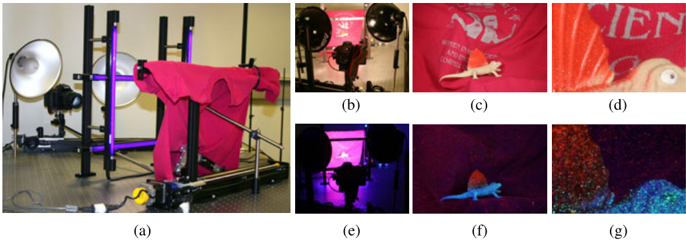
The quantitative evaluation of optical flow algorithms by Barron et al. (1994) led to significant advances in performance. The challenges for optical flow algorithms today go beyond the datasets and evaluation methods proposed in that paper. Instead, they center on problems associated with complex natural scenes, including nonrigid motion, real sensor noise, and motion discontinuities. We propose a new set of benchmarks and evaluation methods for the next generation of optical flow algorithms. To that end, we contribute four types of data to test different aspects of optical flow algorithms: (1) sequences with nonrigid motion where the ground-truth flow is determined by tracking hidden fluorescent texture, (2) realistic synthetic sequences, (3) high frame-rate video used to study interpolation error, and (4) modified stereo sequences of static scenes. In addition to the average angular error used by Barron et al., we compute the absolute flow endpoint error, measures for frame interpolation error, improved statistics, and results at motion discontinuities and in textureless regions.
Overview
CoChat Summary
TL;DR
The paper introduces a new optical flow benchmark of four data types (hidden fluorescent texture, realistic synthetic, high-speed interpolation, and modified stereo) plus an extended evaluation methodology with endpoint error, interpolation error, robustness/accuracy statistics, and region masks. It reports that performance improved substantially over the preliminary 2007 study, but motion discontinuities and diverse datasets remain difficult, and top flow methods still lag top stereo methods on the modified Teddy stereo data.
Key findings
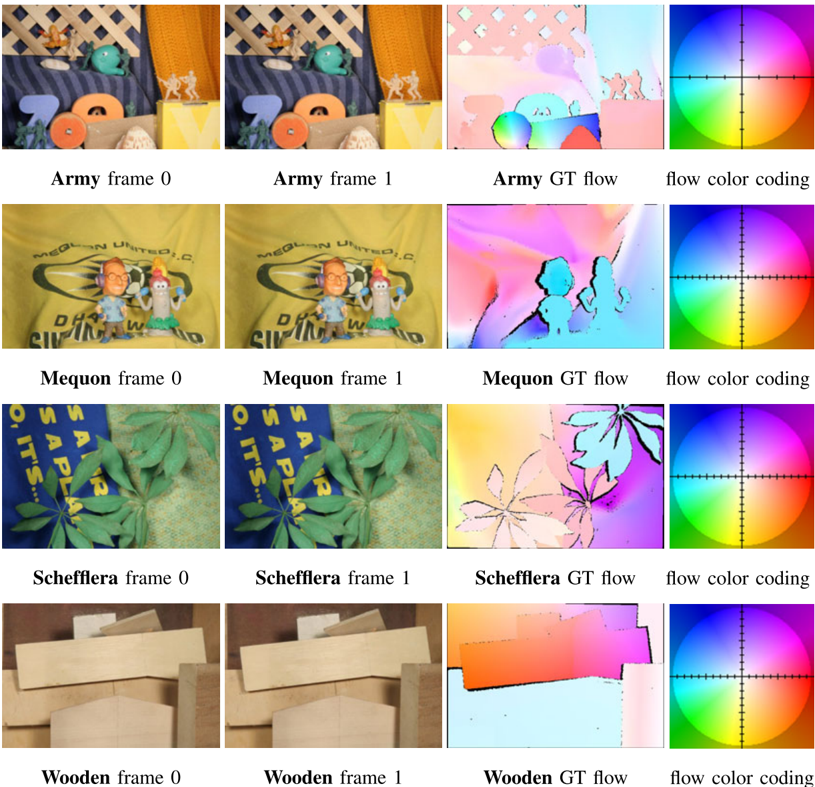
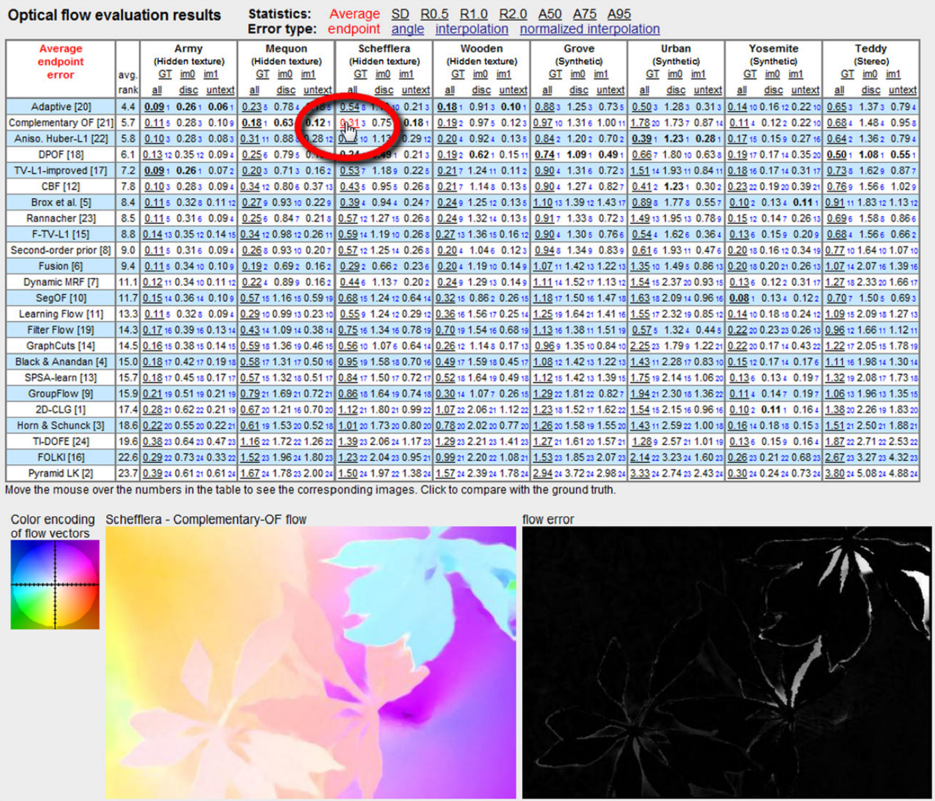
- The benchmark contains 12 training and 12 test sequences; test ground truth is withheld except for Yosemite. As of December 2009 the online evaluation contained results for 24 published methods, all using only 2 input frames and 10 using color.
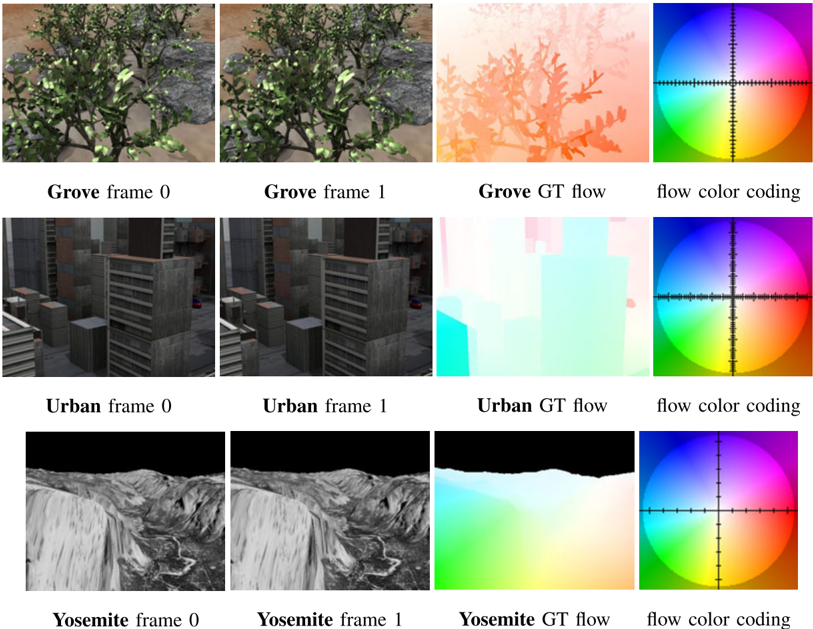
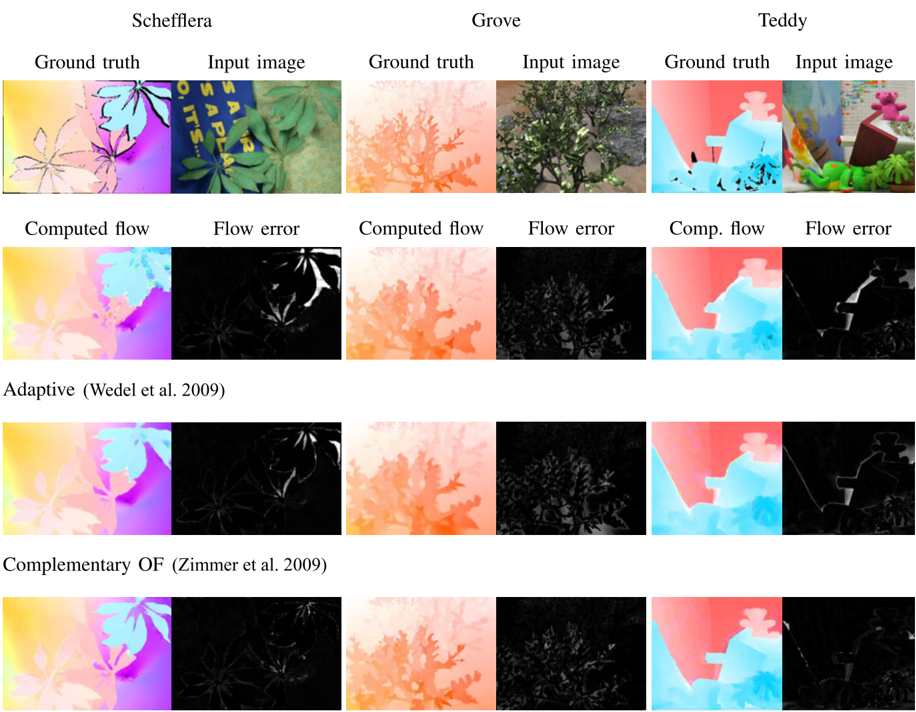
- Best average endpoint error (Avg. EE) improved dramatically over 2D-CLG (Bruhn et al. 2005): Army 0.28→0.09, Mequon 0.67→0.18, Schefflera 1.12→0.24, Wooden 1.07→0.18, Grove 1.23→0.74, Urban 1.54→0.39, Yosemite 0.10→0.08, Teddy 1.38→0.50. Best Avg. EE was below 0.2 pixels on four datasets (Yosemite, Army, Mequon, Wooden).
- Endpoint error (EE) and angular error (AE) rankings were highly correlated (r = 0.989), but the paper argues EE should be preferred: Complementary OF on Urban had Avg. AE 4.64° (rank 6) but Avg. EE 1.78 pixels (rank 20), because AE downweights large motions.
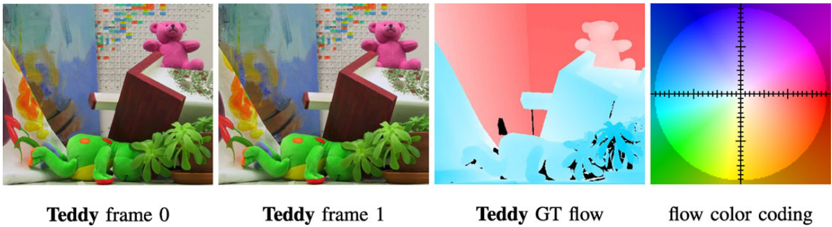
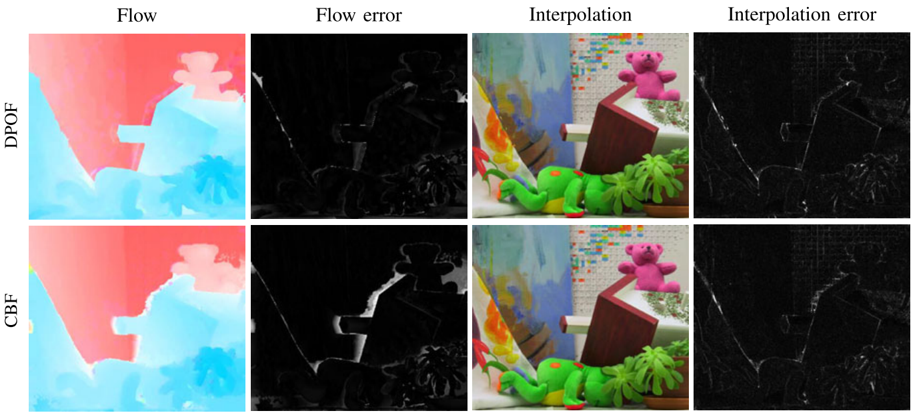
- Motion discontinuity (Disc) regions were the hardest; textureless (Untext) regions were typically easiest. Dataset results were less correlated, with Yosemite poorly or negatively correlated with others. Flow and interpolation errors were only moderately correlated (Avg4 EE vs Avg4 IE r = 0.763). On Teddy, top stereo methods outperformed top flow methods: median lowest-five R1.0 was 9.9 for flow vs 6.5 for stereo in All regions (34% reduction), and 27.6 vs 10.0 in Disc regions (64% reduction).
Methods
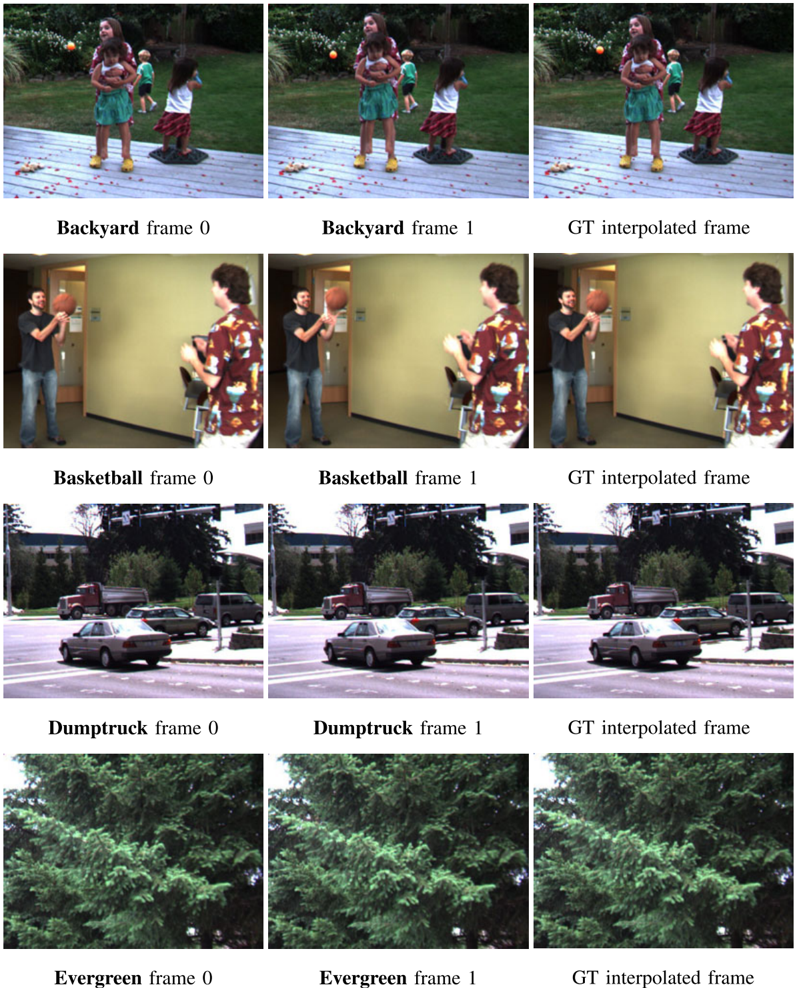
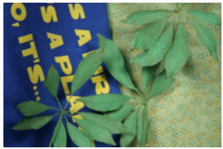
- Four data types were collected: (1) real nonrigid scenes with dense ground truth from hidden fluorescent texture, captured with a Canon EOS 20D at 3504×2336, downsampled every 40th visible-light frame by factor 6 to 584×388, with SSD tracking (15×15 windows), forward/backward crosschecking, and Lucas-Kanade subpixel refinement; (2) realistic synthetic scenes rendered with 3Delight at 640×480, with ground truth from a custom shader and dominant-cluster flow selection; (3) high-speed video for frame interpolation captured with a PointGrey Dragonfly Express at 60 fps, providing every other frame and retaining intermediate frames as ground truth; and (4) modified stereo data (Teddy) from structured light, cropped to make the disparity range roughly symmetric.
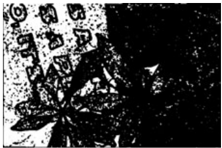
- Evaluation metrics include average angular error (AE), absolute flow endpoint error (EE), interpolation error (IE), and gradient-normalized interpolation error (NE). Statistics include averages, robustness measures R_X, and percentile accuracy measures A_X, computed over All, Disc, and Untext region masks.
- Analysis used the online evaluation at http://vision.middlebury.edu/flow/, comparing 24 published methods across metrics, statistics, masks, and datasets, with Pearson correlations between rankings and comparisons to state-of-the-art stereo methods on Teddy.
Limitations
- The paper states that the hidden fluorescent texture scenes are laboratory scenes, not real-world scenes, and have no motion blur due to stop-motion capture; ground truth is unavailable where cross-checking failed, especially occluded regions, and the measured ground truth is not perfect, though significant errors are limited to a small fraction of pixels. Synthetic sequences were generated without motion blur. The modified stereo ground truth is only accurate to 0.25 pixels, and algorithms may exploit the knowledge that motions are horizontal; overfitting to rigid data should be visible across the 12 evaluation images. Interpolation ground truth is an intermediate image, not a flow field, so the flow definition is apparent motion.
- The paper also states that no single method yet achieves strong performance across a wide variety of datatypes, that any dataset has a limited lifespan, and that future studies should include more challenging realistic synthetic data, longer sequences, and more difficult materials, illumination changes, atmospheric effects, and transparency.
- Evident from the text: the online tables do not provide an overall ranking among methods; runtimes are not normalized for programming environment, CPU speed, cores, or hardware acceleration; algorithms are required to produce dense flow and cannot submit confidence maps or sparse/incomplete fields; all 24 published methods used only 2 frames despite 8-frame sequences being available; and the paper cannot definitively answer whether temporal smoothing is less suited to the more challenging sequences.
Model-written summary. Check it against the paper before relying on it.
Integrity signals
Registry
Cites
Statistics
Figures

Verification
Claims the paper makes
2 Valid · 16 Not valid · 58 Not checked · 185 Own results and interpretations
A result the paper states — it cites no source for it, so there is none to check. The quote shows it is in the paper.
In the paper
“Rather than collecting a single type of data (with its inherent limitations) we instead collected four different types of data, each satisfying a different subset of desirable properties.”
plain- Asserted: passes — The authors put it forward as true.
- Checkable: passes — It can be checked against evidence.
- Load-bearing: passes — The paper’s conclusions depend on it.
- Based: passes — The paper gives a reason why it holds.
A result the paper states — it cites no source for it, so there is none to check. The quote shows it is in the paper.
In the paper
“Using the combination of fluorescent paint, downsampling high-resolution images, and sequential tracking of small motions, we are able to obtain dense, subpixel accurate ground truth for a nonrigid scene.”
plainstates a cause- Asserted: passes — The authors put it forward as true.
- Checkable: passes — It can be checked against evidence.
- Load-bearing: passes — The paper’s conclusions depend on it.
- Based: passes — The paper gives a reason why it holds.
A result the paper reports from its own data — it cites no other source for it, so there is none to check. The quote shows it is in the paper.
In the paper
“To allow for measures that predict performance on such tasks, we collected a variety of data suitable for frame interpolation.”
plainstates a cause- Asserted: passes — The authors put it forward as true.
- Checkable: passes — It can be checked against evidence.
- Load-bearing: passes — The paper’s conclusions depend on it.
- Based: passes — The paper gives a reason why it holds.
A result the paper reports from its own data — it cites no other source for it, so there is none to check. The quote shows it is in the paper.
In the paper
“We have developed a technique for capturing imagery of nonrigid scenes with ground-truth optical flow.”
plain- Asserted: passes — The authors put it forward as true.
- Checkable: passes — It can be checked against evidence.
- Load-bearing: passes — The paper’s conclusions depend on it.
- Based: passes — The paper gives a reason why it holds.
A result the paper states — it cites no source for it, so there is none to check. The quote shows it is in the paper.
In the paper
“To go beyond previous synthetic ground truth (e.g., the Yosemite sequence), we generated two types of fairly complex synthetic outdoor scenes.”
plain- Asserted: passes — The authors put it forward as true.
- Checkable: passes — It can be checked against evidence.
- Load-bearing: passes — The paper’s conclusions depend on it.
- Based: passes — The paper gives a reason why it holds.
96 more claims
Create a free account to see all 261 claims and every source verdict.
- Probably not a substantial claim. 114
- It may state two separate claims as one. 76
- The quote only partly states this claim. 6
Claims other papers make about this one
Each is checked against this paper’s own text: does it say what the citing paper says it does?
The source backs part of the claim, not all of it — or backs it for a different population, condition or comparison.
In the citing paper
“Notable works include the Middlebury dataset (Baker et al, 2011) and the KITTI datasets (Geiger et al, 2012; Menze and Geiger, 2015), but due to the difficulty of computing accurate ground truth, these have been restricted to 8 and 2 · 200 pairs of frames, respectively (the latter are also limited by the special driving setting).”
From What Makes Good Synthetic Training Data for Learning Disparity and Optical Flow Estimation? (2018) · cites this paper as Baker et al, 2011
Experimental — accuracy not yet measured
Citations
Cites
The pascal visual object classes (VOC) challenge
Everingham, M., Van Gool, L., Williams, C. K. I., Winn, J., & Zisserman, A. (2010) · International Journal of Computer Vision · doi:10.1007/s11263-009-0275-4 · Cited by 19,599
Proceedings of IEEE Conference on Computer Vision and Pattern Recognition
(1993) · doi:10.1109/cvpr.1993 · Cited by 17,667
Proceedings of IEEE International Conference on Computer Vision
(1995) · Proceedings of IEEE International Conference on Computer Vision · doi:10.1109/iccv.1995.466933 · Cited by 12,860
(1981) · Cited by 11,963
Horn, B. K. P., & Schunck, B. G. (1981) · Artificial Intelligence · doi:10.1016/0004-3702(81)90024-2 · Cited by 10,312
Horn, B. K., & Schunck, B. G. (1981) · SPIE Proceedings · doi:10.1117/12.965761 · Cited by 7,394 · cited 2×
“A baseline approach is to use an L2 norm as in the Horn and Schunck algorithm (Horn and Schunck 1981):”
BackgroundMethodFast approximate energy minimization via graph cuts
Boykov, Y., Veksler, O., & Zabih, R. (2001) · IEEE Transactions on Pattern Analysis and Machine Intelligence · doi:10.1109/34.969114 · Cited by 6,988
A Taxonomy and Evaluation of Dense Two-Frame Stereo Correspondence Algorithms
Scharstein, D., & Szeliski, R. (2002) · International Journal of Computer Vision · doi:10.1023/a:1014573219977 · Cited by 6,740 · cited 10×
“Many areas of computer vision, such as stereo [63], face recognition [28, 55, 68], and object recognition [23, 24], have challenging datasets to track the progress made by leading algorithms and to stimulate new ideas.”
BackgroundMethodResultInfluentialSelf-citationProceedings European Conference on Computer Vision 2002
Heyden, A., Sparr, G., Nielsen, M., & Johansen, P. (2002) · Lund University Publications (Lund University) · Cited by 5,153
From few to many: illumination cone models for face recognition under variable lighting and pose
Georghiades, A. S., Belhumeur, P. N., & Kriegman, D. J. (2001) · IEEE Transactions on Pattern Analysis and Machine Intelligence · doi:10.1109/34.927464 · Cited by 4,912 · cited 1×
“Many areas of computer vision, such as stereo (Scharstein and Szeliski 2002), face recognition (Philips et al. 2005; Sim et al. 2003; Gross et al. 2008; Georghiades et al. 2001), and object recognition (Fei-Fei et al.”
Background
Research works printed but not linked: 4
- Anandan, P., & Weiss, R. (1985). Introducing smoothness constraint in a matching approach for the computation of displacement fields. In Proceedings of the DARPA image understanding workshop (pp. 186-196).
- Bleyer, M., & Chambon, S. (2010). Does color really help in dense stereo matching? In Proceedings of the international symposium 3D data processing, visualization and transmission .
- Lempitsky, V., Roth, S., & Rother, C. (2008). Fusion flow: discretecontinuous optimization for optical flow estimation. In Proceedings of the IEEE conference on computer vision and pattern recognition .
- Rannacher, J. (2009). Realtime 3D motion estimation on graphics hardware . Undergraduate thesis, Heidelberg University.
Cited by
Items 1,001–1,100 of 2,273
Zhang, W., Salmi, A., Jiang, F., & Yang, C. (2024) · IEEE Access · doi:10.1109/access.2024.3442380 · Cited by 11
“In order to capture the three-dimensional features of lung slice data, this paper uses a three-dimensional convolutional depth detection network to detect nodules [39], [40], [41].”
MethodFeature-Aware Transferable Adversarial Attacks on Visual Object Tracking
Dong, M., Xu, K., Jiang, X., Zhao, Z., & Sun, T. (2025) · IEEE Transactions on Circuits and Systems for Video Technology · doi:10.1109/tcsvt.2025.3537806 · Cited by 14
“EE) in optical flow estimation [59], which computes the Euclidean distance between the optical flow vectors of adversarial and clean videos, averaged over all pixels, to evaluate the smoothness of adversarial trajectories.”
Full-Reference and No-Reference Quality Assessment for Video Frame Interpolation
Han, J., Min, X., Jia, J., Gao, Y., Liu, X., & Zhai, G. (2025) · IEEE Transactions on Circuits and Systems for Video Technology · doi:10.1109/tcsvt.2025.3540104 · Cited by 12
“Furthermore, specific evaluation metrics for VFI like Interpolation Error (IE) and Normalized Interpolation Error (NIE) [53] as Eq.”
Dense Correspondence and Optical Flow Estimation Using Gabor, Schmid and Steerable Descriptors
Baghaie, A., D’Souza, R. M., & Yu, Z. (2015) · Lecture notes in computer science · doi:10.1007/978-3-319-27857-5_37 · Cited by 9
Quality-Driven Variable Frame-Rate for Green Video Coding in Broadcast Applications
Herrou, G., Bonnineau, C., Hamidouche, W., Duménil, P., Fournier, J., & Morin, L. (2020) · IEEE Transactions on Circuits and Systems for Video Technology · doi:10.1109/tcsvt.2020.3046881 · Cited by 11
“The classical approach interpolates intermediate frames from the optical flow field [31] of the scene.”
BackgroundOn the space-time statistics of motion pictures
Lee, D. Y., Ko, H., Kim, J., & Bovik, A. C. (2021) · Journal of the Optical Society of America A · doi:10.1364/josaa.413772 · Cited by 17
“Table 1 and Figure 10 show the angular error performance results for all models, while Table 2 and Figure 11 show the endpoint error performance results on the Middlebury optical flow benchmarking database [41].”
ResultLee, D. Y., Kim, J.-H., Ko, H., & Bovik, A. C. (2022) · IEEE Transactions on Image Processing · doi:10.1109/tip.2022.3173810 · Cited by 9
Freespace Optical Flow Modeling for Automated Driving
Feng, Y., Zhang, R. H., Du, J., Chen, Q., & Fan, R. (2023) · IEEE/ASME Transactions on Mechatronics · doi:10.1109/tmech.2023.3300729 · Cited by 12
“As mentioned in Section II, optical flow is commonly de-fined as the displacement between two adjacent frames in most public datasets, such as Sintel [22], Flying Chairs [21], KITTI [19], [23], and Middlebury [24].”
BackgroundCovariant Image Representation with Applications to Classification Problems in Medical Imaging
Seo, D., Ho, J. C. F., & Vemuri, B. C. (2015) · International Journal of Computer Vision · doi:10.1007/s11263-015-0841-x · Cited by 9
“For more details on this color coding scheme, we refer the reader to Baker et al. (2011) and Ta bl e 1 A cc ur ac y co m pa ri so n us in g th e an gl e er ro r (A E ) an d th e E uc lid ea n di st an ce (E D ) be tw ee n th e gr ou nd tr ut h de fo rm at io n ve ct or fie ld s an d th e on es co m pu te d by ou r m e…”
MethodOver-Parameterized Optical Flow Using a Stereoscopic Constraint
Rosman, G., Shem-Tov, S., Bitton, D., Nir, T., Adiv, G., Kimmel, R., Feuer, A., & Bruckstein, A. M. (2012) · Lecture notes in computer science · doi:10.1007/978-3-642-24785-9_64 · Cited by 11
“The algorithm was tested on synthetic image pairs with ground truth optical flow publicly available at the Middlebury optical flow webpage [21].”
MethodMeasuring the spatial extent of texture pooling using reverse correlation
Baker, D. H., & Meese, T. S. (2014) · Vision Research · doi:10.1016/j.visres.2014.02.004 · Cited by 9
Trinocular optical flow estimation for intelligent vehicle applications
Kitt, B., & Lategahn, H. (2012) · IEEE International Conference on Intelligent Transportation Systems (ITSC) · doi:10.1109/itsc.2012.6338661 · Cited by 10
“According to equation 4 we can use this information to predict the location of the corresponding image point in the current left image x̂SL,t+1 = f (T ,xL,t, x̂R,t).”
MethodIMAGE-BASED RECONSTRUCTION AND ANALYSIS OF DYNAMIC SCENES IN A LANDSLIDE SIMULATION FACILITY
Scaioni, M., Crippa, J., Longoni, L., Papini, M., & Zanzi, L. (2017) · ISPRS annals of the photogrammetry, remote sensing and spatial information sciences · doi:10.5194/isprs-annals-iv-5-w1-63-2017 · Cited by 10
“In the Case (1), distinctive natural or artificial features (markers) may be automatically recognized and tracked within the image sequence using an optical flow technique (Baker et al., 2011; Chao et al., 2014).”
BackgroundMethodInfluentialAction Recognition from Optical Flow Visualizations
Gupta, A., & Muthiah, S. B. (2018) · Advances in intelligent systems and computing · doi:10.1007/978-981-10-7895-8_31 · Cited by 9
Making Third Person Techniques Recognize First-Person Actions in Egocentric Videos
Verma, S., Nagar, P., Gupta, D., & Arora, C. (2018) · Proceedings - International Conference on Image Processing · doi:10.1109/icip.2018.8451249 · Cited by 11
“We use [22] to compute optical flow and convert it to RGB flow images [28] after flow compensation.”
MethodRotateView: A Video Composition System for Interactive Product Display
An, S., Liu, S., Huang, Z., Che, G., Bao, Q., Zhu, Z., Chen, Y., & Weng, D. (2019) · IEEE Transactions on Multimedia · doi:10.1109/tmm.2019.2918720 · Cited by 7
“Optical flow based motion estimation: Optical flow, which establishes correspondence between two frames in a video sequence [7]–[9], has been used to estimate large motions of small structures [8] and smooth each motion profile independently by enforcing strong spatial coherence in SteadyFlow [10].”
MethodOn Scene Flow Computation of Gas Structures with Optical Gas Imaging Cameras
Rangel, J., Schmoll, R., & Kroll, A. (2020) · IEEE Winter Conference on Applications of Computer Vision · doi:10.1109/wacv45572.2020.9093630 · Cited by 9
“Optical flow’s AEE in px for used method (Brox) and for different parameters α and β in three benchmark scenes: (Dimetrodon, Hydrangea, Urban2) [2].”
MethodQuadratic Video Interpolation for VTSR Challenge
Li, S., Xu, X., Pan, Z., & Sun, W. (2019) · IEEE International Conference on Computer Vision Workshops · doi:10.1109/iccvw.2019.00425 · Cited by 8
“Most state-of-the-art approaches [3, 2, 10, 5, 13, 11] for video interpolation explicitly or implicitly assume uniform motion between consecutive frames.”
BackgroundMethodHow Do Neural Networks Estimate Optical Flow A Neuropsychology-Inspired Study
Jong, D. B. D., Paredes-Vallés, F., & de Croon, G. (2021) · IEEE Transactions on Pattern Analysis and Machine Intelligence · doi:10.1109/tpami.2021.3083538 · Cited by 11
“Left: f6, f4 and f2 FlowNetS flow maps in response to downward-left diagonally translating bars of different scales, using the color-coding scheme from [60].”
MethodHolistic Grid Fusion Based Stop Line Estimation
Xu, R., Tafazzoli, F., Zhang, L., Rehfeld, T., Krehl, G., & Seal, A. (2020) · International Conference on Pattern Recognition · doi:10.1109/icpr48806.2021.9413070 · Cited by 13
Temporal Denoising Mask Synthesis Network for Learning Blind Video Temporal Consistency
Zhou, Y., Xu, X., Shen, F., Gao, L., Lu, H., & Shen, H. T. (2020) · ACM International Conference on Multimedia (ACM MM) · doi:10.1145/3394171.3413788 · Cited by 10
“These methods take the frame pairs as input to predict every pixel’s motion state and achieve great results in the optical flow datasets [1, 7].”
MethodRAI-Net: Range-Adaptive LiDAR Point Cloud Frame Interpolation Network
Zhao, L., Zhu, Z., Lin, X., Guo, X., Yin, Q., Wang, W., & Chen, J. (2021) · IEEE International Symposium on Broadband Multimedia Systems and Broadcasting (BMSB) · doi:10.1109/bmsb53066.2021.9547131 · Cited by 11
Liu, Z., Liu, J., Chen, W., Wu, X., & Li, Z. G. (2021) · IEEE Transactions on Instrumentation and Measurement · doi:10.1109/tim.2021.3133003 · Cited by 12
“The optical flows are color-coded by [44], as shown in the upper right corner.”
MethodMR‐assisted PET respiratory motion correction using deep‐learning based short‐scan motion fields
Chen, S., Fraum, T. J., Eldeniz, C., et al. (2022) · Magnetic Resonance in Medicine · doi:10.1002/mrm.29233 · Cited by 9
Yu, Q., Jiang, Y., Zhao, W., & Sun, T. (2022) · IEEE Journal of Selected Topics in Applied Earth Observations and Remote Sensing · doi:10.1109/jstars.2022.3172449 · Cited by 9
A spectral optical flow method for determining velocities from digital imagery
Hurlburt, N., & Jaffey, S. (2015) · Earth Science Informatics · doi:10.1007/s12145-015-0224-4 · Cited by 10
“Machine vision researchers developed optical flow methods for deducing the relative motions of objects in digital images (Baker et al. 2011; Sun et al. 2014), and atmospheric scientists developed various methods for deducing winds on Earth from cloud motions in satellite images (Lou et al. 2013;…”
MethodZboray, R., Dangendorf, V., Mor, I., et al. (2015) · Review of Scientific Instruments · doi:10.1063/1.4926999 · Cited by 9
Joint trilateral filtering for multiframe optical flow
Stoll, M., Volz, S., & Bruhn, A. (2013) · Proceedings - International Conference on Image Processing · doi:10.1109/icip.2013.6738792 · Cited by 9
“Since then, there has been quite some effort to improve the quality by designing more sophisticated data and smoothness terms, see [7].”
BackgroundComputing inverse optical flow
Sánchez, J., Salgado, A., & Monzón, N. (2014) · Pattern Recognition Letters · doi:10.1016/j.patrec.2014.09.009 · Cited by 9
Direct method for motion estimation and structure reconstruction based on optical flow
Zhang, C., Li, M., Chen, Z., & Sun, K. (2012) · Optical Engineering · doi:10.1117/1.oe.51.6.067004 · Cited by 9
Clustering Motion for Real-Time Optical Flow Based Tracking
Senst, T., Evangelio, R. H., Keller, I., & Sikora, T. (2012) · IEEE International Conference on Advanced Video and Signal Based Surveillance (AVSS) · doi:10.1109/avss.2012.20 · Cited by 11
“Most recent work [1], [2] has been motivated by the huge improvements in dense optical flow estimation [3].”
BackgroundFast TV-L1 optical flow for interactivity
d'Angelo, E., Paratte, J., Puy, G., & Vandergheynst, P. (2011) · Proceedings - International Conference on Image Processing · doi:10.1109/icip.2011.6115836 · Cited by 11
A Complete Confidence Framework for Optical Flow
Márquez-Valle, P., Gil, D., & Hernández-Sabaté, A. (2012) · Lecture notes in computer science · doi:10.1007/978-3-642-33868-7_13 · Cited by 9
“Our framework has been validated on the well-known Middlebury database [14].”
BackgroundMethodInfluentialVision system and depth processing for DRC-HUBO+
Shim, I., Shin, S., Bok, Y., Joo, K., Choi, D., Lee, J., Park, J., Oh, J.-H., & Kweon, I. S. (2016) · Proceedings - IEEE International Conference on Robotics and Automation/Proceedings · doi:10.1109/icra.2016.7487398 · Cited by 12
“For a quantitative comparison, we used a robust accuracy measure, “AN” as used in [25]; “AN” denotes the depth error at the N-th percentile after the errors are sorted from low to high.”
MethodPhase-Based Modification Transfer for Video
Schaub-Meyer, S., Sorkine‐Hornung, A., & Groß, M. H. (2016) · Lecture notes in computer science · doi:10.1007/978-3-319-46487-9_39 · Cited by 10
“General approaches for such correspondence estimation techniques range from dense optical flow [1] to tracking of sparse features like SIFT [11].”
BackgroundCellular matrix model for parallel combinatorial optimization algorithms in Euclidean plane
Wang, H., Mansouri, A., & Créput, J.-C. (2017) · Applied Soft Computing · doi:10.1016/j.asoc.2017.08.015 · Cited by 9
Depth image super-resolution reconstruction based on a modified joint trilateral filter
Zhou, D., Wang, R., Yang, X. S., Zhang, Q., & Wei, X. (2019) · Royal Society Open Science · doi:10.1098/rsos.181074 · Cited by 9
“The test images come from the Middlebury Stereo database [25,26].”
MethodContinuous Bidirectional Optical Flow for Video Frame Sequence Interpolation
Gu, D., Wen, Z., Cui, W., Wang, R., Jiang, F., & Liu, S. (2019) · IEEE International Conference on Multimedia and Expo (ICME) · doi:10.1109/icme.2019.00304 · Cited by 11
“The process of optical flow conversion includes forward warping[1], which causes the hole problem.”
BackgroundMethodInfluentialA Metric for Video Blending Quality Assessment
Zhu, Z., Liu, H., Lu, J., & Hu, S. (2019) · IEEE Transactions on Image Processing · doi:10.1109/tip.2019.2955294 · Cited by 9
“The correspondence could be obtained by calculating the optical flow [36] between the two frames.”
BackgroundFast instantaneous center of rotation estimation algorithm for a skied-steered robot
Kniaz, V. V. (2015) · Proceedings of SPIE, the International Society for Optical Engineering/Proceedings of SPIE · doi:10.1117/12.2184834 · Cited by 10
“The modified Horn-Schunck algorithm was tested on images from Middlebury dataset [11].”
Method(2019) · PNRPU Mechanics Bulletin · doi:10.15593/perm.mech/2019.1.08 · Cited by 9
Tracking Revisited using RGBD Camera: Baseline and BenchmarkPreprint
Song, S., & Xiao, J. (2012) · arXiv (Cornell University) · doi:10.48550/arxiv.1212.2823 · Cited by 8
“two-view stereo matching benchmark [21], multipleview stereo reconstruction benchmark [22], optical flow benchmark [3], Markov Random Field energy optimizaiton benchmark [27], object classification, detection, and segmentation benchmark [11], scene classification benchmark [29] and large scale image classification ben…”
BackgroundThe ParallelEye Dataset: Constructing Large-Scale Artificial Scenes for Traffic Vision ResearchPreprint
Li, X., Wang, K., Tian, Y., Yan, L., & Wang, F. (2017) · arXiv (Cornell University) · doi:10.48550/arxiv.1712.08394 · Cited by 9
“The use of synthetic data has been particularly significant in object detection [4], [5] and optical flow estimation [6]-[8], but most virtual data are not photorealistic or akin to the real-world data, and lack sufficient diversity [9].”
BackgroundUnrealStereo: Controlling Hazardous Factors to Analyze Stereo VisionPreprint
Zhang, Y., Qiu, W., Chen, Q., et al. (2016) · arXiv (Cornell University) · doi:10.48550/arxiv.1612.04647 · Cited by 9
“Stereo algorithms benefit enormously from benchmarks [1, 17].”
LC-Mamba: Local and Continuous Mamba with Shifted Windows for Frame Interpolation
Jeong, M.-W., & Rhee, C. E. (2025) · IEEE Computer Society Conference on Computer Vision and Pattern Recognition/Proceedings - IEEE Computer Society Conference on Computer Vision and Pattern Recognition/Proceedings · doi:10.1109/cvpr52734.2025.01646 · Cited by 8
“Middlebury [1] uses the OTHER set at about 640 × 480 resolution.”
Graph Mining for Object Tracking in Videos
Diot, F., Fromont, É., Jeudy, B., Marilly, E., & Martinot, O. (2012) · Lecture notes in computer science · doi:10.1007/978-3-642-33460-3_31 · Cited by 8
Live Tracking of Rail-Based Fish Catching on Wild Sea Surface
Huang, T., Hwang, J., Romain, S., & Wallace, F. (2016) · ICPR Workshop on Computer Vision for Analysis of Underwater Imagery (CVAUI) · doi:10.1109/cvaui.2016.017 · Cited by 9
“The water noise (cyan) is detected and other object boundary (green) is refined using histogram of optical flow: top) before, middle) optical flow (using color code from [27]) and bottom) after.”
MethodPrativadibhayankaram, S. V., Luong, H. V., Le, T. H., & Kaup, A. (2017) · International Symposium on Information and Communication Technology · doi:10.1145/3155133.3155184 · Cited by 9
“One of the dominant techniques for estimating motion in computer vision is optical flow by variational methods [3]–[5].”
BackgroundMethodHan, B., & Roy, K. (2018) · IEEE Transactions on Multi-Scale Computing Systems · doi:10.1109/tmscs.2018.2865303 · Cited by 9
“The Middlebury dataset consists of 10 training sets and 10 evaluation sets.”
InfluentialAn Efficient Recurrent Adversarial Framework for Unsupervised Real-Time Video Enhancement
Fuoli, D., Huang, Z., Paudel, D. P., Gool, L. V., & Timofte, R. (2023) · International Journal of Computer Vision · doi:10.1007/s11263-022-01735-0 · Cited by 12
“For example, some methods [53,7,59] are suggested for video compression artifacts removal, some [31,52,34,15,36] are designed for video denoising, some [2,56,60,24,35,41,23,40] are proposed for frame interpolation, and some [48,1,13] are developed for video de-blurring.”
MethodSynthetic data for visual machine learning : A data-centric approach
Tsirikoglou, A. (2022) · Linköping studies in science and technology. Dissertations · doi:10.3384/9789179291754 · Cited by 10
See the wind: Wind scale estimation with optical flow and VisualWind dataset
Zhang, Q., Xu, J., Crane, M., & Luo, C. (2022) · The Science of The Total Environment · doi:10.1016/j.scitotenv.2022.157204 · Cited by 12
MPI-Flow: Learning Realistic Optical Flow with Multiplane Images
Liang, Y., Liu, J., Zhang, D., & Fu, Y. (2023) · IEEE/CVF International Conference on Computer Vision (ICCV) · doi:10.1109/iccv51070.2023.01274 · Cited by 17
“The use of fluorescent texture to record motions in real-world scenes is first described in [2] to obtain flow maps.”
BackgroundReal-Time Monitoring Method for Traffic Surveillance Scenarios Based on Enhanced YOLOv7
Yu, D., Yuan, Z., Wu, X., Wang, Y., & Liu, X. (2024) · Applied Sciences · doi:10.3390/app14167383 · Cited by 11
Proteins, Particles, and Pseudo-Max-Marginals: A Submodular Approach
Pacheco, J. L., & Sudderth, E. B. (2015) · Cited by 8
Generalized Optical Flow Model for Scattering Media
Drews, P., Nascimento, E. R., Xavier, A., et al. (2014) · Proceedings - International Conference on Pattern Recognition/Proceedings/International Conference on Pattern Recognition · doi:10.1109/icpr.2014.685 · Cited by 8
“Qualitative evaluation follows the same approach proposed in [26], where the absolute endpoint error is estimated along with the average angular error proposed by Barron et al.”
MethodInfluentialIntegrating approximate depth data into dense image correspondence estimation
Ruhl, K., Klose, F., Lipski, C., & Magnor, M. A. (2012) · doi:10.1145/2414688.2414692 · Cited by 8
Complex Motion Models for Simple Optical Flow Estimation
Nieuwenhuis, C., Kondermann, D., & Garbe, C. S. (2010) · Lecture notes in computer science · doi:10.1007/978-3-642-15986-2_15 · Cited by 9
“To test our approach we use five different test sequences: the famous Marble sequence, the Yosemite and the Rubber Whale sequence from the Middlebury dataset [4] as well as the Street and Office sequence [25].”
MethodA fractional order total variation model for the estimation of optical flow
Kumar, P., Kumar, S., & Balasubramanian, R. (2015) · National Conference on Computer Vision, Pattern Recognition, Image Processing and Graphics (NCVPRIPG) · doi:10.1109/ncvpripg.2015.7490034 · Cited by 9
“Optical flow results for RubberWhale, Urban and Venus sequences from left to right order: Reference images (first row), color maps of our estimated optical flow (second row) and ground truth color maps of the optical flow (third row) [17].”
BackgroundMethodInfluentialA method of determination of port terminal capacity under irregular cargo delivery and pickup
Postan, M. Y., & Kushnir, L. (2016) · Eastern-European Journal of Enterprise Technologies · doi:10.15587/1729-4061.2016.76285 · Cited by 8
Low complexity optical flow using neighbor-guided semi-global matching
Xiang, J., Li, Z., Blaauw, D. T., Kim, H.-S., & Chakrabarti, C. (2016) · Proceedings - International Conference on Image Processing · doi:10.1109/icip.2016.7533208 · Cited by 11
“We conducted comprehensive experiments on the Middlebury optical flow benchmark [1] to evaluate the performance of our method.”
MethodSynthesizing the motion of the vocal folds using optical flow based techniques
Andrade-Miranda, G. X., Bernardoni, N. H., & Godino-Llorente, J. I. (2017) · Biomedical Signal Processing and Control · doi:10.1016/j.bspc.2017.01.002 · Cited by 9
Effective evaluation of privacy protection techniques in visible and thermal imagery
Nawaz, T. H., Berg, A., Ferryman, J. M., Ahlberg, J., & Felsberg, M. (2017) · Journal of Electronic Imaging · doi:10.1117/1.jei.26.5.051408 · Cited by 9
Navarro, J., & Buades, A. (2019) · Image and Vision Computing · doi:10.1016/j.imavis.2019.07.005 · Cited by 8
Effective Convolutional Neural Network Layers in Flow Estimation for Omni-Directional Images
Xie, S., Lai, P. K., Laganière, R., & Lang, J. (2019) · International Conference on 3D Vision (3DV) · doi:10.1109/3dv.2019.00079 · Cited by 11
“We adopt the multi-scale loss [9] as the training loss, while the end-point-error (EPE) [2] is chosen as the evaluation metric.”
MethodInpainting-Based Video Compression in FullHD
Andris, S., Peter, P., Mohideen, R. M. K., et al. (2021) · Lecture notes in computer science · doi:10.1007/978-3-030-75549-2_34 · Cited by 8
Dutson, M., Li, Y., & Gupta, M. (2022) · Lecture notes in computer science · doi:10.1007/978-3-031-20083-0_17 · Cited by 11
“01 and evaluate using the EPE metric [3].”
MethodCharacteristics of optical flow from aerial thermal imaging, “thermal flow”
Nguyen, T. X. B., Rosser, K., Perera, A. G., Moss, P., Teague, S., & Chahl, J. (2022) · Journal of Field Robotics · doi:10.1002/rob.22065 · Cited by 8
“, 2013), descent angles (Barrows et al., 2002), direction of travel or lateral drift (Franz et al., 2004; Garratt & Chahl, 2003; Rosser & Chahl, 2019), to perform altitude control or automatic landing (Chahl et al. 2004; Srinivasan, Zhang, Chahl, et al., 2000). Camus (1995) proposed a method utilizing optical flow in…”
MethodInfluentialHybrid Warping Fusion for Video Frame Interpolation
Li, Y., Zhu, Y. H., Li, R., Wang, X., Luo, Y. G., & Shan, Y. (2022) · International Journal of Computer Vision · doi:10.1007/s11263-022-01683-9 · Cited by 8
“Gen-Communicated erally, the optical flow based methods are more intuitive and can achieve decent performance in quantitative benchmarks ( e . g ., (Baker et al., 2011)), thus becoming the mainstream in this field.”
BackgroundMethodInfluentialProgressive Motion Context Refine Network for Efficient Video Frame Interpolation
Kong, L., Liu, J., & Yang, J. (2022) · IEEE Signal Processing Letters · doi:10.1109/lsp.2022.3221350 · Cited by 8
“dataset [26] to train proposed PMCRNet from scratch and use Vimeo90 K triplet test dataset [26], UCF101 test dataset [33] in DVF [10] and Middlebury-Other dataset [34] for evaluation.”
MethodMotion detection using color structure-texture image decomposition
Bellamine, I., & Tairi, H. (2015) · International Conference on Intelligent Systems and Computer Vision (ISCV) · doi:10.1109/isacv.2015.7105545 · Cited by 8
“Middlebury real images [27] : “Dumptruck” and “Evergreen “ sequences KTH dataset [28] UT-Interaction dataset [29]: The videos are taken with the resolution of 720*480, and the height of a person in the video is about 200 pixels.”
Detection of Illegal U-turn Vehicles by Optical Flow Analysis
Song, C.-H., & Lee, J. (2014) · 한국통신학회논문지 · doi:10.7840/kics.2014.39c.10.948 · Cited by 8
“본 논문에서는 옵티컬 플로우 알고리즘의 평과 결 과 ([11])중에 랭크(rank)가 높은 알고리즘인 피라미드 루 카스-카나데(pyramid Lucas-Kanade, pyramid L-K) 알고리즘을 사용한다.”
A motion detection model inspired by hippocampal function and its applications to obstacle detection
Liang, H., & Morie, T. (2013) · Neurocomputing · doi:10.1016/j.neucom.2012.08.072 · Cited by 8
An integrated neuromimetic architecture for direct motion interpretation in the log-polar domain
Solari, F., Chessa, M., & Sabatini, S. P. (2014) · Computer Vision and Image Understanding · doi:10.1016/j.cviu.2014.02.012 · Cited by 8
Ignakov, D., Okouneva, G., & Liu, G. (2012) · Autonomous Robots · doi:10.1007/s10514-012-9297-9 · Cited by 8
“This algorithm uses variational methods to calculate the optical flow between two image frames and was chosen for the present algorithm because of its proven performance (Baker et al. 2007, 2009), and because it can be implemented in real-time on modern graphics cards.”
MethodCost volume refinement filter for post filtering of visual corresponding
Fujita, S., Matsuo, T., Fukushima, N., et al. (2015) · Proceedings of SPIE, the International Society for Optical Engineering/Proceedings of SPIE · doi:10.1117/12.2083086 · Cited by 8
“These errors are called angular error (AE) and endpoint error (EE).(24) We use the Middlebury’s data sets(20,24) as input images.”
MethodMulti-frame scene-flow estimation using a patch model and smooth motion prior
Popham, T., Bhalerao, A. H., & Wilson, R. (2010) · Warwick Research Archive Portal (University of Warwick) · doi:10.82444/warw.33668215 · Cited by 9
Quantitative Comparison of Feature Matchers Implemented in OpenCV3
Pusztai, Z., & Hajder, L. (2016) · SZTAKI Publication Repository (Hungarian Academy of Sciences) · Cited by 10
Colour Helmholtz Stereopsis for Reconstruction of Dynamic Scenes with Arbitrary Unknown Reflectance
Roubtsova, N. S., & Guillemaut, J. (2016) · International Journal of Computer Vision · doi:10.1007/s11263-016-0951-0 · Cited by 8
“Tracking produces per-pixel flowmaps (Baker et al. 2011) that are used in our work to propagate the aligned chromaticity calibration throughout the dynamic sequence, effectively establishing the mapping of the calibrated chromaticities to each frame.”
MethodReal-Time Video Stylization Using Object Flows
Lu, C., Xiao, Y., & Tang, C. (2017) · IEEE Transactions on Visualization and Computer Graphics · doi:10.1109/tvcg.2017.2700470 · Cited by 8
“In our quantitative analysis, the published codes of the state-of-the-art optical flow [29], which at the time of writing is ranked highest in most metrics in the Middlebury optical flow evaluation benchmark [30], is used in implementing some of our comparisons.”
MethodBriefMatch: Dense Binary Feature Matching for Real-Time Optical Flow Estimation
Eilertsen, G., Forssén, P.-E., & Unger, J. (2017) · Lecture notes in computer science · doi:10.1007/978-3-319-59126-1_19 · Cited by 8
“4 Results In order to validate the performance of BriefMatch we perform a set of comparisons on the Middlebury training and test data [3].”
MethodHernández, M. (2017) · Physics in Medicine and Biology · doi:10.1088/1361-6560/aa925a · Cited by 7
“The ability of TV based regularizers to preserve discontinuities has led these methods to occupy top positions in optical flow benchmark studies (Baker et al 2011) and non-rigid image registration evaluations (Garg et al 2013b).”
MethodDetecting heel strikes for gait analysis through acceleration flow
Sun, Y., Hare, J. S., & Nixon, M. S. (2018) · IET Computer Vision · doi:10.1049/iet-cvi.2017.0429 · Cited by 8
“Previous research in motion analysis has usually used established techniques without considering the diversity of different types of motion [22, 24] and has typically focused on the determination of velocity flow.”
MethodLocal Fast R-CNN Flow for Object-Centric Event Recognition in Complex Traffic Scenes
Gu, Q., Yang, J., Yan, W. Q., Li, Y., & Klette, R. (2018) · Lecture notes in computer science · doi:10.1007/978-3-319-92753-4_34 · Cited by 9
“Accuracy Computational cost Optic flow [1] 63.”
Synthetic data generation for optical flow evaluation in the neurosurgical domain
Philipp, M., Bacher, N., Nienhaus, J., Hauptmann, L., Lang, L., Alperovich, A., Gutt‐Will, M., Mathis, A., Saur, S. C., Raabe, A., et al. (2021) · Current Directions in Biomedical Engineering · doi:10.1515/cdbme-2021-1015 · Cited by 8
“The common metric for optical flow accuracy is endpoint error [4].”
BackgroundGround Truth Data, Content, Metrics, and Analysis
Krig, S. (2016) · Springer eBooks · doi:10.1007/978-3-319-33762-3_7 · Cited by 13
Fast moving object detection using improved Gaussian mixture models
Song, Y., Fu, N., Li, X., et al. (2014) · International Conference on Audio, Language and Image Processing · doi:10.1109/icalip.2014.7009844 · Cited by 8
“At present, many methods are provided for moving object detection such as temporal difference, background subtraction [1] and optical flow [2].”
MethodOptical flow estimation based on the structure–texture image decomposition
Bellamine, I., & Tairi, H. (2015) · Signal Image and Video Processing · doi:10.1007/s11760-015-0772-6 · Cited by 9
“These examples are taken from the evaluation data provided by Middlebury College [19].”
MethodZhu, Y., Prummer, S., Chen, T., Ostermeier, M., & Comaniciu, D. (2009) · Proceedings of SPIE, the International Society for Optical Engineering/Proceedings of SPIE · doi:10.1117/12.812260 · Cited by 10
“The one with the least matching error (2) is selected for motion compensation.”
BackgroundA memory-efficient and time-consistent filtering of depth map sequences
Smirnov, S., Gotchev, A. P., & Egiazarian, K. (2010) · Proceedings of SPIE, the International Society for Optical Engineering/Proceedings of SPIE · doi:10.1117/12.855811 · Cited by 8
Meister, S., Jähne, B., & Kondermann, D. (2011) · heiDOK (Heidelberg University) · doi:10.11588/heidok.00011610 · Cited by 9
FAST: Free Adaptive Super-Resolution via Transfer for Compressed Videos.Preprint
Zhang, Z., & Sze, V. (2016) · arXiv (Cornell University) · Cited by 8
Multi-Scale Video Frame-Synthesis Network with Transitive Consistency LossPreprint
Hu, Z., Ma, Y., & Ma, L. (2017) · arXiv (Cornell University) · doi:10.48550/arxiv.1712.02874 · Cited by 8
“To synthesize the interpolated images given the estimated flow fields, we apply the interpolation algorithm used in the Middlebury interpolation benchmark [1].”
MethodDeepMatching: Hierarchical Deformable Dense MatchingPreprint
Revaud, J., Weinzaepfel, P., Harchaoui, Z., et al. (2015) · arXiv (Cornell University) · doi:10.48550/arxiv.1506.07656 · Cited by 8
“The multi-layer architecture is determined by a quadtree-like patch subdivision scheme, with an extra degree of freedom to Fig.”
BackgroundMethodArtificial Intelligence in Autonomous Vehicles—A Survey of Trends and Challenges
Rajasekaran, U., Malini, A., & Murugan, M. (2024) · Wiley eBooks · doi:10.1002/9781119847656.ch1 · Cited by 15
Frame Interpolation with Consecutive Brownian Bridge Diffusion
Lyu, Z., Li, M., Jiao, J., & Chen, C. (2024) · ACM International Conference on Multimedia (ACM MM) · doi:10.1145/3664647.3680961 · Cited by 27
“We select UCF-101 [48], DAVIS [39], SNU-FILM [7], and Middlebury [2] to evaluate our method.”
Kim, Y., Kwon, S., Kang, D., Lee, H., & Paik, J. (2024) · Neurocomputing · doi:10.1016/j.neucom.2024.128728 · Cited by 10
Deng, M., Zou, Y., Zeng, Z., Wang, Y., Feng, X., & Liu, Y. (2025) · Engineering Applications of Artificial Intelligence · doi:10.1016/j.engappai.2025.110213 · Cited by 11
Multiscale Feature Convolutional Neural Network for Particle Image Velocimetry
Gu, S., Wang, J. H., Li, G., & Deng, X. (2025) · IEEE Transactions on Instrumentation and Measurement · doi:10.1109/tim.2025.3538122 · Cited by 9
“In contrast, optical flow methods typically analyze larger objects with rigid or quasi-rigid motion, such as vehicles and game characters, as demonstrated by classical datasets like Sintel [33] and KITTI [34].”
Generic parallel data structures and algorithms to GPU superpixel image segmentation
Mansouri, A., Créput, J.-C., & Qiao, W.-B. (2022) · Displays · doi:10.1016/j.displa.2022.102275 · Cited by 7
Metadata
- Authors
- Baker, S., Scharstein, D., Lewis, J. P., Roth, S., Black, M. J., & Szeliski, R.
- Affiliations
- Microsoft (United States) (US)
- Middlebury College (US)
- Technische Universität Darmstadt (DE)
- Brown University (US)
- Corresponding author
- Scharstein, Daniel
- Venue
- International Journal of Computer Vision
- Published
- 2010-11-30
- Volume
- 92
- Issue
- 1
- Pages
- 1-31
- ISSN
- 0920-5691 (ISSN-L)
- 1573-1405
- OpenAlex
- W2147253850
- Semantic Scholar
- 804836b8ad86ef8042e3dcbd45442a52f031ee03
- Cited by
- 2,205
- References
- 112
- Citations by year
- 2026: 49 · 2025: 81 · 2024: 82 · 2023: 117 · 2022: 129 · 2021: 152 · 2020: 174 · 2019: 163 · 2018: 144 · 2017: 156 · 2016: 187 · 2015: 180 · 2014: 154 · 2013: 129 · 2012: 118
- FWCI
- 146.62
- Type
- journal article
- Language
- en
- Open access
- hybrid
- doi.org
- Licence
- cc-by-nc
- Locations
- International Journal of Computer Vision (publishedVersion, cc-by-nc)
- Publikationsdatenbank der Fraunhofer-Gesellschaft (Fraunhofer-Gesellschaft) (publishedVersion)
- Max Planck Institute for Plasma Physics (submittedVersion)
- Fraunhofer-Publica (Fraunhofer-Gesellschaft) (submittedVersion)
- Funders
- National Science Foundation (0534858, 0535075, 0413169)
- Intel Corporation
- Topics
- Physical Sciences › Computer Science › Computer Vision and Pattern Recognition › Advanced Vision and Imaging
- Physical Sciences › Computer Science › Computer Vision and Pattern Recognition › Video Surveillance and Tracking Methods
- Physical Sciences › Computer Science › Signal Processing › Video Coding and Compression Technologies
- Keywords
- optical flow, benchmark dataset, evaluation methodology, non-rigid motion, motion discontinuities, textureless regions, sensor noise
About these checks
Registry, retraction, Cites and statistics results are computed, not judged, with one exception: a printed reference that no index lists is read once by a model before it counts as a citation error. Claims are extracted by a model and kept only when their quote appears verbatim in the text; each cited source is then checked, with a model’s help, for whether it says what the claim relies on. Those verdicts can be wrong — read the claim’s quote and the cited source before relying on one.
The claim verdicts this report counts are experimental: their accuracy is not yet measured.
A language model drew the claims from the paper on 2026-10-01, under version 3 of the claim definition (model deepseek-v4.1-flash, prompt extract-v3).
A second model labelled each claim on 2026-10-01 (model jev-1.13-20260917, definition revision gold-guideline-v0.2).
Statistics and arithmetic are recomputed, not judged.
Confidence bands are shown only for fields calibrated on our annotated test set. None is calibrated yet, so no band is shown.
What counts as a claim ›How we measure confidence ›How we check this ›
Are you an author, or do you see a problem with this page? Request a review
Data sources
Bibliographic data: Semantic Scholar, OpenAlex, Crossref.
Contains information from the Semantic Scholar Academic Graph Datasets, made available under the ODC Attribution License (ODC-BY 1.0).
Semantic Scholar’s data is described in: Kinney, R., et al. (2023). The Semantic Scholar Open Data Platform. arXiv:2301.10140.
