

A Database and Evaluation Methodology for Optical Flow
Open accessThe DOI matches its Crossref record; 110 of the 112 references it cites were found in a registry or an index; 2 of the 68 sources its claims cite were checked for support.
Abstract
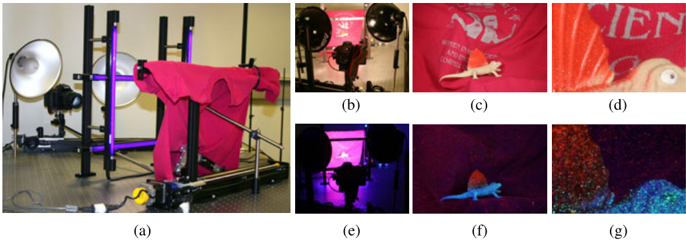
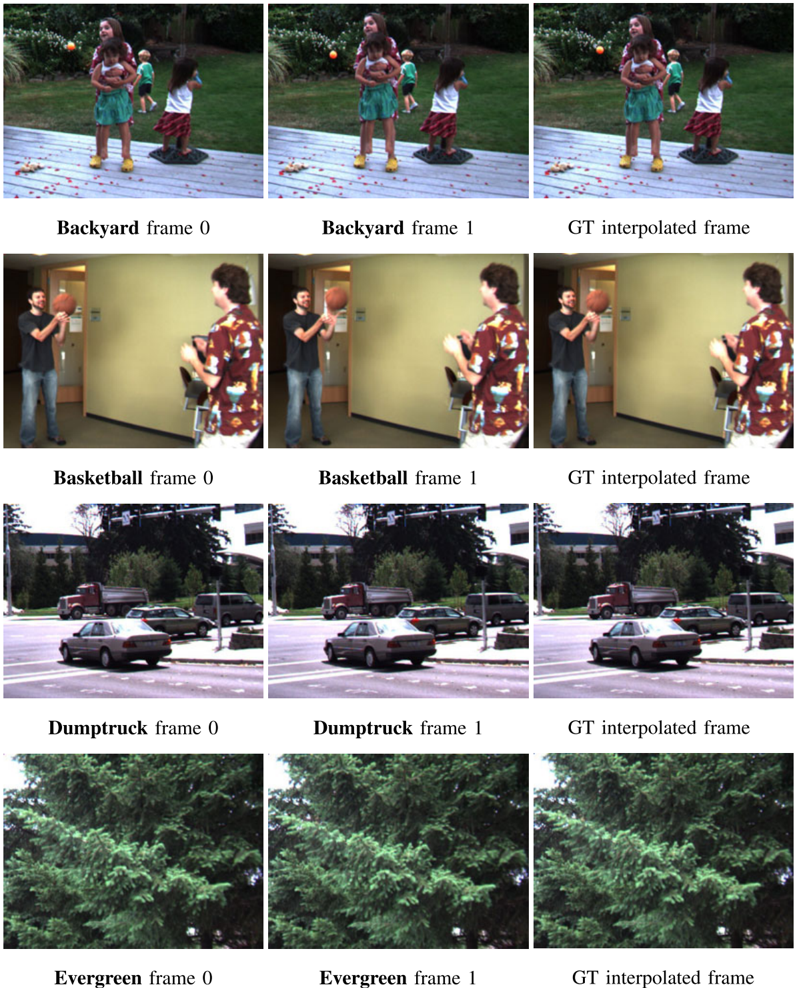
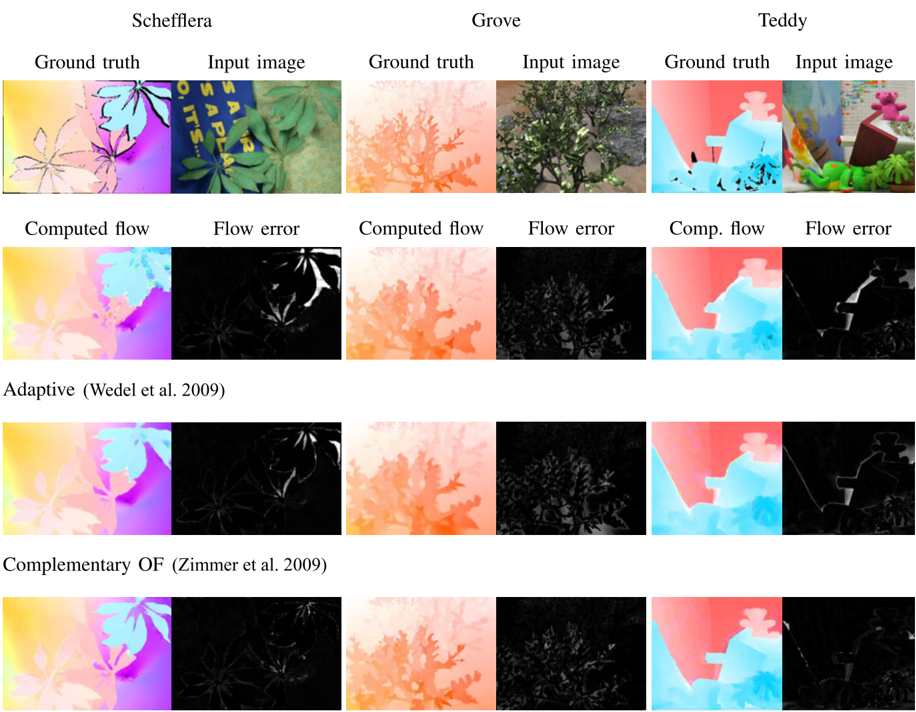
The quantitative evaluation of optical flow algorithms by Barron et al. (1994) led to significant advances in performance. The challenges for optical flow algorithms today go beyond the datasets and evaluation methods proposed in that paper. Instead, they center on problems associated with complex natural scenes, including nonrigid motion, real sensor noise, and motion discontinuities. We propose a new set of benchmarks and evaluation methods for the next generation of optical flow algorithms. To that end, we contribute four types of data to test different aspects of optical flow algorithms: (1) sequences with nonrigid motion where the ground-truth flow is determined by tracking hidden fluorescent texture, (2) realistic synthetic sequences, (3) high frame-rate video used to study interpolation error, and (4) modified stereo sequences of static scenes. In addition to the average angular error used by Barron et al., we compute the absolute flow endpoint error, measures for frame interpolation error, improved statistics, and results at motion discontinuities and in textureless regions.
Overview
CoChat Summary
TL;DR
The paper introduces a new optical flow benchmark of four data types (hidden fluorescent texture, realistic synthetic, high-speed interpolation, and modified stereo) plus an extended evaluation methodology with endpoint error, interpolation error, robustness/accuracy statistics, and region masks. It reports that performance improved substantially over the preliminary 2007 study, but motion discontinuities and diverse datasets remain difficult, and top flow methods still lag top stereo methods on the modified Teddy stereo data.
Key findings
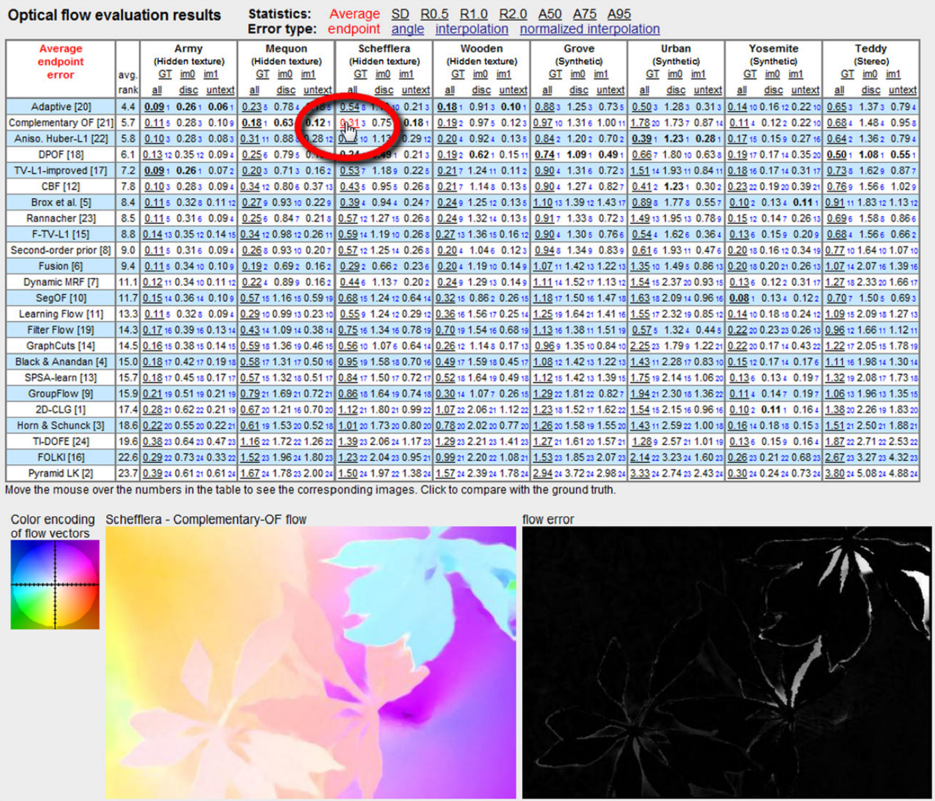
- The benchmark contains 12 training and 12 test sequences; test ground truth is withheld except for Yosemite. As of December 2009 the online evaluation contained results for 24 published methods, all using only 2 input frames and 10 using color.
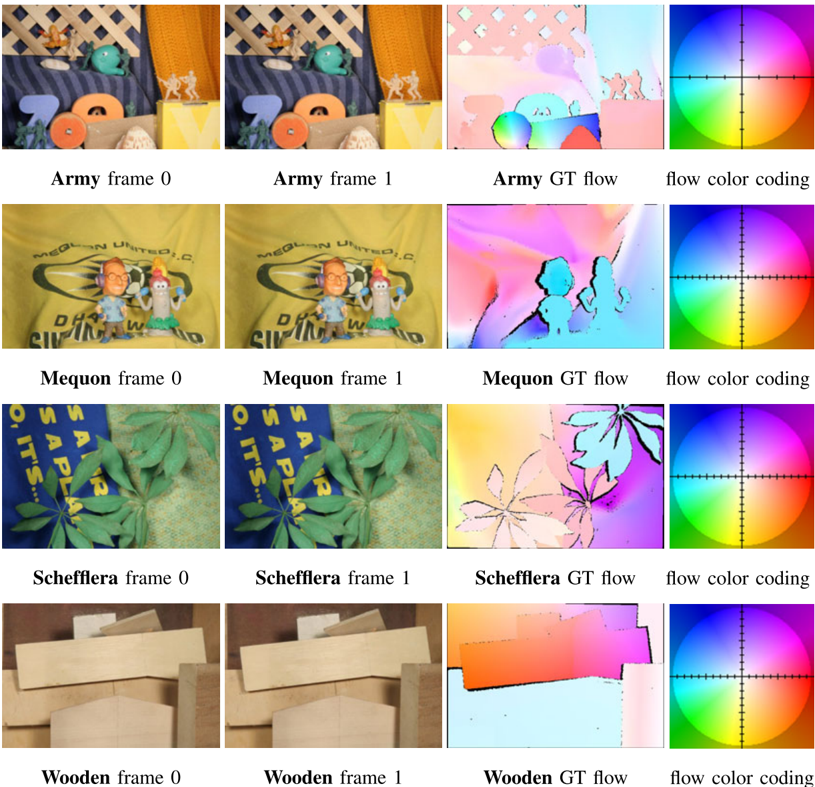
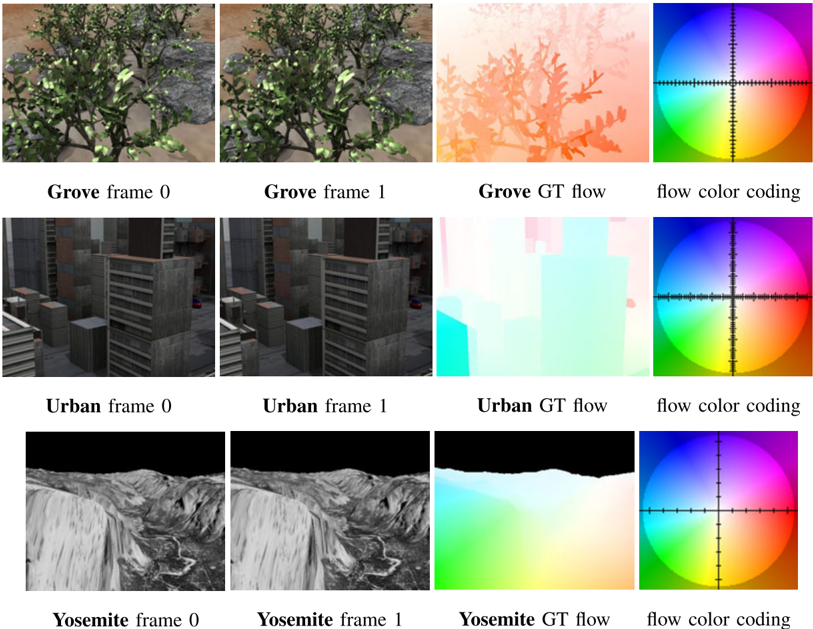
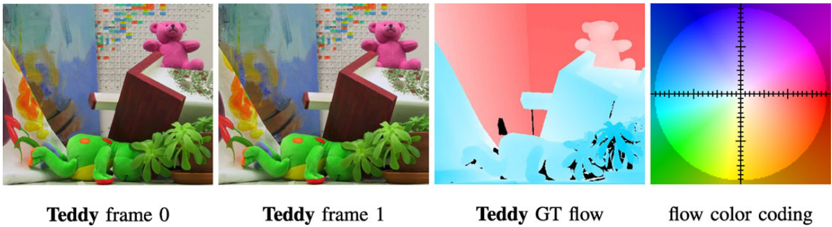
- Best average endpoint error (Avg. EE) improved dramatically over 2D-CLG (Bruhn et al. 2005): Army 0.28→0.09, Mequon 0.67→0.18, Schefflera 1.12→0.24, Wooden 1.07→0.18, Grove 1.23→0.74, Urban 1.54→0.39, Yosemite 0.10→0.08, Teddy 1.38→0.50. Best Avg. EE was below 0.2 pixels on four datasets (Yosemite, Army, Mequon, Wooden).
- Endpoint error (EE) and angular error (AE) rankings were highly correlated (r = 0.989), but the paper argues EE should be preferred: Complementary OF on Urban had Avg. AE 4.64° (rank 6) but Avg. EE 1.78 pixels (rank 20), because AE downweights large motions.
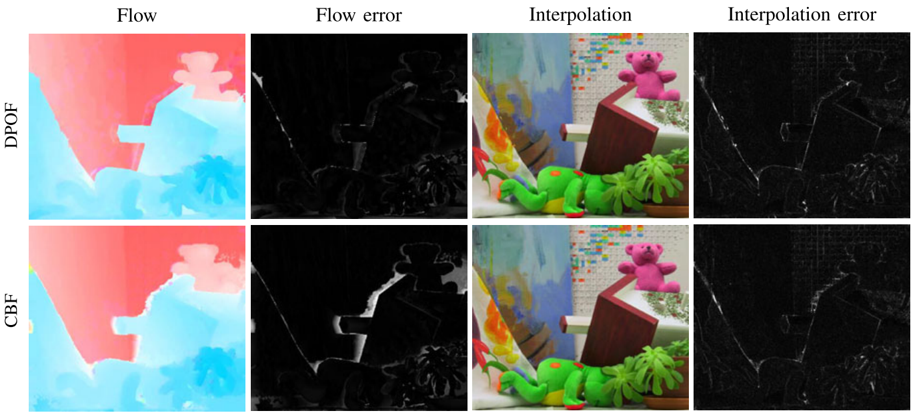
- Motion discontinuity (Disc) regions were the hardest; textureless (Untext) regions were typically easiest. Dataset results were less correlated, with Yosemite poorly or negatively correlated with others. Flow and interpolation errors were only moderately correlated (Avg4 EE vs Avg4 IE r = 0.763). On Teddy, top stereo methods outperformed top flow methods: median lowest-five R1.0 was 9.9 for flow vs 6.5 for stereo in All regions (34% reduction), and 27.6 vs 10.0 in Disc regions (64% reduction).
Methods
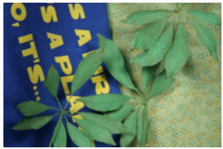
- Four data types were collected: (1) real nonrigid scenes with dense ground truth from hidden fluorescent texture, captured with a Canon EOS 20D at 3504×2336, downsampled every 40th visible-light frame by factor 6 to 584×388, with SSD tracking (15×15 windows), forward/backward crosschecking, and Lucas-Kanade subpixel refinement; (2) realistic synthetic scenes rendered with 3Delight at 640×480, with ground truth from a custom shader and dominant-cluster flow selection; (3) high-speed video for frame interpolation captured with a PointGrey Dragonfly Express at 60 fps, providing every other frame and retaining intermediate frames as ground truth; and (4) modified stereo data (Teddy) from structured light, cropped to make the disparity range roughly symmetric.
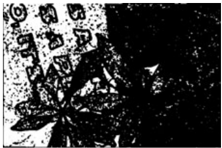
- Evaluation metrics include average angular error (AE), absolute flow endpoint error (EE), interpolation error (IE), and gradient-normalized interpolation error (NE). Statistics include averages, robustness measures R_X, and percentile accuracy measures A_X, computed over All, Disc, and Untext region masks.
- Analysis used the online evaluation at http://vision.middlebury.edu/flow/, comparing 24 published methods across metrics, statistics, masks, and datasets, with Pearson correlations between rankings and comparisons to state-of-the-art stereo methods on Teddy.
Limitations
- The paper states that the hidden fluorescent texture scenes are laboratory scenes, not real-world scenes, and have no motion blur due to stop-motion capture; ground truth is unavailable where cross-checking failed, especially occluded regions, and the measured ground truth is not perfect, though significant errors are limited to a small fraction of pixels. Synthetic sequences were generated without motion blur. The modified stereo ground truth is only accurate to 0.25 pixels, and algorithms may exploit the knowledge that motions are horizontal; overfitting to rigid data should be visible across the 12 evaluation images. Interpolation ground truth is an intermediate image, not a flow field, so the flow definition is apparent motion.
- The paper also states that no single method yet achieves strong performance across a wide variety of datatypes, that any dataset has a limited lifespan, and that future studies should include more challenging realistic synthetic data, longer sequences, and more difficult materials, illumination changes, atmospheric effects, and transparency.
- Evident from the text: the online tables do not provide an overall ranking among methods; runtimes are not normalized for programming environment, CPU speed, cores, or hardware acceleration; algorithms are required to produce dense flow and cannot submit confidence maps or sparse/incomplete fields; all 24 published methods used only 2 frames despite 8-frame sequences being available; and the paper cannot definitively answer whether temporal smoothing is less suited to the more challenging sequences.
Model-written summary. Check it against the paper before relying on it.
Integrity signals
Registry
Cites
Statistics
Figures

Verification
Claims the paper makes
2 Valid · 16 Not valid · 58 Not checked · 185 Own results and interpretations
A result the paper states — it cites no source for it, so there is none to check. The quote shows it is in the paper.
In the paper
“Rather than collecting a single type of data (with its inherent limitations) we instead collected four different types of data, each satisfying a different subset of desirable properties.”
plain- Asserted: passes — The authors put it forward as true.
- Checkable: passes — It can be checked against evidence.
- Load-bearing: passes — The paper’s conclusions depend on it.
- Based: passes — The paper gives a reason why it holds.
A result the paper states — it cites no source for it, so there is none to check. The quote shows it is in the paper.
In the paper
“Using the combination of fluorescent paint, downsampling high-resolution images, and sequential tracking of small motions, we are able to obtain dense, subpixel accurate ground truth for a nonrigid scene.”
plainstates a cause- Asserted: passes — The authors put it forward as true.
- Checkable: passes — It can be checked against evidence.
- Load-bearing: passes — The paper’s conclusions depend on it.
- Based: passes — The paper gives a reason why it holds.
A result the paper reports from its own data — it cites no other source for it, so there is none to check. The quote shows it is in the paper.
In the paper
“To allow for measures that predict performance on such tasks, we collected a variety of data suitable for frame interpolation.”
plainstates a cause- Asserted: passes — The authors put it forward as true.
- Checkable: passes — It can be checked against evidence.
- Load-bearing: passes — The paper’s conclusions depend on it.
- Based: passes — The paper gives a reason why it holds.
A result the paper reports from its own data — it cites no other source for it, so there is none to check. The quote shows it is in the paper.
In the paper
“We have developed a technique for capturing imagery of nonrigid scenes with ground-truth optical flow.”
plain- Asserted: passes — The authors put it forward as true.
- Checkable: passes — It can be checked against evidence.
- Load-bearing: passes — The paper’s conclusions depend on it.
- Based: passes — The paper gives a reason why it holds.
A result the paper states — it cites no source for it, so there is none to check. The quote shows it is in the paper.
In the paper
“To go beyond previous synthetic ground truth (e.g., the Yosemite sequence), we generated two types of fairly complex synthetic outdoor scenes.”
plain- Asserted: passes — The authors put it forward as true.
- Checkable: passes — It can be checked against evidence.
- Load-bearing: passes — The paper’s conclusions depend on it.
- Based: passes — The paper gives a reason why it holds.
96 more claims
Create a free account to see all 261 claims and every source verdict.
- Probably not a substantial claim. 114
- It may state two separate claims as one. 76
- The quote only partly states this claim. 6
Claims other papers make about this one
Each is checked against this paper’s own text: does it say what the citing paper says it does?
The source backs part of the claim, not all of it — or backs it for a different population, condition or comparison.
In the citing paper
“Notable works include the Middlebury dataset (Baker et al, 2011) and the KITTI datasets (Geiger et al, 2012; Menze and Geiger, 2015), but due to the difficulty of computing accurate ground truth, these have been restricted to 8 and 2 · 200 pairs of frames, respectively (the latter are also limited by the special driving setting).”
From What Makes Good Synthetic Training Data for Learning Disparity and Optical Flow Estimation? (2018) · cites this paper as Baker et al, 2011
Experimental — accuracy not yet measured
Citations
Cites
The pascal visual object classes (VOC) challenge
Everingham, M., Van Gool, L., Williams, C. K. I., Winn, J., & Zisserman, A. (2010) · International Journal of Computer Vision · doi:10.1007/s11263-009-0275-4 · Cited by 19,599
Proceedings of IEEE Conference on Computer Vision and Pattern Recognition
(1993) · doi:10.1109/cvpr.1993 · Cited by 17,667
Proceedings of IEEE International Conference on Computer Vision
(1995) · Proceedings of IEEE International Conference on Computer Vision · doi:10.1109/iccv.1995.466933 · Cited by 12,860
(1981) · Cited by 11,963
Horn, B. K. P., & Schunck, B. G. (1981) · Artificial Intelligence · doi:10.1016/0004-3702(81)90024-2 · Cited by 10,312
Horn, B. K., & Schunck, B. G. (1981) · SPIE Proceedings · doi:10.1117/12.965761 · Cited by 7,394 · cited 2×
“A baseline approach is to use an L2 norm as in the Horn and Schunck algorithm (Horn and Schunck 1981):”
BackgroundMethodFast approximate energy minimization via graph cuts
Boykov, Y., Veksler, O., & Zabih, R. (2001) · IEEE Transactions on Pattern Analysis and Machine Intelligence · doi:10.1109/34.969114 · Cited by 6,988
A Taxonomy and Evaluation of Dense Two-Frame Stereo Correspondence Algorithms
Scharstein, D., & Szeliski, R. (2002) · International Journal of Computer Vision · doi:10.1023/a:1014573219977 · Cited by 6,740 · cited 10×
“Many areas of computer vision, such as stereo [63], face recognition [28, 55, 68], and object recognition [23, 24], have challenging datasets to track the progress made by leading algorithms and to stimulate new ideas.”
BackgroundMethodResultInfluentialSelf-citationProceedings European Conference on Computer Vision 2002
Heyden, A., Sparr, G., Nielsen, M., & Johansen, P. (2002) · Lund University Publications (Lund University) · Cited by 5,153
From few to many: illumination cone models for face recognition under variable lighting and pose
Georghiades, A. S., Belhumeur, P. N., & Kriegman, D. J. (2001) · IEEE Transactions on Pattern Analysis and Machine Intelligence · doi:10.1109/34.927464 · Cited by 4,912 · cited 1×
“Many areas of computer vision, such as stereo (Scharstein and Szeliski 2002), face recognition (Philips et al. 2005; Sim et al. 2003; Gross et al. 2008; Georghiades et al. 2001), and object recognition (Fei-Fei et al.”
Background
Research works printed but not linked: 4
- Anandan, P., & Weiss, R. (1985). Introducing smoothness constraint in a matching approach for the computation of displacement fields. In Proceedings of the DARPA image understanding workshop (pp. 186-196).
- Bleyer, M., & Chambon, S. (2010). Does color really help in dense stereo matching? In Proceedings of the international symposium 3D data processing, visualization and transmission .
- Lempitsky, V., Roth, S., & Rother, C. (2008). Fusion flow: discretecontinuous optimization for optical flow estimation. In Proceedings of the IEEE conference on computer vision and pattern recognition .
- Rannacher, J. (2009). Realtime 3D motion estimation on graphics hardware . Undergraduate thesis, Heidelberg University.
Cited by
Items 801–900 of 2,273
A Real-Time and Efficient Optical Flow Tracking Accelerator on FPGA Platform
Gong, Y., Zhang, J., Liu, X., et al. (2023) · IEEE Transactions on Circuits and Systems I Regular Papers · doi:10.1109/tcsi.2023.3298969 · Cited by 14
“The first reason we don’t use optical flow dataset such as Middlebury [38] is that the number of its images is too small, and the other reason is that from the perspective of application, we hope that our work can be verified in SLAM system.”
BackgroundFrame Interpolation Transformer and Uncertainty Guidance
Plack, M., Hullin, M. B., Briedis, K. M., Groß, M. H., Djelouah, A., & Schroers, C. (2023) · IEEE Computer Society Conference on Computer Vision and Pattern Recognition/Proceedings - IEEE Computer Society Conference on Computer Vision and Pattern Recognition/Proceedings · doi:10.1109/cvpr52729.2023.00946 · Cited by 26
“While classical approaches to frame interpolation relied on optical flow and image warping [2, 52, 62], they have been surpassed by learning-based methods.”
BackgroundExtraSS: A Framework for Joint Spatial Super Sampling and Frame Extrapolation
Wu, S., Kim, S., Zeng, Z., Vembar, D., Jha, S., Kaplanyan, A., & Yan, L. (2023) · SIGGRAPH Asia Conference Papers · doi:10.1145/3610548.3618224 · Cited by 28
Robust local optical flow estimation using bilinear equations for sparse motion estimation
Senst, T., Geistert, J., Keller, I., & Sikora, T. (2013) · Proceedings - International Conference on Image Processing · doi:10.1109/icip.2013.6738515 · Cited by 15
“The evaluation of the proposed Robust Local Optical Flow by means of bilinear equations (BERLOF) has been performed with the Middlebury [1] and the KITTI [6] optical flow datasets.”
BackgroundMethodInfluentialOttaviano, G., & Kohli, P. (2013) · IEEE Computer Society Conference on Computer Vision and Pattern Recognition/Proceedings - IEEE Computer Society Conference on Computer Vision and Pattern Recognition/Proceedings · doi:10.1109/cvpr.2013.292 · Cited by 14
Non-rigid multi-frame registration of cell nuclei in live cell fluorescence microscopy image data
Tektonidis, M., Kim, I.-H., Chen, Y.-C. M., Eils, R., Spector, D. L., & Rohr, K. (2014) · Medical Image Analysis · doi:10.1016/j.media.2014.07.006 · Cited by 16
“As performance measure we used the endpoint error (EE), which is often used for evaluation of optic flow approaches (e.g., Baker et al., 2011), and is defined by: EE ¼ U UGT ; ð20Þ where U and UGT are vectors of the computed vector field and the ground truth vector field, respectively.”
Decomposing and regularizing sparse/non-sparse components for motion field estimation
Chen, Z., Wang, J., & Wu, Y. (2012) · IEEE Computer Society Conference on Computer Vision and Pattern Recognition/Proceedings - IEEE Computer Society Conference on Computer Vision and Pattern Recognition/Proceedings · doi:10.1109/cvpr.2012.6247874 · Cited by 17
“(a) Dimetrodon (b) Grove2 (c) Grove3 (d) Hydrangea (e) RubberWhale (f) Urban2 (g) Urban3 (h) Venus Figure 5.”
BackgroundMethodInfluentialFall detection in RGB-D videos by combining shape and motion features
Kumar, D. P., Yun, Y., & Gu, I. Y. (2016) · IEEE International Conference on Acoustics Speech and Signal Processing · doi:10.1109/icassp.2016.7471894 · Cited by 15
“HOGOF features are extracted based on the code from [16] and [17].”
MethodAlgorithm and Architecture Design of Multirate Frame Rate Up-conversion for Ultra-HD LCD Systems
Huang, Y.-L., Chen, F., & Chien, S. (2016) · IEEE Transactions on Circuits and Systems for Video Technology · doi:10.1109/tcsvt.2016.2596198 · Cited by 14
“The color represents the direction of the MVs, and the intensity represents the magnitude [36].”
BackgroundMoving object tracking using Laplacian-DCT based perceptual hash
Sengar, S. S., & Mukhopadhyay, S. (2016) · International Conference on Wireless Communications, Signal Processing and Networking (WiSPNET) · doi:10.1109/wispnet.2016.7566561 · Cited by 15
“With the help of SVM [10] and optical flow [11], Avidan [12] proposed a vehicle tracking method, which is trained off-line.”
MethodLearning to Detect Fine-Grained Change Under Variant Imaging Conditions
Huang, R., Feng, W., Wang, Z., Fan, M., Wan, L., & Sun, J. (2017) · IEEE International Conference on Computer Vision Workshops · doi:10.1109/iccvw.2017.344 · Cited by 14
“Traditional optical flow methods using low-level feature and optimization framework [1, 35] are able to generate satisfied results for less complicated scenes.”
BackgroundVideo scene parsing: An overview of deep learning methods and datasets
Yan, X., Gong, H., Jiang, Y., Xia, S., Zheng, F., You, X., & Shao, L. (2020) · Computer Vision and Image Understanding · doi:10.1016/j.cviu.2020.103077 · Cited by 16
Depth Super-Resolution via Deep Controllable Slicing Network
Ye, X., Sun, B., Wang, Z., Yang, J., Xu, R., Li, H., & Li, B. (2020) · ACM International Conference on Multimedia (ACM MM) · doi:10.1145/3394171.3413874 · Cited by 14
“To generate training data, we use 38 depth maps (6, 2, 21, 9 depth maps from 2001 [2], 2003 [35], 2006 [15] and 2014 [33] datasets, respectively) from Middlebury dataset.”
MethodLiao, B., Hu, J., & Gilmore, R. O. (2020) · Computers and Electronics in Agriculture · doi:10.1016/j.compag.2020.105910 · Cited by 15
AEMS: an attention enhancement network of modules stacking for lowlight image enhancement
Li, M., Zhao, L., Zhou, D., Nie, R., Liu, Y., & Wei, Y. (2021) · The Visual Computer · doi:10.1007/s00371-021-02289-x · Cited by 15
Spatial Temporal Video Enhancement Using Alternating Exposures
Wang, S., Cheng, M., Lu, G. S., Zhai, G., Chen, L., Asif, M. S., & Gao, Z. (2021) · IEEE Transactions on Circuits and Systems for Video Technology · doi:10.1109/tcsvt.2021.3135337 · Cited by 19
On Performance Analysis of Optical Flow Algorithms
Kondermann, D., Abraham, S., Brostow, G., Förstner, W., Gehrig, S. K., Imiya, A., Jähne, B., Klose, F., Magnor, M. A., Mayer, H., et al. (2012) · Lecture notes in computer science · doi:10.1007/978-3-642-34091-8_15 · Cited by 23
“To address these problems, an additional set of performance measures was introduced by [7].”
BackgroundMethodInfluentialMotion Textures: Modeling, Classification, and Segmentation Using Mixed-State Markov Random Fields
Crivelli, T., Cernuschi-Frías, B., Bouthémy, P., & Yao, J. (2013) · SIAM Journal on Imaging Sciences · doi:10.1137/120872048 · Cited by 16
Dynamically Removing False Features in Pyramidal Lucas-Kanade Registration
Niu, Y., Xu, Z., & Che, X. (2014) · IEEE Transactions on Image Processing · doi:10.1109/tip.2014.2331140 · Cited by 16
“We measure the flow computation accuracy by the conventional Average Endpoint Error (AEP) [9] and Average Angular Error (AAE) [32] metrics.”
BackgroundMethodInfluentialSpatial and temporal constraints in variational correspondence methods
Ralli, J., Díaz, J., & Ros, E. (2011) · Machine Vision and Applications · doi:10.1007/s00138-011-0360-x · Cited by 17
“We have evaluated effects of the spatial and temporal constraints, both quantitatively and qualitatively, using known test images from the Middlebury2 database [17][4] and 2http://vision.”
BackgroundMethodTopology-Constrained Layered Tracking with Latent Flow
Chang, J. S., & Fisher, J. S. (2013) · IEEE/CVF International Conference on Computer Vision (ICCV) · doi:10.1109/iccv.2013.27 · Cited by 17
“However, for the interested reader, quantitative results on the Middlebury dataset [1] are provided in the supplement.”
BackgroundMatch Selection and Refinement for Highly Accurate Two-View Structure from Motion
Liu, Z., Monasse, P., & Marlet, R. (2014) · Lecture notes in computer science · doi:10.1007/978-3-319-10605-2_53 · Cited by 14
“Yet, contrary to ordinary optical flow [3], LSM is not restricted to small light changes, small rotation angles and small baselines.”
BackgroundShugrina, M., Liang, Z., Kar, A., Li, J., Singh, A., Singh, K. S., & Fidler, S. (2019) · IEEE Computer Society Conference on Computer Vision and Pattern Recognition/Proceedings - IEEE Computer Society Conference on Computer Vision and Pattern Recognition/Proceedings · doi:10.1109/cvpr.2019.00553 · Cited by 22
“Optical flow has smaller real world benchmarks such as Middlebury [4] and KITTI [22], as well as larger synthetic datasets that can be used for training, including MPI Sintel [11] and much larger Flying Chairs [15] and Flying Things 3D [31] datasets.”
MethodLong-term video interpolation with bidirectional predictive network
Chen, X., Wang, W., & Wang, J. (2017) · IEEE International Conference on Visual Communications and Image Processing (VCIP) · doi:10.1109/vcip.2017.8305029 · Cited by 19
“Most traditional frame interpolation methods utilize optical flow algorithms to estimate dense motion between two consecutive frames and then interpolate along optical flow vectors [1] [2] [3].”
MethodNarita, R., Hirakawa, K., & Aizawa, K. (2019) · Proceedings - International Conference on Image Processing · doi:10.1109/icip.2019.8803506 · Cited by 22
“An optical flow and frame interpolation are closely related because the accuracy of an optical flow estimation is evaluated based on the frame interpolation [8].”
MethodDriving Datasets Literature ReviewPreprint
Laflamme, C.-É. N., Pomerleau, F., & Giguère, P. (2019) · arXiv (Cornell University) · doi:10.48550/arxiv.1910.11968 · Cited by 21
“This is why most benchmarked optical flow datasets are usually done in a controlled environment [3] or using synthetic data [15].”
BackgroundMotion estimation and segmentation in depth and intensity videos
Ghuffar, S., Brosch, N., Pfeifer, N., & Gelautz, M. (2014) · Integrated Computer-Aided Engineering · doi:10.3233/ica-130456 · Cited by 13
“For a more elaborate summary of recent optical flow techniques, interested readers are referred to [2,3].”
BackgroundWall shear-stress extraction by an optical flow algorithm with a sub-grid formulation
Tran, T. H., & Chen, L. (2020) · Acta Mechanica Sinica · doi:10.1007/s10409-020-00994-9 · Cited by 14
Lv, J., Ji, H., Jiang, Y., et al. (2023) · IEEE Sensors Journal · doi:10.1109/jsen.2023.3321632 · Cited by 13
“The performance of the improved algorithm is evaluated through public Middlebury datasets [43].”
MethodDecoder-Only Image Registration
Jia, X., Lu, W., Cheng, X., & Duan, J. (2025) · IEEE Transactions on Medical Imaging · doi:10.1109/tmi.2025.3562056 · Cited by 25
Observability analysis of inertial navigation errors from optical flow subspace constraint
Waldmann, J., da Silva, R. I. G., & Chagas, R. A. J. (2015) · Information Sciences · doi:10.1016/j.ins.2015.08.017 · Cited by 13
Action recognition using linear dynamic systems
Wang, H., Yuan, C., Luo, G., Hu, W., & Sun, C. (2012) · Pattern Recognition · doi:10.1016/j.patcog.2012.12.001 · Cited by 13
“As only spatial gradients have been used, histogram features based on optical flow are employed in order to capture the temporal information.”
MethodSynthetic sequences and ground-truth flow field generation for algorithm validation
Onkarappa, N., & Sappa, A. D. (2013) · Multimedia Tools and Applications · doi:10.1007/s11042-013-1771-7 · Cited by 13
“These results reveal that the method MDP-Flow2 [20], which is top-rank in Middlebury evaluation, Fig.”
BackgroundInfluentialA Decoupled Approach to Illumination-Robust Optical Flow Estimation
Kumar, A., Tung, F., Wong, A. K. C., & Clausi, D. A. (2013) · IEEE Transactions on Image Processing · doi:10.1109/tip.2013.2270374 · Cited by 14
Moving Object Detection in Aerial Video
Wang, Y., Zhang, Z., & Wang, Y. (2012) · International Conference on Machine Learning and Applications · doi:10.1109/icmla.2012.206 · Cited by 13
“We use the optical flow software of [6] to compute motion information for its good performance and real time computation efficiency.”
MethodLi, W., Chen, Y., Lee, J. H., Ren, G., & Cosker, D. P. (2014) · IEEE Winter Conference on Applications of Computer Vision · doi:10.1109/wacv.2014.6836022 · Cited by 14
“Once we obtain ŵ, both Average Endpoint Error (AEE) and Average Angle Error (AAE) tests [1] are considered in our evaluation.”
MethodInfluentialRobust modified L2 local optical flow estimation and feature tracking
Senst, T., Eiselein, V., Evangelio, R. H., & Sikora, T. (2011) · Proceedings · doi:10.1109/wacv.2011.5711571 · Cited by 14
“The average endpoint error (AEE) and the average angular error (AAE) are given for a numerical feedback.”
MethodInfluentialOcclusion-aware video registration for highly non-rigid objects
Taetz, B., Bleser, G., Golyanik, V., & Stricker, D. (2016) · IEEE Winter Conference on Applications of Computer Vision · doi:10.1109/wacv.2016.7477720 · Cited by 14
“The popular optical flow datasets Middlebury [2], SINTEL [6] and KITTI [11] only provide ground truth flow for consecutive frames, while we are interested in registering each image in a video sequence with respect to one chosen reference frame as required for dense NRSfM (e.”
MethodInfluentialImplementing Dense Optical Flow Computation on a Heterogeneous FPGA SoC in C
Chen, W., Wang, Z., Wu, Q., Liang, J., & Chai, Z. (2016) · ACM Transactions on Architecture and Code Optimization · doi:10.1145/2948976 · Cited by 14
“In this article, Average Angular Error (AAE) is used to measure the accuracy of the optical flow [Baker et al. 2011; Barron et al. 1994].”
MethodHomography Propagation and Optimization for Wide-Baseline Street Image Interpolation
Nie, Y., Zhang, Z., Sun, H., Su, T., & Li, G. (2016) · IEEE Transactions on Visualization and Computer Graphics · doi:10.1109/tvcg.2016.2618878 · Cited by 13
“Early optical flow methods evaluated on Middlebury benchmark [7] are typical smallbaseline algorithms.”
BackgroundMethodInfluentialGao, B., Liu, W., Wang, L., et al. (2016) · Physics in Medicine and Biology · doi:10.1088/1361-6560/61/24/8640 · Cited by 13
Dense Descriptors for Optical Flow Estimation: A Comparative Study
Baghaie, A., D’Souza, R. M., & Yu, Z. (2017) · Journal of Imaging · doi:10.3390/jimaging3010012 · Cited by 14
“Here, three widely-accepted metrics for optical flow assessment are used [3].”
BackgroundMethodInfluentialDórea, C. C., Hung, E. M., & de Queiroz, R. L. (2019) · Proceedings - International Conference on Image Processing · doi:10.1109/icip.2019.8803690 · Cited by 13
3D flow field estimation and assessment for live cell fluorescence microscopy
Manandhar, S., Bouthémy, P., Welf, E. S., Danuser, G. M., Roudot, P., & Kervrann, C. (2019) · Bioinformatics · doi:10.1093/bioinformatics/btz780 · Cited by 11
End‐to‐end learning interpolation for object tracking in low frame‐rate video
Liu, L., & Cao, J. (2020) · IET Image Processing · doi:10.1049/iet-ipr.2019.0944 · Cited by 13
Artizzu, C.-O., Zhang, H., Allibert, G., & Demonceaux, C. (2021) · Proceedings - International Conference on Pattern Recognition/Proceedings/International Conference on Pattern Recognition · doi:10.1109/icpr48806.2021.9412745 · Cited by 26
“To evaluate OmniFlowNet, two classical metrics are used [23]: the average Angle Error (AE) and the average Endpoint Error (EE).”
MethodFast and Accurate Structure and Motion Estimation
Hedborg, J., Forssén, P.-E., & Felsberg, M. (2009) · Lecture notes in computer science · doi:10.1007/978-3-642-10331-5_20 · Cited by 14
“Besides being used in many movies, Mental ray was also used in [9] to generate image sequences and ground truth for optical flow.”
BackgroundMethodInfluentialWang, L., Basarab, A., Girard, P., Croisille, P., Clarysse, P., & Delachartre, P. (2015) · Medical Image Analysis · doi:10.1016/j.media.2015.06.005 · Cited by 15
“, 2013) and the EE is a more appropriate measure of displacement vector accuracy (Baker et al., 2011).”
BackgroundMethodA stochastic dynamical system for optical flow estimation
Willert, V., & Eggert, J. P. (2009) · IEEE International Conference on Computer Vision Workshops · doi:10.1109/iccvw.2009.5457632 · Cited by 16
“performance only at the motion discontinuities like given in [1] the AAE is with 3.”
BackgroundMethodRodriguez, M. P., & Nygren, A. (2014) · IEEE Transactions on Biomedical Engineering · doi:10.1109/tbme.2014.2364959 · Cited by 13
“EData measures the consistency of the calculated OF field with the movement of individual features [29], while the regularization term adds a coherence constraint [30], which restricts to the possible solutions to the optimization problem giving a preference for smooth solutions.”
BackgroundMetric sensing and control of a quadrotor using a homography-based visual inertial fusion method
Li, P., Garratt, M., Lambert, A. J., & Lin, S. (2015) · Robotics and Autonomous Systems · doi:10.1016/j.robot.2015.11.011 · Cited by 15
“The Middlebury datasets [58] are used to evaluate the accuracy of LK with respect to the choice ofm.”
MethodDepth from a Motion Algorithm and a Hardware Architecture for Smart Cameras
Aguilar‐González, A., Arias-Estrada, M., & Berry, F. (2018) · Sensors · doi:10.3390/s19010053 · Cited by 15
Pan, J. (2019) · IEEE International Conference on Internet of Things and Intelligence System (IoTaIS) · doi:10.1109/iotais47347.2019.8980385 · Cited by 13
“A conventional approach for frame generation is to use motion estimation-based methods that entails the computation of missing frames through the estimation of optical flows [6] or moving gradient techniques [7].”
MethodGraph Laplacian Regularization for Robust Optical Flow Estimation
Young, S. I., Naman, A. T., & Taubman, D. (2019) · IEEE Transactions on Image Processing · doi:10.1109/tip.2019.2945653 · Cited by 14
“For validation of our method, we use the Middlebury optical flow dataset [49] comprising both natural and synthetic picture sequences, as well as the newer MPI-Sintel [50] dataset, which exhibits larger motion.”
MethodVisual Quality Assessment for Interpolated Slow-Motion Videos Based on a Novel Database
Men, H., Hosu, V., Lin, H., Bruhn, A., & Saupe, D. (2020) · International Conference on Quality of Multimedia Experience (QoMEX) · doi:10.1109/qomex48832.2020.9123096 · Cited by 20
“0 KoSMo-1k [5] [8] Classic+NL (ClassicNL) [26] 45% 21% 1 OAR-Flow (OAR) [27] – – 2 Black & Anandan (BA) [28] [29] 48% 26% 3 BeyondPixles (Beyond) [30] – – 4 Dual-TVL1 (DualTVL1) [31] – – 5 FFV1MT [32] 6% 24% 6 LKpyramid (LK) [33] 2% 6% 7 2D-CLG (CLG) [34] [35] 38% 42% 8 Brox et al.”
Fine-Grained Motion Estimation for Video Frame Interpolation
Yan, B., Tan, W., Lin, C., & Shen, L. (2020) · IEEE Transactions on Broadcasting · doi:10.1109/tbc.2020.3028323 · Cited by 14
Adaptively monitoring streamflow using a stereo computer vision system
Hutley, N. R., Beecroft, R., Wagenaar, D., Soutar, J., Edwards, B., Deering, N., Grinham, A. R., & Albert, S. (2023) · Hydrology and earth system sciences · doi:10.5194/hess-27-2051-2023 · Cited by 21
An evaluation of optical flow algorithms for crowd analytics in surveillance system
Kajo, I., Malik, A. S., & Kamel, N. (2016) · International Conference on Intelligent and Advanced Systems · doi:10.1109/icias.2016.7824064 · Cited by 13
Improvements of the Inverse Compositional Algorithm for Parametric Motion Estimation
Briand, T., Facciolo, G., & Sánchez, J. (2018) · Image Processing On Line · doi:10.5201/ipol.2018.222 · Cited by 13
“More precisely, we used 12 color images taken from the Middleburry database [4](3).”
InfluentialRobust Optical Flow Estimation in Rainy ScenesPreprint
Li, R., Tan, R. T., & Cheong, L. (2017) · arXiv (Cornell University) · doi:10.48550/arxiv.1704.05239 · Cited by 14
“Quantitatively, Table 1 shows that our method outperforms all the other algorithms and its accuracy is even competitive to other algorithms performing on the original Middlebury dataset.”
MethodInfluentialVideo-based Person Re-identification with Accumulative Motion ContextPreprint
Liu, H., Jie, Z., Jayashree, K., et al. (2017) · arXiv (Cornell University) · doi:10.48550/arxiv.1701.00193 · Cited by 13
“maps are encoded with the flow color coding [43] method which is also used in [37].”
MethodFlow-Anything: Learning Real-World Optical Flow Estimation From Large-Scale Single-View Images
Liang, Y., Fu, Y., Hu, Y., Shao, W., Liu, J., & Zhang, D. (2025) · IEEE Transactions on Pattern Analysis and Machine Intelligence · doi:10.1109/tpami.2025.3576851 · Cited by 24
“The luorescent texture is first utilized to record motions in real-world scenes, which serves as optical flow labels as described in [41].”
Deep learning-based sperm motility and morphology estimation on stacked color-coded MotionFlow
Adinugroho, S., & Nakazawa, A. (2024) · Informatics in Medicine Unlocked · doi:10.1016/j.imu.2024.101459 · Cited by 16
Pajouheshgar, E., Xu, Y., Mordvintsev, A., Niklasson, E., Zhang, T., & Susstrunk, S. E. (2024) · ACM Transactions on Graphics · doi:10.1145/3658127 · Cited by 23
Selective, Interpretable and Motion Consistent Privacy Attribute Obfuscation for Action Recognition
Ilic, F., Zhao, H., Pock, T., & Wildes, R. P. (2024) · IEEE Computer Society Conference on Computer Vision and Pattern Recognition/Proceedings - IEEE Computer Society Conference on Computer Vision and Pattern Recognition/Proceedings · doi:10.1109/cvpr52733.2024.01772 · Cited by 19
Real-Time Estimation of Optical Flow Based on Optimized Haar Wavelet Features
Salmen, J., Caup, L., & Igel, C. (2011) · Lecture notes in computer science · doi:10.1007/978-3-642-19893-9_31 · Cited by 13
“For the problem at hand, the vector valued quality of a soluti ng is given byΦ(g) = (n, 1/e), wheren is the mean number of flow vectors and e is the mean endpoint error as proposed by [5].”
Three-dimensional, three-component wall-PIV
Berthe, A., Kondermann, D., Christensen, C., Goubergrits, L., Garbe, C. S., Affeld, K., & Kertzscher, U. (2009) · Experiments in Fluids · doi:10.1007/s00348-009-0777-4 · Cited by 16
Improving the robustness of variational optical flow through tensor voting
Rashwan, H. A., Puig, D., & García, M. Á. (2012) · Computer Vision and Image Understanding · doi:10.1016/j.cviu.2012.04.006 · Cited by 12
Visual Motion Priors Differ for Infants and Mothers
Raudies, F., & Gilmore, R. O. (2014) · Neural Computation · doi:10.1162/neco_a_00645 · Cited by 14
“Assumptions about smoothness have been extensively evaluated with synthetically generated data and real image sequences (Baker et al., 2011).”
BackgroundThe Information Available to a Moving Observer on Shape with Unknown, Isotropic BRDFs
Chandraker, M. K. (2015) · IEEE Transactions on Pattern Analysis and Machine Intelligence · doi:10.1109/tpami.2015.2481415 · Cited by 12
Handling Occlusion and Large Displacement Through Improved RGB-D Scene Flow Estimation
Wang, Y., Zhang, J., Liu, Z., Wu, Q., Chou, P. A., Zhang, Z., & Jia, Y. (2015) · IEEE Transactions on Circuits and Systems for Video Technology · doi:10.1109/tcsvt.2015.2462011 · Cited by 12
“These maps are also illustrated according to Middlebury color coding [40].”
MethodA Model-aided Optical Flow/Inertial Sensor Fusion Method for a Quadrotor
Lyu, P., Lai, J., Liu, H. H. T., Liu, J., & Chen, W. (2016) · Journal of Navigation · doi:10.1017/s0373463316000539 · Cited by 13
“Since the optical flow method is based on the assumption of intensity constancy and gradient constancy (Baker et al., 2011), its accuracy is affected by environmental factors and large flight movement which lead to large noises or errors in the optical flow measurements (Sun et al., 2014; Brox and…”
MethodLearned optical flow for intra-operative tracking of the retinal fundus
Ravasio, C. S., Pissas, T., Bloch, E., Flores, B., Jalali, S., Stoyanov, D. V., Cardoso, M. J., da Cruz, L., & Bergeles, C. (2020) · International Journal of Computer Assisted Radiology and Surgery · doi:10.1007/s11548-020-02160-9 · Cited by 13
Breaking bore roller characteristics: Turbulence statistics using optical techniques
Shi, R., Leng, X., & Chanson, H. (2021) · Coastal Engineering · doi:10.1016/j.coastaleng.2021.103893 · Cited by 12
“The reader is referred to the fundamentals of various OF techniques by Barron et al. (1994), and to the ranking systems of all the OF techniques by Middlebury (Baker et al., 2011), KITTI (Geiger et al., 2012) and MPI-Sintel (Butler et al., 2012).”
MethodStatistical robustness of Markov chain Monte Carlo accelerators
Zhang, X., Bashizade, R., Wang, Y., Mukherjee, S., & Lebeck, A. R. (2021) · International Conference on Architectural Support for Programming Languages and Operating Systems (ASPLOS) · doi:10.1145/3445814.3446697 · Cited by 14
“We pick three datasets from Middlebury [2, 70] for each application.”
MethodHow Video Super-Resolution and Frame Interpolation Mutually Benefit
Zhou, C., Lu, Z., Li, L., Yan, Q., & Xue, J. (2021) · ACM International Conference on Multimedia (ACM MM) · doi:10.1145/3474085.3475672 · Cited by 15
“We use four publicly available datasets, Vimoe90K [34], Middle-bury [1], UCF101 [25] and Vid4 [21], in the experiments.”
MethodMotion Sensitive Contrastive Learning for Self-supervised Video Representation
Ni, J., Zhou, N., Qin, J., Wu, Q., Liu, J., Li, B., & Huang, D. (2022) · Lecture notes in computer science · doi:10.1007/978-3-031-19833-5_27 · Cited by 20
Motion Estimation for Complex Fluid Flows Using Helmholtz Decomposition
Chen, J., Duan, H., Song, Y., Cai, Z., Yang, G., & Liu, T. (2022) · IEEE Transactions on Circuits and Systems for Video Technology · doi:10.1109/tcsvt.2022.3219438 · Cited by 12
“• Middlebury dataset [32]: The Middlebury dataset is a classical optical flow evaluation benchmark, which is used for optical flow estimation with relatively small displacements.”
MethodKhan, M., & Kumar, P. (2023) · Expert Systems with Applications · doi:10.1016/j.eswa.2023.119628 · Cited by 16
JAWS: Just A Wild Shot for Cinematic Transfer in Neural Radiance Fields
Wang, X., Courant, R., Shi, J., Marchand, É., & Christie, M. (2023) · IEEE Computer Society Conference on Computer Vision and Pattern Recognition/Proceedings - IEEE Computer Society Conference on Computer Vision and Pattern Recognition/Proceedings · doi:10.1109/cvpr52729.2023.01624 · Cited by 25
“To calculate the flow loss L flow , we compute the endpoint distance [43] be-tween the reference O ⇤ and synthetic ˆ O sequences of flows: Optimization loss.”
Butler, D. J., Keim, A. P., Ray, S., & Azim, E. (2023) · Nature Communications · doi:10.1038/s41467-023-41565-3 · Cited by 10
“Our approach to generating labeled images is based on applying hidden fl uorescent fi ducials to body regions of interest, inspired by the use of fl uorescent dye to generate ground truth data for other applications 21 .”
Stereo Matching: Fundamentals, State-of-the-Art, and Existing Challenges
Liu, C.-W., Wang, H., Guo, S., Bocus, M. J., Chen, Q., & Fan, R. (2023) · Advances in computer vision and pattern recognition · doi:10.1007/978-981-99-4287-9_3 · Cited by 20
Compressive sensing and differential image-motion estimation
Jacobs, N., Schuh, S., & Pless, R. B. (2010) · IEEE International Conference on Acoustics Speech and Signal Processing · doi:10.1109/icassp.2010.5495053 · Cited by 14
“In this case, it may be possible to measure the positive and negative components of wi separately and combine these values after sampling. a slight shift in the x or y direction.”
BackgroundTu, Z., Hürst, W., Xie, W. C., Xiong, S., & Qin, Q. (2012) · Optical Engineering · doi:10.1117/1.oe.51.3.037202 · Cited by 12
“00 © 2012 SPIE Optical Engineering 51(3), 037202 (March 2012)”
Sensor-based globally exponentially stable range-only simultaneous localization and mapping
Lourenço, P., Batista, P., Oliveira, P., Silvestre, C., & Chen, C. L. P. (2015) · Robotics and Autonomous Systems · doi:10.1016/j.robot.2015.01.010 · Cited by 15
“mon approach for velocity estimation [36].”
Optical Flow on Evolving Surfaces with Space and Time Regularisation
Kirisits, C., Lang, L. F., & Scherzer, O. (2014) · Journal of Mathematical Imaging and Vision · doi:10.1007/s10851-014-0513-4 · Cited by 11
“In order to illustrate the computed tangential velocity fields we apply the standard flow colour-coding from [3].”
MethodKitt, B., Ranft, B., & Lategahn, H. (2010) · IEEE International Conference on Intelligent Transportation Systems (ITSC) · doi:10.1109/itsc.2010.5625181 · Cited by 14
What accounts for developmental shifts in optic flow sensitivity?
Gilmore, R. O., Raudies, F., & Jayaraman, S. (2015) · Joint IEEE International Conference on Development and Learning and Epigenetic Robotics · doi:10.1109/devlrn.2015.7345450 · Cited by 12
“More details about these methods can be found elsewhere [17-19].”
MethodA Compact VLSI System for Bio-Inspired Visual Motion Estimation
Shi, C., & Luo, G. (2016) · IEEE Transactions on Circuits and Systems for Video Technology · doi:10.1109/tcsvt.2016.2630848 · Cited by 12
“EE and AE calculations are defined in [40].”
VCF: Velocity Correlation Filter, Towards Space-Borne Satellite Video Tracking
Shao, J., Du, B., Wu, C., Wu, J. X., Hu, R., & Li, X. (2018) · IEEE International Conference on Multimedia and Expo (ICME) · doi:10.1109/icme.2018.8486451 · Cited by 15
“Gibson in the 1940s, indicates apparent motion of objects in a visual scene, which is resulted from the relative motion between a scene and an observer [8].”
BackgroundFI-Net: A Lightweight Video Frame Interpolation Network Using Feature-Level Flow
Li, H., Yuan, Y., & Wang, Q. (2019) · IEEE Access · doi:10.1109/access.2019.2936549 · Cited by 12
“(680×480) from the Middlebury benchmark [42] are used as the test samples for the user studies.”
MethodA Fast 4K Video Frame Interpolation Using a Multi-Scale Optical Flow Reconstruction Network
Ahn, H., Jeong, J., Kim, J. W., Kwon, S., & Yoo, J. (2019) · Symmetry · doi:10.3390/sym11101251 · Cited by 13
“The public datasets often used for evaluation in many video-frame interpolation researches [4,5,7,13,24] are the Middleburry optical flow benchmark [25] and UCF101 [26].”
MethodResidual Learning of Video Frame Interpolation Using Convolutional LSTM
Suzuki, K., & Ikehara, M. (2020) · IEEE Access · doi:10.1109/access.2020.3010846 · Cited by 13
OmniFlow: Human Omnidirectional Optical Flow
Seidel, R., Apitzsch, A., & Hirtz, G. (2021) · IEEE/CVF Conference on Computer Vision and Pattern Recognition Workshops (CVPRW) · doi:10.1109/cvprw53098.2021.00407 · Cited by 11
“Synthetic optical flow datasets for training or benchmarking CNNs are extensively available and firstly initiated by the Middlebury [1] and the MPI Sintel dataset [2].”
MethodDepth Image Completion Using Anisotropic Operators
Lazcano, V. A., Calderero, F., & Ballester, C. (2021) · Advances in intelligent systems and computing · doi:10.1007/978-3-030-73689-7_57 · Cited by 12
Statistical Methods and Models for Video-Based Tracking, Modeling, and Recognition
Chellappa, R. (2009) · now publishers, Inc. eBooks · doi:10.1561/9781601983152 · Cited by 11
Fast iterative five point relative pose estimation
Hedborg, J., & Felsberg, M. (2013) · IEEE Workshop on Robot Vision (WORV) · doi:10.1109/worv.2013.6521915 · Cited by 14
“The second evaluation dataset is constructed from real images by applying a methodology motivated by [1].”
MethodRevisiting Lucas-Kanade and Horn-Schunck
Pinto, A. M., Moreira, A. P., Costa, P., & Correia, M. V. (2013) · Journal of Computer Engineering and Informatics · doi:10.5963/jcei0102001 · Cited by 15
“-resolution , ith ve ISON Grove Grove don [1] : 21.2 e2 [1] : 28.84 e3 [1] : 32.74 3 4 ( 4 ( Whale [1] : 18.52 gea [1] : 27.8 2 n2 [1] : 45.4 su th m f t n3 [1] : 48.14 ucted for sever hnique that re ubstantially in his factor refle motion constr otion incremen ierarchical str for all the se the…”
InfluentialDrift robust non-rigid optical flow enhancement for long sequences
Li, W., Cosker, D. P., & Brown, M. (2016) · Journal of Intelligent & Fuzzy Systems · doi:10.3233/jifs-169099 · Cited by 17
“We evaluate APO with a range of 6 popular optical flow estimation methods which are publicly avail- able from the Middlebury Evaluation System [1].”
MethodInfluentialRobust Discontinuity Preserving Optical Flow Methods
Monzón, N., Salgado, A., & Sánchez, J. (2016) · Image Processing On Line · doi:10.5201/ipol.2016.172 · Cited by 15
“Figures 2 and 3 show the behavior of the methods with respect to the discontinuity parameter using the Urban2 and Shaman 2 sequences of the Middlebury [3] and MPI-Sintel [7] datasets, respectively.”
Method
Metadata
- Authors
- Baker, S., Scharstein, D., Lewis, J. P., Roth, S., Black, M. J., & Szeliski, R.
- Affiliations
- Microsoft (United States) (US)
- Middlebury College (US)
- Technische Universität Darmstadt (DE)
- Brown University (US)
- Corresponding author
- Scharstein, Daniel
- Venue
- International Journal of Computer Vision
- Published
- 2010-11-30
- Volume
- 92
- Issue
- 1
- Pages
- 1-31
- ISSN
- 0920-5691 (ISSN-L)
- 1573-1405
- OpenAlex
- W2147253850
- Semantic Scholar
- 804836b8ad86ef8042e3dcbd45442a52f031ee03
- Cited by
- 2,205
- References
- 112
- Citations by year
- 2026: 49 · 2025: 81 · 2024: 82 · 2023: 117 · 2022: 129 · 2021: 152 · 2020: 174 · 2019: 163 · 2018: 144 · 2017: 156 · 2016: 187 · 2015: 180 · 2014: 154 · 2013: 129 · 2012: 118
- FWCI
- 146.62
- Type
- journal article
- Language
- en
- Open access
- hybrid
- doi.org
- Licence
- cc-by-nc
- Locations
- International Journal of Computer Vision (publishedVersion, cc-by-nc)
- Publikationsdatenbank der Fraunhofer-Gesellschaft (Fraunhofer-Gesellschaft) (publishedVersion)
- Max Planck Institute for Plasma Physics (submittedVersion)
- Fraunhofer-Publica (Fraunhofer-Gesellschaft) (submittedVersion)
- Funders
- National Science Foundation (0534858, 0535075, 0413169)
- Intel Corporation
- Topics
- Physical Sciences › Computer Science › Computer Vision and Pattern Recognition › Advanced Vision and Imaging
- Physical Sciences › Computer Science › Computer Vision and Pattern Recognition › Video Surveillance and Tracking Methods
- Physical Sciences › Computer Science › Signal Processing › Video Coding and Compression Technologies
- Keywords
- optical flow, benchmark dataset, evaluation methodology, non-rigid motion, motion discontinuities, textureless regions, sensor noise
About these checks
Registry, retraction, Cites and statistics results are computed, not judged, with one exception: a printed reference that no index lists is read once by a model before it counts as a citation error. Claims are extracted by a model and kept only when their quote appears verbatim in the text; each cited source is then checked, with a model’s help, for whether it says what the claim relies on. Those verdicts can be wrong — read the claim’s quote and the cited source before relying on one.
The claim verdicts this report counts are experimental: their accuracy is not yet measured.
A language model drew the claims from the paper on 2026-10-01, under version 3 of the claim definition (model deepseek-v4.1-flash, prompt extract-v3).
A second model labelled each claim on 2026-10-01 (model jev-1.13-20260917, definition revision gold-guideline-v0.2).
Statistics and arithmetic are recomputed, not judged.
Confidence bands are shown only for fields calibrated on our annotated test set. None is calibrated yet, so no band is shown.
What counts as a claim ›How we measure confidence ›How we check this ›
Are you an author, or do you see a problem with this page? Request a review
Data sources
Bibliographic data: Semantic Scholar, OpenAlex, Crossref.
Contains information from the Semantic Scholar Academic Graph Datasets, made available under the ODC Attribution License (ODC-BY 1.0).
Semantic Scholar’s data is described in: Kinney, R., et al. (2023). The Semantic Scholar Open Data Platform. arXiv:2301.10140.
