

A Database and Evaluation Methodology for Optical Flow
Open accessThe DOI matches its Crossref record; 110 of the 112 references it cites were found in a registry or an index; 2 of the 68 sources its claims cite were checked for support.
Abstract
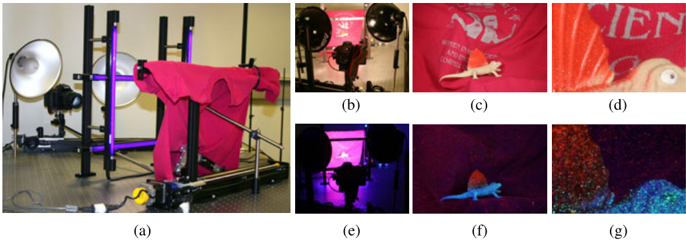
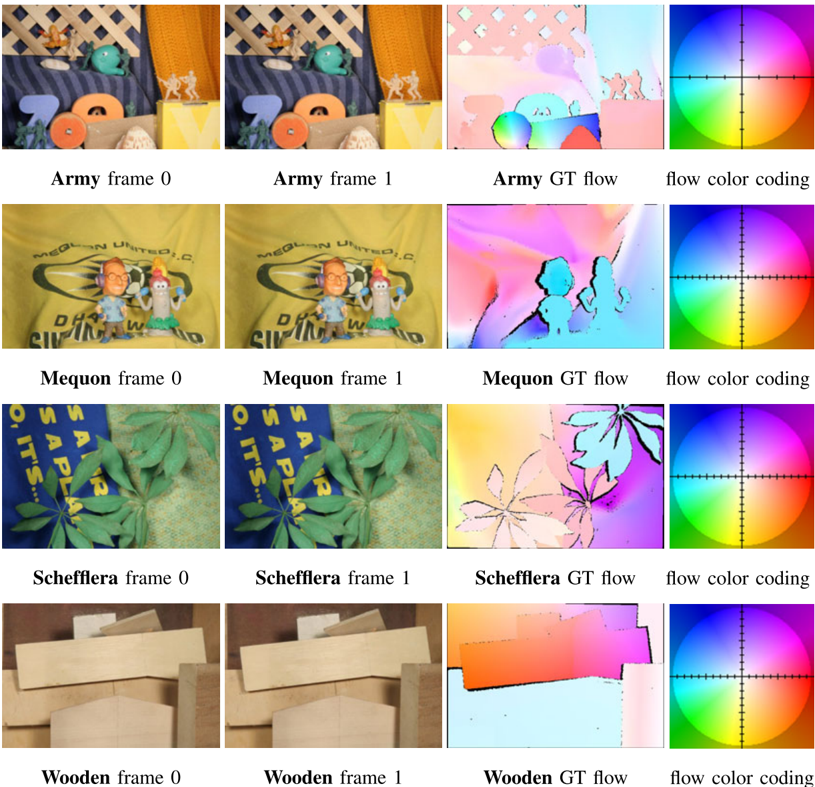
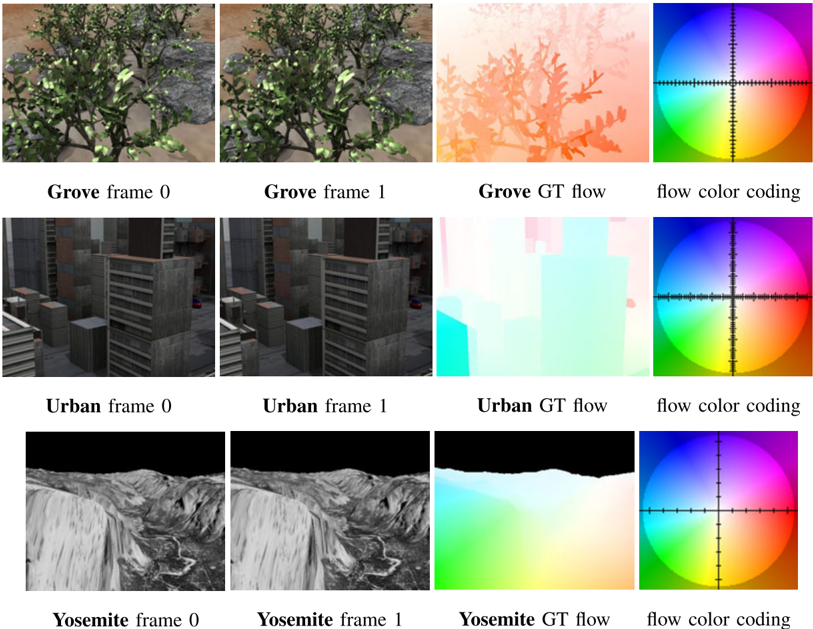
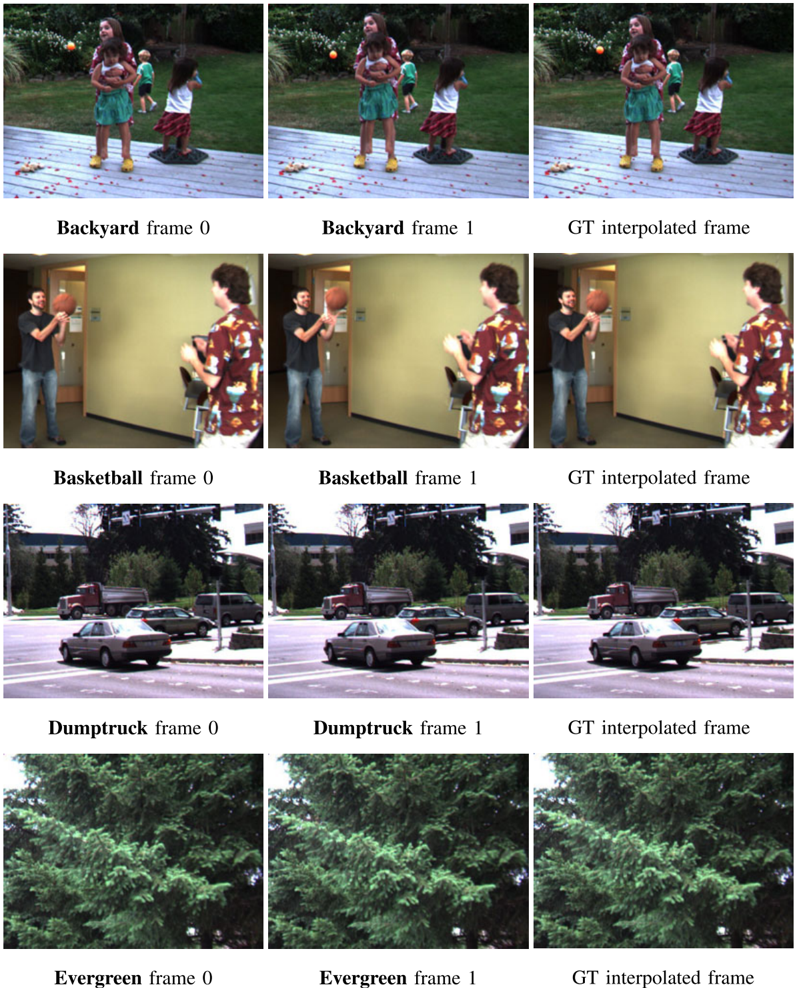
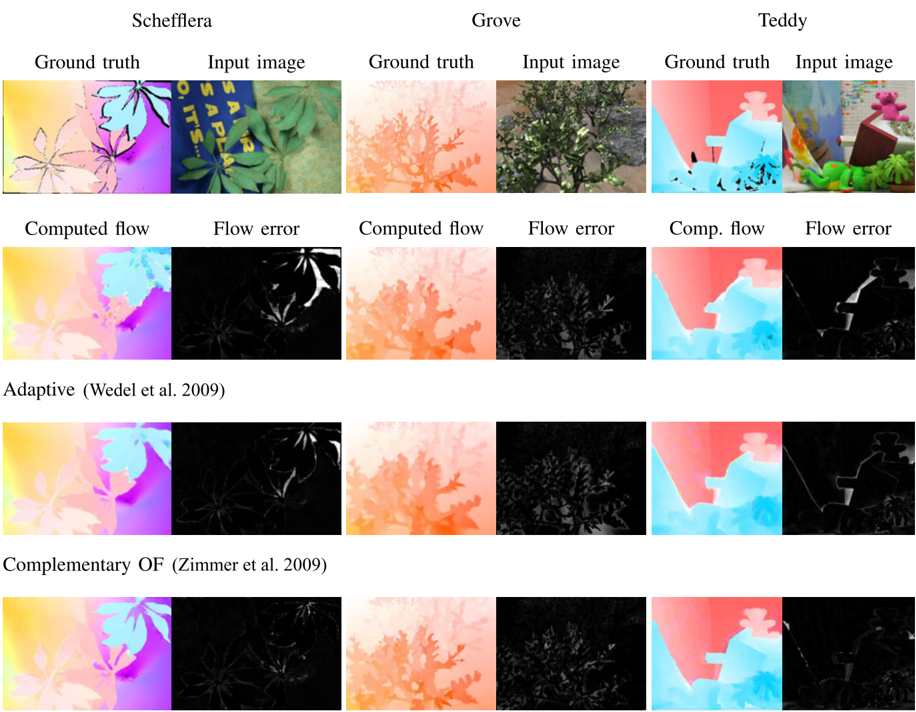
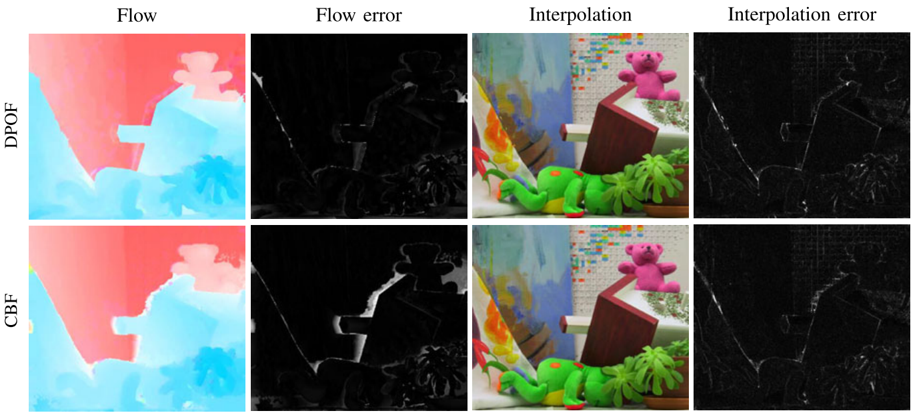
The quantitative evaluation of optical flow algorithms by Barron et al. (1994) led to significant advances in performance. The challenges for optical flow algorithms today go beyond the datasets and evaluation methods proposed in that paper. Instead, they center on problems associated with complex natural scenes, including nonrigid motion, real sensor noise, and motion discontinuities. We propose a new set of benchmarks and evaluation methods for the next generation of optical flow algorithms. To that end, we contribute four types of data to test different aspects of optical flow algorithms: (1) sequences with nonrigid motion where the ground-truth flow is determined by tracking hidden fluorescent texture, (2) realistic synthetic sequences, (3) high frame-rate video used to study interpolation error, and (4) modified stereo sequences of static scenes. In addition to the average angular error used by Barron et al., we compute the absolute flow endpoint error, measures for frame interpolation error, improved statistics, and results at motion discontinuities and in textureless regions.
Overview
CoChat Summary
TL;DR
The paper introduces a new optical flow benchmark of four data types (hidden fluorescent texture, realistic synthetic, high-speed interpolation, and modified stereo) plus an extended evaluation methodology with endpoint error, interpolation error, robustness/accuracy statistics, and region masks. It reports that performance improved substantially over the preliminary 2007 study, but motion discontinuities and diverse datasets remain difficult, and top flow methods still lag top stereo methods on the modified Teddy stereo data.
Key findings
- The benchmark contains 12 training and 12 test sequences; test ground truth is withheld except for Yosemite. As of December 2009 the online evaluation contained results for 24 published methods, all using only 2 input frames and 10 using color.
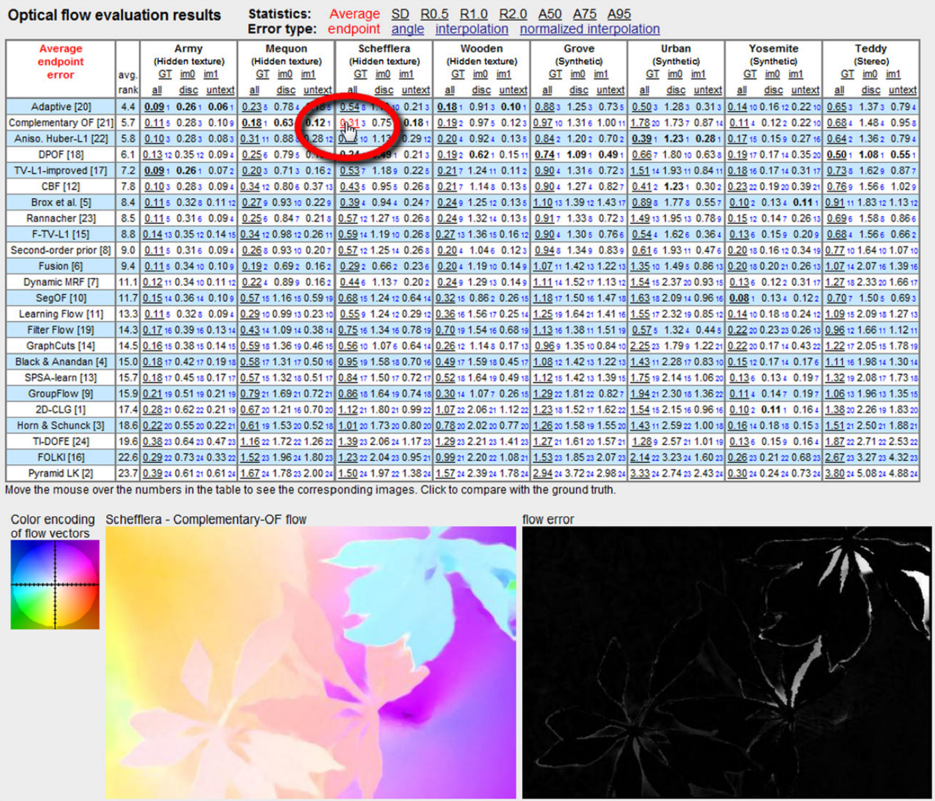
- Best average endpoint error (Avg. EE) improved dramatically over 2D-CLG (Bruhn et al. 2005): Army 0.28→0.09, Mequon 0.67→0.18, Schefflera 1.12→0.24, Wooden 1.07→0.18, Grove 1.23→0.74, Urban 1.54→0.39, Yosemite 0.10→0.08, Teddy 1.38→0.50. Best Avg. EE was below 0.2 pixels on four datasets (Yosemite, Army, Mequon, Wooden).
- Endpoint error (EE) and angular error (AE) rankings were highly correlated (r = 0.989), but the paper argues EE should be preferred: Complementary OF on Urban had Avg. AE 4.64° (rank 6) but Avg. EE 1.78 pixels (rank 20), because AE downweights large motions.
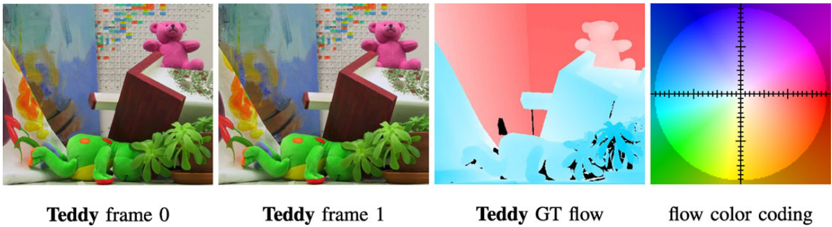
- Motion discontinuity (Disc) regions were the hardest; textureless (Untext) regions were typically easiest. Dataset results were less correlated, with Yosemite poorly or negatively correlated with others. Flow and interpolation errors were only moderately correlated (Avg4 EE vs Avg4 IE r = 0.763). On Teddy, top stereo methods outperformed top flow methods: median lowest-five R1.0 was 9.9 for flow vs 6.5 for stereo in All regions (34% reduction), and 27.6 vs 10.0 in Disc regions (64% reduction).
Methods
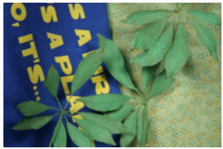
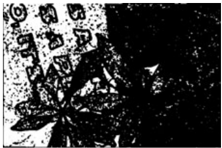
- Four data types were collected: (1) real nonrigid scenes with dense ground truth from hidden fluorescent texture, captured with a Canon EOS 20D at 3504×2336, downsampled every 40th visible-light frame by factor 6 to 584×388, with SSD tracking (15×15 windows), forward/backward crosschecking, and Lucas-Kanade subpixel refinement; (2) realistic synthetic scenes rendered with 3Delight at 640×480, with ground truth from a custom shader and dominant-cluster flow selection; (3) high-speed video for frame interpolation captured with a PointGrey Dragonfly Express at 60 fps, providing every other frame and retaining intermediate frames as ground truth; and (4) modified stereo data (Teddy) from structured light, cropped to make the disparity range roughly symmetric.
- Evaluation metrics include average angular error (AE), absolute flow endpoint error (EE), interpolation error (IE), and gradient-normalized interpolation error (NE). Statistics include averages, robustness measures R_X, and percentile accuracy measures A_X, computed over All, Disc, and Untext region masks.
- Analysis used the online evaluation at http://vision.middlebury.edu/flow/, comparing 24 published methods across metrics, statistics, masks, and datasets, with Pearson correlations between rankings and comparisons to state-of-the-art stereo methods on Teddy.
Limitations
- The paper states that the hidden fluorescent texture scenes are laboratory scenes, not real-world scenes, and have no motion blur due to stop-motion capture; ground truth is unavailable where cross-checking failed, especially occluded regions, and the measured ground truth is not perfect, though significant errors are limited to a small fraction of pixels. Synthetic sequences were generated without motion blur. The modified stereo ground truth is only accurate to 0.25 pixels, and algorithms may exploit the knowledge that motions are horizontal; overfitting to rigid data should be visible across the 12 evaluation images. Interpolation ground truth is an intermediate image, not a flow field, so the flow definition is apparent motion.
- The paper also states that no single method yet achieves strong performance across a wide variety of datatypes, that any dataset has a limited lifespan, and that future studies should include more challenging realistic synthetic data, longer sequences, and more difficult materials, illumination changes, atmospheric effects, and transparency.
- Evident from the text: the online tables do not provide an overall ranking among methods; runtimes are not normalized for programming environment, CPU speed, cores, or hardware acceleration; algorithms are required to produce dense flow and cannot submit confidence maps or sparse/incomplete fields; all 24 published methods used only 2 frames despite 8-frame sequences being available; and the paper cannot definitively answer whether temporal smoothing is less suited to the more challenging sequences.
Model-written summary. Check it against the paper before relying on it.
Integrity signals
Registry
Cites
Statistics
Figures

Verification
Claims the paper makes
2 Valid · 16 Not valid · 58 Not checked · 185 Own results and interpretations
A result the paper states — it cites no source for it, so there is none to check. The quote shows it is in the paper.
In the paper
“Rather than collecting a single type of data (with its inherent limitations) we instead collected four different types of data, each satisfying a different subset of desirable properties.”
plain- Asserted: passes — The authors put it forward as true.
- Checkable: passes — It can be checked against evidence.
- Load-bearing: passes — The paper’s conclusions depend on it.
- Based: passes — The paper gives a reason why it holds.
A result the paper states — it cites no source for it, so there is none to check. The quote shows it is in the paper.
In the paper
“Using the combination of fluorescent paint, downsampling high-resolution images, and sequential tracking of small motions, we are able to obtain dense, subpixel accurate ground truth for a nonrigid scene.”
plainstates a cause- Asserted: passes — The authors put it forward as true.
- Checkable: passes — It can be checked against evidence.
- Load-bearing: passes — The paper’s conclusions depend on it.
- Based: passes — The paper gives a reason why it holds.
A result the paper reports from its own data — it cites no other source for it, so there is none to check. The quote shows it is in the paper.
In the paper
“To allow for measures that predict performance on such tasks, we collected a variety of data suitable for frame interpolation.”
plainstates a cause- Asserted: passes — The authors put it forward as true.
- Checkable: passes — It can be checked against evidence.
- Load-bearing: passes — The paper’s conclusions depend on it.
- Based: passes — The paper gives a reason why it holds.
A result the paper reports from its own data — it cites no other source for it, so there is none to check. The quote shows it is in the paper.
In the paper
“We have developed a technique for capturing imagery of nonrigid scenes with ground-truth optical flow.”
plain- Asserted: passes — The authors put it forward as true.
- Checkable: passes — It can be checked against evidence.
- Load-bearing: passes — The paper’s conclusions depend on it.
- Based: passes — The paper gives a reason why it holds.
A result the paper states — it cites no source for it, so there is none to check. The quote shows it is in the paper.
In the paper
“To go beyond previous synthetic ground truth (e.g., the Yosemite sequence), we generated two types of fairly complex synthetic outdoor scenes.”
plain- Asserted: passes — The authors put it forward as true.
- Checkable: passes — It can be checked against evidence.
- Load-bearing: passes — The paper’s conclusions depend on it.
- Based: passes — The paper gives a reason why it holds.
96 more claims
Create a free account to see all 261 claims and every source verdict.
- Probably not a substantial claim. 114
- It may state two separate claims as one. 76
- The quote only partly states this claim. 6
Claims other papers make about this one
Each is checked against this paper’s own text: does it say what the citing paper says it does?
The source backs part of the claim, not all of it — or backs it for a different population, condition or comparison.
In the citing paper
“Notable works include the Middlebury dataset (Baker et al, 2011) and the KITTI datasets (Geiger et al, 2012; Menze and Geiger, 2015), but due to the difficulty of computing accurate ground truth, these have been restricted to 8 and 2 · 200 pairs of frames, respectively (the latter are also limited by the special driving setting).”
From What Makes Good Synthetic Training Data for Learning Disparity and Optical Flow Estimation? (2018) · cites this paper as Baker et al, 2011
Experimental — accuracy not yet measured
Citations
Cites
The pascal visual object classes (VOC) challenge
Everingham, M., Van Gool, L., Williams, C. K. I., Winn, J., & Zisserman, A. (2010) · International Journal of Computer Vision · doi:10.1007/s11263-009-0275-4 · Cited by 19,599
Proceedings of IEEE Conference on Computer Vision and Pattern Recognition
(1993) · doi:10.1109/cvpr.1993 · Cited by 17,667
Proceedings of IEEE International Conference on Computer Vision
(1995) · Proceedings of IEEE International Conference on Computer Vision · doi:10.1109/iccv.1995.466933 · Cited by 12,860
(1981) · Cited by 11,963
Horn, B. K. P., & Schunck, B. G. (1981) · Artificial Intelligence · doi:10.1016/0004-3702(81)90024-2 · Cited by 10,312
Horn, B. K., & Schunck, B. G. (1981) · SPIE Proceedings · doi:10.1117/12.965761 · Cited by 7,394 · cited 2×
“A baseline approach is to use an L2 norm as in the Horn and Schunck algorithm (Horn and Schunck 1981):”
BackgroundMethodFast approximate energy minimization via graph cuts
Boykov, Y., Veksler, O., & Zabih, R. (2001) · IEEE Transactions on Pattern Analysis and Machine Intelligence · doi:10.1109/34.969114 · Cited by 6,988
A Taxonomy and Evaluation of Dense Two-Frame Stereo Correspondence Algorithms
Scharstein, D., & Szeliski, R. (2002) · International Journal of Computer Vision · doi:10.1023/a:1014573219977 · Cited by 6,740 · cited 10×
“Many areas of computer vision, such as stereo [63], face recognition [28, 55, 68], and object recognition [23, 24], have challenging datasets to track the progress made by leading algorithms and to stimulate new ideas.”
BackgroundMethodResultInfluentialSelf-citationProceedings European Conference on Computer Vision 2002
Heyden, A., Sparr, G., Nielsen, M., & Johansen, P. (2002) · Lund University Publications (Lund University) · Cited by 5,153
From few to many: illumination cone models for face recognition under variable lighting and pose
Georghiades, A. S., Belhumeur, P. N., & Kriegman, D. J. (2001) · IEEE Transactions on Pattern Analysis and Machine Intelligence · doi:10.1109/34.927464 · Cited by 4,912 · cited 1×
“Many areas of computer vision, such as stereo (Scharstein and Szeliski 2002), face recognition (Philips et al. 2005; Sim et al. 2003; Gross et al. 2008; Georghiades et al. 2001), and object recognition (Fei-Fei et al.”
Background
Research works printed but not linked: 4
- Anandan, P., & Weiss, R. (1985). Introducing smoothness constraint in a matching approach for the computation of displacement fields. In Proceedings of the DARPA image understanding workshop (pp. 186-196).
- Bleyer, M., & Chambon, S. (2010). Does color really help in dense stereo matching? In Proceedings of the international symposium 3D data processing, visualization and transmission .
- Lempitsky, V., Roth, S., & Rother, C. (2008). Fusion flow: discretecontinuous optimization for optical flow estimation. In Proceedings of the IEEE conference on computer vision and pattern recognition .
- Rannacher, J. (2009). Realtime 3D motion estimation on graphics hardware . Undergraduate thesis, Heidelberg University.
Cited by
Items 1,201–1,300 of 2,273
3D Hermite Transform Optical Flow Estimation in Left Ventricle CT Sequences
Mira, C., Moya-Albor, E., Ramírez, B. E., Olveres, J., Brieva, J., & Vallejo, E. (2020) · Sensors · doi:10.3390/s20030595 · Cited by 7
“We compare our HOF2D algorithm, along with another pair of algorithms and the ground-truth flows provided in [63].”
BackgroundMethodRemoving multi-frame Gaussian noise by combining patch-based filters with optical flow
Bodduna, K., & Weickert, J. (2021) · Journal of Electronic Imaging · doi:10.1117/1.jei.30.3.033031 · Cited by 6
“In a similar spirit, we have also created non-registered data by corrupting the Grove2, 43 Shoe and Bird House 44 images with AWGN.”
MethodInfluentialYin, X., Liang, D., Wang, L., Qiu, J., Yang, Z., Dong, J., & Ma, Z. (2021) · Cardiovascular Innovations and Applications · doi:10.15212/cvia.2021.0011 · Cited by 10
Yong, X., Huang, C.-K., & Lim, C. T. (2021) · Journal of The Royal Society Interface · doi:10.1098/rsif.2021.0248 · Cited by 6
“[27] input image object matching (2 r o y a l s o c i e t y pub l i s h i ng . o r g / j o u r n a l / r s i f J .”
BackgroundSelf-Supervised Learning of Perceptually Optimized Block Motion Estimates for Video Compression
Paul, S., Andrey Norkin, A., & Bovik, A. C. (2022) · IEEE Transactions on Image Processing · doi:10.1109/tip.2022.3231082 · Cited by 6
Pattar, S. P., Killus, T., Hirakawa, T., Yamashita, T., Sawanobori, T., & Fujiyoshi, H. (2022) · Advanced Robotics · doi:10.1080/01691864.2022.2136504 · Cited by 6
“Other methods use invisible markers that are visible under ultraviolet (UV) light and invisible under regular (white) light [32,33].”
MethodRobinson, P. E., & Nel, A. (2016) · Journal of Electronic Imaging · doi:10.1117/1.jei.25.6.063010 · Cited by 6
“This is an intensely studied problem in the field of computer vision and a large number of different techniques have been tested using the Middlebury datasets.(18) It is apparent that the area is still receiving a great deal of attention.”
MethodMotion Inpainting by an Image-Based Geodesic AMLE Method
Oliver-Parera, M., Raad, L., Ballester, C., & Haro, G. (2018) · Proceedings - International Conference on Image Processing · doi:10.1109/icip.2018.8451851 · Cited by 7
“The comparison is done in the Middlebury dataset on the optical flow corresponding to frames 10 and 11, where the groundtruth is available [5].”
MethodAn Empirical Study of Exhaustive Matching for Improving Motion Field Estimation
Lazcano, V. A. (2018) · Information · doi:10.3390/info9120320 · Cited by 6
“Middlebury Database The proposed model has been tested in the available Middlebury database training set [19].”
Adaptive Regularization of Some Inverse Problems in Image Analysis
Hong, B., Koo, J., Burger, M., & Soatto, S. (2019) · IEEE Transactions on Image Processing · doi:10.1109/tip.2019.2960587 · Cited by 10
“In the experiments, the qualitative and quantitative evaluation is performed based on the Middlebury optical flow dataset [61].”
MethodSubjective annotation for a frame interpolation benchmark using artefact amplification
Men, H., Hosu, V., Lin, H., Bruhn, A., & Saupe, D. (2020) · Quality and User Experience · doi:10.1007/s41233-020-00037-y · Cited by 5
“However, currently, there is only one optical flow benchmark that offers the assessment of interpolated frames: the Middlebury benchmark [3].”
BackgroundAccuracy of Gradient-Based Optical Flow Estimation in High-Frame-Rate Video Analysis
Lei, C. H. E. N., Takaki, T., & Ishii, I. (2012) · IEICE Transactions on Information and Systems · doi:10.1587/transinf.e95.d.1130 · Cited by 6
“[37] proposed a new set of benchmarks and evaluation methods for optical flow methods, including imagery for frame interpolation, and they showed the performance of several well-known methods.”
BackgroundMethodInterpolation error as a quality metric for stereo: Robust, or not?
Lu, J., Yang, Q., & Lafruit, G. (2009) · IEEE International Conference on Acoustics Speech and Signal Processing · doi:10.1109/icassp.2009.4959749 · Cited by 7
“Index Terms— Stereo, view interpolation, interpolation error, evaluation methodology, communication system”
BackgroundHardware-Efficient Neighbor-Guided SGM Optical Flow for Low Power Vision Applications
Xiang, J., Li, Z., Kim, H.-S., et al. (2016) · IEEE International Workshop on Signal Processing Systems (SiPS) · doi:10.1109/sips.2016.8 · Cited by 6
“Experiments on the Middlebury benchmark [9], for 11 × 11 Census transform, P = 4, N = 3, M = 3, P1 = 20, and P2 = 60, showed that the endpoint error (radius = 2 pixels) is 4.”
MethodCascaded Scene Flow Prediction using Semantic SegmentationPreprint
Ren, Z., Sun, D., Kautz, J., et al. (2017) · arXiv (Cornell University) · doi:10.48550/arxiv.1707.08313 · Cited by 6
CDFI: Compression-Driven Network Design for Frame InterpolationPreprint
Ding, T., Liang, L., Zhu, Z., et al. (2021) · arXiv (Cornell University) · doi:10.48550/arxiv.2103.10559 · Cited by 6
“rapid expansion in optical flow [1, 60], many approaches either utilize an off-the-shelf flow model [2, 41, 42, 61] or estimate their own task-specific flow [27, 36, 62, 63, 45] as a guidance of pixel-level motion interpolation.”
MethodInfluentialVideo Classification with FineCoarse Networks.Preprint
Huang, G., & Borş, A. G. (2021) · arXiv (Cornell University) · Cited by 6
Time Lens: Event-based Video Frame Interpolation
Tulyakov, S., Gehrig, D., Georgoulis, S., Erbach, J., Gehrig, M., Li, Y., & Scaramuzza, D. (2021) · 2021 IEEE/CVF Conference on Computer Vision and Pattern Recognition (CVPR) · doi:10.1109/cvpr46437.2021.01589 · Cited by 225
Bauer, A. M., & Hartmann, C. (2023) · Sensors · doi:10.3390/s23094408 · Cited by 5
“Among the best-known benchmarks in optical flow analysis are the Middleburry Benchmark [31] and the KITTI”
MethodDivisive normalization processors in the early visual system of the Drosophila brain
Lazar, A. A., & Zhou, Y. (2023) · Biological Cybernetics · doi:10.1007/s00422-023-00972-x · Cited by 5
“Modern optic flow algorithms may take seconds or even minutes to compare two consecutive frames (Baker et al. 2011; Menze et al. 2018).”
Spike Camera Optical Flow Estimation Based on Continuous Spike Streams
Zhao, R. Q., Xiong, R., Wang, D., Xuan, S., Zhang, J., Fan, X., & Huang, T. (2025) · IEEE Transactions on Pattern Analysis and Machine Intelligence · doi:10.1109/tpami.2025.3649050 · Cited by 13
“Real-world approaches [16], [17] face problems such as low temporal resolution, inaccuracy, and requirements for specific environments.”
An Improved Fractional-Order Variational Optical Flow Model Combining Structure Tensor
Zhu, B., Wang, Z., Tian, L., Guo, J., Wang, L.-J., & Bhutto, J. A. (2021) · Mathematical Problems in Engineering · doi:10.1155/2021/9960784 · Cited by 5
“To testify the superiority and practicability of our optical flow model, Middlebury dataset [34], MPI_Sintel dataset [35], KITTI dataset [36], and an outdoor real scene video are used in experiments.”
MethodAn adaptive interpolation and 3D reconstruction algorithm for underwater images
Tang, Z., Xu, C., & Yan, S. (2024) · Machine Vision and Applications · doi:10.1007/s00138-024-01518-2 · Cited by 6
ADFactory: An Effective Framework for Generalizing Optical Flow With NeRF
Ling, H., Sun, Q., Sun, Y., Xu, X., & Li, X. (2024) · IEEE Computer Society Conference on Computer Vision and Pattern Recognition/Proceedings - IEEE Computer Society Conference on Computer Vision and Pattern Recognition/Proceedings · doi:10.1109/cvpr52733.2024.01946 · Cited by 12
“Datasets: In the evaluation, we used 194 images from KITTI 2012 training set[12] (K12), 3 static scenes from Middlebury[3] (Midd-A), and 200 images from KITTI 2015 training set[27] (K15).”
Bridging the Gap: Sketch-Aware Interpolation Network for High-Quality Animation Sketch Inbetweening
Shen, J., Hu, K., Bao, W., Chen, C. W., & Wang, Z. (2024) · ACM International Conference on Multimedia (ACM MM) · doi:10.1145/3664647.3681146 · Cited by 10
LeRF: Learning Resampling Function for Adaptive and Efficient Image Interpolation
Li, J., Chen, C., Song, F., et al. (2025) · IEEE Transactions on Pattern Analysis and Machine Intelligence · doi:10.1109/tpami.2025.3577227 · Cited by 5
“By modifying its default interpolation method from Bilinear to LeRF, we observed an improvement in restoration performance from 35.77 dB to 35.85 dB on the MiddleBury-Other benchmark [70].”
InfluentialOptical Flow in Driver Assistance Systems
Onkarappa, N. (2014) · ELCVIA Electronic Letters on Computer Vision and Image Analysis · doi:10.5565/rev/elcvia.593 · Cited by 5
“It can be possible in a laboratory environment for limited motion using hidden texture [11], but for natural outdoor scenes, there is no way at present to have ground-truth optical flow with good accuracy.”
BackgroundMethodInfluentialVariational myocardial tracking from CINE-MRI with non-linear regularization
Tuyisenge, V., Albouy-Kissi, A., Cassagnes, L., Coupez, E., Merlin, C., Windyga, P., & Sarry, L. (2013) · IEEE International Symposium on Biomedical Imaging (ISBI) · doi:10.1109/isbi.2013.6556602 · Cited by 6
Optical flow for compressive sensing video reconstruction
Braun, H. C., Turaga, P. K., Tepedelenlioğlu, C., et al. (2013) · IEEE International Conference on Acoustics Speech and Signal Processing · doi:10.1109/icassp.2013.6638058 · Cited by 5
“1 was tested using the Middlebury optical flow dataset’s “Venus” image, a stereo image for which known ground truth motion vectors are provided [15].”
MethodChu, C., Huang, J., Sun, C.-Y., Zhang, Y., Liu, W., & Zhu, Y. (2015) · International Journal of Imaging Systems and Technology · doi:10.1002/ima.22148 · Cited by 5
Real-time optical flow estimation on a GPU for a skied-steered mobile robot
Kniaz, V. V. (2016) · Proceedings of SPIE, the International Society for Optical Engineering/Proceedings of SPIE · doi:10.1117/12.2227556 · Cited by 5
“Such methods could be divided into synthetic image based [24] and real images based [25],[26],[2].”
BackgroundBeyou, S., Corpetti, T., Gorthi, R. K., et al. (2013) · Numerical Mathematics Theory Methods and Applications · doi:10.4208/nmtma.2013.mssvm02 · Cited by 5
“The reader can refer to [16] for a recent review on estimators dedicated to fluid flows and more generally to [1, 2, 12] for presentation and comparative performance evaluations of some state-of-the-art techniques in computer vision.”
BackgroundAbnormal Prediction of Dense Crowd Videos by a Purpose–Driven Lattice Boltzmann Model
Xue, Y., Liu, P., Tao, Y., & Tang, X. (2017) · International Journal of Applied Mathematics and Computer Science · doi:10.1515/amcs-2017-0013 · Cited by 7
“The velocity field of each scene is estimated by the optical flow algorithm (Baker et al., 2011).”
MethodOptical Flow Estimation in Synthetic Image Sequences Using Farneback Algorithm
Anthwal, S., & Ganotra, D. (2018) · Lecture notes in electrical engineering · doi:10.1007/978-981-13-2553-3_35 · Cited by 8
Zhao, D., Wu, Y., Wang, C., et al. (2021) · Applied Optics · doi:10.1364/ao.441233 · Cited by 5
Seznec, M., Gac, N., Orieux, F., & Naik, A. S. (2021) · Journal of Real-Time Image Processing · doi:10.1007/s11554-021-01187-8 · Cited by 8
“Review papers [2, 22] explore comprehensively the different strategies used for computing optical flow.”
MethodLee, C.-E., Chen, C., Hsu, F.-S., et al. (2021) · IEEE Access · doi:10.1109/access.2021.3136795 · Cited by 5
“Moreover, famous optical flow methods such as the Kanade–Lucas–Tomasi (KLT) [35], [36] and Horn–Schunck (HS) [37] methods have a constraint that objects should be rigid [38].”
MethodMotion cues guided feature aggregation and enhancement for video object segmentation
Li, X., Zheng, W., & Zong, Y. (2022) · Neurocomputing · doi:10.1016/j.neucom.2022.03.064 · Cited by 6
Development of an IR Video Surveillance System Based on Fractional Order TV-Model
Kumar, P., Khan, M., & Gupta, S. (2021) · International Conference on Control, Automation, Power and Signal Processing (CAPS) · doi:10.1109/caps52117.2021.9730605 · Cited by 5
Bi-Directional Pseudo-Three-Dimensional Network for Video Frame Interpolation
Luo, Y., Pan, J., & Tang, J. (2022) · IEEE Transactions on Image Processing · doi:10.1109/tip.2022.3215911 · Cited by 7
“The intensity of interpolated pixels is then computed subject to the visibility of warped pixels determined through occlusion reasoning [22].”
MethodVideo frame interpolation via residual blocks and feature pyramid networks
Yang, X., Zhang, H., Qu, Z., Feng, Z., & Tian, J. (2022) · IET Image Processing · doi:10.1049/ipr2.12695 · Cited by 5
Novel Multi-Task Learning for Motion Magnification
Chen, L., Peng, C., & Zhao, B. (2023) · IEEE Transactions on Circuits and Systems for Video Technology · doi:10.1109/tcsvt.2023.3262777 · Cited by 7
“For optical flow estimation, the average endpoint error [56] is utilized to evaluate deviations between the ground truth and output of the optical flow.”
DeFlow: Self-supervised 3D Motion Estimation of Debris Flow
Zhu, L., Jia, Y., Huang, S., et al. (2023) · IEEE/CVF Conference on Computer Vision and Pattern Recognition Workshops (CVPRW) · doi:10.1109/cvprw59228.2023.00692 · Cited by 5
“Therefore, we use an unsupervised loss [3,23] based on photometric consistency and local smoothness.”
BackgroundMethodInfluentialEvent-Enhanced Snapshot Compressive Videography at 10K FPS
Zhang, B., Suo, J., & Dai, Q. (2024) · IEEE Transactions on Pattern Analysis and Machine Intelligence · doi:10.1109/tpami.2024.3496788 · Cited by 6
“Most conventional approaches use boundary frames as input to predict middle frames via optical flow [40], [41], [42], [43], [44], [45], [46], [47], phase [48], [49], adaptive kernels [50], [51], [52] or direct synthesis [53], [54].”
RALACs: Action Recognition in Autonomous Vehicles Using Interaction Encoding and Optical Flow
Zhou, E., Leather, O., Zhuang, A., Budhwani, A., Dempster, R., Li, Q., Al-Sharman, M., Rayside, D., & Melek, W. (2024) · IEEE Transactions on Cybernetics · doi:10.1109/tcyb.2024.3515104 · Cited by 8
“Estimating optical flow is a difficult problem which was traditionally posed as the optimization of a global energy function [35].”
BackgroundSparse Regularization of TV-L $$^1$$ Optical Flow
Gibson, J., & Marques, O. (2016) · SpringerBriefs in computer science · doi:10.1007/978-3-319-44941-8_3 · Cited by 5
Demetz, O., Weickert, J., Bruhn, A., et al. (2012) · Lecture notes in computer science · doi:10.1007/978-3-642-24785-9_60 · Cited by 5
“In particular, we use the Yosemite sequence with and without clouds [4], the New Marble1 sequence as well as the Rubberwhale sequence [3].”
MethodOn the optical flow model selection through metaheuristics
Pereira, D. R., Delpiano, J. F., & Papa, J. P. (2015) · EURASIP Journal on Image and Video Processing · doi:10.1186/s13640-015-0066-5 · Cited by 6
“The Middlebury dataset contains eight synthetic and laboratory sequences with a dense ground truth (Figure 1), and the Sintel dataset contains artificial naturalistic video sequence (Figure 2).”
InfluentialLocal smoothness for global optical flow
Raket, L. L. (2012) · 2012 19th IEEE International Conference on Image Processing · doi:10.1109/icip.2012.6674231 · Cited by 9
“Table 1 (a) holds average endpoint error (AEE) results for Pk and P∇ k , k = 1, 2 and the corresponding λ-values for the six Middlebury training sequences [11] with more than two frames, as well as the optimal λs.”
BackgroundMethodDecoupled coarse-to-fine matching and nonlinear regularization for efficient motion estimation
Tepper, M., & Sapiro, G. (2012) · Proceedings - International Conference on Image Processing · doi:10.1109/icip.2012.6467160 · Cited by 7
Chai, Z., Zhou, H., Wang, Z., & Wu, D. (2014) · International Conference on Field-Programmable Technology (FPT) · doi:10.1109/fpt.2014.7082789 · Cited by 6
“The images Grove2 from Middlebury [3] dataset within the “other-graytwoframes” folder with resolution 640 × 480 are selected.”
BackgroundMethodScene Flow Estimation using Intelligent Cost Functions
Hadfield, S., & Bowden, R. (2014) · British Machine Vision Conference (BMVC) · doi:10.5244/c.28.108 · Cited by 8
“Errors in this case are measured using the standard end-point-error (EPE) and angular error (εae) defined in [3].”
MethodNonlinear Transform for Robust Dense Block-Based Motion Estimation
Xu, R., Taubman, D., & Naman, A. T. (2014) · IEEE Transactions on Image Processing · doi:10.1109/tip.2014.2314023 · Cited by 5
“In fact, many optical flow methods involve this hierarchical approach as well – e.g., [13]–[15].”
Boltz, S., & Nielsen, F. (2010) · Proceedings - International Conference on Image Processing · doi:10.1109/icip.2010.5652514 · Cited by 6
“(1) where I1 and I2 are two images, and vl the displacement vector at pixel l.”
BackgroundA New Approach to Satellite Time-series Co-registration for Landslide Monitoring
Barazzetti, L., Gianinetto, M., & Scaioni, M. (2015) · Springer eBooks · doi:10.1007/978-3-662-45931-7_12 · Cited by 5
“With respect to the measurement of surface displacements, optical-flow tracking (Baker et al. 2011) or other image matching techniques (Scaioni et al.”
MethodDecoding MT motion response for optical flow estimation: An experimental evaluation
Chessa, M., Medathati, N. V. K., Masson, G. S., Solari, F., & Kornprobst, P. (2015) · European Signal Processing Conference (EUSIPCO) · doi:10.1109/eusipco.2015.7362783 · Cited by 6
“Modern computer vision datasets with ground truth, such as Middlebury dataset [8], give us an opportunity to study these aspects also with respect to the problem of decoding.”
BackgroundMotion Estimation Based on Mutual Information and Adaptive Multi-Scale Thresholding
Xu, R., Taubman, D., & Naman, A. T. (2016) · IEEE Transactions on Image Processing · doi:10.1109/tip.2016.2514488 · Cited by 5
“Notable applications include motion estimation for video compression [1] and enhancement [2], stereo correspondence [3], object tracking [4] and determination of optical flow [5].”
BackgroundSpecular reflection removal with high-speed camera for video imaging
Iwata, S., Ogata, K., Sakaino, S., et al. (2015) · Proceedings of the Annual Conference of the IEEE Industrial Electronics Society · doi:10.1109/iecon.2015.7392352 · Cited by 5
A multi-frame optical flow spot tracker
Li, J., Gilliam, C., & Blu, T. (2015) · Proceedings - International Conference on Image Processing · doi:10.1109/icip.2015.7351489 · Cited by 5
“Assuming brightness consistency [23], the two images can be related as I2(x, y) = I1(x − ux, y − uy), where (x, y) is the pixel coordinates.”
BackgroundBlur robust optical flow using motion channel
Li, W., Chen, Y., Lee, J. H., et al. (2016) · Neurocomputing · doi:10.1016/j.neucom.2016.03.105 · Cited by 5
“0 in AAE is an arbitrary scaling constant to convert the units from pixels to degrees [27].”
BackgroundMethodInfluentialADAPTIVE SEARCH-BASED HIERARCHICAL MOTION ESTIMATION USING SPATIAL PRIORS
Santoro, M., AlRegib, G., & Altunbasak, Y. (2012) · International Conference on Computer Vision Theory and Applications · doi:10.5220/0003865003990403 · Cited by 5
“In our research, we conducted similar tests for different penalty functions and neighborhood sizes using the Middlebury test sequences (Baker et al., 2011).”
MethodInfluentialObject-guided motion estimation
Pérez-Rúa, J.-M., Crivelli, T., & Pérez, P. (2016) · Computer Vision and Image Understanding · doi:10.1016/j.cviu.2016.05.005 · Cited by 5
FRAME INTERPOLATION WITH OCCLUSION DETECTION USING A TIME COHERENT SEGMENTATION
Sadek, R., Ballester, C., Garrido, L., Meinhardt-Llopis, E., & Caselles, V. (2012) · International Conference on Computer Vision Theory and Applications · doi:10.5220/0003830803670372 · Cited by 6
“Most of current optical flow approaches compute the forward field based on the work of Horn and Schunk (see (Baker et al., 2011)).”
MethodInfluentialAutomated content and quality assessment of full-motion-video for the generation of meta data
Harguess, J. D. (2015) · Proceedings of SPIE, the International Society for Optical Engineering/Proceedings of SPIE · doi:10.1117/12.2178414 · Cited by 5
“To measure the motion present between frames, we utilize the computer vision concept of optical flow.(10,11) In particular, this work relies on the optical flow method introduced by Farneback et al.”
MethodFast Optical Flow Estimation Without Parallel Architectures
Zhu, E., Li, Y., & Shi, Y. (2016) · IEEE Transactions on Circuits and Systems for Video Technology · doi:10.1109/tcsvt.2016.2592322 · Cited by 5
“AS AN important area of computer vision, optical flow estimation has achieved significant progress of which a direct verification can be found from the results on Middlebury [1], MPI Sintel [2], and KITTI [3] benchmarks.”
MethodResultPanchenko, S., Siroklyn, I., Лапко, А. О., et al. (2016) · Eastern-European Journal of Enterprise Technologies · doi:10.15587/1729-4061.2016.76103 · Cited by 5
“The approaches in [11] are suggested to improve the optical flow method.”
MethodDetecting Significant Changes in Image Sequences
Mashtalir, S., & Mikhnova, O. (2016) · Intelligent systems reference library · doi:10.1007/978-3-319-44270-9_8 · Cited by 5
Bengtsson, T., McKelvey, T., & Lindström, K. (2016) · Image and Vision Computing · doi:10.1016/j.imavis.2016.11.003 · Cited by 7
“In terms average endpoint error (AEPE), we obtain equally good results on the Sintel [35] sequences for which the regularization weight in [15] was optimized and slightly better results on the Middlebury [36] sequences.”
ResultCreating Feasible Reflectance Data for Synthetic Optical Flow Datasets
Güssefeld, B., Honauer, K., & Kondermann, D. (2016) · Lecture notes in computer science · doi:10.1007/978-3-319-50835-1_8 · Cited by 5
Behavior representation in visual crowd scenes using space-time features
Shuaibu, A. N., Malik, A. S., & Faye, I. (2016) · International Conference on Intelligent and Advanced Systems · doi:10.1109/icias.2016.7824073 · Cited by 5
“Conventional approaches to crowd motion analysis of human behavior mostly used optical flow computation [2].”
Method6-DOF motion estimation using optical flow based on dual cameras
Liu, M.-Y., Wang, Y., & Guo, L. (2017) · Journal of Central South University · doi:10.1007/s11771-017-3448-2 · Cited by 6
Robust local optical flow: Dense motion vector field interpolation
Geistert, J., Senst, T., & Sikora, T. (2016) · Picture Coding Symposium · doi:10.1109/pcs.2016.7906352 · Cited by 6
“Compared to the accurate but more complex PCA-layers approach the RLOF-EPIC approach performs about 5 times faster on Middlebury and about 3 times faster on KITTI and MPI-Sintel data.”
MethodInfluentialExploiting Semantic Segmentation for Robust Camera Motion Classification
Derue, F.-X., Dahmane, M., Lalonde, M., & Foucher, S. (2017) · Lecture notes in computer science · doi:10.1007/978-3-319-59876-5_20 · Cited by 5
Algorithm of fatigue crack detection and determination of its tip position in optical images
Panin, S. V., Олегович, Ч. В., Lyubutin, P. S., et al. (2017) · Optoelectronics Instrumentation and Data Processing · doi:10.3103/s8756699017030062 · Cited by 5
Zhang, X., Gilliam, C., & Blu, T. (2017) · Proceedings - International Conference on Image Processing · doi:10.1109/icip.2017.8296530 · Cited by 6
Dynamic turbulence mitigation with large moving objects
Nieuwenhuizen, R. P. J., van Eekeren, A. W. M., Dijk, J., & Klamer Schutte, B. (2017) · Electro-Optical and Infrared Systems: Technology and Applications · doi:10.1117/12.2277840 · Cited by 6
A Unified Method for First and Third Person Action Recognition
Javidani, A., & Mahmoudi-Aznaveh, A. (2018) · doi:10.1109/icee.2018.8472580 · Cited by 5
“To convert it to colorful images, in order to be fed to pre-trained networks, flow visualization code of Baker et al. [23] was followed.”
MethodVideo Saliency Detection Using Deep Convolutional Neural Networks
Zhou, X., Liu, Z., Gong, C., Li, G., & Huang, M. (2018) · Lecture notes in computer science · doi:10.1007/978-3-030-03335-4_27 · Cited by 4
An improved method of optical flow using human body-following wheeled robot
Wu, Y., Yang, Q., & Zhou, X. (2019) · Advances in Complex Systems · doi:10.1142/s179396231950003x · Cited by 5
High-Speed Video from Asynchronous Camera Array
Lu, S. (2019) · IEEE Winter Conference on Applications of Computer Vision · doi:10.1109/wacv.2019.00237 · Cited by 5
“This work falls into the area of frame interpolation [4] and novel view synthesis [20, 21].”
BackgroundMethodInfluentialOn parameterizing higher-order motion for behaviour recognition
Sun, Y., Hare, J. S., & Nixon, M. S. (2020) · Pattern Recognition · doi:10.1016/j.patcog.2020.107710 · Cited by 5
“Most state-of-art approaches estimate optical flow by optimising the weighted sum of two terms: a data term and a prior term [24].”
BackgroundUnsupervised video object segmentation with distractor-aware online adaptation
Wang, Y., Choi, J., Chen, Y., Li, S., Huang, Q., Zhang, K., Lee, M., & Kuo, C. ‐. J. (2020) · Journal of Visual Communication and Image Representation · doi:10.1016/j.jvcir.2020.102953 · Cited by 7
Invisible Marker: Automatic Annotation of Segmentation Masks for Object Manipulation
Takahashi, K., & Yonekura, K. (2020) · IEEE/RSJ International Conference on Intelligent Robots and Systems (IROS) · doi:10.1109/iros45743.2020.9341332 · Cited by 5
“In the computer vision field, a method that involves applying fluorescent paint to objects has been studied [24].”
BackgroundMethodInfluentialHDR4CV: High Dynamic Range Dataset with Adversarial Illumination for Testing Computer Vision Methods
Hanji, P., Alam, M. Z., Giuliani, N., Hu, C., & Mantiuk, R. (2021) · Journal of Imaging Science and Technology · doi:10.2352/j.imagingsci.technol.2021.65.4.040404 · Cited by 5
“Some established datasets, such as Middlebury stereo 32,33 and optical flow datasets 6 contain well-illuminated images captured in controlled laboratory conditions.”
BackgroundSparse Regularization of TV-L1 Optical Flow
Gibson, J., & Marques, O. (2014) · Lecture notes in computer science · doi:10.1007/978-3-319-07998-1_53 · Cited by 5
“We reconstruct the flow from the patches and measure the Average Endpoint Error (Avg EE) [4].”
BackgroundMethodProgressive Motion Boosting for Video Frame Interpolation
Xiao, J., Xu, K., Hu, M., Liao, L., Wang, Z., Lin, C., Wang, M., & Satoh, S. (2022) · IEEE Transactions on Multimedia · doi:10.1109/tmm.2022.3233310 · Cited by 9
“We adopt the flow color coding used in [1] for the visualization.”
MethodAn Efficient Algorithm for Video Superresolution Based on a Sequential Model
Héas, P., Drémeau, A., & Herzet, C. (2016) · SIAM Journal on Imaging Sciences · doi:10.1137/15m1023956 · Cited by 9
Segmentation of left ventricle on dynamic MRI sequences for blood flow cancellation in Thermotherapy
Bouzidi, S., Emilien, A., Benois‐Pineau, J., et al. (2017) · Signal Processing Image Communication · doi:10.1016/j.image.2017.03.022 · Cited by 5
Hernández, M. (2017) · Image and Vision Computing · doi:10.1016/j.imavis.2017.11.005 · Cited by 5
Improving semantic video segmentation by dynamic scene integration
Zanjani, F. G., & van Gerven, M. A. J. (2016) · Cited by 7
A Comparative study of the Image Registration Process on the Multimodal Medical Images
Arora, N. (2017) · Asia-pacific Journal of Convergent Research Interchange · doi:10.21742/apjcri.2017.03.01 · Cited by 5
“Hill climbing algorithm is a local search algorithm and execution is fast[12-13].”
BackgroundKalmanFlow: Efficient Kalman Filtering for Video Optical Flow
Bao, W., Zhang, X., Chen, L., & Gao, Z. (2018) · Proceedings - International Conference on Image Processing · doi:10.1109/icip.2018.8451564 · Cited by 6
“[6] S. Baker, D. Scharstein, J. Lewis, S. Roth, M. J. Black, and R. Szeliski, “A database and evaluation methodology for optical flow,” IJCV, vol. 92, no. 1, pp. 1–31, 2011.”
BackgroundFuentes, A., Yoon, S., & Park, D. S. (2018) · KSII Transactions on Internet and Information Systems · doi:10.3837/tiis.2018.12.020 · Cited by 5
“The color palette used for the representation of our approach is based on the one proposed in [40].”
MethodAn Analysis and Speedup of the FALDOI Method for Optical Flow Estimation
Gamonal, F. P., Ballester, C., Haro, G., Meinhardt-Llopis, E., & Palomares, R. P. (2019) · Image Processing On Line · doi:10.5201/ipol.2019.238 · Cited by 5
“The method has been tested on two publicly available databases: Middlebury [3] and MPI-Sintel [6], and on proof of concept examples, chosen in order to obtain a better understanding of the key”
MethodInfluentialRobust View Synthesis in Wide-baseline Complex Geometric Environments
Wang, S., & Wang, R. (2019) · IEEE International Conference on Acoustics Speech and Signal Processing · doi:10.1109/icassp.2019.8683037 · Cited by 5
“These methods mainly depend on optical flow and are evaluated on Middlebury benchmark [3].”
MethodLap-Based Video Frame Interpolation
Jayashankar, T., Moulin, P., Blu, T., & Gilliam, C. (2019) · Proceedings - International Conference on Image Processing · doi:10.1109/icip.2019.8803484 · Cited by 6
“However higher-quality displacement fields can be potentially obtained using optical flow methods [2, 3].”
MethodMind the Gap - A Benchmark for Dense Depth Prediction Beyond Lidar
Schilling, H., Gutsche, M., Brock, A., Spaeth, D., Rother, C., & Krispin, K. (2020) · IEEE/CVF Conference on Computer Vision and Pattern Recognition Workshops (CVPRW) · doi:10.1109/cvprw50498.2020.00177 · Cited by 7
“Fluorescent UV paint has successfully been utilized for optical flow data sets [5], a method also applicable for depth ground truth.”
MethodCrowd flow estimation from calibrated cameras
de Almeida, I. R., & Jung, C. R. (2020) · Machine Vision and Applications · doi:10.1007/s00138-020-01132-y · Cited by 5
“Although there are publicly available datasets and protocols for validating generic optical flow algorithms, such as the Middlebury dataset [3], it is not to our knowledge the existence of video sequences involving crowds with annotated ground-truth optical flow.”
MethodGPU-Based Supervoxel Generation With a Novel Anisotropic Metric
Dong, X., Chen, Z., Liu, Y., Yao, J., & Guo, X. (2021) · IEEE Transactions on Image Processing · doi:10.1109/tip.2021.3120878 · Cited by 5
“13(a), we show the LC comparisons on the MiddleburyFlow dataset [3].”
BackgroundATCA: An ARC Trajectory Based Model with Curvature Attention for Video Frame Interpolation
Liu, J., Kong, L., & Yang, J. (2022) · Proceedings - International Conference on Image Processing · doi:10.1109/icip46576.2022.9897981 · Cited by 7
“We can find that our model performs better than these SOTA methods on Vimeo- 90k and UCF101, and rank second on Middlebury.”
Method
Metadata
- Authors
- Baker, S., Scharstein, D., Lewis, J. P., Roth, S., Black, M. J., & Szeliski, R.
- Affiliations
- Microsoft (United States) (US)
- Middlebury College (US)
- Technische Universität Darmstadt (DE)
- Brown University (US)
- Corresponding author
- Scharstein, Daniel
- Venue
- International Journal of Computer Vision
- Published
- 2010-11-30
- Volume
- 92
- Issue
- 1
- Pages
- 1-31
- ISSN
- 0920-5691 (ISSN-L)
- 1573-1405
- OpenAlex
- W2147253850
- Semantic Scholar
- 804836b8ad86ef8042e3dcbd45442a52f031ee03
- Cited by
- 2,205
- References
- 112
- Citations by year
- 2026: 49 · 2025: 81 · 2024: 82 · 2023: 117 · 2022: 129 · 2021: 152 · 2020: 174 · 2019: 163 · 2018: 144 · 2017: 156 · 2016: 187 · 2015: 180 · 2014: 154 · 2013: 129 · 2012: 118
- FWCI
- 146.62
- Type
- journal article
- Language
- en
- Open access
- hybrid
- doi.org
- Licence
- cc-by-nc
- Locations
- International Journal of Computer Vision (publishedVersion, cc-by-nc)
- Publikationsdatenbank der Fraunhofer-Gesellschaft (Fraunhofer-Gesellschaft) (publishedVersion)
- Max Planck Institute for Plasma Physics (submittedVersion)
- Fraunhofer-Publica (Fraunhofer-Gesellschaft) (submittedVersion)
- Funders
- National Science Foundation (0534858, 0535075, 0413169)
- Intel Corporation
- Topics
- Physical Sciences › Computer Science › Computer Vision and Pattern Recognition › Advanced Vision and Imaging
- Physical Sciences › Computer Science › Computer Vision and Pattern Recognition › Video Surveillance and Tracking Methods
- Physical Sciences › Computer Science › Signal Processing › Video Coding and Compression Technologies
- Keywords
- optical flow, benchmark dataset, evaluation methodology, non-rigid motion, motion discontinuities, textureless regions, sensor noise
About these checks
Registry, retraction, Cites and statistics results are computed, not judged, with one exception: a printed reference that no index lists is read once by a model before it counts as a citation error. Claims are extracted by a model and kept only when their quote appears verbatim in the text; each cited source is then checked, with a model’s help, for whether it says what the claim relies on. Those verdicts can be wrong — read the claim’s quote and the cited source before relying on one.
The claim verdicts this report counts are experimental: their accuracy is not yet measured.
A language model drew the claims from the paper on 2026-10-01, under version 3 of the claim definition (model deepseek-v4.1-flash, prompt extract-v3).
A second model labelled each claim on 2026-10-01 (model jev-1.13-20260917, definition revision gold-guideline-v0.2).
Statistics and arithmetic are recomputed, not judged.
Confidence bands are shown only for fields calibrated on our annotated test set. None is calibrated yet, so no band is shown.
What counts as a claim ›How we measure confidence ›How we check this ›
Are you an author, or do you see a problem with this page? Request a review
Data sources
Bibliographic data: Semantic Scholar, OpenAlex, Crossref.
Contains information from the Semantic Scholar Academic Graph Datasets, made available under the ODC Attribution License (ODC-BY 1.0).
Semantic Scholar’s data is described in: Kinney, R., et al. (2023). The Semantic Scholar Open Data Platform. arXiv:2301.10140.
