

A Database and Evaluation Methodology for Optical Flow
Open accessThe DOI matches its Crossref record; 110 of the 112 references it cites were found in a registry or an index; 2 of the 68 sources its claims cite were checked for support.
Abstract
The quantitative evaluation of optical flow algorithms by Barron et al. (1994) led to significant advances in performance. The challenges for optical flow algorithms today go beyond the datasets and evaluation methods proposed in that paper. Instead, they center on problems associated with complex natural scenes, including nonrigid motion, real sensor noise, and motion discontinuities. We propose a new set of benchmarks and evaluation methods for the next generation of optical flow algorithms. To that end, we contribute four types of data to test different aspects of optical flow algorithms: (1) sequences with nonrigid motion where the ground-truth flow is determined by tracking hidden fluorescent texture, (2) realistic synthetic sequences, (3) high frame-rate video used to study interpolation error, and (4) modified stereo sequences of static scenes. In addition to the average angular error used by Barron et al., we compute the absolute flow endpoint error, measures for frame interpolation error, improved statistics, and results at motion discontinuities and in textureless regions.
Overview
CoChat Summary
TL;DR
The paper introduces a new optical flow benchmark of four data types (hidden fluorescent texture, realistic synthetic, high-speed interpolation, and modified stereo) plus an extended evaluation methodology with endpoint error, interpolation error, robustness/accuracy statistics, and region masks. It reports that performance improved substantially over the preliminary 2007 study, but motion discontinuities and diverse datasets remain difficult, and top flow methods still lag top stereo methods on the modified Teddy stereo data.
Key findings
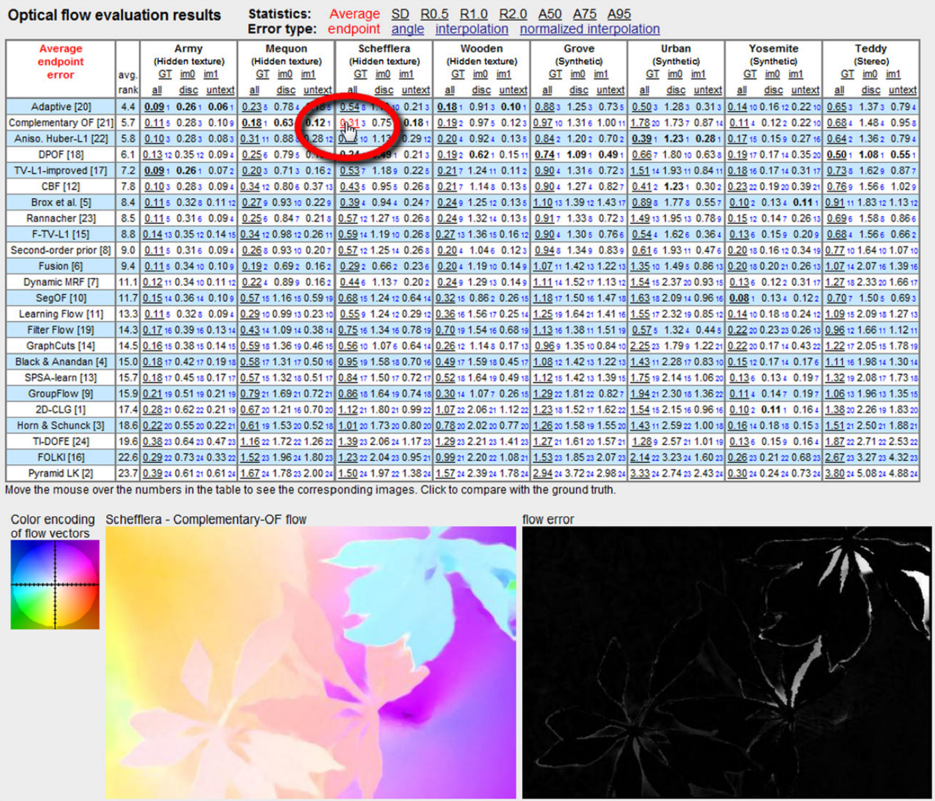
- The benchmark contains 12 training and 12 test sequences; test ground truth is withheld except for Yosemite. As of December 2009 the online evaluation contained results for 24 published methods, all using only 2 input frames and 10 using color.
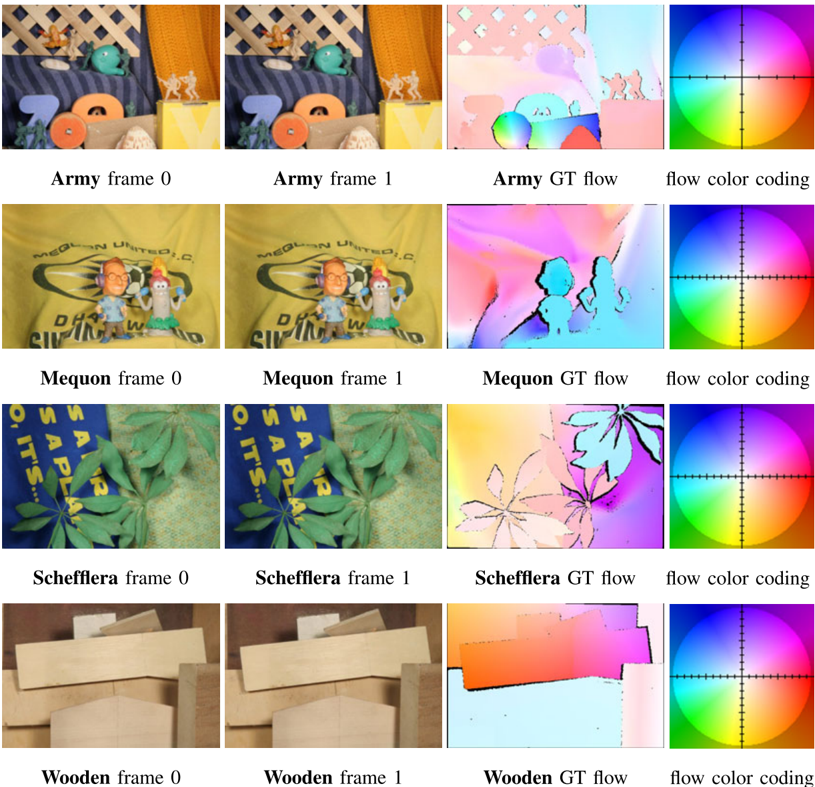
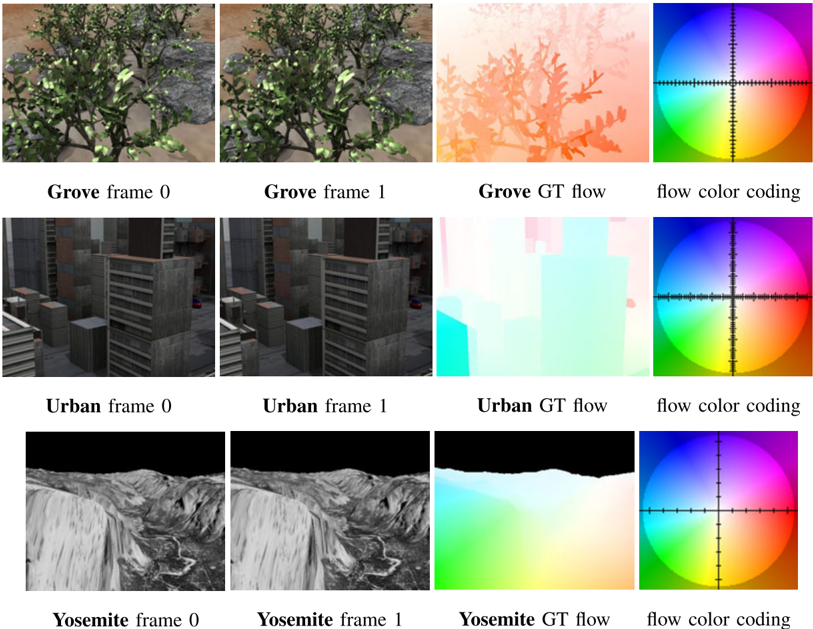
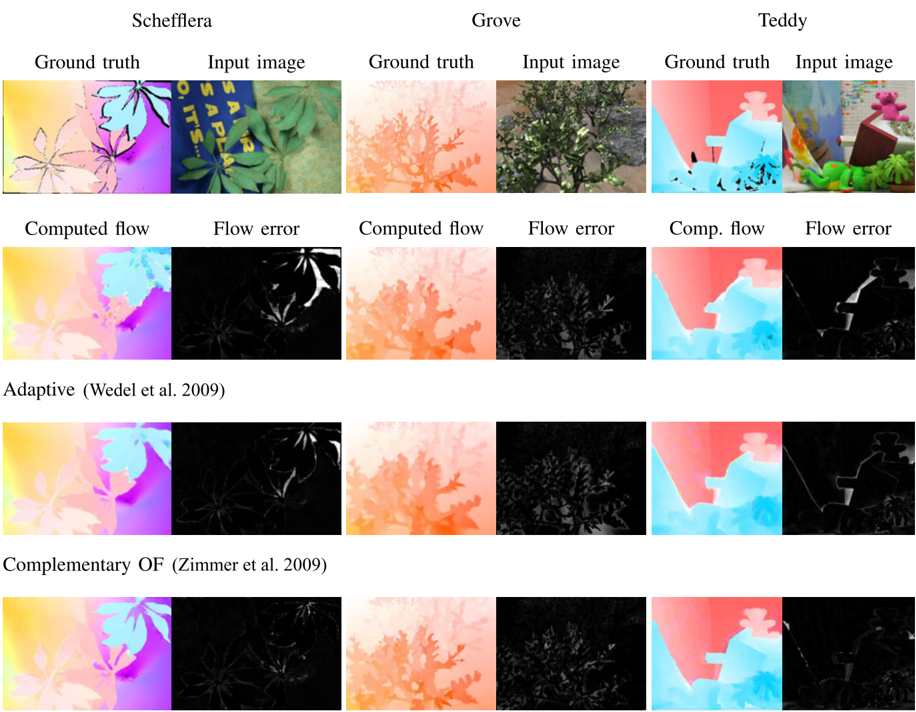
- Best average endpoint error (Avg. EE) improved dramatically over 2D-CLG (Bruhn et al. 2005): Army 0.28→0.09, Mequon 0.67→0.18, Schefflera 1.12→0.24, Wooden 1.07→0.18, Grove 1.23→0.74, Urban 1.54→0.39, Yosemite 0.10→0.08, Teddy 1.38→0.50. Best Avg. EE was below 0.2 pixels on four datasets (Yosemite, Army, Mequon, Wooden).
- Endpoint error (EE) and angular error (AE) rankings were highly correlated (r = 0.989), but the paper argues EE should be preferred: Complementary OF on Urban had Avg. AE 4.64° (rank 6) but Avg. EE 1.78 pixels (rank 20), because AE downweights large motions.
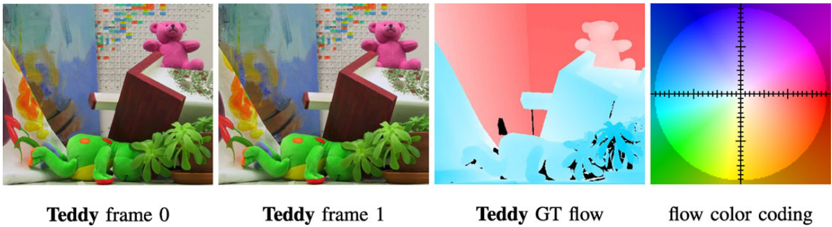
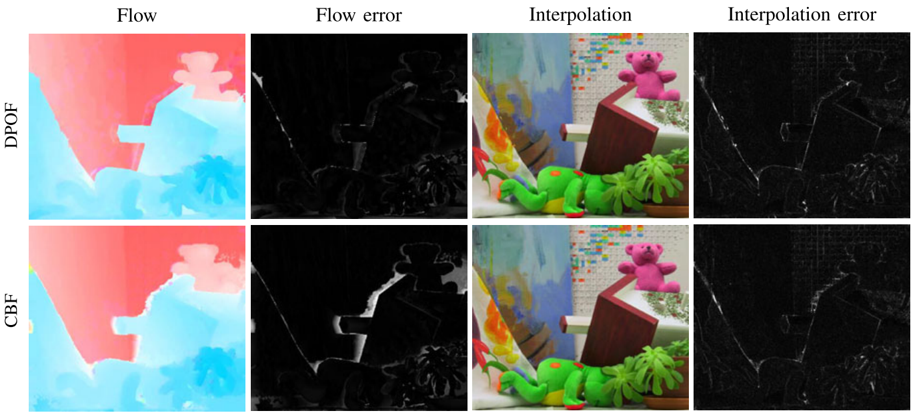
- Motion discontinuity (Disc) regions were the hardest; textureless (Untext) regions were typically easiest. Dataset results were less correlated, with Yosemite poorly or negatively correlated with others. Flow and interpolation errors were only moderately correlated (Avg4 EE vs Avg4 IE r = 0.763). On Teddy, top stereo methods outperformed top flow methods: median lowest-five R1.0 was 9.9 for flow vs 6.5 for stereo in All regions (34% reduction), and 27.6 vs 10.0 in Disc regions (64% reduction).
Methods
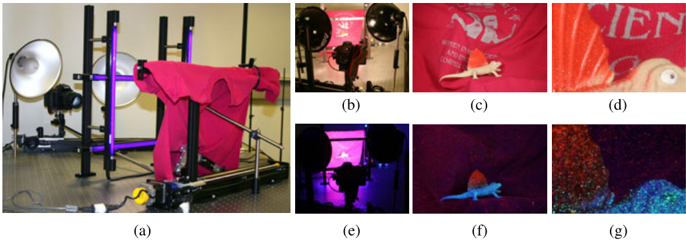
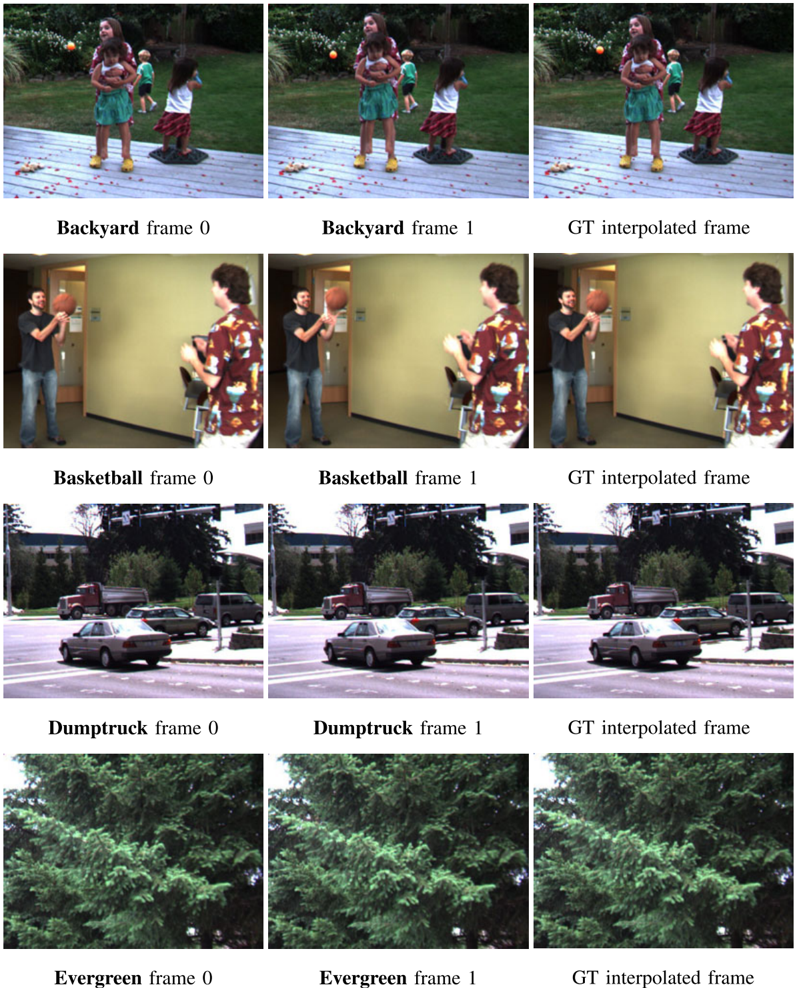
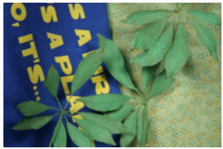
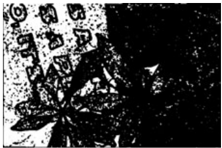
- Four data types were collected: (1) real nonrigid scenes with dense ground truth from hidden fluorescent texture, captured with a Canon EOS 20D at 3504×2336, downsampled every 40th visible-light frame by factor 6 to 584×388, with SSD tracking (15×15 windows), forward/backward crosschecking, and Lucas-Kanade subpixel refinement; (2) realistic synthetic scenes rendered with 3Delight at 640×480, with ground truth from a custom shader and dominant-cluster flow selection; (3) high-speed video for frame interpolation captured with a PointGrey Dragonfly Express at 60 fps, providing every other frame and retaining intermediate frames as ground truth; and (4) modified stereo data (Teddy) from structured light, cropped to make the disparity range roughly symmetric.
- Evaluation metrics include average angular error (AE), absolute flow endpoint error (EE), interpolation error (IE), and gradient-normalized interpolation error (NE). Statistics include averages, robustness measures R_X, and percentile accuracy measures A_X, computed over All, Disc, and Untext region masks.
- Analysis used the online evaluation at http://vision.middlebury.edu/flow/, comparing 24 published methods across metrics, statistics, masks, and datasets, with Pearson correlations between rankings and comparisons to state-of-the-art stereo methods on Teddy.
Limitations
- The paper states that the hidden fluorescent texture scenes are laboratory scenes, not real-world scenes, and have no motion blur due to stop-motion capture; ground truth is unavailable where cross-checking failed, especially occluded regions, and the measured ground truth is not perfect, though significant errors are limited to a small fraction of pixels. Synthetic sequences were generated without motion blur. The modified stereo ground truth is only accurate to 0.25 pixels, and algorithms may exploit the knowledge that motions are horizontal; overfitting to rigid data should be visible across the 12 evaluation images. Interpolation ground truth is an intermediate image, not a flow field, so the flow definition is apparent motion.
- The paper also states that no single method yet achieves strong performance across a wide variety of datatypes, that any dataset has a limited lifespan, and that future studies should include more challenging realistic synthetic data, longer sequences, and more difficult materials, illumination changes, atmospheric effects, and transparency.
- Evident from the text: the online tables do not provide an overall ranking among methods; runtimes are not normalized for programming environment, CPU speed, cores, or hardware acceleration; algorithms are required to produce dense flow and cannot submit confidence maps or sparse/incomplete fields; all 24 published methods used only 2 frames despite 8-frame sequences being available; and the paper cannot definitively answer whether temporal smoothing is less suited to the more challenging sequences.
Model-written summary. Check it against the paper before relying on it.
Integrity signals
Registry
Cites
Statistics
Figures

Verification
Claims the paper makes
2 Valid · 16 Not valid · 58 Not checked · 185 Own results and interpretations
A result the paper states — it cites no source for it, so there is none to check. The quote shows it is in the paper.
In the paper
“Rather than collecting a single type of data (with its inherent limitations) we instead collected four different types of data, each satisfying a different subset of desirable properties.”
plain- Asserted: passes — The authors put it forward as true.
- Checkable: passes — It can be checked against evidence.
- Load-bearing: passes — The paper’s conclusions depend on it.
- Based: passes — The paper gives a reason why it holds.
A result the paper states — it cites no source for it, so there is none to check. The quote shows it is in the paper.
In the paper
“Using the combination of fluorescent paint, downsampling high-resolution images, and sequential tracking of small motions, we are able to obtain dense, subpixel accurate ground truth for a nonrigid scene.”
plainstates a cause- Asserted: passes — The authors put it forward as true.
- Checkable: passes — It can be checked against evidence.
- Load-bearing: passes — The paper’s conclusions depend on it.
- Based: passes — The paper gives a reason why it holds.
A result the paper reports from its own data — it cites no other source for it, so there is none to check. The quote shows it is in the paper.
In the paper
“To allow for measures that predict performance on such tasks, we collected a variety of data suitable for frame interpolation.”
plainstates a cause- Asserted: passes — The authors put it forward as true.
- Checkable: passes — It can be checked against evidence.
- Load-bearing: passes — The paper’s conclusions depend on it.
- Based: passes — The paper gives a reason why it holds.
A result the paper reports from its own data — it cites no other source for it, so there is none to check. The quote shows it is in the paper.
In the paper
“We have developed a technique for capturing imagery of nonrigid scenes with ground-truth optical flow.”
plain- Asserted: passes — The authors put it forward as true.
- Checkable: passes — It can be checked against evidence.
- Load-bearing: passes — The paper’s conclusions depend on it.
- Based: passes — The paper gives a reason why it holds.
A result the paper states — it cites no source for it, so there is none to check. The quote shows it is in the paper.
In the paper
“To go beyond previous synthetic ground truth (e.g., the Yosemite sequence), we generated two types of fairly complex synthetic outdoor scenes.”
plain- Asserted: passes — The authors put it forward as true.
- Checkable: passes — It can be checked against evidence.
- Load-bearing: passes — The paper’s conclusions depend on it.
- Based: passes — The paper gives a reason why it holds.
96 more claims
Create a free account to see all 261 claims and every source verdict.
- Probably not a substantial claim. 114
- It may state two separate claims as one. 76
- The quote only partly states this claim. 6
Claims other papers make about this one
Each is checked against this paper’s own text: does it say what the citing paper says it does?
The source backs part of the claim, not all of it — or backs it for a different population, condition or comparison.
In the citing paper
“Notable works include the Middlebury dataset (Baker et al, 2011) and the KITTI datasets (Geiger et al, 2012; Menze and Geiger, 2015), but due to the difficulty of computing accurate ground truth, these have been restricted to 8 and 2 · 200 pairs of frames, respectively (the latter are also limited by the special driving setting).”
From What Makes Good Synthetic Training Data for Learning Disparity and Optical Flow Estimation? (2018) · cites this paper as Baker et al, 2011
Experimental — accuracy not yet measured
Citations
Cites
The pascal visual object classes (VOC) challenge
Everingham, M., Van Gool, L., Williams, C. K. I., Winn, J., & Zisserman, A. (2010) · International Journal of Computer Vision · doi:10.1007/s11263-009-0275-4 · Cited by 19,599
Proceedings of IEEE Conference on Computer Vision and Pattern Recognition
(1993) · doi:10.1109/cvpr.1993 · Cited by 17,667
Proceedings of IEEE International Conference on Computer Vision
(1995) · Proceedings of IEEE International Conference on Computer Vision · doi:10.1109/iccv.1995.466933 · Cited by 12,860
(1981) · Cited by 11,963
Horn, B. K. P., & Schunck, B. G. (1981) · Artificial Intelligence · doi:10.1016/0004-3702(81)90024-2 · Cited by 10,312
Horn, B. K., & Schunck, B. G. (1981) · SPIE Proceedings · doi:10.1117/12.965761 · Cited by 7,394 · cited 2×
“A baseline approach is to use an L2 norm as in the Horn and Schunck algorithm (Horn and Schunck 1981):”
BackgroundMethodFast approximate energy minimization via graph cuts
Boykov, Y., Veksler, O., & Zabih, R. (2001) · IEEE Transactions on Pattern Analysis and Machine Intelligence · doi:10.1109/34.969114 · Cited by 6,988
A Taxonomy and Evaluation of Dense Two-Frame Stereo Correspondence Algorithms
Scharstein, D., & Szeliski, R. (2002) · International Journal of Computer Vision · doi:10.1023/a:1014573219977 · Cited by 6,740 · cited 10×
“Many areas of computer vision, such as stereo [63], face recognition [28, 55, 68], and object recognition [23, 24], have challenging datasets to track the progress made by leading algorithms and to stimulate new ideas.”
BackgroundMethodResultInfluentialSelf-citationProceedings European Conference on Computer Vision 2002
Heyden, A., Sparr, G., Nielsen, M., & Johansen, P. (2002) · Lund University Publications (Lund University) · Cited by 5,153
From few to many: illumination cone models for face recognition under variable lighting and pose
Georghiades, A. S., Belhumeur, P. N., & Kriegman, D. J. (2001) · IEEE Transactions on Pattern Analysis and Machine Intelligence · doi:10.1109/34.927464 · Cited by 4,912 · cited 1×
“Many areas of computer vision, such as stereo (Scharstein and Szeliski 2002), face recognition (Philips et al. 2005; Sim et al. 2003; Gross et al. 2008; Georghiades et al. 2001), and object recognition (Fei-Fei et al.”
Background
Research works printed but not linked: 4
- Anandan, P., & Weiss, R. (1985). Introducing smoothness constraint in a matching approach for the computation of displacement fields. In Proceedings of the DARPA image understanding workshop (pp. 186-196).
- Bleyer, M., & Chambon, S. (2010). Does color really help in dense stereo matching? In Proceedings of the international symposium 3D data processing, visualization and transmission .
- Lempitsky, V., Roth, S., & Rother, C. (2008). Fusion flow: discretecontinuous optimization for optical flow estimation. In Proceedings of the IEEE conference on computer vision and pattern recognition .
- Rannacher, J. (2009). Realtime 3D motion estimation on graphics hardware . Undergraduate thesis, Heidelberg University.
Cited by
Items 1,601–1,700 of 2,273
Active feedback for enhancing the construction of panoramic live mobile video streams
Refaat, M., El-Saban, M., & Kaheel, A. (2011) · IEEE International Conference on Multimedia and Expo (ICME) · doi:10.1109/icme.2011.6011844 · Cited by 2
“We use a pull mode for communication instead of a push mode as this mode allows the clients to have more control over the feedback rate according to their own capabilities [17].”
MethodProbabilistic Framework for Feature-Point Matching
Tal, R., & Spetsakis, M. E. (2010) · Canadian Conference on Computer and Robot Vision · doi:10.1109/crv.2010.8 · Cited by 3
“In order to conduct a quantitative evaluation of our method, we used the Middlebury Flow dataset[1] for ground-truth motion and compared our results to those attained using a hierarchical implementation of the Horn & Schunk algorithm[8] and to the Black & Anandan[5] method.”
MethodMotion Estimation with Adaptive Regularization and Neighborhood Dependent Constraint
Nawaz, M. W., Bouzerdoum, A., & Phung, S. L. (2010) · International Conference on Digital Image Computing: Techniques and Applications (DICTA) · doi:10.1109/dicta.2010.72 · Cited by 2
“For evaluation of our algorithm, we have used the Middlebury video sequence database [4] and computed optical flow from frame 10 to 11 of several video sequences.”
MethodWavelet belief propagation for large scale inference problems
Lasowski, R., Tevs, A., Wand, M. D., et al. (2011) · doi:10.1109/cvpr.2011.5995489 · Cited by 2
“Optical flow: Our second test is optical flow, applied to the BeanBag data set from the Middlebury database [20].”
MethodA Line Search Multilevel Truncated Newton Algorithm for Computing the Optical Flow
Garrido, L., & Kalmoun, E. M. (2015) · Image Processing On Line · doi:10.5201/ipol.2015.112 · Cited by 2
A new inconsistency measure for linear systems and two applications in motion analysis
Niu, Y., Dick, A. R., & Brooks, M. J. (2009) · International Conference on Image and Vision Computing New Zealand (IVCNZ) · doi:10.1109/ivcnz.2009.5378427 · Cited by 3
“Experiments are also conducted on Urban2 and Urban3 [19].”
MethodExploiting Ramp Structures For Improving Optical Flow Estimation
Singh, A., & Ahuja, N. (2013) · Cited by 2
Visualization of the continental drift in real-time
Rogge, L., Lipski, C., & Magnor, M. A. (2010) · Digital Library (University of West Bohemia) · Cited by 2
Bio-Inspired Computer Vision: Setting the Basis for a New Departure
Medathati, N. V. K., Neumann, H., Masson, G. S., & Kornprobst, P. (2015) · Cited by 2
Sparse Aggregation Framework for Optical Flow Estimation
Fortun, D., Bouthémy, P., & Charles Kervrann, A. (2015) · Lecture notes in computer science · doi:10.1007/978-3-319-18461-6_26 · Cited by 2
“We propose hereunder a sparse representation approach in the continuous setting which is faster and is able to produce competitive results (Section 4) on several sequences of the Middlebury database [1] when compared to [5, 6, 9, 11].”
MethodResultThermography spatial resolution enhancement by non-rigid registration with visible imagery
Mwangi, G., Fieguth, P., & Garbe, C. S. (2015) · Proceedings - International Conference on Image Processing · doi:10.1109/icip.2015.7351261 · Cited by 2
“Image registration can also be formulated as optical flow [12, 13] or particle image velocimetry [14].”
BackgroundIllumination robust optical flow estimation by illumination-chromaticity decoupling
Park, S., & Kwak, N. (2015) · Proceedings - International Conference on Image Processing · doi:10.1109/icip.2015.7351133 · Cited by 2
“Color coding scheme in [18] is used to visualize optical flow fields.”
MethodMassively Parallel Cellular Matrix Model for Superpixel Adaptive Segmentation Map
Wang, H., Mansouri, A., Créput, J.-C., & Ruichek, Y. (2015) · Lecture notes in computer science · doi:10.1007/978-3-319-27101-9_24 · Cited by 3
On the Choice of Tensor Estimation for Corner Detection, Optical Flow and Denoising
Åström, F., & Felsberg, M. (2015) · Lecture notes in computer science · doi:10.1007/978-3-319-16631-5_2 · Cited by 2
“An illustration that the Gradient Energy Tensor performs comparably to the Structure tensor in the two applications of corner detection and optical flow estimation (sequence Teddy frames 10 and 11 [9]).”
InfluentialHuangpeng, Q., Zeng, X., Fan, J., Feng, J., & Sun, Q. (2015) · IEEE International Conference on Progress in Informatics and Computing · doi:10.1109/pic.2015.7489854 · Cited by 3
A comparative study of motion estimation algorithms in cardiac ultrasound sequences
Khachira, S., Kallel, F., & Hamida, A. B. (2016) · International Conference on Advanced Technologies for Signal and Image Processing · doi:10.1109/atsip.2016.7523065 · Cited by 2
“Therefore, we chose to use the EE to evaluate the estimation precision.”
MethodPresentation of 3D Scenes Through Video Example
Baldacci, A., Ganovelli, F., Corsini, M., et al. (2016) · IEEE Transactions on Visualization and Computer Graphics · doi:10.1109/tvcg.2016.2608828 · Cited by 2
“There are many algorithms for computing the optical flow from an input video, the Middlebury Benchmark website [19] lists about 120 different solutions.”
MethodFeature Learning Architecture Taxonomy and Neuroscience Background
Krig, S. (2016) · Springer eBooks · doi:10.1007/978-3-319-33762-3_9 · Cited by 2
Adaptive Filter Based Image Registration
Henson, B. T., & Zakharov, Y. V. (2015) · UKSim European Symposium on Computer Modeling and Simulation (EMS) · doi:10.1109/ems.2015.31 · Cited by 2
“TABLE I AVERAGE ENDPOINT ERROR (AEE) AND AVERAGE ANGULAR ERROR (AAE) FOR THE REGISTRATION OVER A SELECTION OF THE MIDDLEBURY TRAINING SET [1].”
BackgroundMethodInfluentialA temporally coherent neural algorithm for artistic style transfer
Dushkoff, M., McLaughlin, R., & Ptucha, R. (2016) · International Conference on Pattern Recognition · doi:10.1109/icpr.2016.7900142 · Cited by 3
Zhang, M., Zhang, Z., Chang, Y., & Esche, S. K. (2015) · ASEE Annual Conference & Exposition · doi:10.18260/p.24713 · Cited by 2
“However, different implementations of optical flow based methods can cause different errors, such as induced noise when the illumination changes, failure to tack large motions, and accumulation of computational errors [14].”
BackgroundPerformance comparison of clustering techniques in detection of dominant flow field in crowded scene
Malik, A. S., Faye, I., Karasfi, B., et al. (2015) · doi:10.1109/issbes.2015.7435886 · Cited by 2
“The domain of optical flow computation is given a huge progress as seen by the increase in computational accuracy of updated approaches presented on Middlebury optical flow benchmark [11].”
MethodMotion Magnification For Quantifying Aeroelastic Modes From High-Speed Videos
Bao, Y., Seshadri, P., & Mahadevan, S. (2017) · AIAA/ASCE/AHS/ASC Structures, Structural Dynamics, and Materials Conference (SDM) · doi:10.2514/6.2017-0869 · Cited by 2
Learning Contextual Dependencies for Optical Flow with Recurrent Neural Networks
Lu, M., Deng, Z., & Li, Z.-N. (2017) · Lecture notes in computer science · doi:10.1007/978-3-319-54190-7_5 · Cited by 2
An analysis of optical flow on real and simulated data with degradations
Harguess, J. D., Barngrover, C., & Rahimi, A. (2017) · Proceedings of SPIE, the International Society for Optical Engineering/Proceedings of SPIE · doi:10.1117/12.2265850 · Cited by 2
“, “Performance of optical flow techniques,” International Journal of Computer Vision 12(1), 43–77 (1994).”
BackgroundMethodInfluentialAn Improved Evaluation Method for Optical Flow of Endpoint Error
ZHANG, C.-X., Zhu, L., Chen, Z., Ding-ding, K. O. N. G., & SHANG, X. (2017) · International Conference on Computer Networks and Communication Technology (CNCT) · doi:10.2991/cnct-16.2017.44 · Cited by 2
On the role of representation in the analysis of visual spacetime
Derpanis, K. G. (2010) · Cited by 2
The role of optical flow in automated quality assessment of full-motion video
Harguess, J. D., Marez, D., & Shafer, S. (2017) · SPIE Applications of Digital Image Processing · doi:10.1117/12.2275392 · Cited by 3
“The optical flow visualizations use the color encoding from the Middlebury optical flow evaluation.(11)”
MethodA moving target detection algorithm based on BING objectness and background estimation
Zhang, C., Dai, B., Jiang, H., et al. (2017) · Chinese Control Conference (CCC) · doi:10.23919/chicc.2017.8029078 · Cited by 2
Anomaly Detection in Crowded Scenarios Using Local and Global Gaussian Mixture Models
Tomé, A., & Salgado, L. (2017) · Lecture notes in computer science · doi:10.1007/978-3-319-70353-4_31 · Cited by 2
Optical flow estimation in ultrasound images using a sparse representation
Ouzir, N., Tourneret, J., & Basarab, A. (2017) · IEEE International Workshop on Computational Advances in Multi-Sensor Adaptive Processing · doi:10.1109/camsap.2017.8313079 · Cited by 2
“Note that the interest of introducing a sparsity-based prior for the flow estimation has been previously shown in [18], [20] on the Middlebury dataset [21].”
Study of Specific Location of Exhaustive Matching in Order to Improve the Optical Flow Estimation
Lazcano, V. A. (2018) · Advances in intelligent systems and computing · doi:10.1007/978-3-319-77028-4_77 · Cited by 2
Spatial-Temporal Neural Networks for Action Recognition
Jing, C., Wei, P., Sun, H., & Zheng, N. (2018) · IFIP advances in information and communication technology · doi:10.1007/978-3-319-92007-8_52 · Cited by 2
“Optical flow is an important feature of videos and it is widely used in the task of action recognition [22,30,1].”
Frame Interpolation via Refined Deep Voxel Flow
Zhang, Z., Chen, L., Xie, R., et al. (2018) · Proceedings - International Conference on Image Processing · doi:10.1109/icip.2018.8451847 · Cited by 2
“optical flow) between input frames and then synthesize one or more intermediate frames based on the estimated motion [6].”
BackgroundMethodOn the Nonlinear Statistics of Optical Flow
Adams, H., Bush, J., Carr, B., Kassab, L., & Mirth, J. (2018) · Lecture notes in computer science · doi:10.1007/978-3-030-10828-1_12 · Cited by 2
Deep Energies for Estimating Three-Dimensional Facial Pose and Expression
Wu, J., Bao, M., Yao, X., & Fedkiw, R. P. (2023) · Communications on Applied Mathematics and Computation · doi:10.1007/s42967-023-00256-y · Cited by 4
“These methods are generally evaluated on the Middlebury dataset [3], the KITTI dataset [20], and the MPI Sintel dataset [8].”
MethodOptical Flow Estimation from Layered Nearest Neighbor Flow Fields
Ge, L., Zhang, C., Chen, Z., et al. (2018) · International Congress on Image and Signal Processing, BioMedical Engineering and Informatics (CISP-BMEI) · doi:10.1109/cisp-bmei.2018.8633120 · Cited by 2
“We use the RubberWhale, Venus, Grove2, Urban2 and Urban3 image sequences in the Middlebury[20] database as the second set of test image sequences.”
MethodSelf-Reproducing Video Frame Interpolation
Deng, J., Yu, H., Wang, Z., Wang, X., & Huang, T. S. (2019) · IEEE International Conference on Multimedia Information Processing and Retrieval (MIPR) · doi:10.1109/mipr.2019.00042 · Cited by 2
“We evaluate our method on Middlebury optical flow benchmark [5].”
BackgroundMethodVideo Frame Interpolation via Cyclic Fine-Tuning and Asymmetric Reverse Flow
Hannemose, M. R., Jensen, J. N., Einarsson, G., Wilm, J., Dahl, A. B., & Frisvad, J. R. (2019) · Lecture notes in computer science · doi:10.1007/978-3-030-20205-7_26 · Cited by 2
Measuring the Effects of Temporal Coherence in Depth Estimation for Dynamic Scenes
Tsekourakis, I., & Mordohai, P. (2019) · IEEE/CVF Conference on Computer Vision and Pattern Recognition Workshops (CVPRW) · doi:10.1109/cvprw.2019.00346 · Cited by 2
“Second Row: Visualization of flow with Middlebury color coding [48], and vector plot.”
BackgroundMethodSavkin, A., Kasperek, M., & Tombari, F. (2019) · IEEE Intelligent Vehicles Symposium · doi:10.1109/ivs.2019.8814168 · Cited by 2
“[29], [30], [31], [32], provide new sets of benchmarks and evaluation methods.”
BackgroundParametric Registration for Mobile Phone Images
Zhang, X., Gilliam, C., & Blu, T. (2019) · Proceedings - International Conference on Image Processing · doi:10.1109/icip.2019.8803769 · Cited by 2
“Under the brightness constancy hypothesis [5], a pair of images to be registered are related by a displacement field, I 1 ( x, y ) = I 2 ( x + u x ( x, y ) , y + u y ( x, y )) , where I 1 is regarded as the target image, I 2 is the source image, the complex number u ( x, y ) = u x ( x, y ) + iu y (…”
BackgroundFrame Interpolation Using Phase and Amplitude Feature Pyramids
Zhou, L., Chen, Y., Tian, X., & Jiang, R. (2019) · Proceedings - International Conference on Image Processing · doi:10.1109/icip.2019.8803678 · Cited by 2
Ding, S., Li, X., Wei, S., et al. (2019) · International Conference on Control, Decision and Information Technologies (CoDIT) · doi:10.1109/codit.2019.8820663 · Cited by 2
“Optical flow [5, 6] has greater behavior in target recognition and is a feature representation suitable for motion detection.”
BackgroundA Visualization Method of Facial Expression Deformation Based on Pore-Scale Facial Feature Matching
Hu, X., Li, D., Zeng, X., Lin, J., & Zhang, Y. (2019) · Chinese Control Conference (CCC) · doi:10.23919/chicc.2019.8865818 · Cited by 2
High accuracy correspondence field estimation via MST based patch matching
Zhang, F., Xu, S., & Zhang, X. (2020) · Multimedia Tools and Applications · doi:10.1007/s11042-020-08633-y · Cited by 2
“According to [2], the most commonly used measures of performance for optical flow are angular error (a relative error) and endpoint error (an absolute error).”
Mai, T. K., Gouiffès, M., & Bouchafa, S. (2020) · IET Image Processing · doi:10.1049/iet-ipr.2019.0370 · Cited by 2
A Lifted Semi-Direct Monocular Visual Odometry
Li, H., Hao, L., Zhang, Q., et al. (2019) · doi:10.1109/iucc/dsci/smartcns.2019.00096 · Cited by 2
Deep Learning Approach to Video Frame Rate Up-Conversion Using Bilateral Motion Estimation
Park, J., Lee, C., & Kim, C. (2019) · Asia-Pacific Signal and Information Processing Association Annual Summit and Conference (APSIPA ASC) · doi:10.1109/apsipaasc47483.2019.9023270 · Cited by 2
“Due to its practical importance, a lot of researches have been made to develop effective FRUC techniques that provide smooth temporal transitions [1]–[6].”
BackgroundLeung, T., Yang, T., Lin, R. F., Tsai, D. M., & Chou, C. M. (2020) · Biomedical Engineering Applications Basis and Communications · doi:10.4015/s1016237220500210 · Cited by 2
Research on Video Detection of Object Intrusion in Substation
Jiang, Y., Sun, H. Z., Zhao, H., Lin, R., & Li, Z. (2020) · Journal of Physics Conference Series · doi:10.1088/1742-6596/1659/1/012051 · Cited by 2
“Due to the large amount of computation and high complexity, optical flow method is difficult to meet the real-time requirements of video detection[4].”
Learnable spatiotemporal feature pyramid for prediction of future optical flow in videos
Wadhwa, L., & Mukherjee, S. (2020) · Machine Vision and Applications · doi:10.1007/s00138-020-01145-7 · Cited by 2
“Several efforts have been made for estimating optical flow, leading to impressive performances on challenging benchmark datasets [4,5].”
BackgroundApke, J. M., & Mecikalski, J. R. (2021) · Monthly Weather Review · doi:10.1175/mwr-d-20-0209.1 · Cited by 2
The U-Net based GLOW for Optical-Flow-Free Video Interframe Generation
Park, S., Han, D., & Kwak, N. (2022) · International Conference on Pattern Recognition Applications and Methods · doi:10.5220/0010869400003122 · Cited by 2
“The training was performed with the Middlebury dataset[1], which is commonly used to see the performance of optical flow.”
MethodTowards Stereoscopic Video Deblurring Using Deep Convolutional Networks
Imani, H., & Islam, M. B. (2021) · Lecture notes in computer science · doi:10.1007/978-3-030-90436-4_27 · Cited by 2
“Most of the video-related methods, firstly, calculate the motion between the consecutive frames, and secondly, use a processing step including the transformation to the frames [7, 8].”
MethodOptical Flow Estimation with Convolutional Neural Nets
Shah, S. T. H., Xuezhi, X., & Ahmed, W. (2021) · Pattern Recognition and Image Analysis · doi:10.1134/s1054661821040210 · Cited by 4
“Although the authors of [40] were the first who, after the creation of Middlebury datasets [3] studied the statistics of optical flow and learned regularizers using Gaussian scale mixtures, the earliest learning model was created by the authors of [50] whose probabilistic model learns from the…”
BackgroundMethodFlowNetU: Accurate Uncertainty Estimation of Optical Flow for Video Object Detection
Kang, J.-G., Roh, S.-D., & Chung, K. (2021) · 2021 4th International Conference on Artificial Intelligence and Pattern Recognition · doi:10.1145/3488933.3489027 · Cited by 4
“We show that our method predicts flow uncertainty more accurately than other existing methods on Sintel [5] and Middlebury [1] benchmarks.”
MethodObject Detection Using SSD MobileNet on Indian Dataset
Paranjape, B., & Naik, A. A. (2022) · Studies in computational intelligence · doi:10.1007/978-3-030-96634-8_24 · Cited by 2
Detecting Significant Changes in Image Sequences
Mashtalir, S., & Mikhnova, O. (2018) · IGI Global eBooks · doi:10.4018/978-1-5225-5204-8.ch004 · Cited by 2
Qiu, W., Wang, X., Bai, X., Yuille, A., & Tu, Z. (2015) · Springer eBooks · doi:10.1007/978-3-319-23048-1_4 · Cited by 5
Gradient Consistency Based Multi-Scale Optical Flow
Gray, J. L., Naman, A. T., & Taubman, D. (2022) · IEEE International Workshop on Multimedia Signal Processing (MMSP) · doi:10.1109/mmsp55362.2022.9949072 · Cited by 2
“Specifically, Grove2, Grove3, Urban2, Urban3 are synthetic scenes, while Hydrangea and RubberWhale are real-life scenes [27].”
BackgroundDeep Learning Optical Flow with Compound Loss for Dense Fluid Motion Estimation
Wang, J., Zhang, Z., Wang, Z., & Chen, L. (2023) · Water · doi:10.3390/w15071365 · Cited by 2
A Segmentation Based Robust Fractional Variational Model for Motion Estimation
Kumar, P., Khan, M., & Mahala, N. K. (2023) · Communications in computer and information science · doi:10.1007/978-3-031-31407-0_9 · Cited by 3
Fusion of Appearance and Motion Features for Daily Activity Recognition from Egocentric Perspective
Abdullah, M. H. L., AlDahoul, N., & Karim, H. B. A. (2023) · Sensors · doi:10.3390/s23156804 · Cited by 2
“In order to obtain the flow image, the dense optical method [32] is converted to an image representation in order to obtain the flow image [33].”
MethodOptical Flow Revisited: how good is dense deep learning based optical flow?
Kang, J. M., Sjanic, Z., & Hendeby, G. (2023) · IEEE International Conference on Multisensor Fusion and Integration for Intelligent Systems (MFI) · doi:10.1109/sdf-mfi59545.2023.10360502 · Cited by 3
“The dense optical flow uses the flow field color encoding [14]. the images.”
MethodDense Optical Flow Estimation Using Sparse Regularizers From Reduced Measurements
Nawaz, M. W., Bouzerdoum, A., Rahman, M. M. U., Abbas, G., & Rashid, F. (2024) · IEEE Access · doi:10.1109/access.2024.3382818 · Cited by 2
“We have used the Middlebury dataset [22], which is designed for the evaluation and benchmarking of optical flow algorithms.”
MethodUsing Motion Fields to Estimate Video Utility and Detect GPS Spoofing
Carroll, B. (2012) · ScholarsArchive (Brigham Young University) · Cited by 2
Sellent, A., & Favaro, P. (2014) · Lecture notes in computer science · doi:10.1007/978-3-319-11752-2_48 · Cited by 2
“Traditionally, optical flow algorithms consider pinpoint sharp images, without any degradations other than moderate levels of noise [3].”
BackgroundMethodRobust visual speech recognition using optical flow analysis and rotation invariant features
Shaikh, A. A. (2012) · RMIT Research Repository (RMIT University Library) · doi:10.25439/rmt.27340062 · Cited by 4
Greedy framework for optical flow tracking of myocardium contours
Al‐Agamy, A. O., Khalifa, A. M., & Fahmy, A. S. (2014) · IET Image Processing · doi:10.1049/iet-ipr.2012.0512 · Cited by 2
Learning to navigate in a virtual world using optic flow and stereo disparity signals
Raudies, F., Eldridge, S., Joshi, A., & Versace, M. (2014) · Artificial Life and Robotics · doi:10.1007/s10015-014-0153-1 · Cited by 2
“Both tasks are computationally expensive and have been studied extensively [3, 5, 27].”
BackgroundOptical Flow Estimation Combining Spatial-Temporal Derivatives Based Nonlinear Filtering
Kaihong, S. H. I., Lu, Z., She, Q., et al. (2014) · IEICE Transactions on Information and Systems · doi:10.1587/transinf.2014edl8030 · Cited by 2
“The smaller EPE and AAE were, the higher accuracy the estimated optical flow achieved.”
BackgroundInfluentialMulti-objective optimization for parameter selection and characterization of optical flow methods
Delpiano, J. F., Pizarro, L., Verschae, R., & Ruíz-del-Solar, J. (2016) · Applied Soft Computing · doi:10.1016/j.asoc.2016.01.037 · Cited by 4
Real-time rear of vehicle detection from a moving camera
Xu, Q., Gao, F., Shi, K., et al. (2014) · doi:10.1109/ccdc.2014.6852989 · Cited by 2
“Optical flow is sensitive to the change of the environment and requires little priori knowledge ([4]).”
BackgroundMotion Estimation from Image Sequences: A Fractional Order Total Variation Model
Kumar, P., & Raman, B. (2016) · Advances in intelligent systems and computing · doi:10.1007/978-981-10-2107-7_27 · Cited by 2
Order-Adaptive Regularisation for Variational Optical Flow: Global, Local and in Between
Maurer, D., Stoll, M., & Bruhn, A. (2017) · Lecture notes in computer science · doi:10.1007/978-3-319-58771-4_44 · Cited by 2
Detection of anomalies in surveillance scenarios using mixture models
Tomé, A., & Salgado, L. (2017) · International Carnahan Conference on Security Technology · doi:10.1109/ccst.2017.8167830 · Cited by 2
“To validate our method for the extraction of the optical flow field, we have tested it in the Middlebury dataset [13], confirming that it renders more accurate than the original HS.”
MethodSkelton, P. S. M., Finn, A., & Brinkworth, R. S. A. (2017) · International Conference on Digital Image Computing: Techniques and Applications (DICTA) · doi:10.1109/dicta.2017.8227482 · Cited by 3
“While attempts have been made to implement biological algorithms in a technological solution [7], [16], the more complex models [14] have remained within the biological simulation area.”
BackgroundResultInfluentialAsymmetric Bilateral Phase Correlation for Optical Flow Estimation in the Frequency Domain
Argyriou, V. (2018) · International Conference on Signal-Image Technology & Internet-Based Systems (SITIS) · doi:10.1109/sitis.2018.00034 · Cited by 2
“In this study six datasets were utilised, and in more details the video sequences with ground truth provided by Baker in [6], the MPI-SINTEL dataset from Butler in [9] and the UCLgtOFv1.”
BackgroundMethodOptical Flow-Guided Multi-Scale Dense Network for Frame Interpolation
Zhang, T., Bai, H., Li, F., & Zhao, Y. (2018) · Asia-Pacific Signal and Information Processing Association Annual Summit and Conference (APSIPA ASC) · doi:10.23919/apsipa.2018.8659604 · Cited by 2
“optical flow fields, we adopt the frame interpolation algorithm introduced in the Middlebury benchmark [3] to synthesize the in-between frame.”
MethodRETRACTED: Efficient object analysis by leveraging deeply-trained object proposals prediction model
Dai, B., Wang, Y., Yao, Y., Ye, W., & Chen, T. (2019) · Journal of Visual Communication and Image Representation · doi:10.1016/j.jvcir.2019.02.024 · Cited by 2
RetractedImproved Discrete Optical Flow Estimation With Triple Image Matching Cost
Yang, F., Cheng, Y., van de Weijer, J., & Mozerov, M. G. (2020) · IEEE Access · doi:10.1109/access.2020.2968180 · Cited by 2
“For several additional experiments we also use the KITTI flow 2015 dataset [51] and a part of the Middlebury training dataset [52].”
MethodImplicit and Explicit Regularization for Optical Flow Estimation
Karageorgos, K., Dimou, A., Álvarez, F., & Daras, P. (2020) · Sensors · doi:10.3390/s20143855 · Cited by 2
“Finally, Middlebury consists of 4 synthetic and 4 natural samples with dense ground truth.”
MethodJiang, M., Kuang, Y., He, K., & Chen, Y. X. (2021) · International Conference on Condition Monitoring of Machinery in Non-Stationary Operations (CMMNO) · doi:10.1109/cmmno53328.2021.9467550 · Cited by 2
Role Of Pattern Characteristics In Cross Correlation Based Motion Estimation
Tekwani, H., & Raj, K. (2021) · Indian Journal of Science and Technology · doi:10.17485/ijst/v14i41.1137 · Cited by 2
Structure and motion from road-driving stereo sequences
Trinh, H. D., & McAllester, D. (2010) · 2009 IEEE Computer Society Conference on Computer Vision and Pattern Recognition Workshops · doi:10.1109/cvprw.2010.5543783 · Cited by 2
“…sequences, we can formulate structure and motion estimation as an energy minimization problem, in which the model is either an extension of a stereo vision model ([16]) to also handle scene point motion, or an extension of a Structure from Motion or optical flow model ([18]) under a stereo setup.”
MethodTowards a bio-inspired evaluation methodology for motion estimation models
Tlapale, É., Kornprobst, P., Bouecke, J. D., Neumann, H., & Masson, G. S. (2010) · HAL · Cited by 5
A Framework for Composing High-Performance OpenCL from Python Descriptions
Anderson, M. J. (2014) · eScholarship (California Digital Library) · Cited by 3
Dense Nonrigid Ground Truth for Optical Flow in Real-World Scenes.Preprint
Li, W., Cosker, D. P., Lv, Z., et al. (2016) · arXiv (Cornell University) · Cited by 2
Deep Optical Flow Estimation Via Multi-Scale Correspondence Structure LearningPreprint
Zhao, S., Li, X., & Bourahla, O. E. F. (2017) · arXiv (Cornell University) · doi:10.48550/arxiv.1707.07301 · Cited by 2
“Middlebury [3] is a very small dataset, containing only 8 image pairs for training.”
BackgroundStereo 3D Object Trajectory ReconstructionPreprint
Bullinger, S., Bodensteiner, C., Arens, M., & Stiefelhagen, R. (2018) · arXiv (Cornell University) · doi:10.48550/arxiv.1808.09297 · Cited by 4
Asynchronous high-speed feature extraction image sensor
Huang, J. (2018) · doi:10.32657/10220/46625 · Cited by 3
Drechsler, M., Lang, L. F., Al-Khatib, L., Dirks, H., Burger, M., Schönlieb, C., & Palacios, I. M. (2019) · bioRxiv (Cold Spring Harbor Laboratory) · doi:10.1101/556043 · Cited by 1
Attacking Optical FlowPreprint
Ranjan, A., Janai, J., Geiger, A., et al. (2019) · arXiv (Cornell University) · doi:10.48550/arxiv.1910.10053 · Cited by 2
“A survey of classical optical flow methods is available in [3, 27].”
BackgroundMethodSelf-citationTemporal Interpolation of Geostationary Satellite Imagery with Task Specific Optical FlowPreprint
Vandal, T., & Nemani, R. (2019) · arXiv (Cornell University) · doi:10.48550/arxiv.1907.12013 · Cited by 2
Deep Homography Estimation for Dynamic ScenesPreprint
Le, H., Liu, F., Zhang, S., & Agarwala, A. (2020) · Computer Vision and Pattern Recognition · doi:10.48550/arxiv.2004.02132 · Cited by 154
“this end, we test our method on examples from optical flow benchmarks, namely Middlebury [2] and Sintel [6].”
BackgroundMethodOn the Connection between Dynamical Optimal Transport and Functional LiftingPreprint
Vogt, T., Haase, R., Bednarski, D., & Lellmann, J. (2020) · arXiv (Cornell University) · doi:10.48550/arxiv.2007.02587 · Cited by 6
“Image data: sequence “Urban3” from [4].”
MethodChallenge report:VIPriors Action Recognition ChallengePreprint
Luo, Z., Da-wei, X., & Zhang, Z. (2020) · arXiv (Cornell University) · doi:10.48550/arxiv.2007.08180 · Cited by 2
“Then we use some improvements to replace the optical flow[7], [8], [9].”
MethodA Plug-and-play Scheme to Adapt Image Saliency Deep Model for Video DataPreprint
Li, Y., Li, S., Chen, C., et al. (2020) · arXiv (Cornell University) · doi:10.48550/arxiv.2008.09103 · Cited by 2
“…between optical flow data (i.e., 2-channel V X, V Y ) and original color image (i.e., 3-channel RGB), we follow the coding scheme mentioned in [55] to convert the 2-channel optical flow data into the 3-channel color-coded version, in which it uses the 55 pre-defined colors with different hue…”
MethodRevisiting Adaptive Convolutions for Video Frame InterpolationPreprint
Niklaus, S., Mai, L., & Wang, O. (2020) · arXiv (Cornell University) · doi:10.48550/arxiv.2011.01280 · Cited by 2
“We adopt the test set selection from [36] and conduct our evaluation on Vimeo-90k [63], the Middlebury benchmark samples with publicly known ground truth [1], the Liu et al .”
BackgroundMethodInfluential
Metadata
- Authors
- Baker, S., Scharstein, D., Lewis, J. P., Roth, S., Black, M. J., & Szeliski, R.
- Affiliations
- Microsoft (United States) (US)
- Middlebury College (US)
- Technische Universität Darmstadt (DE)
- Brown University (US)
- Corresponding author
- Scharstein, Daniel
- Venue
- International Journal of Computer Vision
- Published
- 2010-11-30
- Volume
- 92
- Issue
- 1
- Pages
- 1-31
- ISSN
- 0920-5691 (ISSN-L)
- 1573-1405
- OpenAlex
- W2147253850
- Semantic Scholar
- 804836b8ad86ef8042e3dcbd45442a52f031ee03
- Cited by
- 2,205
- References
- 112
- Citations by year
- 2026: 49 · 2025: 81 · 2024: 82 · 2023: 117 · 2022: 129 · 2021: 152 · 2020: 174 · 2019: 163 · 2018: 144 · 2017: 156 · 2016: 187 · 2015: 180 · 2014: 154 · 2013: 129 · 2012: 118
- FWCI
- 146.62
- Type
- journal article
- Language
- en
- Open access
- hybrid
- doi.org
- Licence
- cc-by-nc
- Locations
- International Journal of Computer Vision (publishedVersion, cc-by-nc)
- Publikationsdatenbank der Fraunhofer-Gesellschaft (Fraunhofer-Gesellschaft) (publishedVersion)
- Max Planck Institute for Plasma Physics (submittedVersion)
- Fraunhofer-Publica (Fraunhofer-Gesellschaft) (submittedVersion)
- Funders
- National Science Foundation (0534858, 0535075, 0413169)
- Intel Corporation
- Topics
- Physical Sciences › Computer Science › Computer Vision and Pattern Recognition › Advanced Vision and Imaging
- Physical Sciences › Computer Science › Computer Vision and Pattern Recognition › Video Surveillance and Tracking Methods
- Physical Sciences › Computer Science › Signal Processing › Video Coding and Compression Technologies
- Keywords
- optical flow, benchmark dataset, evaluation methodology, non-rigid motion, motion discontinuities, textureless regions, sensor noise
About these checks
Registry, retraction, Cites and statistics results are computed, not judged, with one exception: a printed reference that no index lists is read once by a model before it counts as a citation error. Claims are extracted by a model and kept only when their quote appears verbatim in the text; each cited source is then checked, with a model’s help, for whether it says what the claim relies on. Those verdicts can be wrong — read the claim’s quote and the cited source before relying on one.
The claim verdicts this report counts are experimental: their accuracy is not yet measured.
A language model drew the claims from the paper on 2026-10-01, under version 3 of the claim definition (model deepseek-v4.1-flash, prompt extract-v3).
A second model labelled each claim on 2026-10-01 (model jev-1.13-20260917, definition revision gold-guideline-v0.2).
Statistics and arithmetic are recomputed, not judged.
Confidence bands are shown only for fields calibrated on our annotated test set. None is calibrated yet, so no band is shown.
What counts as a claim ›How we measure confidence ›How we check this ›
Are you an author, or do you see a problem with this page? Request a review
Data sources
Bibliographic data: Semantic Scholar, OpenAlex, Crossref.
Contains information from the Semantic Scholar Academic Graph Datasets, made available under the ODC Attribution License (ODC-BY 1.0).
Semantic Scholar’s data is described in: Kinney, R., et al. (2023). The Semantic Scholar Open Data Platform. arXiv:2301.10140.
