

A Database and Evaluation Methodology for Optical Flow
Open accessThe DOI matches its Crossref record; 110 of the 112 references it cites were found in a registry or an index; 2 of the 68 sources its claims cite were checked for support.
Abstract
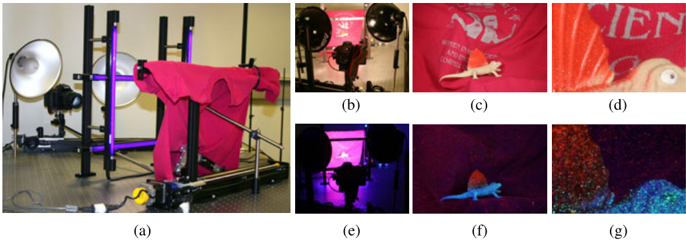
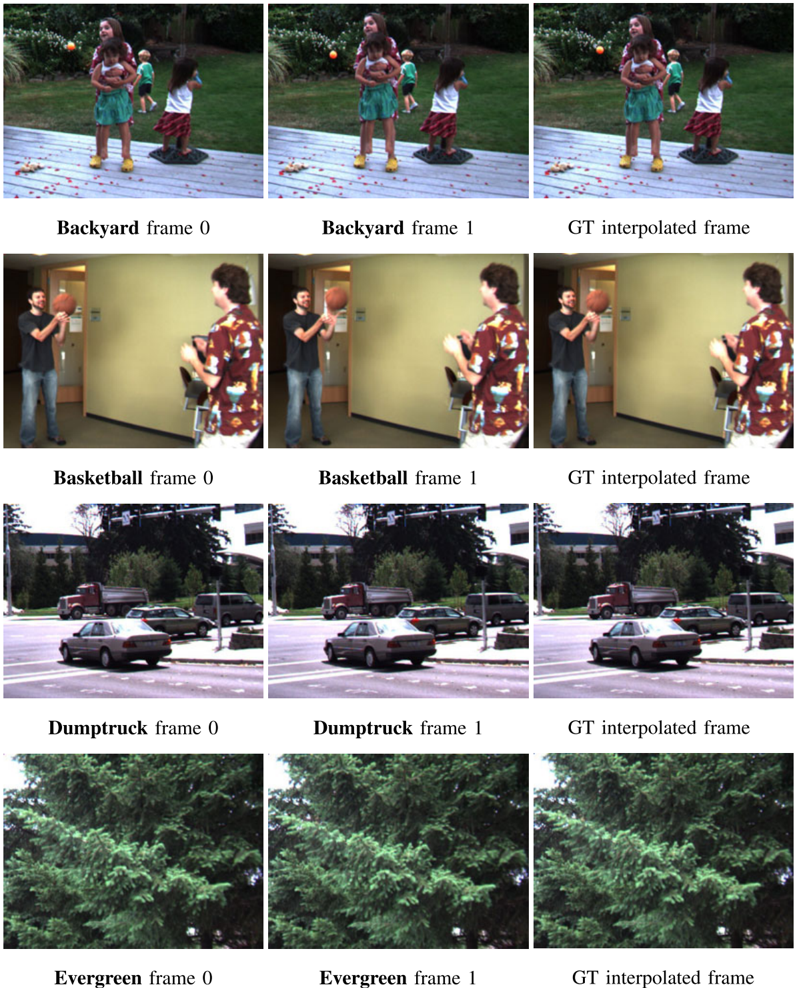
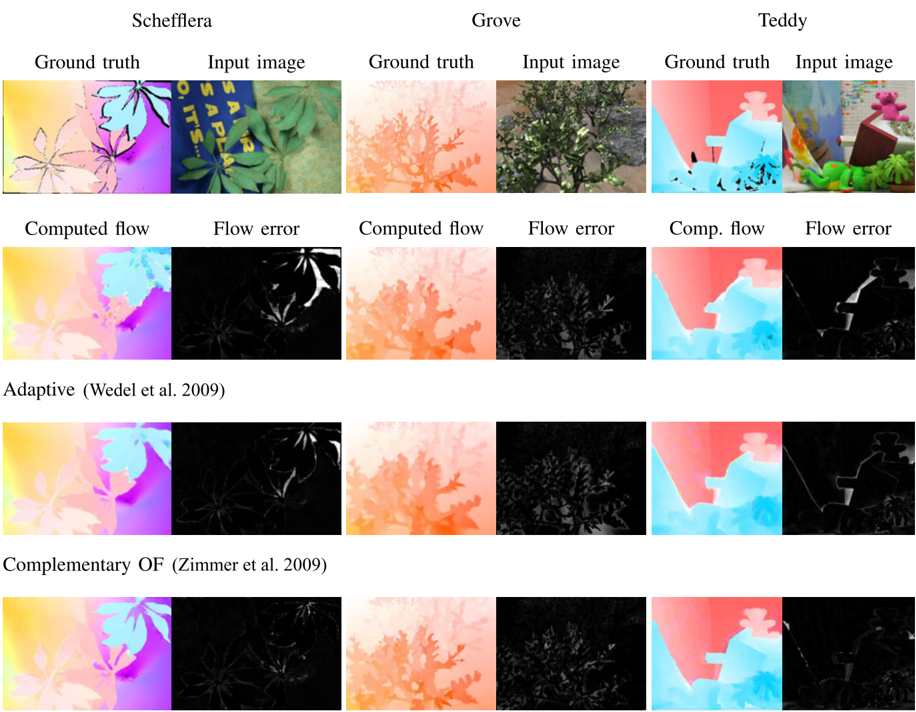
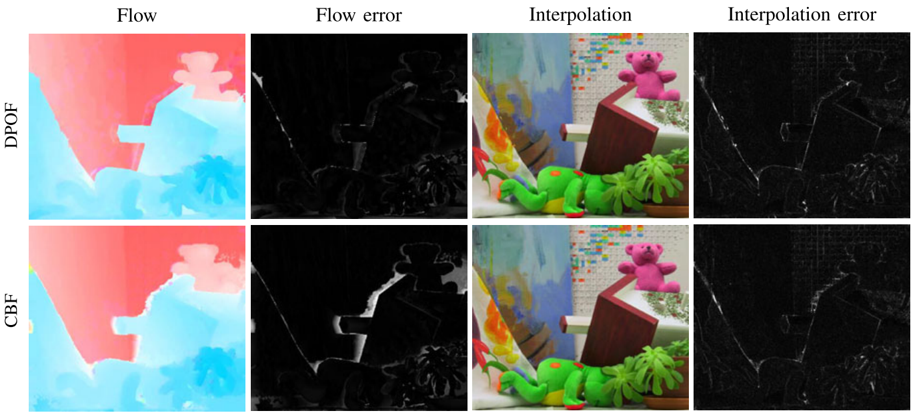
The quantitative evaluation of optical flow algorithms by Barron et al. (1994) led to significant advances in performance. The challenges for optical flow algorithms today go beyond the datasets and evaluation methods proposed in that paper. Instead, they center on problems associated with complex natural scenes, including nonrigid motion, real sensor noise, and motion discontinuities. We propose a new set of benchmarks and evaluation methods for the next generation of optical flow algorithms. To that end, we contribute four types of data to test different aspects of optical flow algorithms: (1) sequences with nonrigid motion where the ground-truth flow is determined by tracking hidden fluorescent texture, (2) realistic synthetic sequences, (3) high frame-rate video used to study interpolation error, and (4) modified stereo sequences of static scenes. In addition to the average angular error used by Barron et al., we compute the absolute flow endpoint error, measures for frame interpolation error, improved statistics, and results at motion discontinuities and in textureless regions.
Overview
CoChat Summary
TL;DR
The paper introduces a new optical flow benchmark of four data types (hidden fluorescent texture, realistic synthetic, high-speed interpolation, and modified stereo) plus an extended evaluation methodology with endpoint error, interpolation error, robustness/accuracy statistics, and region masks. It reports that performance improved substantially over the preliminary 2007 study, but motion discontinuities and diverse datasets remain difficult, and top flow methods still lag top stereo methods on the modified Teddy stereo data.
Key findings
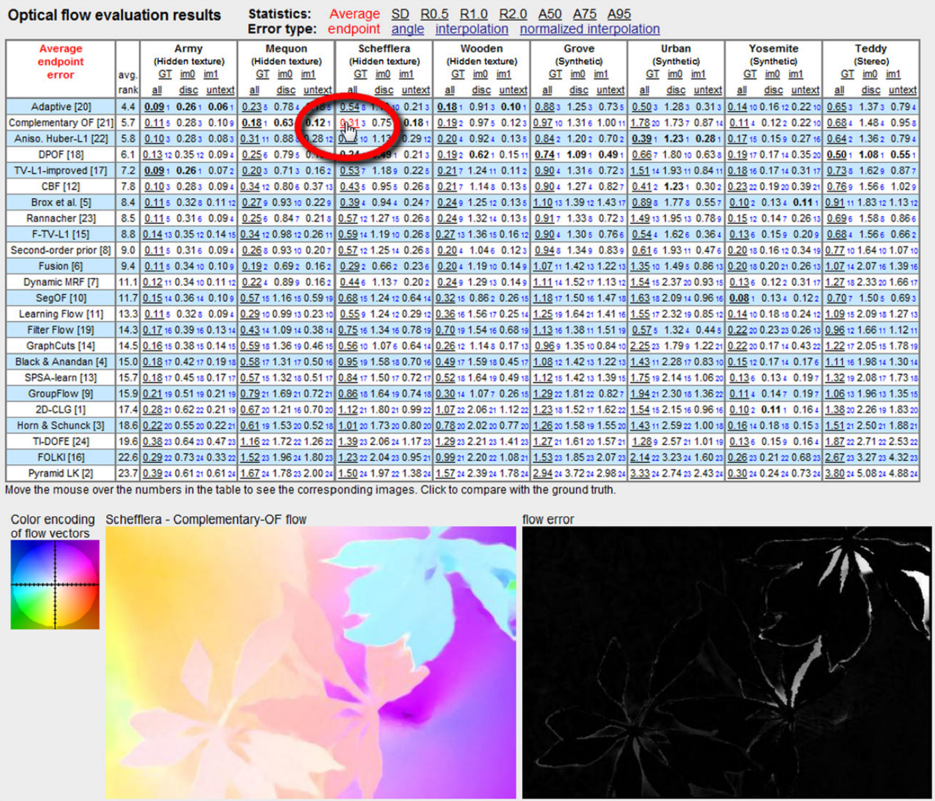
- The benchmark contains 12 training and 12 test sequences; test ground truth is withheld except for Yosemite. As of December 2009 the online evaluation contained results for 24 published methods, all using only 2 input frames and 10 using color.
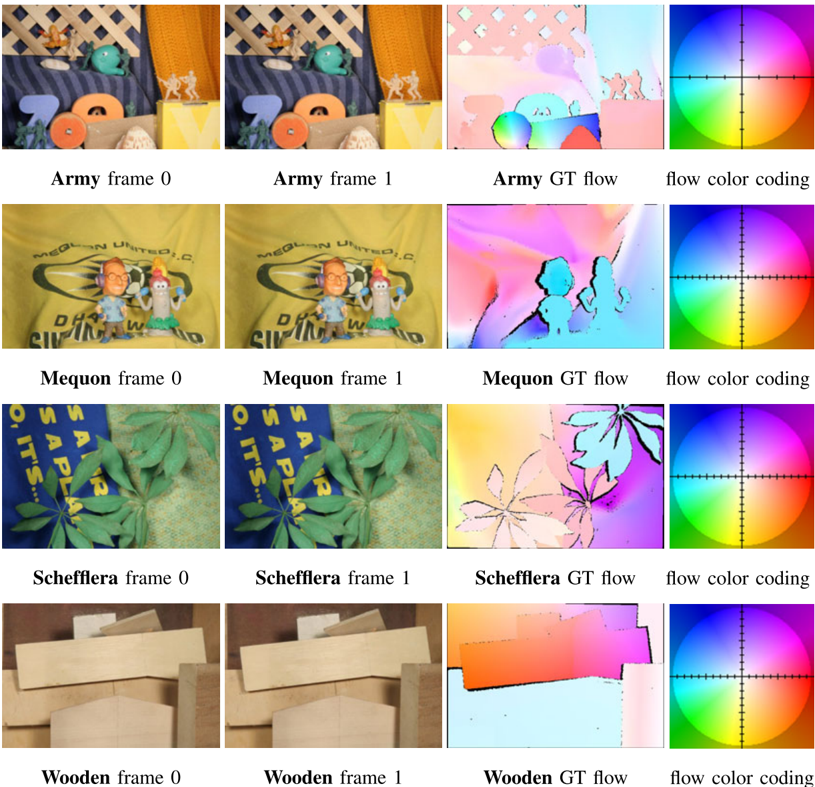
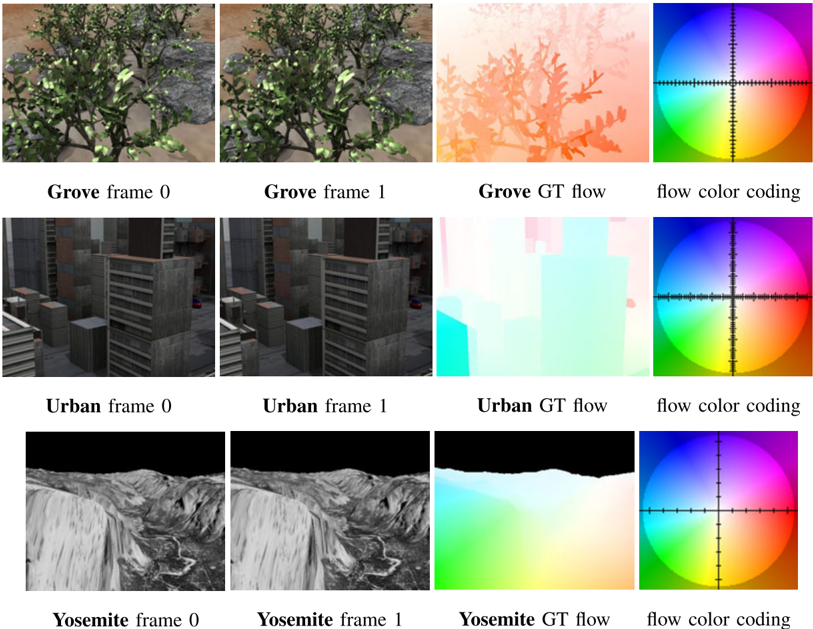
- Best average endpoint error (Avg. EE) improved dramatically over 2D-CLG (Bruhn et al. 2005): Army 0.28→0.09, Mequon 0.67→0.18, Schefflera 1.12→0.24, Wooden 1.07→0.18, Grove 1.23→0.74, Urban 1.54→0.39, Yosemite 0.10→0.08, Teddy 1.38→0.50. Best Avg. EE was below 0.2 pixels on four datasets (Yosemite, Army, Mequon, Wooden).
- Endpoint error (EE) and angular error (AE) rankings were highly correlated (r = 0.989), but the paper argues EE should be preferred: Complementary OF on Urban had Avg. AE 4.64° (rank 6) but Avg. EE 1.78 pixels (rank 20), because AE downweights large motions.
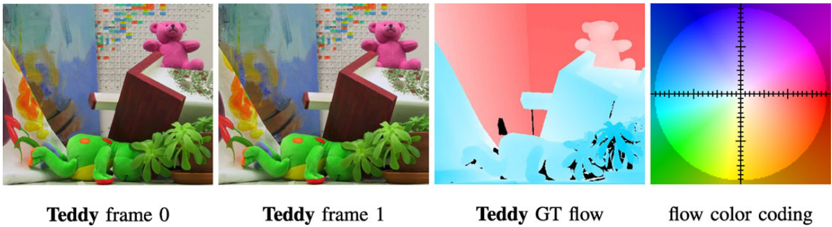
- Motion discontinuity (Disc) regions were the hardest; textureless (Untext) regions were typically easiest. Dataset results were less correlated, with Yosemite poorly or negatively correlated with others. Flow and interpolation errors were only moderately correlated (Avg4 EE vs Avg4 IE r = 0.763). On Teddy, top stereo methods outperformed top flow methods: median lowest-five R1.0 was 9.9 for flow vs 6.5 for stereo in All regions (34% reduction), and 27.6 vs 10.0 in Disc regions (64% reduction).
Methods
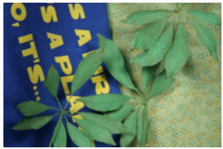
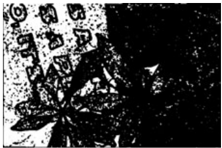
- Four data types were collected: (1) real nonrigid scenes with dense ground truth from hidden fluorescent texture, captured with a Canon EOS 20D at 3504×2336, downsampled every 40th visible-light frame by factor 6 to 584×388, with SSD tracking (15×15 windows), forward/backward crosschecking, and Lucas-Kanade subpixel refinement; (2) realistic synthetic scenes rendered with 3Delight at 640×480, with ground truth from a custom shader and dominant-cluster flow selection; (3) high-speed video for frame interpolation captured with a PointGrey Dragonfly Express at 60 fps, providing every other frame and retaining intermediate frames as ground truth; and (4) modified stereo data (Teddy) from structured light, cropped to make the disparity range roughly symmetric.
- Evaluation metrics include average angular error (AE), absolute flow endpoint error (EE), interpolation error (IE), and gradient-normalized interpolation error (NE). Statistics include averages, robustness measures R_X, and percentile accuracy measures A_X, computed over All, Disc, and Untext region masks.
- Analysis used the online evaluation at http://vision.middlebury.edu/flow/, comparing 24 published methods across metrics, statistics, masks, and datasets, with Pearson correlations between rankings and comparisons to state-of-the-art stereo methods on Teddy.
Limitations
- The paper states that the hidden fluorescent texture scenes are laboratory scenes, not real-world scenes, and have no motion blur due to stop-motion capture; ground truth is unavailable where cross-checking failed, especially occluded regions, and the measured ground truth is not perfect, though significant errors are limited to a small fraction of pixels. Synthetic sequences were generated without motion blur. The modified stereo ground truth is only accurate to 0.25 pixels, and algorithms may exploit the knowledge that motions are horizontal; overfitting to rigid data should be visible across the 12 evaluation images. Interpolation ground truth is an intermediate image, not a flow field, so the flow definition is apparent motion.
- The paper also states that no single method yet achieves strong performance across a wide variety of datatypes, that any dataset has a limited lifespan, and that future studies should include more challenging realistic synthetic data, longer sequences, and more difficult materials, illumination changes, atmospheric effects, and transparency.
- Evident from the text: the online tables do not provide an overall ranking among methods; runtimes are not normalized for programming environment, CPU speed, cores, or hardware acceleration; algorithms are required to produce dense flow and cannot submit confidence maps or sparse/incomplete fields; all 24 published methods used only 2 frames despite 8-frame sequences being available; and the paper cannot definitively answer whether temporal smoothing is less suited to the more challenging sequences.
Model-written summary. Check it against the paper before relying on it.
Integrity signals
Registry
Cites
Statistics
Figures

Verification
Claims the paper makes
2 Valid · 16 Not valid · 58 Not checked · 185 Own results and interpretations
A result the paper states — it cites no source for it, so there is none to check. The quote shows it is in the paper.
In the paper
“Rather than collecting a single type of data (with its inherent limitations) we instead collected four different types of data, each satisfying a different subset of desirable properties.”
plain- Asserted: passes — The authors put it forward as true.
- Checkable: passes — It can be checked against evidence.
- Load-bearing: passes — The paper’s conclusions depend on it.
- Based: passes — The paper gives a reason why it holds.
A result the paper states — it cites no source for it, so there is none to check. The quote shows it is in the paper.
In the paper
“Using the combination of fluorescent paint, downsampling high-resolution images, and sequential tracking of small motions, we are able to obtain dense, subpixel accurate ground truth for a nonrigid scene.”
plainstates a cause- Asserted: passes — The authors put it forward as true.
- Checkable: passes — It can be checked against evidence.
- Load-bearing: passes — The paper’s conclusions depend on it.
- Based: passes — The paper gives a reason why it holds.
A result the paper reports from its own data — it cites no other source for it, so there is none to check. The quote shows it is in the paper.
In the paper
“To allow for measures that predict performance on such tasks, we collected a variety of data suitable for frame interpolation.”
plainstates a cause- Asserted: passes — The authors put it forward as true.
- Checkable: passes — It can be checked against evidence.
- Load-bearing: passes — The paper’s conclusions depend on it.
- Based: passes — The paper gives a reason why it holds.
A result the paper reports from its own data — it cites no other source for it, so there is none to check. The quote shows it is in the paper.
In the paper
“We have developed a technique for capturing imagery of nonrigid scenes with ground-truth optical flow.”
plain- Asserted: passes — The authors put it forward as true.
- Checkable: passes — It can be checked against evidence.
- Load-bearing: passes — The paper’s conclusions depend on it.
- Based: passes — The paper gives a reason why it holds.
A result the paper states — it cites no source for it, so there is none to check. The quote shows it is in the paper.
In the paper
“To go beyond previous synthetic ground truth (e.g., the Yosemite sequence), we generated two types of fairly complex synthetic outdoor scenes.”
plain- Asserted: passes — The authors put it forward as true.
- Checkable: passes — It can be checked against evidence.
- Load-bearing: passes — The paper’s conclusions depend on it.
- Based: passes — The paper gives a reason why it holds.
96 more claims
Create a free account to see all 261 claims and every source verdict.
- Probably not a substantial claim. 114
- It may state two separate claims as one. 76
- The quote only partly states this claim. 6
Claims other papers make about this one
Each is checked against this paper’s own text: does it say what the citing paper says it does?
The source backs part of the claim, not all of it — or backs it for a different population, condition or comparison.
In the citing paper
“Notable works include the Middlebury dataset (Baker et al, 2011) and the KITTI datasets (Geiger et al, 2012; Menze and Geiger, 2015), but due to the difficulty of computing accurate ground truth, these have been restricted to 8 and 2 · 200 pairs of frames, respectively (the latter are also limited by the special driving setting).”
From What Makes Good Synthetic Training Data for Learning Disparity and Optical Flow Estimation? (2018) · cites this paper as Baker et al, 2011
Experimental — accuracy not yet measured
Citations
Cites
The pascal visual object classes (VOC) challenge
Everingham, M., Van Gool, L., Williams, C. K. I., Winn, J., & Zisserman, A. (2010) · International Journal of Computer Vision · doi:10.1007/s11263-009-0275-4 · Cited by 19,599
Proceedings of IEEE Conference on Computer Vision and Pattern Recognition
(1993) · doi:10.1109/cvpr.1993 · Cited by 17,667
Proceedings of IEEE International Conference on Computer Vision
(1995) · Proceedings of IEEE International Conference on Computer Vision · doi:10.1109/iccv.1995.466933 · Cited by 12,860
(1981) · Cited by 11,963
Horn, B. K. P., & Schunck, B. G. (1981) · Artificial Intelligence · doi:10.1016/0004-3702(81)90024-2 · Cited by 10,312
Horn, B. K., & Schunck, B. G. (1981) · SPIE Proceedings · doi:10.1117/12.965761 · Cited by 7,394 · cited 2×
“A baseline approach is to use an L2 norm as in the Horn and Schunck algorithm (Horn and Schunck 1981):”
BackgroundMethodFast approximate energy minimization via graph cuts
Boykov, Y., Veksler, O., & Zabih, R. (2001) · IEEE Transactions on Pattern Analysis and Machine Intelligence · doi:10.1109/34.969114 · Cited by 6,988
A Taxonomy and Evaluation of Dense Two-Frame Stereo Correspondence Algorithms
Scharstein, D., & Szeliski, R. (2002) · International Journal of Computer Vision · doi:10.1023/a:1014573219977 · Cited by 6,740 · cited 10×
“Many areas of computer vision, such as stereo [63], face recognition [28, 55, 68], and object recognition [23, 24], have challenging datasets to track the progress made by leading algorithms and to stimulate new ideas.”
BackgroundMethodResultInfluentialSelf-citationProceedings European Conference on Computer Vision 2002
Heyden, A., Sparr, G., Nielsen, M., & Johansen, P. (2002) · Lund University Publications (Lund University) · Cited by 5,153
From few to many: illumination cone models for face recognition under variable lighting and pose
Georghiades, A. S., Belhumeur, P. N., & Kriegman, D. J. (2001) · IEEE Transactions on Pattern Analysis and Machine Intelligence · doi:10.1109/34.927464 · Cited by 4,912 · cited 1×
“Many areas of computer vision, such as stereo (Scharstein and Szeliski 2002), face recognition (Philips et al. 2005; Sim et al. 2003; Gross et al. 2008; Georghiades et al. 2001), and object recognition (Fei-Fei et al.”
Background
Research works printed but not linked: 4
- Anandan, P., & Weiss, R. (1985). Introducing smoothness constraint in a matching approach for the computation of displacement fields. In Proceedings of the DARPA image understanding workshop (pp. 186-196).
- Bleyer, M., & Chambon, S. (2010). Does color really help in dense stereo matching? In Proceedings of the international symposium 3D data processing, visualization and transmission .
- Lempitsky, V., Roth, S., & Rother, C. (2008). Fusion flow: discretecontinuous optimization for optical flow estimation. In Proceedings of the IEEE conference on computer vision and pattern recognition .
- Rannacher, J. (2009). Realtime 3D motion estimation on graphics hardware . Undergraduate thesis, Heidelberg University.
Cited by
Items 1,701–1,800 of 2,273
Frame Difference-Based Temporal Loss for Video StylizationPreprint
Xu, J., Xiong, Z., & Hu, X. (2021) · arXiv (Cornell University) · doi:10.48550/arxiv.2102.05822 · Cited by 2
“Many algorithms have been proposed to estimate optical flow in videos, including (slow) iterative algorithms [8], [9] and (fast) deep learning models [10], [11].”
BackgroundEstimating Optical Flow: A Comprehensive Review of the State of the ArtPreprint
Alfarano, A., Maiano, L., Papa, L., et al. (2024) · SSRN Electronic Journal · doi:10.2139/ssrn.4768675 · Cited by 2
Ego-Motion Estimation on Range Images Using High-Order Polynomial Expansion
Okorn, B., & Harguess, J. D. (2014) · IEEE/CVF Conference on Computer Vision and Pattern Recognition Workshops (CVPRW) · doi:10.1109/cvprw.2014.53 · Cited by 1
“The two papers describe common databases, procedures and results on comparing more than 20 optical flow methods, with the Baker et al. paper being the most recent and complete.”
MethodA Multi-frame Video Interpolation Neural Network for Large Motion
Hu, W., & Wang, Z. (2019) · Lecture notes in computer science · doi:10.1007/978-3-030-31723-2_34 · Cited by 1
13‐3: Invited Paper: Video Frame Interpolation via Structure Motion based Iterative Feature Fusion
Li, X., Cao, M., Tang, Y., et al. (2021) · SID Symposium Digest of Technical Papers · doi:10.1002/sdtp.14635 · Cited by 1
Generalized Closed-Form Formulae for Feature-Based Subpixel Alignment in Patch-Based Matching
Jospin, L. V., Laga, H., Boussaïd, F., & Bennamoun, M. (2025) · International Journal of Computer Vision · doi:10.1007/s11263-025-02457-9 · Cited by 2
“To test the proposed formulae for two dimensional subpixel refinement, we used the optical flow Middlebury dataset, a collection of three real and seven simulated image pairs with very high quality optical flow ground truth [1].”
Benchmarking equivariance for Deep Learning based optical flow estimators
Savian, S., Elahi, M., Janes, A., & Tillo, T. (2022) · Signal Processing Image Communication · doi:10.1016/j.image.2022.116892 · Cited by 2
Synthetic Data: Development Status and Prospects for Military Applications
Huang, J., Yin, J., Wang, S., & Kong, D. (2023) · Mechanisms and machine science · doi:10.1007/978-3-031-42987-3_68 · Cited by 1
A Novel Divide and Conquer Solution for Long-term Video Salient Object Detection
Li, Y., Chen, C., Li, S., et al. (2024) · Machine Intelligence Research · doi:10.1007/s11633-023-1388-x · Cited by 1
Linear Motion Estimation of Fertilizer Granules: A Step Towards Parabolic Motion Analysis
Lak(aln159@uregina.ca), A., Stilling, D. S. D., & Mehrandezh, M. (2024) · Lecture notes in networks and systems · doi:10.1007/978-3-031-66336-9_45 · Cited by 1
Singh, B., & Kumar, P. (2024) · Arabian Journal for Science and Engineering · doi:10.1007/s13369-024-09777-x · Cited by 2
“However, Baker et. al presented the Middlebury datasets that incorporated the dense ground truth flow, thereby setting new benchmarks for performance evaluation [52].”
Flow Visualization for Complex Fluid Flows via a Structure-Enhanced Motion Estimator
Chen, J., Wang, H., Hao, Z., Cai, Z., Mei, L., & Liu, T. (2025) · IEEE Transactions on Circuits and Systems for Video Technology · doi:10.1109/tcsvt.2025.3554535 · Cited by 2
“These flow fields are calculated on the Army [28] image sequence.”
Multi-Scale Feature Fusion Based on Piecewise Polynomial Activation Function for Image-Text Matching
Ji, L., & Liu, L. (2025) · IEEE Transactions on Circuits and Systems for Video Technology · doi:10.1109/tcsvt.2025.3571731 · Cited by 2
“The dataset used for Model A’s experiments is Middlebury [61], with evaluation metrics including PSNR (Peak Signal-to-Noise Ratio), SSIM (Structural Similarity Index Measure), and LPIPS (Learned Perceptual Image Patch Similarity).”
Li, S., Gao, L. H., Zhang, B., et al. (2025) · Buildings · doi:10.3390/buildings15111800 · Cited by 1
Xinrong, W., Li, P., Han, X., et al. (2025) · IEEE Transactions on Magnetics · doi:10.1109/tmag.2025.3582763 · Cited by 1
A Survey of Visual SLAM Based on RGB-D Images Using Deep Learning and Comparative Study for VOE
Le, V.-H., & Nguyen, T.-H.-P. (2025) · Algorithms · doi:10.3390/a18070394 · Cited by 2
Погорелов, В. А., Sinyutin, S. A., & Sokolov, S. V. (2025) · Journal of Computer and Systems Sciences International · doi:10.1134/s1064230725700583 · Cited by 1
“The vehicle’s motion parameters in modern ONSs are estimated based on processing information, using various methods, contained in the change in intensity, contrast, or color spectrum of light radiation reflected from the scanned surface [14, 16, 18].”
Event-based video interpolation via complementary motion information
Liu, Y., Fu, L., Chen, H., Yang, Z., Li, Y., & Deng, Y. (2025) · Engineering Applications of Artificial Intelligence · doi:10.1016/j.engappai.2025.112606 · Cited by 3
LViCAR: Diffusion Models for Perceptual Quality Enhancement in Video Compression Artifact Reduction
Gehlot, S., & Su, G. (2025) · doi:10.1145/3746266.3762159 · Cited by 1
Liu, Y., Wu, B., & Li, H. (2025) · The Astronomical Journal · doi:10.3847/1538-3881/ae07d4 · Cited by 1
Robust Kalman filtering for dynamic reconstruction of multiple missing frames in videos
Gupta, S. K., & Kumar, A. (2025) · The Imaging Science Journal · doi:10.1080/13682199.2025.2572924 · Cited by 1
Xu, Y., Fu, L., Zhou, H., et al. (2025) · ACS Omega · doi:10.1021/acsomega.5c09442 · Cited by 1
A systematic survey on video frame interpolation: Advances, challenges, and future directions
Huang, X., Wang, S., Xu, T., Feng, Z., & Yang, X. (2025) · Expert Systems with Applications · doi:10.1016/j.eswa.2025.130660 · Cited by 5
Seeing through fibers: unsupervised image reconstruction in fiber bundle imaging systems
Vazifeh, A. R., Wang, C., Joshi, A., et al. (2026) · Optics Express · doi:10.1364/oe.587675 · Cited by 1
“Detailed statistics for these additional simulations are reported in Table S2.”
On the Generalization of Optical Flow: Quantifying Robustness to Dataset Shifts
Bauer, K., Bruhn, A., & Schmalfuß, J. (2025) · IEEE International Conference on Computer Vision Workshops · doi:10.1109/iccvw69036.2025.00054 · Cited by 3
“Unlike unbounded optical flow metrics like the end-point error EPE [6, 9], it takes values in a fixed range [0 , 1] .”
Zhang, Z., Xu, Z., Dai, J., et al. (2026) · Measurement · doi:10.1016/j.measurement.2026.122392 · Cited by 1
Evolution of a Tracking System
Lieberknecht, S., Stierstorfer, Q., Kuschk, G., Ulbricht, D., Langer, M., & Benhimane, S. (2011) · Springer eBooks · doi:10.1007/978-1-4614-0064-6_17 · Cited by 2
Histogram-Based Optical Flow for Functional Imaging in Echocardiography
Schmid, S., Tenbrinck, D., Jiang, X., et al. (2011) · Lecture notes in computer science · doi:10.1007/978-3-642-23672-3_58 · Cited by 1
“Examples are gradient, Hessian, and Laplacian of corresponding pixels [2,7].”
BackgroundMethodInfluentialEfficiency Analysis of POC-Derived Bases for Combinatorial Motion Estimation
Reyes, A., Alba, A., & Arce-Santana, E. (2014) · Lecture notes in computer science · doi:10.1007/978-3-642-53842-1_11 · Cited by 1
“From this reconstruction, one can compute the average end-point error (AEE) and average angular error (AAE) with respect to the ground truth w, as defined in [3].”
BackgroundMethodOn Unusual Pixel Shapes and Image Motion
Jacobs, N. (2009) · Open Scholarship Institutional Repository (Washington University in St. Louis) · doi:10.7936/k70p0x8w · Cited by 2
“To construct the evaluation image set, single images were chosen randomly from the Middlebury optical flow evaluation dataset [2] and resized to 64 × 64 pixels.”
MethodReal-World Stereo-Analysis Evaluation
Morales, S., Hermann, S., & Klette, R. (2012) · Lecture notes in computer science · doi:10.1007/978-3-642-34091-8_3 · Cited by 1
“See also [3] for a discussion of using at least three images of the same scene.”
Variational optical flow computation assisted by robust point matching
Shi, J., Bai, S., & Shu, X. (2015) · Optik · doi:10.1016/j.ijleo.2015.09.115 · Cited by 1
Factors Affecting Optical Flow Performance in Tagging Magnetic Resonance Imaging
Márquez-Valle, P., Kause, H. B., Fuster, A., et al. (2014) · Lecture notes in computer science · doi:10.1007/978-3-319-14678-2_24 · Cited by 1
“In this study, we choose motion estimation errors given by OF End-point-Error(5) (EE) [24] to define the ANOVA variable.”
MethodTwo Algorithms for Motion Estimation from Alternate Exposure Images
Sellent, A., Eisemann, M., & Magnor, M. A. (2011) · Lecture notes in computer science · doi:10.1007/978-3-642-24870-2_2 · Cited by 1
“25 with the method proposed in [2] and (b) blending of forward- and backward-warped images show artifacts at occlusion boundaries even when ground-truth motion fields are used, because occlusion information is not available.”
BackgroundMethodInfluentialImproving Motion Estimation Using Image-Driven Functions and Hybrid Scheme
Nguyen, D. D., & Jeon, J. W. (2011) · Lecture notes in computer science · doi:10.1007/978-3-642-25367-6_7 · Cited by 2
“Estimation results on synthetic training sequences [10]”
BackgroundMethodInfluentialOptical flow based on Approximate Nearest Neighbor Field
U., N. J. O., Ramakanth, S. A., & Babu, R. V. (2014) · IEEE International Conference on Electronics, Computing and Communication Technologies (CONECCT) · doi:10.1109/conecct.2014.6740292 · Cited by 1
“A study on Middlebury dataset [10] shows that real-time estimation of OF using CPU’s is still not possible with the”
MethodEnhancing accuracy and sharpness of motion field with adaptive scheme and occlusion‐aware filter
Nguyen, D. D., & Jeon, J. W. (2013) · IET Image Processing · doi:10.1049/iet-ipr.2012.0563 · Cited by 1
“We also performed experiments using the evaluation dataset on Middlebury ’ s website [15] to show the improvement of our method.”
BackgroundMethodInfluentialCombining Optical Flow and Range Flow to Recover RGBD Sensor Ego-Motion
Jones, G. A. (2013) · Cited by 1
Balanced optical flow refinement by bidirectional constraint
Choi, J., Kim, H., Oh, T.-H., & Kweon, I. S. (2014) · Proceedings - International Conference on Image Processing · doi:10.1109/icip.2014.7026108 · Cited by 3
“We quantitatively compared our results to other methods with the Middlebury benchmark datasets [7] in terms of the average angular error (AAE) and the average end-point error (EPE), and qualitatively demonstrated that our algorithm is robust to large displacement dataset.”
BackgroundMethodResultThe Difference Effect of Wavelet Transforms and Gaussian Filter in Multi-Resolution Optical Flow
Han, Z. H., & Wang, Y. F. (2013) · Applied Mechanics and Materials · doi:10.4028/www.scientific.net/amm.475-476.273 · Cited by 1
Brüggemann, M., Kays, R., Springer, P., et al. (2015) · Proceedings of SPIE, the International Society for Optical Engineering/Proceedings of SPIE · doi:10.1117/12.2179165 · Cited by 1
“An overview of research activities and tendencies in this field can be found in [6], and a benchmark of current methods is available at http://vision.”
BackgroundPeriodicity-Based Computation of Optical Flow
Khachaturov, G., González-Brambila, S. B., & Trejo, J. I. G. (2015) · Computación y Sistemas · doi:10.13053/cys-18-4-1557
“We adopt main measures and statistics proposed by different authors, [4], [23], [28], and summarized in [2].”
BackgroundMethodInfluentialA parallel true motion estimation method based on binarized cross correlation
Michielin, F., Calvagno, G., Sartor, P., Emmerich, T., Unruh, C., & Erdler, O. (2014) · Proceedings - International Conference on Image Processing · doi:10.1109/icip.2014.7025239 · Cited by 1
“The test was made on the Middlebury database [16] which provides a set of different sequences.”
MethodInfluentialA Motion Detection Model Inspired by the Neuronal Propagation in the Hippocampus
Liang, H., & Morie, T. (2012) · IEICE Transactions on Fundamentals of Electronics Communications and Computer Sciences · doi:10.1587/transfun.e95.a.576 · Cited by 1
Adaptive differential refinement of block-matching based correspondence vector fields
Brüggemann, M., Kays, R., Springer, P., et al. (2014) · IEEE International Conference on Consumer Electronics - Berlin (ICCE-Berlin) · doi:10.1109/icce-berlin.2014.7034317 · Cited by 1
“2 experimental results for the sequence "Backyard" from the Middlebury benchmark dataset [6] are depicted.”
BackgroundExploring Pooling Strategies based on Idiosyncrasies of Spatio-Temporal Interest Points
Ye, Y., Yang, X., & Tian, Y. (2015) · International Conference on Multimedia Retrieval · doi:10.1145/2671188.2749339 · Cited by 1
“The paper [1] discussed several most commonly used optical flow algorithms.”
MethodAnimation rendering with Population Monte Carlo image-plane sampler
Lai, Y., Chenney, S., Liu, F., Niu, Y., & Fan, S. (2010) · The Visual Computer · doi:10.1007/s00371-010-0503-5 · Cited by 1
Can Variational Models for Correspondence Problems Benefit from Upwind Discretisations?
Breuß, M., Zimmer, H., & Weickert, J. (2010) · Journal of Mathematical Imaging and Vision · doi:10.1007/s10851-010-0237-z · Cited by 3
Gas diffusion optic flow calculation and its applications in gas cloud infrared imaging
Liu, S., Luo, X., Wang, L., et al. (2015) · Proceedings of SPIE, the International Society for Optical Engineering/Proceedings of SPIE · doi:10.1117/12.2216485 · Cited by 1
Experiences from long range passive and active imaging
Grönwall, C., Gustafsson, D. K. J., Steinvall, O. K., et al. (2015) · Proceedings of SPIE, the International Society for Optical Engineering/Proceedings of SPIE · doi:10.1117/12.2196278 · Cited by 1
Comparative analysis of multi-resolution optical flow techniques for flow rate estimation
Mohmmed, O. A. B., Ovinis, M., & Hashim, F. M. (2015) · Asian Control Conference (ASCC) · doi:10.1109/ascc.2015.7360338 · Cited by 1
“Thus, the coarse-to-fine framework [13, 14] is commonly used as multiresolution strategy to provide better estimation at the coarsest level, and solve the nonlinearities problem of optical flow constraint [15].”
MethodReducindo, I., Mejia-Rodriguez, A. R., Arce-Santana, E., Campos-Delgado, D. U., Scalco, E., Cattaneo, G. M., & Rizzo, G. (2014) · Lecture notes in computer science · doi:10.1007/978-3-319-14364-4_2 · Cited by 2
GPS free navigation inspired by insects through monocular camera and inertial sensors
Liu, Y., Liu, J. G., Cao, H., & Huang, Y. (2015) · Proceedings of SPIE, the International Society for Optical Engineering/Proceedings of SPIE · doi:10.1117/12.2205564 · Cited by 1
Improved global optical flow estimation with mean shift algorithm for target detection
Wang, Z., Li, C., & Liu, Q. (2015) · International Journal of Wireless and Mobile Computing · doi:10.1504/ijwmc.2015.070936 · Cited by 1
“Optical flow fields carry much information about movement and threedimensional structure of the target, which can be used to detect the moving targets, restore the movement and structure of the target (Baker et al., 2011; Xiong et al., 2008), and is also useful in image segmentation and motion compensation coding and…”
BackgroundA Scene-Flow Estimation Method with Guaranteed Numerical Stability
Kameda, Y., Matsuda, I., & Itoh, S. (2014) · The Journal of The Institute of Image Information and Television Engineers · doi:10.3169/itej.68.j292 · Cited by 1
Robust region‐wise colour correction method for stereo matching
Ran, Q., Zhao, W., & Feng, J. (2016) · IET Computer Vision · doi:10.1049/iet-cvi.2015.0361 · Cited by 1
“However, the optical flow based matching method is regarded to be sensitive to colour discrepancy in the images [1].”
MethodRepurposing video recordings for structure motion estimations
Khaloo, A., & Lattanzi, D. (2016) · Proceedings of SPIE, the International Society for Optical Engineering/Proceedings of SPIE · doi:10.1117/12.2217582 · Cited by 1
Schuchert, T., & Oser, F. (2012) · International Conference on Pattern Recognition Applications and Methods · doi:10.5220/0003785904630469 · Cited by 1
“(Baker et al., 2011)) for 50% masks by the trace of the propagated covariance, the trace of the covariance only on the finest grid, i.”
BackgroundMethodInfluentialDense Optical Flow Estimation with 3D Structure Tensor Models
Lu, T., Ying, R., Liu, W., et al. (2015) · Advances in intelligent systems and computing · doi:10.1007/978-3-319-16841-8_62 · Cited by 1
Identifying Presentation Styles in Online Educational Videos
Kannan, A., & Baker, S. (2014) · Cited by 1
Self-citationRushmeier, H. (2015) · Cited by 1
Ulman, V. (2011) · Cited by 1
Adaptive Motion Pooling and Diffusion for Optical Flow
Medathati, N. V. K., Chessa, M., Masson, G. S., Kornprobst, P., & Solari, F. (2015) · Purdue e-Pubs (Purdue University System) · Cited by 3
Improved DSP Matching with RPCA for Dense Correspondences
Shi, F., & Zhang, Y. (2016) · Lecture notes in computer science · doi:10.1007/978-3-319-41501-7_43 · Cited by 1
Modeling Binocular and Motion Transparency Processing by Local Center-Surround Interactions
Raudies, F., & Neumann, H. (2012) · IGI Global eBooks · doi:10.4018/978-1-4666-2539-6.ch006 · Cited by 1
“edu (Baker et al., 2011; Scharstein & Szeliski, 2003; Scharstein & Pal, 2007).”
MethodGibson, J., & Marques, O. (2016) · SpringerBriefs in computer science · doi:10.1007/978-3-319-44941-8_4 · Cited by 1
Vision based velocity estimation for soft landing of spacecrafts
Gupthan, V. R. V., Asha, S., & Dhanalakshmi, P. P. (2016) · IEEE International Conference on Recent Trends in Electronics, Information & Communication Technology · doi:10.1109/rteict.2016.7808168 · Cited by 1
“Because in the higher level if the flow is , then in the lower level it should be , since the resolution is increased.”
BackgroundOcclusion detecting window matching scheme for optical flow estimation with discrete optimization
Lee, K. J., & Yun, I. (2017) · Pattern Recognition Letters · doi:10.1016/j.patrec.2017.02.009 · Cited by 1
Adaptive Detection of a Moving Target Undergoing Illumination Changes against a Dynamic Background
Lu, M., Gao, Y., & Zhu, M. Q. (2016) · Journal of the Optical Society of Korea · doi:10.3807/josk.2016.20.6.745 · Cited by 1
“Thus, the optical-flow fields calculated in those areas are not reliable [15].”
Implementation of a robust optical flow method for color images
Monzón, N., Sánchez, J., & de la Nuez, A. J. S. (2014) · Acceda (Universidad de Las Palmas de Gran Canaria) · Cited by 1
Simultaneous optical flow and occlusion estimation for images with large displacements
Lazcano, V. A. (2017) · International Conference on Control, Automation and Robotics (ICCAR) · doi:10.1109/iccar.2017.7942726 · Cited by 1
Locality Sensitive Hashing based deepmatching for optical flow estimation
Wang, C., Lu, Z., Liao, Q., & Li, D. (2017) · IEEE International Conference on Acoustics Speech and Signal Processing · doi:10.1109/icassp.2017.7952401 · Cited by 1
“Over the last several years, great improvement of optical flow methods handling small displacement is witnessed by the Middlebury benchmark[1].”
BackgroundSelection of the optical flow algorithms for flying vehicles with high speed
Huang, L., & Song, J. (2017) · Chinese Control and Decision Conference (CCDC) · doi:10.1109/ccdc.2017.7979459 · Cited by 1
Real-time scene flow on COTS embedded systems by coarse-grained software pipeline
Chen, L. F., Cui, M., Huang, K., et al. (2017) · IEEE Intelligent Vehicles Symposium · doi:10.1109/ivs.2017.7995870 · Cited by 1
“The 3D scene flow can be viewed as a jointly estimation of optical flow and stereo matching, which are two classical computer vision problems and have been well studied for decades [7], [14], [13], [1].”
BackgroundGround-Truth Tracking Data Generation Using Rotating Real-World Objects
Pusztai, Z., & Hajder, L. (2017) · Communications in computer and information science · doi:10.1007/978-3-319-64870-5_19 · Cited by 1
“The description of the optical flow datasets of Middle-bury database was published in (Baker et al., 2011).”
BackgroundReport: State-of-the-Art DE-ghosting Algorithms for High Dynamic Range Imaging
Karađuzović-Hadžiabdić, K., & Telalović, J. H. (2013) · Southeast Europe Journal of Soft Computing · doi:10.21533/scjournal.v2i2.35 · Cited by 1
Low-dimensional superpixel descriptor for visual correspondence estimation in video
Ду, С., & Ikenaga, T. (2017) · International Symposium on Intelligent Signal Processing and Communication Systems (ISPACS) · doi:10.1109/ispacs.2017.8266490 · Cited by 1
“The Middlebury optical flow benchmark [24] is utilized for the evaluations of the effectiveness of the proposed superpixel descriptor.”
MethodInfluentialXiang, X., Xiao, D., Zhai, M., & Zhang, R. (2017) · IEEE Information Technology, Networking, Electronic and Automation Control Conference (ITNEC) · doi:10.1109/itnec.2017.8284862 · Cited by 1
“In the Middlebury stereo datasets, we selected Cones, Teddy and Venus [14] to compute the errors.”
MethodEstimating Camera Tilt from Motion without Tracking
Elassal, N., & Elder, J. H. (2017) · Conference on Computer and Robot Vision (CRV) · doi:10.1109/crv.2017.36 · Cited by 1
“We have also evaluated dependence on the optic flow method employed (Fig 5(d)), comparing the methods of Xu et al [14] and Drulea & Nedevschi [15], both highly ranked on the Middlebury dataset [16].”
MethodIllumination-Aware Large Displacement Optical Flow
Stoll, M., Maurer, D., Volz, S., & Bruhn, A. (2017) · Energy Minimization Methods in Computer Vision and Pattern Recognition · doi:10.1007/978-3-319-78199-0_10 · Cited by 2
Efficiency of Bilateral Filter Application in Problems of Optical Flow Calculation
Titkov, V., Panin, S., Lyubutin, P., & Chemezov, V. O. (2017) · Optoelectronics Instrumentation and Data Processing · doi:10.3103/s8756699017060073 · Cited by 2
“The efficiency of using weight coefficients was evaluated by processing test images from the Middlebury benchmark specialized public database [14].”
MethodJin, C., Yu, H., Feng, J., et al. (2018) · Lecture notes in computer science · doi:10.1007/978-3-319-75541-0_5 · Cited by 1
Variational Large Displacement Optical Flow Without Feature Matches
Stoll, M., Maurer, D., & Bruhn, A. (2017) · Energy Minimization Methods in Computer Vision and Pattern Recognition · doi:10.1007/978-3-319-78199-0_6 · Cited by 2
Lang, L. F. (2019) · SIAM Journal on Imaging Sciences · doi:10.1137/18m1185260 · Cited by 1
“For the comparison of different motion estimation methods an evaluation framework was developed in [6].”
MethodBiologically inspired computational modeling of motion based on middle temporal area
Faria, F. D. C. E. C., Batista, J. P., & Araújo, H. J. (2018) · Paladyn Journal of Behavioral Robotics · doi:10.1515/pjbr-2018-0005 · Cited by 1
“A challenge in biologically inspiredmodels is to find good methods that could help to correctly find motion information across the various datatypes in the benchmark [59].”
MethodAn investigation into strategies to improve optical flow on degraded data
Harguess, J. D., Marez, D., & Ronquillo, N. (2018) · Geospatial Informatics, Motion Imagery, and Network Analytics · doi:10.1117/12.2305295 · Cited by 1
Using modern motion estimation algorithms in existing video codecs
Singh, D., Pitié, F., Kokaram, A. C., & Ringis, D. J. (2018) · SPIE Applications of Digital Image Processing · doi:10.1117/12.2322411 · Cited by 1
“19 Much of this development is tracked by the survey work of Baker et al. 1 A handful of authors have reported on the use of optic flow or modern motion estimation in codecs.”
BackgroundVideo Frame Interpolation Using Recurrent Convolutional Layers
Zhang, Z., Song, L., Xie, R., et al. (2018) · IEEE International Conference on Multimedia Big Data · doi:10.1109/bigmm.2018.8499065 · Cited by 1
“Common frame interpolation approaches first estimate dense motion, especially optical flow, between continuous input frames and then generate one or more middle frames based on the estimated motion [13].”
BackgroundMethodInfluentialRETRACTED: Moving object surveillance using object proposals and background prior prediction
Yao, Y., Liu, P., Sun, X., & Zhang, L. (2019) · Journal of Visual Communication and Image Representation · doi:10.1016/j.jvcir.2019.03.006 · Cited by 1
RetractedA Comparison of Scene Flow Estimation Paradigms
Tsekourakis, I., & Mordohai, P. (2019) · Communications in computer and information science · doi:10.1007/978-3-030-19816-9_1 · Cited by 1
Tumor Growth Prediction Using Convolutional Networks
Zhang, L., Lü, L., Summers, R. M., Kebebew, E., & Yao, J. (2019) · Advances in computer vision and pattern recognition · doi:10.1007/978-3-030-13969-8_12 · Cited by 1
Matsunaga, Y., & Nakamura, R. (2020) · Sensors and Materials · doi:10.18494/sam.2020.2544 · Cited by 1
Sparse Optical Flow Computation Using Wave Equation-Based Energy
Maciel, L. M. D. S., & Vieira, M. B. (2020) · International Journal of Image and Graphics · doi:10.1142/s0219467820500278 · Cited by 1
“Recently, a new database was proposed by Baker et al. (2011) in order to evaluate the new optical flow algorithms.”
MethodHighly Fluent Sign Language Synthesis Based on Variable Motion Frame Interpolation
Zeng, N., Chen, Y., Gu, Y., Liu, D., & Xing, Y. (2020) · Conference proceedings/Conference proceedings - IEEE International Conference on Systems, Man, and Cybernetics · doi:10.1109/smc42975.2020.9283193 · Cited by 6
“However, in most instances, object motion in consecutive video frames is considered as uniform or relatively stationary implicitly in continuous video.”
BackgroundThe Enrichment of Texture Information to Improve Optical Flow for Silhouette Image
Purnama, B., Kartika, M., Mahmudah, K. R., et al. (2021) · International Journal of Advanced Computer Science and Applications · doi:10.14569/ijacsa.2021.0120253 · Cited by 1
“5, it can be observed that mean endpoint error (MEPE) was used and average angular error (AAE) [24] for evaluating the accuracy of optical flow calculated from silhouette images.”
MethodRobust Frame Duplication Detection for Degraded Videos
Han, Q., Chen, H., Yu, L., et al. (2021) · Security and Communication Networks · doi:10.1155/2021/6616239 · Cited by 1
“*e offset fields are visualized with the color encoding scheme in [26]; please see Figure 4 for more details.”
MethodResearch Progress of Deep Optical Flow Estimation
Zu, Y., Bao, X., Tang, W., Gao, K., & Zhang, D. (2021) · Journal of Computer-Aided Design & Computer Graphics · doi:10.3724/sp.j.1089.2021.17931 · Cited by 1
“Middlebury([3]) 72 2007 Middlebury 位移小”
BackgroundInfluentialOptical Flow Estimation with Foreground Attention Guided Network
Hou, D., & Sun, G. (2021) · International Conference on Innovation in Artificial Intelligence (ICIAI) · doi:10.1145/3461353.3461359 · Cited by 2
“• Conventional methods : LDOF [3], Classic+NLP[28], PCA-Layers [32], EpicFlow [25] and FullFlow [2].”
MethodDeep Learning Approaches for Spatio-Temporal Clues Modelling
Suresha, M., Kuppa, S., & Raghukumar, D. S. (2021) · Lecture notes in networks and systems · doi:10.1007/978-981-16-4284-5_30 · Cited by 1
Fluorescent Texture: Proposal of a 2-3D Automatic Annotation Method for Deep Learning
Okano, S., Makino, T., & Demura, K. (2022) · Journal of the Robotics Society of Japan · doi:10.7210/jrsj.40.71 · Cited by 1
Metadata
- Authors
- Baker, S., Scharstein, D., Lewis, J. P., Roth, S., Black, M. J., & Szeliski, R.
- Affiliations
- Microsoft (United States) (US)
- Middlebury College (US)
- Technische Universität Darmstadt (DE)
- Brown University (US)
- Corresponding author
- Scharstein, Daniel
- Venue
- International Journal of Computer Vision
- Published
- 2010-11-30
- Volume
- 92
- Issue
- 1
- Pages
- 1-31
- ISSN
- 0920-5691 (ISSN-L)
- 1573-1405
- OpenAlex
- W2147253850
- Semantic Scholar
- 804836b8ad86ef8042e3dcbd45442a52f031ee03
- Cited by
- 2,205
- References
- 112
- Citations by year
- 2026: 49 · 2025: 81 · 2024: 82 · 2023: 117 · 2022: 129 · 2021: 152 · 2020: 174 · 2019: 163 · 2018: 144 · 2017: 156 · 2016: 187 · 2015: 180 · 2014: 154 · 2013: 129 · 2012: 118
- FWCI
- 146.62
- Type
- journal article
- Language
- en
- Open access
- hybrid
- doi.org
- Licence
- cc-by-nc
- Locations
- International Journal of Computer Vision (publishedVersion, cc-by-nc)
- Publikationsdatenbank der Fraunhofer-Gesellschaft (Fraunhofer-Gesellschaft) (publishedVersion)
- Max Planck Institute for Plasma Physics (submittedVersion)
- Fraunhofer-Publica (Fraunhofer-Gesellschaft) (submittedVersion)
- Funders
- National Science Foundation (0534858, 0535075, 0413169)
- Intel Corporation
- Topics
- Physical Sciences › Computer Science › Computer Vision and Pattern Recognition › Advanced Vision and Imaging
- Physical Sciences › Computer Science › Computer Vision and Pattern Recognition › Video Surveillance and Tracking Methods
- Physical Sciences › Computer Science › Signal Processing › Video Coding and Compression Technologies
- Keywords
- optical flow, benchmark dataset, evaluation methodology, non-rigid motion, motion discontinuities, textureless regions, sensor noise
About these checks
Registry, retraction, Cites and statistics results are computed, not judged, with one exception: a printed reference that no index lists is read once by a model before it counts as a citation error. Claims are extracted by a model and kept only when their quote appears verbatim in the text; each cited source is then checked, with a model’s help, for whether it says what the claim relies on. Those verdicts can be wrong — read the claim’s quote and the cited source before relying on one.
The claim verdicts this report counts are experimental: their accuracy is not yet measured.
A language model drew the claims from the paper on 2026-10-01, under version 3 of the claim definition (model deepseek-v4.1-flash, prompt extract-v3).
A second model labelled each claim on 2026-10-01 (model jev-1.13-20260917, definition revision gold-guideline-v0.2).
Statistics and arithmetic are recomputed, not judged.
Confidence bands are shown only for fields calibrated on our annotated test set. None is calibrated yet, so no band is shown.
What counts as a claim ›How we measure confidence ›How we check this ›
Are you an author, or do you see a problem with this page? Request a review
Data sources
Bibliographic data: Semantic Scholar, OpenAlex, Crossref.
Contains information from the Semantic Scholar Academic Graph Datasets, made available under the ODC Attribution License (ODC-BY 1.0).
Semantic Scholar’s data is described in: Kinney, R., et al. (2023). The Semantic Scholar Open Data Platform. arXiv:2301.10140.
