

Body Fluid Cytokine Levels in Mild Cognitive Impairment and Alzheimer’s Disease: a Comparative Overview
Open accessThe DOI matches its Crossref record; 142 of the 143 references it cites were found in a registry or an index.
Abstract
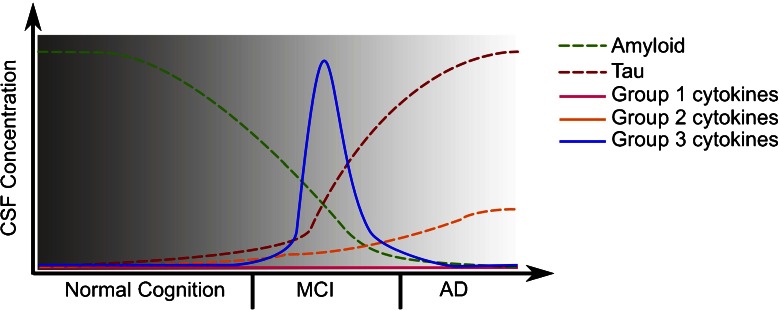
This article gives a comprehensive overview of cytokine and other inflammation associated protein levels in plasma, serum and cerebrospinal fluid (CSF) of patients with Alzheimer's disease (AD) and mild cognitive impairment (MCI). We reviewed 118 research articles published between 1989 and 2013 to compare the reported levels of 66 cytokines and other proteins related to regulation and signaling in inflammation in the blood or CSF obtained from MCI and AD patients. Several cytokines are evidently regulated in (neuro-) inflammatory processes associated with neurodegenerative disorders. Others do not display changes in the blood or CSF during disease progression. However, many reports on cytokine levels in MCI or AD are controversial or inconclusive, particularly those which provide data on frequently investigated cytokines like tumor necrosis factor alpha (TNF-α) or interleukin-6 (IL-6). The levels of several cytokines are possible indicators of neuroinflammation in AD. Some of them might increase steadily during disease progression or temporarily at the time of MCI to AD conversion. Furthermore, elevated body fluid cytokine levels may correlate with an increased risk of conversion from MCI to AD. Yet, research results are conflicting. To overcome interindividual variances and to obtain a more definite description of cytokine regulation and function in neurodegeneration, a high degree of methodical standardization and patients collective characterization, together with longitudinal sampling over years is essential.
Overview
The claims and statistics of this paper haven’t been checked yet.
Free: it reads the open-access text and checks the first 5 claims that cite a source we can check. Create a free account to check every claim.
Integrity signals
Registry
Cites
Statistics
Figures
Verification
Claims the paper makes
The claims and statistics of this paper haven’t been checked yet.
Free: it reads the open-access text and checks the first 5 claims that cite a source we can check. Create a free account to check every claim.
Claims other papers make about this one
Each is checked against this paper’s own text: does it say what the citing paper says it does?
The source backs part of the claim, not all of it — or backs it for a different population, condition or comparison.
In the citing paper
“Many inflammatory mediators known to increase with aging (IL-1β, IL-18, sTNF-R1) are upregulated to an even greater extent in neurodegenerative conditions such as AD and Parkinson’s disease (PD) (100, 145–147).”
From Connecting aging biology and inflammation in the omics era (2022) · cites this paper as [145]
Experimental — accuracy not yet measuredThe source backs part of the claim, not all of it — or backs it for a different population, condition or comparison.
In the citing paper
“Neuroinflammation is a key contributor to AD progression. While early immune responses may aid in the clearance of Aβ and tau aggregates, prolonged activation of microglia and astrocytes leads to chronic inflammation and the release of pro-inflammatory cytokines such as IL-1β and TNF-α, promoting neuronal damage in vulnerable brain regions like the neocortex and hippocampus [34–36].”
From Targeted Nanoparticles for Drug Delivery Across the Blood–Brain Barrier in Early and Late Stages of Alzheimer's Disease: A Review (2026) · cites this paper as [35]
Experimental — accuracy not yet measuredThe source backs part of the claim, not all of it — or backs it for a different population, condition or comparison.
In the citing paper
“Levels of these pro-inflammatory cytokines (including IL-1β, IL-6, IL-8, IL-18 and TNF) are upregulated in serum, cerebrospinal fluid (CSF) and post-mortem brain tissue of AD patients [23–25].”
From Microglial function, INPP5D/SHIP1 signaling, and NLRP3 inflammasome activation: implications for Alzheimer’s disease (2023) · cites this paper as [25]
Experimental — accuracy not yet measuredIn the citing paper
“In vivo imaging shows that microglia activation precedes the onset of AD (100) and is paralleled by increased levels of inflammatory markers in the cerebrospinal fluid (101)”
From Microglia in Alzheimer's disease (2017) · cites this paper as [101]
Self-check
Percentages, sums and reported differences re-computed from the paper’s own numbers.
The self-check needs the paper’s full text.
Citations
Cites
Folstein, M. F., Folstein, S. E., & McHugh, P. R. (1975) · Journal of Psychiatric Research · doi:10.1016/0022-3956(75)90026-6 · Cited by 88,282
McKhann, G., Drachman, D., Folstein, M., Katzman, R., Price, D., & Stadlan, E. M. (1984) · Neurology · doi:10.1212/wnl.34.7.939 · Cited by 27,915
Jack, C. R., Knopman, D. S., Jagust, W. J., Petersen, R. C., Weiner, M. W., Aisen, P. S., Shaw, L. M., Vemuri, P., Wiste, H. J., Weigand, S. D., et al. (2013) · The Lancet Neurology · doi:10.1016/s1474-4422(12)70291-0 · Cited by 4,396
Blennow, K., de Leon, M. J., & Zetterberg, H. (2006) · The Lancet · doi:10.1016/s0140-6736(06)69113-7 · Cited by 3,134
Chronic stress and age-related increases in the proinflammatory cytokine IL-6.
Kiecolt-Glaser, J. K., Preacher, K. J., MacCallum, R. C., Atkinson, C., Malarkey, W. B., & Glaser, R. (2003) · Proceedings of the National Academy of Sciences · doi:10.1073/pnas.1531903100 · Cited by 1,267 · cited 1×
“Additionally, systemic levels of cytokines may rise in response to aging and stress, known risk factors for neurodegeneration [6–8].”
BackgroundSystemic inflammation and disease progression in Alzheimer disease
Holmes, C., Cunningham, C., Zotova, E., Woolford, J., Dean, C., Kerr, S., Culliford, D., & Perry, V. H. (2009) · Neurology · doi:10.1212/wnl.0b013e3181b6bb95 · Cited by 1,139 · cited 1×
“Other studies outlined correlations between cytokine levels and disease risk, progression or MCI to AD conversion [27, 29–48].”
BackgroundA Meta-Analysis of Cytokines in Alzheimer's Disease
Swardfager, W., Lanctôt, K., Rothenburg, L., Wong, A., Cappell, J., & Herrmann, N. (2010) · Biological Psychiatry · doi:10.1016/j.biopsych.2010.06.012 · Cited by 1,108
Classification and prediction of clinical Alzheimer's diagnosis based on plasma signaling proteins
Ray, S., Britschgi, M., Herbert, C., Takeda-Uchimura, Y., Boxer, A., Blennow, K., Friedman, L. F., Galasko, D. R., Jutel, M., Karydas, A., et al. (2007) · Nature Medicine · doi:10.1038/nm1653 · Cited by 1,048 · cited 2×
“Further, studies using cytokine array technology in a methodological comparable manner also did not provide reproducible results, which indicates that not only technical differences cause conflicting results in cytokine analysis [17–19].”
ResultHistorical insights into cytokines
Dinarello, C. A. (2007) · European Journal of Immunology · doi:10.1002/eji.200737772 · Cited by 926 · cited 1×
“of functions in inflammatory processes and immune system regulation [1].”
BackgroundBlum-Degena, D., Müller, T., Kuhn, W., Gerlach, M., Przuntek, H., & Riederer, P. (1995) · Neuroscience Letters · doi:10.1016/0304-3940(95)12192-7 · Cited by 801
Research works printed but not linked: 1
- Doecke JD et al (2012) Blood-based protein biomarkers for diagnosis of Alzheimer disease. Arch Neurol 16:1–8
Cited by
Neuroinflammation in Alzheimer's disease
Heneka, M. T., Carson, M. J., Khoury, J. E., Landreth, G. E., Brosseron, F., Feinstein, D. L., Jacobs, A. H., Wyss-Coray, T., Vitorica, J., Ransohoff, R. M., et al. (2015) · The Lancet Neurology · doi:10.1016/s1474-4422(15)70016-5 · Cited by 6,226
“The results of these studies are often controversial 188 .”
Self-citationNeuroinflammation in neurodegenerative disorders: the roles of microglia and astrocytes
Kwon, H. S., & Koh, S.-H. (2020) · Translational Neurodegeneration · doi:10.1186/s40035-020-00221-2 · Cited by 2,595
Immune attack: the role of inflammation in Alzheimer disease
Heppner, F. L., Ransohoff, R. M., & Becher, B. (2015) · Nature Reviews Neuroscience · doi:10.1038/nrn3880 · Cited by 2,134
The Amyloid-β Pathway in Alzheimer’s Disease
Hampel, H., Hardy, J., Blennow, K., Chen, C., Perry, G., Kim, S. H., Villemagne, V. L., Aisen, P., Vendruscolo, M., Iwatsubo, T., et al. (2021) · Molecular Psychiatry · doi:10.1038/s41380-021-01249-0 · Cited by 1,952
Microglia in Alzheimer's disease
Sarlus, H., & Heneka, M. T. (2017) · Journal of Clinical Investigation · doi:10.1172/jci90606 · Cited by 911
Self-citationNg, A., Tam, W. W., Zhang, M. W., Ho, C. S., Husain, S. F., McIntyre, R. S., & Ho, R. C. (2018) · Scientific Reports · doi:10.1038/s41598-018-30487-6 · Cited by 572
Implications of sleep disturbance and inflammation for Alzheimer's disease dementia
Irwin, M. R., & Vitiello, M. V. (2019) · The Lancet Neurology · doi:10.1016/s1474-4422(18)30450-2 · Cited by 578
Inflammation: the link between comorbidities, genetics, and Alzheimer’s disease
Newcombe, E. A., Camats-Perna, J., Silva, M. L., Valmas, N., Huat, T. J., & Medeiros, R. (2018) · Journal of Neuroinflammation · doi:10.1186/s12974-018-1313-3 · Cited by 532
Suárez‐Calvet, M., Kleinberger, G., Araque Caballero, M. Á., Brendel, M., Rominger, A., Alcolea, D., Fortea, J., Lleó, A., Blesa, R., Gispert, J. D., et al. (2016) · EMBO Molecular Medicine · doi:10.15252/emmm.201506123 · Cited by 522
“A similar pattern of change, that is a peak in earlier stages of the disease, has been described for IL-18 and MCP-1 in plasma and in IP-10 in CSF (Galimberti et al, 2006a,b; Motta et al, 2007; Craig-Schapiro et al, 2011; Brosseron et al, 2014).”
BackgroundSelf-citationActivation of microglia and astrocytes: a roadway to neuroinflammation and Alzheimer’s disease
Kaur, D., Sharma, V., & Deshmukh, R. (2019) · Inflammopharmacology · doi:10.1007/s10787-019-00580-x · Cited by 484
Roles of neuropathology-associated reactive astrocytes: a systematic review
Lawrence, J. M., Schardien, K., Wigdahl, B., & Nonnemacher, M. R. (2023) · Acta Neuropathologica Communications · doi:10.1186/s40478-023-01526-9 · Cited by 433
Peripheral and central immune system crosstalk in Alzheimer disease — a research prospectus
Bettcher, B. M., Tansey, M. G., Dorothée, G., & Heneka, M. T. (2021) · Nature Reviews Neurology · doi:10.1038/s41582-021-00549-x · Cited by 427
Self-citationTargeting Tumor Necrosis Factor Alpha for Alzheimer’s Disease
Decourt, B., Lahiri, D. K., & Sabbagh, M. N. (2017) · Current Alzheimer Research · doi:10.2174/1567205013666160930110551 · Cited by 371
A Path Toward Precision Medicine for Neuroinflammatory Mechanisms in Alzheimer's Disease
Hampel, H., Caraci, F., Cuello, A. C., Caruso, G., Nisticò, R., Corbo, M., Baldacci, F., Toschi, N., Garaci, F., Chiesa, P. A., et al. (2020) · Frontiers in Immunology · doi:10.3389/fimmu.2020.00456 · Cited by 360
“Notably, the TNF-α receptor complex and its functional proteins are assumed to play a crucial role since they link neuroinflammatory pathways to amyloid deposition process in a chronically damaging and selfperpetuating way (21).”
BackgroundInfluentialLyra e Silva, N. M., Gonçalves, R. A., Pascoal, T. A., Lima-Filho, R. A. S., Resende, E. D. P. F., Vieira, E. L. M., Teixeira, A. L., de Souza, L. C., Peny, J. A., Fortuna, J. T. S., et al. (2021) · Translational Psychiatry · doi:10.1038/s41398-021-01349-z · Cited by 347
Marizzoni, M., Cattaneo, A., Mirabelli, P., Festari, C., Lopizzo, N., Nicolosi, V., Mombelli, E., Mazzelli, M., Luongo, D., Naviglio, D., et al. (2020) · Journal of Alzheimer's Disease · doi:10.3233/jad-200306 · Cited by 333
Minter, M. R., Hinterleitner, R., Meisel, M., Zhang, C., Leone, V., Zhang, X., Oyler-Castrillo, P., Zhang, X., Musch, M. W., Shen, X., et al. (2017) · Scientific Reports · doi:10.1038/s41598-017-11047-w · Cited by 292
The dual roles of cytokines in Alzheimer’s disease: update on interleukins, TNF-α, TGF-β and IFN-γ
Zheng, C., Zhou, X.-W., & Wang, J.-Z. (2016) · Translational Neurodegeneration · doi:10.1186/s40035-016-0054-4 · Cited by 292
Oxidative Stress and Beta Amyloid in Alzheimer’s Disease. Which Comes First: The Chicken or the Egg?
Tamagno, E., Guglielmotto, M., Vasciaveo, V., & Tabaton, M. (2021) · Antioxidants · doi:10.3390/antiox10091479 · Cited by 264
Elahi, F. M., Casaletto, K. B., La Joie, R., Walters, S. M., Harvey, D., Wolf, A., Edwards, L., Rivera‐Contreras, W., Karydas, A., Cobigo, Y., et al. (2020) · Alzheimer's & Dementia · doi:10.1016/j.jalz.2019.09.004 · Cited by 255
Dursun, E., Gezen-Ak, D., Hanağası, H., Bilgiç, B., Lohmann, E., Ertan, S., Atasoy, İ. L., Alaylıoğlu, M., Araz, Ö. S., Önal, B., et al. (2015) · Journal of Neuroimmunology · doi:10.1016/j.jneuroim.2015.04.014 · Cited by 237
IL-17 triggers the onset of cognitive and synaptic deficits in early stages of Alzheimer’s disease
Brigas, H. C., Ribeiro, M., Coelho, J. E., Gomes, R., Gomez-Murcia, V., Carvalho, K., Faivre, E., Costa-Pereira, S., Darrigues, J., de Almeida, A. A., et al. (2021) · Cell Reports · doi:10.1016/j.celrep.2021.109574 · Cited by 230
Tanaka, M., Toldi, J., & Vécsei, L. (2020) · International Journal of Molecular Sciences · doi:10.3390/ijms21072431 · Cited by 222
Impact of Cytokines and Chemokines on Alzheimer’s Disease Neuropathological Hallmarks
Domingues, C., da Cruz e Silva, O. A. B., & Henriques, A. G. (2017) · Current Alzheimer Research · doi:10.2174/1567205014666170317113606 · Cited by 203
Taipa, R., das Neves, S. P., Sousa, A. L., Fernandes, J., Pinto, C., Correia, A. P., Santos, E., Pinto, P. S., Carneiro, P., Costa, P., et al. (2019) · Neurobiology of Aging · doi:10.1016/j.neurobiolaging.2018.12.019 · Cited by 205
Peripheral inflammatory biomarkers in Alzheimer’s disease: a brief review
Park, J.-C., Han, S.-H., & Mook-Jung, I. (2020) · BMB Reports · doi:10.5483/bmbrep.2020.53.1.309 · Cited by 201
Treatment for Rheumatoid Arthritis and Risk of Alzheimer’s Disease: A Nested Case-Control Analysis
Chou, R. C., Kane, M., Ghimire, S., Gautam, S., & Gui, J. (2016) · CNS Drugs · doi:10.1007/s40263-016-0374-z · Cited by 194
Nascimento, C., Pereira, J., Andrade, L., Garuffi, M., Talib, L., Forlenza, O., Cancela, J., Cominetti, M., & Stella, F. (2014) · Current Alzheimer Research · doi:10.2174/156720501108140910122849 · Cited by 192
The duality of amyloid-β: its role in normal and Alzheimer’s disease states
Azargoonjahromi, A. (2024) · Molecular Brain · doi:10.1186/s13041-024-01118-1 · Cited by 190
Connecting aging biology and inflammation in the omics era
Walker, K. A., Basisty, N., Wilson, D. M., & Ferrucci, L. (2022) · Journal of Clinical Investigation · doi:10.1172/jci158448 · Cited by 189
Alonso, R., Pisa, D., Fernández-Fernández, A. M., & Carrasco, L. (2018) · Frontiers in Aging Neuroscience · doi:10.3389/fnagi.2018.00159 · Cited by 167
Innate immune activation in neurodegenerative diseases
Castro-Gomez, S., & Heneka, M. T. (2024) · Immunity · doi:10.1016/j.immuni.2024.03.010 · Cited by 162
Self-citationTime to test antibacterial therapy in Alzheimer’s disease
Panza, F., Lozupone, M., Solfrizzi, V., Watling, M., & Imbimbo, B. P. (2019) · Brain · doi:10.1093/brain/awz244 · Cited by 161
MacPherson, K. P., Sompol, P., Kannarkat, G. T., Chang, J., Sniffen, L., Wildner, M. E., Norris, C. M., & Tansey, M. G. (2017) · Neurobiology of Disease · doi:10.1016/j.nbd.2017.02.010 · Cited by 158
Tsai, C.-L., Pai, M.-C., Ukropec, J., & Ukropcová, B. (2019) · Current Alzheimer Research · doi:10.2174/1567205016666190228125429 · Cited by 156
Italiani, P., Puxeddu, I., Napoletano, S., Scala, E., Melillo, D., Manocchio, S., Angiolillo, A., Migliorini, P., Boraschi, D., Vitale, E., et al. (2018) · Journal of Neuroinflammation · doi:10.1186/s12974-018-1376-1 · Cited by 151
Xu, C., Wu, J. S., Wu, Y., Ren, Z., Yao, Y., Chen, G., Fang, E. F., Noh, J. H., Liu, Y., Wei, L., et al. (2021) · Theranostics · doi:10.7150/thno.62376 · Cited by 156
Markers of neuroinflammation associated with Alzheimer’s disease pathology in older adults
Popp, J., Oikonomidi, A., Tautvydaitė, D., Dayon, L., Bacher, M., Migliavacca, E., Henry, H., Kirkland, R., Severin, I., Wojcik, J., et al. (2017) · Brain, Behavior, and Immunity · doi:10.1016/j.bbi.2017.01.020 · Cited by 136
Inflammatory aspects of Alzheimer’s disease
Lucena, P. B., & Heneka, M. T. (2024) · Acta Neuropathologica · doi:10.1007/s00401-024-02790-2 · Cited by 164
Self-citationTetrahydrobioterin (BH4) pathway: from metabolism to neuropsychiatry
Fanet, H., Capuron, L., Castanon, N., Calon, F., & Vancassel, S. (2021) · Current Neuropharmacology · doi:10.2174/1570159x18666200729103529 · Cited by 134
Mehta, V., Parashar, A., & Malairaman, U. (2017) · Physiology & Behavior · doi:10.1016/j.physbeh.2017.01.006 · Cited by 150
The IL-1 family cytokines and receptors in autoimmune diseases
Migliorini, P., Italiani, P., Pratesi, F., Puxeddu, I., & Boraschi, D. (2020) · Autoimmunity Reviews · doi:10.1016/j.autrev.2020.102617 · Cited by 133
The Future of Precision Medicine in the Cure of Alzheimer’s Disease
Arafah, A., Khatoon, S., Rasool, I., Khan, A., Rather, M. A., Abujabal, K. A., Faqih, Y. A. H., Rashid, H., Rashid, S. M., Bilal Ahmad, S., et al. (2023) · Biomedicines · doi:10.3390/biomedicines11020335 · Cited by 133
“TNF-α has been shown to be linked to initial proinflammatory mechanisms in AD by human longitudinal studies and animal studies [17,18].”
BackgroundDifferential contribution of microglia and monocytes in neurodegenerative diseases
Baufeld, C., O’Loughlin, E., Calcagno, N., Madore, C., & Butovsky, O. (2018) · Journal of Neural Transmission · doi:10.1007/s00702-017-1795-7 · Cited by 123
CSF Cytokines in Aging, Multiple Sclerosis, and Dementia
Hu, W. T., Howell, J. C., Ozturk, T., Gangishetti, U., Kollhoff, A. L., Hatcher-Martin, J. M., Anderson, A. M., & Tyor, W. R. (2019) · Frontiers in Immunology · doi:10.3389/fimmu.2019.00480 · Cited by 122
Chen, H., Liu, S., Ge, B., Zhou, D., Li, M., Li, W., Ma, F., Liu, Z., Ji, Y., & Huang, G. (2021) · The Journal of Prevention of Alzheimer s Disease · doi:10.14283/jpad.2021.22 · Cited by 135
Cerebrospinal Fluid Biomarkers of Neurovascular Dysfunction in Mild Dementia and Alzheimer'S Disease
Sweeney, M. D., Sagare, A. P., & Zlokovic, B. V. (2015) · Journal of Cerebral Blood Flow & Metabolism · doi:10.1038/jcbfm.2015.76 · Cited by 122
Brosseron, F., Traschütz, A., Widmann, C. N., Kummer, M. P., Tacik, P., Santarelli, F., Jessen, F., & Heneka, M. T. (2018) · Alzheimer's Research & Therapy · doi:10.1186/s13195-018-0353-3 · Cited by 113
“Studies on CSF inflammation-associated markers in AD have provided quite heterogeneous results, and no powerful marker has yet gained salience for use in clinical practice [5].”
BackgroundSelf-citationStopa, E. G., Tanis, K. Q., Miller, M. C., Nikonova, E. V., Podtelezhnikov, A. A., Finney, E. M., Stone, D. J., Camargo, L. M., Parker, L., Verma, A., et al. (2018) · Fluids and Barriers of the CNS · doi:10.1186/s12987-018-0102-9 · Cited by 118
The Role of TNF-α in Alzheimer’s Disease: A Narrative Review
Plantone, D., Pardini, M., Righi, D., Manco, C., Colombo, B. M., & De Stefano, N. (2023) · Cells · doi:10.3390/cells13010054 · Cited by 111
The role of peripheral inflammatory insults in Alzheimer’s disease: a review and research roadmap
Walker, K. A., Le Page, L. M., Terrando, N., Duggan, M. R., Heneka, M. T., & Bettcher, B. M. (2023) · Molecular Neurodegeneration · doi:10.1186/s13024-023-00627-2 · Cited by 113
Self-citationTNFα and IL-1β but not IL-18 Suppresses Hippocampal Long-Term Potentiation Directly at the Synapse
Prieto, G. A., Tong, L., Smith, E. D., & Cotman, C. W. (2019) · Neurochemical Research · doi:10.1007/s11064-018-2517-8 · Cited by 115
Noncanonical function of an autophagy protein prevents spontaneous Alzheimer’s disease
Heckmann, B. L., Teubner, B. J. W., Boada-Romero, E., Tummers, B., Guy, C., Fitzgerald, P., Mayer, U., Carding, S., Zakharenko, S. S., Wileman, T., et al. (2020) · Science Advances · doi:10.1126/sciadv.abb9036 · Cited by 114
Yeung, C. H. C., & Schooling, C. M. (2020) · International Journal of Epidemiology · doi:10.1093/ije/dyaa241 · Cited by 123
Zádori, D., Veres, G., Szalárdy, L., Klivényi, P., & Vécsei, L. (2018) · Journal of Alzheimer’s Disease · doi:10.3233/jad-170929 · Cited by 107
Interactions between inflammation, sex steroids, and Alzheimer’s disease risk factors
Uchoa, M. F., Moser, V. A., & Pike, C. J. (2016) · Frontiers in Neuroendocrinology · doi:10.1016/j.yfrne.2016.09.001 · Cited by 102
Are Kynurenines Accomplices or Principal Villains in Dementia? Maintenance of Kynurenine Metabolism
Tanaka, M., Bohár, Z., & Vécsei, L. (2020) · Molecules · doi:10.3390/molecules25030564 · Cited by 103
Inflammatory Cascade in Alzheimer’s Disease Pathogenesis: A Review of Experimental Findings
de Oliveira, J., Kucharska, E., Garcez, M. L., Rodrigues, M. S., Quevedo, J., Moreno-Gonzalez, I., & Budni, J. (2021) · Cells · doi:10.3390/cells10102581 · Cited by 102
Muszyński, P., Groblewska, M., Kulczyńska-Przybik, A., Kułakowska, A., & Mroczko, B. (2017) · Current Neuropharmacology · doi:10.2174/1570159x15666170208124324 · Cited by 99
Neerland, B. E., Hall, R. J., Seljeflot, I., Frihagen, F., MacLullich, A. M. J., Raeder, J. C., Wyller, T. B., & Watne, L. O. (2016) · Journal of the American Geriatrics Society · doi:10.1111/jgs.14238 · Cited by 111
Zhang, Y., Che, M., Yuan, J., Yu, Y., Cao, C., Qin, X.-Y., & Cheng, Y. (2017) · Oncotarget · doi:10.18632/oncotarget.21060 · Cited by 98
Autoimmune Neuroinflammatory Diseases: Role of Interleukins
Khan, A. W., Farooq, M., Hwang, M.-J., Haseeb, M., & Choi, S. (2023) · International Journal of Molecular Sciences · doi:10.3390/ijms24097960 · Cited by 119
Biomarkers of dementia in obstructive sleep apnea
Baril, A., Carrier, J., Lafrenière, A., Warby, S. C., Poirier, J., Osorio, R. S., Ayas, N., Dubé, M., Petit, D., & Gosselin, N. (2018) · Sleep Medicine Reviews · doi:10.1016/j.smrv.2018.08.001 · Cited by 110
Terzioglu, G., & Young-Pearse, T. L. (2023) · Molecular Neurodegeneration · doi:10.1186/s13024-023-00674-9 · Cited by 91
Batista, A. F., Rody, T., Forny-Germano, L., Cerdeiro, S., Bellio, M., Ferreira, S. T., Munoz, D. P., & De Felice, F. G. (2021) · Journal of Neuroinflammation · doi:10.1186/s12974-021-02099-x · Cited by 91
Kim, Y. S., Lee, K. J., & Kim, H. (2017) · Psychogeriatrics · doi:10.1111/psyg.12218 · Cited by 90
Soluble TREM2 changes during the clinical course of Alzheimer’s disease: A meta-analysis
Liu, D., Cao, B., Zhao, Y., Huang, H., McIntyre, R. S., Rosenblat, J. D., & Zhou, H. (2018) · Neuroscience Letters · doi:10.1016/j.neulet.2018.08.038 · Cited by 87
Friend, Foe or Both? Immune Activity in Alzheimer’s Disease
Frost, G. R., Jonas, L. A., & Li, Y.-M. (2019) · Frontiers in Aging Neuroscience · doi:10.3389/fnagi.2019.00337 · Cited by 87
Dementia and COVID-19, a Bidirectional Liaison: Risk Factors, Biomarkers, and Optimal Health Care
Toniolo, S., the Management Group of the EAN Dementia and Cognitive Disorders Scientific Panel, Scarioni, M., Lorenzo, F. D., Hort, J., Georges, J., Tomić, S., Nobili, F. M., & Frederiksen, K. S. (2021) · Journal of Alzheimer s Disease · doi:10.3233/jad-210335 · Cited by 111
Decreased IL-8 levels in CSF and serum of AD patients and negative correlation of MMSE and IL-1β
Hesse, R., Wahler, A., Gummert, P., Kirschmer, S., Otto, M., Tumani, H., Lewerenz, J., Schnack, C., & von Arnim, C. A. F. (2016) · BMC Neurology · doi:10.1186/s12883-016-0707-z · Cited by 81
Neurodegenerative diseases: The immunological perspective
Molteni, M., & Rossetti, C. (2017) · Journal of Neuroimmunology · doi:10.1016/j.jneuroim.2017.11.002 · Cited by 88
Hypoxia promotes tau hyperphosphorylation with associated neuropathology in vascular dysfunction
Raz, L., Bhaskar, K., Weaver, J., Marini, S., Zhang, Q., Thompson, J. F., Espinoza, C., Iqbal, S., Maphis, N. M., Weston, L., et al. (2019) · Neurobiology of Disease · doi:10.1016/j.nbd.2018.07.009 · Cited by 84
“However, it is important to note that since ischemia is not a typical comorbidity associated with VCID, it is therefore important to assess the effects of JPD alone in SHRSP without a unilateral carotid artery occlusion.”
InfluentialDenver, P., & McClean, P. L. (2018) · Neural Regeneration Research · doi:10.4103/1673-5374.238608 · Cited by 95
Leko, M. B., Perković, M. N., Klepac, N., Štrac, D. Š., Borovečki, F., Pivac, N., Hof, P. R., & Šimić, G. (2020) · Journal of Alzheimer s Disease · doi:10.3233/jad-200056 · Cited by 87
NLRP3-dependent synaptic plasticity deficit in an Alzheimer's disease amyloidosis model in vivo
Qi, Y., Klyubin, I. V., Cuello, A. C., & Rowan, M. J. (2018) · Neurobiology of Disease · doi:10.1016/j.nbd.2018.02.016 · Cited by 83
Latest advances in cerebrospinal fluid and blood biomarkers of Alzheimer’s disease
Milà-Alomà, M., Suárez-Calvet, M., & Molinuevo, J. L. (2019) · Therapeutic Advances in Neurological Disorders · doi:10.1177/1756286419888819 · Cited by 78
Jovanović, F., Candido, K. D., & Knežević, N. N. (2020) · International Journal of Molecular Sciences · doi:10.3390/ijms21176045 · Cited by 88
Batista, A. F., Bodart‐Santos, V., Felice, F. G. D., & Ferreira, S. T. (2018) · CNS Drugs · doi:10.1007/s40263-018-0593-6 · Cited by 77
Efficacy and mechanism of cGAMP to suppress Alzheimer’s disease by elevating TREM2
Xu, Q., Xu, W., Cheng, H., Yuan, H., & Tan, X. (2019) · Brain, Behavior, and Immunity · doi:10.1016/j.bbi.2019.07.004 · Cited by 75
Innate immune activation in Alzheimer’s disease
Wang, M.-M., Miao, D., Cao, X.-P., Tan, L., & Tan, L. (2018) · Annals of Translational Medicine · doi:10.21037/atm.2018.04.20 · Cited by 72
Neuroinflammatory Signaling in the Pathogenesis of Alzheimer’s Disease
Uddin, M. S., Kabir, M. T., Jalouli, M., Rahman, M. A., Jeandet, P., Behl, T., Alexiou, A. T., Albadrani, G. M., Abdel‐Daim, M. M., Perveen, A., et al. (2021) · Current Neuropharmacology · doi:10.2174/1570159x19666210826130210 · Cited by 81
Jensen, C. S., Hasselbalch, S. G., Waldemar, G., & Simonsen, A. H. (2015) · Frontiers in Neurology · doi:10.3389/fneur.2015.00187 · Cited by 73
AmeliMojarad, M., & AmeliMojarad, M. (2024) · CNS Neuroscience & Therapeutics · doi:10.1111/cns.14856 · Cited by 73
“82,89 Consequently, chronic inflammation may result from the long-term activation of microglia and astrocytes.”
BackgroundThe role of the immune system in driving neuroinflammation
Ní Chasaide, C., & Lynch, M. A. (2020) · Brain and Neuroscience Advances · doi:10.1177/2398212819901082 · Cited by 72
Targeting NLRP3-Mediated Neuroinflammation in Alzheimer’s Disease Treatment
Barczuk, J., Siwecka, N., Lusa, W., Rozpędek‐Kamińska, W., Kucharska, E., & Majsterek, I. (2022) · International Journal of Molecular Sciences · doi:10.3390/ijms23168979 · Cited by 80
Roles of Cytokines in Alzheimer’s Disease
Chen, Z., Balachandran, Y. L., Chong, W. P., & Chan, K. W. Y. (2024) · International Journal of Molecular Sciences · doi:10.3390/ijms25115803 · Cited by 81
Xu, Q., Su, Z., Yang, W., Zhong, M., Xian, Y., & Lin, Z. (2023) · Journal of Neuroinflammation · doi:10.1186/s12974-023-02704-1 · Cited by 79
Frederiksen, H. R., Haukedal, H., & Freude, K. (2019) · BioMed Research International · doi:10.1155/2019/7420189 · Cited by 63
GLP-1 Receptor Agonists in Neurodegeneration: Neurovascular Unit in the Spotlight
Monti, G., Gomes Moreira, D., Richner, M., Mutsaers, H. A. M., Ferreira, N., & Jan, A. (2022) · Cells · doi:10.3390/cells11132023 · Cited by 68
Soluble TREM2 levels associate with conversion from mild cognitive impairment to Alzheimer’s disease
Zhao, A., Jiao, Y., Ye, G., Kang, W., Tan, L., Li, Y., Deng, Y., & Liu, J. (2022) · Journal of Clinical Investigation · doi:10.1172/jci158708 · Cited by 69
Sen, T., Saha, P., Jiang, T., & Sen, N. (2020) · Proceedings of the National Academy of Sciences · doi:10.1073/pnas.1916895117 · Cited by 68
Miron, J., Picard, C., Frappier, J., Dea, D., Théroux, L., & Poirier, J. (2018) · Journal of Alzheimer's Disease · doi:10.3233/jad-171160 · Cited by 65
Dysregulation of C-X-C motif ligand 10 during aging and association with cognitive performance
Bradburn, S., McPhee, J., Bagley, L., Carroll, M., Slevin, M., Al-Shanti, N., Barnouin, Y., Hogrel, J.-Y., Pääsuke, M., Gapeyeva, H., et al. (2018) · Neurobiology of Aging · doi:10.1016/j.neurobiolaging.2017.11.009 · Cited by 65
The Importance of Complement-Mediated Immune Signaling in Alzheimer’s Disease Pathogenesis
Batista, A. F., Khan, K. A., Papavergi, M.-T., & Lemere, C. A. (2024) · International Journal of Molecular Sciences · doi:10.3390/ijms25020817 · Cited by 65
Inflammatory Markers in Mild Cognitive Impairment: A Meta-Analysis
Saleem, M., Herrmann, N., Swardfager, W., Eisen, R., & Lanctôt, K. L. (2015) · Journal of Alzheimer's Disease · doi:10.3233/jad-150042 · Cited by 64
The road to precision medicine: Eliminating the “One Size Fits All” approach in Alzheimer’s disease
Behl, T., Kaur, I., Sehgal, A., Singh, S., Albarrati, A., Albratty, M., Najmi, A., Meraya, A. M., & BUNGAU, S. G. (2022) · Biomedicine & Pharmacotherapy · doi:10.1016/j.biopha.2022.113337 · Cited by 71
Prevention and Treatment of Alzheimer’s Disease: Biological Mechanisms of Exercise
McGurran, H., Glenn, J. M., Madero, E. N., & Bott, N. T. (2019) · Journal of Alzheimer’s Disease · doi:10.3233/jad-180958 · Cited by 63
Wang, M., Tang, G., Zhou, C., Guo, H., Hu, Z., Hu, Q., & Li, G. (2023) · Chemico-Biological Interactions · doi:10.1016/j.cbi.2023.110387 · Cited by 66
Isoglutaminyl cyclase contributes to CCL2-driven neuroinflammation in Alzheimer’s disease
Hartlage-Rübsamen, M., Waniek, A., Meißner, J., Morawski, M., Schilling, S., Jäger, C., Kleinschmidt, M., Cynis, H., Kehlen, A., Arendt, T., et al. (2015) · Acta Neuropathologica · doi:10.1007/s00401-015-1395-2 · Cited by 58
Can inflammation be resolved in Alzheimer’s disease?
Zhu, M., Wang, X., Sun, L., Schultzberg, M., & Hjorth, E. (2018) · Therapeutic Advances in Neurological Disorders · doi:10.1177/1756286418791107 · Cited by 62
Metadata
- Authors
- Brosseron, F., Krauthausen, M., Kummer, M., & Heneka, M. T.
- Affiliations
- German Center for Neurodegenerative Diseases (DE)
- University Hospital Bonn (DE)
- Corresponding author
- Heneka, Michael T.
- Venue
- Molecular Neurobiology
- Published
- 2014-02-25
- Volume
- 50
- Issue
- 2
- Pages
- 534-544
- ISSN
- 0893-7648 (ISSN-L)
- 1559-1182
- PMC
- PMC4182618
- OpenAlex
- W2079873627
- Cited by
- 447
- References
- 143
- Citations by year
- 2026: 14 · 2025: 30 · 2024: 40 · 2023: 58 · 2022: 52 · 2021: 49 · 2020: 49 · 2019: 41 · 2018: 33 · 2017: 29 · 2016: 22 · 2015: 23 · 2014: 7
- FWCI
- 13.94
- Type
- journal article
- Language
- en
- Open access
- hybrid
- doi.org
- Locations
- Molecular Neurobiology (publishedVersion, cc-by)
- Europe PMC (PubMed Central) (publishedVersion, cc-by)
- PubMed Central (publishedVersion, cc-by)
- PubMed (publishedVersion)
- Open Repository and Bibliography (University of Luxembourg) (submittedVersion, other-oa)
- DZNE Pub (submittedVersion, cc-by)
- Topics
- Life Sciences › Neuroscience › Neurology › Neuroinflammation and Neurodegeneration Mechanisms
- Life Sciences › Neuroscience › Cellular and Molecular Neuroscience › Alzheimer's disease research and treatments
- Health Sciences › Medicine › Psychiatry and Mental health › Dementia and Cognitive Impairment Research
- Keywords
- Alzheimer's disease, mild cognitive impairment, cytokines, neuroinflammation, cerebrospinal fluid biomarkers, plasma biomarkers, TNF-α, interleukin-6, neurodegeneration, inflammation-related proteins
- MeSH terms
- Alzheimer Disease, Animals, Body Fluids, Humans, Inflammation, Cytokines, Amyloid beta-Peptides, Cognitive Dysfunction
About these checks
Registry, retraction, Cites and statistics results are computed, not judged, with one exception: a printed reference that no index lists is read once by a model before it counts as a citation error. Claims are extracted by a model and kept only when their quote appears verbatim in the text; each cited source is then checked, with a model’s help, for whether it says what the claim relies on. Those verdicts can be wrong — read the claim’s quote and the cited source before relying on one.
Statistics and arithmetic are recomputed, not judged.
Confidence bands are shown only for fields calibrated on our annotated test set. None is calibrated yet, so no band is shown.
What counts as a claim ›How we measure confidence ›How we check this ›
Are you an author, or do you see a problem with this page? Request a review
Data sources
Bibliographic data: Semantic Scholar, OpenAlex, Crossref.
Contains information from the Semantic Scholar Academic Graph Datasets, made available under the ODC Attribution License (ODC-BY 1.0).
Semantic Scholar’s data is described in: Kinney, R., et al. (2023). The Semantic Scholar Open Data Platform. arXiv:2301.10140.
