

Specific Reduction in the Cortisol Awakening Response after Socio-Affective Mental Training
Open accessThe DOI matches its Crossref record; 80 of the 82 references it cites were found in a registry or an index.
Abstract
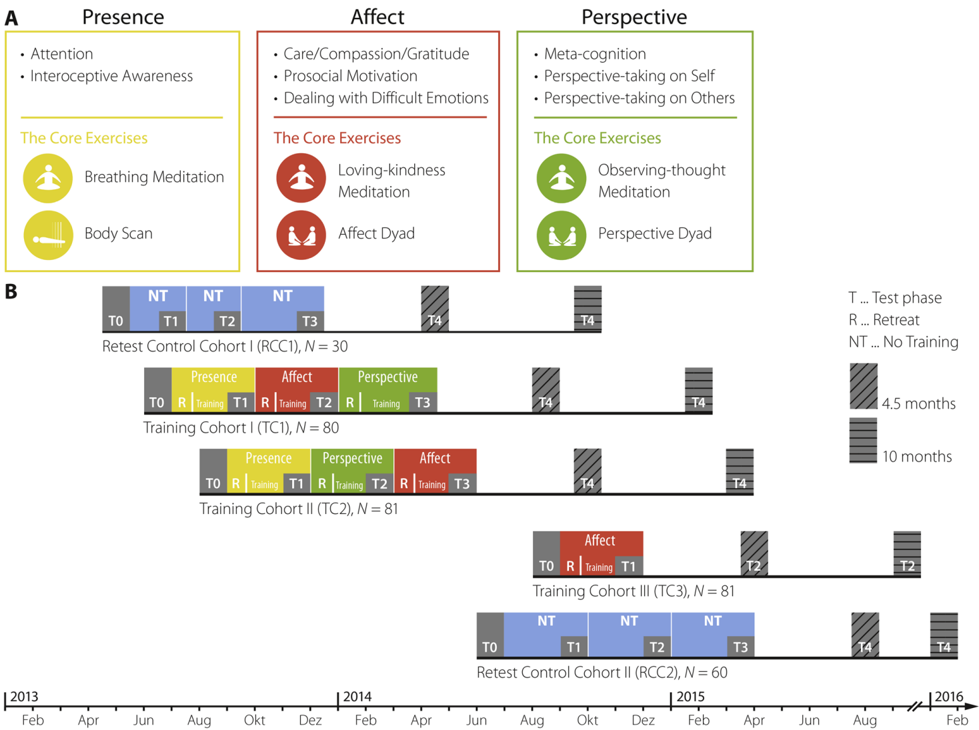
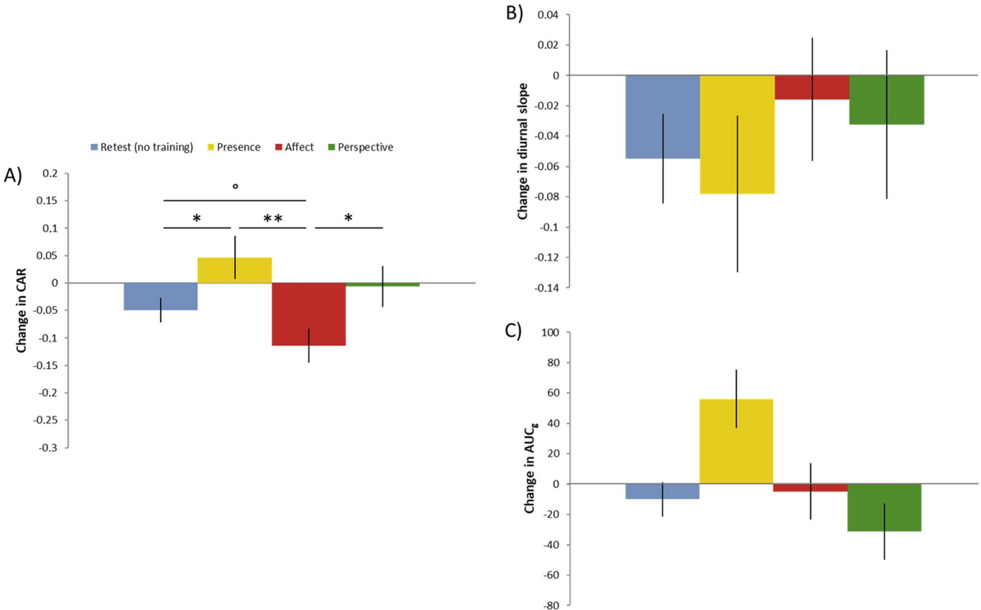
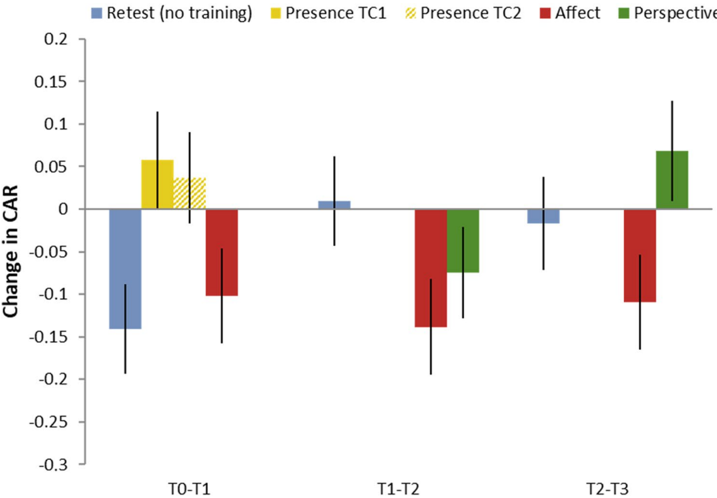
Objectives: Psychosocial stress is an inherent part of modern lifestyle, and many suffer from chronic stress exposure and the subsequent development of stress-related diseases. In searching for efficient low-cost interventions to reduce stress, we investigated the effects of regular contemplative mental practice on diurnal cortisol activity as an indicator of the basal, everyday stress load. Method: Data were collected in the context of the ReSource Project, an open-label efficacy trial comprising three distinct 3-month training modules targeting attention and interoception (Presence Module), socio-affective (Affect Module) or socio-cognitive abilities (Perspective Module) through dyadic exercises and secularized meditation practices. Diurnal cortisol activity was assayed at four time points: pre-training and after 3, 6, and 9 months. As outcome measures, the cortisol awakening response (CAR), cortisol slope over the course of the day, and total daily cortisol output were computed. Results: Analyses revealed a stable reduction in CAR specifically after the compassion- and care-based Affect Module, contrasted by a CAR increase following the attention- and interoception-based Presence training. Cortisol slope over the day and total daily cortisol output were unaffected by any of the mental trainings. Conclusions: These findings emphasize the necessity for a more granular approach in the investigation of contemplative mental training effects. Not all types of training can be expected to equally beneficial for all types of hardship. Specifically, with regard to the CAR, which represents the anticipatory stress response to the upcoming day, compassion- and care-based qualities rather than bare attention or meta-cognitive skills seem to drive stress reduction. Preregistration: This study is not preregistered.
Overview
The claims and statistics of this paper haven’t been checked yet.
Free: it reads the open-access text and checks the first 5 claims that cite a source we can check. Create a free account to check every claim.
Integrity signals
Registry
Cites
Statistics
Figures

Verification
Claims the paper makes
The claims and statistics of this paper haven’t been checked yet.
Free: it reads the open-access text and checks the first 5 claims that cite a source we can check. Create a free account to check every claim.
Claims other papers make about this one
Each is checked against this paper’s own text: does it say what the citing paper says it does?
The source backs part of the claim, not all of it — or backs it for a different population, condition or comparison.
In the citing paper
“It has been suggested that the practice of the Affect Dyad is beneficial for the activation of care- and affiliation-related systems (27, 28)”
From Reducing neuroendocrine psychosocial stress response through socio-emotional dyadic but not mindfulness online training (2024) · cites this paper as [28]
Experimental — accuracy not yet measuredThe cited source says what the claim attributes to it.
In the citing paper
“Whereas cortisol levels measured after awakening may be less confounded by the diverse in fluences of the day (e.g., food intake, exercise), and thus are less 'noisy ' measures (Engert et al., 2023).”
From Effectiveness of stress management interventions to change cortisol levels: a systematic review and meta-analysis. (2024) · cites this paper as Engert et al., 2023
Self-check
Percentages, sums and reported differences re-computed from the paper’s own numbers.
The self-check needs the paper’s full text.
Citations
Cites
Eysenck, H. J. (1985) · Behaviour Research and Therapy · doi:10.1016/0005-7967(85)90087-7 · Cited by 31,975
Kirschbaum, C., Pirke, K.-M., & Hellhammer, D. H. (2008) · Neuropsychobiology · doi:10.1159/000119004 · Cited by 6,093 · cited 4×
“In our earlier study, this challenge was posed by the unsupportive members of a psychosocial evaluation committee, trained to elicit fear of negative social judgement, in the Trier Social Stress Test (Kirschbaum et al., 1993).”
BackgroundInfluentialMindfulness-based stress reduction and health benefits
Grossman, P., Niemann, L., Schmidt, S., & Walach, H. (2004) · Journal of Psychosomatic Research · doi:10.1016/s0022-3999(03)00573-7 · Cited by 3,958
Pruessner, J. C., Kirschbaum, C., Meinlschmid, G., & Hellhammer, D. H. (2003) · Psychoneuroendocrinology · doi:10.1016/s0306-4530(02)00108-7 · Cited by 3,638 · cited 1×
“Total daily cortisol output was operationalized as the area under the curve with respect to ground, AUC g (Pruessner et al., 2003), which takes into account the difference between the measurements from each other (i.”
MethodStress and disorders of the stress system
Chrousos, G. P. (2009) · Nature Reviews Endocrinology · doi:10.1038/nrendo.2009.106 · Cited by 3,215 · cited 1×
“Via complex effects on metabolic and immune processes, both are causally involved in the development and maintenance of cardiovascular, metabolic, and autoimmune disorders, among others (Chrousos, 2009; Cohen et al., 2007).”
Background(2005) · Medical Entomology and Zoology · Cited by 3,197
Psychological Stress and Disease
Cohen, S., Janicki-Deverts, D., & Miller, G. E. (2007) · JAMA · doi:10.1001/jama.298.14.1685 · Cited by 3,168
(1997) · American Psychiatric Press eBooks · Cited by 3,056
Wherever you go, there you are: Mindfulness meditation in everyday life
Kwee, M. (1995) · Behaviour Research and Therapy · doi:10.1016/0005-7967(95)90133-7 · Cited by 2,896 · cited 9×
“Reports of lower diurnal cortisol output stem mainly from mindfulnessbased interventions using the MBSR program, for which reductions in CAR and afternoon/evening cortisol levels have been found in healthy and diseased individuals (Brand et al., 2012; Carlson et al., 2004, 2007).”
InfluentialSalivary cortisol as a biomarker in stress research
Hellhammer, D. H., Wüst, S., & Kudielka, B. M. (2009) · Psychoneuroendocrinology · doi:10.1016/j.psyneuen.2008.10.026 · Cited by 1,925 · cited 1×
“In all models, we controlled for age and sex given their established effects on cortisol regulation (Ferrari et al., 2001; Hellhammer et al., 2009).”
MethodMindfulness-based stress reduction for healthy individuals: A meta-analysis
Khoury, B., Sharma, M., Rush, S. E., & Fournier, C. (2015) · Journal of Psychosomatic Research · doi:10.1016/j.jpsychores.2015.03.009 · Cited by 1,617 · cited 1×
“Various health-related benefits have been associated with participation in such mental training interventions (for meta-analyses, see, for example, Grossman et al., 2004; Khoury et al., 2015).”
BackgroundShort-term meditation training improves attention and self-regulation
Tang, Y.-Y., Ma, Y., Wang, J., Fan, Y., Feng, S., Lu, Q., Yu, Q., Sui, D., Rothbart, M. K., Fan, M., et al. (2007) · Proceedings of the National Academy of Sciences · doi:10.1073/pnas.0707678104 · Cited by 1,597 · cited 1×
“Reduction in cortisol output after acute psychosocial stress was first reported immediately after a single mindfulness-based meditation session following 5 days of practice (Tang et al., 2007).”
BackgroundSalivary Cortisol in Psychobiological Research: An Overview
Kirschbaum, C., & Hellhammer, D. H. (2008) · Neuropsychobiology · doi:10.1159/000118611 · Cited by 1,532 · cited 1×
“The CAR is followed by a steady decline in cortisol levels until a nadir is reached in the early morning hours (Kirschbaum & Hellhammer, 1989; Pruessner et al., 1997; Wust et al., 2000a, 2000b).”
BackgroundPruessner, J. C., Wolf, O. T., Hellhammer, D. H., Buske-Kirschbaum, A., von Auer, K., Jobst, S., Kaspers, F., & Kirschbaum, C. (1997) · Life Sciences · doi:10.1016/s0024-3205(97)01008-4 · Cited by 1,450 · cited 2×
“The CAR is followed by a steady decline in cortisol levels until a nadir is reached in the early morning hours (Kirschbaum & Hellhammer, 1989; Pruessner et al., 1997; Wust et al., 2000a, 2000b).”
BackgroundWhy We (Usually) Don't Have to Worry About Multiple Comparisons
Gelman, A., Hill, J., & Yajima, M. (2012) · Journal of Research on Educational Effectiveness · doi:10.1080/19345747.2011.618213 · Cited by 1,274
The cortisol awakening response (CAR): Facts and future directions
Fries, E., Dettenborn, L., & Kirschbaum, C. (2009) · International Journal of Psychophysiology · doi:10.1016/j.ijpsycho.2008.03.014 · Cited by 1,188 · cited 3×
“There is converging evidence that the CAR represents the physiological enhancement needed to meet the anticipated demands of the upcoming day (Adam et al., 2006; Fries et al., 2009; Kunz-Ebrecht et al., 2004; Rohleder et al., 2007; Schlotz et al., 2004; Thorn et al., 2006), thus mirroring dynamic HPA axis properties.”
BackgroundRelationship of daily hassles, uplifts, and major life events to health status.
DeLongis, A., Coyne, J. C., Dakof, G., Folkman, S., & Lazarus, R. S. (1982) · Health Psychology · doi:10.1037/0278-6133.1.2.119 · Cited by 1,127 · cited 1×
“Other than CAR and acute stress response, hair cortisol levels represent the cumulative stress load building up over time, which likely reflects the low-grade and continuous strain inherent to various daily hassles (Almeida, 2005; DeLongis et al., 1982; Lazarus & Folkman, 1984).”
BackgroundCortisol awakening response and psychosocial factors: a systematic review and meta-analysis
Chida, Y., & Steptoe, A. (2009) · Biological Psychology · doi:10.1016/j.biopsycho.2008.10.004 · Cited by 1,032 · cited 1×
“To that effect, an increased CAR has been linked to job and general life stress (Chida & Steptoe, 2009), depression (Boggero et al., 2017), and borderline personality disorder (Rausch et al., 2021).”
BackgroundMindfulness-Based Cognitive Therapy for Depression
Segal, Z. (2023) · PsycTHERAPY Dataset · doi:10.1037/v00751-001 · Cited by 1,029
Assessment of the cortisol awakening response: Expert consensus guidelines
Stalder, T., Kirschbaum, C., Kudielka, B. M., Adam, E. K., Pruessner, J. C., Wüst, S., Dockray, S., Smyth, N., Evans, P., Hellhammer, D. H., et al. (2016) · Psychoneuroendocrinology · doi:10.1016/j.psyneuen.2015.10.010 · Cited by 967 · cited 2×
“Since consequently the possibility of nonadherence-related confounding cannot be excluded (Stalder et al., 2016), CAR data should be treated with some caution.”
BackgroundResultdepue, R. A., & morrone-strupinsky, J. V. (2005) · Behavioral and Brain Sciences · doi:10.1017/s0140525x05000063 · Cited by 958 · cited 2×
“From a mechanistic perspective, we suggest that Affect training stimulates care- and affiliation-based systems that are associated with positive affect (Klimecki et al., 2013; McCall & Singer, 2012), and modulated by oxytocin and opiates (Depue & Morrone-Strupinsky, 2005; Nelson & Panksepp, 1998).”
BackgroundMechanisms of mindfulness training: Monitor and Acceptance Theory (MAT
Lindsay, E. K., & Creswell, J. D. (2017) · Clinical Psychology Review · doi:10.1016/j.cpr.2016.10.011 · Cited by 919 · cited 1×
“These reflections conform to a recent two-step model proposed in the context of mindfulness training, the Monitor and Acceptance Theory (MAT; Lindsay & Creswell, 2017, 2019), which suggests that stress reduction via mindfulness training develops through the initial cultivation of attentional and…”
MethodDressendörfer, R. A., Kirschbaum, C., Rohde, W., Stahl, F., & Strasburger, C. J. (1992) · The Journal of Steroid Biochemistry and Molecular Biology · doi:10.1016/0960-0760(92)90294-s · Cited by 882
Resilience and Vulnerability to Daily Stressors Assessed via Diary Methods
Almeida, D. M. (2005) · Current Directions in Psychological Science · doi:10.1111/j.0963-7214.2005.00336.x · Cited by 871
The cortisol awakening response - normal values and confounds.
Wüst, S., Wolf, J. M., Hellhammer, D. H., Federenko, I. S., Schommer, N. C., & Kirschbaum, C. (2000) · PubMed · Cited by 868
Reconstructing and deconstructing the self: cognitive mechanisms in meditation practice
Dahl, C. J., Lutz, A., & Davidson, R. J. (2015) · Trends in Cognitive Sciences · doi:10.1016/j.tics.2015.07.001 · Cited by 809 · cited 3×
“Besides the practice of present-moment attention and interoceptive awareness (through, for example, Breathing Meditation and Body Scan), they include practices targeting emotional and cognitive capacities (such as Loving-kindness Meditation and Observing-thoughts Mediation) (Dahl et al., 2015).”
BackgroundInfluentialMajor depressive disorder and hypothalamic-pituitary-adrenal axis activity
Vreeburg, S. A., Hoogendijk, W. J. G., van Pelt, J., DeRijk, R. H., Verhagen, J. C. M., van Dyck, R., Smit, J. H., Zitman, F. G., & Penninx, B. W. J. H. (2009) · Archives of General Psychiatry · doi:10.1001/archgenpsychiatry.2009.50 · Cited by 792
Day-to-day dynamics of experience–cortisol associations in a population-based sample of older adults
Adam, E. K., Hawkley, L. C., Kudielka, B. M., & Cacioppo, J. T. (2006) · Proceedings of the National Academy of Sciences · doi:10.1073/pnas.0605053103 · Cited by 782 · cited 2×
“There is converging evidence that the CAR represents the physiological enhancement needed to meet the anticipated demands of the upcoming day (Adam et al., 2006; Fries et al., 2009; Kunz-Ebrecht et al., 2004; Rohleder et al., 2007; Schlotz et al., 2004; Thorn et al., 2006), thus mirroring dynamic HPA axis properties.”
BackgroundConceptual and methodological issues in research on mindfulness and meditation.
Davidson, R. J., & Kaszniak, A. W. (2015) · American Psychologist · doi:10.1037/a0039512 · Cited by 773 · cited 1×
“…to lower stress and promote well-being and health, secular meditation-based mental training interventions, such as the Mindfulness-Based Stress Reduction (MBSR) program (Kabat-Zinn, 1994), have gained popularity, even in mainstream clinical and educational settings (Davidson & Kaszniak, 2015).”
BackgroundCarlson, L. E., Speca, M., Patel, K. D., & Goodey, E. (2003) · Psychosomatic Medicine · doi:10.1097/01.psy.0000074003.35911.41 · Cited by 773
Carlson, L. E., Speca, M., Patel, K. D., & Goodey, E. (2004) · Psychoneuroendocrinology · doi:10.1016/s0306-4530(03)00054-4 · Cited by 740
Oxytocin pathways and the evolution of human behavior
Carter, C. S. (2014) · Annual Review of Psychology · doi:10.1146/annurev-psych-010213-115110 · Cited by 714 · cited 2×
“Because these neuropeptides are additionally involved in stress regulation (Carter, 2014; Drolet et al., 2001), they are prime candidates to mediate stress reduction following compassion-based practice.”
BackgroundLamers, F., Vogelzangs, N., Merikangas, K. R., de Jonge, P., Beekman, A. T. F., & Penninx, B. W. J. H. (2013) · Molecular Psychiatry · doi:10.1038/mp.2012.144 · Cited by 691
Nelson, E. E., & Panksepp, J. (1998) · Neuroscience & Biobehavioral Reviews · doi:10.1016/s0149-7634(97)00052-3 · Cited by 688 · cited 2×
“From a mechanistic perspective, we suggest that Affect training stimulates care- and affiliation-based systems that are associated with positive affect (Klimecki et al., 2013; McCall & Singer, 2012), and modulated by oxytocin and opiates (Depue & Morrone-Strupinsky, 2005; Nelson & Panksepp, 1998).”
BackgroundCarlson, L. E., Speca, M., Faris, P., & Patel, K. D. (2007) · Brain, Behavior, and Immunity · doi:10.1016/j.bbi.2007.04.002 · Cited by 688
Genetic factors, perceived chronic stress, and the free cortisol response to awakening
Wüst, S., Federenko, I., Hellhammer, D. H., & Kirschbaum, C. (2000) · Psychoneuroendocrinology · doi:10.1016/s0306-4530(00)00021-4 · Cited by 642
Functional Neural Plasticity and Associated Changes in Positive Affect After Compassion Training
Klimecki, O. M., Leiberg, S., Lamm, C., & Singer, T. (2013) · Cerebral Cortex · doi:10.1093/cercor/bhs142 · Cited by 634 · cited 1×
“From a mechanistic perspective, we suggest that Affect training stimulates care- and affiliation-based systems that are associated with positive affect (Klimecki et al., 2013; McCall & Singer, 2012), and modulated by oxytocin and opiates (Depue & Morrone-Strupinsky, 2005; Nelson & Panksepp, 1998).”
BackgroundSelf-citationWhat does mindfulness really mean? A canonical perspective
Bodhi, B. (2011) · Contemporary Buddhism · doi:10.1080/14639947.2011.564813 · Cited by 626 · cited 1×
“On the contrary, if conceptualized as “bare attention” (Bodhi, 2011; Purser & Milillo, 2015), without an ethical or socio-affective “anchor”, mindfulness practice may even amplify physiological stress responses, likely due to heightened attention towards body- and stress-related signals.”
BackgroundMindfulness mediates the physiological markers of stress: Systematic review and meta-analysis
Pascoe, M. C., Thompson, D. R., Jenkins, Z. M., & Ski, C. F. (2017) · Journal of Psychiatric Research · doi:10.1016/j.jpsychires.2017.08.004 · Cited by 579
How Does Mindfulness Training Affect Health? A Mindfulness Stress Buffering Account
Creswell, J. D., & Lindsay, E. K. (2014) · Current Directions in Psychological Science · doi:10.1177/0963721414547415 · Cited by 543 · cited 2×
“Yet, they are not completely surprising giving findings of increased cortisol stress reactivity after a 3-day mindfulness training (Creswell & Lindsay, 2014), and a lack of reduction in cortisol reactivity to a standardized psychosocial laboratory stressor (Engert et al., 2017).”
BackgroundKudielka, B. M., Broderick, J. E., & Kirschbaum, C. (2003) · Psychosomatic Medicine · doi:10.1097/01.psy.0000058374.50240.bf · Cited by 489 · cited 1×
“Non-adherence to the strict saliva sampling guidelines in ambulatory settings significantly impacts the resulting CAR measurements (Kudielka et al., 2003).”
BackgroundKunz-Ebrecht, S. R., Kirschbaum, C., Marmot, M., & Steptoe, A. (2004) · Psychoneuroendocrinology · doi:10.1016/s0306-4530(03)00072-6 · Cited by 466
Is the cortisol awakening rise a response to awakening?
Wilhelm, I., Born, J., Kudielka, B. M., Schlotz, W., & Wüst, S. (2007) · Psychoneuroendocrinology · doi:10.1016/j.psyneuen.2007.01.008 · Cited by 454
Role of endogenous opioid system in the regulation of the stress response
Drolet, G., Dumont, É. C., Gosselin, I., Kinkead, R., Laforest, S., & Trottier, J.-F. (2001) · Progress in Neuro-Psychopharmacology and Biological Psychiatry · doi:10.1016/s0278-5846(01)00161-0 · Cited by 421
Schlotz, W., Hellhammer, J., Schulz, P., & Stone, A. A. (2004) · Psychosomatic Medicine · doi:10.1097/01.psy.0000116715.78238.56 · Cited by 418 · cited 3×
“Higher CAR has been reported on working days relative to weekends (KunzEbrecht et al., 2004; Schlotz et al., 2004; Thorn et al., 2006), and on days of upcoming competitions relative to non-competition days (Rohleder et al., 2007).”
BackgroundTHE LAW OF INITIAL VALUE IN NEUROLOGY AND PSYCHIATRY: Facts and Problems1
WILDER, J. (1957) · The Journal of Nervous and Mental Disease · doi:10.1097/00005053-195701000-00009 · Cited by 339 · cited 1×
“Also, given that the direction of the response of a body function depends on the initial level of that function (law of initial value; Wilder, 1957), S1 was entered as an additional covariate for the CAR and diurnal slope models.”
BackgroundMindfulness Revisited: A Buddhist-Based Conceptualization
Purser, R. E., & Milillo, J. (2015) · Journal of Management Inquiry · doi:10.1177/1056492614532315 · Cited by 331
Rosenkranz, M. A., Davidson, R. J., MacCoon, D. G., Sheridan, J. F., Kalin, N. H., & Lutz, A. (2013) · Brain, Behavior, and Immunity · doi:10.1016/j.bbi.2012.10.013 · Cited by 307 · cited 1×
“Several other studies of psychosocial stress induction found no effects of mindfulness- or compassion-based training on acute cortisol release (Arch et al., 2014; Morton et al., 2020; Rosenkranz et al., 2013).”
BackgroundArch, J. J., Brown, K. W., Dean, D. J., Landy, L. N., Brown, K. D., & Laudenslager, M. L. (2014) · Psychoneuroendocrinology · doi:10.1016/j.psyneuen.2013.12.018 · Cited by 290 · cited 1×
“Several other studies of psychosocial stress induction found no effects of mindfulness- or compassion-based training on acute cortisol release (Arch et al., 2014; Morton et al., 2020; Rosenkranz et al., 2013).”
BackgroundAge-related changes of the hypothalamic-pituitary-adrenal axis: pathophysiological correlates
Ferrari, E., Cravello, L., Muzzoni, B., Casarotti, D., Paltro, M., Solerte, S., Fioravanti, M., Cuzzoni, G., Pontiggia, B., & Magri, F. (2001) · European Journal of Endocrinology · doi:10.1530/eje.0.1440319 · Cited by 290 · cited 1×
“In all models, we controlled for age and sex given their established effects on cortisol regulation (Ferrari et al., 2001; Hellhammer et al., 2009).”
MethodTraditional and Contemporary Mindfulness: Finding the Middle Path in the Tangle of Concerns
Monteiro, L. M., Musten, R. F., & Compson, J. (2015) · Mindfulness · doi:10.1007/s12671-014-0301-7 · Cited by 284 · cited 1×
“…the omission of Buddhist ethical principles from basic attention-based mindfulness practice may encourage self-indulgence and have a limited capacity to promote wellbeing—because the very behaviors that may perpetuate ill-being remain unaddressed (Greenberg & Mitra, 2015; Monteiro et al., 2015).”
BackgroundAltered cortisol awakening response in posttraumatic stress disorder
Wessa, M., Rohleder, N., Kirschbaum, C., & Flor, H. (2006) · Psychoneuroendocrinology · doi:10.1016/j.psyneuen.2005.06.010 · Cited by 282 · cited 2×
“With the CAR, we capture an indicator of HPA axis regulation that is particularly sensitive to the anticipation of stress and associated with psychopathology: 1 3 depression (e.g., Dedovic et al., 2010; Lamers et al., 2013; Vreeburg et al., 2009), PTSD (Wessa et al., 2006), and psychosis (Mondelli et al., 2010).”
BackgroundMondelli, V., Dazzan, P., Hepgul, N., Di Forti, M., Aas, M., D'Albenzio, A., Di Nicola, M., Fisher, H., Handley, R., Marques, T. R., et al. (2010) · Schizophrenia Research · doi:10.1016/j.schres.2009.08.013 · Cited by 278
The animal and human neuroendocrinology of social cognition, motivation and behavior
McCall, C., & Singer, T. (2012) · Nature Neuroscience · doi:10.1038/nn.3084 · Cited by 273 · cited 1×
“From a mechanistic perspective, we suggest that Affect training stimulates care- and affiliation-based systems that are associated with positive affect (Klimecki et al., 2013; McCall & Singer, 2012), and modulated by oxytocin and opiates (Depue & Morrone-Strupinsky, 2005; Nelson & Panksepp, 1998).”
BackgroundSelf-citationRohleder, N., Beulen, S. E., Chen, E., Wolf, J. M., & Kirschbaum, C. (2007) · Personality and Social Psychology Bulletin · doi:10.1177/0146167206293986 · Cited by 242 · cited 3×
“Higher CAR has been reported on working days relative to weekends (KunzEbrecht et al., 2004; Schlotz et al., 2004; Thorn et al., 2006), and on days of upcoming competitions relative to non-competition days (Rohleder et al., 2007).”
BackgroundLindsay, E. K., & Creswell, J. D. (2019) · Current Opinion in Psychology · doi:10.1016/j.copsyc.2018.12.004 · Cited by 220 · cited 1×
“These reflections conform to a recent two-step model proposed in the context of mindfulness training, the Monitor and Acceptance Theory (MAT; Lindsay & Creswell, 2017, 2019), which suggests that stress reduction via mindfulness training develops through the initial cultivation of attentional and…”
MethodSinger, T., & Engert, V. (2019) · Current Opinion in Psychology · doi:10.1016/j.copsyc.2018.12.005 · Cited by 176
Self-citationInfluence of mindfulness practice on cortisol and sleep in long-term and short-term meditators
Brand, S., Holsboer-Trachsler, E., Naranjo, J. R., & Schmidt, S. (2012) · Neuropsychobiology · doi:10.1159/000330362 · Cited by 169 · cited 2×
“This finding challenges both, the notion that present-moment and attention-based meditation techniques are a stress remedy, and earlier reports of reduced CAR after mindfulness-based interventions using the MBSR program (Brand et al., 2012).”
MethodResultLumma, A., Kok, B. E., & Singer, T. (2015) · International Journal of Psychophysiology · doi:10.1016/j.ijpsycho.2015.04.017 · Cited by 163
Self-citationSanada, K., Montero-Marin, J., Alda Díez, M., Salas-Valero, M., Pérez-Yus, M. C., Morillo, H., Demarzo, M. M. P., García-Toro, M., & García-Campayo, J. (2016) · Frontiers in Physiology · doi:10.3389/fphys.2016.00471 · Cited by 161 · cited 1×
“These findings are contrasted by numerous null results (for meta-analyses see Pascoe et al., 2017; Sanada et al., 2016).”
ResultRoss, K. M., Murphy, M. L. M., Adam, E. K., Chen, E., & Miller, G. E. (2014) · Psychoneuroendocrinology · doi:10.1016/j.psyneuen.2013.09.016 · Cited by 160 · cited 3×
“Next to the CAR, the most frequently examined indices of diurnal cortisol regulation are the cortisol slope over the course of the day and the total daily cortisol output (Ross et al., 2014).”
BackgroundMethodInfluentialSuspected non-adherence and weekend versus week day differences in the awakening cortisol response
Thorn, L., Hucklebridge, F. H., Evans, P., & Clow, A. (2006) · Psychoneuroendocrinology · doi:10.1016/j.psyneuen.2006.05.012 · Cited by 155 · cited 3×
“Higher CAR has been reported on working days relative to weekends (KunzEbrecht et al., 2004; Schlotz et al., 2004; Thorn et al., 2006), and on days of upcoming competitions relative to non-competition days (Rohleder et al., 2007).”
BackgroundThe past, present and future of social neuroscience: A European perspective
Singer, T. (2012) · NeuroImage · doi:10.1016/j.neuroimage.2012.01.109 · Cited by 153 · cited 2×
“From a mechanistic perspective, we suggest that Affect training stimulates care- and affiliation-based systems that are associated with positive affect (Klimecki et al., 2013; McCall & Singer, 2012), and modulated by oxytocin and opiates (Depue & Morrone-Strupinsky, 2005; Nelson & Panksepp, 1998).”
BackgroundSelf-citationEngert, V., Kok, B. E., Papassotiriou, I., Chrousos, G. P., & Singer, T. (2017) · Science Advances · doi:10.1126/sciadv.1700495 · Cited by 151 · cited 1×
“Together with previous ReSource findings on the acute psychosocial stress response (Engert et al., 2017) and hair cortisol/cortisone levels (Puhlmann et al., 2021), an increasingly comprehensive picture emerges of how mental training influences different aspects of stress experience and underlying…”
MethodSelf-citationA Systematic Review of Mindfulness Interventions on Psychophysiological Responses to Acute Stress
Morton, M. L., Helminen, E. C., & Felver, J. C. (2020) · Mindfulness · doi:10.1007/s12671-020-01386-7 · Cited by 120 · cited 1×
“Several other studies of psychosocial stress induction found no effects of mindfulness- or compassion-based training on acute cortisol release (Arch et al., 2014; Morton et al., 2020; Rosenkranz et al., 2013).”
BackgroundCortisol Awakening Response and Hippocampal Volume: Vulnerability for Major Depressive Disorder?
Dedovic, K., Engert, V., Duchesne, A., Lue, S. D., Andrews, J., Efanov, S. I., Beaudry, T., & Pruessner, J. C. (2010) · Biological Psychiatry · doi:10.1016/j.biopsych.2010.07.025 · Cited by 105
Self-citationKok, B. E., & Singer, T. (2017) · JAMA Psychiatry · doi:10.1001/jamapsychiatry.2016.3360 · Cited by 99 · cited 4×
“The dyadic format is designed to foster interconnectedness by providing opportunities for self-disclosure and non-judgmental listening (Kok & Singer, 2017; Singer et al., 2016).”
BackgroundMethodInfluentialSelf-citationBoggero, I. A., Hostinar, C. E., Haak, E. A., Murphy, M. L. M., & Segerstrom, S. C. (2017) · Biological Psychology · doi:10.1016/j.biopsycho.2017.08.058 · Cited by 97 · cited 2×
“, 2022), posttraumatic stress disorder (Boggero et al., 2017), and first-episode psychosis (Misiak et al.”
BackgroundState variation in the cortisol awakening response
Law, R., Hucklebridge, F., Thorn, L., Evans, P., & Clow, A. (2013) · Stress · doi:10.3109/10253890.2013.817552 · Cited by 89
The relationship between cortisol responses to laboratory stress and cortisol profiles in daily life
Kidd, T., Carvalho, L. A., & Steptoe, A. (2014) · Biological Psychology · doi:10.1016/j.biopsycho.2014.02.010 · Cited by 88
(2016) · Max Planck Digital Library · Cited by 80
Self-citationFrom Mindfulness to Right Mindfulness: the Intersection of Awareness and Ethics
Greenberg, M. T., & Mitra, J. L. (2015) · Mindfulness · doi:10.1007/s12671-014-0384-1 · Cited by 71 · cited 1×
“…the omission of Buddhist ethical principles from basic attention-based mindfulness practice may encourage self-indulgence and have a limited capacity to promote wellbeing—because the very behaviors that may perpetuate ill-being remain unaddressed (Greenberg & Mitra, 2015; Monteiro et al., 2015).”
BackgroundMisiak, B., Pruessner, M., Samochowiec, J., Wiśniewski, M., Reginia, A., & Stańczykiewicz, B. (2021) · Frontiers in Neuroendocrinology · doi:10.1016/j.yfrne.2021.100930 · Cited by 58 · cited 1×
“, 2017), and first-episode psychosis (Misiak et al., 2021).”
Engert, V., Kok, B. E., Puhlmann, L. M. C., Stalder, T., Kirschbaum, C., Apostolakou, F., Papanastasopoulou, C., Papassotiriou, I., Pervanidou, P., Chrousos, G. P., et al. (2018) · Brain, Behavior, and Immunity · doi:10.1016/j.bbi.2018.05.023 · Cited by 55
Self-citationAssociation between hair cortisol and diurnal basal cortisol levels: A 30-day validation study
Sugaya, N., Izawa, S., Ogawa, N., Shirotsuki, K., & Nomura, S. (2020) · Psychoneuroendocrinology · doi:10.1016/j.psyneuen.2020.104650 · Cited by 50 · cited 1×
“Because diurnal and acute stress-induced cortisol levels are not reliably associated (e.g., Kidd et al., 2014; Sugaya et al., 2020), it remained an open question whether the acute psychosocial stress-reducing properties of the Affect and Perspective modules (Engert et al.”
BackgroundContemplative Mental Training Reduces Hair Glucocorticoid Levels in a Randomized Clinical Trial
Puhlmann, L. M. C., Vrtička, P., Linz, R., Stalder, T., Kirschbaum, C., Engert, V., & Singer, T. (2021) · Psychosomatic Medicine · doi:10.1097/psy.0000000000000970 · Cited by 32 · cited 3×
“, 2017) and hair cortisol/cortisone levels (Puhlmann et al., 2021), an increasingly comprehensive picture emerges of how mental training influences different aspects of stress experience and underlying HPA axis regulation.”
BackgroundInfluentialSelf-citationLinz, R., Singer, T., & Engert, V. (2018) · Scientific Reports · doi:10.1038/s41598-018-33708-0 · Cited by 31 · cited 1×
“Focusing on the moment-to-moment changes in cortisol and associated subjective experience, these data have been published elsewhere (Linz et al., 2018, 2022).”
MethodSelf-citationBornemann, B., Kovacs, P., & Singer, T. (2019) · Scientific Reports · doi:10.1038/s41598-019-44201-7 · Cited by 30 · cited 1×
“In line with this view, in an earlier ReSouce study, we observed a positive association between oxytocin receptor genes, prosocial behavior, and vagal nerve regulation abilities (Bornemann et al., 2019).”
ResultSelf-citationGiglberger, M., Peter, H. L., Kraus, E., Kreuzpointner, L., Zänkert, S., Henze, G., Bärtl, C., Konzok, J., Kirsch, P., Rietschel, M., et al. (2022) · Psychoneuroendocrinology · doi:10.1016/j.psyneuen.2022.105771 · Cited by 30 · cited 1×
“Thus, a blunted CAR has been found in long-term academic stress (Giglberger et al., 2022), posttraumatic stress disorder (Boggero et al.”
BackgroundRausch, J., Flach, E., Panizza, A., Brunner, R. M., Herpertz, S. C., Kaess, M., & Bertsch, K. (2021) · Journal of Neural Transmission · doi:10.1007/s00702-021-02402-3 · Cited by 17
Linz, R., Puhlmann, L. M. C., Engert, V., & Singer, T. (2022) · Psychoneuroendocrinology · doi:10.1016/j.psyneuen.2022.105800 · Cited by 15 · cited 1×
“Focusing on the moment-to-moment changes in cortisol and associated subjective experience, these data have been published elsewhere (Linz et al., 2018, 2022).”
MethodSelf-citation
Research works printed but not linked: 3
- Rosch, J. P. (2001). The quandry of job stress compensation. Health and Stress, 3, 1-4.
- Wittchen, H. U., & Pfister, H. (1997). Diagnostisches Expertensystem für psychische Störungen (DIA-X). Swets & Zeitlinger.
- Wittchen, H. U., Zaudig, M., & Fydrich, T. (1997). SKID-Strukturiertes Klinisches Interview für DSM-IV. Hogrefe.
Cited by
Rogerson, O., Wilding, S., Prudenzi, A., & O’Connor, D. B. (2024) · Psychoneuroendocrinology · doi:10.1016/j.psyneuen.2023.106415 · Cited by 87
“Whereas cortisol levels measured after awakening may be less confounded by the diverse influences of the day (e.g., food intake, exercise), and thus are less ‘noisy ’ measures (Engert et al., 2023).”
BackgroundWesarg, C., Gallistl, M., Niconchuk, M., Böckler, A., O’Malley, B., & Engert, V. (2024) · Psychoneuroendocrinology · doi:10.1016/j.psyneuen.2024.107036 · Cited by 12
“Our findings are in line with intervention studies demonstrating benefits of fostering compassion in healthy individuals (Engert et al., 2017, 2023; Pace et al., 2009; Weng et al., 2013) and in those who have experienced trauma (Hinton et al., 2013; Müller-Engelmann et al., 2019). p r In recent…”
ResultSelf-citationMatthaeus, H., Heim, C., Voelkle, M. C., & Singer, T. (2024) · Frontiers in Endocrinology · doi:10.3389/fendo.2024.1277929 · Cited by 6
Self-citationGallistl, M., Linz, R., Puhlmann, L. M. C., Singer, T., & Engert, V. (2024) · Psychoneuroendocrinology · doi:10.1016/j.psyneuen.2024.107051 · Cited by 9
Self-citationPuhlmann, L. M. C., Vrtička, P., Linz, R., Valk, S. L., Papassotiriou, I., Chrousos, G. P., Engert, V., & Singer, T. (2024) · Biological Psychiatry Global Open Science · doi:10.1016/j.bpsgos.2024.100414 · Cited by 9
“…is among the most frequent health bene fi ts of contemplative training for healthy individuals (36), which has been increasingly corroborated by studies that have shown attenuated endocrine stress responses, measured as lowered levels of the stress hormone cortisol (37), including our own (38 – 40).”
InfluentialSelf-citation
Metadata
- Authors
- Engert, V., Hoehne, K., & Singer, T.
- Affiliations
- Max Planck Institute for Human Cognitive and Brain Sciences (DE)
- Jena University Hospital (DE)
- Max Planck Society (DE)
- Corresponding author
- Engert, Veronika
- Venue
- Mindfulness
- Published
- 2023-01-28
- Volume
- 14
- Issue
- 3
- Pages
- 681-694
- ISSN
- 1868-8527 (ISSN-L)
- 1868-8535
- OpenAlex
- W4318339474
- Cited by
- 17
- References
- 82
- Citations by year
- 2026: 2 · 2025: 3 · 2024: 8 · 2023: 4
- FWCI
- 4.96
- Type
- journal article
- Language
- en
- Open access
- hybrid
- doi.org
- Licence
- cc-by
- creativecommons.org/licenses/by/4.0 (tdm)
- creativecommons.org/licenses/by/4.0 (vor)
- Locations
- Mindfulness (publishedVersion, cc-by)
- Common Library Network (Der Gemeinsame Bibliotheksverbund) (submittedVersion, cc-by)
- Funders
- FP7 Ideas: European Research Council (205557)
- Universitätsklinikum Jena
- Topics
- Social Sciences › Psychology › Clinical Psychology › Mindfulness and Compassion Interventions
- Life Sciences › Neuroscience › Behavioral Neuroscience › Stress Responses and Cortisol
- Social Sciences › Psychology › Social Psychology › Psychological Well-being and Life Satisfaction
- Keywords
- cortisol awakening response, diurnal cortisol, compassion, meditation, interoception, attention training, chronic stress, stress reduction, cortisol slope
About these checks
Registry, retraction, Cites and statistics results are computed, not judged, with one exception: a printed reference that no index lists is read once by a model before it counts as a citation error. Claims are extracted by a model and kept only when their quote appears verbatim in the text; each cited source is then checked, with a model’s help, for whether it says what the claim relies on. Those verdicts can be wrong — read the claim’s quote and the cited source before relying on one.
Statistics and arithmetic are recomputed, not judged.
Confidence bands are shown only for fields calibrated on our annotated test set. None is calibrated yet, so no band is shown.
What counts as a claim ›How we measure confidence ›How we check this ›
Are you an author, or do you see a problem with this page? Request a review
Data sources
Bibliographic data: Semantic Scholar, OpenAlex, Crossref.
Contains information from the Semantic Scholar Academic Graph Datasets, made available under the ODC Attribution License (ODC-BY 1.0).
Semantic Scholar’s data is described in: Kinney, R., et al. (2023). The Semantic Scholar Open Data Platform. arXiv:2301.10140.
