

The Role of Lifestyle Modification with Second-Generation Anti-obesity Medications: Comparisons, Questions, and Clinical Opportunities
Open accessThe DOI matches its Crossref record; 108 of the 117 references it cites were found in a registry or an index, and 5 are not checked yet; 25 of the 152 sources its claims cite were checked for support.
Abstract
Purpose of Review: This review examines lifestyle modification for obesity management with the goal of identifying treatment components that could support the use of a new generation of anti-obesity medications (AOMs). Recent Findings: Semaglutide reliably reduces baseline body weight by approximately 15% at 68 weeks, in contrast to 5–10% for lifestyle modification. Tirzepatide induces mean losses as great as 20.9%. Both medications reduce energy intake by markedly enhancing satiation and decreasing hunger, and they appear to lessen the need for traditional cognitive and behavioral strategies (e.g., monitoring food intake) to achieve calorie restriction. Little, however, is known about whether patients who lose weight with these AOMs adopt healthy diet and activity patterns needed to optimize body composition, cardiometabolic health, and quality of life. Summary: When used with the new AOMs, the focus of lifestyle modification is likely to change from inducing weight loss (through calorie restriction) to facilitating patients’ adoption of dietary and activity patterns that will promote optimal changes in body composition and overall health.
Verified 2026-10-05 · 5 references not checked yet
Overview
CoChat Summary
TL;DR
This review argues that with second-generation anti-obesity medications (AOMs), lifestyle modification’s focus shifts from inducing weight loss through calorie restriction to helping patients adopt healthy diet and activity patterns for optimal body composition and overall health. It summarizes semaglutide and tirzepatide efficacy and identifies major knowledge gaps in diet quality, physical activity, body composition, and psychosocial outcomes.
Key findings
- Semaglutide 2.4 mg reduces baseline body weight by approximately 15% at 68 weeks, and tirzepatide induces mean losses as great as 20.9%, compared with 5–10% for lifestyle modification alone. In STEP 1, semaglutide produced a mean 14.9% loss versus 2.4% for placebo; in SURMOUNT-1, tirzepatide 15 mg produced 20.9% versus 3.1% for placebo.
- Adding intensive lifestyle modification to semaglutide did not clearly increase long-term weight loss: STEP 3 found 16.0% loss with semaglutide plus intensive behavioral therapy and meal replacements versus 5.7% with placebo, only about 1.1 percentage points more than STEP 1’s less intensive counseling. In SURMOUNT-3, after a 12-week intensive lifestyle lead-in (6.9% loss), tirzepatide added 18.4% from randomization, for a cumulative 24.3% reduction versus 4.5% for placebo.
- Weight regain after discontinuation is substantial: in a STEP 1 extension subset, participants who lost a mean 17.3% at 68 weeks regained an average 11.6 percentage points (about two-thirds) one year after stopping medication; in STEP 4, participants switched to placebo regained 4.9 percentage points, while those continuing semaglutide lost an additional 6.8%.
- Safety findings include gastrointestinal adverse events that were typically mild to moderate; discontinuation due to adverse events was approximately 6–7% with semaglutide 2.4 mg or tirzepatide 10–15 mg versus 2.5–3% for placebo. Semaglutide 2.4 mg reduced major adverse cardiovascular events by 20% versus placebo in persons with overweight/obesity and a history of cardiovascular disease but not type 2 diabetes.
Methods
- Narrative review examining lifestyle modification for obesity management alongside second-generation AOMs, principally semaglutide 2.4 mg and tirzepatide, including mechanisms, efficacy, safety, and clinical considerations.
- Evidence base includes published phase 3 STEP and SURMOUNT trials, other randomized trials and guidelines, and the authors’ clinical observations; a summary table reports end-of-treatment changes in seven STEP trials and three SURMOUNT trials.
- Main analysis is a qualitative synthesis and interpretation; no systematic search, meta-analysis, or primary data collection is reported.
Limitations
- Stated: little is known about whether patients who lose weight with these AOMs adopt healthy diet and activity patterns; no results have been published on baseline dietary intake, macronutrient changes, meal/snack timing, or problem eating, and few data exist on physical activity or cardiorespiratory fitness.
- Stated: body composition findings require verification—STEP 1 supplementary data suggested roughly 40% of weight loss came from lean mass, while SURMOUNT-1 suggested approximately 25%, and older-participant estimates are limited by small numbers; psychosocial outcomes including mood and suicidal ideation have not been fully reported.
- Evident: as a narrative review, it does not systematically appraise or quantitatively pool evidence, and many recommendations are based on existing guidelines and clinical observations rather than randomized trials, as the authors acknowledge.
Model-written summary. Check it against the paper before relying on it.
Integrity signals
Registry
Cites
Statistics
Figures
Verification
Claims the paper makes
12 Valid · 3 Not valid · 103 Not checked · 29 Own results and interpretations
Some cited sources support this claim and some don’t — read each source’s verdict below.
In the paper
“Regular self-monitoring also facilitates increased physical activity [8–12].”
§ The Role of Lifestyle Modification with Second-Generation Anti-obesity Medications: Comparisons, Questions, and Clinical Opportunities > Behavioral and Psychosocial Issues, Including Terminating AOMs > Self-Monitoring of Diet and Physical Activity
What the sources say
- Supportedcites [8] Wadden TA Tronieri JS Butryn ML Lifestyle modification approaches for the treatment of obesity in adults Am Psychol 2020 75 2 235 251 10.1037/amp0000517 32052997 PMC7027681 source
The Behavior Therapy section (page not provided) describes self-monitoring of physical activity as a cornerstone of treatment and says record keeping helps people identify patterns and target changes. This supports the claim that regular self-monitoring facilitates increased physical activity. (LLM, conf=0.86)
- Not checked yetcites [9] The Diabetes Prevention Program Research Group The Diabetes Prevention Program (DPP) Description of lifestyle intervention Diabetes Care 2002 25 12 2165 2171 12453955 PMC1282458
- Disputedcites [10] Wing RR Tate DF Gorin AA Raynor HA Fava JL A self-regulation program for maintenance of weight loss N Engl J Med 2006 355 15 1563 1571 10.1056/NEJMoa061883 17035649 sourceExperimental — accuracy not yet measured
The Discussion (page unavailable) explicitly identifies a failure to find differences in activity as a limitation of the trial. Although participants were taught to use self-weighing data to regulate exercise, the paper does not report the claimed increase in physical activity. (LLM, conf=0.86)
Checked by a reasoning model — may be wrong.
- Supportedcites [11] Look AHEAD Research Group, Wadden TA, West DS, Delahanty L, Jakicic J, Rejeski J, et al. The Look AHEAD study: a description of the lifestyle intervention and the evidence supporting it. Obesity (Silver Spring). 2006;14(5):737–52. PMC2613279 16855180 source
The Lifestyle Activity section says Look AHEAD participants increase their activity in part by using a pedometer and are instructed to raise their daily step count each week. This supports the claim that regular activity monitoring can facilitate increased physical activity, though the example is specifically pedometer use in this intervention. (LLM, conf=0.85)
- Partly supportedcites [12] Wadden TA Tsai AG Tronieri JS A protocol to deliver intensive behavioral therapy (IBT) for obesity in primary care settings: the MODEL-IBT program Obesity (Silver Spring) 2019 27 10 1562 1566 10.1002/oby.22594 31544345 PMC6786257 sourceExperimental — accuracy not yet measured
In “Dissemination of the MODEL-IBT Protocol” (page unavailable), the paper recommends regularly monitoring physical activity. It does not state that self-monitoring facilitates an increase in physical activity; that effect is the unsupported part of the claim. (LLM, conf=0.82)
plainstates a cause- Asserted: passes — The authors put it forward as true.
- Checkable: passes — It can be checked against evidence.
- Load-bearing: unclear — It is unclear whether the paper’s conclusions depend on it.
- Based: passes — The paper gives a reason why it holds.
- Supported
The cited sources support only part of this claim — read each source’s verdict below.
In the paper
“These reductions are associated in a generally linear manner with improvements in cardiovascular disease (CVD) risk factors, quality of life, and prevention of type 2 diabetes [24–26].”
§ The Role of Lifestyle Modification with Second-Generation Anti-obesity Medications: Comparisons, Questions, and Clinical Opportunities > Lifestyle Modification for Overweight and Obesity > End-of-Treatment Outcomes
What the sources say
- Partly supportedcites [24] Wing RR Lang W Wadden TA Safford M Knowler WC Bertoni AG Benefits of modest weight loss in improving cardiovascular risk factors in overweight and obese individuals with type 2 diabetes Diabetes Care 2011 34 7 1481 1486 10.2337/dc10-2415 21593294 PMC3120182 sourceExperimental — accuracy not yet measured
The Results (Categorical changes in weight; page not provided) report a strong graded association between greater weight loss and improvements in several CVD risk factors, though not LDL cholesterol. The Methods (Assessments; page not provided) measure risk factors, not quality of life or diabetes prevention; all participants already had type 2 diabetes. Those two outcomes are not supported by this paper. (LLM, conf=0.88)
- Partly supportedcites [25] Kolotkin RL, Fujioka K, Wolden ML, Brett JH, Bjorner JB. Improvements in health-related quality of life with liraglutide 3.0 mg compared with placebo in weight management. Clin Obes. 2016;6(4):233–42. PMC5084798 27198973 sourceExperimental — accuracy not yet measured
The 'Categorical weight loss and health-related quality of life' section reports greater improvement in some quality-of-life scores at higher weight-loss levels, including in the placebo arm. It does not establish a generally linear relationship, and the paper does not report that these weight reductions improved CVD risk factors or prevented type 2 diabetes. Page numbers are unavailable in our copy. (LLM, conf=0.88)
- Not checked yetcites [26] Hamman RF Wing RR Edelstein SL Lachin JM Bray GA Delahanty L Effect of weight loss with lifestyle intervention on risk of diabetes Diabetes Care 2006 29 9 2102 2107 10.2337/dc06-0560 16936160 PMC1762038 source
hedgedstates an association- Asserted: passes — The authors put it forward as true.
- Checkable: passes — It can be checked against evidence.
- Load-bearing: unclear — It is unclear whether the paper’s conclusions depend on it.
- Based: passes — The paper gives a reason why it holds.
- Partly supported
The cited sources support only part of this claim — read each source’s verdict below.
In the paper
“Both medications reduce energy intake by markedly enhancing satiation and decreasing hunger, and they appear to lessen the need for traditional cognitive and behavioral strategies (e.g., monitoring food intake) to achieve calorie restriction.”
- Also stated in: § Second-Generation AOMs: Mechanisms of Action and Safety Findings · hedged
“By consistently reducing hunger (which initiates eating), increasing satiation and satiety (which terminate meal intake and extend the inter-meal interval, respectively), and potentially decreasing hedonic eating [45–47], the authors view the new-generation AOMs as reducing patients’ responsiveness—or vulnerability—to the toxic food environment.”
§ The Role of Lifestyle Modification with Second-Generation Anti-obesity Medications: Comparisons, Questions, and Clinical Opportunities > Abstract > Recent Findings
What the sources say
- Partly supportedcites [45] Heise T DeVries JH Urva S Li J Pratt EJ Thomas MK Tirzepatide reduces appetite, energy intake, and fat mass in people with type 2 diabetes Diabetes Care 2023 46 5 998 1004 10.2337/dc22-1710 36857477 PMC10154650 sourceExperimental — accuracy not yet measured
The Results sections on Fasting Appetite and Energy Intake During Ad Libitum Buffet-Style Lunch report decreased hunger and lower lunch energy intake with both drugs. They measured fasting satiety and fullness, not meal-related satiation, and did not establish that enhanced satiation caused the reduction in intake. The Conclusions also caution that measuring one meal may not reflect total energy intake. (LLM, conf=0.86)
- Partly supportedcites [46] Gabery S Salinas CG Paulsen SJ Ahnfelt-Rønne J Alanentalo T Baquero AF Semaglutide lowers body weight in rodents via distributed neural pathways JCI Insight 2020 5 6 e133429 10.1172/jci.insight.133429 32213703 PMC7213778 sourceExperimental — accuracy not yet measured
The Results report that semaglutide suppressed food intake in diet-induced obese rodents, and the Introduction reports reduced energy intake in small human trials. The paper discusses a possible meal-termination pathway, but does not establish that semaglutide markedly enhances satiation and decreases hunger. It does not address tirzepatide or a reduced need for cognitive and behavioral strategies; page numbers are unavailable in our copy. (LLM, conf=0.87)
- Partly supportedcites [47] Wharton S, Batterham RL, Bhatta M, Buscemi S, Christensen LN, Frias JP, et al. Two-year effect of semaglutide 2.4 mg on control of eating in adults with overweight/obesity: STEP 5. Obesity (Silver Spring). 2023;31(3):703–15. 36655300 sourceExperimental — accuracy not yet measured
The Introduction reports that semaglutide reduced energy intake in shorter clinical studies, and the Conclusion reports reduced hunger and increased fullness. The paper does not address tirzepatide, so it cannot support the claim about both medications. The Discussion also notes that differences in hunger and fullness between semaglutide and placebo were not statistically significant at weeks 52 and 104. (LLM, conf=0.88)
plainstates a cause- Asserted: passes — The authors put it forward as true.
- Checkable: passes — It can be checked against evidence.
- Load-bearing: passes — The paper’s conclusions depend on it.
- Based: passes — The paper gives a reason why it holds.
- Also stated in: § Second-Generation AOMs: Mechanisms of Action and Safety Findings · hedged
The cited sources support only part of this claim — read each source’s verdict below.
In the paper
“Limitations of lifestyle modification include the plateauing of weight loss at 6–9 months [30], even when participants still have obesity and may receive continued counseling [6, 31].”
§ The Role of Lifestyle Modification with Second-Generation Anti-obesity Medications: Comparisons, Questions, and Clinical Opportunities > Lifestyle Modification for Overweight and Obesity > Post-Treatment Outcomes and Challenges
What the sources say
- Partly supportedcites [30] Butryn ML Webb V Wadden TA Behavioral treatment of obesity Psychiatr Clin North Am 2011 34 4 841 859 10.1016/j.psc.2011.08.006 22098808 PMC3233993 sourceExperimental — accuracy not yet measured
The Effectiveness of behavioral treatment section states that 'Weight loss often reaches its peak at approximately 6 months, and then weight regain often begins in the absence of weight maintenance therapy,' which supports the substance of the claim — that plateauing/regain after roughly half a year is a limitation of lifestyle modification. However, our copy gives the timing as approximately 6 months (and elsewhere describes regain beginning after 6 months of loss, e.g. the Wadden et al. trial in Long-term patient-provider contact, and the primary-care counseling trial where participants 'regained their weight between month 6 and month 12'), not a 6–9 month window; the upper bound of the cited range is not stated in the source. The source also hedges the point ('often reaches its peak… often begins') and explicitly conditions the regain on the absence of weight maintenance therapy, whereas the citing sentence presents the plateau as an unqualified fact of lifestyle modification. (LLM, conf=0.70)
plainstates a cause- Asserted: passes — The authors put it forward as true.
- Checkable: passes — It can be checked against evidence.
- Load-bearing: passes — The paper’s conclusions depend on it.
- Based: passes — The paper gives a reason why it holds.
- Partly supported
The cited sources support only part of this claim — read each source’s verdict below.
In the paper
“in contrast to 5–10% for lifestyle modification”
- Also stated in: § End-of-Treatment Outcomes · plain
“Such regimens typically induce a mean 5–10% reduction in baseline weight at 1 year (compared with 1–2% for controls), as in the Diabetes Prevention Program and Look AHEAD trials [6, 8, 20–22].”
§ The Role of Lifestyle Modification with Second-Generation Anti-obesity Medications: Comparisons, Questions, and Clinical Opportunities > Abstract > Recent Findings
What the sources say
- Not checked yetcites [6] Jensen MD Ryan DH Donato KA Apovian CM Ard JD Comuzzie AG Guidelines (2013) for managing overweight and obesity in adults Obesity 2014 22 S2 S1 S410 24961822
- Supportedcites [8] Wadden TA Tronieri JS Butryn ML Lifestyle modification approaches for the treatment of obesity in adults Am Psychol 2020 75 2 235 251 10.1037/amp0000517 32052997 PMC7027681 source
The Conclusion states that high-intensity lifestyle modification programs can help adults with overweight or obesity lose 5–10% of initial weight. The short-term efficacy section also reports mean losses of about 8% at one year, supporting the 5–10% contrast in the citing sentence. (LLM, conf=0.93)
- Not checked yetcites [20] Knowler WC Barrett-Connor E Fowler SE Hamman RF Lachin JM Walker EA Reduction in the incidence of type 2 diabetes with lifestyle intervention or metformin N Engl J Med 2002 346 6 393 403 10.1056/NEJMoa012512 11832527 PMC1370926 source
- Partly supportedcites [21] Wadden TA West DS Neiberg RH Wing RR Ryan DH Johnson KC One-year weight losses in the Look AHEAD study: factors associated with success Obesity (Silver Spring) 2009 17 4 713 722 10.1038/oby.2008.637 19180071 PMC2690396 sourceExperimental — accuracy not yet measured
The Discussion reports a mean one-year loss of 8.6% with the intensive lifestyle intervention, supporting the cited 5–10% figure for this trial. It does not establish that this range is typical of lifestyle modification generally; the Discussion says generalizability to primary care is unknown. The reported control-group loss was 0.7%, not 1–2%. (LLM, conf=0.88)
- Not checked yetcites [22] Haywood C Sumithran P Treatment of obesity in older persons—a systematic review Obes Rev 2019 20 4 588 598 10.1111/obr.12815 30645010 source
plainstates a cause- Asserted: passes — The authors put it forward as true.
- Checkable: passes — It can be checked against evidence.
- Load-bearing: passes — The paper’s conclusions depend on it.
- Based: passes — The paper gives a reason why it holds.
- Also stated in: § End-of-Treatment Outcomes · plain
84 more claims · 7 with their cited sources checked
Create a free account to see all 147 claims and to verify the 127 references still open.
- It may state two separate claims as one. 46
- Probably not a substantial claim. 15
Claims other papers make about this one
Each is checked against this paper’s own text: does it say what the citing paper says it does?
The source backs part of the claim, not all of it — or backs it for a different population, condition or comparison.
In the citing paper
“Tailored nutritional strategies—including hypocaloric diets enriched in protein and fiber, as well as amino acid, vitamin, and mineral supplementation—are critical to preserve lean mass and support sustained weight maintenance.”
From Nutrition and Physical Activity in Optimizing Weight Loss and Lean Mass Preservation in the Incretin-Based Medications Era: A Narrative Review (2025) · cites this paper as [62]
Experimental — accuracy not yet measuredThe source backs part of the claim, not all of it — or backs it for a different population, condition or comparison.
In the citing paper
“Behavioural strategies may improve eating behaviours, dietary quality and adherence during GLP-1 RA use, although the longer-term psychological and behavioural impacts following medication cessation remain poorly understood and warrant further investigation [11].”
From Bridging the nutrition guidance gap for GLP-1 receptor agonist therapy assisted weight loss: Lessons from bariatric surgery (2026) · cites this paper as [11]
Experimental — accuracy not yet measuredThe cited source says what the claim attributes to it.
In the citing paper
“Some authors have shown that AOMs are more effective in WL than the lifestyle approach alone [62,125]”
From Nutrition and Physical Activity in Optimizing Weight Loss and Lean Mass Preservation in the Incretin-Based Medications Era: A Narrative Review (2025) · cites this paper as [62]
In the citing paper
“Diet quality enables greater and sustained WL in the long term, whereas side effects can affect metabolic health [62].”
From Nutrition and Physical Activity in Optimizing Weight Loss and Lean Mass Preservation in the Incretin-Based Medications Era: A Narrative Review (2025) · cites this paper as [62]
In the citing paper
“for example, Wadden et al. reported that WL induced by lifestyle modification is approximately 5–10% [62].”
From Nutrition and Physical Activity in Optimizing Weight Loss and Lean Mass Preservation in the Incretin-Based Medications Era: A Narrative Review (2025) · cites this paper as [62]
3 more claims about this paper
Create a free account to see every claim other papers make about this one.
Self-check
Percentages, sums and reported differences re-computed from the paper’s own numbers.
Each contradiction between two passages listed here was confirmed by an independent check.
Rated minor: it would not touch a result — a value no result rests on, a p-value that stays on the same side of the significance level, or a conflict that is clerical, resolved elsewhere in the paper, or outside its own findings.
In the paper
§ The Role of Lifestyle Modification with Second-Generation Anti-obesity Medications: Comparisons, Questions, and Clinical Opportunities > Efficacy of Semaglutide 2.4 mg for Overweight/Obesity > Post-treatment Outcomes and Challenges
“when randomly switched to placebo, regained 4.9% percentage points (about half) in the ensuing 48 weeks”
§ The Role of Lifestyle Modification with Second-Generation Anti-obesity Medications: Comparisons, Questions, and Clinical Opportunities > Efficacy of Semaglutide 2.4 mg for Overweight/Obesity > End-of-Treatment Outcomes in Selected Trials
“Switched to placebo + lifestyle intervention (268) | 6.9”
Rated minor: it would not touch a result — a value no result rests on, a p-value that stays on the same side of the significance level, or a conflict that is clerical, resolved elsewhere in the paper, or outside its own findings.
In the paper
§ The Role of Lifestyle Modification with Second-Generation Anti-obesity Medications: Comparisons, Questions, and Clinical Opportunities > Efficacy of Tirzepatide for Overweight and Obesity > End-of-Treatment Outcomes in Selected Trials
“SURMOUNT-3 examined the effects of administering tirzepatide 10–15 mg/day”
§ The Role of Lifestyle Modification with Second-Generation Anti-obesity Medications: Comparisons, Questions, and Clinical Opportunities > Efficacy of Tirzepatide for Overweight and Obesity
“The safety and efficacy of once-weekly tirzepatide for overweight and obesity are being evaluated in the SURMOUNT trials”
Rated minor: it would not touch a result — a value no result rests on, a p-value that stays on the same side of the significance level, or a conflict that is clerical, resolved elsewhere in the paper, or outside its own findings.
In the paper
“These participants lost approximately five percentage points less body weight than those in SURMOUNT-1”
§ The Role of Lifestyle Modification with Second-Generation Anti-obesity Medications: Comparisons, Questions, and Clinical Opportunities > Efficacy of Tirzepatide for Overweight and Obesity > End-of-Treatment Outcomes in Selected Trials
Reported 5 · recomputed 6.7
Citations
Cites
The PHQ-9: Validity of a brief depression severity measure
Kroenke, K., Spitzer, R. L., & Williams, J. B. W. (2001) · Journal of General Internal Medicine · doi:10.1046/j.1525-1497.2001.016009606.x · Cited by 44,910
Reduction in the incidence of type 2 diabetes with lifestyle intervention or metformin
(2002) · New England Journal of Medicine · doi:10.1056/nejmoa012512 · Cited by 19,011 · cited 2×
“Similarly, the benefits of more moderate weight loss, achieved at a low cost with traditional lifestyle modification, should not be overlooked in preventing type 2 diabetes [20] or in reducing mild elevations in blood pressure and other cardiometabolic risk factors [24].”
Background(1998) · PsycEXTRA Dataset · doi:10.1037/e565682010-001 · Cited by 9,472
Child abuse: Adolescent records vs. adult recall
Femina, D. D., Yeager, C. A., & Lewis, D. O. (1990) · Child Abuse & Neglect · doi:10.1016/0145-2134(90)90033-p · Cited by 8,820
A Clinical Trial of the Effects of Dietary Patterns on Blood Pressure
Appel, L. J., Moore, T. J., Obarzanek, E., Vollmer, W. M., Svetkey, L. P., Sacks, F. M., Bray, G. A., Vogt, T. M., Cutler, J. A., Windhauser, M. M., et al. (1997) · New England Journal of Medicine · doi:10.1056/nejm199704173361601 · Cited by 5,981
Once-Weekly Semaglutide in Adults with Overweight or Obesity
Wilding, J. P. H., Batterham, R. L., Calanna, S., Davies, M., Van Gaal, L. F., Lingvay, I., McGowan, B. M., Rosenstock, J., Tran, M. T. D., Wadden, T. A., et al. (2021) · New England Journal of Medicine · doi:10.1056/nejmoa2032183 · Cited by 5,205
Self-citationPosner, K., Brown, G. K., Stanley, B., Brent, D. A., Yershova, K. V., Oquendo, M. A., Currier, G. W., Melvin, G. A., Greenhill, L., Shen, S., et al. (2011) · American Journal of Psychiatry · doi:10.1176/appi.ajp.2011.10111704 · Cited by 5,157
Overweight, Obesity, and Depression: A Systematic Review and Meta-analysis of Longitudinal Studies
Luppino, F. S., de Wit, L. M., Bouvy, P. F., Stijnen, T., Cuijpers, P., Penninx, B. W. J. H., & Zitman, F. G. (2010) · Archives of General Psychiatry · doi:10.1001/archgenpsychiatry.2010.2 · Cited by 4,322
Tirzepatide Once Weekly for the Treatment of Obesity
Jastreboff, A. M., Aronne, L. J., Ahmad, N. N., Wharton, S., Connery, L., Alves, B., Kiyosue, A., Zhang, S., Liu, B., Bunck, M. C., et al. (2022) · New England Journal of Medicine · doi:10.1056/nejmoa2206038 · Cited by 3,838
Estruch, R., Ros, E., Salas-Salvadó, J., Covas, M.-I., Corella, D., Arós, F., Gómez-Gracia, E., Ruiz-Gutiérrez, V., Fiol, M., Lapetra, J., et al. (2018) · New England Journal of Medicine · doi:10.1056/nejmoa1800389 · Cited by 3,616 · cited 1×
“Dietary strategies can be based on the patient’s comorbidities, as well as sociocultural preferences [88], and incorporate reduced-calorie versions of the US Dietary Guidelines [87], a Mediterranean-style diet [89], the DASH diet [90], or a variety of other approaches [6, 88].”
BackgroundSemaglutide and Cardiovascular Outcomes in Obesity without Diabetes
Lincoff, A. M., Brown-Frandsen, K., Colhoun, H. M., Deanfield, J., Emerson, S. S., Esbjerg, S., Hardt-Lindberg, S., Hovingh, G. K., Kahn, S. E., Kushner, R. F., et al. (2023) · New England Journal of Medicine · doi:10.1056/nejmoa2307563 · Cited by 3,236 · cited 1×
“On November 11, 2023, Lincoff et al. reported that semaglutide 2.4 mg reduced the risk of major adverse cardiovascular events (MACE) by 20%, compared with placebo, in persons with overweight/obesity and a history of CVD (but not type 2 diabetes) [59].”
BackgroundInfluentialCardiovascular effects of intensive lifestyle intervention in type 2 diabetes
The Look AHEAD Research Group (2013) · New England Journal of Medicine · doi:10.1056/nejmoa1212914 · Cited by 2,908
(1998) · PubMed · Cited by 2,737
DONNELLY, J. E., BLAIR, S. N., JAKICIC, J. M., MANORE, M. M., RANKIN, J. W., & SMITH, B. K. (2009) · Medicine & Science in Sports & Exercise · doi:10.1249/mss.0b013e3181949333 · Cited by 2,658 · cited 1×
“The initial activity goal is walking (or other aerobic activity) for ≥ 150 min/week [6, 17], eventually increasing to ≥ 250 min/week for weight-loss maintenance [18].”
BackgroundSelf-citationHall, K. D., Ayuketah, A., Brychta, R., Cai, H., Cassimatis, T., Chen, K. Y., Chung, S. T., Costa, E., Courville, A., Darcey, V., et al. (2019) · Cell Metabolism · doi:10.1016/j.cmet.2019.05.008 · Cited by 1,971 · cited 1×
“It relent-lessly markets large portions of cheap, highly processed, and highly palatable foods (e.g., fat, sugar, salt) that excite neural reward pathways that encourage excess eating [14, 15].”
BackgroundComparison of Weight-Loss Diets with Different Compositions of Fat, Protein, and Carbohydrates
Sacks, F. M., Bray, G. A., Carey, V. J., Smith, S. R., Ryan, D. H., Anton, S. D., McManus, K., Champagne, C. M., Bishop, L. M., Laranjo, N., et al. (2009) · New England Journal of Medicine · doi:10.1056/nejmoa0804748 · Cited by 1,966 · cited 1×
“Variation of macronutrient composition (e.g., carbohydrate, protein) has little effect on 1-to 2-year weight loss but may improve some health conditions (type 2 diabetes) [27, 28].”
BackgroundThe Diabetes Prevention Program (DPP)
The Diabetes Prevention Program (DPP) Research Group (2002) · Diabetes Care · doi:10.2337/diacare.25.12.2165 · Cited by 1,938
Garvey, W. T., Mechanick, J. I., Brett, E. M., Garber, A. J., Hurley, D. L., Jastreboff, A. M., Nadolsky, K., Pessah-Pollack, R., & Plodkowski, R. (2016) · Endocrine Practice · doi:10.4158/ep161365.gl · Cited by 1,914
Mechanisms, Pathophysiology, and Management of Obesity
Heymsfield, S. B., & Wadden, T. A. (2017) · New England Journal of Medicine · doi:10.1056/nejmra1514009 · Cited by 1,867 · cited 1×
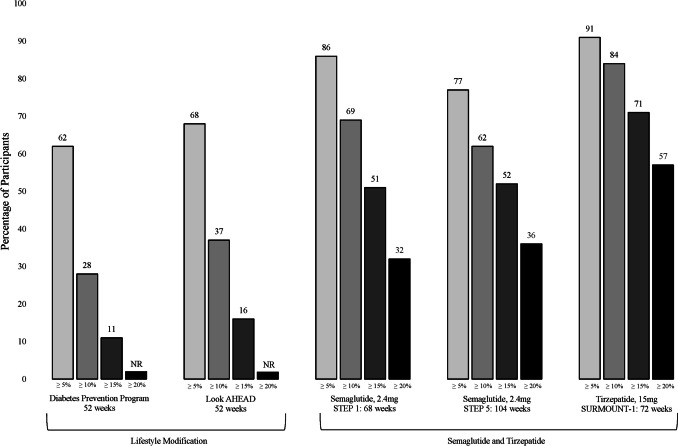
“Approximately 55–65% of participants lose ≥ 5% of weight, 30–35% lose ≥ 10%, and 10–15% achieve ≥ 15% [23] (Fig.”
Self-citationWing, R. R., Lang, W., Wadden, T. A., Safford, M., Knowler, W. C., Bertoni, A. G., Hill, J. O., Brancati, F. L., Peters, A., Wagenknecht, L., et al. (2011) · Diabetes Care · doi:10.2337/dc10-2415 · Cited by 1,828 · cited 2×
“Similarly, the benefits of more moderate weight loss, achieved at a low cost with traditional lifestyle modification, should not be overlooked in preventing type 2 diabetes [20] or in reducing mild elevations in blood pressure and other cardiometabolic risk factors [24].”
BackgroundSelf-citationBray, G. A., Kim, K. K., Wilding, J. P. H., & on behalf of the World Obesity Federation (2017) · Obesity Reviews · doi:10.1111/obr.12551 · Cited by 1,612 · cited 1×
“…the dire need to ameliorate the obesogenic environment that continues to fuel this pandemic on a population level in the USA and other nations [121]. and Novo Nordisk and has received grant support, on behalf of the University of Pennsylvania, from Altimmune, Eli Lilly, and Fractyl…”
BackgroundMacronutrients, P. O., Fiber, P. O. T. D. O. D., Nutrients, S. O. U. R. L. O., Intakes, S. O. I. A. U. O. D. R., Standing Committee on the Scientific Evaluation of Dietary Reference Intakes, Food and Nutrition Board, & Institute of Medicine (2005) · doi:10.17226/10490 · Cited by 1,482
Long-term persistence of hormonal adaptations to weight loss
Sumithran, P., Prendergast, L. A., Delbridge, E., Purcell, K., Shulkes, A., Kriketos, A., & Proietto, J. (2011) · New England Journal of Medicine · doi:10.1056/nejmoa1105816 · Cited by 1,449 · cited 2×
“The high activity level appears necessary to compensate for greater-than-expected reductions in energy expenditure, both at rest and during activity, which accompany weight loss (i.e., metabolic adaptation) [33–35].”
BackgroundRubino, D., Abrahamsson, N., Davies, M., Hesse, D., Greenway, F. L., Jensen, C., Lingvay, I., Mosenzon, O., Rosenstock, J., Rubio, M. A., et al. (2021) · JAMA · doi:10.1001/jama.2021.3224 · Cited by 1,444
Self-citationDavies, M., Færch, L., Jeppesen, O. K., Pakseresht, A., Pedersen, S. D., Perreault, L., Rosenstock, J., Shimomura, I., Viljoen, A., Wadden, T. A., et al. (2021) · The Lancet · doi:10.1016/s0140-6736(21)00213-0 · Cited by 1,419 · cited 2×
“The STEP 1, 2, and 4 trials found greater improvements in weight-and physical health–related QOL at week 68 in patients treated with semaglutide compared with placebo [1 •• , 50, 52 •• ].”
BackgroundInfluentialSelf-citationPharmacological Management of Obesity: An Endocrine Society Clinical Practice Guideline
Apovian, C. M., Aronne, L. J., Bessesen, D. H., McDonnell, M. E., Murad, M. H., Pagotto, U., Ryan, D. H., & Still, C. D. (2015) · The Journal of Clinical Endocrinology & Metabolism · doi:10.1210/jc.2014-3415 · Cited by 1,347 · cited 2×
“…the weight loss, on average, as traditional lifestyle modification and also represented a major advancement over the four previously approved medications for chronic weight management—orlistat, naltrexone-bupropion extended release (ER), phentermine-topiramate ER, and liraglutide 3.0 mg [37–39].”
BackgroundInfluentialEffect of weight loss with lifestyle intervention on risk of diabetes
Hamman, R. F., Wing, R. R., Edelstein, S. L., Lachin, J. M., Bray, G. A., Delahanty, L., Hoskin, M., Kriska, A. M., Mayer-Davis, E. J., Pi-Sunyer, X., et al. (2006) · Diabetes Care · doi:10.2337/dc06-0560 · Cited by 1,344
Triple-Hormone-Receptor Agonist Retatrutide for Obesity — A Phase 2 Trial
Jastreboff, A. M., Kaplan, L. M., Frías, J. P., Wu, Q., Du, Y., Gurbuz, S., Coskun, T., Haupt, A., Milicevic, Z., & Hartman, M. L. (2023) · New England Journal of Medicine · doi:10.1056/nejmoa2301972 · Cited by 1,174 · cited 1×
“These include retatrutide, a triple-hormone-recep-tor agonist (GIP/GLP-1/Glucagon) [48], which was shown in a phase-2 study to reduce baseline weight by as much as 17.5% at 24 weeks and 24.2% at 48 weeks.”
BackgroundInfluentialWilding, J. P. H., Batterham, R. L., Davies, M., Van Gaal, L. F., Kandler, K., Konakli, K., Lingvay, I., McGowan, B. M., Oral, T. K., Rosenstock, J., et al. (2022) · Diabetes, Obesity and Metabolism · doi:10.1111/dom.14725 · Cited by 1,128
Self-citationWadden, T. A., Bailey, T. S., Billings, L. K., Davies, M., Frias, J. P., Koroleva, A., Lingvay, I., O’Neil, P. M., Rubino, D. M., Skovgaard, D., et al. (2021) · JAMA · doi:10.1001/jama.2021.1831 · Cited by 1,114
Self-citationA descriptive study of individuals successful at long-term maintenance of substantial weight loss
Klem, M., Wing, R., McGuire, M., Seagle, H., & Hill, J. (1997) · The American Journal of Clinical Nutrition · doi:10.1093/ajcn/66.2.239 · Cited by 1,060 · cited 2×
“Some individuals, as in the National Weight Control Registry, achieve and maintain losses ≥ 15%, but they work tenaciously [32].”
BackgroundMethodRubino, D. M., Greenway, F. L., Khalid, U., O’Neil, P. M., Rosenstock, J., Sørrig, R., Wadden, T. A., Wizert, A., Garvey, W. T., STEP 8 Investigators, et al. (2022) · JAMA · doi:10.1001/jama.2021.23619 · Cited by 995
Self-citationThe Discovery and Development of Liraglutide and Semaglutide
Knudsen, L. B., & Lau, J. (2019) · Frontiers in Endocrinology · doi:10.3389/fendo.2019.00155 · Cited by 970 · cited 4×
“Liraglutide 3.0 mg has a half-life of approximately 13 h, thus, requiring daily subcutaneous dosing [41].”
BackgroundInfluentialThe Look AHEAD Study: A Description of the Lifestyle Intervention and the Evidence Supporting It
The Look AHEAD Research Group (2006) · Obesity · doi:10.1038/oby.2006.84 · Cited by 873
Two-year effects of semaglutide in adults with overweight or obesity: the STEP 5 trial
Garvey, W. T., Batterham, R. L., Bhatta, M., Buscemi, S., Christensen, L. N., Frias, J. P., Jódar, E., Kandler, K., Rigas, G., Wadden, T. A., et al. (2022) · Nature Medicine · doi:10.1038/s41591-022-02026-4 · Cited by 868
Self-citationon behalf of the NN8022-1923 Investigators, Wadden, T. A., Hollander, P., Klein, S., Niswender, K., Woo, V, Hale, P. M., & Aronne, L. (2013) · International Journal of Obesity · doi:10.1038/ijo.2013.120 · Cited by 842
Self-citationA self-regulation program for maintenance of weight loss
Wing, R. R., Tate, D. F., Gorin, A. A., Raynor, H. A., & Fava, J. L. (2006) · New England Journal of Medicine · doi:10.1056/nejmoa061883 · Cited by 830 · cited 2×
“This deficit typically can be achieved in persons who weigh 250 lb by aiming for 1200–1499 kcal/day or 1500–1800 kcal/day if ≥ 250 lb [6, 10].”
BackgroundOnyike, C. U. (2003) · American Journal of Epidemiology · doi:10.1093/aje/kwg275 · Cited by 827
Randomized Trial of Lifestyle Modification and Pharmacotherapy for Obesity
Wadden, T. A., Berkowitz, R. I., Womble, L. G., Sarwer, D. B., Phelan, S., Cato, R. K., Hesson, L. A., Osei, S. Y., Kaplan, R., & Stunkard, A. J. (2005) · New England Journal of Medicine · doi:10.1056/nejmoa050156 · Cited by 794 · cited 1×
“This approach was based on prior evidence of additive weight loss with combined behavioral and pharmacologic therapies [62].”
MethodSelf-citationGarvey, W. T., Frias, J. P., Jastreboff, A. M., le Roux, C. W., Sattar, N., Aizenberg, D., Mao, H., Zhang, S., Ahmad, N. N., Bunck, M. C., et al. (2023) · The Lancet · doi:10.1016/s0140-6736(23)01200-x · Cited by 792 · cited 3×
“In SURMOUNT-2, after 72 weeks of intervention, participants with type 2 diabetes and overweight/obesity lost 12.8% of baseline weight on tirzepatide 10 mg and 14.7% on tirzepatide 15 mg, compared to 3.2% for placebo [56].”
BackgroundInfluentialParrott, J., Frank, L., Rabena, R., Craggs-Dino, L., Isom, K. A., & Greiman, L. (2017) · Surgery for Obesity and Related Diseases · doi:10.1016/j.soard.2016.12.018 · Cited by 743 · cited 3×
“Nutrient deficiencies are a common concern with marked energy restriction, as with very-low-calorie diets and bariatric surgery and could occur with some patients who achieve substantial weight loss with AOMs [91, 92].”
BackgroundObesity Pathogenesis: An Endocrine Society Scientific Statement
Schwartz, M. W., Seeley, R. J., Zeltser, L. M., Drewnowski, A., Ravussin, E., Redman, L. M., & Leibel, R. L. (2017) · Endocrine Reviews · doi:10.1210/er.2017-00111 · Cited by 727 · cited 1×
“This approach fortifies the highly integrated gut-to-brain neuroendocrine system, which evolved in an environment of food scarcity (rather than abundance) to facilitate energy homeostasis and prevent the loss of body mass, vital to survival [13].”
BackgroundSemaglutide lowers body weight in rodents via distributed neural pathways.
Gabery, S., Salinas, C. G., Paulsen, S. J., Ahnfelt-Rønne, J., Alanentalo, T., Baquero, A. F., Buckley, S. T., Farkas, E., Fekete, C., Frederiksen, K. S., et al. (2020) · JCI Insight · doi:10.1172/jci.insight.133429 · Cited by 717
Role of Inactivity in Chronic Diseases: Evolutionary Insight and Pathophysiological Mechanisms
Booth, F. W., Roberts, C. K., Thyfault, J. P., Ruegsegger, G. N., & Toedebusch, R. G. (2017) · Physiological Reviews · doi:10.1152/physrev.00019.2016 · Cited by 696 · cited 1×
“Reduced LBM may be of additional clinical importance given its association with decreased bone mineral density and increased risk of fractures, as well as its relation to metabolic function (e.g., insulin sensitivity) and aerobic capacity [72, 73].”
BackgroundLifestyle modification approaches for the treatment of obesity in adults.
Wadden, T. A., Tronieri, J. S., & Butryn, M. L. (2020) · American Psychologist · doi:10.1037/amp0000517 · Cited by 661 · cited 9×
“Regular self-monitoring also facilitates increased physical activity [8–12].”
BackgroundInfluentialSelf-citationSchwartz, M. B., & Brownell, K. D. (2004) · Body Image · doi:10.1016/s1740-1445(03)00007-x · Cited by 637
Behavioral treatment of obesity
Butryn, M. L., Webb, V., & Wadden, T. A. (2011) · Psychiatric Clinics of North America · doi:10.1016/j.psc.2011.08.006 · Cited by 636 · cited 4×
“Limitations of lifestyle modification include the plateauing of weight loss at 6–9 months [30], even when participants still have obesity and may receive continued counseling [6, 31].”
BackgroundInfluentialSelf-citationEffects of weight loss on regional fat distribution and insulin sensitivity in obesity.
Goodpaster, B. H., Kelley, D. E., Wing, R. R., Meier, A., & Thaete, F. L. (1999) · Diabetes · doi:10.2337/diabetes.48.4.839 · Cited by 608 · cited 1×
“In addition, reduced lean mass with weight loss could result primarily from a reduction in low-density/low-quality muscle compared to normal density muscle [80], a finding which could allay concerns.”
BackgroundMechanick, J. I., Apovian, C., Brethauer, S., Garvey, W. T., Joffe, A. M., Kim, J., Kushner, R. F., Lindquist, R., Pessah-Pollack, R., Seger, J., et al. (2020) · Surgery for Obesity and Related Diseases · doi:10.1016/j.soard.2019.10.025 · Cited by 608
Evans, W. J. (1995) · The Journals of Gerontology Series A: Biological Sciences and Medical Sciences · doi:10.1093/gerona/50a.special_issue.5 · Cited by 606
US Preventive Services Task Force, Curry, S. J., Krist, A. H., Owens, D. K., Barry, M. J., Caughey, A. B., Davidson, K. W., Doubeni, C. A., Epling, J. W., Grossman, D. C., et al. (2018) · JAMA · doi:10.1001/jama.2018.13022 · Cited by 563
Healthy Weight Loss Maintenance with Exercise, Liraglutide, or Both Combined
Lundgren, J. R., Janus, C., Jensen, S. B. K., Juhl, C. R., Olsen, L. M., Christensen, R. M., Svane, M. S., Bandholm, T., Bojsen-Møller, K. N., Blond, M. B., et al. (2021) · New England Journal of Medicine · doi:10.1056/nejmoa2028198 · Cited by 536 · cited 1×
“At 1 year, the combination therapy was associated with significantly greater improvements than all other groups in body-fat percentage, cardiorespiratory fitness, and general heath perceptions [98].”
BackgroundOne-year weight losses in the Look AHEAD study: factors associated with success
Wadden, T. A., West, D. S., Neiberg, R. H., Wing, R. R., Ryan, D. H., Johnson, K. C., Foreyt, J. P., Hill, J. O., Trence, D. L., Vitolins, M. Z., et al. (2009) · Obesity · doi:10.1038/oby.2008.637 · Cited by 525
Self-citationFoster, G. D., Wyatt, H. R., Hill, J. O., Makris, A. P., Rosenbaum, D. L., Brill, C., Stein, R. I., Mohammed, B. S., Miller, B., Rader, D. J., et al. (2010) · Annals of Internal Medicine · doi:10.7326/0003-4819-153-3-201008030-00005 · Cited by 520
Self-citationHollander, P., Gupta, A. K., Plodkowski, R., Greenway, F., Bays, H., Burns, C., Klassen, P., Fujioka, K., & for the COR-Diabetes Study Group (2013) · Diabetes Care · doi:10.2337/dc13-0234 · Cited by 501 · cited 1×
“Other AOMs have yielded comparably smaller weight losses in patients with versus without type 2 diabetes [58].”
BackgroundChanges in fat-free mass during significant weight loss: a systematic review
Chaston, T. B., Dixon, J. B., & O'Brien, P. E. (2007) · International Journal of Obesity · doi:10.1038/sj.ijo.0803483 · Cited by 493 · cited 2×
“With the larger weight losses produced by Roux-en-Y gastric bypass, a systematic review found that the median reduction of lean mass was 31% of total weight [77].”
BackgroundWadden, T. A., Chao, A. M., Machineni, S., Kushner, R., Ard, J., Srivastava, G., Halpern, B., Zhang, S., Chen, J., Bunck, M. C., et al. (2023) · Nature Medicine · doi:10.1038/s41591-023-02597-w · Cited by 442 · cited 2×
“SURMOUNT-3 examined the effects of administering tirzepatide 10–15 mg/day after participants were first required to lose at least 5% of their initial body weight during a 12-week lead-in program that provided intensive lifestyle intervention [66].”
BackgroundSelf-citationFriedrichsen, M., Breitschaft, A., Tadayon, S., Wizert, A., & Skovgaard, D. (2021) · Diabetes, Obesity and Metabolism · doi:10.1111/dom.14280 · Cited by 427 · cited 2×
“Data from the ad libitum buffet lunch meals, described earlier, provide further evidence of the medica-tions’ efficacy in reducing energy intake [43, 45].”
BackgroundThe Evolution of Very‐Low‐Calorie Diets: An Update and Meta‐analysis
Tsai, A. G., & Wadden, T. A. (2006) · Obesity · doi:10.1038/oby.2006.146 · Cited by 371 · cited 1×
“Combining lifestyle modification with high-protein, very-low-calorie diets (≤ 800 kcal/day) increases short-term weight loss to 12–20% but with more costs, side effects, and weight regain than less restrictive diets [29].”
BackgroundSelf-citationBrownell, K. D., & Horgen, K. B. (2004) · Cited by 368
Progress and challenges in anti-obesity pharmacotherapy
Bessesen, D. H., & Van Gaal, L. F. (2018) · The Lancet Diabetes & Endocrinology · doi:10.1016/s2213-8587(17)30236-x · Cited by 347
Heymsfield, S. B., Coleman, L. A., Miller, R., Rooks, D. S., Laurent, D., Petricoul, O., Praestgaard, J., Swan, T., Wade, T., Perry, R. G., et al. (2021) · JAMA Network Open · doi:10.1001/jamanetworkopen.2020.33457 · Cited by 338
Kadowaki, T., Isendahl, J., Khalid, U., Lee, S. Y., Nishida, T., Ogawa, W., Tobe, K., Yamauchi, T., & Lim, S. (2022) · The Lancet Diabetes & Endocrinology · doi:10.1016/s2213-8587(22)00008-0 · Cited by 330 · cited 1×
“To date, no randomized controlled trials have reported consistently higher rates of any adverse psychiatric events in patients treated with semaglutide or tirzepa-tide compared with placebo [1 54–56].”
BackgroundLatham, J. (2004) · NEXUS: The Canadian Student Journal of Anthropology · doi:10.15173/nexus.v17i1.193 · Cited by 323
Enebo, L. B., Berthelsen, K. K., Kankam, M., Lund, M. T., Rubino, D. M., Satylganova, A., & Lau, D. C. W. (2021) · The Lancet · doi:10.1016/s0140-6736(21)00845-x · Cited by 316 · cited 2×
“Combining sema-glutide 2.4 mg with an amylin-receptor agonist, cagrilintide 2.4 mg (i.e., CagriSema 2.4 mg), was similarly shown in a phase-1b trial to decrease baseline weight by 17.1% at 20 weeks, with substantial additional weight loss projected with continued use [49].”
BackgroundMethodInfluentialRecommendations for the Presurgical Psychosocial Evaluation of Bariatric Surgery Patients
Sogg, S., Lauretti, J., & West-Smith, L. (2016) · Surgery for Obesity and Related Diseases · doi:10.1016/j.soard.2016.02.008 · Cited by 310
Perri, M. G., Limacher, M. C., Durning, P. E., Janicke, D. M., Lutes, L. D., Bobroff, L. B., Dale, M. S., Daniels, M. J., Radcliff, T. A., & Martin, A. D. (2008) · Archives of Internal Medicine · doi:10.1001/archinte.168.21.2347 · Cited by 266
Dietary interventions for obesity: clinical and mechanistic findings.
Chao, A. M., Quigley, K. M., & Wadden, T. A. (2021) · Journal of Clinical Investigation · doi:10.1172/jci140065 · Cited by 257 · cited 1×
“Dietary strategies can be based on the patient’s comorbidities, as well as sociocultural preferences [88], and incorporate reduced-calorie versions of the US Dietary Guidelines [87], a Mediterranean-style diet [89], the DASH diet [90], or a variety of other approaches [6, 88].”
BackgroundSelf-citationRyan, D. H., Lingvay, I., Colhoun, H. M., Deanfield, J., Emerson, S. S., Kahn, S. E., Kushner, R. F., Marso, S., Plutzky, J., Brown-Frandsen, K., et al. (2020) · American Heart Journal · doi:10.1016/j.ahj.2020.07.008 · Cited by 249
Sargeant, J. A., Henson, J., King, J. A., Yates, T., Khunti, K., & Davies, M. J. (2019) · Endocrinology and Metabolism · doi:10.3803/enm.2019.34.3.247 · Cited by 231 · cited 1×
“However, it is also accompanied by reduced lean body mass [1 •• , 2 •• , 45, 69, 70], which may influence factors that contribute to body weight regulation and other health outcomes.”
BackgroundSegal-Isaacson, C. J., Wylie-Rosett, J., & Gans, K. M. (2004) · The Diabetes Educator · doi:10.1177/014572170403000512 · Cited by 230 · cited 1×
“Brief dietary assessment can be conducted in clinical settings using 24-h recalls, dietary screeners such as the Rapid Eating and Activity Assessment for Participants (short version) [84], or food frequency questionnaires (Table 2).”
BackgroundSemaglutide for the treatment of obesity
Chao, A. M., Tronieri, J. S., Amaro, A., & Wadden, T. A. (2023) · Trends in Cardiovascular Medicine · doi:10.1016/j.tcm.2021.12.008 · Cited by 227
Self-citationFELITTI, V. J. (1993) · Southern Medical Journal · doi:10.1097/00007611-199307000-00002 · Cited by 219
Comparison of continuous and intermittent anorectic therapy in obesity.
Munro, J. F., MacCuish, A. C., Wilson, E. M., & Duncan, L. J. (1968) · BMJ · doi:10.1136/bmj.1.5588.352 · Cited by 215 · cited 1×
“Costs potentially could be reduced by less frequent dosing (e.g., every other week), as suggested with other medications [118] or by switching to an older, less expensive AOM (e.g., phentermine-topiramate, liraglutide), although this latter approach needs to be tested in a controlled trial to…”
BackgroundWadden, T. A., Vogt, R. A., Andersen, R. E., Bartlett, S. J., Foster, G. D., Kuehnel, R. H., Wilk, J., Weinstock, R., Buckenmeyer, P., Berkowitz, R. I., et al. (1997) · Journal of Consulting and Clinical Psychology · doi:10.1037/0022-006x.65.2.269 · Cited by 212 · cited 1×
“The same lack of benefit was observed in a similarly designed randomized study that produced a loss of ~ 15% with a 925-kcal/day meal-replacement diet [95].”
BackgroundSelf-citationTirzepatide Reduces Appetite, Energy Intake, and Fat Mass in People With Type 2 Diabetes
Heise, T., DeVries, J. H., Urva, S., Li, J., Pratt, E. J., Thomas, M. K., Mather, K. J., Karanikas, C. A., Dunn, J., Haupt, A., et al. (2023) · Diabetes Care · doi:10.2337/dc22-1710 · Cited by 208 · cited 5×
“…eating), increasing satiation and satiety (which terminate meal intake and extend the inter-meal interval, respectively), and potentially decreasing hedonic eating [45–47], the authors view the new-generation AOMs as reducing patients’ responsiveness—or vulnerability—to the toxic food environment.”
BackgroundInfluentialObese Patients' Perceptions of Treatment Outcomes and the Factors That Influence Them
Foster, G. D., Wadden, T. A., Phelan, S., Sarwer, D. B., & Sanderson, R. S. (2001) · Archives of Internal Medicine · doi:10.1001/archinte.161.17.2133 · Cited by 185 · cited 1×
“Twenty years ago, lifestyle-treated participants typically reported desiring to lose 25% or more of their baseline weight [101], which was often followed by practitioners’ extolling the health benefits of a 5–10% reduction, the mean loss they could deliver at the time [8].”
BackgroundSelf-citationMcCrimmon, R. J., Catarig, A.-M., Frias, J. P., Lausvig, N. L., le Roux, C. W., Thielke, D., & Lingvay, I. (2020) · Diabetologia · doi:10.1007/s00125-019-05065-8 · Cited by 184 · cited 1×
“However, it is also accompanied by reduced lean body mass [1 •• , 2 •• , 45, 69, 70], which may influence factors that contribute to body weight regulation and other health outcomes.”
BackgroundNew Frontiers in Obesity Treatment: GLP-1 and Nascent Nutrient-Stimulated Hormone-Based Therapeutics
Jastreboff, A. M., & Kushner, R. F. (2023) · Annual Review of Medicine · doi:10.1146/annurev-med-043021-014919 · Cited by 158
Recent Advances in Incretin-Based Pharmacotherapies for the Treatment of Obesity and Diabetes
Tan, Q., Akindehin, S. E., Orsso, C. E., Waldner, R. C., DiMarchi, R. D., Müller, T. D., & Haqq, A. M. (2022) · Frontiers in Endocrinology · doi:10.3389/fendo.2022.838410 · Cited by 146
Sarcopenic obesity: how do we treat it?
Bouchonville, M. F., & Villareal, D. T. (2013) · Current Opinion in Endocrinology, Diabetes & Obesity · doi:10.1097/01.med.0000433071.11466.7f · Cited by 141
Yanovski, S. Z., Marcus, M. D., Wadden, T. A., & Walsh, B. T. (2015) · International Journal of Eating Disorders · doi:10.1002/eat.22372 · Cited by 139 · cited 1×
“We also screen for the presence of bulimia nervosa [108], which we believe is a contraindication to weight reduction and should prompt referral to an eating disorders specialist.”
BackgroundSelf-citationDonnelly, J., Pronk, N., Jacobsen, D., Pronk, S., & Jakicic, J. (1991) · The American Journal of Clinical Nutrition · doi:10.1093/ajcn/54.1.56 · Cited by 133 · cited 1×
“…in response to a very-low-calorie diet (VLCD), which induced the loss of ~ 20% of base-line weight (~ 20 kg), the addition of structured exercise (i.e., randomization to aerobic, resistance, or aerobic plus resistance groups) did not preserve lean mass significantly better than the VLCD alone [94].”
BackgroundSelf-citationUnick, J. L., Hogan, P. E., Neiberg, R. H., Cheskin, L. J., Dutton, G. R., Evans‐Hudnall, G., Jeffery, R., Kitabchi, A. E., Nelson, J. A., Pi‐Sunyer, F. X., et al. (2014) · Obesity · doi:10.1002/oby.20777 · Cited by 127 · cited 1×
“Tirzepatide and semaglutide could be particularly beneficial with patients who are not responsive to intensive lifestyle modification, defined as losing 2% of baseline weight after five weekly sessions with a trained interventionist [67].”
BackgroundTwo‐year effect of semaglutide 2.4 mg on control of eating in adults with overweight/obesity: STEP 5
Wharton, S., Batterham, R. L., Bhatta, M., Buscemi, S., Christensen, L. N., Frias, J. P., Jódar, E., Kandler, K., Rigas, G., Wadden, T. A., et al. (2023) · Obesity · doi:10.1002/oby.23673 · Cited by 124
Self-citationThe drive to eat in homo sapiens: Energy expenditure drives energy intake
Blundell, J. E., Gibbons, C., Beaulieu, K., Casanova, N., Duarte, C., Finlayson, G., Stubbs, R. J., & Hopkins, M. (2020) · Physiology & Behavior · doi:10.1016/j.physbeh.2020.112846 · Cited by 115 · cited 1×
“The reduction in LBM may also influence the tonic drive to eat, which may further contribute to influences on body weight regulation [71].”
BackgroundO'Neil, P. M., Aroda, V. R., Astrup, A., Kushner, R., Lau, D. C. W., Wadden, T. A., Brett, J., Cancino, A., Wilding, J. P. H., & groups, O. B. O. T. S. A. C. A. –. L. E. I. I. W. A. W. D. (. S. (2017) · Diabetes, Obesity and Metabolism · doi:10.1111/dom.12963 · Cited by 115 · cited 1×
“The effects of semaglutide and tirzepatide on possible changes in mood and suicidal ideation (or behavior), as assessed in the STEP and SURMOUNT trials, have not been fully reported yet, as they were for liraglutide 3.0 mg, which had a generally favorable neuropsychiatric profile [106].”
MethodInfluentialSelf-citationNew horizons. A new paradigm for treating to target with second-generation obesity medications
Garvey, W. T. (2022) · The Journal of Clinical Endocrinology & Metabolism · doi:10.1210/clinem/dgab848 · Cited by 110
Johnson, K. C., Bray, G. A., Cheskin, L. J., Clark, J. M., Egan, C. M., Foreyt, J. P., Garcia, K. R., Glasser, S., Greenway, F. L., Gregg, E. W., et al. (2017) · Journal of Bone and Mineral Research · doi:10.1002/jbmr.3214 · Cited by 104
Self-citationAnorectic agents lower a body weight set point
Stunkard, A. J. (1982) · Life Sciences · doi:10.1016/0024-3205(82)90445-3 · Cited by 100
Resting energy expenditure, body composition, and excess weight in the obese
Foster, G. D., Wadden, T. A., Mullen, J. L., Stunkard, A. J., Wang, J., Feurer, I. D., Pierson, R. N., Yang, M. U., Presta, E., Van Itallie, T. B., et al. (1988) · Metabolism · doi:10.1016/0026-0495(88)90048-0 · Cited by 96 · cited 1×
“We acknowledge that interpretation of changes in body composition is challenging, particularly since weight gain and obesity are associated with increases in both fat mass and LBM; thus, some loss of LBM is to be expected with weight reduction [79].”
BackgroundSelf-citationModels of energy homeostasis in response to maintenance of reduced body weight
Rosenbaum, M., & Leibel, R. L. (2016) · Obesity · doi:10.1002/oby.21559 · Cited by 95 · cited 1×
“The high activity level appears necessary to compensate for greater-than-expected reductions in energy expenditure, both at rest and during activity, which accompany weight loss (i.e., metabolic adaptation) [33–35].”
BackgroundGrilo, C. M., Lydecker, J. A., Fineberg, S. K., Moreno, J. O., Ivezaj, V., & Gueorguieva, R. (2022) · American Journal of Psychiatry · doi:10.1176/appi.ajp.20220267 · Cited by 89 · cited 1×
“However, this disorder was recently shown to improve in patients with overweight/obesity who were treated with naltrexone bupropion ER [109].”
BackgroundTreatment of obesity in older persons—A systematic review
Haywood, C., & Sumithran, P. (2019) · Obesity Reviews · doi:10.1111/obr.12815 · Cited by 84 · cited 1×
“Such regimens typically induce a mean 5–10% reduction in baseline weight at 1 year (compared with 1–2% for controls), as in the Diabetes Prevention Program and Look AHEAD trials [6, 8, 20–22].”
Chao, A. M., Wadden, T. A., Walsh, O. A., Gruber, K. A., Alamuddin, N., Berkowitz, R. I., & Tronieri, J. S. (2019) · Obesity · doi:10.1002/oby.22653 · Cited by 84 · cited 1×
“Similarly, although participants in some trials were instructed to monitor their food intake, findings have not been reported from these data concerning potential changes in the number of daily meals and snacks consumed, the timing of meals, or potential changes in problem eating [82].”
BackgroundSelf-citationTronieri, J. S., Wadden, T. A., Walsh, O., Berkowitz, R. I., Alamuddin, N., Gruber, K., Leonard, S., Bakizada, Z. M., & Chao, A. M. (2020) · International Journal of Obesity · doi:10.1038/s41366-019-0348-6 · Cited by 74 · cited 1×
“We also think it is important to acknowledge patients’ statements that “the medication’s not working as well—or any longer” when their weight loss plateaus or their subjective appetite control declines [47, 117].”
BackgroundSelf-citationCarnero, E. A., Dubis, G. S., Hames, K. C., Jakicic, J. M., Houmard, J. A., Coen, P. M., & Goodpaster, B. H. (2017) · Obesity · doi:10.1002/oby.21864 · Cited by 73 · cited 2×
“When added to weight loss resulting from Roux-en-Y gastric bypass, walking also enhanced muscle quality [97].”
BackgroundSelf-citationLevi, J., Wang, J., Venter, F., & Hill, A. (2023) · Obesity · doi:10.1002/oby.23725 · Cited by 69
Progress in Pharmacotherapy for Obesity
Yanovski, S. Z., & Yanovski, J. A. (2021) · JAMA · doi:10.1001/jama.2021.9486 · Cited by 67 · cited 2×
“…the weight loss, on average, as traditional lifestyle modification and also represented a major advancement over the four previously approved medications for chronic weight management—orlistat, naltrexone-bupropion extended release (ER), phentermine-topiramate ER, and liraglutide 3.0 mg [37–39].”
BackgroundInfluentialMedicare Part D Coverage of Antiobesity Medications — Challenges and Uncertainty Ahead
Baig, K., Dusetzina, S. B., Kim, D. D., & Leech, A. A. (2023) · New England Journal of Medicine · doi:10.1056/nejmp2300516 · Cited by 66 · cited 1×
“This will include reducing the high costs of these medications [119] and assuring their coverage by public and private insurers [120].”
BackgroundWadden, T. A., Tsai, A. G., & Tronieri, J. S. (2019) · Obesity · doi:10.1002/oby.22594 · Cited by 57 · cited 7×
“…practice, RDs initially would appear to be best prepared to provide lifestyle counseling, but a variety of primary care professionals including physicians, nurse practitioners, nurses, psychologists, and medical assistants have provided such care following a structured behavioral protocol [12].”
BackgroundInfluentialSelf-citationMuscle hypertrophy with large-scale weight loss and resistance training
Donnelly, J., Sharp, T., Houmard, J., Carlson, M., Hill, J., Whatley, J., & Israel, R. (1993) · The American Journal of Clinical Nutrition · doi:10.1093/ajcn/58.4.561 · Cited by 54 · cited 1×
“Tissue biopsy revealed muscle hypertrophy in participants who engaged in resistance training, compared with non-exercising controls, despite comparable weight losses and changes in body composition in the two groups [96].”
BackgroundObesity pharmacotherapy: incretin action in the central nervous system
Boer, G. A., Hay, D. L., & Tups, A. (2022) · Trends in Pharmacological Sciences · doi:10.1016/j.tips.2022.11.001 · Cited by 52 · cited 1×
“The mechanisms by which tirzepatide’s dual receptor agonism increases weight loss, relative to GLP-1 agonism alone, are incompletely understood [44].”
BackgroundPhysiology of Energy Expenditure in the Weight‐Reduced State
Ravussin, E., Smith, S. R., & Ferrante, A. W. (2021) · Obesity · doi:10.1002/oby.23095 · Cited by 48 · cited 1×
“Lean body mass (LBM) is considered a significant driver of metabolic rate, with a reduction in lean tissue partially contributing to reduced daily energy expenditure [34].”
BackgroundSetmelanotide: A Novel Targeted Treatment for Monogenic Obesity
Pressley, H., Cornelio, C. K., & Adams, E. N. (2022) · Journal of Pharmacy Technology · doi:10.1177/87551225221116010 · Cited by 46 · cited 1×
“( We note that in 2020, the US FDA and other regulatory bodies approved setmelanotide for chronic treatment in adults and children at least 6 years of age with rare monogenic or syndromic obesities [40].)”
BackgroundTronieri, J. S., Fabricatore, A. N., Wadden, T. A., Auerbach, P., Endahl, L. A., Sugimoto, D. H., & Rubino, D. (2020) · Obesity Facts · doi:10.1159/000511130 · Cited by 44 · cited 1×
“We similarly do not know whether greater record keeping was associated with greater weight loss, as found in a trial of liraglutide [83].”
ResultSelf-citationKolotkin, R. L., Fujioka, K., Wolden, M. L., Brett, J. H., & Bjorner, J. B. (2016) · Clinical Obesity · doi:10.1111/cob.12146 · Cited by 40
Pearl, R. L., Wadden, T. A., Tronieri, J. S., Berkowitz, R. I., Chao, A. M., Alamuddin, N., Leonard, S. M., Carvajal, R., Bakizada, Z. M., Pinkasavage, E., et al. (2018) · Obesity · doi:10.1002/oby.22187 · Cited by 38 · cited 1×
“Psychosocial outcomes including quality of life (QOL) and mood generally improve with behavioral weight reduction, with larger losses typically associated with greater benefits [110, 111].”
BackgroundSelf-citationLong-term effects of an internalized weight stigma intervention: A randomized controlled trial.
Pearl, R. L., Wadden, T. A., Bach, C., LaFata, E. M., Gautam, S., Leonard, S., Berkowitz, R. I., Latner, J. D., & Jakicic, J. M. (2023) · Journal of Consulting and Clinical Psychology · doi:10.1037/ccp0000819 · Cited by 27 · cited 2×
“More frequent meetings do not appear necessary to induce a 15–20% weight loss with the new AOMs, and some visits likely can be conducted by telephone or video-confer-encing without loss of efficacy [31, 99].”
BackgroundSelf-citationJakicic, J. M., Rogers, R. J., Lang, W., Gibbs, B. B., Yuan, N., Fridman, Y., & Schelbert, E. B. (2022) · Obesity · doi:10.1002/oby.23412 · Cited by 25 · cited 1×
“With intensive lifestyle interventions, approximately 15 to 25% of total weight loss is derived from LBM [76, 77]; this amount typically increases with greater energy restriction, as with very-low-calorie diets [77].”
BackgroundSelf-citationHemo, B., Endevelt, R., Porath, A., Stampfer, M. J., & Shai, I. (2011) · Diabetes Research and Clinical Practice · doi:10.1016/j.diabres.2011.08.021 · Cited by 25
Jobanputra, R., Sargeant, J. A., Almaqhawi, A., Ahmad, E., Arsenyadis, F., Webb, D. R., Herring, L. Y., Khunti, K., Davies, M. J., & Yates, T. (2023) · Obesity Reviews · doi:10.1111/obr.13553 · Cited by 22
Weight Change During the Postintervention Follow-up of Look AHEAD
Wing, R. R., Neiberg, R. H., Bahnson, J. L., Clark, J. M., Espeland, M. A., Hill, J. O., Johnson, K. C., Knowler, W. C., Olson, K., Steinburg, H., et al. (2022) · Diabetes Care · doi:10.2337/dc21-1990 · Cited by 14 · cited 1×
“A larger weight loss may not always be a healthier weight loss [103].”
BackgroundSelf-citationPragmatic implementation of a fully automated online obesity treatment in primary care
Thomas, J. G., Panza, E. A., Espel‐Huynh, H., Goldstein, C. M., O’Leary, K. C., Benedict, N., Puerini, A. J., & Wing, R. R. (2022) · Obesity · doi:10.1002/oby.23502 · Cited by 10 · cited 1×
“Asynchronous, digitally delivered programs, which involve minimal person-to-person contact, also are likely to be explored [100].”
Background
Research works printed but not linked: 5
- Jensen MD Ryan DH Donato KA Apovian CM Ard JD Comuzzie AG Guidelines (2013) for managing overweight and obesity in adults Obesity 2014 22 S2 S1 S410 24961822
- Guyenet SJ The hungry brain: outsmarting the instincts that make us overeat 2017 New York Flatiron Books
- U.S. Department of Agriculture and U.S. Department of Health and Human Services. Dietary guidelines for Americans, 2020–2025. 9th Edition. December 2020. Available at: DietaryGuidelines.gov.
- Patel JJ Mundi MS Martindale RG Hurt RT Mueller CM Obesity The ASPEN adult nutrition core curriculum 2017 3 Silver Spring, MD American Society for Parenteral and Enteral Nutrition 1028 1058
- Sogg S Gorman MJ Interpersonal changes and challenges after weight-loss surgery Prim Psychiatry 2008 15 8 61 66
Cited by
Medications for Obesity: A Review
Gudzune, K. A., & Kushner, R. F. (2024) · JAMA · doi:10.1001/jama.2024.10816 · Cited by 263
Nutritional considerations with antiobesity medications
Almandoz, J. P., Wadden, T. A., Tewksbury, C., Apovian, C. M., Fitch, A., Ard, J. D., Li, Z., Richards, J., Butsch, W. S., Jouravskaya, I., et al. (2024) · Obesity · doi:10.1002/oby.24067 · Cited by 134
“Therefore, consideration should be given to recommending supplementation with a complete multivita-min, calcium, and vitamin D as appropriate for patients receiving AOMs [71].”
BackgroundInfluentialSelf-citationChristensen, S., Robinson, K., Thomas, S., & Williams, D. R. (2024) · Obesity Pillars · doi:10.1016/j.obpill.2024.100121 · Cited by 108
“Although multiple nutritional concerns exist for individuals with overweight/obesity, little guidance is available for those pursuing treatment with GLP-1 or GIP/GLP-1 RAs [50].”
BackgroundApproach to Obesity Treatment in Primary Care: A Review
Yanovski, S. Z., & Yanovski, J. A. (2024) · JAMA Internal Medicine · doi:10.1001/jamainternmed.2023.8526 · Cited by 103
Wadden, T. A., Brown, G. K., Egebjerg, C., Frenkel, O., Goldman, B., Kushner, R. F., McGowan, B., Overvad, M., & Fink-Jensen, A. (2024) · JAMA Internal Medicine · doi:10.1001/jamainternmed.2024.4346 · Cited by 96
Self-citation
Metadata
- Authors
- Wadden, T. A., Chao, A. M., Moore, M., Tronieri, J. S., Gilden, A., Amaro, A., Leonard, S., & Jakicic, J. M.
- Affiliations
- University of Pennsylvania (US)
- Johns Hopkins University (US)
- University of Colorado Anschutz (US)
- University of Kansas Medical Center (US)
- Corresponding author
- Wadden, Thomas A.
- ORCID
- Venue
- Current Obesity Reports
- Published
- 2023-12-02
- Volume
- 12
- Issue
- 4
- Pages
- 453-473
- ISSN
- 2162-4968 (ISSN-L)
- PMC
- PMC10748770
- OpenAlex
- W4389267144
- Cited by
- 129
- References
- 117
- Citations by year
- 2026: 30 · 2025: 52 · 2024: 47
- FWCI
- 4.69
- Type
- journal article
- Language
- en
- Open access
- hybrid
- doi.org
- Licence
- cc-by
- creativecommons.org/licenses/by/4.0 (tdm)
- creativecommons.org/licenses/by/4.0 (vor)
- Locations
- Current Obesity Reports (publishedVersion, cc-by)
- PubMed Central (publishedVersion, cc-by)
- PubMed (publishedVersion)
- Topics
- Health Sciences › Medicine › Pharmacology (medical) › Pharmacology and Obesity Treatment
- Health Sciences › Medicine › Public Health, Environmental and Occupational Health › Obesity, Physical Activity, Diet
- Health Sciences › Medicine › Surgery › Bariatric Surgery and Outcomes
- Keywords
- lifestyle modification, anti-obesity drugs, obesity treatment, semaglutide, tirzepatide, weight loss, satiety, hunger, caloric restriction, dietary habits, physical activity, body composition, cardiometabolic health, quality of life
- MeSH terms
- Body Weight, Humans, Life Style, Obesity, Quality of Life, Exercise, Anti-Obesity Agents
About these checks
Registry, retraction, Cites and statistics results are computed, not judged, with one exception: a printed reference that no index lists is read once by a model before it counts as a citation error. Claims are extracted by a model and kept only when their quote appears verbatim in the text; each cited source is then checked, with a model’s help, for whether it says what the claim relies on. Those verdicts can be wrong — read the claim’s quote and the cited source before relying on one.
The claim verdicts this report counts are experimental: their accuracy is not yet measured.
A language model drew the claims from the paper on 2026-10-05, under version 3 of the claim definition (model deepseek-v4.1-flash, prompt extract-v3).
A second model labelled each claim on 2026-10-05 (model jev-1.13-20260917, definition revision gold-guideline-v0.2).
Cited sources are checked with a language model’s help (gpt-6-sol and qwen3.8-omni-flash).
Statistics and arithmetic are recomputed, not judged.
Confidence bands are shown only for fields calibrated on our annotated test set. None is calibrated yet, so no band is shown.
What counts as a claim ›How we measure confidence ›How we check this ›
Are you an author, or do you see a problem with this page? Request a review
Data sources
Bibliographic data: Semantic Scholar, OpenAlex, Crossref.
Contains information from the Semantic Scholar Academic Graph Datasets, made available under the ODC Attribution License (ODC-BY 1.0).
Semantic Scholar’s data is described in: Kinney, R., et al. (2023). The Semantic Scholar Open Data Platform. arXiv:2301.10140.
