

Maltodextrin-Based Carbohydrate Oral Rinsing and Exercise Performance: Systematic Review and Meta-Analysis
Open accessThe DOI matches its Crossref record; 107 of the 107 references it cites were found in a registry or an index.
Abstract
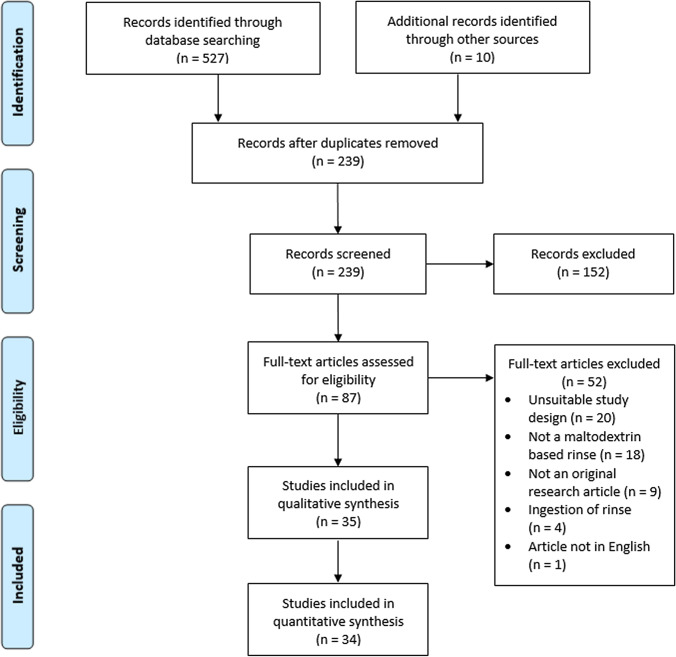
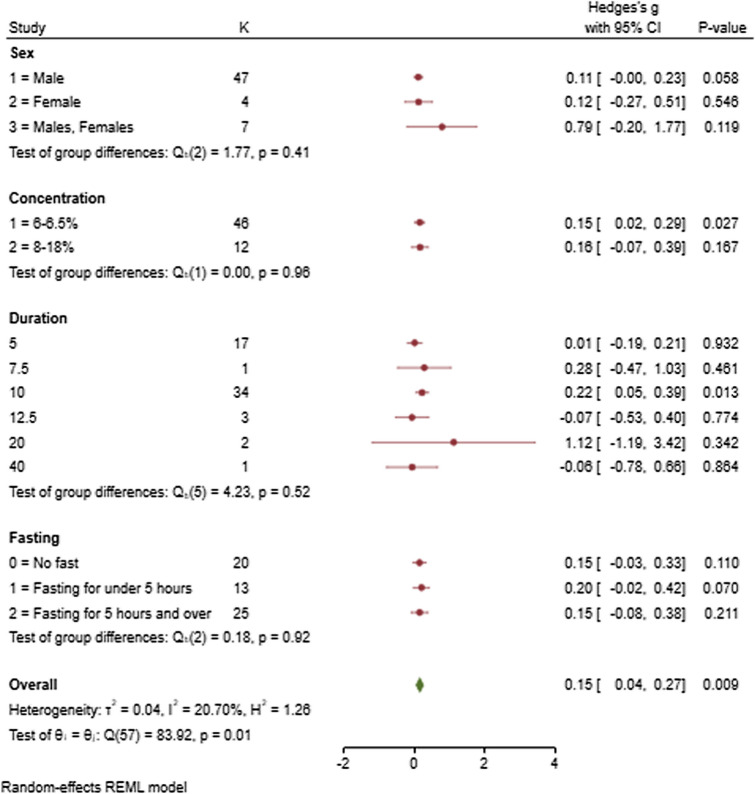
Background: Carbohydrates are an important fuel for optimal exercise performance during moderate- and high-intensity exercise; however, carbohydrate ingestion during high-intensity exercise may cause gastrointestinal upset. A carbohydrate oral rinse is an alternative method to improve exercise performance in moderate- to high-intensity exercise with a duration of 30–75 min. This is the first systematic review and meta-analysis to comprehensively examine the isolated effect of maltodextrin-based rinsing on exercise performance. Objective: The objective of this review was to establish the effect of a maltodextrin-based carbohydrate oral rinse on exercise performance across various modes of exercise. Furthermore, a secondary objective was to determine the effects of moderators [(1) participant characteristics; (2) oral rinse protocols; (3) exercise protocol (i.e. cycling, running etc.) and (4) fasting] on exercise performance while using a maltodextrin-based, carbohydrate oral rinse. Methods: Five databases (MEDLINE, PsycINFO, Embase, SPORTDiscus and Global Health) were systematically searched for articles up to March 2021 and screened using Covidence (a systematic review management tool). A random effects robust meta-analysis and subgroup analyses were performed using Stata Statistical Software: Release 16. Results: Thirty-five articles met the inclusion criteria and were included in the systematic review; 34 of these articles were included in the meta-analysis. When using a conventional meta-analytic approach, overall, a carbohydrate oral rinse improved exercise performance in comparison with a placebo (SMD = 0.15, 95% CI 0.04, 0.27; p = 0.01). Furthermore, when implementing an adjusted, conservative, random effects meta-regression model using robust variance estimation, overall, compared with placebo, a carbohydrate oral rinse demonstrated evidence of improving exercise performance with a small effect size (SMD = 0.17, 95% CI − 0.01, 0.34; p = 0.051). Conclusion: This systematic review and meta-analysis demonstrates that a maltodextrin-based carbohydrate oral rinse can improve exercise performance. When comparing the two meta-analytic approaches, although non-significant, the more robust, adjusted, random effects meta-regression model demonstrated some evidence of a maltodextrin-based carbohydrate oral rinse improving exercise performance overall.
Overview
The claims and statistics of this paper haven’t been checked yet.
Free: it reads the open-access text and checks the first 5 claims that cite a source we can check. Create a free account to check every claim.
Integrity signals
Registry
Cites
Statistics
Figures
Verification
Claims the paper makes
The claims and statistics of this paper haven’t been checked yet.
Free: it reads the open-access text and checks the first 5 claims that cite a source we can check. Create a free account to check every claim.
Claims other papers make about this one
Each is checked against this paper’s own text: does it say what the citing paper says it does?
The source backs part of the claim, not all of it — or backs it for a different population, condition or comparison.
In the citing paper
“During periods of exercise where carbohydrate availability is critically reduced, carbohydrate mouth rinsing (e.g., 5–10 s every 5th min with a 6% carbohydrate solution) has been shown to enhance performance via a non‐metabolic mechanism [39, 72].”
From Carbohydrate Storage and Supplementation Strategies for Peak Performance in Cross-Country Skiing (2026) · cites this paper as [72]
Experimental — accuracy not yet measured
Self-check
Percentages, sums and reported differences re-computed from the paper’s own numbers.
The self-check needs the paper’s full text.
Citations
Cites
Preferred Reporting Items for Systematic Reviews and Meta-Analyses: the PRISMA statement
Moher, D., Liberati, A., Tetzlaff, J., Altman, D. G., & for the PRISMA Group (2009) · BMJ · doi:10.1136/bmj.b2535 · Cited by 83,823
Preferred Reporting Items for Systematic Reviews and Meta-Analyses: The PRISMA Statement
Moher, D., Liberati, A., Tetzlaff, J., Altman, D. G., & The PRISMA Group (2009) · PLoS Medicine · doi:10.1371/journal.pmed.1000097 · Cited by 64,042
The Cochrane Collaboration's tool for assessing risk of bias in randomised trials
Higgins, J. P. T., Altman, D. G., Gotzsche, P. C., Juni, P., Moher, D., Oxman, A. D., Savovic, J., Schulz, K. F., Weeks, L., Sterne, J. A. C., et al. (2011) · BMJ · doi:10.1136/bmj.d5928 · Cited by 33,817
Dermyshi, E., Wang, Y., Yan, C., Hong, W., Qiu, G., Gong, X., & Zhang, T. (2017) · Neonatology · doi:10.1159/000454668 · Cited by 24,451
Wang, G., Ma, R., Qiao, G., Wada, K., Aizawa, Y., & Satoh, T. (2015) · Integrative Medicine International · doi:10.1159/000368408 · Cited by 18,657
Cochrane Handbook for Systematic Reviews of Interventions
(2019) · doi:10.1002/9781119536604 · Cited by 14,828
Shamseer, L., Moher, D., Clarke, M., Ghersi, D., Liberati, A., Petticrew, M., Shekelle, P., Stewart, L. A., & the PRISMA-P Group (2015) · BMJ · doi:10.1136/bmj.g7647 · Cited by 13,120 · cited 1×
“2 Methods The systematic review and meta-analysis was completed according the Cochrane Handbook for Systematic Reviews of Interventions [60] and following the PRISMA (Preferred Reporting Items for Systematic Reviews and Meta-Analyses) statement [61].”
MethodRobust variance estimation in meta‐regression with dependent effect size estimates
Hedges, L. V., Tipton, E., & Johnson, M. C. (2010) · Research Synthesis Methods · doi:10.1002/jrsm.5 · Cited by 2,086 · cited 1×
“Conventional meta-analytic techniques rely on the assumption that effect size estimates from different studies are independent and have sampling distributions with known conditional variances [66, 67].”
BackgroundMorphological, thermal and rheological properties of starches from different botanical sources
Singh, N., Singh, J., Kaur, L., Singh Sodhi, N., & Singh Gill, B. (2003) · Food Chemistry · doi:10.1016/s0308-8146(02)00416-8 · Cited by 1,929
Thomas, D. T., Erdman, K. A., & Burke, L. M. (2016) · Journal of the Academy of Nutrition and Dietetics · doi:10.1016/j.jand.2015.12.006 · Cited by 1,359 · cited 1×
“4% maltodextrin-based solution [19–21] during moderate- to high-intensity exercise with a time span ranging from 30 to 75 min can facilitate improvements in exercise [6, 8].”
BackgroundNutrition and Athletic Performance
(2016) · Medicine & Science in Sports & Exercise · doi:10.1249/mss.0000000000000852 · Cited by 1,305 · cited 1×
“For example, a shorter-chain maltodextrin has a higher DE During sustained high-intensity exercise, it is currently recommended that small amounts of carbohydrates be ingested (including mouth rinsing) for optimal carbohydrate intake, whereas during endurance exercise, it is recommended that 30–60 g of carbohydrates b…”
BackgroundNutrition and Athletic Performance
(2009) · Medicine & Science in Sports & Exercise · doi:10.1249/mss.0b013e31890eb86 · Cited by 1,084
Carbohydrates for training and competition
Burke, L. M., Hawley, J. A., Wong, S. H. S., & Jeukendrup, A. E. (2011) · Journal of Sports Sciences · doi:10.1080/02640414.2011.585473 · Cited by 985 · cited 2×
“For example, a shorter-chain maltodextrin has a higher DE During sustained high-intensity exercise, it is currently recommended that small amounts of carbohydrates be ingested (including mouth rinsing) for optimal carbohydrate intake, whereas during endurance exercise, it is recommended that 30–60 g of carbohydrates b…”
BackgroundCarbohydrate Chemistry for Food Scientists
(2019) · Elsevier eBooks · doi:10.1016/c2016-0-01960-5 · Cited by 706
Doing A Systematic Review: A Student’s Guide
Boland, A., Cherry, M. C., Dickson, R., & Carden, J. (2020) · International Coaching Psychology Review · doi:10.53841/bpsicpr.2020.15.2.119 · Cited by 598
Carbohydrate sensing in the human mouth: effects on exercise performance and brain activity
Chambers, E. S., Bridge, M. W., & Jones, D. A. (2009) · The Journal of Physiology · doi:10.1113/jphysiol.2008.164285 · Cited by 594 · cited 2×
“In cycling-based studies, time trials [19, 29, 32, 40, 45, 46, 80], sprints [42, 84] and time to exhaustion tests [30, 31] on a stationary cycle ergometer were used.”
BackgroundMethodCarbohydrate feeding during prolonged strenuous exercise can delay fatigue
Coyle, E. F., Hagberg, J. M., Hurley, B. F., Martin, W. H., Ehsani, A. A., & Holloszy, J. O. (1983) · Journal of Applied Physiology · doi:10.1152/jappl.1983.55.1.230 · Cited by 487 · cited 1×
“In subsequent research, it was demonstrated that a glucose polymer solution improved exercise capacity during cycling time to exhaustion tests compared with a placebo solution [3, 4].”
BackgroundThe effect of carbohydrate mouth rinse on 1-h cycle time trial performance
CARTER, J. M., JEUKENDRUP, A. E., & JONES, D. A. (2004) · Medicine & Science in Sports & Exercise · doi:10.1249/01.mss.0000147585.65709.6f · Cited by 437 · cited 5×
“[28] first investigated the effects of a carbohydrate oral rinse on performance during a cycling time”
BackgroundMethodInfluentialA Step Towards Personalized Sports Nutrition: Carbohydrate Intake During Exercise
Jeukendrup, A. (2014) · Sports Medicine · doi:10.1007/s40279-014-0148-z · Cited by 412 · cited 1×
“4% maltodextrin-based solution [19–21] during moderate- to high-intensity exercise with a time span ranging from 30 to 75 min can facilitate improvements in exercise [6, 8].”
BackgroundThe Relative Value of Fat and Carbohydrate as Sources of Muscular Energy
Krogh, A., & Lindhard, J. (1920) · Biochemical Journal · doi:10.1042/bj0140290 · Cited by 411 · cited 1×
“au Extended author information available on the last page of the article 1 Introduction In the 1920s, it was recognised that carbohydrates were a crucial fuel source for exercise [1] with improved exercise capacity and general exercise performance being linked to carbohydrate consumption [2].”
BackgroundReversal of fatigue during prolonged exercise by carbohydrate infusion or ingestion
Coggan, A. R., & Coyle, E. F. (1987) · Journal of Applied Physiology · doi:10.1152/jappl.1987.63.6.2388 · Cited by 392 · cited 2×
“In subsequent research, it was demonstrated that a glucose polymer solution improved exercise capacity during cycling time to exhaustion tests compared with a placebo solution [3, 4].”
BackgroundResultLambert, E. V., St Clair Gibson, A., & Noakes, T. D. (2005) · British Journal of Sports Medicine · doi:10.1136/bjsm.2003.011247 · Cited by 380 · cited 2×
“The ‘Central Governor’ is thought to modify power output through the use of afferent signals from peripheral physiological receptors and systems that detect changes in the external and internal environment [22].”
BackgroundGuidelines for Daily Carbohydrate Intake: Do Athletes Achieve Them?
Burke, L. M., Cox, G. R., Cummings, N. K., & Desbrow, B. (2001) · Sports Medicine · doi:10.2165/00007256-200131040-00003 · Cited by 325
robumeta: An R-package for robust variance estimation in meta-analysis
Fisher, Z., & Tipton, E. (2015) · arXiv · doi:10.48550/arxiv.1503.02220 · Cited by 280 · cited 5×
“Stata meta-analysis packages used were: meta (for conventional pairwise and subgroup meta-analysis) and robumeta (random effects meta-regression model using robust variance estimation) [67] (https:// onlin elibr ary.”
BackgroundMethodInfluentialSucrose activates human taste pathways differently from artificial sweetener
Frank, G. K. W., Oberndorfer, T. A., Simmons, A. N., Paulus, M. P., Fudge, J. L., Yang, T. T., & Kaye, W. H. (2008) · NeuroImage · doi:10.1016/j.neuroimage.2007.10.061 · Cited by 274 · cited 1×
“Furthermore, these regions have been found to be activated by oral exposure to carbohydrates but not by non-nutritive sweeteners [19, 26, 27], which may assist in explaining the positive effects of carbohydrate rinsing on exercise performance.”
BackgroundHaase, L., Cerf-Ducastel, B., & Murphy, C. (2009) · NeuroImage · doi:10.1016/j.neuroimage.2008.09.044 · Cited by 263 · cited 1×
“Furthermore, these regions have been found to be activated by oral exposure to carbohydrates but not by non-nutritive sweeteners [19, 26, 27], which may assist in explaining the positive effects of carbohydrate rinsing on exercise performance.”
BackgroundBuist, I., Bredeweg, S. W., Bessem, B., van Mechelen, W., Lemmink, K. A. P. M., & Diercks, R. L. (2010) · British Journal of Sports Medicine · doi:10.1136/bjsm.2007.044677 · Cited by 258
Liu, C.-J., Shiroy, D. M., Jones, L. Y., & Clark, D. O. (2014) · European Review of Aging and Physical Activity · doi:10.1007/s11556-014-0144-1 · Cited by 244 · cited 1×
“Functional activities and training are more representative of daily movement and general exercise movement patterns [104].”
BackgroundFood for thought: hedonic experience beyond homeostasis in the human brain
Kringelbach, M. L. (2004) · Neuroscience · doi:10.1016/j.neuroscience.2004.04.035 · Cited by 236
Sensory processing in the brain related to the control of food intake
Rolls, E. T. (2007) · Proceedings of the Nutrition Society · doi:10.1017/s0029665107005332 · Cited by 209 · cited 1×
“It is thought that these higher brain regions link the corresponding cognitive, behavioural and emotional response and the gustatory pathways [24, 25].”
BackgroundCarbohydrate in the mouth immediately facilitates motor output
Gant, N., Stinear, C. M., & Byblow, W. D. (2010) · Brain Research · doi:10.1016/j.brainres.2010.04.004 · Cited by 194 · cited 1×
“Studies that used longer rinse times of 20 s [68] and 60 s [91] did find improvements in exercise performance compared with a placebo rinse.”
BackgroundPeters, H. P. F., Bos, M., Seebregts, L., Akkermans, L. M. A., van Berge Henegouwen, G. P., Bol, E., Mosterd, W. L., & de Vries, W. R. (1999) · American Journal of Gastroenterology · doi:10.1111/j.1572-0241.1999.01147.x · Cited by 188
Placebo effect of carbohydrate feedings during a 40-km cycling time trial
CLARK, V. R., HOPKINS, W. G., HAWLEY, J. A., & BURKE, L. M. (2000) · Medicine & Science in Sports & Exercise · doi:10.1097/00005768-200009000-00019 · Cited by 188 · cited 1×
“As previous research has demonstrated that placebo effects may have a significant impact on physical performance [47], it is common practice for at least two oral rinses to be trialled: a carbohydrate oral rinse and a placebo oral rinse [28, 29].”
BackgroundNeural Control of Force Output During Maximal and Submaximal Exercise
St Clair Gibson, A., Lambert, M. I., & Noakes, T. D. (2001) · Sports Medicine · doi:10.2165/00007256-200131090-00001 · Cited by 174 · cited 1×
“Therefore, it could be interpreted that during exercise, the positive central responses to a carbohydrate oral rinse could possibly counteract the negative physical, metabolic and thermal afferent signals [23].”
BackgroundBuist, I., Bredeweg, S. W., van Mechelen, W., Lemmink, K. A. P. M., Pepping, G.-J., & Diercks, R. L. (2008) · The American Journal of Sports Medicine · doi:10.1177/0363546507307505 · Cited by 167
Understanding Starches and Their Role in Foods
Liu, Q. (2005) · CRC Press eBooks · doi:10.1201/9780203485286.ch7 · Cited by 163
Carbohydrate Mouth Rinsing in the Fed State: Lack of Enhancement of Time-Trial Performance
Beelen, M., Berghuis, J., Bonaparte, B., Ballak, S. B., Jeukendrup, A. E., & van Loon, L. J. C. (2009) · International Journal of Sport Nutrition and Exercise Metabolism · doi:10.1123/ijsnem.19.4.400 · Cited by 152 · cited 7×
“[40] reported no improvements in performance time during a cycling time trial in a fed state in comparison with a fasted state and Whitham and McKinney [86] also found no increases in distance ran during a 45-min trial in a fed state in comparison with a fasted state while using a maltodextrin oral rinse in comparison…”
BackgroundMethodResultInfluentialLane, S. C., Bird, S. R., Burke, L. M., & Hawley, J. A. (2013) · Applied Physiology, Nutrition, and Metabolism · doi:10.1139/apnm-2012-0300 · Cited by 147 · cited 2×
“In cycling-based studies, time trials [19, 29, 32, 40, 45, 46, 80], sprints [42, 84] and time to exhaustion tests [30, 31] on a stationary cycle ergometer were used.”
BackgroundMethodThe Influence of Carbohydrate Mouth Rinse on Self-Selected Speeds during a 30-min Treadmill Run
Rollo, I., Williams, C., Gant, N., & Nute, M. (2008) · International Journal of Sport Nutrition and Exercise Metabolism · doi:10.1123/ijsnem.18.6.585 · Cited by 137
Influence of Mouth Rinsing a Carbohydrate Solution on 1-h Running Performance
ROLLO, I., COLE, M., MILLER, R., & WILLIAMS, C. (2010) · Medicine & Science in Sports & Exercise · doi:10.1249/mss.0b013e3181bac6e4 · Cited by 125
Takeiti, C. Y., Kieckbusch, T. G., & Collares‐Queiroz, F. P. (2010) · International Journal of Food Properties · doi:10.1080/10942910802181024 · Cited by 123 · cited 1×
“The origin of the maltodextrin may also be an important factor to consider as maltodextrin can be made from corn, rice, manioc, oat or potato starch [59].”
BackgroundCarbohydrate feeding during exercise
Jeukendrup, A. E. (2008) · European Journal of Sport Science · doi:10.1080/17461390801918971 · Cited by 115
Effect of a carbohydrate mouthwash on running time-trial performance
Whitham, M., & McKinney, J. (2007) · Journal of Sports Sciences · doi:10.1080/02640410601113676 · Cited by 114 · cited 7×
“[40] reported no improvements in performance time during a cycling time trial in a fed state in comparison with a fasted state and Whitham and McKinney [86] also found no increases in distance ran during a 45-min trial in a fed state in comparison with a fasted state while using a maltodextrin oral rinse in comparison…”
BackgroundMethodResultInfluentialCarbohydrate Mouth Rinse Effects on Exercise Capacity in Pre- and Postprandial States
Fares, E.-J. M., & Kayser, B. (2011) · Journal of Nutrition and Metabolism · doi:10.1155/2011/385962 · Cited by 109 · cited 4×
“[77] NS Fares and Kayser [31] NS Gam et al.”
BackgroundMethodInfluentialThe effect of different durations of carbohydrate mouth rinse on cycling performance
Sinclair, J., Bottoms, L., Flynn, C., Bradley, E., Alexander, G., McCullagh, S., Finn, T., & Hurst, H. T. (2014) · European Journal of Sport Science · doi:10.1080/17461391.2013.785599 · Cited by 106 · cited 2×
“[85] where the results of a 5-s and a 10-s rinse on exercise performance were compared.”
MethodHumans Can Taste Glucose Oligomers Independent of the hT1R2/hT1R3 Sweet Taste Receptor
Lapis, T. J., Penner, M. H., & Lim, J. (2016) · Chemical Senses · doi:10.1093/chemse/bjw088 · Cited by 106 · cited 1×
“Two of the studies included in the current review used Polycose (a maltodextrin with a composition of 91% glucose oligomers and polymers, 7% maltose and 2% glucose [105]) [42, 45, 63] and one study used a maltodextrin with a 97% polysaccharide, 2% disaccharide and 1% glucose composition [86].”
MethodFluid Intake and Gastrointestinal Problems in Runners Competing in a 25-km Race and a Marathon*
Rehrer, N., Janssen, G., Brouns, F., & Saris, W. (1989) · International Journal of Sports Medicine · doi:10.1055/s-2007-1024950 · Cited by 103
Can Carbohydrate Mouth Rinse Improve Performance during Exercise? A Systematic Review
De Ataide e Silva, T., Di Cavalcanti Alves de Souza, M., De Amorim, J., Stathis, C., Leandro, C., & Lima-Silva, A. (2013) · Nutrients · doi:10.3390/nu6010001 · Cited by 97 · cited 1×
“Previous reviews have focused on the effects of carbohydrate oral rinsing on exercise performance across running and cycling performance [48], cycling performance [49] and sprinting performance [50], and carbohydrate oral rinsing alongside ingestion and loading on exercise performance [51].”
BackgroundStone, M. R., Thomas, K., Wilkinson, M., Gibson, A. S. C., & Thompson, K. (2011) · European Journal of Applied Physiology · doi:10.1007/s00421-010-1818-7 · Cited by 96
Effect of coupling the breathing- and cycling rhythms on oxygen uptake during bicycle ergometry
Garlando, F., Kohl, J., Koller, E. A., & Pietsch, P. (1985) · European Journal of Applied Physiology · doi:10.1007/bf00422959 · Cited by 90 · cited 1×
“Such a response could cause a reduction of oxygen uptake for a certain workload [92, 93] and also may allow for cyclists to reduce the energy costs of exercise [93].”
BackgroundThomas, K., Stone, M. R., Thompson, K., Gibson, A. S. C., & Ansley, L. (2011) · European Journal of Applied Physiology · doi:10.1007/s00421-011-1974-4 · Cited by 88 · cited 1×
“It is currently recommended that for experienced participants, at least one familiarisation trial is required for reproducibility of performance [94–97] and to establish a stable pacing strategy [98].”
BackgroundCarbohydrate-Dependent, Exercise-Induced Gastrointestinal Distress
De Oliveira, E., & Burini, R. (2014) · Nutrients · doi:10.3390/nu6104191 · Cited by 79
Ventilation and entrainment of breathing during cycling and running in triathletes
Bonsignore, M. R., MORICI, G., ABATE, P., Romano, S., & Bonsignore, G. (1998) · Medicine & Science in Sports & Exercise · doi:10.1097/00005768-199802000-00011 · Cited by 79 · cited 1×
“Such a response could cause a reduction of oxygen uptake for a certain workload [92, 93] and also may allow for cyclists to reduce the energy costs of exercise [93].”
BackgroundGastrointestinal problems as a function of carbohydrate supplements and mode of exercise
PETERS, H. P., VAN SCHELVEN, F. W., VERSTAPPEN, P. A., DE BOER, R. W., BOL, E., ERICH, W. B., VAN DER TOGT, C. R., & DE VRIES, W. R. (1993) · Medicine & Science in Sports & Exercise · doi:10.1249/00005768-199311000-00003 · Cited by 78
Evidence that Humans Can Taste Glucose Polymers
Lapis, T. J., Penner, M. H., & Lim, J. (2014) · Chemical Senses · doi:10.1093/chemse/bju031 · Cited by 75
Clarke, N. D., Kornilios, E., & Richardson, D. L. (2015) · Journal of Strength and Conditioning Research · doi:10.1519/jsc.0000000000000945 · Cited by 71 · cited 1×
“[71] MyProtein, Manchester, UK Clarke et al.”
Effect of a carbohydrate mouth rinse on maximal sprint performance in competitive male cyclists
Chong, E.-T., Guelfi, K. J., & Fournier, P. A. (2010) · Journal of science and medicine in sport · doi:10.1016/j.jsams.2010.08.003 · Cited by 71 · cited 5×
“Two of the studies included in the current review used Polycose (a maltodextrin with a composition of 91% glucose oligomers and polymers, 7% maltose and 2% glucose [105]) [42, 45, 63] and one study used a maltodextrin with a 97% polysaccharide, 2% disaccharide and 1% glucose composition [86].”
BackgroundMethodInfluentialBrietzke, C., Franco‐Alvarenga, P. E., Coelho‐Júnior, H. J., Silveira, R., Asano, R. Y., & Pires, F. O. (2018) · Sports Medicine · doi:10.1007/s40279-018-1029-7 · Cited by 71 · cited 5×
“[49] examined the effects of carbohydrate rinsing on cycling time trial performance.”
BackgroundMethodInfluentialOral carbohydrate sensing: Beyond sweet taste
Lim, J., & Pullicin, A. J. (2019) · Physiology & Behavior · doi:10.1016/j.physbeh.2019.01.021 · Cited by 71 · cited 1×
“For example, starches are composed of two types of glucose polymers: amylose and amylopectin [55].”
Background(2003) · International Journal of Sports Medicine · doi:10.1055/s-2003-42012 · Cited by 70
Gam, S., Guelfi, K. J., & Fournier, P. A. (2013) · International Journal of Sport Nutrition and Exercise Metabolism · doi:10.1123/ijsnem.23.1.48 · Cited by 69 · cited 9×
“Two of the studies included in the current review used Polycose (a maltodextrin with a composition of 91% glucose oligomers and polymers, 7% maltose and 2% glucose [105]) [42, 45, 63] and one study used a maltodextrin with a 97% polysaccharide, 2% disaccharide and 1% glucose composition [86].”
BackgroundMethodInfluentialMaximal oxygen uptake during field running does not exceed that measured during treadmill exercise
Meyer, T., Welter, J.-P., Scharhag, J., & Kindermann, W. (2003) · European Journal of Applied Physiology · doi:10.1007/s00421-002-0718-x · Cited by 68 · cited 1×
“Small but significant differences also exist between running on a treadmill and running on a track including variation in movement patterns, ground surface and airstream [103].”
BackgroundEffects of maltodextrin on hygroscopicity and crispness of apple leathers
Valenzuela, C., & Aguilera, J. M. (2014) · Journal of Food Engineering · doi:10.1016/j.jfoodeng.2014.07.010 · Cited by 67 · cited 1×
“Maltodextrin is a variable starch-based structure [52] that is a widely used product in foods and food manufacturing [53].”
BackgroundLaboratory 20-km Cycle Time Trial Reproducibility
Zavorsky, G., Murias, J., Gow, J., Kim, D., Poulin-Harnois, C., Kubow, S., & Lands, L. (2007) · International Journal of Sports Medicine · doi:10.1055/s-2007-964969 · Cited by 64
Effect of carbohydrate mouth rinsing on multiple sprint performance
Dorling, J. L., & Earnest, C. P. (2013) · Journal of the International Society of Sports Nutrition · doi:10.1186/1550-2783-10-41 · Cited by 63 · cited 4×
“Unlike cycling-based exercise tests, where tests are typically conducted on a cycle ergometer, research methods in runningbased studies were mixed, using stationary treadmill running [41, 83, 86] and self-paced running indoors [43, 72, 75, 81, 82] and outdoors [73].”
BackgroundInfluentialThe Influence of Serial Carbohydrate Mouth Rinsing on Power Output during a Cycle Sprint.
Phillips, S., Findlay, S. D., Kavaliauskas, M., & Grant, M. C. (2014) · Edinburgh Napier Research Repository (Edinburgh Napier University) · Cited by 61
Pöchmüller, M., Schwingshackl, L., Colombani, P. C., & Hoffmann, G. (2016) · Journal of the International Society of Sports Nutrition · doi:10.1186/s12970-016-0139-6 · Cited by 56 · cited 4×
“8 Meta‐Analysis Statistical Approach As previously discussed, the conventional meta-analytic method used in the current review is often used within previously published systematic reviews and meta-analyses [49, 51].”
BackgroundMethodInfluentialThe effect of a carbohydrate mouth-rinse on neuromuscular fatigue following cycling exercise
Jeffers, R., Shave, R., ROSS, E. Z., Stevenson, E., & Goodall, S. (2015) · Applied Physiology, Nutrition, and Metabolism · doi:10.1139/apnm-2014-0393 · Cited by 55 · cited 3×
“In cycling-based studies, time trials [19, 29, 32, 40, 45, 46, 80], sprints [42, 84] and time to exhaustion tests [30, 31] on a stationary cycle ergometer were used.”
BackgroundMethodCarbohydrate mouth rinse enhances time to exhaustion during treadmill exercise
Fraga, C., Velasques, B., Koch, A. J., Machado, M., Paulucio, D., Ribeiro, P. F. M., & Pompeu, F. A. M. S. (2015) · Clinical Physiology and Functional Imaging · doi:10.1111/cpf.12261 · Cited by 54
Stevens, C. J., & Dascombe, B. J. (2015) · Measurement in Physical Education and Exercise Science · doi:10.1080/1091367x.2015.1062381 · Cited by 52 · cited 1×
“Such variation in exercise protocols can affect overall validity and reliability, and increase variability [99].”
BackgroundThe Effect of a Sports Drink on Gastroesophageal Reflux During a Run-Bike-Run Test
Peters, Wiersma, Koerselman, Akkermans, Bol, Mosterd, & de Vries (2000) · International Journal of Sports Medicine · doi:10.1055/s-2000-8858 · Cited by 51
The Influence of Carbohydrate Mouth Rinse on Self-Selected Intermittent Running Performance
Rollo, I., Homewood, G., Williams, C., Carter, J., & Goosey-Tolfrey, V. L. (2015) · International Journal of Sport Nutrition and Exercise Metabolism · doi:10.1123/ijsnem.2015-0001 · Cited by 50 · cited 4×
“Unlike cycling-based exercise tests, where tests are typically conducted on a cycle ergometer, research methods in runningbased studies were mixed, using stationary treadmill running [41, 83, 86] and self-paced running indoors [43, 72, 75, 81, 82] and outdoors [73].”
MethodInfluentialCHO Mouth Rinse Ameliorates Neuromuscular Response with Lower Endogenous CHO Stores
ATAIDE-SILVA, T., GHIARONE, T., BERTUZZI, R., STATHIS, C. G., LEANDRO, C. G., & LIMA-SILVA, A. E. (2016) · Medicine & Science in Sports & Exercise · doi:10.1249/mss.0000000000000973 · Cited by 49 · cited 3×
“In cycling-based studies, time trials [19, 29, 32, 40, 45, 46, 80], sprints [42, 84] and time to exhaustion tests [30, 31] on a stationary cycle ergometer were used.”
BackgroundMethodHibbert, A. W., Billaut, F., Varley, M. C., & Polman, R. C. J. (2017) · Frontiers in Physiology · doi:10.3389/fphys.2017.00488 · Cited by 49 · cited 2×
“Additionally, trained participants may provide more consistent data as they require fewer familiarisation sessions prior to testing to decrease possible learning effects and to achieve a higher level of reproducibility [90].”
BackgroundGastrointestinal Symptoms During Exercise: The Effect of Fluid Supplementation
Peters, H. P. F., Akkermans, L. M. A., Bol, E., & MOSTERD, W. L. (1995) · Sports Medicine · doi:10.2165/00007256-199520020-00002 · Cited by 48
Water Ingestion Improves Performance Compared with Mouth Rinse in Dehydrated Subjects
ARNAOUTIS, G., KAVOURAS, S. A., CHRISTAKI, I., & SIDOSSIS, L. S. (2012) · Medicine & Science in Sports & Exercise · doi:10.1249/mss.0b013e3182285776 · Cited by 44 · cited 1×
“These findings contrast, however, with another study that reported similar results with a water-based placebo rinse and a no-rinse control [106].”
ResultCarbohydrate Mouth Rinse Counters Fatigue Related Strength Reduction
Jensen, M. B., Stellingwerff, T., & Klimstra, M. D. (2014) · International Journal of Sport Nutrition and Exercise Metabolism · doi:10.1123/ijsnem.2014-0061 · Cited by 43 · cited 2×
“[79] reported a significant decline in torque with a maltodextrin oral rinse in comparison with a placebo.”
BackgroundResultEffects of various concentrations of carbohydrate mouth rinse on cycling performance in a fed state
Devenney, S., Collins, K. D., & Shortall, M. (2016) · European Journal of Sport Science · doi:10.1080/17461391.2016.1196735 · Cited by 43
No Dose Response Effect of Carbohydrate Mouth Rinse on Cycling Time-Trial Performance
James, R. M., Ritchie, S., Rollo, I., & James, L. J. (2017) · International Journal of Sport Nutrition and Exercise Metabolism · doi:10.1123/ijsnem.2016-0111 · Cited by 42 · cited 1×
“[21] reported performance improvements with a 7% rinse; however, these results did not increase when the concentration of the rinse was increased to 14%.”
BackgroundReliability of Power Output during Dynamic Cycling
Abbiss, C. R., Levin, G., McGuigan, M. R., & Laursen, P. B. (2008) · International Journal of Sports Medicine · doi:10.1055/s-2007-989263 · Cited by 40
Přibyslavská, V., Scudamore, E. M., Johnson, S. L., Green, J. M., Stevenson-Wilcoxson, M. C., Lowe, J. B., & O'Neal, E. K. (2015) · European Journal of Sport Science · doi:10.1080/17461391.2015.1020345 · Cited by 40 · cited 2×
“Unlike cycling-based exercise tests, where tests are typically conducted on a cycle ergometer, research methods in runningbased studies were mixed, using stationary treadmill running [41, 83, 86] and self-paced running indoors [43, 72, 75, 81, 82] and outdoors [73].”
BackgroundCarbohydrate mouth rinse improves morning high‐intensity exercise performance
Clarke, N. D., Hammond, S., Kornilios, E., & Mundy, P. D. (2017) · European Journal of Sport Science · doi:10.1080/17461391.2017.1333159 · Cited by 39 · cited 2×
“Unlike cycling-based exercise tests, where tests are typically conducted on a cycle ergometer, research methods in runningbased studies were mixed, using stationary treadmill running [41, 83, 86] and self-paced running indoors [43, 72, 75, 81, 82] and outdoors [73].”
Spatiotemporal characteristics of spontaneous overground walk-to-run transition
Smet, K. D., Segers, V., Lenoir, M., & Clercq, D. D. (2008) · Gait & Posture · doi:10.1016/j.gaitpost.2008.06.005 · Cited by 38 · cited 1×
“In comparison with self-paced running outside, the decision to consciously control the speed of the treadmill does not occur as often or as swiftly [101, 102].”
Carbohydrate Taste Sensitivity Is Associated with Starch Intake and Waist Circumference in Adults
Low, J. Y. Q., Lacy, K. E., McBride, R., & Keast, R. (2017) · Journal of Nutrition · doi:10.3945/jn.117.254078 · Cited by 34 · cited 1×
“For example, those who experienced high intensity ratings for complex carbohydrates had larger waist circumferences and a significantly higher daily energy intake in comparison with those who experienced a low intensity [107].”
BackgroundSelf-citationLow, J. Y. Q., Lacy, K. E., McBride, R., & Keast, R. (2017) · PLoS ONE · doi:10.1371/journal.pone.0188784 · Cited by 34 · cited 1×
“Research has demonstrated that individual taste sensitivity to carbohydrates exists [105, 107–109] and that individual sensitivity to complex carbohydrates can vary largely among individuals [109].”
BackgroundSelf-citationBowtell, M. V., Tan, H., & Wilson, A. M. (2009) · Journal of Biomechanics · doi:10.1016/j.jbiomech.2009.07.024 · Cited by 30 · cited 1×
“In comparison with self-paced running outside, the decision to consciously control the speed of the treadmill does not occur as often or as swiftly [101, 102].”
Cramer, M. N., Thompson, M. W., & Périard, J. D. (2015) · Frontiers in Physiology · doi:10.3389/fphys.2015.00354 · Cited by 30 · cited 1×
“Across the studies included in this review, a small selection of studies did not include information on familiarisation protocol [31, 38, 46, 69, 74, 77].”
BackgroundCarbohydrate mouth rinsing improves resistance training session performance
Decimoni, L. S., Curty, V. M., Almeida, L., Koch, A. J., Willardson, J. M., & Machado, M. (2018) · International Journal of Sports Science & Coaching · doi:10.1177/1747954118755640 · Cited by 30 · cited 6×
“Oral rinsing with maltodextrin has also resulted in improvements in total workload volume during resistance-based exercises in comparison with a placebo [38, 77].”
BackgroundInfluentialMurray, K. O., Paris, H. L. R., Fly, A. D., Chapman, R. F., & Mickleborough, T. D. (2018) · Europe PMC (PubMed Central) · Cited by 30
Effects of Magnesium Supplementation on Muscle Soreness and Performance
Reno-Smith, A., Green, M., Killen, L. G., O'Neal, E. K., Pritchett, K. L., & Hanson, Z. (2020) · The Journal of Strength and Conditioning Research · doi:10.1519/jsc.0000000000003827 · Cited by 30
Carbohydrate Mouth Rinse Improves 1.5 h Run Performance: Is There a Dose-Effect?
Wright, B. F., & Davison, G. (2013) · International journal of exercise science · doi:10.70252/ssrn3654 · Cited by 29
Clarke, N. D., Thomas, J. R., Kagka, M., Ramsbottom, R., & Delextrat, A. A. (2016) · The Journal of Strength and Conditioning Research · doi:10.1519/jsc.0000000000001531 · Cited by 29 · cited 5×
“Unlike cycling-based exercise tests, where tests are typically conducted on a cycle ergometer, research methods in runningbased studies were mixed, using stationary treadmill running [41, 83, 86] and self-paced running indoors [43, 72, 75, 81, 82] and outdoors [73].”
BackgroundInfluentialCarbohydrate Mouth Rinsing: Improved Neuromuscular Performance During Isokinetic Fatiguing Exercise
Bazzucchi, I., Patrizio, F., Felici, F., Nicolò, A., & Sacchetti, M. (2016) · International Journal of Sports Physiology and Performance · doi:10.1123/ijspp.2016-0583 · Cited by 29 · cited 2×
“While the majority of studies in this area recruit male participants, they are often classified as physically active or participate in moderate to high levels of activity [2, 29, 30, 39, 40, 43].”
BackgroundEffect of Carbohydrate Mouth Rinse on Training Load Volume in Resistance Exercises
Bastos‐Silva, V. J., Prestes, J., & Geraldes, A. A. R. (2017) · The Journal of Strength and Conditioning Research · doi:10.1519/jsc.0000000000002092 · Cited by 28 · cited 1×
“Across the studies included in this review, a small selection of studies did not include information on familiarisation protocol [31, 38, 46, 69, 74, 77].”
BackgroundThe Effect of a Carbohydrate Mouth Rinse on Upper-Body Muscular Strength and Endurance
Dunkin, J. E., & Phillips, S. M. (2017) · Journal of Strength and Conditioning Research · doi:10.1519/jsc.0000000000001668 · Cited by 23 · cited 4×
“In resistance exercise-based studies, the specific exercises included leg press, bench press, military press, seated row and half-squat [38] and bench press protocols [44, 78].”
BackgroundResultInfluentialCarbohydrate Mouth Rinse Improves Relative Mean Power During Multiple Sprint Performance
Simpson, G. W., PRITCHETT, R. C., O'Neal, E. K., Hoskins, G., & Pritchett, K. L. (2018) · International journal of exercise science · doi:10.70252/crpx1180 · Cited by 23 · cited 2×
“In cycling-based studies, time trials [19, 29, 32, 40, 45, 46, 80], sprints [42, 84] and time to exhaustion tests [30, 31] on a stationary cycle ergometer were used.”
BackgroundMethodEffect of Carbohydrate Mouth Rinse on Resistance Exercise Performance
Green, M. S., Kimmel, C. S., Martin, T. D., Mouser, J. G., & Brune, M. P. (2020) · The Journal of Strength and Conditioning Research · doi:10.1519/jsc.0000000000003755 · Cited by 22 · cited 2×
“In resistance exercise-based studies, the specific exercises included leg press, bench press, military press, seated row and half-squat [38] and bench press protocols [44, 78].”
BackgroundCherif, A., MEEUSEN, R. R., Ryu, J. H., Taylor, L. K., Farooq, A., Kammoun, K., Fenneni, M. A., Aziz, A. R., Roelands, B., & Chamari, K. (2018) · Biology of Sport · doi:10.5114/biolsport.2018.77824 · Cited by 21 · cited 4×
“Unlike cycling-based exercise tests, where tests are typically conducted on a cycle ergometer, research methods in runningbased studies were mixed, using stationary treadmill running [41, 83, 86] and self-paced running indoors [43, 72, 75, 81, 82] and outdoors [73].”
BackgroundInfluentialCarbohydrate mouth rinse improves resistance exercise capacity in the glycogen-lowered state
Durkin, M., Akeroyd, H., & Holliday, A. (2020) · Applied Physiology, Nutrition, and Metabolism · doi:10.1139/apnm-2020-0298 · Cited by 19 · cited 4×
“Oral rinsing with maltodextrin has also resulted in improvements in total workload volume during resistance-based exercises in comparison with a placebo [38, 77].”
BackgroundInfluentialImpact of a Carbohydrate Mouth Rinse on Quadriceps Muscle Function and Corticomotor Excitability
Bailey, S. P., Hibbard, J., Forge, D. L., Mitchell, M., Roelands, B., Harris, G. K., & Folger, S. E. (2019) · International Journal of Sports Physiology and Performance · doi:10.1123/ijspp.2018-0583 · Cited by 17 · cited 3×
“[68] demonstrated increases in maximal voluntary contractions with a maltodextrin oral rinse in comparison with a placebo.”
BackgroundDeighton, K., Duckworth, L. C., Matu, J., Suter, M., Fletcher, C., Stead, S., Ali, S., Gunby, N., & Korsness, K. (2016) · Applied Physiology, Nutrition, and Metabolism · doi:10.1139/apnm-2016-0344 · Cited by 16 · cited 1×
“[76] NS Dorling and Earnest [43] HighFive, Bardon, England Dunkin and Phillips [44] Bulk Powders TM, Colchester, UK Durkin et al.”
BackgroundCarbohydrate Mouth Rinsing Does Not Prevent the Decline in Maximal Strength After Fatiguing Exercise
Black, C. D., Schubert, D. J., Szczyglowski, M. K., & Wren, J. D. (2018) · The Journal of Strength and Conditioning Research · doi:10.1519/jsc.0000000000002444 · Cited by 15
Reliability of 5-km Running Performance in a Competitive Environment
Hurst, P., & Lisa Board (2016) · Measurement in Physical Education and Exercise Science · doi:10.1080/1091367x.2016.1233421 · Cited by 14 · cited 1×
“For example, laboratory-based running protocols typically have a decreased level of ecological validity [100].”
BackgroundCarbohydrate mouth rinse improves cycling performance carried out until the volitional exhaustion
Gambassi, B. B., Leal, Y. G. D. S. B., Anjos, E. R. P. D., Antonelli, B. Â., Silva, D. C. G. G. E., Montenegro, I. H. P. D. M., Ângelo, R. D. C. D. O., Moura, I. S. C., & Schwingel, P. A. (2018) · The Journal of Sports Medicine and Physical Fitness · doi:10.23736/s0022-4707.17.07980-4 · Cited by 13 · cited 3×
“In cycling-based studies, time trials [19, 29, 32, 40, 45, 46, 80], sprints [42, 84] and time to exhaustion tests [30, 31] on a stationary cycle ergometer were used.”
BackgroundMethodLow, J. Y. Q., Lacy, K. E., McBride, R., & Keast, R. (2019) · British Journal Of Nutrition · doi:10.1017/s0007114519001703 · Cited by 10 · cited 1×
“[110] also demonstrated that carbohydrate hypersensitive participants consumed 50% more maltodextrin-based milkshake in comparison with those who were less sensitive and this was independent to their liking of the beverage.”
BackgroundSelf-citationRossato, L. T., Fernandes, C. T. M., Vieira, P. F., de Branco, F. M. S., Nahas, P. C., Puga, G. M., & de Oliveira, E. P. (2019) · International Journal of Sports Physiology and Performance · doi:10.1123/ijspp.2018-0624 · Cited by 7 · cited 2×
“[83] Health Labs, Belo Horizonte, Brazil Simpson et al.”
BackgroundThe effect of carbohydrate mouth rinse on a 30-minute arm cranking performance
Andersson, H., SINCLAIR, J. K., Knight, A., Buscombe, R. M., Edmonds, C. J., & Bottoms, L. M. (2016) · Comparative Exercise Physiology · doi:10.3920/cep150032 · Cited by 2 · cited 3×
“One previous study used an arm cranking protocol [39].”
BackgroundMethod
Research works printed but not linked: 5
- 5. Burke L, Deakin V. Clinical sports nutrition: sports medicine series. 4th ed. McGraw-Hill Education; 2010.
- 50. de Oliveira JJ, Crisp AH, Barbosa CGR, de Silva AS, Baganha RJ, Verlengia R. Influence of carbohydrate mouth rinse on sprint performance: a systematic review and meta-analysis. J Exer Physiol Online. 2017;20(3):88-99.
- 58. BeMiller JN, Whistler RL. Carboydrates. Third Edition ed. Food Chem. New York: Marcel Dekker; 1996. p. 157-224.
- 75. de Oliveira JJ, de Salles AHS, Barbosa CGR, de Silva JAO, de Dias RM, Ribeiro AGSV, et al. Effect of post-activation potentia- tion and carbohydrate mouth rise on repeated sprint ability in uni- versity futsal players. J Exer Physiol Online. 2020;23(2):29-40.
- 89. Tonoli C, Cumps E, Aerts I, Verhagen E, Meeusen R. Incidence, risk factors and prevention of running related injuries in long- distance running: a systematic review injury, location and type. Sport en Geneeskd. 2010;5:13-8.
Cited by
Exercise Metabolism and Adaptation in Skeletal Muscle
Smith, J. A. B., Murach, K. A., Dyar, K. A., & Zierath, J. R. (2023) · Nature Reviews Molecular Cell Biology · doi:10.1038/s41580-023-00606-x · Cited by 342
Exercise-Induced Central Fatigue: Biomarkers, and Non-Medicinal Interventions
Yang, Y., Feng, Z. W., Luo, Y.-H., Chen, J.-M., Zhang, Y., Liao, Y.-J., Jiang, H., Long, Y., & Wei, B. (2024) · Aging and Disease · doi:10.14336/ad.2024.0567 · Cited by 32
“Potential risks include choking from carbohydrate mouthwash [101], and gastrointestinal strain due to CHO intake during exercise, potentially hampering performance.”
Fed, not fasted: is carbohydrate mouth rinsing still ergogenic? A three-level meta-analysis
Deng, H., Fan, X., Liu, P., Song, T., Fuaad, A. A. H. A., Nasiruddin, N. J. M., & Naharudin, M. N. (2025) · Journal of the International Society of Sports Nutrition · doi:10.1080/15502783.2025.2579027 · Cited by 11
“This finding is consistent with Hartley et al. (2022) and Rodrigues Oliveira-Silva et al. (2023), who similarly reported that fasting duration did not significantly influence CHO mouth rinse effects, even in studies extending beyond four hours of fasting [94,95].”
InfluentialDeng, H., Fan, X., Song, T., Nasiruddin, N. J. M., Fuaad, A. A. H. A., & Naharudin, M. N. (2026) · Journal of the International Society of Sports Nutrition · doi:10.1080/15502783.2026.2638903 · Cited by 8
“In addition, timing the rinse immediately before key pacing or force-production phases may strengthen perception action coupling, whereas spreading stimulation across longer windows may dilute attentional engagement and reduce the functional impact of the cue [86].”
Soylu, Y., Chmura, P., Arslan, E., & Kilit, B. (2024) · Nutrients · doi:10.3390/nu16223910 · Cited by 8
Metadata
- Authors
- Hartley, C., Carr, A., Bowe, S. J., Bredie, W. L. P., & Keast, R. S. J.
- Affiliations
- Deakin University (AU)
- University of Copenhagen (DK)
- Corresponding author
- Keast, Russell S. J.
- Venue
- Sports Medicine
- Published
- 2022-03-03
- Volume
- 52
- Issue
- 8
- Pages
- 1833-1862
- ISSN
- 0112-1642 (ISSN-L)
- 1179-2035
- PMC
- PMC9325805
- OpenAlex
- W4214866129
- Semantic Scholar
- e14be373c6f0bc8c954259bee9a281da31148d15
- Cited by
- 34
- References
- 106
- Citations by year
- 2026: 11 · 2025: 11 · 2024: 8 · 2023: 4
- FWCI
- 0.83
- Type
- journal article
- Language
- en
- Open access
- hybrid
- doi.org
- Licence
- cc-by
- creativecommons.org/licenses/by/4.0 (tdm)
- creativecommons.org/licenses/by/4.0 (vor)
- Locations
- Sports Medicine (publishedVersion, cc-by)
- PubMed Central (publishedVersion, cc-by)
- PubMed (publishedVersion)
- Research at the University of Copenhagen (University of Copenhagen) (publishedVersion, cc-by)
- Own your potential (DEAKIN) (submittedVersion)
- Figshare (submittedVersion, cc-by)
- Funders
- Deakin University
- Topics
- Health Sciences › Nursing › Nutrition and Dietetics › Muscle metabolism and nutrition
- Health Sciences › Medicine › Orthopedics and Sports Medicine › Sports Performance and Training
- Health Sciences › Medicine › Physiology (medical) › Thermoregulation and physiological responses
- Keywords
- maltodextrin, exercise performance, high-intensity exercise, gastrointestinal discomfort, carbohydrate intake, cycling, running, fasting, robust variance estimation
- MeSH terms
- Bicycling, Humans, Mouthwashes, Polysaccharides, Exercise
About these checks
Registry, retraction, Cites and statistics results are computed, not judged, with one exception: a printed reference that no index lists is read once by a model before it counts as a citation error. Claims are extracted by a model and kept only when their quote appears verbatim in the text; each cited source is then checked, with a model’s help, for whether it says what the claim relies on. Those verdicts can be wrong — read the claim’s quote and the cited source before relying on one.
Statistics and arithmetic are recomputed, not judged.
Confidence bands are shown only for fields calibrated on our annotated test set. None is calibrated yet, so no band is shown.
What counts as a claim ›How we measure confidence ›How we check this ›
Are you an author, or do you see a problem with this page? Request a review
Data sources
Bibliographic data: Semantic Scholar, OpenAlex, Crossref.
Contains information from the Semantic Scholar Academic Graph Datasets, made available under the ODC Attribution License (ODC-BY 1.0).
Semantic Scholar’s data is described in: Kinney, R., et al. (2023). The Semantic Scholar Open Data Platform. arXiv:2301.10140.
