

Cognitive and Affective Empathy Relate Differentially to Emotion Regulation
Open accessThe DOI matches its Crossref record; 127 of the 127 references it cites were found in a registry or an index.
Abstract
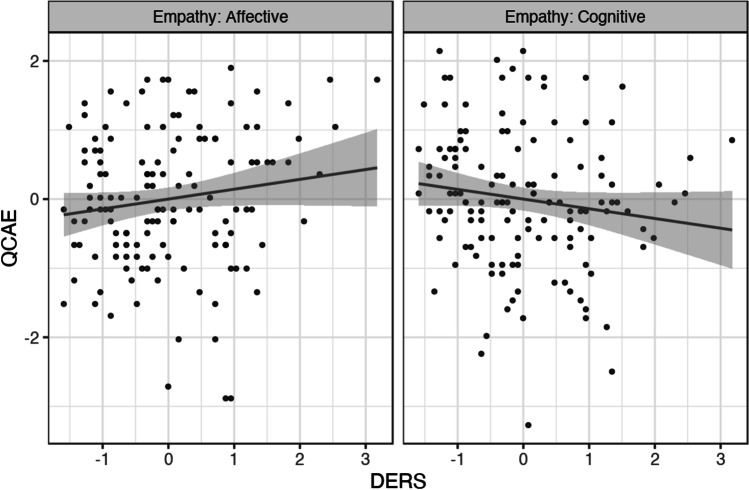
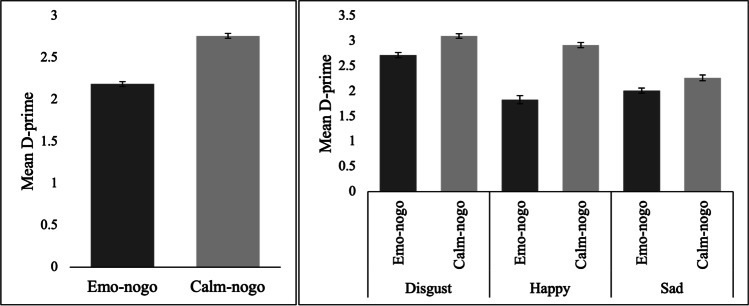
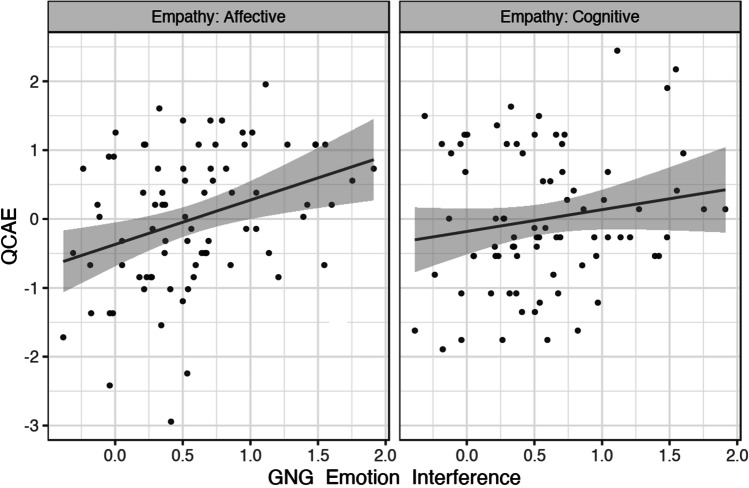
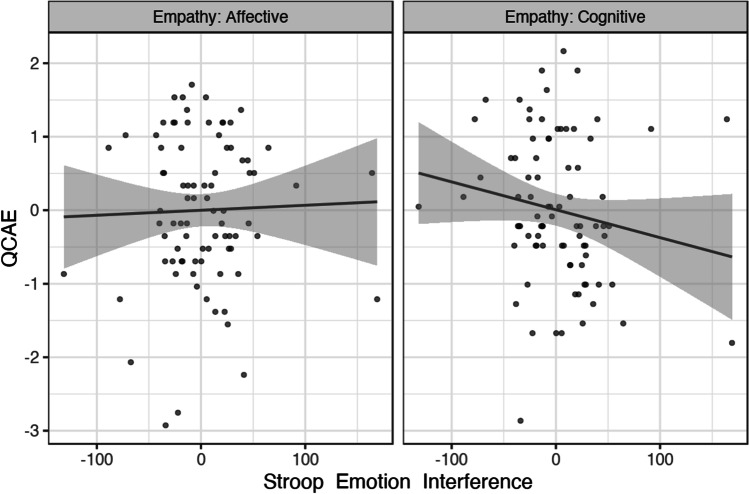
The constructs of empathy (i.e., understanding and/or sharing another’s emotion) and emotion regulation (i.e., the processes by which one manages emotions) have largely been studied in relative isolation of one another. To better understand the interrelationships between their various component processes, this manuscript reports two studies that examined the relationship between empathy and emotion regulation using a combination of self-report and task measures. In study 1 (N = 137), trait cognitive empathy and affective empathy were found to share divergent relationships with self-reported emotion dysregulation. Trait emotion dysregulation was negatively related to cognitive empathy but did not show a significant relationship with affective empathy. In the second study (N = 92), the magnitude of emotion interference effects (i.e., the extent to which inhibitory control was impacted by emotional relative to neutral stimuli) in variants of a Go/NoGo and Stroop task were used as proxy measures of implicit emotion regulation abilities. Trait cognitive and affective empathy were differentially related to both task metrics. Higher affective empathy was associated with increased emotional interference in the Emotional Go/NoGo task; no such relationship was observed for trait cognitive empathy. In the Emotional Stroop task, higher cognitive empathy was associated with reduced emotional interference; no such relationship was observed for affective empathy. Together, these studies demonstrate that greater cognitive empathy was broadly associated with improved emotion regulation abilities, while greater affective empathy was typically associated with increased difficulties with emotion regulation. These findings point to the need for assessing the different components of empathy in psychopathological conditions marked by difficulties in emotion regulation.
Overview
The claims and statistics of this paper haven’t been checked yet.
Free: it reads the open-access text and checks the first 5 claims that cite a source we can check. Create a free account to check every claim.
Integrity signals
Registry
Cites
Statistics
Figures
Verification
Claims the paper makes
The claims and statistics of this paper haven’t been checked yet.
Free: it reads the open-access text and checks the first 5 claims that cite a source we can check. Create a free account to check every claim.
Claims other papers make about this one
Each is checked against this paper’s own text: does it say what the citing paper says it does?
The source backs part of the claim, not all of it — or backs it for a different population, condition or comparison.
In the citing paper
“In contrast, cognitive empathy, which integrates understanding with practical guidance, has been found to be more effective in reducing anxiety and improving psychological outcomes [20,21].”
From Styles of Delivering News About a Child's Cancer and Parents' PTSD Symptoms (2025) · cites this paper as [21]
Experimental — accuracy not yet measured
Self-check
Percentages, sums and reported differences re-computed from the paper’s own numbers.
The self-check needs the paper’s full text.
Citations
Cites
Faul, F., Erdfelder, E., Lang, A.-G., & Buchner, A. (2007) · Behavior Research Methods · doi:10.3758/bf03193146 · Cited by 65,971
Studies of interference in serial verbal reactions
Stroop, J. R. (1935) · Journal of Experimental Psychology · doi:10.1037/h0054651 · Cited by 18,622
Miyake, A., Friedman, N. P., Emerson, M. J., Witzki, A. H., Howerter, A., & Wager, T. D. (2000) · Cognitive Psychology · doi:10.1006/cogp.1999.0734 · Cited by 15,798
Gross, J. J., & John, O. P. (2003) · Journal of Personality and Social Psychology · doi:10.1037/0022-3514.85.2.348 · Cited by 11,929 · cited 1×
“This study was conducted as part of a larger project and included an additional questionnaire measure of emotion regulation (the ERQ; Gross & John, 2003), the data from which are not reported here.”
MethodMeasuring individual differences in empathy: Evidence for a multidimensional approach.
Davis, M. H. (1983) · Journal of Personality and Social Psychology · doi:10.1037/0022-3514.44.1.113 · Cited by 10,272
Gratz, K. L., & Roemer, L. (2004) · Journal of Psychopathology and Behavioral Assessment · doi:10.1023/b:joba.0000007455.08539.94 · Cited by 8,942 · cited 2×
“…individuals with greater empathy show a heightened awareness and understanding of their own emotional experiences (Frith & Frith, 2003; Happé & Frith, 1996; Hobson, 2010; Rieffe & Camodeca, 2016), which is a key competency supporting adaptive emotion regulation (Gratz & Roemer, 2004; Gross, 2015).”
BackgroundEmotion regulation: current status and future prospects
Gross, J. J. (2015) · Psychological Inquiry · doi:10.1080/1047840x.2014.940781 · Cited by 5,229
Emotion regulation: affective, cognitive, and social consequences.
Gross, J. J. (2002) · Psychophysiology · doi:10.1017/s0048577201393198 · Cited by 4,890
Baron-Cohen, S., & Wheelwright, S. (2004) · Journal of Autism and Developmental Disorders · doi:10.1023/b:jadd.0000022607.19833.00 · Cited by 4,093
Measurement and Control of Response Bias
Paulhus, D. L. (1991) · Measures of Personality and Social Psychological Attitudes · doi:10.1016/b978-0-12-590241-0.50006-x · Cited by 3,598
The NimStim set of facial expressions: Judgments from untrained research participants.
Tottenham, N., Tanaka, J. W., Leon, A. C., McCarry, T., Nurse, M., Hare, T. A., Marcus, D. J., Westerlund, A., Casey, B., & Nelson, C. (2009) · Psychiatry Research · doi:10.1016/j.psychres.2008.05.006 · Cited by 3,454
The functional architecture of human empathy
Decety, J., & Jackson, P. L. (2004) · Behavioral and Cognitive Neuroscience Reviews · doi:10.1177/1534582304267187 · Cited by 3,407 · cited 2×
“Empathy is commonly conceptualised as comprising two dimensions: affective empathy (the ability to share others’ emotions), and cognitive empathy (the ability to infer/understand others’ emotional experiences; Chakrabarti & Baron-Cohen, 2006; Decety & Jackson, 2004; Singer & Lamm, 2009).”
BackgroundDevelopment and neurophysiology of mentalizing
Frith, U., & Frith, C. D. (2003) · Philosophical Transactions of the Royal Society of London. Series B: Biological Sciences · doi:10.1098/rstb.2002.1218 · Cited by 2,306 · cited 1×
“…with the interpretation that individuals with greater empathy show a heightened awareness and understanding of their own emotional experiences (Frith & Frith, 2003; Happé & Frith, 1996; Hobson, 2010; Rieffe & Camodeca, 2016), which is a key competency supporting adaptive emotion regulation…”
BackgroundWhalen, P. J., Rauch, S. L., Etcoff, N. L., McInerney, S. C., Lee, M. B., & Jenike, M. A. (1998) · The Journal of Neuroscience · doi:10.1523/jneurosci.18-01-00411.1998 · Cited by 2,205
Ochsner, K. N., Ray, R. D., Cooper, J. C., Robertson, E. R., Chopra, S., Gabrieli, J. D. E., & Gross, J. J. (2004) · NeuroImage · doi:10.1016/j.neuroimage.2004.06.030 · Cited by 2,113
Individual Differences in Inhibitory Control and Children's Theory of Mind
Carlson, S. M., & Moses, L. J. (2001) · Child Development · doi:10.1111/1467-8624.00333 · Cited by 2,072
A differential neural response in the human amygdala to fearful and happy facial expressions
Morris, J. S., Frith, C. D., Perrett, D. I., Rowland, D., Young, A. W., Calder, A. J., & Dolan, R. J. (1996) · Nature · doi:10.1038/383812a0 · Cited by 2,013
The social neuroscience of empathy
Singer, T., & Lamm, C. (2009) · Annals of the New York Academy of Sciences · doi:10.1111/j.1749-6632.2009.04418.x · Cited by 1,981 · cited 2×
“Empathy is commonly conceptualised as comprising two dimensions: affective empathy (the ability to share others’ emotions), and cognitive empathy (the ability to infer/understand others’ emotional experiences; Chakrabarti & Baron-Cohen, 2006; Decety & Jackson, 2004; Singer & Lamm, 2009).”
BackgroundHatfield, E., Cacioppo, J. T., & Rapson, R. L. (1993) · Current Directions in Psychological Science · doi:10.1111/1467-8721.ep10770953 · Cited by 1,922
Cognitive Reappraisal of Emotion: A Meta-Analysis of Human Neuroimaging Studies
Buhle, J. T., Silvers, J. A., Wager, T. D., Lopez, R., Onyemekwu, C., Kober, H., Weber, J., & Ochsner, K. N. (2014) · Cerebral Cortex · doi:10.1093/cercor/bht154 · Cited by 1,896
Response and Habituation of the Human Amygdala during Visual Processing of Facial Expression
Breiter, H. C., Etcoff, N. L., Whalen, P. J., Kennedy, W. A., Rauch, S. L., Buckner, R. L., Strauss, M. M., Hyman, S. E., & Rosen, B. R. (1996) · Neuron · doi:10.1016/s0896-6273(00)80219-6 · Cited by 1,711
Regulatory Flexibility: An Individual Differences Perspective on Coping and Emotion Regulation
Bonanno, G. A., & Burton, C. L. (2013) · Perspectives on Psychological Science · doi:10.1177/1745691613504116 · Cited by 1,676 · cited 1×
“…regulation strategies to manage emotions across diverse contexts, and (3) the ability to monitor the extent to which regulatory efforts successfully generate the desired modulation of emotion (Bonanno & Burton, 2013; Gohm & Clore, 2002; Gratz & Roemer, 2004; Gross, 2015; Koole et al., 2015).”
BackgroundAge-related change in executive function: Developmental trends and a latent variable analysis
Huizinga, M., Dolan, C. V., & van der Molen, M. W. (2006) · Neuropsychologia · doi:10.1016/j.neuropsychologia.2006.01.010 · Cited by 1,636
Automatic vigilance: The attention-grabbing power of negative social information.
Pratto, F., & John, O. P. (1991) · Journal of Personality and Social Psychology · doi:10.1037/0022-3514.61.3.380 · Cited by 1,592 · cited 1×
“…the potential for both positively and negatively valenced stimuli to attract attention and disrupt cognitive processing (e.g., Hare et al., 2005; Pratto & John, 1991), both tasks included positive and negative emotional facial expressions in order to increase the generalizability of the…”
BackgroundThe reliability paradox: Why robust cognitive tasks do not produce reliable individual differences
Hedge, C., Powell, G., & Sumner, P. (2018) · Behavior Research Methods · doi:10.3758/s13428-017-0935-1 · Cited by 1,457 · cited 1×
“While it does not preclude us from drawing inferences about individual differences, it points to the possibility that the condition-related variability in this version of the task may be significantly smaller than the between-subject variability (Hedge et al., 2018).”
BackgroundEtkin, A., Egner, T., Peraza, D. M., Kandel, E. R., & Hirsch, J. (2006) · Neuron · doi:10.1016/j.neuron.2006.07.029 · Cited by 1,360
Dispositional emotionality and regulation: Their role in predicting quality of social functioning.
Eisenberg, N., Fabes, R. A., Guthrie, I. K., & Reiser, M. (2000) · Journal of Personality and Social Psychology · doi:10.1037/0022-3514.78.1.136 · Cited by 1,298
Explicit and implicit emotion regulation: a dual-process framework.
Gyurak, A., Gross, J. J., & Etkin, A. (2011) · Cognition and Emotion · doi:10.1080/02699931.2010.544160 · Cited by 1,015
Shared representations between self and other: a social cognitive neuroscience view
Decety, J., & Sommerville, J. A. (2003) · Trends in Cognitive Sciences · doi:10.1016/j.tics.2003.10.004 · Cited by 996
Cognitive Emotion Regulation: Insights From Social Cognitive and Affective Neuroscience
Ochsner, K. N., & Gross, J. J. (2008) · Current Directions in Psychological Science · doi:10.1111/j.1467-8721.2008.00566.x · Cited by 988 · cited 1×
“…task of taking others’ perspectives, may be better able to adopt a more distanced self-perspective in emotional situations, which could facilitate the use of more adaptive regulation strategies such as reappraisal (Kross & Ayduk, 2011; Ochsner & Gross, 2008; Wallace-Hadrill & Kamboj, 2016).”
BackgroundThe QCAE: a questionnaire of cognitive and affective empathy
Reniers, R. L. E. P., Corcoran, R., Drake, R., Shryane, N. M., & Völlm, B. A. (2011) · Journal of Personality Assessment · doi:10.1080/00223891.2010.528484 · Cited by 961
Kaufman, E. A., Xia, M., Fosco, G., Yaptangco, M., Skidmore, C. R., & Crowell, S. E. (2016) · Journal of Psychopathology and Behavioral Assessment · doi:10.1007/s10862-015-9529-3 · Cited by 960
Dziobek, I., Rogers, K., Fleck, S., Bahnemann, M., Heekeren, H. R., Wolf, O. T., & Convit, A. (2008) · Journal of Autism and Developmental Disorders · doi:10.1007/s10803-007-0486-x · Cited by 951 · cited 1×
“While helpful in understanding respondents’ self-perceptions of their own abilities (Dziobek et al., 2008), given that many of the processes associated with empathy are thought to occur on an implicit level (e.”
BackgroundHare, T. A., Tottenham, N., Galvan, A., Voss, H. U., Glover, G. H., & Casey, B. J. (2008) · Biological Psychiatry · doi:10.1016/j.biopsych.2008.03.015 · Cited by 928
Baron-Cohen, S., Wheelwright, S., & Jolliffe, A. T. (1997) · Visual Cognition · doi:10.1080/713756761 · Cited by 928
Emotion generation and emotion regulation: One or two depends on your point of view
Gross, J. J., & Feldman Barrett, L. (2011) · Emotion Review · doi:10.1177/1754073910380974 · Cited by 863
Zaki, J. (2014) · Psychological Bulletin · doi:10.1037/a0037679 · Cited by 821
Interference resolution: Insights from a meta-analysis of neuroimaging tasks
NEE, D. E., WAGER, T. D., & JONIDES, J. (2007) · Cognitive, Affective, & Behavioral Neuroscience · doi:10.3758/cabn.7.1.1 · Cited by 798
Short-circuiting of threat by experimentally altering cognitive appraisal.
Lazarus, R. S., & Alfert, E. (1964) · The Journal of Abnormal and Social Psychology · doi:10.1037/h0044635 · Cited by 751
On the Nature of Emotion Regulation
Campos, J. J., Frankel, C. B., & Camras, L. (2004) · Child Development · doi:10.1111/j.1467-8624.2004.00681.x · Cited by 749
A neural basis for the development of inhibitory control
Durston, S., Thomas, K. M., Yang, Y., Uluğ, A. M., Zimmerman, R. D., & Casey, B. J. (2002) · Developmental Science · doi:10.1111/1467-7687.00235 · Cited by 684
McRae, K., Gross, J. J., Weber, J., Robertson, E. R., Sokol-Hessner, P., Ray, R. D., Gabrieli, J. D. E., & Ochsner, K. N. (2012) · Social Cognitive and Affective Neuroscience · doi:10.1093/scan/nsr093 · Cited by 655 · cited 2×
“Given that many forms of adaptive emotion regulation are reliant upon similar processes and neural architecture to those that support cognitive empathy (Buhle et al., 2014; Hendricks & Buchanan, 2016; McRae et al., 2012; Schmeichel & Demaree, 2010), the results of the current studies could reflect the fact that higher…”
BackgroundResultSwick, D., Ashley, V., & Turken, U. (2011) · NeuroImage · doi:10.1016/j.neuroimage.2011.02.070 · Cited by 638
Relation of sympathy and personal distress to prosocial behavior: A multimethod study.
Eisenberg, N., Fabes, R. A., Miller, P. A., Fultz, J., Shell, R., Mathy, R. M., & Reno, R. R. (1989) · Journal of Personality and Social Psychology · doi:10.1037/0022-3514.57.1.55 · Cited by 637
Carlson, S. M., Moses, L. J., & Claxton, L. J. (2004) · Journal of Experimental Child Psychology · doi:10.1016/j.jecp.2004.01.002 · Cited by 614
Etkin, A., Prater, K. E., Hoeft, F., Menon, V., & Schatzberg, A. F. (2010) · American Journal of Psychiatry · doi:10.1176/appi.ajp.2009.09070931 · Cited by 550
The Neurodevelopment of Empathy in Humans
Decety, J. (2010) · Developmental Neuroscience · doi:10.1159/000317771 · Cited by 549
Explicit and implicit emotion regulation: a multi-level framework
Braunstein, L. M., Gross, J. J., & Ochsner, K. N. (2017) · Social Cognitive and Affective Neuroscience · doi:10.1093/scan/nsx096 · Cited by 539
Mauss, I. B., Bunge, S. A., & Gross, J. J. (2007) · Social and Personality Psychology Compass · doi:10.1111/j.1751-9004.2007.00005.x · Cited by 538 · cited 2×
“Many of these abilities are thought to be dependent upon more ‘implicit’ forms of emotion regulation, which refer to regulatory processes that can be enacted with little or no reliance upon conscious effortful control or monitoring (Gyurak et al., 2011; Mauss et al., 2007).”
BackgroundRive, M. M., van Rooijen, G., Veltman, D. J., .Phillips, M. L., Schene, A. H., & Ruhé, H. G. (2013) · Neuroscience & Biobehavioral Reviews · doi:10.1016/j.neubiorev.2013.07.018 · Cited by 481
Wild, B., Erb, M., & Bartels, M. (2001) · Psychiatry Research · doi:10.1016/s0165-1781(01)00225-6 · Cited by 475
Making meaning out of negative experiences by self-distancing
Kross, E., & Ayduk, O. (2011) · Current Directions in Psychological Science · doi:10.1177/0963721411408883 · Cited by 460
Foti, D., & Hajcak, G. (2008) · Journal of Cognitive Neuroscience · doi:10.1162/jocn.2008.20066 · Cited by 458
Modulation of emotion by cognition and cognition by emotion
Blair, K. S., Smith, B. W., Mitchell, D. G. V., Morton, J., Vythilingam, M., Pessoa, L., Fridberg, D., Zametkin, A., Nelson, E. E., Drevets, W. C., et al. (2007) · NeuroImage · doi:10.1016/j.neuroimage.2006.11.048 · Cited by 405
Delay discounting and intelligence: A meta-analysis
Shamosh, N. A., & Gray, J. R. (2008) · Intelligence · doi:10.1016/j.intell.2007.09.004 · Cited by 373
Mirroring others' emotions relates to empathy and interpersonal competence in children
Pfeifer, J. H., Iacoboni, M., Mazziotta, J. C., & Dapretto, M. (2008) · NeuroImage · doi:10.1016/j.neuroimage.2007.10.032 · Cited by 370
Gohm, C. L., & Clore, G. L. (2002) · Cognition and Emotion · doi:10.1080/02699930143000374 · Cited by 354
Contributions of amygdala and striatal activity in emotion regulation.
Hare, T. A., Tottenham, N., Davidson, M. C., Glover, G. H., & Casey, B. J. (2005) · Biological Psychiatry · doi:10.1016/j.biopsych.2004.12.038 · Cited by 351 · cited 1×
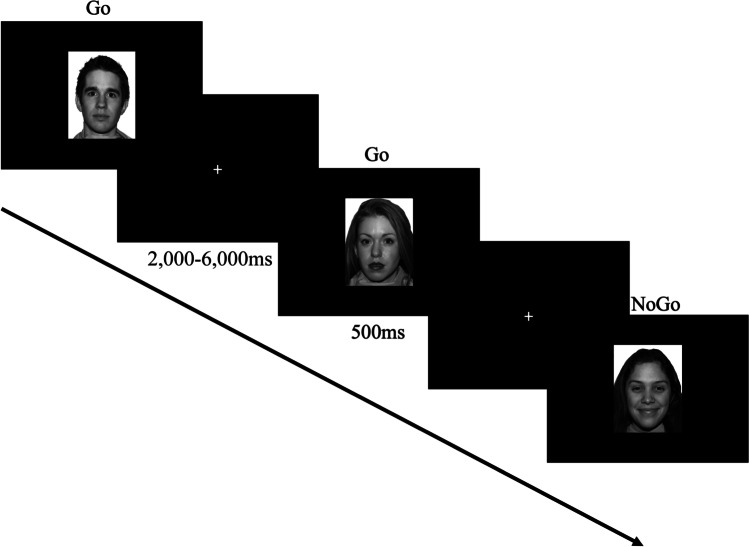
“As in previous Emo-GNG tasks (Durston et al., 2002; Hare et al., 2005), trial order was pseudorandom and parametrically balanced to control for the number of go stimuli preceding each nogo stimulus and to ensure that nogo trials occurred equally across the early, middle, and late stages of a block.”
MethodAutomatic mimicry reactions as related to differences in emotional empathy
Sonnby–Borgström, M. (2002) · Scandinavian Journal of Psychology · doi:10.1111/1467-9450.00312 · Cited by 350
Tottenham, N., Hare, T. A., & Casey, B. J. (2011) · Frontiers in Psychology · doi:10.3389/fpsyg.2011.00039 · Cited by 335 · cited 5×
“Given that emotions can have a detrimental effect on the efficiency of cognitive control processes (Hare et al., 2008; Tottenham et al., 2011), it is possible that the increased emotional reactivity associated with higher levels of affective empathy could interfere with one’s ability to engage the often demanding proc…”
BackgroundInfluentialAffect regulation and temperament in children with autism spectrum disorder
Konstantareas, M. M., & Stewart, K. (2006) · Journal of Autism and Developmental Disorders · doi:10.1007/s10803-005-0051-4 · Cited by 307
JOSEPH, R. M., & TAGER–FLUSBERG, H. (2004) · Development and Psychopathology · doi:10.1017/s095457940404444x · Cited by 288
“I feel better but I don’t know why”: the psychology of implicit emotion regulation.
Koole, S. L., & Rothermund, K. (2011) · Cognition and Emotion · doi:10.1080/02699931.2010.550505 · Cited by 258
Cognitive reappraisal of negative affect: Converging evidence from EMG and self-report
Ray, R. D., McRae, K., Ochsner, K. N., & Gross, J. J. (2010) · Emotion · doi:10.1037/a0019015 · Cited by 256
Sex differences in amygdala activation during the perception of facial affect
Killgore, W. D. S., & Yurgelun-Todd, D. A. (2001) · Neuroreport · doi:10.1097/00001756-200108080-00050 · Cited by 251
Emotion Regulation Moderates the Association between Empathy and Prosocial Behavior
Lockwood, P. L., Seara-Cardoso, A., & Viding, E. (2014) · PLoS ONE · doi:10.1371/journal.pone.0096555 · Cited by 247
Frith, U., & Happé, F. (2005) · Current Biology · doi:10.1016/j.cub.2005.09.033 · Cited by 245
Effects of mood manipulation and anxiety on performance of an emotional Stroop task
Richards, A., French, C. C., Johnson, W., Naparstek, J., & Williams, J. (1992) · British Journal of Psychology · doi:10.1111/j.2044-8295.1992.tb02454.x · Cited by 222
Conceptualising and Measuring Empathy
Gerdes, K. E., Segal, E. A., & Lietz, C. A. (2010) · British Journal of Social Work · doi:10.1093/bjsw/bcq048 · Cited by 214
Empathy and emotion regulation: An integrative account
Thompson, N. M., Uusberg, A., Gross, J. J., & Chakrabarti, B. (2019) · Progress in brain research · doi:10.1016/bs.pbr.2019.03.024 · Cited by 213
Self-citationUrry, H. L., van Reekum, C. M., Johnstone, T., & Davidson, R. J. (2009) · NeuroImage · doi:10.1016/j.neuroimage.2009.05.069 · Cited by 196
Theory of mind and social impairment in children with conduct disorder
Happé, F., & Frith, U. (1996) · British Journal of Developmental Psychology · doi:10.1111/j.2044-835x.1996.tb00713.x · Cited by 192
Lockwood, P. L., Bird, G., Bridge, M., & Viding, E. (2013) · Frontiers in Human Neuroscience · doi:10.3389/fnhum.2013.00760 · Cited by 181
Emotional Empathy and Facial Reactions to Facial Expressions
Dimberg, U., Andréasson, P., & Thunberg, M. (2011) · Journal of Psychophysiology · doi:10.1027/0269-8803/a000029 · Cited by 178
Schmeichel, B. J., & Demaree, H. A. (2010) · Emotion · doi:10.1037/a0019355 · Cited by 177
The interaction of attention and emotion
Taylor, J. G., & Fragopanagos, N. F. (2005) · Neural Networks · doi:10.1016/j.neunet.2005.03.005 · Cited by 175
Negative Emotion Impairs Conflict-Driven Executive Control
Padmala, S., Bauer, A., & Pessoa, L. (2011) · Frontiers in Psychology · doi:10.3389/fpsyg.2011.00192 · Cited by 175
Individual differences in cognitive control processes and their relationship to emotion regulation
Hendricks, M. A., & Buchanan, T. W. (2016) · Cognition and Emotion · doi:10.1080/02699931.2015.1032893 · Cited by 168
Empathizing: neurocognitive developmental mechanisms and individual differences
Chakrabarti, B., & Baron‐Cohen, S. (2006) · Progress in brain research · doi:10.1016/s0079-6123(06)56022-4 · Cited by 167
Self-citationÓlafsson, R. P., Smári, J., Guðmundsdóttir, F., Ólafsdóttir, G., Harðardóttir, H. L., & Einarsson, S. M. (2011) · Journal of Anxiety Disorders · doi:10.1016/j.janxdis.2011.03.013 · Cited by 160
Stenberg, G., Wiking, S., & Dahl, M. (1998) · Cognition & Emotion · doi:10.1080/026999398379420 · Cited by 158
Relating empathy and emotion regulation: Do deficits in empathy trigger emotion dysregulation?
Schipper, M., & Petermann, F. (2013) · Social Neuroscience · doi:10.1080/17470919.2012.761650 · Cited by 148
A Dual Route Model of Empathy: A Neurobiological Prospective
Yu, C., & Chou, T. (2018) · Frontiers in Psychology · doi:10.3389/fpsyg.2018.02212 · Cited by 144
From self to social cognition: Theory of Mind mechanisms and their relation to Executive Functioning
Bradford, E. E. F., Jentzsch, I., & Gomez, J.-C. (2015) · Cognition · doi:10.1016/j.cognition.2015.02.001 · Cited by 143
Interference produced by emotional conflict associated with anterior cingulate activation
Haas, B. W., OMURA, K., Constable, R. T., & Canli, T. (2006) · Cognitive Affective & Behavioral Neuroscience · doi:10.3758/cabn.6.2.152 · Cited by 128
Lee, B.-T., Seok, J.-H., Lee, B.-C., Cho, S. W., Yoon, B.-J., Lee, K.-U., Chae, J.-H., Choi, I.-G., & Ham, B.-J. (2008) · Progress in Neuro-Psychopharmacology and Biological Psychiatry · doi:10.1016/j.pnpbp.2007.12.009 · Cited by 123
Implicit emotion regulation: feeling better without knowing why.
Koole, S. L., Webb, T. L., & Sheeran, P. L. (2015) · Current Opinion in Psychology · doi:10.1016/j.copsyc.2014.12.027 · Cited by 121
Relationships among Facial Mimicry, Emotional Experience, and Emotion Recognition
Sato, W., Fujimura, T., Kochiyama, T., & Suzuki, N. (2013) · PLoS ONE · doi:10.1371/journal.pone.0057889 · Cited by 120
Are Gender Differences in Empathy Due to Differences in Emotional Reactivity?
Rueckert, L., Branch, B., & Doan, T. (2011) · Psychology · doi:10.4236/psych.2011.26088 · Cited by 119
Individual differences in the effects of spontaneous mimicry on emotional contagion
Laird, J. D., Alibozak, T., Davainis, D., Deignan, K., Fontanella, K., Hong, J. S., Levy, B. L. M., & Pacheco, C. (1994) · Motivation and Emotion · doi:10.1007/bf02254830 · Cited by 119
Quadratic Associations Between Empathy and Depression as Moderated by Emotion Dysregulation
Tully, E. C., Ames, A. M., Garcia, S. E., & Donohue, M. R. (2016) · The Journal of Psychology · doi:10.1080/00223980.2014.992382 · Cited by 113
Powell, P. A. (2018) · Motivation and Emotion · doi:10.1007/s11031-018-9684-4 · Cited by 111
Time course of automatic emotion regulation during a facial Go/Nogo task
Zhang, W., & Lu, J. (2011) · Biological Psychology · doi:10.1016/j.biopsycho.2011.12.011 · Cited by 110
Comparison of self‐reports, reports by knowledgeable informants, and behavioral observation data
Moskowitz, D. S. (1986) · Journal of Personality · doi:10.1111/j.1467-6494.1986.tb00396.x · Cited by 103
Implicit and explicit behavioral tendencies in male and female depression
Seidel, E., Habel, U., Finkelmeyer, A. E., Schneider, F. W., Gur, R. C., & Derntl, B. (2010) · Psychiatry Research · doi:10.1016/j.psychres.2010.02.001 · Cited by 101
Mentalized affectivity: A new model and assessment of emotion regulation
Greenberg, D. M., Kolasi, J., Hegsted, C. P., Berkowitz, Y., & Jurist, E. L. (2017) · PLOS ONE · doi:10.1371/journal.pone.0185264 · Cited by 99
Beall, P. M., & Herbert, A. M. (2008) · Cognition & Emotion · doi:10.1080/02699930801940370 · Cited by 97
Melchers, M., Montag, C., Markett, S. A., & Reuter, M. (2014) · Cognitive Neuropsychiatry · doi:10.1080/13546805.2014.991781 · Cited by 93
Mutter, B., Alcorn, M. B., & Welsh, M. (2006) · Perceptual and Motor Skills · doi:10.2466/pms.102.3.819-835 · Cited by 89
The Role of Intelligence Quotient and Emotional Intelligence in Cognitive Control Processes
Checa, P., & Fernández‐Berrocal, P. (2015) · Frontiers in Psychology · doi:10.3389/fpsyg.2015.01853 · Cited by 89
The role of inhibitory control in false belief understanding
Flynn, E. (2007) · Infant and Child Development · doi:10.1002/icd.500 · Cited by 86
The meanings of personality predicates.
Kagan, J. (1988) · American Psychologist · doi:10.1037//0003-066x.43.8.614 · Cited by 83
Okun, M. A., Shepard, S. A., & Eisenberg, N. (2000) · Personality and Individual Differences · doi:10.1016/s0191-8869(99)00107-5 · Cited by 83
Eisenberg, N., & Okun, M. A. (1996) · Journal of Personality · doi:10.1111/j.1467-6494.1996.tb00818.x · Cited by 82
The Impact of Perspective Change As a Cognitive Reappraisal Strategy on Affect: A Systematic Review
Wallace-Hadrill, S. M. A., & Kamboj, S. K. (2016) · Frontiers in Psychology · doi:10.3389/fpsyg.2016.01715 · Cited by 80
Mohr, A. H., & Preston, S. D. (2011) · Cognition & Emotion · doi:10.1080/02699931.2011.559192 · Cited by 75
Contardi, A., Imperatori, C., Penzo, I., Gatto, C. D., & Farina, B. (2016) · Frontiers in Psychology · doi:10.3389/fpsyg.2016.01068 · Cited by 70
Word Wins Over Face: Emotional Stroop Effect Activates the Frontal Cortical Network
Ovaysikia, S., Tahir, K. A., Chan, J. L., & DeSouza, J. F. X. (2011) · Frontiers in Human Neuroscience · doi:10.3389/fnhum.2010.00234 · Cited by 68
Anxiety, Emotional Distraction, and Attentional Control in the Stroop Task
Kalanthroff, E., Henik, A., Derakshan, N., & Usher, M. (2016) · Emotion · doi:10.1037/emo0000129 · Cited by 64
Empathy in adolescence: Relations with emotion awareness and social roles
Rieffe, C. J., & Camodeca, M. (2016) · British Journal of Developmental Psychology · doi:10.1111/bjdp.12133 · Cited by 63
Empathic emotion regulation in prosocial behaviour and altruism
Brethel-Haurwitz, K. M., Stoianova, M., & Marsh, A. A. (2020) · Cognition & Emotion · doi:10.1080/02699931.2020.1783517 · Cited by 59
Explaining autism: Ten reasons to focus on the developing self
Hobson, R. P. (2010) · Autism · doi:10.1177/1362361310364142 · Cited by 54
MacDonald, H. Z., & Price, J. L. (2018) · Mental Health & Prevention · doi:10.1016/j.mhp.2018.11.004 · Cited by 54
Attentional control both helps and harms empathy
Goodhew, S. C., & Edwards, M. (2020) · Cognition · doi:10.1016/j.cognition.2020.104505 · Cited by 47
Making something out of nothing: neutral content modulates attention in generalized anxiety disorder
Olatunji, B. O., Ciesielski, B. G., Armstrong, T., Zhao, M., & Zald, D. H. (2011) · Depression and Anxiety · doi:10.1002/da.20806 · Cited by 43
Zhang, W., Ding, Q., Chen, N., Qing, W., Zhao, C., Zhang, P., Li, X., Liu, Q., & Li, H. (2016) · NeuroImage Clinical · doi:10.1016/j.nicl.2016.01.018 · Cited by 43
Affective Privilege: Asymmetric Interference by Emotional Distracters
Reeck, C., & Egner, T. (2011) · Frontiers in Psychology · doi:10.3389/fpsyg.2011.00232 · Cited by 39
Emotional modulation of the attentional blink and the relation to interpersonal reactivity
Kanske, P., Schönfelder, S., & Wessa, M. (2013) · Frontiers in Human Neuroscience · doi:10.3389/fnhum.2013.00641 · Cited by 38
Jasinska, A. J., Yasuda, M., Rhodes, R. E., Wang, C., & Polk, T. A. (2012) · Frontiers in Psychology · doi:10.3389/fpsyg.2012.00345 · Cited by 33
The role of cognitive emotion regulation on the vicarious emotional response
López‐Pérez, B., & Ambrona, T. (2014) · Motivation and Emotion · doi:10.1007/s11031-014-9452-z · Cited by 30
Inhibitory control and empathy-related personality traits: Sex-linked associations
Hansen, S. (2011) · Brain and Cognition · doi:10.1016/j.bandc.2011.04.004 · Cited by 28
Morooka (2012) · PubMed · doi:10.18926/amo/49385 · Cited by 25
Using the Stroop Task to Study Emotion Regulation
Buhle, J., Wager, T., & Smith, E. (2010) · Self Control in Society, Mind, and Brain · doi:10.1093/acprof:oso/9780195391381.003.0006 · Cited by 21
Automatic Processing of Emotional Words in the Absence of Awareness: The Critical Role of P2
Lei, Y., Dou, H., Liu, Q., Zhang, W., Zhang, Z., & Li, H. (2017) · Frontiers in Psychology · doi:10.3389/fpsyg.2017.00592 · Cited by 21
An investigation of the implicit control of the processing of negative pictures.
Yiend, J., Mathews, A., Weston, B., Dunn, B. D., Cusack, R., & Mackintosh, B. (2008) · Emotion · doi:10.1037/a0014146 · Cited by 14
Hare, T. A., Tottenham, N., Galván, A., Voss, H. U., Glover, G. H., & Casey, B. J. (2008) · PubMed Central · doi:10.1016/j.biopsych.2008.03.015015 · Cited by 9
The meanings of personality predicates.
Kagan, J. (1988) · American Psychologist · doi:10.1037/0003-066x.43.8.614
Cited by
Zhao, Y., Chu, X., & Rong, K. (2022) · Computers in Human Behavior · doi:10.1016/j.chb.2022.107484 · Cited by 99
Report on Social Desirability, Midpoint and Extreme Responding in TALIS 2013
van de Vijver, F. J. R., & He, J. (2014) · OECD education working papers · doi:10.1787/5jxswcfwt76h-en · Cited by 46
Marques, J. A. L., Neto, A., Silva, S. C. L. D. C. E., & Alcañiz, J. E. B. (2024) · Psychology and Marketing · doi:10.1002/mar.22118 · Cited by 35
Reappraisal and empathic perspective-taking – More alike than meets the eyes
Morawetz, C., Berboth, S., Kohn, N., Jackson, P. L., & Jauniaux, J. (2022) · NeuroImage · doi:10.1016/j.neuroimage.2022.119194 · Cited by 32
Fabris, M. A., Longobardi, C., Settanni, M., & Mastrokoukou, S. (2024) · Child Abuse & Neglect · doi:10.1016/j.chiabu.2023.106631 · Cited by 29
Metadata
- Authors
- Thompson, N. M., van Reekum, C. M., & Chakrabarti, B.
- Affiliations
- University of Reading (GB)
- Corresponding author
- Chakrabarti, Bhismadev
- Venue
- Affective Science
- Published
- 2021-11-15
- Volume
- 3
- Issue
- 1
- Pages
- 118-134
- ISSN
- 2662-2041 (ISSN-L)
- 2662-205X
- PMC
- PMC8989800
- OpenAlex
- W3161877732
- Semantic Scholar
- 16c405e60190e2a03987c56b15e19b75e8d6b1e3
- Cited by
- 136
- References
- 118
- Citations by year
- 2026: 50 · 2025: 33 · 2024: 32 · 2023: 15 · 2022: 4 · 2021: 1
- FWCI
- 12.74
- Type
- journal article
- Language
- en
- Open access
- hybrid
- doi.org
- Licence
- cc-by
- creativecommons.org/licenses/by/4.0 (tdm)
- creativecommons.org/licenses/by/4.0 (vor)
- Locations
- Affective Science (publishedVersion, cc-by)
- PubMed Central (publishedVersion, cc-by)
- PubMed (publishedVersion)
- CentAUR (University of Reading) (submittedVersion, cc-by)
- PsyArXiv (OSF Preprints) (submittedVersion)
- PsyArXiv (OSF Preprints) (submittedVersion, cc-by)
- Funders
- Medical Research Council (MR/J003980/1, MR/P023894/1)
- leverhulme trust (PLP-2015-329)
- Topics
- Social Sciences › Psychology › Social Psychology › Emotions and Moral Behavior
- Life Sciences › Neuroscience › Cognitive Neuroscience › Neural and Behavioral Psychology Studies
- Social Sciences › Psychology › Experimental and Cognitive Psychology › Anxiety, Depression, Psychometrics, Treatment, Cognitive Processes
- Keywords
- cognitive empathy, affective empathy, emotion regulation, emotional dysregulation, implicit emotion regulation, emotional interference, inhibitory control, go/no-go task, Stroop task, trait empathy
About these checks
Registry, retraction, Cites and statistics results are computed, not judged, with one exception: a printed reference that no index lists is read once by a model before it counts as a citation error. Claims are extracted by a model and kept only when their quote appears verbatim in the text; each cited source is then checked, with a model’s help, for whether it says what the claim relies on. Those verdicts can be wrong — read the claim’s quote and the cited source before relying on one.
Statistics and arithmetic are recomputed, not judged.
Confidence bands are shown only for fields calibrated on our annotated test set. None is calibrated yet, so no band is shown.
What counts as a claim ›How we measure confidence ›How we check this ›
Are you an author, or do you see a problem with this page? Request a review
Data sources
Bibliographic data: Semantic Scholar, OpenAlex, Crossref.
Contains information from the Semantic Scholar Academic Graph Datasets, made available under the ODC Attribution License (ODC-BY 1.0).
Semantic Scholar’s data is described in: Kinney, R., et al. (2023). The Semantic Scholar Open Data Platform. arXiv:2301.10140.
