

The DOI matches its Crossref record; 50 of the 51 references it cites were found in a registry or an index.
Do patients with schizophrenia exhibit aberrant salience?
Open accessAbstract
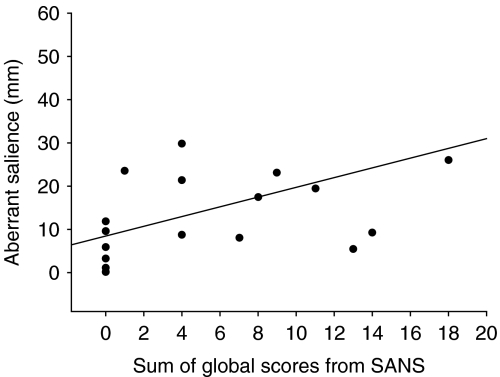
Background: It has been suggested that some psychotic symptoms reflect ‘aberrant salience’, related to dysfunctional reward learning. To test this hypothesis we investigated whether patients with schizophrenia showed impaired learning of task-relevant stimulus–reinforcement associations in the presence of distracting task-irrelevant cues. Method: We tested 20 medicated patients with schizophrenia and 17 controls on a reaction time game, the Salience Attribution Test. In this game, participants made a speeded response to earn money in the presence of conditioned stimuli (CSs). Each CS comprised two visual dimensions, colour and form. Probability of reinforcement varied over one of these dimensions (task-relevant), but not the other (task-irrelevant). Measures of adaptive and aberrant motivational salience were calculated on the basis of latency and subjective reinforcement probability rating differences over the task-relevant and task-irrelevant dimensions respectively. Results: Participants rated reinforcement significantly more likely and responded significantly faster on high-probability-reinforced relative to low-probability-reinforced trials, representing adaptive motivational salience. Patients exhibited reduced adaptive salience relative to controls, but the two groups did not differ in terms of aberrant salience. Patients with delusions exhibited significantly greater aberrant salience than those without delusions, and aberrant salience also correlated with negative symptoms. In the controls, aberrant salience correlated significantly with ‘introvertive anhedonia’ schizotypy. Conclusions: These data support the hypothesis that aberrant salience is related to the presence of delusions in medicated patients with schizophrenia, but are also suggestive of a link with negative symptoms. The relationship between aberrant salience and psychotic symptoms warrants further investigation in unmedicated patients.
Overview
The claims and statistics of this paper haven’t been checked yet.
Run the check — free, no account needed. It reads the open-access text and checks the sources it cites.
Integrity signals
Registry
Cites
Statistics
Figures
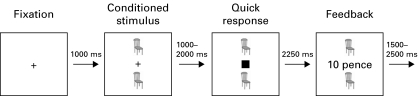
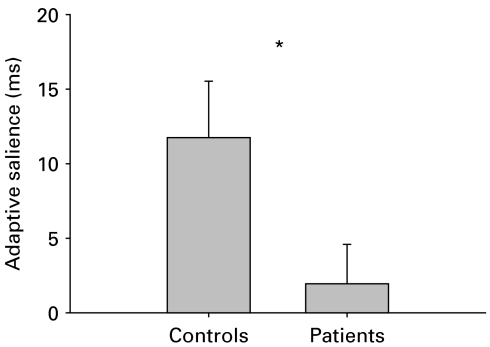
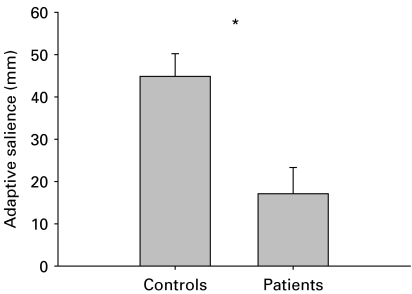
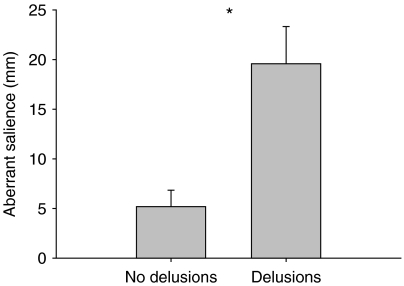
Verification
Claims the paper makes
The claims and statistics of this paper haven’t been checked yet.
Run the check — free, no account needed. It reads the open-access text and checks the sources it cites.
Claims other papers make about this one
Each is checked against this paper’s own text: does it say what the citing paper says it does?
In the citing paper
“However, on a neurophysiological level, a prediction error of this nature could cause an increase in the phasic activity of midbrain dopaminergic neurons, given the role that these particular neurons are believed to play in signaling salience in general and prediction errors in particular.[62][63][64][65]”
From Schizophrenia, myelination, and delayed corollary discharges: a hypothesis (2012) · cites this paper as [65]
Self-check
Percentages, sums and reported differences re-computed from the paper’s own numbers.
The self-check needs the paper’s full text.
Citations
Cites
(1998) · The Journal of Clinical Psychiatry · Cited by 19,139
(1998) · PubMed · Cited by 10,216
A neural substrate of prediction and reward
Schultz, W., Dayan, P., & Montague, P. R. (1997) · Science · doi:10.1126/science.275.5306.1593 · Cited by 9,388
A Rating Scale for Mania: Reliability, Validity and Sensitivity
Young, R. C., Biggs, J. T., Ziegler, V. E., & Meyer, D. A. (1978) · British Journal of Psychiatry · doi:10.1192/bjp.133.5.429 · Cited by 8,744
The mini international neuropsychiatric interview
Lecrubier, Y., Sheehan, D. V., Hergueta, T., & Weiller, E. (1998) · European Psychiatry · doi:10.1016/s0924-9338(99)80239-9 · Cited by 5,899
What is the role of dopamine in reward: hedonic impact, reward learning, or incentive salience?
Berridge, K. C., & Robinson, T. E. (1998) · Brain Research Reviews · doi:10.1016/s0165-0173(98)00019-8 · Cited by 4,127
Dopamine, learning and motivation.
Wise, R. A. (2004) · Nature Reviews Neuroscience · doi:10.1038/nrn1406 · Cited by 3,379
Kapur, S. (2003) · American Journal of Psychiatry · doi:10.1176/appi.ajp.160.1.13 · Cited by 2,813
Scale for the Assessment of Negative Symptoms (SANS)*
(1989) · The British Journal of Psychiatry · doi:10.1192/s0007125000291502 · Cited by 2,710
Scale for Assessment of Positive Symptoms (SAPS) 1984
Andreasen, N. C. (1995) · Open Scholarship Institutional Repository (Washington University in St. Louis) · Cited by 2,423
Research works printed but not linked: 2
- Wechsler, 1981, Wechsler Adult Intelligence Scale – Revised
- Wechsler, 2001, Wechsler Test of Adult Reading Manual
Cited by
Sorted by citations
The Dopamine Hypothesis of Schizophrenia: Version III--The Final Common Pathway
Howes, O. D., & Kapur, S. (2009) · Schizophrenia Bulletin · doi:10.1093/schbul/sbp006 · Cited by 2,693
van Os, J., & Kapur, S. (2009) · The Lancet · doi:10.1016/s0140-6736(09)60995-8 · Cited by 1,971
Perceiving is believing: a Bayesian approach to explaining the positive symptoms of schizophrenia
Fletcher, P. C., & Frith, C. D. (2009) · Nature Reviews Neuroscience · doi:10.1038/nrn2536 · Cited by 1,462
Dysconnection in schizophrenia: from abnormal synaptic plasticity to failures of self-monitoring
Stephan, K. E., Friston, K. J., & Frith, C. D. (2009) · Schizophrenia Bulletin · doi:10.1093/schbul/sbn176 · Cited by 1,134
Self-citationComputational psychiatry as a bridge from neuroscience to clinical applications
Huys, Q. J. M., Maia, T. V., & Frank, M. J. (2016) · Nature Neuroscience · doi:10.1038/nn.4238 · Cited by 1,002
Glutamate and dopamine in schizophrenia: An update for the 21 st century
Howes, O., McCutcheon, R., & Stone, J. (2015) · Journal of Psychopharmacology · doi:10.1177/0269881114563634 · Cited by 702
More than skin deep: Stress neurobiology and mental health consequences of racial discrimination
Berger, M., & Sarnyai, Z. (2015) · Stress · doi:10.3109/10253890.2014.989204 · Cited by 606
Expected value and prediction error abnormalities in depression and schizophrenia
Gradin, V. B., Kumar, P., Waiter, G., Ahearn, T., Stickle, C., Milders, M., Reid, I., Hall, J., & Steele, J. D. (2011) · Brain · doi:10.1093/brain/awr059 · Cited by 485
Barch, D. M., & Dowd, E. C. (2010) · Schizophrenia Bulletin · doi:10.1093/schbul/sbq068 · Cited by 507
Toward a neurobiology of delusions
Corlett, P. R., Taylor, J. R., Wang, X.-J., Fletcher, P. C., & Krystal, J. H. (2010) · Progress in Neurobiology · doi:10.1016/j.pneurobio.2010.06.007 · Cited by 394
Hot and cold cognition in depression
Roiser, J. P., & Sahakian, B. J. (2013) · CNS Spectrums · doi:10.1017/s1092852913000072 · Cited by 354
Self-citationThe motivation and pleasure dimension of negative symptoms: Neural substrates and behavioral outputs
Kring, A. M., & Barch, D. M. (2014) · European Neuropsychopharmacology · doi:10.1016/j.euroneuro.2013.06.007 · Cited by 373
Reininghaus, U., Kempton, M. J., Valmaggia, L., Craig, T. K. J., Garety, P., Onyejiaka, A., Gayer-Anderson, C., So, S. H., Hubbard, K., Beards, S., et al. (2016) · Schizophrenia Bulletin · doi:10.1093/schbul/sbv190 · Cited by 304
An integrative perspective on the role of dopamine in schizophrenia
Maia, T. V., & Frank, M. J. (2017) · Biological Psychiatry · doi:10.1016/j.biopsych.2016.05.021 · Cited by 293
Barch, D. M., Pagliaccio, D., & Luking, K. (2015) · Current Topics in Behavioral Neurosciences · doi:10.1007/7854_2015_376 · Cited by 218
Neural and Behavioral Correlates of Aberrant Salience in Individuals at Risk for Psychosis
Roiser, J. P., Howes, O. D., Chaddock, C. A., Joyce, E. M., & McGuire, P. (2013) · Schizophrenia Bulletin · doi:10.1093/schbul/sbs147 · Cited by 205
Self-citationBhattacharyya, S. (2012) · Archives of General Psychiatry · doi:10.1001/archgenpsychiatry.2011.161 · Cited by 203
Dima, D., Roiser, J. P., Dietrich, D. E., Bonnemann, C., Lanfermann, H., Emrich, H. M., & Dillo, W. (2009) · NeuroImage · doi:10.1016/j.neuroimage.2009.03.033 · Cited by 192
Self-citationHousden, C. R., O’Sullivan, S. S., Joyce, E. M., Lees, A. J., & Roiser, J. P. (2010) · Neuropsychopharmacology · doi:10.1038/npp.2010.84 · Cited by 183
Self-citationCicchese, J. J., & Berry, S. D. (2016) · Frontiers in Psychiatry · doi:10.3389/fpsyt.2016.00001 · Cited by 173
Menon, V., Palaniyappan, L. K., & Supekar, K. (2022) · Biological Psychiatry · doi:10.1016/j.biopsych.2022.09.029 · Cited by 178
The Aberrant Salience Inventory: A new measure of psychosis proneness.
Cicero, D. C., Kerns, J. G., & McCarthy, D. M. (2010) · Psychological Assessment · doi:10.1037/a0019913 · Cited by 176
van Os, J. (2009) · Acta Psychiatrica Scandinavica · doi:10.1111/j.1600-0447.2009.01456.x · Cited by 156
Dopamine and the aberrant salience hypothesis of schizophrenia
Howes, O. D., & Nour, M. M. (2016) · World Psychiatry · doi:10.1002/wps.20276 · Cited by 146
Schizophrenia, myelination, and delayed corollary discharges: a hypothesis
Whitford, T. J., Ford, J. M., Mathalon, D. H., Kubicki, M., & Shenton, M. E. (2012) · Schizophrenia Bulletin · doi:10.1093/schbul/sbq105 · Cited by 140
Nonlinear Complexity Analysis of Brain fMRI Signals in Schizophrenia
Sokunbi, M. O., Gradin, V. B., Waiter, G. D., Cameron, G. G., Ahearn, T. S., Murray, A. D., Steele, J. D., & Staff, R. T. (2014) · PLoS ONE · doi:10.1371/journal.pone.0095146 · Cited by 135
Mismatch negativity encoding of prediction errors predicts S-ketamine-induced cognitive impairments
Schmidt, A., Bachmann, R., Kometer, M., Csomor, P. A., Stephan, K. E., Seifritz, E., & Vollenweider, F. X. (2012) · Neuropsychopharmacology · doi:10.1038/npp.2011.261 · Cited by 121
Midbrain activation during pavlovian conditioning and delusional symptoms in schizophrenia
Romaniuk, L., Honey, G. D., King, J. R. L., Whalley, H. C., McIntosh, A. M., Levita, L., Hughes, M., Johnstone, E. C., Day, M., Lawrie, S. M., et al. (2010) · Archives of General Psychiatry · doi:10.1001/archgenpsychiatry.2010.169 · Cited by 113
Neurobiological background of negative symptoms
Galderisi, S., Merlotti, E., & Mucci, A. (2015) · European Archives of Psychiatry and Clinical Neuroscience · doi:10.1007/s00406-015-0590-4 · Cited by 111
Attention to Irrelevant Cues Is Related to Positive Symptoms in Schizophrenia
Morris, R., Griffiths, O., Le Pelley, M. E., & Weickert, T. W. (2013) · Schizophrenia Bulletin · doi:10.1093/schbul/sbr192 · Cited by 105
Holistic Reinforcement Learning: The Role of Structure and Attention
Radulescu, A., Niv, Y., & Ballard, I. C. (2019) · Trends in Cognitive Sciences · doi:10.1016/j.tics.2019.01.010 · Cited by 109
Dopamine, Prediction Error and Beyond
Diederen, K. M. J., & Fletcher, P. C. (2021) · The Neuroscientist · doi:10.1177/1073858420907591 · Cited by 106
Esslinger, C., Englisch, S., Inta, D., Rausch, F., Schirmbeck, F. N., Mier, D. U., Kirsch, P., Meyer‐Lindenberg, A., & Zink, M. (2012) · Schizophrenia Research · doi:10.1016/j.schres.2012.06.025 · Cited by 110
Bland, A. R., Roiser, J. P., Mehta, M. A., Schei, T. S., Boland, H., Campbell-Meiklejohn, D. K., Emsley, R., Munafo, M. R., Penton‐Voak, I. S., Seara‐Cardoso, A., et al. (2016) · Frontiers in Behavioral Neuroscience · doi:10.3389/fnbeh.2016.00025 · Cited by 109
Self-citationTessier, C., Sweers, K., Frajerman, A., Bergaoui, H., Ferreri, F., Delva, C., Lapidus, N., Lamazière, A., Roiser, J. P., Hert, M. A. F. D., et al. (2016) · Translational Psychiatry · doi:10.1038/tp.2016.142 · Cited by 101
Self-citationDopaminergic basis for signaling belief updates, but not surprise, and the link to paranoia
Nour, M. M., Dahoun, T., Schwartenbeck, P., Adams, R. A., FitzGerald, T. H. B., Coello, C., Wall, M. B., Dolan, R. J., & Howes, O. D. (2018) · Proceedings of the National Academy of Sciences · doi:10.1073/pnas.1809298115 · Cited by 101
The neurophenomenology of early psychosis: An integrative empirical study
Nelson, B., Lavoie, S., Gawęda, Ł., Li, E., Sass, L. A., Koren, D., McGorry, P. D., Jack, B. N., Parnas, J., Polari, A. R., et al. (2019) · Consciousness and Cognition · doi:10.1016/j.concog.2019.102845 · Cited by 102
Barkus, C., Sanderson, D. J., Rawlins, J. N. P., Walton, M. E., Harrison, P. J., & Bannerman, D. M. (2014) · Molecular Psychiatry · doi:10.1038/mp.2014.91 · Cited by 92
Does the dopamine hypothesis explain schizophrenia?
Lau, C. I., Wang, H.-C., Hsu, J.-L., & Liu, M. (2013) · Reviews in the Neurosciences · doi:10.1515/revneuro-2013-0011 · Cited by 102
Deserno, L., Boehme, R., Heinz, A., & Schlagenhauf, F. (2013) · Frontiers in Psychiatry · doi:10.3389/fpsyt.2013.00172 · Cited by 95
Gaisler-Salomon, I., Miller, G. M., Chuhma, N., Lee, S., Zhang, H., Ghoddoussi, F., Lewandowski, N., Fairhurst, S., Wang, Y., Conjard-Duplany, A., et al. (2009) · Neuropsychopharmacology · doi:10.1038/npp.2009.58 · Cited by 86
Aberrant Salience Is Related to Dysfunctional Self-Referential Processing in Psychosis
Pankow, A., Katthagen, T., Diner, S., Deserno, L., Boehme, R., Kathmann, N., Gleich, T., Gaebler, M., Walter, H., Heinz, A., et al. (2015) · Schizophrenia Bulletin · doi:10.1093/schbul/sbv098 · Cited by 86
Affectively salient meaning in random noise: A task sensitive to psychosis liability
Galdos, M., Simons, C., Fernandez-Rivas, A., Wichers, M., Peralta, C., Lataster, T., Amer, G., Myin-Germeys, I., Allardyce, J., Gonzalez-Torres, M. A., et al. (2011) · Schizophrenia Bulletin · doi:10.1093/schbul/sbq029 · Cited by 84
Salience network-midbrain dysconnectivity and blunted reward signals in schizophrenia
Gradin, V. B., Waiter, G., O'Connor, A., Romaniuk, L., Stickle, C., Matthews, K., Hall, J., & Douglas Steele, J. (2013) · Psychiatry Research Neuroimaging · doi:10.1016/j.pscychresns.2012.06.003 · Cited by 82
The relevance of reward pathways for schizophrenia
Ziauddeen, H., & Murray, G. K. (2010) · Current Opinion in Psychiatry · doi:10.1097/yco.0b013e328336661b · Cited by 85
Neural substrates underlying effort computation in schizophrenia
Fervaha, G., Foussias, G., Agid, O., & Remington, G. J. (2013) · Neuroscience & Biobehavioral Reviews · doi:10.1016/j.neubiorev.2013.09.001 · Cited by 86
Losing Control Under Ketamine: Suppressed Cortico-Hippocampal Drive Following Acute Ketamine in Rats
Moran, R., Jones, M. W., Blockeel, A. J., Adams, R. A., Stephan, K. E., & Friston, K. J. (2014) · Neuropsychopharmacology · doi:10.1038/npp.2014.184 · Cited by 76
Self-citationEttinger, U., Corr, P. J., Mofidi, A., Williams, S., & Kumari, V. (2013) · Frontiers in Human Neuroscience · doi:10.3389/fnhum.2013.00130 · Cited by 76
Dopamine, cognitive biases and assessment of certainty: A neurocognitive model of delusions
Broyd, A., Balzan, R. P., Woodward, T. S., & Allen, P. (2017) · Clinical Psychology Review · doi:10.1016/j.cpr.2017.04.006 · Cited by 88
Comprehensive review: Computational modelling of schizophrenia
Valton, V., Romaniuk, L., Steele, J. D., Lawrie, S. M., & Seriès, P. (2017) · Neuroscience & Biobehavioral Reviews · doi:10.1016/j.neubiorev.2017.08.022 · Cited by 82
Social world interactions: how company connects to paranoia
Collip, D., Oorschot, M., Thewissen, V., van Os, J., Bentall, R. P., & Myin‐Germeys, I. (2010) · Psychological Medicine · doi:10.1017/s0033291710001558 · Cited by 76
Fabro, L. D., Schmidt, A., Fortea, L., Delvecchio, G., D’Agostino, A., Raduà, J., Borgwardt, S., & Brambilla, P. (2021) · Neuroscience & Biobehavioral Reviews · doi:10.1016/j.neubiorev.2021.06.020 · Cited by 74
Atypical processing of uncertainty in individuals at risk for psychosis
Cole, D. M., Diaconescu, A. O., Pfeiffer, U. J., Brodersen, K. H., Mathys, C. D., Julkowski, D., Ruhrmann, S., Schilbach, L., Tittgemeyer, M., Vogeley, K. T., et al. (2020) · NeuroImage Clinical · doi:10.1016/j.nicl.2020.102239 · Cited by 72
Self-citationEarly-stage visual perception impairment in schizophrenia, bottom-up and back again
Adámek, P., Langová, V., & Horáček, J. (2022) · Schizophrenia · doi:10.1038/s41537-022-00237-9 · Cited by 88
A Systems Neuroscience Perspective of Schizophrenia and Bipolar Disorder
Frangou, S. (2014) · Schizophrenia Bulletin · doi:10.1093/schbul/sbu017 · Cited by 71
Prioritizing pleasure and pain: attentional capture by reward-related and punishment-related stimuli
Watson, P., Pearson, D., Wiers, R. W. H. J., & Pelley, M. E. L. (2019) · Current Opinion in Behavioral Sciences · doi:10.1016/j.cobeha.2018.12.002 · Cited by 76
Are psychiatric diagnoses of psychosis scientific and useful?: The case of schizophrenia
Van Os, J. (2010) · Journal of Mental Health · doi:10.3109/09638237.2010.492417 · Cited by 65
Exploring the Neural Correlates of Delusions of Reference
Menon, M., Schmitz, T. W., Anderson, A. K., Graff, A., Korostil, M., Mamo, D. C., Gerretsen, P., Addington, J., Remington, G. J., & Kapur, S. (2011) · Biological Psychiatry · doi:10.1016/j.biopsych.2011.05.037 · Cited by 64
Disruption of conditioned reward association by typical and atypical antipsychotics
Danna, C. L., & Elmer, G. I. (2010) · Pharmacology Biochemistry and Behavior · doi:10.1016/j.pbb.2010.04.004 · Cited by 68
Dykxhoorn, J. L., Hollander, A., Lewis, G., Magnusson, C., Dalman, C., & Kirkbride, J. B. (2018) · Psychological Medicine · doi:10.1017/s0033291718003227 · Cited by 62
Neural Circuitry of Salience and Reward Processing in Psychosis
Kesby, J. P., Murray, G. K., & Knolle, F. (2023) · Biological Psychiatry Global Open Science · doi:10.1016/j.bpsgos.2021.12.003 · Cited by 55
Wible, C. G. (2012) · Frontiers in Human Neuroscience · doi:10.3389/fnhum.2012.00180 · Cited by 56
Striatal dopamine, reward, and decision making in schizophrenia
Deserno, L., Schlagenhauf, F., & Heinz, A. (2016) · Dialogues in Clinical Neuroscience · doi:10.31887/dcns.2016.18.1/ldeserno · Cited by 58
Modulation of motivational salience processing during the early stages of psychosis
Smieskova, R., Roiser, J. P., Chaddock, C. A., Schmidt, A., Harrisberger, F., Bendfeldt, K., Simon, A., Walter, A., Fusar-Poli, P., McGuire, P. K., et al. (2015) · Schizophrenia Research · doi:10.1016/j.schres.2015.04.036 · Cited by 56
Self-citationGawęda, Ł., Göritz, A. S., & Moritz, S. (2019) · Schizophrenia Research · doi:10.1016/j.schres.2018.11.034 · Cited by 52
Boehme, R., Deserno, L., Gleich, T., Katthagen, T., Pankow, A., Behr, J., Buchert, R., Roiser, J. P., Heinz, A., & Schlagenhauf, F. (2015) · Journal of Neuroscience · doi:10.1523/jneurosci.0805-15.2015 · Cited by 56
Self-citationAdaptive and aberrant reward prediction signals in the human brain
Roiser, J. P., Stephan, K. E., den Ouden, H. E. M., Friston, K. J., & Joyce, E. M. (2009) · NeuroImage · doi:10.1016/j.neuroimage.2009.11.075 · Cited by 56
Self-citationThe role of aberrant salience and self-concept clarity in psychotic-like experiences.
Cicero, D. C., Becker, T. M., Martin, E. A., Docherty, A. R., & Kerns, J. G. (2013) · Personality Disorders: Theory, Research, and Treatment · doi:10.1037/a0027361 · Cited by 52
Winton-Brown, T., Schmidt, A., Roiser, J. P., Howes, O. D., Egerton, A., Fusar-Poli, P., Bunzeck, N., Grace, A. A., Duzel, E., Kapur, S., et al. (2017) · Translational Psychiatry · doi:10.1038/tp.2017.174 · Cited by 51
Self-citationDissecting negative symptoms in schizophrenia: Opportunities for translation into new treatments
Foussias, G., Siddiqui, I., Fervaha, G., Agid, O., & Remington, G. J. (2014) · Journal of Psychopharmacology · doi:10.1177/0269881114562092 · Cited by 55
Organic psychosis: The pathobiology and treatment of delusions
Joyce, E. M. (2018) · CNS Neuroscience & Therapeutics · doi:10.1111/cns.12973 · Cited by 52
Self-citationWießner, I., Falchi-Carvalho, M., Palhano-Fontes, F., Feilding, A., Ribeiro, S. T. G., & Tófoli, L. F. (2021) · Psychological Medicine · doi:10.1017/s0033291721002531 · Cited by 54
Hippocampal Hyperactivity as a Druggable Circuit-Level Origin of Aberrant Salience in Schizophrenia
Kätzel, D., Wolff, A. R., Bygrave, A. M., & Bannerman, D. M. (2020) · Frontiers in Pharmacology · doi:10.3389/fphar.2020.486811 · Cited by 51
Kafadar, E., Mittal, V. A., Strauss, G. P., Chapman, H. C., Ellman, L. M., Bansal, S., Gold, J. M., Alderson‐Day, B., Evans, S., Moffatt, J. A., et al. (2020) · Schizophrenia Research · doi:10.1016/j.schres.2020.04.017 · Cited by 50
Sagheddu, C., Traccis, F., Serra, V., Congiu, M., Frau, R., Cheer, J. F., & Melis, M. (2020) · Progress in Neuro-Psychopharmacology and Biological Psychiatry · doi:10.1016/j.pnpbp.2020.110128 · Cited by 49
Corlett, P. R. (2009) · Frontiers in Behavioral Neuroscience · doi:10.3389/neuro.08.053.2009 · Cited by 50
Wigman, J. T. W., Collip, D., Wichers, M., Delespaul, P., Derom, C. A., Thiery, E. W., Vollebergh, W., Lataster, T., Jacobs, N., Myin‐Germeys, I., et al. (2013) · PLoS ONE · doi:10.1371/journal.pone.0054653 · Cited by 45
Resolving the Delusion Paradox
Petrović, P., & Sterzer, P. (2023) · Schizophrenia Bulletin · doi:10.1093/schbul/sbad084 · Cited by 45
Dysfunction of a Cortical Midline Network During Emotional Appraisals in Schizophrenia
Holt, D. J., Lakshmanan, B. M., Freudenreich, O., GOFF, D. C., Rauch, S. L., & Kuperberg, G. R. (2009) · Schizophrenia Bulletin · doi:10.1093/schbul/sbp067 · Cited by 45
Larivière, S., Lavigne, K. M., Woodward, T., Gerretsen, P., Graff-Guerrero, A., & Menon, M. (2017) · Psychiatry research. Neuroimaging · doi:10.1016/j.pscychresns.2017.03.005 · Cited by 40
Jalbrzikowski, M., Murty, V. P., Tervo‐Clemmens, B., Foran, W., & Luna, B. (2019) · American Journal of Psychiatry · doi:10.1176/appi.ajp.2018.18040443 · Cited by 41
The Effect of Dopamine Agonists on Adaptive and Aberrant Salience in Parkinson's Disease
Nagy, H., Levy-Gigi, E., Somlai, Z., Takáts, A., Bereczki, D., & Kéri, S. (2012) · Neuropsychopharmacology · doi:10.1038/npp.2011.278 · Cited by 42
Kowalski, J., Aleksandrowicz, A., Dąbkowska, M., & Gawęda, Ł. (2021) · Journal of Clinical Medicine · doi:10.3390/jcm10184126 · Cited by 45
Toward integrated understanding of salience in psychosis
Miyata, J. (2019) · Neurobiology of Disease · doi:10.1016/j.nbd.2019.03.002 · Cited by 44
Schmidt, A., Antoniades, M., Allen, P., Egerton, A., Chaddock, C. A., Borgwardt, S., Fusar-Poli, P., Roiser, J. P., Howes, O., & McGuire, P. (2017) · Psychological Medicine · doi:10.1017/s0033291716002439 · Cited by 38
Associative learning and the genetics of schizophrenia
Hall, J., Romaniuk, L., McIntosh, A. M., Steele, J. D., Johnstone, E. C., & Lawrie, S. M. (2009) · Trends in Neurosciences · doi:10.1016/j.tins.2009.01.011 · Cited by 39
You looking at me?: Interpreting social cues in schizophrenia
White, T. P., Borgan, F., Ralley, O., & Shergill, S. S. (2016) · Psychological Medicine · doi:10.1017/s0033291715001622 · Cited by 39
Dysfunctional insular connectivity during reward prediction in patients with first-episode psychosis
Schmidt, A., Palaniyappan, L. K., Smieskova, R., Simon, A. E., Riecher‐Rössler, A., Lang, U. E., Fusar‐Poli, P., McGuire, P. K., & Borgwardt, S. (2016) · Journal of Psychiatry and Neuroscience · doi:10.1503/jpn.150234 · Cited by 41
The Role of Antipsychotics in Smoking and Smoking Cessation
Matthews, A. M., Wilson, V. B., & Mitchell, S. H. (2011) · CNS Drugs · doi:10.2165/11588170-000000000-00000 · Cited by 40
Lin, P., Wang, X., Zhang, B., Kirkpatrick, B. W., Öngür, D., Levitt, J. J., Jovicich, J., Yao, S., & Wang, X. (2017) · Human Brain Mapping · doi:10.1002/hbm.23879 · Cited by 35
Dourron, H. M., Strauss, C. K., & Hendricks, P. S. (2022) · Pharmacological Reviews · doi:10.1124/pharmrev.121.000514 · Cited by 35
McCutcheon, R. A., Bloomfield, M. A. P., Dahoun, T., Mehta, M., & Howes, O. D. (2019) · Schizophrenia Research · doi:10.1016/j.schres.2018.12.011 · Cited by 35
IQ, the Urban Environment, and Their Impact on Future Schizophrenia Risk in Men
Toulopoulou, T., Picchioni, M., Mortensen, P. B., & Petersen, L. V. (2016) · Schizophrenia Bulletin · doi:10.1093/schbul/sbw147 · Cited by 36
Emerging Temporal Lobe Dysfunction in People at Clinical High Risk for Psychosis
Allen, P., Moore, H., Corcoran, C., Gilleen, J., Kozhuharova, P., Reichenberg, A., & Malaspina, D. (2019) · Frontiers in Psychiatry · doi:10.3389/fpsyt.2019.00298 · Cited by 35
Salience and psychosis: moving from theory to practise
Jensen, J., & Kapur, S. (2008) · Psychological Medicine · doi:10.1017/s0033291708003899 · Cited by 35
Computational approaches to schizophrenia: A perspective on negative symptoms
Deserno, L., Heinz, A., & Schlagenhauf, F. (2017) · Schizophrenia Research · doi:10.1016/j.schres.2016.10.004 · Cited by 31
Harris, S. T., Oakley, Ç., & Picchioni, M. (2014) · Aggression and Violent Behavior · doi:10.1016/j.avb.2014.04.009 · Cited by 39
Anticevic, A., Schleifer, C., & Cho, Y. (2015) · Dialogues in Clinical Neuroscience · doi:10.31887/dcns.2015.17.4/aanticevic · Cited by 34
Impaired contextual fear-conditioning in MAM rodent model of schizophrenia
Gill, K., Miller, S. A., & Grace, A. (2017) · Schizophrenia Research · doi:10.1016/j.schres.2017.08.064 · Cited by 28
Reininghaus, U., Oorschot, M., Moritz, S., Gayer-Anderson, C. E., Kempton, M. J., Valmaggia, L., McGuire, P. K., Murray, R. M., Garety, P. A., Wykes, T., et al. (2018) · Schizophrenia Bulletin · doi:10.1093/schbul/sby116 · Cited by 34
Metadata
- Authors
- Roiser, J. P., Stephan, K. E., den Ouden, H. E. M., Barnes, T. R. E., Friston, K. J., & Joyce, E. M.
- Affiliations
- Wellcome Centre for Human Neuroimaging (GB)
- Imperial College London (GB)
- Corresponding author
- Roiser, J. P.
- Venue
- Psychological Medicine
- Publisher
- Cambridge University Press (CUP)
- Published
- 2008-06-30
- Volume
- 39
- Issue
- 2
- Pages
- 199-209
- ISSN
- 0033-2917 (ISSN-L)
- 1469-8978
- PMC
- PMC2635536
- OpenAlex
- W2100040139
- Cited by
- 262
- References
- 51
- Citations by year
- 2026: 5 · 2025: 8 · 2024: 16 · 2023: 11 · 2022: 14 · 2021: 15 · 2020: 15 · 2019: 12 · 2018: 17 · 2017: 13 · 2016: 26 · 2015: 18 · 2014: 15 · 2013: 17 · 2012: 17
- FWCI
- 9.81
- Type
- journal article
- Language
- en
- Open access
- hybrid
- doi.org
- Licence
- cc-by-nc-sa
- www.cambridge.org/core/terms (unspecified)
- Locations
- Psychological Medicine (publishedVersion, cc-by-nc-sa)
- Europe PMC (PubMed Central) (publishedVersion, cc-by-nc-sa)
- PubMed Central (publishedVersion, cc-by-nc-sa)
- PubMed (publishedVersion)
- Zurich Open Repository and Archive (University of Zurich) (acceptedVersion, other-oa)
- Radboud Repository (Radboud University) (submittedVersion)
- UCL Discovery (University College London) (submittedVersion)
- Zurich Open Repository and Archive (University of Zurich) (submittedVersion, other-oa)
- Radboud Repository (Radboud University) (submittedVersion, other-oa)
- Zurich Open Repository and Archive (University of Zurich)
- Funders
- Wellcome Trust (064607 /z/01/z, 064607, 088130)
- University College London
- Topics
- Health Sciences › Medicine › Psychiatry and Mental health › Schizophrenia research and treatment
- Life Sciences › Neuroscience › Cognitive Neuroscience › Neural and Behavioral Psychology Studies
- Social Sciences › Arts and Humanities › Philosophy › Mental Health and Psychiatry
- Keywords
- schizophrenia, aberrant salience, motivational salience, delusions, negative symptoms, anhedonia, schizotypy, reward learning, reaction time, reinforcement probability
- MeSH terms
- Adaptation, Psychological, Adolescent, Adult, Conditioning, Psychological, Dopamine, Feedback, Female, Fixation, Ocular, Humans, Learning, Male, Middle Aged, Motivation, Psychological Tests, Psychotic Disorders, Reaction Time, Reinforcement, Psychology, Reward, Schizophrenia, Schizophrenic Psychology, Young Adult
About these checks
Registry, retraction, Cites and statistics results are computed, not judged, with one exception: a printed reference that no index lists is read once by a model before it counts as a citation error. Claims are extracted by a model and kept only when their quote appears verbatim in the text; each cited source is then checked, with a model’s help, for whether it says what the claim relies on. Those verdicts can be wrong — read the claim’s quote and the cited source before relying on one.
Statistics and arithmetic are recomputed, not judged.
Confidence bands are shown only for fields calibrated on our annotated test set. None is calibrated yet, so no band is shown.
What counts as a claim ›How we measure confidence ›How we check this ›
Are you an author, or do you see a problem with this page? Request a review
