

Reversible changes in pancreatic islet structure and function produced by elevated blood glucose
Open accessThe DOI matches its Crossref record; 46 of the 46 references it cites were found in a registry or an index.
Abstract
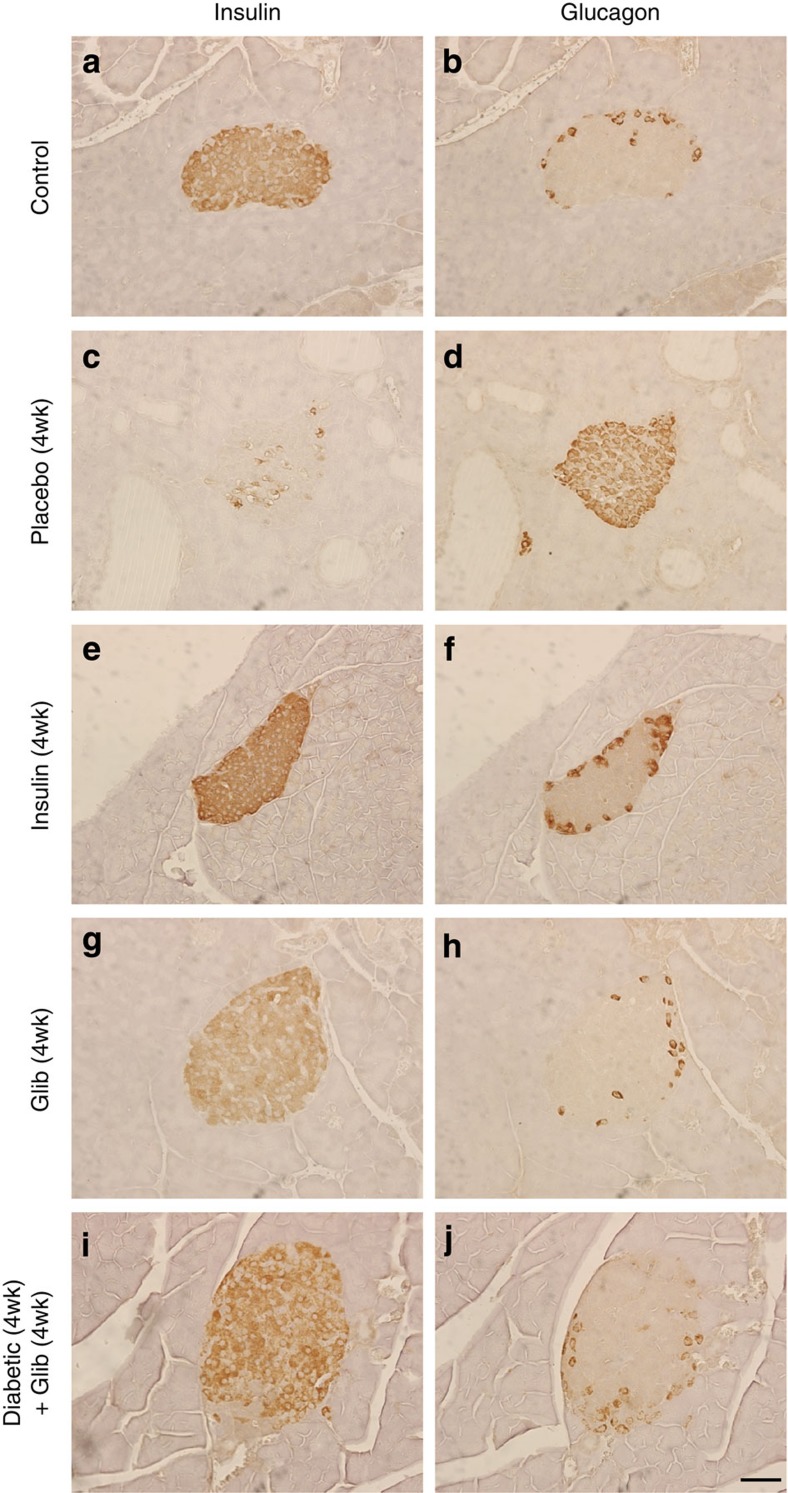
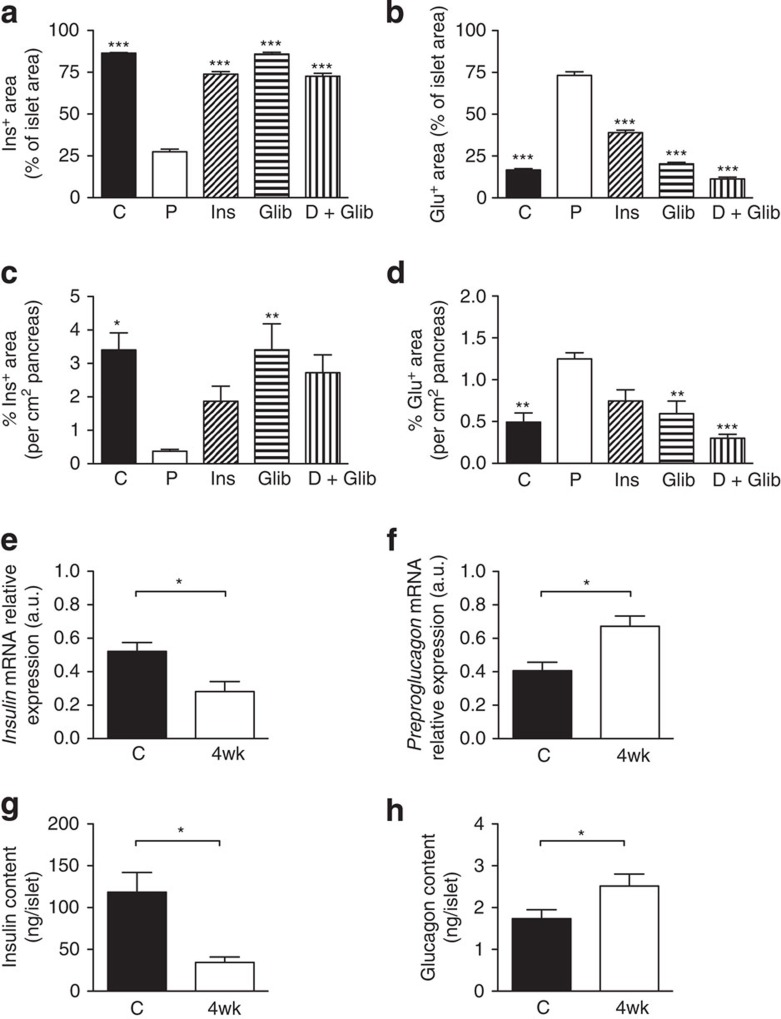
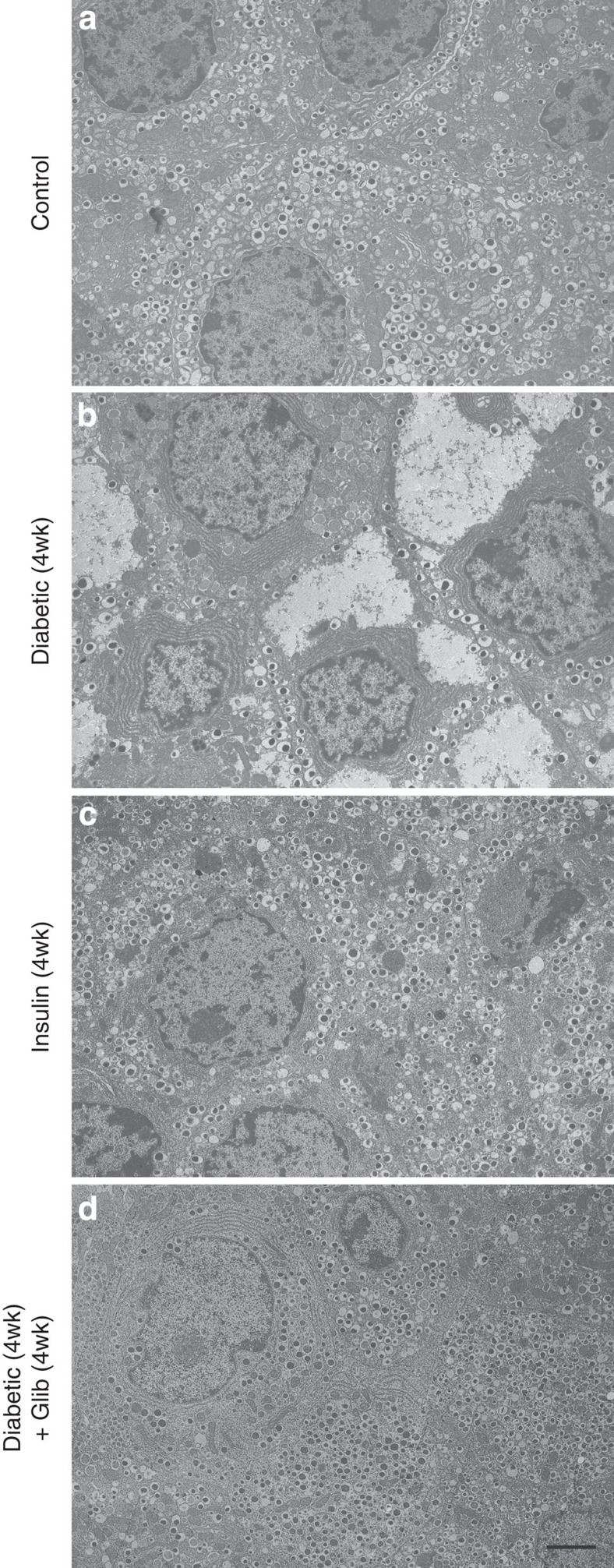
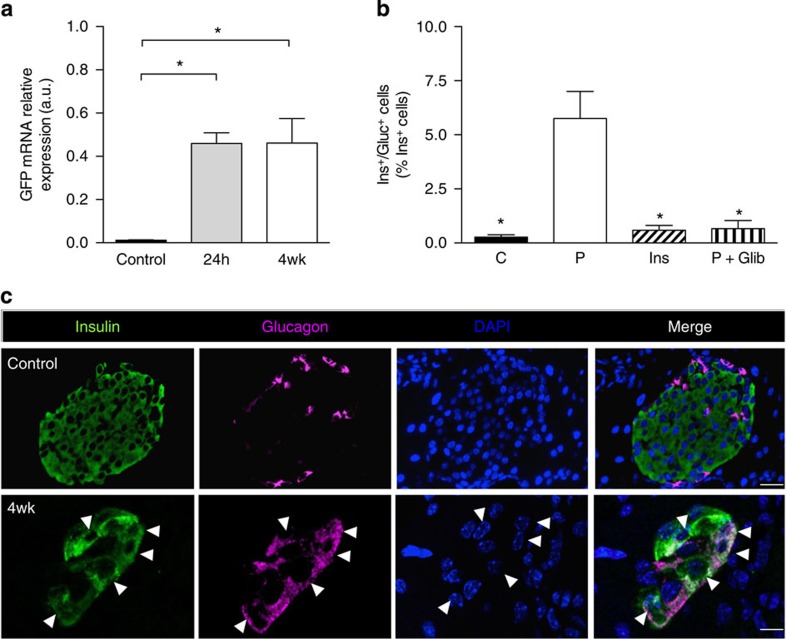
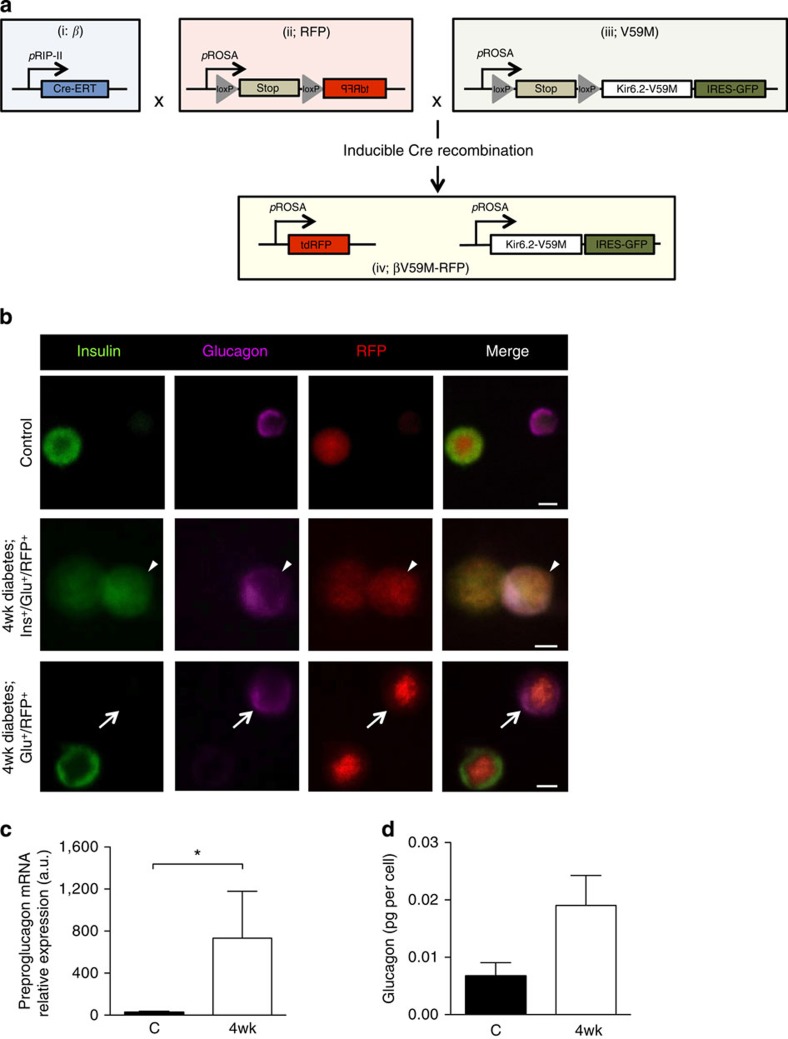
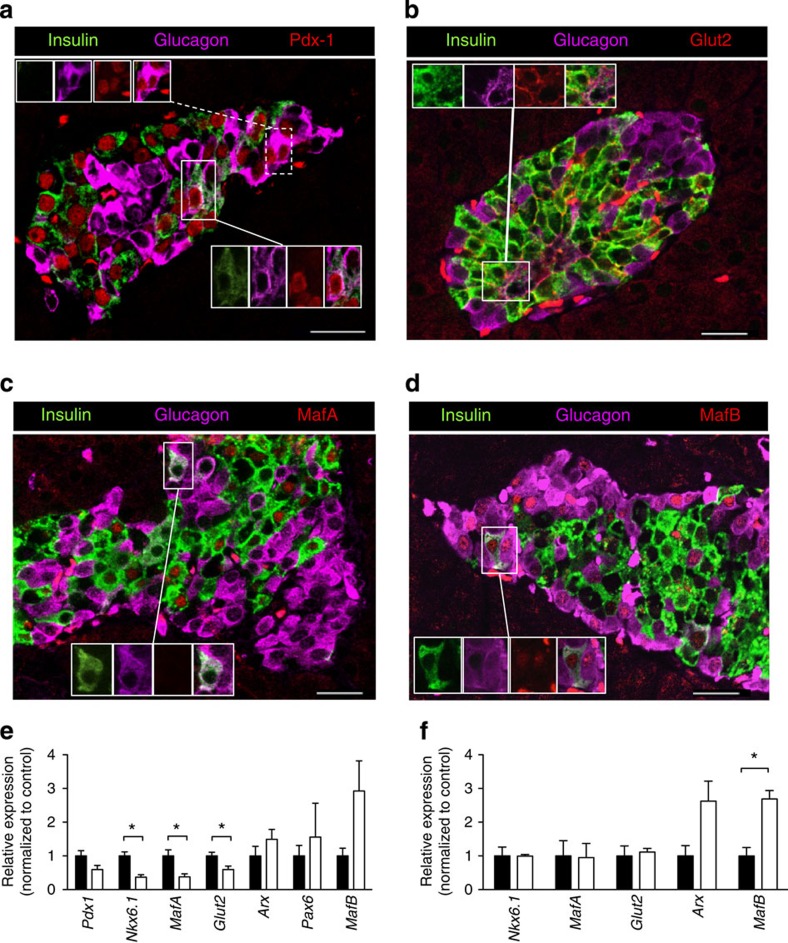
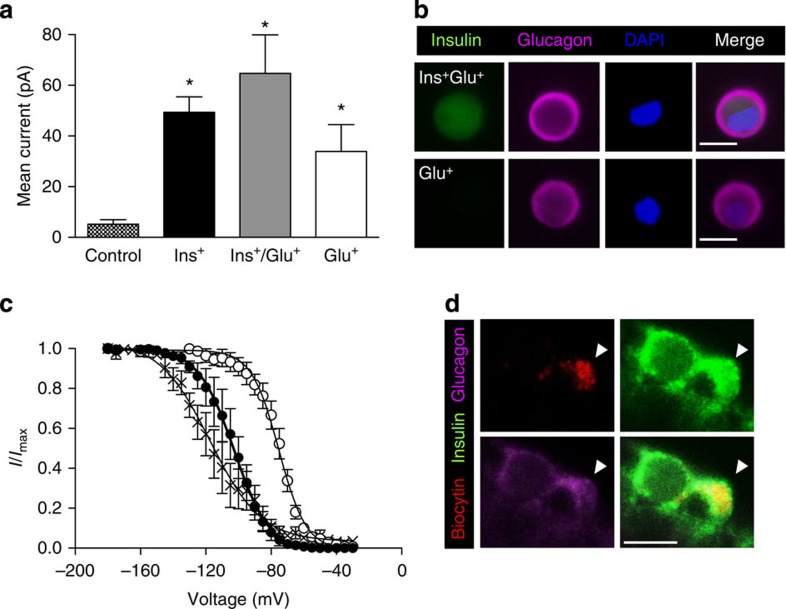
Diabetes is characterized by hyperglycaemia due to impaired insulin secretion and aberrant glucagon secretion resulting from changes in pancreatic islet cell function and/or mass. The extent to which hyperglycaemia per se underlies these alterations remains poorly understood. Here we show that β-cell-specific expression of a human activating K ATP channel mutation in adult mice leads to rapid diabetes and marked alterations in islet morphology, ultrastructure and gene expression. Chronic hyperglycaemia is associated with a dramatic reduction in insulin-positive cells and an increase in glucagon-positive cells in islets, without alterations in cell turnover. Furthermore, some β-cells begin expressing glucagon, whilst retaining many β-cell characteristics. Hyperglycaemia, rather than K ATP channel activation, underlies these changes, as they are prevented by insulin therapy and fully reversed by sulphonylureas. Our data suggest that many changes in islet structure and function associated with diabetes are attributable to hyperglycaemia alone and are reversed when blood glucose is normalized.
Overview
The claims and statistics of this paper haven’t been checked yet.
Free: it reads the open-access text and checks the first 5 claims that cite a source we can check. Create a free account to check every claim.
Integrity signals
Registry
Cites
Statistics
Figures

Verification
Claims the paper makes
The claims and statistics of this paper haven’t been checked yet.
Free: it reads the open-access text and checks the first 5 claims that cite a source we can check. Create a free account to check every claim.
Claims other papers make about this one
Each is checked against this paper’s own text: does it say what the citing paper says it does?
The check wasn’t confident either way, so it gives no verdict — never disputed.
In the citing paper
“In T2D rodent models, delta-cells were reported to migrate from the periphery of the islets to the centre.152”
From A review of current trends with type 2 diabetes epidemiology, aetiology, pathogenesis, treatments and future perspectives (2021) · cites this paper as [152]
Experimental — accuracy not yet measuredIn the citing paper
“Islet alpha-cells are usually found in the periphery of the islets, but in diabetes, many of the alpha-cells are found in the centre as well; in rodent models, this can be reversed by restoring normoglycaemia.141,152”
From A review of current trends with type 2 diabetes epidemiology, aetiology, pathogenesis, treatments and future perspectives (2021) · cites this paper as [152]
In the citing paper
“Islet alpha-cells are usually found in the periphery of the islets, but in diabetes, many of the alpha-cells are found in the centre as well; in rodent models, this can be reversed by restoring normoglycaemia.141,152”
From A review of current trends with type 2 diabetes epidemiology, aetiology, pathogenesis, treatments and future perspectives (2021) · cites this paper as [152]
Self-check
Percentages, sums and reported differences re-computed from the paper’s own numbers.
The self-check needs the paper’s full text.
Citations
Cites
Adult pancreatic β-cells are formed by self-duplication rather than stem-cell differentiation
Dor, Y., Brown, J., Martinez, O. I., & Melton, D. A. (2004) · Nature · doi:10.1038/nature02520 · Cited by 2,219
Pancreatic β Cell Dedifferentiation as a Mechanism of Diabetic β Cell Failure
Talchai, C., Xuan, S., Lin, H. V., Sussel, L., & Accili, D. (2012) · Cell · doi:10.1016/j.cell.2012.07.029 · Cited by 1,415
Lim, E. L., Hollingsworth, K. G., Aribisala, B. S., Chen, M. J., Mathers, J. C., & Taylor, R. (2011) · Diabetologia · doi:10.1007/s00125-011-2204-7 · Cited by 1,164
Kulkarni, R. N., Brüning, J. C., Winnay, J. N., Postic, C., Magnuson, M. A., & Kahn, C. R. (1999) · Cell · doi:10.1016/s0092-8674(00)80546-2 · Cited by 1,148
Gloyn, A. L., Pearson, E. R., Antcliff, J. F., Proks, P., Bruining, G. J., Slingerland, A. S., Howard, N., Srinivasan, S., Silva, J. M. C. L., Molnes, J., et al. (2004) · New England Journal of Medicine · doi:10.1056/nejmoa032922 · Cited by 1,137
Self-citationConversion of adult pancreatic α-cells to β-cells after extreme β-cell loss
Thorel, F., Népote, V., Avril, I., Kohno, K., Desgraz, R., Chera, S., & Herrera, P. L. (2010) · Nature · doi:10.1038/nature08894 · Cited by 1,136
Glucose induces closure of single potassium channels in isolated rat pancreatic β-cells
Ashcroft, F. M., Harrison, D. E., & Ashcroft, S. J. H. (1984) · Nature · doi:10.1038/312446a0 · Cited by 1,113
Self-citationSwitching from insulin to oral sulfonylureas in patients with diabetes due to Kir6.2 mutations
Pearson, E. R., Flechtner, I., Njølstad, P. R., Malecki, M. T., Flanagan, S. E., Larkin, B., Ashcroft, F. M., Klimes, I., Codner, E., Iotova, V., et al. (2006) · New England Journal of Medicine · doi:10.1056/nejmoa061759 · Cited by 988
Self-citationDiabetes Mellitus and the β Cell: The Last Ten Years
Ashcroft, F. M., & Rorsman, P. (2012) · Cell · doi:10.1016/j.cell.2012.02.010 · Cited by 902
Self-citationGlucose Sensing in L Cells: A Primary Cell Study
Reimann, F., Habib, A. M., Tolhurst, G., Parker, H. E., Rogers, G. J., & Gribble, F. M. (2008) · Cell Metabolism · doi:10.1016/j.cmet.2008.11.002 · Cited by 733
Self-citation
Cited by
Animal models of obesity and diabetes mellitus
Kleinert, M., Clemmensen, C., Hofmann, S. M., Moore, M. C., Renner, S., Woods, S. C., Huypens, P., Beckers, J., de Angelis, M. H., Schürmann, A., et al. (2018) · Nature Reviews Endocrinology · doi:10.1038/nrendo.2017.161 · Cited by 832
Pancreatic β-Cell Electrical Activity and Insulin Secretion: Of Mice and Men
Rorsman, P., & Ashcroft, F. M. (2018) · Physiological Reviews · doi:10.1152/physrev.00008.2017 · Cited by 793
Self-citationFunction and mechanisms of enteroendocrine cells and gut hormones in metabolism
Gribble, F. M., & Reimann, F. (2019) · Nature Reviews Endocrinology · doi:10.1038/s41574-019-0168-8 · Cited by 670
Self-citationEvidence of β-Cell Dedifferentiation in Human Type 2 Diabetes
Cinti, F., Bouchi, R., Kim-Muller, J. Y., Ohmura, Y., Sandoval, P. R., Masini, M., Marselli, L., Suleiman, M., Ratner, L. E., Marchetti, P., et al. (2016) · The Journal of Clinical Endocrinology & Metabolism · doi:10.1210/jc.2015-2860 · Cited by 550
Taylor, R., Al-Mrabeh, A., Zhyzhneuskaya, S., Peters, C., Barnes, A. C., Aribisala, B. S., Hollingsworth, K. G., Mathers, J. C., Sattar, N., & Lean, M. E. J. (2018) · Cell Metabolism · doi:10.1016/j.cmet.2018.07.003 · Cited by 450
Reed, J., Bain, S., & Kanamarlapudi, V. (2021) · Diabetes, Metabolic Syndrome and Obesity: Targets and Therapy · doi:10.2147/dmso.s319895 · Cited by 441
Fasting-Mimicking Diet Promotes Ngn3-Driven β-Cell Regeneration to Reverse Diabetes
Cheng, C.-W., Villani, V., Buono, R., Wei, M., Kumar, S., Yilmaz, O. H., Cohen, P., Sneddon, J. B., Perin, L., & Longo, V. D. (2017) · Cell · doi:10.1016/j.cell.2017.01.040 · Cited by 331
Understanding the mechanisms of reversal of type 2 diabetes
Taylor, R., Al-Mrabeh, A., & Sattar, N. (2019) · The Lancet Diabetes & Endocrinology · doi:10.1016/s2213-8587(19)30076-2 · Cited by 299
Islet α cells and glucagon--critical regulators of energy homeostasis
Campbell, J. E., & Drucker, D. J. (2015) · Nature Reviews Endocrinology · doi:10.1038/nrendo.2015.51 · Cited by 266
Comparative regenerative mechanisms across different mammalian tissues
Iismaa, S. E., Kaidonis, X., Nicks, A. M., Bogush, N., Kikuchi, K., Naqvi, N., Harvey, R. P., Husain, A., & Graham, R. M. (2018) · npj Regenerative Medicine · doi:10.1038/s41536-018-0044-5 · Cited by 253
Mechanisms of β-cell dedifferentiation in diabetes: recent findings and future research directions
Bensellam, M., Jonas, J.-C., & Laybutt, D. R. (2018) · Journal of Endocrinology · doi:10.1530/joe-17-0516 · Cited by 250
Pancreatic β Cell Regeneration as a Possible Therapy for Diabetes
Aguayo-Mazzucato, C., & Bonner-Weir, S. (2018) · Cell Metabolism · doi:10.1016/j.cmet.2017.08.007 · Cited by 237
A 3D map of the islet routes throughout the healthy human pancreas
Ionescu-Tirgoviste, C., Gagniuc, P. A., Gubceac, E., Mardare, L., Popescu, I., Dima, S., & Militaru, M. (2015) · Scientific Reports · doi:10.1038/srep14634 · Cited by 233
Intra-pancreatic fat deposition: bringing hidden fat to the fore
Petrov, M. S., & Taylor, R. (2022) · Nature Reviews Gastroenterology & Hepatology · doi:10.1038/s41575-021-00551-0 · Cited by 195
Brereton, M. F., Vergari, E., Zhang, Q., & Clark, A. (2015) · Journal of Histochemistry & Cytochemistry · doi:10.1369/0022155415583535 · Cited by 206
“10C) (Brereton et al. 2014), and it is tempting to attribute these changes to the loss of normal paracrine signaling.”
BackgroundInfluentialSelf-citationBeta-cell failure in type 2 diabetes: mechanisms, markers, and clinical implications
Wysham, C., & Shubrook, J. (2020) · Postgraduate Medicine · doi:10.1080/00325481.2020.1771047 · Cited by 193
SARS-CoV-2 infection induces beta cell transdifferentiation
Tang, X., Uhl, S., Zhang, T., Xue, D., Li, B., Vandana, J. J., Acklin, J. A., Bonnycastle, L. L., Narisu, N., Erdos, M. R., et al. (2021) · Cell Metabolism · doi:10.1016/j.cmet.2021.05.015 · Cited by 194
Reduced Insulin Production Relieves Endoplasmic Reticulum Stress and Induces β Cell Proliferation
Szabat, M., Page, M. M., Panzhinskiy, E., Skovsø, S., Mojibian, M., Fernandez-Tajes, J., Bruin, J. E., Bround, M. J., Lee, J. T. C., Xu, E. E., et al. (2016) · Cell Metabolism · doi:10.1016/j.cmet.2015.10.016 · Cited by 187
Stem cells versus plasticity in liver and pancreas regeneration
Kopp, J. L., Grompe, M., & Sander, M. (2016) · Nature Cell Biology · doi:10.1038/ncb3309 · Cited by 176
Type 2 Diabetes: The Pathologic Basis of Reversible β-Cell Dysfunction
White, M. G., Shaw, J. A. M., & Taylor, R. (2016) · Diabetes Care · doi:10.2337/dc16-0619 · Cited by 174
Metabolic Stress and Compromised Identity of Pancreatic Beta Cells
Swisa, A., Glaser, B., & Dor, Y. (2017) · Frontiers in Genetics · doi:10.3389/fgene.2017.00021 · Cited by 168
The Polycomb-Dependent Epigenome Controls β Cell Dysfunction, Dedifferentiation, and Diabetes
Lu, T. T.-H., Heyne, S., Dror, E., Casas, E., Leonhardt, L., Boenke, T., Yang, C.-H., Sagar, Arrigoni, L., Dalgaard, K., et al. (2018) · Cell Metabolism · doi:10.1016/j.cmet.2018.04.013 · Cited by 151
PAX6 maintains β cell identity by repressing genes of alternative islet cell types
Swisa, A., Avrahami, D., Eden, N., Zhang, J., Feleke, E., Dahan, T., Cohen-Tayar, Y., Stolovich-Rain, M., Kaestner, K. H., Glaser, B., et al. (2016) · Journal of Clinical Investigation · doi:10.1172/jci88015 · Cited by 152
Q&A: insulin secretion and type 2 diabetes: why do β-cells fail?
Cantley, J., & Ashcroft, F. M. (2015) · BMC Biology · doi:10.1186/s12915-015-0140-6 · Cited by 188
Self-citationTargeted pharmacological therapy restores β-cell function for diabetes remission
Sachs, S., Bastidas-Ponce, A., Tritschler, S., Bakhti, M., Böttcher, A., Sánchez-Garrido, M. A., Tarquis-Medina, M., Kleinert, M., Fischer, K., Jall, S., et al. (2020) · Nature Metabolism · doi:10.1038/s42255-020-0171-3 · Cited by 147
Alterations in Beta Cell Identity in Type 1 and Type 2 Diabetes
Moin, A. S. M., & Butler, A. E. (2019) · Current Diabetes Reports · doi:10.1007/s11892-019-1194-6 · Cited by 146
Pancreatic β-cell identity in diabetes
Remedi, M. S., & Emfinger, C. (2016) · Diabetes, Obesity and Metabolism · doi:10.1111/dom.12727 · Cited by 128
“In various mouse models of diabetes, a percentage of former β-cells can also adopt the mature identity of glucagon-producing α-cells under hyperglycemic conditions.(45,51) We also found a small percentage of dedifferentiated cells (former β-cells) adopted the features of glucagonsecreting α-cells (transdifferentiation…”
BackgroundGlucagon – Early breakthroughs and recent discoveries
Åhrén, B. (2015) · Peptides · doi:10.1016/j.peptides.2015.03.011 · Cited by 134
Hyperglycaemia induces metabolic dysfunction and glycogen accumulation in pancreatic β-cells
Brereton, M. F., Rohm, M., Shimomura, K., Holland, C., Tornovsky-Babeay, S., Dadon, D., Iberl, M., Chibalina, M. V., Lee, S., Glaser, B., et al. (2016) · Nature Communications · doi:10.1038/ncomms13496 · Cited by 124
Self-citationOxidative Stress Leads to β-Cell Dysfunction Through Loss of β-Cell Identity
Leenders, F., Gröen, N., de Graaf, N., Engelse, M. A., Rabelink, T. J., de Koning, E. J. P., & Carlotti, F. (2021) · Frontiers in Immunology · doi:10.3389/fimmu.2021.690379 · Cited by 123
Haythorne, E., Lloyd, M., Walsby-Tickle, J., Tarasov, A. I., Sandbrink, J. B., Portillo, I., Terrón-Expósito, R., Sachse, G., Cyranka, M., Rohm, M., et al. (2022) · Nature Communications · doi:10.1038/s41467-022-34095-x · Cited by 126
Self-citationReversing pancreatic β-cell dedifferentiation in the treatment of type 2 diabetes
Son, J., & Accili, D. (2023) · Experimental & Molecular Medicine · doi:10.1038/s12276-023-01043-8 · Cited by 133
Mizrachi, A., Shamay, Y., Shah, J., Brook, S., Soong, J., Rajasekhar, V. K., Humm, J. L., Healey, J. H., Powell, S. N., Baselga, J. M., et al. (2017) · Nature Communications · doi:10.1038/ncomms14292 · Cited by 113
Tritschler, S., Theis, F. J., Lickert, H., & Böttcher, A. (2017) · Molecular Metabolism · doi:10.1016/j.molmet.2017.06.021 · Cited by 113
Neonatal Diabetes and the K ATP Channel: From Mutation to Therapy
Ashcroft, F. M., Puljung, M. C., & Vedovato, N. (2017) · Trends in Endocrinology & Metabolism · doi:10.1016/j.tem.2017.02.003 · Cited by 106
Self-citationBabiker, T., Vedovato, N., Patel, K., Thomas, N., Finn, R., Männikkö, R., Chakera, A. J., Flanagan, S. E., Shepherd, M. H., Ellard, S., et al. (2016) · Diabetologia · doi:10.1007/s00125-016-3921-8 · Cited by 90
Self-citationThe Role of α-Cells in Islet Function and Glucose Homeostasis in Health and Type 2 Diabetes
Gilon, P. (2020) · Journal of Molecular Biology · doi:10.1016/j.jmb.2020.01.004 · Cited by 92
Contribution of Oxidative Stress and Impaired Biogenesis of Pancreatic β-Cells to Type 2 Diabetes
Ježek, P., Jabůrek, M., & Plecitá‐Hlavatá, L. (2018) · Antioxidants and Redox Signaling · doi:10.1089/ars.2018.7656 · Cited by 96
Hunter, C. S., & Stein, R. W. (2017) · Frontiers in Genetics · doi:10.3389/fgene.2017.00035 · Cited by 98
β-Cell Maturation and Identity in Health and Disease
Salinno, C., Cota, P., Bastidas-Ponce, A., Tarquis-Medina, M., Lickert, H., & Bakhti, M. (2019) · International Journal of Molecular Sciences · doi:10.3390/ijms20215417 · Cited by 96
Type 2 diabetes and remission: practical management guided by pathophysiology
Taylor, R. (2021) · Journal of Internal Medicine · doi:10.1111/joim.13214 · Cited by 81
Understanding the cause of type 2 diabetes
Taylor, R. (2024) · The Lancet Diabetes & Endocrinology · doi:10.1016/s2213-8587(24)00157-8 · Cited by 95
Calorie restriction for long-term remission of type 2 diabetes
Taylor, R. (2019) · Clinical Medicine · doi:10.7861/clinmedicine.19-1-37 · Cited by 85
Stancill, J. S., Cartailler, J., Clayton, H. W., O’Connor, J. T., Dickerson, M. T., Dadi, P. K., Osipovich, A. B., Jacobson, D. A., & Magnuson, M. A. (2017) · Diabetes · doi:10.2337/db16-1355 · Cited by 86
Knudsen, J. G., Hamilton, A., Ramracheya, R., Tarasov, A. I., Brereton, M., Haythorne, E., Chibalina, M. V., Spégel, P., Mulder, H., Zhang, Q., et al. (2019) · Cell Metabolism · doi:10.1016/j.cmet.2018.10.003 · Cited by 77
Self-citationWang, L., Liu, T., Liang, R., Wang, G., Liu, Y., Zou, J., Liu, N., Zhang, B., Liu, Y., Ding, X., et al. (2020) · EBioMedicine · doi:10.1016/j.ebiom.2019.102615 · Cited by 71
Taylor, R., Barnes, A. C., Hollingsworth, K. G., Irvine, K. M., Solovyova, A. S., Clark, L., Kelly, T., Martin-Ruiz, C., Romeres, D., Koulman, A., et al. (2023) · Clinical Science · doi:10.1042/cs20230586 · Cited by 71
“De-differentiation and loss of specialised function of β cells is consistent with recent studies [42–45] and re-differentiation would explain the observed recovery when endoplasmic reticulum stress is removed [42,43,45–47].”
Pancreatic β-cell heterogeneity in health and diabetes: classes, sources, and subtypes
Miranda, M. A., Macias-Velasco, J. F., & Lawson, H. A. (2021) · American Journal of Physiology-Endocrinology and Metabolism · doi:10.1152/ajpendo.00649.2020 · Cited by 78
Lee, K., Chan, J. Y., Liang, C., Ip, C. K., Shi, Y., Herzog, H., Hughes, W. E., Bensellam, M., Delghingaro‐Augusto, V., Koina, M. E., et al. (2022) · Diabetologia · doi:10.1007/s00125-022-05669-7 · Cited by 70
Genetic and pharmacologic inhibition of ALDH1A3 as a treatment of β-cell failure
Son, J., Du, W. J., Esposito, M., Shariati, K., Ding, H., Kang, Y., & Accili, D. (2023) · Nature Communications · doi:10.1038/s41467-023-36315-4 · Cited by 72
β‐Cell dysfunction in diabetes: a crisis of identity?
Brereton, M. F., Rohm, M., & Ashcroft, F. M. (2016) · Diabetes Obesity and Metabolism · doi:10.1111/dom.12732 · Cited by 78
Self-citationβ-cell neogenesis: A rising star to rescue diabetes mellitus
Niu, F., Liu, W., Ren, Y., Tian, Y., Shi, W., Li, M., Li, Y., Xiong, Y., & Lü, Q. (2023) · Journal of Advanced Research · doi:10.1016/j.jare.2023.10.008 · Cited by 76
Glucokinase activity in diabetes: too much of a good thing?
Ashcroft, F. M., Lloyd, M., & Haythorne, E. (2022) · Trends in Endocrinology and Metabolism · doi:10.1016/j.tem.2022.12.007 · Cited by 72
Self-citationKimmel, R. A., Dobler, S., Schmitner, N., Walsen, T., Freudenblum, J., & Meyer, D. (2015) · Scientific Reports · doi:10.1038/srep14241 · Cited by 72
Pancreatic β-Cells Express the Fetal Islet Hormone Gastrin in Rodent and Human Diabetes
Dahan, T., Ziv, O., Horwitz, E. P., Zemmour, H., Lavi, J., Swisa, A., Leibowitz, G., Ashcroft, F. M., Veld, P. I. '., Gläser, B., et al. (2016) · Diabetes · doi:10.2337/db16-0641 · Cited by 66
Self-citationFumarate Hydratase Deletion in Pancreatic β Cells Leads to Progressive Diabetes
Adam, J., Ramracheya, R., Chibalina, M. V., Ternette, N., Hamilton, A., Tarasov, A. I., Zhang, Q., Rebelato, E., Rorsman, N. J. G., Martín-del-Río, R., et al. (2017) · Cell Reports · doi:10.1016/j.celrep.2017.08.093 · Cited by 61
Self-citationFunctional identification of islet cell types by electrophysiological fingerprinting
Briant, L. J. B., Zhang, Q., Vergari, E., Kellard, J. A., Rodriguez, B., Ashcroft, F. M., & Rorsman, P. (2017) · Journal of The Royal Society Interface · doi:10.1098/rsif.2016.0999 · Cited by 59
Self-citationMitchell, R. K., Nguyen‐Tu, M., CHABOSSEAU, P. L., Callingham, R., Pullen, T. J., Cheung, R., Leclerc, I., Hodson, D. J., & Rutter, G. A. (2017) · Journal of Biological Chemistry · doi:10.1074/jbc.m117.784629 · Cited by 66
Tamoxifen administration in pregnant mice can be deleterious to both mother and embryo
Ved, N., Curran, A., Ashcroft, F. M., & Sparrow, D. B. (2019) · Laboratory Animals · doi:10.1177/0023677219856918 · Cited by 58
Self-citationWang, R., Qiu, X., Pan, R., Fu, H., Zhang, Z., Wang, Q., Chen, H., Wu, Q., Pan, X., Zhou, Y., et al. (2022) · The Journal of Experimental Medicine · doi:10.1084/jem.20211779 · Cited by 61
Antidiabetic drug glyburide modulates depressive-like behavior comorbid with insulin resistance
Su, W.-J., Peng, W., Gong, H., Liu, Y.-Z., Zhang, Y., Lian, Y.-J., Cao, Z.-Y., Wu, R., Liu, L.-L., Wang, B., et al. (2017) · Journal of Neuroinflammation · doi:10.1186/s12974-017-0985-4 · Cited by 54
Abu‐Gazala, S., Horwitz, E. P., Schyr, R. B., Bardugo, A., Israeli, H., Hija, A., Schug, J., Shin, S., Dor, Y., Kaestner, K. H., et al. (2018) · Diabetes · doi:10.2337/db17-1028 · Cited by 56
Stress‐induced adaptive islet cell identity changes
Cigliola, V., Thorel, F., Chera, S., & Herrera, P. L. (2016) · Diabetes Obesity and Metabolism · doi:10.1111/dom.12726 · Cited by 53
Molecular mechanisms and genetic regulation in atherosclerosis
Jackson, A. O., Regine, M. A., Chakrabarti, S., & Long, S. (2018) · IJC Heart & Vasculature · doi:10.1016/j.ijcha.2018.09.006 · Cited by 55
Abebe, T., Mahadevan, J., Bogachus, L., Hahn, S., Black, M., Oseid, E., Urano, F., Cirulli, V., & Robertson, R. P. (2017) · JCI Insight · doi:10.1172/jci.insight.92854 · Cited by 47
Spears, E., Serafimidis, I., Powers, A. C., & Gavalas, A. (2021) · Frontiers in Endocrinology · doi:10.3389/fendo.2021.722250 · Cited by 53
Yi, Y., Sun, X., Gibson-Corley, K. N., Xie, W., Liang, B., He, N., Tyler, S. R., Uç, A., Philipson, L. H., Wang, K., et al. (2016) · Endocrinology · doi:10.1210/en.2015-1935 · Cited by 48
Sox5 regulates beta-cell phenotype and is reduced in type 2 diabetes
Axelsson, A. S., Mahdi, T., Nenonen, H. A., Singh, T., Hänzelmann, S., Wendt, A., Bagge, A., Reinbothe, T. M., Millstein, J., Yang, X., et al. (2017) · Nature Communications · doi:10.1038/ncomms15652 · Cited by 51
Xu, T., Yu, Z. H., Liu, Y., Lu, M., Gong, M., Li, Q., Xia, Y., & Xu, B. (2021) · Molecular Neurobiology · doi:10.1007/s12035-021-02609-1 · Cited by 50
Ashcroft, F. M. (2023) · Diabetes · doi:10.2337/dbi22-0030 · Cited by 54
Self-citationIncreased vimentin in human α- and β-cells in type 2 diabetes
Roefs, M. M., Carlotti, F., Jones, K., WILLS, H. J., Hamilton, A., Verschoor, M., Durkin, J. M. W., García-Pérez, L., Brereton, M. F., McCulloch, L. J., et al. (2017) · Journal of Endocrinology · doi:10.1530/joe-16-0588 · Cited by 51
Self-citationLau, H. H., Krentz, N. A. J., Abaitua, F., Perez‐Alcantara, M., Chan, J. W., Ajeian, J., Ghosh, S., Lee, Y., Yang, J., Thaman, S., et al. (2023) · Nature Communications · doi:10.1038/s41467-023-41860-z · Cited by 47
Sima, C., Montero, E., Nguyen, D., Freire, M., Norris, P. C., Serhan, C. N., & Dyke, T. E. V. (2017) · Scientific Reports · doi:10.1038/s41598-017-13185-7 · Cited by 48
Raptor determines β-cell identity and plasticity independent of hyperglycemia in mice
Yin, Q., Ni, Q., Wang, Y., Zhang, H., Li, W., Nie, A., Wang, S., Gu, Y., Wang, Q., & Ning, G. (2020) · Nature Communications · doi:10.1038/s41467-020-15935-0 · Cited by 42
Al-Mrabeh, A. H. (2021) · Biomedicines · doi:10.3390/biomedicines9020226 · Cited by 46
Death versus dedifferentiation: The molecular bases of beta cell mass reduction in type 2 diabetes
Sun, T., & Han, X. (2019) · Seminars in Cell and Developmental Biology · doi:10.1016/j.semcdb.2019.12.002 · Cited by 46
Determinants and dynamics of pancreatic islet architecture
Adams, M. T., & Blum, B. (2022) · Islets · doi:10.1080/19382014.2022.2030649 · Cited by 48
Brun, T., Li, N., Jourdain, A. A., Gaudet, P., Duhamel, D., Meyer, J., Bosco, D., & Maechler, P. (2015) · Human Molecular Genetics · doi:10.1093/hmg/ddv247 · Cited by 42
Cardiac Dysfunction and Metabolic Inflexibility in a Mouse Model of Diabetes Without Dyslipidemia
Rohm, M., Savic, D., Ball, V., Curtis, M. K., Bonham, S., Fischer, R., Legrave, N. M., MacRae, J. I., Tyler, D. J., & Ashcroft, F. M. (2018) · Diabetes · doi:10.2337/db17-1195 · Cited by 56
Self-citationPancreatic β-Cell Development and Regeneration
Kerper, N. R., Ashe, S., & Hebrok, M. (2021) · Cold Spring Harbor Perspectives in Biology · doi:10.1101/cshperspect.a040741 · Cited by 46
The Role of the α Cell in the Pathogenesis of Diabetes: A World beyond the Mirror
Martínez, M. S., Manzano, A., Olivar, L. C., Nava, M., Salazar, J. J., D’Marco, L., Ortíz, R., Chacín, M., Guerrero‐Wyss, M., de Bravo, M. C., et al. (2021) · International Journal of Molecular Sciences · doi:10.3390/ijms22179504 · Cited by 42
Molecular Genetics of Abnormal Redox Homeostasis in Type 2 Diabetes Mellitus
Azarova, I. E., Polonikov, A., & Klyosova, E. Y. (2023) · International Journal of Molecular Sciences · doi:10.3390/ijms24054738 · Cited by 40
Pancreatic β-cell failure, clinical implications, and therapeutic strategies in type 2 diabetes
Cui, D., Feng, X., Lei, S., Zhang, H., Hu, W., Yang, S., Yu, X., & Su, Z. (2024) · Chinese Medical Journal · doi:10.1097/cm9.0000000000003034 · Cited by 47
Gut-derived bacterial flagellin induces beta-cell inflammation and dysfunction
Scheithauer, T. P. M., Herrema, H., Yu, H., Bakker, G. J., Winkelmeijer, M., Soukhatcheva, G., Dai, D. L., Ma, C., Havik, S. R., Balvers, M., et al. (2022) · Gut Microbes · doi:10.1080/19490976.2022.2111951 · Cited by 42
An imazamox-based herbicide causes apoptotic changes in rat liver and pancreas
Sevim, Ç., Çomaklı, S., Taghizadehghalehjoughi, A., Özkaraca, M., Mesnage, R., Kovatsi, L., Burykina, T. I., Kalogeraki, A. M., Antoniou, M. N., & Tsatsakis, A. M. (2018) · Toxicology Reports · doi:10.1016/j.toxrep.2018.11.008 · Cited by 38
Greeley, S. A. W., Zielinski, M. C., Poudel, A., Ye, H., Berry, S., Taxy, J. B., Carmody, D., Steiner, D. F., Philipson, L. H., Wood, J., et al. (2016) · The Journal of Clinical Endocrinology & Metabolism · doi:10.1210/jc.2016-2826 · Cited by 33
Nie, Z., Rong, M., & Li, K. (2022) · Biomedical Signal Processing and Control · doi:10.1016/j.bspc.2022.104179 · Cited by 36
Binding of sulphonylureas to plasma proteins – A KATP channel perspective
Proks, P., Kramer, H., Haythorne, E., & Ashcroft, F. M. (2018) · PLoS ONE · doi:10.1371/journal.pone.0197634 · Cited by 34
Self-citationPathogenesis and remission of type 2 diabetes: what has the twin cycle hypothesis taught us?
Al-Mrabeh, A. H. (2020) · Cardiovascular Endocrinology & Metabolism · doi:10.1097/xce.0000000000000201 · Cited by 38
Piao, X., Liu, B., Guo, L., Meng, F., & Gao, L. (2017) · Oxidative Medicine and Cellular Longevity · doi:10.1155/2017/7085709 · Cited by 32
Lai, D., Huang, M., Zhao, L., Tian, Y., Li, Y., Liu, D., Wu, Y., & Deng, F. (2019) · Acta Biochimica et Biophysica Sinica · doi:10.1093/abbs/gmz126 · Cited by 31
Pharmacological Targeting of Endoplasmic Reticulum Stress in Pancreatic Beta Cells
Bilekova, S., Sachs, S., & Lickert, H. (2020) · Trends in Pharmacological Sciences · doi:10.1016/j.tips.2020.11.011 · Cited by 33
Shyr, Z. A., Yan, Z., Ustione, A., Egan, E. M., & Remedi, M. S. (2022) · PLoS ONE · doi:10.1371/journal.pone.0258054 · Cited by 36
Li, H., Shang, Y., Feng, Q., Liu, Y., Chen, J., & Dong, H. (2023) · Bioactive Materials · doi:10.1016/j.bioactmat.2023.04.011 · Cited by 45
Hill, T. G., Gao, R., Benrick, A., Kothegala, L., Rorsman, N., Santos, C., Acreman, S., Briant, L. J., Dou, H., Gandasi, N. R., et al. (2024) · Nature Metabolism · doi:10.1038/s42255-024-01139-z · Cited by 37
“We tested this hypothesis using a mouse model that expresses the gain-of-function K ATP channel V59M mutation in the β-cells 30 .”
Self-citationLoss of β-cell identity and dedifferentiation, not an irreversible process?
Patel, S., & Remedi, M. S. (2024) · Frontiers in Endocrinology · doi:10.3389/fendo.2024.1414447 · Cited by 36
Pancreatic islet beta cell-specific deletion of G6pc2 reduces fasting blood glucose
Bosma, K. J., Rahim, M., Singh, K., Goleva, S. B., Wall, M. L., Xia, J., Syring, K. E., Oeser, J. K., Poffenberger, G., McGuinness, O. P., et al. (2020) · Journal of Molecular Endocrinology · doi:10.1530/jme-20-0031 · Cited by 32
Kaempferol Promotes Glucose Uptake in Myotubes through a JAK2-Dependent Pathway
Kitakaze, T., Jiang, H., Nomura, T., Hironao, K.-Y., Yamashita, Y., & Ashida, H. (2020) · Journal of Agricultural and Food Chemistry · doi:10.1021/acs.jafc.0c05236 · Cited by 30
Luo, X., Zhang, D.-Y., Zhu, T.-H., Zhou, X. J., Peng, J., Zhang, S., & Liu, Y. (2018) · BMC Microbiology · doi:10.1186/s12866-018-1361-y · Cited by 30
Tan, L. S., Lau, H. H., Abdelalim, E. M., Khoo, C. M., O’Brien, R. M., Tai, E. S., & Teo, A. K. K. (2024) · Trends in Molecular Medicine · doi:10.1016/j.molmed.2024.09.005 · Cited by 32
Metadata
- Authors
- Brereton, M. F., Iberl, M., Shimomura, K., Zhang, Q., Adriaenssens, A. E., Proks, P., Spiliotis, I. I., Dace, W., Mattis, K. K., Ramracheya, R., Gribble, F. M., Reimann, F., Clark, A., Rorsman, P., & Ashcroft, F. M.
- Affiliations
- University of Oxford (GB)
- Churchill Hospital (GB)
- Addenbrooke's Hospital (GB)
- Corresponding author
- Ashcroft, Frances M.
- ORCID
- Venue
- Nature Communications
- Published
- 2014-08-22
- Volume
- 5
- Issue
- 1
- Pages
- 4639-4639
- ISSN
- 2041-1723 (ISSN-L)
- PMC
- PMC4143961
- OpenAlex
- W2025410324
- Cited by
- 259
- References
- 46
- Citations by year
- 2026: 10 · 2025: 12 · 2024: 25 · 2023: 23 · 2022: 22 · 2021: 31 · 2020: 27 · 2019: 28 · 2018: 22 · 2017: 23 · 2016: 20 · 2015: 13 · 2014: 1
- FWCI
- 18.85
- Type
- journal article
- Language
- en
- Open access
- hybrid
- doi.org
- Licence
- cc-by
- creativecommons.org/licenses/by/4.0 (tdm)
- creativecommons.org/licenses/by/4.0 (vor)
- Locations
- Nature Communications (publishedVersion, cc-by)
- Europe PMC (PubMed Central) (publishedVersion, cc-by)
- PubMed Central (publishedVersion, cc-by)
- PubMed (publishedVersion)
- Ulster University Research Portal (Ulster University) (acceptedVersion, cc-by)
- Funders
- Wellcome Trust (WT088357Z/09/Z, 084655, 884655, 095531/Z/11/Z, 095531, 088357, WT084210Z/07/Z, 089795, MRC_MC_UU_12012/3)
- National Institute for Health and Care Research (ACF-2011-13-006)
- European Commission (322620)
- Medical Research Council (MRC_MC_UU_12012/3)
- Topics
- Health Sciences › Medicine › Endocrinology, Diabetes and Metabolism › Pancreatic function and diabetes
- Life Sciences › Biochemistry, Genetics and Molecular Biology › Genetics › Diabetes and associated disorders
- Health Sciences › Medicine › Endocrinology, Diabetes and Metabolism › Diabetes Treatment and Management
- Keywords
- hyperglycemia, pancreatic islets, beta-cell dysfunction, glucagon secretion, insulin secretion, KATP channel mutations, islet ultrastructure, sulfonylureas, insulin therapy, diabetes mellitus
- MeSH terms
- Kcnj11 Channel, Animals, Blood Glucose, Diabetes Mellitus, Experimental, Disease Models, Animal, Electrophysiology, Glyburide, Humans, Hyperglycemia, Insulin, Islets of Langerhans, Mice, Transgenic, Mutation, Potassium Channels, Inwardly Rectifying, KATP Channels
About these checks
Registry, retraction, Cites and statistics results are computed, not judged, with one exception: a printed reference that no index lists is read once by a model before it counts as a citation error. Claims are extracted by a model and kept only when their quote appears verbatim in the text; each cited source is then checked, with a model’s help, for whether it says what the claim relies on. Those verdicts can be wrong — read the claim’s quote and the cited source before relying on one.
Statistics and arithmetic are recomputed, not judged.
Confidence bands are shown only for fields calibrated on our annotated test set. None is calibrated yet, so no band is shown.
What counts as a claim ›How we measure confidence ›How we check this ›
Are you an author, or do you see a problem with this page? Request a review
Data sources
Bibliographic data: Semantic Scholar, OpenAlex, Crossref.
Contains information from the Semantic Scholar Academic Graph Datasets, made available under the ODC Attribution License (ODC-BY 1.0).
Semantic Scholar’s data is described in: Kinney, R., et al. (2023). The Semantic Scholar Open Data Platform. arXiv:2301.10140.
