

Recent advances in modulation of cardiovascular diseases by the gut microbiota
Open accessThe DOI matches its Crossref record; 86 of the 87 references it cites were found in a registry or an index.
Abstract
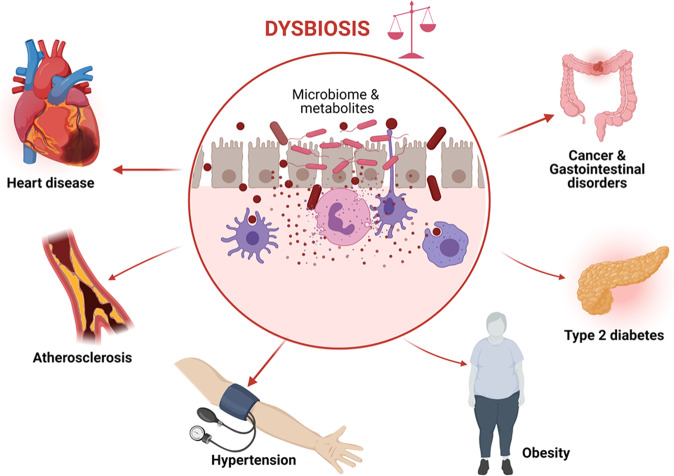
The gut microbiota has recently gained attention due to its association with cardiovascular health, cancers, gastrointestinal disorders, and non-communicable diseases. One critical question is how the composition of the microbiota contributes to cardiovascular diseases (CVDs). Insightful reviews on the gut microbiota, its metabolites and the mechanisms that underlie its contribution to CVD are limited. Hence, the aim of this review was to describe linkages between the composition of the microbiota and CVD, CVD risk factors such as hypertension, diet, ageing, and sex differences. We have also highlighted potential therapies for improving the composition of the gut microbiota, which may result in better cardiovascular health.
Overview
The claims and statistics of this paper haven’t been checked yet.
Free: it reads the open-access text and checks the first 5 claims that cite a source we can check. Create a free account to check every claim.
Integrity signals
Registry
Cites
Statistics
Figures
Verification
Claims the paper makes
The claims and statistics of this paper haven’t been checked yet.
Free: it reads the open-access text and checks the first 5 claims that cite a source we can check. Create a free account to check every claim.
Claims other papers make about this one
Each is checked against this paper’s own text: does it say what the citing paper says it does?
The cited source says what the claim attributes to it.
In the citing paper
“Cardiovascular pathology is likewise linked to microbial signatures, as atherosclerosis is accompanied by increased Streptococcus, Escherichia, and Shigella spp.111”
From Gut dysbiosis in oncology: a risk factor for immunoresistance (2026) · doi:10.1038/s41422-025-01212-6 · cites this paper as [111]
Self-check
Percentages, sums and reported differences re-computed from the paper’s own numbers.
The self-check needs the paper’s full text.
Citations
Cites
A human gut microbial gene catalogue established by metagenomic sequencing
MetaHIT Consortium, Qin, J., Li, R., Raes, J., Arumugam, M., Burgdorf, K. S., Manichanh, C., Nielsen, T., Pons, N., Levenez, F., et al. (2010) · Nature · doi:10.1038/nature08821 · Cited by 11,624 · cited 1×
“Some research estimates suggest that human gut possesses ~1000 bacterial species with 100-fold more genes than those found in the human genome [3, 4].”
BackgroundDiet rapidly and reproducibly alters the human gut microbiome
David, L. A., Maurice, C. F., Carmody, R. N., Gootenberg, D. B., Button, J. E., Wolfe, B. E., Ling, A. V., Devlin, A. S., Varma, Y., Fischbach, M. A., et al. (2014) · Nature · doi:10.1038/nature12820 · Cited by 10,100 · cited 2×
“Dietary lifestyle, microbiota, and CVD Evidence suggest that diet potentially modulates the gut microbiota by regulating the balance between pathogenic and beneficial microbes or microbial products [40].”
BackgroundHuman gut microbiome viewed across age and geography
Yatsunenko, T., Rey, F. E., Manary, M. J., Trehan, I., Dominguez-Bello, M. G., Contreras, M., Magris, M., Hidalgo, G., Baldassano, R. N., Anokhin, A. P., et al. (2012) · Nature · doi:10.1038/nature11053 · Cited by 7,815 · cited 1×
“During aging, there is additional exposure to external microbes through diet and contact with other environment factors such as farm animals and pets [58].”
BackgroundThe Microbial Metabolites, Short-Chain Fatty Acids, Regulate Colonic T reg Cell Homeostasis
Smith, P. M., Howitt, M. R., Panikov, N., Michaud, M., Gallini, C. A., Bohlooly-Y, M., Glickman, J. N., & Garrett, W. S. (2013) · Science · doi:10.1126/science.1241165 · Cited by 5,413
Ecological and Evolutionary Forces Shaping Microbial Diversity in the Human Intestine
Ley, R. E., Peterson, D. A., & Gordon, J. I. (2006) · Cell · doi:10.1016/j.cell.2006.02.017 · Cited by 3,358 · cited 1×
“Some research estimates suggest that human gut possesses ~1000 bacterial species with 100-fold more genes than those found in the human genome [3, 4].”
BackgroundThe Firmicutes/Bacteroidetes ratio of the human microbiota changes with age
Mariat, D., Firmesse, O., Levenez, F., Guimarăes, V., Sokol, H., Doré, J., Corthier, G., & Furet, J.-P. (2009) · BMC Microbiology · doi:10.1186/1471-2180-9-123 · Cited by 1,755 · cited 1×
“Specifically, the aging microbiota has been characterized by a reduction in the Firmicutus:Bacteroidetes ratio [62, 63] and by overpopulation of facultative anaerobes [64].”
BackgroundComposition, variability, and temporal stability of the intestinal microbiota of the elderly
Claesson, M. J., Cusack, S., O'Sullivan, O., Greene-Diniz, R., de Weerd, H., Flannery, E., Marchesi, J. R., Falush, D., Dinan, T., Fitzgerald, G., et al. (2011) · Proceedings of the National Academy of Sciences · doi:10.1073/pnas.1000097107 · Cited by 1,754
Gut microbiota dysbiosis contributes to the development of hypertension
Li, J., Zhao, F., Wang, Y., Chen, J., Tao, J., Tian, G., Wu, S., Liu, W., Cui, Q., Geng, B., et al. (2017) · Microbiome · doi:10.1186/s40168-016-0222-x · Cited by 1,685 · cited 1×
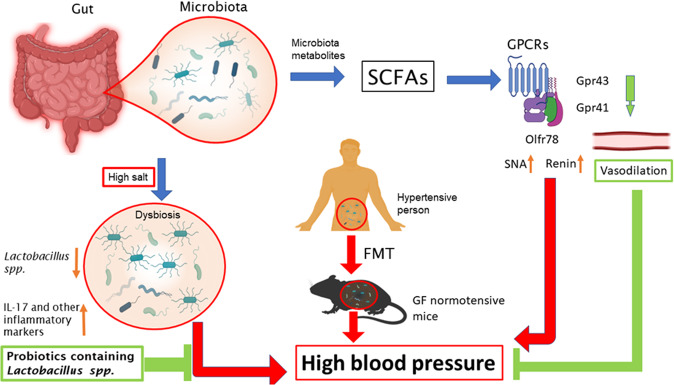
“It was clearly shown that germ-free (GF) mice, which received FMT from a hypertensive patient not only developed a similar gut microbiota as that of the donor, but also elevated systolic and diastolic blood pressures after 8 weeks when compared with GF mice that received FMT from normotensive donors [22].”
ResultGut microbiota in cardiovascular health and disease
Tang, W. H. W., Kitai, T., & Hazen, S. L. (2017) · Circulation Research · doi:10.1161/circresaha.117.309715 · Cited by 1,670 · cited 8×
“Moreover, alterations in the composition of fecal microbiota have been linked to modulation of blood pressure and poor response to antihypertensive drugs [8].”
BackgroundInfluentialDe Filippis, F., Pellegrini, N., Vannini, L., Jeffery, I. B., La Storia, A., Laghi, L., Serrazanetti, D. I., Di Cagno, R., Ferrocino, I., Lazzi, C., et al. (2016) · Gut · doi:10.1136/gutjnl-2015-309957 · Cited by 1,638
The intersection between aging and cardiovascular disease
North, B. J., & Sinclair, D. A. (2012) · Circulation Research · doi:10.1161/circresaha.111.246876 · Cited by 1,585
Through Ageing, and Beyond: Gut Microbiota and Inflammatory Status in Seniors and Centenarians
Biagi, E., Nylund, L., Candela, M., Ostan, R., Bucci, L., Pini, E., Nikkïla, J., Monti, D., Satokari, R., Franceschi, C., et al. (2010) · PLoS ONE · doi:10.1371/journal.pone.0010667 · Cited by 1,483 · cited 2×
“Specifically, the aging microbiota has been characterized by a reduction in the Firmicutus:Bacteroidetes ratio [62, 63] and by overpopulation of facultative anaerobes [64].”
BackgroundGut Dysbiosis Is Linked to Hypertension
Yang, T., Santisteban, M. M., Rodriguez, V., Li, E., Ahmari, N., Carvajal, J. M., Zadeh, M., Gong, M., Qi, Y., Zubcevic, J., et al. (2015) · Hypertension · doi:10.1161/hypertensionaha.115.05315 · Cited by 1,478 · cited 1×
“Moreover, studies in humans demonstrated an association between a higher abundance of Gram-negative microbiota including Klebsiella, Parabacteroides, Desulfovibrio, and Prevotella and higher blood pressure levels, but not all studies confirmed this pattern [16, 18, 21, 26].”
BackgroundTranskingdom Control of Microbiota Diurnal Oscillations Promotes Metabolic Homeostasis
Thaiss, C. A., Zeevi, D., Levy, M., Zilberman-Schapira, G., Suez, J., Tengeler, A. C., Abramson, L., Katz, M. N., Korem, T., Zmora, N., et al. (2014) · Cell · doi:10.1016/j.cell.2014.09.048 · Cited by 1,449
Thevaranjan, N., Puchta, A., Schulz, C., Naidoo, A., Szamosi, J. C., Verschoor, C. P., Loukov, D., Schenck, L. P., Jury, J., Foley, K. P., et al. (2017) · Cell Host & Microbe · doi:10.1016/j.chom.2017.03.002 · Cited by 1,322
Salt-responsive gut commensal modulates TH17 axis and disease
Wilck, N., Matus, M. G., Kearney, S. M., Olesen, S. W., Forslund, K., Bartolomaeus, H., Haase, S., Mähler, A., Balogh, A., Markó, L., et al. (2017) · Nature · doi:10.1038/nature24628 · Cited by 1,310 · cited 3×
“Interestingly, other studies demonstrated that either reduced salt or increasing Lactobacillus spp with probiotic treatment improved blood pressure regulation, arterial compliance, vascular function, and insulin sensitivity [17, 36, 37].”
BackgroundResultMarques, F. Z., Nelson, E., Chu, P.-Y., Horlock, D., Fiedler, A., Ziemann, M., Tan, J. K., Kuruppu, S., Rajapakse, N. W., El-Osta, A., et al. (2017) · Circulation · doi:10.1161/circulationaha.116.024545 · Cited by 1,065 · cited 1×
“Additional studies in Dahl salt-sensitive rats [31], angiotensin II infused mice [32], high salt treated mice [17], and deoxycorticosterone acetate-salt hypertensive mice [33] demonstrated that all these hypertensive animal models exhibit dysbiosis.”
BackgroundGut microbiota and cardiovascular disease.
Witkowski, M., Weeks, T. L., & Hazen, S. L. (2020) · Circulation Research · doi:10.1161/circresaha.120.316242 · Cited by 1,051 · cited 4×
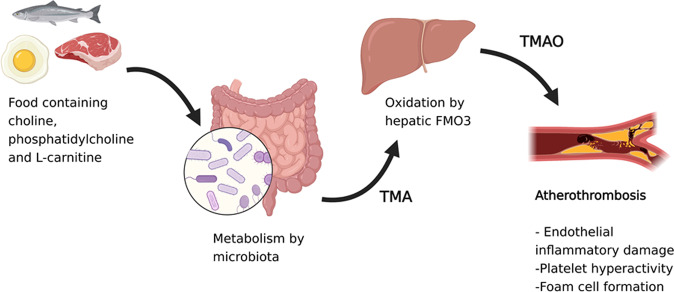
“TMAOs have been associated with increased risk for CVD [9].”
BackgroundInfluentialGut Microbiota and Extreme Longevity
Biagi, E., Franceschi, C., Rampelli, S., Severgnini, M., Ostan, R., Turroni, S., Consolandi, C., Quercia, S., Scurti, M., Monti, D., et al. (2016) · Current Biology · doi:10.1016/j.cub.2016.04.016 · Cited by 1,025 · cited 1×
“Specifically, the aging microbiota has been characterized by a reduction in the Firmicutus:Bacteroidetes ratio [62, 63] and by overpopulation of facultative anaerobes [64].”
BackgroundDynamics and associations of microbial community types across the human body
Ding, T., & Schloss, P. D. (2014) · Nature · doi:10.1038/nature13178 · Cited by 885 · cited 1×
“In the Human Microbiome Project Consortium males had decreased Bacteriodes and increased Prevotella populations [55], whereas in other studies, these findings were not replicated [56].”
ResultGuinane, C. M., & Cotter, P. D. (2013) · Therapeutic Advances in Gastroenterology · doi:10.1177/1756283x13482996 · Cited by 846
Bile Acids Control Inflammation and Metabolic Disorder through Inhibition of NLRP3 Inflammasome
Guo, C., Xie, S., Chi, Z., Zhang, J., Liu, Y., Zhang, L., Zheng, M., Zhang, X., Xia, D., Ke, Y., et al. (2016) · Immunity · doi:10.1016/j.immuni.2016.09.008 · Cited by 838
Sex differences and hormonal effects on gut microbiota composition in mice
Org, E., Mehrabian, M., Parks, B. W., Shipkova, P., Liu, X., Drake, T. A., & Lusis, A. J. (2016) · Gut Microbes · doi:10.1080/19490976.2016.1203502 · Cited by 796 · cited 1×
“Similarly, analysis of 89 different mice strains revealed significant differences in microbial composition between the sexes, although the direction of the change in each strain varied, suggesting that the influence of sex on microbiota may depend on the animal overall genotype [54].”
BackgroundGut microbiota-derived short-chain Fatty acids, T cells, and inflammation
Kim, C. H., Park, J., & Kim, M. (2014) · Immune Network · doi:10.4110/in.2014.14.6.277 · Cited by 704 · cited 1×
“Importantly, SCFAs, especially butyrate, are known to induce the differentiation of peripherally derived Tregs in the colon, through G-protein coupled receptors [47].”
BackgroundWong, J., Piceno, Y. M., DeSantis, T. Z., Pahl, M., Andersen, G. L., & Vaziri, N. D. (2014) · American Journal of Nephrology · doi:10.1159/000360010 · Cited by 638
Jackson, M. A., Verdi, S., Maxan, M.-E., Shin, C. M., Zierer, J., Bowyer, R. C. E., Martin, T., Williams, F. M. K., Menni, C., Bell, J. T., et al. (2018) · Nature Communications · doi:10.1038/s41467-018-05184-7 · Cited by 616
Sex differences in gut microbiota
Kim, Y. S., Unno, T., Kim, B.-Y., & Park, M.-S. (2020) · The World Journal of Men s Health · doi:10.5534/wjmh.190009 · Cited by 610 · cited 3×
“Investigation of cohorts from different ethnicities did not reveal a consistent sex-dependent microbial composition [56].”
BackgroundResultDiversification of host bile acids by members of the gut microbiota
Winston, J. A., & Theriot, C. M. (2020) · Gut Microbes · doi:10.1080/19490976.2019.1674124 · Cited by 587
Kim, S., Goel, R., Kumar, A., Qi, Y., Lobaton, G., Hosaka, K., Mohammed, M., Handberg, E. M., Richards, E. M., Pepine, C. J., et al. (2018) · Clinical Science · doi:10.1042/cs20180087 · Cited by 542
De la Cuesta-Zuluaga, J., Mueller, N., Álvarez-Quintero, R., Velásquez-Mejía, E., Sierra, J., Corrales-Agudelo, V., Carmona, J., Abad, J., & Escobar, J. (2018) · Nutrients · doi:10.3390/nu11010051 · Cited by 533
Hypertension-Linked Pathophysiological Alterations in the Gut
Santisteban, M. M., Qi, Y., Zubcevic, J., Kim, S., Yang, T., Shenoy, V., Cole-Jeffrey, C. T., Lobaton, G. O., Stewart, D. C., Rubiano, A., et al. (2017) · Circulation Research · doi:10.1161/circresaha.116.309006 · Cited by 525
Khalesi, S., Sun, J., Buys, N., & Jayasinghe, R. (2014) · Hypertension · doi:10.1161/hypertensionaha.114.03469 · Cited by 516
Alterations of the Gut Microbiome in Hypertension
Yan, Q., Gu, Y., Li, X., Yang, W., Jia, L., Chen, C., Han, X., Huang, Y., Zhao, L., Li, P., et al. (2017) · Frontiers in Cellular and Infection Microbiology · doi:10.3389/fcimb.2017.00381 · Cited by 500
Wang, Z., Bergeron, N., Levison, B. S., Li, X. S., Chiu, S., Jia, X., Koeth, R. A., Li, L., Wu, Y., Tang, W. H. W., et al. (2019) · European Heart Journal · doi:10.1093/eurheartj/ehy799 · Cited by 496 · cited 1×
“Since TMAO and p-cresylsulfate are eliminated through the kidney [71], the age-related decline in kidney function, which is seen in both men and women, may exacerbate the systemic accumulation of these metabolites further enhancing pathways that lead to cardiovascular disease [72].”
BackgroundCalder, P. C., Bosco, N., Bourdet-Sicard, R., Capuron, L., Delzenne, N., Doré, J., Franceschi, C., Lehtinen, M. J., Recker, T., Salvioli, S., et al. (2017) · Ageing Research Reviews · doi:10.1016/j.arr.2017.09.001 · Cited by 488
Woodmansey, E. J., McMurdo, M. E. T., Macfarlane, G. T., & Macfarlane, S. (2004) · Applied and Environmental Microbiology · doi:10.1128/aem.70.10.6113-6122.2004 · Cited by 418 · cited 1×
“Aging is also associated with reduction in bacterial diversity, unusual phylum proportions and decline in health promoting bacteria species [60, 61].”
BackgroundKaye, D. M., Shihata, W. A., Jama, H. A., Tsyganov, K., Ziemann, M., Kiriazis, H., Horlock, D., Vijay, A., Giam, B., Vinh, A., et al. (2020) · Circulation · doi:10.1161/circulationaha.119.043081 · Cited by 411
Aged Gut Microbiota Contributes to Systemical Inflammaging after Transfer to Germ-Free Mice
Fransen, F., van Beek, A. A., Borghuis, T., Aidy, S. E., Hugenholtz, F., van der Gaast – de Jongh, C., Savelkoul, H. F. J., De Jonge, M. I., Boekschoten, M. V., Smidt, H., et al. (2017) · Frontiers in Immunology · doi:10.3389/fimmu.2017.01385 · Cited by 403
Evidence for a link between gut microbiota and hypertension in the Dahl rat
Mell, B., Jala, V. R., Mathew, A. V., Byun, J., Waghulde, H., Zhang, Y., Haribabu, B., Vijay-Kumar, M., Pennathur, S., & Joe, B. (2015) · Physiological Genomics · doi:10.1152/physiolgenomics.00136.2014 · Cited by 400 · cited 1×
“Additional studies in Dahl salt-sensitive rats [31], angiotensin II infused mice [32], high salt treated mice [17], and deoxycorticosterone acetate-salt hypertensive mice [33] demonstrated that all these hypertensive animal models exhibit dysbiosis.”
BackgroundYou Are What You Eat—The Relationship between Diet, Microbiota, and Metabolic Disorders—A Review
Moszak, M., Szulińska, M., & Bogdański, P. (2020) · Nutrients · doi:10.3390/nu12041096 · Cited by 397 · cited 11×
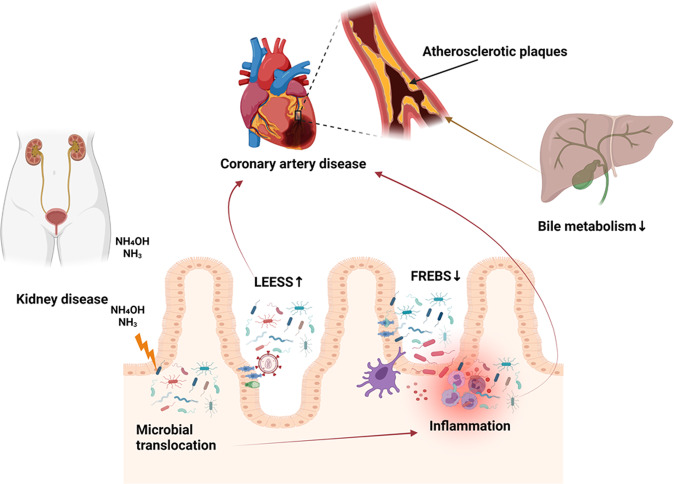
“Dysbiosis increases the risk for various CVDs through several mechanisms.”
BackgroundInfluentialAlterations in the gut microbiota can elicit hypertension in rats
Adnan, S., Nelson, J. W., Ajami, N. J., Venna, V. R., Petrosino, J. F., Bryan, R. M., & Durgan, D. J. (2017) · Physiological Genomics · doi:10.1152/physiolgenomics.00081.2016 · Cited by 383
Thomas, S., Izard, J., Walsh, E., Batich, K., Chongsathidkiet, P., Clarke, G., Sela, D. A., Muller, A. J., Mullin, J. M., Albert, K., et al. (2017) · Cancer Research · doi:10.1158/0008-5472.can-16-2929 · Cited by 367
Beli, E., Yan, Y., Moldovan, L., Vieira, C. P., Gao, R., Duan, Y., Prasad, R., Bhatwadekar, A., White, F. A., Townsend, S. D., et al. (2018) · Diabetes · doi:10.2337/db18-0158 · Cited by 365
TMAO: how gut microbiota contributes to heart failure
Zhang, Y., Wang, Y., Ke, B., & Du, J. (2021) · Translational Research · doi:10.1016/j.trsl.2020.08.007 · Cited by 296
Gut Microbiota Composition and Blood Pressure: The CARDIA Study
Sun, S., Lulla, A., Sioda, M., Winglee, K., Wu, M. C., Jacobs, D. R., Shikany, J. M., Lloyd-Jones, D. M., Launer, L. J., Fodor, A. A., et al. (2019) · Hypertension · doi:10.1161/hypertensionaha.118.12109 · Cited by 282
Brunt, V. E., Gioscia-Ryan, R. A., Casso, A. G., VanDongen, N. S., Ziemba, B. P., Sapinsley, Z. J., Richey, J. J., Zigler, M. C., Neilson, A. P., Davy, K. P., et al. (2020) · Hypertension · doi:10.1161/hypertensionaha.120.14759 · Cited by 276
Vaziri, N. D., Liu, S.-M., Lau, W. L., Khazaeli, M., Nazertehrani, S., Farzaneh, S. H., Kieffer, D. A., Adams, S. H., & Martin, R. J. (2014) · PLoS ONE · doi:10.1371/journal.pone.0114881 · Cited by 274
Circadian rhythm and the gut microbiome
Voigt, R. M., Forsyth, C. B., Green, S. J., Engen, P. A., & Keshavarzian, A. (2016) · International Review of Neurobiology · doi:10.1016/bs.irn.2016.07.002 · Cited by 274
Potì, F., Santi, D., Spaggiari, G., Zimetti, F., & Zanotti, I. (2019) · International Journal of Molecular Sciences · doi:10.3390/ijms20020351 · Cited by 253
Yan, X., Jin, J., Su, X., Yin, X., Gao, J., Wang, X., Zhang, S., Bu, P., Wang, M., Zhang, Y., et al. (2020) · Circulation Research · doi:10.1161/circresaha.119.316394 · Cited by 235
Verhaar, B. J. H., Collard, D., Prodan, A., Levels, J. H. M., Zwinderman, A. H., Bäckhed, F., Vogt, L., Peters, M. J. L., Muller, M., Nieuwdorp, M., et al. (2020) · European Heart Journal · doi:10.1093/eurheartj/ehaa704 · Cited by 219
Gut microbiota in atherosclerosis: focus on trimethylamine N‐oxide
Zhu, Y., Li, Q., & Jiang, H. (2020) · APMIS · doi:10.1111/apm.13038 · Cited by 196
Brantsaeter, A. L., Myhre, R., Haugen, M., Myking, S., Sengpiel, V., Magnus, P., Jacobsson, B., & Meltzer, H. M. (2011) · American Journal of Epidemiology · doi:10.1093/aje/kwr168 · Cited by 186
Polyphenol protection and treatment of hypertension
Hügel, H. M., Jackson, N., May, B., Zhang, A. L., & Xue, C. C. (2016) · Phytomedicine · doi:10.1016/j.phymed.2015.12.012 · Cited by 186
Salt-Responsive Metabolite, β-Hydroxybutyrate, Attenuates Hypertension
Chakraborty, S., Galla, S., Cheng, X., Yeo, J.-Y., Mell, B., Singh, V., Yeoh, B., Saha, P., Mathew, A. V., Vijay-Kumar, M., et al. (2018) · Cell Reports · doi:10.1016/j.celrep.2018.09.058 · Cited by 176
Sex, gut microbiome, and cardiovascular disease risk
Razavi, A. C., Potts, K. S., Kelly, T. N., & Bazzano, L. (2019) · Biology of Sex Differences · doi:10.1186/s13293-019-0240-z · Cited by 170
The Gut Microbiome in Hypertension: Recent Advances and Future Perspectives
Avery, E. G., Bartolomaeus, H., Maifeld, A., Marko, L., Wiig, H., Wilck, N., Rosshart, S. P., Forslund, S. K., & Müller, D. N. (2021) · Circulation Research · doi:10.1161/circresaha.121.318065 · Cited by 168
Differential Analysis of Hypertension-Associated Intestinal Microbiota
Dan, X., Mushi, Z., Baili, W., Han, L., Enqi, W., Huanhu, Z., & Li, S. (2019) · International Journal of Medical Sciences · doi:10.7150/ijms.29322 · Cited by 166
Toubal, A., Kiaf, B., Beaudoin, L., Cagninacci, L., Rhimi, M., Fruchet, B., da Silva, J., Corbett, A. J., Simoni, Y., Lantz, O., et al. (2020) · Nature Communications · doi:10.1038/s41467-020-17307-0 · Cited by 165
Huart, J., Leenders, J., Taminiau, B., Descy, J., Saint‐Remy, A., Daube, G., Krzesinski, J.-M., Melin, P., Tullio, P. D., & Jouret, F. (2019) · Hypertension · doi:10.1161/hypertensionaha.118.12588 · Cited by 158
Sex and strain dependent differences in mucosal immunology and microbiota composition in mice
Elderman, M., Hugenholtz, F., Belzer, C., Boekschoten, M., van Beek, A., de Haan, B., Savelkoul, H., de Vos, P., & Faas, M. (2018) · Biology of Sex Differences · doi:10.1186/s13293-018-0186-6 · Cited by 151
Implication of Gut Microbiota in Cardiovascular Diseases
Zhou, W., Cheng, Y., Zhu, P., Nasser, M. I., Zhang, X., & Zhao, M. (2020) · Oxidative Medicine and Cellular Longevity · doi:10.1155/2020/5394096 · Cited by 149
The gut microbiome and cardiovascular disease: current knowledge and clinical potential
Ahmad, A. F., Dwivedi, G., O’Gara, F., Caparros-Martin, J., & Ward, N. C. (2019) · American Journal of Physiology-Heart and Circulatory Physiology · doi:10.1152/ajpheart.00376.2019 · Cited by 148
Ahmadi, S., Razazan, A., Nagpal, R., Jain, S., Wang, B., Mishra, S. P., Wang, S., Justice, J., Ding, J., McClain, D. A., et al. (2020) · The Journals of Gerontology: Series A · doi:10.1093/gerona/glaa056 · Cited by 145
Kahleová, H., Rembert, E., Alwarith, J., Yonas, W., Tura, A., Holubkov, R., Agnello, M., Chutkan, R. K., & Barnard, N. D. (2020) · Nutrients · doi:10.3390/nu12102917 · Cited by 141
Toral, M., Gómez-Guzmán, M., Jiménez, R., Romero, M., Sánchez, M., Utrilla, M. P., Garrido-Mesa, N., Rodríguez-Cabezas, M. E., Olivares, M., Gálvez, J., et al. (2014) · Clinical Science · doi:10.1042/cs20130339 · Cited by 132
Chen, L., He, F. J., Dong, Y., Huang, Y., Wang, C., Harshfield, G. A., & Zhu, H. (2020) · Hypertension · doi:10.1161/hypertensionaha.120.14800 · Cited by 123
Hypertension as a Metabolic Disorder and the Novel Role of the Gut
Tanaka, M., & Itoh, H. (2019) · Current Hypertension Reports · doi:10.1007/s11906-019-0964-5 · Cited by 118
Changes to the gut microbiota induced by losartan contributes to its antihypertensive effects
Robles‐Vera, I., Toral, M., de la Visitación, N., Sánchez, M., Gómez‐Guzmán, M., Muñoz, R., Algieri, F., Vezza, T., Jiménez, R., Gálvez, J., et al. (2020) · British Journal of Pharmacology · doi:10.1111/bph.14965 · Cited by 117
Restructuring the Gut Microbiota by Intermittent Fasting Lowers Blood Pressure
Shi, H., Zhang, B., Abo‐Hamzy, T., Nelson, J. W., Ambati, C. S. R., Petrosino, J. F., Bryan, R. M., & Durgan, D. J. (2021) · Circulation Research · doi:10.1161/circresaha.120.318155 · Cited by 117
Jain, A., Li, X. H., & Chen, W. N. (2019) · Scientific Reports · doi:10.1038/s41598-019-45640-y · Cited by 109
A cross-talk between gut microbiome, salt and hypertension
Naqvi, S., Asar, T. O., Kumar, V., Al-Abbasi, F. A., Alhayyani, S., Kamal, M. A., & Anwar, F. (2021) · Biomedicine & Pharmacotherapy · doi:10.1016/j.biopha.2020.111156 · Cited by 99
The Gut Microbiome, Inflammation, and Salt-Sensitive Hypertension
Elijovich, F., Laffer, C. L., Sahinoz, M., Pitzer, A. L., Ferguson, J. F., & Kirabo, A. (2020) · Current Hypertension Reports · doi:10.1007/s11906-020-01091-9 · Cited by 95
Self-citationGut microbiome and cardiovascular disease
Zhao, Y., & Wang, Z. (2020) · Current Opinion in Cardiology · doi:10.1097/hco.0000000000000720 · Cited by 77
The aging mouse microbiome has obesogenic characteristics
Binyamin, D., Werbner, N., Nuriel‐Ohayon, M., Uzan-Yulzari, A., Mor, H., Abbas, A., Oren, Z., Teperino, R., Gutman, R., & Koren, O. (2020) · Genome Medicine · doi:10.1186/s13073-020-00784-9 · Cited by 65
Increased bile acids in enterohepatic circulation by short-term calorie restriction in male mice
Fu, Z. D., & Klaassen, C. D. (2013) · Toxicology and Applied Pharmacology · doi:10.1016/j.taap.2013.10.020 · Cited by 56
Age-dependent association of gut bacteria with coronary atherosclerosis: Tampere Sudden Death Study
Tuomisto, S., Huhtala, H., Martiskainen, M., Goebeler, S., Lehtimäki, T. J., & Karhunen, P. J. (2019) · PLoS ONE · doi:10.1371/journal.pone.0221345 · Cited by 55
Li, D. Y., & Tang, W. H. W. (2018) · Seminars in Nephrology · doi:10.1016/j.semnephrol.2018.01.008 · Cited by 54
Sheng, Z., Tan, Y. T., Liu, C., Zhou, P., Li, J., Zhou, J., Chen, R., Chen, Y., Song, L., Zhao, H., et al. (2018) · The American Journal of Cardiology · doi:10.1016/j.amjcard.2018.12.018 · Cited by 52
Maternal microbiome in preeclampsia pathophysiology and implications on offspring health
Ishimwe, J. A. (2021) · Physiological Reports · doi:10.14814/phy2.14875 · Cited by 45 · cited 1×
“This maturation of the gut microbiota influences the development of the immune system and in some individuals it may provide an imprint for increased risk of inflammatory diseases such as inflammatory bowel syndrome, obesity, and hypertension [59].”
BackgroundSelf-citationMatsui, M., Fukunishi, S., Nakano, T., Ueno, T., Higuchi, K., & Asai, A. (2021) · mBio · doi:10.1128/mbio.01155-21 · Cited by 41
Cao, Y. L., Xiao, Y., Zhou, K., Yan, J., Wang, P., Yan, W., & Cai, W. (2019) · American Journal of Physiology-Gastrointestinal and Liver Physiology · doi:10.1152/ajpgi.00356.2017 · Cited by 40
1,3-Butanediol attenuates hypertension and suppresses kidney injury in female rats
Ishimwe, J., Garrett, M. R., & Sasser, J. M. (2020) · American Journal of Physiology-Renal Physiology · doi:10.1152/ajprenal.00141.2020 · Cited by 27
Self-citationActivation of TGR5 restores AQP2 expression via the HIF pathway in renal ischemia-reperfusion injury
Han, M., Li, S., Xie, H., Liu, Q., Wang, A., Hu, S., Zhao, X., Kong, Y., Wang, W., & Li, C. (2021) · American Journal of Physiology-Renal Physiology · doi:10.1152/ajprenal.00577.2020 · Cited by 26
Waleed, K. B., Lu, Y., Liu, Q., Zeng, F., Tu, H., Wei, Y., Xu, S., Zhang, Z., Yang, R., Fan, A., et al. (2020) · Medicine · doi:10.1097/md.0000000000020794 · Cited by 17
Chleilat, F., Schick, A., & Reimer, R. A. (2021) · Nutrients · doi:10.3390/nu13030820 · Cited by 12
Cited by
Probiotics, prebiotics, and postbiotics in health and disease
Ji, J., Jin, W., Liu, S., Jiao, Z., & Li, X. (2023) · MedComm · doi:10.1002/mco2.420 · Cited by 384
Cardiovascular disease and cancer: shared risk factors and mechanisms
Wilcox, N. S., Amit, U., Reibel, J. B., Berlin, E., Howell, K., & Ky, B. (2024) · Nature Reviews Cardiology · doi:10.1038/s41569-024-01017-x · Cited by 310
Role of the intestinal microbiome and its therapeutic intervention in cardiovascular disorder
Luqman, A., Hassan, A., Ullah, M., Naseem, S., Ullah, M., Zhang, L., Din, A. U., Ullah, K., Ahmad, W., & Wang, G. (2024) · Frontiers in Immunology · doi:10.3389/fimmu.2024.1321395 · Cited by 157
Microbiota in Gut‐Heart Axis: Metabolites and Mechanisms in Cardiovascular Disease
Kondapalli, N. B., Katari, V., Dalal, K. K., Paruchuri, S. M., & Thodeti, C. K. (2025) · Comprehensive physiology · doi:10.1002/cph4.70024 · Cited by 107
Hamjane, N., Mechita, M. B., Nourouti, N. G., & Barakat, A. (2023) · Microvascular Research · doi:10.1016/j.mvr.2023.104601 · Cited by 101
Metadata
- Authors
- Masenga, S. K., Hamooya, B., Hangoma, J., Hayumbu, V., Ertuglu, L. A., Ishimwe, J., Rahman, S., Saleem, M., Laffer, C. L., Elijovich, F., & Kirabo, A.
- Affiliations
- Mulungushi University (ZM)
- Vanderbilt University Medical Center (US)
- Corresponding author
- Kirabo, Annet
- ORCID
- Venue
- Journal of Human Hypertension
- Published
- 2022-04-25
- Volume
- 36
- Issue
- 11
- Pages
- 952-959
- ISSN
- 0950-9240 (ISSN-L)
- 1476-5527
- PMC
- PMC9649420
- OpenAlex
- W4224935391
- Cited by
- 121
- References
- 87
- Citations by year
- 2026: 22 · 2025: 29 · 2024: 35 · 2023: 27 · 2022: 8
- FWCI
- 2.58
- Type
- journal article
- Language
- en
- Open access
- hybrid
- doi.org
- Licence
- cc-by
- creativecommons.org/licenses/by/4.0 (tdm)
- creativecommons.org/licenses/by/4.0 (vor)
- Locations
- Journal of Human Hypertension (publishedVersion, cc-by)
- PubMed Central (publishedVersion, cc-by)
- PubMed (publishedVersion)
- Funders
- U.S. Department of Health & Human Services | NIH | Fogarty International Center (TW009744, TW009337)
- U.S. Department of Health & Human Services | NIH | National Heart, Lung, and Blood Institute (R03HL155041, R01HL144941)
- Topics
- Life Sciences › Biochemistry, Genetics and Molecular Biology › Molecular Biology › Gut microbiota and health
- Health Sciences › Dentistry › Periodontics › Oral microbiology and periodontitis research
- Health Sciences › Medicine › Public Health, Environmental and Occupational Health › Nutritional Studies and Diet
- Keywords
- gut microbiota, cardiovascular disease, microbiota composition, gut microbiota metabolites, hypertension, diet, aging, sex differences, microbiota-targeted therapy, cardiovascular risk factors
- MeSH terms
- Gastrointestinal Microbiome, Cardiovascular Diseases, Cardiovascular System, Diet, Female, Humans, Hypertension, Male
About these checks
Registry, retraction, Cites and statistics results are computed, not judged, with one exception: a printed reference that no index lists is read once by a model before it counts as a citation error. Claims are extracted by a model and kept only when their quote appears verbatim in the text; each cited source is then checked, with a model’s help, for whether it says what the claim relies on. Those verdicts can be wrong — read the claim’s quote and the cited source before relying on one.
Statistics and arithmetic are recomputed, not judged.
Confidence bands are shown only for fields calibrated on our annotated test set. None is calibrated yet, so no band is shown.
What counts as a claim ›How we measure confidence ›How we check this ›
Are you an author, or do you see a problem with this page? Request a review
Data sources
Bibliographic data: Semantic Scholar, OpenAlex, Crossref.
Contains information from the Semantic Scholar Academic Graph Datasets, made available under the ODC Attribution License (ODC-BY 1.0).
Semantic Scholar’s data is described in: Kinney, R., et al. (2023). The Semantic Scholar Open Data Platform. arXiv:2301.10140.
