

Biological principles for music and mental health
Open accessThe DOI matches its Crossref record; 300 of the 300 references it cites were found in a registry or an index.
Abstract
Efforts to integrate music into healthcare systems and wellness practices are accelerating but the biological foundations supporting these initiatives remain underappreciated. As a result, music-based interventions are often sidelined in medicine. Here, I bring together advances in music research from neuroscience, psychology, and psychiatry to bridge music’s specific foundations in human biology with its specific therapeutic applications. The framework I propose organizes the neurophysiological effects of music around four core elements of human musicality: tonality, rhythm, reward, and sociality. For each, I review key concepts, biological bases, and evidence of clinical benefits. Within this framework, I outline a strategy to increase music’s impact on health based on standardizing treatments and their alignment with individual differences in responsivity to these musical elements. I propose that an integrated biological understanding of human musicality—describing each element’s functional origins, development, phylogeny, and neural bases—is critical to advancing rational applications of music in mental health and wellness.
Overview
The claims and statistics of this paper haven’t been checked yet.
Free: it reads the open-access text and checks the first 5 claims that cite a source we can check. Create a free account to check every claim.
Integrity signals
Registry
Cites
Statistics
Figures
Verification
Claims the paper makes
The claims and statistics of this paper haven’t been checked yet.
Free: it reads the open-access text and checks the first 5 claims that cite a source we can check. Create a free account to check every claim.
Claims other papers make about this one
Each is checked against this paper’s own text: does it say what the citing paper says it does?
The source backs part of the claim, not all of it — or backs it for a different population, condition or comparison.
In the citing paper
“Furthermore, there is a bidirectional relationship between the OXTergic system and the HPA axis (Bowling, 2023; Harvey, 2020; Jurek and Neumann, 2018).”
From Music's context-dependent influence on oxytocin, social bonding, and emotion regulation: a systematic review (2026) · cites this paper as Bowling, 2023
Experimental — accuracy not yet measuredThe source backs part of the claim, not all of it — or backs it for a different population, condition or comparison.
In the citing paper
“OXT can suppress the expression of corticotropin-releasing hormone (CRH) and reduce downstream cortisol secretion to moderate stress responses (Bowling, 2023; Harvey, 2020; Jurek and Neumann, 2018).”
From Music's context-dependent influence on oxytocin, social bonding, and emotion regulation: a systematic review (2026) · cites this paper as Bowling, 2023
Experimental — accuracy not yet measuredThe check wasn’t confident either way, so it gives no verdict — never disputed.
In the citing paper
“peripheral OXT reflects only the activity of magnocellular OXT neurons projecting to the posterior pituitary but central release involves both magnocellular and parvocellular OXT neurons”
From Music's context-dependent influence on oxytocin, social bonding, and emotion regulation: a systematic review (2026) · cites this paper as Bowling, 2023
Experimental — accuracy not yet measured
Self-check
Percentages, sums and reported differences re-computed from the paper’s own numbers.
The self-check needs the paper’s full text.
Citations
Cites
Social Relationships and Mortality Risk: A Meta-analytic Review
Holt-Lunstad, J., Smith, T. B., & Layton, J. B. (2010) · PLoS Medicine · doi:10.1371/journal.pmed.1000316 · Cited by 7,272 · cited 1×
“Social functioning — as re fl ected in the structure, function, and quality of an individual ’ s social connections — is a critical determinant of mental health in patients across prominent psychiatric disorders [207, 208] as well as the general public [209, 210].”
BackgroundNo health without mental health
Prince, M., Patel, V., Saxena, S., Maj, M., Maselko, J., Phillips, M. R., & Rahman, A. (2007) · The Lancet · doi:10.1016/s0140-6736(07)61238-0 · Cited by 3,753
Blood, A. J., & Zatorre, R. J. (2001) · Proceedings of the National Academy of Sciences · doi:10.1073/pnas.191355898 · Cited by 2,814 · cited 1×
“…tomography with the radiolabeled dopamine D 2 receptor ligand, [ 11 C]raclopride, to show that musical frisson [150] — moments of peak neural excitement, piloerection, and “ chills ” that occur during music listening — are associated with surges in dopamine binding within the NAc [151, 152].”
BackgroundOf Human Bonding: Newborns Prefer Their Mothers' Voices
DeCasper, A. J., & Fifer, W. P. (1980) · Science · doi:10.1126/science.7375928 · Cited by 2,317 · cited 2×
“Intriguingly, this peak corresponds closely with dominant rates of periodicity in full-body human motion (e.g., 1.35 – 2.5 Hz [81 – 150 bpm] in walking) [98].”
BackgroundInfluentialLiebowitz, M. R. (2015) · Modern Trends in Pharmacopsychiatry · doi:10.1159/000414022 · Cited by 2,266
Music, Language, and the Brain
Patel, A. D. (2007) · Oxford University Press eBooks · doi:10.1093/acprof:oso/9780195123753.001.0001 · Cited by 1,945
Cortical oscillations and speech processing: emerging computational principles and operations
Giraud, A.-L., & Poeppel, D. (2012) · Nature Neuroscience · doi:10.1038/nn.3063 · Cited by 1,917 · cited 1×
“To model the biology underlying rhythm, music scientists have developed Neural Resonance Theory (NRT), the central tenet of which is that rhythm perception depends on endogenous oscillations in neural circuitry [97, 114 – 116].”
BackgroundAnatomically distinct dopamine release during anticipation and experience of peak emotion to music
Salimpoor, V. N., Benovoy, M., Larcher, K., Dagher, A., & Zatorre, R. J. (2011) · Nature Neuroscience · doi:10.1038/nn.2726 · Cited by 1,828 · cited 2×
“…tomography with the radiolabeled dopamine D 2 receptor ligand, [ 11 C]raclopride, to show that musical frisson [150] — moments of peak neural excitement, piloerection, and “ chills ” that occur during music listening — are associated with surges in dopamine binding within the NAc [151, 152].”
BackgroundWiltermuth, S. S., & Heath, C. (2009) · Psychological Science · doi:10.1111/j.1467-9280.2008.02253.x · Cited by 1,717 · cited 1×
“This has been measured in terms of increased feelings of af fi liation and self-other similarity [169, 170], trust behaviors in economic games [171, 172], and real-world cooperation [173 – 177] (reviewed in [178]).”
BackgroundConstantino, J. N., Davis, S. A., Todd, R. D., Schindler, M. K., Gross, M. M., Brophy, S. L., Metzger, L. M., Shoushtari, C. S., Splinter, R., & Reich, W. (2003) · Journal of Autism and Developmental Disorders · doi:10.1023/a:1025014929212 · Cited by 1,611 · cited 1×
“…on music, it may also be useful to assess a patient ’ s level of social functioning and anxiety (e.g., with the Social Responsivity Scale [SRS] [271] and Liebowitz Social Anxiety Scale [LSAS] [272] respectively), as the results could inform decisions about the extent to which a musical…”
BackgroundAcoustic profiles in vocal emotion expression
Banse, R., & Scherer, K. R. (1996) · Journal of Personality and Social Psychology · doi:10.1037/0022-3514.70.3.614 · Cited by 1,546
Brain correlates of music-evoked emotions
Koelsch, S. (2014) · Nature Reviews Neuroscience · doi:10.1038/nrn3666 · Cited by 1,544 · cited 1×
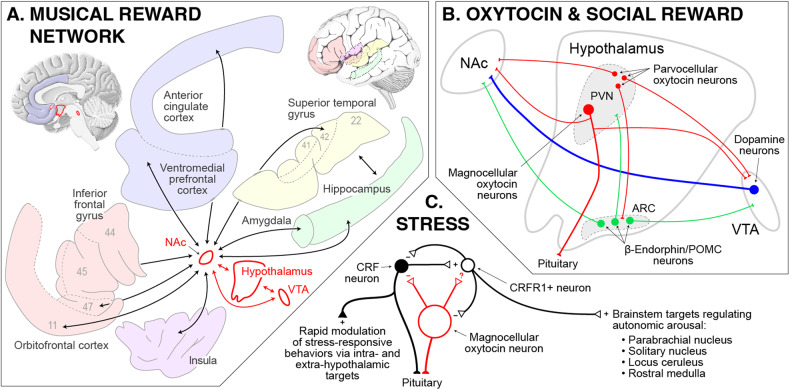
“…the past several decades, neuroimaging studies have demonstrated that taking pleasure in music is closely associated with activity in classical brain reward circuitry [26, 149], including the mesolimbic dopamine pathway between the ventral tegmental area (VTA) and the nucleus accumbens (NAc) [4].”
BackgroundSensorimotor synchronization: A review of the tapping literature
Repp, B. H. (2005) · Psychonomic Bulletin & Review · doi:10.3758/bf03206433 · Cited by 1,462 · cited 2×
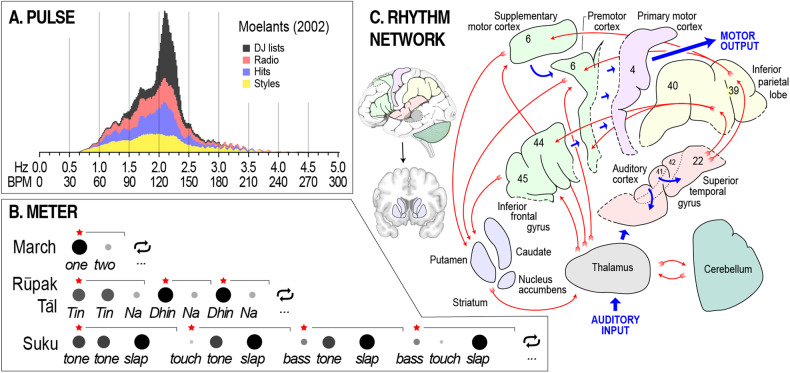
“The dominant feature of rhythm is temporal predictability, focused at rates ranging from approximately 0.5 to 5 Hz (30 – 300 beats per minute [bpm]) [97 – 99].”
BackgroundInfluentialIt's All in the Timing: Interpersonal Synchrony Increases Affiliation
Hove, M. J., & Risen, J. L. (2009) · Social Cognition · doi:10.1521/soco.2009.27.6.949 · Cited by 1,334
Communication of emotions in vocal expression and music performance: different channels, same code?
Juslin, P. N., & Laukka, P. (2003) · Psychological Bulletin · doi:10.1037/0033-2909.129.5.770 · Cited by 1,273 · cited 1×
“Importantly, guidance derived from VST on how to use tonality to modulate affect largely corresponds with what musicians and music therapists have learned to do through subjective exploration and experience [76, 89].”
BackgroundMusic and spatial task performance
Rauscher, F. H., Shaw, G. L., & Ky, C. N. (1993) · Nature · doi:10.1038/365611a0 · Cited by 1,207 · cited 1×
“In 1993, a study published in the journal Nature reported that 10 min of listening to a spirited Mozart sonata, versus speech-based relaxation, or silence, improved performance on a subsequent spatial reasoning task [144].”
BackgroundSocial reward requires coordinated activity of nucleus accumbens oxytocin and serotonin
Dölen, G., Darvishzadeh, A., Huang, K. W., & Malenka, R. C. (2013) · Nature · doi:10.1038/nature12518 · Cited by 1,161
Müllensiefen, D., Gingras, B., Musil, J., & Stewart, L. (2014) · PLoS ONE · doi:10.1371/journal.pone.0089642 · Cited by 1,155 · cited 3×
“Nevertheless, there is still considerable variation in basic test scores, and this is increased for tests that probe more sophisticated musical abilities [234].”
BackgroundMethodInfluentialThe rewards of music listening: Response and physiological connectivity of the mesolimbic system
Menon, V., & Levitin, D. J. (2005) · NeuroImage · doi:10.1016/j.neuroimage.2005.05.053 · Cited by 1,067 · cited 3×
“Beyond this core, musical reward also engages an extended network of brain areas including the auditory, frontal, and insular cortices, as well as the amygdala and hippocampus, all of which also exhibit temporal coupling with the NAc during music listening [149, 153, 154].”
BackgroundCortical tracking of hierarchical linguistic structures in connected speech
Ding, N., Melloni, L., Zhang, H., Tian, X., & Poeppel, D. (2016) · Nature Neuroscience · doi:10.1038/nn.4186 · Cited by 1,059 · cited 1×
“…by music, its primary utility appears to be in processing spoken language, which, despite being less temporally regular than music, is still suf fi ciently regular (between 2 – 8 Hz [120 – 480 bpm] [102]) for entrained oscillations to aid in parsing phonemes, syllables, and phrases [117, 118].”
BackgroundRhythm and Beat Perception in Motor Areas of the Brain
Grahn, J. A., & Brett, M. (2007) · Journal of Cognitive Neuroscience · doi:10.1162/jocn.2007.19.5.893 · Cited by 1,050 · cited 1×
“…in auditory cortices readily couples with neural activity in parts of the brain that regulate movement, especially cortical areas and subcortical structures involved in motor planning, such as the supplementary motor and premotor cortices, the dorsal striatum, and the cerebellum [119 – 123] (Fig.”
BackgroundInsel, T. R. (2010) · Neuron · doi:10.1016/j.neuron.2010.03.005 · Cited by 1,044
Thinking in Jazz: The Infinite Art of Improvisation
Berliner, P. F. (1994) · University of Chicago Press eBooks · doi:10.7208/chicago/9780226044521.001.0001 · Cited by 1,002
The descent of man, and Selection in relation to sex, Vol 2.
Darwin, C. (1871) · J. Murray eBooks · doi:10.1037/12294-000 · Cited by 958
The Influence of Media Violence on Youth
Anderson, C. A., Berkowitz, L., Donnerstein, E., Huesmann, L. R., Johnson, J. D., Linz, D., Malamuth, N. M., & Wartella, E. (2003) · Psychological Science in the Public Interest · doi:10.1111/j.1529-1006.2003.pspi_1433.x · Cited by 957
Depressive rumination, the default-mode network, and the dark matter of clinical neuroscience
Hamilton, J. P., Farmer, M., Fogelman, P., & Gotlib, I. H. (2015) · Biological Psychiatry · doi:10.1016/j.biopsych.2015.02.020 · Cited by 952 · cited 1×
“Speci fi cally, engaging these networks with high-groove rhythms may provide an ef fi cient way to disrupt maladaptive patterns of brain activity associated with negative affect and self-focused negative rumination [137 – 139].”
BackgroundReward processing in primate orbitofrontal cortex and basal ganglia
Schultz, W. (2000) · Cerebral Cortex · doi:10.1093/cercor/10.3.272 · Cited by 942 · cited 1×
“From a mechanistic perspective, this can be taken as support for the hypothesis that the reward potency of music (and speech) re fl ects high temporal predictability relative to other artistic stimuli [150, 153], which is particularly well-suited to anticipatory aspects of reward processing [193].”
BackgroundMusic listening enhances cognitive recovery and mood after middle cerebral artery stroke
Sarkamo, T., Tervaniemi, M., Laitinen, S., Forsblom, A., Soinila, S., Mikkonen, M., Autti, T., Silvennoinen, H. M., Erkkila, J., Laine, M., et al. (2008) · Brain · doi:10.1093/brain/awn013 · Cited by 906 · cited 2×
“Intriguingly, this study also reported bene fi ts of music listening for cognitive function (memory and attention) in a well-controlled comparison to audio-book listening [136].”
BackgroundJoint music making promotes prosocial behavior in 4-year-old children
Kirschner, S., & Tomasello, M. (2010) · Evolution and Human Behavior · doi:10.1016/j.evolhumbehav.2010.04.004 · Cited by 896
Oxytocin and the Neural Mechanisms Regulating Social Cognition and Affiliative Behavior
Ross, H. E., & Young, L. J. (2009) · Frontiers in Neuroendocrinology · doi:10.1016/j.yfrne.2009.05.004 · Cited by 856
Aalbers, S., Fusar-Poli, L., Freeman, R. E., Spreen, M., Ket, J. C., Vink, A. C., Maratos, A., Crawford, M., Chen, X.-J., & Gold, C. (2017) · Cochrane Database of Systematic Reviews · doi:10.1002/14651858.cd004517.pub3 · Cited by 838
Listening to Musical Rhythms Recruits Motor Regions of the Brain
Chen, J. L., Penhune, V. B., & Zatorre, R. J. (2008) · Cerebral Cortex · doi:10.1093/cercor/bhn042 · Cited by 787 · cited 1×
“Activity in these parts of the brain increases in response to rhythm, even in the absence of movement [122], suggesting that auditory-motor interaction may be essential to rhythm perception.”
BackgroundArousal, Mood, and The Mozart Effect
Thompson, W. F., Schellenberg, E. G., & Husain, G. (2001) · Psychological Science · doi:10.1111/1467-9280.00345 · Cited by 751 · cited 2×
“Such effects can be understood as rhythmically-driven increases in motivation and effort [143], potentially re fl ecting increased engagement of key cortico-basal ganglia-thalamo-cortical loop circuitry (see Fig.”
BackgroundInfluentialVarieties of Musical Disorders: The Montreal Battery of Evaluation of Amusia
PERETZ, I., CHAMPOD, A. S., & HYDE, K. (2003) · Annals of the New York Academy of Sciences · doi:10.1196/annals.1284.006 · Cited by 725 · cited 2×
“Performance on the most basic of these tests — e.g., measuring sensitivity to harmony and pulse — tends to be positively skewed [233], re fl ecting a commonplace competency for music similar to that which we possess for language [41].”
BackgroundThe importance of music to adolescents
North, A. C., Hargreaves, D. J., & O'Neill, S. A. (2000) · British Journal of Educational Psychology · doi:10.1348/000709900158083 · Cited by 672 · cited 1×
“Similar positive functions are apparent in pre-pandemic research as well (alongside more social functions) [2, 297 – 299].”
BackgroundSynchrony and the social tuning of compassion.
Valdesolo, P., & DeSteno, D. (2011) · Emotion · doi:10.1037/a0021302 · Cited by 654
Interactions Between the Nucleus Accumbens and Auditory Cortices Predict Music Reward Value
Salimpoor, V. N., van den Bosch, I., Kovacevic, N., McIntosh, A. R., Dagher, A., & Zatorre, R. J. (2013) · Science · doi:10.1126/science.1231059 · Cited by 635
New flutes document the earliest musical tradition in southwestern Germany
Conard, N. J., Malina, M., & Münzel, S. C. (2009) · Nature · doi:10.1038/nature08169 · Cited by 622
The biology and evolution of music: A comparative perspective
Fitch, W. T. (2006) · Cognition · doi:10.1016/j.cognition.2005.11.009 · Cited by 618 · cited 1×
“The second is that singing and speaking — and thus, music and language — likely share a common origin in early hominids, as re fl ected by their many overlapping features, like being auditory-vocal by default, emotional expressive, and inherently social [25].”
BackgroundGrahn, J. A., & Rowe, J. B. (2009) · Journal of Neuroscience · doi:10.1523/jneurosci.2018-08.2009 · Cited by 594 · cited 1×
“…by music, its primary utility appears to be in processing spoken language, which, despite being less temporally regular than music, is still suf fi ciently regular (between 2 – 8 Hz [120 – 480 bpm] [102]) for entrained oscillations to aid in parsing phonemes, syllables, and phrases [117, 118].”
BackgroundGating of social reward by oxytocin in the ventral tegmental area
Hung, L. W., Neuner, S., Polepalli, J. S., Beier, K. T., Wright, M., Walsh, J. J., Lewis, E. M., Luo, L., Deisseroth, K., Dölen, G., et al. (2017) · Science · doi:10.1126/science.aan4994 · Cited by 578 · cited 1×
“3B) [196 – 200].”
Sensorimotor coupling in music and the psychology of the groove.
Janata, P., Tomic, S. T., & Haberman, J. M. (2012) · Journal of Experimental Psychology: General · doi:10.1037/a0024208 · Cited by 572 · cited 3×
“People generally agree about degrees of groove in music [124, 125], with research suggesting a basis in common acoustical and structural features of rhythm, such as emphasized low-frequency energy ( “ bass ” ) [126, 127] and moderate levels of syncopation [111, 112, 127, 128].”
BackgroundTrevarthen, C. (1999) · Musicae Scientiae · doi:10.1177/10298649000030s109 · Cited by 567 · cited 1×
“Over the ensuing weeks, these responses develop to the point that infants strongly prefer their mother ’ s voice at birth [81], an orientation that scaffolds the formation of our prototypical social bond, the modulation of affect through sound, and the development of communication more broadly [82].”
BackgroundInterpersonal synchrony increases prosocial behavior in infants
Cirelli, L. K., Einarson, K. M., & Trainor, L. J. (2014) · Developmental Science · doi:10.1111/desc.12193 · Cited by 565
Music as a coevolved system for social bonding
Savage, P. E., Loui, P., Tarr, B., Schachner, A., Glowacki, L., Mithen, S., & Fitch, W. T. (2021) · Behavioral and Brain Sciences · doi:10.1017/s0140525x20000333 · Cited by 558
Let’s Dance Together: Synchrony, Shared Intentionality and Cooperation
Reddish, P., Fischer, R., & Bulbulia, J. (2013) · PLoS ONE · doi:10.1371/journal.pone.0071182 · Cited by 556 · cited 1×
“This has been measured in terms of increased feelings of af fi liation and self-other similarity [169, 170], trust behaviors in economic games [171, 172], and real-world cooperation [173 – 177] (reviewed in [178]).”
BackgroundLeucht, S., Leucht, C., Huhn, M., Chaimani, A., Mavridis, D., Helfer, B., Samara, M., Rabaioli, M., Bächer, S., Cipriani, A., et al. (2017) · American Journal of Psychiatry · doi:10.1176/appi.ajp.2017.16121358 · Cited by 542
Thrills in response to music and other stimuli
Goldstein, A. (1980) · Physiological Psychology · doi:10.3758/bf03326460 · Cited by 522 · cited 2×
“This has been shown pharmacologically, as treatment with the (predominantly μ -) opioid receptor antagonists naloxone and naltrexone signi fi cantly reduces pleasure in response to musical stimuli [156, 157].”
BackgroundMusic-based interventions in neurological rehabilitation
Sihvonen, A. J., Särkämö, T., Leo, V., Tervaniemi, M., Altenmüller, E., & Soinila, S. (2017) · The Lancet Neurology · doi:10.1016/s1474-4422(17)30168-0 · Cited by 516 · cited 2×
“Positive mental health outcomes have also been observed in response to receptive music therapy after stroke [134, 135].”
BackgroundAyotte, J., Peretz, I., & Hyde, K. (2002) · Brain · doi:10.1093/brain/awf028 · Cited by 503
Temporal modulations in speech and music
Ding, N., Patel, A. D., Chen, L., Butler, H., Luo, C., & Poeppel, D. (2017) · Neuroscience & Biobehavioral Reviews · doi:10.1016/j.neubiorev.2017.02.011 · Cited by 502 · cited 2×
“…by music, its primary utility appears to be in processing spoken language, which, despite being less temporally regular than music, is still suf fi ciently regular (between 2 – 8 Hz [120 – 480 bpm] [102]) for entrained oscillations to aid in parsing phonemes, syllables, and phrases [117, 118].”
BackgroundWhy do we listen to music? A uses and gratifications analysis
Lonsdale, A. J., & North, A. C. (2011) · British Journal of Psychology · doi:10.1348/000712610x506831 · Cited by 501
Is Music an Evolutionary Adaptation?
HURON, D. (2001) · Annals of the New York Academy of Sciences · doi:10.1111/j.1749-6632.2001.tb05724.x · Cited by 496
Music acquisition: Effects of enculturation and formal training on development
Hannon, E. E., & Trainor, L. J. (2007) · Trends in Cognitive Sciences · doi:10.1016/j.tics.2007.08.008 · Cited by 493 · cited 1×
“One of the most important environmental factors is formal training , a process by which individuals explicitly learn speci fi c motor skills and rules for music performance and composition [235].”
BackgroundLeichsenring, F., Steinert, C., Rabung, S., & Ioannidis, J. P. A. (2022) · World Psychiatry · doi:10.1002/wps.20941 · Cited by 485
The developmental origins of musicality
Trehub, S. E. (2003) · Nature Neuroscience · doi:10.1038/nn1084 · Cited by 479 · cited 2×
“Performance on the most basic of these tests — e.g., measuring sensitivity to harmony and pulse — tends to be positively skewed [233], re fl ecting a commonplace competency for music similar to that which we possess for language [41].”
BackgroundSpeech rhythms and their neural foundations
Poeppel, D., & Assaneo, M. F. (2020) · Nature Reviews Neuroscience · doi:10.1038/s41583-020-0304-4 · Cited by 476 · cited 1×
“…by music, its primary utility appears to be in processing spoken language, which, despite being less temporally regular than music, is still suf fi ciently regular (between 2 – 8 Hz [120 – 480 bpm] [102]) for entrained oscillations to aid in parsing phonemes, syllables, and phrases [117, 118].”
BackgroundWalum, H., Westberg, L., Henningsson, S., Neiderhiser, J. M., Reiss, D., Igl, W., Ganiban, J. M., Spotts, E. L., Pedersen, N. L., Eriksson, E., et al. (2008) · Proceedings of the National Academy of Sciences · doi:10.1073/pnas.0803081105 · Cited by 460
Music and Emotions in the Brain: Familiarity Matters
Pereira, C. S., Teixeira, J., Figueiredo, P., Xavier, J., Castro, S. L., & Brattico, E. (2011) · PLoS ONE · doi:10.1371/journal.pone.0027241 · Cited by 454 · cited 1×
“One major advantage of this approach is that listening to preferred music can be especially rewarding [151, 277].”
BackgroundPeriodicity coding in the auditory system
Langner, G. (1992) · Hearing Research · doi:10.1016/0378-5955(92)90015-f · Cited by 453 · cited 1×
“…neural specialization for responding to vocal tones is evident throughout the auditory system, from enhanced representations of periodicity in the brainstems of humans and rats [83, 84], to harmonically sensitive neurons in marmoset cortex [85], and pitch contour neurons in human cortex [86].”
BackgroundIndividual music therapy for depression: randomised controlled trial
Erkkilä, J., Punkanen, M., Fachner, J., Ala-Ruona, E., Pöntiö, I., Tervaniemi, M., Vanhala, M., & Gold, C. (2011) · British Journal of Psychiatry · doi:10.1192/bjp.bp.110.085431 · Cited by 443 · cited 1×
“…bias assessments in these meta-analyses [93, 95, 96, 133, 164, 216, 224, 229], and review individual studies that exemplify high-quality research on musical treatments for conditions such as anxiety [311, 312], depression [313, 314], autism [274, 315], psychosis [316, 317], and dementia [318, 319].”
BackgroundStatistical universals reveal the structures and functions of human music
Savage, P. E., Brown, S., Sakai, E., & Currie, T. E. (2015) · Proceedings of the National Academy of Sciences · doi:10.1073/pnas.1414495112 · Cited by 440 · cited 6×
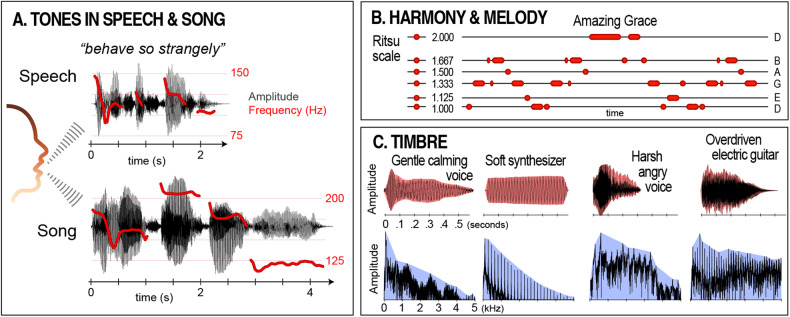
“In melody, tones tend to be arranged in arched or descending contours [21, 51], traced mainly by small steps in pitch, with larger steps typically rising (Fig.”
BackgroundInfluentialRuminative self-focus and negative affect: An experience sampling study.
Moberly, N. J., & Watkins, E. R. (2008) · Journal of Abnormal Psychology · doi:10.1037/0021-843x.117.2.314 · Cited by 432
Individual Differences in Music Reward Experiences
Mas-Herrero, E., Marco-Pallares, J., Lorenzo-Seva, U., Zatorre, R. J., & Rodriguez-Fornells, A. (2013) · Music Perception · doi:10.1525/mp.2013.31.2.118 · Cited by 431 · cited 2×
“Among the most promising for determining suitability for musical treatment is the Barcelona Music Reward Questionnaire (BMRQ) [265], a survey of 20 self-reported items that assess the degree to which an individual takes pleasure in different aspects of music.”
BackgroundIndifference to dissonance in native Amazonians reveals cultural variation in music perception
McDermott, J. H., Schultz, A. F., Undurraga, E. A., & Godoy, R. A. (2016) · Nature · doi:10.1038/nature18635 · Cited by 431 · cited 1×
“Many studies have demonstrated effects of training and enculturation on psychoacoustic tests (e.g. [236, 237]).”
BackgroundNeurocognitive mechanisms underlying the experience of flow
Dietrich, A. (2004) · Consciousness and Cognition · doi:10.1016/j.concog.2004.07.002 · Cited by 422
Gold, C., Solli, H. P., Krüger, V., & Lie, S. A. (2009) · Clinical Psychology Review · doi:10.1016/j.cpr.2009.01.001 · Cited by 417 · cited 1×
“Further evidence supporting the bene fi ts of music therapy for social functioning comes from studies on schizophrenia [223].”
BackgroundMeta-analysis evaluating music interventions for anxiety and pain in surgery
Kühlmann, A. Y. R., de Rooij, A., Kroese, L. F., van Dijk, M., Hunink, M. G. M., & Jeekel, J. (2018) · British Journal of Surgery · doi:10.1002/bjs.10853 · Cited by 414
Syncopation, Body-Movement and Pleasure in Groove Music
Witek, M. A. G., Clarke, E. F., Wallentin, M., Kringelbach, M. L., & Vuust, P. (2014) · PLoS ONE · doi:10.1371/journal.pone.0094446 · Cited by 400
Music, Cognition, Culture, and Evolution
CROSS, I. (2001) · Annals of the New York Academy of Sciences · doi:10.1111/j.1749-6632.2001.tb05723.x · Cited by 382
Gerdner, L. A. (2000) · International Psychogeriatrics · doi:10.1017/s1041610200006190 · Cited by 372 · cited 1×
“…bias assessments in these meta-analyses [93, 95, 96, 133, 164, 216, 224, 229], and review individual studies that exemplify high-quality research on musical treatments for conditions such as anxiety [311, 312], depression [313, 314], autism [274, 315], psychosis [316, 317], and dementia [318, 319].”
BackgroundHearing in Time: Psychological Aspects of Musical Meter
London, J. (2012) · Oxford University Press eBooks · doi:10.1093/acprof:oso/9780199744374.001.0001 · Cited by 369
Hakulinen, C., Pulkki-Råback, L., Virtanen, M., Jokela, M., Kivimäki, M., & Elovainio, M. (2018) · Heart · doi:10.1136/heartjnl-2017-312663 · Cited by 355 · cited 1×
“Social functioning — as re fl ected in the structure, function, and quality of an individual ’ s social connections — is a critical determinant of mental health in patients across prominent psychiatric disorders [207, 208] as well as the general public [209, 210].”
BackgroundMusic therapy for people with schizophrenia and schizophrenia-like disorders
Geretsegger, M., Mössler, K. A., Bieleninik, Ł., Chen, X.-J., Heldal, T. O., & Gold, C. (2017) · Cochrane Database of Systematic Reviews · doi:10.1002/14651858.cd004025.pub4 · Cited by 348
Resonance in the Perception of Musical Pulse
van Noorden, L., & Moelants, D. (1999) · Journal of New Music Research · doi:10.1076/jnmr.28.1.43.3122 · Cited by 335
Communicating Emotion In Music Performance: A Review And Theoretical Framework
Juslin, P. N. (2001) · Music And Emotion · doi:10.1093/oso/9780192631886.003.0014 · Cited by 333
Efficacy of Music Therapy in the Treatment of Behavioral and Psychiatric Symptoms of Dementia
Raglio, A., Bellelli, G., Traficante, D., Gianotti, M., Ubezio, M. C., Villani, D., & Trabucchi, M. (2008) · Alzheimer Disease & Associated Disorders · doi:10.1097/wad.0b013e3181630b6f · Cited by 333 · cited 1×
“…bias assessments in these meta-analyses [93, 95, 96, 133, 164, 216, 224, 229], and review individual studies that exemplify high-quality research on musical treatments for conditions such as anxiety [311, 312], depression [313, 314], autism [274, 315], psychosis [316, 317], and dementia [318, 319].”
BackgroundLinking the PANSS, BPRS, and CGI: Clinical Implications
Leucht, S., Kane, J. M., Etschel, E., Kissling, W., Hamann, J., & Engel, R. R. (2006) · Neuropsychopharmacology · doi:10.1038/sj.npp.1301147 · Cited by 333
Interactions between auditory and dorsal premotor cortex during synchronization to musical rhythms
Chen, J. L., Zatorre, R. J., & Penhune, V. B. (2006) · NeuroImage · doi:10.1016/j.neuroimage.2006.04.207 · Cited by 329
Kemper, K. J., & Danhauer, S. C. (2005) · Southern Medical Journal · doi:10.1097/01.smj.0000154773.11986.39 · Cited by 328
Mirror neurons 30 years later: implications and applications
Bonini, L., Rotunno, C., Arcuri, E., & Gallese, V. (2022) · Trends in Cognitive Sciences · doi:10.1016/j.tics.2022.06.003 · Cited by 316 · cited 1×
“While the neural basis of synchrony ’ s effects on social neurobiology has yet to be studied in detail (see [189] for leading hypotheses), at a psychological level it appears to work through empathetic processes that increase trust and promote openness to further interaction and direction [190].”
BackgroundTop‐Down Control of Rhythm Perception Modulates Early Auditory Responses
Iversen, J. R., Repp, B. H., & Patel, A. D. (2009) · Annals of the New York Academy of Sciences · doi:10.1111/j.1749-6632.2009.04579.x · Cited by 311 · cited 1×
“For example, we are apt to hear alternation or triplets in sequences of physically identical events, a perceptual imposition that can be differentiated electroencephalographically [109].”
BackgroundGrape, C., Sandgren, M., Hansson, L.-O., Ericson, M., & Theorell, T. (2002) · Integrative Physiological & Behavioral Science · doi:10.1007/bf02734261 · Cited by 306 · cited 1×
“…experiments showing that recreational forms of behavioral synchrony — e.g., in group singing, drumming, or exercise — can upregulate oxytocin secretion [155, 179 – 182], downregulate cortisol secretion [155, 181, 183 – 185], modulate immune reactivity [182, 184, 185], and decrease pain [186, 187].”
BackgroundUniversals in the world’s musics
Brown, S., & Jordania, J. (2013) · Psychology of Music · doi:10.1177/0305735611425896 · Cited by 305 · cited 4×
“All musical cultures and traditions exhibit some temporal predictability in this range, making neural sensitivity to rhythm a second core element of musicality (no ranking implied) [50, 51].”
BackgroundInfluentialGenetic Correlates of Musical Pitch Recognition in Humans
Drayna, D., Manichaikul, A., Lange, M. D., Snieder, H., & Spector, T. (2001) · Science · doi:10.1126/science.291.5510.1969 · Cited by 302 · cited 2×
“Early work provided evidence that genetic factors explain surprising amounts of phenotypic variability in psychoacoustic test performance (e.g., 70 – 80% in tone perception [238]), as well as time spent practicing music (e.g., 40 – 70% [239]; see also [240]).”
BackgroundTone Deafness: A New Disconnection Syndrome?
Loui, P., Alsop, D., & Schlaug, G. (2009) · The Journal of Neuroscience · doi:10.1523/jneurosci.1701-09.2009 · Cited by 299 · cited 1×
“…(or tone deafness ) is the best studied form of congenital amusia: it runs in families [238, 260] and is associated with decreased connectivity between the auditory cortices and the inferior frontal gyrus [261, 262], potentially re fl ecting abnormal frontotemporal cortical development [263].”
BackgroundDichter, G. S., Damiano, C. A., & Allen, J. A. (2012) · Journal of Neurodevelopmental Disorders · doi:10.1186/1866-1955-4-19 · Cited by 299
Human Screams Occupy a Privileged Niche in the Communication Soundscape
Arnal, L. H., Flinker, A., Kleinschmidt, A., Giraud, A.-L., & Poeppel, D. (2015) · Current Biology · doi:10.1016/j.cub.2015.06.043 · Cited by 296 · cited 1×
“…anatomical and affective source parameters, e.g., the ratio of low-to high-frequency energy in a tone is associated with size, valence, and arousal [65, 66], rapid tone onsets signal a higher commitment of energy [67], and “ rough ” growl-like tones often convey anger or aggression [68, 69] (Fig.”
BackgroundKnafo, A., Israel, S., Darvasi, A., Bachner‐Melman, R., Uzefovsky, F., Cohen, L., Feldman, E., Lerer, E., Laiba, E., Raz, Y., et al. (2008) · Genes, Brain and Behavior · doi:10.1111/j.1601-183x.2007.00341.x · Cited by 296 · cited 1×
“Variation in AVPRA1 has also been associated with verbal memory [249], acoustic startle [250], amygdala activity [251], prosocial behavior [252], pair-bonding [253], and autism [254].”
BackgroundProsocial Consequences of Interpersonal Synchrony: A Meta-Analysis
Rennung, M., & Göritz, A. S. (2016) · Zeitschrift für Psychologie · doi:10.1027/2151-2604/a000252 · Cited by 295
The pleasures of sad music: a systematic review
Sachs, M. E., Damasio, A., & Habibi, A. (2015) · Frontiers in Human Neuroscience · doi:10.3389/fnhum.2015.00404 · Cited by 291 · cited 1×
“A prime example is that people with depression often prefer music that maintains or exacerbates their sadness [284 – 286] (but see [285, 287, 288]).”
BackgroundThe Mozart Effect: An Artifact of Preference
Nantais, K. M., & Schellenberg, E. G. (1999) · Psychological Science · doi:10.1111/1467-9280.00170 · Cited by 282 · cited 1×
“…in the form of criticism and further investigation eventually came to show that the Mozart effect amounts to a relatively small but replicable performance boost that generalizes to other types of music (and speech) which stimulate enjoyment and arousal (SMD = 0.37 in meta-analyses) [143, 305, 306].”
BackgroundInfluentialPulse and Meter as Neural Resonance
Large, E. W., & Snyder, J. S. (2009) · Annals of the New York Academy of Sciences · doi:10.1111/j.1749-6632.2009.04550.x · Cited by 281 · cited 1×
“To model the biology underlying rhythm, music scientists have developed Neural Resonance Theory (NRT), the central tenet of which is that rhythm perception depends on endogenous oscillations in neural circuitry [97, 114 – 116].”
BackgroundForm and Function in Human Song
Mehr, S. A., Singh, M., York, H., Glowacki, L., & Krasnow, M. M. (2018) · Current Biology · doi:10.1016/j.cub.2017.12.042 · Cited by 272
Institutional Violence Against Users of the Family Law Courts and the Legal Harassment Scale
Clemente, M., Padilla-Racero, D., Espinosa, P., Reig-Botella, A., & Gandoy-Crego, M. (2019) · Frontiers in Psychology · doi:10.3389/fpsyg.2019.00001 · Cited by 267
Rowers' high: behavioural synchrony is correlated with elevated pain thresholds
Cohen, E. E. A., Ejsmond-Frey, R., Knight, N., & Dunbar, R. I. M. (2010) · Biology Letters · doi:10.1098/rsbl.2009.0670 · Cited by 261 · cited 1×
“…experiments showing that recreational forms of behavioral synchrony — e.g., in group singing, drumming, or exercise — can upregulate oxytocin secretion [155, 179 – 182], downregulate cortisol secretion [155, 181, 183 – 185], modulate immune reactivity [182, 184, 185], and decrease pain [186, 187].”
BackgroundThe Corticotropin-Releasing Factor Family: Physiology of the Stress Response
Deussing, J. M., & Chen, A. (2018) · Physiological Reviews · doi:10.1152/physrev.00042.2017 · Cited by 260 · cited 1×
“3C) [202 – 206].”
Grocke, D. E., & Wigram, T. (2006) · Cited by 256
Does singing facilitate social bonding?
Kreutz, G. (2014) · Music and Medicine · doi:10.47513/mmd.v6i2.180 · Cited by 254
Kokal, I., Engel, A., Kirschner, S., & Keysers, C. (2011) · PLoS ONE · doi:10.1371/journal.pone.0027272 · Cited by 254
Music improves social communication and auditory–motor connectivity in children with autism
Sharda, M., Tuerk, C., Chowdhury, R., Jamey, K., Foster, N., Custo-Blanch, M., Tan, M., Nadig, A., & Hyde, K. (2018) · Translational Psychiatry · doi:10.1038/s41398-018-0287-3 · Cited by 254 · cited 2×
“Similarly, in music therapy for autism — which is predominantly interactive — high comorbidity with anxiety disorders may help explain some of the heterogeneity in trial results (cf [273, 274].).”
BackgroundResultExperiencing Groove Induced by Music: Consistency and Phenomenology
Madison, G. (2006) · Music Perception · doi:10.1525/mp.2006.24.2.201 · Cited by 252 · cited 1×
“People generally agree about degrees of groove in music [124, 125], with research suggesting a basis in common acoustical and structural features of rhythm, such as emphasized low-frequency energy ( “ bass ” ) [126, 127] and moderate levels of syncopation [111, 112, 127, 128].”
BackgroundOrigins of music in credible signaling
Mehr, S. A., Krasnow, M. M., Bryant, G. A., & Hagen, E. H. (2021) · Behavioral and Brain Sciences · doi:10.1017/s0140525x20000345 · Cited by 252
Risk and protective factors underlying depression and suicidal ideation in Autism Spectrum Disorder
Hedley, D., Uljarević, M., Foley, K.-R., Richdale, A., & Trollor, J. (2018) · Depression and Anxiety · doi:10.1002/da.22759 · Cited by 246 · cited 1×
“Social functioning — as re fl ected in the structure, function, and quality of an individual ’ s social connections — is a critical determinant of mental health in patients across prominent psychiatric disorders [207, 208] as well as the general public [209, 210].”
BackgroundThe Rhythmic Interpretation of Monophonic Music
Longuet-Higgins, H. C., & Lee, C. S. (1984) · Music Perception · doi:10.2307/40285271 · Cited by 244
Song, Z., & Albers, H. E. (2018) · Frontiers in Neuroendocrinology · doi:10.1016/j.yfrne.2017.10.004 · Cited by 244 · cited 1×
“One of the best studied genes in this context is AVPR1A , which encodes the vasopressin 1A receptor, a major component of the arginine vasopressin and oxytocin signaling pathways [196, 244].”
BackgroundThe Genetics of Congenital Amusia (Tone Deafness): A Family-Aggregation Study
Peretz, I., Cummings, S., & Dubé, M.-P. (2007) · The American Journal of Human Genetics · doi:10.1086/521337 · Cited by 241 · cited 1×
“De fi cits in tone perception (or tone deafness ) is the best studied form of congenital amusia: it runs in families [238, 260] and is associated with decreased connectivity between the auditory cortices and the inferior frontal gyrus [261, 262], potentially re fl ecting abnormal frontotemporal…”
BackgroundThe impact of music therapy on language functioning in dementia
Brotons, M., & Koger, S. M. (2000) · Journal of Music Therapy · doi:10.1093/jmt/37.3.183 · Cited by 237 · cited 1×
“For example, individual studies have reported signi fi cant bene fi ts of interactive music therapy on language functioning [226] and receptive music therapy on social engagement [227].”
BackgroundPractice Does Not Make Perfect: No Causal Effect of Music Practice on Music Ability
Mosing, M. A., Madison, G., Pedersen, N. L., Kuja-Halkola, R., & Ullén, F. (2014) · Psychological Science · doi:10.1177/0956797614541990 · Cited by 237
Music in Intervention for Children and Adolescents with Autism: A Meta-Analysis
Whipple, J. (2004) · Journal of Music Therapy · doi:10.1093/jmt/41.2.90 · Cited by 236
Music listening as a means of stress reduction in daily life
Linnemann, A., Ditzen, B., Strahler, J., Doerr, J. M., & Nater, U. M. (2015) · Psychoneuroendocrinology · doi:10.1016/j.psyneuen.2015.06.008 · Cited by 232 · cited 1×
“An important corollary of this hypothesis also addresses the anti-stress effects of music [201], as music-induced oxytocin release in the hypothalamus may also modulate local corticotropin releasing factor (CRF) circuitry to downregulate activity in the hypothalamic-pituitary-adrenal axis and the…”
BackgroundEffects of music therapy on depression: A meta-analysis of randomized controlled trials
Tang, Q., Huang, Z., Zhou, H., & Ye, P. (2020) · PLoS ONE · doi:10.1371/journal.pone.0240862 · Cited by 231 · cited 5×
“The same paper also reports a signi fi cant effect for interactive treatment (based on making music; SMD = 0.57, 20 controlled studies, 1,368 patients) [96].”
BackgroundInfluentialMozart effect–Shmozart effect: A meta-analysis
Pietschnig, J., Voracek, M., & Formann, A. K. (2010) · Intelligence · doi:10.1016/j.intell.2010.03.001 · Cited by 229 · cited 2×
“…in the form of criticism and further investigation eventually came to show that the Mozart effect amounts to a relatively small but replicable performance boost that generalizes to other types of music (and speech) which stimulate enjoyment and arousal (SMD = 0.37 in meta-analyses) [143, 305, 306].”
BackgroundInfluentialDissociation between Musical and Monetary Reward Responses in Specific Musical Anhedonia
Mas-Herrero, E., Zatorre, R. J., Rodriguez-Fornells, A., & Marco-Pallarés, J. (2014) · Current Biology · doi:10.1016/j.cub.2014.01.068 · Cited by 229
The Oxford Handbook of Music Therapy
(2015) · Oxford Handbooks Online · doi:10.1093/oxfordhb/9780199639755.001.0001 · Cited by 228
Yu, Q., Li, E., Li, L., & Liang, W.-Y. (2020) · Psychiatry Investigation · doi:10.30773/pi.2019.0229 · Cited by 228
Functional MRI Evidence of an Abnormal Neural Network for Pitch Processing in Congenital Amusia
Hyde, K. L., Zatorre, R. J., & Peretz, I. (2011) · Cerebral Cortex · doi:10.1093/cercor/bhq094 · Cited by 227 · cited 1×
“…(or tone deafness ) is the best studied form of congenital amusia: it runs in families [238, 260] and is associated with decreased connectivity between the auditory cortices and the inferior frontal gyrus [261, 262], potentially re fl ecting abnormal frontotemporal cortical development [263].”
BackgroundThe Influence of Group Singing on Trust and Cooperation
Anshel, A., & Kipper, D. A. (1988) · Journal of Music Therapy · doi:10.1093/jmt/25.3.145 · Cited by 224
AVPR1a and SLC6A4 Gene Polymorphisms Are Associated with Creative Dance Performance
Bachner-Melman, R., Dina, C., Zohar, A. H., Constantini, N., Lerer, E., Hoch, S., Sella, S., Nemanov, L., Gritsenko, I., Lichtenberg, P., et al. (2005) · PLoS Genetics · doi:10.1371/journal.pgen.0010042 · Cited by 222 · cited 1×
“Genetic variation in the promotor region of AVPR1A has been associated with phenotypic variation in psychoacoustic test scores [245, 246], time spent attentively listening to music [247], and being a dancer as opposed to another type of athlete [248].”
BackgroundMeyer-Lindenberg, A., Kolachana, B., Gold, B., Olsh, A., Nicodemus, K. K., Mattay, V, Dean, M., & Weinberger, D. R. (2009) · Molecular Psychiatry · doi:10.1038/mp.2008.54 · Cited by 221 · cited 1×
“Variation in AVPRA1 has also been associated with verbal memory [249], acoustic startle [250], amygdala activity [251], prosocial behavior [252], pair-bonding [253], and autism [254].”
BackgroundTsoi, K. K. F., Chan, J. Y. C., Ng, Y.-M., Lee, M. M. Y., Kwok, T. C. Y., & Wong, S. Y. S. (2018) · Journal of the American Medical Directors Association · doi:10.1016/j.jamda.2017.12.009 · Cited by 221 · cited 3×
“However, reviews and meta-analyses suggest that such social effects are mainly derivative from primary bene fi ts that reduce agitation, anxiety, and depression [228, 229].”
BackgroundThe Concept of Musical Consonance: A Link between Music and Psychoacoustics
Terhardt, E. (1984) · Music Perception · doi:10.2307/40285261 · Cited by 220 · cited 1×
“This implies that the neurobiology of tone perception has primarily been shaped by pressure to contend with tones in the voice and their signi fi cance for adaptive behavior [22, 53, 75].”
BackgroundThe neurochemistry and social flow of singing: bonding and oxytocin
Keeler, J. R., Roth, E. A., Neuser, B. L., Spitsbergen, J. M., Waters, D. J. M., & Vianney, J.-M. (2015) · Frontiers in Human Neuroscience · doi:10.3389/fnhum.2015.00518 · Cited by 220
English and American Adolescents' Reasons for Listening to Music
Tarrant, M., North, A. C., & Hargreaves, D. J. (2000) · Psychology of Music · doi:10.1177/0305735600282005 · Cited by 213
Bidelman, G. M., & Krishnan, A. (2009) · The Journal of Neuroscience · doi:10.1523/jneurosci.3900-09.2009 · Cited by 208
Music therapy for autistic people
Geretsegger, M., Fusar‐Poli, L., Elefant, C., Mössler, K. A., Vitale, G., & Gold, C. (2022) · Cochrane Database of Systematic Reviews · doi:10.1002/14651858.cd004381.pub4 · Cited by 208 · cited 4×
“This analysis compared music therapy to non-musical standard care or a “ placebo ” therapy over an average duration of 2.5 months (SD = 2.0), with session frequency varying from daily to weekly in shorter and longer studies respectively [216].”
BackgroundMethodInfluentialA Review on the Relationship Between Sound and Movement in Sports and Rehabilitation
Schaffert, N., Janzen, T. B., Mattes, K., & Thaut, M. H. (2019) · Frontiers in Psychology · doi:10.3389/fpsyg.2019.00244 · Cited by 206 · cited 1×
“They are particularly well-characterized in the context of physical exercise, where music can increase enjoyment and reduce perceived exertion [148], but such bene fi ts may also extend to less muscular tasks (see discussion of the Mozart effect in Section “ Another crest in the music and health…”
BackgroundFetal Exposures to Sound and Vibroacoustic Stimulation
Gerhardt, K. J., & Abrams, R. M. (2000) · Journal of Perinatology · doi:10.1038/sj.jp.7200446 · Cited by 201 · cited 1×
“Developmentally, the fetal brain begins responding to mother ’ s voice around the 24th week of gestation [80].”
BackgroundFancourt, D., Williamon, A., Carvalho, L. A., Steptoe, A., Dow, R., & Lewis, I. (2016) · ecancermedicalscience · doi:10.3332/ecancer.2016.631 · Cited by 201 · cited 2×
“…experiments showing that recreational forms of behavioral synchrony — e.g., in group singing, drumming, or exercise — can upregulate oxytocin secretion [155, 179 – 182], downregulate cortisol secretion [155, 181, 183 – 185], modulate immune reactivity [182, 184, 185], and decrease pain [186, 187].”
BackgroundMusic‐evoked emotions: principles, brain correlates, and implications for therapy
Koelsch, S. (2015) · Annals of the New York Academy of Sciences · doi:10.1111/nyas.12684 · Cited by 200
Adults identify infant-directed music across cultures
Trehub, S. E., Unyk, A. M., & Trainor, L. J. (1993) · Infant Behavior and Development · doi:10.1016/0163-6383(93)80017-3 · Cited by 200
Bieleninik, L., Geretsegger, M., Mössler, K., Assmus, J., Thompson, G., Gattino, G., Elefant, C., Gottfried, T., Igliozzi, R., Muratori, F., et al. (2017) · JAMA · doi:10.1001/jama.2017.9478 · Cited by 200
Relaxing music as pre‐medication before surgery: a randomised controlled trial
BRINGMAN, H., GIESECKE, K., THÖRNE, A., & BRINGMAN, S. (2009) · Acta Anaesthesiologica Scandinavica · doi:10.1111/j.1399-6576.2009.01969.x · Cited by 198 · cited 1×
“…bias assessments in these meta-analyses [93, 95, 96, 133, 164, 216, 224, 229], and review individual studies that exemplify high-quality research on musical treatments for conditions such as anxiety [311, 312], depression [313, 314], autism [274, 315], psychosis [316, 317], and dementia [318, 319].”
BackgroundThe sensation of groove engages motor and reward networks
Matthews, T. E., Witek, M. A. G., Lund, T., Vuust, P., & Penhune, V. B. (2020) · NeuroImage · doi:10.1016/j.neuroimage.2020.116768 · Cited by 196 · cited 1×
“Notably, groove is broadly associated with positive affect [111, 125, 129, 130], making it directly relevant to mental health.”
BackgroundBorn to dance but beat deaf: A new form of congenital amusia
Phillips-Silver, J., Toiviainen, P., Gosselin, N., Piché, O., Nozaradan, S., Palmer, C., & Peretz, I. (2011) · Neuropsychologia · doi:10.1016/j.neuropsychologia.2011.02.002 · Cited by 195 · cited 1×
“Congenital amusia [256] is an umbrella term for lifelong de fi cits in music perception that prevent people from singing in tune [257], dancing in time [258], or deriving pleasure from music [259].”
BackgroundDeep Learning in Music Recommendation Systems
Schedl, M. (2019) · Frontiers in Applied Mathematics and Statistics · doi:10.3389/fams.2019.00044 · Cited by 194 · cited 1×
“Beyond tailoring musical treatments to align neurophysiological effects with clinical targets and individual musicality pro fi les, treatments may also be customized based on individual music preferences or “ taste ” [275, 276].”
BackgroundMusical pleasure and reward: mechanisms and dysfunction
Zatorre, R. J. (2015) · Annals of the New York Academy of Sciences · doi:10.1111/nyas.12677 · Cited by 192 · cited 2×
“This appetite is driven by music ’ s core effects on emotion [1 – 3], reward [4], and af fi liation [5].”
BackgroundThompson, W. F., Marin, M. M., & Stewart, L. (2012) · Proceedings of the National Academy of Sciences · doi:10.1073/pnas.1210344109 · Cited by 192
Musical Expectancy and Thrills
Huron, D., & Margulis, E. H. (2010) · Oxford University Press eBooks · doi:10.1093/acprof:oso/9780199230143.003.0021 · Cited by 191 · cited 3×
“Early studies used positron emission tomography with the radiolabeled dopamine D 2 receptor ligand, [ 11 C]raclopride, to show that musical frisson [150] — moments of peak neural excitement, piloerection, and “ chills ” that occur during music listening — are associated with surges in dopamine…”
BackgroundMethodPhysiological correlates and emotional specificity of human piloerection
Benedek, M., & Kaernbach, C. (2011) · Biological Psychology · doi:10.1016/j.biopsycho.2010.12.012 · Cited by 187
An oscillator model better predicts cortical entrainment to music
Doelling, K. B., Assaneo, M. F., Bevilacqua, D., Pesaran, B., & Poeppel, D. (2019) · Proceedings of the National Academy of Sciences · doi:10.1073/pnas.1816414116 · Cited by 186
Mayer-Benarous, H., Benarous, X., Vonthron, F., & Cohen, D. (2021) · Frontiers in Psychiatry · doi:10.3389/fpsyt.2021.643234 · Cited by 182 · cited 2×
“A large body of evidence supports the bene fi ts of such approaches in autism spectrum disorders [216 – 221].”
BackgroundEffects of music therapy on anxiety: A meta-analysis of randomized controlled trials
Lu, G., Jia, R., Liang, D., Yu, J., Wu, Z., & Chen, C. (2021) · Psychiatry Research · doi:10.1016/j.psychres.2021.114137 · Cited by 180 · cited 2×
“This effect was stronger in the subset of 11 studies with >12 sessions (SMD = 0.59), suggesting a dose-response effect [93].”
BackgroundInfluentialA biological rationale for musical consonance
Bowling, D. L., & Purves, D. (2015) · Proceedings of the National Academy of Sciences · doi:10.1073/pnas.1505768112 · Cited by 179 · cited 3×
“To model the biology underlying tonality, music scientists have developed vocal similarity theory (VST), the central tenet of which is that we perceive tones according to their behavioral signi fi cance in vocal communication [22, 30, 53, 58, 74 – 78].”
BackgroundSelf-citationA coordinate-based meta-analysis of music-evoked emotions
Koelsch, S. (2020) · NeuroImage · doi:10.1016/j.neuroimage.2020.117350 · Cited by 179 · cited 4×
“Beyond this core, musical reward also engages an extended network of brain areas including the auditory, frontal, and insular cortices, as well as the amygdala and hippocampus, all of which also exhibit temporal coupling with the NAc during music listening [149, 153, 154].”
BackgroundInfluentialRhythmic cognition in humans and animals: distinguishing meter and pulse perception
Fitch, W. T. (2013) · Frontiers in Systems Neuroscience · doi:10.3389/fnsys.2013.00068 · Cited by 176 · cited 3×
“For cycles at rates slower than the pulse, rhythmic patterning is almost always marked by variations in acoustic emphasis called accenting [100] (Fig.”
BackgroundFilippi, P., Congdon, J. V., Hoang, J. G., Bowling, D. L., Reber, S. A., Pašukonis, A., Hoeschele, M., Ocklenburg, S., de Boer, B., Sturdy, C. B., et al. (2017) · Proceedings of the Royal Society B Biological Sciences · doi:10.1098/rspb.2017.0990 · Cited by 173 · cited 1×
“Phylogenetically, sensitivity to “ tone of voice ” is likely to have emerged very early in tetrapod evolution [79].”
BackgroundSelf-citationWas Eysenck right after all? A reassessment of the effects of psychotherapy for adult depression
Cuijpers, P., Karyotaki, E., Reijnders, M., & Ebert, D. D. (2019) · Epidemiology and Psychiatric Sciences · doi:10.1017/s2045796018000057 · Cited by 173 · cited 1×
“Over the last decade, there has also been a surge in meta-analytic syntheses of this work, most of which explicitly assess risk-of-bias alongside their conclusions, although they do not typically take the next step of adjusting effect size estimates accordingly (cf [96, 310].).”
BackgroundThe cultural evolution of shamanism
Singh, M. (2018) · Behavioral and Brain Sciences · doi:10.1017/s0140525x17001893 · Cited by 170
Neurobiology of Congenital Amusia
Peretz, I. (2016) · Trends in Cognitive Sciences · doi:10.1016/j.tics.2016.09.002 · Cited by 169
Lullabies and Simplicity: A Cross-Cultural Perspective
Unyk, A. M., Trehub, S. E., Trainor, L. J., & Schellenberg, E. G. (1992) · Psychology of Music · doi:10.1177/0305735692201002 · Cited by 167 · cited 1×
“For example, lullabies typically comprise tones with relatively more low-frequency energy, sorted into simple repeating patterns [70 – 72].”
BackgroundFourteen-month-old infants use interpersonal synchrony as a cue to direct helpfulness
Cirelli, L. K., Wan, S. J., & Trainor, L. J. (2014) · Philosophical Transactions of the Royal Society B: Biological Sciences · doi:10.1098/rstb.2013.0400 · Cited by 166
Hove, M. J., Marie, C., Bruce, I. C., & Trainor, L. J. (2014) · Proceedings of the National Academy of Sciences · doi:10.1073/pnas.1402039111 · Cited by 165 · cited 1×
“People generally agree about degrees of groove in music [124, 125], with research suggesting a basis in common acoustical and structural features of rhythm, such as emphasized low-frequency energy ( “ bass ” ) [126, 127] and moderate levels of syncopation [111, 112, 127, 128].”
BackgroundPlacebo psychotherapy: Synonym or oxymoron?
Kirsch, I. (2005) · Journal of Clinical Psychology · doi:10.1002/jclp.20126 · Cited by 164 · cited 1×
“However, this approach was primarily designed to test the ef fi cacy of drug therapies, a history that creates problems for using it to test behavioral interventions, such as music therapy or psychotherapy [307, 308].”
MethodAltenmüller, E., & Schlaug, G. (2015) · Progress in Brain Research · doi:10.1016/bs.pbr.2014.11.029 · Cited by 164
Thompson, G. A., McFerran, K. S., & Gold, C. (2014) · Child: Care, Health and Development · doi:10.1111/cch.12121 · Cited by 163
Familiarity mediates the relationship between emotional arousal and pleasure during music listening
van den Bosch, I., Salimpoor, V. N., & Zatorre, R. J. (2013) · Frontiers in Human Neuroscience · doi:10.3389/fnhum.2013.00534 · Cited by 161
Ascending and Descending Melodic Intervals: Statistical Findings and Their Perceptual Relevance
Vos, P. G., & Troost, J. M. (1989) · Music Perception An Interdisciplinary Journal · doi:10.2307/40285439 · Cited by 161
The Statistical Structure of Human Speech Sounds Predicts Musical Universals
Schwartz, D. A., Howe, C. Q., & Purves, D. (2003) · The Journal of Neuroscience · doi:10.1523/jneurosci.23-18-07160.2003 · Cited by 159 · cited 3×
“To model the biology underlying tonality, music scientists have developed vocal similarity theory (VST), the central tenet of which is that we perceive tones according to their behavioral signi fi cance in vocal communication [22, 30, 53, 58, 74 – 78].”
BackgroundSad as a Matter of Choice? Emotion-Regulation Goals in Depression
Millgram, Y., Joormann, J., Huppert, J. D., & Tamir, M. (2015) · Psychological Science · doi:10.1177/0956797615583295 · Cited by 158 · cited 1×
“A prime example is that people with depression often prefer music that maintains or exacerbates their sadness [284 – 286] (but see [285, 287, 288]).”
BackgroundAudio Features Underlying Perceived Groove and Sensorimotor Synchronization in Music
Stupacher, J., Hove, M. J., & Janata, P. (2016) · Music Perception An Interdisciplinary Journal · doi:10.1525/mp.2016.33.5.571 · Cited by 153 · cited 1×
“People generally agree about degrees of groove in music [124, 125], with research suggesting a basis in common acoustical and structural features of rhythm, such as emphasized low-frequency energy ( “ bass ” ) [126, 127] and moderate levels of syncopation [111, 112, 127, 128].”
BackgroundMental Health Implications of Music: Insight from Neuroscientific and Clinical Studies
Lin, S.-T., Yang, P., Lai, C.-Y., Su, Y.-Y., Yeh, Y.-C., Huang, M.-F., & Chen, C.-C. (2011) · Harvard Review of Psychiatry · doi:10.3109/10673229.2011.549769 · Cited by 152
The interplay between oxytocin and the CRF system: regulation of the stress response
Winter, J. J., & Jurek, B. (2018) · Cell and Tissue Research · doi:10.1007/s00441-018-2866-2 · Cited by 152
Onderdijk, K. E., Swarbrick, D., Kerrebroeck, B. V., Mantei, M., Vuoskoski, J. K., Maes, P., & Leman, M. (2021) · Frontiers in Psychology · doi:10.3389/fpsyg.2021.647929 · Cited by 152
Music Therapy for the Autistic Child
Alvin, J., & Warwick, A. (1992) · doi:10.1093/oso/9780198162766.001.0001 · Cited by 151
Anhedonia to music and mu-opioids: Evidence from the administration of naltrexone
Mallik, A., Chanda, M. L., & Levitin, D. J. (2017) · Scientific Reports · doi:10.1038/srep41952 · Cited by 151 · cited 1×
“This has been shown pharmacologically, as treatment with the (predominantly μ -) opioid receptor antagonists naloxone and naltrexone signi fi cantly reduces pleasure in response to musical stimuli [156, 157].”
BackgroundMcAdams, S. E. (2012) · Elsevier eBooks · doi:10.1016/b978-0-12-381460-9.00002-x · Cited by 149 · cited 1×
“Timbre is focused on the quality imparted to tones by their source and manner of production (e.g., a voice or a synthesizer, sounded gently or harshly, etc.) [52].”
BackgroundFreitas, C., Manzato, E., Burini, A., Taylor, M. J., Lerch, J. P., & Anagnostou, E. A. (2018) · Frontiers in Neuroscience · doi:10.3389/fnins.2018.00686 · Cited by 146 · cited 1×
“This is often attributed to the familiarity of preferred music, which facilitates expectations, their ful fi llment, and associated memories and emotions [150, 278, 279].”
BackgroundThe evolutionary biology of musical rhythm: was Darwin wrong?
Patel, A. D. (2014) · PLoS Biology · doi:10.1371/journal.pbio.1001821 · Cited by 145 · cited 1×
“Individuals from many species can be trained to move in reaction to a pulse, but human movements are shifted forwards in time to anticipate, rather than lag behind, upcoming events [108].”
BackgroundIntonational speech prosody encoding in the human auditory cortex
Tang, C., Hamilton, L. S., & Chang, E. F. (2017) · Science · doi:10.1126/science.aam8577 · Cited by 145 · cited 1×
“…neural specialization for responding to vocal tones is evident throughout the auditory system, from enhanced representations of periodicity in the brainstems of humans and rats [83, 84], to harmonically sensitive neurons in marmoset cortex [85], and pitch contour neurons in human cortex [86].”
BackgroundWho enjoys listening to violent music and why?
Thompson, W. F., Geeves, A. M., & Olsen, K. N. (2019) · Psychology of Popular Media Culture · doi:10.1037/ppm0000184 · Cited by 145
Yoo, G. E., & Kim, S. J. (2016) · Journal of Music Therapy · doi:10.1093/jmt/thw003 · Cited by 144 · cited 1×
“Positive mental health outcomes have also been observed in response to receptive music therapy after stroke [134, 135].”
BackgroundA Biological Rationale for Musical Scales
Gill, K. Z., & Purves, D. (2009) · PLoS ONE · doi:10.1371/journal.pone.0008144 · Cited by 143 · cited 2×
“The simplest of these relationships — e.g., octaves (2:1) and fi fths (3:2) — feature prominently in music worldwide [21, 56, 57], and particular sets of ratios called scales (or modes) are strikingly popular across cultural boundaries [21, 57, 58].”
BackgroundMoncrieff, J., & Kirsch, I. (2015) · Contemporary Clinical Trials · doi:10.1016/j.cct.2015.05.005 · Cited by 142
Body size and vocalization in primates and carnivores
Bowling, D. L., Garcia, M., Dunn, J. C., Ruprecht, R., Stewart, A., Frommolt, K.-H., & Fitch, W. T. (2017) · Scientific Reports · doi:10.1038/srep41070 · Cited by 142 · cited 1×
“…anatomical and affective source parameters, e.g., the ratio of low-to high-frequency energy in a tone is associated with size, valence, and arousal [65, 66], rapid tone onsets signal a higher commitment of energy [67], and “ rough ” growl-like tones often convey anger or aggression [68, 69] (Fig.”
BackgroundSelf-citationThe mechanism of music for reducing psychological stress: Music preference as a mediator
Jiang, J., Rickson, D., & Jiang, C. (2016) · The Arts in Psychotherapy · doi:10.1016/j.aip.2016.02.002 · Cited by 141 · cited 1×
“Other potential bene fi ts of preferred music include fostering a sense of safety, enhancing engagement, and reducing stress [280 – 282].”
BackgroundLocal Corticotropin-Releasing Factor Signaling in the Hypothalamic Paraventricular Nucleus
Jiang, Z., Rajamanickam, S., & Justice, N. J. (2018) · The Journal of Neuroscience · doi:10.1523/jneurosci.1492-17.2017 · Cited by 138
Prevalence of congenital amusia
Peretz, I., & Vuvan, D. T. (2017) · European Journal of Human Genetics · doi:10.1038/ejhg.2017.15 · Cited by 137 · cited 2×
“The prevalence of tone deafness is approximately 1.5%, with as many as 4.2% of people exhibiting a lesser form of impairment [264].”
BackgroundInfluentialGenome-wide association study of musical beat synchronization demonstrates high polygenicity
Niarchou, M., Gustavson, D. E., Sathirapongsasuti, J. F., Anglada-Tort, M., Eising, E., Bell, E., McArthur, E., Straub, P., Aslibekyan, S. W., Auton, A., et al. (2022) · Nature Human Behaviour · doi:10.1038/s41562-022-01359-x · Cited by 135 · cited 4×
“More recently, genome-wide association (GWA) techniques have been applied to musicality [241 – 243].”
BackgroundMethodInfluentialBoer, D., Fischer, R. D., Tekman, H. G., Abubakar, A. A., Njenga, J., & Zenger, M. (2012) · International Journal of Psychology · doi:10.1080/00207594.2012.656128 · Cited by 133 · cited 1×
“Similar positive functions are apparent in pre-pandemic research as well (alongside more social functions) [2, 297 – 299].”
BackgroundMajor and minor music compared to excited and subdued speech
Bowling, D. L., Gill, K. Z., Choi, J. D., Prinz, J., & Purves, D. (2010) · The Journal of the Acoustical Society of America · doi:10.1121/1.3268504 · Cited by 132
Self-citationVocal learning as a preadaptation for the evolution of human beat perception and synchronization
Patel, A. D. (2021) · Philosophical Transactions of the Royal Society B Biological Sciences · doi:10.1098/rstb.2020.0326 · Cited by 132 · cited 1×
“We also synchronize fl exibly, easily adjusting to tempo changes that disrupt or defeat synchrony in experiments with other species (parrots represent an interesting exception) [40].”
BackgroundFamiliar Music as an Enhancer of Self-Consciousness in Patients with Alzheimer’s Disease
Arroyo-Anlló, E. M., Díaz, J. P., & Gil, R. (2013) · BioMed Research International · doi:10.1155/2013/752965 · Cited by 131 · cited 1×
“For example, in receptive music therapy for Alzheimer ’ s disease, listening to familiar, preferred music appears to carry bene fi ts for self-awareness [293].”
BackgroundKim, Y., Kim, S. M., & Myoung, H. (2010) · Journal of Oral and Maxillofacial Surgery · doi:10.1016/j.joms.2010.02.045 · Cited by 129 · cited 1×
“…bias assessments in these meta-analyses [93, 95, 96, 133, 164, 216, 224, 229], and review individual studies that exemplify high-quality research on musical treatments for conditions such as anxiety [311, 312], depression [313, 314], autism [274, 315], psychosis [316, 317], and dementia [318, 319].”
BackgroundSearching for the origins of musicality across species
Hoeschele, M., Merchant, H., Kikuchi, Y., Hattori, Y., & ten Cate, C. (2015) · Philosophical Transactions of the Royal Society B Biological Sciences · doi:10.1098/rstb.2014.0094 · Cited by 129
Musical Aptitude Is Associated with AVPR1A-Haplotypes
Ukkola, L. T., Onkamo, P., Raijas, P., Karma, K., & Järvelä, I. (2009) · PLoS ONE · doi:10.1371/journal.pone.0005534 · Cited by 127 · cited 1×
“Genetic variation in the promotor region of AVPR1A has been associated with phenotypic variation in psychoacoustic test scores [245, 246], time spent attentively listening to music [247], and being a dancer as opposed to another type of athlete [248].”
BackgroundExploring the social aspects of goose bumps and their role in awe and envy
Schurtz, D. R., Blincoe, S., Smith, R. H., Powell, C. A. J., Combs, D. J. Y., & Kim, S. H. (2011) · Motivation and Emotion · doi:10.1007/s11031-011-9243-8 · Cited by 127 · cited 2×
“Apotential hint comes from the fact that frisson are also induced at high rates by inspirational speech [191, 192].”
BackgroundEffects of Music on Alzheimer Patients
Lord, T. R., & Garner, J. E. (1993) · Perceptual and Motor Skills · doi:10.2466/pms.1993.76.2.451 · Cited by 127 · cited 1×
“For example, individual studies have reported signi fi cant bene fi ts of interactive music therapy on language functioning [226] and receptive music therapy on social engagement [227].”
BackgroundMoody melodies: Do they cheer us up? A study of the effect of sad music on mood
Garrido, S., & Schubert, E. (2013) · Psychology of Music · doi:10.1177/0305735613501938 · Cited by 125 · cited 1×
“A prime example is that people with depression often prefer music that maintains or exacerbates their sadness [284 – 286] (but see [285, 287, 288]).”
BackgroundThe associations between fatigue, apathy, and depression in Parkinson's disease
Skorvanek, M., Gdovinova, Z., Rosenberger, J., Ghorbani Saeedian, R., Nagyova, I., Groothoff, J. W., & van Dijk, J. P. (2015) · Acta Neurologica Scandinavica · doi:10.1111/ane.12282 · Cited by 122 · cited 1×
“The effect sizes were relatively small (SMD = 0.32 and 0.15 respectively), but given the central importance of apathy in dementia and other psychopathology [166 – 168], they represent an important starting point for further investigation.”
BackgroundInfluentialEerola, T., Ferrer, R., & Alluri, V. (2012) · Music Perception · doi:10.1525/mp.2012.30.1.49 · Cited by 122 · cited 1×
“…anatomical and affective source parameters, e.g., the ratio of low-to high-frequency energy in a tone is associated with size, valence, and arousal [65, 66], rapid tone onsets signal a higher commitment of energy [67], and “ rough ” growl-like tones often convey anger or aggression [68, 69] (Fig.”
BackgroundRolvsjord, R., Gold, C., & Stige, B. (2005) · Nordic Journal of Music Therapy · doi:10.1080/08098130509478122 · Cited by 117
Ozaki, Y., Tierney, A. T., Pfordresher, P. Q., McBride, J. M., Benetos, E., Proutskova, P., Chiba, G., Liu, F., Jacoby, N., Purdy, S. C., et al. (2024) · Science Advances · doi:10.1126/sciadv.adm9797 · Cited by 117
Lin, M., Hsieh, Y., Hsu, Y., Fetzer, S., & Hsu, M. (2011) · Journal of Clinical Nursing · doi:10.1111/j.1365-2702.2010.03525.x · Cited by 113 · cited 1×
“For example, receptive treatments (based on listening) can effectively reduce acute anxiety in chemotherapy [90], childbirth [91], and surgery [92].”
BackgroundA novel tool for evaluating children's musical abilities across age and culture
Peretz, I., Gosselin, N., Nan, Y., Caron-Caplette, E., Trehub, S. E., & Béland, R. (2013) · Frontiers in Systems Neuroscience · doi:10.3389/fnsys.2013.00030 · Cited by 113 · cited 1×
“…through a series of basic psychoacoustic tests, like the scale test and out-of-key test (for evaluating tone perception) and the off-beat test (for evaluating rhythm perception) from the Montreal Battery of Evaluation of Amusia (MBEA [233, 268]; see MBEMA for testing children aged 6 to 10 [269]).”
BackgroundZhou, Z., Zhou, R., Wei, W., Luan, R., & Li, K. (2021) · Clinical Rehabilitation · doi:10.1177/0269215521990526 · Cited by 112 · cited 2×
“…controlled studies testing musical interventions in Parkinson ’ s disease, a sub-analysis of 8 studies with mental health measures found signi fi cant bene fi ts for mood, motivation, and emotional well-being in music conditions compared to standard care (SMD = 0.38, N = 273 patients) [133].”
BackgroundInfluentialCorona Concerts: The Effect of Virtual Concert Characteristics on Social Connection and Kama Muta
Swarbrick, D., Seibt, B., Grinspun, N., & Vuoskoski, J. K. (2021) · Frontiers in Psychology · doi:10.3389/fpsyg.2021.648448 · Cited by 112 · cited 1×
“Nevertheless, until shown otherwise, it seems reasonable to assume that live interaction is the more potent stimulus for leveraging music ’ s effect on sociality (e.g., see [212 – 214]).”
BackgroundFive fundamental constraints on theories of the origins of music
Merker, B., Morley, I., & Zuidema, W. (2015) · Philosophical Transactions of the Royal Society B: Biological Sciences · doi:10.1098/rstb.2014.0095 · Cited by 109
Ribeiro, M. K. A., Alcântara-Silva, T. R. D. M., de Oliveira, J. C. M., de Paula, T. C., Dutra, J. B. R., Pedrino, G. R., Simões, K., de Sousa, R. B. N., & Rebelo, A. C. S. (2018) · BMC Psychology · doi:10.1186/s40359-018-0271-y · Cited by 109
The social neuroscience of music: Understanding the social brain through human song.
Greenberg, D. M., Decety, J., & Gordon, I. (2021) · American Psychologist · doi:10.1037/amp0000819 · Cited by 108 · cited 2×
“This appetite is driven by music ’ s core effects on emotion [1 – 3], reward [4], and af fi liation [5].”
Background
Research works printed but not linked: 22
- Jackson T. Caseloads of professional music therapists: a descriptive analysis [Master’s Thesis]. Saint Mary-of-the-Woods College, Saint Mary-of-the-woods, IN; 2016.
- Reck D Music of the whole earth 1977 New York, NY Charles Scribner’s Sons
- Wallin NL. Biomusicology: neurophysiological, neuropsychological, and evoluitonary perspectives on the orgins and purposes of music. Pendragon Press, Maestag, UK; 1991.
- Honing H Honing H Musicality as an updeat to music: introduction and research agenda Origins of Musicality 2019 Cambridge, MA MIT Press 3 20
- Dissanayake E Wallin NL Merker B Brown S Antecedents of the temporal arts in early mother-infant interaction The origins of music 2000 Cambridge, MA The MIT Press 389 410
- Brown S Wallin NL Merker B Brown S The ‘musilanguage’ model of music evolution The origins of music 2001 Cambridge, MA MIT Press 271 300
- Mithen S The singing neaderthals: the origins of music, language, mind, and body 2007 Cambridge, MA Harvard University Press
- Miller G Brown S Merker B Wallin C Evolution of human music through sexual selection The origins of music 2000 Cambridge, MA The MIT Press 329 60
- Rossing TD, Moore FR, Wheeler PA. The science of sound. Addison Wesley; 2002.
- McBride J, Tlusty T. Cross-cultural data shows musical scales evolved to maximise imperfect fifths. 2020. 10.48550/arXiv:1906.06171v2. · doi:10.48550/arxiv:1906.06171v2
- Prasad VKK Ragas in Indian music 2008 Nagercoil, IN CBH Publications 304
- Moelants D. Preferred tempo reconsidered. Proc. 7th Int. Conf. Music Percept. Cogn. 2002. p. 580–3.
- Roddy D The evolution of blast beats 2007 Pembroke Pines, FL World Music 4all Publications 10
- Clayton M Theory and practice of long-form non-isochronous meters, the case of the North Indian rupak tal Music Theory Online 2020 24 1 24
- Snoman R. Dance music manual: tools, toys, and techniques. Focal Press; 2019.
- Kotz SA Brown RM Schwartze M Cortico-striatal circuits and the timing of action and perception. Curr Opin Behav Sci 2016 8 42 45
- McNeill W Keeping together in time 1995 Cambridge, MA Harvard University Press
- Freeman W Wallin NL Merker B Brown S A neurobiological role of music in social bonding The origins of music 2000 Cambridge, MA MIT Press 411 24
- Good A Kreutz G Choma B Fiocco A Russo F The SingWell project protocol: the road to understanding the benefits of group singing in older adults Public Heal Panor 2020 6 141 6
- Gladwell M Headlam B Miracle and wonder: conversations with Paul Simon [Audiobook] 2021 New York, NY Pushkin Industries
- Rolvsjord R Edwards J Resource-oriented perspectives in music therapy The Oxford handbook of music therapy 2016 Oxford, UK Oxford University Press 557 76
- Fink LK Warrenburg L Howlin C Randall WM Hansen NC Wald-Fuhrmann M Viral tunes: changes in musical behaviours and interest in coronamusic predict socio-emotional coping during COVID-19 lockdown. Humanit Soc Sci Commun 2021 8 1 11
Cited by
Integrative Treatment Approaches with Mind–Body Therapies in the Management of Atopic Dermatitis
Yosipovitch, G., Canchy, L., Ferreira, B. R., Aguirre, C., Tempark, T., Takaoka, R., Steinhoff, M. S., & Misery, L. (2024) · Journal of Clinical Medicine · doi:10.3390/jcm13185368 · Cited by 32
“…to propose a framework including four core elements of human musicality: tonality and applications targeting mood and anxiety; rhythm targeting mood, cognition, and motivation; reward to stimulate positive affect and normalizing brain reward function; and sociality for social connectedness [113].”
BackgroundNoda, Y., & Noda, T. (2025) · Brain Sciences · doi:10.3390/brainsci15111248 · Cited by 19
“…sciences, ethnomusicology, and implementation science, will be critical to accelerate the development of culturally sensitive, scalable, and contextually tailored music-based strategies that complement biomedical approaches and expand accessible pathways for mental-health promotion [16,73,75,99].”
Effects of music advertised to support focus on mood and processing speed
Orpella, J., Bowling, D. L., Tomaino, C. M., & Ripollés, P. (2025) · PLoS ONE · doi:10.1371/journal.pone.0316047 · Cited by 19
Self-citationKonrad, K., & Puetz, V. B. (2024) · Translational Psychiatry · doi:10.1038/s41398-024-03092-7 · Cited by 13
“…for enhancing biobehavioral synchrony include (i) coordinating or synchronizing body movements [200], (ii) making music together [201] (see also [202], (iii) playing cooperative or interactive games (for a review [203], and (iv) engaging in shared eye contact or joint attention [204] (for a…”
BackgroundQuan, Y., Lo, C. Y., Wolff, L., Wang, J., Olsen, K. N., & Thompson, W. F. (2025) · Archives of Gerontology and Geriatrics · doi:10.1016/j.archger.2025.105848 · Cited by 8
Metadata
- Authors
- Bowling, D. L.
- Affiliations
- Stanford Medicine (US)
- Corresponding author
- Bowling, Daniel L.
- ORCID
- Bowling, Daniel L.
- Venue
- Translational Psychiatry
- Published
- 2023-12-04
- Volume
- 13
- Issue
- 1
- Pages
- 374-374
- ISSN
- 2158-3188 (ISSN-L)
- PMC
- PMC10695969
- OpenAlex
- W4389298835
- Cited by
- 64
- References
- 299
- Citations by year
- 2026: 18 · 2025: 36 · 2024: 9 · 2023: 1
- FWCI
- 3.12
- Type
- journal article
- Language
- en
- Open access
- gold
- doi.org
- Licence
- cc-by
- creativecommons.org/licenses/by/4.0 (tdm)
- creativecommons.org/licenses/by/4.0 (vor)
- Locations
- Translational Psychiatry (publishedVersion, cc-by)
- PubMed Central (publishedVersion, cc-by)
- PubMed (publishedVersion)
- DOAJ (DOAJ: Directory of Open Access Journals) (submittedVersion, cc-by-sa)
- Funders
- U.S. Department of Health & Human Services | NIH | National Institute of Mental Health (K01MH122730)
- Topics
- Social Sciences › Psychology › Social Psychology › Music Therapy and Health
- Life Sciences › Neuroscience › Cognitive Neuroscience › Neuroscience and Music Perception
- Social Sciences › Psychology › Clinical Psychology › Art Therapy and Mental Health
- Keywords
- music therapy, music and mental health, human musicality, tonality, rhythm, music reward, sociality, music medicine
- MeSH terms
- Humans, Mental Health, Music, Neurosciences, Social Behavior
About these checks
Registry, retraction, Cites and statistics results are computed, not judged, with one exception: a printed reference that no index lists is read once by a model before it counts as a citation error. Claims are extracted by a model and kept only when their quote appears verbatim in the text; each cited source is then checked, with a model’s help, for whether it says what the claim relies on. Those verdicts can be wrong — read the claim’s quote and the cited source before relying on one.
Statistics and arithmetic are recomputed, not judged.
Confidence bands are shown only for fields calibrated on our annotated test set. None is calibrated yet, so no band is shown.
What counts as a claim ›How we measure confidence ›How we check this ›
Are you an author, or do you see a problem with this page? Request a review
Data sources
Bibliographic data: Semantic Scholar, OpenAlex, Crossref.
Contains information from the Semantic Scholar Academic Graph Datasets, made available under the ODC Attribution License (ODC-BY 1.0).
Semantic Scholar’s data is described in: Kinney, R., et al. (2023). The Semantic Scholar Open Data Platform. arXiv:2301.10140.
