

Identification of HSP90 inhibitors as a novel class of senolytics
Open accessThe DOI matches its Crossref record; 77 of the 77 references it cites were found in a registry or an index.
Abstract
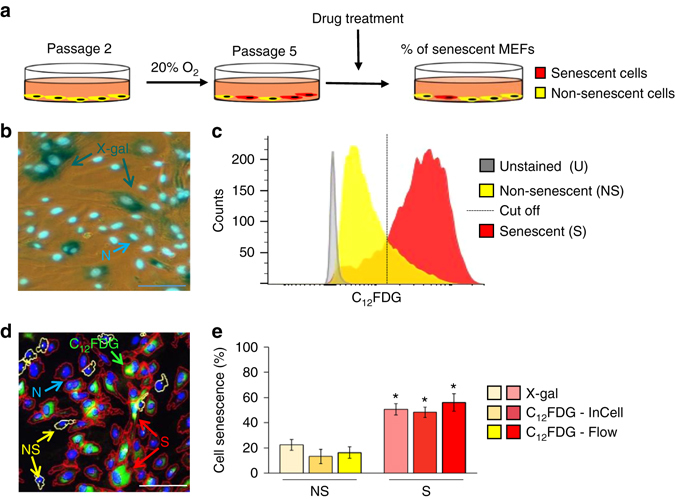
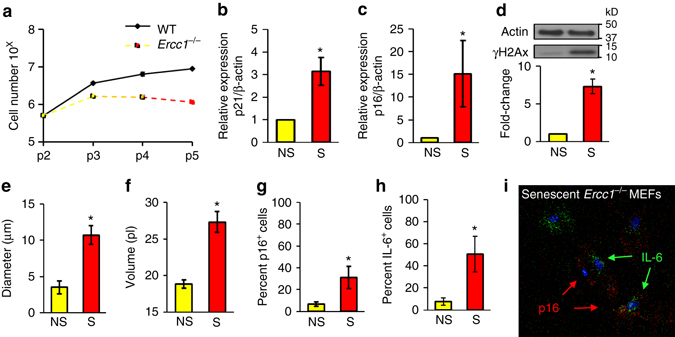
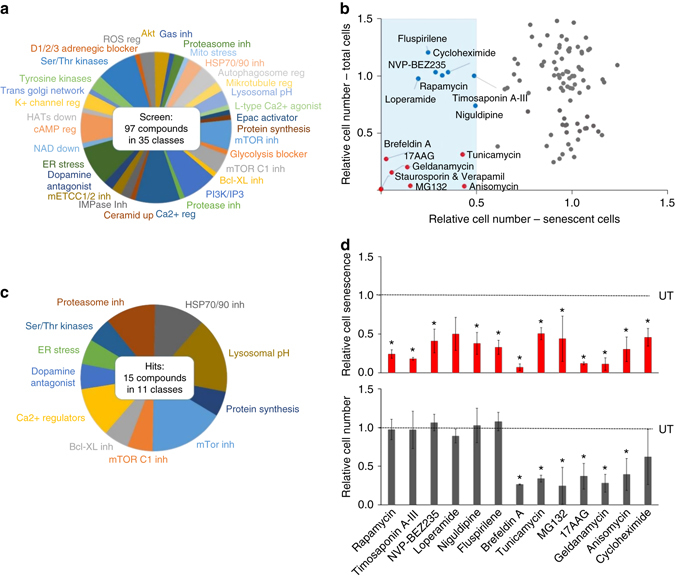
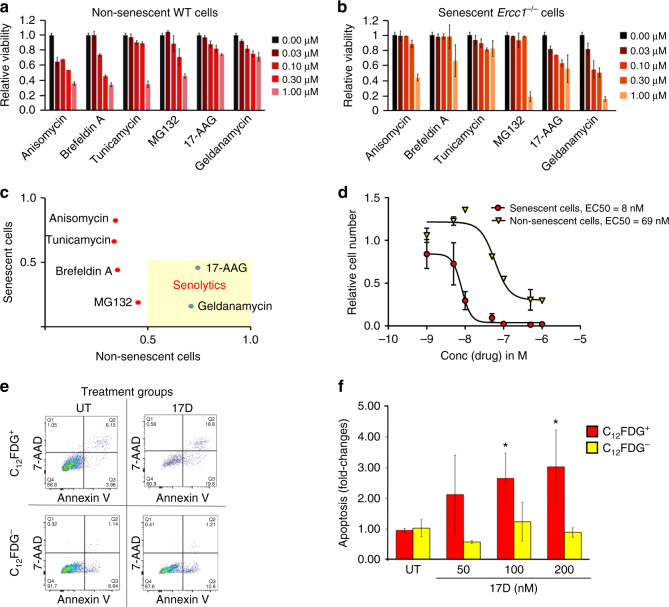
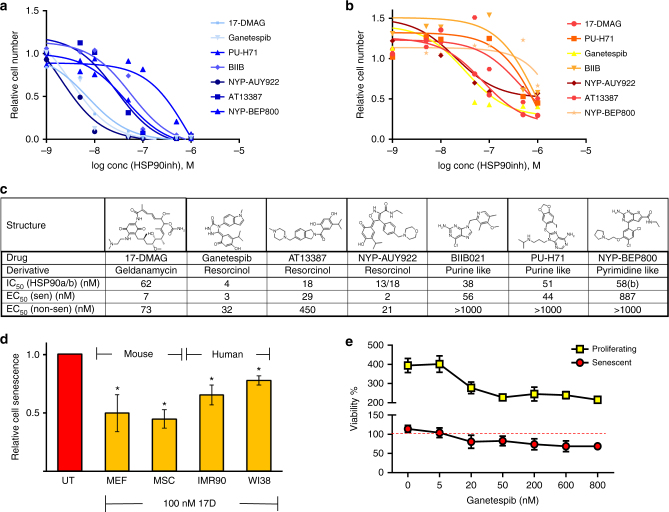
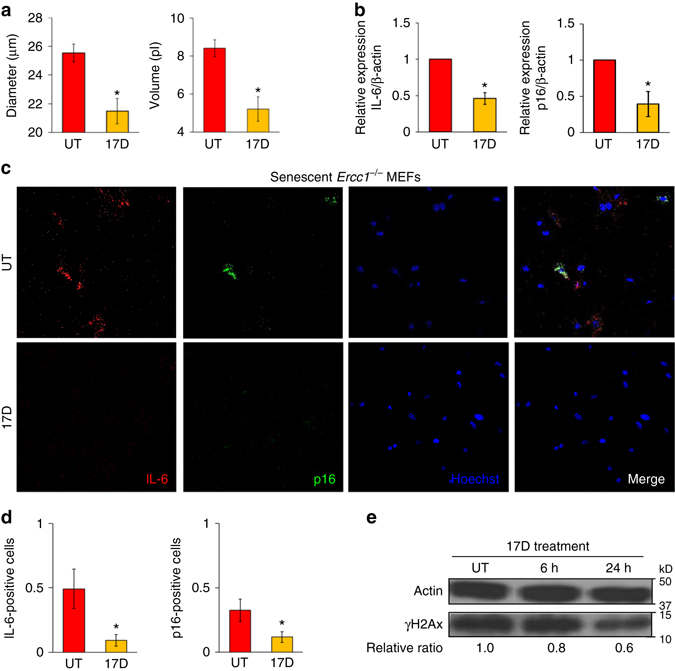
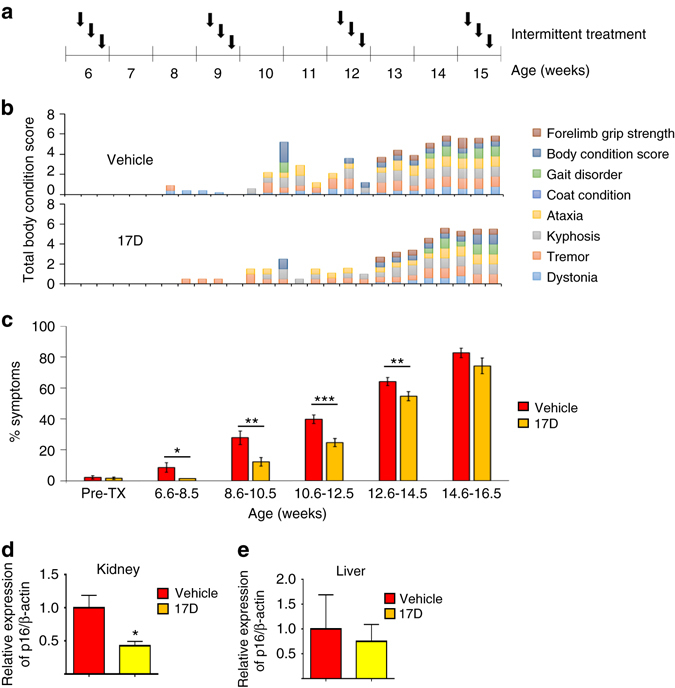
Aging is the main risk factor for many chronic degenerative diseases and cancer. Increased senescent cell burden in various tissues is a major contributor to aging and age-related diseases. Recently, a new class of drugs termed senolytics were demonstrated to extending healthspan, reducing frailty and improving stem cell function in multiple murine models of aging. To identify novel and more optimal senotherapeutic drugs and combinations, we established a senescence associated β-galactosidase assay as a screening platform to rapidly identify drugs that specifically affect senescent cells. We used primary Ercc1 −/− murine embryonic fibroblasts with reduced DNA repair capacity, which senesce rapidly if grown at atmospheric oxygen. This platform was used to screen a small library of compounds that regulate autophagy, identifying two inhibitors of the HSP90 chaperone family as having significant senolytic activity in mouse and human cells. Treatment of Ercc1 −/∆ mice, a mouse model of a human progeroid syndrome, with the HSP90 inhibitor 17-DMAG extended healthspan, delayed the onset of several age-related symptoms and reduced p16 INK4a expression. These results demonstrate the utility of our screening platform to identify senotherapeutic agents as well as identified HSP90 inhibitors as a promising new class of senolytic drugs.
Overview
The claims and statistics of this paper haven’t been checked yet.
Free: it reads the open-access text and checks the first 5 claims that cite a source we can check. Create a free account to check every claim.
Integrity signals
Registry
Cites
Statistics
Figures
Verification
Claims the paper makes
The claims and statistics of this paper haven’t been checked yet.
Free: it reads the open-access text and checks the first 5 claims that cite a source we can check. Create a free account to check every claim.
Claims other papers make about this one
Each is checked against this paper’s own text: does it say what the citing paper says it does?
The source backs part of the claim, not all of it — or backs it for a different population, condition or comparison.
In the citing paper
“Through upregulation of pro-survival and antiapoptotic pathways such as SRC kinases, the PI3K-AKT signaling pathway, heat shock protein (HSP) pathways, serpines, mitochondrial pathways or apoptosis regulator BCL-2-related proteins, those senescent cells with a proapoptotic SASP can survive, despite the cytotoxic microenvironment they create6,7,14,34,35,54–58.”
From Cellular senescence and senolytics: the path to the clinic (2022) · cites this paper as [54]
Experimental — accuracy not yet measuredThe source backs part of the claim, not all of it — or backs it for a different population, condition or comparison.
In the citing paper
“HSP90 prevents proteasomal degradation of AKT, hence inhibiting HSP90 disables pro-survival signaling through this SCAP node and results in elimination of some senescent cell types54.”
From Cellular senescence and senolytics: the path to the clinic (2022) · cites this paper as [54]
Experimental — accuracy not yet measuredThe source backs part of the claim, not all of it — or backs it for a different population, condition or comparison.
In the citing paper
“Senomorphics are aimed largely at suppressing the SASP and thereby inflammation.”
From Senolytic Drugs: Reducing Senescent Cell Viability to Extend Health Span (2021) · cites this paper as [20]
Experimental — accuracy not yet measuredThe source backs part of the claim, not all of it — or backs it for a different population, condition or comparison.
In the citing paper
“Additionally, SASP establishment and the secretion of SASP factors can be modulated by inhibiting HSP90 (REFS214,249).”
From Cellular senescence in ageing: from mechanisms to therapeutic opportunities (2021) · cites this paper as [214]
Experimental — accuracy not yet measuredThe source backs part of the claim, not all of it — or backs it for a different population, condition or comparison.
In the citing paper
“even eliminating only 30% of senescent cells can be sufficient to alleviate dysfunction in preclinical studies [3,5,7,9,23,24,28,[32], [33], [34], [35], [36], [37]]”
From Senolytics decrease senescent cells in humans: Preliminary report from a clinical trial of Dasatinib plus Quercetin in individuals with diabetic kidney disease (2019) · cites this paper as [37]
Experimental — accuracy not yet measured
19 more claims about this paper
Create a free account to see every claim other papers make about this one.
Self-check
Percentages, sums and reported differences re-computed from the paper’s own numbers.
The self-check needs the paper’s full text.
Citations
Cites
Zhang, J.-H., Chung, T. D. Y., & Oldenburg, K. R. (1999) · SLAS Discovery · doi:10.1177/108705719900400206 · Cited by 6,847
Clearance of p16Ink4a-positive senescent cells delays ageing-associated disorders
Baker, D. J., Wijshake, T., Tchkonia, T., LeBrasseur, N. K., Childs, B. G., van de Sluis, B., Kirkland, J. L., & van Deursen, J. M. (2011) · Nature · doi:10.1038/nature10600 · Cited by 3,670
Self-citationNaturally occurring p16Ink4a-positive cells shorten healthy lifespan
Baker, D. J., Childs, B. G., Durik, M., Wijers, M. E., Sieben, C. J., Zhong, J., A. Saltness, R., Jeganathan, K. B., Verzosa, G. C., Pezeshki, A., et al. (2016) · Nature · doi:10.1038/nature16932 · Cited by 2,876
Cellular senescence: from physiology to pathology
Muñoz-Espín, D., & Serrano, M. (2014) · Nature Reviews Molecular Cell Biology · doi:10.1038/nrm3823 · Cited by 2,818
The role of senescent cells in ageing
van Deursen, J. M. (2014) · Nature · doi:10.1038/nature13193 · Cited by 2,623 · cited 1×
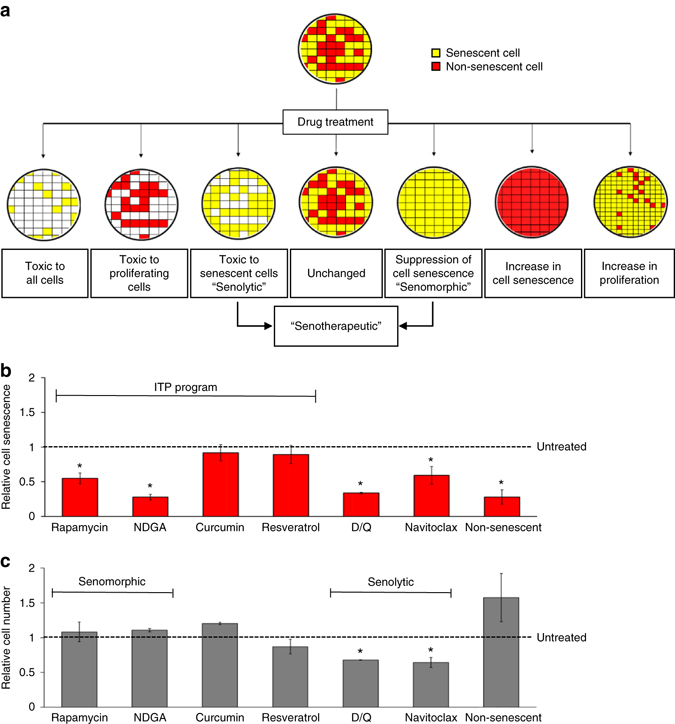
“A reduction in the ratio of senescent to non-senescent cells could be achieved by three drug activities: (1) specifically killing senescent cells, termed senolytics29, (2) suppressing cell senescence phenotypes, termed senomorphics, or (3) increasing proliferation of the non-senescent cells.”
BackgroundThe Achilles' heel of senescent cells: from transcriptome to senolytic drugs
Zhu, Y., Tchkonia, T., Pirtskhalava, T., Gower, A. C., Ding, H., Giorgadze, N., Palmer, A. K., Ikeno, Y., Hubbard, G. B., Lenburg, M., et al. (2015) · Aging Cell · doi:10.1111/acel.12344 · Cited by 2,584
Self-citationCellular senescence in aging and age-related disease: from mechanisms to therapy
Childs, B. G., Durik, M., Baker, D. J., & van Deursen, J. M. (2015) · Nature Medicine · doi:10.1038/nm.4000 · Cited by 2,363
Persistent DNA damage signalling triggers senescence-associated inflammatory cytokine secretion
Rodier, F., Coppé, J.-P., Patil, C. K., Hoeijmakers, W. A. M., Muñoz, D. P., Raza, S. R., Freund, A., Campeau, E., Davalos, A. R., & Campisi, J. (2009) · Nature Cell Biology · doi:10.1038/ncb1909 · Cited by 2,232
Clearance of senescent cells by ABT263 rejuvenates aged hematopoietic stem cells in mice
Chang, J., Wang, Y., Shao, L., Laberge, R.-M., Demaria, M., Campisi, J., Janakiraman, K., Sharpless, N. E., Ding, S., Feng, W., et al. (2016) · Nature Medicine · doi:10.1038/nm.4010 · Cited by 1,819
HSP90 at the hub of protein homeostasis: emerging mechanistic insights
Taipale, M., Jarosz, D. F., & Lindquist, S. (2010) · Nature Reviews Molecular Cell Biology · doi:10.1038/nrm2918 · Cited by 1,818
Cited by
Items 601–700 of 745
Obesity accelerates aging: Mechanisms and therapeutic implications
Zhang, R., Liu, L., Shi, X., & Ren, Y. (2025) · Genes & Diseases · doi:10.1016/j.gendis.2025.101980 · Cited by 3
Provoking myofibroblast death: Strategies to resolve fibrosis and remodel tumor microenvironment
Shalini, T., & Sudhandiran, G. (2025) · World Journal of Clinical Oncology · doi:10.5306/wjco.v16.i12.111086 · Cited by 1
The Use of Nutritional Interventions to Enhance Genomic Stability in Mice and Delay Aging
van Galen, I., Hoeijmakers, J. H. J., & Vermeij, W. P. (2026) · Nutrients · doi:10.3390/nu18020246 · Cited by 1
“In Ercc1 ∆ / − mice, treatment with the HSP90 inhibitor and senolytic agent 17-DMAG reduced Cdkn2a expression and cellular senescence [222] ‡.”
Xu, W., Chen, H., Gong, H., Zhao, T., Yang, Y., Wang, F., Huang, N., Yang, M., Gao, N., Li, H., et al. (2026) · Phytotherapy Research · doi:10.1002/ptr.70220 · Cited by 1
“…recognized senolytics, including the tyrosine kinase inhibitor dasatinib (Zhu et al. 2015), the Bcl-2 inhibitor navitoclax (ABT-263) (Zhu et al. 2016), cardiac gly-cosides (Triana-Martínez et al. 2019), and the heat shock protein inhibitor 17-DMAG (Fuhrmann-Stroissnigg et al. 2017), among others.”
Senolytics and exercise: Dual modalities for rejuvenating muscle
Yesilyurt‐Dirican, Z. E., Qi, C., Okpechi, U., Ford, M. S., & Ellison, G. M. (2026) · The Journal of Physiology · doi:10.1113/jp287702 · Cited by 1
Zhang, M., Hu, Z., Piao, S., Song, Y., Jia, Y., Liu, J., Zhao, N. O., Liu, A., FU, S., Sun, W., et al. (2026) · Aging Cell · doi:10.1111/acel.70434 · Cited by 2
Integrative Approaches to Treating Cellular Senescence in Kidney Disease
Misawa, T., Amruta, A., Hickson, L. J., & Wolfram, J. (2026) · Advanced Science · doi:10.1002/advs.202519392 · Cited by 2
“Additionally, efforts to reduce off-target effects on non-senescent cells and the “panolytic” nature of several of these candidates have led to high-throughput library screens and the inception of second-generation senolytics that increase specificity for senescent cells [ 114, 115 ].”
InfluentialHematopoietic stem cell senescence and opportunities for intervention
Barve, A., Dabas, P., Cain, T. L., & McKinney‐Freeman, S. (2026) · Experimental Hematology · doi:10.1016/j.exphem.2026.105425 · Cited by 1
Kim, E.-C., Jung, H.-B., Park, Y.-K., Son, Y., Cha, H.-N., Patel, Y., Lee, J. H., Choi, M., Park, S., Kim, I.-K., et al. (2026) · Nature Communications · doi:10.1038/s41467-026-70475-3 · Cited by 1
CHK2-USP37 axis stabilizes FOXO4 to sustain senescence and evade apoptosis
Sun, J., Geng, A., Song, Z., Chen, L., Zhang, Z.-N., Jiang, Y., & Mao, Z. (2026) · Proceedings of the National Academy of Sciences · doi:10.1073/pnas.2526252123 · Cited by 1
Gong, T., Jiang, W., Han, Y., Liu, Y., Zhuo, W., Li, S., Hu, Z., Zeng, Z., Yue, R., & Yang, M. (2026) · Frontiers in Aging · doi:10.3389/fragi.2026.1779773 · Cited by 1
Roostaei, T., Fujita, M., Touil, H., Kivisäkk, P., Aubin, C., Nejad, P., Sabrin, A., Garcia, F. G., van Dorp, C. H., Felsky, D., et al. (2026) · Cell Reports · doi:10.1016/j.celrep.2026.117417 · Cited by 1
Faisal, M., Sukpondma, Y., Sangket, J., Taraporn, S., Dokduang, S., & Graidist, P. (2026) · Biomedicines · doi:10.3390/biomedicines14061331 · Cited by 1
“Dysregulation of HSP90 α has been implicated in cancer cell survival, proliferation, migration, and metastasis, making it an attractive therapeutic target for anticancer drug development [10,11].”
The Aging Microenvironment Shapes Angiogenic Remodeling in IBD ‐Associated Colorectal Carcinogenesis
Duan, R., Chen, Q., Xu, Y., Yan, Y., & Jiang, S. J. (2026) · Aging Cell · doi:10.1111/acel.70570 · Cited by 1
Senotherapeutics: Emerging pharmacological strategies to target cellular senescence
Nagy, D., Brunner, E., Ekambaram, S., Nagaraja, R. Y., Kordestan, K. V., Patai, R., Kristóf, R., Nagykaldi, M., Chandragiri, S. S., Shanmugarama, S., et al. (2026) · Advances in Translational Research · doi:10.1556/1661.2026.00015 · Cited by 3
Endo, K., Ozeki, N., Koga, H., & Sekiya, I. (2026) · Biochemical and Biophysical Research Communications · doi:10.1016/j.bbrc.2026.154179 · Cited by 1
Role of Heat Shock Protein 90 in Diabetes and Pancreatic Cancer Management
Sushma, P. S., Momin, S., & Srivani, G. (2019) · Springer eBooks · doi:10.1007/978-981-32-9393-9_11 · Cited by 1
Heat-Shock Protein 90 (HSP90) in Age-Dependent Changes in the Fibroblast Number in Human Skin
Gunin, A. G., Golubtzova, N. N., & Корнилова, Н. К. (2020) · Advances in Gerontology · doi:10.1134/s207905702003008x · Cited by 1
“the onset of age-related pathological processes [2].”
González‐Gualda, E., Ou, H., Macías, D., & Muñoz‐Espín, D. (2021) · Elsevier eBooks · doi:10.1016/b978-0-12-822514-1.00016-x · Cited by 3
HIV and Aging in the Era of ART and COVID-19: Symposium Overview
Montano, M. A., LANDAY, A. L., Perkins, M. M., Holstad, M. M., Pallikkuth, S., Pahwa, S. G., & Symposium, H. A. A. I. T. E. O. A. A. C.-1. I.-C. (2022) · JAIDS Journal of Acquired Immune Deficiency Syndromes · doi:10.1097/qai.0000000000002837 · Cited by 1
The role of targeting cell senescence in vascular diseases and its potential application
Wang, H.-Y., Ding, Y.-N., Wei, Z., Chen, H., & Liu, D. (2022) · Scientia Sinica Vitae · doi:10.1360/ssv-2021-0279 · Cited by 1
A geroscience approach for osteosarcopenia: Autophagy and senescence as therapeutic targets
Cordero, N. P., Schoenlein, P. V., Fulzele, S., & Hill, W. (2022) · Elsevier eBooks · doi:10.1016/b978-0-12-820088-9.00031-7 · Cited by 1
Canonical and novel strategies to delay or reverse aging
Gilmour, B. C., Bergersen, L. H., & Fang, E. F. (2022) · Elsevier eBooks · doi:10.1016/b978-0-323-91617-2.00005-5 · Cited by 2
Massoud, G. P., Eid, A. E., Booz, G. W., Rached, L., Yabluchanskiy, A., & Zouein, F. A. (2023) · Elsevier eBooks · doi:10.1016/b978-0-12-823679-6.00009-6 · Cited by 1
Cellular senescence as a pathogenic factor and potential therapeutic target in osteoporosis
Larrea, L. P., Rodríguez, M. D. B., Naves‐Díaz, M., & Alonso, C. G. (2023) · Revista de Osteoporosis y Metabolismo Mineral · doi:10.20960/revosteoporosmetabminer.00013 · Cited by 1
Yoshino, H., Tadano, K., Omiya, C., Ishii, K., & Munakata, N. (2024) · Radiation Protection Dosimetry · doi:10.1093/rpd/ncae089 · Cited by 1
Nunes, A., Pitcher, L. E., Exner, H. A., Grassi, D., Burns, B., Sanchez, M. B. H., Tetta, C., Camussi, G., & Robbins, P. D. (2025) · Stem Cell Reviews and Reports · doi:10.1007/s12015-025-10876-x · Cited by 1
“For example, 17-DMAG significantly reduced senescence in IMR90s and human WI38 fibroblasts, but Ganestespib, another HSP90 inhibitor, is more effective eliminating HUVECs induced to senesce with ionizing radiation, but not preadipocytes [24].”
Self-citationSingle-cell profiling of skeletal muscle reveals a novel senolytic target: CRYABPreprint
Limbad, C., Doi, R., McGirr, J., Ciotlos, S., Pérez, K., Daya, R., Campisi, J., & Melov, S. (2021) · Research Square · doi:10.21203/rs.3.rs-456991/v1 · Cited by 1
Editorial: Cellular Senescence: Causes, Consequences and Therapeutic Opportunities
Wong, P. (2022) · Frontiers in Cell and Developmental Biology · doi:10.3389/fcell.2022.884910 · Cited by 1
“The concept of reducing the burden of senescent cells or suppressing senescence-associate secretory phenotype (SASP) to delay age-related changes, improve tissue functions and subsequently increase health and life span were introduced and proven by many studies (Xu et al., 2015; Zhu et al., 2015, 2017; Chang et al., 2…”
BackgroundLérida‐Viso, A. (2023) · RiuNet (Universitat Politècnica de València) · doi:10.4995/thesis/10251/194709 · Cited by 1
Nadeem, J., Parveen, A., & Kim, S. Y. (2023) · Preprints.org · doi:10.20944/preprints202309.1932.v1 · Cited by 1
Jatal, R. (2021) · theses.fr (ABES) · doi:10.70675/7299ae44z37f8z4e79z8e0dz67e48edb7144 · Cited by 3
Fucoidans are senotherapeutics that enhance SIRT6-dependent DNA repairPreprint
Zhang, L. J., Elsallabi, O., Soto-Palma, C., Bartz, J., Salekeen, R., Nunes, A., Xu, W., Lee, K., Hughes, B., Zhang, B., et al. (2025) · bioRxiv (Cold Spring Harbor Laboratory) · doi:10.1101/2025.04.27.650852 · Cited by 1
Self-citationYe, Y., Su, T., Gao, J., & Ming, D. (2025) · International Journal of Molecular Sciences · doi:10.3390/ijms26189004
Role Of Cellular Senescence in Age-Related Intervertebral Disc Degeneration
Patil, P. R. (2019) · D-Scholarship@Pitt (University of Pittsburgh) · Cited by 2
How to Treat or Prevent, or Slow Down, Cellular Ageing and Senescence?
Swynghedauw, B. (2019) · Practical issues in geriatrics · doi:10.1007/978-3-030-15111-9_7
Secretome of Mesenchymal Stem Cells and its Impact on Chronic Obstructive Pulmonary Disease
Ridzuan, N., Widera, D., & Yahaya, B. H. (2019) · Stem cells in clinical applications · doi:10.1007/978-3-030-23421-8_8
Diéguez, A. (2019) · Repository of Digital Objects for Teaching Research and Culture (University of Valencia)
Discovery of Senolytics and the Pathway to Early Phase Clinical Trials
Gerdes, E. O. W., Zhu, Y. Z., Tchkonia, T., & Kirkland, J. L. (2020) · Healthy ageing and longevity · doi:10.1007/978-3-030-44903-2_2
Self-citationEngineering Ca2+-activated Control of Ras Family GTPases
Wong, J. (2019) · TSpace (University of Toronto)
Modulation of neuronal resilience during aging by Hsp70/Hsp90/STI1 chaperone systemPreprint
Lackie, R. E., Razzaq, A. R., Farhan, S. M. K., Moshitzky, G., Beraldo, F. H., Lopes, M. H., Maciejewski, A., Gros, R., Fan, J., Choy, W., et al. (2018) · bioRxiv (Cold Spring Harbor Laboratory) · doi:10.1101/258673
“system can increase life span in a mouse model of aging, by killing cells that have senescent 528 phenotype that contribute to overall organism inflammation and stress [89].”
BackgroundSenotherapeutics: Experimental therapy of cellular senescence
Justice, J. N., Niedernhofer, L. J., & Orr, M. E. (2021) · Elsevier eBooks · doi:10.1016/b978-0-12-815962-0.00012-3
Self-citationPrevention and Treatment of the Troubles of the Elderly
Libertini, G., Corbi, G., Conti, V., Shubernetskaya, O. S., & Ferrara, N. (2021) · Advances in studies of aging and health · doi:10.1007/978-3-030-73774-0_8
Novel probes, carriers and prodrugs to target senescent cells in vivo
Lozano‐Torres, B. (2021) · RiuNet (Universitat Politècnica de València) · doi:10.4995/thesis/10251/172175
In silico identification of genetic and pharmacological interventions to modulate ageing
Valenzuela, F., & Sebastián, M. (2021) · UCL Discovery (University College London)
Senolytic Development in Osteoarthritis: A New Paradigm
(2021) · Integrative Journal of Orthopaedics and Traumatology · doi:10.31038/ijot.2021422
“GA restores ubiquitination and degradation of mutant p53 by the proteasome [16].”
BackgroundConti, V., Iannaccone, T., & Filippelli, A. (2021) · Springer eBooks · doi:10.1007/978-3-030-22009-9_55
Cellular senescence and other aging mechanisms in bone and muscle
Kaur, J., & Farr, J. N. (2022) · Elsevier eBooks · doi:10.1016/b978-0-12-820088-9.00008-1
Schumacher, B. (2019) · Faculty Opinions – Post-Publication Peer Review of the Biomedical Literature · doi:10.3410/f.733897159.793563342
Schumacher, B. (2019) · Faculty Opinions – Post-Publication Peer Review of the Biomedical Literature · doi:10.3410/f.734825206.793563347
Faculty Opinions recommendation of Fisetin is a senotherapeutic that extends health and lifespan.
Schumacher, B. (2019) · Faculty Opinions – Post-Publication Peer Review of the Biomedical Literature · doi:10.3410/f.734139615.793563345
Translational research in the fastest-growing population: older adults
Justice, J. N., High, K. P., & Kritchevsky, S. B. (2021) · Elsevier eBooks · doi:10.1016/b978-0-12-820493-1.00032-5
Nicolas, A. M. (2022) · Publication Server of Goethe University Frankfurt am Main (Goethe University Frankfurt) · doi:10.21248/gups.68107
An Overview of the Role of Senescence in Cancer
Al-Janabi, I. I. (2022) · Al-Rafidain Journal of Medical Sciences · doi:10.54133/ajms.v3i.77
Cellular senescence during aging
von Zglinicki, T. (2022) · Elsevier eBooks · doi:10.1016/b978-0-12-823761-8.00017-3 · Cited by 1
Aging principles and interventional perspectives
Sikora, E. (2022) · Elsevier eBooks · doi:10.1016/b978-0-323-90581-7.00002-5
Preclinical evaluation of senescence-based strategies to improve cancer therapy
Estepa‐Fernández, A. (2022) · RiuNet (Universitat Politècnica de València) · doi:10.4995/thesis/10251/188845
Senotherapy as a Novel Therapeutic Method in Cancer Treatment: With a Focus on Head and Neck Cancer
Ziaei, H., & Harada, H. (2023) · Interdisciplinary cancer research · doi:10.1007/16833_2022_118
From geroprotective tactics to anti-ageing strategy: ways to eliminate ageing per se
Baramiya, M. G., & Mykhalskiy, S. (2023) · Ageing & Longevity · doi:10.47855/jal9020-2023-2-2
Insights into protein-bound uremic toxins in proximal tubule cell senescence and kidney fibrosis
Yang, Y. (2023) · Utrecht University Repository (Utrecht University) · doi:10.33540/1996
Cutting-edge skin ageing research on tissue stem cell
Ichijo, R. (2024) · The Journal of Biochemistry · doi:10.1093/jb/mvae022
Farr, J. N., & Chandra, A. (2024) · Elsevier eBooks · doi:10.1016/b978-0-443-15500-0.00017-7
Study of the role of the cyclin-dependent kinase inhibitor p21Waf1/Cip1 in cellular senescence
Zapata-Bodalo, I. (2022) · theses.fr (ABES) · doi:10.70675/db01e49aza2daz4404za0f1za3db90231ce9
Rôle du glyoxal dans la sénescence cellulaire : implications dans le vieillissement de la peau
Halkoum, R. (2021) · theses.fr (ABES) · doi:10.70675/97ab7e9cz216dz4fc2z88cez6afec17d949d
Induction of astrocytes senescence by Plasmodium infection : role in cerebral malaria
Hellani, F. (2022) · theses.fr (ABES) · doi:10.70675/c2a869d4zae4fz44d6zbbd2z03500c51bea0
RPE Senescence and Its Implication in Age-Related Macular Degeneration
Wang, S., Zhou, Q., & Tong, Y. (2024) · Essentials in ophthalmology/Essentials ophthalmology · doi:10.1007/978-981-99-4436-1_6
Probiotics as Anti-aging Interventions
Singh, B., Mal, G., Kalra, R. S., & Marotta, F. (2024) · Springer eBooks · doi:10.1007/978-3-031-65459-6_12 · Cited by 1
Dabravolski, S. A. (2024) · Sub-cellular biochemistry/Subcellular biochemistry · doi:10.1007/978-3-031-66768-8_3
Vardon, A., Haston, S., Guiho, R., Carvahlo, D., Carter, R., Boult, J. K. R., Gharai, D., Santhakumar, D., Cloete, I., Gray, J., et al. (2024) · bioRxiv (Cold Spring Harbor Laboratory) · doi:10.1101/2024.12.20.629607 · Cited by 1
Libertini, G., Corbi, G., Shubernetskaya, O. S., Komici, K., & Ferrara, N. (2024) · Advances in studies of aging and health · doi:10.1007/978-3-031-84877-3_8
Gene Therapy Against Age-Related Diseases
Rai, R. R., Barage, S. H., & Singh, R. (2025) · IGI Global eBooks · doi:10.4018/979-8-3693-9730-5.ch005
The current report on drug development focuses on “The new dimension” of cancer hallmarks
Ucche, S., Larasati, Y. A., Maharani, D., Widyardhita, M. H., Widayanti, W. R., & Hermawan, A. (2025) · Gene · doi:10.1016/j.gene.2025.149750
Libertini, G. (2025) · OBM Geriatrics · doi:10.21926/obm.geriatr.2503325
Defining Longevity Medicine: Biomedical and Digital Aspects
Erat, A. (2025) · Sustainable finance · doi:10.1007/978-3-031-95870-0_6
Anti-aging strategies for dogs
Lim, J. R., Yoon, J. H., & Han, H. J. (2025) · Journal of Veterinary Science · doi:10.4142/jvs.25202 · Cited by 1
“Previous studies have reported that natural and synthetic HSP90 inhibitors exhibit senolytic activity [63].”
Demir, Y. D. Ş., Ahmed, I. M., Tayyar, T., Özdemir, A., & Ark, M. (2025) · Turkish Journal of Biochemistry · doi:10.1515/tjb-2025-0249
Ageing analysis of mesenchymal stem cells: improvement of stem cell therapies
Tampakis, D. (2020) · Figshare · doi:10.26174/thesis.lboro.11918340 · Cited by 1
Pungsrinont, T., Sutter, M. F., Ertingshausen, M. C. C. M., Lakshmana, G., Kokal, M., Khan, A. S., & Baniahmad, A. (2020) · Figshare · doi:10.6084/m9.figshare.12197529
Raffaele, M., Kovacovicova, K., Fröhlich, J., Lo Re, O., Giallongo, S., Oben, J. A., Faldyna, M., Levá, L., Giannone, A. G., Cabibi, D., et al. (2021) · Figshare · doi:10.6084/m9.figshare.14431610
Nonninger, T. J. (2024) · Kölner Universitäts PublikationsServer (Universität zu Köln)
Senescencia celular: una nueva diana en el tratamiento neuroprotector del ictus isquémico
Baixauli-Martín, J. (2024) · Repository of Digital Objects for Teaching Research and Culture (University of Valencia)
Células endoteliais como alvo terapêutico
Cunha, A. L. D. S. (2019) · Portuguese National Funding Agency for Science, Research and Technology (RCAAP Project by FCT)
Centriole Regulation in Natural and Artificial Gametogenesis
Gakely, G. (2026) · Longevity Horizon · doi:10.65649/87tnc168
Engineering Oocytes from Somatic Cells
Taktakidze, A. (2026) · Longevity Horizon · doi:10.65649/2q035e46
A Senescence-Resistant Mesenchymal Progenitor Cell Sustains Tissue Homeostasis In Ageing
Gegelia, L. (2026) · Annals of Rejuvenation Science · doi:10.65649/cnxbvp22 · Cited by 1
A Murine Model Yielding Functional Sperm and Implications for Human In Vitro Gametogenesis
Papadopulo, I. (2026) · Longevity Horizon · doi:10.65649/e6h6sy52
Mesenchymal Progenitor Cell Resilience Counteracts Tissue Aging
Gegelia, L. (2026) · Longevity Horizon · doi:10.65649/c833dn40 · Cited by 1
“…2) In vivo targeting via pharmacological expansion of endogenous SRCs, niche engineering, or pathway modulation (e.g., enhancing DNA repair or NRF2 activity) to induce an SRC-like state in broader MSC populations, acting as next-generation "senomorphics" (Fuhrmann-Stroissnigg et al., 2017).”
SENOLYTICS – A DISCOVERY THAT COULD TRANSFORM THE COURSE OF AGING AND CHRONIC DISEASES
Kania, K., Bobiński, M., Wieczorek, Z., Skowron, W., Bartol, J., Sosińska, A., Rajczyk, J., Wiczuk-Wiczewska, M., Szymczak, A., & Lepich, T. (2026) · International Journal of Innovative Technologies in Social Science · doi:10.31435/ijitss.1(49).2026.5128
Insights in Molecular Mechanisms of Aging 2022
Borrás, C., & Brotto, M. P. (2026) · Frontiers research topics · doi:10.3389/978-2-8325-7533-8
de Freitas, J. A. N. L. F. (2020) · theses.fr (ABES) · doi:10.70675/0e6e3614z3915z4fb8za2cdz24b40b9679b2
Rôle et régulation de l'haptoglobine adipocytaire au cours du vieillissement
Astre, G. (2018) · theses.fr (ABES) · doi:10.70675/91523d31z8a53z44e6z8f1dzf0a02840a7e5
Millerand, M. (2020) · theses.fr (ABES) · doi:10.70675/d5e9dae6zd9d7z4a05z8fd2zf0ff4ffab0a6
Rôle de l’immunosurveillance des cellules sénescentes dans le cancer et le vieillissement
Iltis, C. (2020) · theses.fr (ABES) · doi:10.70675/9a339b58z5fecz427dz8de4z8ce0bd748478 · Cited by 1
Metadata
- Authors
- Fuhrmann-Stroissnigg, H., Ling, Y. Y., Zhao, J., McGowan, S. J., Zhu, Y., Brooks, R. W., Grassi, D., Gregg, S. Q., Stripay, J. L., Dorronsoro, A., Corbo, L., Tang, P., Bukata, C., Ring, N., Giacca, M., Li, X., Tchkonia, T., Kirkland, J. L., Niedernhofer, L. J., & Robbins, P. D.
- Affiliations
- Scripps Research Institute (US)
- University of Pittsburgh (US)
- Mayo Clinic (US)
- International Centre for Genetic Engineering and Biotechnology (IT)
- Corresponding author
- Robbins, Paul D.
- ORCID
- Venue
- Nature Communications
- Published
- 2017-09-04
- Volume
- 8
- Issue
- 1
- Pages
- 422-422
- ISSN
- 2041-1723 (ISSN-L)
- PMC
- PMC5583353
- OpenAlex
- W2752676842
- Semantic Scholar
- 75a2484a24067d78ca91ed40dc971ce24f8eafc4
- Cited by
- 701
- References
- 77
- Citations by year
- 2026: 58 · 2025: 70 · 2024: 94 · 2023: 68 · 2022: 102 · 2021: 95 · 2020: 89 · 2019: 68 · 2018: 49 · 2017: 6
- FWCI
- 42.91
- Type
- journal article
- Language
- en
- Open access
- gold
- doi.org
- Licence
- cc-by
- creativecommons.org/licenses/by/4.0 (tdm)
- creativecommons.org/licenses/by/4.0 (vor)
- Locations
- Nature Communications (publishedVersion, cc-by)
- PubMed Central (publishedVersion, cc-by)
- PubMed (publishedVersion)
- ArTS Archivio della ricerca di Trieste (University of Trieste https://www.units.it/) (submittedVersion, cc-by)
- RePEc: Research Papers in Economics (submittedVersion)
- DOAJ (DOAJ: Directory of Open Access Journals) (submittedVersion, cc-by-sa)
- DOAJ (DOAJ: Directory of Open Access Journals) (submittedVersion)
- Funders
- American Federation for Aging Research
- National Institutes of Health (DK-50456, AG043376, AG13925)
- National Institute on Aging (P01AG043376, R01AG013925, R37AG013925)
- National Institute of Diabetes and Digestive and Kidney Diseases (P30DK050456)
- Topics
- Life Sciences › Biochemistry, Genetics and Molecular Biology › Cell Biology › Telomeres, Telomerase, and Senescence
- Life Sciences › Biochemistry, Genetics and Molecular Biology › Aging › Genetics, Aging, and Longevity in Model Organisms
- Life Sciences › Biochemistry, Genetics and Molecular Biology › Molecular Biology › Heat shock proteins research
- Keywords
- Hsp90 inhibitors, senolytics, cellular senescence, senotherapeutics, aging, autophagy, 17-DMAG, healthspan, progeroid syndromes, p16INK4a, drug screening
- MeSH terms
- Aging, Animals, Autophagy, Biological Assay, DNA-Binding Proteins, Drug Evaluation, Preclinical, Endonucleases, Female, Fibroblasts, Humans, Signal Transduction, Biomarkers, Down-Regulation, Benzoquinones, Cellular Senescence, Apoptosis, HSP90 Heat-Shock Proteins, Phosphatidylinositol 3-Kinases, Lactams, Macrocyclic, Proto-Oncogene Proteins c-akt, Mice, Small Molecule Libraries, Human Umbilical Vein Endothelial Cells
About these checks
Registry, retraction, Cites and statistics results are computed, not judged, with one exception: a printed reference that no index lists is read once by a model before it counts as a citation error. Claims are extracted by a model and kept only when their quote appears verbatim in the text; each cited source is then checked, with a model’s help, for whether it says what the claim relies on. Those verdicts can be wrong — read the claim’s quote and the cited source before relying on one.
Statistics and arithmetic are recomputed, not judged.
Confidence bands are shown only for fields calibrated on our annotated test set. None is calibrated yet, so no band is shown.
What counts as a claim ›How we measure confidence ›How we check this ›
Are you an author, or do you see a problem with this page? Request a review
Data sources
Bibliographic data: Semantic Scholar, OpenAlex, Crossref.
Contains information from the Semantic Scholar Academic Graph Datasets, made available under the ODC Attribution License (ODC-BY 1.0).
Semantic Scholar’s data is described in: Kinney, R., et al. (2023). The Semantic Scholar Open Data Platform. arXiv:2301.10140.
