

Identification of HSP90 inhibitors as a novel class of senolytics
Open accessThe DOI matches its Crossref record; 77 of the 77 references it cites were found in a registry or an index.
Abstract
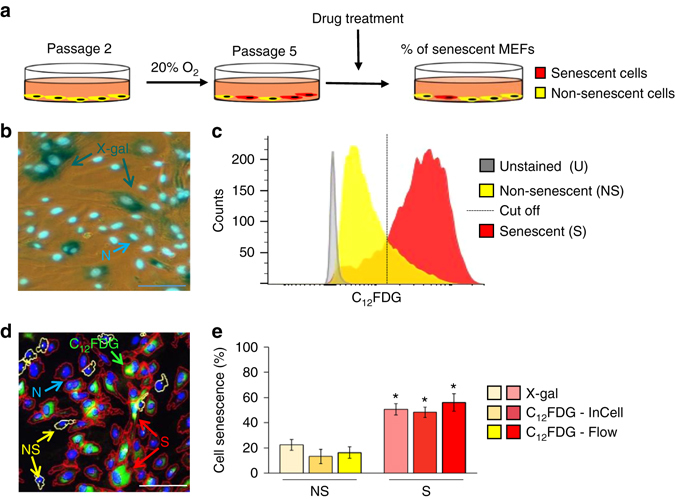
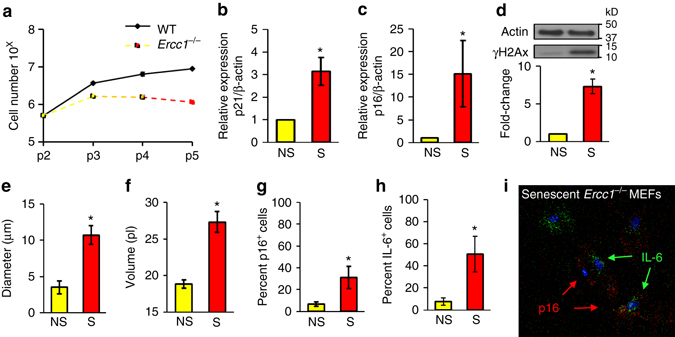
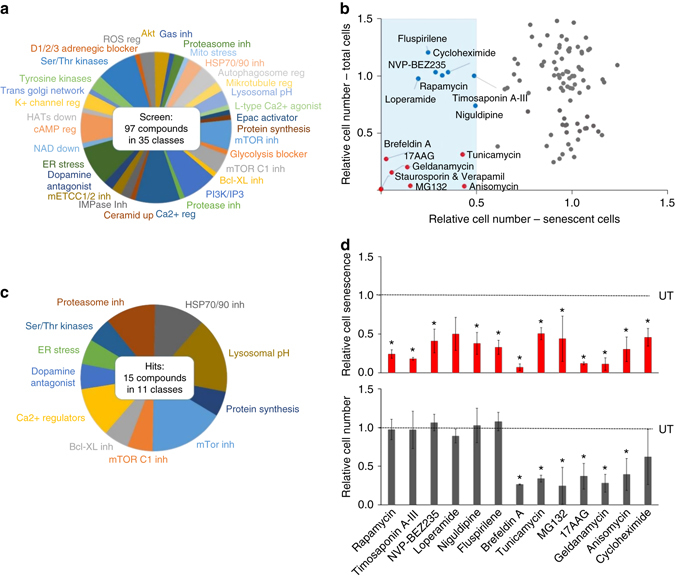
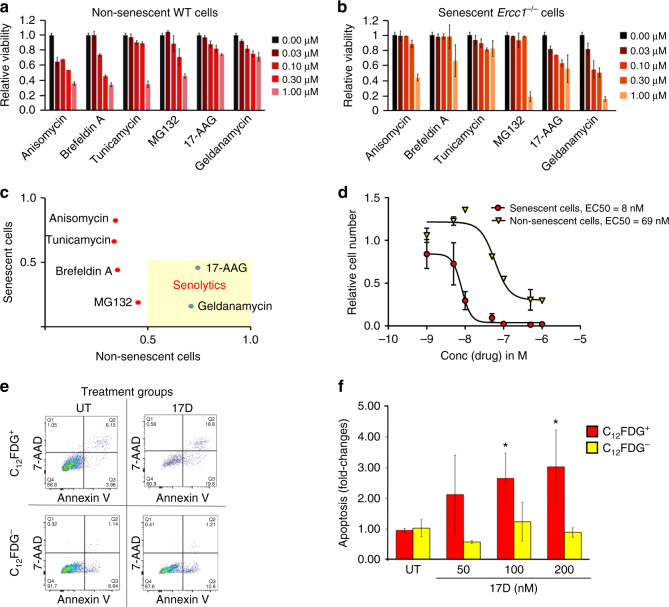
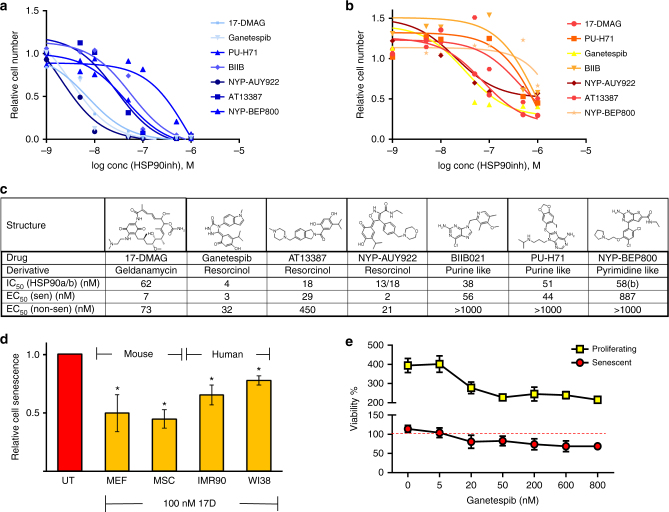
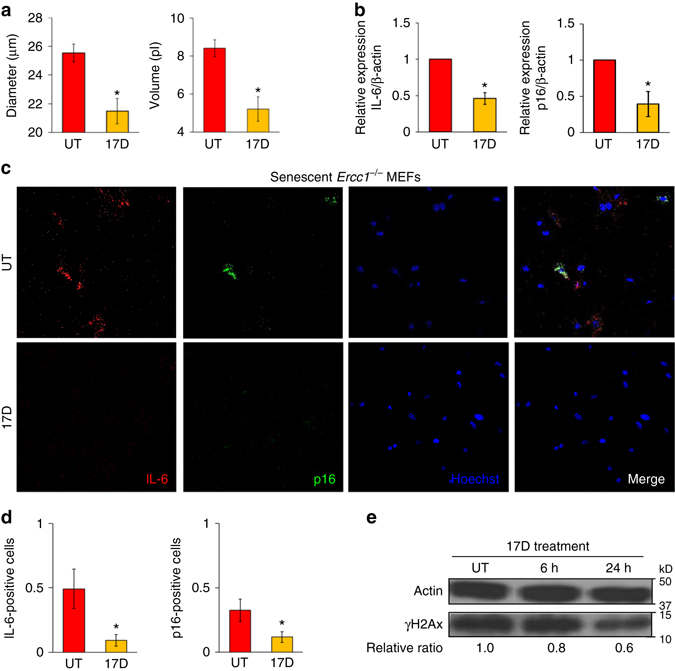
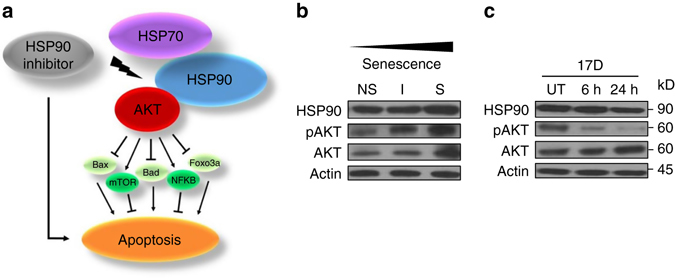
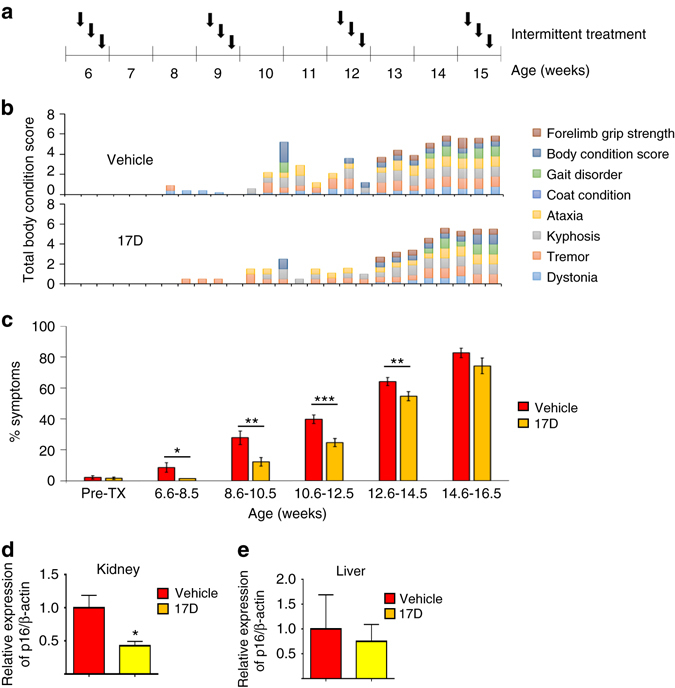
Aging is the main risk factor for many chronic degenerative diseases and cancer. Increased senescent cell burden in various tissues is a major contributor to aging and age-related diseases. Recently, a new class of drugs termed senolytics were demonstrated to extending healthspan, reducing frailty and improving stem cell function in multiple murine models of aging. To identify novel and more optimal senotherapeutic drugs and combinations, we established a senescence associated β-galactosidase assay as a screening platform to rapidly identify drugs that specifically affect senescent cells. We used primary Ercc1 −/− murine embryonic fibroblasts with reduced DNA repair capacity, which senesce rapidly if grown at atmospheric oxygen. This platform was used to screen a small library of compounds that regulate autophagy, identifying two inhibitors of the HSP90 chaperone family as having significant senolytic activity in mouse and human cells. Treatment of Ercc1 −/∆ mice, a mouse model of a human progeroid syndrome, with the HSP90 inhibitor 17-DMAG extended healthspan, delayed the onset of several age-related symptoms and reduced p16 INK4a expression. These results demonstrate the utility of our screening platform to identify senotherapeutic agents as well as identified HSP90 inhibitors as a promising new class of senolytic drugs.
Overview
The claims and statistics of this paper haven’t been checked yet.
Free: it reads the open-access text and checks the first 5 claims that cite a source we can check. Create a free account to check every claim.
Integrity signals
Registry
Cites
Statistics
Figures
Verification
Claims the paper makes
The claims and statistics of this paper haven’t been checked yet.
Free: it reads the open-access text and checks the first 5 claims that cite a source we can check. Create a free account to check every claim.
Claims other papers make about this one
Each is checked against this paper’s own text: does it say what the citing paper says it does?
The source backs part of the claim, not all of it — or backs it for a different population, condition or comparison.
In the citing paper
“Through upregulation of pro-survival and antiapoptotic pathways such as SRC kinases, the PI3K-AKT signaling pathway, heat shock protein (HSP) pathways, serpines, mitochondrial pathways or apoptosis regulator BCL-2-related proteins, those senescent cells with a proapoptotic SASP can survive, despite the cytotoxic microenvironment they create6,7,14,34,35,54–58.”
From Cellular senescence and senolytics: the path to the clinic (2022) · cites this paper as [54]
Experimental — accuracy not yet measuredThe source backs part of the claim, not all of it — or backs it for a different population, condition or comparison.
In the citing paper
“HSP90 prevents proteasomal degradation of AKT, hence inhibiting HSP90 disables pro-survival signaling through this SCAP node and results in elimination of some senescent cell types54.”
From Cellular senescence and senolytics: the path to the clinic (2022) · cites this paper as [54]
Experimental — accuracy not yet measuredThe source backs part of the claim, not all of it — or backs it for a different population, condition or comparison.
In the citing paper
“Senomorphics are aimed largely at suppressing the SASP and thereby inflammation.”
From Senolytic Drugs: Reducing Senescent Cell Viability to Extend Health Span (2021) · cites this paper as [20]
Experimental — accuracy not yet measuredThe source backs part of the claim, not all of it — or backs it for a different population, condition or comparison.
In the citing paper
“Additionally, SASP establishment and the secretion of SASP factors can be modulated by inhibiting HSP90 (REFS214,249).”
From Cellular senescence in ageing: from mechanisms to therapeutic opportunities (2021) · cites this paper as [214]
Experimental — accuracy not yet measuredThe source backs part of the claim, not all of it — or backs it for a different population, condition or comparison.
In the citing paper
“even eliminating only 30% of senescent cells can be sufficient to alleviate dysfunction in preclinical studies [3,5,7,9,23,24,28,[32], [33], [34], [35], [36], [37]]”
From Senolytics decrease senescent cells in humans: Preliminary report from a clinical trial of Dasatinib plus Quercetin in individuals with diabetic kidney disease (2019) · cites this paper as [37]
Experimental — accuracy not yet measured
19 more claims about this paper
Create a free account to see every claim other papers make about this one.
Self-check
Percentages, sums and reported differences re-computed from the paper’s own numbers.
The self-check needs the paper’s full text.
Citations
Cites
Zhang, J.-H., Chung, T. D. Y., & Oldenburg, K. R. (1999) · SLAS Discovery · doi:10.1177/108705719900400206 · Cited by 6,847
Clearance of p16Ink4a-positive senescent cells delays ageing-associated disorders
Baker, D. J., Wijshake, T., Tchkonia, T., LeBrasseur, N. K., Childs, B. G., van de Sluis, B., Kirkland, J. L., & van Deursen, J. M. (2011) · Nature · doi:10.1038/nature10600 · Cited by 3,670
Self-citationNaturally occurring p16Ink4a-positive cells shorten healthy lifespan
Baker, D. J., Childs, B. G., Durik, M., Wijers, M. E., Sieben, C. J., Zhong, J., A. Saltness, R., Jeganathan, K. B., Verzosa, G. C., Pezeshki, A., et al. (2016) · Nature · doi:10.1038/nature16932 · Cited by 2,876
Cellular senescence: from physiology to pathology
Muñoz-Espín, D., & Serrano, M. (2014) · Nature Reviews Molecular Cell Biology · doi:10.1038/nrm3823 · Cited by 2,818
The role of senescent cells in ageing
van Deursen, J. M. (2014) · Nature · doi:10.1038/nature13193 · Cited by 2,623 · cited 1×
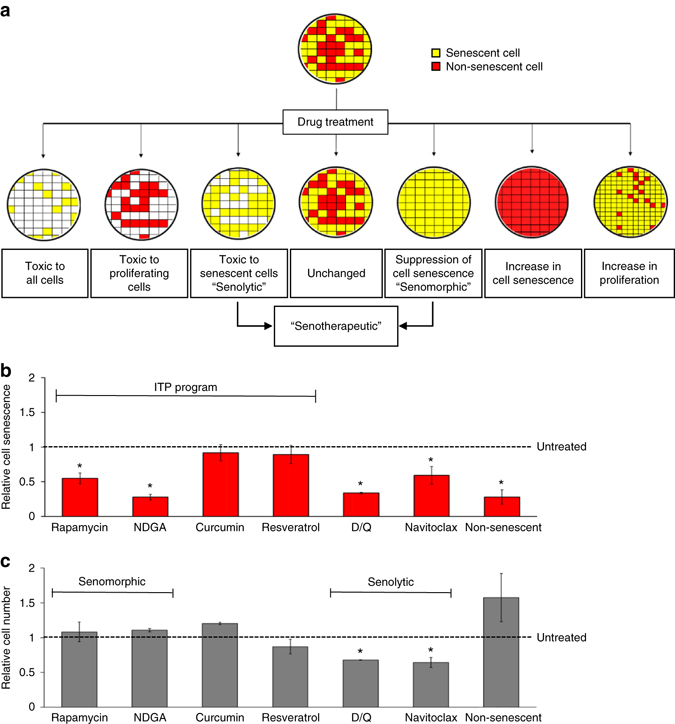
“A reduction in the ratio of senescent to non-senescent cells could be achieved by three drug activities: (1) specifically killing senescent cells, termed senolytics29, (2) suppressing cell senescence phenotypes, termed senomorphics, or (3) increasing proliferation of the non-senescent cells.”
BackgroundThe Achilles' heel of senescent cells: from transcriptome to senolytic drugs
Zhu, Y., Tchkonia, T., Pirtskhalava, T., Gower, A. C., Ding, H., Giorgadze, N., Palmer, A. K., Ikeno, Y., Hubbard, G. B., Lenburg, M., et al. (2015) · Aging Cell · doi:10.1111/acel.12344 · Cited by 2,584
Self-citationCellular senescence in aging and age-related disease: from mechanisms to therapy
Childs, B. G., Durik, M., Baker, D. J., & van Deursen, J. M. (2015) · Nature Medicine · doi:10.1038/nm.4000 · Cited by 2,363
Persistent DNA damage signalling triggers senescence-associated inflammatory cytokine secretion
Rodier, F., Coppé, J.-P., Patil, C. K., Hoeijmakers, W. A. M., Muñoz, D. P., Raza, S. R., Freund, A., Campeau, E., Davalos, A. R., & Campisi, J. (2009) · Nature Cell Biology · doi:10.1038/ncb1909 · Cited by 2,232
Clearance of senescent cells by ABT263 rejuvenates aged hematopoietic stem cells in mice
Chang, J., Wang, Y., Shao, L., Laberge, R.-M., Demaria, M., Campisi, J., Janakiraman, K., Sharpless, N. E., Ding, S., Feng, W., et al. (2016) · Nature Medicine · doi:10.1038/nm.4010 · Cited by 1,819
HSP90 at the hub of protein homeostasis: emerging mechanistic insights
Taipale, M., Jarosz, D. F., & Lindquist, S. (2010) · Nature Reviews Molecular Cell Biology · doi:10.1038/nrm2918 · Cited by 1,818
Cited by
Items 101–200 of 745
Cellular senescence and cardiovascular diseases: moving to the “heart” of the problem
Evangelou, K., Vasileiou, P. V. S., Papaspyropoulos, A., Hazapis, O. G., Petty, R., Demaria, M., & Gorgoulis, V. G. (2022) · Physiological Reviews · doi:10.1152/physrev.00007.2022 · Cited by 136
Emerging use of senolytics and senomorphics against aging and chronic diseases
Martel, J., Ojcius, D. M., Wu, C., Peng, H., Voisin, L., Perfettini, J., Ko, Y., & Young, J. D. (2020) · Medicinal Research Reviews · doi:10.1002/med.21702 · Cited by 127
“Alvespimycin delayed age‐related symptoms in progeroid Ercc1 mice.(43) HSP90 inhibitors may induce senolytic activity by preventing interactions between HSP90 and its client protein, phosphorylated Akt, which possesses antiapoptotic activity.”
BackgroundInfluentialMolecular Mechanisms Contributing to Mesenchymal Stromal Cell Aging
Neri, S., & Borzì, R. M. (2020) · Biomolecules · doi:10.3390/biom10020340 · Cited by 127
Heat shock protein 90: biological functions, diseases, and therapeutic targets
Wei, H., Zhang, Y., Jia, Y., Chen, X., Niu, T., Chatterjee, A., He, P., & Hou, G. (2024) · MedComm · doi:10.1002/mco2.470 · Cited by 132
“107 Kim et al. 108 shed light on a fascinating positive feedback loop: the suppression of HSF1 activates the p38–NF-κ B–SASP pathway, subsequently propelling senescence.”
BackgroundInfluentialSenolytics for Cancer Therapy: Is All that Glitters Really Gold?
Carpenter, V. J., Saleh, T., & Gewirtz, D. A. (2021) · Cancers · doi:10.3390/cancers13040723 · Cited by 124
“The HSP90 inhibitor 17-DMAG [61] and the BET protein family degrader ARV825 [154] have both shown broad spectrum activity across senolytic models, including TIS in cancer cells.”
BackgroundCellular Senescence and the Immune System in Cancer
Prieto, L. I., & Baker, D. J. (2019) · Gerontology · doi:10.1159/000500683 · Cited by 120
Zhao, J., Zhang, L., Lu, A., Han, Y., Colangelo, D., Bukata, C., Scibetta, A., Yousefzadeh, M. J., Li, X., Gurkar, A. U., et al. (2020) · Aging · doi:10.18632/aging.102863 · Cited by 122
Self-citationWang, L., Hu, P., Jiang, H., Zhao, J., Tang, J. L., Jiang, D., Wang, J., Shi, J., & Jia, W. (2022) · Nano Today · doi:10.1016/j.nantod.2022.101401 · Cited by 119
Self-citationThe road ahead for health and lifespan interventions
Gonzalez-Freire, M., Diaz-Ruiz, A., Hauser, D., Martinez-Romero, J., Ferrucci, L., Bernier, M., & de Cabo, R. (2020) · Ageing Research Reviews · doi:10.1016/j.arr.2020.101037 · Cited by 118
Cell senescence in liver diseases: pathological mechanism and theranostic opportunity
Sanfeliu-Redondo, D., Gibert-Ramos, A., & Gracia-Sancho, J. (2024) · Nature Reviews Gastroenterology & Hepatology · doi:10.1038/s41575-024-00913-4 · Cited by 117
“Heat shock protein 90 (HSP90) inhibitors have also demonstrated senolytic activity 147 .”
How good is the evidence that cellular senescence causes skin ageing?
Low, E., Alimohammadiha, G., Smith, L. A., Costello, L. F., Przyborski, S. A., von Zglinicki, T., & Miwa, S. (2021) · Ageing Research Reviews · doi:10.1016/j.arr.2021.101456 · Cited by 106
“Furthermore, pharmacologic agents that more or less specifically target cell death pathways in senescent cells were also discovered (Fuhrmann-Stroissnigg et al., 2017; Zhu et al., 2017, 2016, 2015),”
BackgroundRecent advances in the discovery of senolytics
Zhang, L., Pitcher, L. E., Prahalad, V., Niedernhofer, L. J., & Robbins, P. D. (2021) · Mechanisms of Ageing and Development · doi:10.1016/j.mad.2021.111587 · Cited by 115
Self-citationLewinska, A., Adamczyk-Grochala, J., Bloniarz, D., Olszowka, J., Kulpa-Greszta, M., Litwinienko, G., Tomaszewska, A., Wnuk, M., & Pazik, R. (2020) · Redox Biology · doi:10.1016/j.redox.2019.101337 · Cited by 112
Radiation-induced senescence: therapeutic opportunities
Kim, J. H., Brown, S. L., & Gordon, M. N. (2023) · Radiation Oncology · doi:10.1186/s13014-022-02184-2 · Cited by 120
Targeting senescence as an anticancer therapy
Bousset, L., & Gil, J. (2022) · Molecular Oncology · doi:10.1002/1878-0261.13312 · Cited by 105
Cellular senescence and radiation-induced pulmonary fibrosis
He, Y., Thummuri, D., Zheng, G., Okunieff, P., Citrin, D. E., Vujaskovic, Z., & Zhou, D. (2019) · Translational Research · doi:10.1016/j.trsl.2019.03.006 · Cited by 103
Targeting Senescent Cells in Fibrosis: Pathology, Paradox, and Practical Considerations
Schafer, M. J., Haak, A. J., Tschumperlin, D. J., & LeBrasseur, N. K. (2018) · Current Rheumatology Reports · doi:10.1007/s11926-018-0712-x · Cited by 111
Emerging senolytic agents derived from natural products
Li, W., Qin, L., Feng, R., Hu, G., Sun, H., He, Y., & Zhang, R. (2019) · Mechanisms of Ageing and Development · doi:10.1016/j.mad.2019.05.001 · Cited by 105
Molecular basis of ageing in chronic metabolic diseases
Spinelli, R., Parrillo, L., Longo, M., Florese, P., Desiderio, A., Zatterale, F., Miele, C., Raciti, G. A., & Bèguinot, F. (2020) · Journal of Endocrinological Investigation · doi:10.1007/s40618-020-01255-z · Cited by 111
Targeting senescent cells for a healthier longevity: the roadmap for an era of global aging
Sun, Y., Li, Q., & Kirkland, J. L. (2022) · Life Medicine · doi:10.1093/lifemedi/lnac030 · Cited by 105
Self-citationEvidence and perspectives of cell senescence in neurodegenerative diseases
Si, Z., Sun, L., & Wang, X. (2021) · Biomedicine & Pharmacotherapy · doi:10.1016/j.biopha.2021.111327 · Cited by 105
Tripathi, U., Misra, A., Tchkonia, T., & Kirkland, J. L. (2021) · Mechanisms of Ageing and Development · doi:10.1016/j.mad.2021.111548 · Cited by 104
“Subsequently, it was discovered that senescent cells can also have upregulated chaperones, such as HSP-90 [61], which interact with AKT or ERK to promote apoptosis resistance.”
InfluentialSelf-citationCellular senescence of renal tubular epithelial cells in acute kidney injury
Chen, J., Zhang, H., Yi, X., Dou, Q., Yang, X., He, Y., Chen, J., & Chen, K. (2024) · Cell Death Discovery · doi:10.1038/s41420-024-01831-9 · Cited by 110
“The heat shock protein HSP90 emerges as a crucial factor for the survival of senescent cells, and the application of HSP90 inhibitors selectively induces apoptosis in senescent cells [20].”
BackgroundPotential Regulators of the Senescence-Associated Secretory Phenotype During Senescence and Aging
Han, X., Lei, Q., Xie, J., Liu, H., Li, J., Zhang, X., Zhang, T., & Gou, X. (2022) · The Journals of Gerontology Series A · doi:10.1093/gerona/glac097 · Cited by 112
Cellular senescence in skeletal disease: mechanisms and treatment
He, X., Hu, W., Zhang, Y., Chen, M., Ding, Y., Yang, H., He, F., Gu, Q., & Shi, Q. (2023) · Cellular & Molecular Biology Letters · doi:10.1186/s11658-023-00501-5 · Cited by 110
“Targeting cellular senescence has led to the emergence of "senolytics" (selectively eliminating SnCs) and "senomophics" (inhibition of SASP secretion) to neutralize and eliminate the adverse effects of SnCs, which are collectively referred to "senotherapeutic" strategies (143).”
BackgroundLiu, H., Zhao, H., & Sun, Y. (2021) · Seminars in Cancer Biology · doi:10.1016/j.semcancer.2021.11.004 · Cited by 109
Early Vascular Ageing and Cellular Senescence in Chronic Kidney Disease
Dai, L., Qureshi, A. R., Witasp, A., Lindholm, B., & Stenvinkel, P. (2019) · Computational and Structural Biotechnology Journal · doi:10.1016/j.csbj.2019.06.015 · Cited by 94
Janssens, G. E., Lin, X.-X., Millan-Ariño, L., Kavšek, A., Sen, I., Seinstra, R. I., Stroustrup, N., Nollen, E. A. A., & Riedel, C. G. (2019) · Cell Reports · doi:10.1016/j.celrep.2019.03.044 · Cited by 94
The role of senescence in cancer development
Mavrogonatou, E., Pratsinis, H., & Kletsas, D. (2019) · Seminars in Cancer Biology · doi:10.1016/j.semcancer.2019.06.018 · Cited by 106
Englund, D. A., Zhang, X., Aversa, Z., & LeBrasseur, N. K. (2021) · Mechanisms of Ageing and Development · doi:10.1016/j.mad.2021.111595 · Cited by 94
Lang, B. J., Guerrero-Gimenez, M. E., Prince, T. L., Ackerman, A., Bonorino, C., & Calderwood, S. K. (2019) · International Journal of Molecular Sciences · doi:10.3390/ijms20184507 · Cited by 95
Alternative systems for misfolded protein clearance: life beyond the proteasome
Johnston, H. E., & Samant, R. S. (2020) · FEBS Journal · doi:10.1111/febs.15617 · Cited by 103
Cellular Senescence in Intervertebral Disc Aging and Degeneration
Patil, P. R., Niedernhofer, L. J., Robbins, P. D., Lee, J., Sowa, G., & Vo, N. N. (2018) · Current Molecular Biology Reports · doi:10.1007/s40610-018-0108-8 · Cited by 102
Self-citationExtracellular vesicles and aging
Robbins, P. D. (2017) · Stem Cell Investigation · doi:10.21037/sci.2017.12.03 · Cited by 93
“Clearance of senescent cells in versions of this genetic model (INK-ATTAC and 3MR mice) or treating mice with novel senolytics extended healthspan (31,32), restored vascular reactivity (33), stabilized atherosclerotic plaques (34), improved pulmonary function (35), alleviated osteoarthritis (28), improved fatty liver…”
BackgroundSelf-citationHsp90 inhibitors as senolytic drugs to extend healthy aging
Fuhrmann-Stroissnigg, H., Niedernhofer, L. J., & Robbins, P. D. (2018) · Cell Cycle · doi:10.1080/15384101.2018.1475828 · Cited by 92
“multiple clinically-used compounds targeting the chaperone protein HSP90 were identified in a screen as a novel class of senolytics, able to induce apoptosis in senescent murine and human cells [10].”
BackgroundSelf-citationCan blocking inflammation enhance immunity during aging?
Chambers, E. S., & Akbar, A. N. (2020) · Journal of Allergy and Clinical Immunology · doi:10.1016/j.jaci.2020.03.016 · Cited by 92
“Inhibitors of heat shock protein (HSP)90 have prevented onset of age-related pathologies in mice (92).”
BackgroundCurrent senolytics: Mode of action, efficacy and limitations, and their future
Rad, A. N., & Grillari, J. (2024) · Mechanisms of Ageing and Development · doi:10.1016/j.mad.2023.111888 · Cited by 83
Cellular Senescence: Mechanisms and Therapeutic Potential
Liao, Z., Yeo, H. L., Wong, S. W., & Zhao, Y. X. (2021) · Biomedicines · doi:10.3390/biomedicines9121769 · Cited by 94
Strategies for senolytic drug discovery
Power, H., Valtchev, P., Dehghani, F., & Schindeler, A. (2023) · Aging Cell · doi:10.1111/acel.13948 · Cited by 95
Cellular Senescence: The Trojan Horse in Chronic Lung Diseases
Hamsanathan, S., Alder, J. K., Sellares, J., Rojas, M., Gurkar, A. U., & Mora, A. L. (2019) · American Journal of Respiratory Cell and Molecular Biology · doi:10.1165/rcmb.2018-0410tr · Cited by 86
The stromal microenvironment and ovarian aging: mechanisms and therapeutic opportunities
Shen, L., Liu, J., Luo, A., & Wang, S. (2023) · Journal of Ovarian Research · doi:10.1186/s13048-023-01300-4 · Cited by 96
“…antiapoptotic pathways, i.e., ABT263 and dasatinib, which inhibit B-cell lymphoma protein-2 (Bcl-2) family proteins [175, 176]; heat shock protein 90 (HSP90) inhibitors, which destabi-lize phosphorylated AKT [177]; and the FOXO4 peptide, which dissociates FOXO4-p53 and releases nuclear p53 [178].”
BackgroundTripathi, U., Nchioua, R., Prata, L. G. P. L., Zhu, Y., Gerdes, E. O. W., Giorgadze, N., Pirtskhalava, T., Parker, E., Xue, A., Espindola-Netto, J. M., et al. (2021) · Aging · doi:10.18632/aging.203560 · Cited by 88
Self-citationEmerging insights in senescence: pathways from preclinical models to therapeutic innovations
Mansfield, L., Ramponi, V., Gupta, K., Stevenson, T., Mathew, A. B., Barinda, A. J., Herbstein, F., & Morsli, S. (2024) · npj Aging · doi:10.1038/s41514-024-00181-1 · Cited by 88
Cellular Senescence and the Kidney: Potential Therapeutic Targets and Tools
Knoppert, S. N., Valentijn, F. A., Nguyen, T. Q., Goldschmeding, R., & Falke, L. L. (2019) · Frontiers in Pharmacology · doi:10.3389/fphar.2019.00770 · Cited by 83
Deryabin, P. I., Griukova, A., Nikolsky, N. N., & Borodkina, A. V. (2019) · Cellular and Molecular Life Sciences · doi:10.1007/s00018-019-03374-0 · Cited by 97
“Fortunately, today more and more drugs with senolytic‐like properties and increasing selectivity towards senescent cells are being discovered [91, 92].”
BackgroundNon-cell autonomous effects of the senescence-associated secretory phenotype in cancer therapy.
Saleh, T., Tyutynuk-Massey, L., Cudjoe, E. K., Idowu, M. O., Landry, J. W., & Gewirtz, D. A. (2018) · Frontiers in Oncology · doi:10.3389/fonc.2018.00164 · Cited by 85
“Accordingly, efforts have been directed toward the identification of druggable senescence-specific targets, such as the cell surface protein DPP4 (141) or the heat shock protein 90 (142).”
BackgroundTargeting senescent cells to attenuate cardiovascular disease progression
Song, P., Zhao, Q., & Zou, M.-H. (2020) · Ageing Research Reviews · doi:10.1016/j.arr.2020.101072 · Cited by 76
“The HSP90 inhibitor Ganetespib exhibits senolytic activity in IR-induced senescent HUVECs, but not in pre-adipocytes (Fuhrmann-Stroissnigg et al., 2017).”
BackgroundThe controversial role of senescence-associated secretory phenotype (SASP) in cancer therapy
Cao, L., Li, K., Li, Q., Tong, Q., Wang, Y., & Huang, L. (2025) · Molecular Cancer · doi:10.1186/s12943-025-02475-8 · Cited by 93
Cellular Senescence as a Therapeutic Target for Age-Related Diseases: A Review
Amaya-Montoya, M., Pérez-Londoño, A., Guatibonza-García, V., Vargas-Villanueva, A., & Mendivil, C. O. (2020) · Advances in Therapy · doi:10.1007/s12325-020-01287-0 · Cited by 82
Discovering small-molecule senolytics with deep neural networks
Wong, F., Omori, S., Donghia, N. M., Zheng, E. J., & Collins, J. J. (2023) · Nature Aging · doi:10.1038/s43587-023-00415-z · Cited by 82
“Subsequently, senolytics including heat shock protein (HSP)-90 inhibitors 6 , cardiac glycosides 7,17 and bromodomain and extra-terminal domain (BET) family protein inhibitors 8 have been discovered through high-throughput screens and detailed mechanistic studies.”
BackgroundAging, Cell Senescence, the Pathogenesis and Targeted Therapies of Osteoarthritis
Zhang, X., He, S., Liang, X., Li, W., Li, T.-F., & Li, D. (2021) · Frontiers in Pharmacology · doi:10.3389/fphar.2021.728100 · Cited by 88
Khavinson, V., Linkova, N. S., Dyatlova, A., Кантемирова, Р. К., & Kozlov, K. L. (2022) · Cells · doi:10.3390/cells12010106 · Cited by 89
Cellular senescence in brain aging and cognitive decline
Shafqat, A., Khan, S., Omer, M. H., Niaz, M., Albalkhi, I., AlKattan, K. M., Yaqinuddin, A., Tchkonia, T., Kirkland, J. L., & Hashmi, S. K. (2023) · Frontiers in Aging Neuroscience · doi:10.3389/fnagi.2023.1281581 · Cited by 89
Self-citationCellular senescence in age-related disorders
Kaur, J., & Farr, J. N. (2020) · Translational research · doi:10.1016/j.trsl.2020.06.007 · Cited by 87
“(40) Other notable senolytic compounds that have recently been identified include fisetin(37,41) (a flavonol with a similar structure to Q(42,43)), piperlongumine,(44) a FOXO4 peptide that causes p53-dependent apoptosis,(45) UBX0101,(32) and HSP90 inhibitors.(46) These and other potential senolytic and senomorphic dru…”
Senescent cells as promising targets to tackle age-related diseases
Prašnikar, E., Borišek, J., & Perdih, A. (2021) · Ageing Research Reviews · doi:10.1016/j.arr.2020.101251 · Cited by 73
Cellular Senescence in Lung Fibrosis
Hernandez-Gonzalez, F., Faner, R., Rojas, M., Agustí, A., Serrano, M., & Sellarés, J. (2021) · International Journal of Molecular Sciences · doi:10.3390/ijms22137012 · Cited by 76
Malavolta, M., Bracci, M., Santarelli, L., Sayeed, M. A., Pierpaoli, E., Giacconi, R., Costarelli, L., Piacenza, F., Basso, A., Cardelli, M., et al. (2018) · Mediators of Inflammation · doi:10.1155/2018/4159013 · Cited by 81
“Preclinical studies have reported that senolytic compounds can improve cardiac function [38] in old mice, recover vascular function and decrease vascular calcification in atherosclerosis mice [39], and improve pulmonary function and physical health in mouse models of fibrotic pulmonary disease [40], as well as achieve…”
Antiaging effects of bioactive molecules isolated from plants and fungi
Martel, J., Ojcius, D. M., Ko, Y., Chang, C., & Young, J. D. (2019) · Medicinal Research Reviews · doi:10.1002/med.21559 · Cited by 81
“Other compounds such as curcumin and resveratrol did not possess senolytic properties in the assay used.(224) The plant compound piperlongumine [29], a compound isolated from various plants of the Piper genus, showed proapoptotic properties in senescent cells.”
BackgroundThe senescence journey in cancer immunoediting
Zingoni, A., Antonangeli, F., Sozzani, S., Santoni, A., Cippitelli, M., & Soriani, A. (2024) · Molecular Cancer · doi:10.1186/s12943-024-01973-5 · Cited by 84
“In a different way, HSP90 inhibitors, recently identified as new class of senolytic agents in a drug screening approach, are immunomodulators with potent anti-tumor activity [181].”
BackgroundEffects of senolytic drugs on human mesenchymal stromal cells
Grezella, C., Fernandez-Rebollo, E., Franzen, J., Ventura Ferreira, M. S., Beier, F., & Wagner, W. (2018) · Stem Cell Research & Therapy · doi:10.1186/s13287-018-0857-6 · Cited by 76
“Recently some additional candidates were described [18, 19] and it is also conceivable that combinations of different drugs could better reduce the burden of senescent cells with less side effects.”
Senolytic activity of piperlongumine analogues: Synthesis and biological evaluation
Liu, X., Wang, Y., Zhang, X., Gao, Z., Zhang, S., Shi, P., Zhang, X., Song, L., Hendrickson, H., Zhou, D., et al. (2018) · Bioorganic & Medicinal Chemistry · doi:10.1016/j.bmc.2018.06.013 · Cited by 77
Therapeutic targeting of senescent cells in the CNS
Riessland, M., Ximerakis, M., Jarjour, A. A., Zhang, B., & Orr, M. E. (2024) · Nature Reviews Drug Discovery · doi:10.1038/s41573-024-01033-z · Cited by 77
“Various HSP90 inhibitors showed dose-dependent senolytic potential, and inhibition of HSP90 delayed the onset of age-related symptoms, extended health span and reduced p16 INK4a levels in a mouse model of a human progeroid (premature ageing) syndrome 101 .”
Xing, X., Tang, Q., Zou, J., Huang, H., Yang, J., Gao, X., Xu, X., Ma, S., Li, M., Cheng, L., et al. (2022) · Acta Biomaterialia · doi:10.1016/j.actbio.2022.11.056 · Cited by 80
Frailty index as a biomarker of lifespan and healthspan: Focus on pharmacological interventions
Palliyaguru, D. L., Moats, J. M., Di Germanio, C., Bernier, M., & de Cabo, R. (2019) · Mechanisms of Ageing and Development · doi:10.1016/j.mad.2019.03.005 · Cited by 71
Cellular senescence in the aging brain: A promising target for neurodegenerative diseases
Sahu, M. R., Rani, L., Subba, R., & Mondal, A. C. (2022) · Mechanisms of Ageing and Development · doi:10.1016/j.mad.2022.111675 · Cited by 75
Liu, Y., Lomeli, I., & Kron, S. J. (2024) · Cells · doi:10.3390/cells13151281 · Cited by 77
Cellular senescence in Alzheimer’s disease: from physiology to pathology
Zhu, J., Wu, C., & Yang, L. (2024) · Translational Neurodegeneration · doi:10.1186/s40035-024-00447-4 · Cited by 79
Fang, C., Liu, B., & Wan, M. (2023) · Calcified Tissue International · doi:10.1007/s00223-023-01100-4 · Cited by 77
“Until now, several classes of senolytics has been developed, including BCL-2 family inhibitors, such as ABT263 [188, 189], ABT737 [190], A13311852 [191], A1155463 [191], and Temozolomide [192]; p53 inhibitors, including UBX0101 [139] and Forkhead box O-4 (FOXO4) D-Retro Inverso (DRI) peptide [40]; and HSP90 inbihitor,…”
BackgroundHSP90 multi-functionality in cancer
Albakova, Z. (2024) · Frontiers in Immunology · doi:10.3389/fimmu.2024.1436973 · Cited by 76
Endothelial Senescence: A New Age in Pulmonary Hypertension
Culley, M. K., & Chan, S. Y. (2022) · Circulation Research · doi:10.1161/circresaha.121.319815 · Cited by 75
Cell Senescence, Multiple Organelle Dysfunction and Atherosclerosis
Machado-Oliveira, G., Ramos, C., Marques, A. R. A., & Vieira, O. V. (2020) · Cells · doi:10.3390/cells9102146 · Cited by 80
Targeting tumor cell senescence and polyploidy as potential therapeutic strategies
Saleh, T., Carpenter, V. J., Bloukh, S., & Gewirtz, D. A. (2020) · Seminars in Cancer Biology · doi:10.1016/j.semcancer.2020.12.010 · Cited by 74
Senescence in chronic wounds and potential targeted therapies
Wei, X., Li, M., Zheng, Z., Ma, J., Gao, Y., Chen, L., Peng, Y., Yu, S., & Yang, L. (2022) · Burns & Trauma · doi:10.1093/burnst/tkab045 · Cited by 73
Suda, M., Shimizu, I., Katsuumi, G., Hsiao, C. L., Yoshida, Y., Matsumoto, N., Yoshida, Y., Katayama, A., Wada, J., Seki, M., et al. (2022) · Scientific Reports · doi:10.1038/s41598-022-10522-3 · Cited by 67
Therapeutic Potential of Senolytics in Cardiovascular Disease
Dookun, E., Passos, J. F., Arthur, H. M., & Richardson, G. D. (2022) · Cardiovascular Drugs and Therapy · doi:10.1007/s10557-020-07075-w · Cited by 69
“Similarly, prior to the discovery of the senolytic properties of the HSP90 inhibitor 17-DMAG (alvespimycin) [86], it had”
BackgroundThe Emerging Role of Senescence in Ocular Disease
Sreekumar, P. G., Hinton, D. R., & Kannan, R. (2020) · Oxidative Medicine and Cellular Longevity · doi:10.1155/2020/2583601 · Cited by 61
“Multiple treatment with the HSP90 inhibitor 17-DMAG significantly delayed onset of different age-related symptoms in progeroid mice, leading to an overall health span improvement [225].”
BackgroundAdvancements in therapeutic drugs targeting of senescence
Zhu, M., Meng, P., Ling, X., & Zhou, L. (2020) · Therapeutic Advances in Chronic Disease · doi:10.1177/2040622320964125 · Cited by 68
Khalil, R., Diab‐Assaf, M., & Lemaître, J.-M. (2023) · Cells · doi:10.3390/cells12060915 · Cited by 74
Cellular Senescence in Idiopathic Pulmonary Fibrosis
Kellogg, D. L., Kellogg, D. L., Musi, N., & Nambiar, A. M. (2021) · Current Molecular Biology Reports · doi:10.1007/s40610-021-00145-4 · Cited by 67
Ageing, cellular senescence and chronic kidney disease: experimental evidence
Tan, H., Xu, J., & Liu, Y. (2022) · Current Opinion in Nephrology & Hypertension · doi:10.1097/mnh.0000000000000782 · Cited by 71
“Ercc1--/D mice [76] Growth retardation, liver failure, increased mortality, spleen hypoplasia, dystonia, ataxia, sarcopenia, kyphosis, uraemic encephalopathy Renal failure, glomerulosclerosis, proteinuria, renal interstitial fibrosis, tubular atrophy”
BackgroundLiu, Y., Dou, Y., Sun, X., & Yang, Q. (2024) · Journal of Orthopaedic Translation · doi:10.1016/j.jot.2024.02.003 · Cited by 77
“…and ganetespib were assessed by bioinformatics and high-throughput sequencing to demonstrate senescence activity in a cell type-specific manner across a range of SNCs. Treatment of Ercc1 -/ Δ mice with 17-DMAG, not only extended their healthy lifespan but also boosted their PGs levels [107].”
BackgroundQuercetin Preserves Oral Cavity Health by Mitigating Inflammation and Microbial Dysbiosis
Mooney, E. C., Holden, S. E., Xia, X., Li, Y., Jiang, M., Banson, C. N., Zhu, B., & Sahingur, S. E. (2021) · Frontiers in Immunology · doi:10.3389/fimmu.2021.774273 · Cited by 71
Investigation of quercetin and hyperoside as senolytics in adult human endothelial cells
Hwang, H. V., Tran, D. T., Rebuffatti, M. N., Li, C.-S., & Knowlton, A. A. (2018) · PLOS ONE · doi:10.1371/journal.pone.0190374 · Cited by 63
Senescence in the Development and Response to Cancer with Immunotherapy: A Double-Edged Sword
Battram, A. M., Bachiller, M., & Martín-Antonio, B. (2020) · International Journal of Molecular Sciences · doi:10.3390/ijms21124346 · Cited by 70
Senolytic targets and new strategies for clearing senescent cells
Ge, M., Hu, L., Ao, H.-S., Zi, M., Kong, Q., & He, Y. (2021) · Mechanisms of Ageing and Development · doi:10.1016/j.mad.2021.111468 · Cited by 67
Antiaging Strategies and Remedies: A Landscape of Research Progress and Promise
Tenchov, R., Sasso, J. M., Wang, X., & Zhou, Q. A. (2024) · ACS Chemical Neuroscience · doi:10.1021/acschemneuro.3c00532 · Cited by 73
“110 Gene therapy is another approach that edits cells’ genes to enhance their resistance to aging and senile diseases and prolong the lifespan of an organism.”
BackgroundPrediction and characterization of human ageing-related proteins by using machine learning
Kerepesi, C., Daróczy, B., Sturm, Á., Vellai, T., & Benczúr, A. A. (2018) · Scientific Reports · doi:10.1038/s41598-018-22240-w · Cited by 71
“Table 3 contains some proteins whose counterparts have experimental evidence for regulating the ageing process in genetic model organism (BECN-1_HUMAN 30 , HS90B_HUMAN 31 ).”
BackgroundTargeting Cellular Senescence for Healthy Aging: Advances in Senolytics and Senomorphics
Alum, E., Izah, S., Uti, D., Ugwu, O., Betiang, P., Basajja, M., & Ejemot-Nwadiaro, R. (2025) · Drug Design, Development and Therapy · doi:10.2147/dddt.s543211 · Cited by 63
The Jekyll and Hyde of Cellular Senescence in Cancer
Demirci, D., Dayanc, B., Mazi, F. A., & Şentürk, Ş. (2021) · Cells · doi:10.3390/cells10020208 · Cited by 69
COPI vesicle formation and N-myristoylation are targetable vulnerabilities of senescent cells
McHugh, D., Sun, B., Gutierrez-Muñoz, C., Hernández-González, F., Mellone, M., Guiho, R., Duran, I., Pombo, J., Pietrocola, F., Birch, J., et al. (2023) · Nature Cell Biology · doi:10.1038/s41556-023-01287-6 · Cited by 59
“…been identified, including dasatinib and quercetin (referred to as D + Q) 9 , Bcl2 family inhibitors such as ABT-263 and ABT-737 10–12 , a modified FOXO4-p53 interfering peptide 13 , HSP90 inhibitors 14 , cardiac glycosides 15,16 and β-galactosidase-activated nanoparticles and pro-drugs 17–19 .”
BackgroundLee, J. Y., Reyes, N. S., Ravishankar, S., Zhou, M., Krasilnikov, M., Ringler, C., Pohan, G., Wilson, C., Ang, K. K. H., Wolters, P. J., et al. (2024) · Journal of Clinical Investigation · doi:10.1172/jci173371 · Cited by 63
Targeting normal and cancer senescent cells as a strategy of senotherapy
Sikora, E., Bielak-Zmijewska, A., & Mosieniak, G. (2019) · Ageing Research Reviews · doi:10.1016/j.arr.2019.100941 · Cited by 56
Raffaele, M., Kovacovicova, K., Frohlich, J., Lo Re, O., Giallongo, S., Oben, J. A., Faldyna, M., Leva, L., Giannone, A. G., Cabibi, D., et al. (2021) · Cell Communication and Signaling · doi:10.1186/s12964-021-00731-0 · Cited by 60
“Senescence associated β-galactosidase (SA-β-gal) – the most common marker of cellular senescence [14]—assays in human or murine fibroblasts are increasingly used as high-throughput screening platforms to rapidly identify new senolytics [15, 16], for further testing.”
BackgroundFarr, J. N., Kaur, J., Doolittle, M. L., & Khosla, S. (2020) · Current Osteoporosis Reports · doi:10.1007/s11914-020-00619-x · Cited by 60
Senolytics: A Translational Bridge Between Cellular Senescence and Organismal Aging
Thoppil, H., & Riabowol, K. T. (2020) · Frontiers in Cell and Developmental Biology · doi:10.3389/fcell.2019.00367 · Cited by 64
Extending human healthspan and longevity: a symposium report
DeVito, L. M., Barzilai, N., Cuervo, A. M., Niedernhofer, L. J., Milman, S., Levine, M. E., Promislow, D., Ferrucci, L., Kuchel, G. A., Mannick, J. B., et al. (2021) · Annals of the New York Academy of Sciences · doi:10.1111/nyas.14681 · Cited by 61
Self-citationMidha, A., Pan, H., Abarca, C., Andle, J., Carapeto, P., Bonner-Weir, S., & Aguayo-Mazzucato, C. (2021) · Diabetes · doi:10.2337/db20-0553 · Cited by 58
Senolytics: Eliminating Senescent Cells and Alleviating Intervertebral Disc Degeneration
Wu, Y., Shen, S., Shi, Y., Tian, N., Zhou, Y., & Zhang, X. (2022) · Frontiers in Bioengineering and Biotechnology · doi:10.3389/fbioe.2022.823945 · Cited by 62
“Besides anti-cancer effects, further studies on HSP90 inhibitors are suggested to evaluate its senolytic potential (Fuhrmann-Stroissnigg et al., 2017).”
BackgroundTranslating the Biology of Aging into New Therapeutics for Alzheimer's Disease: Senolytics
Riessland, M., & Orr, M. E. (2023) · The Journal of Prevention of Alzheimer's Disease · doi:10.14283/jpad.2023.104 · Cited by 52
Vascular Ageing: Mechanisms, Risk Factors, and Treatment Strategies
Ya, J., & Bayraktutan, U. (2023) · International Journal of Molecular Sciences · doi:10.3390/ijms241411538 · Cited by 57
Metadata
- Authors
- Fuhrmann-Stroissnigg, H., Ling, Y. Y., Zhao, J., McGowan, S. J., Zhu, Y., Brooks, R. W., Grassi, D., Gregg, S. Q., Stripay, J. L., Dorronsoro, A., Corbo, L., Tang, P., Bukata, C., Ring, N., Giacca, M., Li, X., Tchkonia, T., Kirkland, J. L., Niedernhofer, L. J., & Robbins, P. D.
- Affiliations
- Scripps Research Institute (US)
- University of Pittsburgh (US)
- Mayo Clinic (US)
- International Centre for Genetic Engineering and Biotechnology (IT)
- Corresponding author
- Robbins, Paul D.
- ORCID
- Venue
- Nature Communications
- Published
- 2017-09-04
- Volume
- 8
- Issue
- 1
- Pages
- 422-422
- ISSN
- 2041-1723 (ISSN-L)
- PMC
- PMC5583353
- OpenAlex
- W2752676842
- Semantic Scholar
- 75a2484a24067d78ca91ed40dc971ce24f8eafc4
- Cited by
- 701
- References
- 77
- Citations by year
- 2026: 58 · 2025: 70 · 2024: 94 · 2023: 68 · 2022: 102 · 2021: 95 · 2020: 89 · 2019: 68 · 2018: 49 · 2017: 6
- FWCI
- 42.91
- Type
- journal article
- Language
- en
- Open access
- gold
- doi.org
- Licence
- cc-by
- creativecommons.org/licenses/by/4.0 (tdm)
- creativecommons.org/licenses/by/4.0 (vor)
- Locations
- Nature Communications (publishedVersion, cc-by)
- PubMed Central (publishedVersion, cc-by)
- PubMed (publishedVersion)
- ArTS Archivio della ricerca di Trieste (University of Trieste https://www.units.it/) (submittedVersion, cc-by)
- RePEc: Research Papers in Economics (submittedVersion)
- DOAJ (DOAJ: Directory of Open Access Journals) (submittedVersion, cc-by-sa)
- DOAJ (DOAJ: Directory of Open Access Journals) (submittedVersion)
- Funders
- American Federation for Aging Research
- National Institutes of Health (DK-50456, AG043376, AG13925)
- National Institute on Aging (P01AG043376, R01AG013925, R37AG013925)
- National Institute of Diabetes and Digestive and Kidney Diseases (P30DK050456)
- Topics
- Life Sciences › Biochemistry, Genetics and Molecular Biology › Cell Biology › Telomeres, Telomerase, and Senescence
- Life Sciences › Biochemistry, Genetics and Molecular Biology › Aging › Genetics, Aging, and Longevity in Model Organisms
- Life Sciences › Biochemistry, Genetics and Molecular Biology › Molecular Biology › Heat shock proteins research
- Keywords
- Hsp90 inhibitors, senolytics, cellular senescence, senotherapeutics, aging, autophagy, 17-DMAG, healthspan, progeroid syndromes, p16INK4a, drug screening
- MeSH terms
- Aging, Animals, Autophagy, Biological Assay, DNA-Binding Proteins, Drug Evaluation, Preclinical, Endonucleases, Female, Fibroblasts, Humans, Signal Transduction, Biomarkers, Down-Regulation, Benzoquinones, Cellular Senescence, Apoptosis, HSP90 Heat-Shock Proteins, Phosphatidylinositol 3-Kinases, Lactams, Macrocyclic, Proto-Oncogene Proteins c-akt, Mice, Small Molecule Libraries, Human Umbilical Vein Endothelial Cells
About these checks
Registry, retraction, Cites and statistics results are computed, not judged, with one exception: a printed reference that no index lists is read once by a model before it counts as a citation error. Claims are extracted by a model and kept only when their quote appears verbatim in the text; each cited source is then checked, with a model’s help, for whether it says what the claim relies on. Those verdicts can be wrong — read the claim’s quote and the cited source before relying on one.
Statistics and arithmetic are recomputed, not judged.
Confidence bands are shown only for fields calibrated on our annotated test set. None is calibrated yet, so no band is shown.
What counts as a claim ›How we measure confidence ›How we check this ›
Are you an author, or do you see a problem with this page? Request a review
Data sources
Bibliographic data: Semantic Scholar, OpenAlex, Crossref.
Contains information from the Semantic Scholar Academic Graph Datasets, made available under the ODC Attribution License (ODC-BY 1.0).
Semantic Scholar’s data is described in: Kinney, R., et al. (2023). The Semantic Scholar Open Data Platform. arXiv:2301.10140.
