

Identification of HSP90 inhibitors as a novel class of senolytics
Open accessThe DOI matches its Crossref record; 77 of the 77 references it cites were found in a registry or an index.
Abstract
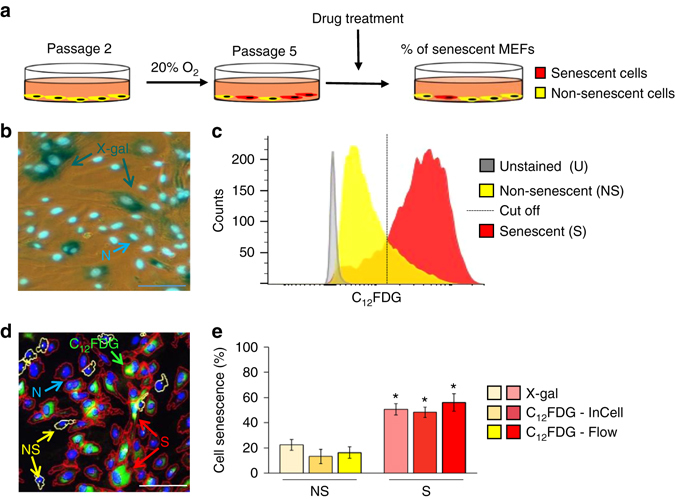
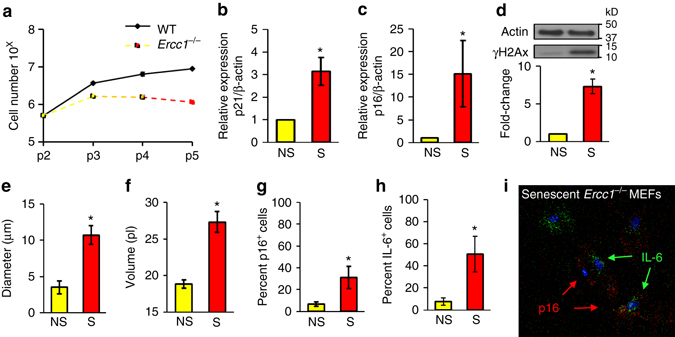
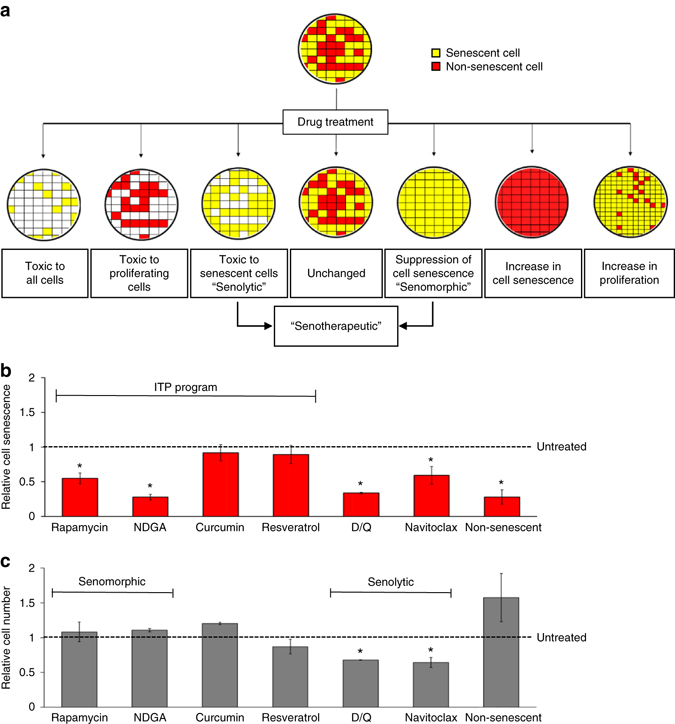
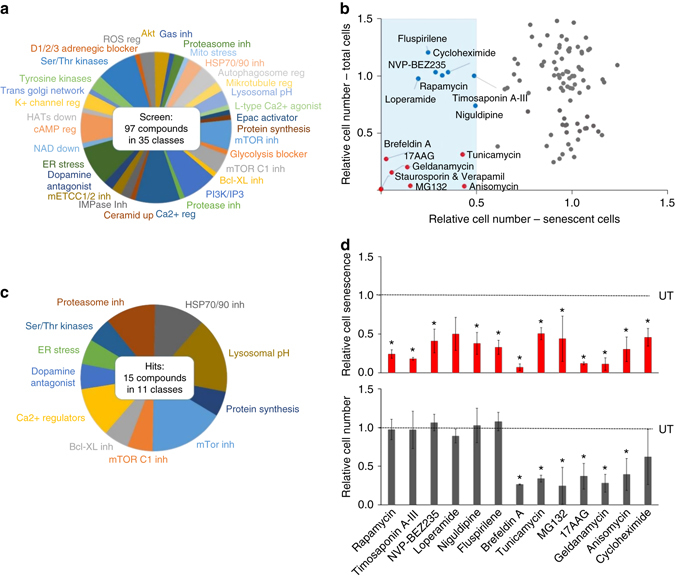
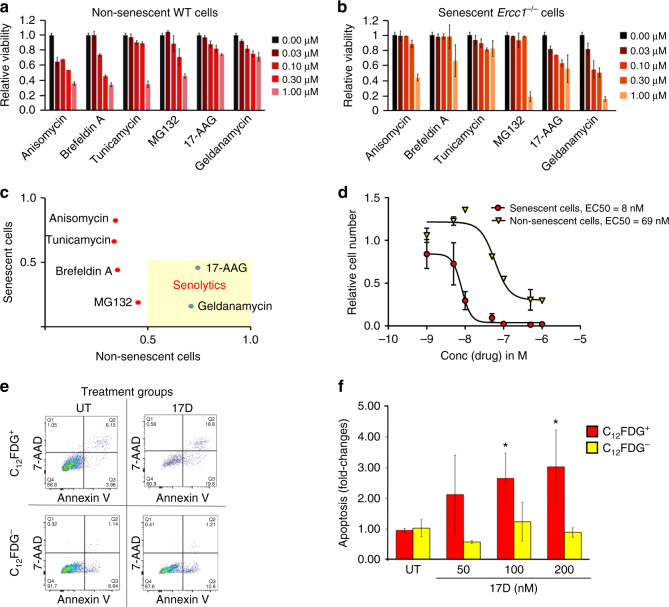
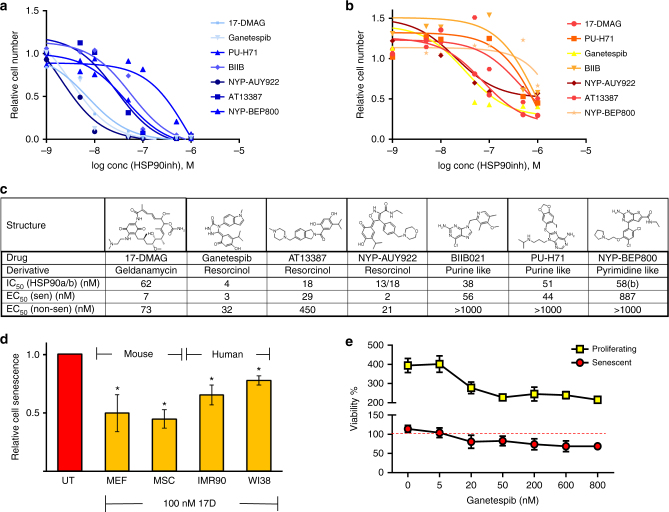
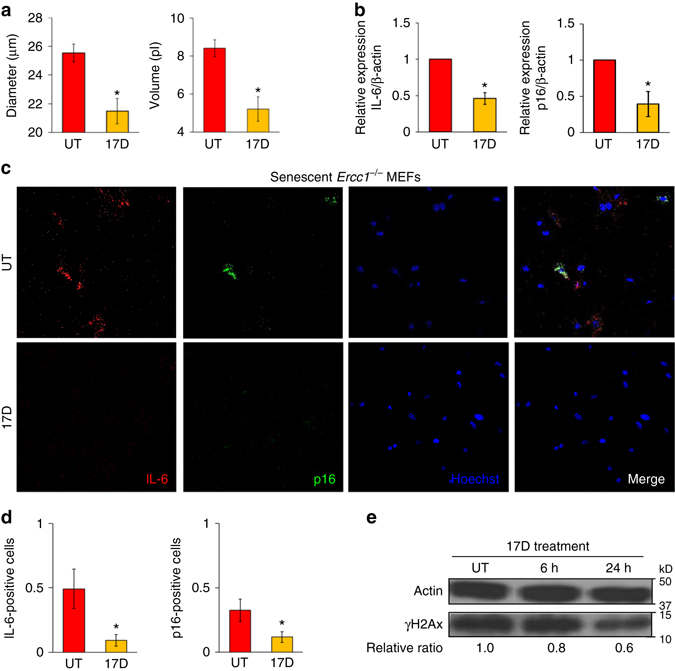
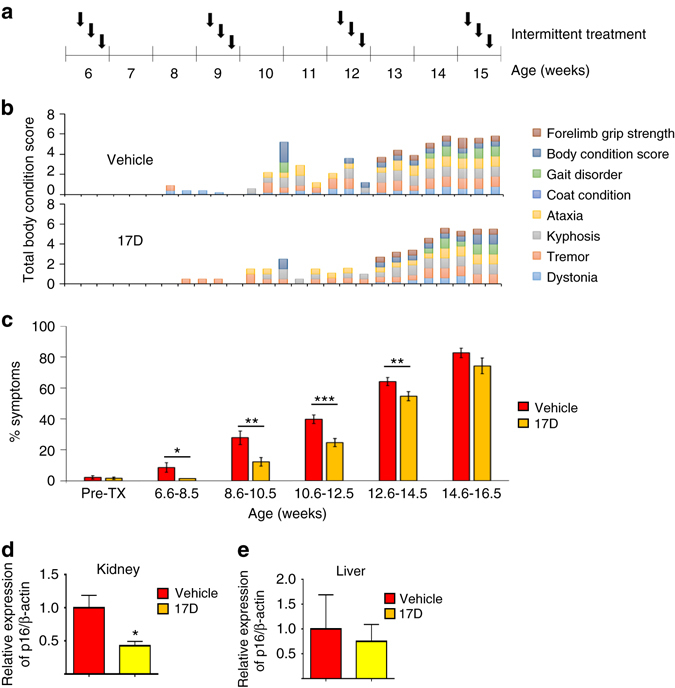
Aging is the main risk factor for many chronic degenerative diseases and cancer. Increased senescent cell burden in various tissues is a major contributor to aging and age-related diseases. Recently, a new class of drugs termed senolytics were demonstrated to extending healthspan, reducing frailty and improving stem cell function in multiple murine models of aging. To identify novel and more optimal senotherapeutic drugs and combinations, we established a senescence associated β-galactosidase assay as a screening platform to rapidly identify drugs that specifically affect senescent cells. We used primary Ercc1 −/− murine embryonic fibroblasts with reduced DNA repair capacity, which senesce rapidly if grown at atmospheric oxygen. This platform was used to screen a small library of compounds that regulate autophagy, identifying two inhibitors of the HSP90 chaperone family as having significant senolytic activity in mouse and human cells. Treatment of Ercc1 −/∆ mice, a mouse model of a human progeroid syndrome, with the HSP90 inhibitor 17-DMAG extended healthspan, delayed the onset of several age-related symptoms and reduced p16 INK4a expression. These results demonstrate the utility of our screening platform to identify senotherapeutic agents as well as identified HSP90 inhibitors as a promising new class of senolytic drugs.
Overview
The claims and statistics of this paper haven’t been checked yet.
Free: it reads the open-access text and checks the first 5 claims that cite a source we can check. Create a free account to check every claim.
Integrity signals
Registry
Cites
Statistics
Figures
Verification
Claims the paper makes
The claims and statistics of this paper haven’t been checked yet.
Free: it reads the open-access text and checks the first 5 claims that cite a source we can check. Create a free account to check every claim.
Claims other papers make about this one
Each is checked against this paper’s own text: does it say what the citing paper says it does?
The source backs part of the claim, not all of it — or backs it for a different population, condition or comparison.
In the citing paper
“Through upregulation of pro-survival and antiapoptotic pathways such as SRC kinases, the PI3K-AKT signaling pathway, heat shock protein (HSP) pathways, serpines, mitochondrial pathways or apoptosis regulator BCL-2-related proteins, those senescent cells with a proapoptotic SASP can survive, despite the cytotoxic microenvironment they create6,7,14,34,35,54–58.”
From Cellular senescence and senolytics: the path to the clinic (2022) · cites this paper as [54]
Experimental — accuracy not yet measuredThe source backs part of the claim, not all of it — or backs it for a different population, condition or comparison.
In the citing paper
“HSP90 prevents proteasomal degradation of AKT, hence inhibiting HSP90 disables pro-survival signaling through this SCAP node and results in elimination of some senescent cell types54.”
From Cellular senescence and senolytics: the path to the clinic (2022) · cites this paper as [54]
Experimental — accuracy not yet measuredThe source backs part of the claim, not all of it — or backs it for a different population, condition or comparison.
In the citing paper
“Senomorphics are aimed largely at suppressing the SASP and thereby inflammation.”
From Senolytic Drugs: Reducing Senescent Cell Viability to Extend Health Span (2021) · cites this paper as [20]
Experimental — accuracy not yet measuredThe source backs part of the claim, not all of it — or backs it for a different population, condition or comparison.
In the citing paper
“Additionally, SASP establishment and the secretion of SASP factors can be modulated by inhibiting HSP90 (REFS214,249).”
From Cellular senescence in ageing: from mechanisms to therapeutic opportunities (2021) · cites this paper as [214]
Experimental — accuracy not yet measuredThe source backs part of the claim, not all of it — or backs it for a different population, condition or comparison.
In the citing paper
“even eliminating only 30% of senescent cells can be sufficient to alleviate dysfunction in preclinical studies [3,5,7,9,23,24,28,[32], [33], [34], [35], [36], [37]]”
From Senolytics decrease senescent cells in humans: Preliminary report from a clinical trial of Dasatinib plus Quercetin in individuals with diabetic kidney disease (2019) · cites this paper as [37]
Experimental — accuracy not yet measured
19 more claims about this paper
Create a free account to see every claim other papers make about this one.
Self-check
Percentages, sums and reported differences re-computed from the paper’s own numbers.
The self-check needs the paper’s full text.
Citations
Cites
Zhang, J.-H., Chung, T. D. Y., & Oldenburg, K. R. (1999) · SLAS Discovery · doi:10.1177/108705719900400206 · Cited by 6,847
Clearance of p16Ink4a-positive senescent cells delays ageing-associated disorders
Baker, D. J., Wijshake, T., Tchkonia, T., LeBrasseur, N. K., Childs, B. G., van de Sluis, B., Kirkland, J. L., & van Deursen, J. M. (2011) · Nature · doi:10.1038/nature10600 · Cited by 3,670
Self-citationNaturally occurring p16Ink4a-positive cells shorten healthy lifespan
Baker, D. J., Childs, B. G., Durik, M., Wijers, M. E., Sieben, C. J., Zhong, J., A. Saltness, R., Jeganathan, K. B., Verzosa, G. C., Pezeshki, A., et al. (2016) · Nature · doi:10.1038/nature16932 · Cited by 2,876
Cellular senescence: from physiology to pathology
Muñoz-Espín, D., & Serrano, M. (2014) · Nature Reviews Molecular Cell Biology · doi:10.1038/nrm3823 · Cited by 2,818
The role of senescent cells in ageing
van Deursen, J. M. (2014) · Nature · doi:10.1038/nature13193 · Cited by 2,623 · cited 1×
“A reduction in the ratio of senescent to non-senescent cells could be achieved by three drug activities: (1) specifically killing senescent cells, termed senolytics29, (2) suppressing cell senescence phenotypes, termed senomorphics, or (3) increasing proliferation of the non-senescent cells.”
BackgroundThe Achilles' heel of senescent cells: from transcriptome to senolytic drugs
Zhu, Y., Tchkonia, T., Pirtskhalava, T., Gower, A. C., Ding, H., Giorgadze, N., Palmer, A. K., Ikeno, Y., Hubbard, G. B., Lenburg, M., et al. (2015) · Aging Cell · doi:10.1111/acel.12344 · Cited by 2,584
Self-citationCellular senescence in aging and age-related disease: from mechanisms to therapy
Childs, B. G., Durik, M., Baker, D. J., & van Deursen, J. M. (2015) · Nature Medicine · doi:10.1038/nm.4000 · Cited by 2,363
Persistent DNA damage signalling triggers senescence-associated inflammatory cytokine secretion
Rodier, F., Coppé, J.-P., Patil, C. K., Hoeijmakers, W. A. M., Muñoz, D. P., Raza, S. R., Freund, A., Campeau, E., Davalos, A. R., & Campisi, J. (2009) · Nature Cell Biology · doi:10.1038/ncb1909 · Cited by 2,232
Clearance of senescent cells by ABT263 rejuvenates aged hematopoietic stem cells in mice
Chang, J., Wang, Y., Shao, L., Laberge, R.-M., Demaria, M., Campisi, J., Janakiraman, K., Sharpless, N. E., Ding, S., Feng, W., et al. (2016) · Nature Medicine · doi:10.1038/nm.4010 · Cited by 1,819
HSP90 at the hub of protein homeostasis: emerging mechanistic insights
Taipale, M., Jarosz, D. F., & Lindquist, S. (2010) · Nature Reviews Molecular Cell Biology · doi:10.1038/nrm2918 · Cited by 1,818
Cited by
Items 201–300 of 745
Ullah, M., Ng, N. N., Concepcion, W., & Thakor, A. S. (2019) · Ageing Research Reviews · doi:10.1016/j.arr.2019.100979 · Cited by 59
The Premature Senescence in Breast Cancer Treatment Strategy
Milczarek, M. (2020) · Cancers · doi:10.3390/cancers12071815 · Cited by 62
Induction of ferroptosis selectively eliminates senescent tubular cells
Liao, C. M., Wulfmeyer, V. C., Chen, R., Erlangga, Z., Sinning, J., von Mäßenhausen, A., Sörensen-Zender, I., Beer, K., von Vietinghoff, S., Haller, H. G., et al. (2022) · American Journal of Transplantation · doi:10.1111/ajt.17102 · Cited by 59
Mullen, M. T., Nelson, A. L., Goff, A., Billings, J., Kloser, H., Huard, C., Mitchell, J., Hambright, W. S., Ravuri, S. K., & Huard, J. (2023) · Stem Cells · doi:10.1093/stmcls/sxad036 · Cited by 57
Senescent Cell Depletion Through Targeting BCL-Family Proteins and Mitochondria
Fan, Y., Cheng, J., Zeng, H., & Shao, L. (2020) · Frontiers in Physiology · doi:10.3389/fphys.2020.593630 · Cited by 51
Dhanabalan, K. M., Dravid, A. A., Agarwal, S., Sharath, R. K., Padmanabhan, A. K., & Agarwal, R. (2022) · Bioengineering & Translational Medicine · doi:10.1002/btm2.10298 · Cited by 55
Senescent cells in cancer therapy: why and how to remove them
Zhang, J., Zhang, D., & Yu, B. (2021) · Cancer Letters · doi:10.1016/j.canlet.2021.07.002 · Cited by 59
Liu, L., Yue, X., Sun, Z., Hambright, W. S., Feng, Q., Cui, Y., Huard, J., Robbins, P. D., Wang, Z., & Mu, X. (2022) · Aging · doi:10.18632/aging.204275 · Cited by 49
Self-citationPancreatic β-cell senescence in diabetes: mechanisms, markers and therapies
Cha, J., Aguayo‐Mazzucato, C., & Thompson, P. J. (2023) · Frontiers in Endocrinology · doi:10.3389/fendo.2023.1212716 · Cited by 55
Potential role of senescence in radiation-induced damage of the aged skeleton
Chandra, A., Park, S. S., & Pignolo, R. J. (2018) · Bone · doi:10.1016/j.bone.2018.12.006 · Cited by 55
Sessions, G. A., Copp, M. E., Liu, J., Sinkler, M. A., D'Costa, S., & Diekman, B. O. (2019) · The FASEB Journal · doi:10.1096/fj.201900815rr · Cited by 52
G Protein-Coupled Receptor Systems and Their Role in Cellular Senescence
Santos‐Otte, P., Leysen, H., van Gastel, J., Hendrickx, J. O., Martin, B., & Maudsley, S. R. (2019) · Computational and Structural Biotechnology Journal · doi:10.1016/j.csbj.2019.08.005 · Cited by 58
Senotherapeutics: Targeting senescent cells for the main age-related diseases
Boccardi, V., & Mecocci, P. (2021) · Mechanisms of Ageing and Development · doi:10.1016/j.mad.2021.111526 · Cited by 58
The struggle of a good friend getting old: cellular senescence in viral responses and therapy
Kohli, J., Veenstra, I., & Demaria, M. (2021) · The EMBO Reports · doi:10.15252/embr.202052243 · Cited by 52
“HSP90 inhibitors such as geldana-mycin, or natural flavonoids such as quercetin, have been demonstrated to exert senolytic properties by interfering with this pathway (Zhu et al , 2015; Fuhrmann-Stroissnigg et al , 2017; Kirk-land et al , 2017).”
Tissue-Specific Landscape of Metabolic Dysregulation during Ageing
Zhang, F., Kerbl-Knapp, J., Akhmetshina, A., Korbelius, M., Kuentzel, K. B., Vujić, N., Hörl, G., Paar, M., Kratky, D., Steyrer, E., et al. (2021) · Biomolecules · doi:10.3390/biom11020235 · Cited by 57
“Our straightforward workflow of NMR-based untargeted metabolomics together with the identified metabolite biomarker panels is well-suited to study the impact of senolytic drug candidates, such as dasatinib, quercetin (61), FOXO4-DRI peptide (62), Bcl-2 family inhibitors (63) and Hsp90 inhibitors (64) , to help increas…”
BackgroundLiu, L., Yue, X., Sun, Z., Hambright, W. S., Wei, J., Li, Y., Matre, P. R., Cui, Y., Wang, Z., Rodney, G. G., et al. (2022) · Journal of Cachexia Sarcopenia and Muscle · doi:10.1002/jcsm.13101 · Cited by 53
Self-citationDistinct mechanisms mediating therapy-induced cellular senescence in prostate cancer
Kallenbach, J., Roozbahani, G. A., Horestani, M. H., & Baniahmad, A. (2022) · Cell & Bioscience · doi:10.1186/s13578-022-00941-0 · Cited by 59
“Senotherapeutics reduce the proportion of senescent to non-senescent cells by either killing senescent cells specifically (senolytic) or by inhibiting part or all of their characteristics (senomorphics) [169, 170].”
BackgroundTargeting Cell Senescence for the Treatment of Age-Related Bone Loss
Pignolo, R. J., Samsonraj, R. M., Law, S. F., Wang, H., & Chandra, A. (2019) · Current Osteoporosis Reports · doi:10.1007/s11914-019-00504-2 · Cited by 54
Liu, P., Tang, Q., Chen, M., Chen, W., Lu, Y., Liu, Z., & He, Z. (2020) · Frontiers in Oncology · doi:10.3389/fonc.2020.589908 · Cited by 56
The aging proteostasis decline: From nematode to human
Meller, A., & Shalgi, R. (2021) · Experimental Cell Research · doi:10.1016/j.yexcr.2021.112474 · Cited by 57
Subcellular structure, heterogeneity, and plasticity of senescent cells
Bitencourt, T. C., Vargas, J. E., Silva, A. O., Fraga, L. R., & Filippi‐Chiela, E. (2024) · Aging Cell · doi:10.1111/acel.14154 · Cited by 46
“The main SCAPs are Bcl-2 and TP53/p21 pathways (Fuhrmann-Stroissnigg et al., 2017; Zhu et al., 2016, 2017).”
BackgroundMolecular Chaperones and Proteolytic Machineries Regulate Protein Homeostasis in Aging Cells
Margulis, B. A., Цимоха, А. С., Zubova, S. G., & Guzhova, I. V. (2020) · Cells · doi:10.3390/cells9051308 · Cited by 53
“We suggest that the low content of Hsp90 may be beneficial for the healthy aging of a normal cell, and this suggestion is in line with the recent discovery of senolytics based on inhibitors of Hsp90 [50].”
BackgroundLewińska, A., Przybylski, P., Adamczyk‐Grochala, J., Błoniarz, D., Litwinienko, G., & Wnuk, M. (2022) · Cancers · doi:10.3390/cancers14030605 · Cited by 55
The Interaction of Viruses with the Cellular Senescence Response
Seoane, R., Vidal, S., Bouzaher, Y. H., El Motiam, A., & Rivas, C. (2020) · Biology · doi:10.3390/biology9120455 · Cited by 49
The Role of Extracellular Vesicles in Senescence
Oh, C., Koh, D., Jeon, H. B., & Kim, K. M. (2022) · Molecules and Cells · doi:10.14348/molcells.2022.0056 · Cited by 50
“Indeed, one research group reported that treatment with the HSP90 inhibitor 17-DMAG successfully eliminated senescent cells via apoptosis (Fuhrmann-Stroissnigg et al., 2017).”
BackgroundChen, L., Wu, B., Mo, L., Chen, H., Yin, X., Zhao, Y., Cui, Z., Cui, F., Chen, L., Deng, Q., et al. (2025) · Nature Communications · doi:10.1038/s41467-025-58188-5 · Cited by 55
Local Elimination of Senescent Cells Promotes Bone Defect Repair during Aging
Xing, X., Huang, H., Gao, X., Yang, J., Tang, Q., Xu, X., Wu, Y., Li, M., Cheng, L., Tan, L., et al. (2022) · ACS Applied Materials & Interfaces · doi:10.1021/acsami.1c22138 · Cited by 51
Senescence: Pathogenic Driver in Chronic Obstructive Pulmonary Disease
Rivas, M., Gupta, G., Costanzo, L., Ahmed, H., Wyman, A. E., & Geraghty, P. M. (2022) · Medicina · doi:10.3390/medicina58060817 · Cited by 51
Using the drug-protein interactome to identify anti-ageing compounds for humans
Fuentealba, M., Dönertaş, H. M., Williams, R., Labbadia, J., Thornton, J. M., & Partridge, L. (2019) · PLOS Computational Biology · doi:10.1371/journal.pcbi.1006639 · Cited by 45
Mouse Models of Accelerated Cellular Senescence
Yousefzadeh, M. J., Melos, K. I., Angelini, L., Burd, C. E., Robbins, P. D., & Niedernhofer, L. J. (2019) · Methods in Molecular Biology · doi:10.1007/978-1-4939-8931-7_17 · Cited by 47
“Depletion or destruction of p16ink4aexpressing cells in the tissues of progeroid mice was shown to reduce cellular senescence, delay the onset or limit the severity of multiple age-related pathologies to extend both healthspan and lifespan in mice [23,20,25].”
BackgroundSelf-citationMolecular mechanisms and cardiovascular implications of cancer therapy-induced senescence
Abdelgawad, I. Y., Sadak, K. T., Lone, D. W., Dabour, M. S., Niedernhofer, L. J., & Zordoky, B. N. M. (2020) · Pharmacology & Therapeutics · doi:10.1016/j.pharmthera.2020.107751 · Cited by 51
Self-citationRomashkan, S., Chang, H., & Hadley, E. C. (2021) · The Journals of Gerontology Series A · doi:10.1093/gerona/glab028 · Cited by 50
“Development of senolytics is focusing on such prosurvival networks, including ephrins (EFNB1 or 3), PI3Kδ, p21, BCL-xL, plasminogenactivated inhibitor-2, BCL-2 family members, or heat shock protein-90 (HSP-90) (9,10) as well as metabolic targets in senescent cells that differ from those in nonsenescent cells.”
BackgroundMethodInfluentialCellular senescence and hematological malignancies: From pathogenesis to therapeutics
Hu, D., Yuan, S., Zhong, J., Liu, Z., Wang, Y., Liu, L., Li, J., Wen, F., Liu, J., & Zhang, J. (2021) · Pharmacology & Therapeutics · doi:10.1016/j.pharmthera.2021.107817 · Cited by 50
Cellular senescence in neuroinflammatory disease: new therapies for old cells?
Nelke, C., Schroeter, C. B., Pawlitzki, M., Meuth, S. G., & Ruck, T. (2022) · Trends in Molecular Medicine · doi:10.1016/j.molmed.2022.07.003 · Cited by 51
Senescent cells: A therapeutic target for osteoporosis
Wang, T., Huang, S., & He, C. (2022) · Cell Proliferation · doi:10.1111/cpr.13323 · Cited by 51
“Mice treated with HSP90 inhibitors exhibit decreased p16 and delayed onset of several age-related symptoms and increased lifespan.(227) It is still unclear whether HSP90 inhibitors”
BackgroundMbara, K. C., Devnarain, N., & Owira, P. M. O. (2022) · Pharmaceutical Medicine · doi:10.1007/s40290-022-00444-w · Cited by 47
Targeting senescence to delay progression of multiple sclerosis
Oost, W., Talma, N., Meilof, J. F., & Laman, J. D. (2018) · Journal of Molecular Medicine · doi:10.1007/s00109-018-1686-x · Cited by 49
Hobson, S., Arefin, S., Kublickiene, K. R., Shiels, P. G., & Stenvinkel, P. (2019) · Toxins · doi:10.3390/toxins11020082 · Cited by 50
A tale of the good and bad: Cell senescence in bone homeostasis and disease
(2019) · International Review of Cell and Molecular Biology · doi:10.1016/bs.ircmb.2019.03.005 · Cited by 45
Pungsrinont, T., Sutter, M. F., Ertingshausen, M. C. C. M., Lakshmana, G., Kokal, M., Khan, A. S., & Baniahmad, A. (2020) · Cell & Bioscience · doi:10.1186/s13578-020-00422-2 · Cited by 47
Senotherapeutics and Their Molecular Mechanism for Improving Aging
Park, J., & Shin, D. W. (2022) · Biomolecules & Therapeutics · doi:10.4062/biomolther.2022.114 · Cited by 49
“Piperlongumine specifically caused apoptosis in ionizing radiation-induced or senescent human WI-38 fibroblasts by increasing ROS production and inhibiting the PI3K/Akt/mTOR pathway (Wang et al., 2016).”
Restoring aged stem cell functionality: Current progress and future directions
Spehar, K., Pan, A., & Beerman, I. (2020) · Stem Cells · doi:10.1002/stem.3234 · Cited by 41
“A newer senolytic, 17-DMAG, has been shown to greatly reduce senescent bmMSCs in a progeroid mouse model (Errc1).(171) However, these senolytics have not yet shown any functional rejuvenation of stem”
BackgroundDhanabalan, K. M., Gupta, V. K., & Agarwal, R. (2020) · Biomaterials Science · doi:10.1039/d0bm00596g · Cited by 48
Deryabin, P. I., Shatrova, A. N., Marakhova, I. I., Nikolsky, N. N., & Borodkina, A. V. (2021) · Cellular and Molecular Life Sciences · doi:10.1007/s00018-021-03980-x · Cited by 46
Computational Methods for Single-Cell Imaging and Omics Data Integration
Watson, E. R., Fard, A. T., & Mar, J. C. (2022) · Frontiers in Molecular Biosciences · doi:10.3389/fmolb.2021.768106 · Cited by 50
“…et al., 2019), Hutchinson – Gilford Progeria Syndrome (Kubben et al., 2016) and cancer (Caie et al., 2010; Moffat et al., 2014), as well as therapeutics for biological ageing as a whole (Sarkar et al., 2020), often through targeting cellular senescence (Fuhrmann-Stroissnigg et al., 2017).”
BackgroundSenolysis induced by 25-hydroxycholesterol targets CRYAB in multiple cell types
Limbad, C., Doi, R., McGirr, J., Ciotlos, S., Perez, K., Clayton, Z. S., Daya, R., Seals, D. R., Campisi, J., & Melov, S. (2022) · iScience · doi:10.1016/j.isci.2022.103848 · Cited by 45
The role of cellular senescence in aging through the prism of Koch-like criteria
Yanai, H., & Fraifeld, V. E. (2018) · Ageing Research Reviews · doi:10.1016/j.arr.2017.10.004 · Cited by 45
Senotherapeutic peptide treatment reduces biological age and senescence burden in human skin models
Zonari, A. A. C., Brace, L. E., Al-Katib, K., Porto, W. F., Foyt, D. A., Guiang, M., Cruz, E. A. O., Marshall, B., Salgueiro, W. G., Inan, M. D., et al. (2023) · npj Aging · doi:10.1038/s41514-023-00109-1 · Cited by 53
Frailty and HIV: Moving from Characterization to Intervention
Erlandson, K. M., & Piggott, D. A. (2021) · Current HIV/AIDS Reports · doi:10.1007/s11904-021-00554-1 · Cited by 47
The Senolytic Drug Fisetin Attenuates Bone Degeneration in the Zmpste24−/− Progeria Mouse Model
Hambright, W. S., Mu, X., Gao, X., Guo, P., Kawakami, Y., Mitchell, J., Mullen, M., Nelson, A.-L., Bahney, C., Nishimura, H., et al. (2023) · Journal of Osteoporosis · doi:10.1155/2023/5572754 · Cited by 44
Selective Elimination of Senescent Cancer Cells by Galacto-Modified PROTACs
Chang, M., Gao, F., Gnawali, G. R., Xu, H., Dong, Y., Meng, X., Li, W., Wang, Z., Lopez, B., Carew, J. S., et al. (2024) · Journal of Medicinal Chemistry · doi:10.1021/acs.jmedchem.4c00152 · Cited by 44
Aging, senescence, and cutaneous wound healing—a complex relationship
O’Reilly, S., Markiewicz, E., & Idowu, O. C. (2024) · Frontiers in Immunology · doi:10.3389/fimmu.2024.1429716 · Cited by 48
He, Y., Liu, Y., & Zhang, M. (2025) · Frontiers in Aging Neuroscience · doi:10.3389/fnagi.2025.1533963 · Cited by 46
Gurkar, A. U., Robinson, A. R., Cui, Y., Li, X., Allani, S. K., Webster, A., Muravia, M., Fallahi, M., Weissbach, H., Robbins, P. D., et al. (2018) · Redox Biology · doi:10.1016/j.redox.2018.06.005 · Cited by 45
Self-citationSenescence-mediated anticancer effects of quercetin
Özsoy, S., Becer, E., & Vatansever, H. S. (2022) · Nutrition Research · doi:10.1016/j.nutres.2022.04.007 · Cited by 46
Targeting Cellular Senescence for Age-Related Diseases: Path to Clinical Translation
Wyles, S. P., Tchkonia, T., & Kirkland, J. L. (2021) · Plastic & Reconstructive Surgery · doi:10.1097/prs.0000000000009669 · Cited by 43
Self-citationRecent advances in senescence-associated secretory phenotype and osteoporosis
Fan, H., Qiao, Z., Li, J., Shang, G., Shang, C., Chen, S., Leng, Z., Su, H., Kou, H., & Liu, H. (2024) · Heliyon · doi:10.1016/j.heliyon.2024.e25538 · Cited by 49
Focus on senescence: Clinical significance and practical applications
Boccardi, V., Orr, M. E., Polidori, M. C., Ruggiero, C., & Mecocci, P. (2024) · Journal of Internal Medicine · doi:10.1111/joim.13775 · Cited by 45
“This method unveiled the dependence of senescent cell survival on six distinct anti-apoptotic pathways [109].”
MethodA guide to senolytic intervention in neurodegenerative disease
Lee, S., Wang, E. Y., Steinberg, A. B., Walton, C. C., Chinta, S. J., & Andersen, J. K. (2021) · Mechanisms of Ageing and Development · doi:10.1016/j.mad.2021.111585 · Cited by 39
Effects of Curcumin on Aging: Molecular Mechanisms and Experimental Evidence
Bahrami, A., Montecucco, F., Carbone, F., & Sahebkar, A. (2021) · BioMed Research International · doi:10.1155/2021/8972074 · Cited by 44
The role of vitamin D on redox regulation and cellular senescence
Sosa-Díaz, E., Cruz, E. Y. H., & Pedraza‐Chaverrí, J. (2022) · Free Radical Biology and Medicine · doi:10.1016/j.freeradbiomed.2022.10.003 · Cited by 44
To stay young, kill zombie cells
Scudellari, M. (2017) · Nature · doi:10.1038/550448a · Cited by 46
Effects of senescence on the tumour microenvironment and response to therapy
Reynolds, L. E., Maallin, S., Haston, S., Martínez-Barberá, J. P., Hodivala‐Dilke, K., & Pedrosa, A. (2023) · FEBS Journal · doi:10.1111/febs.16984 · Cited by 45
“HSP90 inhibitors eliminate p16 Ink4a -positive cells, thereby delaying any age-related symptoms or diseases, including cancer [95].”
Advances and challenges in geroscience research: An update
Yabluchanskiy, A., Ungvari, Z., Csiszar, A., & Tarantini, S. (2018) · Physiology International · doi:10.1556/2060.105.2018.4.32 · Cited by 42
“Recent studies have identified dasatinib plus quercetin (85), heat shock protein 90 (HSP90) inhibitors (18), fisetin (86), mouse double minute 2 homolog antagonists (82) and agents acting on oxidation resistance protein 1 (87), and B-cell lymphoma 2 (8) as a potential senolytic agents that could extend health span and…”
BackgroundCellular senescence: from anti-cancer weapon to anti-aging target
Yuan, L., Alexander, P. B., & Wang, X. (2020) · Science China Life Sciences · doi:10.1007/s11427-019-1629-6 · Cited by 43
Genome-Protecting Compounds as Potential Geroprotectors
Proshkina, E., Shaposhnikov, M. V., & Moskalev, A. (2020) · International Journal of Molecular Sciences · doi:10.3390/ijms21124484 · Cited by 45
Repurposing drugs to fight aging: The difficult path from bench to bedside
Vaiserman, A. M., Koliada, A. K., Lushchak, O. V., & Castillo, M. J. (2020) · Medicinal Research Reviews · doi:10.1002/med.21773 · Cited by 43
“In preclinical studies, the promising senolytic activity was shown for a macrolide‐type antibiotic such as azithromycin(150) and also for HSP90 inhibitor alvespimycin (17‐DMAG), which is an analog of the antineoplastic benzoquinone antibiotic geldanamycin.(151) Recently, therapeutic potential of senolytics has been st…”
BackgroundHsp90 in Human Diseases: Molecular Mechanisms to Therapeutic Approaches
Sumi, M. P., & Ghosh, A. (2022) · Cells · doi:10.3390/cells11060976 · Cited by 47
Senescent endothelial cells: a potential target for diabetic retinopathy
Liao, Y.-L., Fang, Y., Sun, J., & Dou, G. (2024) · Angiogenesis · doi:10.1007/s10456-024-09943-7 · Cited by 43
Signal Transduction, Ageing and Disease
Zhang, L. J., Yousefzadeh, M. J., Suh, Y., Niedernhofer, L. J., & Robbins, P. D. (2019) · Sub-cellular biochemistry/Subcellular biochemistry · doi:10.1007/978-981-13-3681-2_9 · Cited by 42
Self-citationSmall-molecule drug repurposing to target DNA damage repair and response pathways
Brinkman, J. A., Liu, Y., & Kron, S. J. (2020) · Seminars in Cancer Biology · doi:10.1016/j.semcancer.2020.02.013 · Cited by 42
Activatable senoprobes and senolytics: Novel strategies to detect and target senescent cells
Morsli, S., Doherty, G. J., & Muñoz-Espín, D. (2022) · Mechanisms of Ageing and Development · doi:10.1016/j.mad.2021.111618 · Cited by 42
Bhattacharya, K., Maiti, S., Zahoran, S., Weidenauer, L., Hany, D., Wider, D., Bernasconi, L., Quadroni, M., Collart, M., & Picard, D. (2022) · Nature Communications · doi:10.1038/s41467-022-33916-3 · Cited by 40
Pharmacological modulation of vascular ageing: A review from VascAgeNet
Roth, L., Doğan, S., Tuna, B. G., Arányi, T., Benítez, S., Borrell-Pagés, M., Bozaykut, P., Meyer, G. R. Y. D., Duca, L., Durmuş, N., et al. (2023) · Ageing Research Reviews · doi:10.1016/j.arr.2023.102122 · Cited by 43
Identification of SYK inhibitor, R406 as a novel senolytic agent
Cho, H.-J., Yang, E. J., Park, J. T., Kim, J., Kim, E.-C., Jung, K., Park, S. C., & Lee, Y. (2020) · Aging · doi:10.18632/aging.103135 · Cited by 49
“inhibitor was identified as a novel class of senolytic drugs that downregulated the phosphorylation of PI3K/AKT, an anti-apoptotic factor [15].”
BackgroundYilmaz, D., Mathavan, N., Wehrle, E., Kuhn, G. A., & Müller, R. (2023) · Ageing Research Reviews · doi:10.1016/j.arr.2023.102118 · Cited by 40
The Role of Molecular and Cellular Aging Pathways on Age-Related Hearing Loss
Ege, T., Tao, L., & North, B. J. (2024) · International Journal of Molecular Sciences · doi:10.3390/ijms25179705 · Cited by 46
“Additionally, ATP-competitive HSP90 inhibitors, such as geldanamycin and 17-AAG, have shown senolytic activity both in cell culture and in vivo [221].”
BackgroundTargeting senescent cells for the treatment of age-associated diseases
Suda, M., Tchkonia, T., Kirkland, J. L., & Minamino, T. (2024) · The Journal of Biochemistry · doi:10.1093/jb/mvae091 · Cited by 40
Self-citationSenescent cells as a target for anti-aging interventions: From senolytics to immune therapies
Fu, T., & Zhou, Z. (2025) · Journal of Translational Internal Medicine · doi:10.1515/jtim-2025-0005 · Cited by 44
“29-31] Senomorphics, on the other hand, primarily inhibit various inflammatory factors in the SASP, such as interleukin-6 (IL-6), IL-10 and tumor necrosis factor α (TNFα) via disrupting upstream signaling pathways, among which are nuclear factor kappa-B (NF-κB), protein 38 mitogen-activated protein…”
SA-β-Galactosidase-Based Screening Assay for the Identification of Senotherapeutic Drugs
Fuhrmann-Stroissnigg, H., Santiago, F. E., Grassi, D., Ling, Y., Niedernhofer, L. J., & Robbins, P. D. (2019) · Journal of Visualized Experiments · doi:10.3791/58133 · Cited by 30
Self-citationAutophagy and senescence in cancer therapy
Patel, N. H., Bloukh, S., Alwohosh, E., Alhesa, A., Saleh, T., & Gewirtz, D. A. (2021) · Advances in cancer research · doi:10.1016/bs.acr.2021.01.002 · Cited by 42
Senescence Alterations in Pulmonary Hypertension
Roger, I., Milara, J., Belhadj, N., & Cortijo, J. (2021) · Cells · doi:10.3390/cells10123456 · Cited by 40
Senolytics in the treatment of diabetic retinopathy
Hassan, J. W., & Bhatwadekar, A. D. (2022) · Frontiers in Pharmacology · doi:10.3389/fphar.2022.896907 · Cited by 39
“Navitoclax Bcl-2 inhibitor HUVECs Hematopoietic Stem cells Preclinical candidate Bleeding, thrombocytopenia, and neutropenia(Chang et al., 2016; Prasnikar et al., 2021) 17-DMAG Heat shock protein 90 inhibitor Progeroid mouse model and Mouse embryonic fibroblast cells Preclinical candidate N/A (Fuhrmann-Stroissnigg et…”
Background(2022) · doi:10.1101/2022.02.11.480086 · Cited by 39
HSP90 acts as a senomorphic target in senescent retinal pigmental epithelial cells
Chen, D.-D., Peng, X., Wang, Y., Jiang, M., Xue, M., Shang, G., Liu, X., Jia, X., Liu, B., Lu, Y., et al. (2021) · Aging · doi:10.18632/aging.203496 · Cited by 38
“Inhibition of HSP90 prolongs the lifespan of Errc-1 deficient progeroid mice [28] by inducing the apoptosis of senescent cells.”
Riviere-Cazaux, C., Carlstrom, L. P., Neth, B. J., Olson, I., Rajani, K. R., Rahman, M., Ikram, S., Mansour, M. A., Mukherjee, B., Warrington, A. E., et al. (2023) · npj Precision Oncology · doi:10.1038/s41698-023-00476-8 · Cited by 39
Self-citationBiological Aspects of Inflamm-Aging in Childhood Cancer Survivors
Rossi, F., Paola, A. D., Pota, E., Argenziano, M., Pinto, D., Marrapodi, M. M., Leva, C. D., Martino, M. D., & Tortora, C. (2021) · Cancers · doi:10.3390/cancers13194933 · Cited by 39
Heat Shock Protein 90 as Therapeutic Target for CVDs and Heart Ageing
Dabravolski, S. A., Sukhorukov, V. N., Kalmykov, V. A., Orekhov, N. A., Grechko, A. V., & Orekhov, A. N. (2022) · International Journal of Molecular Sciences · doi:10.3390/ijms23020649 · Cited by 38
Cellular senescence as a therapeutic target to improve renal transplantation outcome
van Willigenburg, H., de Keizer, P. L. J., & de Bruin, R. W. F. (2018) · Pharmacological Research · doi:10.1016/j.phrs.2018.02.015 · Cited by 38
“A different drug screening method focused on the inhibition of eat shock protein 90 (HSP90), which reduces viability in senescent uman fibroblasts and senescent mouse stem cells [102].”
InfluentialConverging Paths of Pulmonary Arterial Hypertension and Cellular Senescence
van der Feen, D. E., Berger, R. M. F., & Bartelds, B. (2019) · American Journal of Respiratory Cell and Molecular Biology · doi:10.1165/rcmb.2018-0329tr · Cited by 40
L’Hôte, V., Courbeyrette, R., Pinna, G., Cintrat, J., Le Pavec, G., Delaunay‐Moisan, A., Mann, C., & Thuret, J. (2021) · Aging Cell · doi:10.1111/acel.13447 · Cited by 37
Senescence in cancer: Advances in detection and treatment modalities
Billimoria, R., & Bhatt, P. (2023) · Biochemical Pharmacology · doi:10.1016/j.bcp.2023.115739 · Cited by 38
Senolytic Therapy Enabled by Senescent Cell‐Sensitive Biomimetic Melanin Nano‐Senolytics
Zhang, H., Xu, X., Shou, X., Liao, W., Jin, C., Chen, C., Zhang, C. Y., Gao, W., Zhang, J., Ge, W., et al. (2024) · Advanced Healthcare Materials · doi:10.1002/adhm.202401085 · Cited by 39
Rosemblit, C., Datta, J., Lowenfeld, L., Xu, S., Basu, A. B., Kodumudi, K. N., Wiener, D. A., & Czerniecki, B. J. (2018) · Oncotarget · doi:10.18632/oncotarget.25208 · Cited by 39
“The recent identification of the class of senolytic drugs [89, 90] suggests further combinations may have therapeutic potential.”
BackgroundRecent update on discovery and development of Hsp90 inhibitors as senolytic agents
Gupta, S. D., & Pan, C. H. (2020) · International Journal of Biological Macromolecules · doi:10.1016/j.ijbiomac.2020.06.115 · Cited by 38
Hong, X., Wang, L., Zhang, K., Liu, J., & Liu, J. (2022) · Cells · doi:10.3390/cells11050877 · Cited by 38
Past and Future Directions for Research on Cellular Senescence
Zhu, Y. Z., Anastasiadis, Z. P., Espíndola‐Netto, J. M., Evans, T. S., Tchkonia, T., & Kirkland, J. L. (2023) · Cold Spring Harbor Perspectives in Medicine · doi:10.1101/cshperspect.a041205 · Cited by 39
Self-citationAging as a loss of morphostatic information: A developmental bioelectricity perspective
Pio‐Lopez, L., & Levin, M. G. (2024) · Ageing Research Reviews · doi:10.1016/j.arr.2024.102310 · Cited by 41
Mamun, A. A., Sufian, M. A., Uddin, M. S., Sumsuzzman, D. M., Jeandet, P., Islam, M. S., Zhang, H., Kong, A. T., & Sarwar, M. S. (2022) · European Journal of Pharmacology · doi:10.1016/j.ejphar.2022.174991 · Cited by 41
Senescent cells and SASP in cancer microenvironment: New approaches in cancer therapy
Özdemir, A., Demir, Y. D. Ş., Yeşilyurt, Z. E., & Ark, M. (2022) · Advances in protein chemistry and structural biology · doi:10.1016/bs.apcsb.2022.10.002 · Cited by 37
Metadata
- Authors
- Fuhrmann-Stroissnigg, H., Ling, Y. Y., Zhao, J., McGowan, S. J., Zhu, Y., Brooks, R. W., Grassi, D., Gregg, S. Q., Stripay, J. L., Dorronsoro, A., Corbo, L., Tang, P., Bukata, C., Ring, N., Giacca, M., Li, X., Tchkonia, T., Kirkland, J. L., Niedernhofer, L. J., & Robbins, P. D.
- Affiliations
- Scripps Research Institute (US)
- University of Pittsburgh (US)
- Mayo Clinic (US)
- International Centre for Genetic Engineering and Biotechnology (IT)
- Corresponding author
- Robbins, Paul D.
- ORCID
- Venue
- Nature Communications
- Published
- 2017-09-04
- Volume
- 8
- Issue
- 1
- Pages
- 422-422
- ISSN
- 2041-1723 (ISSN-L)
- PMC
- PMC5583353
- OpenAlex
- W2752676842
- Semantic Scholar
- 75a2484a24067d78ca91ed40dc971ce24f8eafc4
- Cited by
- 701
- References
- 77
- Citations by year
- 2026: 58 · 2025: 70 · 2024: 94 · 2023: 68 · 2022: 102 · 2021: 95 · 2020: 89 · 2019: 68 · 2018: 49 · 2017: 6
- FWCI
- 42.91
- Type
- journal article
- Language
- en
- Open access
- gold
- doi.org
- Licence
- cc-by
- creativecommons.org/licenses/by/4.0 (tdm)
- creativecommons.org/licenses/by/4.0 (vor)
- Locations
- Nature Communications (publishedVersion, cc-by)
- PubMed Central (publishedVersion, cc-by)
- PubMed (publishedVersion)
- ArTS Archivio della ricerca di Trieste (University of Trieste https://www.units.it/) (submittedVersion, cc-by)
- RePEc: Research Papers in Economics (submittedVersion)
- DOAJ (DOAJ: Directory of Open Access Journals) (submittedVersion, cc-by-sa)
- DOAJ (DOAJ: Directory of Open Access Journals) (submittedVersion)
- Funders
- American Federation for Aging Research
- National Institutes of Health (DK-50456, AG043376, AG13925)
- National Institute on Aging (P01AG043376, R01AG013925, R37AG013925)
- National Institute of Diabetes and Digestive and Kidney Diseases (P30DK050456)
- Topics
- Life Sciences › Biochemistry, Genetics and Molecular Biology › Cell Biology › Telomeres, Telomerase, and Senescence
- Life Sciences › Biochemistry, Genetics and Molecular Biology › Aging › Genetics, Aging, and Longevity in Model Organisms
- Life Sciences › Biochemistry, Genetics and Molecular Biology › Molecular Biology › Heat shock proteins research
- Keywords
- Hsp90 inhibitors, senolytics, cellular senescence, senotherapeutics, aging, autophagy, 17-DMAG, healthspan, progeroid syndromes, p16INK4a, drug screening
- MeSH terms
- Aging, Animals, Autophagy, Biological Assay, DNA-Binding Proteins, Drug Evaluation, Preclinical, Endonucleases, Female, Fibroblasts, Humans, Signal Transduction, Biomarkers, Down-Regulation, Benzoquinones, Cellular Senescence, Apoptosis, HSP90 Heat-Shock Proteins, Phosphatidylinositol 3-Kinases, Lactams, Macrocyclic, Proto-Oncogene Proteins c-akt, Mice, Small Molecule Libraries, Human Umbilical Vein Endothelial Cells
About these checks
Registry, retraction, Cites and statistics results are computed, not judged, with one exception: a printed reference that no index lists is read once by a model before it counts as a citation error. Claims are extracted by a model and kept only when their quote appears verbatim in the text; each cited source is then checked, with a model’s help, for whether it says what the claim relies on. Those verdicts can be wrong — read the claim’s quote and the cited source before relying on one.
Statistics and arithmetic are recomputed, not judged.
Confidence bands are shown only for fields calibrated on our annotated test set. None is calibrated yet, so no band is shown.
What counts as a claim ›How we measure confidence ›How we check this ›
Are you an author, or do you see a problem with this page? Request a review
Data sources
Bibliographic data: Semantic Scholar, OpenAlex, Crossref.
Contains information from the Semantic Scholar Academic Graph Datasets, made available under the ODC Attribution License (ODC-BY 1.0).
Semantic Scholar’s data is described in: Kinney, R., et al. (2023). The Semantic Scholar Open Data Platform. arXiv:2301.10140.
