

Identification of HSP90 inhibitors as a novel class of senolytics
Open accessThe DOI matches its Crossref record; 77 of the 77 references it cites were found in a registry or an index.
Abstract
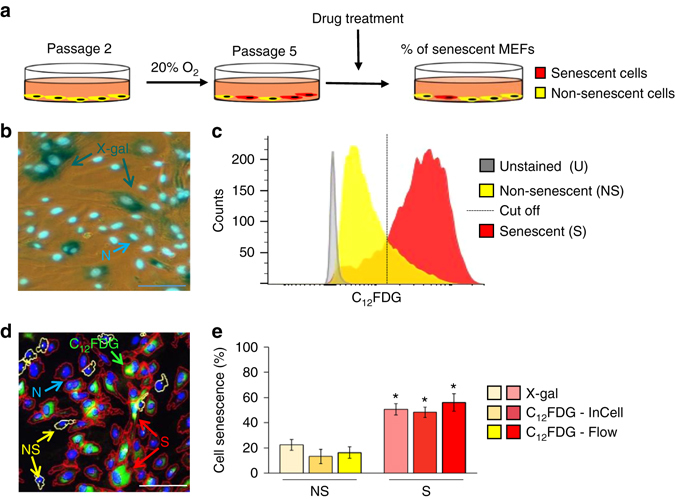
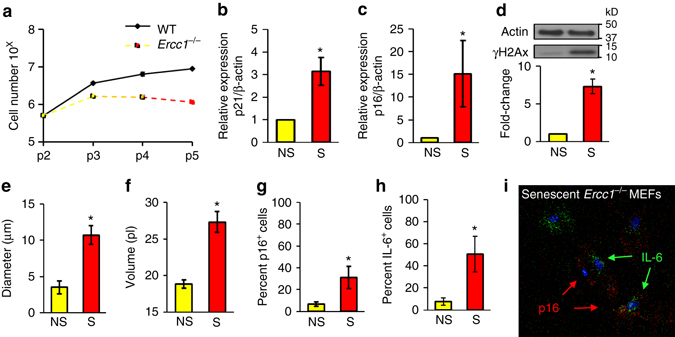
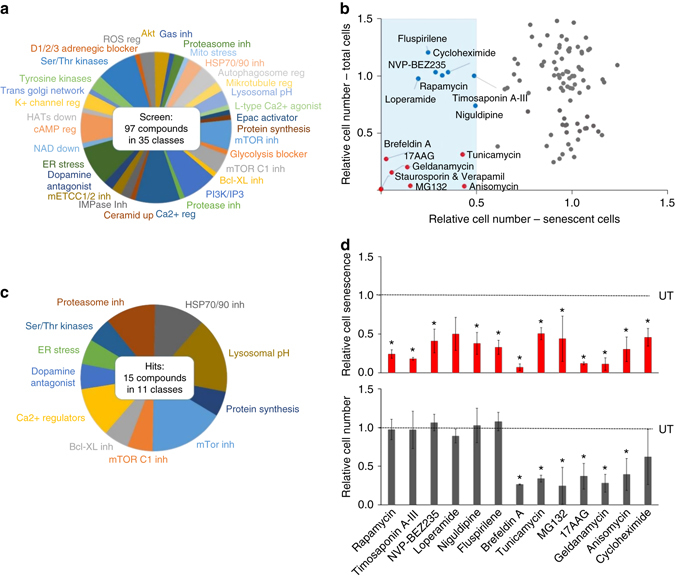
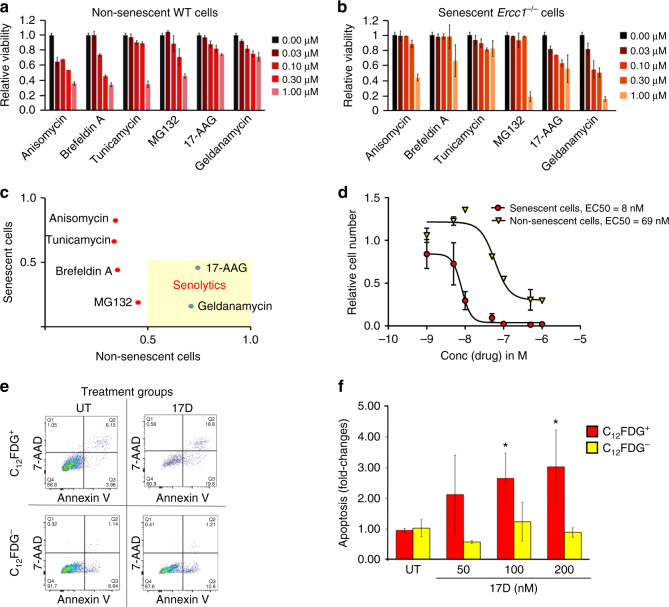
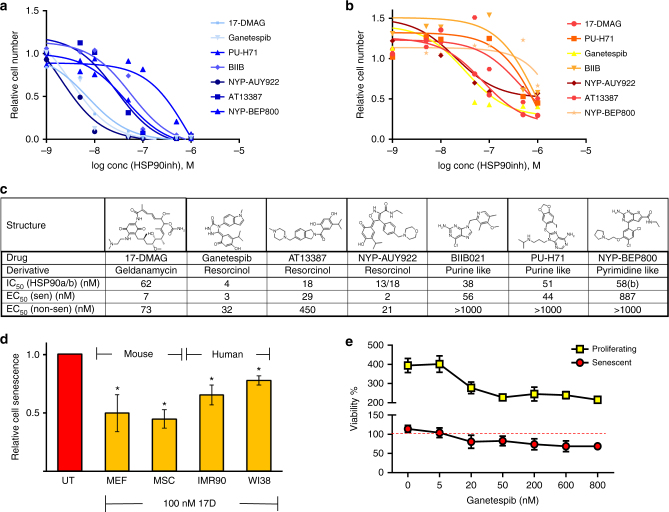
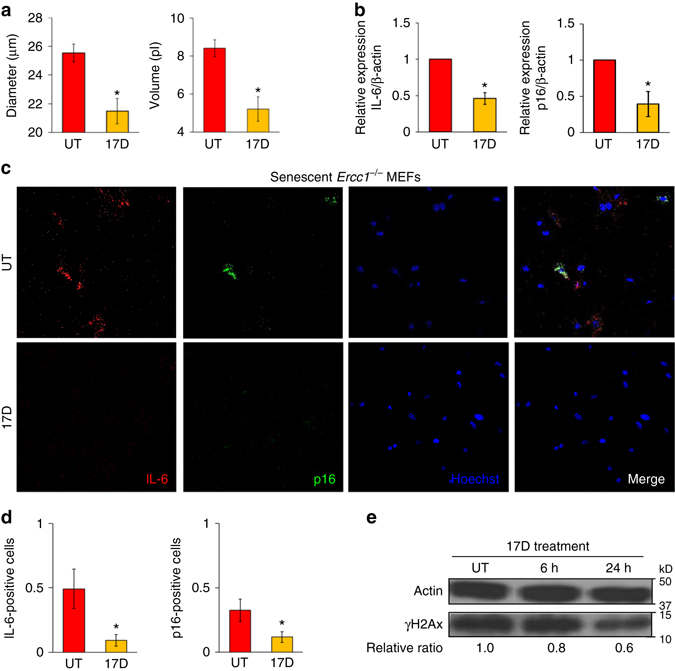
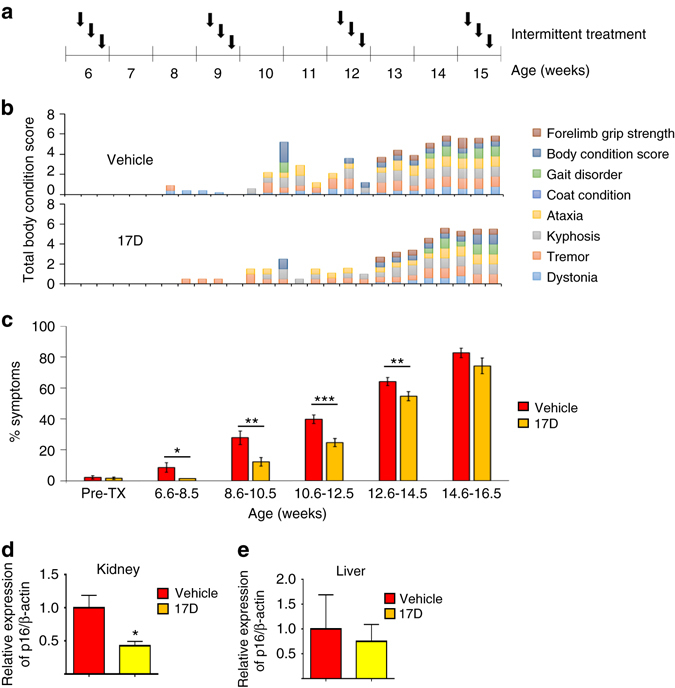
Aging is the main risk factor for many chronic degenerative diseases and cancer. Increased senescent cell burden in various tissues is a major contributor to aging and age-related diseases. Recently, a new class of drugs termed senolytics were demonstrated to extending healthspan, reducing frailty and improving stem cell function in multiple murine models of aging. To identify novel and more optimal senotherapeutic drugs and combinations, we established a senescence associated β-galactosidase assay as a screening platform to rapidly identify drugs that specifically affect senescent cells. We used primary Ercc1 −/− murine embryonic fibroblasts with reduced DNA repair capacity, which senesce rapidly if grown at atmospheric oxygen. This platform was used to screen a small library of compounds that regulate autophagy, identifying two inhibitors of the HSP90 chaperone family as having significant senolytic activity in mouse and human cells. Treatment of Ercc1 −/∆ mice, a mouse model of a human progeroid syndrome, with the HSP90 inhibitor 17-DMAG extended healthspan, delayed the onset of several age-related symptoms and reduced p16 INK4a expression. These results demonstrate the utility of our screening platform to identify senotherapeutic agents as well as identified HSP90 inhibitors as a promising new class of senolytic drugs.
Overview
The claims and statistics of this paper haven’t been checked yet.
Free: it reads the open-access text and checks the first 5 claims that cite a source we can check. Create a free account to check every claim.
Integrity signals
Registry
Cites
Statistics
Figures
Verification
Claims the paper makes
The claims and statistics of this paper haven’t been checked yet.
Free: it reads the open-access text and checks the first 5 claims that cite a source we can check. Create a free account to check every claim.
Claims other papers make about this one
Each is checked against this paper’s own text: does it say what the citing paper says it does?
The source backs part of the claim, not all of it — or backs it for a different population, condition or comparison.
In the citing paper
“Through upregulation of pro-survival and antiapoptotic pathways such as SRC kinases, the PI3K-AKT signaling pathway, heat shock protein (HSP) pathways, serpines, mitochondrial pathways or apoptosis regulator BCL-2-related proteins, those senescent cells with a proapoptotic SASP can survive, despite the cytotoxic microenvironment they create6,7,14,34,35,54–58.”
From Cellular senescence and senolytics: the path to the clinic (2022) · cites this paper as [54]
Experimental — accuracy not yet measuredThe source backs part of the claim, not all of it — or backs it for a different population, condition or comparison.
In the citing paper
“HSP90 prevents proteasomal degradation of AKT, hence inhibiting HSP90 disables pro-survival signaling through this SCAP node and results in elimination of some senescent cell types54.”
From Cellular senescence and senolytics: the path to the clinic (2022) · cites this paper as [54]
Experimental — accuracy not yet measuredThe source backs part of the claim, not all of it — or backs it for a different population, condition or comparison.
In the citing paper
“Senomorphics are aimed largely at suppressing the SASP and thereby inflammation.”
From Senolytic Drugs: Reducing Senescent Cell Viability to Extend Health Span (2021) · cites this paper as [20]
Experimental — accuracy not yet measuredThe source backs part of the claim, not all of it — or backs it for a different population, condition or comparison.
In the citing paper
“Additionally, SASP establishment and the secretion of SASP factors can be modulated by inhibiting HSP90 (REFS214,249).”
From Cellular senescence in ageing: from mechanisms to therapeutic opportunities (2021) · cites this paper as [214]
Experimental — accuracy not yet measuredThe source backs part of the claim, not all of it — or backs it for a different population, condition or comparison.
In the citing paper
“even eliminating only 30% of senescent cells can be sufficient to alleviate dysfunction in preclinical studies [3,5,7,9,23,24,28,[32], [33], [34], [35], [36], [37]]”
From Senolytics decrease senescent cells in humans: Preliminary report from a clinical trial of Dasatinib plus Quercetin in individuals with diabetic kidney disease (2019) · cites this paper as [37]
Experimental — accuracy not yet measured
19 more claims about this paper
Create a free account to see every claim other papers make about this one.
Self-check
Percentages, sums and reported differences re-computed from the paper’s own numbers.
The self-check needs the paper’s full text.
Citations
Cites
Zhang, J.-H., Chung, T. D. Y., & Oldenburg, K. R. (1999) · SLAS Discovery · doi:10.1177/108705719900400206 · Cited by 6,847
Clearance of p16Ink4a-positive senescent cells delays ageing-associated disorders
Baker, D. J., Wijshake, T., Tchkonia, T., LeBrasseur, N. K., Childs, B. G., van de Sluis, B., Kirkland, J. L., & van Deursen, J. M. (2011) · Nature · doi:10.1038/nature10600 · Cited by 3,670
Self-citationNaturally occurring p16Ink4a-positive cells shorten healthy lifespan
Baker, D. J., Childs, B. G., Durik, M., Wijers, M. E., Sieben, C. J., Zhong, J., A. Saltness, R., Jeganathan, K. B., Verzosa, G. C., Pezeshki, A., et al. (2016) · Nature · doi:10.1038/nature16932 · Cited by 2,876
Cellular senescence: from physiology to pathology
Muñoz-Espín, D., & Serrano, M. (2014) · Nature Reviews Molecular Cell Biology · doi:10.1038/nrm3823 · Cited by 2,818
The role of senescent cells in ageing
van Deursen, J. M. (2014) · Nature · doi:10.1038/nature13193 · Cited by 2,623 · cited 1×
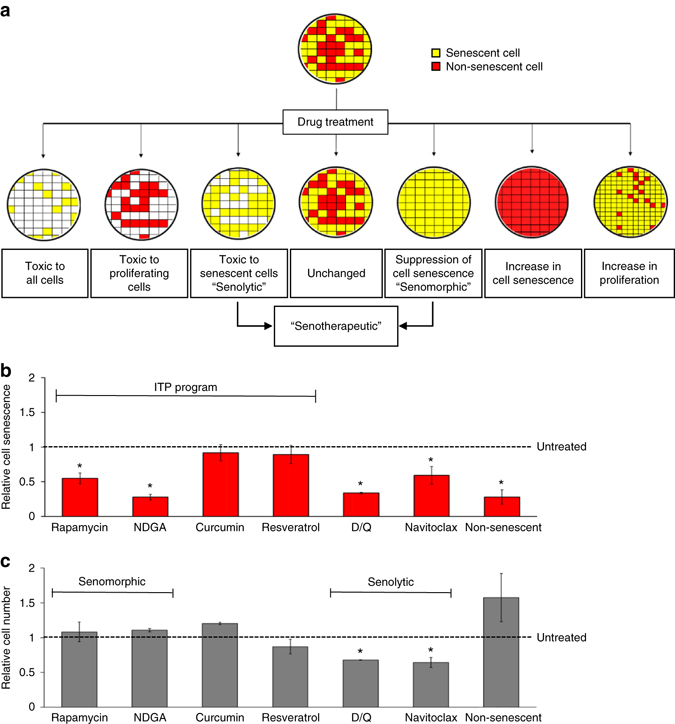
“A reduction in the ratio of senescent to non-senescent cells could be achieved by three drug activities: (1) specifically killing senescent cells, termed senolytics29, (2) suppressing cell senescence phenotypes, termed senomorphics, or (3) increasing proliferation of the non-senescent cells.”
BackgroundThe Achilles' heel of senescent cells: from transcriptome to senolytic drugs
Zhu, Y., Tchkonia, T., Pirtskhalava, T., Gower, A. C., Ding, H., Giorgadze, N., Palmer, A. K., Ikeno, Y., Hubbard, G. B., Lenburg, M., et al. (2015) · Aging Cell · doi:10.1111/acel.12344 · Cited by 2,584
Self-citationCellular senescence in aging and age-related disease: from mechanisms to therapy
Childs, B. G., Durik, M., Baker, D. J., & van Deursen, J. M. (2015) · Nature Medicine · doi:10.1038/nm.4000 · Cited by 2,363
Persistent DNA damage signalling triggers senescence-associated inflammatory cytokine secretion
Rodier, F., Coppé, J.-P., Patil, C. K., Hoeijmakers, W. A. M., Muñoz, D. P., Raza, S. R., Freund, A., Campeau, E., Davalos, A. R., & Campisi, J. (2009) · Nature Cell Biology · doi:10.1038/ncb1909 · Cited by 2,232
Clearance of senescent cells by ABT263 rejuvenates aged hematopoietic stem cells in mice
Chang, J., Wang, Y., Shao, L., Laberge, R.-M., Demaria, M., Campisi, J., Janakiraman, K., Sharpless, N. E., Ding, S., Feng, W., et al. (2016) · Nature Medicine · doi:10.1038/nm.4010 · Cited by 1,819
HSP90 at the hub of protein homeostasis: emerging mechanistic insights
Taipale, M., Jarosz, D. F., & Lindquist, S. (2010) · Nature Reviews Molecular Cell Biology · doi:10.1038/nrm2918 · Cited by 1,818
Cited by
Items 401–500 of 745
Senescent cells in the brain and where to find them
Rachmian, N., & Krizhanovsky, V. (2022) · FEBS Journal · doi:10.1111/febs.16649 · Cited by 20
Senescent macrophages in cancer: roles in tumor progression and treatment opportunities
Wang, T., Liu, C. X., Hu, X., Yang, N., & Qiu, C. (2025) · Cancer Biology and Medicine · doi:10.20892/j.issn.2095-3941.2024.0589 · Cited by 24
“Second-generation senolytics are being developed through high-throughput screening and other methods 196 .”
Translating cellular senescence research into clinical practice for metabolic disease
Chaib, S., Palmer, A. K., Wyles, S. P., Musi, N., Kirkland, J. L., & Tchkonia, T. (2025) · Nature Reviews Endocrinology · doi:10.1038/s41574-025-01187-9 · Cited by 19
“Heat shock protein 90 (HSP90) inhibitors have been identified as senolytic compounds against some senescent cells 137 .”
Self-citationElectrophilic compound screening identifies GPX4-dependent ferroptosis as a senescence vulnerability
D’Ambrosio, M., White, M. E. H., Gavriil, E.-S., Bousset, L., Birch, J., Gruevska, A., Pasquini, E., Colucci, M., Fong, W., Mosole, S., et al. (2026) · Nature Cell Biology · doi:10.1038/s41556-026-01921-z · Cited by 17
Banerjee, P., Gaddam, N., Pandita, T. K., & Chakraborty, S. (2023) · International Journal of Molecular Sciences · doi:10.3390/ijms24032877 · Cited by 21
Carpenter, V. J., Patel, B. B., Autorino, R., Smith, S. C., Gewirtz, D. A., & Saleh, T. (2020) · Biochimica et Biophysica Acta (BBA) - Reviews on Cancer · doi:10.1016/j.bbcan.2020.188424 · Cited by 18
de Godoy, M. C. X., Macedo, J. A., & Gambero, A. (2024) · Pharmaceuticals · doi:10.3390/ph17010070 · Cited by 18
Targeting senescent cells in atherosclerosis: Pathways to novel therapies
Tian, Y., Shao, S., Feng, H., Zeng, R., Li, S., & Zhang, Q. (2024) · Ageing Research Reviews · doi:10.1016/j.arr.2024.102502 · Cited by 16
Novel biological strategies to enhance the radiation therapeutic ratio
Kim, J. H., Jenrow, K. A., & Brown, S. L. (2018) · Radiation Oncology Journal · doi:10.3857/roj.2018.00332 · Cited by 17
“Multiple pharmacological strategies are under investigation to remove senescent cells from non-genetically modified animals, using so-called ‘senolytic agents’, including small molecules, peptides, and antibodies with varying degrees of success [78,79].”
BackgroundBarrera-Vázquez, O. S., Magos-Guerrero, G. A., Escobar-Ramírez, J. L., & Gómez-Verján, J. C. (2022) · Medicinal Chemistry · doi:10.2174/1573406419666221019153537 · Cited by 16
Recent Advances in Senolysis for Age-Related Diseases
Aratani, S., & Nakanishi, M. (2023) · Physiology · doi:10.1152/physiol.00003.2023 · Cited by 19
Analysis of serum Hsp90 as a potential biomarker of β cell autoimmunity in type 1 diabetes
Ocaña, G. J., Sims, E. K., Watkins, R. A., Ragg, S., Mather, K. J., Oram, R. A., Mirmira, R. G., DiMeglio, L. A., Blum, J. S., & Evans‐Molina, C. (2019) · PLoS ONE · doi:10.1371/journal.pone.0208456 · Cited by 18
Fraile‐Μartinez, O., León-Oliva, D. D., Boaru, D. L., Castro-Martinez, P. D., Montero, C. G., Barrena-Blázquez, S., García-García, J., García‐Honduvilla, N., Álvarez‐Mon, M., López-González, L., et al. (2024) · Frontiers in Genetics · doi:10.3389/fgene.2024.1345459 · Cited by 17
The Quest for Eternal Youth: Hallmarks of Aging and Rejuvenating Therapeutic Strategies
Nunkoo, V. S., Cristian, A., Jurcău, A., Diaconu, R. G., & Jurcău, M. C. (2024) · Biomedicines · doi:10.3390/biomedicines12112540 · Cited by 19
Blagosklonny, M. V. (2018) · Aging · doi:10.18632/aging.101750 · Cited by 17
“Nevertheless, targeting senescent cells has been shown in animal models to prevent such age-related pathologies as emphysema [12], lung fibrosis [13-15], atherosclerosis [16, 17], osteoporosis [18], osteoarthritis [19-20], renal disease [21], intervertebral disk pathology [2], hepatic steatosis [22] and other age-rela…”
BackgroundTherapy resistance: Modulating evolutionarily conserved heat shock protein machinery in cancer
Skrabalak, I., Rajtak, A., Małachowska, B., Skrzypczak, N., Skalina, K. A., Guha, C., Kotarski, J., & Okła, K. (2025) · Cancer Letters · doi:10.1016/j.canlet.2025.217571 · Cited by 18
Insights into the therapeutic strategies for aging and aging-associated diseases
Dong, R., Wu, Q., Kan, J., Fu, C., Sorrentino, V., Chow, A., Lei, Y., Wu, D., Xu, Z., Du, J., et al. (2026) · Signal Transduction and Targeted Therapy · doi:10.1038/s41392-026-02662-z · Cited by 17
Inhibitor PF-04691502 works as a senolytic to regulate cellular senescence
Fan, Z., Tong, Y., Yang, Z., Wang, S., Huang, T., Yang, D., Ni, Q., Zhang, M., Li, D., Yang, M., et al. (2024) · Experimental Gerontology · doi:10.1016/j.exger.2024.112359 · Cited by 14
Podocyte senescence: from molecular mechanisms to therapeutics
Zhao, Q., Huang, Y., Fu, N., Cui, C., Peng, X., Kang, H., Xiao, J., & Ke, G. (2024) · Renal Failure · doi:10.1080/0886022x.2024.2398712 · Cited by 15
“…to their detachment and loss [38]. in terms of SASP regulation, the establishment and secretion of SASP factors can be modulated by inhibiting heat shock protein 90, a ubiquitously expressed molecular chaperone that plays an important role in protein stabilization and degradation [40,41].”
Wnuk, M., Sol‐Fernández, S. D., Błoniarz, D., Słaby, J., Szmatoła, T., Żebrowski, M., Martínez‐Vicente, P., Litwinienko, G., Moros, M., & Lewińska, A. (2024) · ACS Biomaterials Science & Engineering · doi:10.1021/acsbiomaterials.4c00771 · Cited by 14
Wu, J., Liu, X., Liu, Y., Su, W., & Zhuo, Y. (2025) · Bioengineering · doi:10.3390/bioengineering12060563 · Cited by 15
Birkisdóttir, M. B., van Galen, I., Brandt, R. M. C., Barnhoorn, S., van Vliet, N., van Dijk, C., Nagarajah, B., Imholz, S., van Oostrom, C. T., Reiling, E., et al. (2022) · Frontiers in Aging · doi:10.3389/fragi.2022.1005322 · Cited by 16
“, senolytic drugs or stem cell transplantation have shown some tissue-specific benefits in the mice, none have successfully extended lifespan (Lavasani et al., 2012; Baar et al., 2017; Fuhrmann-Stroissnigg et al., 2017; Kim et al., 2020).”
BackgroundAgeing-associated phenotypes in mice
Xie, K., & Ehninger, D. (2023) · Mechanisms of Ageing and Development · doi:10.1016/j.mad.2023.111852 · Cited by 14
Wu, W.-C., Liu, Y., Liao, Y.-H., Hsu, K., Lien, S.-T., Chen, I., Lai, M.-J., Li, Y., Pan, S., Chen, M.-C., et al. (2020) · European Journal of Medicinal Chemistry · doi:10.1016/j.ejmech.2020.112540 · Cited by 14
Aman, Y., Erinjeri, A. P., Tataridas-Pallas, N., Williams, R., Wellman, R., Chapman, H., & Labbadia, J. P. (2022) · Cell Reports · doi:10.1016/j.celrep.2022.111690 · Cited by 14
Han, J., Geng, L., Lu, C., Zhou, J., Li, Y., Ming, T., Zhang, Z., & Su, X. (2023) · Food & Function · doi:10.1039/d2fo03672j · Cited by 15
Translation of Cellular Senescence to Novel Therapeutics: Insights From Alternative Tools and Models
Inci, N., Kamali, D., Akyildiz, E. O., Tahir Turanli, E., & Bozaykut, P. (2022) · Frontiers in Aging · doi:10.3389/fragi.2022.828058 · Cited by 13
Matsubayashi, S., Ito, S., Araya, J., & Kuwano, K. (2023) · Frontiers in Endocrinology · doi:10.3389/fendo.2023.1079626 · Cited by 15
“Other compounds, such as cardiac glycosides (ouabain) and HSP90 inhibitors (geldanamycin derivatives) also exhibit senolytic activity (41, 42).”
BackgroundSkeletal phenotypes and molecular mechanisms in aging mice
Guan, Q., 上海体育大学运动健康学院, 上. 2., Zhang, Y., Wang, Z., Liu, X.-H., Zou, J., & Zhang, L.-L. (2024) · 动物学研究 · doi:10.24272/j.issn.2095-8137.2023.397 · Cited by 14
Jiang, N., Gelfond, J., Liu, Q., Strong, R., & Nelson, J. F. (2024) · GeroScience · doi:10.1007/s11357-024-01161-9 · Cited by 13
“17-DMAG treatment can also reduce senescent cell burden and prolong health span in a premature aging mice model [29].”
BackgroundGonzález, I., & Maldonado‐Agurto, R. (2025) · The Journal of Physiology · doi:10.1113/jp287387 · Cited by 15
“…can potentially enhance healthspan and alleviate age-related pathologies such as cardiovascular disease, Alzheimer’s disease, osteoarthritis, diabetes, macular degeneration, chronic obstructive pulmonary disease and cancer (Fuhrmann-Stroissnigg et al., 2017; Xu et al., 2018; Zhang et al., 2023).”
Mazzone, V., Alessio, N., Aprile, D., Galano, G., Rosa, R. D., Schiraldi, C., Bernardo, G. D., & Galderisi, U. (2025) · Stem Cell Research & Therapy · doi:10.1186/s13287-025-04310-9 · Cited by 14
“Robbins and colleagues developed a procedure to discriminate between senolytics and senomorphics activity of compounds [34].”
Polyunsaturated lipid senolytics exploit a ferroptotic vulnerability in senescent cells
Zhang, L. J., Salekeen, R., Soto-Palma, C., Elsallabi, O., Ye, H., Hughes, B., Zhang, B., Nunes, A., Lee, K.-A., Xu, W., et al. (2026) · Cell Press Blue · doi:10.1016/j.cpblue.2026.100004 · Cited by 15
Self-citationShyu, Y., Liao, P.-C., Huang, T., Yang, C., Lu, M., Huang, S., Lin, X., Liou, C., Kao, Y.-J., Lu, C.-H., et al. (2022) · Advanced Science · doi:10.1002/advs.202201409 · Cited by 16
Antioxidants prevent particulate matter-induced senescence of lung fibroblasts
Jin, S., Yoon, S.-J., Jung, N.-Y., Lee, W. S., Jeong, J., Park, Y., Kim, W., Oh, D., & Seo, J. (2023) · Heliyon · doi:10.1016/j.heliyon.2023.e14179 · Cited by 13
Translating Senotherapeutic Interventions into the Clinic with Emerging Proteomic Technologies
Dey, A. K., Banarjee, R., Boroumand, M., Rutherford, D. V., Strassheim, Q., Nyunt, T., Olinger, B., & Basisty, N. (2023) · Biology · doi:10.3390/biology12101301 · Cited by 14
Update of cellular senescence in kidney fibrosis: from mechanism to potential interventions
Yang, L., Ma, L., Fu, P., & Nie, J. (2025) · Frontiers of Medicine · doi:10.1007/s11684-024-1117-z · Cited by 13
Marine phycocompound screening reveals a potential source of novel senotherapeutics
Salekeen, R., Barua, J., Shaha, P. R., Islam, K. M. D., Islam, M. E., Billah, M. M., & Rahman, S. M. M. (2021) · Journal of Biomolecular Structure and Dynamics · doi:10.1080/07391102.2021.1877822 · Cited by 12
“They are well established for their roles in modulating Mdm2, Bcl-2, HSP and HIF-1 family proteins (Fuhrmann-Stroissnigg et al., 2017; Kirkland & Tchkonia, 2020; Li et al., 2019).”
BackgroundBalistreri, C. R., Madonna, R., & Ferdinandy, P. (2021) · Current Research in Pharmacology and Drug Discovery · doi:10.1016/j.crphar.2021.100027 · Cited by 13
Seno-suppressive molecules as new therapeutic perspectives in rheumatic diseases
Tachikart, Y., Malaise, O., Mumme, M., Jørgensen, C., & Brondello, J. (2019) · Biochemical Pharmacology · doi:10.1016/j.bcp.2019.03.017 · Cited by 12
Treating Senescence like Cancer: Novel Perspectives in Senotherapy of Chronic Diseases
Mongelli, A., Atlante, S., Barbi, V., Bachetti, T., Martelli, F., Farsetti, A., & Gaetano, C. (2020) · International Journal of Molecular Sciences · doi:10.3390/ijms21217984 · Cited by 13
“In mouse kidney, the effect of HSP90 inhibitors determined the reduction of the age-related marker p16INK4A [85].”
BackgroundInfluentialTargeted delivery strategy: A beneficial partner for emerging senotherapy
Zhang, Q., Li, S., Chen, F., Zeng, R., & Tong, R. (2022) · Biomedicine & Pharmacotherapy · doi:10.1016/j.biopha.2022.113737 · Cited by 15
Shang, D., Li, Z., Tan, X., Liu, H., & Tu, Z. (2023) · Fundamental and Clinical Pharmacology · doi:10.1111/fcp.12863 · Cited by 12
“developed a new screening platform for screening compounds with antiaging activities, and found that HSP90 inhibitors have significant antiaging activities and are expected to be developed as novel antiaging drugs [71].”
BackgroundMistry, J. J., Young, K. A., Díaz, P. A. C., Fernández-Maestre, I., Levine, R. L., & Trowbridge, J. J. (2024) · bioRxiv (Cold Spring Harbor Laboratory) · doi:10.1101/2024.03.28.587254 · Cited by 12
“New senolytics continue to be identified using high-throughput library screens and other approaches( 45 ), and intermittent administration appears as effective as continuous treatment for depleting senescent cells( 46 ).”
BackgroundAnerillas, C., Altés, G., Gresova, K., Tsitsipatis, D., Mazan-Mamczarz, K., Banarjee, R., Cunningham, A. S. G., Salamini-Montemurri, M., Yang, J.-H., Munk, R., et al. (2026) · Molecular Cell · doi:10.1016/j.molcel.2026.05.017 · Cited by 11
Senescence- and Immunity-Related Changes in the Central Nervous System: A Comprehensive Review
Feng, H., Li, J., Wang, H., Wei, Z., & Feng, S. (2024) · Aging and Disease · doi:10.14336/ad.2024.0755 · Cited by 11
Aging and Aging-Related Senescence in Liver
Ganguly, S., Sakane, S., Hokutan, K., Zhang, V., Miciano, C., Wang, A., Brenner, D. A., & Kisseleva, T. (2025) · Seminars in Liver Disease · doi:10.1055/a-2637-2549 · Cited by 14
Singh, I., & Singh, A. K. (2025) · Molecular Neurobiology · doi:10.1007/s12035-025-05504-1 · Cited by 11
Targeted Therapeutics Delivery by Exploiting Biophysical Properties of Senescent Cells
Low, J., Chan, B., & Tay, A. K. P. (2021) · Advanced Functional Materials · doi:10.1002/adfm.202107990 · Cited by 11
Olascoaga, S., Gutiérrez, H., Königsberg, M., Pérez‐Villanueva, J., & López‐Díazguerrero, N. E. (2022) · Biogerontology · doi:10.1007/s10522-022-09974-x · Cited by 13
Alexa‐Stratulat, T., Tanasa, M. P., Cianga, V. A., & Antoniu, S. A. (2022) · Expert Review of Anticancer Therapy · doi:10.1080/14737140.2022.2139242 · Cited by 13
The Discovery of Druggable Anti-aging Agents
Yalcin, G., & Lee, C. (2020) · Annals of Geriatric Medicine and Research · doi:10.4235/agmr.20.0092 · Cited by 12
Current strategies for senescence treatment: Focused on theranostic performance of nanomaterials
Cong, Y., Li, X., & Hong, H. (2025) · Journal of Controlled Release · doi:10.1016/j.jconrel.2025.113710 · Cited by 10
Self-citationPolzer, O., Kinloch, E., & Fitzsimons, C. P. (2025) · Aging Brain · doi:10.1016/j.nbas.2025.100141 · Cited by 11
“Moreover, heat shock protein 90 (Hsp90) is over-active in senescent cells, which increases the stability of active, phosphorylated AKT [43,99].”
Liu, W., Fan, B., Fang, T., Li, H., Zhang, J., Liu, B., & Liu, Z. (2025) · Acta Pharmaceutica Sinica B · doi:10.1016/j.apsb.2025.08.010 · Cited by 11
“Subsequently, multiple senolytics, such as navitoclax (2016) 32 , 17-DMAG (2017) 33 , fisetin (2018) 34 , EF24 (2019) 35 , Cardiac Glycosides (2019) 36 were screened based on this method.”
Cellular senescence as a therapeutic target for aging intervention
Bi, Y., & Ji, G. (2026) · Biomedical Journal · doi:10.1016/j.bj.2026.100948 · Cited by 11
Kasavi, C. (2023) · OMICS A Journal of Integrative Biology · doi:10.1089/omi.2023.0066 · Cited by 11
“HSP90 inhibitors have senolytic activity, and senolytic drugs may hold promise for the treatment of age-related diseases or conditions associated with the burden of senescent cells (Fuhrmann-Stroissnigg et al., 2017).”
Cellular Senescence and Senolytic Agents: Recent Updates on Their Role and Applications
Chandrakar, L., Ambatwar, R., & Khatik, G. L. (2023) · Current Topics in Medicinal Chemistry · doi:10.2174/0115680266273698231107110956 · Cited by 11
Chen, P., Wang, Y., & Zhou, B. (2024) · Mechanisms of Ageing and Development · doi:10.1016/j.mad.2024.111918 · Cited by 13
The role of heat shock protein 90 in idiopathic pulmonary fibrosis: state of the art
Monteleone, G., Cameli, P., & Bonella, F. (2025) · European Respiratory Review · doi:10.1183/16000617.0147-2024 · Cited by 10
“Overall, HSP 90 acts as an AKT stabiliser, blocking apoptosis and prolonging cell survival [68, 69].”
Rothmiller, S., Jäger, N., Meier, N., Meyer, T., Neu, A., Steinritz, D., Thiermann, H., Scherer, M. A., Rummel, C., Mangerich, A., et al. (2021) · Archives of Toxicology · doi:10.1007/s00204-020-02946-5 · Cited by 13
“2017); and 17-DMAG is a HSP90 inhibitor (Fuhrmann-Stroissnigg et al. 2017).”
BackgroundPerspectives on using bacteriophages in biogerontology research and interventions
Gierlicka, I., Rattan, S. I. S., & Wnuk, M. (2022) · Chemico-Biological Interactions · doi:10.1016/j.cbi.2022.110098 · Cited by 10
Türkoğlu, B., & Mansuroğlu, B. (2024) · Life · doi:10.3390/life14091070 · Cited by 10
Sax, S. L., Centomo, M. L., Centofanti, F., Rizzacasa, B., Cox, S., Cox, C., Latini, A., D’Apice, M. R., Mannucci, L., Novelli, G., et al. (2024) · International Journal of Molecular Sciences · doi:10.3390/ijms252111652 · Cited by 9
Design and optimization of piperlongumine analogs as potent senolytics
Zhang, X., He, Y., Liu, X., Zhang, X., Shi, P., Wang, Y., Zhou, D., & Zheng, G. (2023) · Bioorganic & Medicinal Chemistry Letters · doi:10.1016/j.bmcl.2023.129593 · Cited by 9
Pan, Q., Ye, Z., Ye, Z., Zhang, H., Wang, J., Yi, G., Li, Z., Xu, R., Wang, L., Wu, Z., et al. (2025) · BMEMat · doi:10.1002/bmm2.12137 · Cited by 11
New Insights Into Heat Shock Protein 90 in the Pathogenesis of Pulmonary Arterial Hypertension
Hu, L., Zhao, R., Liu, Q., & Li, Q. (2020) · Frontiers in Physiology · doi:10.3389/fphys.2020.01081 · Cited by 10
Senotherapeutic Drugs: A New Avenue for Skincare?
Lee, B. P., & Harries, L. W. (2021) · Plastic & Reconstructive Surgery · doi:10.1097/prs.0000000000008782 · Cited by 9
Franceschi, C., Capri, M., Garagnani, P., Ostan, R., Santoro, A., Monti, D., & Salvioli, S. (2017) · Springer eBooks · doi:10.1007/978-3-319-64597-1_45-1 · Cited by 11
In vitro and in vivo toxicity assessment of the senotherapeutic Peptide 14
Zonari, A. A. C., Brace, L. E., Alencar‐Silva, T., Porto, W. F., Foyt, D. A., Guiang, M., Cruz, E. A. O., Franco, O. L., Oliveira, C. R., Boroni, M., et al. (2022) · Toxicology Reports · doi:10.1016/j.toxrep.2022.07.018 · Cited by 9
“Senotherapeutic compounds are defined as molecules that reduce cellular senescence either by suppressing such a cellular state or selectively eliminating senescent cells [1].”
BackgroundHioki, T., Tokuda, H., Nakashima, D., Fujita, K., Kawabata, T., Sakai, G., Kim, W. Y., Tachi, J., Tanabe, K., Matsushima‐Nishiwaki, R., et al. (2020) · Cell Biochemistry and Function · doi:10.1002/cbf.3566 · Cited by 9
“Although HSP90 inhibitors have been developed as anticancer agents, these inhibitors are also proposed to represent a novel class of senolytics against aging.(49) Considering our results presented here and elsewhere, HSP90 inhibitors may comprise a novel class of drugs for the treatment of metabolic bone dysfunction i…”
BackgroundIdentification of a Proteomic Signature of Senescence in Primary Human Mammary Epithelial Cells
Delfarah, A., Hartel, N. G., Zheng, D., Yang, J., & Graham, N. A. (2021) · Journal of Proteome Research · doi:10.1021/acs.jproteome.1c00659 · Cited by 8
Rademacher, D. J., Exline, J. E., & Foecking, E. M. (2025) · Biomedicines · doi:10.3390/biomedicines13061400 · Cited by 10
“Geldanamycin, tanespinmycin, and 17-dimethylaminoethylamino ( 17-DMAG 17-DMAG ) are examples of heat shock protein 90 ( HSP90 ) inhibitors [ 282] that produce a senolytic”
The drug discovery and therapeutic nano-strategies targeting cellular senescence
Wang, Y., Liu, M., Chen, X., Wang, S., Li, J., Sun, Y., Zheng, X., Zhang, J.-X., & Li, H. (2025) · Materials Today Bio · doi:10.1016/j.mtbio.2025.102480 · Cited by 13
Senotoxins target senescence via lipid binding specificity, ion imbalance and lipidome remodeling
Moral‐Sanz, J., Fernández‐Carrasco, I., Ramponi, V., Garrido, A., Karbat, I., Cabezas‐Sainz, P., Rivera‐de‐Torre, E., Elsallabi, O., Martín-Hernández, R., López-Aceituno, J. L., et al. (2026) · Nature Aging · doi:10.1038/s43587-025-01030-w · Cited by 8
“StnIG was evaluated in senescent IMR90 cells over a 60-h treatment period using the fluorogenic dye C 12 FDG to stain for SA-β-gal activity 57 .”
Self-citationPatel, H. A., Wang, J., Zinn, C. J., Learmonth, M., Bian, X., Jurk, D., Lerman, L. O., Wolfram, J., & Hickson, L. J. (2026) · Kidney International · doi:10.1016/j.kint.2025.10.019 · Cited by 13
Yingsunthonwattana, W., Sangsuriya, P., Supungul, P., & Tassanakajon, A. (2024) · Fish & Shellfish Immunology · doi:10.1016/j.fsi.2024.109695 · Cited by 8
Senotherapy preserves resilience in aging
Mikawa, T., Yoshida, K., & Kondoh, H. (2024) · Geriatrics and gerontology international/Geriatrics & gerontology international · doi:10.1111/ggi.14949 · Cited by 9
Yang, L., Wu, W. D., Yang, J., & Xu, M. (2025) · Frontiers in Oncology · doi:10.3389/fonc.2025.1567896 · Cited by 12
“As senolytics, quercetin and fi setin selectively induce apoptosis in senescent cells via inhibition of anti-apoptotic proteins such as Bcl-xL and eEF1A, signi fi cantly reducing SASP burden and tumor-promoting in fl ammation (50, 51).”
Preclinical models of frailty: Focus on interventions and their translational impact: A review
Mishra, M., & Howlett, S. E. (2020) · Nutrition and Healthy Aging · doi:10.3233/nha-200103 · Cited by 8
“As 17-DMAG is a potential senolytic drug [96], these findings suggest that senolytic drugs may attenuate frailty.”
BackgroundMethodHAN, Y., Wu, Y., He, B., Wu, D., Hua, J.-L., Qian, H., & Zhang, J. (2023) · Nanoscale Advances · doi:10.1039/d3na00547j · Cited by 8
Mouse models of central nervous system ageing
Heng, Y., Eggen, B. J. L., Boddeke, E., & Kooistra, S. M. (2017) · Drug Discovery Today Disease Models · doi:10.1016/j.ddmod.2018.10.002 · Cited by 9
“fully identified an HSP90 inhibitor, 17-DMAG, which could extend health-span and delay the onset of several age-related symptoms in Ercc1 mice [71].”
BackgroundMatsunaga, T., Roesel, M. J., Schroeter, A., Xiao, Y., Zhou, H., & Tullius, S. G. (2022) · Current Opinion in Organ Transplantation · doi:10.1097/mot.0000000000001019 · Cited by 9
Tachikart, Y., Malaise, O., Constantinides, M., Jørgensen, C., & Brondello, J. (2018) · médecine/sciences · doi:10.1051/medsci/20183406014 · Cited by 9
Chakrabarty, A., Surendran, S., Bhola, N. E., Mishra, V. S., Wani, T. H., Baghel, K. S., Arteaga, C. L., Garg, R., & Chowdhury, G. (2019) · Carcinogenesis · doi:10.1093/carcin/bgz118 · Cited by 8
“Also, recent study demonstrated HSP90 inhibitors capable of eradicating senescent cells (50).”
BackgroundWeigl, M., Krammer, T. L., Pultar, M., Wieser, M., Chaib, S., Suda, M., Diendorfer, A. B., Khamina, K., Giorgadze, N., Pirtskhalava, T., et al. (2024) · bioRxiv (Cold Spring Harbor Laboratory) · doi:10.1101/2024.04.10.588794 · Cited by 8
Self-citationKitaeva, K. V., Solovyeva, V. V., Blatt, N. L., & Rizvanov, A. A. (2024) · International Journal of Molecular Sciences · doi:10.3390/ijms25010643 · Cited by 7
Costa, D. G., Gee, L., Lee, G., Gomez, L. S., Franco, A. C., Vizioli, M. G., Valdivieso, K., Zhang, L. J., Pirius, N., Martini, H., et al. (2026) · EMBO Molecular Medicine · doi:10.1038/s44321-026-00400-0 · Cited by 7
“To this end, we conducted a high-content, senescent cell-based phenotypic screen of a small panel of natural products with reported health bene fi ts on senescent Ercc1 -de fi cient MEFs using SA-beta-gal as a primary endpoint detected by C 12 FDG (Fuhrmann-Stroissnigg et al, 2017; Zhang et al, 2026).”
Self-citationJiang, C., Tuo, Z., Wusiman, D., Wang, J., Yao, H., Cho, W. C., Lyu, Z., Zhang, Q., & Feng, D. (2026) · International Journal of Biological Sciences · doi:10.7150/ijbs.130683 · Cited by 8
“Agents mitigating RT-induced normal-tissue senescence HSP90 inhibitor alvespimycin (17-DMAG) [144, 186]; navitoclax [188] Reduce accumulation/survival of senescent cells in irradiated normal tissues Timing: Organ-protection strategy (peri-RT or early post-RT); widen therapeutic window by reducing…”
Zhang, Y., Chu, J., Hou, Q., Qian, S., Wang, Z., Yang, Q., Song, W., Dong, L., Shi, Z., Gao, Y., et al. (2024) · International Journal of Oncology · doi:10.3892/ijo.2024.5653 · Cited by 7
“Hsp90 inhibitors act as novel senolytic agents (111) that have rapidly developed in preclinical research on lymphomas.”
BackgroundKilili, H., Padilla‐Morales, B., Castillo-Morales, A., Monzón‐Sandoval, J., Díaz-Barba, K., Cornejo‐Páramo, P., Vincze, O., Giraudeau, M., Bush, S. J., Li, Z., et al. (2025) · Scientific Reports · doi:10.1038/s41598-025-98786-3 · Cited by 6
“Life-extending drug target genes were compiled from several studies 81–84 .”
InfluentialKawabata, T., Tokuda, H., Fujita, K., Matsushima‐Nishiwaki, R., Sakai, G., Tachi, J., Hioki, T., Kim, W. Y., Iida, H., Otsuka, T., et al. (2019) · Biomedical Research · doi:10.2220/biomedres.40.169 · Cited by 7
Targeted Senolytic Strategies Based on the Senescent Surfaceome
Ekpenyong‐Akiba, A. E., Poblocka, M., & Macip, S. (2020) · Healthy ageing and longevity · doi:10.1007/978-3-030-44903-2_6 · Cited by 9
Tong, C., Li, J., Lin, W., Cen, W., Zhang, W., Zhu, Z., Lu, B., & Yu, J. (2021) · Experimental and Therapeutic Medicine · doi:10.3892/etm.2021.9672 · Cited by 8
Fucoidans are senotherapeutics that enhance SIRT6-dependent DNA repairPreprint
Robbins, P. D., Zhang, L. J., Elsallabi, O., Soto-Palma, C., Bartz, J., Salekeen, R., Nunes, A., Xu, W., Lee, K., Hughes, B., et al. (2025) · Research Square · doi:10.21203/rs.3.rs-6613032/v1 · Cited by 8
Self-citationLv, X., Yu, Y., Chen, Z., Wang, G., Li, X., Wu, L., Wu, L., Wu, J., Li, J., Guo, Y., et al. (2025) · Sensors and Actuators B Chemical · doi:10.1016/j.snb.2025.138406 · Cited by 6
Self-citationThe Role of Senolytics in Osteoporosis
Chen, E., Zhang, J., Chen, H., & Li, W. (2025) · Biomolecules · doi:10.3390/biom15081176 · Cited by 7
“…of second-generation senolytic strategies, such as lysosomal and senescence-associated β -galactosidase-activated prodrugs and nanoparticles [73,74], apoptosis induction via sodium–potassium pump (Na+/K+-ATPase) modulation [75], SASP inhibition [76], and immune-mediated clearance…”
Senotherapeutics for metabolic disease and diabetic complications
Palmer, A. K., Spinelli, R., Prata, L. G. P. L., Chaib, S., Suda, M., Tchkonia, T., Smith, U., & Kirkland, J. L. (2025) · Journal of Internal Medicine · doi:10.1111/joim.70039 · Cited by 9
Self-citationFueling the fire: metabolic dysfunction and senescence as drivers of lung aging and disease
Kliment, C. R., Gurkar, A. U., Cárdenes, N., Ramonell, R. P., Finkel, T., & Königshoff, M. (2026) · Physiological Reviews · doi:10.1152/physrev.00024.2025 · Cited by 7
Recent Advances in Senotherapeutics Delivery
Choi, J. Y., Yee, S. F., Tchangalova, T., Yang, G., & Fisher, J. P. (2022) · Tissue Engineering Part B Reviews · doi:10.1089/ten.teb.2021.0212 · Cited by 6
Metadata
- Authors
- Fuhrmann-Stroissnigg, H., Ling, Y. Y., Zhao, J., McGowan, S. J., Zhu, Y., Brooks, R. W., Grassi, D., Gregg, S. Q., Stripay, J. L., Dorronsoro, A., Corbo, L., Tang, P., Bukata, C., Ring, N., Giacca, M., Li, X., Tchkonia, T., Kirkland, J. L., Niedernhofer, L. J., & Robbins, P. D.
- Affiliations
- Scripps Research Institute (US)
- University of Pittsburgh (US)
- Mayo Clinic (US)
- International Centre for Genetic Engineering and Biotechnology (IT)
- Corresponding author
- Robbins, Paul D.
- ORCID
- Venue
- Nature Communications
- Published
- 2017-09-04
- Volume
- 8
- Issue
- 1
- Pages
- 422-422
- ISSN
- 2041-1723 (ISSN-L)
- PMC
- PMC5583353
- OpenAlex
- W2752676842
- Semantic Scholar
- 75a2484a24067d78ca91ed40dc971ce24f8eafc4
- Cited by
- 701
- References
- 77
- Citations by year
- 2026: 58 · 2025: 70 · 2024: 94 · 2023: 68 · 2022: 102 · 2021: 95 · 2020: 89 · 2019: 68 · 2018: 49 · 2017: 6
- FWCI
- 42.91
- Type
- journal article
- Language
- en
- Open access
- gold
- doi.org
- Licence
- cc-by
- creativecommons.org/licenses/by/4.0 (tdm)
- creativecommons.org/licenses/by/4.0 (vor)
- Locations
- Nature Communications (publishedVersion, cc-by)
- PubMed Central (publishedVersion, cc-by)
- PubMed (publishedVersion)
- ArTS Archivio della ricerca di Trieste (University of Trieste https://www.units.it/) (submittedVersion, cc-by)
- RePEc: Research Papers in Economics (submittedVersion)
- DOAJ (DOAJ: Directory of Open Access Journals) (submittedVersion, cc-by-sa)
- DOAJ (DOAJ: Directory of Open Access Journals) (submittedVersion)
- Funders
- American Federation for Aging Research
- National Institutes of Health (DK-50456, AG043376, AG13925)
- National Institute on Aging (P01AG043376, R01AG013925, R37AG013925)
- National Institute of Diabetes and Digestive and Kidney Diseases (P30DK050456)
- Topics
- Life Sciences › Biochemistry, Genetics and Molecular Biology › Cell Biology › Telomeres, Telomerase, and Senescence
- Life Sciences › Biochemistry, Genetics and Molecular Biology › Aging › Genetics, Aging, and Longevity in Model Organisms
- Life Sciences › Biochemistry, Genetics and Molecular Biology › Molecular Biology › Heat shock proteins research
- Keywords
- Hsp90 inhibitors, senolytics, cellular senescence, senotherapeutics, aging, autophagy, 17-DMAG, healthspan, progeroid syndromes, p16INK4a, drug screening
- MeSH terms
- Aging, Animals, Autophagy, Biological Assay, DNA-Binding Proteins, Drug Evaluation, Preclinical, Endonucleases, Female, Fibroblasts, Humans, Signal Transduction, Biomarkers, Down-Regulation, Benzoquinones, Cellular Senescence, Apoptosis, HSP90 Heat-Shock Proteins, Phosphatidylinositol 3-Kinases, Lactams, Macrocyclic, Proto-Oncogene Proteins c-akt, Mice, Small Molecule Libraries, Human Umbilical Vein Endothelial Cells
About these checks
Registry, retraction, Cites and statistics results are computed, not judged, with one exception: a printed reference that no index lists is read once by a model before it counts as a citation error. Claims are extracted by a model and kept only when their quote appears verbatim in the text; each cited source is then checked, with a model’s help, for whether it says what the claim relies on. Those verdicts can be wrong — read the claim’s quote and the cited source before relying on one.
Statistics and arithmetic are recomputed, not judged.
Confidence bands are shown only for fields calibrated on our annotated test set. None is calibrated yet, so no band is shown.
What counts as a claim ›How we measure confidence ›How we check this ›
Are you an author, or do you see a problem with this page? Request a review
Data sources
Bibliographic data: Semantic Scholar, OpenAlex, Crossref.
Contains information from the Semantic Scholar Academic Graph Datasets, made available under the ODC Attribution License (ODC-BY 1.0).
Semantic Scholar’s data is described in: Kinney, R., et al. (2023). The Semantic Scholar Open Data Platform. arXiv:2301.10140.
