

Identification of HSP90 inhibitors as a novel class of senolytics
Open accessThe DOI matches its Crossref record; 77 of the 77 references it cites were found in a registry or an index.
Abstract
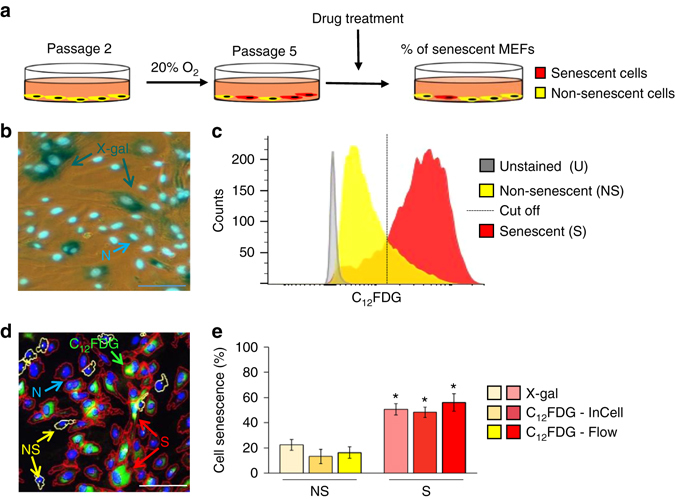
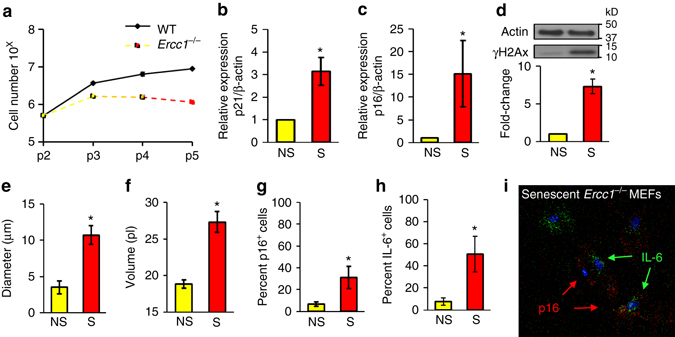
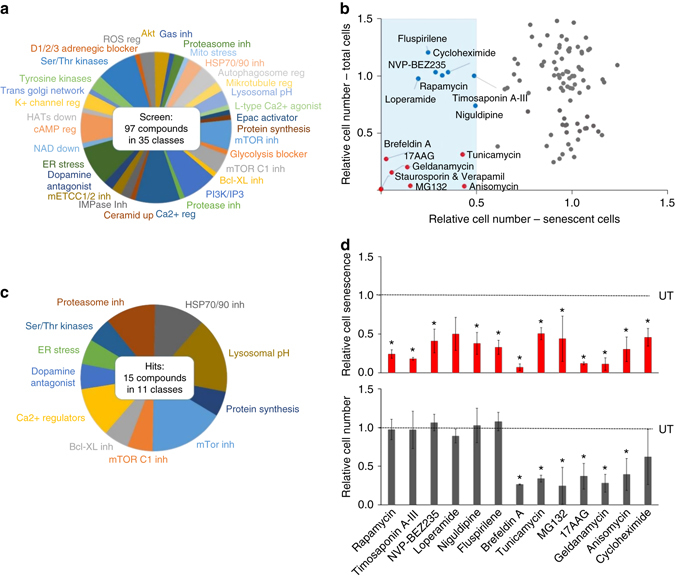
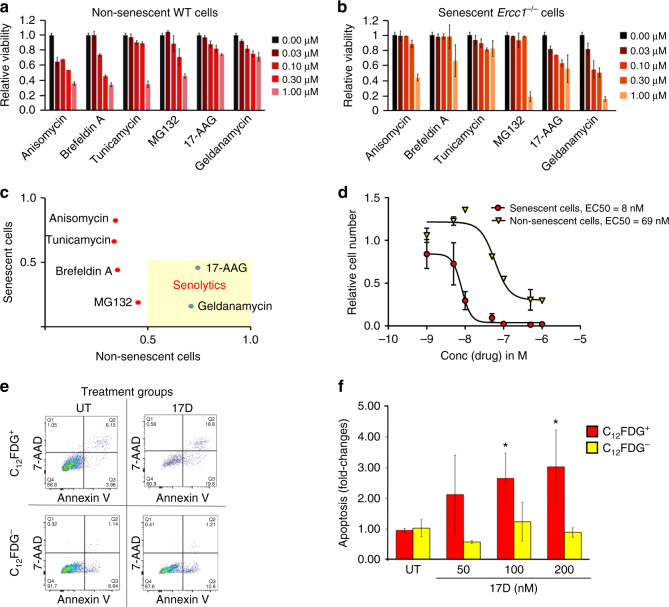
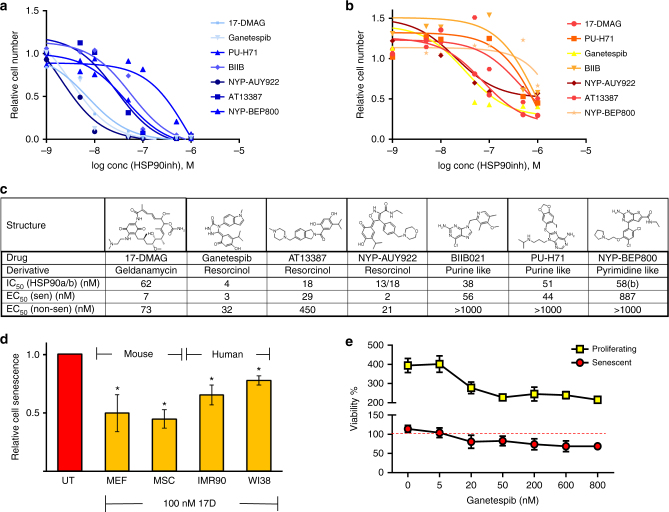
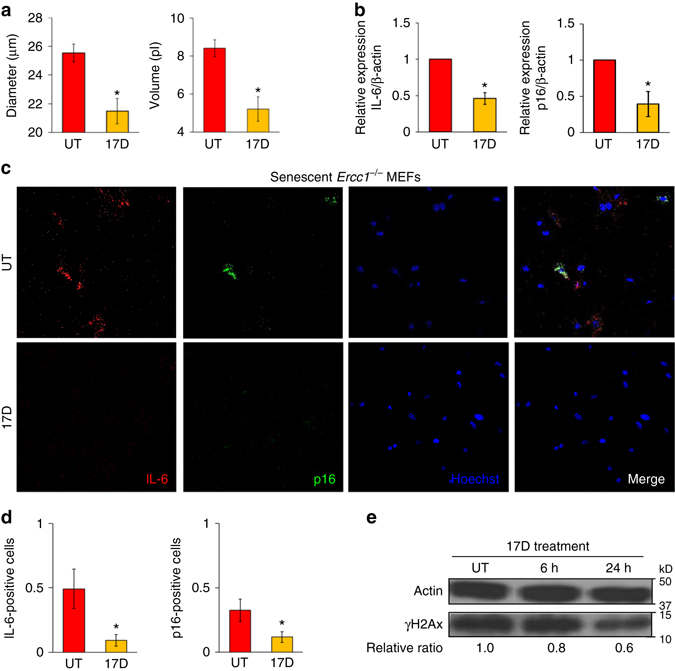
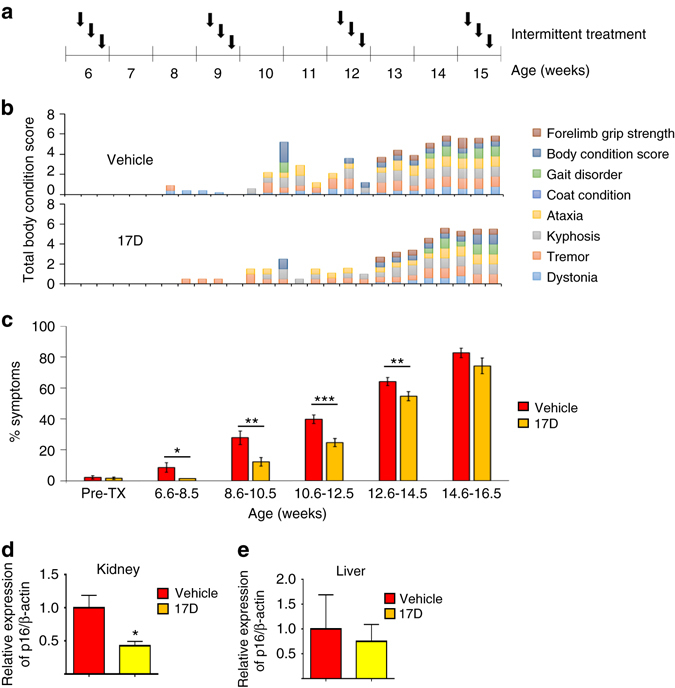
Aging is the main risk factor for many chronic degenerative diseases and cancer. Increased senescent cell burden in various tissues is a major contributor to aging and age-related diseases. Recently, a new class of drugs termed senolytics were demonstrated to extending healthspan, reducing frailty and improving stem cell function in multiple murine models of aging. To identify novel and more optimal senotherapeutic drugs and combinations, we established a senescence associated β-galactosidase assay as a screening platform to rapidly identify drugs that specifically affect senescent cells. We used primary Ercc1 −/− murine embryonic fibroblasts with reduced DNA repair capacity, which senesce rapidly if grown at atmospheric oxygen. This platform was used to screen a small library of compounds that regulate autophagy, identifying two inhibitors of the HSP90 chaperone family as having significant senolytic activity in mouse and human cells. Treatment of Ercc1 −/∆ mice, a mouse model of a human progeroid syndrome, with the HSP90 inhibitor 17-DMAG extended healthspan, delayed the onset of several age-related symptoms and reduced p16 INK4a expression. These results demonstrate the utility of our screening platform to identify senotherapeutic agents as well as identified HSP90 inhibitors as a promising new class of senolytic drugs.
Overview
The claims and statistics of this paper haven’t been checked yet.
Free: it reads the open-access text and checks the first 5 claims that cite a source we can check. Create a free account to check every claim.
Integrity signals
Registry
Cites
Statistics
Figures
Verification
Claims the paper makes
The claims and statistics of this paper haven’t been checked yet.
Free: it reads the open-access text and checks the first 5 claims that cite a source we can check. Create a free account to check every claim.
Claims other papers make about this one
Each is checked against this paper’s own text: does it say what the citing paper says it does?
The source backs part of the claim, not all of it — or backs it for a different population, condition or comparison.
In the citing paper
“Through upregulation of pro-survival and antiapoptotic pathways such as SRC kinases, the PI3K-AKT signaling pathway, heat shock protein (HSP) pathways, serpines, mitochondrial pathways or apoptosis regulator BCL-2-related proteins, those senescent cells with a proapoptotic SASP can survive, despite the cytotoxic microenvironment they create6,7,14,34,35,54–58.”
From Cellular senescence and senolytics: the path to the clinic (2022) · cites this paper as [54]
Experimental — accuracy not yet measuredThe source backs part of the claim, not all of it — or backs it for a different population, condition or comparison.
In the citing paper
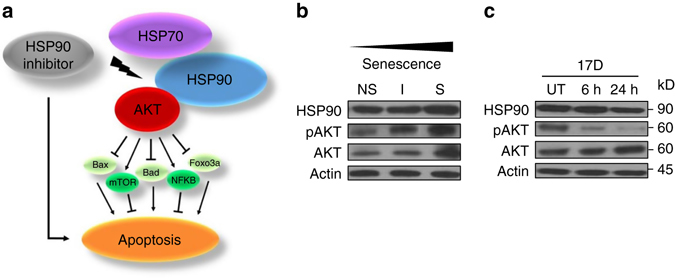
“HSP90 prevents proteasomal degradation of AKT, hence inhibiting HSP90 disables pro-survival signaling through this SCAP node and results in elimination of some senescent cell types54.”
From Cellular senescence and senolytics: the path to the clinic (2022) · cites this paper as [54]
Experimental — accuracy not yet measuredThe source backs part of the claim, not all of it — or backs it for a different population, condition or comparison.
In the citing paper
“Senomorphics are aimed largely at suppressing the SASP and thereby inflammation.”
From Senolytic Drugs: Reducing Senescent Cell Viability to Extend Health Span (2021) · cites this paper as [20]
Experimental — accuracy not yet measuredThe source backs part of the claim, not all of it — or backs it for a different population, condition or comparison.
In the citing paper
“Additionally, SASP establishment and the secretion of SASP factors can be modulated by inhibiting HSP90 (REFS214,249).”
From Cellular senescence in ageing: from mechanisms to therapeutic opportunities (2021) · cites this paper as [214]
Experimental — accuracy not yet measuredThe source backs part of the claim, not all of it — or backs it for a different population, condition or comparison.
In the citing paper
“even eliminating only 30% of senescent cells can be sufficient to alleviate dysfunction in preclinical studies [3,5,7,9,23,24,28,[32], [33], [34], [35], [36], [37]]”
From Senolytics decrease senescent cells in humans: Preliminary report from a clinical trial of Dasatinib plus Quercetin in individuals with diabetic kidney disease (2019) · cites this paper as [37]
Experimental — accuracy not yet measured
19 more claims about this paper
Create a free account to see every claim other papers make about this one.
Self-check
Percentages, sums and reported differences re-computed from the paper’s own numbers.
The self-check needs the paper’s full text.
Citations
Cites
Zhang, J.-H., Chung, T. D. Y., & Oldenburg, K. R. (1999) · SLAS Discovery · doi:10.1177/108705719900400206 · Cited by 6,847
Clearance of p16Ink4a-positive senescent cells delays ageing-associated disorders
Baker, D. J., Wijshake, T., Tchkonia, T., LeBrasseur, N. K., Childs, B. G., van de Sluis, B., Kirkland, J. L., & van Deursen, J. M. (2011) · Nature · doi:10.1038/nature10600 · Cited by 3,670
Self-citationNaturally occurring p16Ink4a-positive cells shorten healthy lifespan
Baker, D. J., Childs, B. G., Durik, M., Wijers, M. E., Sieben, C. J., Zhong, J., A. Saltness, R., Jeganathan, K. B., Verzosa, G. C., Pezeshki, A., et al. (2016) · Nature · doi:10.1038/nature16932 · Cited by 2,876
Cellular senescence: from physiology to pathology
Muñoz-Espín, D., & Serrano, M. (2014) · Nature Reviews Molecular Cell Biology · doi:10.1038/nrm3823 · Cited by 2,818
The role of senescent cells in ageing
van Deursen, J. M. (2014) · Nature · doi:10.1038/nature13193 · Cited by 2,623 · cited 1×
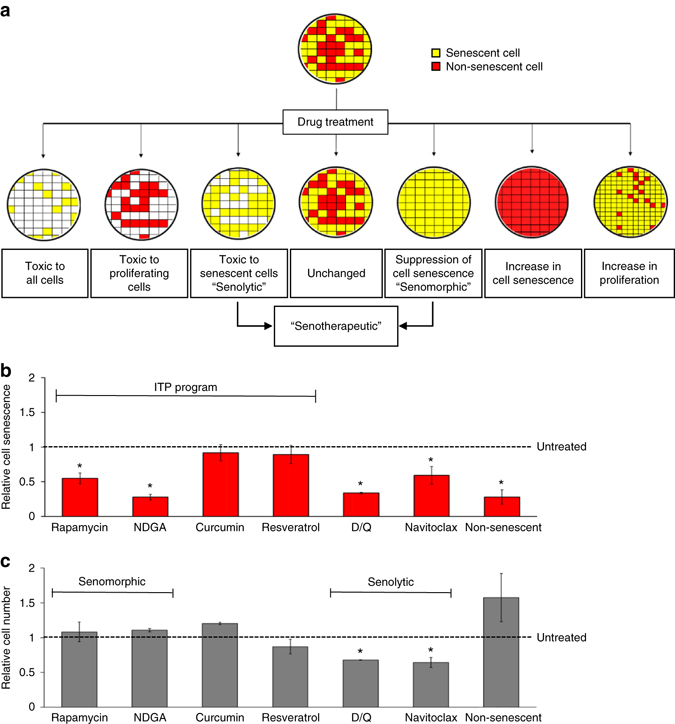
“A reduction in the ratio of senescent to non-senescent cells could be achieved by three drug activities: (1) specifically killing senescent cells, termed senolytics29, (2) suppressing cell senescence phenotypes, termed senomorphics, or (3) increasing proliferation of the non-senescent cells.”
BackgroundThe Achilles' heel of senescent cells: from transcriptome to senolytic drugs
Zhu, Y., Tchkonia, T., Pirtskhalava, T., Gower, A. C., Ding, H., Giorgadze, N., Palmer, A. K., Ikeno, Y., Hubbard, G. B., Lenburg, M., et al. (2015) · Aging Cell · doi:10.1111/acel.12344 · Cited by 2,584
Self-citationCellular senescence in aging and age-related disease: from mechanisms to therapy
Childs, B. G., Durik, M., Baker, D. J., & van Deursen, J. M. (2015) · Nature Medicine · doi:10.1038/nm.4000 · Cited by 2,363
Persistent DNA damage signalling triggers senescence-associated inflammatory cytokine secretion
Rodier, F., Coppé, J.-P., Patil, C. K., Hoeijmakers, W. A. M., Muñoz, D. P., Raza, S. R., Freund, A., Campeau, E., Davalos, A. R., & Campisi, J. (2009) · Nature Cell Biology · doi:10.1038/ncb1909 · Cited by 2,232
Clearance of senescent cells by ABT263 rejuvenates aged hematopoietic stem cells in mice
Chang, J., Wang, Y., Shao, L., Laberge, R.-M., Demaria, M., Campisi, J., Janakiraman, K., Sharpless, N. E., Ding, S., Feng, W., et al. (2016) · Nature Medicine · doi:10.1038/nm.4010 · Cited by 1,819
HSP90 at the hub of protein homeostasis: emerging mechanistic insights
Taipale, M., Jarosz, D. F., & Lindquist, S. (2010) · Nature Reviews Molecular Cell Biology · doi:10.1038/nrm2918 · Cited by 1,818
Cited by
Items 701–743 of 743
Dotou, M. (2023) · theses.fr (ABES) · doi:10.70675/ea22a042z96ccz45fdz9667z82a8825cb567
Lier la méthylation de l'ADN et la sénescence dans les cellules cancéreuses
Chen, X. (2025) · theses.fr (ABES) · doi:10.70675/498e6681z2d9fz469cz876dz8902dda81cc6
Organelle resilience as a comparative blueprint for longevity
Cikes, D. (2026) · EMBO Molecular Medicine · doi:10.1038/s44321-026-00428-2
“Senolytics reverse aging features in mice across many tissues (Fuhrmann-Stroissnigg et al, 2017; Chang et al, 2016; Baar et al, 2017), yet human studies have produced variable results, with concerns about speci fi city and off-target toxicity (de Magalhães, 2025).”
Lacey, M., Bérešová, L., Srovnalová, A., Polishchuk, P., Šála, M., Škrott, Z., Hajdúch, M., Džubák, P., Bartek, J., Siskova, A., et al. (2026) · GeroScience · doi:10.1007/s11357-026-02258-z
de Almeida, A. J. P. O., Pontes, L. V. D. S., Júnior, J. F. D. S., Soares, E. M. C., dos Santos, A. C., Gonçalves, T. A. F., Feitosa, M. S. D. A., Veras, R. C., Barbosa‐Filho, J. M., Lesniewski, L. A., et al. (2026) · Molecules · doi:10.3390/molecules31101614
Wang, W., Yan, P., Liu, J., Cui, D., Guo, Q., Jiang, Y. X., Sheng, W., Qiao, Y., & Zhao, X. (2026) · Frontiers in Bioengineering and Biotechnology · doi:10.3389/fbioe.2026.1844904
Kunchur, A. (2025) · Tesis Doctorals en Xarxa (Consorci de Serveis Universitaris de Catalunya)
Liu, P., Wang, R., Yu, Y., Ning, Y., Chen, M., & Ye, M. (2026) · Biology Direct · doi:10.21203/rs.3.rs-9810404/v1
Integrating senotherapeutics into transplantation: liver reconditioning in an aging donor pool
Buch, M. L., Esser, H., Perera, H., Zheng, R., Ferreira-González, S., & Forbes, S. J. (2026) · Transplant International · doi:10.3389/ti.2026.16347
“More recently, high-throughput screening has expanded the senolytic landscape, enabling the identification of second-generation senolytics with improved selectivity and potency [41, 51, 108].”
Lawrence, E., Fulton, D. J., Brown, P., Suresh, S., Morris, M., Goggolidou, P., Chaithanya, S., Abbawy, M., Wild, A., Nasa, P., et al. (2026) · Brain and Behavior · doi:10.1002/brb3.71542
Liu, X., Guo, Y., Popa‐Wagner, A., Lämmermann, I., Grillari, J., & Hermann, D. M. (2026) · Ageing Research Reviews · doi:10.1016/j.arr.2026.103206 · Cited by 1
Chen, Y., Zhu, D., Xu, W., Miao, X., & Jiang, Z. (2026) · Acta Biomaterialia · doi:10.1016/j.actbio.2026.07.020 · Cited by 1
Cleaning, Chasing and Calming: Promising Paradigms of Senotherapy in Aging-Related Diseases
Ran, S., Zhou, S., Ma, H., Zhang, F., Yang, Y., Abulajiang, M., Yang, X., Li, S., & Zhang, Q. (2026) · International Journal of Biological Sciences · doi:10.7150/ijbs.138243
“In DNA damage repair-deficient mice, targeting HSP90 systemically reduces the SnCs burden across multiple organs with nanomolar efficacy, outperforming conventional chemotherapeutic agents [113, 114].”
Chen, F., Zhang, C., Li, Y., Khan, M. A., Pang, X., Zhu, S., & Tang, B. (2026) · Industrial Crops and Products · doi:10.1016/j.indcrop.2026.124024
Terpenoids as Emerging Senotherapeutics: Mechanistic Insights and Therapeutic Potential
Yi, S., Park, J. Y., & Lee, S. (2026) · International Journal of Molecular Sciences · doi:10.3390/ijms27156874 · Cited by 1
“Senolytics targeting antiapoptotic pathways, specifically through the inhibition of the BCL-2 family (ABT-263 and ABT-737) [16,17], p53/MDM2 (UBX0101 and RG7112) [18,19], and HSP90 (17-DMAG, 17-AAG, and geldanamycin) [20] have been discovered.”
Zhang, K., Cheng, J., Zhang, J., Tang, L., Wang, F., Chu, X., & Jiang, J. (2026) · Angewandte Chemie International Edition · doi:10.1002/anie.7042721
Closing the gap in aging science: unlocking the potential of nanoparticles in senescence therapy
Kanbur, E., & Aydin, Ö. F. (2026) · Biogerontology · doi:10.1007/s10522-026-10489-y
“Fuhrmann-Stroissnigg et al. have demonstrated the capacity of Geldanamycin and 17-AAG to selectively diminish the viability of senescent cells, notably at a concentration of 1 μM, with minimal impact on the viability of non-senescent, healthy cells (Fuhrmann-Stroissnigg et al. 2017).”
The emerging role of aging in tumorigenesis
Wu, X., Wang, H., Liu, Y., & Hu, P. (2026) · Cell investigation. · doi:10.1016/j.clnves.2026.100093
Yu, L., Gao, S., Han, C., Zhang, J., Chen, J., Xing, X., Jiang, B., Zhou, Z., Feng, Y., & He, Y. (2026) · International Journal of Molecular Sciences · doi:10.3390/ijms27188221
Fan, H., & Jin, S. (2026) · Frontiers in Chemistry · doi:10.3389/fchem.2026.1917991
Skin Aging: From Molecular Mechanisms to Therapeutic and Technological Innovations
Chen, S., Yang, Y., Pan, X., Pan, Y., & Cai, S. (2026) · Journal of Cellular and Molecular Medicine · doi:10.1111/jcmm.71357
Blanco, J. R., & Carnero, A. (2026) · Cancers · doi:10.3390/cancers18193084
“HSP90 inhibitors were identified as a distinct class of senolytic agents in preclinical studies [170], whereas disruption of the FOXO4–p53 interaction has provided another mechanistically distinct approach to senescent-cell elimination [171].”
Wang, X., Huang, Y., Zhu, T., & Qiu, H. (2026) · Regenerative Therapy · doi:10.1016/j.reth.2026.101175
“Senolytics such as BCL-2 family inhibitors and related agents exploit survival dependencies of senescent cells, whereas senomorphic agents aim to suppress SASP output without killing cells [105 – 108 , 110 – Metabolic and mitochondrial regulators represent a complementary strategy.”
Guan, X., Lu, M., Cui, X., Zhang, D., Lei, Z., Lin, L., Li, Y., Hu, Y., & Li, C. (2026) · Advanced Science · doi:10.1002/advs.77891
“In oncology, heat shock protein 90 alpha (HSP90 α ) has been recognized as a critical scaffold supporting cell survival [ 13 ].”
Cellular senescence: six decades of discovery and reinvention
Klaver, M., Steeneken, L. S., Veeningen, N., Altulea, A., & Demaria, M. (2026) · The EMBO Journal · doi:10.1038/s44318-026-00922-w
Células Senescentes: ¿Cuál es su efecto e importancia?
Martínez, I., & López, M. (2023) · Dermatología Venezolana
Soto-Gamez, A., Wu, Y., Hageman, E., Brouwer, U., Cinat, D., Vissink, A., Demaria, M., Barazzuol, L., Pringle, S. A., & Coppes, R. P. (2026) · Radiotherapy and Oncology · doi:10.1016/s0167-8140(26)03951-4
Senotherapeutic potential against xeroderma pigmentosum
王雪冰, Nishida, M., Yoshioka, A., Chung, C., Hashimoto, S., Tanizawa, H., Ohta, S., Noma, K.-I., & Fukumoto, T. (2026) · Stem Cell Research & Therapy · doi:10.1186/s13287-026-05227-7
“In addition, HSP90 inhibitors have demonstrated senolytic effects on a cell line from a mouse model of a human progeroid syndrome that is hyper-sen-sitive to DNA damage, further supporting the validity of our screening system [17].”
Huang, J., Ji, L., Jin, H., Shi, Z., Song, X., Cai, Y., & Tong, X. (2026) · Ageing Research Reviews · doi:10.1016/j.arr.2026.103398
Zhang, K., Cheng, J., Zhang, J., Tang, L., Wang, F., Chu, X., & Jiang, J. (2026) · Angewandte Chemie · doi:10.1002/ange.7042721
Silencing without clearing: pharmacological modulation of the SASP in aging and disease
Fresser, L., Chrienová, Ž., Gebrt, J., Olekšák, P., Kuča, K., & Nepovimová, E. (2026) · Frontiers in Pharmacology · doi:10.3389/fphar.2026.1911529
Cellular senescence in skin inflammation: molecular mechanisms and potential clinical implications
Wang, X., Xiong, B., Li, S., Wang, Y., & Li, F. (2026) · Frontiers in Aging · doi:10.3389/fragi.2026.1986107
Cellular senescence in calcific aortic valve disease: are we ready for senolytic therapy?
Simonini, L., Foffa, I., Esposito, A., & Vecoli, C. (2026) · Molecular Biology Reports · doi:10.1007/s11033-026-13036-7
“Further classes directed at senescent cell anti-apoptotic pathways (SCAPs) include heat shock protein 90 (HSP90) inhibitors [ 91 ], FOXO4-p53 interfering peptides [ 92 ], and cardiac glycosides, [93, 94].”
Zhang, Z., & Zhang, X. (2026) · Biochimica et Biophysica Acta (BBA) - Reviews on Cancer · doi:10.1016/j.bbcan.2026.189750
Mechanisms and disease implications of inflammaging and potential therapeutic strategies
Song, X., Li, S., Jiang, Z., 杨安顺, Lu, Q., & Fang, M. (2026) · Infection · doi:10.1007/s15010-026-03042-z
Wu, R., Yang, F., Li, J., Wu, T., Lyu, R., Xiang, J., Gao, X., ZHANG, R., Fan, H., Yin, C., et al. (2026) · Nature Aging · doi:10.1038/s43587-026-01253-5
Nanotherapeutic Strategies Targeting Senescent Microenvironment for Aging-Related Chronic Diseases
Ma, J., 李学莹, He, Z., Sun, X., & Lv, G. (2026) · International Journal of Nanomedicine · doi:10.2147/ijn.s654376
Metadata
- Authors
- Fuhrmann-Stroissnigg, H., Ling, Y. Y., Zhao, J., McGowan, S. J., Zhu, Y., Brooks, R. W., Grassi, D., Gregg, S. Q., Stripay, J. L., Dorronsoro, A., Corbo, L., Tang, P., Bukata, C., Ring, N., Giacca, M., Li, X., Tchkonia, T., Kirkland, J. L., Niedernhofer, L. J., & Robbins, P. D.
- Affiliations
- Scripps Research Institute (US)
- University of Pittsburgh (US)
- Mayo Clinic (US)
- International Centre for Genetic Engineering and Biotechnology (IT)
- Corresponding author
- Robbins, Paul D.
- ORCID
- Venue
- Nature Communications
- Published
- 2017-09-04
- Volume
- 8
- Issue
- 1
- Pages
- 422-422
- ISSN
- 2041-1723 (ISSN-L)
- PMC
- PMC5583353
- OpenAlex
- W2752676842
- Semantic Scholar
- 75a2484a24067d78ca91ed40dc971ce24f8eafc4
- Cited by
- 701
- References
- 77
- Citations by year
- 2026: 58 · 2025: 70 · 2024: 94 · 2023: 68 · 2022: 102 · 2021: 95 · 2020: 89 · 2019: 68 · 2018: 49 · 2017: 6
- FWCI
- 42.91
- Type
- journal article
- Language
- en
- Open access
- gold
- doi.org
- Licence
- cc-by
- creativecommons.org/licenses/by/4.0 (tdm)
- creativecommons.org/licenses/by/4.0 (vor)
- Locations
- Nature Communications (publishedVersion, cc-by)
- PubMed Central (publishedVersion, cc-by)
- PubMed (publishedVersion)
- ArTS Archivio della ricerca di Trieste (University of Trieste https://www.units.it/) (submittedVersion, cc-by)
- RePEc: Research Papers in Economics (submittedVersion)
- DOAJ (DOAJ: Directory of Open Access Journals) (submittedVersion, cc-by-sa)
- DOAJ (DOAJ: Directory of Open Access Journals) (submittedVersion)
- Funders
- American Federation for Aging Research
- National Institutes of Health (DK-50456, AG043376, AG13925)
- National Institute on Aging (P01AG043376, R01AG013925, R37AG013925)
- National Institute of Diabetes and Digestive and Kidney Diseases (P30DK050456)
- Topics
- Life Sciences › Biochemistry, Genetics and Molecular Biology › Cell Biology › Telomeres, Telomerase, and Senescence
- Life Sciences › Biochemistry, Genetics and Molecular Biology › Aging › Genetics, Aging, and Longevity in Model Organisms
- Life Sciences › Biochemistry, Genetics and Molecular Biology › Molecular Biology › Heat shock proteins research
- Keywords
- Hsp90 inhibitors, senolytics, cellular senescence, senotherapeutics, aging, autophagy, 17-DMAG, healthspan, progeroid syndromes, p16INK4a, drug screening
- MeSH terms
- Aging, Animals, Autophagy, Biological Assay, DNA-Binding Proteins, Drug Evaluation, Preclinical, Endonucleases, Female, Fibroblasts, Humans, Signal Transduction, Biomarkers, Down-Regulation, Benzoquinones, Cellular Senescence, Apoptosis, HSP90 Heat-Shock Proteins, Phosphatidylinositol 3-Kinases, Lactams, Macrocyclic, Proto-Oncogene Proteins c-akt, Mice, Small Molecule Libraries, Human Umbilical Vein Endothelial Cells
About these checks
Registry, retraction, Cites and statistics results are computed, not judged, with one exception: a printed reference that no index lists is read once by a model before it counts as a citation error. Claims are extracted by a model and kept only when their quote appears verbatim in the text; each cited source is then checked, with a model’s help, for whether it says what the claim relies on. Those verdicts can be wrong — read the claim’s quote and the cited source before relying on one.
Statistics and arithmetic are recomputed, not judged.
Confidence bands are shown only for fields calibrated on our annotated test set. None is calibrated yet, so no band is shown.
What counts as a claim ›How we measure confidence ›How we check this ›
Are you an author, or do you see a problem with this page? Request a review
Data sources
Bibliographic data: Semantic Scholar, OpenAlex, Crossref.
Contains information from the Semantic Scholar Academic Graph Datasets, made available under the ODC Attribution License (ODC-BY 1.0).
Semantic Scholar’s data is described in: Kinney, R., et al. (2023). The Semantic Scholar Open Data Platform. arXiv:2301.10140.
