

Machine learning applied to enzyme turnover numbers reveals protein structural correlates and improves metabolic models
Open accessThe DOI matches its Crossref record; 75 of the 75 references it cites were found in a registry or an index.
Abstract
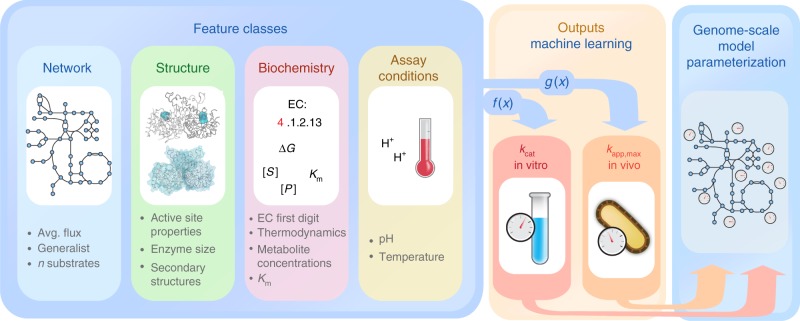
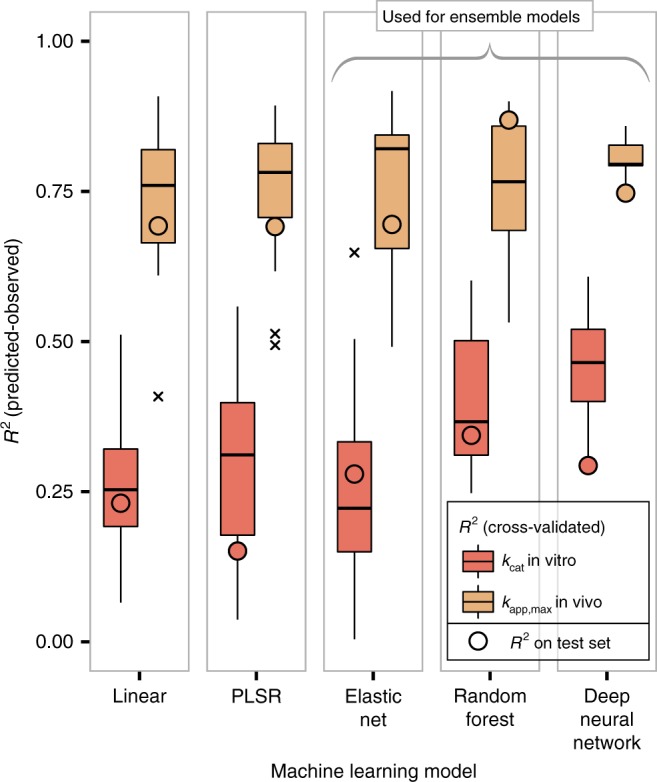
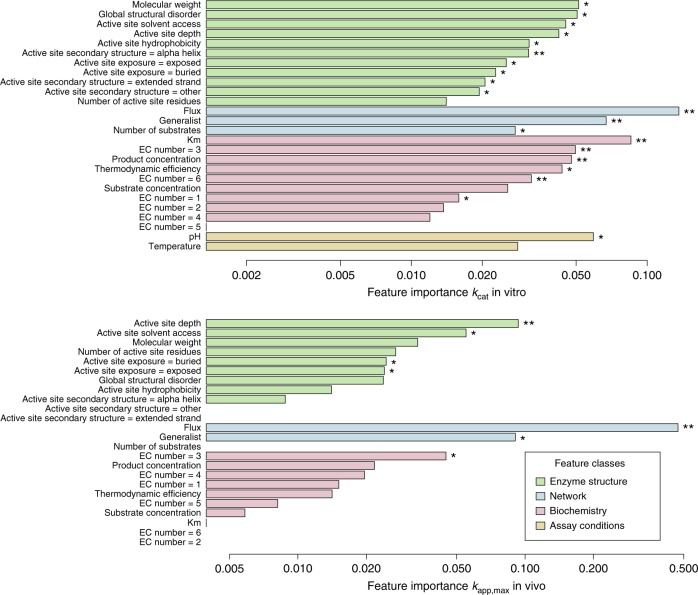
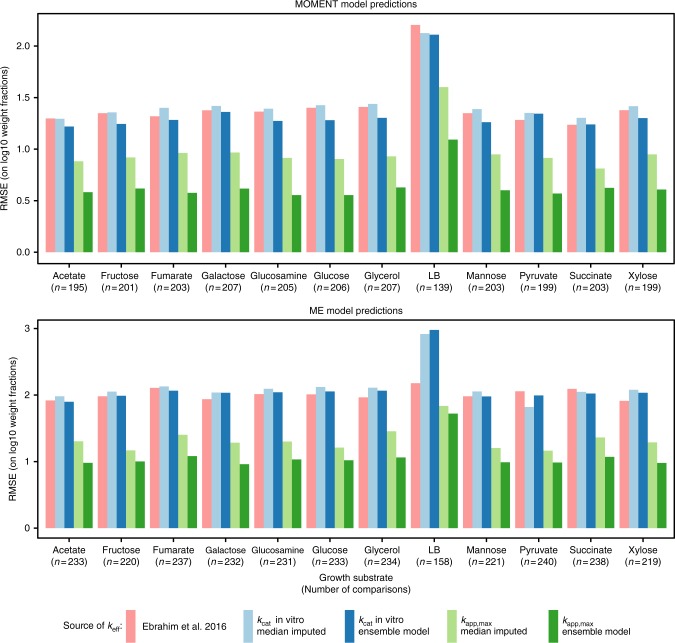
Knowing the catalytic turnover numbers of enzymes is essential for understanding the growth rate, proteome composition, and physiology of organisms, but experimental data on enzyme turnover numbers is sparse and noisy. Here, we demonstrate that machine learning can successfully predict catalytic turnover numbers in Escherichia coli based on integrated data on enzyme biochemistry, protein structure, and network context. We identify a diverse set of features that are consistently predictive for both in vivo and in vitro enzyme turnover rates, revealing novel protein structural correlates of catalytic turnover. We use our predictions to parameterize two mechanistic genome-scale modelling frameworks for proteome-limited metabolism, leading to significantly higher accuracy in the prediction of quantitative proteome data than previous approaches. The presented machine learning models thus provide a valuable tool for understanding metabolism and the proteome at the genome scale, and elucidate structural, biochemical, and network properties that underlie enzyme kinetics.
Overview
The claims and statistics of this paper haven’t been checked yet.
Free: it reads the open-access text and checks the first 5 claims that cite a source we can check. Create a free account to check every claim.
Integrity signals
Registry
Cites
Statistics
Figures
Verification
Claims the paper makes
The claims and statistics of this paper haven’t been checked yet.
Free: it reads the open-access text and checks the first 5 claims that cite a source we can check. Create a free account to check every claim.
Claims other papers make about this one
Each is checked against this paper’s own text: does it say what the citing paper says it does?
The source backs part of the claim, not all of it — or backs it for a different population, condition or comparison.
In the citing paper
“The model achieved a coefficient of determination R 2 ≈ 0.34 on a test set.”
From Turnover number predictions for kinetically uncharacterized enzymes using machine and deep learning (2023) · cites this paper as [14]
Experimental — accuracy not yet measuredThe source backs part of the claim, not all of it — or backs it for a different population, condition or comparison.
In the citing paper
“Its coefficient of determination ( R 2 = 0.44) is higher than that of Heckmann et al. ( R 2 ≈ 0.34) 14”
From Turnover number predictions for kinetically uncharacterized enzymes using machine and deep learning (2023) · cites this paper as [14]
Experimental — accuracy not yet measuredThe cited source says what the claim attributes to it.
In the citing paper
“Moreover, even for those well-studied organisms, the k cat coverage is far from complete 13,15,16 .”
From Deep learning-based kcat prediction enables improved enzyme-constrained model reconstruction (2022) · cites this paper as [16]
The cited source says what the claim attributes to it.
In the citing paper
“Previously, Heckmann and colleagues employed machine learning approaches to predict E. coli k cat values based on features such as average metabolic fluxes and catalytic sites obtained from protein structures 16 .”
From Deep learning-based kcat prediction enables improved enzyme-constrained model reconstruction (2022) · cites this paper as [16]
The cited source says what the claim attributes to it.
In the citing paper
“Our resulting Turnover Number Prediction model— TurNuP—outperforms a simple similarity-based approach and both previous methods for predicting k cat 14 , 16 .”
From Turnover number predictions for kinetically uncharacterized enzymes using machine and deep learning (2023) · cites this paper as [14]
5 more claims about this paper
Create a free account to see every claim other papers make about this one.
Self-check
Percentages, sums and reported differences re-computed from the paper’s own numbers.
The self-check needs the paper’s full text.
Citations
Cites
Berman, H. M. (2000) · Nucleic Acids Research · doi:10.1093/nar/28.1.235 · Cited by 40,196
KEGG: Kyoto Encyclopedia of Genes and Genomes
Kanehisa, M. (2000) · Nucleic Acids Research · doi:10.1093/nar/28.1.27 · Cited by 37,077
KEGG: Kyoto Encyclopedia of Genes and Genomes
Ogata, H., Goto, S., Sato, K., Fujibuchi, W., Bono, H., & Kanehisa, M. (1999) · Nucleic Acids Research · doi:10.1093/nar/27.1.29 · Cited by 31,232
A simple method for displaying the hydropathic character of a protein
Kyte, J., & Doolittle, R. F. (1982) · Journal of Molecular Biology · doi:10.1016/0022-2836(82)90515-0 · Cited by 22,843
Kabsch, W., & Sander, C. (1983) · Biopolymers · doi:10.1002/bip.360221211 · Cited by 15,320
mice: Multivariate Imputation by Chained Equations in R
Buuren, S. V., & Groothuis-Oudshoorn, K. (2011) · Journal of Statistical Software · doi:10.18637/jss.v045.i03 · Cited by 13,870
EMBOSS: the European molecular biology open software suite.
Rice, P., Longden, I., & Bleasby, A. (2000) · Trends in Genetics · doi:10.1016/s0168-9525(00)02024-2 · Cited by 9,466 · cited 1×
“From the protein sequence, global properties were calculated using the EMBOSS pepstats package 54 and the Biopython ProtParam module 55 .”
MethodBuilding Predictive Models in R Using the caret Package
Kuhn, M. (2008) · Journal of Statistical Software · doi:10.18637/jss.v028.i05 · Cited by 8,863
UniProt: the Universal Protein knowledgebase
Apweiler, R. (2004) · Nucleic Acids Research · doi:10.1093/nar/gkh131 · Cited by 7,498
Biopython: freely available python tools for computational molecular biology and bioinformatics
Cock, P. J. A., Antao, T., Chang, J. T., Chapman, B. A., Cox, C. J., Dalke, A., Friedberg, I., Hamelryck, T., Kauff, F., Wilczynski, B., et al. (2009) · Bioinformatics · doi:10.1093/bioinformatics/btp163 · Cited by 6,080
Cited by
Common principles and best practices for engineering microbiomes
Lawson, C. E., Harcombe, W. R., Hatzenpichler, R., Lindemann, S. R., Löffler, F. E., O’Malley, M. A., García Martín, H., Pfleger, B. F., Raskin, L., Venturelli, O. S., et al. (2019) · Nature Reviews Microbiology · doi:10.1038/s41579-019-0255-9 · Cited by 633
Deep learning-based kcat prediction enables improved enzyme-constrained model reconstruction
Li, F., Yuan, L., Lu, H., Li, G., Chen, Y., Engqvist, M. K. M., Kerkhoven, E. J., & Nielsen, J. (2022) · Nature Catalysis · doi:10.1038/s41929-022-00798-z · Cited by 466
Machine Learning Applications for Mass Spectrometry-Based Metabolomics
Liebal, U. W., Phan, A. N. T., Sudhakar, M., Raman, K., & Blank, L. M. (2020) · Metabolites · doi:10.3390/metabo10060243 · Cited by 357
Machine and deep learning meet genome-scale metabolic modeling
Zampieri, G., Vijayakumar, S., Yaneske, E., & Angione, C. (2019) · PLOS Computational Biology · doi:10.1371/journal.pcbi.1007084 · Cited by 313
Machine learning for metabolic engineering: A review
Lawson, C. E., Martí, J. M., Radivojevic, T., Jonnalagadda, S. V. R., Gentz, R., Hillson, N. J., Peisert, S., Kim, J., Simmons, B. A., Petzold, C. J., et al. (2021) · Metabolic Engineering · doi:10.1016/j.ymben.2020.10.005 · Cited by 313
Microbial production of advanced biofuels
Keasling, J., Garcia Martin, H., Lee, T. S., Mukhopadhyay, A., Singer, S. W., & Sundstrom, E. (2021) · Nature Reviews Microbiology · doi:10.1038/s41579-021-00577-w · Cited by 294
Reconstructing organisms in silico: genome-scale models and their emerging applications
Fang, X., Lloyd, C. J., & Palsson, B. O. (2020) · Nature Reviews Microbiology · doi:10.1038/s41579-020-00440-4 · Cited by 292
“Efforts to refine numerical values for enzyme turnover number (k cat ) through machine learning methods 107 were undertaken, and a reformulation of the E. coli ME model computations by grouping major cellular processes and implementing explicit coupling constraints drastically reduced the size of…”
BackgroundMethodSelf-citationMachine-Learning-Driven Synthesis of Carbon Dots with Enhanced Quantum Yields
Han, Y., Tang, B., Wang, L., Bao, H., Lu, Y., Guan, C., Zhang, L., Le, M., Liu, Z., & Wu, M. (2020) · ACS Nano · doi:10.1021/acsnano.0c01899 · Cited by 274
UniKP: a unified framework for the prediction of enzyme kinetic parameters
Yu, H., Deng, H., He, J., Keasling, J. D., & Luo, X. (2023) · Nature Communications · doi:10.1038/s41467-023-44113-1 · Cited by 226
“7 – 11).”
Highly accurate enzyme turnover number prediction and enzyme engineering with PreKcat
Yu, H., Deng, H., He, J., Keasling, J., & Luo, X. (2023) · doi:10.21203/rs.3.rs-2749688/v1 · Cited by 226
Metabolic Engineering: Methodologies and Applications
Volk, M. J., Tran, V. G., Tan, S.-I., Mishra, S., Fatma, Z., Boob, A., Li, H., Xue, P., Martin, T. A., & Zhao, H. (2023) · Chemical Reviews · doi:10.1021/acs.chemrev.2c00403 · Cited by 205
Machine learning applications in systems metabolic engineering
Kim, G. B., Kim, W. J., Kim, H. U., & Lee, S. Y. (2020) · Current Opinion in Biotechnology · doi:10.1016/j.copbio.2019.08.010 · Cited by 192
Machine learning for biochemical engineering: A review
Mowbray, M., Savage, T., Wu, C., Song, Z., Cho, B. A., Del Rio-Chanona, E. A., & Zhang, D. (2021) · Biochemical Engineering Journal · doi:10.1016/j.bej.2021.108054 · Cited by 188
Turnover number predictions for kinetically uncharacterized enzymes using machine and deep learning
Kroll, A., Rousset, Y., Hu, X.-P., Liebrand, N. A., & Lercher, M. J. (2023) · Nature Communications · doi:10.1038/s41467-023-39840-4 · Cited by 186
Self-citationPredictive biology: modelling, understanding and harnessing microbial complexity
Lopatkin, A. J., & Collins, J. J. (2020) · Nature Reviews Microbiology · doi:10.1038/s41579-020-0372-5 · Cited by 172
Robust enzyme discovery and engineering with deep learning using CataPro
Wang, Z., Xie, D., Wu, D., Luo, X., Wang, S., Li, Y., Yang, Y., Li, W., & Zheng, L. (2025) · Nature Communications · doi:10.1038/s41467-025-58038-4 · Cited by 164
Goshisht, M. K. (2024) · ACS Omega · doi:10.1021/acsomega.3c05913 · Cited by 161
Functional annotation of enzyme-encoding genes using deep learning with transformer layers
Kim, G. B., Kim, J. Y., Lee, J. A., Norsigian, C. J., Palsson, B. O., & Lee, S. Y. (2023) · Nature Communications · doi:10.1038/s41467-023-43216-z · Cited by 118
Self-citationDeep learning meets metabolomics: a methodological perspective
Sen, P., Lamichhane, S., Mathema, V. B., McGlinchey, A. J., Dickens, A. M., Khoomrung, S., & Orešič, M. (2020) · Briefings in Bioinformatics · doi:10.1093/bib/bbaa204 · Cited by 141
Chen, Y., Gustafsson, J., Rangel, A. E. T., Anton, M., Domenzain, I., Kittikunapong, C., Li, F., Yuan, L., Nielsen, J., & Kerkhoven, E. J. (2024) · Nature Protocols · doi:10.1038/s41596-023-00931-7 · Cited by 140
Deep learning allows genome-scale prediction of Michaelis constants from structural features
Kroll, A., Engqvist, M. K. M., Heckmann, D., & Lercher, M. J. (2021) · PLOS Biology · doi:10.1371/journal.pbio.3001402 · Cited by 132
“It appears likely that predictions could be improved further by taking features of the enzyme active site into account—such as hydrophobicity, depth, or structural properties [5]—once such features become widely available [23].”
BackgroundMethodSelf-citationMachine learning-enabled retrobiosynthesis of molecules
Yu, T., Boob, A. G., Volk, M., Liu, X., Cui, H., & Zhao, H. (2023) · Nature Catalysis · doi:10.1038/s41929-022-00909-w · Cited by 133
Big data, integrative omics and network biology
Tolani, P., Gupta, S., Yadav, K., Aggarwal, S., & Yadav, A. K. (2021) · Advances in protein chemistry and structural biology · doi:10.1016/bs.apcsb.2021.03.006 · Cited by 108
Solubility-Weighted Index: fast and accurate prediction of protein solubility
Bhandari, B. K., Gardner, P. P., & Lim, C. S. (2020) · Bioinformatics · doi:10.1093/bioinformatics/btaa578 · Cited by 97
The era of big data: Genome-scale modelling meets machine learning
Antonakoudis, A., Barbosa, R., Kotidis, P., & Kontoravdi, C. (2020) · Computational and Structural Biotechnology Journal · doi:10.1016/j.csbj.2020.10.011 · Cited by 89
Machine learning for metabolic pathway optimization: A review
Cheng, Y., Bi, X., Xu, Y., Liu, Y., Li, J., Du, G., Lv, X., & Liu, L. (2023) · Computational and Structural Biotechnology Journal · doi:10.1016/j.csbj.2023.03.045 · Cited by 88
Heckmann, D., Campeau, A., Lloyd, C. J., Phaneuf, P. V., Hefner, Y., Carrillo-Terrazas, M., Feist, A. M., Gonzalez, D. J., & Palsson, B. O. (2020) · Proceedings of the National Academy of Sciences · doi:10.1073/pnas.2001562117 · Cited by 80
Self-citationBiological insights through omics data integration
Noor, E., Cherkaoui, S., & Sauer, U. (2019) · Current Opinion in Systems Biology · doi:10.1016/j.coisb.2019.03.007 · Cited by 83
Recent advances in machine learning applications in metabolic engineering
Patra, P., B.R., D., Kundu, P., Das, M., & Ghosh, A. (2023) · Biotechnology Advances · doi:10.1016/j.biotechadv.2022.108069 · Cited by 82
Recent advances on constraint-based models by integrating machine learning
Rana, P., Berry, C., Ghosh, P., & Fong, S. S. (2019) · Current Opinion in Biotechnology · doi:10.1016/j.copbio.2019.11.007 · Cited by 80
Artificial intelligence: a solution to involution of design–build–test–learn cycle
Liao, X., Ma, H., & Tang, Y. (2022) · Current Opinion in Biotechnology · doi:10.1016/j.copbio.2022.102712 · Cited by 79
An analytical theory of balanced cellular growth
Dourado, H., & Lercher, M. J. (2020) · Nature Communications · doi:10.1038/s41467-020-14751-w · Cited by 76
Self-citationWang, J., Yang, Z., Chen, C., Ge, Y., Wan, X., Bao, S., Ding, J., Wang, L., & Jiang, H. (2024) · Briefings in Bioinformatics · doi:10.1093/bib/bbae387 · Cited by 76
Enzyme capacity-based genome scale modelling of CHO cells
Yeo, H. C., Hong, J., Lakshmanan, M., & Lee, D.-Y. (2020) · Metabolic Engineering · doi:10.1016/j.ymben.2020.04.005 · Cited by 75
A multi-scale expression and regulation knowledge base forEscherichia coli
Lamoureux, C. R., Decker, K., Sastry, A. V., Rychel, K., Gao, Y., McConn, J. L., Zielinski, D. C., & Palsson, B. Ø. (2023) · Nucleic Acids Research · doi:10.1093/nar/gkad750 · Cited by 74
Self-citationNew synthetic biology tools for metabolic control
Lv, X., Hueso‐Gil, Á., Bi, X., Wu, Y., Liu, Y., Liu, L., & Ledesma‐Amaro, R. (2022) · Current Opinion in Biotechnology · doi:10.1016/j.copbio.2022.102724 · Cited by 72
GotEnzymes: an extensive database of enzyme parameter predictions
Li, F., Chen, Y., Anton, M., & Nielsen, J. (2023) · Nucleic Acids Research · doi:10.1093/nar/gkac831 · Cited by 70
Modular design: Implementing proven engineering principles in biotechnology
Garcia, S., & Trinh, C. T. (2019) · Biotechnology Advances · doi:10.1016/j.biotechadv.2019.06.002 · Cited by 70
Emerging methods for genome-scale metabolic modeling of microbial communities
Tarzi, C., Zampieri, G., Sullivan, N., & Angione, C. (2024) · Trends in Endocrinology and Metabolism · doi:10.1016/j.tem.2024.02.018 · Cited by 68
Choudhury, S., Narayanan, B., Moret, M., Hatzimanikatis, V., & Miskovic, L. (2024) · Nature Catalysis · doi:10.1038/s41929-024-01220-6 · Cited by 67
Duong‐Trung, N., Born, S., Kim, J. W., Schermeyer, M., Paulick, K., Borisyak, M., Bournazou, M. N. C., Werner, T., Scholz, R., Schmidt-Thieme, L., et al. (2022) · Biochemical Engineering Journal · doi:10.1016/j.bej.2022.108764 · Cited by 67
Xi, H., Ning, W., Ma, X., Wang, X., & Zhou, K. (2020) · Metabolic Engineering Communications · doi:10.1016/j.mec.2020.e00138 · Cited by 67
Choudhury, S., Narayanan, B., Moret, M., Hatzimanikatis, V., & Miskovic, L. (2023) · doi:10.1101/2023.02.21.529387 · Cited by 67
Cell factory design with advanced metabolic modelling empowered by artificial intelligence.
Lu, H.-Z., Xiao, L., Liao, W.-B., Yan, X.-F., & Nielsen, J. (2024) · Metabolic Engineering · doi:10.1016/j.ymben.2024.07.003 · Cited by 57
Metabolomics and modelling approaches for systems metabolic engineering
Khanijou, J. K., Kulyk, H., Bergès, C., Khoo, L. W., Ng, P., Yeo, H. C., Helmy, M., Bellvert, F., Chew, W., & Selvarajoo, K. (2022) · Metabolic Engineering Communications · doi:10.1016/j.mec.2022.e00209 · Cited by 60
Synthesizing Systems Biology Knowledge from Omics Using Genome‐Scale Models
Dahal, S., Yurkovich, J. T., Xu, H., Palsson, B. Ø., & Yang, L. (2020) · PROTEOMICS · doi:10.1002/pmic.201900282 · Cited by 60
Self-citationMachine learning applications in genome-scale metabolic modeling
Kim, Y., Kim, G. B., & Lee, S. Y. (2021) · Current Opinion in Systems Biology · doi:10.1016/j.coisb.2021.03.001 · Cited by 63
Artificial Intelligence Technology Assists Enzyme Prediction and Rational Design
Wang, Y., Han, S., Wang, Y., Liang, Q., & Luo, W. (2025) · Journal of Agricultural and Food Chemistry · doi:10.1021/acs.jafc.4c13201 · Cited by 58
Wang, T., Xiang, G., He, S., Su, L., Wang, Y., Yan, X., & Lu, H. (2024) · Briefings in Bioinformatics · doi:10.1093/bib/bbae409 · Cited by 57
Wang, T., Xiang, G., He, S., Su, L., Yan, X., & Lu, H. (2023) · doi:10.1101/2023.12.09.570923 · Cited by 57
A framework towards digital twins for type 2 diabetes
Zhang, Y., Qin, G., Aguilar, B. H., Rappaport, N., Yurkovich, J. T., Pflieger, L. T., Huang, S., Hood, L., & Shmulevich, I. (2024) · Frontiers in Digital Health · doi:10.3389/fdgth.2024.1336050 · Cited by 56
Machine learning for the advancement of genome-scale metabolic modeling
Kundu, P., Beura, S., Mondal, S., Das, A. K., & Ghosh, A. (2024) · Biotechnology Advances · doi:10.1016/j.biotechadv.2024.108400 · Cited by 57
ProGAN: Protein solubility generative adversarial nets for data augmentation in DNN framework
Han, X., Zhang, L., Zhou, K., & Wang, X. (2019) · Computers & Chemical Engineering · doi:10.1016/j.compchemeng.2019.106533 · Cited by 55
EITLEM-Kinetics: A deep-learning framework for kinetic parameter prediction of mutant enzymes
Shen, X., Cui, Z., Long, J., Zhang, S., Chen, B., & Tan, T. (2024) · Chem Catalysis · doi:10.1016/j.checat.2024.101094 · Cited by 52
DLKcat cannot predict meaningful k cat values for mutants and unfamiliar enzymes
Kroll, A., & Lercher, M. J. (2024) · Biology Methods and Protocols · doi:10.1093/biomethods/bpae061 · Cited by 50
Self-citationGinovska, B., Gutiérrez, O. Y., Karkamkar, A., Lee, M., Lercher, J. A., Liu, Y., Raugei, S., Rousseau, R. J., & Shaw, W. J. (2023) · ACS Catalysis · doi:10.1021/acscatal.3c00320 · Cited by 50
Machine Learning-Driven Enzyme Mining: Opportunities, Challenges, and Future Perspectives
Moorhoff, F., Zhang, Y., Qiu, S., Dong, W., Medina-Ortiz, D., Zhao, J. B., & Davari, M. D. (2025) · ACS Catalysis · doi:10.1021/acscatal.5c04814 · Cited by 51
Geometricus represents protein structures as shape-mers derived from moment invariants
Durairaj, J., Akdel, M., de Ridder, D., & van Dijk, A. D. J. (2020) · Bioinformatics · doi:10.1093/bioinformatics/btaa839 · Cited by 46
Karlsen, S. T., Rau, M. H., Sánchez, B. J., Jensen, K. L., & Zeidan, A. A. (2023) · FEMS Microbiology Reviews · doi:10.1093/femsre/fuad030 · Cited by 47
Mathematical modeling of proteome constraints within metabolism
Chen, Y., & Nielsen, J. (2021) · Current Opinion in Systems Biology · doi:10.1016/j.coisb.2021.03.003 · Cited by 44
Machine learning applications in precision medicine: Overcoming challenges and unlocking potential
Nilius, H., Tsouka, S., Nagler, M., & Masoodi, M. (2024) · TrAC Trends in Analytical Chemistry · doi:10.1016/j.trac.2024.117872 · Cited by 44
Integrating thermodynamic and enzymatic constraints into genome-scale metabolic models
Yang, X. N., Mao, Z., Zhao, X., Wang, R., Zhang, P., Cai, J., Xue, C., & Ma, H. (2021) · Metabolic Engineering · doi:10.1016/j.ymben.2021.06.005 · Cited by 44
Aida, H., Hashizume, T., Ashino, K., & Ying, B. (2022) · eLife · doi:10.7554/elife.76846 · Cited by 43
ECMpy, a Simplified Workflow for Constructing Enzymatic Constrained Metabolic Network Model
Mao, Z., Zhao, X., Yang, X., Zhang, P., Du, J., Yuan, Q., & Ma, H. (2022) · Biomolecules · doi:10.3390/biom12010065 · Cited by 42
Bruggeman, F. J., Teusink, B., & Steuer, R. (2023) · BioEssays · doi:10.1002/bies.202300015 · Cited by 41
Karri, R., Kawai, A., Thong, Y. J., Ramson, D. M., Perry, L. A., Segal, R., Smith, J. A., & Penny‐Dimri, J. C. (2021) · Heart Lung and Circulation · doi:10.1016/j.hlc.2021.05.101 · Cited by 41
Machine learning in predictive biocatalysis: A comparative review of methods and applications
Tripathi, N., Hérisson, J., & Faulon, J. (2025) · Biotechnology Advances · doi:10.1016/j.biotechadv.2025.108698 · Cited by 40
Recent advances in model-assisted metabolic engineering
Guðmundsson, S., & Nogales, J. (2021) · Current Opinion in Systems Biology · doi:10.1016/j.coisb.2021.100392 · Cited by 40
Performance of Regression Models as a Function of Experiment Noise
Li, G., Zrimec, J., Ji, B., Geng, J., Larsbrink, J., Zelezniak, A., Nielsen, J., & Engqvist, M. K. M. (2021) · Bioinformatics and Biology Insights · doi:10.1177/11779322211020315 · Cited by 39
Protein representations: Encoding biological information for machine learning in biocatalysis
Harding-Larsen, D., Funk, J., Madsen, N. G., Gharabli, H., Acevedo-Rocha, C. G., Mazurenko, S., & Welner, D. H. (2024) · Biotechnology Advances · doi:10.1016/j.biotechadv.2024.108459 · Cited by 38
Suthers, P. F., Foster, C. J., Sarkar, D., Wang, L., & Maranas, C. D. (2021) · Metabolic Engineering · doi:10.1016/j.ymben.2020.11.013 · Cited by 38
Driving towards digital biomanufacturing by CHO genome-scale models
Park, S., Choi, D., Song, J., Lakshmanan, M., Richelle, A., Yoon, S., Kontoravdi, C., Lewis, N. E., & Lee, D. (2024) · Trends in biotechnology · doi:10.1016/j.tibtech.2024.03.001 · Cited by 38
Feehan, R., Montezano, D., & Slusky, J. S. G. (2021) · Protein Engineering Design and Selection · doi:10.1093/protein/gzab019 · Cited by 34
The genetic basis for adaptation of model-designed syntrophic co-cultures
Lloyd, C. J., King, Z. A., Sandberg, T. E., Hefner, Y., Olson, C. A., Phaneuf, P. V., O’Brien, E. J., Sanders, J. G., Salido, R. A., Sanders, K., et al. (2019) · PLoS Computational Biology · doi:10.1371/journal.pcbi.1006213 · Cited by 34
Self-citationConstruction of Multiscale Genome-Scale Metabolic Models: Frameworks and Challenges
Bi, X., Liu, Y., Li, J., Du, G., Lv, X., & Liu, L. (2022) · Biomolecules · doi:10.3390/biom12050721 · Cited by 33
Yuan, L., Lu, H., Li, F., Nielsen, J., & Kerkhoven, E. J. (2023) · Briefings in Bioinformatics · doi:10.1093/bib/bbad035 · Cited by 33
Construction and Analysis of an Enzyme-Constrained Metabolic Model of Corynebacterium glutamicum
Niu, J., Mao, Z., Mao, Y., Wu, K., Shi, Z., Yuan, Q., Cai, J., & Ma, H. (2022) · Biomolecules · doi:10.3390/biom12101499 · Cited by 32
“There are three ways to improve the coverage of enzyme kinetic parameters in the model: (1) directly populate unknown reactions with mean or median values of enzyme kinetic parameters from other reactions [16–18]; (2) expand the EC number annotation information of model reactions using EC number prediction tools [54,5…”
MethodArtificial Intelligence-Driven Enzyme Engineering from Structural Prediction to De Novo Design
Shi, H., Bai, X., Tian, F., Li, Y., Li, D., Yao, L., Xue, C., & Tang, C. (2026) · Journal of Agricultural and Food Chemistry · doi:10.1021/acs.jafc.6c01781 · Cited by 32
Machine learning predicts system-wide metabolic flux control in cyanobacteria
Kugler, A., & Stensjö, K. (2024) · Metabolic Engineering · doi:10.1016/j.ymben.2024.02.013 · Cited by 31
Machine learning predicts system-wide metabolic flux control in cyanobacteria
Kugler, A., & Stensjö, K. (2023) · doi:10.1101/2023.10.18.562898 · Cited by 31
AI-assisted food enzymes design and engineering: a critical review
Wang, X., Yang, P., Zhao, B., & Liu, S. (2022) · Systems Microbiology and Biomanufacturing · doi:10.1007/s43393-022-00138-z · Cited by 30
Ferreira, M. A. D. M., da Silveira, W. B., & Nikoloski, Z. (2024) · Biotechnology and Bioengineering · doi:10.1002/bit.28650 · Cited by 29
Mutexa: A Computational Ecosystem for Intelligent Protein Engineering
Yang, Z. J., Shao, Q., Jiang, Y., Jurich, C., Ran, X., Juarez, R. J., Yan, B., Stull, S. L., Gollu, A., & Ding, N. (2023) · Journal of Chemical Theory and Computation · doi:10.1021/acs.jctc.3c00602 · Cited by 28
Advances in Machine Learning Models for Predicting Enzyme Kinetic Parameters
Malli, A., Vasyutyn, D., & Kim, J. R. (2025) · Journal of Chemical Information and Modeling · doi:10.1021/acs.jcim.5c02428 · Cited by 28
Proteome Regulation Patterns Determine Escherichia coli Wild-Type and Mutant Phenotypes
Alter, T. B., Blank, L. M., & Ebert, B. E. (2021) · mSystems · doi:10.1128/msystems.00625-20 · Cited by 28
The Sabatier principle as a tool for discovery and engineering of industrial enzymes
Kari, J., Schaller, K., Molina, G. A., Borch, K., & Westh, P. (2022) · Current Opinion in Biotechnology · doi:10.1016/j.copbio.2022.102843 · Cited by 28
In-depth analysis of biocatalysts by microfluidics: An emerging source of data for machine learning
Vasina, M., Kovar, D. R., Damborský, J., Ding, Y., Yang, T., deMello, A. J., Mazurenko, S., Stavrakis, S., & Prokop, Z. (2023) · Biotechnology Advances · doi:10.1016/j.biotechadv.2023.108171 · Cited by 28
et i Bsu1209: A comprehensive multiscale metabolic model for Bacillus subtilis
Bi, X., Cheng, Y., Xu, X., Lv, X., Liu, Y., Li, J., Du, G., Chen, J., Ledesma‐Amaro, R., & Liu, L. (2023) · Biotechnology and Bioengineering · doi:10.1002/bit.28355 · Cited by 27
Self-sufficient Cytochrome P450s and their potential applications in biotechnology
Eser, B. E., Zhang, Y., Zong, L., & Guo, Z. (2020) · Chinese Journal of Chemical Engineering · doi:10.1016/j.cjche.2020.12.002 · Cited by 27
A steady-state model of microbial acclimation to substrate limitation
Casey, J. R., & Follows, M. J. (2020) · PLoS Computational Biology · doi:10.1371/journal.pcbi.1008140 · Cited by 26
ecBSU1: A Genome-Scale Enzyme-Constrained Model of Bacillus subtilis Based on the ECMpy Workflow
Wu, K., Mao, Z., Mao, Y., Niu, J., Cai, J., Yuan, Q., Yun, L., Liao, X., Wang, Z., & Ma, H. (2023) · Microorganisms · doi:10.3390/microorganisms11010178 · Cited by 25
“Machine learning or deep learning tools are valuable for uncovering global trends of enzyme kinetics and physiological diversity, which can further elucidate the details of a large-scale ecModel [43,44].”
BackgroundRan, X., Jiang, Y., Shao, Q., & Yang, Z. J. (2023) · Chemical Science · doi:10.1039/d3sc02752j · Cited by 25
Absolute Proteome Quantification in the Gas-Fermenting Acetogen Clostridium autoethanogenum
(2022) · doi:10.1128/msystems.00026-22 · Cited by 25
New Trends in Bioremediation Technologies Toward Environment-Friendly Society: A Mini-Review
Dutta, K., Shityakov, S., & Khalifa, I. (2021) · Frontiers in Bioengineering and Biotechnology · doi:10.3389/fbioe.2021.666858 · Cited by 25
Maeda, K., Hatae, A., Sakai, Y., Boogerd, F. C., & Kurata, H. (2022) · BMC Bioinformatics · doi:10.1186/s12859-022-05009-x · Cited by 26
Wang, Y., Cheng, L., Zhang, Y., Cao, Y., & Alghazzawi, D. (2025) · Briefings in Bioinformatics · doi:10.1093/bib/bbaf187 · Cited by 24
Data-Driven Synthetic Cell Factories Development for Industrial Biomanufacturing
Shi, Z., Liu, P., Liao, X., Mao, Z., Zhang, J., Wang, Q., Sun, J., Ma, H., & Ma, Y. (2022) · BioDesign Research · doi:10.34133/2022/9898461 · Cited by 24
Characterization of maximal enzyme catalytic rates in central metabolism of Arabidopsis thaliana
Küken, A., Gennermann, K., & Nikoloski, Z. (2020) · The Plant Journal · doi:10.1111/tpj.14890 · Cited by 24
Metabolic signatures of regulation by phosphorylation and acetylation
Smith, K., Shen, F., Lee, H., & Chandrasekaran, S. (2022) · iScience · doi:10.1016/j.isci.2021.103730 · Cited by 24
AI for Manufacturing and Healthcare: a chemistry and engineering perspectivePreprint
Chen, J., Yuan, Y., Ziabari, A., Xu, X., Zhang, H., Christakopoulos, P., Bonnesen, P. V., Ivanov, I. N., Ganesh, P., Chen, W., et al. (2024) · arXiv (Cornell University) · doi:10.48550/arxiv.2405.01520 · Cited by 25
Metadata
- Authors
- Heckmann, D., Lloyd, C. J., Mih, N., Ha, Y., Zielinski, D. C., Haiman, Z. B., Desouki, A. A., Lercher, M. J., & Palsson, B. O.
- Affiliations
- University of California San Diego (US)
- Heinrich Heine University Düsseldorf (DE)
- Corresponding author
- Heckmann, David
- ORCID
- Venue
- Nature Communications
- Published
- 2018-12-07
- Volume
- 9
- Issue
- 1
- Pages
- 5252-5252
- ISSN
- 2041-1723 (ISSN-L)
- PMC
- PMC6286351
- OpenAlex
- W2903357856
- Cited by
- 218
- References
- 75
- Citations by year
- 2026: 21 · 2025: 34 · 2024: 31 · 2023: 31 · 2022: 32 · 2021: 30 · 2020: 24 · 2019: 15
- FWCI
- 6.13
- Type
- journal article
- Language
- en
- Open access
- gold
- doi.org
- Licence
- cc-by
- creativecommons.org/licenses/by/4.0 (tdm)
- creativecommons.org/licenses/by/4.0 (vor)
- Locations
- Nature Communications (publishedVersion, cc-by)
- Europe PMC (PubMed Central) (publishedVersion, other-oa)
- PubMed Central (publishedVersion, cc-by)
- PubMed (publishedVersion)
- RePEc: Research Papers in Economics (submittedVersion)
- DOAJ (DOAJ: Directory of Open Access Journals) (submittedVersion, cc-by-sa)
- DOAJ (DOAJ: Directory of Open Access Journals) (submittedVersion)
- eScholarship (California Digital Library) (submittedVersion)
- eScholarship (California Digital Library) (submittedVersion, cc-by)
- Technical University of Denmark, DTU Orbit (Technical University of Denmark, DTU) (submittedVersion, other-oa)
- Funders
- Deutsche Forschungsgemeinschaft (CRC1310)
- Novo Nordisk (NNF10CC1016517)
- Novo Nordisk Fonden (NNF10CC1016517)
- Topics
- Life Sciences › Biochemistry, Genetics and Molecular Biology › Molecular Biology › Microbial Metabolic Engineering and Bioproduction
- Life Sciences › Biochemistry, Genetics and Molecular Biology › Molecular Biology › Bioinformatics and Genomic Networks
- Life Sciences › Biochemistry, Genetics and Molecular Biology › Molecular Biology › Gene Regulatory Network Analysis
- Keywords
- enzyme turnover number, Escherichia coli, protein structure, enzyme kinetics, genome-scale metabolic models, machine learning prediction
- MeSH terms
- Machine Learning, Algorithms, Escherichia coli, Kinetics, Models, Biological, Proteome, Escherichia coli Proteins, Metabolic Networks and Pathways, Biocatalysis
About these checks
Registry, retraction, Cites and statistics results are computed, not judged, with one exception: a printed reference that no index lists is read once by a model before it counts as a citation error. Claims are extracted by a model and kept only when their quote appears verbatim in the text; each cited source is then checked, with a model’s help, for whether it says what the claim relies on. Those verdicts can be wrong — read the claim’s quote and the cited source before relying on one.
Statistics and arithmetic are recomputed, not judged.
Confidence bands are shown only for fields calibrated on our annotated test set. None is calibrated yet, so no band is shown.
What counts as a claim ›How we measure confidence ›How we check this ›
Are you an author, or do you see a problem with this page? Request a review
Data sources
Bibliographic data: Semantic Scholar, OpenAlex, Crossref.
Contains information from the Semantic Scholar Academic Graph Datasets, made available under the ODC Attribution License (ODC-BY 1.0).
Semantic Scholar’s data is described in: Kinney, R., et al. (2023). The Semantic Scholar Open Data Platform. arXiv:2301.10140.
