

Genomic insights into multidrug-resistance, mating and virulence in Candida auris and related emerging species
Open accessPublished version of a preprint
The DOI matches its Crossref record; 64 of the 64 references it cites were found in a registry or an index.
Abstract
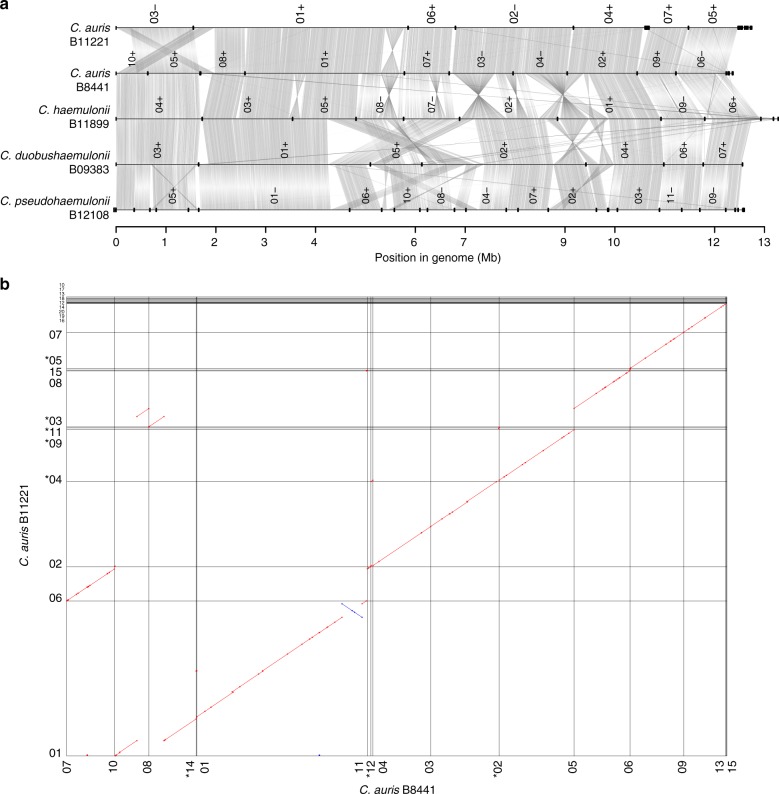
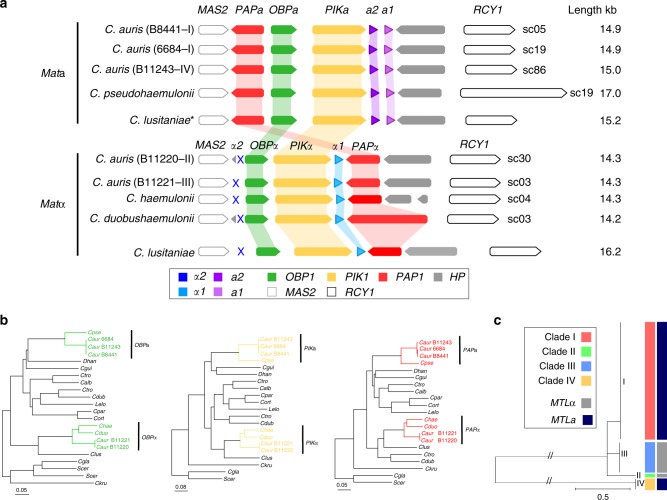
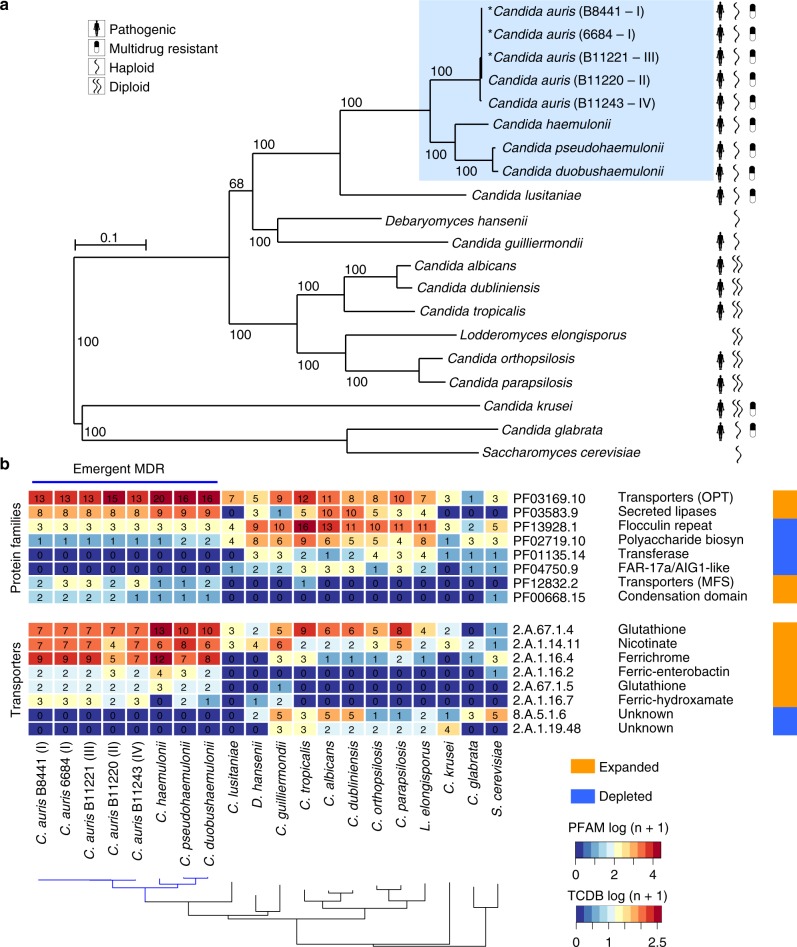
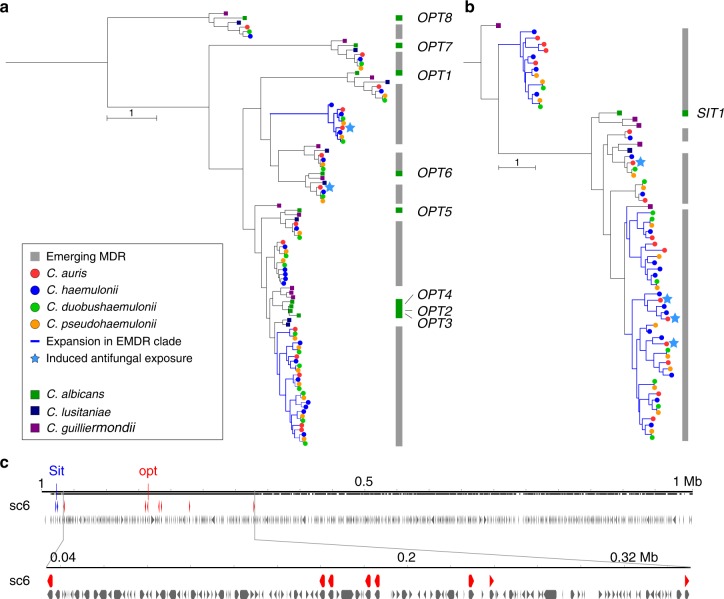
Candida auris is an emergent multidrug-resistant fungal pathogen causing increasing reports of outbreaks. While distantly related to C. albicans and C. glabrata , C. auris is closely related to rarely observed and often multidrug-resistant species from the C. haemulonii clade. Here, we analyze near complete genome assemblies for the four C. auris clades and three related species, and map intra- and inter-species rearrangements across the seven chromosomes. Using RNA-Seq-guided gene predictions, we find that most mating and meiosis genes are conserved and that clades contain either the MTL a or MTL α mating loci. Comparing the genomes of these emerging species to those of other Candida species identifies genes linked to drug resistance and virulence, including expanded families of transporters and lipases, as well as mutations and copy number variants in ERG11 . Gene expression analysis identifies transporters and metabolic regulators specific to C. auris and those conserved with related species which may contribute to differences in drug response in this emerging fungal clade.
Overview
The claims and statistics of this paper haven’t been checked yet.
Free: it reads the open-access text and checks the first 5 claims that cite a source we can check. Create a free account to check every claim.
Integrity signals
Registry
Cites
Statistics
Figures
Verification
Claims the paper makes
The claims and statistics of this paper haven’t been checked yet.
Free: it reads the open-access text and checks the first 5 claims that cite a source we can check. Create a free account to check every claim.
Claims other papers make about this one
Each is checked against this paper’s own text: does it say what the citing paper says it does?
The source backs part of the claim, not all of it — or backs it for a different population, condition or comparison.
In the citing paper
“Mutations in ERG11 have also been observed in Candida spp. and over 100 different ERG11 alleles have been described35.”
From Drug resistance and tolerance in fungi. (2020) · cites this paper as [35]
Experimental — accuracy not yet measuredThe source backs part of the claim, not all of it — or backs it for a different population, condition or comparison.
In the citing paper
“Furthermore, C. auris clades display substantial genetic diversity and show distinct phenotypic traits, especially diminished susceptibilities to antifungal therapies (11–14).”
From Transcriptomics and Phenotyping Define Genetic Signatures Associated with Echinocandin Resistance in Candida auris (2022) · cites this paper as [14]
Experimental — accuracy not yet measuredThe source backs part of the claim, not all of it — or backs it for a different population, condition or comparison.
In the citing paper
“It is worth noting that molecular mechanisms underlying the high rate of AMBR in C. auris remain largely enigmatic10,11.”
From Candida auris skin tropism and antifungal resistance are mediated by carbonic anhydrase Nce103 (2025) · cites this paper as [11]
Experimental — accuracy not yet measuredThe source backs part of the claim, not all of it — or backs it for a different population, condition or comparison.
In the citing paper
“Because U.S. isolates are closely related to those of South America and South Asia, we used the genome sequenced South Asian clade CA 0387 (B8441) to compare with C. albicans (4, 30 – 32).”
From Differential skin immune responses in mice intradermally infected with Candida auris and Candida albicans (2023) · cites this paper as [31]
Experimental — accuracy not yet measuredThe source backs part of the claim, not all of it — or backs it for a different population, condition or comparison.
In the citing paper
“multiple secreted lipases ( LIP ) for nutrient acquisition of lipids and adaptation (37, 38)”
From Candida auris metabolism and growth preferences in physiologically relevant skin-like conditions (2026) · cites this paper as [38]
Experimental — accuracy not yet measured
6 more claims about this paper
Create a free account to see every claim other papers make about this one.
Self-check
Percentages, sums and reported differences re-computed from the paper’s own numbers.
The self-check needs the paper’s full text.
Citations
Cites
Fast gapped-read alignment with Bowtie 2
Langmead, B., & Salzberg, S. L. (2012) · Nature Methods · doi:10.1038/nmeth.1923 · Cited by 56,400
Robinson, M. D., McCarthy, D. J., & Smyth, G. K. (2010) · Bioinformatics · doi:10.1093/bioinformatics/btp616 · Cited by 41,364
SPAdes: A New Genome Assembly Algorithm and Its Applications to Single-Cell Sequencing
Bankevich, A., Nurk, S., Antipov, D., Gurevich, A. A., Dvorkin, M., Kulikov, A. S., Lesin, V. M., Nikolenko, S. I., Pham, S., Prjibelski, A. D., et al. (2012) · Journal of Computational Biology · doi:10.1089/cmb.2012.0021 · Cited by 25,987
The variant call format and VCFtools
Danecek, P., Auton, A., Abecasis, G., Albers, C. A., Banks, E., DePristo, M. A., Handsaker, R. E., Lunter, G., Marth, G. T., Sherry, S. T., et al. (2011) · Bioinformatics · doi:10.1093/bioinformatics/btr330 · Cited by 16,200
RAxML-VI-HPC: maximum likelihood-based phylogenetic analyses with thousands of taxa and mixed models
Stamatakis, A. (2006) · Bioinformatics · doi:10.1093/bioinformatics/btl446 · Cited by 15,582
BUSCO: assessing genome assembly and annotation completeness with single-copy orthologs
Simão, F. A., Waterhouse, R. M., Ioannidis, P., Kriventseva, E. V., & Zdobnov, E. M. (2015) · Bioinformatics · doi:10.1093/bioinformatics/btv351 · Cited by 13,344
Conesa, A., Götz, S., García-Gómez, J. M., Terol, J., Talón, M., & Robles, M. (2005) · Bioinformatics · doi:10.1093/bioinformatics/bti610 · Cited by 11,495
tRNAscan-SE: A Program for Improved Detection of Transfer RNA Genes in Genomic Sequence
Lowe, T. M., & Eddy, S. R. (1997) · Nucleic Acids Research · doi:10.1093/nar/25.5.955 · Cited by 10,905
Statistical significance for genomewide studies
Storey, J. D., & Tibshirani, R. (2003) · Proceedings of the National Academy of Sciences · doi:10.1073/pnas.1530509100 · Cited by 9,692
Walker, B. J., Abeel, T., Shea, T., Priest, M., Abouelliel, A., Sakthikumar, S., Cuomo, C. A., Zeng, Q., Wortman, J., Young, S. K., et al. (2014) · PLoS ONE · doi:10.1371/journal.pone.0112963 · Cited by 9,197
Self-citation
Research works printed but not linked: 1
- Lockhart, S. R. et al. Simultaneous emergence of multidrug-resistant Candida auris on 3 continents confirmed by whole-genome sequencing and epidemiological analyses. Clin. Infect. Dis.64, 134–140 (2017); erratum 67, 987 (2018). PMC5215215 27988485
Cited by
Items 101–200 of 467
Emerging and future strategies in the management of recalcitrant Candida auris
Bandara, N., & Samaranayake, L. P. (2022) · Medical Mycology · doi:10.1093/mmy/myac008 · Cited by 52
Candida auris outbreak involving liver transplant recipients in a surgical intensive care unit
Theodoropoulos, N. M., Bolstorff, B., Bozorgzadeh, A., Brandeburg, C., Cumming, M., Daly, J. S., Ellison, R. T., Forsberg, K., Gade, L., Gibson, L., et al. (2020) · American Journal of Transplantation · doi:10.1111/ajt.16144 · Cited by 41
Self-citationComparative Transcriptomics Reveal Possible Mechanisms of Amphotericin B Resistance in Candida auris
Shivarathri, R., Jenull, S., Chauhan, M., Singh, A., Mazumdar, R., Chowdhary, A., Kuchler, K., & Chauhan, N. (2022) · Antimicrobial Agents and Chemotherapy · doi:10.1128/aac.02276-21 · Cited by 41
“Recent studies have indicated high levels of intrinsic expression of membrane transporters in AmBR C. auris strain B11210 (45).”
BackgroundInfluentialEix, E. F., Johnson, C. J., Wartman, K. M., Kernien, J. F., Meudt, J. J., Shanmuganayagam, D., Gibson, A. L. F., & Nett, J. E. (2022) · The Journal of Infectious Diseases · doi:10.1093/infdis/jiac094 · Cited by 41
Whole genome sequence of first Candida auris strain, isolated in Russia
Pchelin, I. M., Валерьевич, А. Д., Churina, M. A., Ryabinin, I. A., Vybornova, I. V., Апалько, С. В., Kruglov, A., Sarana, А. М., Taraskina, A. E., & Vasilyeva, N. V. (2019) · Medical Mycology · doi:10.1093/mmy/myz078 · Cited by 42
Kekana, D., Naicker, S. D., Shuping, L., Velaphi, S., Nakwa, F. L., Wadula, J., Govender, N. P., & GERMS-SA1, F. (2023) · Emerging infectious diseases · doi:10.3201/eid2910.230181 · Cited by 42
“All clades exhibit minimal intraclade genetic diversity but are separated from each other by tens to hundreds of thousands of single nucleotide polymorphisms (13,14).”
BackgroundCandida auris:a fungus with identity crisis
Vila, T. V. M., Sultan, A. S., Montelongo‐Jauregui, D., & Jabra‐Rizk, M. A. (2020) · Pathogens and Disease · doi:10.1093/femspd/ftaa034 · Cited by 42
Karmarkar, E. N., O’Donnell, K., Prestel, C., Forsberg, K., Gade, L., Jain, S., Schan, D., Chow, N., McDermott, D., Rossow, J., et al. (2021) · Annals of Internal Medicine · doi:10.7326/m21-2013 · Cited by 38
Self-citationOverview about Candida auris: What's up 12 years after its first description?
Désoubeaux, G., Coste, A. T., Imbert, C., & Hennequin, C. (2022) · Journal de Mycologie Médicale · doi:10.1016/j.mycmed.2022.101248 · Cited by 43
Maphanga, T. G., Mpembe, R. S., Naicker, S. D., Govender, N. P., & GERMS-SA, F. (2022) · Microbiology Spectrum · doi:10.1128/spectrum.01717-21 · Cited by 42
“The four main clades differ in their antifungal resistance profiles, with clade II being less resistant than clades I, III, and IV (10, 12).”
BackgroundRNA-based therapeutics to treat human fungal infections
Bruch, A., Kelani, A. A., & Blango, M. G. (2022) · Trends in Microbiology · doi:10.1016/j.tim.2021.09.007 · Cited by 39
“In humans, Cryptococcus gattii has proven to be a dangerous, infectious pathogen of immunocompetent individuals with poorly defined risk factors [3,4], Aspergillus fumigatus remains an ever-present danger to the immunocompromised [5], and Candida auris is threatening patients in hospitals with exceedingly high rates o…”
BackgroundMcTaggart, L. R., Cabrera, A. L., Cronin, K. I., & Kus, J. V. (2020) · Antimicrobial Agents and Chemotherapy · doi:10.1128/aac.00402-20 · Cited by 39
Application of Machine Learning Classifier to Candida auris Drug Resistance Analysis
Li, D., Wang, Y., Hu, W., Chen, F., Zhao, J., Chen, X., & Li, H. (2021) · Frontiers in Cellular and Infection Microbiology · doi:10.3389/fcimb.2021.742062 · Cited by 40
“Three candidate gene sets were selected in this study (Lockhart et al., 2017; Munoz et al., 2018; Chaabane et al., 2019; Rybak et al., 2020) ( Table S2 ).”
BackgroundMethodInfluentialSimm, C., Weerasinghe, H., Thomas, D. R., Harrison, P. F., Newton, H. J., Beilharz, T. H., & Traven, A. (2022) · Microbiology Spectrum · doi:10.1128/spectrum.00100-22 · Cited by 38
“albicans (36) suggested to us that its iron needs might be an Achilles heel, which our data fully support.”
BackgroundMarcelino, V. R., Irinyi, L., Eden, J., Meyer, W., Holmes, E. C., & Sorrell, T. C. (2019) · IMA Fungus · doi:10.1186/s43008-019-0012-8 · Cited by 41
On the Origin of Candida auris: Ancestor, Environmental Stresses, and Antiseptics
Sharma, M., & Chakrabarti, A. (2020) · mBio · doi:10.1128/mbio.02102-20 · Cited by 35
AlJindan, R. Y., AlEraky, D. M., Mahmoud, N., Abdalhamid, B. A., Almustafa, M., AbdulAzeez, S., & Borgio, J. F. (2020) · Journal of Fungi · doi:10.3390/jof7010018 · Cited by 39
“auris were associated with to increased resistance to fluconazole [36].”
BackgroundHigh-Throughput Profiling of Candida auris Isolates Reveals Clade-Specific Metabolic Differences
Brandt, P., Mirhakkak, M. H., Wagner, L., Driesch, D., Möslinger, A., Fänder, P., Schäuble, S., Panagiotou, G., & Vylkova, S. (2023) · Microbiology Spectrum · doi:10.1128/spectrum.00498-23 · Cited by 39
“Moreover, treatment with antifungal drugs enhanced the expression of known drug resistance genes and of several either unique or expanded gene families, including iron and oligopeptide transporters, secreted lipases, and metabolic regulators previously linked to drug resistance in the well-studied pathogen Candida alb…”
BackgroundInfluentialStavrou, A. A., Hansen, A. P., Lackner, M., Lass‐Flörl, C., & Boekhout, T. (2020) · Medical Mycology · doi:10.1093/mmy/myaa005 · Cited by 38
Kumar, M., Singh, A., Kumari, S., Kumar, P., Wasi, M., Mondal, A. K., Rudramurthy, S. M., Chakrabarti, A., Gaur, N. A., Gow, N. A. R., et al. (2020) · Biochimica et Biophysica Acta (BBA) - Molecular and Cell Biology of Lipids · doi:10.1016/j.bbalip.2020.158815 · Cited by 41
“reductase [3], sphingosine kinase [4], long-chain base-1-phosphate phosphatase [5], sphinganine C4-hydroxylase [6], ceramide synthases [7,8,9], alpha-hydroxylase”
BackgroundWang, Y., & Xu, J. (2022) · Computational and Structural Biotechnology Journal · doi:10.1016/j.csbj.2022.06.030 · Cited by 32
“These four strains were chosen because of their completeness in the genome assemblies and annotations [20].”
BackgroundInfluentialLima, S. L., Francisco, E. C., de Almeida, J. N., Santos, D. W. D. C. L., Carlesse, F., Queiroz‐Telles, F., Melo, A. S. D. A., & Colombo, A. L. (2020) · Journal of Fungi · doi:10.3390/jof6030110 · Cited by 36
“Accurate identification of this species complex has been carried out by molecular tools or by matrix-assisted laser desorption ionization time-of-flight mass spectrometry (MALDI-ToF MS) [1,5,6], and this represents a crucial step in driving antifungal therapy once these pathogens can be frequently characterized as mul…”
Salah, H., Sundararaju, S., Dalil, L., Salameh, S., Al-Wali, W., Tang, P., Abid, F. B., & Tsui, C. K. M. (2021) · Journal of Fungi · doi:10.3390/jof7030240 · Cited by 36
“The differential expression of ERG families and mutations in certain genes may contribute to the increased resistance [28,38]; however, the mechanism of amphotericin B resistance in C.”
BackgroundGenomic epidemiology describes introduction and outbreaks of antifungal drug-resistant Candida auris
Kappel, D., Gifford, H., Brackin, A. P., Abdolrasouli, A., Eyre, D. W., Jeffery, K. J., Schelenz, S., Aanensen, D. M., Brown, C. S., Borman, A. M., et al. (2024) · npj Antimicrobials and Resistance · doi:10.1038/s44259-024-00043-6 · Cited by 37
“Whilst there is low within-clade diversity, inter-clade diversity is high, with isolates between clades differing bythousandsofsinglenucleotidepolymorphisms(SNPs) 29 .”
Transcriptional Profiling of the Candida auris Response to Exogenous Farnesol Exposure
Jakab, Á., Balla, N., Ragyák, Á., Nagy, F., Kovács, F., Sajtos, Z., Tóth, Z., Borman, A. M., Pócsi, I., Baranyai, E., et al. (2021) · mSphere · doi:10.1128/msphere.00710-21 · Cited by 37
Fan, S., Zhan, P., Bing, J., Jiang, N., Huang, Y., Chen, D., Hu, T., Du, H., & Huang, G. (2021) · Virulence · doi:10.1080/21505594.2021.1928410 · Cited by 34
“Consistently, BJCA002 was found to belong to the South African clade, among which all reported isolates carry an MTLα locus; strain BJCA001 belongs to the South Asian clade, among which all reported isolates carry an MTLa locus [31].”
BackgroundNarayanan, A., Selvakumar, P., Siddharthan, R., & Sanyal, K. (2022) · Microbiology Spectrum · doi:10.1128/spectrum.00634-22 · Cited by 36
“nucleotide polymorphisms (SNPs) showing a clade-based bias (14).”
BackgroundSingh, S., Barbarino, A. M., Youssef, E. G., Coleman, D., Gebremariam, T., & Ibrahim, A. S. (2023) · Journal of Fungi · doi:10.3390/jof9010103 · Cited by 34
Tan, Y. E., Teo, J. Q.-M., Rahman, N. B. A., Ng, O. T., Marimuthu, K., Tan, A. L., Koh, T. H., & Ong, R. T. (2019) · International Journal of Antimicrobial Agents · doi:10.1016/j.ijantimicag.2019.09.016 · Cited by 37
Mechanisms of Azole Resistance and Trailing in Candida tropicalis Bloodstream Isolates
Chen, P., Chuang, Y., Wu, U., Sun, H., Wang, J., Sheng, W., Chen, Y., & Chang, S. (2021) · Journal of Fungi · doi:10.3390/jof7080612 · Cited by 36
“Azole non-WT isolates exhibited the highest and lowest median expression levels of the CDR2 and CDR1 genes compared to low and high trailing WT isolates, while there was no difference between those in low and high trailing WT isolates (Figure 2B).”
BackgroundInfluentialPezzotti, G., Kobara, M., Asai, T., Nakaya, T., Miyamoto, N., Adachi, T., Yamamoto, T., Kanamura, N., Ohgitani, E., Marin, E., et al. (2021) · Frontiers in Microbiology · doi:10.3389/fmicb.2021.769597 · Cited by 33
“Among these methods, the clustered regularly interspaced short palindromic repeat (CRISPR)-Cas9 genome modification systems, which was originally expression-constructed for C. albicans species, has recently been modified to enable genetic analyses of C. auris (Munoz et al., 2018).”
MethodJenull, S., Shivarathri, R., Tsymala, I., Penninger, P., Trinh, P.-C., Nogueira, F., Chauhan, M., Singh, A., Petryshyn, A., Stoiber, A., et al. (2022) · mBio · doi:10.1128/mbio.00799-22 · Cited by 32
“Additionally, despite rather low genetic diversities within a clade (14), phenotypic intraclade variations, such as in antifungal susceptibility profiles (13, 33), cell wall structures (28), or aggregate formation (63), are known.”
BackgroundTranscriptome Signatures Predict Phenotypic Variations of Candida auris
Jenull, S., Tscherner, M., Kashko, N., Shivarathri, R., Stoiber, A., Chauhan, M., Petryshyn, A., Chauhan, N., & Kuchler, K. (2021) · Frontiers in Cellular and Infection Microbiology · doi:10.3389/fcimb.2021.662563 · Cited by 32
Chen, Y., Wu, X., Xu, C., Huang, J., Zhang, L., Qiu, P., Zheng, D., Chen, W., & Zhang, S. (2025) · International Journal of Molecular Medicine · doi:10.3892/ijmm.2025.5614 · Cited by 37
“This genetic architecture suggests that traditional antifungal strategies, which focus solely on resistance mechanisms, may inadvertently select hypervirulent clones (164).”
Discovery of the Diploid Form of the Emerging Fungal Pathogen Candida auris
Fan, S., Li, C., Bing, J., Huang, G., & Du, H. (2020) · ACS Infectious Diseases · doi:10.1021/acsinfecdis.0c00282 · Cited by 32
Abe, M., Katano, H., Nagi, M., Higashi, Y., Sato, Y., Kikuchi, K., Hasegawa, H., & Miyazaki, Y. (2020) · PLoS ONE · doi:10.1371/journal.pone.0243223 · Cited by 33
“auris [37,38]; however, we did not investigate the differences of these virulence factors in this experiment and further investigations in this area are, therefore, warranted.”
BackgroundComparison of Two Commercially Available qPCR Kits for the Detection of Candida auris
Sattler, J., Noster, J., Brunke, A., Plum, G., Wiegel, P., Kurzai, O., Meis, J. F. G. M., & Hamprecht, A. G. (2021) · Journal of Fungi · doi:10.3390/jof7020154 · Cited by 33
Khan, T., Suleman, M., Ali, S. S., Sarwar, M. F., Ali, I., Ali, L., Khan, A., Rokhan, B., Wang, Y., Zhao, R., et al. (2022) · Computers in Biology and Medicine · doi:10.1016/j.compbiomed.2022.105462 · Cited by 33
Induction of amphotericin B resistance in susceptible Candida auris by extracellular vesicles
Chan, W., Chow, F. W.-N., Tsang, C.-C., Liu, X., Yao, W., Chan, T. T.-Y., Siu, G. K.-H., Ho, A. Y.-M., Luk, K. S., Lau, S. K.-P., et al. (2022) · Emerging Microbes & Infections · doi:10.1080/22221751.2022.2098058 · Cited by 31
Pathogenesis, Prophylaxis, and Treatment of Candida auris
Preda, M., Chivu, R. D., Diţu, L.-M., Popescu, O., & Manolescu, L. S. C. (2024) · Biomedicines · doi:10.3390/biomedicines12030561 · Cited by 38
“SAPs are one of the primary contributory factors of Candida’s pathogenicity [33].”
InfluentialChu, S., McCormick, T. S., Lazarus, H. M., Leal, L. O., & Ghannoum, M. A. (2021) · Clinical Immunology · doi:10.1016/j.clim.2021.108731 · Cited by 32
Diagnostic Allele-Specific PCR for the Identification of Candida auris Clades
Carolus, H., Jacobs, S., Lobo Romero, C., Deparis, Q., Cuomo, C. A., Meis, J. F., & Van Dijck, P. (2021) · Journal of Fungi · doi:10.3390/jof7090754 · Cited by 29
Self-citationDatta, A., Das, D., Nett, J. E., Vyas, J. M., Lionakis, M. S., & Thangamani, S. (2023) · Microbiology Spectrum · doi:10.1128/spectrum.02215-23 · Cited by 36
The skin mycobiome and intermicrobial interactions in the cutaneous niche
Tuor, M., & LeibundGut-Landmann, S. (2023) · Current Opinion in Microbiology · doi:10.1016/j.mib.2023.102381 · Cited by 30
A decade after the emergence of Candida auris: what do we know?
ElBaradei, A. (2020) · European Journal of Clinical Microbiology & Infectious Diseases · doi:10.1007/s10096-020-03886-9 · Cited by 33
“Interestingly, Munoz and colleagues [10] revealed that each clade harbors either MTLa or MLTα mating loci, suggesting that C.”
BackgroundInfluentialRosario-Colon, J., EBERLE, K. E., Adams, A., Courville, E., & Xin, H. (2021) · International Journal of Molecular Sciences · doi:10.3390/ijms22116162 · Cited by 31
“Hwp1, on the other hand, is expressed on the cell surface during hyphal morphology [54]; however, some evidence does suggest that it may also be expressed during pseudohyphal morphology [55], which has been induced in C.”
BackgroundUsing genomics to understand the mechanisms of virulence and drug resistance in fungal pathogens
Schikora-Tamarit, M. À., & Gabaldón, T. (2022) · Biochemical Society Transactions · doi:10.1042/bst20211123 · Cited by 35
Transcriptional and translational landscape of Candida auris in response to caspofungin
Zamith-Miranda, D., Amatuzzi, R. F., Munhoz da Rocha, I. F., Martins, S. T., Lucena, A. C. R., Vieira, A. Z., Trentin, G., Almeida, F., Rodrigues, M. L., Nakayasu, E. S., et al. (2021) · Computational and Structural Biotechnology Journal · doi:10.1016/j.csbj.2021.09.007 · Cited by 29
“We also found 30 transcripts upregulated during both caspofungin (this study) and voriconazole treatments [39].”
BackgroundInfluentialCandida auris —macrophage cellular interactions and transcriptional response
Miramón, P., Pountain, A. W., & Lorenz, M. C. (2023) · Infection and Immunity · doi:10.1128/iai.00274-23 · Cited by 29
“Genomic studies have shown that genes associated with virulence in other species have expanded gene families (32).”
BackgroundMalavia-Jones, D., Farrer, R. A., Stappers, M. H. T., Edmondson, M. B., Borman, A. M., Johnson, E. M., Lipke, P. N., & Gow, N. A. R. (2023) · The Cell Surface · doi:10.1016/j.tcsw.2023.100110 · Cited by 29
Self-citationCandida auris Whole-Genome Sequence Benchmark Dataset for Phylogenomic Pipelines
Welsh, R. M., Misas, E., Forsberg, K., Lyman, M., & Chow, N. A. (2021) · Journal of Fungi · doi:10.3390/jof7030214 · Cited by 30
“auris genomic data has revealed that most of the detected cases are stratified into four major clades (Clades I, II, III, and IV) except for a single representative case describing a potential fifth clade (Clade V) [8,9].”
BackgroundSelf-citationImmunopathogenesis of Emerging Candida auris and Candida haemulonii Strains
Pharkjaksu, S., Boonmee, N., Mitrpant, C., & Ngamskulrungroj, P. (2021) · Journal of Fungi · doi:10.3390/jof7090725 · Cited by 31
“haemulonii are phylogenetically related species in the Metschnikowiaceae family, and they have multidrug-resistance properties [34].”
BackgroundWilliamson, B., Wilk, A. S., Guerrero, K. D., Mikulski, T. D., Elias, T. N., Sawh, I., Cancino-Prado, G., Gardam, D., Heath, C. H., Govender, N. P., et al. (2021) · Antimicrobial Agents and Chemotherapy · doi:10.1128/aac.01624-21 · Cited by 30
Wang, Y., & Xu, J. (2024) · Journal of Fungi · doi:10.3390/jof10010086 · Cited by 31
Alanio, A., Snell, H. M., Cordier, C., Desnos-Olivier, M., Dellière, S., Aissaoui, N., Sturny-Leclère, A., Da Silva, E., Eblé, C., Rouveau, M., et al. (2022) · Microbiology Spectrum · doi:10.1128/spectrum.01833-22 · Cited by 28
“2) was used as the reference genome for variant calling (26).”
MethodSelf-citationCollateral sensitivity counteracts the evolution of antifungal drug resistance in Candida auris
Carolus, H., Sofras, D., Boccarella, G., Jacobs, S., Biriukov, V. V., Goossens, L., Chen, A., Vantyghem, I., Verbeeck, T., Pierson, S., et al. (2024) · Nature Microbiology · doi:10.1038/s41564-024-01811-w · Cited by 31
“Strain B8441 can be considered the type strain for C. auris , as it is the only curated C. auris genome on Candida Genome Database 94 (candidagenome.org) and one of the most commonly used reference strains in research 9,46,56,57,95–100 .”
Raman Metabolomics of Candida auris Clades: Profiling and Barcode Identification
Pezzotti, G., Kobara, M., Nakaya, T., Imamura, H., Fujii, T., Miyamoto, N., Adachi, T., Yamamoto, T., Kanamura, N., Ohgitani, E., et al. (2022) · International Journal of Molecular Sciences · doi:10.3390/ijms231911736 · Cited by 31
“Despite being drug resistant and hig ly virulent [8,81], its ce l walls appear to posse s l w impermeability/hyd ophobicity and scarce immune recognition blocking.”
BackgroundYi, Q., Xiao, M., Fan, X., Zhang, G., Yang, Y., Zhang, J., Duan, S., Cheng, J., Li, Y., Zhou, M., et al. (2021) · Frontiers in Cellular and Infection Microbiology · doi:10.3389/fcimb.2021.628828 · Cited by 51
“haemulonii complex (also refered as multidrug-resistant [MDR] complex) (Muñoz et al., 2018).”
BackgroundMethodRapid in vitro evolution of flucytosine resistance in Candida auris
Phan-Canh, T., Nguyen-Le, D.-M., Luu, P., Khunweeraphong, N., & Kuchler, K. (2025) · mSphere · doi:10.1128/msphere.00977-24 · Cited by 30
“The bioinformatics pipeline was developed based on parts of MycoSNP (39, 45) available at github.com/kakulab/5FC-Evo-2024.”
Navarro-Muñoz, J. C., de Jong, A. W., van den Ende, B. G., Haas, P., Then, E., Tap, R. M., Collemare, J., & Hagen, F. (2019) · Mycopathologia · doi:10.1007/s11046-019-00404-0 · Cited by 27
Insights into the Multi-Azole Resistance Profile in Candida haemulonii Species Complex
Silva, L. N., Ramos, L. S., de Oliveira, S. S. C., Magalhães, L. B., Squizani, E. D., Kmetzsch, L., Vainstein, M. H., Branquinha, M. H., & dos Santos, A. L. S. (2020) · Journal of Fungi · doi:10.3390/jof6040215 · Cited by 27
“haemulonii, which appeared as the most branched species [23].”
BackgroundEnnis, C. L., Hernday, A. D., & Nobile, C. J. (2021) · Microbiology Spectrum · doi:10.1128/spectrum.01820-21 · Cited by 23
Scott, N. E., Erayil, S. E., Kline, S. E., & Selmecki, A. M. (2023) · Antimicrobial Agents and Chemotherapy · doi:10.1128/aac.00543-23 · Cited by 30
Small molecules for combating multidrug-resistant superbug Candida auris infections
Tu, J., Liu, N., Huang, Y., Yang, W., & Sheng, C. (2022) · Acta Pharmaceutica Sinica B · doi:10.1016/j.apsb.2022.08.001 · Cited by 29
“auris infections and was more effective than caspofungin and anidulafungin (9)(61,88,89).”
BackgroundSatała, D., Juszczak, M., Wronowska, E., Surowiec, M., Kulig, K., Kozik, A., Rąpała‐Kozik, M., & Karkowska‐Kuleta, J. (2022) · Cellular Microbiology · doi:10.1155/2022/2599136 · Cited by 28
Candida haemulonii complex, an emerging threat from tropical regions?
Françoise, U., Desnos‐Ollivier, M., Govic, Y. L., Sitbon, K., Valentino, R., Peugny, S., Chouaki, T., Mazars, E., Paugam, A., Nicolas, M., et al. (2023) · PLoS neglected tropical diseases · doi:10.1371/journal.pntd.0011453 · Cited by 26
Ramos, L. S., Barbosa, P. F., Lorentino, C. M. A., Lima, J. C., Braga, A. L., Lima, R., Giovanini, L., Casemiro, A. L., Siqueira, N. L. M., da Costa, S. C., et al. (2025) · Current Research in Microbial Sciences · doi:10.1016/j.crmicr.2025.100354 · Cited by 33
Biswas, C., Wang, Q., van Hal, S. J., Eyre, D. W., Hudson, B. J., Halliday, C. L., Mazsewska, K., Gordon, A. K., Lee, A. S., Irinyi, L., et al. (2020) · Open Forum Infectious Diseases · doi:10.1093/ofid/ofaa158 · Cited by 29
“4 • ofid • BRIEF REPORT notion these are clade I–specific markers of resistance [1, 17].”
BackgroundNarayanan, A., Vadnala, R. N., Ganguly, P., Selvakumar, P., Rudramurthy, S. M., Prasad, R., Chakrabarti, A., Siddharthan, R., & Sanyal, K. (2021) · mBio · doi:10.1128/mbio.00905-21 · Cited by 28
“For determining the transcriptional status of centromeres, the raw sequencing reads (SRR6900290, SRR6900291, SRR6900292, and SRR6900293) (30) were aligned to the reference genome of clade 1 (GenBank assembly GCA_002759435.”
BackgroundMethodInfluentialCopy number variants of ERG11: Mechanism of azole resistance in Candida parapsilosis
Ning, Y., Dai, R., Zhang, L., Xu, Y., & Xiao, M. (2024) · The Lancet Microbe · doi:10.1016/s2666-5247(23)00294-x · Cited by 25
Parallel expansion and divergence of an adhesin family in pathogenic yeasts
Smoak, R. A., Snyder, L. F., Fassler, J. S., & He, B. Z. (2023) · GENETICS · doi:10.1093/genetics/iyad024 · Cited by 25
Moreira, D., Ruiz, L. D. S., Leite-Jr, D. P., Auler, M. E., Ramos, R. T. B., Costa, V. T., Lara, B. R., Gasparetto, A., Gandra, R. F., Melhem, M. D. S. C., et al. (2021) · Mycopathologia · doi:10.1007/s11046-021-00556-y · Cited by 28
Nanotechnology-Based Strategies to Combat Multidrug-Resistant Candida auris Infections
Hetta, H. F., Ramadan, Y. N., Al-Kadmy, I. M. S., Ellah, N. H. A., Shbibe, L., & Battah, B. (2023) · Pathogens · doi:10.3390/pathogens12081033 · Cited by 24
Ware, A., Johnston, W., Delaney, C., Butcher, M. C., Ramage, G., Price, L., Butcher, J. P., & Kean, R. (2025) · Apmis · doi:10.1111/apm.70022 · Cited by 27
White-Brown switching controls phenotypic plasticity and virulence of Candida auris
Phan-Canh, T., Jenull, S., Bitencourt, T. A., Seiser, S., Moser, D., Motamedi, M., Chowdhary, A., Elbe‐Bürger, A., & Kuchler, K. (2025) · Cell Reports · doi:10.1016/j.celrep.2025.115976 · Cited by 24
Repositioning Antimicrobial Peptides Against WHO‐Priority Fungi
Roque‐Borda, C. A., Medina‐Alarcón, K. P., Pereira, J. P. S. G., Sevilhano, T. C. D. A., Aguilar‐Morón, B., Díaz‐Cárdenas, F., da Cruz, L. S., Júnior, F. H. X., Vicente, E. F., Perdigão, J., et al. (2025) · Advanced Science · doi:10.1002/advs.202509567 · Cited by 24
Essential Oils against Candida auris—A Promising Approach for Antifungal Activity
Kowalczyk, A. (2024) · Antibiotics · doi:10.3390/antibiotics13060568 · Cited by 26
Zhang, W., Cao, X., Liu, C., & Gao, S. (2025) · Frontiers in Microbiology · doi:10.3389/fmicb.2025.1694108 · Cited by 24
Whole Genome Sequence of Alternaria alternata, the Causal Agent of Black Spot of Kiwifruit
Huang, K. Q., Tang, J., Zou, Y., Sun, X., Lan, J., Wang, W., Xu, P., Wu, X., Ma, R., Wang, Q., et al. (2021) · Frontiers in Microbiology · doi:10.3389/fmicb.2021.713462 · Cited by 27
Proline catabolism is a key factor facilitating Candida albicans pathogenicity
Silao, F. G. S., Jiang, T., Bereczky-Veress, B., Kühbacher, A., Ryman, K., Uwamohoro, N., Jenull, S., Nogueira, F., Ward, M., Lion, T., et al. (2023) · PLoS Pathogens · doi:10.1371/journal.ppat.1011677 · Cited by 24
Jenull, S., Tscherner, M., Mair, T., & Kuchler, K. (2020) · Journal of Fungi · doi:10.3390/jof6030182 · Cited by 23
Four genomic clades of Candida auris identified in Canada, 2012–2019
De Luca, D. G., Alexander, D. C., Dingle, T. C., Dufresne, P. J., Hoang, L. M., Kus, J. V., Schwartz, I. S., Mulvey, M. R., & Bharat, A. (2022) · Medical Mycology · doi:10.1093/mmy/myab079 · Cited by 22
The diverse genomes of Candida auris
Gifford, H., Rhodes, J., & Farrer, R. A. (2024) · The Lancet Microbe · doi:10.1016/s2666-5247(24)00135-6 · Cited by 22
Self-citationGenomics insights of candidiasis: mechanisms of pathogenicity and drug resistance
Huang, X., Dong, Q., Zhou, Q., Fang, S., Xu, Y., Hu, L., Chen, J., Li, X. Y., Qin, H., Mu, D., et al. (2025) · Frontiers in Microbiology · doi:10.3389/fmicb.2025.1531543 · Cited by 24
Genomic epidemiology and antifungal resistance of emerging Trichophyton indotineae in China
Xie, W., Liang, G., Kong, X., Tsui, C. K. M., She, X., Liu, W., & Li, X. (2025) · Emerging Microbes & Infections · doi:10.1080/22221751.2025.2498571 · Cited by 23
“Whole genome sequencing (WGS) approach is useful for investigating the epidemiology and evolution of microbial pathogens, and characterizing potential resistance mechanisms [13].”
Small molecules restore azole activity against drug-tolerant and drug-resistant Candida isolates
Alabi, P., Gautier, C., Murphy, T. P., Gu, X., Lepas, M., Aimanianda, V., Sello, J. K., & Ene, I. V. (2023) · mBio · doi:10.1128/mbio.00479-23 · Cited by 30
Activities of nine antifungal agents against Candida auris biofilms
Chatzimoschou, A., Giampani, A., Meis, J. F. G. M., & Roilides, E. (2020) · Mycoses · doi:10.1111/myc.13223 · Cited by 24
Candida auris in skilled nursing facilities
Yune, P. S., Coe, J., Rao, M., & Lin, M. Y. (2023) · Therapeutic Advances in Infectious Disease · doi:10.1177/20499361231189958 · Cited by 23
The intricate link between iron, mitochondria and azoles in Candida species
Genechten, W. V., Vergauwen, R., & Dijck, P. V. (2023) · FEBS Journal · doi:10.1111/febs.16977 · Cited by 26
“On the other hand, in C. auris a ferric reductase and a high affinity iron transporter, FRP1 and FTH1 respectively, where upregulated in response to voriconazole treatment [51].”
Candida auris: The Canary in the Mine of Antifungal Drug Resistance
Montoya, M. C., Moye-Rowley, W. S., & Krysan, D. J. (2019) · ACS Infectious Diseases · doi:10.1021/acsinfecdis.9b00239 · Cited by 21
Robbins, N., & Cowen, L. E. (2025) · Current Biology · doi:10.1016/j.cub.2025.01.063 · Cited by 22
Candida auris in Austria—What Is New and What Is Different
Spettel, K., Kriz, R., Wu, C. C., Achter, L., Schmid, S., Galazka, S., Selitsch, B., Camp, I., Makristathis, A., Lagler, H., et al. (2023) · Journal of Fungi · doi:10.3390/jof9020129 · Cited by 21
“auris isolates Cau1-5 with B8441 (MTLa) and B11221 (MTLα) was generated to determine mating type [17].”
BackgroundMethodResultInfluentialIntra-clade Heterogeneity in Candida auris: Risk of Management
Fayed, B. E., Lazreg, I. K., Al-Humaidi, R. B., Qasem, M. A. A. A., Alajmy, B. M. G. N., Bojbarah, F. M. A. M., Senok, A. C., Husseiny, M. I., & Soliman, S. S. M. (2023) · Current Microbiology · doi:10.1007/s00284-023-03416-8 · Cited by 21
“Different susceptibility patterns to antifungals such as azoles were reported depending on the strain’s geographical origin, although the same gene is the target [35].”
BackgroundRhodes, J. L., Jacobs, J. L., Dennis, E. K., Manjari, S. R., Banavali, N. K., Marlow, R., Rokebul, M. A., Chaturvedi, S., & Chaturvedi, V. P. (2024) · Antimicrobial Agents and Chemotherapy · doi:10.1128/aac.00911-24 · Cited by 21
“Of these, 1,913 were also found to be differentially expressed in response to 5-FC, and all the common DEGs from Muñoz et al. were also found to be common, suggesting a common regulatory network in response to drug pressure in C. auris (23).”
Lima, S. L., Rossato, L. L., & Melo, A. S. D. A. (2020) · Microbial Pathogenesis · doi:10.1016/j.micpath.2020.104461 · Cited by 20
Pezzotti, G., Kobara, M., Nakaya, T., Imamura, H., Asai, T., Miyamoto, N., Adachi, T., Yamamoto, T., Kanamura, N., Ohgitani, E., et al. (2022) · Frontiers in Microbiology · doi:10.3389/fmicb.2022.896359 · Cited by 20
Cha, H., Won, D., & Bahn, Y.-S. (2025) · mBio · doi:10.1128/mbio.02475-23 · Cited by 19
Candida auris cells form giant lipid droplets to survive in harsh environments
Zheng, Q., Li, C., Hu, T., Bing, J., Nobile, C. J., Chu, H., & Huang, G. (2025) · Communications Biology · doi:10.1038/s42003-025-08204-7 · Cited by 19
Toepfer, S., Lackner, M., Keniya, M. V., & Monk, B. C. (2023) · Journal of Fungi · doi:10.3390/jof9020168 · Cited by 20
“Both J. Fungi 2023, 9, 168. https://doi.org/10.3390/jof9020168 https://www.mdpi.com/journal/jof strains are susceptible to Fluconazole (FLC), Amphotericin B (AMB), and the echinocandins Anidulafungin and Caspofungin [6,7,10] but, compared to JCM 15448T, B11220 exhibits a 4-fold higher minimum inhibitory concentration…”
BackgroundInfluentialThe challenges of the genome-based identification of antifungal resistance in the clinical routine
Alastruey‐Izquierdo, A., & Martín-Galiano, A. J. (2023) · Frontiers in Microbiology · doi:10.3389/fmicb.2023.1134755 · Cited by 20
Metadata
- Authors
- Muñoz, J. F., Gade, L., Chow, N. A., Loparev, V. N., Juieng, P., Berkow, E. L., Farrer, R. A., Litvintseva, A. P., & Cuomo, C. A.
- Affiliations
- Broad Institute (US)
- Centers for Disease Control and Prevention (US)
- Corresponding author
- Litvintseva, Anastasia P.
- Cuomo, Christina A.
- ORCID
- Venue
- Nature Communications
- Published
- 2018-12-17
- Volume
- 9
- Issue
- 1
- Pages
- 5346-5346
- ISSN
- 2041-1723 (ISSN-L)
- PMC
- PMC6297351
- OpenAlex
- W2951867871
- Semantic Scholar
- 66e56b3513c248d181f77faab6a93d9ab844712d
- Cited by
- 458
- References
- 64
- Citations by year
- 2026: 50 · 2025: 67 · 2024: 59 · 2023: 71 · 2022: 48 · 2021: 59 · 2020: 64 · 2019: 31 · 2018: 7
- FWCI
- 30.45
- Type
- journal article
- Language
- en
- Open access
- gold
- doi.org
- Licence
- cc-by
- creativecommons.org/licenses/by/4.0 (tdm)
- creativecommons.org/licenses/by/4.0 (vor)
- Locations
- Nature Communications (publishedVersion, cc-by)
- bioRxiv (Cold Spring Harbor Laboratory) (acceptedVersion, cc-by)
- Europe PMC (PubMed Central) (publishedVersion, cc-by)
- PubMed Central (publishedVersion, cc-by)
- PubMed (publishedVersion)
- RePEc: Research Papers in Economics (submittedVersion)
- DOAJ (DOAJ: Directory of Open Access Journals) (submittedVersion, cc-by-sa)
- DOAJ (DOAJ: Directory of Open Access Journals) (submittedVersion)
- Funders
- U.S. Department of Health and Human Services (U19-AI110818)
- National Institutes of Health
- National Institute of Allergy and Infectious Diseases (U19AI110818)
- Topics
- Health Sciences › Medicine › Infectious Diseases › Antifungal resistance and susceptibility
- Life Sciences › Biochemistry, Genetics and Molecular Biology › Molecular Biology › Fungal and yeast genetics research
- Life Sciences › Immunology and Microbiology › Microbiology › Yeasts and Rust Fungi Studies
- Keywords
- Candida auris, multidrug resistance, meiosis genes, virulence genes, genome rearrangement, ERG11, copy number variation, drug transporters, lipase, gene expression, emerging fungal pathogens
- MeSH terms
- Whole Genome Sequencing, Antifungal Agents, Candida, Candidiasis, Cytochrome P-450 Enzyme System, Microbial Sensitivity Tests, Virulence, Genome, Fungal, Communicable Diseases, Emerging, Drug Resistance, Multiple, Fungal
About these checks
Registry, retraction, Cites and statistics results are computed, not judged, with one exception: a printed reference that no index lists is read once by a model before it counts as a citation error. Claims are extracted by a model and kept only when their quote appears verbatim in the text; each cited source is then checked, with a model’s help, for whether it says what the claim relies on. Those verdicts can be wrong — read the claim’s quote and the cited source before relying on one.
Statistics and arithmetic are recomputed, not judged.
Confidence bands are shown only for fields calibrated on our annotated test set. None is calibrated yet, so no band is shown.
What counts as a claim ›How we measure confidence ›How we check this ›
Are you an author, or do you see a problem with this page? Request a review
Data sources
Bibliographic data: Semantic Scholar, OpenAlex, Crossref.
Contains information from the Semantic Scholar Academic Graph Datasets, made available under the ODC Attribution License (ODC-BY 1.0).
Semantic Scholar’s data is described in: Kinney, R., et al. (2023). The Semantic Scholar Open Data Platform. arXiv:2301.10140.
