

Genomic insights into multidrug-resistance, mating and virulence in Candida auris and related emerging species
Open accessPublished version of a preprint
The DOI matches its Crossref record; 64 of the 64 references it cites were found in a registry or an index.
Abstract
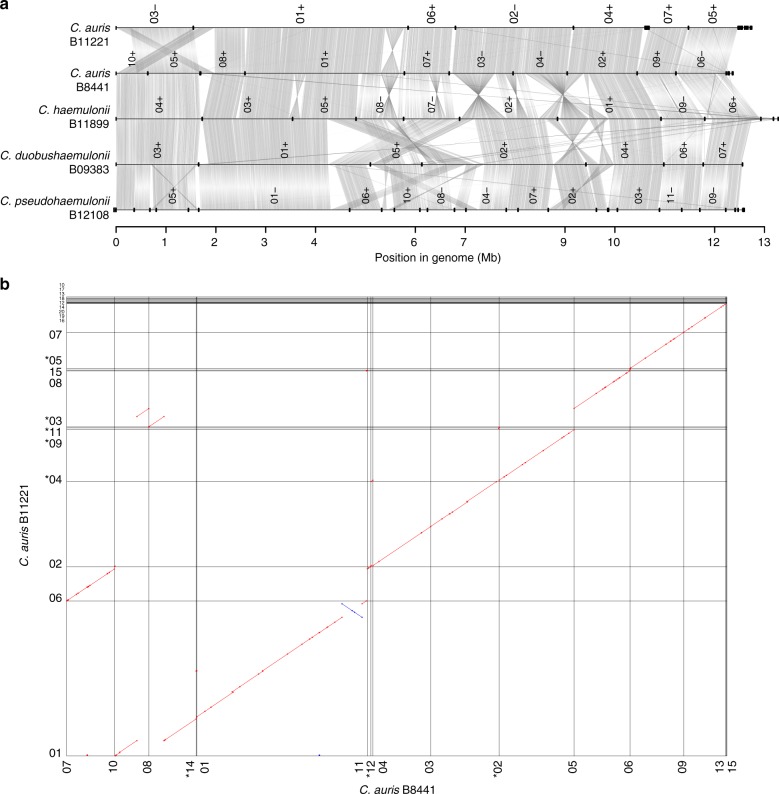
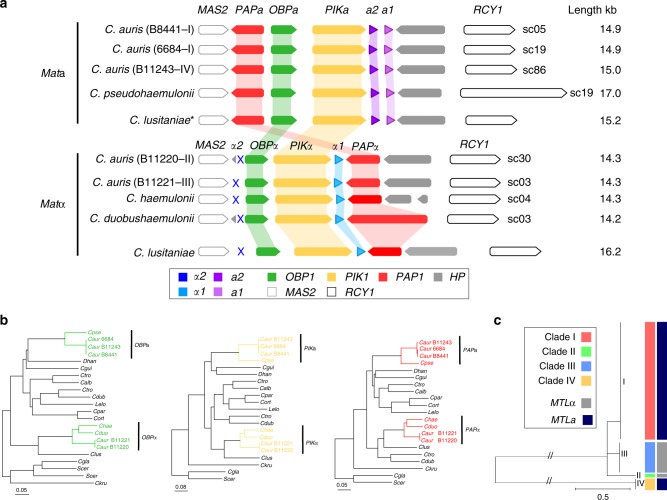
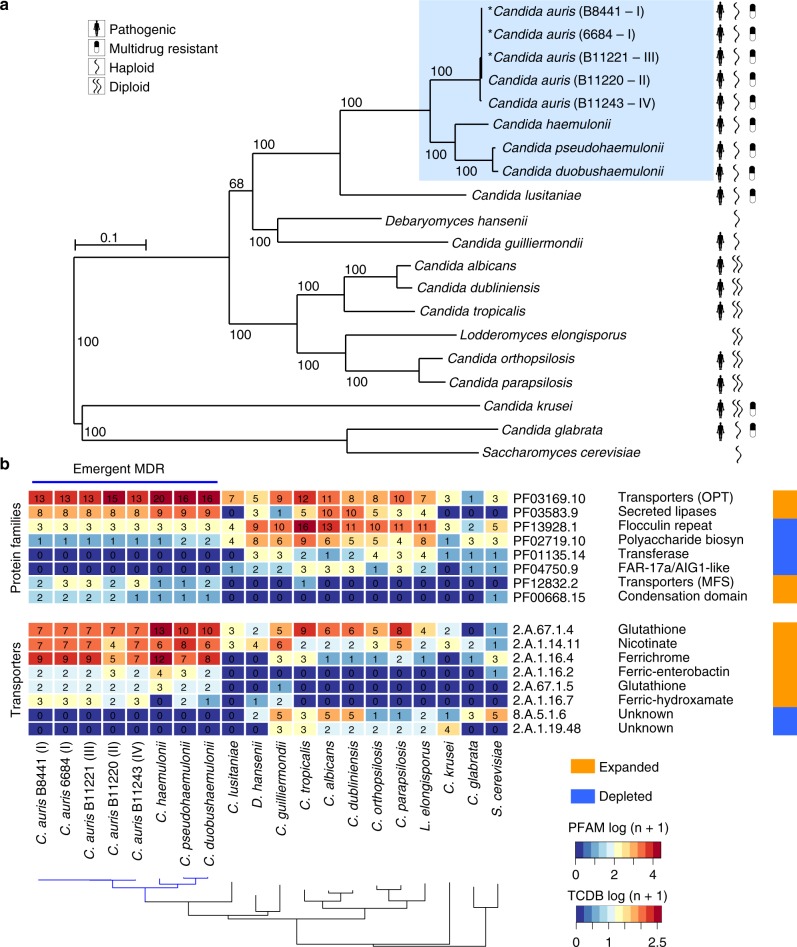
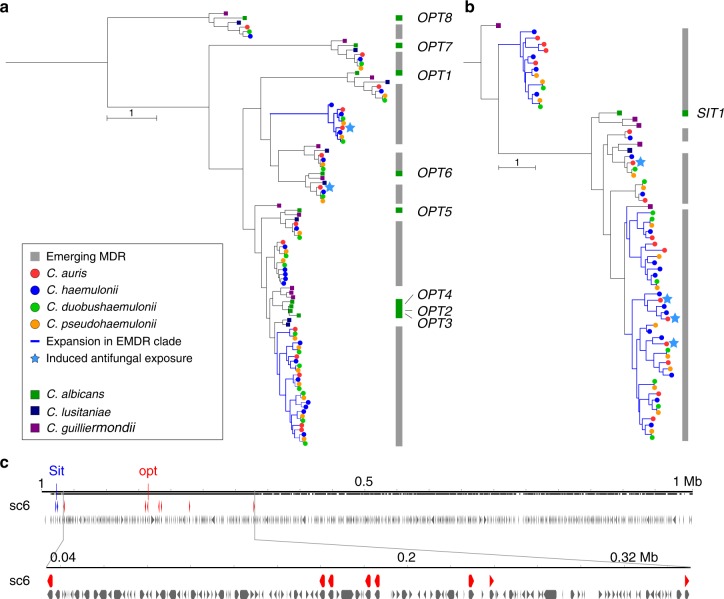
Candida auris is an emergent multidrug-resistant fungal pathogen causing increasing reports of outbreaks. While distantly related to C. albicans and C. glabrata , C. auris is closely related to rarely observed and often multidrug-resistant species from the C. haemulonii clade. Here, we analyze near complete genome assemblies for the four C. auris clades and three related species, and map intra- and inter-species rearrangements across the seven chromosomes. Using RNA-Seq-guided gene predictions, we find that most mating and meiosis genes are conserved and that clades contain either the MTL a or MTL α mating loci. Comparing the genomes of these emerging species to those of other Candida species identifies genes linked to drug resistance and virulence, including expanded families of transporters and lipases, as well as mutations and copy number variants in ERG11 . Gene expression analysis identifies transporters and metabolic regulators specific to C. auris and those conserved with related species which may contribute to differences in drug response in this emerging fungal clade.
Overview
The claims and statistics of this paper haven’t been checked yet.
Free: it reads the open-access text and checks the first 5 claims that cite a source we can check. Create a free account to check every claim.
Integrity signals
Registry
Cites
Statistics
Figures
Verification
Claims the paper makes
The claims and statistics of this paper haven’t been checked yet.
Free: it reads the open-access text and checks the first 5 claims that cite a source we can check. Create a free account to check every claim.
Claims other papers make about this one
Each is checked against this paper’s own text: does it say what the citing paper says it does?
The source backs part of the claim, not all of it — or backs it for a different population, condition or comparison.
In the citing paper
“Mutations in ERG11 have also been observed in Candida spp. and over 100 different ERG11 alleles have been described35.”
From Drug resistance and tolerance in fungi. (2020) · cites this paper as [35]
Experimental — accuracy not yet measuredThe source backs part of the claim, not all of it — or backs it for a different population, condition or comparison.
In the citing paper
“Furthermore, C. auris clades display substantial genetic diversity and show distinct phenotypic traits, especially diminished susceptibilities to antifungal therapies (11–14).”
From Transcriptomics and Phenotyping Define Genetic Signatures Associated with Echinocandin Resistance in Candida auris (2022) · cites this paper as [14]
Experimental — accuracy not yet measuredThe source backs part of the claim, not all of it — or backs it for a different population, condition or comparison.
In the citing paper
“It is worth noting that molecular mechanisms underlying the high rate of AMBR in C. auris remain largely enigmatic10,11.”
From Candida auris skin tropism and antifungal resistance are mediated by carbonic anhydrase Nce103 (2025) · cites this paper as [11]
Experimental — accuracy not yet measuredThe source backs part of the claim, not all of it — or backs it for a different population, condition or comparison.
In the citing paper
“Because U.S. isolates are closely related to those of South America and South Asia, we used the genome sequenced South Asian clade CA 0387 (B8441) to compare with C. albicans (4, 30 – 32).”
From Differential skin immune responses in mice intradermally infected with Candida auris and Candida albicans (2023) · cites this paper as [31]
Experimental — accuracy not yet measuredThe source backs part of the claim, not all of it — or backs it for a different population, condition or comparison.
In the citing paper
“multiple secreted lipases ( LIP ) for nutrient acquisition of lipids and adaptation (37, 38)”
From Candida auris metabolism and growth preferences in physiologically relevant skin-like conditions (2026) · cites this paper as [38]
Experimental — accuracy not yet measured
6 more claims about this paper
Create a free account to see every claim other papers make about this one.
Self-check
Percentages, sums and reported differences re-computed from the paper’s own numbers.
The self-check needs the paper’s full text.
Citations
Cites
Fast gapped-read alignment with Bowtie 2
Langmead, B., & Salzberg, S. L. (2012) · Nature Methods · doi:10.1038/nmeth.1923 · Cited by 56,400
Robinson, M. D., McCarthy, D. J., & Smyth, G. K. (2010) · Bioinformatics · doi:10.1093/bioinformatics/btp616 · Cited by 41,364
SPAdes: A New Genome Assembly Algorithm and Its Applications to Single-Cell Sequencing
Bankevich, A., Nurk, S., Antipov, D., Gurevich, A. A., Dvorkin, M., Kulikov, A. S., Lesin, V. M., Nikolenko, S. I., Pham, S., Prjibelski, A. D., et al. (2012) · Journal of Computational Biology · doi:10.1089/cmb.2012.0021 · Cited by 25,987
The variant call format and VCFtools
Danecek, P., Auton, A., Abecasis, G., Albers, C. A., Banks, E., DePristo, M. A., Handsaker, R. E., Lunter, G., Marth, G. T., Sherry, S. T., et al. (2011) · Bioinformatics · doi:10.1093/bioinformatics/btr330 · Cited by 16,200
RAxML-VI-HPC: maximum likelihood-based phylogenetic analyses with thousands of taxa and mixed models
Stamatakis, A. (2006) · Bioinformatics · doi:10.1093/bioinformatics/btl446 · Cited by 15,582
BUSCO: assessing genome assembly and annotation completeness with single-copy orthologs
Simão, F. A., Waterhouse, R. M., Ioannidis, P., Kriventseva, E. V., & Zdobnov, E. M. (2015) · Bioinformatics · doi:10.1093/bioinformatics/btv351 · Cited by 13,344
Conesa, A., Götz, S., García-Gómez, J. M., Terol, J., Talón, M., & Robles, M. (2005) · Bioinformatics · doi:10.1093/bioinformatics/bti610 · Cited by 11,495
tRNAscan-SE: A Program for Improved Detection of Transfer RNA Genes in Genomic Sequence
Lowe, T. M., & Eddy, S. R. (1997) · Nucleic Acids Research · doi:10.1093/nar/25.5.955 · Cited by 10,905
Statistical significance for genomewide studies
Storey, J. D., & Tibshirani, R. (2003) · Proceedings of the National Academy of Sciences · doi:10.1073/pnas.1530509100 · Cited by 9,692
Walker, B. J., Abeel, T., Shea, T., Priest, M., Abouelliel, A., Sakthikumar, S., Cuomo, C. A., Zeng, Q., Wortman, J., Young, S. K., et al. (2014) · PLoS ONE · doi:10.1371/journal.pone.0112963 · Cited by 9,197
Self-citation
Research works printed but not linked: 1
- Lockhart, S. R. et al. Simultaneous emergence of multidrug-resistant Candida auris on 3 continents confirmed by whole-genome sequencing and epidemiological analyses. Clin. Infect. Dis.64, 134–140 (2017); erratum 67, 987 (2018). PMC5215215 27988485
Cited by
Brůna, T., Hoff, K. J., Lomsadze, A., Stanke, M., & Borodovsky, M. (2021) · NAR Genomics and Bioinformatics · doi:10.1093/nargab/lqaa108 · Cited by 1,681
Antifungal Drug Resistance: Molecular Mechanisms in Candida albicans and Beyond
Lee, Y., Puumala, E., Robbins, N., & Cowen, L. E. (2021) · Chemical Reviews · doi:10.1021/acs.chemrev.0c00199 · Cited by 801
Drug resistance and tolerance in fungi.
Berman, J., & Krysan, D. J. (2020) · Nature Reviews Microbiology · doi:10.1038/s41579-019-0322-2 · Cited by 642
Candida auris: Epidemiology, biology, antifungal resistance, and virulence
Du, H., Bing, J., Hu, T., Ennis, C. L., Nobile, C. J., & Huang, G. (2020) · PLOS Pathogens · doi:10.1371/journal.ppat.1008921 · Cited by 609
On the emergence of Candida auris: climate change, azoles, swamps, and birds
Casadevall, A., Kontoyiannis, D. P., & Robert, V. (2019) · mBio · doi:10.1128/mbio.01397-19 · Cited by 515
“Finally, we note that all four clades contain MTLa and MTLa loci (30), which raises the possibility that they may interact through mating if their current geographic isolation is ended by inadvertent human transport or migratory bird patterns.”
BackgroundChow, N. A., Muñoz, J. F., Gade, L., Berkow, E., Li, X., Welsh, R. M., Forsberg, K., Lockhart, S. R., Adam, R., Alanio, A., et al. (2020) · doi:10.1101/2020.01.06.896548 · Cited by 463
“284 These results have confirmed prior findings from the analysis of a smaller data set where isolates 285 in Clades I and IV had MTLa and those in Clades II and III had MTLα (14).”
BackgroundResultInfluentialSelf-citationAmphotericin B and Other Polyenes—Discovery, Clinical Use, Mode of Action and Drug Resistance
Carolus, H., Pierson, S., Lagrou, K., & Van Dijck, P. (2020) · Journal of Fungi · doi:10.3390/jof6040321 · Cited by 349
“[84] showed an upregulation of ERG13, ERG6, ERG2 and ERG1 upon AmB exposure in AmB resistant C.”
BackgroundEpidemiology, clinical characteristics, resistance, and treatment of infections by Candida auris
Cortegiani, A., Misseri, G., Fasciana, T., Giammanco, A., Giarratano, A., & Chowdhary, A. (2018) · Journal of Intensive Care · doi:10.1186/s40560-018-0342-4 · Cited by 329
Global epidemiology of emerging Candida auris
Rhodes, J., & Fisher, M. C. (2019) · Current Opinion in Microbiology · doi:10.1016/j.mib.2019.05.008 · Cited by 315
“auris clades are fixed for either the MTLa or MTL a mating loci as follows: South Asian clade I, MTLa; South African clade III, MTLa; South American clade IV, MTLa; and East Asian clade II, MTLa [21].”
BackgroundInfluentialKean, R., Delaney, C., Sherry, L., Borman, A., Johnson, E. M., Richardson, M. D., Rautemaa-Richardson, R., Williams, C., & Ramage, G. (2018) · mSphere · doi:10.1128/msphere.00334-18 · Cited by 220
Carolus, H., Pierson, S., Muñoz, J. F., Subotić, A., Cruz, R. B., Cuomo, C. A., & Van Dijck, P. (2021) · mBio · doi:10.1128/mbio.03333-20 · Cited by 211
“2 (15)] and B11220 [clade II; Genbank: CP043531-CP043537 (26)] .”
BackgroundInfluentialSelf-citationCandida auris and multidrug resistance: Defining the new normal
Lockhart, S. R. (2019) · Fungal Genetics and Biology · doi:10.1016/j.fgb.2019.103243 · Cited by 205
Mutations in TAC1B : a Novel Genetic Determinant of Clinical Fluconazole Resistance in Candida auris
Rybak, J. M., Muñoz, J. F., Barker, K. S., Parker, J. E., Esquivel, B. D., Berkow, E. L., Lockhart, S. R., Gade, L., Palmer, G. E., White, T. C., et al. (2020) · mBio · doi:10.1128/mbio.00365-20 · Cited by 202
“All final strains that were identified as having lost the SAT1-FLP cassette by replica plating as previously described were then again confirmed by sequencing (18).”
Self-citationSuphavilai, C., Ko, K. K. K., Lim, K. M., Tan, M. G., Boonsimma, P., Chu, J. J. K., Goh, S. S., Rajandran, P., Lee, L. C., Tan, K. Y., et al. (2024) · The Lancet Microbe · doi:10.1016/s2666-5247(24)00101-0 · Cited by 174
Candida auris Pan-Drug-Resistant to Four Classes of Antifungal Agents
Jacobs, S. E., Jacobs, J. L., Dennis, E. K., Taimur, S., Rana, M., Patel, D., Gitman, M., Patel, G., Schaefer, S., Iyer, K., et al. (2022) · Antimicrobial Agents and Chemotherapy · doi:10.1128/aac.00053-22 · Cited by 190
“We also compared antifungal gene targets with the earlier published reports on drug resistance (5, 12, 14, 21, 22, 35, 38, 60).”
BackgroundResultOn the Origins of a Species: What Might Explain the Rise of Candida auris?
Jackson, B. R., Chow, N., Forsberg, K., Litvintseva, A. P., Lockhart, S. R., Welsh, R., Vallabhaneni, S., & Chiller, T. (2019) · Journal of Fungi · doi:10.3390/jof5030058 · Cited by 162
“auris and most other pathogenic Candida species [20], which are classified in the Debaryomycetacae family [21].”
BackgroundInfluentialSelf-citationHealey, K. R., Kordalewska, M., Jiménez Ortigosa, C., Singh, A., Berrío, I., Chowdhary, A., & Perlin, D. S. (2018) · Antimicrobial Agents and Chemotherapy · doi:10.1128/aac.01427-18 · Cited by 165
Combined Antifungal Resistance and Biofilm Tolerance: the Global Threat of Candida auris
Kean, R., & Ramage, G. (2019) · mSphere · doi:10.1128/msphere.00458-19 · Cited by 152
“Using RNA sequencing (RNA-seq), it was shown that 106 genes were induced in response to AMB in the resistant isolate (27).”
Chen, J., Tian, S., Han, X., Chu, Y., Wang, Q., Zhou, B., & Shang, H. (2020) · BMC Infectious Diseases · doi:10.1186/s12879-020-05543-0 · Cited by 159
Candida auris Genetics and Emergence
Chowdhary, A., Jain, K., & Chauhan, N. (2023) · Annual Review of Microbiology · doi:10.1146/annurev-micro-032521-015858 · Cited by 158
The world’s ten most feared fungi
Hyde, K. D., Al‐Hatmi, A. M. S., Andersen, B., Boekhout, T., Buzina, W., Dawson, T. L., Eastwood, D. C., Jones, E. B. G., de Hoog, S., Kang, Y., et al. (2018) · Fungal Diversity · doi:10.1007/s13225-018-0413-9 · Cited by 168
The Quiet and Underappreciated Rise of Drug-Resistant Invasive Fungal Pathogens
Arastehfar, A., Lass-Flörl, C., Garcia-Rubio, R., Daneshnia, F., Ilkit, M., Boekhout, T., Gabaldon, T., & Perlin, D. S. (2020) · Journal of Fungi · doi:10.3390/jof6030138 · Cited by 145
“glabrata and belongs to the so-called Metschnikowia clade, which diverged earlier within the Saccharomycotina tree (Figure 1) [20].”
BackgroundMethodInfluentialBruno, M., Kersten, S., Bain, J. M., Jaeger, M., Rosati, D., Kruppa, M. D., Lowman, D. W., Rice, P. J., Graves, B., Ma, Z., et al. (2020) · Nature Microbiology · doi:10.1038/s41564-020-0780-3 · Cited by 145
Liu, F., Hu, Z.-D., Zhao, X.-M., Zhao, W.-N., Feng, Z.-X., Yurkov, A., Alwasel, S., Boekhout, T., Bensch, K., Hui, F.-L., et al. (2024) · Persoonia - Molecular Phylogeny and Evolution of Fungi · doi:10.3767/persoonia.2024.52.02 · Cited by 143
Expandable and reversible copy number amplification drives rapid adaptation to antifungal drugs
Todd, R. T., & Selmecki, A. (2020) · eLife · doi:10.7554/elife.58349 · Cited by 138
Kim, S. H., Iyer, K. R., Pardeshi, L., Muñoz, J. F., Robbins, N., Cuomo, C. A., Wong, K. H., & Cowen, L. E. (2019) · mBio · doi:10.1128/mbio.02529-18 · Cited by 136
“auris B8441 genome was performed using RNA-Seq paired-end reads to improve gene calling and structure predictions (18).”
BackgroundMethodSelf-citationIdentification of Drug Resistant Candida auris
Kordalewska, M., & Perlin, D. S. (2019) · Frontiers in Microbiology · doi:10.3389/fmicb.2019.01918 · Cited by 124
Chakrabarti, A., & Sood, P. (2021) · Journal of Medical Microbiology · doi:10.1099/jmm.0.001318 · Cited by 133
“Whole- genome- sequencing-based phylogenetics has identified four distinct clades of C. auris , which have likely originated in South Asia (clade I), East Asia (clade II), South Africa (clade III) and South America (clade IV) [15, 16].”
InfluentialSabino, R., Veríssimo, C., Pereira, Á. A., & Antunes, F. (2020) · Microorganisms · doi:10.3390/microorganisms8020181 · Cited by 133
“Molecular methods are also being applied to detect resistance in C. auris using allele‐specific molecular beacons and DNA melting curve analysis following asymmetric PCR. A duplex ERG11 assay and a simplex FKS1 HS1 assay were developed to identify the most prominent resistance‐ associated mutations concerning resistan…”
BackgroundInfluentialLionakis, M. S., & Chowdhary, A. (2024) · New England Journal of Medicine · doi:10.1056/nejmra2402635 · Cited by 130
Clade-specific chromosomal rearrangements and loss of subtelomeric adhesins in Candida auris
Muñoz, J. F., Welsh, R. M., Shea, T., Batra, D., Gade, L., Howard, D., Rowe, L. A., Meis, J. F., Litvintseva, A. P., & Cuomo, C. A. (2021) · Genetics · doi:10.1093/genetics/iyab029 · Cited by 125
Self-citationSzekely, A., Borman, A. M., & Johnson, E. M. (2019) · Journal of Clinical Microbiology · doi:10.1128/jcm.02055-18 · Cited by 125
Candida auris: What Have We Learned About Its Mechanisms of Pathogenicity?
Rossato, L., & Colombo, A. L. (2018) · Frontiers in Microbiology · doi:10.3389/fmicb.2018.03081 · Cited by 121
Rybak, J. M., Barker, K. S., Muñoz, J. F., Parker, J. E., Ahmad, S., Mokaddas, E., Abdullah, A., Elhagracy, R. S., Kelly, S. L., Cuomo, C. A., et al. (2022) · Clinical Microbiology and Infection · doi:10.1016/j.cmi.2021.11.024 · Cited by 120
Self-citationHog1 regulates stress tolerance and virulence in the emerging fungal pathogen Candida auris
Day, A. M., McNiff, M. M., da Silva Dantas, A., Gow, N. A. R., & Quinn, J. (2018) · mSphere · doi:10.1128/msphere.00506-18 · Cited by 116
Rybak, J. M., Cuomo, C. A., & David Rogers, P. (2022) · Current Opinion in Microbiology · doi:10.1016/j.mib.2022.102208 · Cited by 113
Self-citationNine Things Genomics Can Tell Us About Candida auris
Chybowska, A. D., Childers, D. S., & Farrer, R. A. (2020) · Frontiers in Genetics · doi:10.3389/fgene.2020.00351 · Cited by 96
Self-citationBravo Ruiz, G., Ross, Z. K., Gow, N. A. R., & Lorenz, A. (2020) · mSphere · doi:10.1128/msphere.00151-20 · Cited by 101
Ambaraghassi, G., Dufresne, P. J., Dufresne, S. F., Vallières, É., Muñoz, J. F., Cuomo, C. A., Berkow, E. L., Lockhart, S. R., & Luong, M.-L. (2019) · Journal of Clinical Microbiology · doi:10.1128/jcm.00884-19 · Cited by 90
“lusitaniae was demonstrated by whole-genome sequencing (18, 27).”
BackgroundSelf-citationde Jong, A. W., & Hagen, F. (2019) · Mycopathologia · doi:10.1007/s11046-019-00351-w · Cited by 95
Welsh, R. M., Sexton, D. J., Forsberg, K., Vallabhaneni, S., & Litvintseva, A. (2019) · Journal of Clinical Microbiology · doi:10.1128/jcm.00007-19 · Cited by 90
Self-citationAntifungal Resistance in Candida auris: Molecular Determinants
Frías-De-León, M. G., Hernández-Castro, R., Vite-Garín, T., Arenas, R., Bonifaz, A., Castañón-Olivares, L., Acosta-Altamirano, G., & Martínez-Herrera, E. (2020) · Antibiotics · doi:10.3390/antibiotics9090568 · Cited by 93
“Muñoz et al., 2018 showed in their study that SIT1, PGA7, and RBT5 are positively regulated during the formation of biofilms in C. auris, thus suggesting that cell wall reorganization could be a response to antifungal treatment [39].”
BackgroundResultInfluentialCandida auris: A Decade of Understanding of an Enigmatic Pathogenic Yeast
Kean, R., Brown, J., Gulmez, D., Ware, A., & Ramage, G. (2020) · Journal of Fungi · doi:10.3390/jof6010030 · Cited by 86
“How do we determine the functionality and relative importance of these, or do we simply discount these? More robust studies that have followed substantiated these observations, including multiple genes encoding drug transporters, secreted aspartyl proteinases and lipases [30].”
BackgroundRosam, K., Monk, B. C., & Lackner, M. (2020) · Journal of Fungi · doi:10.3390/jof7010001 · Cited by 96
“cyp51A VCZ [37] Candida albicans Ascomycota G464S ERG11 FLC [38] Candida albicans Ascomycota Y132F, K143R ERG11 FLC, VCZ [39,40] Candida albicans Ascomycota T315A ERG11 FLC [41] Candida auris Ascomycota Y132F, K143R ERG11 FLC [41] Candida orthopsilosis Ascomycota Y132F, K143R ERG11 FLC, VCZ [42]”
BackgroundWasi, M., Khandelwal, N. K., Moorhouse, A. J., Nair, R., Vishwakarma, P., Bravo Ruiz, G., Ross, Z. K., Lorenz, A., Rudramurthy, S. M., Chakrabarti, A., et al. (2019) · Frontiers in Microbiology · doi:10.3389/fmicb.2019.01445 · Cited by 89
Keighley, C., Garnham, K., Harch, S. A. J., Robertson, M., Chaw, K., Teng, J. C., & Chen, S. C.-A. (2021) · Current Fungal Infection Reports · doi:10.1007/s12281-021-00420-y · Cited by 87
What do we know about the biology of the emerging fungal pathogen of humans Candida auris?
Bravo Ruiz, G., & Lorenz, A. (2021) · Microbiological Research · doi:10.1016/j.micres.2020.126621 · Cited by 85
Bing, J., Hu, T., Zheng, Q., Muñoz, J. F., Cuomo, C. A., & Huang, G. (2020) · Antimicrobial Agents and Chemotherapy · doi:10.1128/aac.01466-20 · Cited by 86
“and other drug-resistant species of the CTG clade, there is an expansion of OPT transporters, including over 10 copies of OPT2 in the genome (11).”
BackgroundInfluentialSelf-citationBiofilm formation by Candida auris isolated from colonising sites and candidemia cases
Singh, R., Kaur, M., Chakrabarti, A., Shankarnarayan, S. A., & Rudramurthy, S. M. (2019) · Mycoses · doi:10.1111/myc.12947 · Cited by 86
Candida auris: A Quick Review on Identification, Current Treatments, and Challenges
Černáková, L., Roudbary, M., Brás, S., Tafaj, S., & Rodrigues, C. F. (2021) · International Journal of Molecular Sciences · doi:10.3390/ijms22094470 · Cited by 92
What Do We Know about Candida auris? State of the Art, Knowledge Gaps, and Future Directions
García-Bustos, V., Cabañero-Navalón, M. D., Ruiz‐Saurí, A., Gaitán, A. C. R., Salavert, M., Tormo‐Más, M. Á., & Pemán, J. (2021) · Microorganisms · doi:10.3390/microorganisms9102177 · Cited by 91
“C. auris is an ascomycete fungus within the clade Clavispora of the family Metschnikowiaceae and Saccharomycetales Order [49,50].”
BackgroundInfluentialBing, J., Guan, Z., Zheng, T., Zhang, Z., Fan, S., Ennis, C. L., Nobile, C. J., & Huang, G. (2023) · PLOS Pathogens · doi:10.1371/journal.ppat.1011239 · Cited by 84
“For the ALS4 insert signal analysis, PacBio reads containing the ALS4 repeat fragment were firstly extracted and re-mapped to the B11221 genome using minimap2 with parameter “—secondary = yes and -”
BackgroundInfluentialAhmad, S., Khan, Z., Al‐Sweih, N., Alfouzan, W., & Joseph, L. (2020) · Mycoses · doi:10.1111/myc.13022 · Cited by 79
The evolving species concepts used for yeasts: from phenotypes and genomes to speciation networks
Boekhout, T., Aime, M. C., Begerow, D., Gabaldón, T., Heitman, J., Kemler, M., Khayhan, K., Lachance, M., Louis, E. J., Sun, S., et al. (2021) · Fungal Diversity · doi:10.1007/s13225-021-00475-9 · Cited by 87
In Vitro Antifungal Resistance of Candida auris Isolates from Bloodstream Infections, South Africa
Maphanga, T. G., Naicker, S. D., Kwenda, S., Muñoz, J. F., van Schalkwyk, E., Wadula, J., Nana, T., Ismail, A., Coetzee, J., Govind, C., et al. (2021) · Antimicrobial Agents and Chemotherapy · doi:10.1128/aac.00517-21 · Cited by 78
“Reference sequences and annotations for these genes were obtained from the susceptible clade I reference strain C. auris B8441 (GenBank accession number PEKT00000000) and the clade III C. auris B11221 isolate (GenBank accession number PGLS00000000) (1, 9).”
BackgroundInfluentialSelf-citationBall, B., Langille, M. G. I., & Geddes‐McAlister, J. (2020) · mBio · doi:10.1128/mbio.01020-20 · Cited by 84
Iyer, K. R., Camara, K., Daniel-Ivad, M., Trilles, R., Pimentel-Elardo, S. M., Fossen, J. L., Marchillo, K., Liu, Z., Singh, S., Muñoz, J. F., et al. (2020) · Nature Communications · doi:10.1038/s41467-020-20183-3 · Cited by 72
Self-citationThe Dynamic Fungal Genome: Polyploidy, Aneuploidy and Copy Number Variation in Response to Stress
Vande Zande, P., Zhou, X., & Selmecki, A. (2023) · Annual Review of Microbiology · doi:10.1146/annurev-micro-041320-112443 · Cited by 70
“In C. auris, aneuploidy, CNVs, and large chromosomal inversions occur between different clinical isolates and can arise in vitro with minimal passaging (12, 15, 85).”
BackgroundEmergence of the novel sixth Candida auris Clade VI in Bangladesh
Khan, T., Faysal, N. I., Hossain, M. M., Mah-E-Muneer, S., Haider, A., Moon, S. B., Sen, D., Ahmed, D., Parnell, L. A., Jubair, M., et al. (2024) · Microbiology Spectrum · doi:10.1128/spectrum.03540-23 · Cited by 61
Self-citationUpdate on the Pathogenesis, Virulence, and Treatment of Candida auris
Watkins, R. R., Gowen, R., Lionakis, M., & Ghannoum, M. (2022) · Pathogens and Immunity · doi:10.20411/pai.v7i2.535 · Cited by 68
“auris clades: clade I and clade III have translocated DNA from prominent isolates B8441 and B11221, respectively [34].”
BackgroundInfluentialZinc prevents vaginal candidiasis by inhibiting expression of an inflammatory fungal protein
Roselletti, E., Pericolini, E., Nore, A., Takács, P., Kozma, B., Sala, A., Seta, F. D., Comar, M., Usher, J., Brown, G. D., et al. (2023) · Science Translational Medicine · doi:10.1126/scitranslmed.adi3363 · Cited by 70
“3A) ( 13 , 17 ).”
Multidrug-resistant Candida auris : an epidemiological review
Chakrabarti, A., & Singh, S. (2020) · Expert Review of Anti-infective Therapy · doi:10.1080/14787210.2020.1750368 · Cited by 66
“often identified as clade I-South Asia, clade II – East Asia, clade III- Africa, and clade IV- South America) [2,49,85].”
BackgroundInfluentialGómez-Gaviria, M., Martínez-Álvarez, J. A., Chávez-Santiago, J. O., & Mora-Montes, H. M. (2023) · Infection and Drug Resistance · doi:10.2147/idr.s402754 · Cited by 69
“haemulonii Complex Various virulence factors have been recognized in different Candida species, and among these are adhesins, hydrolytic enzymes, biofilm formation, dimorphism, immune evasion, and thermotolerance.(14,82,101,102) For the study of virulence factors in C.”
BackgroundInfluentialGarcia-Bustos, V., Ruiz-Saurí, A., Ruiz-Gaitán, A., Sigona-Giangreco, I. A., Cabañero-Navalon, M. D., Sabalza-Baztán, O., Salavert-Lletí, M., Tormo, M. Á., & Pemán, J. (2021) · Microbiology Spectrum · doi:10.1128/spectrum.00013-21 · Cited by 66
“The fact that in some works no expression of hyphae-related proteins, such as candidalysin (ECE1) or hyphal cell wall protein (HWP1), has been detected (23), and that C.”
BackgroundAllert, S., Schulz, D., Kämmer, P., Großmann, P., Wolf, T., Schäuble, S., Panagiotou, G., Brunke, S., & Hube, B. (2022) · Virulence · doi:10.1080/21505594.2022.2026037 · Cited by 66
“auris B8441, representing the South Asian clade I [11,12]) to human blood.”
BackgroundInfluentialHu, S., Zhu, F., Jiang, W., Wang, Y., Quan, Y., Zhang, G., Gu, F., & Yang, Y. (2021) · Frontiers in Microbiology · doi:10.3389/fmicb.2021.658329 · Cited by 64
Ergosterol Biosynthesis and Regulation Impact the Antifungal Resistance and Virulence of Candida spp
Eliaš, D., Tóth Hervay, N., & Gbelská, Y. (2024) · Stresses · doi:10.3390/stresses4040041 · Cited by 63
The many faces of Candida auris: Phenotypic and strain variation in an emerging pathogen
Santana, D. J., Zhao, G., & O’Meara, T. R. (2024) · PLOS Pathogens · doi:10.1371/journal.ppat.1012011 · Cited by 62
Hernando-Ortiz, A., Mateo, E., Perez-Rodriguez, A., de Groot, P. W. J., Quindós, G., & Eraso, E. (2021) · Virulence · doi:10.1080/21505594.2021.1908765 · Cited by 59
“auris, with genes involved in cell adhesion and invasion (ALS and SAP families) showing stronger expression in aggregating than in non-aggregating isolates [8,12,13,50].”
BackgroundAntifungal drug resistance in Candida: a special emphasis on amphotericin B
Ahmady, L., Gothwal, M., Mukkoli, M. M., & Bari, V. K. (2024) · Apmis · doi:10.1111/apm.13389 · Cited by 65
“In addition, in C. auris isolate B11210 the ERG2 and ERG6 genes are elevated in response to AmB exposure [193].”
BackgroundClade II Candida auris possess genomic structural variations related to an ancestral strain
Sekizuka, T., Iguchi, S., Umeyama, T., Inamine, Y., Makimura, K., Kuroda, M., Miyazaki, Y., & Kikuchi, K. (2019) · PLOS ONE · doi:10.1371/journal.pone.0223433 · Cited by 59
“Our results and the results of previous reports indicate that the MICs of FLC in JCM 15448 and B11220 are 1 μg/ml and 4 μg/ml, respectively [14,25].”
BackgroundResultOngoing Challenges with Healthcare-Associated Candida auris Outbreaks in Oman
Al Maani, A., Paul, H., Al-Rashdi, A., Al Wahaibi, A., Al-Jardani, A., Al Abri, A. M. A., AlBalushi, M. A. H., Al Abri, S., Al Reesi, M., Al Maqbali, A., et al. (2019) · Journal of Fungi · doi:10.3390/jof5040101 · Cited by 57
“auris suggests that there are between 6500 and 8500 protein-coding sequences, including those for virulence factors such as biofilm formation and acquisition of drug resistance [41,42].”
BackgroundRapid and extensive karyotype diversification in haploid clinical Candida auris isolates
Bravo Ruiz, G., Ross, Z. K., Holmes, E., Schelenz, S., Gow, N. A. R., & Lorenz, A. (2019) · Current Genetics · doi:10.1007/s00294-019-00976-w · Cited by 60
Gade, L., Muñoz, J. F., Sheth, M., Wagner, D., Berkow, E. L., Forsberg, K., Jackson, B. R., Ramos-Castro, R., Escandón, P., Dolande, M., et al. (2020) · Frontiers in Genetics · doi:10.3389/fgene.2020.00554 · Cited by 64
“For the C. haemulonii species complex phylogeny, SNPs from the representative isolates were identified by aligning reads to B8441 C. auris reference genome assembly, GenBank accession PEKT00000000.”
BackgroundResultInfluentialSelf-citationMultidrug transporters of Candida species in clinical azole resistance
Prasad, R., Nair, R., & Banerjee, A. (2019) · Fungal Genetics and Biology · doi:10.1016/j.fgb.2019.103252 · Cited by 57
Deciphering the Mrr1/Mdr1 Pathway in Azole Resistance of Candida auris
Li, J., Coste, A. T., Bachmann, D., Sanglard, D., & Lamoth, F. (2022) · Antimicrobial Agents and Chemotherapy · doi:10.1128/aac.00067-22 · Cited by 59
Shivarathri, R., Jenull, S., Stoiber, A., Chauhan, M., Mazumdar, R., Singh, A., Nogueira, F., Kuchler, K., Chowdhary, A., & Chauhan, N. (2020) · mSphere · doi:10.1128/msphere.00973-20 · Cited by 59
Sharma, C., & Kadosh, D. (2023) · PLoS Pathogens · doi:10.1371/journal.ppat.1011190 · Cited by 64
“ERG1, ERG2, ERG6, ERG13 [23] 5-Flucytosine resistance”
BackgroundInfluentialAbid, F. B., Salah, H., Sundararaju, S., Dalil, L., Abdelwahab, A. H., Salameh, S., Ibrahim, E. B., Almaslmani, M. A., Tang, P., Pérez‐López, A., et al. (2023) · Clinical Microbiology and Infection · doi:10.1016/j.cmi.2023.04.025 · Cited by 59
Al-Rashdi, A., Al-Maani, A. S., Wahaibi, A. S. A., Alqayoudhi, A., Al‐Jardani, A., & Al-Abri, S. (2021) · Journal of Fungi · doi:10.3390/jof7010031 · Cited by 58
Mayr, E.-M., Ramírez-Zavala, B., Krüger, I., & Morschhäuser, J. (2020) · mSphere · doi:10.1128/msphere.00279-20 · Cited by 55
“B11221 also contains an Erg11 mutation (F126L) that is supposed to contribute to its fluconazole resistance but that cannot fully explain it (17).”
BackgroundInfluentialFan, X., Dai, R.-C., Zhang, S., Geng, Y.-Y., Kang, M., Guo, D.-W., Mei, Y.-N., Pan, Y.-H., Sun, Z.-Y., Xu, Y.-C., et al. (2023) · Nature Communications · doi:10.1038/s41467-023-43380-2 · Cited by 55
“More recently, several studies have illustrated that in the emerging multi-drug-resistant species of global concern, C. auris , there are also strains with ERG11 CNVs that are associated with increased gene expression and consequently high-level azole resistance 40,41 .”
Copper-only superoxide dismutase enzymes and iron starvation stress in Candida fungal pathogens
Schatzman, S. S., Peterson, R. L., Teka, M., He, B., Cabelli, D. E., Cormack, B. P., & Culotta, V. C. (2020) · Journal of Biological Chemistry · doi:10.1074/jbc.ra119.011084 · Cited by 54
Billamboz, M., Fatima, Z., Hameed, S., & Jawhara, S. (2021) · Microorganisms · doi:10.3390/microorganisms9030634 · Cited by 56
Azole resistance in Candida auris: mechanisms and combinatorial therapy
Jangir, P., Kalra, S., Tanwar, S., & Bari, V. K. (2023) · Apmis · doi:10.1111/apm.13336 · Cited by 62
Vatanshenassan, M., Boekhout, T., Mauder, N., Robert, V., Maier, T. H. P., Meis, J. F. G. M., Berman, J. G., Then, E., Kostrzewa, M., & Hagen, F. (2020) · Journal of Fungi · doi:10.3390/jof6030146 · Cited by 54
“In this study, the results obtained by microsatellite typing in which four clusters, MS I-IV, were recognized, had the best concordance with typing studies based on WGS analysis [17,39], gene sequencing [18], and a previous microsatellite typing study [19].”
BackgroundMethodResultInfluentialDickwella Widanage, M. C., Singh, K., Li, J., Yarava, J. R., Scott, F. J., Xu, Y., Gow, N. A. R., Mentink-Vigier, F., Wang, P., Lamoth, F., et al. (2025) · Nature Communications · doi:10.1038/s41467-025-61678-1 · Cited by 65
“These clades exhibit different patterns of antifungal resistance and mating types, with Clades I, III, IV, and V associated with invasive infections, while Clade II is predominantly linked toearinfections 40 – 42 .”
da Silva, K. J. G., Lucini, F., Santos, R., Santos, D. A., Meis, J. F. G. M., Melhem, M. D. S. C., Peres, N. T. A., Bastos, R. W., & Rossato, L. L. (2025) · Clinical Microbiology and Infection · doi:10.1016/j.cmi.2025.04.003 · Cited by 56
Wurster, S., Bandi, A., Beyda, N. D., Albert, N. D., Raman, N. M., Raad, I. I., & Kontoyiannis, D. P. (2019) · Journal of Antimicrobial Chemotherapy · doi:10.1093/jac/dkz100 · Cited by 52
Tian, S., Bing, J., Chu, Y., Chen, J., Cheng, S., Wang, Q., Zhang, J., Ma, X., Zhou, B., Liu, L., et al. (2021) · Emerging Microbes & Infections · doi:10.1080/22221751.2021.1934557 · Cited by 47
Lara-Aguilar, V., Rueda, C., García-Barbazán, I., Varona, S., Monzón, S., Jiménez, P., Cuesta, I., Zaballos, Á., & Zaragoza, Ó. (2021) · Virulence · doi:10.1080/21505594.2021.1927609 · Cited by 40
“oligopeptides transporters and siderophores [18].”
BackgroundHoenigl, M., Sprute, R., Arastehfar, A., Perfect, J. R., Lass-Flörl, C., Bellmann, R., Prattes, J., Thompson, G. R., Wiederhold, N. P., Al Obaidi, M. M., et al. (2022) · Expert Opinion on Investigational Drugs · doi:10.1080/13543784.2022.2086120 · Cited by 45
“auris isolates identified multiple candidate genes potentially involved in AMB resistance [6].”
BackgroundRomera, D., Aguilera-Correa, J.-J., García-Coca, M., Mahillo-Fernández, I., Viñuela-Sandoval, L., García-Rodríguez, J., & Esteban, J. (2020) · Pathogens and Disease · doi:10.1093/femspd/ftaa067 · Cited by 48
Unique Cell Surface Mannan of Yeast Pathogen Candida auris with Selective Binding to IgG
Yan, L., Xia, K., Yu, Y., Miliakos, A., Chaturvedi, S., Zhang, F., Chen, S., Chaturvedi, V., & Linhardt, R. J. (2020) · ACS Infectious Diseases · doi:10.1021/acsinfecdis.9b00450 · Cited by 47
Weerasinghe, H., Simm, C., Djajawi, T. M., Tedja, I., Lo, T. L., Simpson, D. S., Shasha, D., Mizrahi, N., Olivier, F. A. B., Speir, M., et al. (2023) · Cell Reports · doi:10.1016/j.celrep.2023.112522 · Cited by 47
Gerstein, A. C., & Berman, J. (2020) · mSphere · doi:10.1128/msphere.00480-20 · Cited by 44
“albicans [22, 25–28] and Cryptococcus neoformans [29, 30]; suggested in Candida auris [31, 32]).”
Candida auris undergoes adhesin-dependent and -independent cellular aggregation
Pelletier, C., Shaw, S., Alsayegh, S., Brown, A. J. P., & Lorenz, A. (2024) · PLOS Pathogens · doi:10.1371/journal.ppat.1012076 · Cited by 44
“ALS (Agglutinin-Like Sequence)-containing proteins form a family of eight adhesins in C . albicans with various roles including adherence to plastic and host tissues [27].”
BackgroundOpportunistic yeast pathogen Candida spp.: Secreted and membrane-bound virulence factors
Lim, S. J., Ali, M. S. M., Sabri, S., Noor, N. D. M., Salleh, A. B., & Oslan, S. N. (2021) · Medical Mycology · doi:10.1093/mmy/myab053 · Cited by 50
MycoSNP: A Portable Workflow for Performing Whole-Genome Sequencing Analysis of Candida auris
Bagal, U. R., Phan, J., Welsh, R. M., Misas, E., Wagner, D., Gade, L., Litvintseva, A. P., Cuomo, C. A., & Chow, N. A. (2022) · Methods in molecular biology · doi:10.1007/978-1-0716-2417-3_17 · Cited by 44
Self-citationIyer, K. R., Whitesell, L. J., Porco, J. A. J., Henkel, T. O., Brown, L. E., Robbins, N., & Cowen, L. E. (2020) · mBio · doi:10.1128/mbio.03329-19 · Cited by 48
“Genetic modifications associated with resistance include those that modify the drug target, activate drug efflux, or influence resistance mechanisms that remain enigmatic (2, 4–7).”
Metadata
- Authors
- Muñoz, J. F., Gade, L., Chow, N. A., Loparev, V. N., Juieng, P., Berkow, E. L., Farrer, R. A., Litvintseva, A. P., & Cuomo, C. A.
- Affiliations
- Broad Institute (US)
- Centers for Disease Control and Prevention (US)
- Corresponding author
- Litvintseva, Anastasia P.
- Cuomo, Christina A.
- ORCID
- Venue
- Nature Communications
- Published
- 2018-12-17
- Volume
- 9
- Issue
- 1
- Pages
- 5346-5346
- ISSN
- 2041-1723 (ISSN-L)
- PMC
- PMC6297351
- OpenAlex
- W2951867871
- Semantic Scholar
- 66e56b3513c248d181f77faab6a93d9ab844712d
- Cited by
- 458
- References
- 64
- Citations by year
- 2026: 50 · 2025: 67 · 2024: 59 · 2023: 71 · 2022: 48 · 2021: 59 · 2020: 64 · 2019: 31 · 2018: 7
- FWCI
- 30.45
- Type
- journal article
- Language
- en
- Open access
- gold
- doi.org
- Licence
- cc-by
- creativecommons.org/licenses/by/4.0 (tdm)
- creativecommons.org/licenses/by/4.0 (vor)
- Locations
- Nature Communications (publishedVersion, cc-by)
- bioRxiv (Cold Spring Harbor Laboratory) (acceptedVersion, cc-by)
- Europe PMC (PubMed Central) (publishedVersion, cc-by)
- PubMed Central (publishedVersion, cc-by)
- PubMed (publishedVersion)
- RePEc: Research Papers in Economics (submittedVersion)
- DOAJ (DOAJ: Directory of Open Access Journals) (submittedVersion, cc-by-sa)
- DOAJ (DOAJ: Directory of Open Access Journals) (submittedVersion)
- Funders
- U.S. Department of Health and Human Services (U19-AI110818)
- National Institutes of Health
- National Institute of Allergy and Infectious Diseases (U19AI110818)
- Topics
- Health Sciences › Medicine › Infectious Diseases › Antifungal resistance and susceptibility
- Life Sciences › Biochemistry, Genetics and Molecular Biology › Molecular Biology › Fungal and yeast genetics research
- Life Sciences › Immunology and Microbiology › Microbiology › Yeasts and Rust Fungi Studies
- Keywords
- Candida auris, multidrug resistance, meiosis genes, virulence genes, genome rearrangement, ERG11, copy number variation, drug transporters, lipase, gene expression, emerging fungal pathogens
- MeSH terms
- Whole Genome Sequencing, Antifungal Agents, Candida, Candidiasis, Cytochrome P-450 Enzyme System, Microbial Sensitivity Tests, Virulence, Genome, Fungal, Communicable Diseases, Emerging, Drug Resistance, Multiple, Fungal
About these checks
Registry, retraction, Cites and statistics results are computed, not judged, with one exception: a printed reference that no index lists is read once by a model before it counts as a citation error. Claims are extracted by a model and kept only when their quote appears verbatim in the text; each cited source is then checked, with a model’s help, for whether it says what the claim relies on. Those verdicts can be wrong — read the claim’s quote and the cited source before relying on one.
Statistics and arithmetic are recomputed, not judged.
Confidence bands are shown only for fields calibrated on our annotated test set. None is calibrated yet, so no band is shown.
What counts as a claim ›How we measure confidence ›How we check this ›
Are you an author, or do you see a problem with this page? Request a review
Data sources
Bibliographic data: Semantic Scholar, OpenAlex, Crossref.
Contains information from the Semantic Scholar Academic Graph Datasets, made available under the ODC Attribution License (ODC-BY 1.0).
Semantic Scholar’s data is described in: Kinney, R., et al. (2023). The Semantic Scholar Open Data Platform. arXiv:2301.10140.
