

High levels of AAV vector integration into CRISPR-induced DNA breaks
Open accessThe DOI matches its Crossref record; 41 of the 41 references it cites were found in a registry or an index.
Abstract
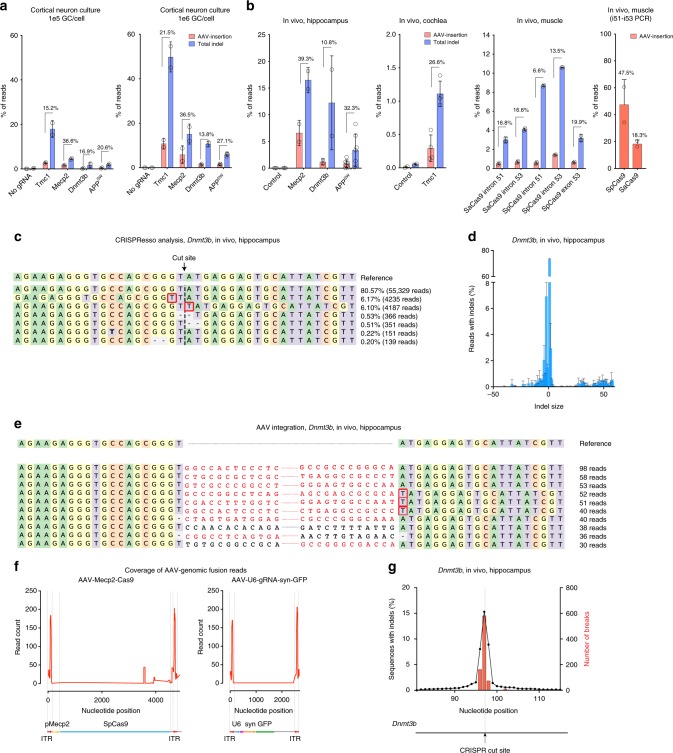
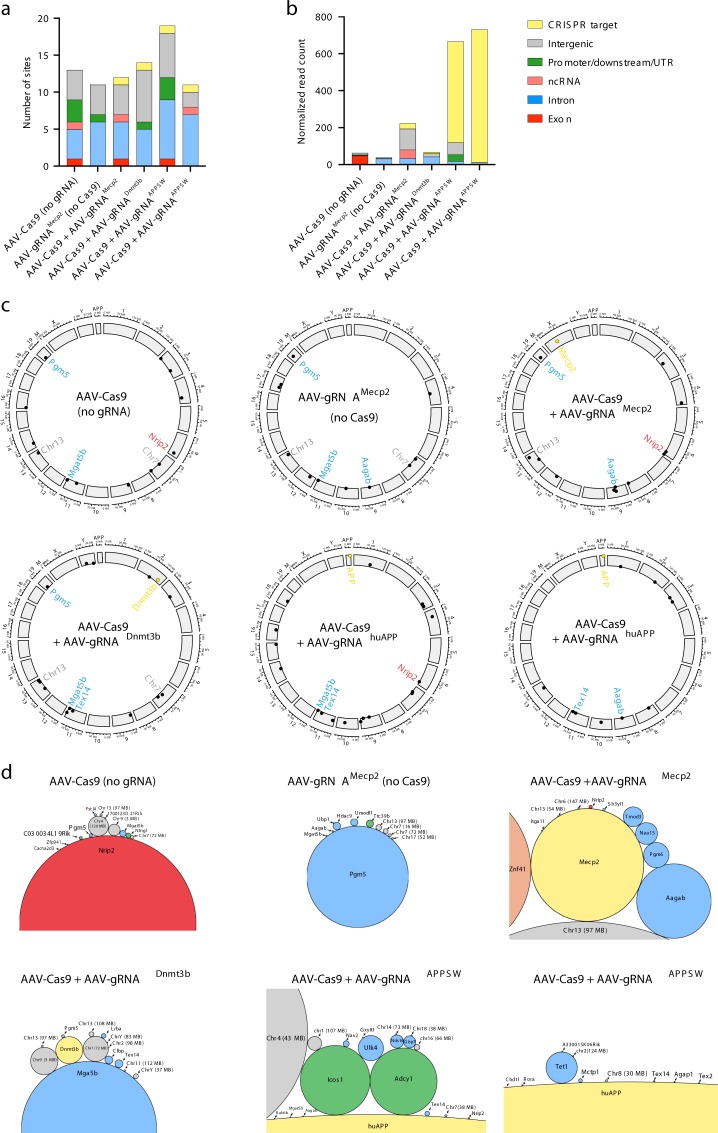
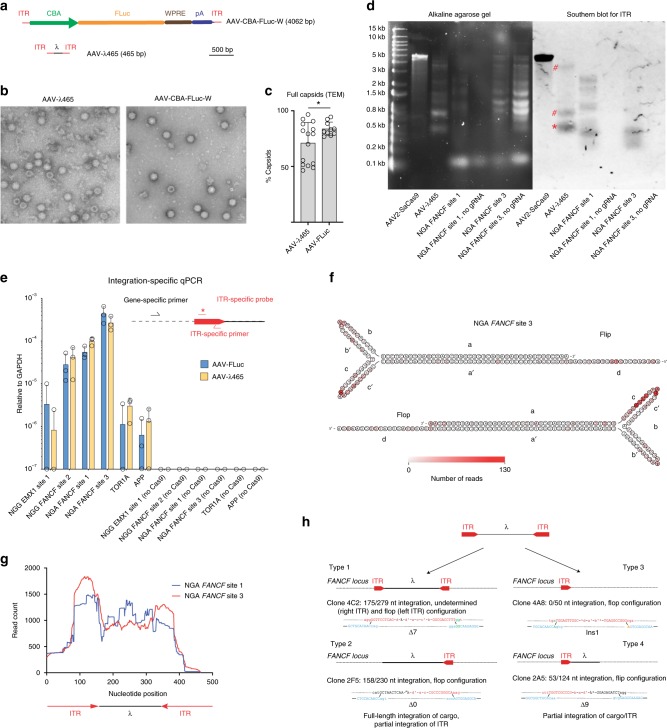
Adeno-associated virus (AAV) vectors have shown promising results in preclinical models, but the genomic consequences of transduction with AAV vectors encoding CRISPR-Cas nucleases is still being examined. In this study, we observe high levels of AAV integration (up to 47%) into Cas9-induced double-strand breaks (DSBs) in therapeutically relevant genes in cultured murine neurons, mouse brain, muscle and cochlea. Genome-wide AAV mapping in mouse brain shows no overall increase of AAV integration except at the CRISPR/Cas9 target site. To allow detailed characterization of integration events we engineer a miniature AAV encoding a 465 bp lambda bacteriophage DNA (AAV-λ465), enabling sequencing of the entire integrated vector genome. The integration profile of AAV-465λ in cultured cells display both full-length and fragmented AAV genomes at Cas9 on-target sites. Our data indicate that AAV integration should be recognized as a common outcome for applications that utilize AAV for genome editing.
Overview
The claims and statistics of this paper haven’t been checked yet.
Free: it reads the open-access text and checks the first 5 claims that cite a source we can check. Create a free account to check every claim.
Integrity signals
Registry
Cites
Statistics
Figures
Verification
Claims the paper makes
The claims and statistics of this paper haven’t been checked yet.
Free: it reads the open-access text and checks the first 5 claims that cite a source we can check. Create a free account to check every claim.
Claims other papers make about this one
Each is checked against this paper’s own text: does it say what the citing paper says it does?
The cited source doesn’t support the claim as written.
In the citing paper
“However, if left active in cells, functional rAAV-CRISPR/Cas9 systems do increase the number of off-target integration events into the genome [218].”
From Recombinant Adeno-Associated Viral Vectors (rAAV)-Vector Elements in Ocular Gene Therapy Clinical Trials and Transgene Expression and Bioactivity Assays (2020) · cites this paper as [218]
Checked by a reasoning model — may be wrong.
Experimental — accuracy not yet measured
Self-check
Percentages, sums and reported differences re-computed from the paper’s own numbers.
The self-check needs the paper’s full text.
Citations
Cites
ANNOVAR: functional annotation of genetic variants from high-throughput sequencing data
Wang, K., Li, M., & Hakonarson, H. (2010) · Nucleic Acids Research · doi:10.1093/nar/gkq603 · Cited by 14,621
Genome engineering using the CRISPR-Cas9 system
Ran, F. A., Hsu, P. D., Wright, J., Agarwala, V., Scott, D. A., & Zhang, F. (2013) · Nature Protocols · doi:10.1038/nprot.2013.143 · Cited by 11,133
High-fidelity CRISPR-Cas9 nucleases with no detectable genome-wide off-target effects
Kleinstiver, B. P., Pattanayak, V., Prew, M. S., Tsai, S. Q., Nguyen, N. T., Zheng, Z., & Joung, J. K. (2016) · Nature · doi:10.1038/nature16526 · Cited by 2,673
Self-citationRationally engineered Cas9 nucleases with improved specificity
Slaymaker, I. M., Gao, L., Zetsche, B., Scott, D. A., Yan, W. X., & Zhang, F. (2016) · Science · doi:10.1126/science.aad5227 · Cited by 2,414
GUIDE-seq enables genome-wide profiling of off-target cleavage by CRISPR-Cas nucleases
Tsai, S. Q., Zheng, Z., Nguyen, N. T., Liebers, M., Topkar, V. V., Thapar, V., Wyvekens, N., Khayter, C., Iafrate, A. J., Le, L. P., et al. (2015) · Nature Biotechnology · doi:10.1038/nbt.3117 · Cited by 2,268
Self-citationDeficiency of methyl-CpG binding protein-2 in CNS neurons results in a Rett-like phenotype in mice
Chen, R. Z., Akbarian, S., Tudor, M., & Jaenisch, R. (2001) · Nature Genetics · doi:10.1038/85906 · Cited by 1,275
Enhanced proofreading governs CRISPR-Cas9 targeting accuracy
Chen, J. S., Dagdas, Y. S., Kleinstiver, B. P., Welch, M. M., Sousa, A. A., Harrington, L. B., Sternberg, S. H., Joung, J. K., Yildiz, A., & Doudna, J. A. (2017) · Nature · doi:10.1038/nature24268 · Cited by 1,168
Self-citationIn vivo genome editing improves muscle function in a mouse model of Duchenne muscular dystrophy
Nelson, C. E., Hakim, C. H., Ousterout, D. G., Thakore, P. I., Moreb, E. A., Rivera, R. M. C., Madhavan, S., Pan, X., Ran, F. A., Yan, W. X., et al. (2016) · Science · doi:10.1126/science.aad5143 · Cited by 1,144
In vivo gene editing in dystrophic mouse muscle and muscle stem cells
Tabebordbar, M., Zhu, K., Cheng, J. K. W., Chew, W. L., Widrick, J. J., Yan, W. X., Maesner, C., Wu, E. Y., Xiao, R., Ran, F. A., et al. (2016) · Science · doi:10.1126/science.aad5177 · Cited by 1,046
Dnmt1 and Dnmt3a maintain DNA methylation and regulate synaptic function in adult forebrain neurons
Feng, J., Zhou, Y., Campbell, S. L., Le, T., Li, E., Sweatt, J. D., Silva, A. J., & Fan, G. (2010) · Nature Neuroscience · doi:10.1038/nn.2514 · Cited by 1,019
Research works printed but not linked: 1
- Miller Daniel G Petek Lisa M Russell David W Adeno-associated virus vectors integrate at chromosome breakage sites Nature Genetics 2004 36 7 767 773 10.1038/ng1380 15208627 · DOI · Paper page
Cited by
Items 201–300 of 445
Rabinowitz, R., Abadi, S., Almog, S., & Offen, D. (2020) · Nucleic Acids Research · doi:10.1093/nar/gkaa215 · Cited by 18
Hanson, B., Stenler, S., Ahlskog, N., Chwalenia, K., Svrzikapa, N., Coenen-Stass, A. M. L., Weinberg, M. S., Wood, M. J. A., & Roberts, T. C. (2022) · Molecular Therapy — Nucleic Acids · doi:10.1016/j.omtn.2022.10.010 · Cited by 19
Versatile Cell Penetrating Peptide for Multimodal CRISPR Gene Editing in Primary Stem Cells
Graham, J. P., Castro, J. G., Werba, L. C., Amitrano, J., Fardone, L. C., Francis, K. P., Ramamurthi, A., Layden, M. J., McCarthy, H. O., & Gonzalez‐Fernandez, T. (2025) · Advanced Functional Materials · doi:10.1002/adfm.202501532 · Cited by 19
“They are also susceptible to random genomic integration, risking constitutive Cas9 expression which induces significant toxicity in primary stem cells and increases off-target genomic mutations [12, 13].”
Nguyen, N. T. K., Tu, Y., Lee, H.-S., Truong, V. A., Chang, Y., Pham, N. N., Chang, C.-W., Lin, Y.-H., Lai, P.-L., Chen, P., et al. (2023) · Biomaterials · doi:10.1016/j.biomaterials.2023.122106 · Cited by 19
Deng, C., Li, S., Liu, Y., Bao, W., Xu, C., Zheng, W., Wang, M., & Ma, X. (2023) · Clinical and Translational Medicine · doi:10.1002/ctm2.1382 · Cited by 17
CRISPR, animals, and FDA oversight: Building a path to success
Epstein, L. R., Lee, S. S., Miller, M. F., & Lombardi, H. A. (2021) · Proceedings of the National Academy of Sciences · doi:10.1073/pnas.2004831117 · Cited by 18
Measurement and clinical interpretation of CRISPR off-targets
Stewart, A. A., Ahrens‐Nicklas, R. C., Tsai, S. Q., Musunuru, K., Giannikopoulos, P., & Clelland, C. D. (2025) · Nature Genetics · doi:10.1038/s41588-025-02428-3 · Cited by 20
“Such editing can occur from the editor itself or from the delivery vehicle such as AAV integration at on-target or off-target cut sites 54,55 .”
Self-citationChronic In Vivo CRISPR-Cas Genome Editing: Challenges, Long-Term Safety, and Outlook
Bao, C., Channell, C. I., Tseng, Y.-H., Bailey, J., Sbaiti, N., Demirkol, A., & Tsang, S. H. (2026) · Cells · doi:10.3390/cells15020156 · Cited by 18
“Although some preferential integration occurred within transcriptional units, no enrichment was detected near cancer-associated genes [81].”
CRISPR medicine for blood disorders: Progress and challenges in delivery
Gol, T. M., Ureña-Bailén, G., Hou, Y., Sinn, R., Antony, J. S., Handgretinger, R., & Mezger, M. (2023) · Frontiers in Genome Editing · doi:10.3389/fgeed.2022.1037290 · Cited by 21
“Recent findings concerning the integration of AVV vectors into the CRISPR induced DSBs sites have questioned the safety of these vectors for CRISPR-based gene therapy (Hanlon et al., 2019).”
BackgroundTherapeutic Application and Structural Features of Adeno-Associated Virus Vector
Matsuzaka, Y., & Yashiro, R. (2024) · Current Issues in Molecular Biology · doi:10.3390/cimb46080499 · Cited by 16
“This portion of the ITR serves as an initiation point for replication, acts as a primer, and is also required for packaging into viral particles and integration into the chromosomal DNA of host cells [6,25].”
BackgroundCurrent and Emerging Issues in Adeno-Associated Virus Vector-Mediated Liver-Directed Gene Therapy
Piccolo, P., & Brunetti‐Pierri, N. (2025) · Human Gene Therapy · doi:10.1089/hum.2024.179 · Cited by 17
Aspects of Gene Therapy Products Using Current Genome-Editing Technology in Japan
Yamaguchi, T., Uchida, E., Okada, T., Ozawa, K., Onodera, M., Kume, A., Shimada, T., Takahashi, S., Tani, K., Nasu, Y., et al. (2020) · Human Gene Therapy · doi:10.1089/hum.2020.156 · Cited by 17
“The insertion in the target site of the genome DNA of a viral vector used for genome editing has also been reported.(55,56) This may occur because gene modifications by genome editing depend on the DSB-induced genome repair mechanism of cells in which the genome-repairing mechanism could not be controlled by genome-ed…”
BackgroundWolde-Michael, E., Roberts, A. D., Heyes, D. J., Dumanlı, A. G., Blaker, J. J., Takano, E., & Scrutton, N. S. (2021) · Scientific Reports · doi:10.1038/s41598-021-94042-6 · Cited by 16
Morris, J. A., Boshoff, C. H., Schor, N. F., Wong, L. M., Gao, G., & Davidson, B. L. (2021) · Molecular Therapy · doi:10.1016/j.ymthe.2021.09.010 · Cited by 16
“Some tissues, such as the the liver,(16,17) may show a higher prevalence of AAV integration than does the CNS, but when active nucleases provide free DNA ends, AAV integration can occur.(18) Therefore, determining the mechanism of recombinant AAV integration into the host genome is critical so that we can develop meth…”
BackgroundLemmens, M., Dorsheimer, L., Zeller, A., & Dietz, Y. (2024) · Mutation Research/Genetic Toxicology and Environmental Mutagenesis · doi:10.1016/j.mrgentox.2024.503767 · Cited by 16
Delivery of genetic medicines for muscular dystrophies
Chulanova, Y., Breier, D., & Peer, D. (2025) · Cell Reports Medicine · doi:10.1016/j.xcrm.2024.101885 · Cited by 18
“72 The viral genome can be integrated as a full genome, a fragment, or a concatemer.”
In vivo precision base editing to rescue mouse models of disease
Schindeler, A., Chu, J., Au-Yeung, C., Kao, H.-Y., Ginn, S. L., & O’Donohue, A. K. (2025) · Molecular Therapy — Nucleic Acids · doi:10.1016/j.omtn.2025.102622 · Cited by 17
“99 AAV vectors can integrate into CRISPR-Cas9-induced DSBs at frequencies up to 47% in vitro and in vivo , 100 noting that BEs generally avoid DSBs but can induce low levels, particularly at off-target sites.”
VSeq-Toolkit: Comprehensive Computational Analysis of Viral Vectors in Gene Therapy
Afzal, S., Fronza, R., & Schmidt, M. (2020) · Molecular Therapy — Methods & Clinical Development · doi:10.1016/j.omtm.2020.03.024 · Cited by 17
“13,14 20 Therefore, elucidating vector-vector breakpoint fusions is important in enhancing the understanding of viral vectors.”
BackgroundAdvances and Obstacles in Homology-Mediated Gene Editing of Hematopoietic Stem Cells
Salisbury-Ruf, C. T., & Larochelle, A. (2021) · Journal of Clinical Medicine · doi:10.3390/jcm10030513 · Cited by 15
“There are several caveats, however, to the delivery of donor templates using virus-based systems, including DNA packaging capacity, which is limited by the viral capsid size, and off-target integration of viral genes [78].”
BackgroundLarge-scale molecular epidemiological analysis of AAV in a cancer patient population
Qin, W., Xu, G., Tai, P. W. L., Wang, C., Luo, L., Li, C., Hu, X., Xue, J., Lü, Y., Zhou, Q., et al. (2021) · Oncogene · doi:10.1038/s41388-021-01725-5 · Cited by 15
One-shot dual gene editing for drug-resistant pancreatic cancer therapy
Won, E.-J., Park, H., Chang, S.-H., Kim, J. H., Kwon, H., Cho, Y., & Yoon, T. (2021) · Biomaterials · doi:10.1016/j.biomaterials.2021.121252 · Cited by 15
Chen, H., Durinck, S., Patel, H., Foreman, O., Mesh, K., Eastham, J., Caothien, R. H., Newman, R. J., Roose‐Girma, M., Darmanis, S., et al. (2022) · Molecular Therapy — Methods & Clinical Development · doi:10.1016/j.omtm.2022.10.016 · Cited by 15
“This phenomenon is expected to be more prominent when AAV is used to deliver nucleases intended to create double-stranded breaks in the host genome.(34) To investigate whether our method can result in unintended AAV genome integration within lung epithelium, we developed a PCR-based approach to detect AAV ITR”
BackgroundNon-viral ex vivo genome-editing in mouse bona fide hematopoietic stem cells with CRISPR/Cas9
Byambaa, S., Uosaki, H., Ohmori, T., Hara, H., Endo, H., Nureki, O., & Hanazono, Y. (2021) · Molecular Therapy — Methods & Clinical Development · doi:10.1016/j.omtm.2021.01.001 · Cited by 15
“In addition, the AAV vector may cause unwanted integration as lentivirus did, as the AAV vector will happen to integrate into the genome in the presence of CRISPR-Cas9.”
BackgroundKumar, R., Shanker, R., Singh, P. K., Yadav, M. K., Chaudhary, V., & Kumar, M. (2024) · Physiological and Molecular Plant Pathology · doi:10.1016/j.pmpp.2024.102402 · Cited by 14
Kanke, K. L., Rayner, R. E., Bozik, J., Abel, E., Venugopalan, A., Suu, M., Nouri, R., Stack, J. T., Guo, G., Vetter, T. A., et al. (2024) · Nucleic Acids Research · doi:10.1093/nar/gkae1069 · Cited by 14
Li, Z., Wang, X., Janssen, J. M., Liu, J., Tasca, F., Hoeben, R. C., & Gonçalves, M. A. F. V. (2024) · Nucleic Acids Research · doi:10.1093/nar/gkae1213 · Cited by 15
“…research has established that AAV vectors yield imprecise genome-editing events at appreciable levels in vitro and in vivo whose origins are consistent with end-joining of vector DNA at on-target genomic positions (‘capture’), including fragment derivatives containing ITR sequences ( 61–63 ).”
Lu, Z. H., Li, J., Dmitriev, I. P., Kashentseva, E. A., & Curiel, D. T. (2022) · ACS Nano · doi:10.1021/acsnano.2c00909 · Cited by 14
Gene Editing and Rett Syndrome: Does It Make the Cut?
Coorey, B., Haase, F., Ellaway, C., Clarke, A. J., Lisowski, L., & Gold, W. A. (2022) · The CRISPR Journal · doi:10.1089/crispr.2022.0020 · Cited by 14
“42 Another consideration of the vSLENDR knock-in strategy is its inability to circumvent the deleterious consequences of the existing expression from the mutant allele.”
Unlocking the potential of RNA-based therapeutics in the lung: current status and future directions
Man, H. S. J., Moosa, V. A., Singh, A. N., Wu, L., Granton, J. T., Juvet, S., Hoang, C. D., & de Perrot, M. E. (2023) · Frontiers in Genetics · doi:10.3389/fgene.2023.1281538 · Cited by 15
Applications of CRISPR technology in cellular immunotherapy
Zhou, X., Renauer, P. A., Zhou, L., Fang, S., & Chen, S. (2023) · Immunological Reviews · doi:10.1111/imr.13241 · Cited by 15
“73,74 To tackle this, many delivery systems that involve either pseudoviral or nonviral components have been developed recently.”
BackgroundNarváez-Narváez, D. A., Duarte-Ruiz, M., Jiménez-Lozano, S., Moreno‐Castro, C., Vargas, R., Nardi-Ricart, A., García‐Montoya, E., Pérez‐Lozano, P., Suñé-Negre, J. M., Hernández-Munaín, C., et al. (2023) · Pharmaceuticals · doi:10.3390/ph16111583 · Cited by 15
“Although viral vectors offer high transfection efficacy, they also present several disadvantages, such as marked immunogenicity, insertional mutagenesis [6], deoxyribonucleic acid (DNA) package size limitations, and non-specific effects [7,8].”
BackgroundCurrent trends in gene therapy to treat inherited disorders of the brain
Matuszek, Ż., Brown, B. L., Yrigollen, C. M., Keiser, M. S., & Davidson, B. L. (2025) · Molecular Therapy · doi:10.1016/j.ymthe.2025.03.057 · Cited by 14
“244,245 Indel scarring is also frequently observed when a dual DSB strategy is employed used i.e., to induce large deletions), limiting the efficiency of the simultaneous cleavage events occurring.”
Engineering adeno-associated viral vectors for CRISPR/Cas based in vivo therapeutic genome editing
Moyo, B., Brown, L. B. C., Khondaker, I., & Bao, G. (2025) · Biomaterials · doi:10.1016/j.biomaterials.2025.123314 · Cited by 13
Clinical perspective: Advancing hemophilia treatment through gene therapy approaches
Thornburg, C. D., PIPE, S. W., Cantore, A., Unzu, C., Jones, M., & Miesbach, W. (2025) · Molecular Therapy · doi:10.1016/j.ymthe.2025.04.023 · Cited by 13
Chen, H.-M., Resendes, R., Ghodssi, A., Sookiasian, D., Tian, M., Dollive, S., Adamson-Small, L. A., Avila, N., Tazearslan, C., Thompson, J. F., et al. (2020) · PLoS ONE · doi:10.1371/journal.pone.0233373 · Cited by 14
“Recent characterization of AAV integration when used in conjunction with a targeted endonuclease identified a high frequency of ITR sequences at endonu-clease-generated integration sites, thus introducing on-target mutations with unknown genetic consequences [23].”
Capin, J., Harrison, A., Raele-Rolfe, R., Yadav, S. K. N., Baiwir, D., Mazzucchelli, G., Quinton, L., Satchwell, T. J., Toye, A. M., Schaffitzel, C., et al. (2024) · Nucleic Acids Research · doi:10.1093/nar/gkae142 · Cited by 13
“Viral vectors, coupled with DSB generation, crucially pose the risk of insertional mutagenesis ( 34 , 65 , 66 ), with their inherently prolonged gene expression further increasing off-target editing ( 10 ).”
BackgroundMutant Allele-Specific CRISPR Disruption in DYT1 Dystonia Fibroblasts Restores Cell Function
Cruz, L., György, B., Cheah, P.-S., Kleinstiver, B. P., Eimer, W. A., Garcia, S. P., Sharma, N., Ozelius, L. J., Bragg, D. C., Joung, J. K., et al. (2020) · Molecular Therapy — Nucleic Acids · doi:10.1016/j.omtn.2020.05.009 · Cited by 14
Self-citationCRISPR-Cas9 based genome editing for defective gene correction in humans and other mammals
Karapurkar, J. K., Antao, A. M., Kim, K.-S., & Ramakrishna, S. (2021) · Progress in molecular biology and translational science · doi:10.1016/bs.pmbts.2021.01.018 · Cited by 14
Pulman, J., Botto, C., Malki, H., Ren, D., Oudin, P., De Cian, A., As, M., Izabelle, C., Saubamea, B., Forster, V., et al. (2024) · Molecular Therapy Nucleic Acids · doi:10.1016/j.omtn.2024.102349 · Cited by 12
“Regrettably, the use of viruses to deliver CRISPR-Cas9 gene editing tools raises the potential for permanent integration into the genome, 8 off-target gene disruption through long-term exposure to gene editing reagents as well as potential immune reactions to these proteins of bacterial origin.”
Bi, C., Yuan, B., Zhang, Y., Wang, M., Tian, Y., & Li, M. (2025) · Communications Biology · doi:10.1038/s42003-025-07539-5 · Cited by 13
Vectors in CRISPR Gene Editing for Neurological Disorders: Challenges and Opportunities
Xiong, K., Wang, X., Feng, C., Zhang, K., Chen, D., & Yang, S. (2025) · Advanced Biology · doi:10.1002/adbi.202400374 · Cited by 12
CRISPR-Based Transcriptional Regulation: Technologies, Applications, and Future Directions
Srinivasa, M. A., & Escobar, M. (2025) · DNA · doi:10.3390/dna5040057 · Cited by 17
“%) are observed at DSBs, which occur during CRISPR/Cas9 editing but not in CRISPR epigenetic regulation, making AAVs even more promising for CRISPRa and CRISPRi [180].”
Therapies for RYR1-Related Myopathies: Where We Stand and the Perspectives
Beaufils, M., Travard, L., Rendu, J., & Marty, I. (2021) · Current Pharmaceutical Design · doi:10.2174/1389201022666210910102516 · Cited by 12
In Vivo Gene Editing in Lipid and Atherosclerosis Research
Giorgi, M. D., Jarrett, K. E., Vallim, T. Q. D. A., & Lagor, W. R. (2022) · Methods in molecular biology · doi:10.1007/978-1-0716-1924-7_42 · Cited by 12
Donor template delivery by recombinant adeno-associated virus for the production of knock-in mice
Duddy, G., Courtis, K., Horwood, J., Olsen, J., Horsler, H., Hodgson, T., Varsani-Brown, S., Abdullah, A., Denti, L., Lane, H., et al. (2024) · BMC Biology · doi:10.1186/s12915-024-01834-z · Cited by 12
“The simple insertion of the rAAV construct into the on-target site (rather than by homologous recombination) has also been reported [32], but founders with such a configuration would be excluded by the targeted PCR screen over the homology regions.”
BackgroundChakraborty, S. (2019) · F1000Research · doi:10.12688/f1000research.20744.1 · Cited by 14
The origin of unwanted editing byproducts in gene editing
Yin, J., & Hu, J. (2022) · Acta Biochimica et Biophysica Sinica · doi:10.3724/abbs.2022056 · Cited by 12
Gene Therapy Medicinal Products: Non-clinical Safety Studies
Astapova, O. V., & Berchatova, A. A. (2023) · Safety and Risk of Pharmacotherapy · doi:10.30895/2312-7821-2023-11-1-329 · Cited by 12
“…что геномы векто - ров AAV, несущие компоненты CRISPR, могут ин - тегрироваться в геном клетки-хозяина в местах двухцепочечных разрывов [38], что вновь вы - звало опасения по поводу онкогенной интегра - ции AAV и, как следствие, опасения по поводу долгосрочного профиля безопасности…”
Nieland, L., Vrijmoet, A. B., Jetten, I. W., Rufino‐Ramos, D., de Reus, A. J. E. M., Breyne, K., Kleinstiver, B. P., Maguire, C. A., Broekman, M. L. D., Breakefield, X. O., et al. (2024) · Molecular Therapy · doi:10.1016/j.ymthe.2024.11.023 · Cited by 12
Self-citationLuqman, M. W., Jenjaroenpun, P., Spathos, J., Shingte, N., Cummins, M. J., Nimsamer, P., Ittner, L. M., Wongsurawat, T., & Delerue, F. (2025) · Frontiers in Genome Editing · doi:10.3389/fgeed.2025.1582097 · Cited by 13
Shining light on CRISPR/Cas9 therapeutics for inherited retinal diseases
Geiger, A., Kennedy, J. G., Staker, L. G., Wensel, T. G., Casson, R. J., & Thomas, P. Q. (2025) · Progress in Retinal and Eye Research · doi:10.1016/j.preteyeres.2025.101376 · Cited by 11
Gustafsson, O., Krishna, S., Borate, S., Ghaeidamini, M., Liang, X., Saher, O., Cuellar, R., Birdsong, B. K., Roudi, S., Estupiñan, H. Y., et al. (2025) · Journal of Controlled Release · doi:10.1016/j.jconrel.2025.114038 · Cited by 11
Huang, Y., Pang, S., Li, L., Do, C. W., Luo, Q., 郑宗立, & Xiong, W. (2025) · Journal of Controlled Release · doi:10.1016/j.jconrel.2025.114499 · Cited by 13
Research and Therapeutic Approaches in Stem Cell Genome Editing by CRISPR Toolkit
Mollashahi, B., Latifi‐Navid, H., Owliaee, I., Shamdani, S., Uzan, G., Jamehdor, S., & Naserian, S. (2023) · Molecules · doi:10.3390/molecules28041982 · Cited by 11
“The virus can enter the genome through the CRISPR system’s cut area and remain there for a long time [167,168].”
BackgroundHermantara, R., Richmond, L., Taqi, A. F., Chilaka, S., Jeantet, V., Guerrini, I., West, K. L., & West, A. G. (2024) · Journal of Biomedical Science · doi:10.1186/s12929-024-01020-x · Cited by 11
“This suggest that current CRISPR–Cas9 mediated gene integration methods are prone to unwanted events that may or may not be detectable during initial assessment [38, 40, 41].”
BackgroundCallegari, A., Kueblbeck, M., Morero, N. R., Serrano‐Solano, B., & Ellenberg, J. (2024) · Nature Protocols · doi:10.1038/s41596-024-01043-6 · Cited by 11
“In contrast, the prolonged expression of Cas9 from plasmid vectors results in extra unwanted integrations 19,20 .”
In vivo expansion of gene-targeted hepatocytes through transient inhibition of an essential gene
Giorgi, M. D., Park, S. H., Castoreno, A. B., Cao, M., Hurley, A. E., Saxena, L., Chuecos, M. A., Walkey, C. J., Doerfler, A. M., Furgurson, M. N., et al. (2025) · Science Translational Medicine · doi:10.1126/scitranslmed.adk3920 · Cited by 11
Gene editing and modulation for Duchenne muscular dystrophy
Stephenson, A. A., & Flanigan, K. M. (2021) · Progress in molecular biology and translational science · doi:10.1016/bs.pmbts.2021.01.029 · Cited by 13
Innovative cancer nanomedicine based on immunology, gene editing, intracellular trafficking control
Yamada, Y., Sato, Y., Nakamura, T., & Harashima, H. (2022) · Journal of Controlled Release · doi:10.1016/j.jconrel.2022.05.033 · Cited by 11
Genome Editing Technologies as Cellular Defense Against Viral Pathogens
Zhang, Y., & Li, M. (2021) · Frontiers in Cell and Developmental Biology · doi:10.3389/fcell.2021.716344 · Cited by 15
“Although recently, AAV vectors have been reported to integrate into DSBs induced by CRISPR/Cas9, raising the awareness of the risk of insertional mutagenesis when AAV is used with CRIPSR/Cas (Nault et al., 2015; Hanlon et al., 2019).”
Simões, S. M. N., Lino, M. M., Barrera, A., Rebelo, C., Tomatis, F., Vilaça, A., Breunig, C., Neuner, A. M., Peça, J., González, R., et al. (2024) · Angewandte Chemie International Edition · doi:10.1002/anie.202401004 · Cited by 10
Lenardič, A., Domenig, S. A., Zvick, J., Bundschuh, N., Tarnowska-Sengül, M., Furrer, R., Noé, F., Trautmann, C. L., Ghosh, A., Bacchin, G., et al. (2024) · Journal of Clinical Investigation · doi:10.1172/jci166998 · Cited by 11
“While promising, these approaches still raise concerns, including AAV toxicity, genomic integration, or DNA breakage, as well as unfavorable immunological responses against repeated AAV treatment or Cas9 (9–13).”
InfluentialCRISPR applications in microbial World: Assessing the opportunities and challenges
Kursheed, F., Naz, E., Mateen, S., & Kulsoom, U. (2024) · Gene · doi:10.1016/j.gene.2024.149075 · Cited by 12
Mechanisms of the Specificity of the CRISPR/Cas9 System in Genome Editing
Kulishova, L. M., Vokhtantsev, I. P., Kim, D. V., & Zharkov, D. O. (2023) · Molecular Biology · doi:10.1134/s0026893323020139 · Cited by 11
“Regardless of the transfection method, Cas9- and RNA-coding plasmids delivered into the cell are often completely or partly integrated into the host genome at target and off-target sites [103, 104].”
BackgroundFuster‐García, C., García‐Bohórquez, B., Rodríguez‐Muñoz, A., Millán, J. M., & García‐García, G. (2020) · Genes · doi:10.3390/genes11050473 · Cited by 12
“the intrinsic cytotoxicity of plasmids and the DNA integration of some viral vehicles [29,30].”
BackgroundSato, M., Sato-Yamamoto, N., Wakita, A., Haraguchi, M., Shimonishi, M., & Okuno, H. (2022) · International Journal of Molecular Sciences · doi:10.3390/ijms23094897 · Cited by 10
“Furthermore, infection with a rAAV coupled CRISPR/Cas9 system enabled targeted insertion of large fragments [43].”
BackgroundAltay, H. Y., Özdemir, F., Afghah, F., Kilinç, Z., Ahmadian, M., Tschopp, M., & Ağca, C. (2022) · Frontiers in Neuroscience · doi:10.3389/fnins.2022.924917 · Cited by 12
“Surprisingly AAVs integrated at the CRISPR cut sites of all on-target genes with high frequencies (Hanlon et al., 2019).”
BackgroundMutagenesis and Carcinogenesis Risk Evaluation for AAV and Lentiviral Gene Therapies
Parman, T., Pizzurro, D. M., Lucas, J., & Peng, Z. (2025) · International Journal of Toxicology · doi:10.1177/10915818251318248 · Cited by 9
“With increasing numbers of viral-based GT products encoding for or in combination with genome editing components, there is a potential for greater risk for mutagenicity due to vector integration 42 and/or DNA cleavage events in on-and off-target sites, and inef fi cient DNA repair activity.”
Wei, W., Zhu, W., Silver, S., Armstrong, A. M., Robbins, F. S., Rameshbabu, A. P., Walz, K., Quan, Y., Du, W., Kim, Y., et al. (2025) · Journal of Clinical Investigation · doi:10.1172/jci187872 · Cited by 9
“AAV-mediated delivery can lead to unwanted genomic integration (48, 52).”
Innovative gene engineering and drug delivery systems for dendritic cells in cancer immunotherapy
Prakash, M., Cortez, C. D., Jayaraman, A., Hsu, S.-Y., Huang, Y., Yeh, C.-Y., & Lee, Y. L. (2025) · Journal of Biomedical Science · doi:10.1186/s12929-025-01191-1 · Cited by 10
“Other formulation focuses on stealth strategies, including PEGylation and incorporation of immune-evasive ligands [170].”
On RNA-programmable gene modulation as a versatile set of principles targeting muscular dystrophies
Capelletti, S., Soto, S. C. G., & Gonçalves, M. A. F. V. (2024) · Molecular Therapy · doi:10.1016/j.ymthe.2024.08.016 · Cited by 10
In vivo editing of the pan-endothelium by immunity evading simian adenoviral vector
Lőrincz, R., Alvarez, A. B., Walkey, C. J., Mendonça, S. A., Lu, Z. H., Martinez, A. E., Ljungberg, M. C., Heaney, J. D., Lagor, W. R., & Curiel, D. T. (2022) · Biomedicine & Pharmacotherapy · doi:10.1016/j.biopha.2022.114189 · Cited by 10
Liu, H., Singh, S., Mullen, T., Bullock, C., Keegan, S., Patterson, T. D., Thakur, S., Lundberg, A., Shenker, S., Couto, R., et al. (2025) · Molecular Therapy · doi:10.1016/j.ymthe.2025.09.001 · Cited by 11
Resly, L. C., Tubbs, A. L., Vogel, A. J., Hux, J. A., MacDonald, I. A., Harris, J., Mischler, A., Tomberlin, G., Evans, K. S., Thompson, R., et al. (2025) · Nucleic Acids Research · doi:10.1093/nar/gkaf961 · Cited by 8
“These observations suggest that HR mediates template insertion when a sufficient HA is present, while nonho-mologous end joining (NHEJ), or spontaneous ITR capture [ 45 ] mediates integration otherwise.”
Zhang, H., Li, Y., Li, J., Li, X., & Li, T. (2025) · Pharmaceutics · doi:10.3390/pharmaceutics17111405 · Cited by 9
“Additionally, random AAV genome integration has been reported in mice, non-human primate, human livers, and Cas9-induced DSB sites in other tissues [116–118].”
Strategies and mechanisms of precision genome engineering: From gene editing to genome writing
Huang, K., Tian, J., Zhao, W., Zhang, S., Xiang, L., Yang, M., Ls, L., Huang, Y., Zhang, N., Sun, L., et al. (2026) · iMetaOmics. · doi:10.1002/imo2.70115 · Cited by 10
Safieh, M., Liraz, O., Ovadia, M., & Michaelson, D. M. (2024) · Journal of Alzheimer s Disease · doi:10.3233/jad-230514 · Cited by 10
“To elucidate the involvement of specific ApoE receptors, we knocked them down by genome editing as previously described [66, 67] with the following modifications.”
MethodChen, T., Barzi, M., Furey, N., Kim, H. R., Pankowicz, F. P., Legras, X. D., Elsea, S. H., Hurley, A. E., Yang, D., Wheeler, D. A., et al. (2025) · JHEP Reports · doi:10.1016/j.jhepr.2025.101327 · Cited by 8
“23,24 Contrary to these studies, here we report vector integration in HCC, a severe adverse event of the therapeutic gene editing approach.”
Navaridas, R., Vidal‐Sabanés, M., Ruiz‐Mitjana, A., Perramon‐Güell, A., Megino‐Luque, C., Llobet‐Navàs, D., Matías‐Guiu, X., Egea, J., Encinas, M., Bardia, L., et al. (2023) · 癌症:英文版 · doi:10.1002/cac2.12409 · Cited by 8
Nanotechnology-based delivery for CRISPR-Cas 9 cargo in Alzheimer's disease
Rawal, S. U., Khodakiya, A., & Prajapati, B. G. (2024) · Elsevier eBooks · doi:10.1016/b978-0-443-13205-6.00012-1 · Cited by 11
Siow, K. M., Güngör, M., Wrona, D., Raimondi, F., Pastukhov, O., Tsapogas, P., Menzi, T., Schmitz, M., Kulcsár, P. I., Schwank, G., et al. (2024) · Molecular Therapy — Nucleic Acids · doi:10.1016/j.omtn.2024.102229 · Cited by 8
“36,58 From our observation, we con fi rmed that the unintended integrations were mediated by residual lentiviral integrase activity in the IDLVs 73 and not by CRISPR-induced OT DNA breaks or contamination from integra-tion-competent LVs in the IDLV preparation.”
Bazick, H., James, L. M., Taylor‐Blake, B., Wolter, J. M., & Zylka, M. J. (2025) · Gene Therapy · doi:10.1038/s41434-025-00582-1 · Cited by 7
“We and others previously observed AAV integration into DSBs produced by active Cas9, primarily through fusion of the AAV inverted terminal repeat (ITR) with the host genome [15, 32, 52 – 54].”
Kantor, B., Duke, L. C., & Bhide, P. G. (2025) · Molecular Therapy — Nucleic Acids · doi:10.1016/j.omtn.2025.102786 · Cited by 8
“161,162 The possibility of AAV-CRISPR-Cas integration may lead to undesirable genotoxicity related to the disruption of an essential gene (i.e., silencing of a tumor suppressor gene or activation of an oncogene).”
Iyer, S. R., Daman, K., Sun, Y., Tutto, A. A., Holbrook, S. E., Joynt, A. T., Yan, J., Ambegaokar, P. P., Guo, D., Liu, P., et al. (2026) · Molecular Therapy · doi:10.1016/j.ymthe.2026.03.010 · Cited by 7
Treatment of Huntington’s disease with a pan-HTT-targeting CRISPR nuclease
Tan, K., Siller, D. D. B., Xiong, A. Y., Wang, A. X. A., McCallister, T. X., Mummadi, S., John, L. A. S., Lee, T. K., Carrillo, A., Renshaw, D. G., et al. (2026) · Molecular Therapy · doi:10.1016/j.ymthe.2026.04.038 · Cited by 8
Targeted genomic integration and rearrangement using prime assembly
Levesque, S., Kawashima, N., Hwang, G., Zeng, J., Toskov, V., Barry, T., Mannherz, W. P., Homfeldt, L., Becerra, B., Schoonenberg, V. A. C., et al. (2026) · Nature · doi:10.1038/s41586-026-11024-2 · Cited by 7
A platform to deliver single and bi-specific Cas9/guide RNA to perturb genes in vitro and in vivo
Li, Y., Chien, S., Huang, R., Herrmann, A., Zhao, Q., Li, P.-C., Zhang, C., Martincuks, A., Santiago, N. L., Zong, K., et al. (2024) · Molecular Therapy · doi:10.1016/j.ymthe.2024.07.025 · Cited by 9
Araujo, A. E., Bentler, M., Garmendia, X. P., Kaleem, A., Fabian, C., Morgan, M. A., Hacker, U. T., & Büning, H. (2024) · Human Gene Therapy · doi:10.1089/hum.2024.114 · Cited by 7
“69,136 Nevertheless, tailoring AAV vectors by capsid and/or genome engineering is expected to improve the ef fi cacy of transduction of these new target cells and, in combination with advanced gene editing strategies, sets the stage to translate current ex vivo approaches into in vivo applications.”
Genome editing in the human liver: Progress and translational considerations
Ginn, S. L., Christina, S., & Alexander, I. E. (2021) · Progress in molecular biology and translational science · doi:10.1016/bs.pmbts.2021.01.030 · Cited by 8
Zhuo, M., Mao, J., & David, C. J. (2023) · STAR Protocols · doi:10.1016/j.xpro.2023.102108 · Cited by 7
“Instead, AAV can integrate at sites of DNA DSBs induced by CRISPR at efficiencies of nearly 50%.(7) While failure to integrate is not an issue for genome editing, which presumably occurs relatively soon after infection, it may present problems if infected cells are being tracked by expression of a fluorescent protein,…”
BackgroundIshibashi, R., Maki, R., & Toyoshima, F. (2024) · Scientific Reports · doi:10.1038/s41598-024-57551-8 · Cited by 7
“…(2) the administration of a high dose of the AAV vector induces hepatotoxicity 48 , (3) sustained expression of the CIRPSR-Cas nuclease from the viral vector in host cells has been concerned to induce unwanted mutations and random integration of viral genomic fragments into the host genome 49–51 .”
Kumar, A., Lee, S. J., Liu, Q., Chan, A., Pokharel, S. P., Yu, J., Chen, C.-W. D., & Swaminathan, S. (2021) · STAR Protocols · doi:10.1016/j.xpro.2021.100874 · Cited by 8
Toxicologic Neuropathology of Novel Biotherapeutics
Bangari, D. S., Lanigan, L. G., Cramer, S. D., Grieves, J. L., Meisner, R., Rogers, A. B., Galbreath, E. J., & Bolon, B. N. (2023) · Toxicologic Pathology · doi:10.1177/01926233241230542 · Cited by 7
“71 AAV-associated oncogenesis has not been described in humans to date.”
BackgroundGhooray, D. T., Xu, M., Shi, H., McClain, C. J., & Song, M. (2024) · International Journal of Molecular Sciences · doi:10.3390/ijms25094836 · Cited by 6
Zhang, D., Zheng, R., Chen, Z., Wang, L., Chen, X., Yang, L., Huo, Y., Yin, S., Zhang, D., Huang, J., et al. (2024) · Science China Life Sciences · doi:10.1007/s11427-024-2697-3 · Cited by 7
“Moreover, AAV has major drawbacks associated with the limited carrying capacity (Dong et al., 1996), pre-existing immunogenicity (Verdera et al., 2020), and the risk of random integration (Dalwadi et al., 2021; Hanlon et al., 2019).”
Flory, E., Walter, M., Closson-Carella, V., Celis, P., Schuessler‐Lenz, M., & Reischl, I. G. (2025) · Human Gene Therapy · doi:10.1177/10430342251366314 · Cited by 6
“53,54,65 Other risk factors include the potential for sex-speci fi c differences in AAV-induced tumorigenicity.”
Profiling AAV vector heterogeneity & contaminants using next-generation sequencing methods
Tran, N. T., & Tai, P. W. L. (2024) · Cell and Gene Therapy Insights · doi:10.18609/cgti.2023.206 · Cited by 8
Non-viral systems for intracellular delivery of genome editing tools
Shaikhutdinov, I. K., Ilyasov, P. V., Витальевна, Г. О., & Limareva, L. V. (2024) · Vavilov Journal of Genetics and Breeding · doi:10.18699/vjgb-24-28 · Cited by 8
Ex vivo gene editing and cell therapy for hereditary tyrosinemia type 1
Ates, I., Stuart, C., Rathbone, T., Barzi, M., He, G., Major, A. M., Shankar, V., Lyman, R. A., Angner, S. S., Mackay, T. F. C., et al. (2024) · Hepatology Communications · doi:10.1097/hc9.0000000000000424 · Cited by 6
“[19,20] Applying AAVs to deliver Cas9 is associated with additional limitations, such as potential integration into Cas9 on-target [21 – 23] and off-target sites.”
Breaking Boundaries in the Brain—Advances in Editing Tools for Neurogenetic Disorders
Coorey, B., & Gold, W. A. (2021) · Frontiers in Genome Editing · doi:10.3389/fgeed.2021.623519 · Cited by 6
Metadata
- Authors
- Hanlon, K. S., Kleinstiver, B. P., Garcia, S. P., Zaborowski, M. P., Volak, A., Spirig, S. E., Muller, A., Sousa, A. A., Tsai, S. Q., Bengtsson, N. E., Lööv, C., Ingelsson, M., Chamberlain, J. S., Corey, D. P., Aryee, M. J., Joung, J. K., Breakefield, X. O., Maguire, C. A., & György, B.
- Affiliations
- Harvard University (US)
- Poznan University of Medical Sciences (PL)
- Massachusetts General Hospital (US)
- Institute of Molecular and Clinical Ophthalmology Basel (CH)
- St. Jude Children's Research Hospital (US)
- University of Washington (US)
- Uppsala University (SE)
- Corresponding author
- Maguire, Casey A.
- György, Bence
- ORCID
- Venue
- Nature Communications
- Published
- 2019-09-30
- Volume
- 10
- Issue
- 1
- Pages
- 4439-4439
- ISSN
- 2041-1723 (ISSN-L)
- PMC
- PMC6769011
- OpenAlex
- W2976425815
- Cited by
- 431
- References
- 41
- Citations by year
- 2026: 57 · 2025: 67 · 2024: 75 · 2023: 64 · 2022: 57 · 2021: 59 · 2020: 47 · 2019: 4
- FWCI
- 25.16
- Type
- journal article
- Language
- en
- Open access
- gold
- doi.org
- Licence
- cc-by
- creativecommons.org/licenses/by/4.0 (tdm)
- creativecommons.org/licenses/by/4.0 (vor)
- Locations
- Nature Communications (publishedVersion, cc-by)
- PubMed Central (publishedVersion, cc-by)
- PubMed (publishedVersion)
- Uppsala University Publications (Uppsala University) (submittedVersion, other-oa)
- RePEc: Research Papers in Economics (submittedVersion)
- DOAJ (DOAJ: Directory of Open Access Journals) (submittedVersion)
- DOAJ (DOAJ: Directory of Open Access Journals) (submittedVersion, cc-by-sa)
- Funders
- U.S. Department of Health & Human Services | NIH | Center for Information Technology (R01DC017117)
- Topics
- Life Sciences › Biochemistry, Genetics and Molecular Biology › Genetics › Virus-based gene therapy research
- Life Sciences › Biochemistry, Genetics and Molecular Biology › Molecular Biology › CRISPR and Genetic Engineering
- Life Sciences › Biochemistry, Genetics and Molecular Biology › Molecular Biology › RNA Interference and Gene Delivery
- Keywords
- adeno-associated virus vectors, AAV integration, CRISPR/Cas9, DNA double-strand breaks, genome editing, mouse brain, muscle, cochlea
- MeSH terms
- Gene Editing, Dependovirus, Animals, Brain, Cell Line, Chromosome Mapping, Cochlea, Endonucleases, Genetic Vectors, Humans, Male, Mice, Inbred C57BL, Mice, Transgenic, Muscles, Neurons, Bacteriophage lambda, Genetic Therapy, Virus Integration, Genome, Treatment Outcome, Gene Targeting, Mice, Targeted Gene Repair, DNA Breaks, Clustered Regularly Interspaced Short Palindromic Repeats, CRISPR-Cas Systems
About these checks
Registry, retraction, Cites and statistics results are computed, not judged, with one exception: a printed reference that no index lists is read once by a model before it counts as a citation error. Claims are extracted by a model and kept only when their quote appears verbatim in the text; each cited source is then checked, with a model’s help, for whether it says what the claim relies on. Those verdicts can be wrong — read the claim’s quote and the cited source before relying on one.
Statistics and arithmetic are recomputed, not judged.
Confidence bands are shown only for fields calibrated on our annotated test set. None is calibrated yet, so no band is shown.
What counts as a claim ›How we measure confidence ›How we check this ›
Are you an author, or do you see a problem with this page? Request a review
Data sources
Bibliographic data: Semantic Scholar, OpenAlex, Crossref.
Contains information from the Semantic Scholar Academic Graph Datasets, made available under the ODC Attribution License (ODC-BY 1.0).
Semantic Scholar’s data is described in: Kinney, R., et al. (2023). The Semantic Scholar Open Data Platform. arXiv:2301.10140.
