

Regulation of plant phototropic growth by NPH3/RPT2-like substrate phosphorylation and 14-3-3 binding
Open accessPublished version of a preprint
The DOI matches its Crossref record; 64 of the 64 references it cites were found in a registry or an index.
Abstract
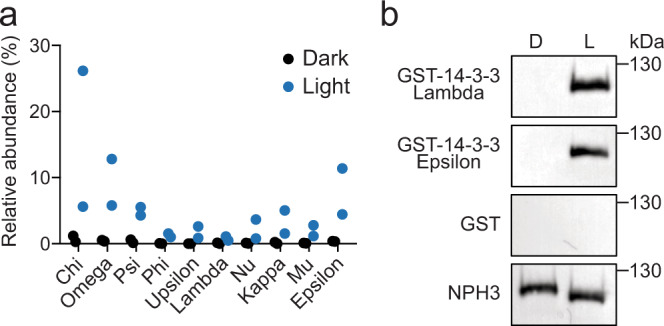
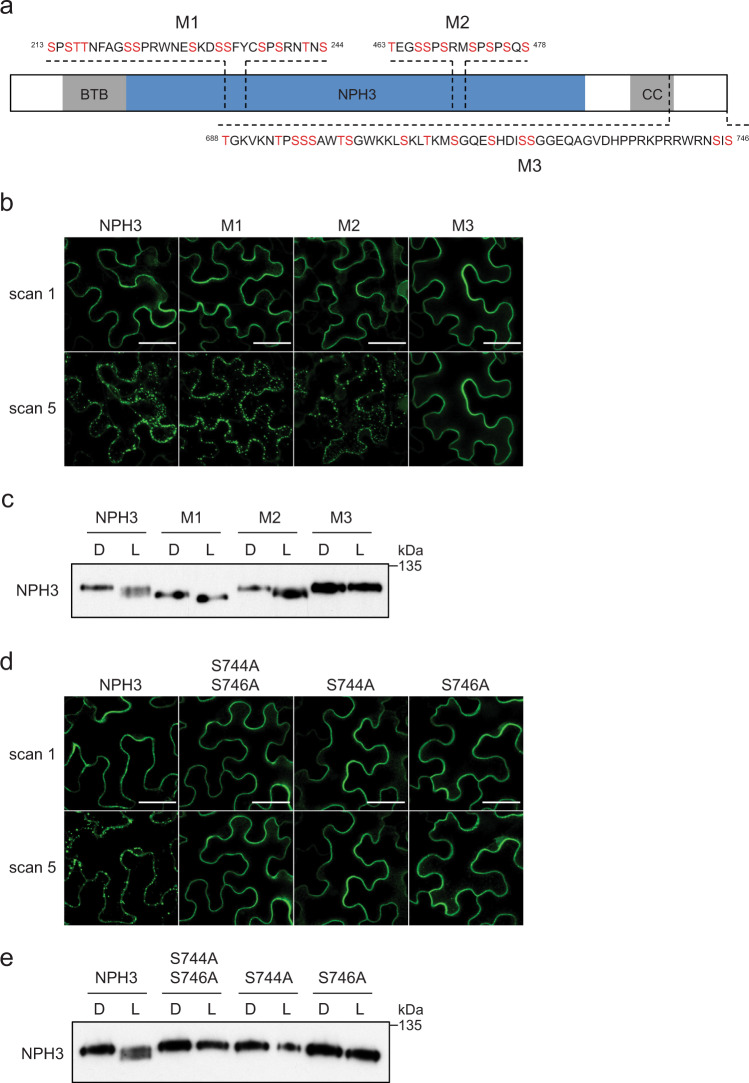
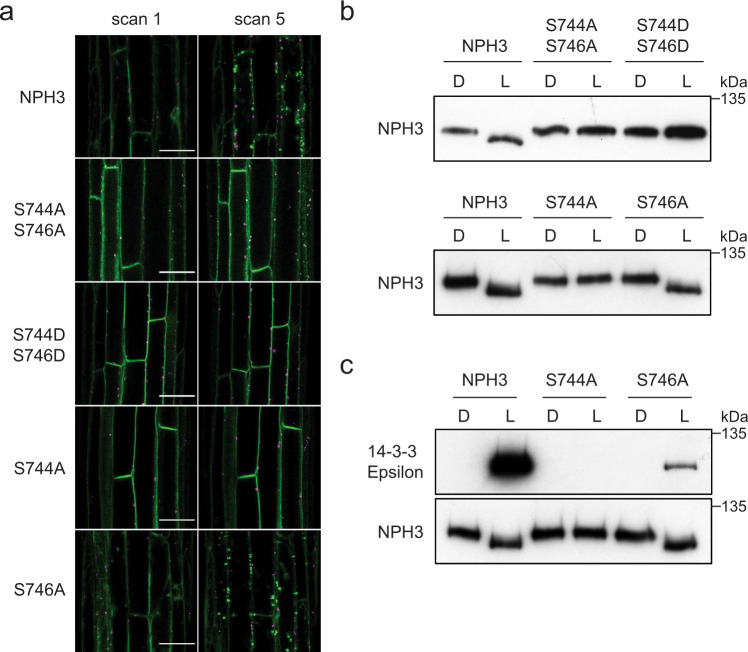
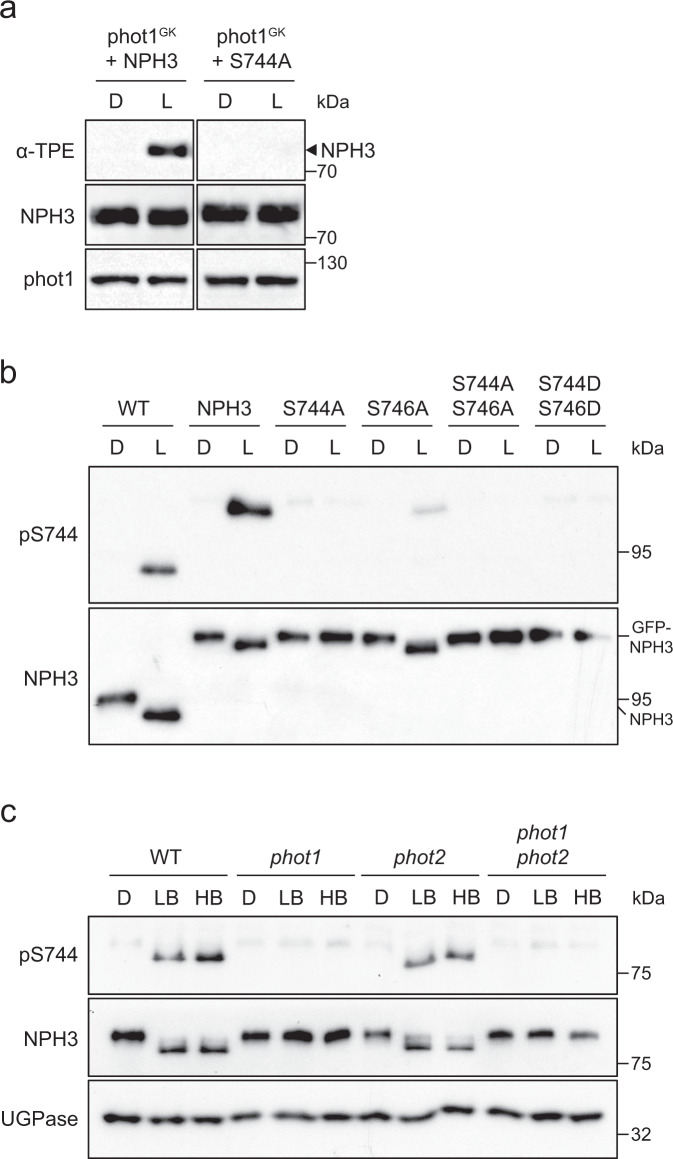
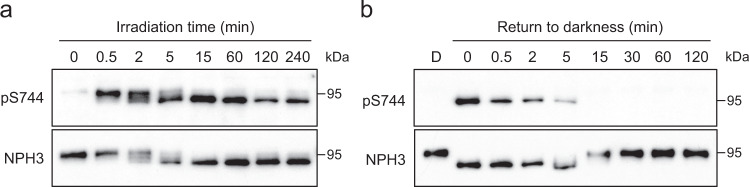
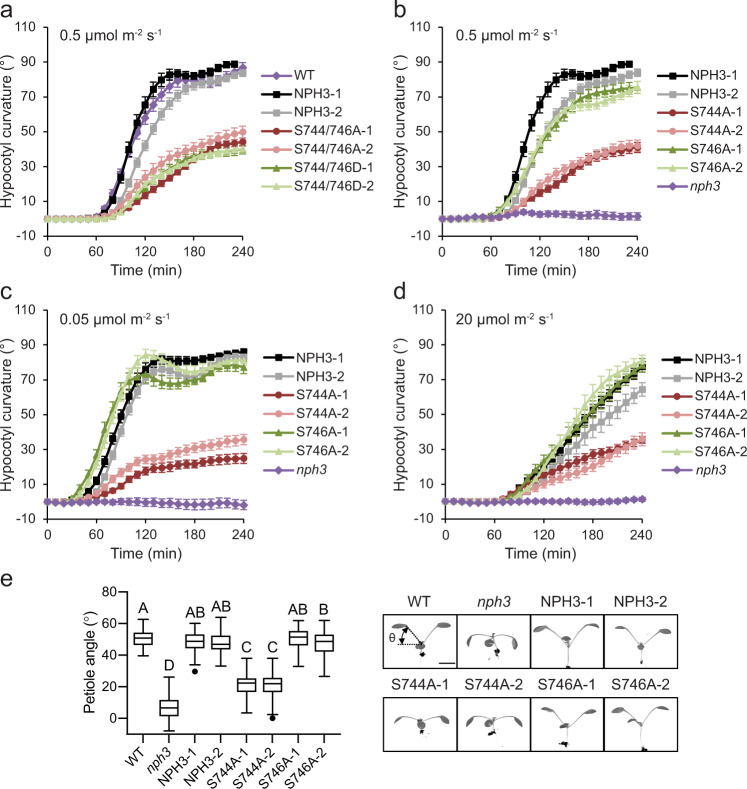
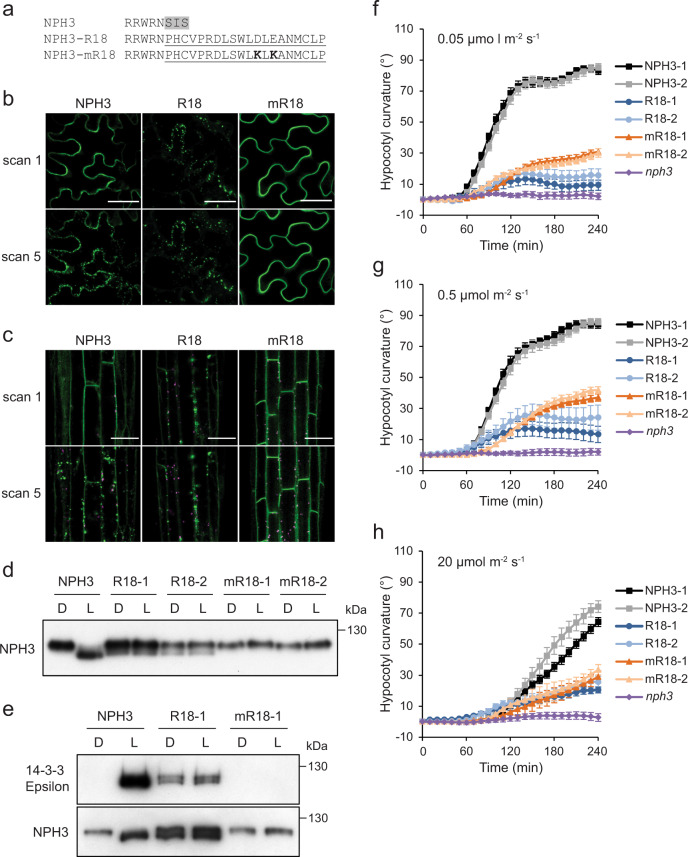
Polarity underlies all directional growth responses in plants including growth towards the light (phototropism). The plasma-membrane associated protein, NON-PHOTOTROPIC HYPOCOTYL 3 (NPH3) is a key determinant of phototropic growth which is regulated by phototropin (phot) AGC kinases. Here we demonstrate that NPH3 is directly phosphorylated by phot1 within a conserved C-terminal consensus sequence (RxS) that is necessary to promote phototropism and petiole positioning in Arabidopsis . RxS phosphorylation also triggers 14-3-3 binding combined with changes in NPH3 phosphorylation and localisation status. Mutants of NPH3 that are unable to bind or constitutively bind 14-3-3 s show compromised functionality consistent with a model where phototropic curvature is established by signalling outputs arising from a gradient of NPH3 RxS phosphorylation across the stem. Our findings therefore establish that NPH3/RPT2-Like (NRL) proteins are phosphorylation targets for plant AGC kinases. Moreover, RxS phosphorylation is conserved in other members of the NRL family, suggesting a common mechanism of regulating plant growth to the prevailing light environment.
Overview
The claims and statistics of this paper haven’t been checked yet.
Free: it reads the open-access text and checks the first 5 claims that cite a source we can check. Create a free account to check every claim.
Integrity signals
Registry
Cites
Statistics
Figures
Verification
Claims the paper makes
The claims and statistics of this paper haven’t been checked yet.
Free: it reads the open-access text and checks the first 5 claims that cite a source we can check. Create a free account to check every claim.
Claims other papers make about this one
Each is checked against this paper’s own text: does it say what the citing paper says it does?
The cited source says what the claim attributes to it.
In the citing paper
“Subsequent binding of the 14–3-3 protein is responsible for light-induced release of NPH3 from the plasma membrane with accompanying NPH3 dephosphorylation (Reuter et al., 2021; Sullivan et al., 2021).”
From The action of enhancing weak light capture via phototropic growth and chloroplast movement in plants (2022) · cites this paper as Sullivan et al., 2021
Self-check
Percentages, sums and reported differences re-computed from the paper’s own numbers.
The self-check needs the paper’s full text.
Citations
Cites
Fiji: an open-source platform for biological-image analysis
Schindelin, J., Arganda-Carreras, I., Frise, E., Kaynig, V., Longair, M., Pietzsch, T., Preibisch, S., Rueden, C., Saalfeld, S., Schmid, B., et al. (2012) · Nature Methods · doi:10.1038/nmeth.2019 · Cited by 66,890
Phototropin Blue-Light Receptors
Christie, J. M. (2007) · Annual Review of Plant Biology · doi:10.1146/annurev.arplant.58.032806.103951 · Cited by 937 · cited 1×
“Phots also control physiological responses such as chloroplast movement, leaf positioning, leaf expansion and stomatal opening (Christie, 2007), which together serve to optimize photosynthetic efficiency and growth (Takemiya et al., 2005; Gotoh et al., 2018; Hart et al., 2019).”
BackgroundSelf-citationSakai, T., Kagawa, T., Kasahara, M., Swartz, T. E., Christie, J. M., Briggs, W. R., Wada, M., & Okada, K. (2001) · Proceedings of the National Academy of Sciences · doi:10.1073/pnas.101137598 · Cited by 715
Self-citationChristie, J. M., Salomon, M., Nozue, K., Wada, M., & Briggs, W. R. (1999) · Proceedings of the National Academy of Sciences · doi:10.1073/pnas.96.15.8779 · Cited by 575
Self-citation14-3-3 proteins: a highly conserved, widespread family of eukaryotic proteins
Aitken, A., Collinge, D. B., van Heusden, B. P. H., Isobe, T., Roseboom, P. H., Rosenfeld, G., & Soll, J. (1992) · Trends in Biochemical Sciences · doi:10.1016/0968-0004(92)90339-b · Cited by 494
PhosPhAt: the Arabidopsis thaliana phosphorylation site database. An update
Durek, P., Schmidt, R., Heazlewood, J. L., Jones, A., MacLean, D., Nagel, A., Kersten, B., & Schulze, W. X. (2010) · Nucleic Acids Research · doi:10.1093/nar/gkp810 · Cited by 372
Bioinformatic and experimental survey of 14-3-3-binding sites
Johnson, C., Crowther, S., Stafford, M. J., Campbell, D. G., Toth, R., & MacKintosh, C. (2010) · Biochemical Journal · doi:10.1042/bj20091834 · Cited by 334
Arabidopsis NPH3: A NPH1 Photoreceptor-Interacting Protein Essential for Phototropism
Motchoulski, A., & Liscum, E. (1999) · Science · doi:10.1126/science.286.5441.961 · Cited by 320
Isolation of High-Affinity Peptide Antagonists of 14-3-3 Proteins by Phage Display
Wang, B., Yang, H., Liu, Y.-C., Jelinek, T., Zhang, L., Ruoslahti, E., & Fu, H. (1999) · Biochemistry · doi:10.1021/bi991353h · Cited by 304
Plant Flavoprotein Photoreceptors
Christie, J. M., Blackwood, L., Petersen, J., & Sullivan, S. (2015) · Plant and Cell Physiology · doi:10.1093/pcp/pcu196 · Cited by 294 · cited 2×
“The biochemical basis underpinning phototropism is the formation of a gradient of phot1 activation across the stem (Salomon et al., 1997), which results in an asymmetric accumulation of auxin on the shaded side through an unidentified mechanism (Fankhauser and Christie, 2015).”
BackgroundSelf-citationPhototropin LOV domains exhibit distinct roles in regulating photoreceptor function
Christie, J. M., Swartz, T. E., Bogomolni, R. A., & Briggs, W. R. (2002) · The Plant Journal · doi:10.1046/j.1365-313x.2002.01415.x · Cited by 289
Self-citationPhototropins Promote Plant Growth in Response to Blue Light in Low Light Environments
Takemiya, A., Inoue, S.-I., Doi, M., Kinoshita, T., & Shimazaki, K.-I. (2005) · The Plant Cell · doi:10.1105/tpc.104.030049 · Cited by 279
Blue light-induced autophosphorylation of phototropin is a primary step for signaling
Inoue, S.-I., Kinoshita, T., Matsumoto, M., Nakayama, K. I., Doi, M., & Shimazaki, K.-I. (2008) · Proceedings of the National Academy of Sciences · doi:10.1073/pnas.0709189105 · Cited by 269
RPT2: A Signal Transducer of the Phototropic Response in Arabidopsis
Sakai, T., Wada, T., Ishiguro, S., & Okada, K. (2000) · The Plant Cell · doi:10.1105/tpc.12.2.225 · Cited by 253
phot1 Inhibition of ABCB19 Primes Lateral Auxin Fluxes in the Shoot Apex Required For Phototropism
Christie, J. M., Yang, H., Richter, G. L., Sullivan, S., Thomson, C. E., Lin, J., Titapiwatanakun, B., Ennis, M., Kaiserli, E., Lee, O. R., et al. (2011) · PLoS Biology · doi:10.1371/journal.pbio.1001076 · Cited by 245
Self-citationPhosphorylation of BLUS1 kinase by phototropins is a primary step in stomatal opening
Takemiya, A., Sugiyama, N., Fujimoto, H., Tsutsumi, T., Yamauchi, S., Hiyama, A., Tada, Y., Christie, J. M., & Shimazaki, K.-I. (2013) · Nature Communications · doi:10.1038/ncomms3094 · Cited by 219
Self-citationInada, S., Ohgishi, M., Mayama, T., Okada, K., & Sakai, T. (2004) · The Plant Cell · doi:10.1105/tpc.019901 · Cited by 215
Ramm, G., Larance, M., Guilhaus, M., & James, D. E. (2006) · Journal of Biological Chemistry · doi:10.1074/jbc.m603274200 · Cited by 200
Davis, A. M., Hall, A., Millar, A. J., Darrah, C., & Davis, S. J. (2009) · Plant Methods · doi:10.1186/1746-4811-5-3 · Cited by 194
The Arabidopsis 14-3-3 Family of Signaling Regulators
DeLille, J. M., Sehnke, P. C., & Ferl, R. J. (2001) · Plant Physiology · doi:10.1104/pp.126.1.35 · Cited by 190
Pedmale, U. V., & Liscum, E. (2007) · Journal of Biological Chemistry · doi:10.1074/jbc.m702551200 · Cited by 169
Fankhauser, C., & Christie, J. M. (2015) · Current Biology · doi:10.1016/j.cub.2015.03.020 · Cited by 167
Self-citation14-3-3 Proteins in Plant Hormone Signaling: Doing Several Things at Once
Camoni, L., Visconti, S., Aducci, P., & Marra, M. (2018) · Frontiers in Plant Science · doi:10.3389/fpls.2018.00297 · Cited by 163
Blue light and CO2 signals converge to regulate light-induced stomatal opening
Hiyama, A., Takemiya, A., Munemasa, S., Okuma, E., Sugiyama, N., Tada, Y., Murata, Y., & Shimazaki, K.-I. (2017) · Nature Communications · doi:10.1038/s41467-017-01237-5 · Cited by 160
Maudoux, O., Batoko, H., Oecking, C., Gevaert, K., Vandekerckhove, J. S., Boutry, M., & Morsomme, P. (2000) · Journal of Biological Chemistry · doi:10.1074/jbc.m909690199 · Cited by 156
Leaf Positioning of Arabidopsis in Response to Blue Light
Inoue, S.-I., Kinoshita, T., Takemiya, A., Doi, M., & Shimazaki, K.-I. (2008) · Molecular Plant · doi:10.1093/mp/ssm001 · Cited by 156
Shoot phototropism in higher plants: New light through old concepts
Christie, J. M., & Murphy, A. S. (2013) · American Journal of Botany · doi:10.3732/ajb.1200340 · Cited by 152
Self-citationKinoshita, T., Emi, T., Tominaga, M., Sakamoto, K., Shigenaga, A., Doi, M., & Shimazaki, K.-I. (2003) · Plant Physiology · doi:10.1104/pp.103.029629 · Cited by 151
Roberts, D., Pedmale, U. V., Morrow, J., Sachdev, S., Lechner, E., Tang, X., Zheng, N., Hannink, M., Genschik, P., & Liscum, E. (2011) · The Plant Cell · doi:10.1105/tpc.111.087999 · Cited by 150
14‐3‐3 adaptor proteins are intermediates in ABA signal transduction during barley seed germination
Schoonheim, P. J., Sinnige, M. P., Casaretto, J. A., Veiga, H., Bunney, T. D., Quatrano, R. S., & BOER, A. H. D. (2006) · The Plant Journal · doi:10.1111/j.1365-313x.2006.02955.x · Cited by 145
Liscum, E., & Briggs, W. R. (1996) · Plant Physiology · doi:10.1104/pp.112.1.291 · Cited by 140
The Plant PTM Viewer, a central resource for exploring plant protein modifications
Willems, P., Horne, A., Van Parys, T., Goormachtig, S., De Smet, I., Botzki, A., Van Breusegem, F., & Gevaert, K. (2019) · The Plant Journal · doi:10.1111/tpj.14345 · Cited by 134
Wan, Y., Jasik, J., Wang, L., Hao, H., Volkmann, D., Menzel, D., Mancuso, S., Baluška, F., & Lin, J. (2012) · The Plant Cell · doi:10.1105/tpc.111.094284 · Cited by 131
Kaiserli, E., Sullivan, S., Jones, M. A., Feeney, K. A., & Christie, J. M. (2009) · The Plant Cell · doi:10.1105/tpc.109.067876 · Cited by 129
Self-citationChloroplast Accumulation Response Enhances Leaf Photosynthesis and Plant Biomass Production
Gotoh, E., Suetsugu, N., Yamori, W., Ishishita, K., Kiyabu, R., Fukuda, M., Higa, T., Shirouchi, B., & Wada, M. (2018) · Plant Physiology · doi:10.1104/pp.18.00484 · Cited by 128
Self-citationHaga, K., Takano, M., Neumann, R., & Iino, M. (2005) · The Plant Cell · doi:10.1105/tpc.104.028357 · Cited by 120
In Vivo Phosphorylation Site Mapping and Functional Characterization of Arabidopsis Phototropin 1
Sullivan, S., Thomson, C. E., Lamont, D. J., Jones, M. A., & Christie, J. M. (2008) · Molecular Plant · doi:10.1093/mp/ssm017 · Cited by 107
Self-citationFurutani, M., Kajiwara, T., Kato, T., Treml, B. S., Stockum, C., Torres-Ruiz, R. A., & Tasaka, M. (2007) · Development · doi:10.1242/dev.009654 · Cited by 106
Cho, H.-Y., Tseng, T.-S., Kaiserli, E., Sullivan, S., Christie, J. M., & Briggs, W. R. (2007) · Plant Physiology · doi:10.1104/pp.106.089839 · Cited by 103
Self-citationPhytochrome Kinase Substrate 4 is phosphorylated by the phototropin 1 photoreceptor
Demarsy, E., Schepens, I., Okajima, K., Hersch, M., Bergmann, S., Christie, J., Shimazaki, K., Tokutomi, S., & Fankhauser, C. (2012) · The EMBO Journal · doi:10.1038/emboj.2012.186 · Cited by 94
Self-citationFurutani, M., Sakamoto, N., Yoshida, S., Kajiwara, T., Robert, H. S., Friml, J., & Tasaka, M. (2011) · Development · doi:10.1242/dev.057745 · Cited by 93
Interaction specificity of Arabidopsis 14‐3‐3 proteins with phototropin receptor kinases
Sullivan, S., Thomson, C. E., Kaiserli, E., & Christie, J. M. (2009) · FEBS Letters · doi:10.1016/j.febslet.2009.06.011 · Cited by 87
Self-citationShining Light on the Function of NPH3/RPT2-Like Proteins in Phototropin Signaling
Christie, J. M., Suetsugu, N., Sullivan, S., & Wada, M. (2018) · Plant Physiology · doi:10.1104/pp.17.00835 · Cited by 81
Self-citationFunctional Analyses of the Activation Loop of Phototropin2 in Arabidopsis
Inoue, S.-I., Matsushita, T., Tomokiyo, Y., Matsumoto, M., Nakayama, K. I., Kinoshita, T., & Shimazaki, K.-I. (2011) · Plant Physiology · doi:10.1104/pp.111.175943 · Cited by 79
Keicher, J., Jaspert, N., Weckermann, K., Möller, C., Throm, C., Kintzi, A., & Oecking, C. (2017) · eLife · doi:10.7554/elife.24336 · Cited by 74
NPY Genes Play an Essential Role in Root Gravitropic Responses in Arabidopsis
Li, Y., Dai, X., Cheng, Y., & Zhao, Y. (2010) · Molecular Plant · doi:10.1093/mp/ssq052 · Cited by 69
Haga, K., Tsuchida-Mayama, T., Yamada, M., & Sakai, T. (2015) · The Plant Cell · doi:10.1105/tpc.15.00178 · Cited by 66
Suetsugu, N., Takemiya, A., Kong, S.-G., Higa, T., Komatsu, A., Shimazaki, K.-I., Kohchi, T., & Wada, M. (2016) · Proceedings of the National Academy of Sciences · doi:10.1073/pnas.1602151113 · Cited by 64
Self-citationPhototropism: Mechanism and Outcomes
Pedmale, U. V., Celaya, R. B., & Liscum, E. (2010) · The Arabidopsis Book · doi:10.1199/tab.0125 · Cited by 63
The Role of a 14-3-3 Protein in Stomatal Opening Mediated by PHOT2 in Arabidopsis
Tseng, T.-S., Whippo, C., Hangarter, R. P., & Briggs, W. R. (2012) · The Plant Cell · doi:10.1105/tpc.111.092130 · Cited by 63
Dynamic control of auxin transport-dependent growth by AGCVIII protein kinases
Barbosa, I. C. R., & Schwechheimer, C. (2014) · Current Opinion in Plant Biology · doi:10.1016/j.pbi.2014.09.010 · Cited by 61
AGC kinases and MAB4/MEL proteins maintain PIN polarity by limiting lateral diffusion in plant cells
Glanc, M., van Gelderen, K., Hoermayer, L., Tan, S., Naramoto, S., Zhang, X., Domjan, D., Včelařová, L., Hauschild, R., Johnson, A., et al. (2021) · Current Biology · doi:10.1016/j.cub.2021.02.028 · Cited by 60 · cited 2×
“These responses are independent of phototropin signalling but involve related AGCVIII kinases PINOID (PID) and its close homologues WAG1 and WAG2, and the D6 PROTEIN KINASE (D6PK) family (Glanc et al., 2021).”
BackgroundSalomon, M., Zacherl, M., & Rudiger, W. (1997) · Plant Physiology · doi:10.1104/pp.115.2.485 · Cited by 54
van Kleeff, P. J. M., Jaspert, N., Li, K. W., Rauch, S., Oecking, C., & BOER, A. H. D. (2014) · Journal of Experimental Botany · doi:10.1093/jxb/eru338 · Cited by 51
Hart, J. E., Sullivan, S., Hermanowicz, P., Petersen, J., Díaz-Ramos, L. A., Hoey, D. J., Łabuz, J., & Christie, J. M. (2019) · Proceedings of the National Academy of Sciences · doi:10.1073/pnas.1902915116 · Cited by 50
Self-citationMapping of the phosphorylation sites on the phototropic signal transducer, NPH3
Tsuchida-Mayama, T., Nakano, M., Uehara, Y., Sano, M., Fujisawa, N., Okada, K., & Sakai, T. (2008) · Plant Science · doi:10.1016/j.plantsci.2008.03.018 · Cited by 47
Harada, A., Takemiya, A., Inoue, S.-I., Sakai, T., & Shimazaki, K.-I. (2013) · Plant and Cell Physiology · doi:10.1093/pcp/pcs094 · Cited by 41
Deetiolation Enhances Phototropism by Modulating NON-PHOTOTROPIC HYPOCOTYL3 Phosphorylation Status
Sullivan, S., Kharshiing, E., Laird, J., Sakai, T., & Christie, J. M. (2019) · Plant Physiology · doi:10.1104/pp.19.00206 · Cited by 33
Self-citationA phosphorylation switch turns a positive regulator of phototropism into an inhibitor of the process
Schumacher, P., Demarsy, E., Waridel, P., Petrolati, L. A., Trevisan, M., & Fankhauser, C. (2018) · Nature Communications · doi:10.1038/s41467-018-04752-1 · Cited by 26
Arabidopsis ROOT PHOTOTROPISM2 Is a Light-Dependent Dynamic Modulator of Phototropin1
Kimura, T., Tsuchida-Mayama, T., Imai, H., Okajima, K., Ito, K., & Sakai, T. (2020) · The Plant Cell · doi:10.1105/tpc.19.00926 · Cited by 22
Functional characterization of Arabidopsis phototropin 1 in the hypocotyl apex
Sullivan, S., Takemiya, A., Kharshiing, E. V., Cloix, C., Shimazaki, K., & Christie, J. M. (2016) · The Plant Journal · doi:10.1111/tpj.13313 · Cited by 20
Self-citationA chemical genetic approach to engineer phototropin kinases for substrate labeling
Schnabel, J., Hombach, P., Waksman, T., Giuriani, G., Petersen, J., & Christie, J. M. (2018) · Journal of Biological Chemistry · doi:10.1074/jbc.ra118.001834 · Cited by 18
Self-citationKimura, T., Haga, K., Nomura, Y., Higaki, T., Nakagami, H., & Sakai, T. (2021) · PLANT PHYSIOLOGY · doi:10.1093/plphys/kiab281 · Cited by 17
Asymmetric Auxin Distribution is Not Required to Establish Root Phototropism in Arabidopsis
Kimura, T., Haga, K., Shimizu-Mitao, Y., Takebayashi, Y., Kasahara, H., Hayashi, K., Kakimoto, T., & Sakai, T. (2018) · Plant and Cell Physiology · doi:10.1093/pcp/pcy018 · Cited by 14
Cited by
Light and temperature regulation of leaf morphogenesis in Arabidopsis
Legris, M. (2023) · New Phytologist · doi:10.1111/nph.19258 · Cited by 45
Phototropin-mediated perception of light direction in leaves regulates blade flattening
Legris, M., Szarzyńska, B., Trévisan, M., Petrolati, L. A., & Fankhauser, C. (2021) · PLANT PHYSIOLOGY · doi:10.1093/plphys/kiab410 · Cited by 38
“…| PLANT PHYSIOLOGY 2021: 187; 1235–1249 Legris et al. followed by its degradation, and interaction with signaling members of the NRL and PKS families (Sakamoto and Briggs, 2002; Kong et al., 2006; Roberts et al., 2011; Christie et al., 2018; Legris and Boccaccini, 2020; Sullivan et al., 2021).”
BackgroundLsNRL4 enhances photosynthesis and decreases leaf angles in lettuce
An, G., Qi, Y., Zhang, W., Gao, H., Qian, J., Larkin, R. M., Chen, J., & Kuang, H. (2022) · Plant Biotechnology Journal · doi:10.1111/pbi.13878 · Cited by 34
“(Sullivan et al., 2021).”
BackgroundMolecular insights into the phototropin control of chloroplast movements
Łabuz, J., Sztatelman, O., & Hermanowicz, P. (2022) · Journal of Experimental Botany · doi:10.1093/jxb/erac271 · Cited by 35
Tuning the Wavelength: Manipulation of Light Signaling to Control Plant Defense
Breen, S., McLellan, H., Birch, P. R. J., & Gilroy, E. M. (2023) · International Journal of Molecular Sciences · doi:10.3390/ijms24043803 · Cited by 33
Metadata
- Authors
- Sullivan, S., Waksman, T., Paliogianni, D., Henderson, L., Lütkemeyer, M., Suetsugu, N., & Christie, J. M.
- Affiliations
- University of Glasgow (GB)
- Bielefeld University (DE)
- The University of Tokyo (JP)
- Corresponding author
- Sullivan, Stuart
- Christie, John M.
- Venue
- Nature Communications
- Published
- 2021-10-21
- Volume
- 12
- Issue
- 1
- Pages
- 6129-6129
- ISSN
- 2041-1723 (ISSN-L)
- PMC
- PMC8531357
- OpenAlex
- W3207254212
- Semantic Scholar
- dc7906084cde099758238873bba0c80398cdd618
- Cited by
- 74
- References
- 64
- Citations by year
- 2026: 15 · 2025: 21 · 2024: 18 · 2023: 13 · 2022: 5 · 2021: 2
- FWCI
- 5.70
- Type
- journal article
- Language
- en
- Open access
- gold
- doi.org
- Licence
- cc-by
- creativecommons.org/licenses/by/4.0 (tdm)
- creativecommons.org/licenses/by/4.0 (vor)
- Locations
- Nature Communications (publishedVersion, cc-by)
- bioRxiv (Cold Spring Harbor Laboratory) (acceptedVersion, cc-by-nc-nd)
- PubMed Central (publishedVersion, cc-by)
- PubMed (publishedVersion)
- ENLIGHTEN (Jurnal Bimbingan dan Konseling Islam) (acceptedVersion, cc-by-sa)
- RePEc: Research Papers in Economics (submittedVersion)
- DOAJ (DOAJ: Directory of Open Access Journals) (submittedVersion, cc-by-sa)
- Funders
- RCUK | Biotechnology and Biological Sciences Research Council (BB/M002128/1, BB/R001499/1)
- MEXT | Japan Society for the Promotion of Science (15KK0254)
- Topics
- Life Sciences › Agricultural and Biological Sciences › Plant Science › Light effects on plants
- Life Sciences › Agricultural and Biological Sciences › Plant Science › Plant Molecular Biology Research
- Life Sciences › Biochemistry, Genetics and Molecular Biology › Molecular Biology › 14-3-3 protein interactions
- Keywords
- phototropism, NPH3, phototropin, AGC kinases, substrate phosphorylation, 14-3-3 proteins, plant polarity, Arabidopsis thaliana
- MeSH terms
- Light, Phosphorylation, Protein Binding, Consensus Sequence, Protein Serine-Threonine Kinases, Arabidopsis, Gene Expression Regulation, Plant, Phototropism, Hypocotyl, Amino Acid Motifs, Arabidopsis Proteins, 14-3-3 Proteins
About these checks
Registry, retraction, Cites and statistics results are computed, not judged, with one exception: a printed reference that no index lists is read once by a model before it counts as a citation error. Claims are extracted by a model and kept only when their quote appears verbatim in the text; each cited source is then checked, with a model’s help, for whether it says what the claim relies on. Those verdicts can be wrong — read the claim’s quote and the cited source before relying on one.
Statistics and arithmetic are recomputed, not judged.
Confidence bands are shown only for fields calibrated on our annotated test set. None is calibrated yet, so no band is shown.
What counts as a claim ›How we measure confidence ›How we check this ›
Are you an author, or do you see a problem with this page? Request a review
Data sources
Bibliographic data: Semantic Scholar, OpenAlex, Crossref.
Contains information from the Semantic Scholar Academic Graph Datasets, made available under the ODC Attribution License (ODC-BY 1.0).
Semantic Scholar’s data is described in: Kinney, R., et al. (2023). The Semantic Scholar Open Data Platform. arXiv:2301.10140.
