

Nuclear and cytoplasmic huntingtin inclusions exhibit distinct biochemical composition, interactome and ultrastructural properties
Open accessPublished version of a preprint
The DOI matches its Crossref record; 205 of the 205 references it cites were found in a registry or an index.
Abstract
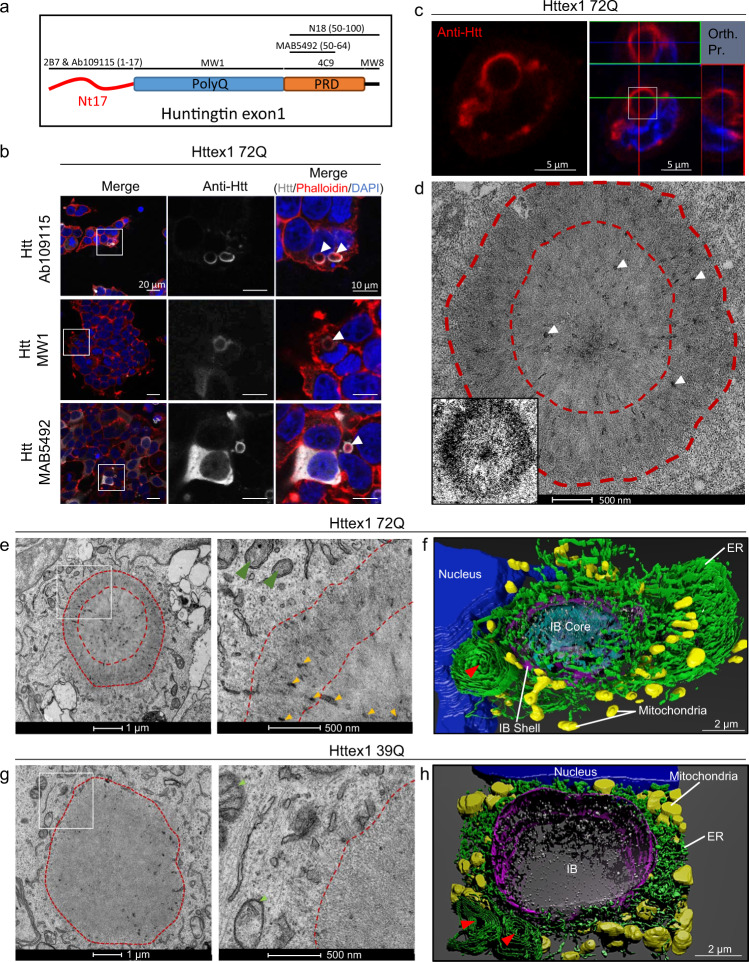
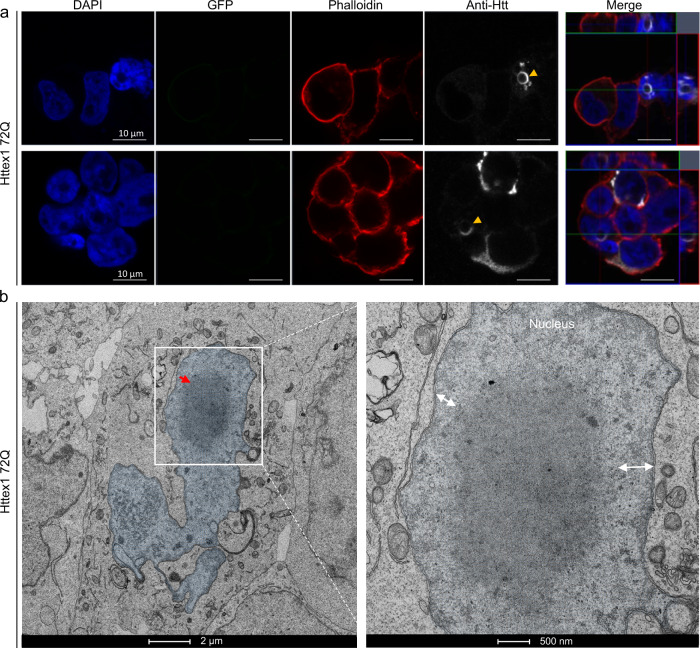
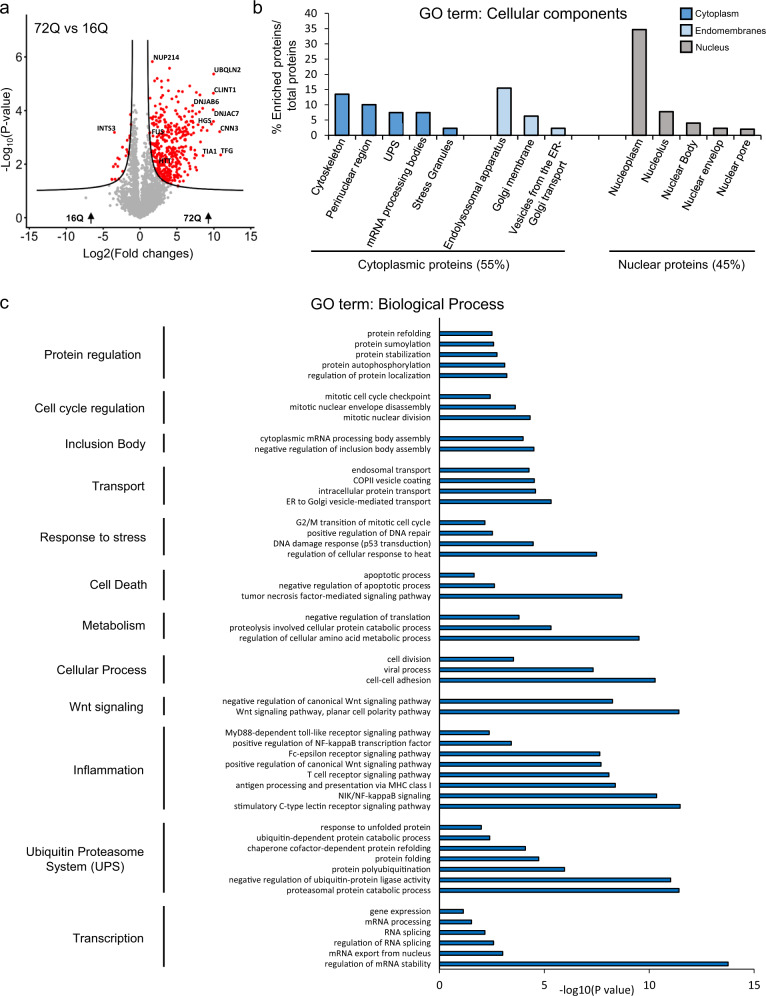
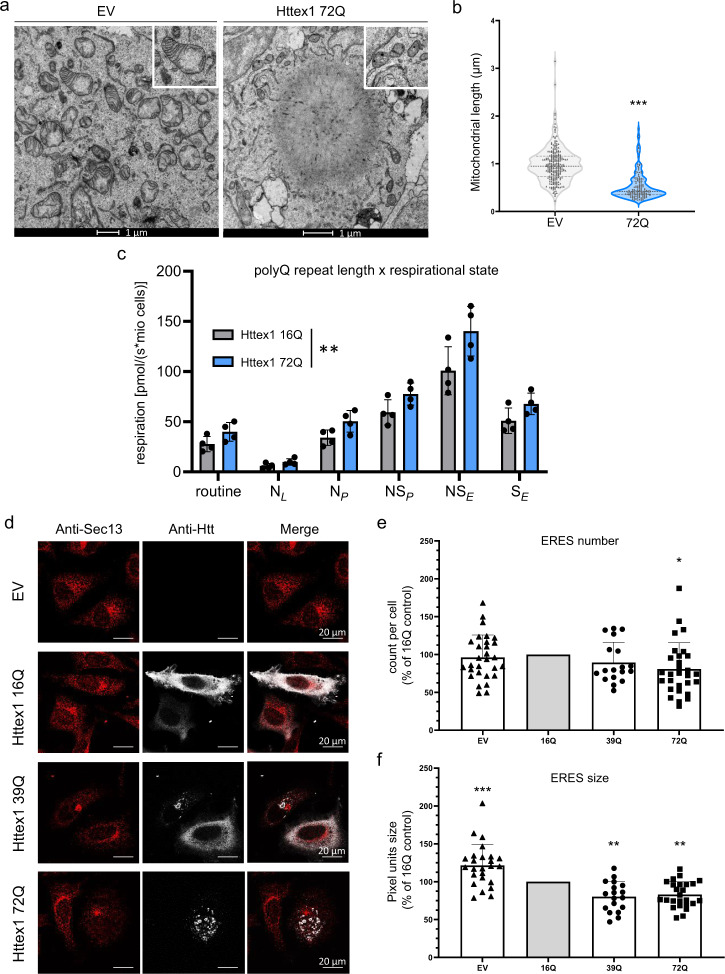
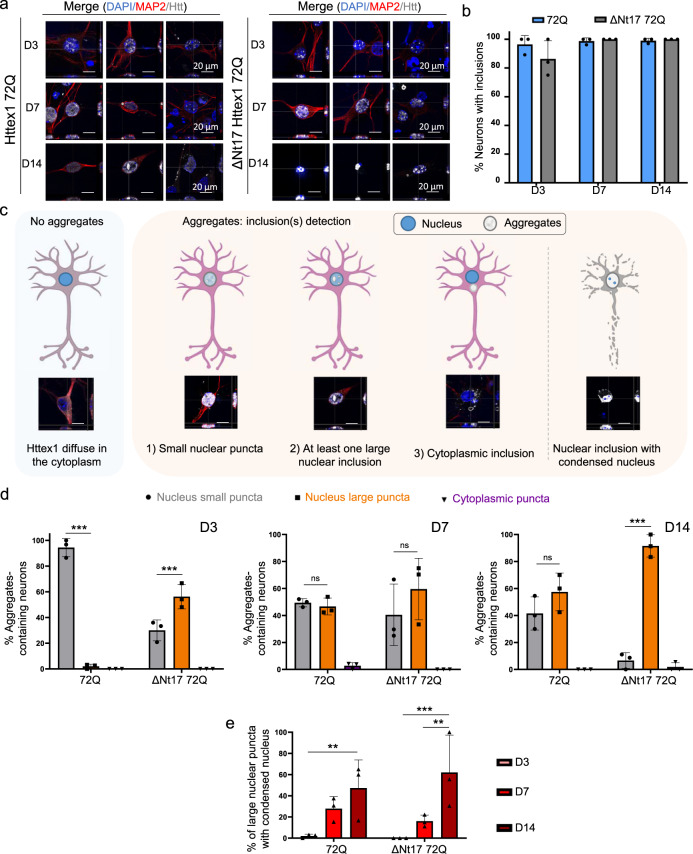
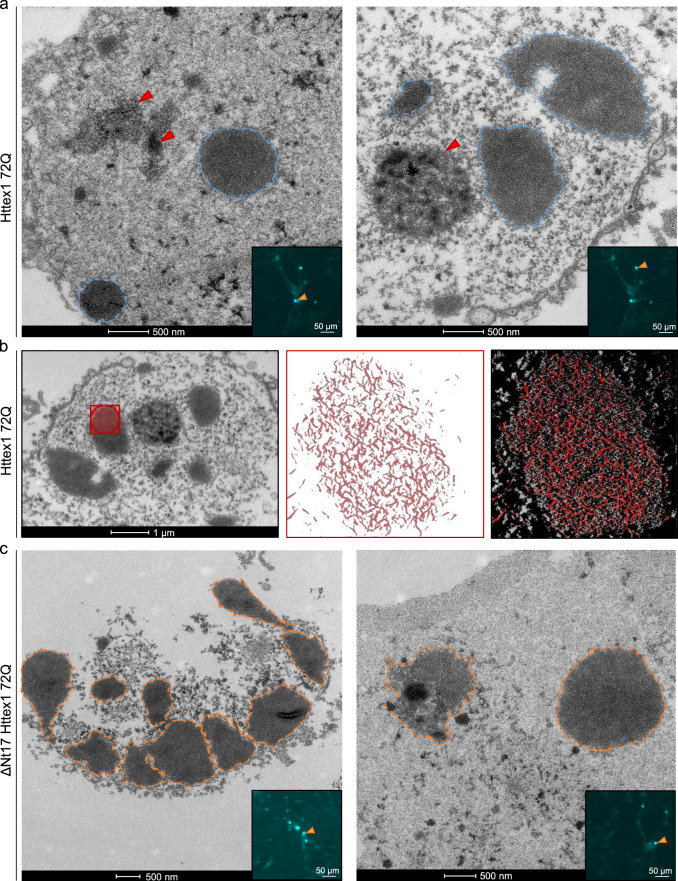
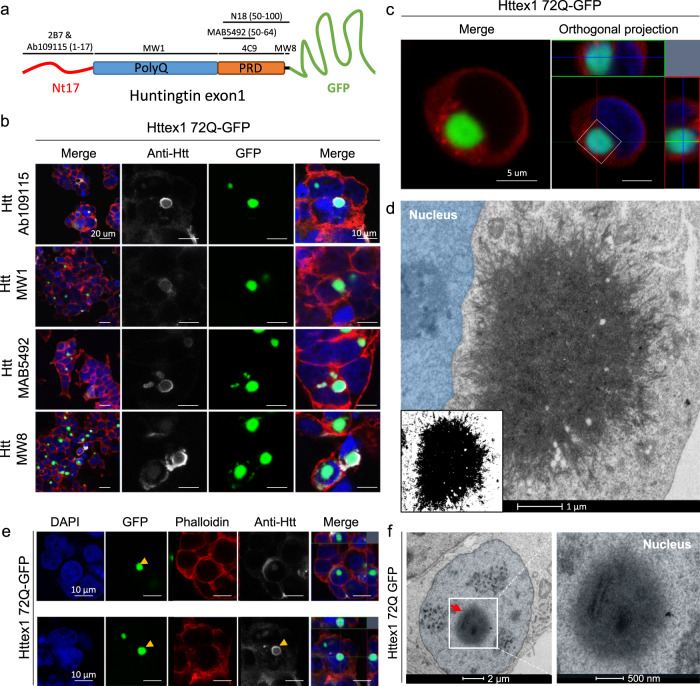
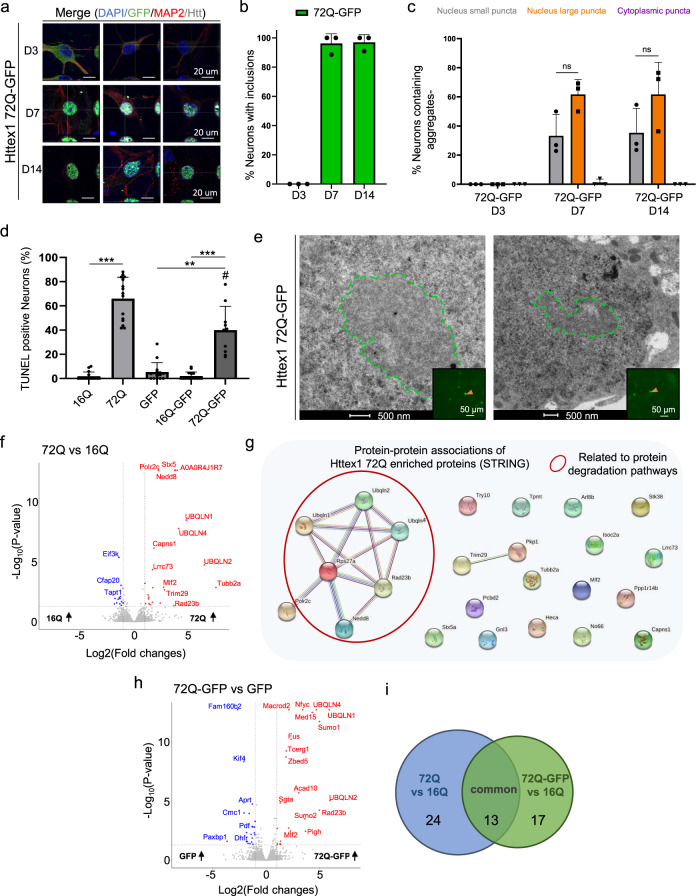
Despite the strong evidence linking the aggregation of the Huntingtin protein (Htt) to the pathogenesis of Huntington’s disease (HD), the mechanisms underlying Htt aggregation and neurodegeneration remain poorly understood. Herein, we investigated the ultrastructural properties and protein composition of Htt cytoplasmic and nuclear inclusions in mammalian cells and primary neurons overexpressing mutant exon1 of the Htt protein. Our findings provide unique insight into the ultrastructural properties of cytoplasmic and nuclear Htt inclusions and their mechanisms of formation. We show that Htt inclusion formation and maturation are complex processes that, although initially driven by polyQ-dependent Htt aggregation, also involve the polyQ and PRD domain-dependent sequestration of lipids and cytoplasmic and cytoskeletal proteins related to HD dysregulated pathways; the recruitment and accumulation of remodeled or dysfunctional membranous organelles, and the impairment of the protein quality control and degradation machinery. We also show that nuclear and cytoplasmic Htt inclusions exhibit distinct biochemical compositions and ultrastructural properties, suggesting different mechanisms of aggregation and toxicity.
Overview
The claims and statistics of this paper haven’t been checked yet.
Free: it reads the open-access text and checks the first 5 claims that cite a source we can check. Create a free account to check every claim.
Integrity signals
Registry
Cites
Statistics
Figures
Verification
Claims the paper makes
The claims and statistics of this paper haven’t been checked yet.
Free: it reads the open-access text and checks the first 5 claims that cite a source we can check. Create a free account to check every claim.
Claims other papers make about this one
Each is checked against this paper’s own text: does it say what the citing paper says it does?
The source backs part of the claim, not all of it — or backs it for a different population, condition or comparison.
In the citing paper
“Elongation of polyglutamine stretches in the abnormal protein is currently regarded as the causal factor for normal huntingtin’s pathogenic transformation, specifically by way of losing its normal solubility in nerve cells and aggregating into intraneuronal inclusions in different compartments of vulnerable brain regions [167,168].”
From The Impact of Neurotoxin Proteins Trafficked by Primary Cilia and Extracellular Vesicles in Neurodegenerative Diseases (2025) · cites this paper as [168]
Experimental — accuracy not yet measured
Self-check
Percentages, sums and reported differences re-computed from the paper’s own numbers.
The self-check needs the paper’s full text.
Citations
Cites
Controlling the False Discovery Rate: A Practical and Powerful Approach to Multiple Testing
Benjamini, Y., & Hochberg, Y. (1995) · Journal of the Royal Statistical Society Series B: Statistical Methodology · doi:10.1111/j.2517-6161.1995.tb02031.x · Cited by 109,482
UCSF Chimera—A visualization system for exploratory research and analysis
Pettersen, E. F., Goddard, T. D., Huang, C. C., Couch, G. S., Greenblatt, D. M., Meng, E. C., & Ferrin, T. E. (2004) · Journal of Computational Chemistry · doi:10.1002/jcc.20084 · Cited by 45,828
Cox, J., & Mann, M. (2008) · Nature Biotechnology · doi:10.1038/nbt.1511 · Cited by 14,855
Identification of programmed cell death in situ via specific labeling of nuclear DNA fragmentation.
Gavrieli, Y., Sherman, Y., & Ben-Sasson, S. A. (1992) · The Journal of cell biology · doi:10.1083/jcb.119.3.493 · Cited by 9,444
The Perseus computational platform for comprehensive analysis of (prote)omics data
Tyanova, S., Temu, T., Sinitcyn, P., Carlson, A., Hein, M. Y., Geiger, T., Mann, M., & Cox, J. (2016) · Nature Methods · doi:10.1038/nmeth.3901 · Cited by 8,803
MACDONALD, M. (1993) · Cell · doi:10.1016/0092-8674(93)90585-e · Cited by 8,366
Computer Visualization of Three-Dimensional Image Data Using IMOD
Kremer, J. R., Mastronarde, D. N., & McIntosh, J. R. (1996) · Journal of Structural Biology · doi:10.1006/jsbi.1996.0013 · Cited by 5,611
Cox, J., Hein, M. Y., Luber, C. A., Paron, I., Nagaraj, N., & Mann, M. (2014) · Molecular & Cellular Proteomics · doi:10.1074/mcp.m113.031591 · Cited by 5,180
Rappsilber, J., Mann, M., & Ishihama, Y. (2007) · Nature Protocols · doi:10.1038/nprot.2007.261 · Cited by 4,641
Reactive oxygen species (ROS) homeostasis and redox regulation in cellular signaling
Ray, P. D., Huang, B.-W., & Tsuji, Y. (2012) · Cellular Signalling · doi:10.1016/j.cellsig.2012.01.008 · Cited by 4,373
Mangiarini, L., Sathasivam, K., Seller, M., Cozens, B., Harper, A., Hetherington, C., Lawton, M., Trottier, Y., Lehrach, H., Davies, S. W., et al. (1996) · Cell · doi:10.1016/s0092-8674(00)81369-0 · Cited by 3,073
Aggregation of Huntingtin in Neuronal Intranuclear Inclusions and Dystrophic Neurites in Brain
DiFiglia, M., Sapp, E., Chase, K. O., Davies, S. W., Bates, G. P., Vonsattel, J. P., & Aronin, N. (1997) · Science · doi:10.1126/science.277.5334.1990 · Cited by 2,439
Davies, S. W., Turmaine, M., Cozens, B. A., DiFiglia, M., Sharp, A. H., Ross, C. A., Scherzinger, E., Wanker, E. E., Mangiarini, L., & Bates, G. P. (1997) · Cell · doi:10.1016/s0092-8674(00)80513-9 · Cited by 2,181
Biodiversity on the Rocks: Macrofauna Inhabiting Authigenic Carbonate at Costa Rica Methane Seeps
Levin, L. A., Mendoza, G. F., Grupe, B. M., Gonzalez, J. P., Jellison, B., Rouse, G., Thurber, A. R., & Waren, A. (2015) · PLOS ONE · doi:10.1371/journal.pone.0131080 · Cited by 2,167
Inclusion body formation reduces levels of mutant huntingtin and the risk of neuronal death
Arrasate, M., Mitra, S., Schweitzer, E. S., Segal, M. R., & Finkbeiner, S. (2004) · Nature · doi:10.1038/nature02998 · Cited by 1,979
No evidence that carotenoid pigments boost either immune or antioxidant defenses in a songbird
Koch, R. E., Kavazis, A. N., Hasselquist, D., Hood, W. R., Zhang, Y., Toomey, M. B., & Hill, G. E. (2018) · Nature Communications · doi:10.1038/s41467-018-02974-x · Cited by 1,924
Saudou, F., Finkbeiner, S., Devys, D., & Greenberg, M. E. (1998) · Cell · doi:10.1016/s0092-8674(00)81782-1 · Cited by 1,595
A Selected Core Microbiome Drives the Early Stages of Three Popular Italian Cheese Manufactures
De Filippis, F., La Storia, A., Stellato, G., Gatti, M., & Ercolini, D. (2014) · PLoS ONE · doi:10.1371/journal.pone.0089680 · Cited by 1,398
Scherzinger, E., Lurz, R., Turmaine, M., Mangiarini, L., Hollenbach, B., Hasenbank, R., Bates, G. P., Davies, S. W., Lehrach, H., & Wanker, E. E. (1997) · Cell · doi:10.1016/s0092-8674(00)80514-0 · Cited by 1,291
Dhavan, R., & Tsai, L.-H. (2001) · Nature Reviews Molecular Cell Biology · doi:10.1038/35096019 · Cited by 1,058
Early mitochondrial calcium defects in Huntington's disease are a direct effect of polyglutamines
Panov, A. V., Gutekunst, C.-A., Leavitt, B. R., Hayden, M. R., Burke, J. R., Strittmatter, W. J., & Greenamyre, J. T. (2002) · Nature Neuroscience · doi:10.1038/nn884 · Cited by 1,030
Huntington disease: natural history, biomarkers and prospects for therapeutics
Ross, C. A., Aylward, E. H., Wild, E. J., Langbehn, D. R., Long, J. D., Warner, J. H., Scahill, R. I., Leavitt, B. R., Stout, J. C., Paulsen, J. S., et al. (2014) · Nature Reviews Neurology · doi:10.1038/nrneurol.2014.24 · Cited by 1,016
Lewy pathology in Parkinson’s disease consists of crowded organelles and lipid membranes
Shahmoradian, S. H., Lewis, A. J., Genoud, C., Hench, J., Moors, T. E., Navarro, P. P., Castaño-Díez, D., Schweighauser, G., Graff-Meyer, A., Goldie, K. N., et al. (2019) · Nature Neuroscience · doi:10.1038/s41593-019-0423-2 · Cited by 996
Pesta, D., & Gnaiger, E. (2012) · Methods in Molecular Biology · doi:10.1007/978-1-61779-382-0_3 · Cited by 987
Browne, S. E., Bowling, A. C., Macgarvey, U., Baik, M. J., Berger, S. C., Muquit, M. M. K., Bird, E. D., & Beal, M. F. (1997) · Annals of Neurology · doi:10.1002/ana.410410514 · Cited by 885
Jordan, M., Schallhorn, A., & Wurm, F. M. (1996) · Nucleic Acids Research · doi:10.1093/nar/24.4.596 · Cited by 867
Mitochondrial defect in Huntington's disease caudate nucleus
Gu, M., Gash, M. T., Mann, V. M., Javoy‐Agid, F., Cooper, J. M., & Schapira, A. H. V. (1996) · Annals of Neurology · doi:10.1002/ana.410390317 · Cited by 758
Huntingtin is a cytoplasmic protein associated with vesicles in human and rat brain neurons
DiFiglia, M., Sapp, E., Chase, K., Schwarz, C., Meloni, A., Young, C., Martin, E., Vonsattel, J.-P., Carraway, R., Reeves, S. A., et al. (1995) · Neuron · doi:10.1016/0896-6273(95)90346-1 · Cited by 749
HDAC6 and microtubules are required for autophagic degradation of aggregated huntingtin.
Iwata, A., Riley, B. E., Johnston, J. A., & Kopito, R. R. (2005) · Journal of Biological Chemistry · doi:10.1074/jbc.m508786200 · Cited by 719
SUMO Modification of Huntingtin and Huntington's Disease Pathology
Steffan, J. S., Agrawal, N., Pallos, J., Rockabrand, E., Trotman, L. C., Slepko, N., Illes, K., Lukacsovich, T., Zhu, Y.-Z., Cattaneo, E., et al. (2004) · Science · doi:10.1126/science.1092194 · Cited by 713
Mahul-Mellier, A.-L., Burtscher, J., Maharjan, N., Weerens, L., Croisier, M., Kuttler, F., Leleu, M., Knott, G. W., & Lashuel, H. A. (2020) · Proceedings of the National Academy of Sciences · doi:10.1073/pnas.1913904117 · Cited by 710
Self-citationSp1 and TAFII130 Transcriptional Activity Disrupted in Early Huntington's Disease
Dunah, A. W., Jeong, H., Griffin, A., Kim, Y.-M., Standaert, D. G., Hersch, S. M., Mouradian, M. M., Young, A. B., Tanese, N., & Krainc, D. (2002) · Science · doi:10.1126/science.1072613 · Cited by 708
Scherzinger, E., Sittler, A., Schweiger, K., Heiser, V., Lurz, R., Hasenbank, R., Bates, G. P., Lehrach, H., & Wanker, E. E. (1999) · Proceedings of the National Academy of Sciences · doi:10.1073/pnas.96.8.4604 · Cited by 705
Waelter, S., Boeddrich, A., Lurz, R., Scherzinger, E., Lueder, G., Lehrach, H., & Wanker, E. E. (2001) · Molecular Biology of the Cell · doi:10.1091/mbc.12.5.1393 · Cited by 631
Kremer, B., Goldberg, P., Andrew, S. E., Theilmann, J., Telenius, H., Zeisler, J., Squitieri, F., Lin, B., Bassett, A., Almqvist, E., et al. (1994) · New England Journal of Medicine · doi:10.1056/nejm199405193302001 · Cited by 602
Song, W., Chen, J., Petrilli, A., Liot, G., Klinglmayr, E., Zhou, Y., Poquiz, P., Tjong, J., Pouladi, M. A., Hayden, M. R., et al. (2011) · Nature Medicine · doi:10.1038/nm.2313 · Cited by 555
CAG Repeat Not Polyglutamine Length Determines Timing of Huntington’s Disease Onset
Lee, J.-M., Correia, K., Loupe, J., Kim, K.-H., Barker, D., Hong, E. P., Chao, M. J., Long, J. D., Lucente, D., Vonsattel, J. P. G., et al. (2019) · Cell · doi:10.1016/j.cell.2019.06.036 · Cited by 538
Huntingtin Expression Stimulates Endosomal–Lysosomal Activity, Endosome Tubulation, and Autophagy
Kegel, K. B., Kim, M., Sapp, E., McIntyre, C., Castaño, J. G., Aronin, N., & DiFiglia, M. (2000) · The Journal of Neuroscience · doi:10.1523/jneurosci.20-19-07268.2000 · Cited by 533
Choo, Y. S. (2004) · Human Molecular Genetics · doi:10.1093/hmg/ddh162 · Cited by 515
Global changes to the ubiquitin system in Huntington's disease
Bennett, E. J., Shaler, T. A., Woodman, B., Ryu, K.-Y., Zaitseva, T. S., Becker, C. H., Bates, G. P., Schulman, H., & Kopito, R. R. (2007) · Nature · doi:10.1038/nature06022 · Cited by 497
Havis, E., & Duprez, D. (2020) · International Journal of Molecular Sciences · doi:10.3390/ijms21051664 · Cited by 494
Martindale, D., Hackam, A., Wieczorek, A., Ellerby, L., Wellington, C., McCutcheon, K., Singaraja, R., Kazemi-Esfarjani, P., Devon, R., Kim, S. U., et al. (1998) · Nature Genetics · doi:10.1038/ng0298-150 · Cited by 485
Formation of stacked ER cisternae by low affinity protein interactions
Snapp, E. L., Hegde, R. S., Francolini, M., Lombardo, F., Colombo, S., Pedrazzini, E., Borgese, N., & Lippincott-Schwartz, J. (2003) · The Journal of Cell Biology · doi:10.1083/jcb.200306020 · Cited by 460
Kazantsev, A., Preisinger, E., Dranovsky, A., Goldgaber, D., & Housman, D. (1999) · Proceedings of the National Academy of Sciences · doi:10.1073/pnas.96.20.11404 · Cited by 443
Quantitative proteomics combined with BAC TransgeneOmics reveals in vivo protein interactions
Hubner, N. C., Bird, A. W., Cox, J., Splettstoesser, B., Bandilla, P., Poser, I., Hyman, A., & Mann, M. (2010) · Journal of Cell Biology · doi:10.1083/jcb.200911091 · Cited by 440
Thakur, A. K., Jayaraman, M., Mishra, R., Thakur, M., Chellgren, V. M., L Byeon, I.-J., Anjum, D. H., Kodali, R., Creamer, T. P., Conway, J. F., et al. (2009) · Nature Structural & Molecular Biology · doi:10.1038/nsmb.1570 · Cited by 437
Genome-wide expression profiling of human blood reveals biomarkers for Huntington's disease
Borovecki, F., Lovrecic, L., Zhou, J., Jeong, H., Then, F., Rosas, H. D., Hersch, S. M., Hogarth, P., Bouzou, B., Jensen, R. V., et al. (2005) · Proceedings of the National Academy of Sciences · doi:10.1073/pnas.0504921102 · Cited by 414
Caspase Cleavage of Mutant Huntingtin Precedes Neurodegeneration in Huntington's Disease
Wellington, C. L., Ellerby, L. M., Gutekunst, C.-A., Rogers, D., Warby, S., Graham, R. K., Loubser, O., van Raamsdonk, J., Singaraja, R., Yang, Y.-Z., et al. (2002) · The Journal of Neuroscience · doi:10.1523/jneurosci.22-18-07862.2002 · Cited by 399
Huntingtin interacts with a family of WW domain proteins
Faber, P. (1998) · Human Molecular Genetics · doi:10.1093/hmg/7.9.1463 · Cited by 399
Convolutional neural networks for automated annotation of cellular cryo-electron tomograms
Chen, M., Dai, W., Sun, S. Y., Jonasch, D., He, C. Y., Schmid, M. F., Chiu, W., & Ludtke, S. J. (2017) · Nature Methods · doi:10.1038/nmeth.4405 · Cited by 398
Transcriptional dysregulation in Huntington’s disease
Cha, J.-H. J. (2000) · Trends in Neurosciences · doi:10.1016/s0166-2236(00)01609-x · Cited by 397
IKK phosphorylates Huntingtin and targets it for degradation by the proteasome and lysosome
Thompson, L. M., Aiken, C. T., Kaltenbach, L. S., Agrawal, N., Illes, K., Khoshnan, A., Martinez-Vincente, M., Arrasate, M., O'Rourke, J. G., Khashwji, H., et al. (2009) · Journal of Cell Biology · doi:10.1083/jcb.200909067 · Cited by 396
Atwal, R. S., Xia, J., Pinchev, D., Taylor, J., Epand, R. M., & Truant, R. (2007) · Human Molecular Genetics · doi:10.1093/hmg/ddm217 · Cited by 387
Neurocognitive signs in prodromal Huntington disease.
Stout, J. C., The PREDICT-HD Investigators and Coordinators of the Huntington Study Group, Paulsen, J. S., Queller, S., Solomon, A. C., Whitlock, K. B., Campbell, J. C., Carlozzi, N., Duff, K., Beglinger, L. J., et al. (2011) · Neuropsychology · doi:10.1037/a0020937 · Cited by 384
Loss of normal huntingtin function: new developments in Huntington's disease research
Cattaneo, E. (2001) · Trends in Neurosciences · doi:10.1016/s0166-2236(00)01721-5 · Cited by 382
CAG repeat expansion in Huntington disease determines age at onset in a fully dominant fashion
Lee, J.-M., Ramos, E. M., Lee, J.-H., Gillis, T., Mysore, J. S., Hayden, M. R., Warby, S. C., Morrison, P., Nance, M., Ross, C. A., et al. (2012) · Neurology · doi:10.1212/wnl.0b013e318249f683 · Cited by 382
Cooper, J. (1998) · Human Molecular Genetics · doi:10.1093/hmg/7.5.783 · Cited by 375
Huntington's disease: underlying molecular mechanisms and emerging concepts
Labbadia, J., & Morimoto, R. I. (2013) · Trends in Biochemical Sciences · doi:10.1016/j.tibs.2013.05.003 · Cited by 369
Huntingtin Spheroids and Protofibrils as Precursors in Polyglutamine Fibrilization
Poirier, M. A., Li, H., Macosko, J., Cai, S., Amzel, M., & Ross, C. A. (2002) · Journal of Biological Chemistry · doi:10.1074/jbc.m205809200 · Cited by 367
Huntingtin localization in brains of normal and Huntington's disease patients
Sapp, E., Schwarz, C., Chase, K., Bhide, P. G., Young, A. B., Penney, J., Vonsattel, J. P., Aronin, N., & DiFiglia, M. (1997) · Annals of Neurology · doi:10.1002/ana.410420411 · Cited by 349
In Situ Architecture and Cellular Interactions of PolyQ Inclusions
Bäuerlein, F. J. B., Saha, I., Mishra, A., Kalemanov, M., Martínez-Sánchez, A., Klein, R., Dudanova, I., Hipp, M. S., Hartl, F. U., Baumeister, W., et al. (2017) · Cell · doi:10.1016/j.cell.2017.08.009 · Cited by 349
Lu, K., Psakhye, I., & Jentsch, S. (2014) · Cell · doi:10.1016/j.cell.2014.05.048 · Cited by 346
Ubiquitin-independent function of optineurin in autophagic clearance of protein aggregates
Korac, J., Schaeffer, V., Kovacevic, I., Clement, A. M., Jungblut, B., Behl, C., Terzic, J., & Dikic, I. (2013) · Journal of Cell Science · doi:10.1242/jcs.114926 · Cited by 336
A Liquid to Solid Phase Transition Underlying Pathological Huntingtin Exon1 Aggregation
Peskett, T. R., Rau, F., O’Driscoll, J., Patani, R., Lowe, A. R., & Saibil, H. R. (2018) · Molecular Cell · doi:10.1016/j.molcel.2018.04.007 · Cited by 335
Mutant Huntingtin promotes autonomous microglia activation via myeloid lineage-determining factors
Crotti, A., Benner, C., Kerman, B. E., Gosselin, D., Lagier-Tourenne, C., Zuccato, C., Cattaneo, E., Gage, F. H., Cleveland, D. W., & Glass, C. K. (2014) · Nature Neuroscience · doi:10.1038/nn.3668 · Cited by 333
Gu, X., Greiner, E. R., Mishra, R., Kodali, R., Osmand, A., Finkbeiner, S., Steffan, J. S., Thompson, L. M., Wetzel, R., & Yang, X. W. (2009) · Neuron · doi:10.1016/j.neuron.2009.11.020 · Cited by 323
The Influence of Huntingtin Protein Size on Nuclear Localization and Cellular Toxicity
Hackam, A. S., Singaraja, R., Wellington, C. L., Metzler, M., McCutcheon, K., Zhang, T., Kalchman, M., & Hayden, M. R. (1998) · The Journal of Cell Biology · doi:10.1083/jcb.141.5.1097 · Cited by 313
UBQLN2 Mediates Autophagy-Independent Protein Aggregate Clearance by the Proteasome
Hjerpe, R., Bett, J. S., Keuss, M. J., Solovyova, A., McWilliams, T. G., Johnson, C., Sahu, I., Varghese, J., Wood, N., Wightman, M., et al. (2016) · Cell · doi:10.1016/j.cell.2016.07.001 · Cited by 309
Kim, M., Lee, H.-S., LaForet, G., McIntyre, C., Martin, E. J., Chang, P., Kim, T. W., Williams, M., Reddy, P. H., Tagle, D., et al. (1999) · The Journal of Neuroscience · doi:10.1523/jneurosci.19-03-00964.1999 · Cited by 305
Mutant huntingtin aggregates impair mitochondrial movement and trafficking in cortical neurons
Chang, D. T. W., Rintoul, G. L., Pandipati, S., & Reynolds, I. J. (2006) · Neurobiology of Disease · doi:10.1016/j.nbd.2005.12.007 · Cited by 299
Dysfunction of the Cholesterol Biosynthetic Pathway in Huntington's Disease
Valenza, M., Rigamonti, D., Goffredo, D., Zuccato, C., Fenu, S., Jamot, L., Strand, A., Tarditi, A., Woodman, B., Racchi, M., et al. (2005) · The Journal of Neuroscience · doi:10.1523/jneurosci.3355-05.2005 · Cited by 298
Production and Titration of Lentiviral Vectors
Barde, I., Salmon, P., & Trono, D. (2010) · Current Protocols in Neuroscience · doi:10.1002/0471142301.ns0421s53 · Cited by 297
Rockabrand, E., Slepko, N., Pantalone, A., Nukala, V. N., Kazantsev, A., Marsh, J. L., Sullivan, P. G., Steffan, J. S., Sensi, S. L., & Thompson, L. M. (2007) · Human Molecular Genetics · doi:10.1093/hmg/ddl440 · Cited by 286
The choreography of neuroinflammation in Huntington's disease
Crotti, A., & Glass, C. K. (2015) · Trends in Immunology · doi:10.1016/j.it.2015.04.007 · Cited by 276
Gai, W. P., Yuan, H. X., Li, X. Q., Power, J. T. H., Blumbergs, P. C., & Jensen, P. H. (2000) · Experimental Neurology · doi:10.1006/exnr.2000.7527 · Cited by 272
Mutant huntingtin and mitochondrial dysfunction
Bossy-Wetzel, E., Petrilli, A., & Knott, A. B. (2008) · Trends in Neurosciences · doi:10.1016/j.tins.2008.09.004 · Cited by 268
Regional Mitochondrial Respiratory Activity in Huntington's Disease Brain
Brennan, W. A., Bird, E. D., & Aprille, J. R. (1985) · Journal of Neurochemistry · doi:10.1111/j.1471-4159.1985.tb07192.x · Cited by 264
Tam, S., Spiess, C., Auyeung, W., Joachimiak, L., Chen, B., Poirier, M. A., & Frydman, J. (2009) · Nature Structural & Molecular Biology · doi:10.1038/nsmb.1700 · Cited by 245
Makrecka-Kuka, M., Krumschnabel, G., & Gnaiger, E. (2015) · Biomolecules · doi:10.3390/biom5031319 · Cited by 242
Autophagy Receptors and Neurodegenerative Diseases
Deng, Z., Purtell, K., Lachance, V., Wold, M. S., Chen, S., & Yue, Z. (2017) · Trends in Cell Biology · doi:10.1016/j.tcb.2017.01.001 · Cited by 238
Jiang, R., Diaz-Castro, B., Looger, L. L., & Khakh, B. S. (2016) · The Journal of Neuroscience · doi:10.1523/jneurosci.3693-15.2016 · Cited by 237
Gasset-Rosa, F., Chillon-Marinas, C., Goginashvili, A., Atwal, R. S., Artates, J. W., Tabet, R., Wheeler, V. C., Bang, A. G., Cleveland, D. W., & Lagier-Tourenne, C. (2017) · Neuron · doi:10.1016/j.neuron.2017.03.027 · Cited by 236
Legleiter, J., Mitchell, E., Lotz, G. P., Sapp, E., Ng, C., DiFiglia, M., Thompson, L. M., & Muchowski, P. J. (2010) · Journal of Biological Chemistry · doi:10.1074/jbc.m109.093708 · Cited by 235
Leitman, J., Ulrich Hartl, F., & Lederkremer, G. Z. (2013) · Nature Communications · doi:10.1038/ncomms3753 · Cited by 233
Neueder, A., Landles, C., Ghosh, R., Howland, D., Myers, R. H., Faull, R. L. M., Tabrizi, S. J., & Bates, G. P. (2017) · Scientific Reports · doi:10.1038/s41598-017-01510-z · Cited by 233
Lee, K.-S., Huh, S., Lee, S., Wu, Z., Kim, A.-K., Kang, H.-Y., & Lu, B. (2018) · Proceedings of the National Academy of Sciences · doi:10.1073/pnas.1721136115 · Cited by 232
Soluble Oligomers of PolyQ-Expanded Huntingtin Target a Multiplicity of Key Cellular Factors
Kim, Y. E., Hosp, F., Frottin, F., Ge, H., Mann, M., Hayer-Hartl, M., & Hartl, F. U. (2016) · Molecular Cell · doi:10.1016/j.molcel.2016.07.022 · Cited by 229
Mahul-Mellier, A.-L., Fauvet, B., Gysbers, A., Dikiy, I., Oueslati, A., Georgeon, S., Lamontanara, A. J., Bisquertt, A., Eliezer, D., Masliah, E., et al. (2014) · Human Molecular Genetics · doi:10.1093/hmg/ddt674 · Cited by 219
Self-citationIdentities of Sequestered Proteins in Aggregates from Cells with Induced Polyglutamine Expression
Suhr, S. T., Senut, M.-C., Whitelegge, J. P., Faull, K. F., Cuizon, D. B., & Gage, F. H. (2001) · The Journal of Cell Biology · doi:10.1083/jcb.153.2.283 · Cited by 215
Holbert, S., Denghien, I., Kiechle, T., Rosenblatt, A., Wellington, C. L., Hayden, M. R., Margolis, R. L., Ross, C. A., Dausset, J., Ferrante, R. J., et al. (2001) · Proceedings of the National Academy of Sciences · doi:10.1073/pnas.041566798 · Cited by 192
Nuclear Targeting of Mutant Huntingtin Increases Toxicity
Peters, M. F., Nucifora, F. C., Kushi, J., Seaman, H. C., Cooper, J. K., Herring, W. J., Dawson, V. L., Dawson, T. M., & Ross, C. A. (1999) · Molecular and Cellular Neuroscience · doi:10.1006/mcne.1999.0773 · Cited by 191
STUDIES ON BRAIN BIOPSIES OF PATIENTS WITH HUNTINGTONʼS CHOREA
TELLEZ-NAGEL, I., JOHNSON, A. B., & TERRY, R. D. (1974) · Journal of Neuropathology and Experimental Neurology · doi:10.1097/00005072-197404000-00008 · Cited by 190
A cellular model that recapitulates major pathogenic steps of Huntington's disease
Lunkes, A. (1998) · Human Molecular Genetics · doi:10.1093/hmg/7.9.1355 · Cited by 189
Huntingtin Bodies Sequester Vesicle-Associated Proteins by a Polyproline-Dependent Interaction
Qin, Z.-H., Wang, Y., Sapp, E., Cuiffo, B., Wanker, E., Hayden, M. R., Kegel, K. B., Aronin, N., & DiFiglia, M. (2004) · The Journal of Neuroscience · doi:10.1523/jneurosci.1409-03.2004 · Cited by 186
TFG-1 function in protein secretion and oncogenesis
Witte, K., Schuh, A. L., Hegermann, J., Sarkeshik, A., Mayers, J. R., Schwarze, K., Yates III, J. R., Eimer, S., & Audhya, A. (2011) · Nature Cell Biology · doi:10.1038/ncb2225 · Cited by 184
Valor, L., Viosca, J., Lopez-Atalaya, J., & Barco, A. (2013) · Current Pharmaceutical Design · doi:10.2174/13816128113199990382 · Cited by 172
Phosphorylation of Threonine 3
Aiken, C. T., Steffan, J. S., Guerrero, C. M., Khashwji, H., Lukacsovich, T., Simmons, D., Purcell, J. M., Menhaji, K., Zhu, Y.-Z., Green, K., et al. (2009) · Journal of Biological Chemistry · doi:10.1074/jbc.m109.013193 · Cited by 171
Indirect inhibition of 26S proteasome activity in a cellular model of Huntington’s disease
Hipp, M. S., Patel, C. N., Bersuker, K., Riley, B. E., Kaiser, S. E., Shaler, T. A., Brandeis, M., & Kopito, R. R. (2012) · Journal of Cell Biology · doi:10.1083/jcb.201110093 · Cited by 169
Shen, W.-C., Li, H.-Y., Chen, G.-C., Chern, Y., & Tu, P.-H. (2015) · Autophagy · doi:10.4161/auto.36098 · Cited by 169
Ultrastructure of Lewy bodies in the stellate ganglion
Forno, L. S., & Norville, R. L. (1976) · Acta Neuropathologica · doi:10.1007/bf00688674 · Cited by 161
Mechanism of ER Stress-Induced Brain Damage by IP3 Receptor
Higo, T., Hamada, K., Hisatsune, C., Nukina, N., Hashikawa, T., Hattori, M., Nakamura, T., & Mikoshiba, K. (2010) · Neuron · doi:10.1016/j.neuron.2010.11.010 · Cited by 161
Shaping the role of mitochondria in the pathogenesis of Huntington's disease
Costa, V., & Scorrano, L. (2012) · The EMBO Journal · doi:10.1038/emboj.2012.65 · Cited by 161
Miller, J., Arrasate, M., Shaby, B. A., Mitra, S., Masliah, E., & Finkbeiner, S. (2010) · The Journal of Neuroscience · doi:10.1523/jneurosci.0146-10.2010 · Cited by 159
The Role of the Immune System in Huntington’s Disease
Ellrichmann, G., Reick, C., Saft, C., & Linker, R. A. (2013) · Clinical and Developmental Immunology · doi:10.1155/2013/541259 · Cited by 155
Scior, A., Buntru, A., Arnsburg, K., Ast, A., Iburg, M., Juenemann, K., Pigazzini, M. L., Mlody, B., Puchkov, D., Priller, J., et al. (2017) · The EMBO Journal · doi:10.15252/embj.201797212 · Cited by 145
Yin, X., Manczak, M., & Reddy, P. H. (2016) · Human Molecular Genetics · doi:10.1093/hmg/ddw045 · Cited by 141
Mutant Huntingtin reduces HSP70 expression through the sequestration of NF‐Y transcription factor
Yamanaka, T., Miyazaki, H., Oyama, F., Kurosawa, M., Washizu, C., Doi, H., & Nukina, N. (2008) · The EMBO Journal · doi:10.1038/emboj.2008.23 · Cited by 140
Analysis of potential transcriptomic biomarkers for Huntington's disease in peripheral blood
Runne, H., Kuhn, A., Wild, E. J., Pratyaksha, W., Kristiansen, M., Isaacs, J. D., Régulier, E., Delorenzi, M., Tabrizi, S. J., & Luthi-Carter, R. (2007) · Proceedings of the National Academy of Sciences · doi:10.1073/pnas.0703652104 · Cited by 140
A role for autophagy in Huntington's disease
Croce, K. R., & Yamamoto, A. (2019) · Neurobiology of Disease · doi:10.1016/j.nbd.2018.08.010 · Cited by 139
Adaptation of endoplasmic reticulum exit sites to acute and chronic increases in cargo load
Farhan, H., Weiss, M., Tani, K., Kaufman, R. J., & Hauri, H. (2008) · The EMBO Journal · doi:10.1038/emboj.2008.136 · Cited by 138
Self-citationRatovitski, T., Chighladze, E., Arbez, N., Boronina, T., Herbrich, S., Cole, R. N., & Ross, C. A. (2012) · Cell Cycle · doi:10.4161/cc.20423 · Cited by 137
El‐Daher, M., Hangen, E., Bruyère, J., Poizat, G., Al‐Ramahi, I., Pardo, R., Bourg, N., Souquère, S., Mayet, C., Pierron, G., et al. (2015) · The EMBO Journal · doi:10.15252/embj.201490808 · Cited by 135
Maiuri, T., Woloshansky, T., Xia, J., & Truant, R. (2013) · Human Molecular Genetics · doi:10.1093/hmg/dds554 · Cited by 128
Posey, A. E., Ruff, K. M., Harmon, T. S., Crick, S. L., Li, A., Diamond, M. I., & Pappu, R. V. (2018) · Journal of Biological Chemistry · doi:10.1074/jbc.ra117.000357 · Cited by 128
Benn, C. L., Landles, C., Li, H., Strand, A. D., Woodman, B., Sathasivam, K., Li, S.-H., Ghazi-Noori, S., Hockly, E., Faruque, S. M. N. N., et al. (2005) · Human Molecular Genetics · doi:10.1093/hmg/ddi340 · Cited by 125
Hosp, F., Gutiérrez-Ángel, S., Schaefer, M. H., Cox, J., Meissner, F., Hipp, M. S., Hartl, F.-U., Klein, R., Dudanova, I., & Mann, M. (2017) · Cell Reports · doi:10.1016/j.celrep.2017.10.097 · Cited by 123
Accumulation of NEDD8 in neuronal and glial inclusions of neurodegenerative disorders
Mori, F., Nishie, M., Piao, Y. ‐., Kito, K., Kamitani, T., Takahashi, H., & Wakabayashi, K. (2005) · Neuropathology and Applied Neurobiology · doi:10.1111/j.1365-2990.2004.00603.x · Cited by 120
Wang, H., Lim, P. J., Yin, C., Rieckher, M., Vogel, B. E., & Monteiro, M. J. (2006) · Human Molecular Genetics · doi:10.1093/hmg/ddl017 · Cited by 118
Converging Pathways in the Occurrence of Endoplasmic Reticulum (ER) Stress in Huntingtons Disease
Vidal, R., Caballero, B., Couve, A., & Hetz, C. (2011) · Current Molecular Medicine · doi:10.2174/156652411794474419 · Cited by 115
Matsumoto, G., Kim, S., & Morimoto, R. I. (2006) · Journal of Biological Chemistry · doi:10.1074/jbc.m509201200 · Cited by 113
Modulation of receptor cycling by neuron-enriched endosomal protein of 21 kD
Steiner, P., Sarria, J.-C. F., Glauser, L., Magnin, S., Catsicas, S., & Hirling, H. (2002) · The Journal of Cell Biology · doi:10.1083/jcb.200202022 · Cited by 111
Liu, K.-Y., Shyu, Y., Barbaro, B. A., Lin, Y.-T., Chern, Y., Thompson, L. M., Shen, C.-K. J., & Marsh, J. (2014) · Human Molecular Genetics · doi:10.1093/hmg/ddu574 · Cited by 110
Membrane Interactions of the Amphipathic Amino Terminus of Huntingtin
Michalek, M., Salnikov, E. S., Werten, S., & Bechinger, B. (2013) · Biochemistry · doi:10.1021/bi301325q · Cited by 110
Real-time imaging of Huntingtin aggregates diverting target search and gene transcription
Li, L., Liu, H., Dong, P., Li, D., Legant, W. R., Grimm, J. B., Lavis, L. D., Betzig, E., Tjian, R., & Liu, Z. J. (2016) · eLife · doi:10.7554/elife.17056 · Cited by 107
Suopanki, J., Götz, C., Lutsch, G., Schiller, J., Harjes, P., Herrmann, A., & Wanker, E. E. (2006) · Journal of Neurochemistry · doi:10.1111/j.1471-4159.2005.03620.x · Cited by 106
Burke, K. A., Kauffman, K. J., Umbaugh, C. S., Frey, S. L., & Legleiter, J. A. (2013) · Journal of Biological Chemistry · doi:10.1074/jbc.m112.446237 · Cited by 106
Robust Summarization and Inference in Proteome-wide Label-free Quantification
Sticker, A., Goeminne, L. J. E., Martens, L., & Clement, L. (2020) · Molecular & Cellular Proteomics · doi:10.1074/mcp.ra119.001624 · Cited by 105
Zheng, Z., Li, A., Holmes, B. B., Marasa, J. C., & Diamond, M. I. (2013) · Journal of Biological Chemistry · doi:10.1074/jbc.m112.413575 · Cited by 104
De novo formation, fusion and fission of mammalian COPII‐coated endoplasmic reticulum exit sites
Stephens, D. J. (2003) · EMBO reports · doi:10.1038/sj.embor.embor736 · Cited by 101
NEDD8 protein is involved in ubiquitinated inclusion bodies
Kuazi, A. D., Kito, K., Abe, Y., Shin, R., Kamitani, T., & Ueda, N. (2003) · The Journal of Pathology · doi:10.1002/path.1283 · Cited by 101
Structural Features and Domain Organization of Huntingtin Fibrils
Bugg, C. W., Isas, J. M., Fischer, T., Patterson, P. H., & Langen, R. (2012) · Journal of Biological Chemistry · doi:10.1074/jbc.m112.353839 · Cited by 100
Altered cholesterol homeostasis contributes to enhanced excitotoxicity in Huntington’s disease
Del Toro, D., Xifró, X., Pol, A., Humbert, S., Saudou, F., Canals, J. M., & Alberch, J. (2010) · Journal of Neurochemistry · doi:10.1111/j.1471-4159.2010.06912.x · Cited by 100
Maghames, C. M., Lobato-Gil, S., Perrin, A., Trauchessec, H., Rodriguez, M. S., Urbach, S., Marin, P., & Xirodimas, D. P. (2018) · Nature Communications · doi:10.1038/s41467-018-06365-0 · Cited by 97
Barbaro, B. A., Lukácsovich, T., Agrawal, N., Burke, J., Bornemann, D. J., Purcell, J. M., Worthge, S. A., Caricasole, A., Weiss, A., Song, W., et al. (2014) · Human Molecular Genetics · doi:10.1093/hmg/ddu504 · Cited by 95
Mastrokolias, A., Ariyürek, Y., Goeman, J. J., van Duijn, E., Roos, R. A. C., van der Mast, R. C., van Ommen, G. B., den Dunnen, J. T., Hoen, P. A. C. ’., & van Roon‐Mom, W. (2015) · European Journal of Human Genetics · doi:10.1038/ejhg.2014.281 · Cited by 94
Feyeux, M., Bourgois-Rocha, F., Redfern, A. J., Giles, P. J., Lefort, N., Aubert, S., Bonnefond, C., Bugi, A., Ruiz, M., Déglon, N., et al. (2012) · Human Molecular Genetics · doi:10.1093/hmg/dds216 · Cited by 87
Schilling, G., Klevytska, A., Tebbenkamp, A. T. N., Juenemann, K., Cooper, J., Gonzales, V., Slunt, H., Poirer, M., Ross, C. A., & Borchelt, D. R. (2007) · Journal of Neuropathology & Experimental Neurology · doi:10.1097/nen.0b013e318040b2c8 · Cited by 86
Miao, K., & Wei, L. (2020) · ACS Central Science · doi:10.1021/acscentsci.9b01196 · Cited by 86
DeGuire, S. M., Ruggeri, F. S., Fares, M.-B., Chiki, A., Cendrowska, U., Dietler, G., & Lashuel, H. A. (2018) · Journal of Biological Chemistry · doi:10.1074/jbc.ra118.004621 · Cited by 83
Self-citationPetrasch‐Parwez, E., Nguyen, H., Löbbecke‐Schumacher, M., Habbes, H., Wieczorek, S., Riess, O., Andres, K., Dermietzel, R., & Von Hörsten, S. (2007) · Journal of Comparative Neurology · doi:10.1002/cne.21272 · Cited by 81
Molecular and structural architecture of polyQ aggregates in yeast
Gruber, A., Hornburg, D., Antonin, M., Krahmer, N., Collado, J., Schaffer, M., Zubaite, G., Lüchtenborg, C., Sachsenheimer, T., Brügger, B., et al. (2018) · Proceedings of the National Academy of Sciences · doi:10.1073/pnas.1717978115 · Cited by 80
The emerging role of the first 17 amino acids of huntingtin in Huntington’s disease
Arndt, J. R., Chaibva, M., & Legleiter, J. A. (2015) · BioMolecular Concepts · doi:10.1515/bmc-2015-0001 · Cited by 78
Multiple Aspects of Gene Dysregulation in Huntington’s Disease
Moumné, L., Betuing, S., & Caboche, J. (2013) · Frontiers in Neurology · doi:10.3389/fneur.2013.00127 · Cited by 77
Manczak, M., & Reddy, P. H. (2015) · Human Molecular Genetics · doi:10.1093/hmg/ddv429 · Cited by 77
Shen, K., Calamini, B., Fauerbach, J. A., Ma, B., Shahmoradian, S. H., Serrano Lachapel, I. L., Chiu, W., Lo, D. C., & Frydman, J. (2016) · eLife · doi:10.7554/elife.18065 · Cited by 77
Burtscher, J., Zangrandi, L., Schwarzer, C., & Gnaiger, E. (2015) · Mitochondrion · doi:10.1016/j.mito.2015.10.007 · Cited by 72
Self-citationSchipper-Krom, S., Juenemann, K., & Reits, E. A. (2012) · Biochemistry Research International · doi:10.1155/2012/837015 · Cited by 72
Mitochondrial fragmentation enables localized signaling required for cell repair
Horn, A., Raavicharla, S., Shah, S., Cox, D., & Jaiswal, J. K. (2020) · Journal of Cell Biology · doi:10.1083/jcb.201909154 · Cited by 72
Huntingtin inclusion bodies are iron‐dependent centers of oxidative events
Firdaus, W. J. J., Wyttenbach, A., Giuliano, P., Kretz‐Remy, C., Currie, R. W., & Arrigo, A. (2006) · The FEBS Journal · doi:10.1111/j.1742-4658.2006.05537.x · Cited by 71
Isas, J. M., Langen, R., & Siemer, A. B. (2015) · Biochemistry · doi:10.1021/acs.biochem.5b00281 · Cited by 71
Insoluble TATA-binding protein accumulation in Huntington’s disease cortex
van Roon‐Mom, W., Reid, S. J., Jones, A. L., MacDonald, M. E., Faull, R. L. M., & Snell, R. G. (2002) · Molecular Brain Research · doi:10.1016/s0169-328x(02)00450-3 · Cited by 70
Hodges, A., Hughes, G., Brooks, S., Elliston, L., Holmans, P., Dunnett, S. B., & Jones, L. (2008) · Genes, Brain and Behavior · doi:10.1111/j.1601-183x.2007.00350.x · Cited by 69
CRISPR-induced double-strand breaks trigger recombination between homologous chromosome arms
Brunner, E., Yagi, R., Debrunner, M., Beck-Schneider, D., Burger, A., Escher, E., Mosimann, C., Hausmann, G., & Basler, K. (2019) · Life Science Alliance · doi:10.26508/lsa.201800267 · Cited by 68
TFG Promotes Organization of Transitional ER and Efficient Collagen Secretion
McCaughey, J., Miller, V. J., Stevenson, N. L., Brown, A. K., Budnik, A., Heesom, K. J., Alibhai, D., & Stephens, D. J. (2016) · Cell Reports · doi:10.1016/j.celrep.2016.04.062 · Cited by 67
Dynamic recruitment of active proteasomes into polyglutamine initiated inclusion bodies
Schipper-Krom, S., Juenemann, K., Jansen, A. H., Wiemhoefer, A., van den Nieuwendijk, R., Smith, D. L., Hink, M. A., Bates, G. P., Overkleeft, H., Ovaa, H., et al. (2014) · FEBS Letters · doi:10.1016/j.febslet.2013.11.023 · Cited by 65
A novel hollow alumina sphere-based ceramic bonded by in situ mullite whisker framework
Yang, M., Li, J., Man, Y., Peng, Z., Zhang, X., & Luo, X. (2019) · Materials & Design · doi:10.1016/j.matdes.2019.108334 · Cited by 61
The huntingtin inclusion is a dynamic phase-separated compartment
Aktar, F., Burudpakdee, C., Polanco, M., Pei, S., Swayne, T. C., Lipke, P. N., & Emtage, L. (2019) · Life Science Alliance · doi:10.26508/lsa.201900489 · Cited by 59
Gao, Y., Yang, H., Zhao, J., Jiang, Y., & Hu, H.-Y. (2014) · Structure · doi:10.1016/j.str.2013.12.005 · Cited by 57
Aggregation Behavior of Chemically Synthesized, Full-Length Huntingtin Exon1
Sahoo, B., Singer, D. L., Kodali, R. B., Züchner, T., & Wetzel, R. B. (2014) · Biochemistry · doi:10.1021/bi500300c · Cited by 51
Protofilament Structure and Supramolecular Polymorphism of Aggregated Mutant Huntingtin Exon 1
Boatz, J. C., Piretra, T., Lasorsa, A., Matlahov, I., Conway, J. F., & van der Wel, P. C. A. (2020) · Journal of Molecular Biology · doi:10.1016/j.jmb.2020.06.021 · Cited by 51
Optineurin and amyotrophic lateral sclerosis
Maruyama, H., & Kawakami, H. (2013) · Geriatrics & Gerontology International · doi:10.1111/ggi.12022 · Cited by 50
Gao, Y., Yan, X., Song, A., Chang, Y.-G., Gao, X.-C., Jiang, N., Zhang, Q., & Hu, H.-Y. (2006) · Structure · doi:10.1016/j.str.2006.09.014 · Cited by 49
Ansaloni, A., Wang, Z., Jeong, J. S., Ruggeri, F. S., Dietler, G., & Lashuel, H. A. (2014) · Angewandte Chemie International Edition · doi:10.1002/anie.201307510 · Cited by 48
Self-citationChaibva, M., Gao, X., Jain, P., Campbell, W. A., Frey, S. L., & Legleiter, J. A. (2018) · ACS Omega · doi:10.1021/acsomega.7b01472 · Cited by 48
Optineurin in Huntington's disease intranuclear inclusions
Schwab, C., Yu, S., McGeer, E. G., & McGeer, P. L. (2012) · Neuroscience Letters · doi:10.1016/j.neulet.2011.10.070 · Cited by 47
Safren, N., Ayadi, A. E., Chang, L., Terrillion, C. E., Gould, T. D., Boehning, D. F., & Monteiro, M. J. (2014) · PLoS ONE · doi:10.1371/journal.pone.0087513 · Cited by 47
Alteration of Lysosome Fusion and Low-grade Inflammation Mediated by Super-low-dose Endotoxin
Baker, B., Geng, S., Chen, K., Diao, N., Yuan, R., Xu, X., Dougherty, S., Stephenson, C., Xiong, H., Chu, H. W., et al. (2015) · Journal of Biological Chemistry · doi:10.1074/jbc.m114.611442 · Cited by 47
ESCRTing autophagic clearance of aggregating proteins
Rusten, T. E., Filimonenko, M., Rodahl, L. M., Stenmark, H., & Simonsen, A. (2008) · Autophagy · doi:10.4161/auto.5396 · Cited by 44
Dynamic recruitment of ubiquitin to mutant huntingtin inclusion bodies
Juenemann, K., Jansen, A. H. P., van Riel, L., Merkx, R., Mulder, M. P. C., An, H., Statsyuk, A., Kirstein, J., Ovaa, H., & Reits, E. A. (2018) · Scientific Reports · doi:10.1038/s41598-018-19538-0 · Cited by 41
Sap, K. A., Guler, A. T., Bezstarosti, K., Bury, A. E., Juenemann, K., Demmers, J. A., & Reits, E. A. (2019) · Molecular & Cellular Proteomics · doi:10.1074/mcp.ra119.001486 · Cited by 41
Wear, M. P., Kryndushkin, D., O’Meally, R., Sonnenberg, J. L., Cole, R. N., & Shewmaker, F. P. (2015) · PLOS ONE · doi:10.1371/journal.pone.0136362 · Cited by 40
Ultrastructure of nuclear aggregates formed by expressing an expanded polyglutamine
Hazeki, N., Tsukamoto, T., Yazawa, I., Koyama, M., Hattori, S., Someki, I., Iwatsubo, T., Nakamura, K., Goto, J., & Kanazawa, I. (2002) · Biochemical and Biophysical Research Communications · doi:10.1016/s0006-291x(02)00498-9 · Cited by 40
Hackam, A. S., Hodgson, J., Singaraja, R. R., Zhang, T., Gan, L., Gutekunst, C., Hersch, S. M., & Hayden, M. R. (1999) · Philosophical Transactions of the Royal Society B Biological Sciences · doi:10.1098/rstb.1999.0457 · Cited by 38
Hollenbach, B., Scherzinger, E., Schweiger, K., Lurz, R., Lehrach, H. R., & Wanker, E. E. (1999) · Philosophical Transactions of the Royal Society B Biological Sciences · doi:10.1098/rstb.1999.0450 · Cited by 38
Tagawa, K., Hoshino, M., Okuda, T., Ueda, H., Hayashi, H., Engemann, S., Okado, H., Ichikawa, M., Wanker, E. E., & Okazawa, H. (2004) · Journal of Neurochemistry · doi:10.1111/j.1471-4159.2004.02372.x · Cited by 37
Dorin, D., Demarta‐Gatsi, C., Hamelin, R., Armand, F., Carvalho, T. G., Moniatte, M., & Doerig, C. (2015) · PLoS ONE · doi:10.1371/journal.pone.0139591 · Cited by 36
Bansal, M., Moharir, S. C., & Swarup, G. (2018) · Communicative & Integrative Biology · doi:10.1080/19420889.2018.1467189 · Cited by 36
Ghosh, R., Wood‐Kaczmar, A., Dobson, L., Smith, E. J., Sirinathsinghji, E. C., Kriston-Vizi, J., Hargreaves, I. P., Heaton, R. A., Herrmann, F., Abramov, A. Y., et al. (2020) · The FASEB Journal · doi:10.1096/fj.201902277rr · Cited by 35
The S1P Axis: New Exciting Route for Treating Huntington’s Disease
Pardo, A. D., & Maglione, V. (2018) · Trends in Pharmacological Sciences · doi:10.1016/j.tips.2018.02.009 · Cited by 34
Lü, M., Banetta, L., Young, L. J., Smith, E. J., Bates, G. P., Zaccone, A., Schierle, G. S. K., Tunnacliffe, A., & Kaminski, C. F. (2018) · Journal of Biological Chemistry · doi:10.1074/jbc.ra118.003500 · Cited by 34
Christodoulou, C. C., Zachariou, M., Tomazou, M., Karatzas, E., Demetriou, C. A., Zamba‐Papanicolaou, E., & Spyrou, G. M. (2020) · International Journal of Molecular Sciences · doi:10.3390/ijms21197414 · Cited by 34
Vieweg, S., Mahul‐Mellier, A., Ruggeri, F. S., Riguet, N., DeGuire, S. M., Chiki, A., Cendrowska, U., Dietler, G., & Lashuel, H. A. (2021) · Journal of Molecular Biology · doi:10.1016/j.jmb.2021.167222 · Cited by 34
Self-citationDi Pardo, A., Monyror, J., Morales, L. C., Kadam, V., Lingrell, S., Maglione, V., Wozniak, R. W., & Sipione, S. (2020) · Human Molecular Genetics · doi:10.1093/hmg/ddz298 · Cited by 32
Vieweg, S., Ansaloni, A., Wang, Z.-M., Warner, J. B., & Lashuel, H. A. (2016) · Journal of Biological Chemistry · doi:10.1074/jbc.m116.713982 · Cited by 31
Self-citationVieweg, S., Mahul-Mellier, A.-L., Ruggeri, F., Riguet, N., Deguire, S. M., Chiki, A., Cendrowska, U., Dietler, G., & Lashuel, H. (2021) · bioRxiv · doi:10.1101/2021.02.15.431207 · Cited by 31
Self-citationUbiquilins accelerate autophagosome maturation and promote cell survival during nutrient starvation
N’Diaye, E.-N., Debnath, J., & Brown, E. J. (2009) · Autophagy · doi:10.4161/auto.5.4.8312 · Cited by 28
Ugalde, C. L., Annesley, S. J., Gordon, S. E., Mroczek, K. H., Perugini, M. A., Lawson, V., Fisher, P. R., Finkelstein, D. I., & Hill, A. F. (2020) · Disease Models & Mechanisms · doi:10.1242/dmm.040899 · Cited by 28
Huntington’s Disease Protein Huntingtin Associates with its own mRNA
Culver, B. P., DeClercq, J., Dolgalev, I., Yu, M. S., Ma, B., Heguy, A., & Tanese, N. (2016) · Journal of Huntington s Disease · doi:10.3233/jhd-150177 · Cited by 27
Maiuri, T., Hung, C. L.-K., Suart, C., Begeja, N., Bazan, C. B., Peng, Y., Savic, N., Wong, T., & Truant, R. (2021) · Journal of Huntington s Disease · doi:10.3233/jhd-200414 · Cited by 27
SMAD transcription factors are altered in cell models of HD and regulate HTT expression
Bowles, K. R., Stone, T., Holmans, P., Allen, N., Dunnett, S. B., & Jones, L. (2016) · Cellular Signalling · doi:10.1016/j.cellsig.2016.12.005 · Cited by 25
Oguro‐Ando, A., Kubota, H., Shimizu, M., Ishiura, S., & Atomi, Y. (2011) · Neuroscience Letters · doi:10.1016/j.neulet.2011.08.043 · Cited by 24
Luo, H., Cao, L., Liang, X., Du, A., Peng, T., & He, L. (2018) · Molecular Neurobiology · doi:10.1007/s12035-018-0900-8 · Cited by 22
Mizukami, K., Abrahamson, E. E., Mi, Z., Ishikawa, M., Watanabe, K., Kinoshita, S., Asada, T., & Ikonomović, M. D. (2013) · Neuropathology · doi:10.1111/neup.12055 · Cited by 17
Signature changes in ubiquilin expression in the R6/2 mouse model of Huntington’s disease
Safren, N., Chang, L., Dziki, K. M., & Monteiro, M. J. (2014) · Brain Research · doi:10.1016/j.brainres.2014.12.008 · Cited by 16
Flipping a switch on huntingtin
Greiner, E. R., & Yang, X. W. (2011) · Nature Chemical Biology · doi:10.1038/nchembio.604 · Cited by 16
The Ubiquitin Receptor ADRM1 Modulates HAP40-Induced Proteasome Activity
Huang, Z.-N., & Her, L. (2016) · Molecular Neurobiology · doi:10.1007/s12035-016-0247-y · Cited by 16
Inhibition of SoxB2 or HDACs suppressesHydractiniahead regeneration by affecting blastema formation
Flici, H., & Frank, U. (2018) · Communicative & Integrative Biology · doi:10.1080/19420889.2018.1450032 · Cited by 15
Establishment of Constraints on Amyloid Formation Imposed by Steric Exclusion of Globular Domains.
Azizyan, R., Garro, A. D., Radkova, Z., Anikeenko, A., Bakulina, A., Dumas, C., & Kajava, A. (2018) · Journal of Molecular Biology · doi:10.1016/j.jmb.2018.05.038 · Cited by 15
Rajasekhar, K., Gopinath, P., Ricci, J., Reif, A., Rostami, I., & Lashuel, H. A. (2021) · Journal of the American Chemical Society · doi:10.1021/jacs.1c03108 · Cited by 15
Self-citationChongtham, A., Bornemann, D. J., Barbaro, B. A., Lukácsovich, T., Agrawal, N., Syed, A., Worthge, S. A., Purcell, J. M., Burke, J., Chin, T. M., et al. (2020) · Human Molecular Genetics · doi:10.1093/hmg/ddaa001 · Cited by 14
Cited by
Calabrese, G., Molzahn, C., & Mayor, T. (2022) · Journal of Biological Chemistry · doi:10.1016/j.jbc.2022.102062 · Cited by 91
Advanced Techniques for Detecting Protein Misfolding and Aggregation in Cellular Environments
Bai, Y., Zhang, S., Dong, H. Y., Liu, Y., Liu, C., & Zhang, X. (2023) · Chemical Reviews · doi:10.1021/acs.chemrev.3c00494 · Cited by 78
Lashuel, H. A. (2021) · Current Opinion in Chemical Biology · doi:10.1016/j.cbpa.2021.05.006 · Cited by 69
Self-citationThe structure of pathogenic huntingtin exon 1 defines the bases of its aggregation propensity
Elena‐Real, C. A., Sagar, A., Urbanek, A., Popovic, M., Morató, A., Estaña, A., Fournet, A., Doucet, C. M., Lund, X. L., Shi, Z., et al. (2023) · Nature Structural & Molecular Biology · doi:10.1038/s41594-023-00920-0 · Cited by 52
Label-Free Techniques for Probing Biomolecular Condensates
Ibrahim, K. A., Naidu, A. S., Miljkovic, H., Rađenović, A., & Yang, W. (2024) · ACS Nano · doi:10.1021/acsnano.4c01534 · Cited by 43
Metadata
- Authors
- Riguet, N., Mahul-Mellier, A.-L., Maharjan, N., Burtscher, J., Croisier, M., Knott, G., Hastings, J., Patin, A., Reiterer, V., Farhan, H., Nasarov, S., & Lashuel, H. A.
- Affiliations
- École Polytechnique Fédérale de Lausanne (CH)
- University of Oslo (NO)
- Innsbruck Medical University (AT)
- Corresponding author
- Lashuel, Hilal A.
- ORCID
- Venue
- Nature Communications
- Published
- 2021-11-12
- Volume
- 12
- Issue
- 1
- Pages
- 6579-6579
- ISSN
- 2041-1723 (ISSN-L)
- PMC
- PMC8589980
- OpenAlex
- W3045743843
- Semantic Scholar
- 8b10d7bdad479395b54ededbea0cfe52f7019793
- Cited by
- 118
- References
- 205
- Citations by year
- 2026: 15 · 2025: 30 · 2024: 26 · 2023: 24 · 2022: 12 · 2021: 11
- FWCI
- 8.41
- Type
- journal article
- Language
- en
- Open access
- gold
- doi.org
- Licence
- cc-by
- creativecommons.org/licenses/by/4.0 (tdm)
- creativecommons.org/licenses/by/4.0 (vor)
- Locations
- Nature Communications (publishedVersion, cc-by)
- bioRxiv (Cold Spring Harbor Laboratory) (acceptedVersion, cc-by-nc-nd)
- PubMed Central (publishedVersion, cc-by)
- PubMed (publishedVersion)
- RePEc: Research Papers in Economics (submittedVersion)
- DOAJ (DOAJ: Directory of Open Access Journals) (submittedVersion, cc-by-sa)
- Infoscience (Ecole Polytechnique Fédérale de Lausanne) (submittedVersion, cc-by-nc-nd)
- Funders
- CHDI Foundation
- Topics
- Life Sciences › Neuroscience › Cellular and Molecular Neuroscience › Genetic Neurodegenerative Diseases
- Life Sciences › Biochemistry, Genetics and Molecular Biology › Molecular Biology › Prion Diseases and Protein Misfolding
- Health Sciences › Medicine › Clinical Neurology › Amyotrophic Lateral Sclerosis Research
- Keywords
- huntingtin, Huntington's disease, cytoplasmic inclusions, intranuclear inclusions, protein aggregation, polyglutamine, cytoskeletal proteins, organelle remodeling, protein quality control, protein degradation, neurodegeneration
- MeSH terms
- Huntingtin Protein, Animals, Cell Nucleus, Cytoplasm, Humans, Huntington Disease, Mice, Inbred C57BL, Neurons, Peptides, Proteome, Intranuclear Inclusion Bodies, Mice, HEK293 Cells, Protein Aggregation, Pathological
About these checks
Registry, retraction, Cites and statistics results are computed, not judged, with one exception: a printed reference that no index lists is read once by a model before it counts as a citation error. Claims are extracted by a model and kept only when their quote appears verbatim in the text; each cited source is then checked, with a model’s help, for whether it says what the claim relies on. Those verdicts can be wrong — read the claim’s quote and the cited source before relying on one.
Statistics and arithmetic are recomputed, not judged.
Confidence bands are shown only for fields calibrated on our annotated test set. None is calibrated yet, so no band is shown.
What counts as a claim ›How we measure confidence ›How we check this ›
Are you an author, or do you see a problem with this page? Request a review
Data sources
Bibliographic data: Semantic Scholar, OpenAlex, Crossref.
Contains information from the Semantic Scholar Academic Graph Datasets, made available under the ODC Attribution License (ODC-BY 1.0).
Semantic Scholar’s data is described in: Kinney, R., et al. (2023). The Semantic Scholar Open Data Platform. arXiv:2301.10140.
