

Targeting epigenetic regulators to overcome drug resistance in the emerging human fungal pathogen Candida auris
Open accessPublished version of a preprint
The DOI matches its Crossref record; 79 of the 81 references it cites were found in a registry or an index; 23 of the 42 sources its claims cite were checked for support.
Abstract
GCN5 depletion and loss of histone H3 acetylation downregulate key genes involved in ergosterol biosynthesis and drug efflux and regulate cell wall integrity and echinocandin resistance through calcineurin signaling and Cas5.
Overview
CoChat Summary
TL;DR
This study systematically examines histone H3 post-translational modification writers in *Candida auris* and identifies the acetyltransferase Gcn5 as a key regulator of antifungal resistance and virulence. Gcn5 inhibition with CPTH2 synergizes with caspofungin in vitro and in vivo, supporting Gcn5 as a potential therapeutic target.
Key findings
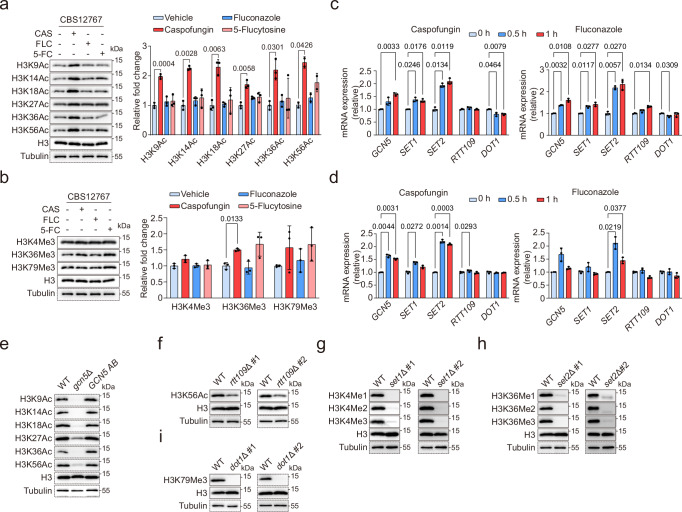
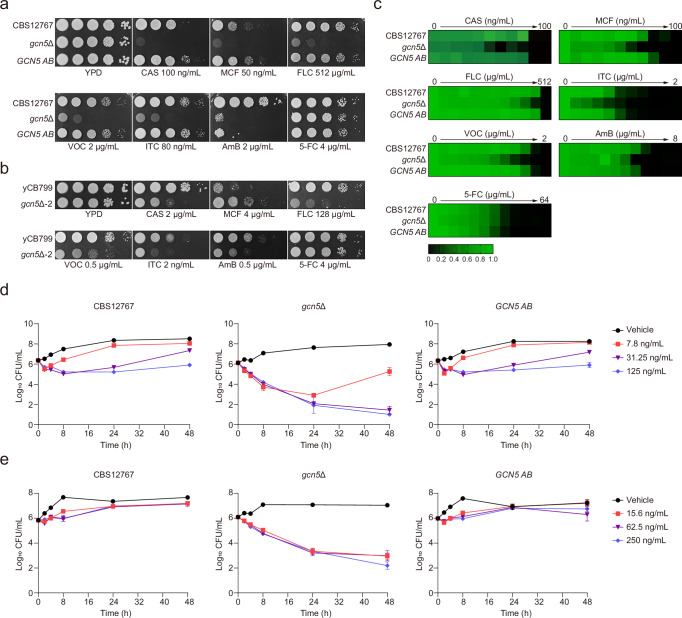
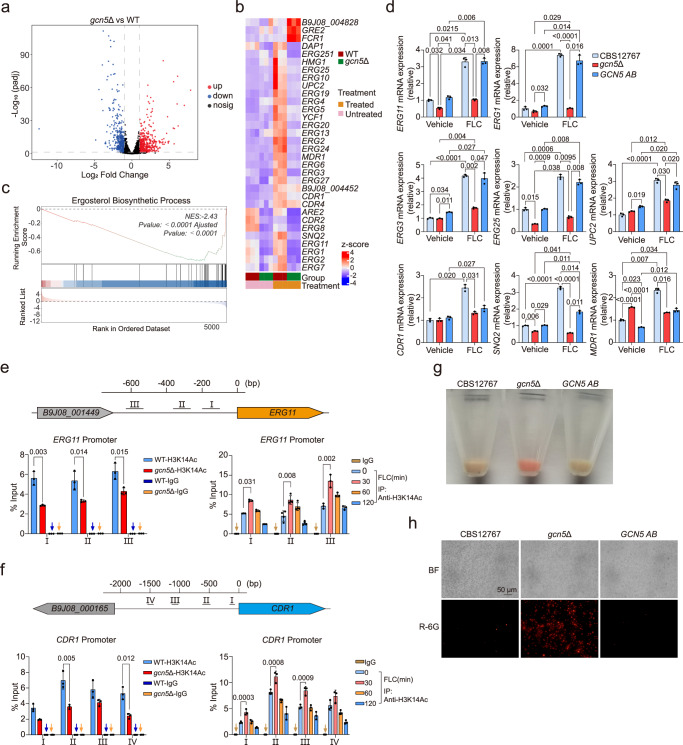
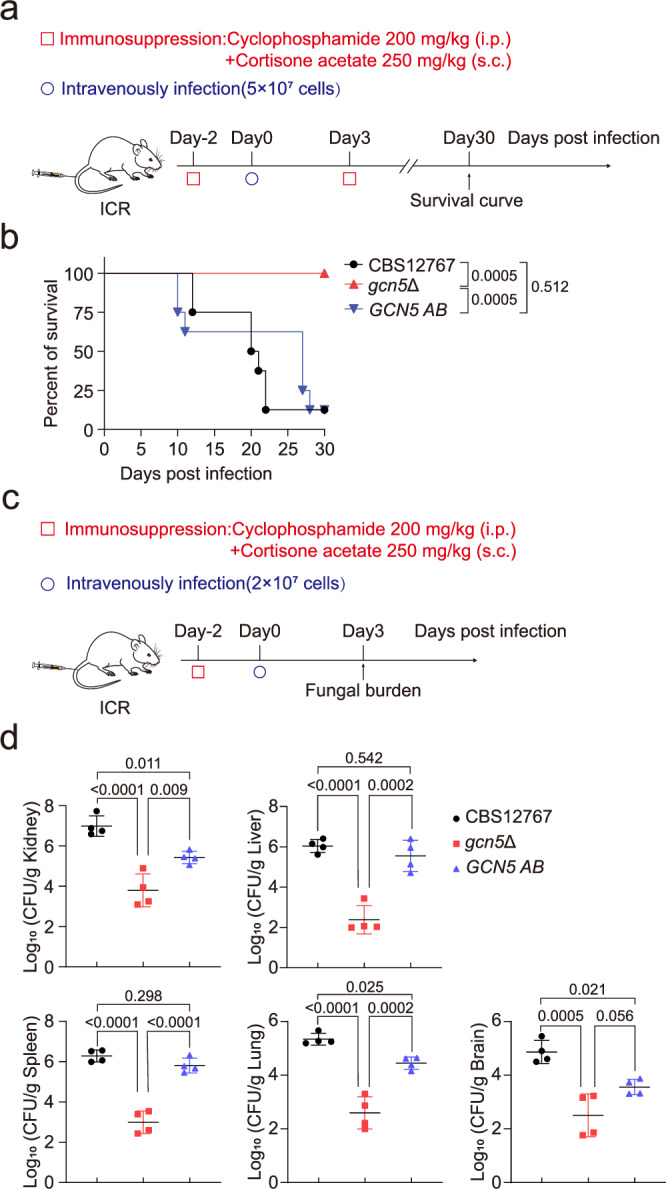
- GCN5 deletion in *C. auris* increased sensitivity to echinocandins, azoles, and polyenes; RNA-seq of WT versus gcn5Δ identified 975 differentially expressed genes (517 upregulated, 458 downregulated), with GSEA showing enrichment of ergosterol biosynthesis (NES 2.43, nominal and FDR-adjusted p < 0.0001).
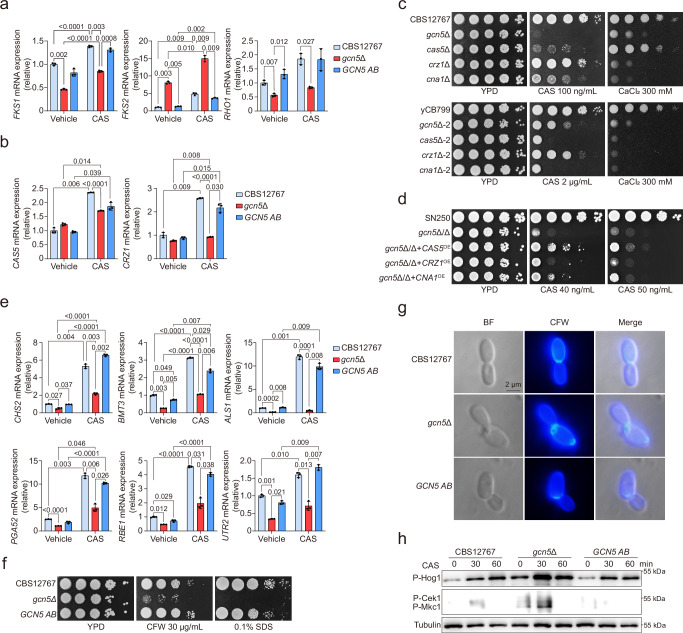
- Gcn5 regulates azole resistance via ergosterol biosynthesis genes (ERG11, ERG1, ERG3, ERG25, UPC2) and drug efflux pumps (CDR1, SNQ2, MDR1), and regulates echinocandin resistance through the calcineurin pathway and transcription factor Cas5; gcn5Δ showed cell wall defects and elevated Hog1, Mkc1, and Cek1 phosphorylation.
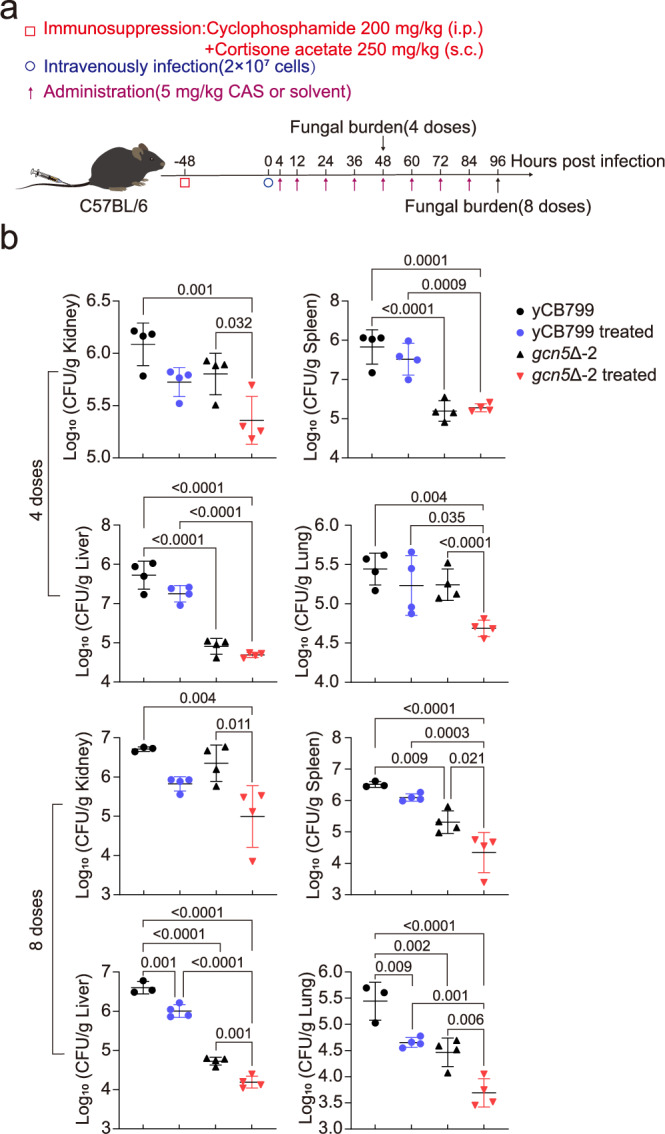
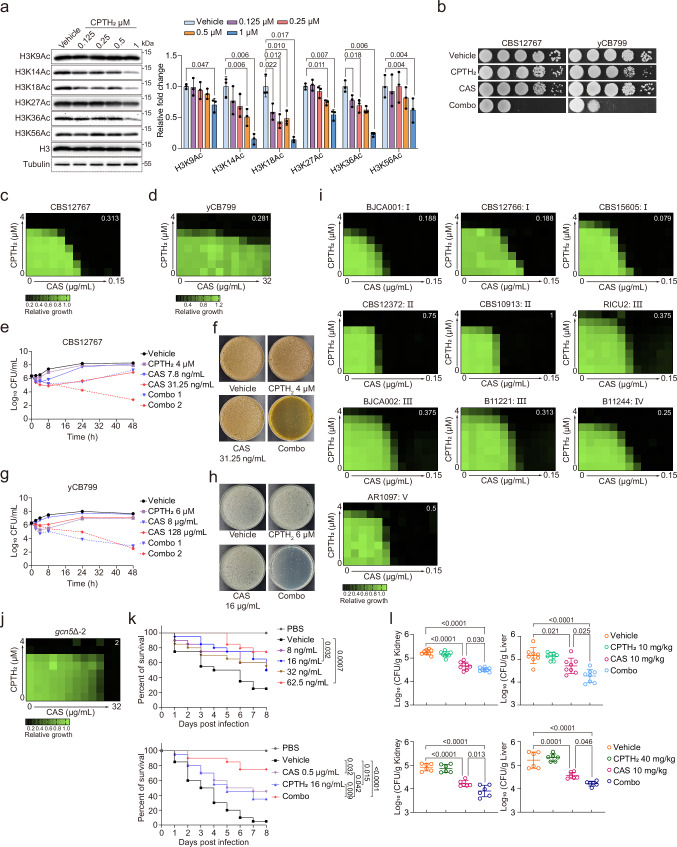
- In infection models, GCN5 deletion reduced virulence in *Galleria mellonella* and immunosuppressed mice, with higher survival and lower organ fungal burden; CPTH2 plus caspofungin showed synergy (FICI < 0.5) against most *C. auris* clades except clade II and reduced fungal burden in kidneys and liver compared with caspofungin alone.
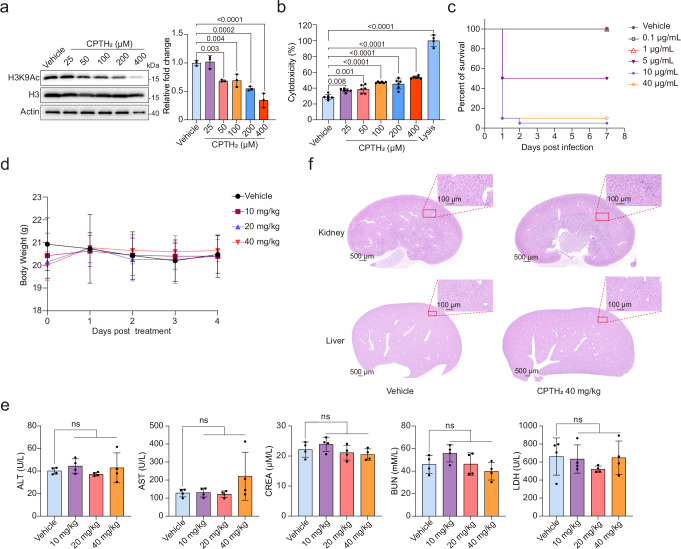
- CPTH2 inhibited *C. auris* Gcn5 at 1 µM versus 400 µM in mammalian cells; in mice, CPTH2 at 10, 20, or 40 mg/kg/day for 4 days caused no weight loss and no significant changes in ALT, AST, CREA, BUN, or LDH.
Methods
- Genetic knockouts and complementation were constructed in *C. auris* strains CBS12767 and yCB799; assays included Western blot for histone H3 acetylation/methylation, qRT-PCR, RNA-seq, ChIP-qPCR, CLSI M27-A4 broth microdilution, checkerboard assays, time-kill curves, Rhodamine 6G efflux, Calcofluor White chitin staining, and MAPK phosphorylation Western blots.
- Infection models used *Galleria mellonella* larvae and immunosuppressed ICR or C57BL/6 mice; outcomes included survival curves and fungal burden in organs after treatment with caspofungin, fluconazole, CPTH2, or combinations.
- Statistical analyses used GraphPad PRISM 9.4.1; RNA-seq differential expression used DESeq2 with adjusted p < 0.05 and |log2 fold change| > 1, and GO enrichment used clusterProfiler.
Limitations
- The paper states that the exact mechanisms by which Gcn5 influences pathogenicity remain partially elucidated, that further research is needed to confirm safety observations, and that site-directed mutagenesis is needed to explore specific Gcn5-regulated histone H3 acetylation sites.
- The paper notes that whether prolonged CPTH2 exposure leads to evolved resistance within Gcn5 itself or activation of compensatory pathways remains an open question; it also states that how Gcn5 regulates Cna1 and whether Cas5 overexpression or phosphorylation-site mutations restore echinocandin resistance in cna1Δ mutants require further study.
- The paper reports that CPTH2 plus caspofungin did not significantly affect spleen or lung fungal burden and did not improve survival or survival time in immunosuppressed mice infected with yCB799; synergy was not observed in clade II, and the study did not involve sex-based analysis.
Model-written summary. Check it against the paper before relying on it.
Integrity signals
Registry
Cites
Statistics
Figures
Verification
Claims the paper makes
15 Valid · 0 Not valid · 7 Not checked · 147 Own results and interpretations
The cited sources support only part of this claim — read each source’s verdict below.
In the paper
“Recent studies have demonstrated the critical role of histone H3 PTMs, such as methylation and acetylation, in driving both drug resistance and pathogenicity in human fungal pathogens.”
§ Targeting epigenetic regulators to overcome drug resistance in the emerging human fungal pathogen Candida auris > Introduction
What the sources say
- Partly supportedcites [25] Shivarathri, R. et al. The fungal histone acetyl transferase Gcn5 controls virulence of the human pathogen Candida albicans through multiple pathways. Sci. Rep. 9, 9445 (2019). 31263212 PMC6603162 sourceExperimental — accuracy not yet measured
The Introduction links histone-modifying acetyltransferases and deacetylases to fungal virulence, and the Abstract reports that loss of GCN5 reduces Candida albicans virulence and increases caspofungin susceptibility. The Discussion proposes histone H3 acetylation as a mechanism, but presents it as speculation; the paper does not establish a role for H3 methylation in drug resistance or pathogenicity. No page numbers are available in our copy. (LLM, conf=0.88)
- Not checked — no full text of the sourcecites [26] Lin, C.-J., Yang, S.-Y., Hsu, L.-H., Yu, S.-J. & Chen, Y.-L. The Gcn5-Ada2-Ada3 histone acetyltransferase module has divergent roles in pathogenesis of Candida glabrata. Med. Mycol. 61, myad004 (2023). 36715154 source
- Partly supportedcites [27] Yu, C. K. et al. SAGA Complex subunit Hfi1 is important in the stress response and pathogenesis of Cryptococcus neoformans. J. Fungi 9, 1198 (2023). PMC10744473 38132798 sourceExperimental — accuracy not yet measured
Results §3.5 reports that deleting HFI1 reduced H3K14 and H3K18 acetylation, while Results §3.2 and the Discussion report altered FK506 tolerance and reduced virulence in C. neoformans. But Results §3.5 found no change in H3K4 trimethylation, and the paper does not establish that H3 methylation and acetylation themselves drive both drug resistance and pathogenicity across human fungal pathogens. The claim is broader and more causal than these findings support. (LLM, conf=0.88)
- Not checked — no full text of the sourcecites [28] Lin, C.-J., Hou, Y.-H. & Chen, Y.-L. The histone acetyltransferase GcnE regulates conidiation and biofilm formation in Aspergillus fumigatus. Med. Mycol. 58, 248–259 (2020). 31100153 source
boostedstates a cause- Asserted: passes — The authors put it forward as true.
- Checkable: passes — It can be checked against evidence.
- Load-bearing: passes — The paper’s conclusions depend on it.
- Based: passes — The paper gives a reason why it holds.
- Partly supported
The cited sources support only part of this claim — read each source’s verdict below.
In the paper
“Furthermore, C. auris can rapidly acquire resistance under the selective pressure of antifungal treatments or other specific conditions16–19.”
§ Targeting epigenetic regulators to overcome drug resistance in the emerging human fungal pathogen Candida auris > Introduction
What the sources say
- Not checked — no full text of the sourcecites [16] Bing, J. et al. Experimental evolution identifies adaptive aneuploidy as a mechanism of fluconazole resistance in Candida auris. Antimicrob. Agents Chemother. 65, e01466-20 (2020). 33077664 PMC7927865 source
- Partly supportedcites [17] Chan, W. et al. Induction of amphotericin B resistance in susceptible Candida auris by extracellular vesicles. Emerg. Microbes Infect. 11, 1900–1909 (2022). 35786393 PMC9341352 sourceExperimental — accuracy not yet measured
The Introduction (page unavailable) reports that adding extracellular vesicles from C. auris increased its amphotericin B minimum inhibitory concentration up to 16-fold. The Results (page unavailable) show this effect in an in vitro assay read after 24 hours, supporting a rapid change under that specific condition. The paper does not show that antifungal treatment's selective pressure caused the resistance or establish the claim across antifungal treatments generally. (LLM, conf=0.84)
- Partly supportedcites [18] Carolus, H. et al. Genome-wide analysis of experimentally evolved Candida auris reveals multiple novel mechanisms of multidrug resistance. mBio 12, e03333-20 (2021). 33820824 PMC8092288 sourceExperimental — accuracy not yet measured
The Results section, “C. auris clade II can acquire multidrug resistance rapidly in vitro” (page unavailable), reports that resistant clones emerged under antifungal-drug exposure, in one lineage after three days. The study supports rapid acquisition under antifungal selective pressure, but it does not show resistance arising under the claim’s alternative “other specific conditions.” (LLM, conf=0.86)
- Supportedcites [19] Codda, G. et al. In vivo evolution to echinocandin resistance and increasing clonal heterogeneity in Candida auris during a difficult-to-control hospital outbreak, Italy, 2019 to 2022. Eurosurveillance 28, 2300161 (2023). 37022211 PMC10283462 source
The “In vivo evolution to echinocandin resistance” section reports resistant C. auris isolates emerging after 19 and 74 days of echinocandin exposure. The authors conclude that the resistance resulted from antifungal pressure, supporting the claim about acquisition under treatment. (LLM, conf=0.90)
plainstates a cause- Asserted: passes — The authors put it forward as true.
- Checkable: passes — It can be checked against evidence.
- Load-bearing: passes — The paper’s conclusions depend on it.
- Based: passes — The paper gives a reason why it holds.
The sources with a verdict support this claim; the rest weren’t checked yet, have no full text we could read, or their verdicts aren’t rated yet.
In the paper
“it has been reported that Gcn5-deficient mutants in both N. glabratus and C. neoformans exhibit significantly heightened sensitivity to the calcineurin inhibitor FK50653,54.”
§ Targeting epigenetic regulators to overcome drug resistance in the emerging human fungal pathogen Candida auris > Results > Gcn5 is required for echinocandin resistance by regulating the expression of genes involved in calcineurin signaling pathway and cell wall integrity
What the sources say
- Not checked yetcites [53] O’Meara, T. R., Hay, C., Price, M. S., Giles, S. & Alspaugh, J. A. Cryptococcus neoformans histone acetyltransferase Gcn5 regulates fungal adaptation to the host. Eukaryot. cell 9, 1193–1202 (2010). 20581290 PMC2918934 source
Checked before — its earlier verdict is held back until a new check runs.
- Supportedcites [54] Yu, S. et al. Histone acetylation regulator Gcn5 mediates drug resistance and virulence of Candida glabrata. Microbiol. Spectr. 10, e00963–00922 (2022). 35658596 PMC9241792 source
The Results section reports that GCN5 deletion increased susceptibility to FK506 two- to fourfold in C. glabrata strains. This source supports the glabrata portion of the sentence; the C. neoformans portion is associated with the other citation. (LLM, conf=0.90)
plainstates a cause- Asserted: passes — The authors put it forward as true.
- Checkable: passes — It can be checked against evidence.
- Load-bearing: unclear — It is unclear whether the paper’s conclusions depend on it.
- Based: passes — The paper gives a reason why it holds.
- Not checked yet
Every source the paper cites for this claim was checked and supports it.
In the paper
“implicating Set2 as a negative regulator of azole resistance in C. auris, in line with observations in N. glabratus37”
§ Targeting epigenetic regulators to overcome drug resistance in the emerging human fungal pathogen Candida auris > Results > Antifungal resistance in C. auris is linked to the activity of Lysine acetyltransferase Gcn5
What the sources say
- Supportedcites [37] Moirangthem, R., Kumar, K. & Kaur, R. Two functionally redundant FK506-binding proteins regulate multidrug resistance gene expression and govern azole antifungal resistance. Antimicrob. Agents Chemother. 65, 02415–02420 (2021). PMC8316114 33722894 source
The paper reports that deleting CgSet2 decreases fluconazole susceptibility in C. glabrata, consistent with Set2 negatively regulating azole resistance there (section labeled ABSTRACT; page unavailable). In the citing sentence, this source is offered for the comparison with glabrata, not as evidence of the citing authors’ C. auris finding. (LLM, conf=0.89)
hedgedstates a cause- Asserted: passes — The authors put it forward as true.
- Checkable: passes — It can be checked against evidence.
- Load-bearing: passes — The paper’s conclusions depend on it.
- Based: passes — The paper gives a reason why it holds.
- Supported
The cited sources support only part of this claim — read each source’s verdict below.
In the paper
“This finding suggests a potential compensatory mechanism, given the functional redundancy between FKS1 and FKS242–44.”
§ Targeting epigenetic regulators to overcome drug resistance in the emerging human fungal pathogen Candida auris > Results > Gcn5 is required for echinocandin resistance by regulating the expression of genes involved in calcineurin signaling pathway and cell wall integrity
What the sources say
- Supportedcites [42] Katiyar, S. K. et al. Fks1 and Fks2 are functionally redundant but differentially regulated in Candida glabrata: implications for echinocandin resistance. Antimicrob. Agents Chemother. 56, 6304–6309 (2012). 23027185 PMC3497156 source
The citation supports the functional-redundancy premise, not the citing authors’ observation in gcn5Δ or their proposed mechanism. The Discussion (page not provided) states that Fks1 and Fks2 appear fully redundant for growth in C. glabrata. (LLM, conf=0.91)
- Supportedcites [43] Hou, X. et al. Novel FKS1 and FKS2 modifications in a high-level echinocandin resistant clinical isolate of Candida glabrata. Emerg. Microbes Infect. 8, 1619–1625 (2019). 31711370 PMC6853239 source
The citation supports the functional redundancy between FKS1 and FKS2: the Discussion explicitly describes “Fks1-Fks2 redundancy.” The proposed compensatory mechanism in gcn5Δ is the citing authors’ interpretation, not a finding attributed to this source. (LLM, conf=0.91)
- Partly supportedcites [44] Frías-De-León, M. G. et al. Antifungal resistance in Candida auris: molecular determinants. Antibiotics 9, 568 (2020). 32887362 PMC7558570 sourceExperimental — accuracy not yet measured
Section 6 (Echinocandins; page not provided) says FKS1 and FKS2 encode the catalytic subunit of the same enzyme and describes homologous regions in the two genes. That supports overlapping roles, but the paper does not establish functional redundancy in the sense of one gene compensating for the other. The proposed mechanism is the citing authors’ interpretation, not a finding reported by this source. (LLM, conf=0.82)
hedgedstates a possible cause- Asserted: passes — The authors put it forward as true.
- Checkable: passes — It can be checked against evidence.
- Load-bearing: unclear — It is unclear whether the paper’s conclusions depend on it.
- Based: passes — The paper gives a reason why it holds.
- Supported
115 more claims · 4 with their cited sources checked
Create a free account to see all 169 claims and to verify the 3 references still open.
- It may state two separate claims as one. 33
- Probably not a substantial claim. 17
Self-check
Percentages, sums and reported differences re-computed from the paper’s own numbers.
Each contradiction between two passages listed here was confirmed by an independent check.
Rated major: it would touch a result — a value a result rests on, reported and recomputed p-values on opposite sides of the significance level, two passages that conflict with no sign which is right, or a cited work retracted before this paper was published.
In the paper
§ Targeting epigenetic regulators to overcome drug resistance in the emerging human fungal pathogen Candida auris > Results > Evaluating the safety of targeting Gcn5 for antifungal therapy against C. auris infections
“Finally, CPTH2 was administered intravenously at doses of 10, 20, or 40 mg/kg/day to C57BL/6 mice over four consecutive days”
§ Targeting epigenetic regulators to overcome drug resistance in the emerging human fungal pathogen Candida auris > Results > Evaluating the safety of targeting Gcn5 for antifungal therapy against C. auris infections
“d Body weight monitoring in mice receiving daily intraperitoneal injections of 10, 20, or 40 mg/kg CPTH2, or solvent control, for 4 days (n = 4).”
Rated minor: it would not touch a result — a value no result rests on, a p-value that stays on the same side of the significance level, or a conflict that is clerical, resolved elsewhere in the paper, or outside its own findings.
In the paper
§ Targeting epigenetic regulators to overcome drug resistance in the emerging human fungal pathogen Candida auris > Results > Targeted inhibition of Gcn5 synergizes with CAS against C. auris in vitro and in vivo
“l Fungal burden measured in the spleens and liver of mice infected with yCB799 after 6 treatments with CPTH2 (10 mg/kg, n = 6; 40 mg/kg, n = 8) and CAS (10 mg/kg), either alone or in combination.”
§ Targeting epigenetic regulators to overcome drug resistance in the emerging human fungal pathogen Candida auris > Results > Targeted inhibition of Gcn5 synergizes with CAS against C. auris in vitro and in vivo
“the combination of CPTH2 and CAS markedly reduced fungal burden in the kidneys and liver compared to CAS alone (Fig. 7l).”
Rated minor: it would not touch a result — a value no result rests on, a p-value that stays on the same side of the significance level, or a conflict that is clerical, resolved elsewhere in the paper, or outside its own findings.
In the paper
§ Targeting epigenetic regulators to overcome drug resistance in the emerging human fungal pathogen Candida auris > Methods > Strains Construction
“For constructing the LEU2 and GCN5 double knockout strain, we first used the SAT1-Flipper system to construct the gcn5Δ strain and excised the SAT1-Flipper cassette under 2% maltose induction. Subsequently, the NAT1 resistance cassette was used to knockout the SET1 gene.”
§ Targeting epigenetic regulators to overcome drug resistance in the emerging human fungal pathogen Candida auris > Results > Antifungal resistance in C. auris is linked to the activity of Lysine acetyltransferase Gcn5
“Confirmatory evidence was obtained by creating a double knockout strain (leu2Δgcn5Δ) through deletion of both LEU2 and GCN5”
Citations
Cites
Moderated estimation of fold change and dispersion for RNA-seq data with DESeq2
Love, M. I., Huber, W., & Anders, S. (2014) · Genome Biology · doi:10.1186/s13059-014-0550-8 · Cited by 95,106
STAR: ultrafast universal RNA-seq aligner
Dobin, A., Davis, C. A., Schlesinger, F., Drenkow, J., Zaleski, C., Jha, S., Batut, P., Chaisson, M., & Gingeras, T. R. (2013) · Bioinformatics · doi:10.1093/bioinformatics/bts635 · Cited by 51,709
clusterProfiler: an R Package for Comparing Biological Themes Among Gene Clusters
Yu, G., Wang, L.-G., Han, Y., & He, Q.-Y. (2012) · OMICS: A Journal of Integrative Biology · doi:10.1089/omi.2011.0118 · Cited by 36,259
The language of covalent histone modifications
Strahl, B. D., & Allis, C. D. (2000) · Nature · doi:10.1038/47412 · Cited by 8,679 · cited 1×
“Histone PTMs play a pivotal role in modulating chromatin structure, thereby in fl uencing DNA accessibility 21,22 .”
Bird, A. (2007) · Nature · doi:10.1038/nature05913 · Cited by 3,011 · cited 1×
“Histone PTMs play a pivotal role in modulating chromatin structure, thereby in fl uencing DNA accessibility 21,22 .”
Roth, S. Y., Denu, J. M., & Allis, C. D. (2001) · Annual Review of Biochemistry · doi:10.1146/annurev.biochem.70.1.81 · Cited by 1,845 · cited 1×
“Histone acetyltransferase Gcn5 has been previously recognized as a positive regulator of gene expression through its interaction with target promoters 38 .”
Lockhart, S. R., Etienne, K. A., Vallabhaneni, S., Farooqi, J., Chowdhary, A., Govender, N. P., Colombo, A. L., Calvo, B., Cuomo, C. A., Desjardins, C. A., et al. (2017) · Clinical Infectious Diseases · doi:10.1093/cid/ciw691 · Cited by 1,662 · cited 1×
“Recent studies on the multidrug resistance of C. auris have revealed that over 90% of clinical isolates areresistant to fl uconazole, 30-41% areresistant to two classes of antifungal drugs, and approximately 4% are resistant to three or more 5,14,15 .”
Worldwide emergence of resistance to antifungal drugs challenges human health and food security
Fisher, M. C., Hawkins, N. J., Sanglard, D., & Gurr, S. J. (2018) · Science · doi:10.1126/science.aap7999 · Cited by 1,555 · cited 1×
“Currently, only three major classes of antifungal drugs, including azoles (e.g., fl uconazole), polyenes (e.g., amphotericin B), and echi-nocandins (e.g., caspofungin), are available in clinical practice for the treatment of invasive fungal infections 12,13 .”
Tackling the emerging threat of antifungal resistance to human health
Fisher, M. C., Alastruey-Izquierdo, A., Berman, J., Bicanic, T., Bignell, E. M., Bowyer, P., Bromley, M., Brüggemann, R., Garber, G., Cornely, O. A., et al. (2022) · Nature Reviews Microbiology · doi:10.1038/s41579-022-00720-1 · Cited by 1,179 · cited 1×
“Currently, only three major classes of antifungal drugs, including azoles (e.g., fl uconazole), polyenes (e.g., amphotericin B), and echi-nocandins (e.g., caspofungin), are available in clinical practice for the treatment of invasive fungal infections 12,13 .”
Cell Wall Integrity Signaling in Saccharomyces cerevisiae
Levin, D. E. (2005) · Microbiology and Molecular Biology Reviews · doi:10.1128/mmbr.69.2.262-291.2005 · Cited by 1,136 · cited 1×
“Moreover, the transcription factor Cas5 acts as a regulator of resistance to the echi-nocandin caspofungin in C. albicans , with studies showing that genes regulated by Cas5 in response to cell wall stress are also linked to calcineurin 48,51,52 .”
The antifungal pipeline: a reality check
Perfect, J. R. (2017) · Nature Reviews Drug Discovery · doi:10.1038/nrd.2017.46 · Cited by 866 · cited 4×
“Current antifungal strategies typically target fungal cell membranes, cell walls, and stress response pathways 35 .”
InfluentialCandida auris: Epidemiology, biology, antifungal resistance, and virulence
Du, H., Bing, J., Hu, T., Ennis, C. L., Nobile, C. J., & Huang, G. (2020) · PLOS Pathogens · doi:10.1371/journal.ppat.1008921 · Cited by 609
Stathopoulos, A. M., & Cyert, M. S. (1997) · Genes & Development · doi:10.1101/gad.11.24.3432 · Cited by 442 · cited 1×
“The zinc fi nger transcription factor Crz1 has been identi fi ed as a target of calcineurin in yeast 50 .”
Yeast Rtt109 Promotes Genome Stability by Acetylating Histone H3 on Lysine 56
Driscoll, R., Hudson, A., & Jackson, S. P. (2007) · Science · doi:10.1126/science.1135862 · Cited by 439
The WHO fungal priority pathogens list as a game-changer
Fisher, M. C., & Denning, D. W. (2023) · Nature Reviews Microbiology · doi:10.1038/s41579-023-00861-x · Cited by 399 · cited 1×
“Notably, C. auris , along with Candida albicans , Cryptococcus neoformans , and Aspergillus fumigatus , has been classi fi ed in the critical priority group of fungal pathogens in the World Health Organization ’ s (WHO) recently released fungal priority pathogen list 11 .”
OPERating ON Chromatin, a Colorful Language where Context Matters
Gardner, K. E., Allis, C. D., & Strahl, B. D. (2011) · Journal of Molecular Biology · doi:10.1016/j.jmb.2011.01.040 · Cited by 361 · cited 1×
“Proteins involved in this process are categorized as “ writers, ” “ readers, ” or “ erasers, ” functioning to interpret and regulate the histone code through various PTM combinations 23,24 .”
Chowdhary, A., Tarai, B., Singh, A., & Sharma, A. (2020) · Emerging Infectious Diseases · doi:10.3201/eid2611.203504 · Cited by 330 · cited 2×
“For instance, since the onset of theCOVID-19 pandemic, an increased number of C.auris infections has been reported in COVID-19 intensive care units (ICUs) in countries such as the United States, Germany, India, and Mexico 6 – 9 .”
Candida auris Outbreak in a COVID-19 Specialty Care Unit — Florida, July–August 2020
Prestel, C., Anderson, E., Forsberg, K., Lyman, M., de Perio, M. A., Kuhar, D., Edwards, K., Rivera, M., Shugart, A., Walters, M., et al. (2021) · MMWR. Morbidity and Mortality Weekly Report · doi:10.15585/mmwr.mm7002e3 · Cited by 237
Outbreak of Candida auris infection in a COVID-19 hospital in Mexico
Villanueva-Lozano, H., Treviño-Rangel, R. D. J., González, G. M., Ramírez-Elizondo, M. T., Lara-Medrano, R., Aleman-Bocanegra, M. C., Guajardo-Lara, C. E., Gaona-Chávez, N., Castilleja-Leal, F., Torre-Amione, G., et al. (2021) · Clinical Microbiology and Infection · doi:10.1016/j.cmi.2020.12.030 · Cited by 213
Carolus, H., Pierson, S., Muñoz, J. F., Subotić, A., Cruz, R. B., Cuomo, C. A., & Van Dijck, P. (2021) · mBio · doi:10.1128/mbio.03333-20 · Cited by 211
Activity of 1,3-β-D-Glucan Synthase Requires the GTP-binding Protein Rho1
Mazur, P., & Baginsky, W. (1996) · Journal of Biological Chemistry · doi:10.1074/jbc.271.24.14604 · Cited by 196 · cited 3×
“To further investigate the mechanism by which Gcn5 regulates echi-nocandin drug resistance in C. auris , we fi rst quanti fi ed the expression levels of echinocandin target genes, speci fi cally those encoding the β - 1,3-D-glucan synthase catalytic subunits FKS1 and FKS2 , as well as the regulatory subunit RHO1 40,41 ,…”
The first isolate of Candida auris in China: clinical and biological aspects
Wang, X., Bing, J., Zheng, Q., Zhang, F., Liu, J., Yue, H., Tao, L., Du, H., Wang, Y., Wang, H., et al. (2018) · Emerging Microbes & Infections · doi:10.1038/s41426-018-0095-0 · Cited by 191
Self-citation(2017) · Nature Microbiology · doi:10.1038/nmicrobiol.2017.120 · Cited by 185
Invasive candidiasis in critical care: challenges and future directions
Logan, C., Martin-Loeches, I., & Bicanic, T. (2020) · Intensive Care Medicine · doi:10.1007/s00134-020-06240-x · Cited by 180 · cited 1×
“…of invasive C. auris infection is the risk of cross-infection among patients and hospital outbreaks due to its remarkable ability to adhere to both biological and non-biological surfaces, its long-term survival under extreme conditions, and its resistance to conventional disinfection methods 4,5 .”
Juvvadi, P. R., Lee, S. C., Heitman, J., & Steinbach, W. J. (2017) · Virulence · doi:10.1080/21505594.2016.1201250 · Cited by 172
The NDV-3A vaccine protects mice from multidrug resistant Candida auris infection
Singh, S., Uppuluri, P., Mamouei, Z., Alqarihi, A., Elhassan, H., French, S., Lockhart, S. R., Chiller, T., Edwards, J. E., & Ibrahim, A. S. (2019) · PLOS Pathogens · doi:10.1371/journal.ppat.1007460 · Cited by 162 · cited 1×
“This virulence defect was further validated using an immunosuppressed mouse model of disseminated infection, as previously described 56 .”
Candida auris Genetics and Emergence
Chowdhary, A., Jain, K., & Chauhan, N. (2023) · Annual Review of Microbiology · doi:10.1146/annurev-micro-032521-015858 · Cited by 158 · cited 1×
“Although statistics may vary across reports, mortality rates attributable to invasive C. auris infections can reach as high as 70% 10 , posing a signi fi cant threat and a formidable challenge to the medical fi eld.”
Modulation of histone H3 lysine 56 acetylation as an antifungal therapeutic strategy
Wurtele, H., Tsao, S., Lépine, G., Mullick, A., Tremblay, J., Drogaris, P., Lee, E.-H., Thibault, P., Verreault, A., & Raymond, M. (2010) · Nature Medicine · doi:10.1038/nm.2175 · Cited by 157 · cited 1×
“Furthermore, the histone H3K56 acetyltransferase Rtt109 has been linked to the pathogenicity of C. albicans and its resistance to echi-nocandins and azole drugs 29,30 .”
Control of the C. albicans Cell Wall Damage Response by Transcriptional Regulator Cas5
Bruno, V. M., Kalachikov, S., Subaran, R., Nobile, C. J., Kyratsous, C., & Mitchell, A. P. (2006) · PLoS Pathogens · doi:10.1371/journal.ppat.0020021 · Cited by 157 · cited 1×
“Moreover, the transcription factor Cas5 acts as a regulator of resistance to the echi-nocandin caspofungin in C. albicans , with studies showing that genes regulated by Cas5 in response to cell wall stress are also linked to calcineurin 48,51,52 .”
Biel, M., Kretsovali, A., Karatzali, E., Papamatheakis, J., & Giannis, A. (2004) · Angewandte Chemie International Edition · doi:10.1002/anie.200453879 · Cited by 156 · cited 1×
“Two speci fi c Gcn5 inhibitors, CPTH 2 and MB-3 58 – 60 , were evaluated.”
Katiyar, S. K., Alastruey-Izquierdo, A., Healey, K. R., Johnson, M. E., Perlin, D. S., & Edlind, T. D. (2012) · Antimicrobial Agents and Chemotherapy · doi:10.1128/aac.00813-12 · Cited by 148 · cited 4×
“This fi nding suggests a potential compensatory mechanism, given the functional redundancy between FKS1 and FKS2 42 – 44 .”
InfluentialChimenti, F., Bizzarri, B., Maccioni, E., Secci, D., Bolasco, A., Chimenti, P., Fioravanti, R., Granese, A., Carradori, S., Tosi, F., et al. (2009) · Journal of Medicinal Chemistry · doi:10.1021/jm800885d · Cited by 135 · cited 3×
“While MB-3 was also tested, its ef fi cacy was markedly lower than that of CPTH 2 (Fig.”
Histone acetyltransferase Rtt109 is required for Candida albicans pathogenesis
Lopes da Rosa, J., Boyartchuk, V. L., Zhu, L. J., & Kaufman, P. D. (2010) · Proceedings of the National Academy of Sciences · doi:10.1073/pnas.0912427107 · Cited by 132 · cited 1×
“Furthermore, the histone H3K56 acetyltransferase Rtt109 has been linked to the pathogenicity of C. albicans and its resistance to echi-nocandins and azole drugs 29,30 .”
Ibrexafungerp: A First-in-Class Oral Triterpenoid Glucan Synthase Inhibitor
Jallow, S., & Govender, N. P. (2021) · Journal of Fungi · doi:10.3390/jof7030163 · Cited by 129
Wang, B., Li, J., Wu, S., Chen, Y., Zhang, Z., Zhai, Y., Guo, Q., Zhang, J., Song, X., Zhao, Z., et al. (2018) · Emerging Microbes & Infections · doi:10.1038/s41426-018-0206-y · Cited by 123
Innate immune responses against the fungal pathogen Candida auris
Wang, Y., Zou, Y., Chen, X., Li, H., Yin, Z., Zhang, B., Xu, Y., Zhang, Y., Zhang, R., Huang, X., et al. (2022) · Nature Communications · doi:10.1038/s41467-022-31201-x · Cited by 107
Self-citationKenters, N., Kiernan, M., Chowdhary, A., Denning, D. W., Pemán, J., Saris, K., Schelenz, S., Tartari, E., Widmer, A., Meis, J. F., et al. (2019) · International Journal of Antimicrobial Agents · doi:10.1016/j.ijantimicag.2019.08.013 · Cited by 102
Talibi, D., & Raymond, M. (1999) · Journal of Bacteriology · doi:10.1128/jb.181.1.231-240.1999 · Cited by 101 · cited 1×
“It is noteworthy that several genes, including FCR1 , previously identi fi ed as a resistance inhibitor 39 , were upregulated in the gcn5 Δ strain following FLC treatment (Fig.”
Antifungal Resistance in Candida auris: Molecular Determinants
Frías-De-León, M. G., Hernández-Castro, R., Vite-Garín, T., Arenas, R., Bonifaz, A., Castañón-Olivares, L., Acosta-Altamirano, G., & Martínez-Herrera, E. (2020) · Antibiotics · doi:10.3390/antibiotics9090568 · Cited by 93 · cited 1×
“This fi nding suggests a potential compensatory mechanism, given the functional redundancy between FKS1 and FKS2 42 – 44 .”
Calcineurin Regulation in Fungi and Beyond
Stie, J., & Fox, D. (2008) · Eukaryotic Cell · doi:10.1128/ec.00326-07 · Cited by 89 · cited 1×
“Calcineurin is a broadly conserved protein phosphatase comprising a catalytic A subunit and a Ca 2+ -binding regulatory B subunit, both essential for its enzymatic function 49 .”
Cryptococcus neoformans Histone Acetyltransferase Gcn5 Regulates Fungal Adaptation to the Host
O'Meara, T. R., Hay, C., Price, M. S., Giles, S., & Alspaugh, J. A. (2010) · Eukaryotic Cell · doi:10.1128/ec.00098-10 · Cited by 88 · cited 3×
“Previous studies in human fungal pathogens such as C. albicans and C. neoformans have established a strong correlation between Gcn5 activity and fungal virulence 25,53,55 , raising the question of its role in regulating the virulence of C. auris .”
Bing, J., Hu, T., Zheng, Q., Muñoz, J. F., Cuomo, C. A., & Huang, G. (2020) · Antimicrobial Agents and Chemotherapy · doi:10.1128/aac.01466-20 · Cited by 86 · cited 1×
“Interestingly, previous studies have indicated that Crz1 does not play a major role in echinocandin resistance in C. albicans and C. tropicalis 62,63 , while it is crucial for N. glabratus 69 .”
Chen, C., & Noble, S. M. (2012) · PLoS Pathogens · doi:10.1371/journal.ppat.1002956 · Cited by 83
Self-citationBurrack, L. S., Todd, R. T., Soisangwan, N., Wiederhold, N. P., & Selmecki, A. (2022) · mBio · doi:10.1128/mbio.00842-22 · Cited by 82
Iliev, I. D., Brown, G. D., Bächer, P., Gaffen, S. L., Heitman, J., Klein, B. S., & Lionakis, M. S. (2024) · Cell · doi:10.1016/j.cell.2024.08.016 · Cited by 77
Oliver, S. S., & Denu, J. M. (2011) · ChemBioChem · doi:10.1002/cbic.201000474 · Cited by 76 · cited 1×
“Proteins involved in this process are categorized as “ writers, ” “ readers, ” or “ erasers, ” functioning to interpret and regulate the histone code through various PTM combinations 23,24 .”
Cánovas, D., Marcos, A. T., Gacek, A., Ramos, M. S., Gutiérrez, G., Reyes-Domínguez, Y., & Strauss, J. (2014) · Genetics · doi:10.1534/genetics.114.165688 · Cited by 75 · cited 1×
“…of the gene encoding the acetyltransferase catalytic subunit GCN5 leads to signi fi cant defects in the pathogenicity and drug resistance of C. albicans and N. glabratus 55,66 , as well as reduced pathogenicity in C. neoformans and various virulence-related phenotypes in A. fumigatus 28,53,67 .”
Rapid evolution of an adaptive multicellular morphology of Candida auris during systemic infection
Bing, J., Guan, Z., Zheng, T., Ennis, C. L., Nobile, C. J., Chen, C., Chu, H., & Huang, G. (2024) · Nature Communications · doi:10.1038/s41467-024-46786-8 · Cited by 74 · cited 1×
“A de fi ning characteristic of C. auris is its ability to rapidly adapt to external pressures through diverse tolerance mechanisms, both in vitro and in vivo 61 – 65 .”
Self-citationFunction and subcellular localization of Gcn5, a histone acetyltransferase in Candida albicans.
Chang, P., Fan, X., & Chen, J. (2015) · Fungal Genetics and Biology · doi:10.1016/j.fgb.2015.01.011 · Cited by 73 · cited 3×
“Previous studies in human fungal pathogens such as C. albicans and C. neoformans have established a strong correlation between Gcn5 activity and fungal virulence 25,53,55 , raising the question of its role in regulating the virulence of C. auris .”
Carolus, H., Sofras, D., Boccarella, G., Sephton-Clark, P., Biriukov, V., Cauldron, N. C., Lobo Romero, C., Vergauwen, R., Yazdani, S., Pierson, S., et al. (2024) · Nature Microbiology · doi:10.1038/s41564-024-01854-z · Cited by 72 · cited 1×
“Interestingly, previous studies have indicated that Crz1 does not play a major role in echinocandin resistance in C. albicans and C. tropicalis 62,63 , while it is crucial for N. glabratus 69 .”
Hou, X., Lee, A., Jiménez-Ortigosa, C., Kordalewska, M., Perlin, D. S., & Zhao, Y. (2019) · Antimicrobial Agents and Chemotherapy · doi:10.1128/aac.01811-18 · Cited by 66
New antifungal strategies: Drug combination and co-delivery
Zhu, P., Li, Y., Guo, T., Liu, S., Tancer, R. J., Hu, C., Zhao, C., Xue, C., & Liao, G. (2023) · Advanced Drug Delivery Reviews · doi:10.1016/j.addr.2023.114874 · Cited by 63 · cited 1×
“Combination antifungal therapy has emerged as a promising strategy to overcome antifungal drug resistance and the high mortality rates associated with severe fungal infections 57 .”
Spruijtenburg, B., Ahmad, S., Asadzadeh, M., Alfouzan, W., Al‐Obaid, I., Mokaddas, E., Meijer, E. F. J., Meis, J. F., & de Groot, T. (2023) · Mycoses · doi:10.1111/myc.13655 · Cited by 61 · cited 2×
“For instance, isolates from patients receiving caspo-fungin treatment have been shown to develop resistance to echinocandins 19,20 .”
Xie, J. L., Qin, L., Miao, Z., Grys, B. T., Diaz, J. D. L. C., Ting, K., Krieger, J. R., Tong, J., Tan, K., Leach, M. D., et al. (2017) · Nature Communications · doi:10.1038/s41467-017-00547-y · Cited by 60 · cited 3×
“Importantly, this pathway has been implicated in cell wall integrity and echinocandin resistance 46 – 48 .”
Shivarathri, R., Tscherner, M., Zwolanek, F., Singh, N. K., Chauhan, N., & Kuchler, K. (2019) · Scientific Reports · doi:10.1038/s41598-019-45817-5 · Cited by 58 · cited 3×
“Previous studies in human fungal pathogens such as C. albicans and C. neoformans have established a strong correlation between Gcn5 activity and fungal virulence 25,53,55 , raising the question of its role in regulating the virulence of C. auris .”
The acetyltransferase GCN5 maintains ATRA-resistance in non-APL AML
Kahl, M., Brioli, A., Bens, M., Perner, F., Kresinsky, A., Schnetzke, U., Hinze, A., Sbirkov, Y., Stengel, S., Simonetti, G., et al. (2019) · Leukemia · doi:10.1038/s41375-019-0581-y · Cited by 48 · cited 1×
“However, these approaches effectively enhance the therapeutic response to all-trans retinoic acid in non-acute promyelocytic leukemiaacute myeloid leukemia 72 .”
Codda, G., Willison, E., Magnasco, L., Morici, P., Giacobbe, D. R., Mencacci, A., Marini, D., Mikulska, M., Bassetti, M., Marchese, A., et al. (2023) · Eurosurveillance · doi:10.2807/1560-7917.es.2023.28.14.2300161 · Cited by 44 · cited 3×
“For instance, isolates from patients receiving caspo-fungin treatment have been shown to develop resistance to echinocandins 19,20 .”
Raman, S. B., Nguyen, M. H., Zhang, Z., Cheng, S., Jia, H. Y., Weisner, N., Iczkowski, K., & Clancy, C. J. (2006) · Molecular Microbiology · doi:10.1111/j.1365-2958.2006.05121.x · Cited by 43 · cited 1×
“Additionally, Set1 signi fi cantlyin fl uences C. albicans virulence in mouse models of invasive infections 33,34 .”
Tisi, R., Rigamonti, M. M., Groppi, S., & Belotti, F. (2016) · AIMS molecular science · doi:10.3934/molsci.2016.4.505 · Cited by 43
Hou, X., Healey, K. R., Shor, E., Kordalewska, M., Ortigosa, C. J., Paderu, P., Xiao, M., Wang, H., Zhao, Y., Lin, L.-Y., et al. (2019) · Emerging Microbes & Infections · doi:10.1080/22221751.2019.1684209 · Cited by 43
Self-citationSouth, P. F., Harmeyer, K. M., Serratore, N. D., & Briggs, S. D. (2013) · Proceedings of the National Academy of Sciences · doi:10.1073/pnas.1215768110 · Cited by 42 · cited 1×
“The COMPASS complex, which includes the histone H3K4 methyltransferase catalytic subunit Set1, promotes resistance in N. glabratus and Saccharomyces cerevisiae to azole drugs and brefeldin A by regulating genes involved in the ergosterol biosynthesis pathway and drug ef fl ux pumps 31,32 .”
Successful control of Candida auris transmission in a German COVID‐19 intensive care unit
Hinrichs, C., Wiese‐Posselt, M., Graf, B., Geffers, C., Weikert, B., Enghard, P., Aldejohann, A., Schrauder, A., Knaust, A., Eckardt, K., et al. (2022) · Mycoses · doi:10.1111/myc.13443 · Cited by 41 · cited 1×
“For instance, since the onset of theCOVID-19 pandemic, an increased number of C.auris infections has been reported in COVID-19 intensive care units (ICUs) in countries such as the United States, Germany, India, and Mexico 6 – 9 .”
Huang, X., Chen, X., He, Y., Yu, X., Li, S., Gao, N., Niu, L., Mao, Y., Wang, Y., Wu, X., et al. (2017) · PLOS Pathogens · doi:10.1371/journal.ppat.1006414 · Cited by 38 · cited 1×
“The construction of GCN5 knockout and CAS5 , CNA1 or CRZ1 over-expression strains in C. albicans followed our previously published protocol 74 .”
Self-citationNarayanan, A., Kumar, P., Chauhan, A., Kumar, M., Yadav, K., Banerjee, A., Sharma, R. D., Rudramurthy, S. M., Chakrabarti, A., Sanyal, K., et al. (2022) · mBio · doi:10.1128/mbio.03052-22 · Cited by 35
Cryo-EM structure of the β-1,3-glucan synthase FKS1-Rho1 complex
Li, J., Liu, H., Li, J., Liu, J., Dai, X., Zhu, A., Xiao, Q., Qian, W., Li, H., Guo, L., et al. (2025) · Nature Communications · doi:10.1038/s41467-025-57152-7 · Cited by 33
Induction of amphotericin B resistance in susceptible Candida auris by extracellular vesicles
Chan, W., Chow, F. W.-N., Tsang, C.-C., Liu, X., Yao, W., Chan, T. T.-Y., Siu, G. K.-H., Ho, A. Y.-M., Luk, K. S., Lau, S. K.-P., et al. (2022) · Emerging Microbes & Infections · doi:10.1080/22221751.2022.2098058 · Cited by 31
Baker, K. M., Hoda, S., Saha, D., Gregor, J. B., Georgescu, L., Serratore, N. D., Zhang, Y., Cheng, L., Lanman, N. A., & Briggs, S. D. (2022) · Antimicrobial Agents and Chemotherapy · doi:10.1128/aac.02250-21 · Cited by 30 · cited 1×
“The COMPASS complex, which includes the histone H3K4 methyltransferase catalytic subunit Set1, promotes resistance in N. glabratus and Saccharomyces cerevisiae to azole drugs and brefeldin A by regulating genes involved in the ergosterol biosynthesis pathway and drug ef fl ux pumps 31,32 .”
Self-citationLin, C.-J., Hou, Y.-H., & Chen, Y.-L. (2019) · Medical Mycology · doi:10.1093/mmy/myz043 · Cited by 27 · cited 2×
“Forinstance,thehistoneH3 acetyltransferase complex SAGA is essential for the pathogenicity of fungi such as C. albicans , Nakaseomyces glabratus (formerly known as Candida glabrata) , C. neoformans , and A. fumigatus 25 – 28 .”
Candida auris: An Emerging Antimicrobial Resistance Threat
Vallabhaneni, S., Jackson, B. R., & Chiller, T. M. (2019) · Annals of Internal Medicine · doi:10.7326/m19-2205 · Cited by 25 · cited 1×
“Recent studies on the multidrug resistance of C. auris have revealed that over 90% of clinical isolates areresistant to fl uconazole, 30-41% areresistant to two classes of antifungal drugs, and approximately 4% are resistant to three or more 5,14,15 .”
Efg1 and Cas5 Orchestrate Cell Wall Damage Response to Caspofungin in Candida albicans
Xiong, K., Su, C., Sun, Q., & Lü, Y. (2020) · Antimicrobial Agents and Chemotherapy · doi:10.1128/aac.01584-20 · Cited by 24
Histone Acetylation Regulator Gcn5 Mediates Drug Resistance and Virulence of Candida glabrata
Yu, S., Paderu, P., Lee, A., Eirekat, S., Healey, K., Chen, L., Perlin, D. S., & Zhao, Y. (2022) · Microbiology Spectrum · doi:10.1128/spectrum.00963-22 · Cited by 23 · cited 2×
“Previous reports indicate that in C. albicans and N. glabratus , knockout of Gcn5 or the Spt7 or Spt8 subunits of the SAGA complex results in increased sensitivity to phagocytosis and enhanced killing by macrophages 25,66,71 .”
Moirangthem, R., Kumar, K., & Kaur, R. (2021) · Antimicrobial Agents and Chemotherapy · doi:10.1128/aac.02415-20 · Cited by 20
A Histone Acetyltransferase Inhibitor with Antifungal Activity against CTG clade Candida Species
Tscherner, M., & Kuchler, K. (2019) · Microorganisms · doi:10.3390/microorganisms7070201 · Cited by 19
Rashid, S., Correia-Mesquita, T. O., Godoy, P., Omran, R. P., & Whiteway, M. (2022) · Frontiers in Cellular and Infection Microbiology · doi:10.3389/fcimb.2022.764711 · Cited by 15 · cited 1×
“Previous reports indicate that in C. albicans and N. glabratus , knockout of Gcn5 or the Spt7 or Spt8 subunits of the SAGA complex results in increased sensitivity to phagocytosis and enhanced killing by macrophages 25,66,71 .”
Chen, Y., Stewart, J. I. P., Liu, S., Sheppard, D. C., Lu, L., & Zhang, S. (2022) · Applied and Environmental Microbiology · doi:10.1128/aem.01535-21 · Cited by 14 · cited 1×
“Similarly, the knockout of the gene encoding the coremodulesubunit SPT20 oftheSAGAcomplexmarkedlydiminishes the pathogenicity of A. fumigatus 68 .”
Ceballos-Garzón, A., Román, E., Plá, J., Pagniez, F., Amado, D., Alméciga-Díaz, C. J., Pape, P. L., & Parra‐Giraldo, C. M. (2022) · PLoS ONE · doi:10.1371/journal.pone.0265777 · Cited by 14 · cited 1×
“Interestingly, previous studies have indicated that Crz1 does not play a major role in echinocandin resistance in C. albicans and C. tropicalis 62,63 , while it is crucial for N. glabratus 69 .”
Kim, J., Park, S., Kwon, S., Lee, E.-J., & Lee, J.-S. (2021) · Virulence · doi:10.1080/21505594.2021.1980988 · Cited by 13 · cited 1×
“Additionally, Set1 signi fi cantlyin fl uences C. albicans virulence in mouse models of invasive infections 33,34 .”
Lin, C.-J., Yang, S.-Y., Hsu, L.-H., Yu, S.-J., & Chen, Y.-L. (2023) · Medical Mycology · doi:10.1093/mmy/myad004 · Cited by 7
Yu, C. K., Stephenson, C. J., Villamor, T. C., Dyba, T. G., Schulz, B. L., & Fraser, J. A. (2023) · Journal of Fungi · doi:10.3390/jof9121198 · Cited by 4
Susceptibility Testing of Candida auris Isolates
Johnson, E. M., & Borman, A. M. (2022) · Methods in molecular biology · doi:10.1007/978-1-0716-2417-3_5 · Cited by 3
Ibrexafungerp: A Novel Oral Triterpenoid Antifungal
Francis, D. T., Rajiv, S. V., & George, M. (2023) · Indian Dermatology Online Journal · doi:10.4103/idoj.idoj_310_23 · Cited by 3
Research works printed but not linked: 2
- Bing, J. et al. Experimental evolution identifies adaptive aneuploidy as a mechanism of fluconazole resistance in Candida auris. Antimicrob. Agents Chemother. 65, 01466–01420 (2020). PMC7927865 33077664 · DOI · Paper page
- Yu, S. et al. Histone acetylation regulator Gcn5 mediates drug resistance and virulence of Candida glabrata. Microbiol. Spectr. 10, e0096322 (2022). 35658596 PMC9241792 · DOI · Paper page
Cited by
New antifungal strategies and drug development against WHO critical priority fungal pathogens
Li, Y., Liu, Y., Jiang, Y., Yang, Y., Ni, W., Zhang, W., & Tan, L. (2025) · Frontiers in Cellular and Infection Microbiology · doi:10.3389/fcimb.2025.1662442 · Cited by 54
“Genetic exchanges and epigenetic modi fi cations further contribute to rapid resistance development (Meng et al., 2024; Zajac et al., 2025; Zhang et al., 2025).”
White-Brown switching controls phenotypic plasticity and virulence of Candida auris
Phan-Canh, T., Jenull, S., Bitencourt, T. A., Seiser, S., Moser, D., Motamedi, M., Chowdhary, A., Elbe‐Bürger, A., & Kuchler, K. (2025) · Cell Reports · doi:10.1016/j.celrep.2025.115976 · Cited by 24
Candida auris skin tropism and antifungal resistance are mediated by carbonic anhydrase Nce103
Phan-Canh, T., Coman, C., Lackner, M., Troppmair, N., Müller, C., Cerbu, D., Seiser, S., Penninger, P., Tsymala, I., Khunweeraphong, N., et al. (2025) · Nature Microbiology · doi:10.1038/s41564-025-02189-z · Cited by 16
“For the conditional deletion of NCE103 and CYR1 in AR387, a plasmid pCB323 containing the tet-Off system 67 , assembled with the NAT1 marker optimized for C. auris , was used.”
Resilience in Resistance: The Role of Cell Wall Integrity in Multidrug-Resistant Candida
Banda-Flores, I. A., Torres‐Tirado, D., Mora-Montes, H. M., Pérez‐Flores, G., & Pérez-García, L. A. (2025) · Journal of Fungi · doi:10.3390/jof11040271 · Cited by 17
Antifungal Activity of Natural Thymol: Advances on Molecular Mechanisms and Therapeutic Potential
Chen, C., Liu, L., Tang, S., Li, D., & Dai, C. (2026) · Biomolecules · doi:10.3390/biom16010149 · Cited by 23
“Unfortunately, some fungal pathogens, such as Candida , Cryptococcus , and Aspergillus , exhibited potential resistance, resulting in a decreasing number of clinically available drugs [14–16].”
Self-citation
Metadata
- Authors
- Zhang, Y., Zeng, L., Huang, X., Wang, Y., Chen, G., Moses, M., Zou, Y., Xiong, S., Xue, W., Dong, Y., Tian, Y., Guan, M., Hu, L., Yin, Z., Zhou, D., Huang, X., & Chen, C.
- Affiliations
- Nanchang University (CN)
- Chinese Academy of Sciences (CN)
- Chinese People's Armed Police Force (CN)
- Shanghai Medical College of Fudan University (CN)
- Academy of Military Medical Sciences (CN)
- Corresponding author
- Huang, Xinhua
- Zhou, Dongsheng
- Huang, Xiaotian
- Chen, Changbin
- ORCID
- Venue
- Nature Communications
- Published
- 2025-05-20
- Volume
- 16
- Issue
- 1
- Pages
- 4668-4668
- ISSN
- 2041-1723 (ISSN-L)
- PMC
- PMC12092656
- OpenAlex
- W4410521054
- Cited by
- 33
- References
- 80
- Citations by year
- 2026: 23 · 2025: 10
- FWCI
- 25.17
- Type
- journal article
- Language
- en
- Open access
- gold
- doi.org
- Licence
- cc-by
- creativecommons.org/licenses/by/4.0 (tdm)
- creativecommons.org/licenses/by/4.0 (vor)
- Locations
- Nature Communications (publishedVersion, cc-by)
- Research Square (acceptedVersion, cc-by)
- PubMed Central (publishedVersion, cc-by)
- PubMed (publishedVersion)
- RePEc: Research Papers in Economics (submittedVersion)
- DOAJ (DOAJ: Directory of Open Access Journals) (submittedVersion, cc-by-sa)
- Funders
- National Natural Science Foundation of China (32060040, 32170195, 32460049)
- Chinese Academy of Sciences
- Government of Jiangsu Province
- Fudan University
- Nanchang University
- Stockholms Universitet
- Science for Life Laboratory
- Huashan Hospital
- Recruitment Program of Global Experts
- State Key Laboratory of Pathogen and Biosecurity
- Institute of Microbiology, Chinese Academy of Sciences
- Topics
- Health Sciences › Medicine › Infectious Diseases › Antifungal resistance and susceptibility
- Life Sciences › Biochemistry, Genetics and Molecular Biology › Molecular Biology › Fungal and yeast genetics research
- Health Sciences › Medicine › Infectious Diseases › Fungal Infections and Studies
- Keywords
- Candida auris, antifungal resistance, histone acetylation, GCN5, Rtt109, histone methylation, Set1, Set2, Dot1, ergosterol biosynthesis, drug efflux, azole susceptibility, echinocandin resistance, calcineurin signaling, cell wall integrity, fungal virulence, epigenetic drug targets, invasive fungal infections
- MeSH terms
- Caspofungin, Candida auris, Acetylation, Animals, Antifungal Agents, Candidiasis, Cell Wall, Fungal Proteins, Histones, Humans, Microbial Sensitivity Tests, Moths, Virulence, Gene Expression Regulation, Fungal, Drug Resistance, Fungal, Epigenesis, Genetic, Mice, Histone Acetyltransferases
About these checks
Registry, retraction, Cites and statistics results are computed, not judged, with one exception: a printed reference that no index lists is read once by a model before it counts as a citation error. Claims are extracted by a model and kept only when their quote appears verbatim in the text; each cited source is then checked, with a model’s help, for whether it says what the claim relies on. Those verdicts can be wrong — read the claim’s quote and the cited source before relying on one.
The claim verdicts this report counts are experimental: their accuracy is not yet measured.
A language model drew the claims from the paper on 2026-10-10, under version 3 of the claim definition (model deepseek-v4.1-flash, prompt extract-v3).
A second model labelled each claim on 2026-10-10 (model jev-1.13-20260917, definition revision gold-guideline-v0.2).
Cited sources are checked with a language model’s help (gpt-6-sol).
Statistics and arithmetic are recomputed, not judged.
Confidence bands are shown only for fields calibrated on our annotated test set. None is calibrated yet, so no band is shown.
What counts as a claim ›How we measure confidence ›How we check this ›
Are you an author, or do you see a problem with this page? Request a review
Data sources
Bibliographic data: Semantic Scholar, OpenAlex, Crossref.
Contains information from the Semantic Scholar Academic Graph Datasets, made available under the ODC Attribution License (ODC-BY 1.0).
Semantic Scholar’s data is described in: Kinney, R., et al. (2023). The Semantic Scholar Open Data Platform. arXiv:2301.10140.
