

Effect of the intratumoral microbiota on spatial and cellular heterogeneity in cancer
Open accessThe DOI matches its Crossref record; 41 of the 41 references it cites were found in a registry or an index.
Abstract
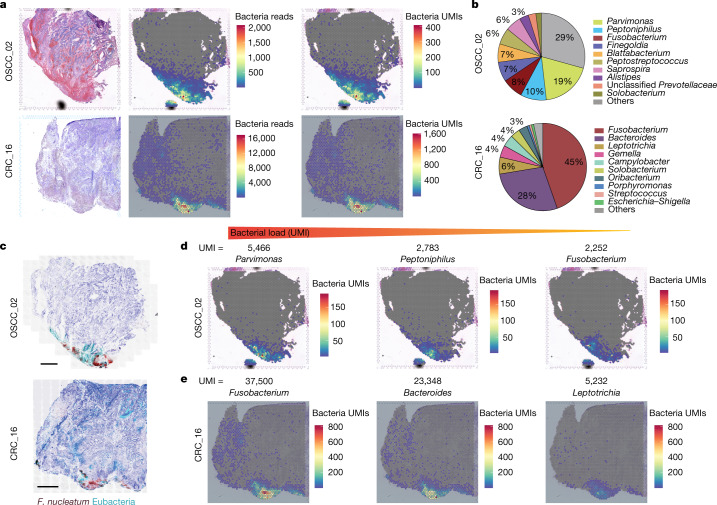
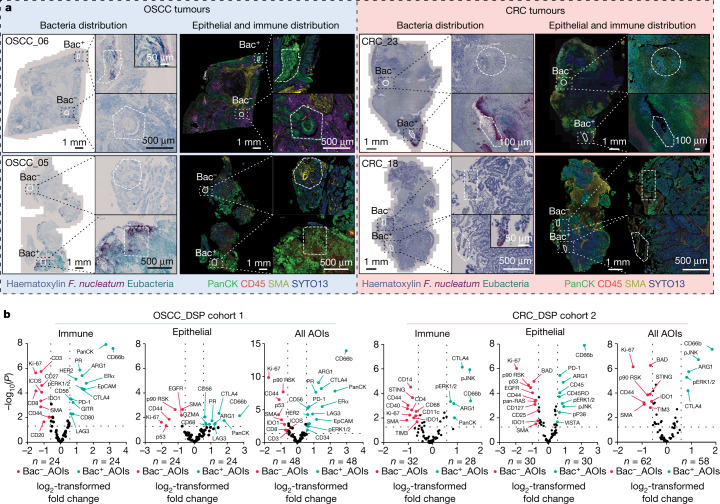
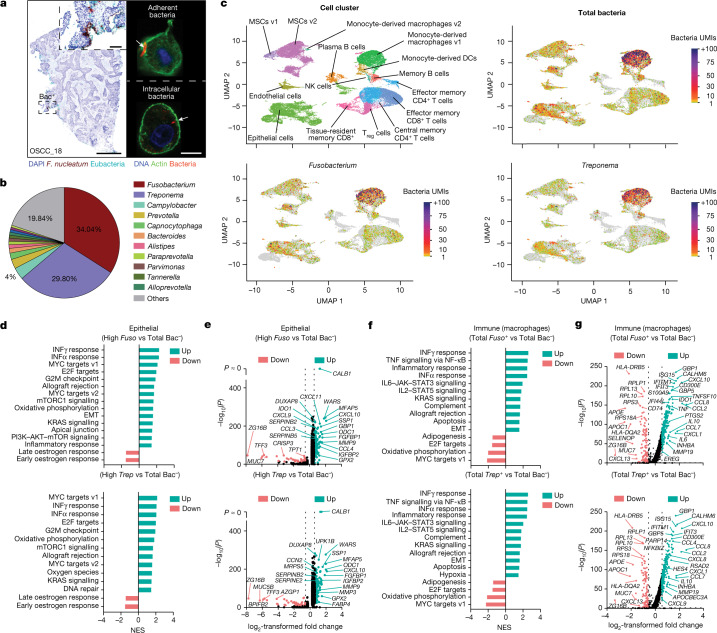
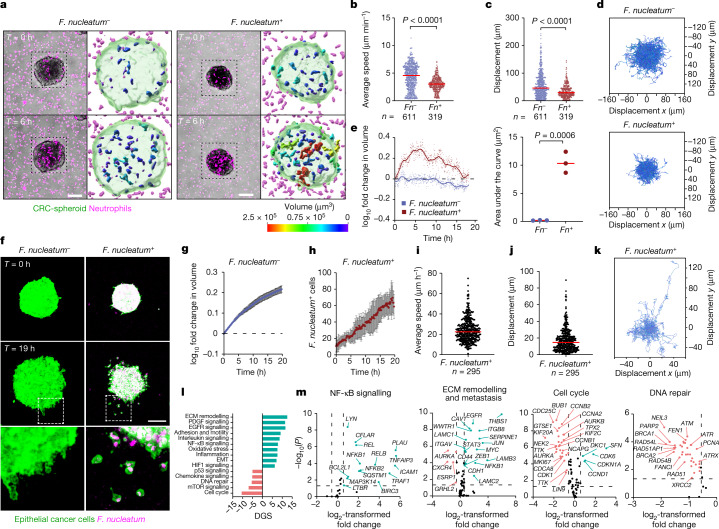
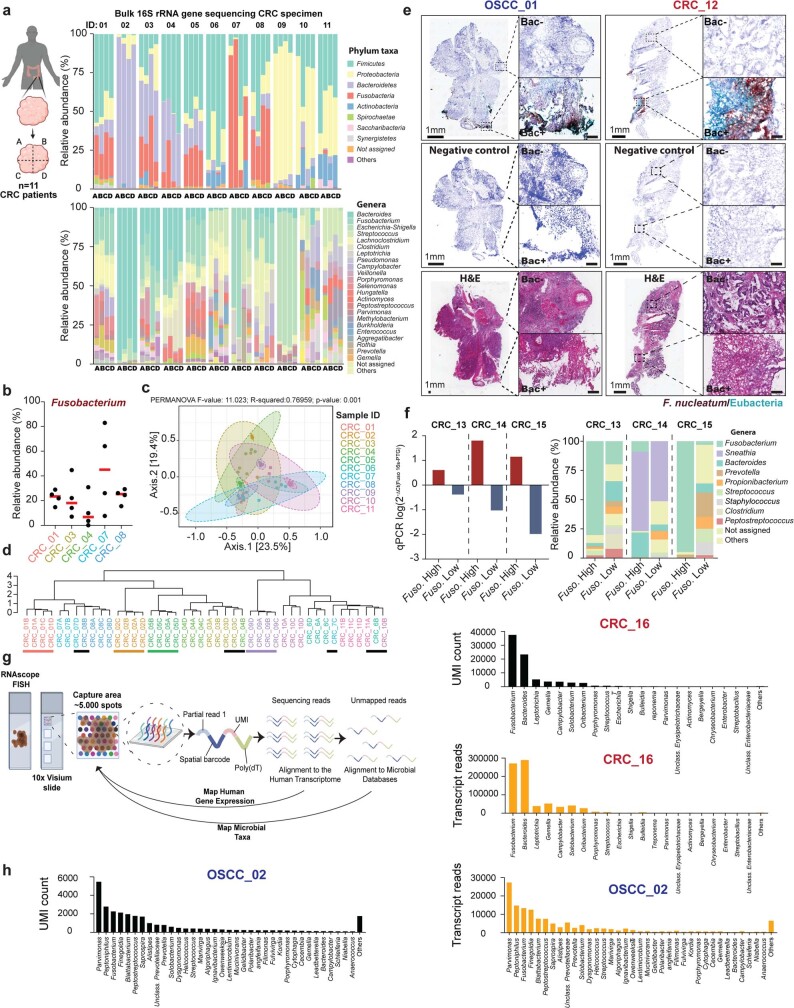
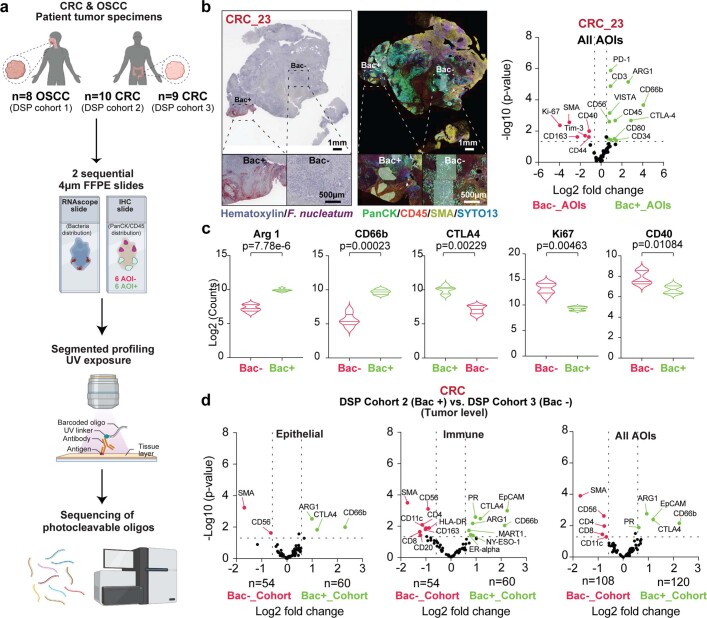
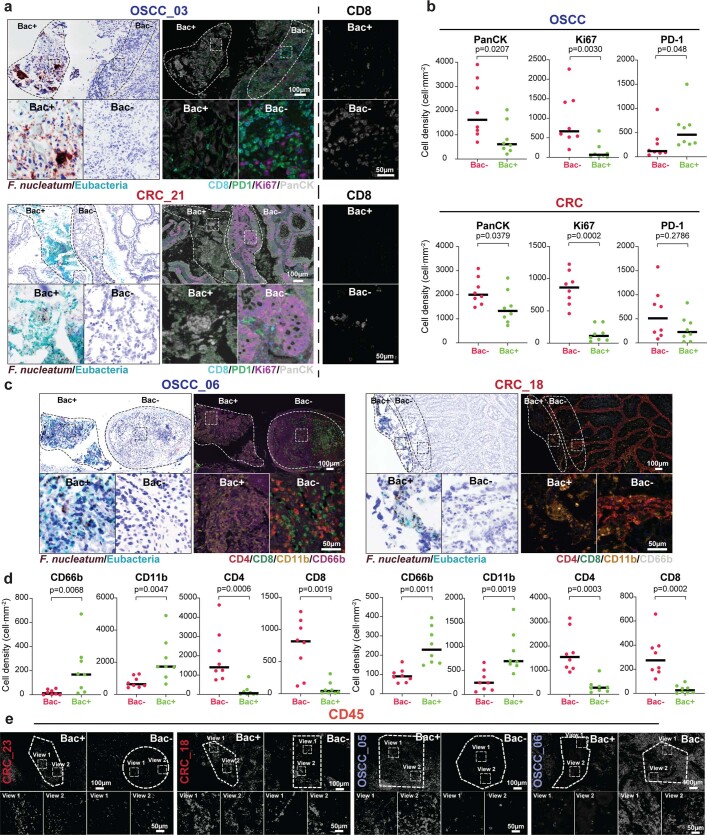
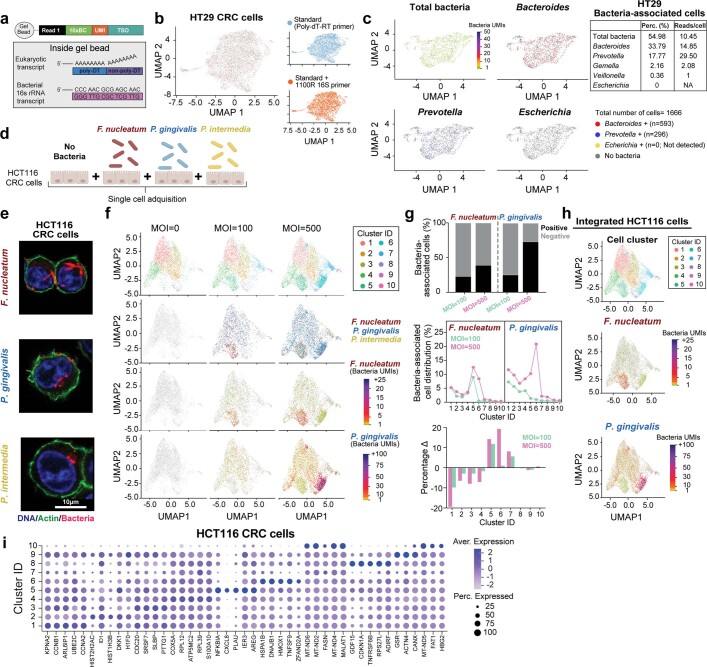
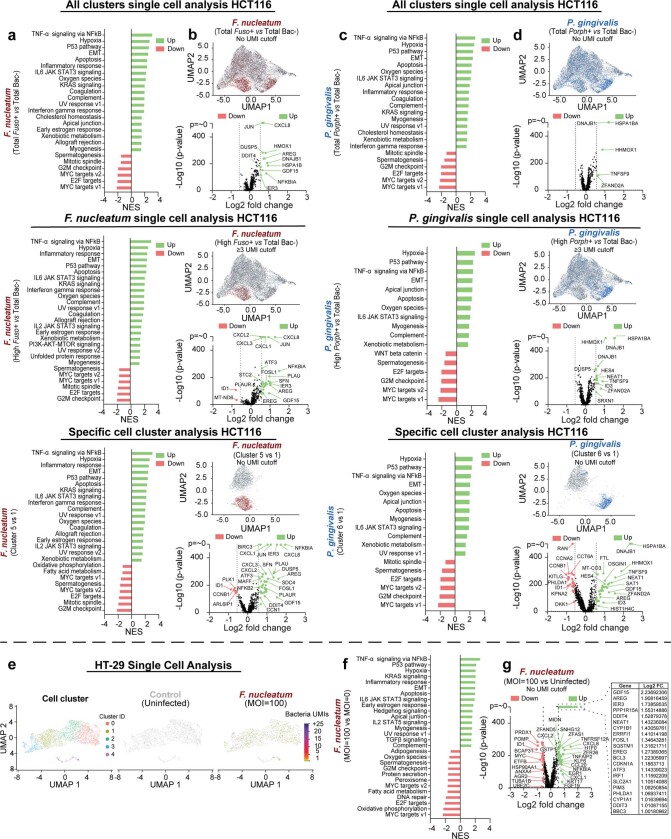
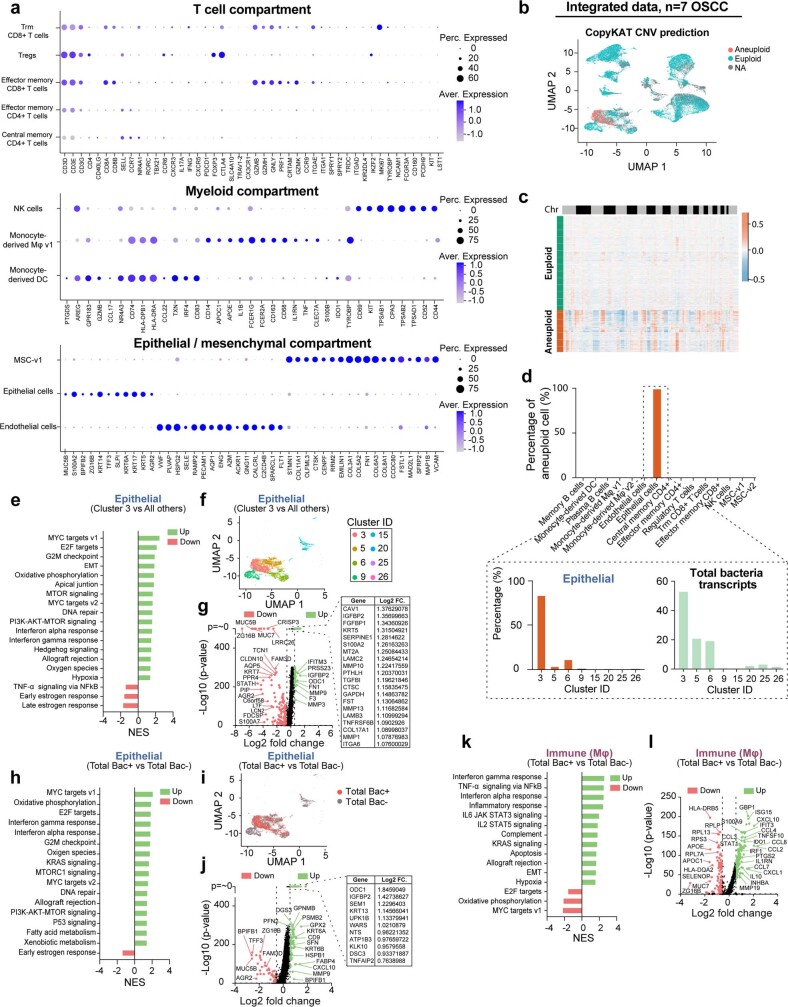
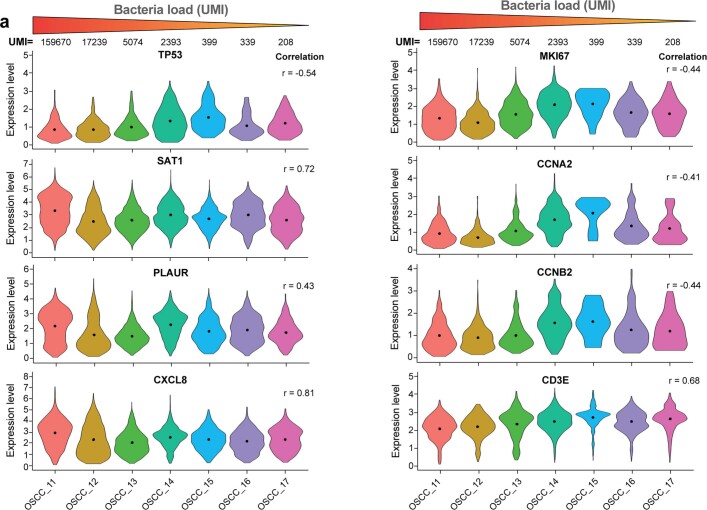
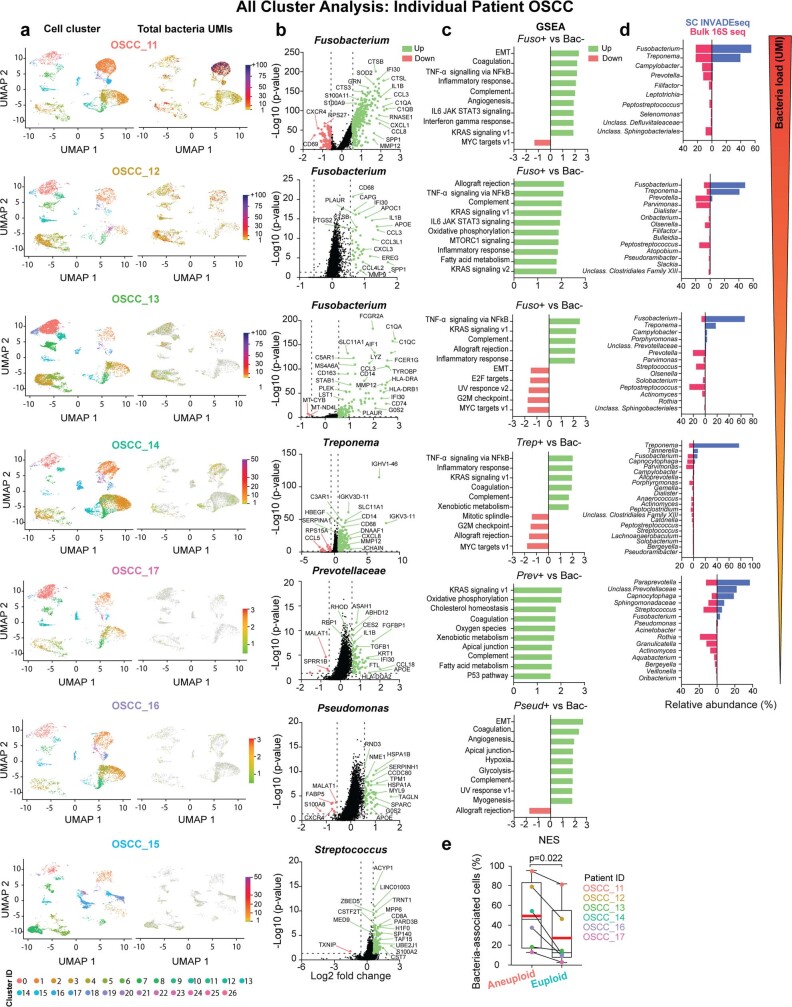
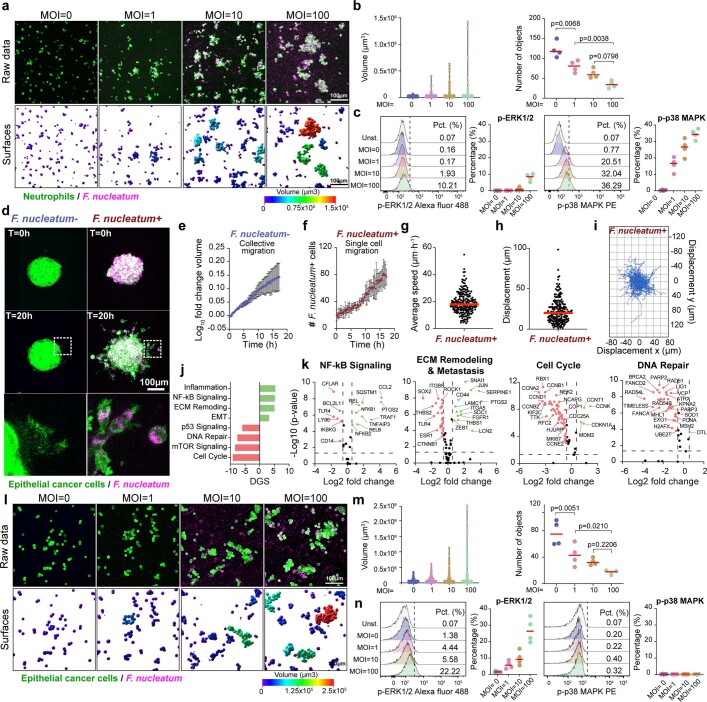
The tumour-associated microbiota is an intrinsic component of the tumour microenvironment across human cancer types 1,2 . Intratumoral host–microbiota studies have so far largely relied on bulk tissue analysis 1–3 , which obscures the spatial distribution and localized effect of the microbiota within tumours. Here, by applying in situ spatial-profiling technologies 4 and single-cell RNA sequencing 5 to oral squamous cell carcinoma and colorectal cancer, we reveal spatial, cellular and molecular host–microbe interactions. We adapted 10x Visium spatial transcriptomics to determine the identity and in situ location of intratumoral microbial communities within patient tissues. Using GeoMx digital spatial profiling 6 , we show that bacterial communities populate microniches that are less vascularized, highly immuno‑suppressive and associated with malignant cells with lower levels of Ki-67 as compared to bacteria-negative tumour regions. We developed a single-cell RNA-sequencing method that we name INVADEseq (invasion–adhesion-directed expression sequencing) and, by applying this to patient tumours, identify cell-associated bacteria and the host cells with which they interact, as well as uncovering alterations in transcriptional pathways that are involved in inflammation, metastasis, cell dormancy and DNA repair. Through functional studies, we show that cancer cells that are infected with bacteria invade their surrounding environment as single cells and recruit myeloid cells to bacterial regions. Collectively, our data reveal that the distribution of the microbiota within a tumour is not random; instead, it is highly organized in microniches with immune and epithelial cell functions that promote cancer progression.
Overview
The claims and statistics of this paper haven’t been checked yet.
Free: it reads the open-access text and checks the first 5 claims that cite a source we can check. Create a free account to check every claim.
Integrity signals
Registry
Cites
Statistics
Figures
Verification
Claims the paper makes
The claims and statistics of this paper haven’t been checked yet.
Free: it reads the open-access text and checks the first 5 claims that cite a source we can check. Create a free account to check every claim.
Claims other papers make about this one
Each is checked against this paper’s own text: does it say what the citing paper says it does?
The cited source says what the claim attributes to it.
In the citing paper
“Galeano et al. introduced invasion-adhesion-directed expression sequencing (INVADEseq) targeting a conserved area of the bacterial 16 S rRNA, enabling the effective creation of cDNA libraries containing bacterial transcripts derived from human cells associated with bacteria.”
From Single-cell sequencing to multi-omics: technologies and applications (2024) · cites this paper as [158]
The cited source says what the claim attributes to it.
In the citing paper
“These microbes interact with both tumor and immune cells, influencing tumor dynamics by modulating immune responses, producing pro-proliferative metabolites, and reshaping the structural and biochemical landscape of the TME [38–40]”
From Phage therapy in oncology: opportunities for cancer prevention and treatment (2026) · cites this paper as [39]
The check wasn’t confident either way, so it gives no verdict — never disputed.
In the citing paper
“These microbes interact with both tumor and immune cells, influencing tumor dynamics by modulating immune responses, producing pro-proliferative metabolites, and reshaping the structural and biochemical landscape of the TME [38–40]”
From Phage therapy in oncology: opportunities for cancer prevention and treatment (2026) · cites this paper as [39]
Experimental — accuracy not yet measured
Self-check
Percentages, sums and reported differences re-computed from the paper’s own numbers.
The self-check needs the paper’s full text.
Citations
Cites
1 retracted
RETRACTED ARTICLE: Microbiome analyses of blood and tissues suggest cancer diagnostic approach
Poore, G. D., Kopylova, E., Zhu, Q., Carpenter, C., Fraraccio, S., Wandro, S., Kosciolek, T., Janssen, S., Metcalf, J., Song, S. J., et al. (2020) · Nature · doi:10.1038/s41586-020-2095-1 · Cited by 989
RetractedHighly parallel genome-wide expression profiling of individual cells using nanoliter droplets.
Macosko, E. Z., Basu, A., Satija, R., Nemesh, J., Shekhar, K., Goldman, M., Tirosh, I., Bialas, A. R., Kamitaki, N., Martersteck, E. M., et al. (2015) · Cell · doi:10.1016/j.cell.2015.05.002 · Cited by 7,110
Tumors: Wounds That Do Not Heal
Flier, J. S., Underhill, L. H., & Dvorak, H. F. (1986) · New England Journal of Medicine · doi:10.1056/nejm198612253152606 · Cited by 4,391
mRNA-Seq whole-transcriptome analysis of a single cell
Tang, F., Barbacioru, C., Wang, Y., Nordman, E., Lee, C., Xu, N., Wang, X., Bodeau, J., Tuch, B. B., Siddiqui, A., et al. (2009) · Nature Methods · doi:10.1038/nmeth.1315 · Cited by 3,969
Tumour heterogeneity and resistance to cancer therapies
Dagogo-Jack, I., & Shaw, A. T. (2018) · Nature Reviews Clinical Oncology · doi:10.1038/nrclinonc.2017.166 · Cited by 3,846
A Gene Encoding an Antigen Recognized by Cytolytic T Lymphocytes on a Human Melanoma
van der Bruggen, P., Traversari, C., Chomez, P., Lurquin, C., De Plaen, E., Van den Eynde, B., Knuth, A., & Boon, T. (1991) · Science · doi:10.1126/science.1840703 · Cited by 3,545
EMT Transition States during Tumor Progression and Metastasis
Pastushenko, I., & Blanpain, C. (2019) · Trends in Cell Biology · doi:10.1016/j.tcb.2018.12.001 · Cited by 2,876
Anderson, N. M., & Simon, M. C. (2020) · Current Biology · doi:10.1016/j.cub.2020.06.081 · Cited by 2,718
T cell exclusion, immune privilege, and the tumor microenvironment
Joyce, J. A., & Fearon, D. T. (2015) · Science · doi:10.1126/science.aaa6204 · Cited by 2,473
The human tumor microbiome is composed of tumor type–specific intracellular bacteria
Nejman, D., Livyatan, I., Fuks, G., Gavert, N., Zwang, Y., Geller, L. T., Rotter-Maskowitz, A., Weiser, R., Mallel, G., Gigi, E., et al. (2020) · Science · doi:10.1126/science.aay9189 · Cited by 2,464
Cited by
Items 201–300 of 997
Microbiota in tumors: new factor influencing cancer development
Jiang, H., Li, L., Bao, Y., Cao, X., & Ma, L. (2024) · Cancer Gene Therapy · doi:10.1038/s41417-024-00833-0 · Cited by 27
“This fi nding suggests that intratumoral microbiota may play a role in modulating the mutational behavior of cancer cells [107].”
Lin, X., Jiao, R., Cui, H., Yan, X., & Zhang, K. (2024) · Advanced Science · doi:10.1002/advs.202403156 · Cited by 27
Chen, Y., Huang, Y., Li, W., Zhu, T., Cheng, M., Wu, C., Zhang, L., Peng, H., & Wang, K. (2025) · Journal of Translational Medicine · doi:10.1186/s12967-025-06369-7 · Cited by 26
Targeting the Tumor Microbiota in Cancer Therapy Basing on Nanomaterials
Niu, Y., Feng, J., Ma, J., Xiao, T., & Yuan, W. (2025) · Exploration · doi:10.1002/exp.20210185 · Cited by 27
“It has reported that F. nucleatum surface expression of Fap2 can bind to Gal-GalNac overexpressed on the surface of colon cancer cells [99], allowing it to colonize tumor sites and reduce their response to ICB therapy [100].”
Fungi and tumors: The role of fungi in tumorigenesis (Review)
Cheng, W., Li, F., Gao, Y., & Yang, R. (2024) · International Journal of Oncology · doi:10.3892/ijo.2024.5640 · Cited by 26
“Recent findings have further revealed the spatial and population heterogeneity of the intratumoral microbiome (17).”
Modeling cancer–microbiome interactions in vitro: A guide to co‐culture platforms
Moskal, K., Khurana, N., Siegert, L., Lee, Y., Clevers, H. C., Elinav, E., & Puschhof, J. (2024) · International Journal of Cancer · doi:10.1002/ijc.35298 · Cited by 25
“14 Furthermore, immune cell recruitment can be assessed utilizing an Ussing chamber 116 or microscopy based approaches 6 (Figure 2).”
InfluentialRoesel, R., Strati, F., Basso, C., Epistolio, S., Spina, P., Djordjevic, J., Sorrenti, E., Villa, M., Cianfarani, A., Mongelli, F., et al. (2025) · OncoImmunology · doi:10.1080/2162402x.2025.2465015 · Cited by 25
Cancer microbiota: a focus on tumor-resident bacteria
Vella, G., & Rescigno, M. (2025) · EMBO Reports · doi:10.1038/s44319-025-00482-w · Cited by 26
“One proposed mechanism by which bacteria in fl uence metastasis involves the modulation of host cell adhesion and the epithelial-mesenchymal transition (EMT) (Galeano Niño et al, 2022; Lu et al, 2022; Zhang et al, 2022).”
InfluentialUllah, S., Chen, Y., Wu, C., Abbas, Y., Zhong, Y., Chen, X., Tan, J., Cheng, H., & Li, L. (2025) · RSC Advances · doi:10.1039/d5ra01711d · Cited by 25
Tissue-resident microbiota impacts colorectal cancer progression and prognosis
Shi, Z., Ren, H., Lin, C., Li, F., Wu, M., Yang, F., Luo, T., Nunes, L., Isaksson, A., Hammarström, K., et al. (2025) · Nature Communications · doi:10.1038/s41467-025-67047-2 · Cited by 27
“Although members of the genus Treponema are rarely detected in fecal samples from urban populations 72,73 , they were frequently enriched in CRC tumor tissues across cohorts 10,34,74,75 .”
Conde‐Pérez, K., Buetas, E., Aja‐Macaya, P., Arribas, E. M., Iglesias‐Corrás, I., Trigo‐Tasende, N., Nasser‐Ali, M., Estévez, L. S., Rumbo‐Feal, S., Otero‐Alén, B., et al. (2023) · Molecular Oncology · doi:10.1002/1878-0261.13506 · Cited by 26
Park, J. S., Gazzaniga, F. S., Kasper, D. L., & Sharpe, A. H. (2023) · Experimental & Molecular Medicine · doi:10.1038/s12276-023-01075-0 · Cited by 25
Zhang, W., Zhang, X., Teng, F., Yang, Q., Wang, J., Sun, B., Liu, J., Zhang, J., Sun, X., Zhao, H., et al. (2024) · Genes & Diseases · doi:10.1016/j.gendis.2024.101239 · Cited by 25
The war between the immune system and the tumor - using immune biomarkers as tracers
Yang, K., Lu, R., Mei, J., Cao, K., Zeng, T., Hua, Y., Huang, X., Li, W., & Yin, Y. (2024) · Biomarker Research · doi:10.1186/s40364-024-00599-5 · Cited by 25
“In general, patients with higher diversity and more stable composition of intestinal flora have better ICT efficacy [124].”
BackgroundInfluentialHu, X., Li, Y., Cao, Y., Shi, F., & Li, S. (2024) · Biochimica et Biophysica Acta (BBA) - Reviews on Cancer · doi:10.1016/j.bbcan.2024.189156 · Cited by 25
Hara, Y., Baba, Y., Oda, E., Harada, K., Yamashita, K., Toihata, T., Kosumi, K., Iwatsuki, M., Miyamoto, Y., Tsutsuki, H., et al. (2024) · British Journal of Cancer · doi:10.1038/s41416-024-02753-0 · Cited by 24
“More than 100 trillion bacteria inhabit the human body and form their own fl ora (microbiomes) in individual organs [11, 12].”
Jayaprakash, M., Kumar, D. V., Chakraborty, G., Chakraborty, A., & Kumar, V. (2025) · Biomedicine & Pharmacotherapy · doi:10.1016/j.biopha.2025.118559 · Cited by 24
Aldriwesh, M. G., Alotibi, R. S., Alqurainy, N., Alrabiah, S., Arafah, A. M., Alghoribi, M. F., & Ajina, R. (2025) · Gut Microbes · doi:10.1080/19490976.2025.2607076 · Cited by 24
“166,173,174 Additionally, the gut microbiome can travel from the gut to primary tumors and from primary tumors to metastatic sites, 163,165 further elucidating the complex relationship between cancer and the gut microbiome.”
Advances in Nanomaterials for Immunotherapeutic Improvement of Cancer Chemotherapy
Liu, J., Li, B., Li, L., Ming, X., & Xu, Z. P. (2024) · Small · doi:10.1002/smll.202403024 · Cited by 24
The intratumoral microbiota: a new horizon in cancer immunology
Liu, W., Li, Y., Wu, P., Guo, X., Xu, Y., Jin, L., & Zhao, D. (2024) · Frontiers in Cellular and Infection Microbiology · doi:10.3389/fcimb.2024.1409464 · Cited by 24
Zhang, Y., Chen, X., Chen, R., Li, L., Ju, Q., Qiu, D., Wang, Y., Jing, P., Chang, N., Wang, M., et al. (2025) · Clinical and Translational Medicine · doi:10.1002/ctm2.70170 · Cited by 23
“…a series of studies further discovered the presence of intra-tumoral and tumour-resident microbiota mattered in cellular heterogeneity, 13,14 biological processes, 15–17 and even immune microenvironment remodulation, 18,19 which has partially been materialized by engineered bacteria…”
Wu, W., Guo, F., Wang, C., Qu, X., Wang, Q., Yang, Y. P., Yang, Y., & Ma, Y. (2025) · Cell Biomaterials · doi:10.1016/j.celbio.2025.100092 · Cited by 23
Liu, Y., Ma, P., Liu, D., Liu, Y., Ran, Z., Yang, L., Xu, L., Yin, W., Fu, C., Li, L., et al. (2025) · Journal of Infection · doi:10.1016/j.jinf.2025.106532 · Cited by 23
Clinical application of single‐cell RNA sequencing in disease and therapy
Nadukkandy, A. S., Kalaiselvan, S., Lin, L., & Luo, Y. (2025) · Clinical and Translational Medicine · doi:10.1002/ctm2.70512 · Cited by 23
“220 Building upon these insights, the single-cell analysis of host–microbiome interactions (SAHMI), a computational framework created to extract genuine microbial signals from host-derived single-cell RNA-seq data, is another tool added to this toolset.”
Brambilla, M., Zanichelli, A., Cancila, V., Colombo, M. P., Chiodoni, C., & Sangaletti, S. (2025) · Cell Death and Disease · doi:10.1038/s41419-025-08218-3 · Cited by 23
Li, Y., Huang, Z., Zhang, Z., Wang, Q., Li, F., Wang, S., Ji, X., Shu, S., Fang, X., & Jiang, L. (2023) · Genome biology · doi:10.1186/s13059-023-02893-1 · Cited by 24
Early cancer detection based on exosome biosensors in biological samples
Uyar, R., Ozcelikay, G., Kaya, S. I., Nergis, S. B., Beşbinar, Ö., Ünal, M. A., Yılmazer, A., & Özkan, S. A. (2023) · Sensors and Actuators B Chemical · doi:10.1016/j.snb.2023.134886 · Cited by 23
Rad, S. K., Yeo, K. K. L., Wu, F., Li, R., Nourmohammadi, S., Tomita, Y., Price, T. J., Ingman, W. V., Townsend, A. R., & Smith, E. (2025) · Microorganisms · doi:10.3390/microorganisms13020467 · Cited by 24
“At a single-cell level, methods like INVADEseq (invasion–adhesion-directed expression sequencing) can identify microbes within specific cell subsets and assess their impact on host cell transcriptomes [100,101].”
Application of spatial and single-cell omics in tumor immunotherapy biomarkers
Zhang, C., Feng, H.-R., Zhu, J., & Hong, W. (2025) · LabMed discovery. · doi:10.1016/j.lmd.2025.100076 · Cited by 22
Intratumoral microbiota: implications for cancer progression and treatment
Xie, Z., Wu, Z., Liu, Y., Gu, Y., Niu, J., & Lv, K. (2025) · Frontiers in Microbiology · doi:10.3389/fmicb.2025.1551515 · Cited by 23
Chen, J., Gao, Y., Chen, Y., Wang, Q., Zhang, Y., Huang, Y., Xian, X., Zhou, D., Zhou, H., Liu, R., et al. (2025) · Cell Reports Medicine · doi:10.1016/j.xcrm.2025.102306 · Cited by 23
Zaharia, C., Veen, T., Lea, D., Kanani, A., Alexeeva, M., & Søreide, K. (2022) · Cancers · doi:10.3390/cancers15010181 · Cited by 22
Bacteria-derived DNA in serum extracellular vesicles are biomarkers for renal cell carcinoma
Uemura, T., Kawashima, A., Jingushi, K., Motooka, D., Saito, T., Nesrine, S., Oka, T., Okuda, Y., Yamamoto, A., Yamamichi, G., et al. (2023) · Heliyon · doi:10.1016/j.heliyon.2023.e19800 · Cited by 22
“It has been reported that the bacterial flora in tumor tissues could influence the intratumoral immune status [26] and Bacteroidia could increase Treg infiltration [27].”
Heller, G., Fuereder, T., Grandits, A. M., & Wieser, R. (2024) · Oncology Research Featuring Preclinical and Clinical Cancer Therapeutics · doi:10.32604/or.2023.044774 · Cited by 22
Microbiota: A key factor affecting and regulating the efficacy of immunotherapy
Jiang, Y., Jia, D., Sun, Y., Ding, N., & Wang, L. (2023) · Clinical and Translational Medicine · doi:10.1002/ctm2.1508 · Cited by 22
Microecological regulation in HCC therapy: Gut microbiome enhances ICI treatment
Liu, X., Li, S., Wang, L., & Ma, K. (2024) · Biochimica et Biophysica Acta (BBA) - Molecular Basis of Disease · doi:10.1016/j.bbadis.2024.167230 · Cited by 22
Susiriwatananont, T., Eiamprapaporn, P., Roque, M. V., Farraye, F. A., Pearlman, A., & Chumsri, S. (2025) · Cells · doi:10.3390/cells14221779 · Cited by 21
Intratumoral microbiota remodeling of the tumor microenvironment impact solid tumor immunotherapy
Jia, J., Gao, W., Wang, C., Liu, L., Li, Y., Sun, Z., Yang, C., Chen, Y., Yu, H., & Cheng, Y. (2025) · Cell Death and Disease · doi:10.1038/s41419-025-08211-w · Cited by 21
“New spatial methods, such as invasive adhesion-directed expression sequencing (INVADEseq) and spatial transcriptomics, provide great resolution by combining microbial detection with host transcriptomics at the single-cell or near-single-cell level [140].”
Girolami, I., Marletta, S., Fiorentino, V., Battocchio, S., Cerbelli, B., Fiamengo, B., Gerosa, C., Gianatti, A., Morelli, L., Riva, G., et al. (2023) · Journal of Personalized Medicine · doi:10.3390/jpm13020363 · Cited by 21
“Moreover, the presence of HPV-related carcinogenesis and differences in oral cavity microbiota have been shown to influence the composition of the TME and the interactions among cells [55].”
BackgroundCirculating tumour cells in gastrointestinal cancers: food for thought?
Asawa, S., Nüesch, M., Gvozdenovic, A., & Aceto, N. (2023) · British Journal of Cancer · doi:10.1038/s41416-023-02228-8 · Cited by 21
Pharmacomicrobiomics in precision cancer therapy: bench to bedside
Ngoc, K. L., Pham, T. T. H., Nguyen, T. K., & Huong, P. T. (2024) · Frontiers in Immunology · doi:10.3389/fimmu.2024.1428420 · Cited by 20
Phipps, A. I., Hill, C. M., Lin, G. I., Malen, R. C., Reedy, A. M., Kahsai, O. J., Ammar, H., Curtis, K. R., Ma, N., Randolph, T. W., et al. (2025) · Gastro Hep Advances · doi:10.1016/j.gastha.2025.100644 · Cited by 21
“43,44 In addition, our study lacked racial and ethnic diversity.”
Zhang, J., Zhang, X., Wu, X., Zhou, C., Liu, Z., Luo, X., Zhang, L., Chen, W., & Yang, Y. (2025) · Advanced Science · doi:10.1002/advs.202504784 · Cited by 20
Li, Q., Luo, W., Li, X., Xu, X., Peng, X., Cheng, L., Zhou, X., & Zheng, X. M. (2025) · Journal of Oral Microbiology · doi:10.1080/20002297.2025.2544169 · Cited by 20
Emerging technologies and current challenges in intratumoral microbiota research
Wang, Z., Zhang, T., & Liu, Y. (2026) · Frontiers in Cellular and Infection Microbiology · doi:10.3389/fcimb.2025.1685862 · Cited by 20
“…landmark investigations have combined high-resolution spatial transcriptomics with complementary modalities (in situ hybridization using 16S rRNA-targeted probes and single-nucleus or single-cell RNA sequencing) to map bacterial localization with unprecedented precision (Galeano Niño et al., 2022).”
Translocation of Oral Microbiota into the Pancreatic Ductal Adenocarcinoma Tumor Microenvironment
McKinley, K. L., Herremans, K. M., Riner, A. N., Vudatha, V., Freudenberger, D. C., Hughes, S. J., Triplett, E. W., & Trevino, J. (2023) · Microorganisms · doi:10.3390/microorganisms11061466 · Cited by 21
Combination of multiple omics techniques for a personalized therapy or treatment selection
Massa, C., & Seliger, B. (2023) · Frontiers in Immunology · doi:10.3389/fimmu.2023.1258013 · Cited by 20
“Moreover, additional signatures focusing on all aspects of the TME have been generated for better patients ’ strati fi cation (121).”
BackgroundInfluentialA Comparison of the Oral Microbiota in Healthy Dogs and Dogs with Oral Tumors
Lisjak, A., Lopes, B. C., Pilla, R., Nemec, A., Suchodolski, J. S., & Tozon, N. (2023) · Animals · doi:10.3390/ani13233594 · Cited by 20
“Genomics-based studies have shown that most of the cancers in humans also contain intratumoral microbiota [50–53], but there are no such studies in dogs.”
BackgroundCrowley, C., Selvaraj, A., Hariharan, A., Healy, C. M., & Moran, G. P. (2024) · Microbial Genomics · doi:10.1099/mgen.0.001217 · Cited by 20
Characterization of tongue coating microbiome from patients with colorectal cancer
Chen, Q., Huang, X., Zhang, H., Jiang, X., Zeng, X., Li, W., Su, H., Chen, Y., Lin, F., Li, M., et al. (2024) · Journal of Oral Microbiology · doi:10.1080/20002297.2024.2344278 · Cited by 20
Towards Understanding Tumour Colonisation by Probiotic Bacterium E. coli Nissle 1917
Radford, G., Vrbanac, L., de Nys, R., Worthley, D. L., Wright, J. A., Hasty, J., & Woods, S. L. (2024) · Cancers · doi:10.3390/cancers16172971 · Cited by 21
“Macrophages are a likely source of TNF-α within the tumour microenvironment [98], as supported by the upregulation of genes involved in TNF-α and IL-1 β production in macrophages that had engulfed native bacteria in patient colorectal and oral squamous cell carcinoma samples [104].”
BackgroundSun, M., Peng, Z., Shen, W., Guo, X., Liao, Y., Huang, Y., Ye, P., Hu, M., Lin, Q., & Liu, R. (2024) · Gut Microbes · doi:10.1080/19490976.2024.2391521 · Cited by 20
“16 However, the process that pathogenic microbes induce the formation of different cellular subtypes may be activated by virulence genes.”
BackgroundRethinking the rise of early-onset gastrointestinal cancers: a call to action
Weinberg, B. A., Murphy, C. C., Freyer, D. R., Greathouse, K. L., Blancato, J. K., Stoffel, E. M., Drewes, J. L., Blaes, A. H., Salsman, J. M., You, Y. N., et al. (2025) · JNCI Cancer Spectrum · doi:10.1093/jncics/pkaf002 · Cited by 20
“50 As such, blocking these signals or targeting these microbes for elimination could be tested as a means of preventing metastatic recurrence.”
Fusobacterium nucleatum in Colorectal Cancer: Ally Mechanism and Targeted Therapy Strategies
Lu, J., Wei, W., & Zheng, D. (2025) · Research · doi:10.34133/research.0640 · Cited by 20
“Beyond its direct effects on tumor cells, Fn orchestrates tumor microenvironment remodeling by recruiting myeloid-derived immune cells to infection sites and promotes pro-invasive transcriptional reprogramming in CRC epithelial cells, thereby promoting metastatic progression [ 23 ].”
Harnessing intratumoral microbiota: new horizons in immune microenvironment and immunotherapy
Zhang, J., You, Z., Li, X., Hu, J., Li, J., & Jing, Z. (2025) · Journal of Translational Medicine · doi:10.1186/s12967-025-06916-2 · Cited by 19
Microbiome-metabolome interplay in pancreatic cancer progression: insights from multi-omics analysis
Luo, D., Chen, Q., Li, Y., Yang, J., Tao, Y., Ji, L., & Gong, X. (2025) · Molecular Cancer · doi:10.1186/s12943-025-02458-9 · Cited by 19
“Our explanations and proposed solutions are as follows: ① The heterogeneity observed within the sample cohort is driven by tumor microenvironment heterogeneity in pancreatic cancer [62], variability in intra-tumoral microbiome distribution [38], and the random selection of the 47 samples included.”
Engineered bacteria for cancer therapy: Advancements, challenges, and future directions
Wang, M.-G., Liu, M., Wang, D., Yang, D., Zeng, Y., Lan, Y., & Wang, Q. (2025) · Chinese Medical Journal · doi:10.1097/cm9.0000000000003807 · Cited by 19
Could the tumor-associated microbiota be the new multi-faceted player in the tumor microenvironment?
Goubet, A. (2023) · Frontiers in Oncology · doi:10.3389/fonc.2023.1185163 · Cited by 19
“While hematoxylin-eosin staining can contribute to the identification of microbe-like structures (30, 35, 116), basic microbiological stains, such as Gram or Grocott-Gomori’s methenamine silver stains, can contribute to a general detection of microbes in tissue samples (117), though sensitivity and specificity of thes…”
BackgroundInfluentialWhite, M. G., Damania, A. V., Alshenaifi, J. Y., Sahasrabhojane, P. V., Peacock, O., Losh, J., Wong, M. C., Berkova, Z., Chang, G. J., Futreal, P. A., et al. (2023) · Annals of Surgery · doi:10.1097/sla.0000000000006015 · Cited by 19
Advancements in the development of nucleic acid vaccines for syphilis prevention and control
Li, S., Li, W., Jin, Y., Wu, B., & Wu, Y. (2023) · Human Vaccines & Immunotherapeutics · doi:10.1080/21645515.2023.2234790 · Cited by 19
Li, J., Guo, Y., Liu, J., Guo, F., Du, L., Yang, Y. P., Li, X., & Ma, Y. (2023) · Journal for ImmunoTherapy of Cancer · doi:10.1136/jitc-2023-007420 · Cited by 19
Progress of tumor-resident intracellular bacteria for cancer therapy
Bao, P., & Zhang, X. (2024) · Advanced Drug Delivery Reviews · doi:10.1016/j.addr.2024.115458 · Cited by 19
The Link Between the Gut Microbiome and Bone Metastasis
Ševčíková, A., Martiniaková, M., Omelka, R., Števurková, V., & Čierniková, S. (2024) · International Journal of Molecular Sciences · doi:10.3390/ijms252212086 · Cited by 19
“The structured distribution of bacteria within tumors influences immune and epithelial cell activity [8], may regulate epithelial-to-mesenchymal transition (EMT)-related pathways [9], and alters the actin cytoskeleton in circulating tumor cells [10].”
Okuyama, K., Tsuchiya, M., Debnath, K. C., Islam, S., & Yanamoto, S. (2025) · Therapeutic Advances in Medical Oncology · doi:10.1177/17588359251317144 · Cited by 19
Tissue-resident microbiota signature in nasopharyngeal carcinoma
Tan, X.-R., Qiao, H., Li, Y.-Q., Jiang, W., Huang, S., Gong, S., Li, W., Tang, L., Zhou, G., Liang, Y., et al. (2025) · Microbiome · doi:10.1186/s40168-025-02114-w · Cited by 19
“Consistently, a recent study showed that bacterial communities populate less vascularized and highly immuno-suppressive microniches in bacteria-positive tumour regions through GeoMx digital spatial profiling [43].”
Ecological management of the microbiota in patients with cancer
Xavier, J. B. (2025) · Nature Reviews Clinical Oncology · doi:10.1038/s41571-025-01049-3 · Cited by 18
“The microbiota of the upper aerodigestive tract, including the oral and pharyngeal regions, may have a role in carcinogenesis 31 .”
The microbiota in radiotherapy-induced cancer immunosurveillance
Chen, J., Deutsch, É., Kroemer, G., Galluzzi, L., & Zitvogel, L. (2025) · Nature Reviews Clinical Oncology · doi:10.1038/s41571-025-01052-8 · Cited by 19
Zhang, Y., & Liu, Z. (2025) · Advanced Science · doi:10.1002/advs.202508692 · Cited by 18
Shen, Z., Pang, Y., Kang, R., Zhou, X., Li, C. R., Yu, S., Luo, L., Liu, F., Zhang, J., & Shen, Q. (2025) · Journal of Controlled Release · doi:10.1016/j.jconrel.2025.114203 · Cited by 18
Host and microbiome lipid metabolism in colorectal cancer development and therapy
Evora, G. M., Brauer, M., & Letellier, E. (2025) · Trends in cancer · doi:10.1016/j.trecan.2025.08.005 · Cited by 19
Chen, X., Zhang, Y., Zhang, G., Wang, D., Dou, L., Wang, Y., Huang, Z., & Liu, X. (2025) · Frontiers in Microbiology · doi:10.3389/fmicb.2025.1704491 · Cited by 18
Pathophysiology of colitis-associated colorectal cancer
Neufert, C. F., & Neurath, M. F. (2026) · Nature Reviews Gastroenterology & Hepatology · doi:10.1038/s41575-026-01197-6 · Cited by 19
“Moreover, intra-tumoural microbiota have been shown to shape the spatial and cellular heterogeneity, as well as epithelial and immune cell functions, of the TME to promote CRC progression 151 .”
The interaction between innate immunity and oral microbiota in oral diseases
He, H., Yu, H., Fan, Y., Li, B., & Cheng, L. (2023) · Expert Review of Clinical Immunology · doi:10.1080/1744666x.2023.2182291 · Cited by 20
Ji, G., Zhao, J., Si, X., & Song, W. (2024) · Advanced Drug Delivery Reviews · doi:10.1016/j.addr.2024.115345 · Cited by 18
Xiao, Q., Chen, W., Wu, F. L., Zhang, X., Li, X., Wei, J., Chen, T., & Liu, Z. (2024) · Microbiology Spectrum · doi:10.1128/spectrum.01004-24 · Cited by 20
“Recent studies have revealed that tumor microbe has ubiquitous distribution in tumor microenvironment and plays non-negligible role in cancer biology (6, 10, 36).”
BackgroundGao, P., Duan, Z., Xu, G., Gong, Q., Wang, J., Luo, K., & Chen, J. (2024) · Advanced Materials · doi:10.1002/adma.202405075 · Cited by 18
Multi‐level insights into the immuno‐oncology‐microbiome axis: From biotechnology to novel therapies
Pi, Z., Liu, W. L., Song, C., Zhu, C., Liu, J., Wang, L., Zhao, H., Yang, C., Wu, L., Liu, T., et al. (2024) · iMeta · doi:10.1002/imt2.240 · Cited by 18
Impact of the Lung Microbiota on Development and Progression of Lung Cancer
Belaïd, A., Roméo, B., Rignol, G., Benzaquen, J., Audoin, T., Vouret‐Craviari, V., Brest, P., Varraso, R., von Bergen�, M., Marquette, C., et al. (2024) · Cancers · doi:10.3390/cancers16193342 · Cited by 18
Bingbing, W., Yao, C., Wang, H., Dai, H., Tian, B., Li, D., Xu, J., Cheng, H., Xu, F., Sun, D., et al. (2024) · Biomaterials · doi:10.1016/j.biomaterials.2024.123078 · Cited by 18
Living Bacteria: A New Vehicle for Vaccine Delivery in Cancer Immunotherapy
Yang, M., Zhong, P., & Wei, P. (2025) · International Journal of Molecular Sciences · doi:10.3390/ijms26052056 · Cited by 18
“Microbiomes present in various tumor sites can both promote and inhibit cancer cell growth [89,90].”
Oral Bacterial Contributions to Gingival Carcinogenesis and Progression
Okuyama, K., & Yanamoto, S. (2023) · Cancer Prevention Research · doi:10.1158/1940-6207.capr-22-0511 · Cited by 18
Reshaping the Pancreatic Cancer Microenvironment at Different Stages with Chemotherapy
Peng, M., Ying, Y., Zhang, Z., Liu, L., & Wang, W. (2023) · Cancers · doi:10.3390/cancers15092448 · Cited by 18
Bacteria-derived L-lactate fuels cervical cancer chemoradiotherapy resistance
Johnston, C. D., & Bullman, S. (2024) · Trends in cancer · doi:10.1016/j.trecan.2024.01.001 · Cited by 18
Self-citationMycoplasma DnaK expression increases cancer development in vivo upon DNA damage
Benedetti, F., Silvestri, G., Denaro, F., Finesso, G., Contreras-Galindo, R., Munawwar, A., Williams, S., Davis, H., Bryant, J., Wang, Y., et al. (2024) · Proceedings of the National Academy of Sciences · doi:10.1073/pnas.2320859121 · Cited by 18
Guo, Y., Xiao, Y., Zhang, C., Wang, Y., Cao, G., Tse, K. Y., Han, Z., Li, F., & Zhi, Y. (2025) · Frontiers in Cellular and Infection Microbiology · doi:10.3389/fcimb.2025.1574511 · Cited by 17
Riaz, N., Alban, T. J., Haddad, R. I., Saul, M. E., Makarov, V., Zhu, Y., Cohen, E. E. W., Ferris, R. L., Chang, P. M., Lin, J.-C., et al. (2026) · Nature Cancer · doi:10.1038/s43018-025-01068-0 · Cited by 18
“Previous work in a small number of patients with HNSCC using a combination of spatial technologies and custom single-cell sequencing methods demonstrated that intratumoral bacteria are present in HNSCC 36 .”
Metabolic heterogeneity in tumor microenvironment – A novel landmark for immunotherapy
Chen, C., Han, P., & Qing, Y. (2024) · Autoimmunity Reviews · doi:10.1016/j.autrev.2024.103579 · Cited by 17
A comprehensive review of approaches for spatial domain recognition of spatial transcriptomes
Wang, Z., Geng, A., Duan, H., Cui, F., Zou, Q., & Zhang, Z. (2024) · Briefings in Functional Genomics · doi:10.1093/bfgp/elae040 · Cited by 17
The multi-kingdom cancer microbiome
Dohlman, A. B., Pan, X., Zitvogel, L., & Iliev, I. D. (2025) · Nature Microbiology · doi:10.1038/s41564-025-02103-7 · Cited by 19
“Galeano-Niño and colleagues 64 deployed these technologies in colon and oral tumours to demonstrate that bacterial communities aggregate in immunosuppressed microniches with low vascularization, suggesting non-random microbial colonization of the tumour site.”
Parigi, T. L., Vieujean, S., Paridaens, K., Dalgaard, K., Peyrin‐Biroulet, L., & Danese, S. (2023) · Microorganisms · doi:10.3390/microorganisms11112806 · Cited by 17
“This phenomenon, known as dysbiosis, has been associated with nearly all gastrointestinal disorders and most prominently inflammatory bowel disease (IBD) [1], irritable bowel syndrome (IBS), colorectal cancer [2–4], and celiac disease [5].”
BackgroundSantacroce, L., Jirillo, E., Bottalico, L., Topi, S., Passarelli, P. C., Mancini, A., D’Addona, A., García-Godoy, F., Folliero, V., & Colella, M. (2025) · Journal of Oral Microbiology · doi:10.1080/20002297.2025.2569934 · Cited by 16
Wu, D., Wang, A., Bu, D., Sun, Y., Li, C., Hong, Y.-M., Zhang, S., Chen, S., Zhou, J., Zhang, T., et al. (2025) · iMeta · doi:10.1002/imt2.70090 · Cited by 16
Oral Microbiota and Carcinogenesis: Exploring the Systemic Impact of Oral Pathogens
Nikolić, N., Pucar, A., Tomić, U., Petrović, S., Mihailović, Đ., Jovanović, A., & Radunović, M. (2025) · Pathogens · doi:10.3390/pathogens14121233 · Cited by 16
Wang, F., Zeng, Y., Yan, M., Zhou, Z., Feng, L., Yang, F., Zhao, W., & Hu, Y. (2026) · Science Advances · doi:10.1126/sciadv.adz5078 · Cited by 16
Su, K., Gao, Y., & He, J. (2023) · Translational Lung Cancer Research · doi:10.21037/tlcr-23-231 · Cited by 16
“By single-cell RNA sequencing, a recent study revealed that microbiome is highly concentrated in immune and epithelial cells that promote cancer progression, with transcriptional changes in pathways involved in inflammation, metastasis, and DNA repair (19).”
The burgeoning spatial multi-omics in human gastrointestinal cancers
Liang, W., Zhu, Z., Xu, D., Wang, P., Guo, F., Xiao, H., Hou, C., Xue, J. W., Zhi, X., & Ran, R. (2024) · PeerJ · doi:10.7717/peerj.17860 · Cited by 16
The oncomicrobiome: New insights into microorganisms in cancer
Ma, Y., Chen, T., Sun, T., Dilinuer, D., & Xiao, Y. (2024) · Microbial Pathogenesis · doi:10.1016/j.micpath.2024.107091 · Cited by 16
Yang, P., Liang, G., Ni, Y., Chu, X., Zhang, X., Wang, Z., Khan, A., Jin, F., Shen, H., Li, M., et al. (2025) · Journal of Translational Medicine · doi:10.1186/s12967-025-06142-w · Cited by 16
“Several studies have reported the existence of intratumoral microbiota, which possess tumor-specific characteristics in variety of cancers [4, 23, 27, 28].”
Spatial-Omics Methods and Applications
Kulasinghe, A., Berrell, N., Donovan, M. L., & Nilges, B. S. (2025) · Methods in molecular biology · doi:10.1007/978-1-0716-4276-4_5 · Cited by 16
Identification of intratumoral bacteria that enhance breast tumor metastasis
Gerbec, Z. J., Serapio-Palacios, A., Metcalfe‐Roach, A., Krekhno, Z., Bar‐Yoseph, H., Woodward, S. E., Peña-Díaz, J., Nemirovsky, O., Awrey, S. J., Moreno, S. H., et al. (2025) · mBio · doi:10.1128/mbio.03595-24 · Cited by 16
“Studies in other cancer types such as colorectal cancer have elucidated the ability of specific bacterial populations to regulate tumor cell functions directly (3, 17, 18).”
Metadata
- Authors
- Galeano Niño, J. L., Wu, H., LaCourse, K. D., Kempchinsky, A. G., Baryiames, A., Barber, B., Futran, N., Houlton, J., Sather, C., Sicinska, E., Taylor, A., Minot, S. S., Johnston, C. D., & Bullman, S.
- Affiliations
- Fred Hutch Cancer Center (US)
- University of Washington Medical Center (US)
- Herbert Irving Comprehensive Cancer Center (US)
- Corresponding author
- Johnston, Christopher D.
- Bullman, Susan
- ORCID
- Venue
- Nature
- Published
- 2022-11-16
- Volume
- 611
- Issue
- 7937
- Pages
- 810-817
- ISSN
- 0028-0836 (ISSN-L)
- 1476-4687
- PMC
- PMC9684076
- OpenAlex
- W4309334544
- Cited by
- 887
- References
- 41
- Citations by year
- 2026: 214 · 2025: 292 · 2024: 228 · 2023: 148 · 2022: 4
- FWCI
- 55.33
- Type
- journal article
- Language
- en
- Open access
- hybrid
- doi.org
- Licence
- cc-by
- creativecommons.org/licenses/by/4.0 (tdm)
- creativecommons.org/licenses/by/4.0 (vor)
- Locations
- Nature (publishedVersion, cc-by)
- PubMed Central (publishedVersion, cc-by)
- PubMed (publishedVersion)
- RePEc: Research Papers in Economics (submittedVersion)
- Funders
- Cancer Research Institute (CRI4208)
- Fred Hutchinson Cancer Research Center (P30CA015704)
- University of Washington (P30 CA015704)
- National Institutes of Health (1s10od028685-01, CA015704)
- National Cancer Institute (CA015704, R00CA229984, CA080416, P30CA015704, T32CA080416)
- National Institute of Dental and Craniofacial Research (R01DE027850)
- Office of Research Infrastructure Programs, National Institutes of Health (S10OD028685)
- Topics
- Life Sciences › Biochemistry, Genetics and Molecular Biology › Molecular Biology › Gut microbiota and health
- Life Sciences › Biochemistry, Genetics and Molecular Biology › Molecular Biology › Single-cell and spatial transcriptomics
- Health Sciences › Medicine › Oncology › Cancer Immunotherapy and Biomarkers
- Keywords
- intratumoral microbiota, tumor microenvironment, spatial heterogeneity, oral squamous cell carcinoma, colorectal cancer, host-microbe interactions, single-cell RNA sequencing, spatial transcriptomics, GeoMx digital spatial profiling, tumor invasion, cell dormancy, DNA repair, inflammation, metastasis, Ki-67
- MeSH terms
- Host Microbial Interactions, Carcinoma, Squamous Cell, Humans, Mouth Neoplasms, Colorectal Neoplasms, Sequence Analysis, RNA, Disease Progression, Ki-67 Antigen, Gene Expression Profiling, Myeloid Cells, Tumor Microenvironment, Microbiota
About these checks
Registry, retraction, Cites and statistics results are computed, not judged, with one exception: a printed reference that no index lists is read once by a model before it counts as a citation error. Claims are extracted by a model and kept only when their quote appears verbatim in the text; each cited source is then checked, with a model’s help, for whether it says what the claim relies on. Those verdicts can be wrong — read the claim’s quote and the cited source before relying on one.
Statistics and arithmetic are recomputed, not judged.
Confidence bands are shown only for fields calibrated on our annotated test set. None is calibrated yet, so no band is shown.
What counts as a claim ›How we measure confidence ›How we check this ›
Are you an author, or do you see a problem with this page? Request a review
Data sources
Bibliographic data: Semantic Scholar, OpenAlex, Crossref.
Contains information from the Semantic Scholar Academic Graph Datasets, made available under the ODC Attribution License (ODC-BY 1.0).
Semantic Scholar’s data is described in: Kinney, R., et al. (2023). The Semantic Scholar Open Data Platform. arXiv:2301.10140.
