

Effect of the intratumoral microbiota on spatial and cellular heterogeneity in cancer
Open accessThe DOI matches its Crossref record; 41 of the 41 references it cites were found in a registry or an index.
Abstract
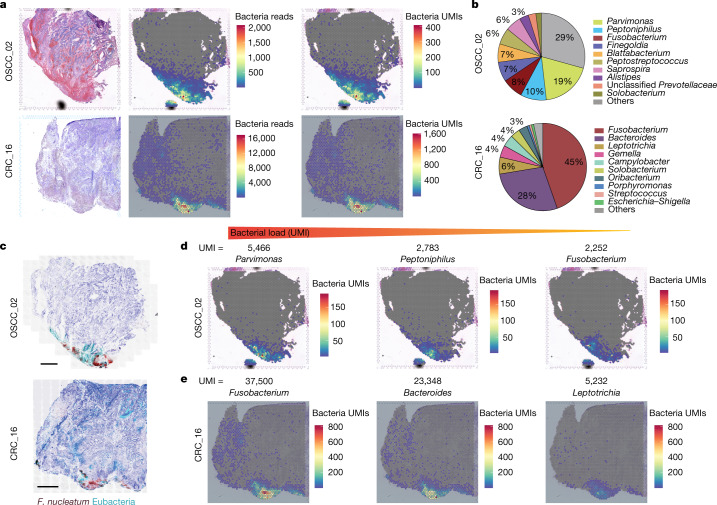
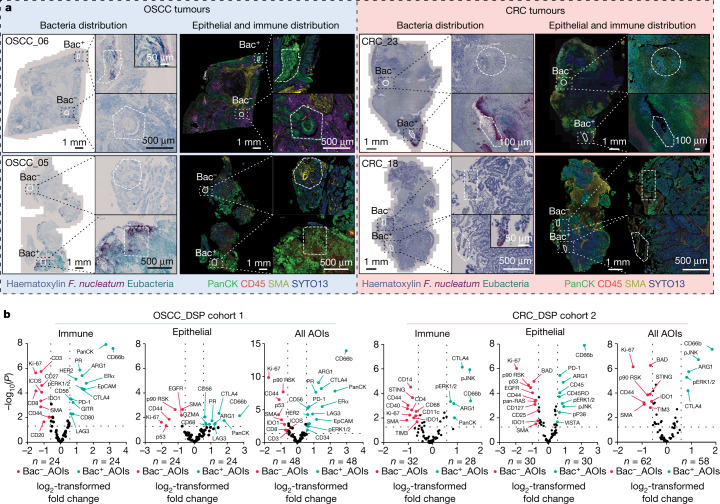
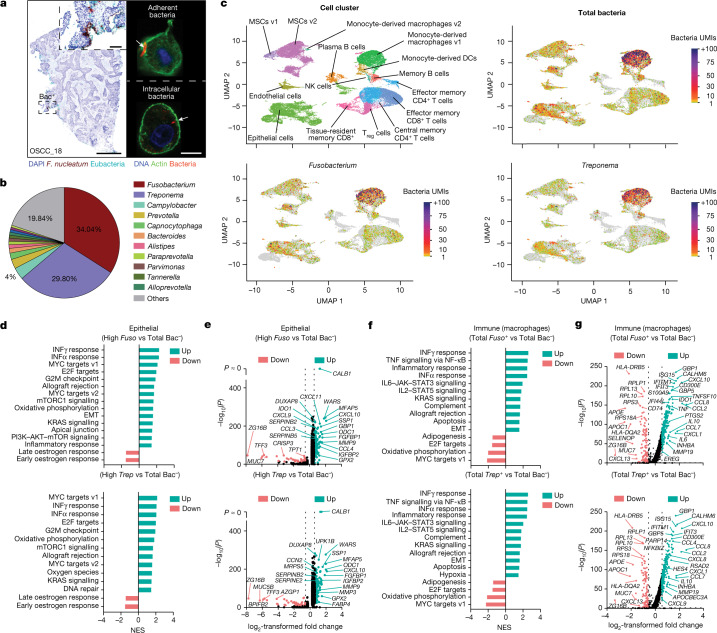
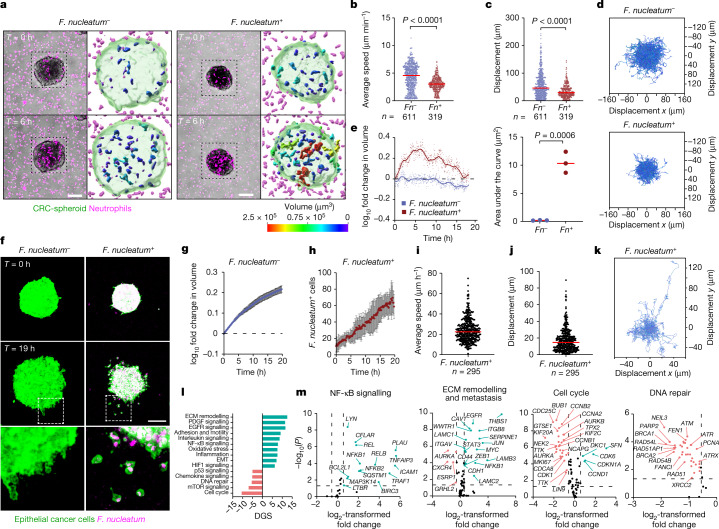
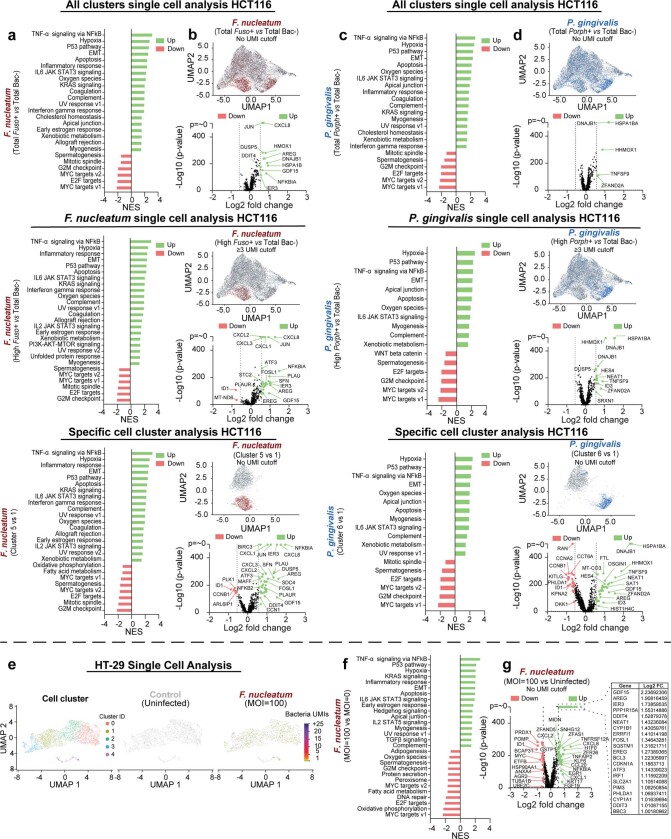
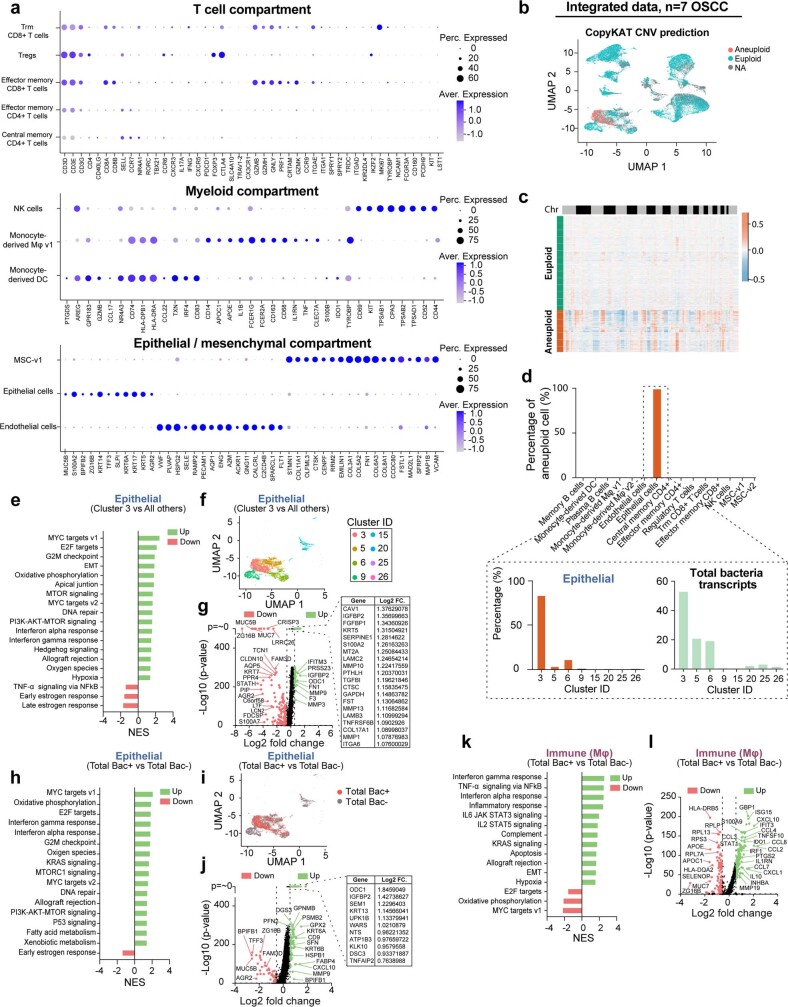
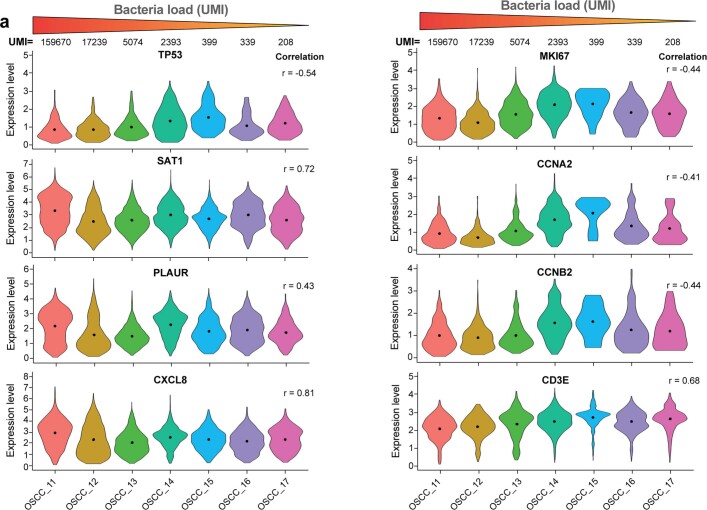
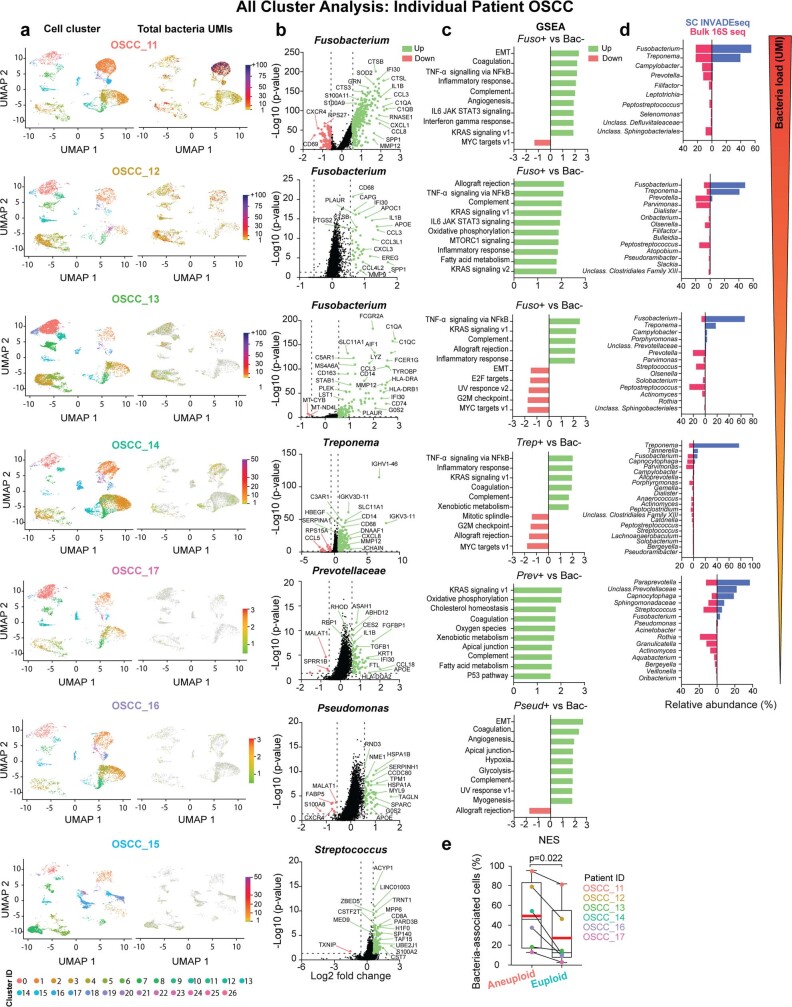
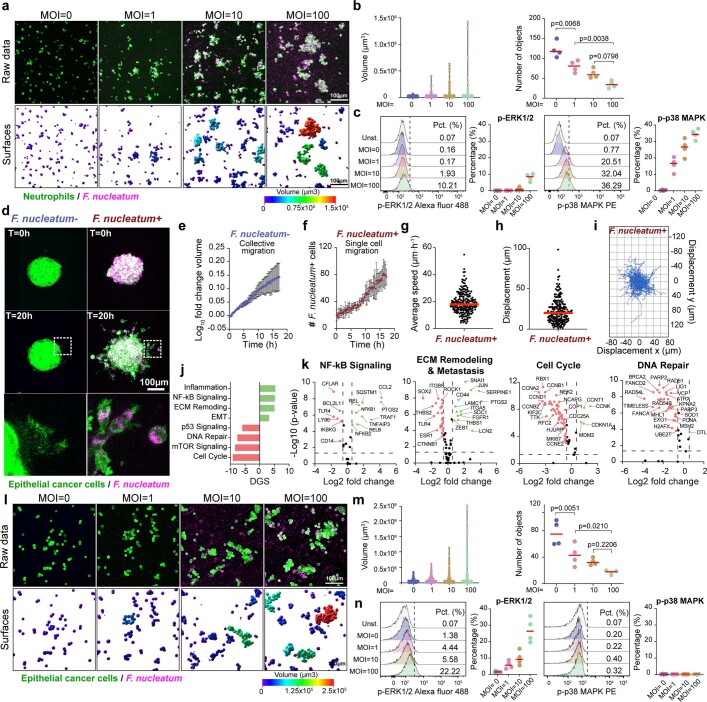
The tumour-associated microbiota is an intrinsic component of the tumour microenvironment across human cancer types 1,2 . Intratumoral host–microbiota studies have so far largely relied on bulk tissue analysis 1–3 , which obscures the spatial distribution and localized effect of the microbiota within tumours. Here, by applying in situ spatial-profiling technologies 4 and single-cell RNA sequencing 5 to oral squamous cell carcinoma and colorectal cancer, we reveal spatial, cellular and molecular host–microbe interactions. We adapted 10x Visium spatial transcriptomics to determine the identity and in situ location of intratumoral microbial communities within patient tissues. Using GeoMx digital spatial profiling 6 , we show that bacterial communities populate microniches that are less vascularized, highly immuno‑suppressive and associated with malignant cells with lower levels of Ki-67 as compared to bacteria-negative tumour regions. We developed a single-cell RNA-sequencing method that we name INVADEseq (invasion–adhesion-directed expression sequencing) and, by applying this to patient tumours, identify cell-associated bacteria and the host cells with which they interact, as well as uncovering alterations in transcriptional pathways that are involved in inflammation, metastasis, cell dormancy and DNA repair. Through functional studies, we show that cancer cells that are infected with bacteria invade their surrounding environment as single cells and recruit myeloid cells to bacterial regions. Collectively, our data reveal that the distribution of the microbiota within a tumour is not random; instead, it is highly organized in microniches with immune and epithelial cell functions that promote cancer progression.
Overview
The claims and statistics of this paper haven’t been checked yet.
Free: it reads the open-access text and checks the first 5 claims that cite a source we can check. Create a free account to check every claim.
Integrity signals
Registry
Cites
Statistics
Figures
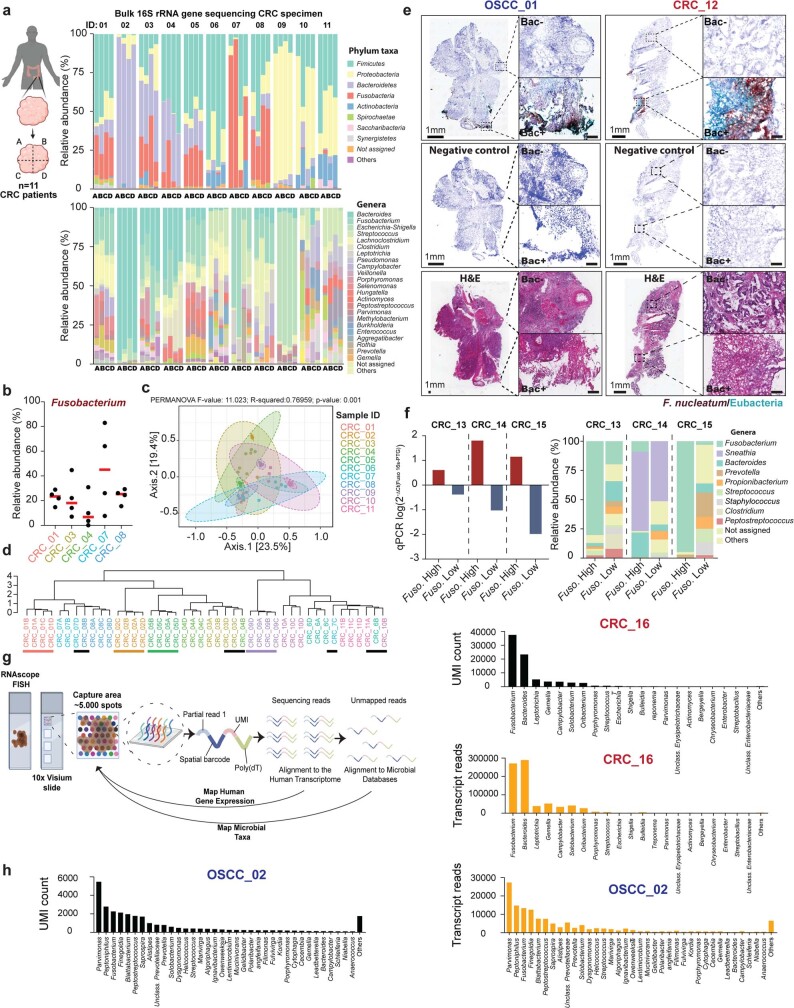
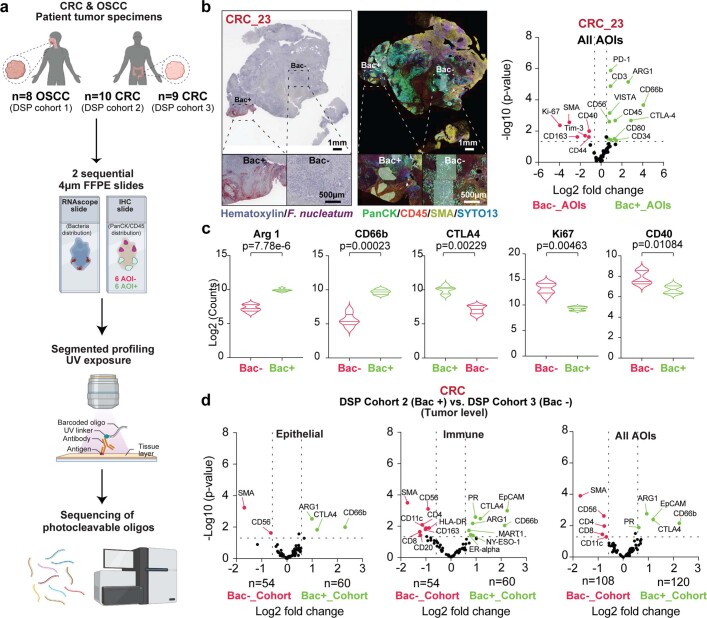
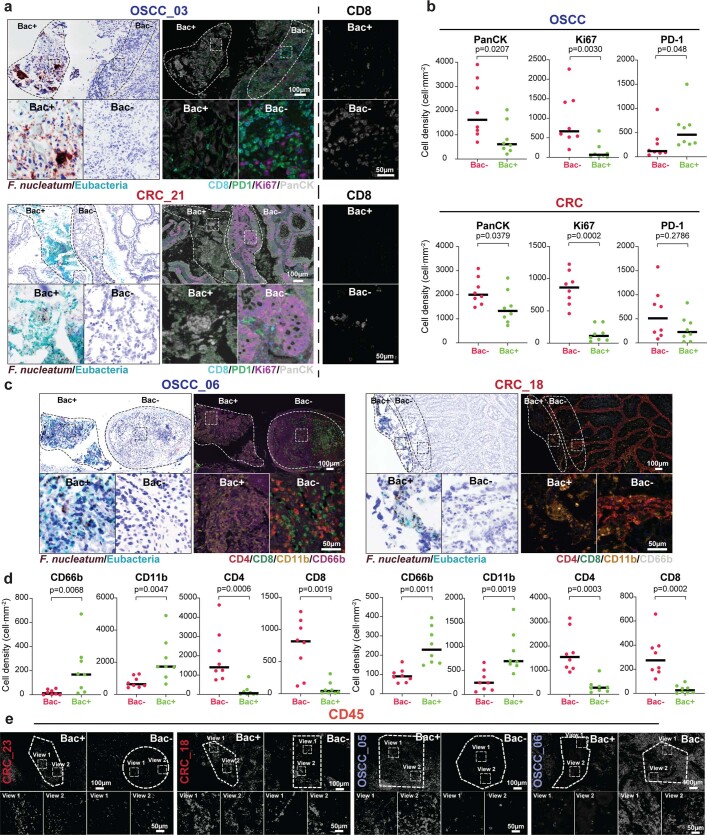
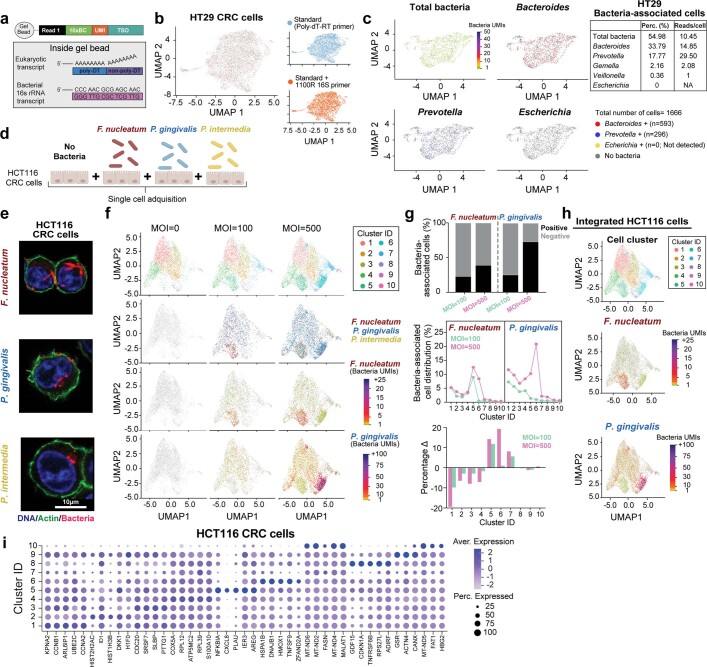
Verification
Claims the paper makes
The claims and statistics of this paper haven’t been checked yet.
Free: it reads the open-access text and checks the first 5 claims that cite a source we can check. Create a free account to check every claim.
Claims other papers make about this one
Each is checked against this paper’s own text: does it say what the citing paper says it does?
The cited source says what the claim attributes to it.
In the citing paper
“Galeano et al. introduced invasion-adhesion-directed expression sequencing (INVADEseq) targeting a conserved area of the bacterial 16 S rRNA, enabling the effective creation of cDNA libraries containing bacterial transcripts derived from human cells associated with bacteria.”
From Single-cell sequencing to multi-omics: technologies and applications (2024) · cites this paper as [158]
The cited source says what the claim attributes to it.
In the citing paper
“These microbes interact with both tumor and immune cells, influencing tumor dynamics by modulating immune responses, producing pro-proliferative metabolites, and reshaping the structural and biochemical landscape of the TME [38–40]”
From Phage therapy in oncology: opportunities for cancer prevention and treatment (2026) · cites this paper as [39]
The check wasn’t confident either way, so it gives no verdict — never disputed.
In the citing paper
“These microbes interact with both tumor and immune cells, influencing tumor dynamics by modulating immune responses, producing pro-proliferative metabolites, and reshaping the structural and biochemical landscape of the TME [38–40]”
From Phage therapy in oncology: opportunities for cancer prevention and treatment (2026) · cites this paper as [39]
Experimental — accuracy not yet measured
Self-check
Percentages, sums and reported differences re-computed from the paper’s own numbers.
The self-check needs the paper’s full text.
Citations
Cites
1 retracted
RETRACTED ARTICLE: Microbiome analyses of blood and tissues suggest cancer diagnostic approach
Poore, G. D., Kopylova, E., Zhu, Q., Carpenter, C., Fraraccio, S., Wandro, S., Kosciolek, T., Janssen, S., Metcalf, J., Song, S. J., et al. (2020) · Nature · doi:10.1038/s41586-020-2095-1 · Cited by 989
RetractedHighly parallel genome-wide expression profiling of individual cells using nanoliter droplets.
Macosko, E. Z., Basu, A., Satija, R., Nemesh, J., Shekhar, K., Goldman, M., Tirosh, I., Bialas, A. R., Kamitaki, N., Martersteck, E. M., et al. (2015) · Cell · doi:10.1016/j.cell.2015.05.002 · Cited by 7,110
Tumors: Wounds That Do Not Heal
Flier, J. S., Underhill, L. H., & Dvorak, H. F. (1986) · New England Journal of Medicine · doi:10.1056/nejm198612253152606 · Cited by 4,391
mRNA-Seq whole-transcriptome analysis of a single cell
Tang, F., Barbacioru, C., Wang, Y., Nordman, E., Lee, C., Xu, N., Wang, X., Bodeau, J., Tuch, B. B., Siddiqui, A., et al. (2009) · Nature Methods · doi:10.1038/nmeth.1315 · Cited by 3,969
Tumour heterogeneity and resistance to cancer therapies
Dagogo-Jack, I., & Shaw, A. T. (2018) · Nature Reviews Clinical Oncology · doi:10.1038/nrclinonc.2017.166 · Cited by 3,846
A Gene Encoding an Antigen Recognized by Cytolytic T Lymphocytes on a Human Melanoma
van der Bruggen, P., Traversari, C., Chomez, P., Lurquin, C., De Plaen, E., Van den Eynde, B., Knuth, A., & Boon, T. (1991) · Science · doi:10.1126/science.1840703 · Cited by 3,545
EMT Transition States during Tumor Progression and Metastasis
Pastushenko, I., & Blanpain, C. (2019) · Trends in Cell Biology · doi:10.1016/j.tcb.2018.12.001 · Cited by 2,876
Anderson, N. M., & Simon, M. C. (2020) · Current Biology · doi:10.1016/j.cub.2020.06.081 · Cited by 2,718
T cell exclusion, immune privilege, and the tumor microenvironment
Joyce, J. A., & Fearon, D. T. (2015) · Science · doi:10.1126/science.aaa6204 · Cited by 2,473
The human tumor microbiome is composed of tumor type–specific intracellular bacteria
Nejman, D., Livyatan, I., Fuks, G., Gavert, N., Zwang, Y., Geller, L. T., Rotter-Maskowitz, A., Weiser, R., Mallel, G., Gigi, E., et al. (2020) · Science · doi:10.1126/science.aay9189 · Cited by 2,464
Cited by
Items 301–400 of 997
Verma, M., Randhawa, S., Bathla, M., Teji, N., & Acharya, A. (2025) · Journal of Materials Chemistry B · doi:10.1039/d4tb02409e · Cited by 16
Bridging the Gap in Breast Cancer Dormancy: Models, Mechanisms, and Translational Challenges
Sabit, H., Abdel-Ghany, S. E., Albrahim, Y., Wadan, A.-H. S., Rashwan, S., Arneth, R., & Arneth, B. M. (2025) · Pharmaceuticals · doi:10.3390/ph18070961 · Cited by 17
Hoyd, R., Wheeler, C. E., Liu, Y., Singh, M. S. J., Muniak, M., Jin, N. Y., Denko, N. C., Carbone, D. P., Mo, X. M., & Spakowicz, D. J. (2023) · Cancer Research Communications · doi:10.1158/2767-9764.crc-22-0435 · Cited by 16
“Second, some analyses, such as the association with overall survival, rely on assumptions about the presence of an organism being important rather than some measure of its quantity or location, which has recently been shown to affect outcomes (35).”
BackgroundDecoding the microbial blueprint of pancreatic cancer
Bautista, J., Bedón-Galarza, R., Martínez-Hidalgo, F., Masache-Cruz, M. J., Benítez-Núñez, M., Valencia-Arroyo, C., & López‐Cortés, A. (2026) · Frontiers in Medicine · doi:10.3389/fmed.2026.1737582 · Cited by 15
Biodiversity and biogeography of the multi-kingdom cancer microbiome
Dohlman, A. B., Mjelle, R., Wood, H. M., Jiang, K., Shumate, A., Lee, I., Piccinno, G., Serna, G., Yakubu, A.-R., Nuciforo, P. G., et al. (2026) · Cell · doi:10.1016/j.cell.2026.04.015 · Cited by 16
The role of microbiota in tumorigenesis, progression and treatment of bladder cancer
Peng, Z., Zhuang, J., & Shen, B. (2023) · Microbiome Research Reports · doi:10.20517/mrr.2023.47 · Cited by 15
Organoids in gastrointestinal diseases: from bench to clinic
Wang, Q., Guo, F., Zhang, Q., Hu, T., Jin, Y., Yang, Y., & Ma, Y. (2024) · MedComm · doi:10.1002/mco2.574 · Cited by 15
Qiu, J., Jiang, Y., Ye, N., Jin, G., Shi, H., & Qian, D. (2024) · Journal of Translational Medicine · doi:10.1186/s12967-024-05531-x · Cited by 15
“The invasion of cancer cells by bacteria can support myeloid cell recruitment, provoking JAK/STAT signaling-mediated inflammation and promoting the rejection of T cells and the growth of tumors through the secretion of particular cytokines and chemokines into the surrounding environment [7].”
BackgroundGirolami, I., Damiani, D., Negro, R., Abousiam, M., Gazzini, L., Calabrese, L. S., & Hanspeter, E. (2024) · Cells · doi:10.3390/cells13211772 · Cited by 15
Unveiling Microbiota Profiles in Saliva and Pancreatic Tissues of Patients with Pancreatic Cancer
Uğuz, A., Müftüoğlu, C., Mert, U., Gümüş, T., Ece, D., Asadi, M., Bağcı, Ö. U., & Caner, A. (2025) · Microorganisms · doi:10.3390/microorganisms13010119 · Cited by 15
Targeting Intratumoral Bacteria for Cancer Treatment
Shi, J., Liang, J., Li, Y., Zhang, Z., Sun, J. X., He, Z., Luo, C., Qu, X., Che, X., & Zhang, S. (2025) · Small · doi:10.1002/smll.202505651 · Cited by 15
Secretory IgA dysfunction underlies poor prognosis in Fusobacterium -infected colorectal cancer
Choi, I., Kim, K., Kim, S. C., Park, D., Nam, K. T., Cha, J. H., Baek, S., Cha, J., Jo, H.-Y., Jung, M., et al. (2025) · Gut Microbes · doi:10.1080/19490976.2025.2528428 · Cited by 15
“3,11,12 Despite these significant discoveries, how Fn interacts with the tumor microenvironment to influence CRC outcomes remains unclear.”
Self-citationUgai, T., Shimizu, T., Kawamura, H., Ugai, S., Takashima, Y., Usui, G., Väyrynen, J. P., Okadome, K., Haruki, K., Akimoto, N., et al. (2023) · Clinical & Translational Immunology · doi:10.1002/cti2.1453 · Cited by 15
“Accumulating evidence indicates the pathogenic interactions between neoplastic cells, immune cells, microbiota and other components in the tumor microenvironment in colorectal carcinoma.(8,9) Among various micro-organisms, Fusobacterium nucleatum is considered to contribute to colorectal carcinogenesis.”
BackgroundDynamic interplay of intratumoral microbiota within the colorectal cancer microenvironment
Wu, Y., Wang, P., Zhao, X., Liu, T., Situ, B., & Zheng, L. (2023) · View · doi:10.1002/viw.20230100 · Cited by 15
The crosstalk of intratumor bacteria and the tumor
Huang, J., Mao, Y., & Wang, L. (2024) · Frontiers in Cellular and Infection Microbiology · doi:10.3389/fcimb.2023.1273254 · Cited by 15
The Microbiome Matters: Its Impact on Cancer Development and Therapeutic Responses
Chung, I.-Y., Kim, J. H., & Koh, A. (2024) · The Journal of Microbiology · doi:10.1007/s12275-024-00110-7 · Cited by 16
“This association correlated with signaling pathways related to cancer progression, such as an upregulated interferon, Janus kinase/signal transducer and activator of transcription (JAK/STAT) signaling, and inflammatory response pathways (Galeano Nino et al., 2022).”
InfluentialChang, C., & Lam, H. Y. P. (2024) · Anticancer Research · doi:10.21873/anticanres.17035 · Cited by 15
“Using a single-cell RNA-sequencing method (INVADEseq), tumor cells infected with F. nucleatum resulted in significant up-regulation of EGFR, PDGF, and NF-ĸ B signaling, leading to extracellular matrix remodeling, migration, and metastasis (45).”
MethodLactate metabolic pathway regulates tumor cell metastasis and its use as a new therapeutic target
Xing, W., Li, X., Zhou, Y., Li, M., & Zhu, M. (2023) · Exploration of Medicine · doi:10.37349/emed.2023.00160 · Cited by 14
Keystone pathobionts associated with colorectal cancer promote oncogenic reprograming
Jones, J. P., Shi, Q., Nath, R. R., & Brito, I. (2024) · PLoS ONE · doi:10.1371/journal.pone.0297897 · Cited by 14
Cheng, W., Zhu, N., Wang, J., & Yang, R. (2024) · Frontiers in Immunology · doi:10.3389/fimmu.2024.1331518 · Cited by 14
Selvaraj, A., McManus, G., Healy, C. M., & Moran, G. P. (2024) · Frontiers in Cellular and Infection Microbiology · doi:10.3389/fcimb.2024.1417946 · Cited by 17
Feng, S., Zhang, Y. X., Wang, Y., Gao, Y., & Song, Y. (2024) · Chemistry - A European Journal · doi:10.1002/chem.202402485 · Cited by 15
Cheng, X., Cao, Y., Liu, X., Li, Y., Li, Q., Gao, D., & Yu, Q. (2024) · Clinical and Translational Medicine · doi:10.1002/ctm2.70036 · Cited by 14
Next‐generation spatial transcriptomics: unleashing the power to gear up translational oncology
Wang, N., Hong, W., Wu, Y., Chen, Z., Bai, M., Wang, W., & Zhu, J. Y. (2024) · MedComm · doi:10.1002/mco2.765 · Cited by 14
“187 Galeano Nino et al. 188 combined multiple spatial techniques with scRNA-seq to map the spatial, cellular, and molecular interactions of host cells within the TME, revealing the presence and dynamics of intratumoral microbial communities and their potential impact on tumor heterogeneity.”
MethodHu, L., Wang, X., Song, Z., Chen, F., & Wu, B. Y. (2024) · Molecular Medicine · doi:10.1186/s10020-024-00996-4 · Cited by 14
“This methodological innovation marks a departure from previous studies that relied on tissue or cell population-level analysis, highlighting the critical role of single-cell technologies in cancer research (Wu et al. 2021; Galeano Niño et al. 2022; Nalio Ramos et al. 2022).”
Unveiling the intratumor microbiome in liver cancer: Current insights and prospective applications
Ke, X., Jiang, S., Wei, Q., Sun, M., Sun, H., Pang, M., Liu, M., Sun, L., Yang, H., & Mao, Y. (2025) · Clinical and Molecular Hepatology · doi:10.3350/cmh.2024.1039 · Cited by 14
Emerging roles of intratumoral microbiota: a key to novel cancer therapies
Fang, P., Yang, H. J., Zhang, H., Shuai, D., Li, M., Chen, L., & Liu, L. (2025) · Frontiers in Oncology · doi:10.3389/fonc.2025.1506577 · Cited by 14
The Skin Microbiome: A New Key Player in Melanoma, From Onset to Metastatic Stage
L'Orphelin, J. ‐., Dompmartin, A., & Dréno, B. (2025) · Pigment Cell & Melanoma Research · doi:10.1111/pcmr.13224 · Cited by 14
“A growing body of evidence points to the presence of intratumoral pathogenic bacteria, thanks to the development of metagenomics and cultu-romics (Nejman et al. 2020; Kalaora et al. 2021; Fu et al. 2022; Galeano Niño et al. 2022).”
Efficient Artificial T Cell Therapy for Bacterial‐Colonized Tumors
Zhang, S., Zhu, H., Peng, X., Zhou, Y., Huang, R., Wang, Y., Liu, S., & Wang, Z. (2025) · Advanced Materials · doi:10.1002/adma.202503087 · Cited by 14
Dissecting the intratumoral microbiome landscape in lung cancer
Zhao, Y. G., Yang, Z., Wu, D., & Hai, Z. (2025) · Frontiers in Immunology · doi:10.3389/fimmu.2025.1614731 · Cited by 14
Altomare, C., Macrì, R., Serra, M. D. R., Ussia, S., Ritorto, G., Maiuolo, J., Muscoli, C., Perri, E., & Mollace, V. (2025) · Nutrients · doi:10.3390/nu17142354 · Cited by 15
“In addition, current findings demonstrate a diverse microbiome within previously considered sterile tumor tissues (lung, breast, liver), which is closely associated with oncogenesis [216,217].”
The gut-tumor connection: the role of microbiota in cancer progression and treatment strategies
Wei, Z., Gao, G., He, Q., Kwok, L. Y., & Sun, Z. (2025) · Journal of Advanced Research · doi:10.1016/j.jare.2025.08.038 · Cited by 14
Xu, W., Zhou, Y., Ding, H., Ye, M., Li, S., Xu, L., Jin, X., Zhan, Z., Song, L., Zhang, Y., et al. (2025) · Cell Reports · doi:10.1016/j.celrep.2025.116473 · Cited by 14
Harnessing the Microbiome in Cancer Immunotherapy: Regulation, Prediction, and Therapeutic Targeting
Zarour, H. M., & Trinchieri, G. (2025) · Annual Review of Immunology · doi:10.1146/annurev-immunol-082323-114522 · Cited by 15
Highlights the recent important findings in cancer heterogeneity
Wang, X. (2023) · Holistic Integrative Oncology · doi:10.1007/s44178-023-00038-9 · Cited by 14
Intratumour microbiota modulates adrenocortical cancer responsiveness to mitotane
Cantini, G., Niccolai, E., Canu, L., Gloria, L. D., Baldi, S., Propato, A. P., Fei, L., Nannini, G., Puglisi, S., Nesi, G., et al. (2023) · Endocrine Related Cancer · doi:10.1530/erc-23-0094 · Cited by 14
Cellsnake: a user-friendly tool for single-cell RNA sequencing analysis
Umu, S. U., Vander-Elst, K. R., Karlsen, V. T., Chouliara, M., Bækkevold, E. S., Jahnsen, F. L., & Domańska, D. (2022) · GigaScience · doi:10.1093/gigascience/giad091 · Cited by 14
Liang, P., Deng, H., Zhao, Y., Chen, Y., Zhang, J., He, J., & Liang, W. (2023) · Translational Lung Cancer Research · doi:10.21037/tlcr-23-357 · Cited by 14
Metastasis and the Microbiome: The Impact of Bacteria in Disseminated Colorectal Cancer
Ayabe, R. I., & White, M. G. (2024) · Frontiers in Bioscience-Landmark · doi:10.31083/j.fbl2904152 · Cited by 14
Fusobacterium species are distinctly associated with patients with Lynch syndrome colorectal cancer
Salim, F., Mizutani, S., Shiba, S., Takamaru, H., Yamada, M., Nakajima, T., Yachida, T., Soga, T., Saitō, Y., Fukuda, S., et al. (2024) · iScience · doi:10.1016/j.isci.2024.110181 · Cited by 14
Facts and Hopes in Colorectal Cancer Immunotherapy
Foote, M. B., Argilés, G., Rousseau, B., & Segal, N. H. (2023) · Clinical Cancer Research · doi:10.1158/1078-0432.ccr-22-2176 · Cited by 13
Liu, C.-C., Wolf, M. R., Ortego, R., Grencewicz, D. J., Sadler, T. M., & Eng, C. (2024) · Scientific Reports · doi:10.1038/s41598-024-51361-8 · Cited by 13
“In addition to the gut, recent studies have identified microbiota in solid tumors 17,18 .”
BackgroundKuo, Y. P., & Carja, O. (2024) · Genetics · doi:10.1093/genetics/iyae055 · Cited by 13
Kannan, N., Pandiar, D., Subramanian, R., Krishnan, R. P., & Shivalingam, C. (2024) · Journal of Stomatology Oral and Maxillofacial Surgery · doi:10.1016/j.jormas.2024.101952 · Cited by 13
Unraveling the Role of the Microbiota in Cancer Immunotherapy: A New Frontier
Wang, S., Li, S., Zhang, M., Liu, R., Ye, X., Mao, S., Yu, J., Xie, X., & Tan, W. (2025) · Research · doi:10.34133/research.0744 · Cited by 13
Microbiome in cancer metastasis: biological insights and emerging spatial omics methods
Meyers, M., Stoffels, C., Frache, G., Letellier, E., & Feucherolles, M. (2025) · Frontiers in Cellular and Infection Microbiology · doi:10.3389/fcimb.2025.1559870 · Cited by 13
Metabolism and epigenetics in cancer: toward personalized treatment
Zhang, X., Liu, D., Yin, S., Gao, Y., Li, X., & Wu, G. (2025) · Frontiers in Endocrinology · doi:10.3389/fendo.2025.1530578 · Cited by 13
“…protection of human genes will damage to human multiple genes to form at the same time, its mechanism is mainly its ecological imbalance can by changing the host susceptibility to cancer events (including pathogenic microorganisms increase load) to signi fi cantly promote this process (135, 136).”
Bahmani, A. H., Cha, K., Alavi, A., Dixit, A., Ross, A., Park, R. M., Goncalves, F., Ma, S., Saxman, P., Nair, R. V., et al. (2025) · Communications Medicine · doi:10.1038/s43856-025-01034-y · Cited by 13
In Situ Coordination‐Assembly Nano‐Drugs/Probes for Enhanced Tumor Retention and Responsive Release
Liu, F., Li, X., Xu, S., Guo, C., & Wang, L. (2025) · Angewandte Chemie International Edition · doi:10.1002/anie.202521465 · Cited by 13
Ma, C., Teoh, H. K., Zhao, Y., Wang, Y., Zhao, J., Liu, Y., Zhao, C., & Ong, H. T. (2026) · Frontiers in Immunology · doi:10.3389/fimmu.2026.1760782 · Cited by 13
Spatial transcriptomics in human biomedical research and clinical application
Hu, W., Zhang, Y., Mei, J., & Fang, X. (2023) · Current Medicine · doi:10.1007/s44194-023-00023-4 · Cited by 13
“…oral squamous cell carcinoma (OSCC) and CRC tumors was not random but highly concentrated in the microenvironment with immune and epithelial cell functions, facilitating cancer progression and highlighting the interactions between space, cell, and host-microorganism (Galeano Nino et al. 2022) (Fig.”
BackgroundGao, C., Zhao, Y., Yang, T., Gao, X., & Meng, C. (2023) · Journal of Orthopaedic Surgery and Research · doi:10.1186/s13018-023-04121-9 · Cited by 13
Deciphering Drug Targets and Actions with Single-Cell and Spatial Resolution
Pang, Z., Cravatt, B. F., & Li, Y. (2023) · The Annual Review of Pharmacology and Toxicology · doi:10.1146/annurev-pharmtox-033123-123610 · Cited by 13
Zhang, Y., Ji, L., Wen, H., Chu, Y., Xing, W., Tian, G., Yao, Y., & Yang, J. (2023) · Computers in Biology and Medicine · doi:10.1016/j.compbiomed.2023.107586 · Cited by 13
Zhou, Q., Zhou, L., Chen, X., Chen, Q., & Hao, L. (2024) · Cancer Reports · doi:10.1002/cnr2.70063 · Cited by 13
“Their research also sheds light on the spatial and population heterogeneity of intratumoral microbes in various solid tumors [15].”
Whole‐Tumor Clearing and Imaging of Intratumor Microbiota in Three Dimensions with miCDaL Strategy
Wang, Y., Jiang, Z., Zhang, K., Tang, H., Wang, G., Gao, J., He, G., Liang, B., Li, L., Yang, C. J., et al. (2024) · Advanced Science · doi:10.1002/advs.202400694 · Cited by 12
Breast tumor microbiome regulates anti-tumor immunity and T cell-associated metabolites
Liu, C.-C., Grencewicz, D. J., Chakravarthy, K., Li, L., Liepold, R., Wolf, M. R., Marcho, L. M., Sangwan, N., Tzeng, A., Hoyd, R., et al. (2026) · Scientific Reports · doi:10.1038/s41598-026-48719-5 · Cited by 12
Advancing periodontitis microbiome research: integrating design, analysis, and technology
Han, Y., & Ding, P. (2025) · Frontiers in Cellular and Infection Microbiology · doi:10.3389/fcimb.2025.1616250 · Cited by 12
“Built on the backbone of the 5 ′ Chromium scRNA assay, INVADEseq simultaneously primes bacterial 16S rRNA and host mRNA within single-cell Gel Bead-in-Emulsions (GEMs) (Galeano Niño et al., 2022, 2023).”
Host-microbiota interactions in genitourinary cancer immunotherapy
Xu, X., Cui, J., Li, W., Xu, Y., Yuan, S., Zeng, X., & Li, B. (2025) · Seminars in Cancer Biology · doi:10.1016/j.semcancer.2025.07.005 · Cited by 12
Challenges and Opportunities in Analyzing Cancer-Associated Microbiomes
Chia, M., Pop, M., Salzberg, S. L., & Nagarajan, N. (2025) · Cancer Research · doi:10.1158/0008-5472.can-24-3629 · Cited by 12
He, X., Zhao, Q., Zhang, J., Shi, J., Wan, N., Tang, B., Tian, B., & Li, P. (2025) · Frontiers in Microbiology · doi:10.3389/fmicb.2025.1652702 · Cited by 12
“F. nucleatum ’s Fap2 protein interacts with the inhibitory receptor TIGIT on NK and T cells (Gur et al., 2015), and upregulates PD-L1 expression in CRC cell lines, promoting immune evasion (Galeano Niño et al., 2022; Gao et al., 2023).”
InfluentialHarnessing Next‐Generation 3D Cancer Models to Elucidate Tumor‐Microbiome Crosstalk
Buzhor, M. G., Longobardi, G., Kandli, O., Krinsky, A., Avramoff, O., Katyal, A., Salomon, K., Miari, A., Venkert, D., Barnatan, T. T., et al. (2025) · Advanced Healthcare Materials · doi:10.1002/adhm.202503198 · Cited by 12
Wang, Y., Jiang, W., Zhao, H., Deng, J., Cai, Y., Li, Y., Meng, X., Hou, J., Wang, F., & Sheng, J. (2025) · Exploration · doi:10.1002/exp.20240396 · Cited by 13
“We also aim to explore ways to solve the challenges of antigen-loss-mediated tumor escape and tumor antigen heterogeneity using oncolytic bacteria strategies [ 83–86 ].”
Microbial medicines: Unlocking the therapeutic potential of the microbiome in cancer treatment
Canowitz, A., Kamble, N. H., Muck, N., Kaur, K., Garay, N., Bellala, P., Gabani, B. B., & Kotagiri, N. (2026) · Journal of Controlled Release · doi:10.1016/j.jconrel.2026.114720 · Cited by 13
INVADEseq to study the intratumoural microbiota at host single-cell resolution
Bullman, S. (2023) · Nature reviews. Cancer · doi:10.1038/s41568-023-00553-x · Cited by 12
Self-citationÖn, A., Vejzović, D., Jennings, J., Parigger, L., Cordfunke, R. A., Drijfhout, J. W., Lohner, K., & Malanović, N. (2023) · Antibiotics · doi:10.3390/antibiotics12071163 · Cited by 12
Pfisterer, N., Ammer‐Herrmenau, C., Antweiler, K., Küffer, S., Ellenrieder, V., & Neeße, A. (2023) · Pancreatology · doi:10.1016/j.pan.2023.07.008 · Cited by 12
Cina, M. L., Venegas, J., & Young, A. (2023) · Immunological Reviews · doi:10.1111/imr.13250 · Cited by 12
The emerging role of the gut microbiome in cancer cell plasticity and therapeutic resistance
Mondal, P., & Meeran, S. M. (2023) · Cancer and Metastasis Reviews · doi:10.1007/s10555-023-10138-7 · Cited by 12
“Furthermore, bacteria-associated single cells correlate with the upregulation of cell inflammation and cancer progression pathways in patients with oral squamous cell carcinoma [109].”
2D nanomaterial-based 3D network hydrogels for anti-infection therapy
Jiang, M., Zhu, Y., Li, Q., Liu, W., Dong, A., & Zhang, L. (2024) · Journal of Materials Chemistry B · doi:10.1039/d3tb02244g · Cited by 12
Li, Y., Zhang, R., Fu, C., Jiang, Q., Zhang, P., Zhang, Y., Chen, J., Tao, K., Chen, W., & Zeng, X. (2024) · Cancer Letters · doi:10.1016/j.canlet.2024.217149 · Cited by 11
Chen, Y., Wu, J., Cai, K., Xiao, X., Chen, Y., Zhang, X., Deng, S., Pei, C., Chen, Y., Xie, Z., et al. (2025) · International Immunopharmacology · doi:10.1016/j.intimp.2025.114283 · Cited by 11
Friends close, enemies closer: the complex role of the microbiome in antitumor immunity
Patra, D., Dev, G., Hand, T. W., & Overacre-Delgoffe, A. E. (2025) · Current Opinion in Immunology · doi:10.1016/j.coi.2025.102537 · Cited by 11
Ma, L., Luan, Y., & Lü, L. (2025) · Cancer Medicine · doi:10.1002/cam4.70622 · Cited by 11
“…35], lymphoma [36–40], glioma [41–44], cholangiocarcinoma [44–48], nasopharyngeal carcinoma [49–52], breast cancer [53–57], head and neck cancer [58–61], colorectal cancer [62–66], gastric cancer [67–72], liver cancer [21, 73, 74], kidney cancer [75, 76], pancreatic cancer [77–80], bladder cancer…”
Nervous system–gut microbiota–immune system axis: future directions for preventing tumor
Wang, J., Cheng, W., & Yang, R. (2025) · Frontiers in Immunology · doi:10.3389/fimmu.2025.1535955 · Cited by 11
Decoding the role of intratumoral microbiota in gastric cancer
Gui, F., Zhang, L., Xiao, J., & Zeng, C. (2025) · Biochimica et Biophysica Acta (BBA) - Reviews on Cancer · doi:10.1016/j.bbcan.2025.189355 · Cited by 11
Zhang, H., Lan, X., Cai, L., Gao, X., Gao, F., Yu, D., Zhang, J., Zhang, J., & Tai, Q. (2025) · Frontiers in Microbiology · doi:10.3389/fmicb.2025.1599691 · Cited by 11
“Recent studies have reported that bacterial communities residing in the gut and tumor tissues can modulate host immune responses and metabolic pathways, thereby affecting tumor growth and treatment efficacy (Zhou et al., 2024; Galeano Niño et al., 2022).”
Kim, J. H., Seo, H., Kim, S., Rahim, M. A., Jo, S., Barman, I., Tajdozian, H., Sarafraz, F., Shuvo, M. S. H., Song, H., et al. (2025) · Biomedicines · doi:10.3390/biomedicines13081929 · Cited by 11
“This microbial community has a profound influence on various physiological processes, including immune system development and regulation, metabolic function, and protection against pathogens [1,2].”
Xie, X., Lu, Z., Kong, Y., Jin, C., Sun, Z., Yang, X., Li, Z., Qu, F., & Tan, W. (2025) · Angewandte Chemie International Edition · doi:10.1002/anie.202520221 · Cited by 11
Wiley, M. B., Bauer, J. I., Mehrotra, K., Zessner‐Spitzenberg, J., Kolics, Z., Cheng, W., Castellanos, K., Nash, M. G., Gui, X. S., Kone, L. B., et al. (2023) · Cancers · doi:10.3390/cancers15113003 · Cited by 11
“Data were analyzed via linear mixed modeling with Benjamini–Hochberg multiple-correction testing [34] (* p < 0.”
MethodBibliometric and visual analysis of single-cell sequencing from 2010 to 2022
Chen, L., Wan, Y., Yang, T., Zhang, Q., Zeng, Y., Zheng, S., Ling, Z., Xiao, Y., Wan, Q., Liu, R., et al. (2024) · Frontiers in Genetics · doi:10.3389/fgene.2023.1285599 · Cited by 11
Yeo, K. K. L., Li, R., Wu, F., Bouras, G. S., H., L., Smith, E., Wormald, P., Valentine, R. J., Psaltis, A. J., Vreugde, S., et al. (2024) · Journal of Medical Microbiology · doi:10.1099/jmm.0.001799 · Cited by 11
Mapping the Multiscale Proteomic Organization of Cellular and Disease Phenotypes
Cesnik, A. J., Schaffer, L. V., Gaur, I., Jain, M., Ideker, T., & Lundberg, E. K. (2024) · Annual Review of Biomedical Data Science · doi:10.1146/annurev-biodatasci-102423-113534 · Cited by 11
“Higher order still, we may be able to represent our interactions with other organisms, including microbes in our gut and host–pathogen interactions (109).”
BackgroundMajumder, B., Nataraj, N. B., Maitreyi, L., & Datta, S. (2024) · Frontiers in Immunology · doi:10.3389/fimmu.2024.1414376 · Cited by 11
Krull, D., Haynes, P., Kesarwani, A. K., Tessier, J., Chen, B. J., Hunter, K., Rodriguez, D., Liang, Y., Mansfield, J., McClain, M. A., et al. (2024) · Journal of Histotechnology · doi:10.1080/01478885.2024.2391683 · Cited by 11
Wang, Y., Zhai, X., Wang, Z., Gao, C., Mi, S.-C., Tang, W., Fu, X.-M., Li, H.-B., Yue, L., Li, P., et al. (2024) · World Journal of Gastrointestinal Oncology · doi:10.4251/wjgo.v16.i10.4209 · Cited by 11
Microbiome‐Based Colon Cancer Patient Stratification and Survival Analysis
Smyth, J. M., Godet, J., Choudhary, A., Das, A. D., Gkoutos, G. V., & Acharjee, A. (2024) · Cancer Medicine · doi:10.1002/cam4.70434 · Cited by 11
Relationships between oral microbiome and head and neck squamous cell carcinoma: a systematic review
Guévelou, J. L., Larnaudie, A., Béné, M. C., Cocherie, T., Perazzi, M., El-Houat, Y., Kammerer, E., Bastit, V., & Pointreau, Y. (2025) · Oral Oncology · doi:10.1016/j.oraloncology.2025.107571 · Cited by 12
Spatial methods for microbiome–host interactions
Ntekas, I., & Vlaminck, I. D. (2023) · Nature Biotechnology · doi:10.1038/s41587-023-01996-1 · Cited by 11
Multiplexed spatial transcriptomics methods and the application of expansion microscopy
Fortner, A., & Bucur, O. (2024) · Frontiers in Cell and Developmental Biology · doi:10.3389/fcell.2024.1378875 · Cited by 10
Harnessing microbial antigens as cancer antigens: a promising avenue for cancer immunotherapy
Zhang, T., Zhang, X., Chen, J., Zhang, X., & Zhang, Y. (2024) · Frontiers in Immunology · doi:10.3389/fimmu.2024.1411490 · Cited by 10
“Interactions between these microorganisms and tumor cells can promote cancer progression through various mechanisms, including direct stimulation of cell proliferation, suppression of immune responses, and modulation of the tumor microenvironment (28).”
BackgroundDual spatial host-bacterial gene expression in Mycobacterium abscessus respiratory infections
Marco, F. D., Nicola, F., Giannese, F., Saliu, F., Tonon, G., de Pretis, S., Cirillo, D. M., & Lorè, N. I. (2024) · Communications Biology · doi:10.1038/s42003-024-06929-5 · Cited by 10
“4, 5, and 6.”
Chen, L., Xu, Q., Chen, W., Liu, J., Xu, T., Yang, J., & Ji, L. (2025) · Cancer Immunology Immunotherapy · doi:10.1007/s00262-024-03916-x · Cited by 10
Huo, T., Zhu, B., Shan, X., Song, J., Wang, Z., Zhou, J., Zhang, X., Bai, Y., Liu, C., Zhao, Y., et al. (2025) · Chemical Engineering Journal · doi:10.1016/j.cej.2025.159871 · Cited by 10
Spatial transcriptomics identifies novel Pseudomonas aeruginosa virulence factors
Zhou, H., Negrón, O. A., Abbondante, S., Marshall, M. E., Jones, B., Ong, E., Chumbler, N. M., Tunkey, C. D., Dixon, G., Lin, H., et al. (2025) · Cell Genomics · doi:10.1016/j.xgen.2025.100805 · Cited by 11
“The experimental approach represents a significant advancement over previous studies that used either sequential analysis of eukaryotic and prokaryotic features or reported bacterial analysis based only on 16S RNA seq (19,20).”
Yan, L., Wei, X., Zhong, F., Fu, L., Ru, H., Mo, X., & Huang, M. (2025) · npj Precision Oncology · doi:10.1038/s41698-025-01075-5 · Cited by 10
“The distributionof microorganisms within colorectal cancer is not random but highly organized within speci fi c ecological niches, where they can promote cancer progression by modulating immuneandepithelialcellfunctions 8 .”
Yang, J., Dong, Y., Chen, Y., Liang, H., Rong, S., Liu, Z., & Lang, Q. (2025) · Oncology Letters · doi:10.3892/ol.2025.15273 · Cited by 10
“Fusobacterium upregulates pathways such as cytotoxic T‑lymphocyte associated protein 4, JAK‑STAT, TNF and PI3K‑AKT‑mTOR, creating an immunosuppres‑ sive microenvironment and remodeling the transcriptome to promote oral squamous cell carcinoma progression (11).”
Zhang, X., Wu, J., Zhang, Z., Liu, C., & Xie, J. (2025) · International Journal of Biological Sciences · doi:10.7150/ijbs.121559 · Cited by 10
“[204, 205] Therefore, the pathogenesis of OSCC is associated with the dysregulation of oral bacterial ecology and inflammation.”
Liu, G., Yao, X., Hou, Y., Deng, W., Zhang, L., Li, S., Huang, P., Chang, W., Huang, H., Shi, L., et al. (2025) · npj Precision Oncology · doi:10.1038/s41698-025-01132-z · Cited by 10
Dong, Y., Qing, M., Zhang, Y., Yang, B., Zhou, H., Xia, D., Li, Q., Cannon, R. D., Ji, P., & Jin, X. (2025) · Journal of Translational Medicine · doi:10.1186/s12967-025-07500-4 · Cited by 10
Metadata
- Authors
- Galeano Niño, J. L., Wu, H., LaCourse, K. D., Kempchinsky, A. G., Baryiames, A., Barber, B., Futran, N., Houlton, J., Sather, C., Sicinska, E., Taylor, A., Minot, S. S., Johnston, C. D., & Bullman, S.
- Affiliations
- Fred Hutch Cancer Center (US)
- University of Washington Medical Center (US)
- Herbert Irving Comprehensive Cancer Center (US)
- Corresponding author
- Johnston, Christopher D.
- Bullman, Susan
- ORCID
- Venue
- Nature
- Published
- 2022-11-16
- Volume
- 611
- Issue
- 7937
- Pages
- 810-817
- ISSN
- 0028-0836 (ISSN-L)
- 1476-4687
- PMC
- PMC9684076
- OpenAlex
- W4309334544
- Cited by
- 887
- References
- 41
- Citations by year
- 2026: 214 · 2025: 292 · 2024: 228 · 2023: 148 · 2022: 4
- FWCI
- 55.33
- Type
- journal article
- Language
- en
- Open access
- hybrid
- doi.org
- Licence
- cc-by
- creativecommons.org/licenses/by/4.0 (tdm)
- creativecommons.org/licenses/by/4.0 (vor)
- Locations
- Nature (publishedVersion, cc-by)
- PubMed Central (publishedVersion, cc-by)
- PubMed (publishedVersion)
- RePEc: Research Papers in Economics (submittedVersion)
- Funders
- Cancer Research Institute (CRI4208)
- Fred Hutchinson Cancer Research Center (P30CA015704)
- University of Washington (P30 CA015704)
- National Institutes of Health (1s10od028685-01, CA015704)
- National Cancer Institute (CA015704, R00CA229984, CA080416, P30CA015704, T32CA080416)
- National Institute of Dental and Craniofacial Research (R01DE027850)
- Office of Research Infrastructure Programs, National Institutes of Health (S10OD028685)
- Topics
- Life Sciences › Biochemistry, Genetics and Molecular Biology › Molecular Biology › Gut microbiota and health
- Life Sciences › Biochemistry, Genetics and Molecular Biology › Molecular Biology › Single-cell and spatial transcriptomics
- Health Sciences › Medicine › Oncology › Cancer Immunotherapy and Biomarkers
- Keywords
- intratumoral microbiota, tumor microenvironment, spatial heterogeneity, oral squamous cell carcinoma, colorectal cancer, host-microbe interactions, single-cell RNA sequencing, spatial transcriptomics, GeoMx digital spatial profiling, tumor invasion, cell dormancy, DNA repair, inflammation, metastasis, Ki-67
- MeSH terms
- Host Microbial Interactions, Carcinoma, Squamous Cell, Humans, Mouth Neoplasms, Colorectal Neoplasms, Sequence Analysis, RNA, Disease Progression, Ki-67 Antigen, Gene Expression Profiling, Myeloid Cells, Tumor Microenvironment, Microbiota
About these checks
Registry, retraction, Cites and statistics results are computed, not judged, with one exception: a printed reference that no index lists is read once by a model before it counts as a citation error. Claims are extracted by a model and kept only when their quote appears verbatim in the text; each cited source is then checked, with a model’s help, for whether it says what the claim relies on. Those verdicts can be wrong — read the claim’s quote and the cited source before relying on one.
Statistics and arithmetic are recomputed, not judged.
Confidence bands are shown only for fields calibrated on our annotated test set. None is calibrated yet, so no band is shown.
What counts as a claim ›How we measure confidence ›How we check this ›
Are you an author, or do you see a problem with this page? Request a review
Data sources
Bibliographic data: Semantic Scholar, OpenAlex, Crossref.
Contains information from the Semantic Scholar Academic Graph Datasets, made available under the ODC Attribution License (ODC-BY 1.0).
Semantic Scholar’s data is described in: Kinney, R., et al. (2023). The Semantic Scholar Open Data Platform. arXiv:2301.10140.
